




Abstract
Studies conducted by outsider researchers, who do not share the participants’ culture, language or other traits, are often complex. The positionalities of participants are rarely considered in qualitative research literature but their influence defines how they engage with the researchers and their research. There is little within the literature specifically written for novice qualitative researchers working as an outsider. In this article, the experience of conducting research on breastfeeding in Nigeria with Hausa–Fulani Muslim women has been used to reflect upon the challenges of researching as an outsider. Drawing upon this work, a guide has been developed for researchers working with a group from a different cultural, ethnic or socioeconomic background to their own. The guide includes social identity mapping of both researcher and participants, a consideration of the sensitivity, vulnerability and cultural identity lenses through which the identity of the researcher, participants, and context intersect to influence the study, and reflexive questions. Considering these questions before conducting a study can help researchers to anticipate and proactively develop mitigation strategies to address common methodological and ethical dilemmas they may encounter.
Introduction
Researching as a cultural outsider presents many challenges. A cultural outsider has a different socio-demographic, economic, language and/or cultural background to that of the participants, in contrast to a cultural insider who shares similarities with the research participants (Ergun & Erdemir, 2010; Thurairajah, 2019). Some researchers have argued that simply sharing characteristics does not make the researcher an insider (Ergun & Erdemir, 2010; Merriam et al., 2001). It is also necessary to know the group and the setting, for example, through the literature (Ergun & Erdemir, 2010) or prior engagement with the group (Suwankhong & Liamputtong, 2015). The difficulty in defining insider and outsider status is well recognized (Ergun & Erdemir, 2010; Lu & Hodge, 2019; Merriam et al., 2001). Although cultural insider–outsider dichotomy remains a central discourse in research (Dwyer & Buckle, 2018), there has been a shift from the fixed concept of “insider and outsider” positionality to a fluid nature of the researchers’ position, that evolves as they engage with the participants and research setting (Thomas, 2014). Reflexivity is the researchers’ scrutiny of their biases and the impact of their stance throughout the research (McNair et al., 2008). Qualitative researchers are part of the social world they are investigating and, as the instrument for data collection, will inevitably influence the outcome of the study (Adeagbo, 2021). Positionality, an important element of reflexivity, is the researchers’ stance to their research, including the participants. Many facets make up a researcher’s social identity, and therefore positionality, including gender, age, nationality, social class, and experiences (Jacobson & Mustafa, 2019). These are only some aspects of social identity.
It has been purported that there is a subjective nature to qualitative methods (Dwyer & Buckle, 2018). This means that participants’ responses and the way that participants relate to the research are unpredictable. The unpredictability of qualitative research is one reason why it is difficult to anticipate fieldwork dilemmas that may have an impact on the research process. The positionality of the researcher is more frequently written about in qualitative research than that of the participants. Where the positionality of participants is considered, it is often in terms of similarities or differences between the researcher and the participants based on characteristics such as gender, race, and cultural traits and how these may influence the research process (Lu & Hodge, 2019; Merriam et al., 2001). The participants’ multi-faceted positionality defines how they relate with the researchers and their research and is equally as important to the research process and outcome as the researchers’ positionality.
Several researchers have highlighted the potential influence of the participants on the research process. Drawing upon fieldwork conducted in Fiji, Laverack and Brown (2003) noted how different cross-cultural dynamics between the researcher, interpreter and participants can influence the outcome and success of qualitative research. Laverack and Brown’s (2003) experience demonstrated the need for research designs to take account of cultural expectations and practices in each setting; in the Fijian setting, these included gender issues, group dynamics, perception of time and spatial arrangements. The authors advised that events and actions that may have little or no relevance to the researcher might have deep implications for the participants. A model was proposed to clarify the types of roles and styles of facilitation to consider in a cross-cultural setting (Laverack & Brown, 2003). Jack (2008) considered the relationship between nurse-researchers and participants during qualitative research interviews. The need to consider participants’ experience and positionality concerning health care and the researcher’s profession was discussed. Jack (2008) posited six questions to assist nurse-researchers to anticipate and resolve some of the challenges that arise around role conflict and the dilemma of intervening within the context of an in-depth interview. The questions were related to research design, participant experience with research and the researcher/participant relationship. Ergun and Erdemir (2010) argued that a researcher’s identity falls between insider and outsider positions and changes during the interaction between participants and researchers; the interplay among different factors such as class, citizenship, linguistic ability, ethnicity, and culture can present unexpected encounters and outcomes. Erdemir’s research was among Turkey’s Alevi religious community (Ergun & Erdemir, 2010). Although the community he was working with viewed his Turkish citizenship and desire to return there on completion of his overseas studies favorably, his middle-class and urban Turkish accent resulted in him being regarded as belonging to a different social milieu by participants. The interplay of other cultural and political factors, for example, being affiliated with a US institution, resulted in unexpected and challenging questions about his loyalties to Turkey. Based on a study that explored women’s accounts of participation in the welfare right movement, Edmonds–Cady (2011) developed teaching tools to examine the intersecting and changeable nature of both the researcher’s and participants' positions and the unpredictable way positionality can influence the research process in terms of gender, race, and class. Jacobson and Mustafa (2019) developed a Social Identity Map showing how qualitative researchers can identify and be reflexive about their social identities. They argued that reflecting upon positionality is a complex task as it is difficult to determine which facets of the researcher’s identity are most influential in any given time and place.
The authors recognize this previous work on the researcher’s identity and reflexivity. However, there is little within the literature specifically written for qualitative researchers who have not previously conducted research as an outsider. Drawing upon field experience, a guide has been developed which starts with mapping the social identities of the researcher and the researched. This article highlights the lenses through which novice researchers should view their identity in relation to their participants. Reflexive questions are proposed that can help the researcher to anticipate and proactively develop mitigation strategies to address common methodological and ethical dilemmas. The authors also hope to stimulate further debate on the topic of the positionality of participants and new ways to guide novice researchers.
Summary of the Study
The study on which this article is based was for a dissertation undertaken for the award of Master of Public Health. In the study, the sociocultural factors that influenced the choice of mothers living in rural areas of northern Nigeria to practice exclusive breastfeeding were explored. The first author (FJ) hired the services of a female interpreter (MA), who co-supported FJ in the fieldwork and is the third author. Although MA is called an interpreter throughout the paper, she also acted as a translator by transcribing and translating the recordings of the interviews into English before the analysis. The research was conducted in the rural communities of two local government areas of Katsina state. Katsina state has a population of over two million; approximately 23% of women have received a formal education, while 17% are literate in the English language (National Population Commission (NPC) [Nigeria] and ICF International, 2014). The research populations are Hausa–Fulani and Muslim. All the research participants were housewives with no formal education. Information on the methods has been published in detail (Joseph & Earland, 2019). Twenty-three mothers who met the inclusion criteria were purposefully recruited from two primary health care centers. Using a semi-structured interview guide, participants were individually interviewed by FJ and MA. These interviews were audio recorded and transcribed in Hausa before translation into English. Approval to conduct the study was given by the appropriate ethical bodies.
Overview of the Guide for Reflexivity
The guide presented in this paper and summarized in Figure 1 has been derived from the first author’s reflexive and reflective reasoning of his cross-cultural and cross-language qualitative research among mothers in rural communities and a review of the literature. Overview of the guide for reflexivity.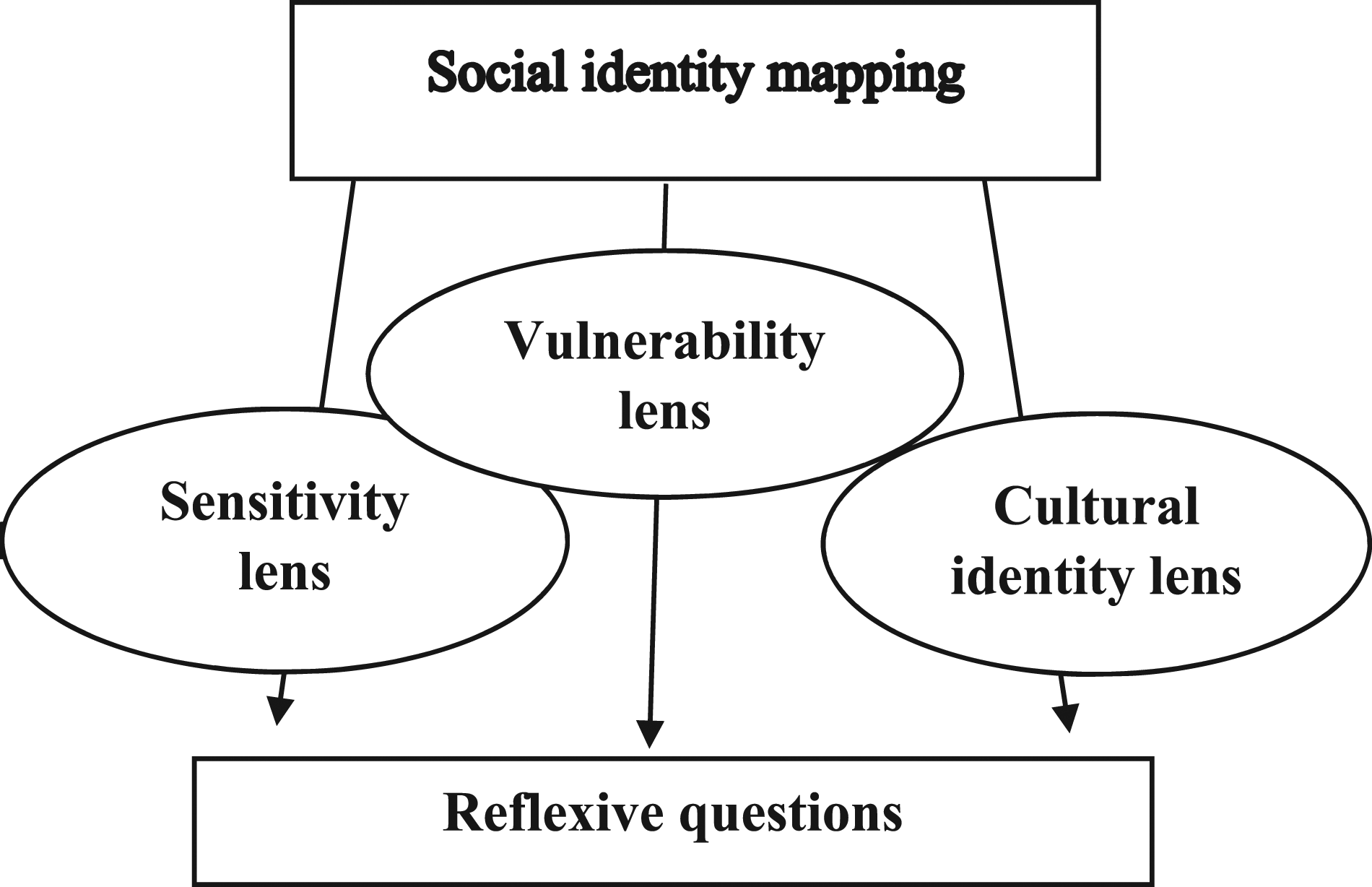
The Guide for Reflexivity comprises three steps: Mapping of the identities of the researcher and participants. The impact of the identities of the researcher and participants need to be considered throughout the research study. Consideration of sensitivity, vulnerability, and cultural identity lenses. Researchers need to consider their identity in relation to the research community through the sensitivity, vulnerability, and cultural identity lenses. Addressing the reflexive questions. Addressing the questions in Table 1 will enable researchers to consider and subsequently address important issues which may arise at each stage of the research process. Reflexive Questions.

Although the arrows are pointing downwards through the lenses, this process is not linear. Researchers will need to go back and forth between the different components to address the reflexive questions. For example, when addressing the question “Does the researcher's identity make this research a more sensitive topic, leading to a discussion which could upset the participants?” (Table 1), the researcher will need to look at their social identity map to identify facets that may make the topic more sensitive. The researcher may also need to re-visit the analysis of the context of their research study to review the sensitivity of the topic, whether the participants could be vulnerable due to their circumstances and cultural factors which may influence how the research is perceived by the participants and wider community.
Researcher–Participants Social Identity Mapping
The use of the guide starts with mapping the researcher’s social identity as stipulated by Jacobson and Mustafa (2019). The authors suggest that the researcher begins the mapping process by initially identifying their social class, citizenship, (dis)ability, age, race, sexual orientation, cis/trans status, and gender. Other potential contributors to the researcher’s unique social identity can be added to the map, for example, in the study reviewed in this article the researcher also considered language, educational background, ethnicity, and religion. The researcher's understanding of their own identity through the mapping, as well as the participants and their setting, will help in identifying what facets of the researcher’s identity may influence the research process. For example, in the study under review, the researcher’s understanding of gender roles and the position of females in the study community gave him insight on what to anticipate and potential mitigation strategies. A desk review of similar studies within the population can help the research team ask the appropriate questions and avoid pitfalls experienced by other researchers. Even when all identifiable factors influencing their positionality have been considered, research fieldwork, by its very nature, gives rise to unanticipated challenges and perspectives, requiring researchers to constantly reassess and reevaluate their position (Takeda, 2013).
Lenses to View Social Identity in Relation to the Participants
The three lenses, namely sensitivity, vulnerability, and cultural identity, are interwoven. For example, when considering cultural identity, religious and other cultural practices may result in women being vulnerable in terms of poor health (due to high rates of childbirth, not being permitted to see male practitioners) and lack of access to education. Topics such as family planning are considered to be sensitive in many countries. The three lenses are discussed separately here to highlight tacit differences of importance to the novice researcher.
Sensitivity Lens
It is important to point out that the authors’ use of the term “sensitivity” does not conform to the gender stereotyping and stigmatizing of women as being emotional and sensitive (Plant et al., 2000). In this article, “sensitivity” includes anything that can generate anxiety and uneasiness in the participants, with potential negative consequences on the research. Participants may be unwilling to share their experiences, resulting in interviews that lack depth and do not adequately address the topics being explored. In sensitive research or topics, trust and rapport become difficult to achieve and the researcher–participant relationship can easily turn into one of concealment and deception (Lee & Renzetti, 1990). Research sensitivity may be situational and depends on the interaction between the researcher, participants and context of the study (Bahn & Weatherill, 2013; Brayda & Boyce, 2014; Tillman, 2002). Sensitivity issues may arise at different stages of the research process including the choice of topic, development of the interview guide and during interviews, if questions are asked which are viewed as inappropriate in the local culture. A research area may become sensitive, and thus evoke anxiety for the participant, because of how the discussion develops during the interview; therefore, sensitivity cannot be fully determined beforehand. For example, a discussion with health practitioners about service provision may result in disclosures of distressing experiences. Lee and Renzetti (1990) argue that “it is possible for any topic or research to be a sensitive one (p513).” However, some areas of research are more sensitive than others. These include studies that intrude into the private life of individuals, explore prohibited behavior, encroach on the interest of powerful individuals and involve topics sacred to those being studied that they do not wish to profane (Lee & Renzetti, 1990).
The breastfeeding study being considered in this article met Lee and Renzetti’s (1990) criteria for sensitive topics in a number of ways. First, the research intruded into personal experience as breastfeeding is a personal choice and a private journey (Charlick et al., 2019; Coomson & Aryeetey, 2018; Sheehan et al., 2019). In Hausa–Fulani culture, topics that relate to an object of female sexuality, for example, a woman’s breasts, are often only discussed in the private setting of a husband–wife relationship (Adamu, 2011; Pawlak, 2015). Second, the study indirectly explored the role of the mother-in-law, a powerful figure in Hausa–Fulani culture that exercises authority and has a strong influence on a mother’s choice to breastfeed (Joseph & Earland, 2019). There are potential risks associated with unstructured interactive interviews where the topic or context of the research might be considered sensitive because when participants tell their stories they are sharing personal and often intimate aspects of their lives. Tekada’s field experience researching female married participants as a male researcher highlighted how the researcher–participants’ gender mismatch intersected to create a sensitive environment that impacted the research process (Takeda, 2013). This was the case even though he shared language, culture, and ethnic identity with the participants.
Vulnerability Lens
Vulnerability is a state of an individual or a group, whose physical status, political, economic, social, or cultural environment limit their access to basic human needs and ability to make personal life choices (Liamputtong, 2007). Examples of individuals or groups whose circumstances make them vulnerable include children, ethnic minority groups and educationally and socioeconomically disadvantaged women living in rural communities (Dickson–Swift et al., 2009). Women from ethnic minorities living in rural communities or of low socioeconomic status are often less willing and able to participate in research due to their socioeconomic needs and heavy responsibilities (Edwards, 1990). Participants in the study under review fit into the description of vulnerability because the attitude towards Hausa–Fulani females emphasizes the perception that women are inferior to men; they are socioeconomically disenfranchised and in most matters must defer to the male (Afolayan, 2019). Conducting research with people who are considered vulnerable presents unique challenges and requires special attention from researchers (Liamputtong, 2007; von Benzon & van Blerk, 2017). Due to their lack of experience, novice researchers usually do not have the skills that are cultivated over time through regular fieldwork and reflexivity. This can result in them not being well prepared to deal with the challenges and responsibilities of conducting qualitative research involving vulnerable populations (Thummapol et al., 2019). If researchers do not adequately consider the research setting and culture of the community, their credibility and professional standing can be damaged. There is also the potential of further marginalizing participants (Liamputtong, 2007; Mccosker et al., 2001). For example, interviews covering areas considered to be private may result in emotional and psychological distress to the participants and their families (Shaw et al., 2020).
Cultural Identity Lens
Cultural identity refers to the characteristics that make an individual or a group unique and different from others; that sense of belonging based on one’s ancestry, cultural heritage, value, traditions, rituals, language, and religion (Song & Parker, 1995). Cultural awareness is the sensitivity to the similarities and differences that exist among different cultures and the use of this sensitivity in effective communication and relationships with members of another cultural group. To develop cultural awareness, the researcher needs to examine their professional and sociocultural background (Campinha–Bacote, 2002). In the setting of the study under review, religion plays a key role in the identity of Hausa–Fulani Muslim women, contributing to numerous physical, social, and economic restrictions, especially for those in rural communities. Studies have shown that researchers studying participants of other racial backgrounds experience challenges in gaining access to participants (Edwards, 1990; Riessman, 1987), leading to the suggestion of “ethnic matching” between the researcher and participants to avoid the difficulty in accessing participants (Rhodes, 1994). However, matching ethnicity or other elements of the identities of the researcher and the participants is not enough to create a common understanding and does not make the outsider researcher into an insider (Tinker & Armstrong, 2008). Matching elements of identity will not reduce the power differences between the two parties as power relations go beyond relative identities (Gunaratnam, 2003). The complex interplay of the different facets of identity determines the power balance in any situation. Törngren and Ngeh (2017) showed how the power dynamics between participants and researchers changed during interviews, depending on the participants’ perception of the researcher’s race and ethnicity in relation to the discussion topic and other facets of identity such as age, gender, and class.
Song and Parker (1995) noted that while sharing racial identity with the research participants will help the researcher to gain access, it is insufficient to build interview rapport and disclosure; hence, the point of connectivity between the researcher and participants needs to be developed, irrespective of whether the researcher is considered an insider or outsider. Building a cross-cultural relationship requires the researcher to develop cultural competence in the form of pre-requisite knowledge and skills (Davis, 2020). Cultural competence is a process, rather than an end point, and begins when researchers explore and self-critique their sociocultural and professional background including recognizing their biases and assumptions about individuals who are different to themselves (Campinha–Bacote, 2002). Campinha–Bacote (2002) posited that self-awareness may prevent the researcher’s bias from impeding their interaction with individuals of other cultures or ethnic groups. Strategies to self-awareness include the researcher discussing their experience with other people and self-reflexivity (Hughes Fong et al., 2016). Cultural awareness and knowledge about the research setting set the stage for developing and implementing research that is sensitive to potential cultural differences (Vandenberghe, 2008).
Reflexive Questions
This section highlights critical questions to assist novice researchers to reflect, anticipate and resolve some of the issues that arise when conducting qualitative studies as an outsider. A critical analysis of the researcher and participants’ social identity through the sensitivity, vulnerability, and cultural identity lenses requires asking the appropriate questions before and during the study. These questions (see Table 1) were inductively derived from the literature review and the first author’s previous experience of working with the Hausa–Fulani community and his reflexivity diary of self-questioning before and during the study. Researchers may use the list of questions in different ways. For some it may simply act as a prompt, to highlight issues that need to be considered and explored. Novice researchers are likely to benefit from using a more structured approach, beginning with a desk review of other relevant studies and reports. This may enable the researcher to modify or remove some irrelevant questions or add questions. They may also be able to answer or partially answer some questions before deciding how to address the remaining questions, for example, through talking to government or non-government organization (NGO) personnel or other researchers working in the area.
Discussion
Overview of the Development and Use of the Tool
The Guide for Reflexivity used by the authors comprised the three main elements shown in Figure 1. The authors’ experience of conducting their research and reflecting on the study have enabled them to further develop the tool, particularly in terms of integrating the components and refining and adding to the list of questions. Using the guide for the study under review was found to be particularly valuable on two counts. Firstly, the social identity mapping ensured that all facets of identity were considered when reflecting on positionality and how it may influence the research study. Secondly, the questions enabled the researchers to identify and scrutinize, in a structured way, important issues which needed to be considered when planning their research. Examples of questions that the authors had to address during the study have been included in the sections below (shown in italic) to illustrate how the authors used the questions in Table 1 and how novice researchers may similarly be able to use the reflexive questions in their own research.
Positionality
Self-representations and positionalities of researchers can stir up stereotypes that influence the feelings and views of the participants (Mullings, 1999). The first author (FJ) is a Nigerian male medical doctor with substantial experience of working with ethnic Hausa–Fulani rural communities but no language, religious and cultural affiliation with the study population. The use of the Guide for Reflexivity started with FJ mapping his own and the participants’ identities including socio-demographic factors, educational background, ethnicity, religion, and language. Following the mapping process, FJ needed to consider what facets of the researcher’s and participants’ identities are most significant in the ongoing research? It was only by reflexively considering the identities of both the researcher and participants that it was possible to appreciate the extent of the power differences and the potential impact of his male identity on the research. FJ grew up in a hegemonic masculinity society similar to the one in the research setting. He recognized that there is the potential for male novice researchers to use societally imposed gender inequalities to their advantage and further marginalize the participants’ autonomy and voluntary participation. Reflexively questioning the intention behind the researcher’s actions will help ensure that the participants’ right to autonomy is upheld. For example, keeping a journal of key moments and critical reviews from peers, which is especially important for a novice researcher, will ensure that researchers remain reflexive throughout the research process.
Accessing the Research Setting
Gaining access to a research site can be especially challenging as a cultural outsider researcher (Singh & Wassenaar, 2016). The first author, drawing from his professional experience of working with similar communities in North-West Nigeria, used the reflexive question list to help identify issues that needed to be considered. For instance, as a male researcher who was to interview married female participants, he was interested in knowing how the local society defines gender relations and what ways it may affect access to the research sites and participants (How does the researcher’s identity influence the cultural expectation of the participants and the host community?). The practice of “kulle” in Hausa–Fulani culture demonstrates how gender influences physical access to some settings. Male strangers are usually barred from entering homes where there are married women (Afolayan, 2019). It was important to be aware of this and other cultural beliefs when making arrangements to approach potential participants and planning the interviews.
Gatekeepers are critical to accessing the research site in many communities and therefore the researchers needed to address the questions what is the protocol for community entry; does it require permission from a gatekeeper to approach potential participants? For the study under review, the role of the gatekeepers was more than simply allowing access to the research setting; they also ensured that the researchers and research methods were respectful of local culture. Access to the health facilities where recruitment took place was arranged through a courtesy visit to the Director of Primary Health Care based in each of the local government areas. The first author used this visit to ask questions such as what are the participants’ and the community’s experience of qualitative research? This visit was vital as it provided answers to this and other questions and guided the researchers to the heads of the primary health care centers situated in the recruitment sites. Careful preparation before commencing fieldwork is particularly important for inexperienced researchers as an error (for example, approaching the wrong person) could jeopardize the use of that research site.
Researchers agree that gaining access can be facilitated by building positive relationships with gatekeepers (Singh & Wassenaar, 2016; Wanat, 2008). In this study, the gatekeepers ensured that the researchers gained access to the health facilities but did not determine who was recruited into the study. Where gatekeepers are used in recruiting participants, they can wield great influence, with potential ethical issues (Devers & Frankel, 2000). The authors recognized that gatekeepers could influence the success of the research. Therefore, the purpose of the study and how it was to be conducted, as well as any potential benefits to the participants and community, were made clear. The researchers maintained regular communication with the gatekeepers during the study.
Accessing the Research Participants
Recruiting participants is a challenging process and requires the researcher’s communication and negotiation skills to build rapport and mutual respect, especially when undertaking research with socioeconomically and educationally disadvantaged participants (Devers & Frankel, 2000; Liamputtong, 2007). In the research setting, rapport is a stage in social interaction where there is a feeling of trust and sincerity between parties. For the novice researcher, achieving rapport is a process that builds on the researcher’s contextual awareness, social information gathering and interpersonal competencies (Jihong et al., 2020). For example, in the research community under review, exchanging greetings is an essential step in establishing non-threatening contact and rapport. In Hausa greetings, a person wants to know everything about one’s situation because of the feeling that whatever affects that person also affects him (Chamo, 2015). Usually, first impressions matter; therefore, the first author and interpreter (MA) were patient, listened and showed sympathy towards the women they approached and their immediate situation. It was important that the participants were provided with sufficient information to enable them to decide whether to take part in the study (Are participants able to make an informed decision on whether to consent to take part?). Strategies used included the use of a bilingual female interpreter, a participant information sheet which was read out and discussed in the local language with each potential participant by MA, and culturally sensitive private face-to-face meetings during Mother and Child Health clinics. The researchers were mindful that potential participants were unlikely to be able to understand English or to read, although others in their household may have been literate. Information was provided on the research verbally and in writing using lay terms, printed in both English and the local language. Participants were given adequate time (2 weeks) to reflect on the information and were told that it is their right to refuse to participate or to withdraw from the study at any time. Verbal consent was given by each participant when the interviews were arranged. Prior to each interview, the informed consent form was explained, questions invited, and the participant either thumb printed or signed it.
It was important to reflect on what steps needed to be taken during recruitment and the interviews to ensure that the first author and interpreter were accepted within the community. In establishing cultural trust, FJ and MA ensured that their behavior and activities were respectful and conformed with local cultural values. For example, their outfits were reflective of dressing and communication etiquette unique to the local community. A researcher’s outfit may demonstrate their religious or moral values, and can make a difference in whether or not requests for interviews will be granted (Takeda, 2013). Novice researchers similarly need to ensure that their behavior (for example, dress, language, and conduct) is always respectful of local cultural values.
Using Interpreters
Interpreters are viewed as active producers of knowledge; therefore, their competencies, perspectives and social location should be considered (Berman & Tyyskä, 2011). The interpreter (MA) is a female Muslim teacher and married, with no children. She had no personal experience of breastfeeding. She has an undergraduate degree and had previously worked in the researched community in a similar capacity with international NGOs. MA has a good grasp of the social setting because of her shared ethnic and religious background which, with her gender, was key in the mediation between the researcher and the participants. Participants were observed to be relaxed, comfortable and open to discussion with the interpreter. Novice researchers can learn from working with an experienced interpreter, especially if from the local area. Even if an interpreter is not required, in communities where cultural practices prevent male researchers from freely conversing with women, being accompanied by a well-respected female can facilitate access to the community and the participants.
During the pilot study, the interpreter was initially reluctant to probe some of the responses, due to her familiarity with the community. However, FJ’s outsider position compelled him to scrutinize certain issues more closely, instead of accepting all the interpreter’s feedback, as suggested by Suwankhong and Liamputtong (2015). The experience in this study demonstrated the value of co-interviewing as a mechanism to blunt the influence of the insider and outsider in research with cultural and gender divides (Redman–MacLaren et al., 2014).
Interview Protocol and Process
In qualitative studies, interviews are an integral part of understanding the perspectives of others (Ritchie & Lewis, 2003). The development of good interview questions requires that the researcher understands the cultural context and workability of the interview protocol. People’s lives have “worth” and a researcher wants to approach inquiring into their lives with sensitivity. Two pilot interviews were held with mothers in the research setting, to explore how the interview questions fared with the participants. It is important that transcripts of pilot interviews conducted by novice researchers are peer review by an experienced researcher, as occurred in the present study. This will enable the sensitivity and cultural appropriateness of the open-ended questions to be appraised, as well as their adequacy to generate answers to the broad research question.
The venue and the seating arrangement during the interview, which took a cue from what is usual in the community, was also key to creating rapport. The first author ensured privacy and paid attention to the physical arrangements of the interview. The participant and interpreter sat on one side of the table facing each other and making eye contact, while FJ sat alone on the other side of the table away from them but close enough to hear.
As anticipated, the gender relation norm played out in the interview process. Usually, female–female interaction in a public space is without restriction. In contrast, the male–female interaction is defined and limited by a cultural expectation for women called the feeling of “kunya." “Kunya” is translated as shame in the English language but does not necessarily convey the same meaning as the English translation. Women display “kunya” when interacting with a male by keeping a distance, lowering their gaze towards the ground, avoiding eye contact, sometimes refraining from talking, or affirming with a single syllable word “yes” (Adamu, 2011; Pawlak, 2015; Will, 2016). In the study under review, younger mothers were the least forthcoming, resulting in more time being required to build rapport with them as participants. Generally, participants appeared to be most emotional when responding to questions about their experience of labor, delivery and the few hours after delivery. Following the first few interviews, FJ and MA reflected on the reaction of participants to the interview topics in order to address the question what are the points of potential sensitivity? Although they had expected that some mothers would be embarrassed when talking about the breast, especially in the presence of a male, the emotional reactions to discussions about giving birth were unexpected. The interviewers were sensitive to the participants’ non-verbal gestures, for example, facial expressions and physical posture and tried to make the mothers feel at ease as much as possible. As well as responding to verbal responses during interviews, novice researchers need to be aware of non-verbal gestures which indicate that participants are experiencing discomfort or distress. If a participant does appear to be distressed or tired, it may be that a break is needed or that the participant wishes to discontinue the interview.
Summary of Strategies Used.

Conclusion
In this article, the experience of researching Hausa–Fulani Muslim women living in Nigeria (Joseph & Earland, 2019) has been used to reflect upon researching as an outsider. The first and second authors have no language, religious and cultural affiliation with the study population. Being a different gender to the participants and researching a sensitive topic posed further challenges for FJ. It was the first time he had undertaken a qualitative research study and the experience proved to be a steep learning curve. It was therefore decided to share the key challenges that arose during the design and implementation of the study and how these were addressed.
Although every research setting and participant group is unique, some lessons identified in this article may be of value to other researchers working as outsiders or who have no detailed knowledge of the community they are to work in. Careful preparation is needed before fieldwork can commence. For example, researchers should find out how to access the community and participants and forge relationships with gatekeepers and community members. It is important to approach potential participants with awareness and sensitivity. Researchers should also determine how those who are illiterate can make a fully informed decision on whether to participate. Special attention should be given to the format and content of the interviews; this is particularly important where the research covers sensitive areas and there are potential power imbalances (for example, due to gender and education) between the researchers and participants. Practical considerations such as attire, location of the interviews and seating arrangements, as well as the role of the interpreter in a cross-language study, need to be considered prior to starting data collection.
A review of the literature revealed that there is little practical guidance for researchers working as an outsider and therefore the authors decided to develop a Guide for Reflexivity. To use the guide, researchers should identify the different facets of their social identity, as well as that of the study group, and how these may influence the research process through the sensitivity, vulnerability and cultural identity lenses. A list of self-reflexive questions has been formulated to enable researchers to anticipate and subsequently address important issues which may arise at each stage of the research process. Although using the guide will not guarantee the identification of all potential issues and dilemmas, it can assist researchers to reflect upon their situation and to anticipate and resolve challenges that may arise when conducting qualitative studies as an outsider.
Pre-Publication History
The pre-publication history for this paper can be accessed https://doi.org/10.1186/s13006-019-0231-z
Footnotes
Declaration of Conflicting Interests
The author(s) declared no potential conflicts of interest with respect to the research, authorship, and/or publication of this article.
Funding
The author(s) received no financial support for the research, authorship, and/or publication of this article.
