




Abstract
The use of qualitative methodologies together with visual methods is being incorporated into different lines of research to offer an alternative form of expression that can provide richer and more meaningful data. The objective of this study was to analyse the use of life histories and lifelines in the study of female genital mutilation (FGM) in the context of cross-cultural research in participants with language differences. We explored the strengths and challenges of the combined use of both the lifelines and life stories of women who have been subjected to FGM. The lifeline tool was employed during the second interview with our participants, and the results of this work are explored here by examining the lifelines of three of the participants. The use of two techniques strengthened the researchers' knowledge of women’s lives and facilitated reflection and critical thinking by the study participants, generating richer and more in-depth data on the study problem. The difficulties that some women had in the communication process are diminished by the visual and chronological representation of the events in the lifelines. The visualization of their lifelines and the realization of this activity for which they did not feel capable due to their lack of education, empowered them, generating a great personal satisfaction. The results of this study confirm the usefulness of combining visual and narrative methods in groups where communication difficulties are an obstacle to the collection of information. Exploring new forms of expression and data collection can give voice to underrepresented groups in qualitative research.
Keywords
Introduction
Life histories are considered the main exponent of biographical-narrative research. This relatively young approach offers multiple possibilities and, to date, has been applied especially in the social sciences (Caetano & Nico, 2018; Witter et al., 2017). Biographical-narrative research is characterized by its ability to make silenced testimonies visible, positively valuing subjectivity and achieving emancipation because it equalizes power relationships as part of the work (Moriña Díez, 2016). Life history is defined as the ‘autobiographical account obtained by researchers through successive interviews where the objective is to show the subjective testimony of a person in which both the events and the evaluations said person makes of their own existence are recorded’ (Pujadas Muñoz, 2002). This tool allows researchers to induce the narration, transcribe it, order it, and to ask the informant to fill in gaps or expand vague information about their life (Pujadas Muñoz, 2002).
The main challenge is to have informants who are able to complete objective accounts and who are representative of the study group (Goodson, 2001). Despite this, the literature attributes potential benefits and strengths to this technique such as its ability to help understand the different dimensions of phenomena or social processes, the provision of access to deep and detailed information and the ability to make situations among vulnerable groups visible (Bassi Follari, 2014; Caetano & Nico, 2018; Dhunpath, 2000; Moriña Díez, 2016). We should not forget that people’s experiences are constructed according to the meanings they attribute to the phenomenon under study in a given historical and cultural context (Fearon et al., 2021).
Different authors agree on the great advantages of using life histories to obtain information that would be near impossible to access through any other technique. They also allow the informant’s perspective on the phenomenon of study to be holistically collected through their own words, given that they represent themselves through language (Bassi Follari, 2014; Pujadas Muñoz, 2002). However, the conformation of life stories in work in which the language of the researchers and participants differs is challenging because language can then become a barrier to gaining a deep understanding of the topics covered (Premji et al., 2019). Furthermore, the involvement of a translator in the data collection changes the dynamics between the interviewer and interviewee and can make communication more complex by adding a third person, with their own way of understanding and interpreting the subject (Squires et al., 2019). Likewise, the translation of the data itself must be analysed and could represent a study weakness because the data should be analysed by researchers who are fluent in the language in which the data were collected (Ogilvie et al., 2008).
Mastery of the nuances of the language is essential when transcribing and interpreting interviews and can condition the validity and reliability of the conclusions (Squires et al., 2019). Indeed, it has recently been found that language limitations are not adequately reflected by researchers and that groups lacking a perfect command of the researcher’s language are often excluded from research, leading to underrepresentation of these communities (Squires et al., 2019). Notwithstanding, globalization has favoured an increase in studies involving different languages and so the methodological challenges they describe must be considered (Squires, 2008). Communication barriers are sometimes overcome through visual methods, such as in cases determined by age differences or in complex situations such as health education (Laholt et al., 2017), communication with participants with autism spectrum disorders (Ha & Whittaker, 2016) or with deaf refugees and migrants; in these cases, methodological difficulties can be addressed by combining life stories with photographs, drawings and visual methods such as lifelines (De Clerck, 2018).
The combined use of visual methods as an adjunct in qualitative research is currently experiencing a boom because it has several advantages (Monico et al., 2020). These include helping to capture topics that may otherwise remain incomplete when using only verbal communication, overcoming the limits of language using visual elements or promoting concentration and reflection upon the topics investigated (Copeland & Agosto, 2012). One of these aforementioned visual methods are lifelines, understood as visual representations of the events in the life of an individual, in chronological order, which may contain interpretations of said events (Gramling & Carr, 2004). This methodology has been used for a wide range of topics including studies of the different life trajectories of sexual and violent offenders (Desfachelles & Ouellet, 2018), the experiences of patients with fibromyalgia (Chen, 2018), crises in young English and Indian people (Duara et al., 2018), the influence of emotions on sexual behaviours and their risks (Goldenberg et al., 2016) and health inequality in vulnerable groups (Patterson et al., 2012) and in young people receiving treatments with opioids (Monico et al., 2020).
The combined use of visual methods such as lifelines together with in-depth interviews favours data collection because it improves the relationship between researchers and participants, in turn stimulating memory and an increased feeling of participant control regarding the interviews, especially in relation to sensitive topics and among vulnerable groups (Goldenberg et al., 2016; Gramling & Carr, 2004). Another strength of this combination of techniques is its ability to mark a distance between experiences of traumatic events and their narration (Guenette & Marshall, 2009). However, research carried out through life histories and lifelines in the context of linguistic and cultural differences between researchers and participants is scarce and therefore, requires further study (De Clerck, 2018).
The present research arises as a consequence of a previous study conducted with women from sub-Saharan Africa, where the experience of female genital mutilation (FGM) was explored (Siles-González et al., 2020). This traditional practice has followed the migration process from sub-Saharan Africa and is now present in Spanish social and healthcare contexts (La Barbera, 2010). Female genital mutilation is a practice rooted in culture and tradition which, on the one hand, endows the women and girls who experience it with an ethnic and gender status (Kaplan Marcusán & López Gay, 2017) but on the other, has negative consequences for their physical, mental and reproductive health (Médicos del Mundo, 2018). In Spain, the first cases were detected in the 1990s (Kaplan Marcusán & López Gay, 2017) and according to the latest data from the FGM Risk Map, almost 70,000 women or girls from countries where FGM is practiced resided in Spain in 2016.
The researchers noted the difficulties in communication that resulted in a lack of understanding of certain events and the time at which they occurred. This situation made us ask ourselves, what kind of technique could we use to help us understand the life history of women from other countries and who have language limitations? We looked for an answer in creativity and literature, deciding to implement lifelines as a complement to the life stories.
The main objective of this current work was to describe the use of lifelines as a complementary methodology to explore the life stories of women residing in Spain who have experienced FGM. As specific objectives, we wanted to analyse the potential and difficulties of the combined use of these techniques when studying such an intimate subject with a marked gender perspective in the context of communication limitations. Therefore, this work attempted to generate knowledge about the joint use of visual methods and life history interviews during data collection and to provide a novel approach to address certain limitations in communication when undertaking cross-cultural research.
Material and Methods
Techniques
The life history and lifeline techniques were used for data collection.
Life story
The life history can be understood as a story that is compiled from different interviews, where the events experienced are collected with their own personal assessments, together with complementary material (photos, images…) which allows us to obtain a global vision of the life of the persons (Pujadas Muñoz, 2002; Siles González, 2006). To compose the life stories, an open and semi-structured question guide was designed for use when conducting successive interviews with women who had been subjected to FGM. It is also possible to create lifelines when the research focus on important events that were turning points in the participant’s life trajectory (Siles González, 2006). One of the reasons for using the life history technique is its ability to make communities without representation visible, a special challenge for the large, marginalized groups resulting from constant migration processes (Lincoln & Lanford, 2018, p. 467). The life story comprised not only a relation of the participants’ lives, but also served as complementary material to obtain an overview of their lives based on important.
Lifeline
Lifelines are visual representations of the chronology of life events that can include assessments about them (Gramling & Carr, 2004). It consists of drawing a line where the person’s birth is indicated at the beginning and the current time at the end. According to the recommendations of other studies (Gramling & Carr, 2004; Guenette & Marshall, 2009; Kolar et al., 2015) different materials were provided for its elaboration such as coloured pencils, pens…making an example of a finalized lifeline. Some qualitative studies have shown that using images during interviews can stimulate memory and deepen and enrich the narrative by helping participants relive the phenomenon and access their visual memories (Simpson & Barker, 2007). However, rather than providing an image in our study, we asked our participants to associate an image, drawing or symbol with the events based on their relationship to it, its ability to summarize the event or simply because it was significant to them. Finally, we gave the participants their complete and original lifelines (Chen, 2018; Kolar et al., 2015).
Participants
This study included seven women who met the established criteria of having experienced FGM as a child or adolescent and being sufficiently sociolinguistic competent in Spanish to enable communication. In other words, having the ability to converse with the researchers with some ease without having to stop or look for words, although they sometimes needed to negotiate the meaning of words or phrases according to their culture (Squires, 2008). This was followed by snowball sampling because this technique is useful for the analysis of vulnerable groups and samples that are not easily accessible (Naderifar et al., 2017).
Ethics
Sociodemographic Data and Linguistic Competence of the Three Participants used as Examples in this Research.

Procedure
The data collection procedure was carried out over three sessions.
Session 1
In the first session we conducted an interview lasting 40–60 minutes on the life history of the participants, following the planned script. The locations of the interviews varied from the participant’s home, the facilities of an association or a room attached to an exhibition hall where photographs of life in Africa and its health inequalities were exhibited. The interviews were recorded with the consent of the participants and were later transcribed verbatim. After the transcription, the researchers created a lifeline: a straight line on which the events mentioned in the interview were marked alongside the interviewee’s age at the time (if stated in the narrative) and according to the chronological order of the events estimated by the researcher (Figure 1). Example of the lifeline of the interviewees after the transcription of the first session.
Session 2
The second session took place three to 15 days after the first one, depending on the availability of the participant, and began with the lifeline activity. The participants were provided with different materials such as pencils, pens, markers, rulers, etc. so that they could choose the ones they felt most comfortable with to complete their lifelines. They were then asked to mark the most important events from their birth to the present time, with the level of creativity they deemed necessary. They were not given specific instructions but were shown an example of a lifeline and were told that they did not have to follow this model and could draw or colour the different sections or events in their lives in different colours (Gramling & Carr, 2004). We showed the participants the lifelines proposed by the researchers and were given the option of either completing this lifeline or making a completely new one. They were encouraged to associate each important event with an image that would represent it or that was strongly related to the event for them and were supported and helped at all times so that the activity was completed in a participatory way.
Session 3
The images of the lifelines were digitized for our research purposes and a final session was organized in which the original lifelines that each woman had created to represent their life stories, their assessments and their experiences were handed over, giving their agreement with the final result. This appointment allowed us access to new participants in the study, as the women provided us with contacts of friends or family members who fit our inclusion criteria. A snowball recruitment process was initiated at this appointment (Naderifar et al., 2017). These are shown, without processing, in the figures below.
Limitations as Opportunity
At the beginning of the research, the participants’ language limitations made it difficult to properly establish the chronology of the events and confirm their order within the correct historical, social and cultural contexts. However, this weakness in the original methodology represented an opportunity for us to collect another type of data, in this case visual information. This caused us to search creatively for methodologies that could complement and improve the initial design (Jick, 1979), thereby helping us to increase the reliability and consistency of the data by triangulating it. Thanks to the characteristic flexibility of qualitative research, we were able to pause and thoroughly consider how we would carry out the work, leading us to modify our methodology (Morse et al., 2002).
Hence, in this work we illustrated the implementation of lifelines and showed how they contributed to the study of FGM by analysing three of our participants as examples. The introduction of lifelines into this methodology allowed sequential data triangulation and allowed us to address fundamental questions and gaps that had arisen in the first session (Morse & Chung, 2003). Thus, we established a data triangulation method and collected data directly from women who had been subjected to FGM at some point in their childhood or adolescence (Okuda Benavides & Gómez-Restrepo, 2005).
Interpretation of the Collected Material
The phenomenological method seeks to discover the meanings of phenomena experienced by people through the analysis of their descriptions. Its main approach focuses on attention to a person’s lived experience and elicits similarities and shared meanings (Husserl, 1992).
The phenomenological method proposed by Giorgi was used to analyse the data. The method contains four essential steps, generally expressed as follows: first reading the entire description to obtain a general sense of the discourse (called by Giorgi ‘sense of the whole’); second, once the sense of the whole has been understood, the researcher goes back to the beginning and reads the text once more, with the specific aim of distinguishing the ‘meaning units’ by separating the psychological perspective of the phenomenon under investigation; third, once the ‘units of meaning’ have been delineated, the researcher, from all these units, expresses more directly the content in them by generating categories and finally, the fourth step, the researcher synthesizes all the transformations of the units into a consistent statement that takes into account the subject’s experience. This generally refers to the structure of the experience and can be expressed on a number of levels (Giorgi, 1991).
Results
Life Lines
The two participants with the lowest levels of education agreed to tell us about their doubts about being able to adequately complete their lifelines, both saying that they had never studied and, therefore, could not independently complete this activity. They chose to work on the researchers’ lifeline proposals which they considered would be easier for them. In addition, they both chose a lead pencil to complete the task; when asked about this, they said that they did not need colours because they would not know which one to choose, in one case stating, ‘my life has always been more or less the same’ (Bintu). The interpretation of this statement added to our understanding of the lifeline and analysis of her life history; it indicated a sad reality, without colour (as represented in her lifeline), without the ability to choose or make decisions and one in which she was resigned to the directives of figures of power and of the social, economic and cultural situation assigned to her (Figure 2). Example of the lifeline that Bintu worked on during her second session.
As a complementary example, Fatou, who had a higher level of education, had no doubts once she understood the process, as aided by the explanation and example. She chose a blue pen to complete the activity and made a new lifeline that she complemented with sentences that summarized each event (Figure 3). Example of the lifeline that Fatou worked on during her second session.
Finally, they completed their lifelines with the events marked during the first interview as well as new ones they interpreted as important during the course of the second session, all within their correct temporality. They deeply reflected upon all of these events and narrated them in detail.
How the LifeLines Completed the Stories
As previously mentioned, these women could maintain a conversation in Spanish and even sometimes expressed themselves using colloquial Spanish expressions: ‘…but when (my mother) wasn’t there, my other mother would have a go at me’ (Bintu). Nonetheless, limitations sometimes arose such as when they translated literally from their language, for example, by using the term ‘hard head’ to refer to the adjective stubborn. Answering open questions which involved different dimensions such as family life, work and health also caused problems by making the narrative unstructured and causing it to lose its temporality. For example, ‘Look, when I brought her here when she was 2 years old (talking about her daughter) I went to a doctor [who] almost called the police because she thought that [my daughter] had been born here’. (Bintu); ‘When I was born’ (Mariama). Therefore, because the transcripts of these interviews yielded temporal incongruities and unstructured narratives that had lost their temporality, these data were nearly impossible to analyse within their contexts. We then drew the lifelines which led to the detection of empty periods that did not seem to fit into the narrative or seemed to coincide with times when the participant had been more evasive.
Thus, these basic timelines served to detect omissions or gaps in the data and helped us to plan the second session, using them as the starting points for asking the participant to confirm or clarify event times. At the start of the interview, we returned to the topics covered in the first session and the participants retold the events in greater depth. This allowed the transcripts of the two sessions to be contrasted in terms of their relation to the participant’s life trajectory and the phenomenon of interest, in this case FGM and its repercussions on these women’s lives. For example, Bintu added an event in a section that had previously seemed ‘empty’ on her lifeline, by marking and narrating the pregnancy and delivery of her first daughter, before her marriage (see Figure 2 compared to Figure 1). She said that she never spoke about this event and that her children had recently found out about it during a trip to her country of origin.
In addition, during the confirmation process for the notable events marked on Bintu’s life trajectory, she concluded that the moment when she was separated from her biological mother and given to another of her father’s wives was missing. This was because this wife had only had male children; Bintu stated, ‘This was my father’s thing… his first wife had only had boys’ (Bintu). She explained that the woman she had grown up with was not her biological mother and this led the interviewer to prompt Bintu for clarification of other events by asking the following question: ‘During the previous interview, the figure of your mother emerged on several occasions. Which mother were you referring to?’ Bintu then narrated how and when she had been informed of the identify of her biological mother and why she had been separated from her. Therefore, Bintu expanded the data about her lifeline by reporting the behaviours and ways of life of her community during her childhood.
During Mariama’s first interview, her account was confusing or evasive about living in Mali or Côte d'Ivoire. She did not clarify in which country each event happened or why she changed countries. As she moved through her recollections along the lifeline she addressed these questions. She also marked a new event: the moment when she had begun to work and earn money in Spain and said that this moment had been important to her because she would like to buy a house for her children so that they would have a home in the future. This moment was represented with a dollar symbol (Figure 4). Example of the lifeline that Mariama worked on during her second session.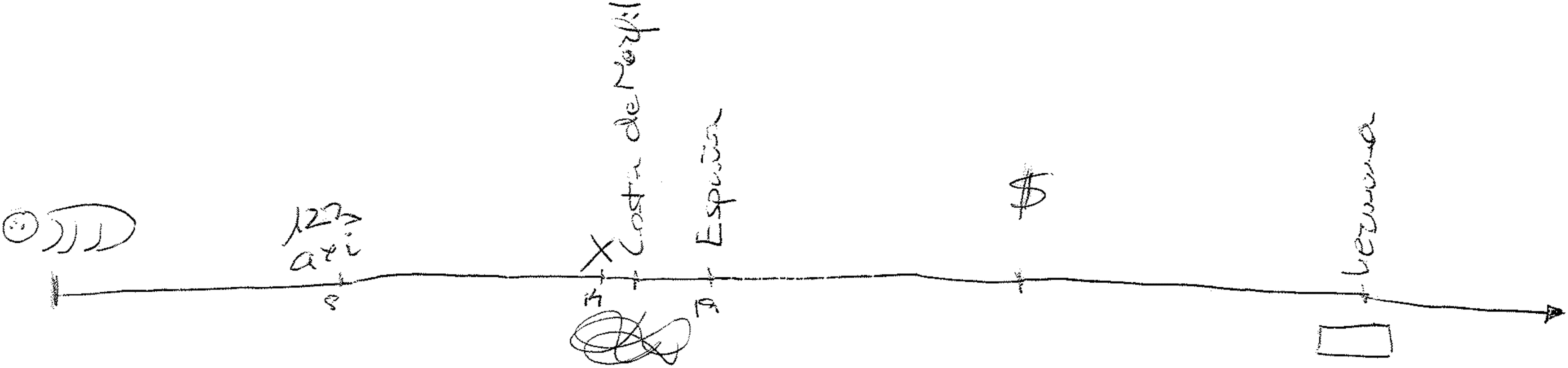
Important Moments and Their Relationship with Female Genital Mutilation
In every case, the narrative was expanded, and we gained a deeper understanding of the data obtained by having the participants mark different events or confirm those presented in the second session and then asking them to assign a symbol or drawing to each moment. During the first session, Bintu vividly described and gestured the moment when she was subjected to FGM. Among other aspects, she showed us how she was grabbed and where she was held. When Bintu arrived at this event in her lifeline, she said that an image of the ritual knife traditionally used to carry out this practice should be associated with it, even though she had depicted it with a razorblade. She went on to say, ‘If you’re lucky – if a lot of people have to be cut, and you are the last one… If you’re first it’s good, [the blade] is [sharp] and then it’s fast; it’s picked and cut immediately. But if you’re last, oh my! That takes time, that hurts...’ She added, ‘My mother [we later clarified that she was referring to her biological mother] told me, “Bintu until I die, I will never forget it. I am my mother’s first daughter. You’re my fifth”. Four others and then me’ (Bintu). This reflection on the materials used and their repercussions led to the expression of their own feelings at the moments when two of their daughters were mutilated and how they were taken to a clinic to minimize immediate complications such as infection and haemorrhage. These changes in the dynamics of performing the practice are being investigated in the framework of adaptation and perpetuation of the practice. This reflective narration helped her to improve the memory of this moment and increased our knowledge of the practice and its repercussions. This allowed us to understand the importance of the material used for FGM and the consequences of the order in which it is carried out.
In the first session, Mariama told us about the death of a sister during her first childbirth stating, ‘she called me one night and everything was fine, but the next day in the afternoon they had both died: her and her daughter’ (Mariama). The image she drew for this event was a small rectangle. When asked about the drawing, she explained what funerals are like in her country and where and how the deceased are placed. She stated, ‘They’re buried behind the house in the field – there, there aren’t any places like here – and a square stone is placed on top of the head’. This information was illustrative and helped to expand our knowledge of the interviewee’s socio-cultural context. It also provided contextual information about one of the repercussions of traditional FGM: an increased risk of complications during childbirth.
All the participants coincided in highlighting events such as forced marriage, motherhood at an early age and their migration process a few years after marriage. The reflection included traumatic topics such as physical, sexual or psychological violence they have suffered throughout their lives. However, Fatou also mentioned reporting her husband for mistreatment and being awarded the guardianship and custody of her daughter as important milestones. In combination with her life story, the fact that she highlighted these notable events helps us to understand their inherent difficulty because they involved breaking with her previous trajectory and rejection of the socio-cultural context that makes room for FGM. Hence, for Fatou, these events had constituted a turning point in the acculturation process.
Strength of Using Lifelines
The participants narrated their life trajectories following the chronological linearity of their lifelines and representing their memories, thoughts, feelings, hopes and wishes as drawings or symbols. The use of the physical element of the lifeline to mediate the interview created a certain level of depersonalization which somewhat separated the participants from the researcher, distancing the narration of intense or traumatic experiences. Bintu stated, ‘…from here to here, everything’s very sad’, while pointing out the period representing her childhood on her lifeline. Although it would be easy to understand that the childhood and life of these women has been hard, only Bintu referred to her childhood as a sad period in general. We were also able to collect data about her holistic and summarized view of her memories of her early years thanks to the implementation of the lifeline.
Challenges of the Combined Use of Life Stories and Lifelines
The perception of the participants with lower levels of education regarding their inability to use materials such as pencils, pens and rulers or to draw or create lifelines made it difficult for them to access and implement the activity. At the beginning of the activity, the participants were wary, barely wanting to pick up the pencils. With the help of the researchers and the realization that they were gaining confidence, they felt more comfortable picking up different colours and trying to explain at the same time. We can affirm that the activity was gratifying because the women looked with pride at their lines expressing that they looked ‘like those of small children, but I had never done anything like this’ (Bintu).
Fatou, who had a higher level of education and could write, wrote down a short phrase that described or summarized each event rather than assigning them an image or drawing. This fact completed the narration of the event and put it in the appropriate time frame but did not expand it or contribute any more reflection or depth to the data already collected. This research design did not standardize or set guidelines for the implementation of the lifelines, instead, we gave generic instructions. This allowed us to obtain a diverse range of timelines that were more complete and had fewer gaps, and in the case of Fatou, practically without the support of visual elements.
Discussion
In general terms, this research reinforced previous findings regarding the synergies derived from the joint use of visual methods and qualitative methodologies and the lifelines were helpful to both the participants and the researchers. For the researchers, similar to the work of Hirsch and Philbin (2016), the participant’s drawings inspired the script for the follow-up interview. For the participants, the time lines encouraged reflection and understanding of their own lives (De Clerck, 2018). The main strength of this technique was its capacity to detect deficiencies, omissions or inconsistencies in the narratives by triangulating information and therefore, increasing the reliability and validity of the collected data (Copeland & Agosto, 2012; Gramling & Carr, 2004; Monico et al., 2020). An advantage noted in the literature for the combined use of lifelines and qualitative methodologies is increased data depth and quality. Here, we implemented the use of lifelines during the second interview which could partly explain the improved relationship the researchers had with the participants, resulting in increased trust and better quality data.
On the one hand, based on the researcher’s questions, the lifeline technique also established the most relevant events from these women’s perspectives, in chronological order, despite communication barriers or difficulties (Gray & Dagg, 2018; Kolar et al., 2015; Monico et al., 2020). On the other hand, new data were obtained or previous data were improved, thanks to the depth of reflection facilitated by the lifelines (Copeland & Agosto, 2012; Gray & Dagg, 2018; Martin, 2003; Schubring et al., 2019) and the ability to collect data other than in verbal or written form (Glaw et al., 2017). Likewise, unexpected data also appeared during the process of associating drawings or symbols with the events, and these were revealing in terms of understanding the FGM phenomenon and its socio-cultural context by linking stories with their social, political and environmental contexts (Adriansen, 2012; Copeland & Agosto, 2012).
Ethical factors are an important issue in qualitative research (Reid et al., 2018), especially when dealing with an intimate and cultural issue in a vulnerable group (Kolar et al., 2015). However, the literature regarding visual methods does not conclude if the use of such techniques can alleviate the memory of painful and traumatic events or favour their reliving (Schubring et al., 2019). In this work, using lifelines as a central element in the second interview meant that the participants distanced themselves from the narration but talked more about the events indicated in the lifeline. Thus, it appears that to the participants, the timeline marked a barrier and a distance with their own experience which created a safe space in which they could reflect (Guenette & Marshall, 2009; Kolar et al., 2015). Also of note, denying vulnerable groups the potential benefits of participating in research (in our case learning about and understanding the practice of FGM and its repercussions as a way to improve healthcare approaches) would further marginalize these individuals, therefore perpetuating their vulnerability (Alexander et al., 2018). In contrast, the participants in this study played an active role in the interviews supplemented with the lifeline. Nonetheless, this fact did not reduce the power imbalances between the interviewer and participants because the interviewees required guidance (Pell et al., 2020; Schubring et al., 2019), thereby establishing a collaborative environment in the elaboration of this methodology (Monico et al., 2020).
However, despite individual differences between each lifeline, we were able to extract certain important patterns or events from all of the life trajectories of the participants, such as forced marriages agreed upon by their families a few years before arriving to Spain and motherhood shortly after these two previous events. This comparison may help to relate events and to understand the context, socio-cultural situation and trends into which the phenomenon of FGM is inserted. Notwithstanding, our experience highlights the need to consider the level of familiarity of the participants with visual methods as well as their education levels, because these factors might condition their involvement in completing the lifelines and in the final results (Copeland & Agosto, 2012; Kolar et al., 2015). Nonetheless, this work demonstrates an alternative form of communication with a vulnerable minority group when dealing with sensitive issues and language limitations (Buckley & Waring, 2013; Moragón Arias, 2017). Thus, it illustrates relevant moments in the lives of women who have been subjected to FGM, the timing of the practice, its possible repercussions and the context in which the tradition is perpetuated.
As Kolar et al. (2015) explain in their research on resilience in marginalized groups, lifelines alone cannot ensure positive closure. However, the successful completion of an activity for which these women did not previously feel adequately prepared for, facing the doubts raised by the activity and having the opportunity to reflect upon their life trajectories may have been positive and empowering aspects of this work that we had not anticipated in the design phase. Indeed, Steiner et al. (2019) suggested that the conformation of life stories could increase the self-esteem of the participants. In our study, active involvement in carrying out an activity and the representation of their lives as a lifeline, generated a feeling of satisfaction and empowerment among the participants which ran adjacent to the subject we had set out to study.
Conclusions
The expression of feelings through lifelines and reflections on their experiences have enabled us to understand the sub-Saharan women in the diaspora, traditional practices such as FGM or forced marriages, the socio-cultural context, the value of women in sub-Saharan society and migration processes. We have also been able to capture the process of acculturation and its consequences, not always positive for the eradication of FGM.
This research contributed to expanding the knowledge about the joint use of visual methods, in this case, lifelines, alongside interviews for data collection. The aim of this work was to describe and report upon the combined use of these techniques in women with certain communication difficulties related to using a language other than their mother tongue in the context of multiple interviews and when dealing with a sensitive and culturally-rooted topic.
The lifelines together with the life histories have contributed to broaden the narrative about the different events throughout their lives. In this way, deeper and more reflective data were obtained about the feelings and thoughts at the time when the practice was performed on them or when their daughters were mutilated, the changes in the dynamics of mutilation such as medicalization or the use of different materials and their repercussions. Her reflections have allowed us to understand sub-Saharan women in the diaspora, both in terms of traditional practices and the value of women in sub-Saharan society and the migration process. We have also been able to capture the process of acculturation, the change of attitude towards the practice and its consequences, not always positive for the eradication of FGM.
The lifelines have allowed us to obtain reflective and contextualized data, since memory is a mixture of times and memories, without forgetting the subjectivity and personal interpretation that we give them. The use of both techniques allowed a deep knowledge of the study phenomenon, expressing painful events in a more dispassionate way, without provoking feelings of anguish and discomfort and respecting the ethical aspects of the research.
Our results seemed to indicate that the more capable the participant was in terms of oral and written expression, the less likely she was to explore her creativity and communication through visual elements. However, this hypothesis and the ability of this technique to empower participants are aspects that require further study. Future lines of research should include more participants with different education profiles and linguistic abilities and could explore various topics and test the implementation of lifelines before the interviews, thereby using them to establish a personalized script for each participant. Thus, we propose the use of lifelines in studies with participants with language limitations, even when they may feel uncertain or feel insufficiently educated to carry out the activity. This is because, with proper help and encouragement, the completion of such activities can contribute to increasing the self-esteem of these participants and help qualitative research improve understanding of groups that might otherwise remain underrepresented.
Footnotes
Acknowledgments
We thank all the participants in the research for sharing their experiences, as well as our colleagues and, especially, the anonymous reviewers of this journal who provided valuable comments on early drafts of the article.
Declaration of Conflicting Interests
The author(s) declared no potential conflicts of interest with respect to the research, authorship, and/or publication of this article.
Funding
The author(s) disclosed receipt of the following financial support for the research, authorship, and/or publication of this article: AICO 2017/18 (Direcció general d’universitat, investigació i ciència. Generalitat Valenciana). This study is part of the ‘Social Challenges Europe 2020 strategy’ programme, which considers the current political priorities in the field of European strategy, constituting a priority line: health, demographic change and well-being, integrating a gender analysis which is inherent in the subject treated: Female Genital Mutilation.
