




Abstract
Globally, learners in multilingual classrooms experience challenges, especially when the language of instruction is not their first language (L1). This results in language barriers to learning when monolingual language-education policies prevail in multilingual contexts. Translanguaging as a pedagogy has gained momentum and accepts the use of multiple languages to co-exist in multilingual classrooms. Over the last decade, accepting the use of multiple languages in multilingual classrooms and including learners’ L1 to enhance learning and provide support have been gaining momentum. This article reports on utilising storyboards to explore learners’ perspectives and emotions in a study that uses translanguaging as an intervention with Grades 5 and 6 learners in two schools in a South African township. The storyboard technique is a creative qualitative method to understand the subjective experiences of how children experience L1 in multilingual classes by expressing their emotions and feelings on individual personal storyboard paper. Translanguaging practices were introduced in the two schools to understand how it affects the teaching and learning in multilingual classrooms. We describe how the storyboards depicted positive emotions and views towards translanguaging by gaining a deeper understanding of how multilingual practices make learning a holistic experience for the learners involved. We provide information on the context of translanguaging and the methods implemented to include L1 and describe how the use of storyboards as data gathering tools positively portrayed the learners’ learning experiences. We propose that the use of storyboards as a creative qualitative method of expressing childrens views and emotions in multilingual classes enriched the themes elicited.
Introduction
Learners are involved in various types of research that affect them globally. In this study, we incorporated the storyboard, a qualitative method of exploring and understanding these learners’ experiences regarding the multilingual intervention in which they participated. Including the home/first language (L1) to enhance learning and providing support to learners in multilingual classrooms has gained momentum. Studies of García and Wei (2014) and Mgijima and Makalela (2016) support the idea of integrating L1 into the learning environment and advocate attempts to move away from imposed monolingual orientations. The orientations that imposed a monolingual – one language, one nation and one classroom – ideology on multilingual learners have shifted towards an approach that builds on multiple repertoires of languages that overlap one another. Translanguaging, as described by García (2019, pp. 370–371), ‘is to educate all learners, regardless of their language practices, to maximise the meaning-making, creativity, and criticality of their educational experience’. Similar views are shared by Lewis et al. (2012) and Phipps (2019) who describe translanguaging as the intentional planned and organised switching of input and output language to allow information processing.
Duarte (2019) claims that translanguaging strategies have provided learners and teachers with flexible ways to use multiple languages to communicate in multilingual classrooms. Yet, very little is known from the learners' perspectives about what enables the translanguaging approach to be positively utilised in multilingual classrooms to promote knowledge.
Framing the Research Study: The Value of First Language
In South Africa, multilingualism presents challenges to learning and teaching in multilingual classrooms because it is not dominated by two languages (L1 and English), but rather by 11 official languages (Krstic & Nilsson, 2018; Makalela, 2018). Despite being more proficient in their L1, the majority of learners go through most of their school education with English as the LoLT (Krstic & Nilsson, 2018; Nomlomo & Katiya, 2018). Learning in one language, especially in diverse South African schooling communities, is often unsuccessful (Makalela, 2015a) and does not provide positive schooling experiences or the cognitive support needed for multilingual learners (García & Wei, 2014).
The problem arises that many learners in South Africa are not proficient in English as the language of instruction and are more reliant on their L1, which falls away from Grade 4 onwards when English is embraced as the LoLT in public schools (Collins, 2017; Krstic & Nilsson, 2018; Makoe & McKinney, 2014; Taylor & von Fintel, 2016). This results in learners not being able to express themselves in their L1 because their L1 becomes irrelevant (Aronin & Singleton, 2012; Plüddemann, 2015). This negatively affects the learners because although they understand the content taught in their L1, they cannot use it (Ismaili, 2015; Makoe & McKinney, 2014) for the reason that L1 is often not accepted in school systems and teachers do not include it in the teaching process (Cummins, 2009, 2019).
Studies on incorporating translanguaging as a support strategy to accommodate primary school learners in a classroom in South Africa are limited (Duarte, 2019; Makalela, 2015b; Mgijima & Makalela, 2016; Moody et al., 2019). There is an urgent need to develop support strategies that will cultivate the learners' L1 (Kioko et al., 2008) so that learners can learn in a language with which they are familiar and which they understand.
A recent study by Moody et al. (2019) shared that they focused on the perceptions of translanguaging of graduate students through a quantitative analysis that ideally demonstrated translanguaging as significantly positive. However, they motivate for an in-depth qualitative analysis to understand the participants' perceptions and the meanings they attach to translanguaging by exploring their specific reasons for the positive impact of translanguaging (Moody et al., 2019). Our study addresses this gap. Moreover, the gap in support of literature regarding the use of translanguaging practices inside the classroom is eloquently addressed by Hillman et al. (2019, p. 58), who state that ‘classrooms that utilise translanguaging pedagogies have the potential to develop multilingual students who can use their rich linguistic systems to achieve communicative and cognitive tasks’.
In an attempt to fill this gap and understand the impact of L1 in the lives of school-going children, our study used translanguaging in multilingual classrooms by including the learners' diverse L1s together with English in a parallel manner. This approach was followed to assist learners and teachers in advancing their achievement, progression, learning and teaching through using their L1s in multilingual classrooms. This research aimed to understand the reality and workability of a multilingual support strategy that used both L1s and English to enable an understanding of the content that is taught during lessons. The research question that framed the study was: How do learners experience learning in multilingual contexts? Our study utilised the storyboard technique to explore South African learners from diverse linguistic backgrounds’ experiences in being taught in more than one language in their school setting.
The Storyboard Technique as a Creative Qualitative Method
According to Wikstrom (2013), the storyboard dates back to the 20th century when it served as a pre-visualisation tool for the film industry in a graphic storytelling and visual narrative form. Storyboarding is a technique used in the visual arts and has been adapted for use in indigenous research regarding community development (Simeon et al., 2010) and in participatory research (Pittaway & Bartolomei, 2012). We were drawn to this technique as we were interested in the processes of sense- and meaning-making, which were relevant to our research question of establishing how multilingual learners experience learning through the medium of translanguaging. The storyboard technique, as a creative qualitative method, seemed the most appropriate way to draw meaning from the perspective of the participants’ emotional experiences.
Within the South African context where multiple languages exist amongst learners, the idea to use a storyboard was motivated to understand the subjective experiences of the learners exposed to their L1 during a lesson. As explained by Guillemin (2004), Mair and Kierans (2007) and MacGregor et al. (1998), the drawings/writings completed by the learners on the storyboard would include the meanings they attach to the drawing. Guillemin (2004) concurs with this and explains that drawings can be complemented by verbal research methods that encourage mutual meaning-making and allow the drawer to voice what the drawing was intended to convey. Because our study was interested in learner’s interpretations of their understanding of their learning environment, the storyboard encouraged them to draw/write their personal experiences from their point of view.
The storyboard technique supported us in our scholarly spaces to seek and engage more fully and robustly with our participants to attain a deeper understanding of the context and complexity of their experiences to learning. This article highlights how storyboards allowed us to be able to witness authenticity in communities where language barriers exist and allow a visual presentation that can be effective within the qualitative paradigm. Learners can often find it challenging to communicate their experiences if they need to rely exclusively on words (Ford et al., 2017), especially multilingual children, where language barriers already pre-exist.
Study Context and Participants
The study selected two schools located in townships in Gauteng, South Africa. Two Grades 5 and 6 classes from each school participated, and in total 170 learners were involved.
Each school was selected on the basis that it met the criteria for inclusion. These criteria included location, and the majority of the learners having isiZulu and Sepedi as their L1. The L1 of the two teachers was English, and for the third teacher it was Shona. The language of instruction and the subject English is taught as First Additional Language. Most learners’ L1s are either isiZulu or Sepedi; however, some learners come from neighbouring African countries, and these learners and some teachers have a different L1. Language proficiency is a significant challenge, and most learners struggle to communicate in English, resulting in a concerning academic level of competence.
Procedure for the Use of Storyboards
Predetermined questions (Figure 1.1) guided the learners in writing or drawing their feelings or comments in their language of choice on the storyboard after experiencing listening to their L1s in the classroom. We gave the learners A3 papers divided into six sections. Each of these sections had a question written on it. The learners were asked to recall their experiences of the multilingual support strategy they had been involved in during previous sessions. The questions on the A3 papers were read out to the whole class. The learners were asked to look at the questions again and answer them on the A3 sheet using any means or language choice they preferred. They could write down the answers, answer with a poem or draw whatever they wanted to express without having any language restrictions imposed during this activity. They were given the entire duration of the lesson to accomplish this task. This collaboration is endorsed by MacGregor et al. (1998), who assert that drawings are vital because they are produced by a specific individual in a particular space and time and are considered visual representations of the learner. Similarly, Burke and Prosser (2008) advocate that when children use drawings and other visual methods, they communicate and expose their inner world and thoughts. The questions were the following:
In total, 170 storyboards were identified as data sources from both schools. Figure 1 displays the six questions that were written on the chalkboard in the classrooms for the learners. The learners from both schools who experienced the translanguaging support implementation strategy were each given an A3 sheet of paper with six quadrants to answer the questions. They were from diverse linguistic backgrounds and were given a platform to express themselves through an alternative medium of communication and did not have to rely solely on speech to express their feelings and emotions. The learners' voices on the storyboards allowed the research question relating to the field of translanguaging to be answered by gaining new knowledge of their experiences concerning the topic of the study. Finding similar themes in the storyboard contributed to concrete and relevant information that was pertinent to our study. The life world of the learners was depicted in the storyboards and viewed as of paramount importance. Finding commonalities in the storyboards and digesting all the information collected gave a visual presentation of the learners' subjective experiences concerning L1 (Figures 2 and 3). Guiding questions for storyboards. Data analysis process. Graphically illustrates the responses elicited from the storyboards.


Ethical Considerations for the Study
As outlined by Sinkovics et al. (2008), we undertook various measures to ensure that the research was carried out ethically. The protection of human participants in a qualitative research study has always been a researcher’s sacred obligation. Our study involved human participants; therefore, we adhered to a code of ethics (Leedy & Ormrod, 2015) Consent forms for the parents and assent forms for the learners had to be signed if they were willing to participate in the study. The participants were told of the study’s objectives and processes in line with ethical guidelines for participants (Koshy, 2010). The learners and their parents were fully informed of the implications of the use of children’s storyboards, how the storyboards would be stored and utilised in the future and anonymisation of any identifiable features in their storyboards.
Rationale for Using the Storyboard
The decision to use the storyboard was to elicit authentic and raw information in its original form from the learners in a non-threatening and fun way where language barriers were not assessed. Cross and Warwick-Booth (2016) claim that this innovative method can serve as a platform where learners can non-verbally share their perceptions and experiences through a storyboard medium. Creative methods are increasingly used in qualitative research to generate richer data and promote more meaningful participation. We wanted to explore how the learners experienced multiple languages and, more specifically, how they experienced listening to comprehension texts in their L1 and if it enabled them to understand the content better. Our choice was motivated by Chongo et al. (2018) who explored the life storyboard as a potentially rich interview tool for qualitative research. Additionally, Chase et al. (2012) contend that the storyboard can be a good method for eliciting lived experiences compared with the conventional interview. Medina et al. (2016) state that the storyboard can help build trust and rapport between the researcher and the participant. We included the storyboard for data collection, and this decision was influenced by Altunoğlu et al. (2018), who claim that the creation of many storyboards representing the same case but from different learners can generate an opportunity for immense learning. These scholars maintain that it would be beneficial to interpret the different parts of the story, if and how they differ from one group to another, and what can be found in between (Altunoğlu et al., 2018). This view linked with our study, which sought answers regarding the implementation of translanguaging as a support strategy in classrooms to support learning and teaching. Chongo et al. (2018) confirm that the storyboard can facilitate a reflective and in-depth narration of the participant’s lived experience. More specifically, Chase et al. (2012) describe this method as an alternative mode of engagement to a face-to-face conversation with a participant who may have cultural barriers. These views aligned strongly with our study and validated our choice to use storyboards.
Qualitative Analysis of the Storyboard
The analysis of storyboards is through an interpretative lens to perceive, describe, analyse and interpret a specific situation or context, preserving its complexity and communicating the actual participants' perspectives (Borko et al., 2008). Borko et al. (2008) assert that interpretivism allows the participants' voices to be heard in their natural settings where meaning can be given to what is observed. In our study, we reviewed the written and pictorial storyboards of each learner. The analysis of the storyboards was straightforward and unambiguous because of the written and pictorial representations. The storyboard development sessions also provided opportunities for the researchers to seek clarity from the learners where necessary as a first level of analysis.
Mertens (2009) advocates that drawings give an easier voice to marginalised groups or groups who struggle to express themselves in English. We analysed the storyboards, adhering to ethical rigour and in allegiance with positive ethics (Bush, 2010), which included (1) collecting and (2) interpreting drawings while promoting beneficence, respect and justice. As described by Weber (2008), pictures (in this case storyboards) can be used to capture inexpressible data that need to be shown, not merely stated. Weber (2008) further supports drawings by saying that ‘artistic images can help us access those elusive hard-to-put-into-words aspects of knowledge that might otherwise remain hidden or ignored’ (p. 44).
We also considered Fairclough (1995), who explains that an effective way to activate analysis is by developing questions that facilitate thinking and answering the questions in the form of expression, which can include drawings or writings. We analysed all the learners' storyboards by revisiting the questions, which progressed our line of thinking towards the study’s relevant themes.
The learners from the support implementation classes from both schools (School A and School B) and both grades (Grade 5 and Grade 6) each created a storyboard, including pictures, sentences and drawings that demonstrated how they felt during the lessons presented using multiple languages.
The storyboard technique encouraged learners to use colour, text and drawings as a platform to express their overall experience about multiple language use in a parallel manner to enhance the learning and teaching practices in their multilingual classrooms.
Steps Taken to Analyse the Storyboard Qualitatively
Participants in the study.

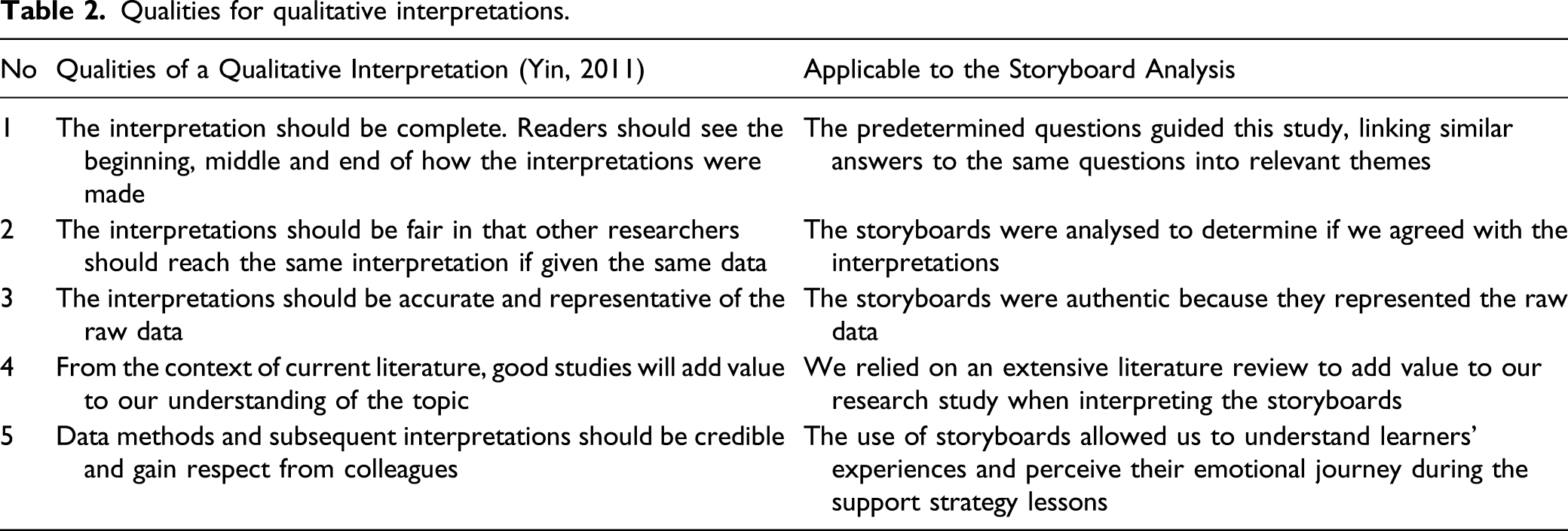
Qualities for qualitative interpretations.
Summary of the findings of the storyboards.

Charting the Data
Learners experiences of translanguaging support implementation strategies.

The bar graph above shows that Grades 5 and 6 learners from both schools displayed more positive than negative responses associated with the six questions posed to them. In addition, more learners from School A requested another L1 to be used than from School B. Based on the analysis of the storyboards, Figure 4 demonstrates how many storyboards in total reflected positive viewpoints. The figure also indicates the number of other viewpoints that were identified in the Grade 5 and Grade 6 learners from both schools. Demonstration of positive versus other viewpoints.
Given the findings from the storyboards demonstrated in Figures 4 and 5 is a graphical representation of a pie chart illustrating the need for translanguaging from the learners' perspective in the study. It appears that these learners are aware of their linguistic challenges, and thus, they voiced their opinions clearly in their storyboards. The learners' experience of listening to their L1 inside a multilingual classroom was an important contribution to their learning environment where such mediation and support is essential and central to their overall learning experiences (Figures 6–27). Need for translanguaging in multilingual classrooms. Storyboard 1 – Storyboard with six sections. Storyboard 2 – Positive Meaning attached to Translanguaging Storyboard 3 – Visual display of being happy. Storyboard 4 – Motivation for translanguaging to be used in classrooms. Storyboard 5 – L1 linked to home. Storyboard 6 – L1 linked to home and there is happiness. Storyboard 7 – Translanguaging supports understanding in a classroom. Storyboard 8 - A positive emotional experience. Storyboard 9 – L1 is valued. Storyboard 10 – Translanguaging to be made accessible. Storyboard 11 – Understanding content better in L1. Storyboard 12 – Visual presentation of a positive response. Storyboard 13 ––Link translanguaging to happiness. Storyboard 14 – Happiness towards L1 when audio recordings are played. Storyboard 15 – L1 creates happiness. Storyboard 16 – Teacher and learner relationship highlights. Storyboard 17 – Translanguaging promotes gratitude in learner. Storyboard 18 – L1 elicits happiness. Storyboard 19 – Visual display of happiness linked to multiple languages. Storyboard 20 – Visual depiction of learning and understanding. Storyboard 21 – Positive drawings linked to happiness. Storyboard 22-A visual presentation of a constraint identified from the learner’s perspective]. Storyboard 23 – Visual representation of how a learner requests another L1.











The pie chart highlights the positive responses from the learners who experienced the translanguaging support strategy lessons. Of the 170 learners, 85% enjoyed listening to the lessons in their L1 and would like more of these lessons in the future. There was consensus that better understanding was achieved when learners were allowed to listen to their L1 alongside English. However, 15% of the learners indicated other (less optimistic) feelings, the most prevalent being incorrect L1 played. The responses are discussed in detail in the following section.
Identification of Themes Elicited From the Storyboard Technique
Three themes emerged from this technique. Theme 1 describes the learners' need for more translanguaging support strategies to be integrated into their learning and teaching development. This is an important theme because it identifies translanguaging as an important contributor to academic success for learners who come from diverse, multilingual settings. Theme 1 links to Theme 2, highlighting that greater understanding is simultaneously attained when translanguaging strategies are employed. This theme subsequently feeds into Theme 3, which associates positive feelings to emotions when L1 is identified as a scaffolding tool to support learning and understanding. Themes 1, 2 and 3 are discussed collectively as we identify quotes from the storyboards and display the pictorial images from their individual storyboards. The learners' collective experiences in the classroom are displayed in their unique storyboards, each creating and reflecting their inner world, providing an understanding of the reasoning they attach to the translanguaging approach.
There is ample confirmation obtained from the storyboards that give insight into all the themes. Due to the enormity of 170 storyboards collected from the sample population, we extracted information from a sample of 25. We identified certain extracts from the storyboards to emphasise the collective themes that emerged from the learners' subjective perspectives involved in the translanguaging support strategy lessons. The learners' autonomy and confidentiality were maintained.
The responses obtained from the learners' storyboards are reproduced verbatim. Their responses appear in their original form, and no corrections of spelling and/or grammatical errors have been made. In this way, the authenticity of the responses has been retained.
Results of the Storyboards that Reflected Positive Viewpoints
Storyboard 1 commented on the positivity of listening to the lessons in his/her L1 and expressed that it was interesting:
Storyboard 1 identifies with Theme 3, in which positive emotional feelings are highlighted while listening to L1. Storyboard 1 also identifies with Theme 2 as greater understanding is experienced when translanguaging support strategies are employed inside classrooms.
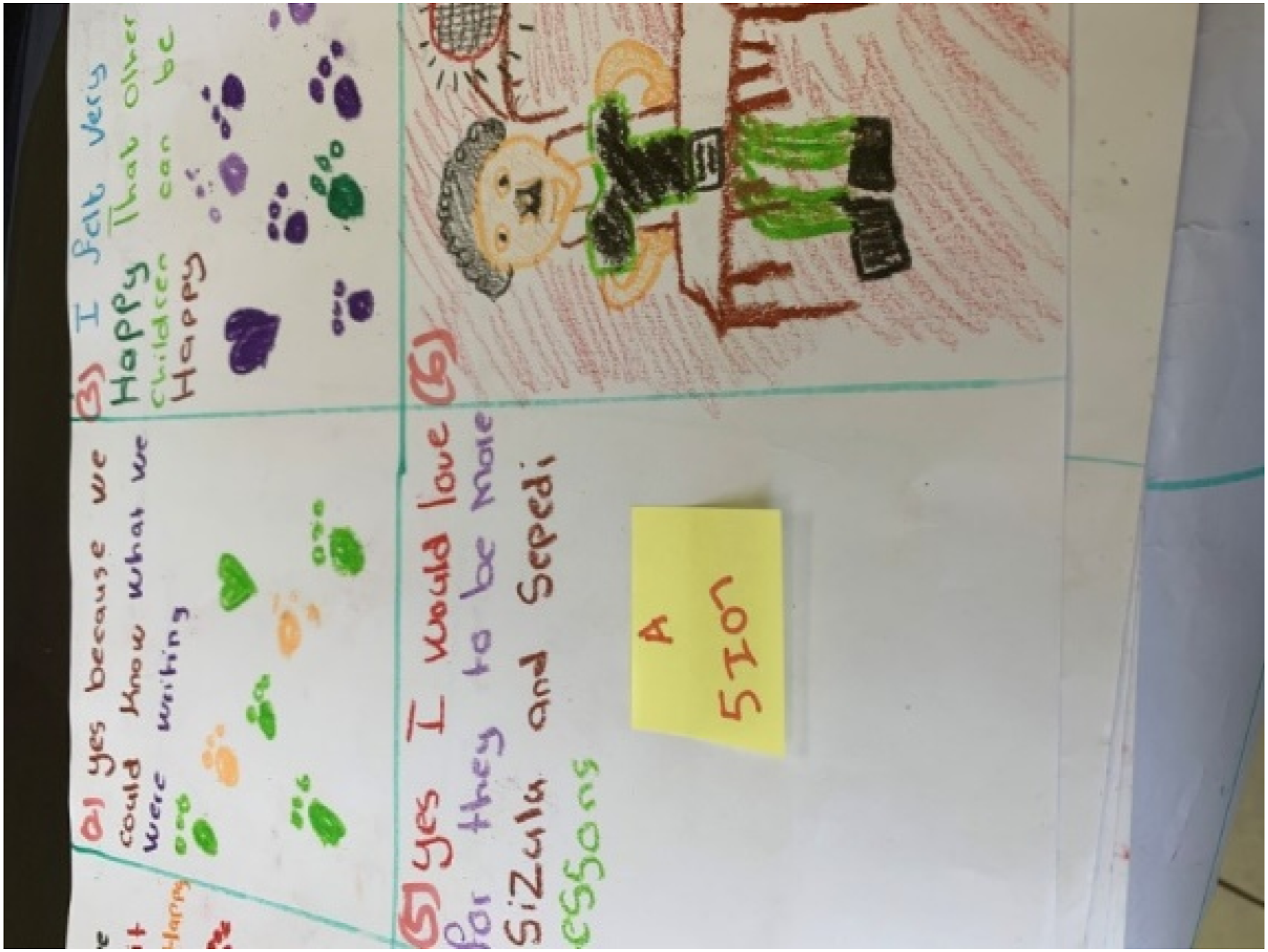
Storyboard 2 depicted below identifies a learner who expressed that there should be more lessons in his/her L1, resonating with Theme 1:
This would provide a deeper understanding of the lessons, as described in Theme 2:
And this would make his peers happy:
And make him/her happy: ‘I like that we could understand it and we could be happy’.
In addition to drawing images of hearts and footprints, this storyboard aligns with Theme 3, recognising the positive emotional feelings of happiness towards L1.
The above view is shared in Storyboard 3, this learner quotes that he/she feels very happy because more meaning is created when Sepedi is brought into the classroom lesson, demonstrating all three themes in one storyboard: ‘HAPPY!!! because it made more mining’. ‘Yes, more in Sepedi Because I feel so opened’. ‘Yes, in SEPEDI, because it is more easy’.
In Storyboard 4, the following was reiterated by a learner: ‘Yes, I understand better in my languages’.
This learner encapsulated all three themes in his/her storyboard, translanguaging is seen through a positive lens; translanguaging incorporates the essence of greater understanding and positive emotional feelings; there is a need and a desire for translanguaging to take place in multilingual classrooms.
Storyboard 5 identifies a learner who associated listening to L1 as a link to his/her home and family. This was depicted in the drawing in the last quadrant. This learner expressed the following: ‘I understand it in both of them’.
It appears that the learner feels understood when using his/her L1 and that multiple languages are perceived positively.
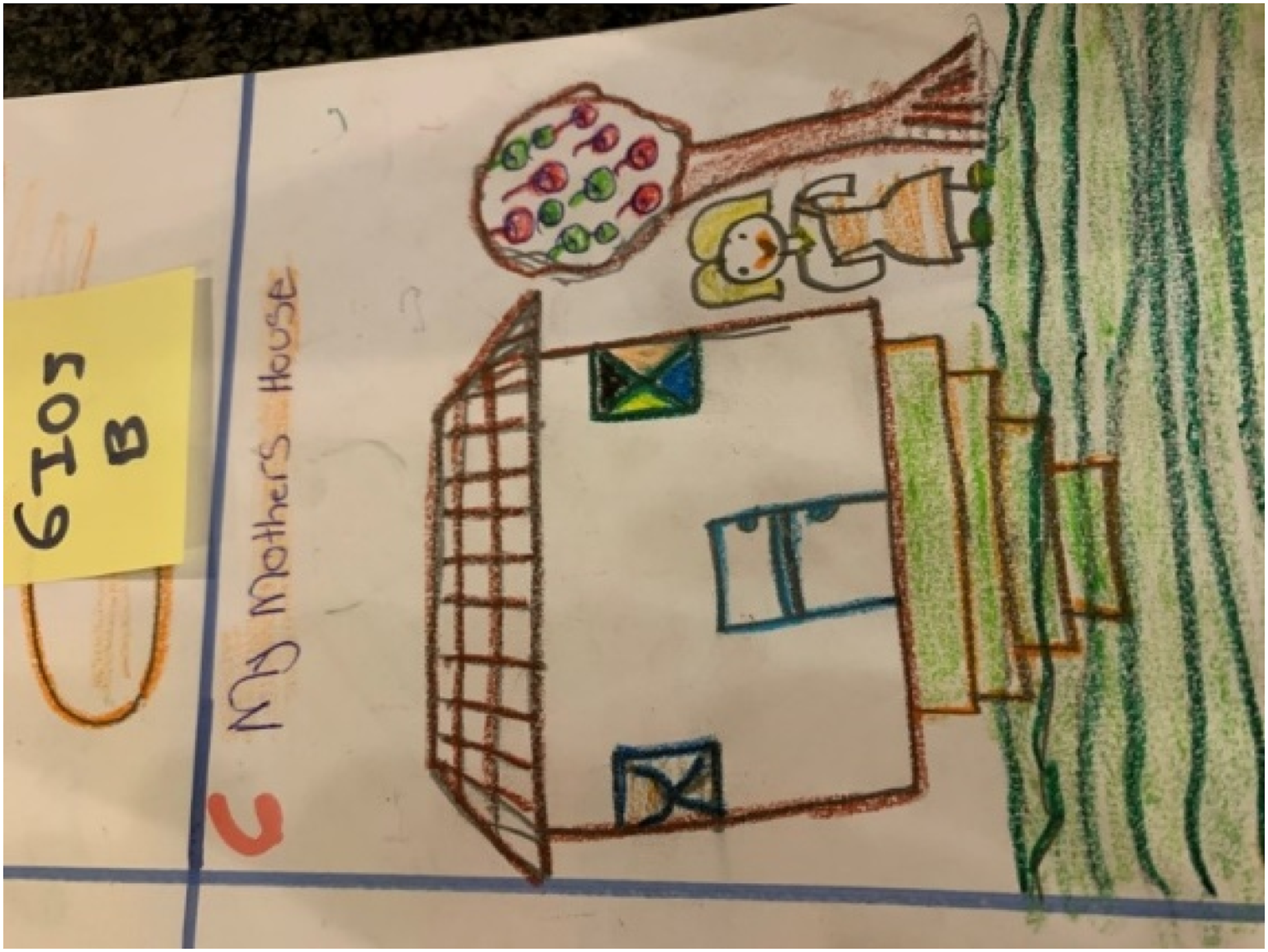
Another learner from School B concurred: ‘I am feel rights because is my language of home.” “I am understand on Sepedi’.
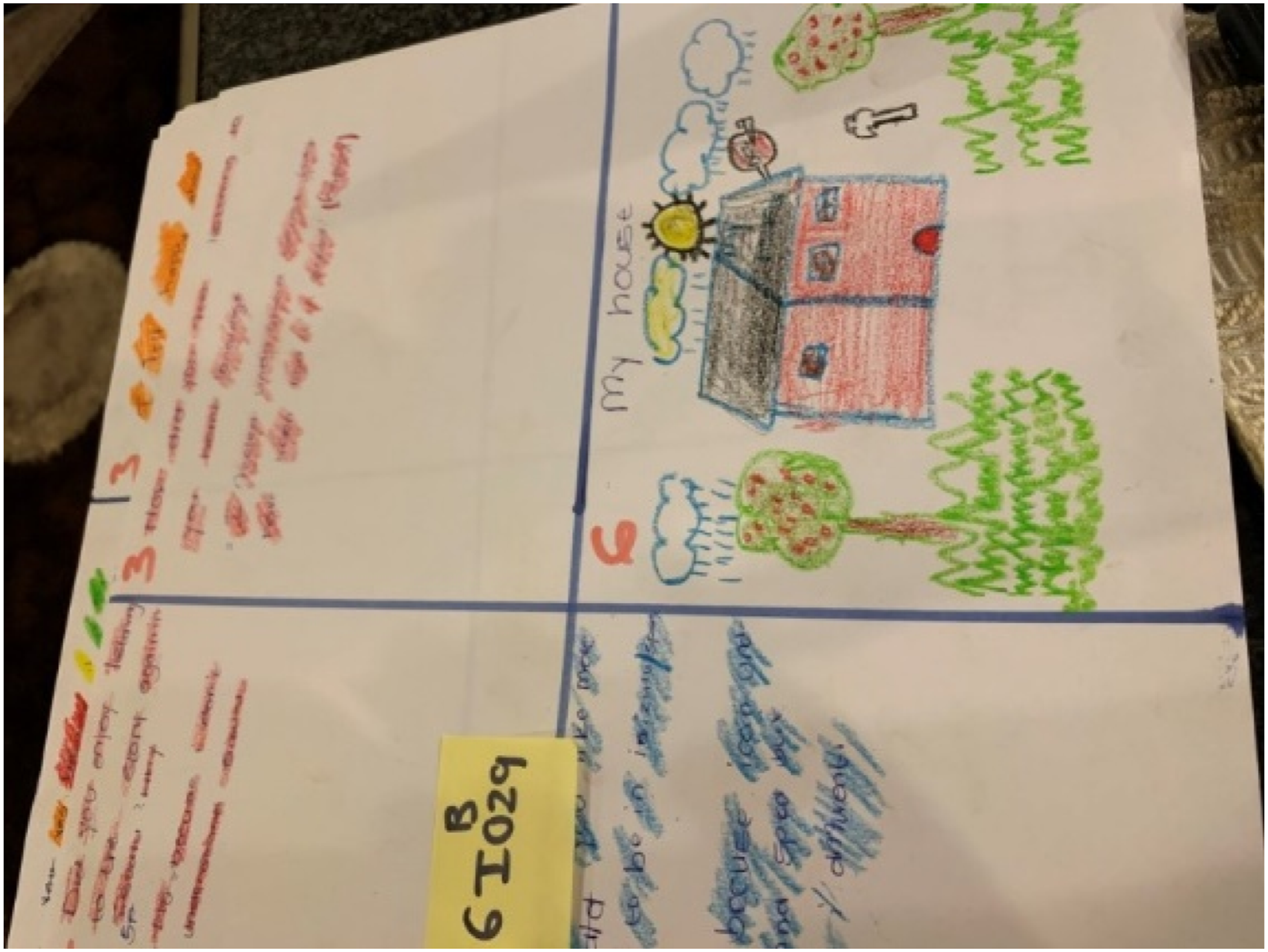
Storyboard 6 also depicted a home.
Storyboard 7 depicts a reference made by a learner who places importance on the translanguaging approach and associates it with his/her home: ‘I felt I was at home’. Additionally, the need for more translanguaging lessons to support his/her understanding was accentuated: ‘Yes, I would like more lessons because I understand’.
Storyboard 8 identifies with Theme 1. The learner views L1 as being special and places emphasis on the need for more translanguaging lessons: ‘Yes, becous Sepedi is my first language’. ‘I feel I’m special to my language’.
Furthermore, the learner adds value to Theme 2, which clearly links translanguaging to understanding: ‘I understand it in both of them (English/Sepedi)’.
Storyboard 9 articulated positive emotional feelings that resonate with Theme 3: ‘I enjoyed listening to the story in Sepedi more better’. ‘I feeled more free and I was like I am home listening to my mother telling me a story’.
In Storyboard 9, the learner drew a picture of a speech/thought balloon with a mother reading a story to a child to demonstrate the strong maternal link associated with his/her home and the classroom (learner is sitting on a desk). This drawing indicates the strong link to feelings being elicited when L1 is brought into the classroom.
With the same conviction, another learner expresses the following in Storyboard 10: ‘Yes, I enjoy it a lot becaus I can understand it in my lagugug’. ‘Happy’ ‘Yes I would like more lessone in Sepedi’.
These quotations substantiate the need for more translanguaging lessons to be made accessible. All three themes are recognised interchangeably in Storyboard 10.
The reflection and drawing in Storyboard 11 support the component of understanding being linked to translanguaging and view L1 as an important contribution to learning. ‘When our teacher said it was going to play it in English, Sepedi and IsiZulu’. ‘Yes, because I understand it better in my home language’. ‘Yes, I understand it better in Sepedi’.
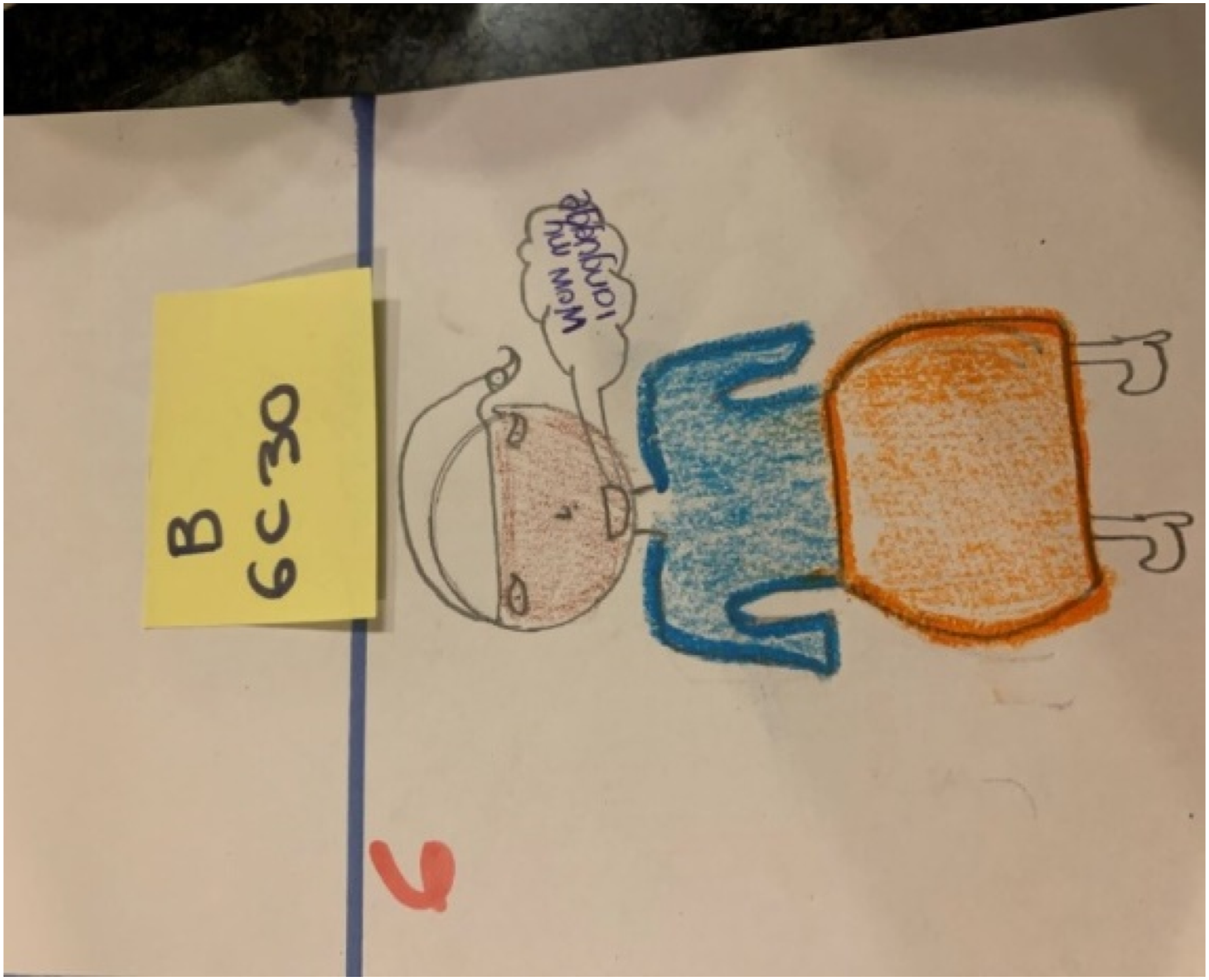
Similarly, in Storyboard 12, a learner explained that his/her understanding was better with L1 and used the word ‘like’ to describe the audio recordings being played in the classrooms. In the drawing in quadrant six, the learner used the word ‘Wow’ to affirm recognition of L1 in the classroom: ‘Yes, because I like my home language more than English’. ‘I felt happy because now I know what does dove mean in my home language’. ‘I liked when the teacher Played the radio and listening to a man who were reading Topo’s story in my home language’.
Storyboard 12 demonstrates the strong association with both Theme 2 and Theme 3 regarding a greater understanding when L1 is included in the classroom and the learners' positive feelings when L1 is used to support their learning and teaching environment.
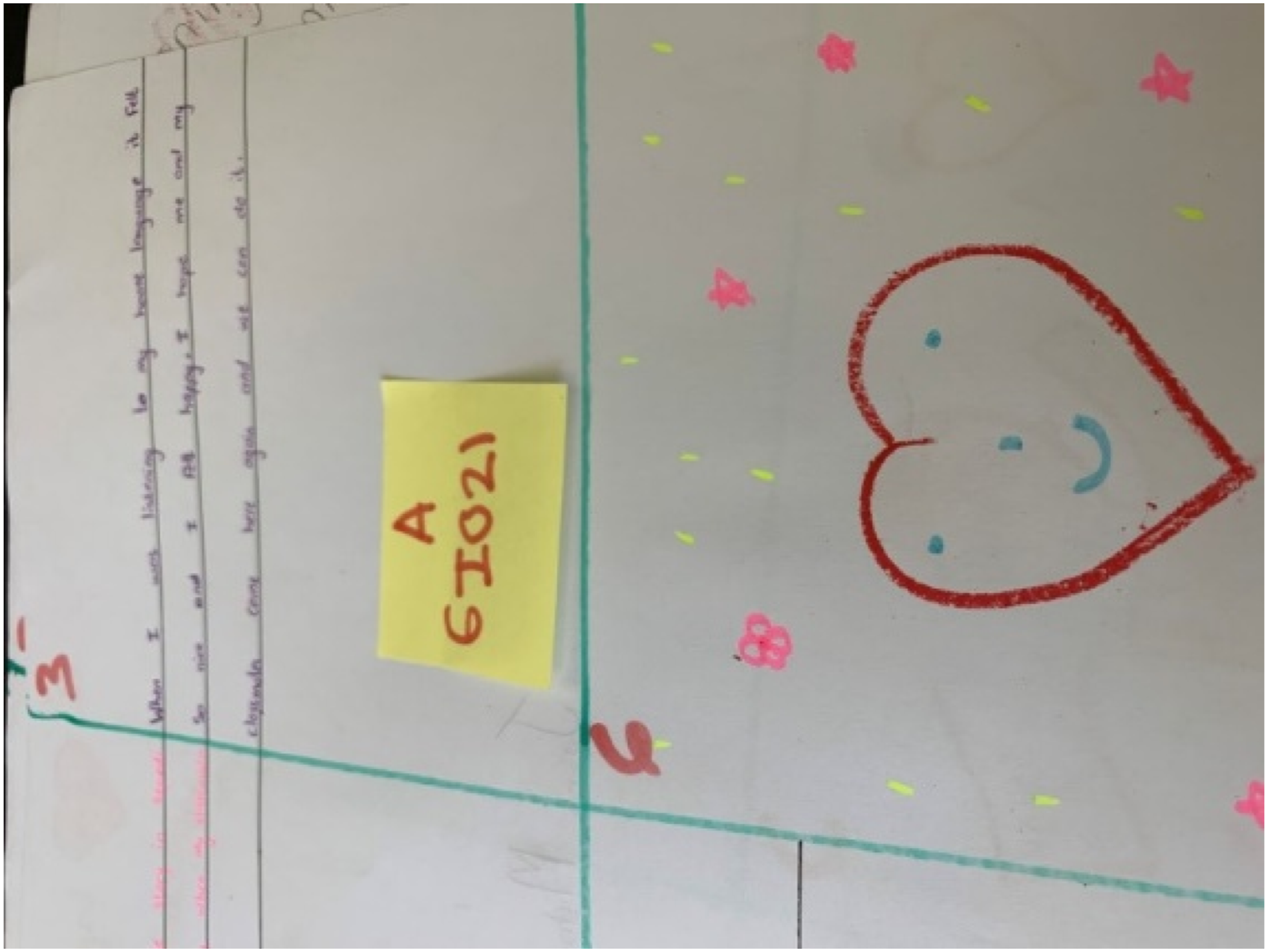
Storyboard 13 demonstrates the following: ‘When I was listening to my home language, it felt so nice, and I felt happy; I hope me and my classmates come here again and we can do it’.
All three themes are highlighted in Storyboard 14: The need for translanguaging is recognised; greater understanding is established when L1 is integrated into learning; and feelings of enjoyment and happiness are linked to L1. ‘Yes, I enjoyed listening to the story in Sepedi’. ‘I felt happy listening to the story in my home language’. ‘I want more lessons to be in Sepedi’. ‘I understand the story better in Sepedi’. ‘What I liked about the lesson is when we were listening the story in Sepedi’.
Storyboard 14: ‘I feel very happy because it makes me understand and listen’. ‘I understand it in IsiZulu because it [is] my language, and I know it better than English’.
Storyboard 16 recognised the teacher as a role model: ‘I felt very happy to hear a English story and change it to Zulu language’. ‘Yes, because its my home language and I really love storys with Zulu language’.
In the drawing, the learner drew a picture of herself and her teacher holding hands.
Storyboard 17 expressed gratitude for the translanguaging strategies that were implemented and which in turn promoted understanding: ‘I will never leave my language, and thank you very much’. ‘I was very happy, very, very, happy God bless you’. ‘What I like about the lesson was when the teacher make me understand’.
The learner drew a smiling sun and a smiling woman leaping into the air in the same storyboard.
Storyboard 18 is another example of a learner expressing happiness.
Storyboard 19 indicated the following comments: ‘I like the lesson with English and Sepedi’. ‘With all language English and Sepedi I know them’. ‘Nice and lovely because is my language’. ‘Because is my language I know it’.
Happiness linked to multiple languages was indicated by a learner who wanted more lessons in both Sepedi and English: ‘I feel happy’. ‘Yes, enjoy listening again in Sepedi’. ‘In English and Sepedi’.
The drawing in Storyboard 20 shows how learning should take place in a classroom with multiple languages. The picture displays a teacher teaching while the learner is sitting behind the desk. Symbols of hearts and flowers are present, demonstrating a positive association with multiple languages being included in classrooms.
Storyboard 21 presents images of hearts and flowers and includes a smiling face with the following text captions: ‘Yes, because it is my language and [I] like to listening to it and understand’. ‘Yes, because I understand in English and Sepedi’. ‘I felt happy about the lesson’.
Results of the storyboards that reflected other viewpoints
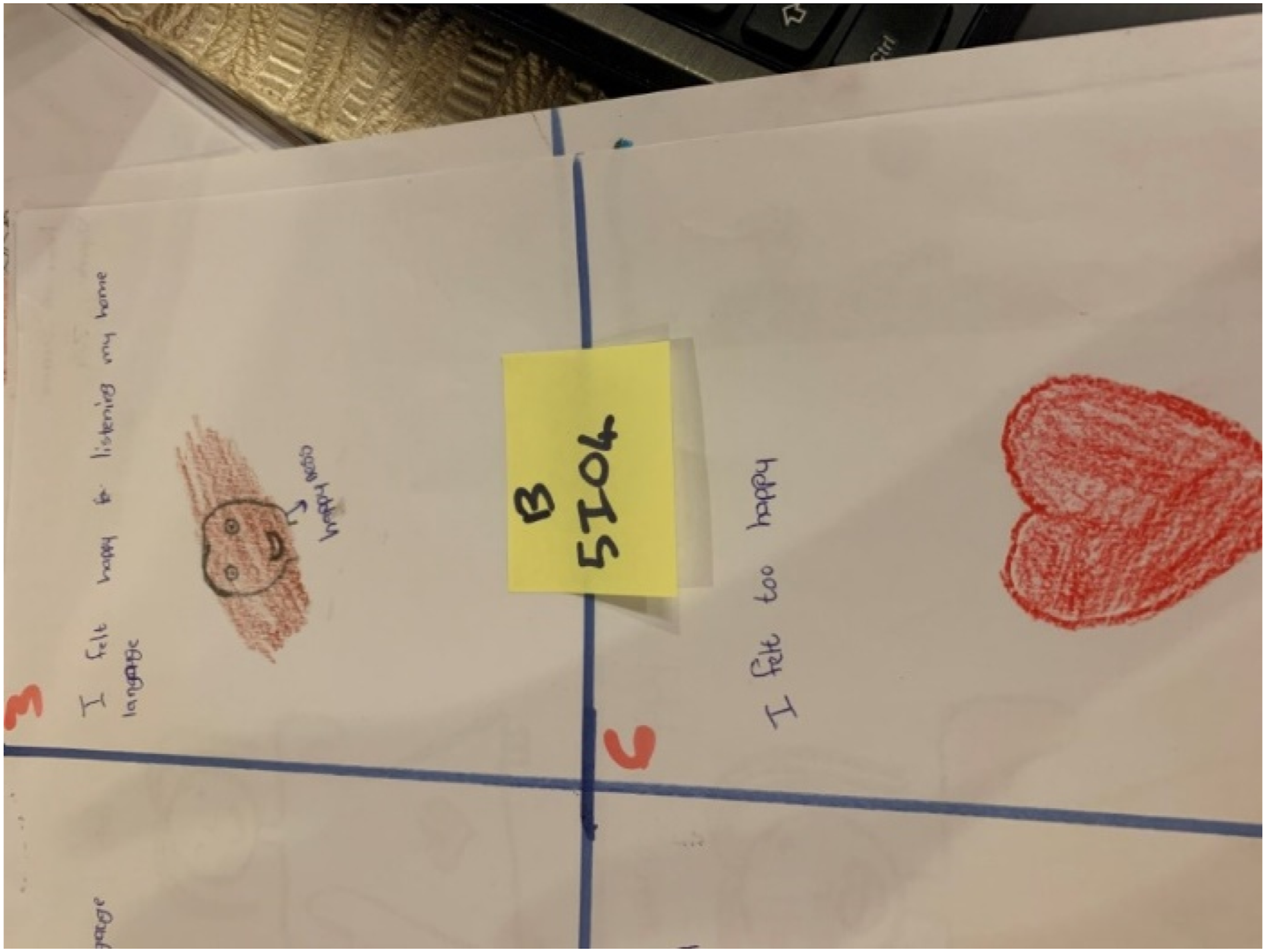
15% of the learners viewed the translanguaging approach less optimistically. Mixed emotions were identified amongst a few learners. Below the storyboards displayed an indifferent opinion towards translanguaging. Two storyboards (Storyboard 22 and Storyboard 23 from learners in School A (5I04) and (5I17)) serve as examples to demonstrate how the learners were able to express themselves through the medium of the storyboard. In Storyboard 22, the learner uses strong words such as
The above comment indicates the need to add an additional L1 (Venda) to support learning and understanding. It would seem that despite the negative experience of this learner, he/she still recognises the need to include an L1, which motivates the need for translanguaging. However, this learner’s L1 was not included in the support implementation classes for the current research.
Discussion
The findings of the study demonstrated that storyboards are a useful qualitative method of gathering data from learners. The positive comments from the 21 storyboards presented above strongly resonate with the three main themes identified in the study. The majority of the learners' storyboards resonated with achieving greater understanding through the use of multiple languages. Most learners articulated that their understanding improved when L1 was included in the classroom lessons. The storyboards reflect and confirm the essentiality of including translanguaging into classroom lessons, which, in turn, creates a greater opportunity to understand learning content. Including L1 in classroom lessons elicits positive, optimistic and reminiscing emotions. Most of the storyboards depicted very similar themes, and the learners' subjective experiences were collective. The majority of the learners expressed a need for translanguaging to be included as a support strategy in which multiple languages are taught in a parallel manner. Adopting such a strategy allows learners to enhance their understanding by using their L1 to fill in the gaps created when using the English language. Furthermore, there is a need to recognise L1 as an essential asset for understanding and enhancing a positive image for multilingual learners.
The study established that the inclusion of first languages mediated learning and teaching and provided guided support to accommodate academic development in multilingual classrooms. The findings revealed the learners' positive attitude and emotions towards translanguaging, and the consequent appeal for more lessons that incorporate the use of translanguaging, since the strategy improved their understanding of the content that was taught.
How the learners experience learning in multilingual contexts is clearly outlined in their storyboards and serves as an important contribution to the research question. The learners' authenticity in their storyboards can offer many insights into the use of translanguaging support strategies. It is equally crucial to understand how the learners experienced translanguaging support strategies to answer the research question.
The drawings/writings presented by learners in the storyboards demonstrate the meanings they attach to the topic being investigated (Guillemin, 2004; MacGregor et al., 1998; Mair & Kierans, 2007). Detailed information was gained from each storyboard that was reflective of the learner’s wants and needs. The learners were all able to express themselves on paper, exposing their lived experience of the support sessions in which translanguaging was used. This is endorsed by MacGregor et al. (1998), who assert the relevance and importance of the drawings because they are produced by a specific individual in a particular space and time and are a visual representation of the learner’s views.
Most learners agreed that they benefitted by listening to the comprehension texts in their L1. The rich, authentic and valuable information obtained from the storyboards aligns with the research of Burke and Prosser (2008), who assert that storyboards help to understand a child’s inner world and enable communication. The positive responses elicited from the storyboards indicate the need to embrace translanguaging in schools to uplift and move away from monolingual language systems towards a more flexible approach to accommodate multilingualism.
Snell (2017) elaborates that for learners to interact with the world and create new meaning, they need to use language to shape, recall and communicate their experiences. This aligns with how the learners in this study responded to L1 being included in their learning and teaching environment, creating a platform for communication through the storyboard’s medium where learners could express their need for L1. On this note, Busch (2012) and García and Baetens Beardsmore (2009) describe language as a social process involving a learner’s linguistic repertoire to make connections and meaning, using creativity to move fluidly amongst the linguistic practices that are most appropriate in any given situation.
The honest and clear meanings elicited from the individual storyboards concur with Chase et al. (2012), who describe the storyboard method as an alternative mode of engagement to face-to-face conversations with participants with cultural barriers. The messages displayed in the storyboards were very clear; learners could express their needs in a culturally less-biased environment, and their drawings and writings depicted their feelings in a straightforward, sincere and non-threatening way using the storyboard method. These feelings reflected both positive and less optimistic experiences and were a valuable source of data.
Limitations
Firstly, some learners did not perceive the translanguaging support strategy lessons positively because their L1 was not included. They would have preferred that their languages be included. Although the present study used three languages simultaneously in the translanguaging strategy, the need for an additional L1 was indicated. These learners indicated that they did not benefit from the translanguaging support strategy since their L1 was not included, making them feel excluded. The exclusion felt by the learners who did not experience a process of mediation and scaffolding to enhance their understanding can be attributed to the conflicts of language resolution due to socio-economic inequality that has influenced South Africa (Omidire, 2019; Prinsloo et al., 2018; Spaull, 2015) .
Conclusion
Our study utilised a creative qualitative technique to highlight the importance of giving learners a voice in the processes and decisions that affect them. The learners were given a platform to take ownership of their needs and expressed that it would be beneficial if more translanguaging practices were to be initiated. On this premise, the current research may contribute to the groundwork needed for similar studies to be conducted in South African schools. Minimal research has been conducted on the practical nature of implementing translanguaging approaches in primary school classrooms and qualitative methods to understand the needs of learners where language barriers exist. In addition, our research may assist psychologists in presenting schools with ways to implement multiple languages and find ways to strengthen the current educational system. The research highlights the constraints of implementing resources to accommodate the needs of multilingual learners. This finding leads to questioning the policies concerning language development, considering approaching the Department of Education and questioning their progress on the resources they have available to support such initiatives.
It is important to develop methods like the storyboard technique that can optimise young people’s participation in the development, implementation, analysis and interpretation and knowledge utilisation aspects of every study that involves or affects them.
Footnotes
Declaration of Conflicting Interests
The author(s) declared no potential conflicts of interest with respect to the research, authorship, and/or publication of this article.
Funding
The author(s) disclosed receipt of the following financial support for the research, authorship, and/or publication of this article: This study is part of a larger study funded by the National Research Foundation (NRF) South Africa, Reference: CSRP170516231076.
