




Abstract
Participatory research can change the view of children from research subjects to active partners. As active partners, children can be recognized as agents who can contribute to different steps of the research process. However, “participatory research” is an umbrella term that covers both the collection of data with children and children’s participation in making decisions related to the research process. As such, it raises particular challenges for researchers. Based on a pragmatic ethics approach, we were inspired by the realist review methodology to synthesize the current literature, identify different strategies used to engage children aged 12 and below in participatory research, and analyze how they affect children’s active participation and the ethical aspects related to each. Fifty-seven articles were retained for inclusion in the review. A variety of strategies were used to involve children in the research process, including discussion groups, training/capacity-building sessions, photography and filming, children as data collectors and questionnaires. The most prevalent ethical considerations identified were related to power dynamics and strategies to facilitate children’s expression and foster the authenticity of children’s voices. Researchers should address these ethical considerations to actively involve children within the research process and prevent tokenistic participation. Active inclusion of children in research could include co-identifying with them how they want to be involved in knowledge production (if they want to) from the beginning of a project.
Introduction
In line with conceptual shifts in the field of childhood studies (James & Prout, 2015), participatory research approaches help to shift perspectives of children as objects of research, toward the consideration of children as agents who can contribute to research development, design, conduct, analysis and dissemination (Clavering & McLaughlin, 2010). By involving children within the research process, children’s views can be interpreted through child-centered outlooks, instead of solely through adults’ views of their experiences, as has largely been the norm. This involvement from children can significantly change the orientation and outcomes of the research conducted, by being more attuned to children’s values, goals and perspectives (Coyne & Carter, 2018). However, “participatory research” with children is an umbrella term that covers many definitions of research with or by children: it covers both the collection of data with children and children’s participation in making decisions related to the research process. Without clear guidelines, the distinction between children’s participation as research subjects or as co-constructors of research is therefore blurred. As children’s involvement in different steps of the research process is different from participatory methods of data collection, the terminology used should reflect these differences. When using participatory methods, data is collected directly with children, using different ways to engage with children to collect the research data. In contrast, in a participatory research approach, children are actively involved in making key decisions related to the research process itself. Children, for example, will be involved in identifying or refining research questions, choosing the most appropriate research design and data collection methods, interpreting the data and identifying to whom to disseminate the research results (or who should be involved in disseminating the study results) (Coyne & Carter, 2018; Parry et al., 2009). Reviews have been conducted on participatory research (Bailey et al., 2015; Banks et al., 2013; Shamrova & Cummings, 2017), but knowledge is limited on the particular strategies employed to involve children in the research decision-making process and their related ethical implications. Furthermore, the participation of younger children in research remains an important challenge (Shamrova & Cummings, 2017). The current review focuses on studies conducted with children aged 12 and below, to address the specificities of this age group and to help researchers make more informed decisions on how to involve children in the research process, as opposed to solely a mean of data collection, and identify ethical issues that may arise.
Three main questions guided this review: (1) What different approaches and strategies have been employed to engage children (aged 12 and below) in participatory research processes? (i.e. descriptive mapping of existing research); (2) What are the implicit or explicit ethical considerations in participatory research studies conducted with children? (3) How do these strategies and related ethical considerations foster or impede the development of an engagement from children?
We were interested in reviewing the strategies and ethical considerations that led to children’s engagement in the research process itself, and not solely as a mean for data collection. We use the term strategy to refer to the specific means deployed to implement children’s participation in the different aspects of the research process. In recognition that many participation strategies mirror data collection methods, we here sought to differentiate more clearly between children’s involvement as subjects in studies using participatory methods (e.g. focus groups to collect data) and children’s engagement within participatory research processes (e.g. focus groups used to engage children in making decisions related to the research process). We recognize that this distinction can be subtle in practice but entails a different role from children. By the term approach, we refer to the broader types of participatory research approaches employed, such as participatory action research and participatory design. By the term engagement, we refer notably to Dewey’s concept of learning and growing which involves children acting about an idea, broadening their perception through the idea; and valuing it in relation to everyday experiences, from children’s perspectives (Aubrey & Riley, 2015). We note, however, that there are different definitions of what engagement entails in the literature, which might not always be consistent with this view.
Methods
Drawing from a realist review approach, we aimed to synthesize the literature and to highlight context, mechanisms and outcomes of children’s participation (Pawson et al., 2005). This type of review is highly suitable for the study of participatory research processes, as it aims to explain: “what is it about this programme [or strategy] that works for whom in what circumstances,” instead of solely describing the strategy or trying to identify the universal best way to address an issue (Pawson et al., 2005). We were inspired by a realist review approach (although unable to apply it systematically) to address children’s participation specifically. However, instead of adopting a middle-range theory as is prescribed by a realist review approach, we elected to adopt a more inductive approach based on the data available. More specifically, we highlighted the strategies that have been used to engage children in the participatory research process, based on an analysis of the context, mechanisms and outcomes of children’s participation and related ethical considerations. This allowed us to analyze the different research processes, while considering the specific context of each study. The outcomes were defined iteratively as data was extracted, based on the benefits, (potential) harms, challenges and incongruities of children’s participation for the children themselves and for the research. The ethical aspects were highlighted throughout data charting and analysis.
Article Identification
With the assistance of a university librarian, key databases from a diversity of disciplines were searched with the following keywords, to screen for relevant articles that involved children in research processes: (“patient-oriented research” OR (participatory AND (research OR design)) OR “patient-centered research” OR “participatory research” OR “action research” OR ((“consumer participation” OR “consumer advocacy” OR “community-institutional relations”) AND “research” OR “CBPR” OR (“participatory” AND “Research”) OR (“collaborative” AND “Research”) OR (“integrated knowledge translation”)) AND (Child* OR youth* OR adolescen* OR teen* OR paediatric* OR pediatric* OR “young people” OR kid*)
The specific databases searched were: CINHAL, ERIC, Scopus, ProQuest Social Sciences, PsycInfo, Pubmed, Web of Science, Academic Search Complete (EBSCO) and Anthropology Plus. We included databases from various disciplines to offer a broad diversity of perspectives and approaches to participatory research with children.
Inclusion and exclusion criteria were the following: (1) studies using a participatory research approach, in which children were engaged in at least one aspect of the research process (i.e. not a study in which children were solely involved as research subjects for data collection, but in which children were involved, for example, to refine the research question, to collect data, to interpret data or plan dissemination (L. W. Green et al., 1995); (2) children aged 12 years old or younger: (3) all research designs; (3) publication in English or French language; (4) no geographical, date or disciplinary limitations. Searches were conducted in 2018. Articles were excluded if samples included children from a broad range of ages (i.e. with children above 12 years old) for which younger children’s specific participation in the research process could not be determined. Articles were also excluded if children were solely involved as research subjects for data collection.
Article screening was performed by two research assistants using Rayyan, an application for systematic reviews (Ouzzani et al., 2016). A first screening was performed based on titles and abstracts to remove duplicates and exclude articles that clearly did not fit the inclusion criteria (e.g. studies involving adults only). Articles from this initial list were then screened independently by the two research assistants. In case of disagreement, the article was read in full, the reasons for inclusion or exclusion were discussed with one of the researchers and consensus was sought. The research assistants then read the included articles in full to ensure the fit with the inclusion/exclusion criteria.
Data Charting Procedures
A matrix was developed by the research team to chart the data in Microsoft Excel (see Supplementary File 1). This type of data charting facilitates the analysis process, by making trends in the data more easily identifiable (Averill, 2002).
First, one of the researchers and two research assistants independently charted the data from an initial set of three articles to compare the data collected and refine the data charting table. The research assistants then completed the charting for the other articles, and the researcher randomly selected and independently charted two articles to compare with the data collected by the research assistants and provide feedback and support during this process.
To identify ethical aspects and guide our review and analyses, we adopted a pragmatic ethics theoretical perspective, in which human flourishing represents a cornerstone of human life and self-actualization (Pekarsky, 1990; Racine et al., 2019) and where participation and agency are considered essential to self-actualization. By human flourishing, following pragmatism and contemporary literature in psychology, we refer to a state and process of self-actualization accompanied by positive emotions. It is consonant with mental health and wellbeing. Flourishing includes having meaningful existence (i.e. meaningful from the agent’s perspective), positive relationships with others, and being an active agent in one’s life (Pekarsky, 1990; Racine et al., 2019; Ryff, 2014).
From an epistemological standpoint, pragmatism emphasizes an agent-in-context perspective. It draws explicit connections between children’s experiences and opportunities for self-actualization via participation in activities affecting them and generating knowledge about them. Furthermore, pragmatism advances a doctrine of instrumentalism according to which ideas must be tested and assessed in light of their real-world outcomes and implications in specific contexts (Racine et al., 2019). This stance is consistent with realist reviews which attempt to understand interventions contextually and with attention to local outcomes and effects (Pawson et al., 2005).
In line with this pragmatic view, we identified ethical aspects based on any mention of ethical principles or values that touched upon children’s engagement in the research process, and included children’s experiences and perspectives when available (Montreuil, Martineau et al., 2019). For example, we included the extent to which an environment promotes children’s agency, since agency is fundamental to theories of human flourishing (Ryff & Singer, 2008). We also captured issues related to the ability for children to voice their concerns (e.g. advocacy, power dynamics) because of pragmatism’s commitment to the real-world actualization of human potential. The outcomes we identified related to children’s engagement were guided by this pragmatic perspective.
Data Analysis
A descriptive review was initially conducted to identify the types of studies included (e.g. by methodological/theoretical framework, country, children’s age, and discipline). For the ethical considerations, we developed a list of categories using the pragmatic ethics perspective described above. We revised the categories through discussion cycles with all members of the research team to categorize the ethical issues identified in the articles.
We drew on Green’s (1995) model to identify the steps within the research process in which children were involved. This model identifies four key steps in which partners should be involved to label a project as participatory research: (1) identifying or refining the research question; (2) choosing the most appropriate research design and data collection methods and/or collecting the data; (3) interpreting the data; and (4) identifying to whom to disseminate the research results (L. W. Green et al., 1995; Parry et al., 2009).
The data from the different articles were compared and contrasted by two reviewers to identify context-mechanisms-outcomes configurations and analyze trends. Specifically, using an inductive and iterative approach, we examined the different strategies used to engage with children and their related ethical considerations, in addition to assessing how these approaches were fostering or impeding the development of an active engagement from children, within different contexts. We therefore analyzed the functions—the contextualized mechanisms—of children’s participation in research and the related outcomes for children, the research process and research results, as well as knowledge development and application when applicable.
Results
Descriptive Review
Out of the 985 articles identified through database searches, 57 were retained for inclusion in the review (see Figure 1 for Flow Chart). Most of the articles were excluded as children were not involved in the research process itself. In most excluded articles, children were involved as research subjects or participants, such that data was collected with children to answer a research question, but children were not involved in making decisions related to the research process.
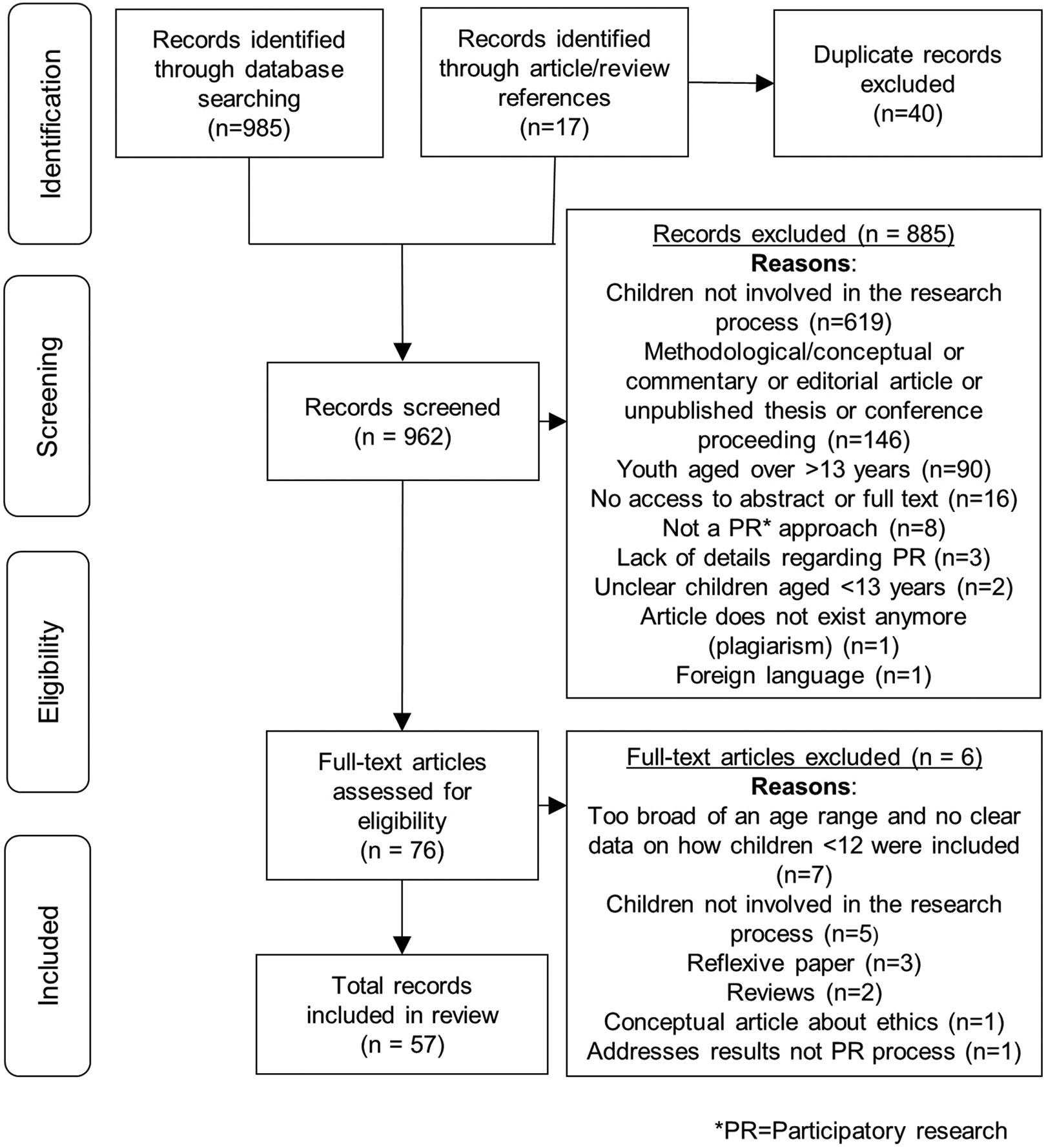
Flow chart for article screening.
Research studies using participatory research approaches with children were published in the last 13 years, with the first identified publication dated 2007, and a peak in 2010, followed by an average of five articles published per year. The vast majority of these publications came from studies conducted in Western countries, including the UK, USA, Canada, Ireland, Australia, and New Zealand (see Figure 2). Most studies (59%) were conducted in school contexts, primarily in preschool and primary school. Other contexts were notably healthcare (5%) or within the community (5%) (see Figure 3).

Countries where the studies were conducted.
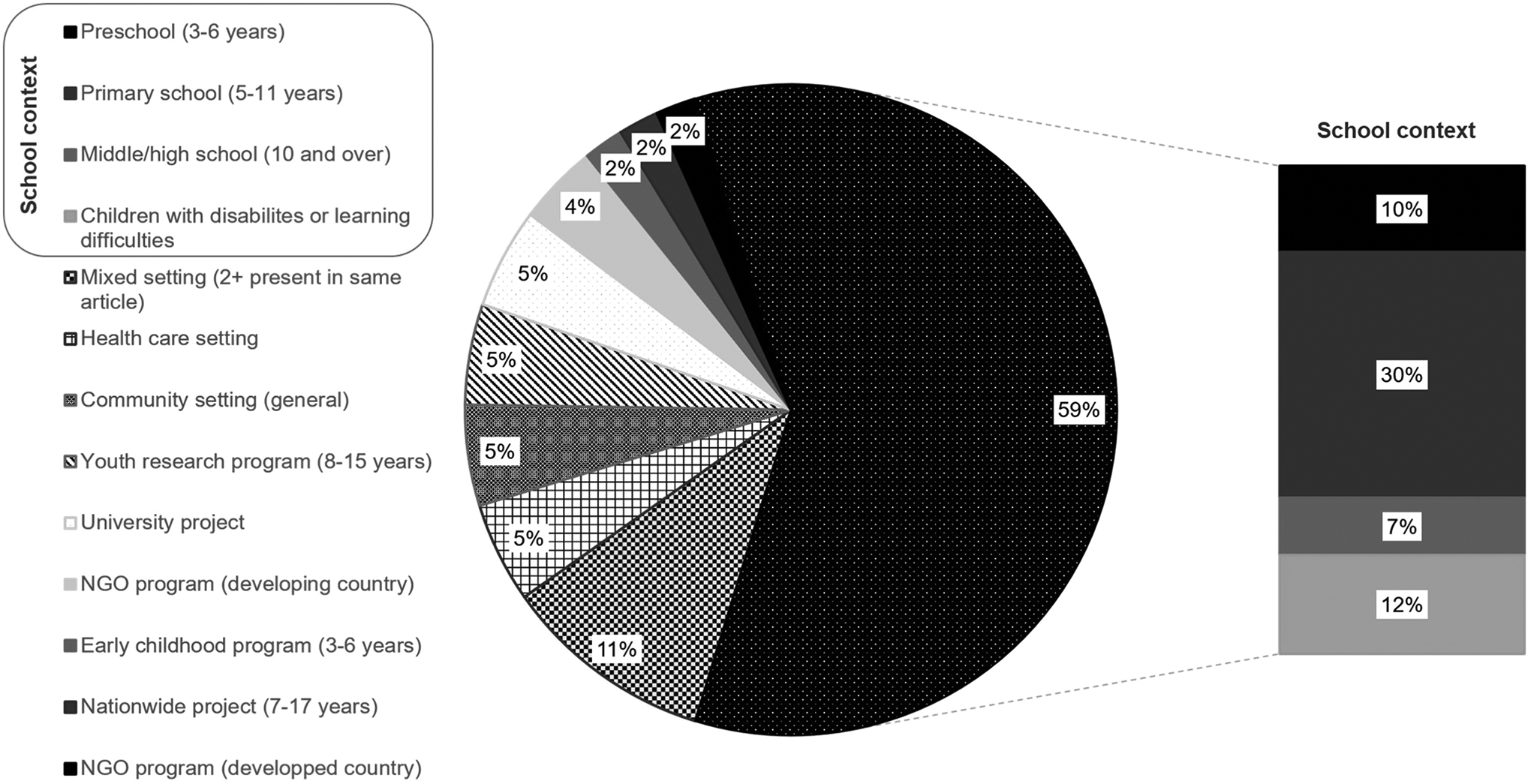
Contexts in which the studies were conducted and age groups where reported.
Different terms were used to refer to the participatory methodological approach, the most prevalent being “participatory research” or “participatory action research” (see Online Resource 2 for a complete listing). Upon analysis, the terms to label the approaches were not consistent across articles (i.e. the same terminology yet different definitions or meanings). We therefore focused on the actual descriptions of research approaches, instead of focusing on the terms. One exception to this is the common use of “participatory design” in school contexts with children with disabilities or learning difficulties. Independent of the approach, the identified methodological/theoretical orientations varied widely between studies, with more than 20 different orientations (out of 57 articles), ranging from phenomenology to grounded theory to critical studies, with study designs predominantly employing qualitative methodologies. An additional trend noted was the use of the United Nations Convention on the Rights of the Child (UNCRC) as an underlying framework to support the importance of including children as active members of research teams; with several authors citing the importance of drawing insights from children themselves, and the view of children as being experts of their own lives (e.g. Johnson et al., 2016; Meehan, 2015; Ruland et al., 2008).
Strategies used to engage children in the research process in participatory research studies conducted with children
The complete list of strategies employed to engage children in key steps of the research process is available in Table 1.
Strategies Used to Involve Children in Key Steps of the Research Process.

1 It is worth noting that many studies did not explicitly state what strategy was used to elicit the participation of children in these key steps while other studies mentioned the use of multiple strategies. There is no standard way of naming different strategies (i.e. capacity-building, training, workshops, etc.) and therefore groupings were made regarding our perception of each strategy used.
2 The total does not amount to the number of included studies as some articles involve children in more than one key step of the research process.
3 Studies in which it was mentioned that children participated in data interpretation or analysis are included here, regardless of the “level” of participation. See Discussion below for more details.
4 Included here are studies that mentioned that data analysis was done through photovoice and not our interpretation of how the analysis was done. See Discussion for more details.
Group discussions were typically presented as enabling children to brainstorm ideas, identify problems or topics they would like to know more about and jointly decide on the project to tackle (Ergler, 2017; Ozer et al., 2010; Reich et al., 2015). Focus groups were used for children to help contribute to the project design and enabled them to choose and have control over the methods used to address their concerns (Bagnoli & Clark, 2010). In one case, reference groups allowed for children to be involved in choosing data collection methods (Moore et al., 2015). As for capacity-building sessions, they were presented as a way for children to take ownership of the research (Kellett, 2010) or “identify a project that was meaningful to them” (Blanchet-Cohen & Di Mambro, 2014). Workshops and training were used for children to develop the skills needed to apply the data collection methods they chose, such as a survey-development workshop or interview training (O’Brien & Moules, 2007; Reich et al., 2015) or for the child researchers to acquire data analysis techniques (Porter et al., 2010). These strategies were used in many different contexts (Table 1). Studies that used a “participatory design” label used Druin’s definition of children’s roles in the PD research process: user, tester, informer and partner (Druin, 1999) further adapted to children with special needs (Guha et al., 2008). The role of design partner would fit most of the criteria from Green’s participatory research approach, although the two approaches are not fully equivalent.
Ethical considerations in participatory research studies conducted with children
Of the 57 articles reviewed, all of them—implicitly or explicitly—identified at least one ethical consideration. About a quarter (14/57) addressed only one ethical consideration out of the 14 listed (see Table 2), while the remaining articles address at least two.
Ethical Considerations in Participatory Research With Children.

The notion of power dynamics was the most prevalent ethical consideration raised, mentioned in over two-thirds of the articles (roughly 68%). This category includes power issues in relationships—either adult-child or child-child relationships—as well as power issues related to empowerment, and emancipation. While most articles approached the concept of power as related to age and the need to “redress” power imbalances that exist between adult and children, some also referred to cross-cultural interactions or gender (Gadin et al., 2009; Porter et al., 2010). Studies that included children as co-researchers in all, or most, of the key steps of the research process, referred to the importance of ensuring children have more power by setting their own agenda or taking an active role in decision-making (Kellett, 2010; O’Brien & Moules, 2007).
Facilitating techniques or environments to ensure children’s participation in the research process was the next most prevalent ethical consideration, present in roughly half of the reviewed articles (56%). Authors were concerned about children’s level of engagement in the research process and sought to prevent tokenistic engagement. For example, some researchers reported using facilitating techniques “to ensure that pupils could choose a way of feeding back which was also manageable for them” (Frost, 2007, p. 448) while others pointed to challenges pertaining to “child-friendly” techniques, warning that “researchers need to take care to ensure that the fun, participatory activities that are often used in research with young children are not labeled as ‘childish’ techniques” (Lundy et al., 2011, p. 733). The same contrast applies to the environment. Researchers underlined the importance of providing children with an environment that is inclusive and makes them feel safe to express themselves (Blanchet-Cohen & Di Mambro, 2014). However, researchers highlighted certain restrictions particular to specific environments—such as school contexts—on the provision of this safe and inclusive environment. For example, children could perceive research as school work, raising issues related to power dynamics (Bergström et al., 2010; Lundy et al., 2011).
Respect of the authenticity of children’s voice (or voices) and the challenges raised in doing so was the third most prevalent ethical consideration, present in two-fifths of the reviewed articles (44%). The value placed on representing children’s authentic views and words, and not a construction of the authors’ perception of children’s views, was very apparent in these articles. However, a major challenge lies in the notion of subjectivity. Some authors assert that it is possible to uncover an objective understanding of children’s views, while others conclude that the findings they present are a reflection of children’s outlooks.
The prevalence of the other ethical considerations varied greatly, as can be observed in Table 2. It is noteworthy that discussions regarding ethical considerations related to children’s active involvement in the research process could be identified within all of the reviewed articles. Many authors identified ethical considerations taken into account as the basis of the choices made about participatory research strategies employed but failed to mention how these were addressed. It is therefore generally unclear how these considerations were tackled in practice with a particular population and context.
Children’s Engagement in the Research Process Per Strategy
We here address how the most prevalent participatory research strategies and related ethical considerations identified above were described in the studies as fostering or impeding children’s active engagement in the research process. Each strategy is discussed in light of its associated outcomes for children, for the research process and for the research results, and contextualized (please refer to Supplementary Files for details).
Group discussions
Group discussions, focus groups, and advisory groups were presented as approaches that fostered children’s self-expression and reflection (Foster-Fishman et al., 2010; Koller & McLaren, 2014). In different types of school settings, when discussions were held in groups, it was emphasized that children’s perspectives contributed to heighten the reflective process for children themselves (Foster-Fishman et al., 2010) and, from the researchers’ perspectives, led to more varied and fruitful research ideas (Ren & Langhout, 2010; Silva Dias & Menezes, 2014). Challenges related to privacy and confidentiality were highlighted but were deemed to be outweighed by the benefits to children and research (Bagnoli & Clark, 2010; Holland et al., 2010). In a child-training program aimed at learning from children about how they could be involved in their community, the dialogical aspect of group discussions was also underlined as a key factor to enrich the analysis process (Foster-Fishman et al., 2010). In the context of a nationwide project that aimed to foster children’s engagement in research, developing an advisory committee composed of children was presented as facilitating children’s expression of their views and expectations on the research topic and methods (Horgan, 2016). Similarly, the use of an advisory committee to study “children’s everyday world” was presented as facilitating children’s expressions, since the research design was aligned with children’s perspectives and expectations (Bagnoli & Clark, 2010). These latter strategies appeared to also enable participant recruitment since many children who were advisory committee members also enrolled as study participants (Horgan, 2016). However, in a study on children’s engagement and contribution to community decisions through advisory groups, the challenges related to “group think” that might prevent certain perspectives from being put forward have also been raised (Horgan, 2016).
Training and capacity-building
Various studies included capacity-building sessions—often in parallel to other approaches—to help children develop research capacity. These sessions typically took the form of workshops offered to children involved in the research process. They included training and skill development in: research methods and research ethics (Kellett, 2010); active listening and cooperation (Doveston, 2007; Kellock, 2011); decision-making (Blanchet-Cohen & Di Mambro, 2014; Tan et al., 2011); how to take good pictures (Blanchet-Cohen & Di Mambro, 2014); how to conduct interviews, as well as data collection and analysis (O’Brien & Moules, 2007). Most of these studies were conducted in a primary school setting. For instance, in a study on children’s perceived well-being in school, the author reported that the workshops contributed to increasing children’s confidence, as well as build friendships (Kellock, 2011). These capacity-building sessions were identified as key to promote children’s participation in the research process (Blanchet-Cohen & Di Mambro, 2014), prevent their superficial participation (Dunn, 2015), and support children in disseminating research results (Kellett, 2010). These workshops were also described as contributing to shifts in power between researchers and children, by helping children take the lead in the projects (Kellett, 2010). In a study conducted in a primary school setting, authors reported that group discussions that were not explicitly planned as capacity-building sessions also sometimes led to capacity-building in children by allowing them to gain new insights on the topic under study (Dunn, 2015). Challenges included the time-consuming nature of workshops and the variable participation among children, with some not participating to the same extent as others (Kellett, 2010). For example, more articulate children could more easily participate and therefore take more space at the risk of “hi-jacking research agendas” (Kellett, 2010). A balance between adult support and children-led decisions were therefore presented as important to support a more balanced level of involvement among children.
Photography and filming
Photography and filming were often used as a mode of data collection. We retained studies for which these strategies were also employed to engage children in the research process, typically in data analysis and interpretation. The use of technological devices, including both photo- and video-cameras, were presented as approaches that facilitated children’s engagement and may have contributed to a shift of power to children, who directed what they photographed or filmed. In a child-training program aimed at learning from children about community involvement, the use of cameras permitted children to reflect on the research topic and discover deeper explanations for certain problems (Foster-Fishman et al., 2010). For example, discussions about photographs “allowed for deeper reflection of the topics raised by the photographer and promoted a critical analysis of current community conditions” (Foster-Fishman et al., 2010, p. 71). Importantly, Foster-Fisher recommends that children must engage in data analysis in order to reveal meaning, though this level of participation was not always evident in studies using photography or photovoice (see Discussion). Final products, usually in the form of films or photo-exhibit, were lauded as rendering the research process more explicit to viewers, making “more tangible” children’s contributions in knowledge production (Frauenberger et al., 2011), notably on a project involving children with special needs, and fostering dissemination research outcomes with community members (Foster-Fishman et al., 2010). The use of photography and filming, however, raise important concerns related to privacy and confidentiality in relation to the people and locations being photographed or filmed.
Questionnaires and surveys
Questionnaires were used in a wide variety of settings (primary and middle school, community, NGO programs) to consult a larger number of children than those from an advisory committee on aspects related to the research process (Blanchet-Cohen & Di Mambro, 2014) or to help children think more critically about the research issues and questions (Reich et al., 2015). These questionnaires were typically co-constructed by children and researchers (Blanchet-Cohen & Di Mambro, 2014; Oliver & Hamzeh, 2010). They were reported as being less time-consuming than interviews (Maglajlic, 2010) and more inclusive (Blanchet-Cohen & Di Mambro, 2014). However, in a study within a community setting related to support services for children in care, the authors mentioned that it could be challenging to clearly understand each child’s individual experience as the data was not contextualized in a questionnaire (Hooper & Gunn, 2013).
Sorting exercises
Sorting exercises and categorizing were used in studies mostly for data analysis (Foster-Fishman et al., 2010; Gadin et al., 2009; Olufisayo John-Akinola et al., 2013). For example, in a study that aimed to understand how children can be involved in their community and how their community might help them in return, they included a sorting activity to engage children in data analysis to foster critical thinking in children and help analyze the multiple meanings of the data they collected through photovoice (Foster-Fishman et al., 2010).
Children as data collectors
Studies in which children were data collectors were primarily in primary school contexts. In the case of child-led interviews, several authors noted an increase in children’s confidence in their capacity to take part in research as compared to the start of the study (Blanchet-Cohen & Di Mambro, 2014; Levy & Thompson, 2013; Marsh, 2012). Some authors reported an augmented comfort level in child research participants when other children were the interviewers, in contrast to adult interviewers, noting this practice seemed to decrease the power differential. For example, children tended to use “child-friendly questions, which helped the research participants feel “at ease” (Hacking & Barratt, 2009). This active involvement in data collection was presented as a learning opportunity for children—for example to learn how to formulate informative questions—which led to better-quality data (Reich et al., 2015). However, in one study, certain child interviewers did not want to interview younger children as they questioned the younger children’s ability to understand the questions (Porter et al., 2010), which would warrant a review of the guide or an adaptation on the part of the interviewer. Field observations by children were presented as an effective approach to study children’s experiences and perspectives, for example in studies related to their environment (Ergler, 2017; C. Green, 2016). No specific research or child-related outcomes were, however, reported in these studies on field observations.
Dissemination
The creation of presentations with software (e.g. PowerPoint) that combined text and pictures, or the creation of an exhibit or a book, were considered as effective for children to “express their voices” (Foster-Fishman et al., 2010; K. Oliver & M. Hamzeh, 2010). These artistic activities were usually group-based and could also be used by children to disseminate their research results or as a means of receiving a “product resulting from their involvement in the process” to make their contributions more tangible (Frauenberger et al., 2011). These outcomes are shared through contexts, whether it be in a school or community setting, with children with learning difficulties, a NGO program, or child training programs. Apart from communication facilitation, no specific benefits or challenges were raised in relation to dissemination.
Multi-methods strategies
Multi-methods strategies, such as the Mosaic approach, use a range of different techniques (such as children’s own photographs, tours, and geo-mapping combined with talking and observation) in order to recognize children different voices and gain a better understanding of children’s perspectives (Clark & Moss, 2001). While most authors who use the Mosaic approach employ it to structure their multi-method data collection process (as described by Clark & Moss, 2001), some authors used a multi-methods approach to engage children in different steps of the research process. For example, in one study, researchers used a rag doll to foster discussion among children about what question to research and help them choose data collection methods from a variety of possibilities (Dunn, 2015; Gray & Winter, 2011). Some authors using this approach consider that “in giving children choice over the subject and tools of enquiry, we sought to empower them” (Gray & Winter, 2011, p. 318). These strategies were seen as time-consuming, posing a challenge to researchers (Gray & Winter, 2011).
Discussion
This review highlights the different strategies that have been used to date to engage children (12 years old and below) in participatory research, based on an analysis of the context, mechanisms and outcomes of children’s participation and related ethical considerations. In the following discussion, we address (1) the process and outcomes of participatory research with children; and (2) ontological-epistemological and ethical considerations in conducting participatory research with children.
The Process and Outcomes of Participatory Research With Children
The umbrella term “participatory research” with children covers many definitions of research with or by children. It covers both the collection of data with children and children’s participation in making decisions related to the research process. Without clear guidelines, the distinction between children’s participation as research subjects or as co-constructors of research is therefore blurred. This lack of clarity reflects current debates within Interdisciplinary Childhood Studies about how to label research involving children and what is meant by such labels (Coyne & Carter, 2018; Groundwater-Smith et al., 2014). This review attests to this debate: many articles were excluded while mentioning the term “participatory research” with children, since upon reading the article, children were not engaged in the research process. Some authors also stated that their study “involved pupils actively in all phases of the research,” whereas children were included solely in data generation and data analysis (Olufisayo John-Akinola et al., 2013). Levy and Thompson (2013), referring to the many interpretations of the term participatory research, consider that participatory research with children “has to involve listening to children and hearing their voices” (p.139). While this is true, we would argue, however, that participatory research is not solely about listening to and hearing children’s voices, but, rather, employing strategies to engage children in making decisions related to key steps of the research process. While the actual methods to collect data with children can resemble strategies used to engage children within the research process, the intent and aim of children’s involvement are different. Furthermore, ethical participation in research entails “methodological understandings of research” as a whole over the strategies and methods (the parts) (Holland et al., 2010; Horgan, 2016; Palaiologou, 2013).To highlight this difference, we suggest reserving the term participatory research for studies in which children are involved in making decisions related to key steps of the research process as outlined in Table 1, and the term participatory methods to refer to means to directly engage children to collect study data.
Several positive outcomes related to the use of a participatory research approach with children were highlighted in this review, for both children (e.g. development of teamwork, broadening children’s views, “empowerment”) and research (e.g. richer data, projects which are more attuned to children’s views and objectives). However, despite an increase in the use of these approaches with children, authors typically did not describe the actual process used to engage children and rarely reported on children’s own perceived engagement in the research process. Consequently, very limited knowledge was available on the outcomes of children’s engagement, let alone from children’s perspectives. When children’s perspectives were mentioned, they were typically anecdotal and reported by proxy by the researcher. As mentioned by Carter and Coyne (2018), claims from researchers that a participatory research approach was used are not always reflective of an actual participation from partners. In the studies reviewed, the capacity-building sessions appeared important to foster children’s active participation in the research process, and to provide children the opportunity to choose the strategies used to express themselves.
Analysis and interpretation are key steps in the research process that could be overlooked or tokenistic while conducting participatory research with children. As Foster-Fishman et al., 2010 state “[t]he way in which data is interpreted is significantly influenced by the perspective of the parties conducting the analyses […] even data collected or reported by children can be misrepresented if children, themselves, are not involved in defining the meaning behind their data” (p.75). Even though some strategies (i.e. photography, photovoice) offer an analytical component, it can be tokenistic if children’s involvement ends with data collection. Notably, some authors use photovoice so children can give further detail about specific photographs, while they conduct the analysis without children’s involvement (Joubert, 2012; Motsa, 2017)—effectively removing children from the analysis. This limitation of the photovoice method is echoed in the literature, with Nykiforuk et al., 2011, noting that the participatory nature of their photovoice project was limited regarding “the extent to which individual participants were involved in specific elements of the research” (p.117). Other authors also highlight issues related to photovoice about privacy, authorship and use with vulnerable populations (Joanou, 2009; Karlsson, 2007).
While some authors have already engaged with children on reflecting about their participation in research (Moore et al., 2015), further research on children’s experiences and their perspectives on being engaged in a participatory research study would be valuable to clarify children’s own views. Various benefits of participatory research over more traditional forms of research (i.e. spectator-view of knowledge production) have been highlighted with adults (Jagosh et al., 2012). The results presented here hint at similar beneficial outcomes of participatory research with children, but more details related to these benefits would be required. Future research in this area could also identify challenges, potential or documented harms, and incongruities related to children’s participation in the research process as a whole and not solely pertaining to data collection methods (Holland et al., 2010; Pain & Francis, 2003).
There has been an ongoing discussion in the last 15 years as to research “on,” “with,” “by” or “for” children, and the related benefits and challenges (Bradbury-Jones et al., 2018; James, 2007; Sinclair, 2004). Independent of the term used, the actual engagement from children, in other words, what children do and how they practically contribute to the research process would benefit from being clarified in many studies. For instance, claims that a study was conducted “by” children, would not be meaningful if the children and researchers’ roles are not clearly specified. As Gallacher and Gallagher state: “while it is generally agreed that “participation” is a positive attribute of research, in childhood studies there has been limited methodological reflection upon what the term actually means” (p. 502). Moreover, certain contexts or mechanisms might lead to power differentials between children and adults that might not be conducive to positive emotions by children and a meaningful participation. For example, some authors consider that school settings might be perceived as coercive by children, which represented the settings where the majority of the studies included in this review were conducted (Bergström et al., 2010; Lundy et al., 2011).
Consistent with the views of Groundwater-Smith et al., (2014) and Gallacher and Gallagher (2008), we consider that the best approach should be tailored to the aims of the particular study, and that there is no hierarchy of the best way for children to participate (if at all). We agree with the statement by Palaiologou (2013) who posited that “how we can achieve participatory research with young children should be moderated to how we can achieve ethical research with young children where children are encouraged to take responsibility and ownership, while at the same time autonomy and shared responsibility is encouraged” (p. 692)
Ontological-Epistemological and Ethical Considerations in Conducting Participatory Research With Children
The balance between the protection of children’s best interests and their recognition as active agents (Montreuil & Carnevale, 2016) was rarely mentioned explicitly but could be inferred from many articles. The prevalent child welfare culture, based on principles of children’s protection, influences the degree to which children are included in projects they could have an interest in or could benefit from (Coyne & Carter, 2018). This protectionist view tends to be prevalent in Western societies (Montreuil & Carnevale, 2016), from which the majority of the included studies’ authors were based, consistent with the review by Shamrova and Cummings (2017). By adopting an ontology that positions children as full social agents (in contrast to small adults, or adults becoming) (James & Prout, 2015; Lee, 2001), researchers can facilitate children’s engagement in knowledge development, while ensuring their protection by being attentive to ethical considerations specific to children’s engagement in the research process. By this, we do not suggest the addition of strict research ethics criteria for participatory research studies (which we assert could lead to over-protection and infringe upon the possibility of children’s participation in knowledge development), but rather, an increased awareness of the potential ethical considerations to address them reflexively (Powell et al., 2016).
In line with certain authors, we consider the specific strategies employed should be guided by the particular research project and context (e.g. Groundwater-Smith et al., 2014; Ren & Langhout, 2010). For example, if conducting a study with children who have experienced sensitive issues (e.g. trauma, suicide, abuse, etc.), the benefits of group discussions to design the project might be outweighed by the need for privacy and confidentiality. Similarly, there are numerous ethical issues related to child-led interviews, most notably in relation to confidentiality and disclosure of sensitive information by child participants. Before using this type of approach, child interviewers should be aware of research ethics principles (e.g. confidentiality) and attention should be paid to ensure children do not feel overwhelmed by the information disclosed, which would be a form of protection (Groundwater-Smith et al., 2014). We suggest that the specific approaches that could be employed be discussed with children directly, as not to pre-impose any preconceived judgments and to allow children the opportunity to co-construct the project in a manner in which they feel included. Potential limitations as to the outreach of the project could also be discussed directly with children, to prevent disappointments in terms of potential outcomes (Montreuil, Thibeault et al., 2019).
The justification for participatory research is often based on empowerment for children. This concept of empowerment has been critiqued: while some view participatory research itself as a way for “restoring power imbalances” (Gadin et al., 2009; Porter et al., 2010), others view power as dynamic and fluid, not necessarily controlled by one group, and being produced through the social interactions embedded in research, including participatory research with children (Gallacher & Gallagher, 2008; O’Brien & Moules, 2007). This latter view brings into question what it is we call “empowerment” in participatory research with children, especially if this empowerment is viewed through the lens of adult researchers. For example, claims of children being empowered were sometimes made, with no information on children’s experiences: “it was apparent that the use of the cameras made them [children] feel empowered” (Joubert, 2012, p. 461). As Gallacher and Gallagher state, if “empowering” implies that “without aid and encouragement from adult-designed ‘participatory methods’, children cannot fully exercise their ‘agency’ in research encounters” (p. 503), the participatory research approach risks perpetuating the very system they oppose (Gallacher & Gallagher, 2008). Furthermore, it is important we consider whose voice it is we “empower” and whose voice we render silent (children’s background, the socioeconomic context in which the study takes place, etc.) (Spencer et al., 2020). It would be relevant to clarify what is meant by empowerment and how it could be assessed. We consider that discussing these ethical issues from the start with children, including how much can change from the research plan (e.g. if there are specific requirements related to study funding), could contribute leading to more informed and active children’s engagement in the research process (Maglajlic, 2010).
Limitations
Many studies did not describe in detail the strategies used for children’s participation in the research process. There is also no standard way of naming the different strategies (e.g. capacity-building, training, workshops). Therefore, the analysis of each strategy was conducted based on how the strategies were described in the articles. Due to the limited information available in the articles, we could therefore only provide a partial analysis of the context-mechanism-outcome configurations.
The outcomes identified were those reported by the authors and might not reflect outcomes as perceived by children participants. Considering the limited information available on children’s perspectives of their participation in the research process, the results generally present the researchers’ views on the outcomes of using participatory research with children, as well as presenting ethical issues. The third review question on how the specific approaches and related ethical considerations fostered or impeded the development of an active engagement from children could therefore only be addressed from the perspective of researchers.
The application and outcomes of strategies to foster children’s participation can vary based on context, for example if the strategies are applied in a classroom with neurotypical children, in a healthcare context or in a context with children with special needs (Frauenberger et al., 2011). While we noted that a certain participatory strategy, participatory design, was more often used in school contexts with children with disabilities and learning difficulties, we did not identify other trends that were context-specific and how they affected the implementation of the strategies.
Conclusion
Participatory research with children holds great benefits in terms or promoting the wellbeing and flourishing of children throughout the research process as well as generating knowledge that is more coherent with how children view their own wellbeing. Undertaking such research raises distinct challenges such as the need to recognize and address issues related to power differentials and to prevent tokenistic participation. Our review highlighted the different strategies that have been used to foster children’s participation in research, including capacity-building sessions, photography/filming, group discussions and the offer of multiple strategies for children to express themselves.
Engaging in a reflexive process could be a way for researchers to be more attuned to their own perspectives and experiences related to children’s participation in research (e.g. ones’ own beliefs and thoughts), which could contribute to foster children’s active and meaningful participation in the research process. Active inclusion of children in research could include co-identifying with them how they want to be involved in knowledge production (if they want to) from the beginning of a project. For each research project, specific strategies might contribute to children’s participation based on the specific context in which the project is situated, and we recommend adopting a pluralist view. By clearly describing how the different participatory research strategies are used for each project, it would enhance the reader’s understanding of children’s engagement. It would also contribute to differentiate children’s involvement as research participants from children’s engagement in making decisions related to the research process. This differentiation would also have implications for research ethics, as consent processes may differ depending on children’s role in the project. The ethical concerns will also be different based on the type of children’s engagement and should be clearly addressed.
Future research could focus on an in-depth analysis of the contexts, mechanisms and outcomes of participatory research with children to provide more insight on children’s engagement (which most articles did not provide in this review). Furthermore, studies specifically on children’s perspectives and experiences of being engaged in participatory research projects would be valuable to enhance understandings of the process and the ethics of children’s participation in the research process.
Supplemental Material
Supplemental Material, sj-pdf-1-ijq-10.1177_1609406920987962 - A Review of Approaches, Strategies and Ethical Considerations in Participatory Research With Children
Supplemental Material, sj-pdf-1-ijq-10.1177_1609406920987962 for A Review of Approaches, Strategies and Ethical Considerations in Participatory Research With Children by Marjorie Montreuil, Aline Bogossian, Emilie Laberge-Perrault and Eric Racine in International Journal of Qualitative Methods
Footnotes
Acknowledgments
We wish to acknowledge Gabrielle Doré and Audrey Francoeur for their contribution to the data searches, screening and charting.
Declaration of Conflicting Interests
The author(s) declared no potential conflicts of interest with respect to the research, authorship, and/or publication of this article.
Funding
The author(s) disclosed receipt of the following financial support for the research, authorship, and/or publication of this article: Marjorie Montreuil received financial support from the Institut de recherches cliniques de Montréal and McGill University’s Faculty of Medicine. Eric Racine’s work is supported by a researcher emeritus award of the Fonds de recherche du Québec—Santé. Marjorie Montreuil’s work is supported by a researcher career award, junior 1, by the Fonds de recherche du Québec—Santé and Unité de soutien SRAP du Québec.

Supplemental Material
Supplemental material for this article is available online.
References
Supplementary Material
Please find the following supplemental material available below.
For Open Access articles published under a Creative Commons License, all supplemental material carries the same license as the article it is associated with.
For non-Open Access articles published, all supplemental material carries a non-exclusive license, and permission requests for re-use of supplemental material or any part of supplemental material shall be sent directly to the copyright owner as specified in the copyright notice associated with the article.
