




Abstract
Photovoice is a visual research methodology that integrates images and words to encourage the exploration of the experiences, perceptions, and meaning-making processes of individuals on various social phenomena. As a participatory qualitative methodology, Photovoice has been used within the interpretivist paradigm to explore various [public] health and social phenomena to enhance participants’ (co-investigators’) engagement and to lobby for policy. Despite its exponential growth and extensive application in the last two decades, its potential usefulness in critical realist-informed studies is unexplored. Herein, we highlight the epistemological and methodological alignment of the Photovoice methodology with the critical realist philosophy of science regarding the understanding of social phenomena through meaning-making. Drawing on the authors’ work on adolescents’ (non)adherence behavior on antiretroviral therapy, we illustrate the application of Photovoice methods in a critical realist-informed qualitative study. The emancipatory potential of the Photovoice methodology aligns with that of critical realist epistemology as they privilege participants’ (co-investigators’) knowledge generation and learning to better understand and take control of their situation - “integrated” knowledge translation. Methodologically, Photovoice provides a useful dialogue strategy for promoting discussions between the researcher and the co-investigators to obtain value-impregnated accounts to inform critical realist theorizing. The Photovoice methodology is appropriate for theorizing in critical realist research and especially suitable when engaging with suppressed or marginalized populations.
Background
Photovoice is a community-based participatory research method (Catalani & Minkler, 2010) predominantly scaffolded by the interpretivist/constructivist paradigm as a methodology in participatory action research approaches (Latz et al., 2016; Warne et al., 2013) and as a data collection method (Santos et al., 2018). As a data collection strategy, Photovoice is used to explore the experiences and perspectives of individuals to better understand a phenomenon (Santos et al., 2018). Irrespective of how it is applied, Photovoice expands the modes of data representation and the range of voices to help explore and explicate individual’s and communities’ social, economic, and political realities.
Technically, Photovoice integrates images and words to encourage the exploration of the experiences, perceptions, and the meaning-making processes of individuals (Budig et al., 2018). The photos and other related documents are used to reflect on issues significant to the individuals concerned (Woodgate et al., 2017). Along these lines, Photovoice provides a contextually-situated approach for reflecting on visual images and associated meanings (Sutton-Brown, 2014). Practically, Photovoice methods entail individuals taking photographs and other images then participating in facilitator-guided in-depth interviews or focus group discussions to share their narratives and engage with other individuals sharing similar experiences (Wilkin & Liamputtong, 2010).
Critical realist studies are usually method-neutral, adopting a fit-for-purpose approach. Pawson (1996) encourages realist researchers to “engage” meaningfully with their informants to inspire or refine theories. While this engagement via traditional information exchange methods such as interviews and group discussions with informants like program designers and implementers can be comparatively manageable (Mukumbang et al., 2020), it is less applicable to participant groups having less familiarity with and agency in expressing themselves. To this end, we explored the possibility of applying Photovoice methodologies within the critical realist philosophy of science, and their epistemological compatibility.
Situating Photovoice Methodology in Critical Realist Epistemology
Critical realism offers an understanding of social activity, whereby both social structure (organized set of social institutions and patterns of institutionalized relationships) and agency (thoughts and actions taken by people) find a place (Bhaskar, 1975). Claims are made in critical realism by providing explanations and hypothesizing the existence of mechanisms that produce social events. These mechanisms can be mined from the components of a physical and social structure.
Critical realism as a philosophical paradigm favors the elicitation, testing, and validation of theories or models based on mechanism-centered causality principles. Its epistemological assumptions relate to how one acquires and develops knowledge and how one evaluates claims made during knowledge generation (Wynn & Williams, 2012). The epistemological assumptions of critical realism are anchored on the recognition that reality is independent of human perceptions and are grounded on mechanism-based causality and explanations, and methodological eclecticism—being method neutral (Clark et al., 2008). In the following section, we deliberate on the congruence of the Photovoice methodology with the critical realist philosophy of science on three aspects (1) understanding of social phenomena through meaning-making, (2) emancipatory potentials, and (3) valorizing communication.
Understanding Social Phenomena Through Meaning-Making
Critical realism requires a deep understanding of social situations, which can be achieved through the analysis of the experiences observed and interpreted by an actor. Therefore, critical realists give importance to meaning construction and communication among human actors for theorizing (Smith & Elger, 2012). According to Wagner et al. (2016), Photovoice is a useful method for “understanding the social world through the eyes of those experiencing it” (p. 1), thus making Photovoice a useful tool for critical realist data collection.
Crucial to understanding individuals’ social worlds using Photovoice methodologies is acknowledging that participants’ experiences produce knowledge in and of themselves. Within this context, there are various stages of “meaning-making” associated with Photovoice methodologies: the participants’ narratives, the reflections of those participating in the image discussion sessions, and meaning attachment by the researchers. Therefore, different layers of meaning can be unearthed as Photovoice evokes deep emotions, memories, and ideas through multiple interpretive and subjective moments. In this way, Photovoice allows the viewpoints of the study participants who live and experience the phenomenon to take center stage rather than being foregrounded through the researchers (Glaw et al., 2017). Hence, Photovoice practitioners identify study participants as co-investigators (Woodgate et al., 2017).
Identifying the study participants as co-investigators introduces a power balance between the researcher(s) and the study participants and enhances rapport building between them (Pain, 2012). The notion of researcher and co-investigators is pivotal to critical realist research as the co-investigators are encouraged to contribute substantially to the hypothetical thoughts of the researcher by sharing their experiences and perspectives on the phenomenon under consideration and commenting on the researcher’s initial theory (Mukumbang et al., 2020; Pawson, 1996). Applying Photovoice methodologies in critical realist-informed research can, therefore, enhance the collaborative endeavor between researchers, co-investigators, and those who participated in the focus groups discussions, while eliminating the power imbalance that can compromise the data collection process. Nevertheless, as recently pointed out by Rosemberg and Evans-Agnew (2020), the researchers’ intentionality in all aspects of the Photovoice research process from design to action planning for change should be considered.
An individuals’ world view is related to their social role. Individuals can play multiple roles at any one point in time and the types of roles they play can vary across time and place (Wight, 2006). While playing different roles, an individual may be involved in various types of relationships, with each exerting peculiar causal tendencies (Wight, 2006). The meaning-making opportunities that Photovoice offers through the use of images allow individuals to represent their different roles and the meanings that they attribute to these different roles to capture their social situations. Lennon-Dearing and Price (2018) applied the Photovoice methodology to explore the realities of women living with HIV and identified their roles as mothers, patients, substance abusers, criminals, and lovers.
Emancipatory Alignment
The emancipatory potential of critical realist methodologies aligns with that of the Photovoice methodology as they privilege co-investigators’ subjective views and knowledge generation, which empowers the coinvestigators to take actions leading to social change. Emancipation in critical realist terms relates to the acceptance of and having access to certain aspects of the phenomenon, which constitute the subjective experience of an individual (meta-reality). Following this, emancipation as presented by Bhaskar (2009) speaks to the world becoming meaningful, where values are no longer seen as subjective classifications of the mind, but rather, they constitute reality. In this way, critical realism provides a framework to guide appropriate action in practice (Wilson & McCormack, 2006). Although this meta-reality is individualist in nature, it can lead to collective action orientated toward emancipation (Wight, 2006).
According to Rosemberg and Evans-Agnew (2020), the use of digital images as is the case in Photovoice studies may be a primary driver for actual change, especially in the current stagnant and disparaging economic, political, social, and environmental climate. This change can be achieved through the knowledge that the participants individually and collectively produce, share, and acquire through reflection and discussions (Budig et al., 2018). Emancipation is intrinsically linked to the knowledge generation and sharing that takes place during the application of the Photovoice methodology (Dean et al., 2006). Photovoice also provides a platform for “integrated” knowledge translation, whereby the research is in part “owned” by the participants, who are in a much better position to bring the findings to life as what is being studies is their lived experiences. In this way, Photovoice empowers individuals to reassess their situations and to capture their understanding of these situations. The participation of marginalized groups in Photovoice studies empowers them to make relevant positive decisions (Nykiforuk et al., 2011) and fosters a change in self-perception, in terms of the perceived control in different areas of life (Peterson & Zimmerman, 2004).
Valorizing Communication
According to Teti (2019, p. 1.), “Photos facilitate expression across varied levels of literacy, capture experiences difficult to articulate through language alone, and inspire creativity and solutions among participants who have often previously lacked opportunities to discuss their experiences.” As a dialogue tool, Photovoice is viewed as a useful strategy for promoting communication between the participant(s) and the researcher(s) to obtain thick descriptions (Woodgate et al., 2017). Obtaining thick descriptions aligns with Bhaskar’s (2009) argument that we can move from values to facts with “descriptively adequate” accounts of events that carry meaning and ideas relevant to the phenomenon under consideration.
Photovoice and Critical Realist Theorizing
Critical realism argues that both agents and structures have generative powers, identifying the agent–agent and agent–structure relations as important in explaining social behavior (Connelly, 2001). According to Elder-Vass (2010) social structures—social, economic, cultural, political, and health systems—are “causally effective in their own right, with generative powers that are distinct from those of human individuals” (p. 6). Bhaskar (2009) stated that the generative powers of social structures and the individual’s generative powers interact in determining an individuals’ action. Critical realists, therefore, recognize that “both human individuals and social structures (and indeed entities of other kinds) have generative powers that are distinct from each other, and that both (or all) interact to determine social events—even though human individuals are the parts of the social structures concerned” (Elder-Vass, 2008, p. 460).
While structures and individuals possess generative powers, it is not in all circumstances that these powers are exercised. Mechanisms come about when these generative powers are triggered or activated resulting in actual events. For example, if stigma causes an individual not to disclose their HIV status, perceived stigma is the mechanism generating the outcome of nondisclosure. According to Collier (1994, p. 151) the notion of “reasons for actions” belongs to “mentalistic” language, which includes beliefs, desires, and intentions. Mechanisms, therefore, relate to individuals’ choices, reasoning, and decisions, which determines their behavioral patterns (Mukumbang, 2020).
Central to the critical realist methodology is the identification and conceptualization of mechanisms to explain social behavior (Bygstad & Munkvold, 2011). As explained above, social structures also have causal tendencies that interact with those of an individual to explain social behavior. Therefore, social structures directly or indirectly influence an individual’s thinking and behavior. For example, social structures such as religion and culture impact on the health-seeking behaviors of individuals by influencing their perceptions of different healthcare services. For instance, Jehovah’s Witnesses believe that it is against God’s will to receive blood and, therefore, refuse blood transfusions. Therefore, social structures can create conditions that influence one’s decision making in a particular time and space. This influence, in a particular time and space, is considered a contextual element or condition. Therefore, context matters because it has the potential to change the process by which the outcome occurs by (dis)activating the mechanism(s) (Wong et al., 2013). This implies that a mechanism does not always produce the same outcome in different contexts, a notion described by Smith (2010) as contingent causality.
To this end, critical realist explanations include structures and/or mechanisms, the effect or outcome that these mechanisms tend to produce, and the elements of context that trigger or inhibit the firing of these mechanisms (Danermark et al., 2002)— Figure 1 . Outcomes are usually anticipated behaviors. Nevertheless, under countervailing conditions, other unintended or alternative behaviors could be observed. Lawson (2001) describes these unintended behaviors as contrastives. These outcomes could be short-term or long-term behavioral changes.

A critical realist understanding of causality.
Potential for Identifying Mechanisms
Mechanisms cannot be seen operating directly but they can be inferred through a combination of empirical investigations (McEvoy & Richards, 2006). The images participants provide illustrate metaphors for their life situations, experiences, and/or emotions (Woodgate et al., 2017). The verbal interpretations of the images are also particularly important for understanding the meaning(s) participants attach to the photos, especially when the images are deeply symbolic. In this way, the participants provide reasons for their actions through the representations of relevant photos and discussions illustrating their thought processes informing their actions.
In some instances, during the discussion phase, photos can illustrate or trigger multiple meanings. Participants often report how they cultivate resources, establish relational networks, and understand mechanisms of change (Seedat et al., 2015), indicating its potential usefulness for identifying mechanism-related constructs for critical realist theorizing.
Potential for Exploring Relevant Structure/Context Conditions
The community-based participatory orientation of the Photovoice methodology enables participants to develop a deeper sense of their community context and social circumstances, widening their understandings of their community environments. Through the photos co-investigators provide, Photovoice can help them present their context and the influence of social structures in a meaningful way. Through Photovoice discussions, the researcher can also understand co-investigators’ meanings, experiences, and behaviors in context (Seedat et al., 2015). Therefore, using the Photovoice methods, researchers can explore social environments as a construct of context and social structures (Nykiforuk et al., 2011).
Potential for Describing Outcomes
It is argued that photographs enrich participants’ verbal descriptions of their lived experiences, and thus the Photovoice method provides a great tool for documenting participants’ behavioral patterns (Burles & Thomas, 2014). Photos can provide literal representations of individuals’ experiences such as taking medication, which allows the researcher to identify patterns, and in doing so, assess and establish outcomes. Photovoice studies have been used to develop culturally and contextually relevant and valid approaches to outcome assessment (Keller et al., 2008). For instance, Photovoice has been applied to understand the psychotropic medication-taking behavior of patients (Werremeyer et al., 2017).
Understanding Medication (Non)Adherence Among Adolescents Living With HIV in South Africa: A Case Study
Study Context and Problem Statement
An estimated 7.9 million people were living with HIV (PLHIV) in South Africa in 2017, and 15.9% of them were aged 0–19 years [Male = 7.1; Female = 8.8] (UNAIDS, 2017). Following UNAIDS’ 90-90-90 goal, 90% of PLHIV diagnosed, 90% of those diagnosed initiated on ART, and 90% of those on ART achieving viral suppression, the South African health system is making good strides achieving 85-71-86 in the general population (Human Sciences Research Council, 2018). Despite these positive outcomes, adolescents living with HIV (ALHIV) are showing poor retention in care and adherence rates (van Wyk et al., 2020). Poor adherence to ART among ALHIV in low- and middle-income countries has been associated with (1) gender and knowledge of serostatus, (2) family structure, (3) the nature of the ART regimens and attitudes about medication, and (4) healthcare and environmental factors (Hudelson & Cluver, 2015).
While these factors have been discussed extensively in the literature, little theoretical perspectives have been applied to understand medication (non)adherence among ALHIV. To this end, we sought to explicate (non)adherence behavior among ALHIV in South Africa using critical realist principles—identify the underlying mechanisms explaining (non)adherence behavior among ALHIV. Acknowledging the challenges associated with talking to ALHIV about sensitive issues such as HIV coupled with their lack of confidence in expressing themselves with clarity to engage in standard interviews and focus group discussions, we decided to use the Photovoice methodology.
Study Design
A case study design was adopted by applying a critical realist qualitative research approach. Qualitative critical realist research applies qualitative methods and inferencing tools to provide mechanism-based explanations to behaviors or outcomes by linking relevant structural and contextual elements to identified mechanisms.
Selection of Study Participants (Co-Investigators)
A local public hospital serving a peri-urban area of the Western Cape Province was purposively selected. This hospital was selected because it serves many ALHIV from a wide range of communities and suburbs. Between August–September 2019 when the study was conducted, about 96 ALHIV were receiving antiretroviral therapy (ART) at the hospital. We included a doctor managing the adherence club intervention for ALHIV as a gatekeeper. Working with her, we purposively recruited ALHIV between the ages of 10–19 years. A potential co-investigator was also expected to have been on ART for more than 3 years, and willing to participate in the study.
Study Process and Data Collection
The research team underwent a day’s long training on how to conduct a Photovoice-based study (Teti & van Wyk, 2020). After the training, a pilot project was undertaken to implement the skills obtained from the training sessions to adapt the Photovoice methodology within the South African context and with adolescents (van Wyk & Teti, 2020). This study reports the application of the Photovoice methodology in one of the selected sites underpinned by the critical realist philosophy of science.
Co-investigators were recruited via two avenues: regular visits with doctors and scheduled peer ART adherence club sessions. Co-investigators recruited during the week were invited along with their legal caretakers to convene for an introduction to the study on Friday of the same week at a separate building reserved for ART adherence activities. During these study introduction sessions, the following activities were undertaken. (1) The research team explained the study’s aim and objectives and the roles of the co-investigators. (2) Co-investigators who were willing to participate agreed with their caretakers and informed the research team of their decision. (3) The co-investigators signed an assent form and their parents/caretakers signed consent forms. Co-investigators who were 18 and 19 years old signed consent forms. (4) A Samsung SM-A260F cellphone with a 6-megapixel camera lens was given to each co-investigator. (5) The research team explained the types, nature, and number of photos that the co-investigators should take to align with the research aim and objectives. (6) The co-investigators were grouped according to their age and gender and invited to participate in the data collection session the following Friday ( Table 1 ).
Participant (co-investigator) Breakdown.

The co-investigators reconvened the following Friday in the designated venue. This session was conducted in the following steps. (1) The co-investigators selected the photos they were willing to share, and the photos were transferred from their mobile devices onto a laptop with each co-investigator’s photos placed in a separately labeled folder. An average of five photos was collected from each co-investigator. (2) The co-investigators were prepared for the FGDs and the order of photo presentation was established. (3) Each photo of the different co-investigator was projected, and the presentation and discussions followed. (4) Follow-up questions from the focus group facilitators (FGFs) also contributed to further discussion. The research team (FGFs) comprised of individuals fluent in one or more of the three predominant languages in the Western Cape Province: Afrikaans, English, and isiXhosa. So, co-investigators were encouraged to use any of these languages that they felt comfortable using. (5) Each session was audio-recorded, transcribed verbatim and the sections not transcribed in English were translated by the team member who facilitated the discussions. Figure 2 illustrates the management of information flow between the researchers and the co-investigators in realist terms.

The management of information flow between researchers and co-investigators.
Formulating the Initial Exploratory Theory
The initial exploratory theory was formulated by reading through systematic reviews that have summarized the factors reported in original studies to be related to ART (non)adherence among ALHIV. Two databases Google Scholar and PubMed were searched using the following boolean phrase [((barriers and facilitators to antiretroviral treatment) OR (therapy among adolescents living with HIV) AND ((systematic) OR (narrative review)))]. We then continued with an evolving search. Our information retrieval approach was by berry picking (Bates, 1989).
One of these studies (Hudelson & Cluver, 2015), identified the following factors as relevant to ART (non)adherence (1) adolescent factors such as gender and knowledge of serostatus, (2) family structure, (3) the burdensome ART regimens and attitudes about medication, and (4) health care and environmental factors. Ammon et al. (2018) identified forty-four barriers and 29 facilitators. The barriers were summarized into four main barriers: stigma, ART side-effects, lack of assistance, and forgetfulness. The facilitators were also condensed into three categories: caregiver support, peer support groups, and knowledge of HIV status.
We used information obtained from these two systematic reviews on the factors affecting ART (non)adherence to formulate our initial exploratory theory. This was achieved through abductive thinking. Abductive thinking typically begins with an incomplete set of observations and the researcher “suggests” the likeliest possible explanation for the set through inventive thinking to imagine the existence of mechanisms that generate the observation (Jagosh, 2020). Following the critical realist causation framework presented in Figure 1 , we re-contextualized the factors identified in the systematic reviews into critical realist constructs to obtain the initial exploratory theory (Downward & Mearman, 2007)— Figure 3 .

Initial exploratory theory.
The role of applying Photovoice methods was to obtain co-investigator generated ideas and perspectives (Teti, 2019) to challenge, validate, and/or enhance the researchers’ initial exploratory theory.
Data Analysis
Our data analysis was guided by Bhaskar’s (2016) Structure-Context-Mechanism-Outcome (S-C-M-O) and Pawson and Tilley’s (1997) Context-Mechanism-Outcome (CMO) heuristic tools. First, the transcripts of each facilitated group discussions with associated photos, and accompanying reflections were loaded into Atlas.ti version 11. Secondly, a codebook was developed by the authors using two randomly selected transcripts. The authors met the following week to discuss and revise the codebook based on the challenges faced while applying the codebook to another pair of randomly selected transcripts. Lastly, the rest of the transcripts were coded using the revised codebook and the final codes were aggregated through a discursive process and aligned with the critical realist causality framework (Figure 1).
Thematic analysis, which requires a higher level of interpretation and considers both latent and manifest content to obtain abstract themes (Vaismoradi & Snelgrove, 2019) was used to uncover context-, mechanism-, and outcome-linked constructs. While developing the codebook, we observed that it was challenging to identify “structures” in the data as our participants’ narratives hardly captured them. To this end, Pawson and Tilley’s (1997) C-M-O tool was used to code the transcripts. The discussions and associated photos were coded in tandem to capture the essence of the experience and/or perspective of the co-investigators. Rather than separately identifying constructs of context, mechanisms, and outcomes and then re-assembling them into C-M-O configurations, we conducted linked coding of context, mechanism, and outcome relationships directly from the narratives as illustrated by Jackson and Kolla (2012). Linked coding was adopted to enhance theoretical awareness—the systematic reflection on theory development throughout the data analysis (Mukumbang et al., 2020). The thematic analysis was guided by abductive thinking, identifying mechanisms purported to generate the observation (Jagosh, 2020). We, therefore, identified linked triads (context-mechanism-outcome), and dyads (mechanism-outcome, context-mechanism, mechanism-outcome) to generate the explanatory model (retroduction). Through the process of retroduction—moving from a surface phenomenon to a deeper causal understanding (Lawson, 1997) by clarifying the prerequisites for a phenomenon to occur (Meyer & Lunnay, 2013), we constructed S-C-M-O configuration maps (Pawson & Tilley, 2004) by adding relevant “structure” components to represent the theoretical models.
Findings
Our analysis unveiled two theoretical propositions; one explicating medication adherence and the other nonadherence among ALHIV. Horizontal infectivity, mother-to-child HIV transmission as an overarching context, plays a critical role in ALHIV’s medication adherence.
Explaining Medication Adherence Behaviors
Parental (non)disclosure to the ALHIV is central to their ART adherence behavior. Parental disclosure ( She [Her mother] wasn’t the one that told me. They were my grandparents; when I was in grade 7. I was 12 when they told me. I started taking the medication again [she had stopped] (
A survey conducted in Uganda among ALHIV indicated that social support from caregivers/family was associated with self-reported adherence to ART (Damulira et al., 2019). In line with this finding, most of the ALHIV in our study also provided photos of their caregivers and members of their families to illustrate family support as being pivotal to their medication adherence ( That is my father [referring to a projected photo]. He motivates me (
Although the study participants reported that they hardly disclosed to friends because of the possibility of being stigmatized, those who disclosed ( That is my best friend [referring to a projected photo]. She knows about my status ( In the past, I never listened to my mother when she said that I must take my medication, but then I felt that I was weak (
Some co-investigators indicated that they adhered to ART to avoid causing pain to their loved ones ( When I was 15, I stop taking it [ART] and I ended up in the hospital again. After that, I just didn’t want to go back to the same position. It was on that day and I told myself I should not stop taking my medication (
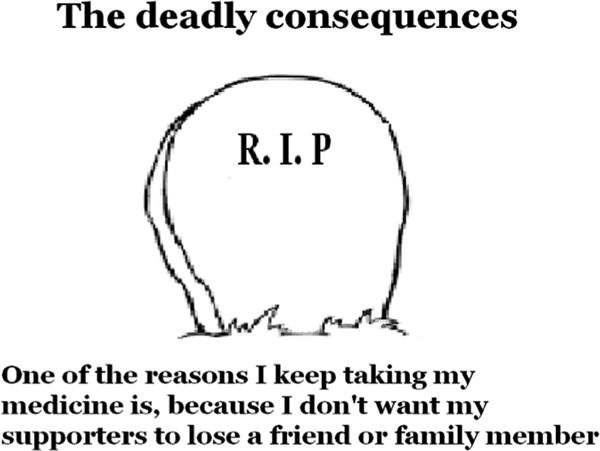
Image of female co-investigators indicating the avoidance of death.
My mother passed away (
Other co-investigators indicated that they adhered to their ART (

Images of houses, cars and playing soccer.
My dream one day is to become a medical doctor. Because of my disease ( I like to play soccer. But I have learned in the past (
Co-investigators who engaged in spiritual activities (
Our abductive thinking identified five main mechanisms driving medication adherence among ALHIV: motivation, love, perceived support, sense of purpose and sensitization. Using these mechanisms, we retroductively constructed a model through configuration mapping, which was informed by the S-C-M-O configurational tool. Figure 6 illustrates the theoretical model explicating medication adherence behavior among ALHIV.

Realist theoretical model explicating medication adherence among ALHIV.
Explaining Medication Nonadherence Behaviors
Most co-investigators presented photos with their friends and indicated that although they did not disclose their HIV status to their friends, they considered their friendship as social support (
A study conducted by MacCarthy et al. (2018) found a strong positive peer influence among ALHIV, as the adolescents formed important networks to support ART adherence.
In some instances, disclosure ( As you know in society today, people like to laugh and bring each other down (
Some participants reported feeling depressed (

Photo depicting the depressive feeling of a co-investigator.
This photo is like how I felt last month [SIC]. I felt down, like depressed. Like umm…tried to commit suicide. Like, I drank my grandma’s pills. I did it four times. This photo is like explaining exactly how I felt. Down, don’t want to live anymore…I had my status since I was a baby and I only realized it when I was 10 years old (
Perceived stigma ( Sometimes I don’t carry my medicine with me [SIC] when I go visit to avoid being questioned about my health (
Some co-investigators identified frustration associated with treatment fatigue (

Picture depicting the level of frustration of a co-investigator.
So, 10 years later (
Merzel et al. (2008) also identified treatment fatigue and resistance to taking medications as major psychological barriers to maintaining ART adherence among ALHIV. The feeling of frustration related to treatment fatigue among adolescents on ART has been reported by others (Ankrah et al., 2016; Hornschuh et al., 2017). According to Van Dyk (2011), the feeling of frustration expressed by adolescents on ART is related to the emotional tiredness of taking ARVs.
In our study, co-investigators also reported that the desire to feel “normal” ( Sometimes I “forget” to take my medicine. Sometimes my father reminds me. I don’t forget. I am just trying to be “normal” (
Taking a treatment holiday is also identified in the literature as a major driver of ART nonadherence (Claborn et al., 2015). Our study co-investigators indicated that they stopped taking their medication at some point because they wanted to experiment—see what happens to them without the medication. Sometimes the experimentation stems from mistrust or disbelief (
We uncovered another five separate mechanisms: perceived stigma, negative peer pressure, mistrust and unbelief, frustration, and depressive feeling explicating nonadherence behaviors among ALHIV. By aggregating the different C-M-O configurations associated around these mechanisms and adding elements of “structures” (S), we obtained the following theoretical model for nonadherence (Figure 9).
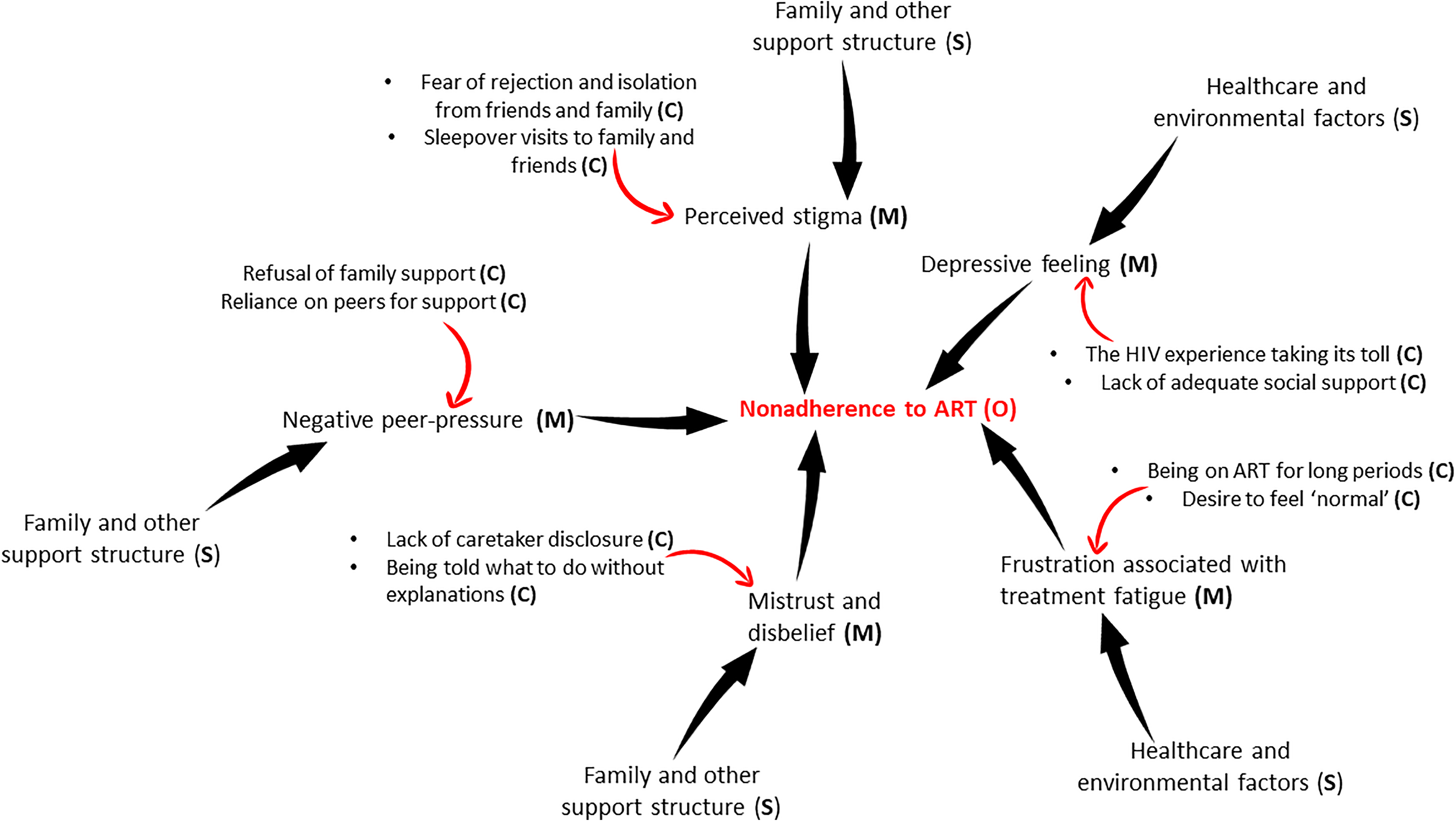
Theoretical model explicating medication nonadherence among ALHIV.
Rigor and Trustworthiness
Maxwell (2012) suggests that a realist approach to trustworthiness should ensure that the models or theories developed are based on the extent to which the data technique allows the researcher to collect relevant information. While conducting a Photovoice-based study, explaining the research aim to adolescents to obtain relevant information to answer the research question(s) could be challenging. To overcome this challenge, we provided examples of what we expected from the co-investigators and requested that the co-investigators’ caretakers could support them in obtaining the relevant photos for discussion. Nevertheless, the caretakers were not included in the data collection sessions.
The theoretical trustworthiness of the techniques employed in realist studies relates to the extent to which these techniques contribute to developing generative theories. The narratives, reflections, and ideas constructed by the co-investigators individually and through the group discussions and meaning-making process of the researchers support the trustworthiness of the Photovoice methodology in critical realist inquiries.
Discussion
In this article, we illustrate the application of Photovoice methods in a critical realist-informed qualitative study to highlight its potential contribution as a trustworthy data collection tool for theorizing in critical realist research. We highlight the epistemological and methodological alignment of the Photovoice methodology with the critical realist philosophy of science. The emancipatory potential of the Photovoice methodology aligns with that of critical realist methodologies as they privilege co-investigators’ learning in the process to better understand and take control of their situation—empowerment education. According to Liebenberg (2018), making photographs and collective interpretation of meaning empowers the stakeholders to take actions leading to social change. The explanation-seeking approach adopted in this study was, therefore, underpinned by the process of enlightenment, empowerment, and emancipation. Methodologically, as a dialogue tool, Photovoice is viewed as a useful strategy for promoting discussions between the researcher and the informants to obtain thick descriptions, which provide descriptively adequate accounts of value-impregnated events to inform critical realist theorizing.
Most of the conceptualizing of structure, context/conditions, and mechanisms that we identified in this study have been identified in the literature as barriers and facilitators of medication (non)adherence among ALHIV. What this critical realist approach adds to the literature is that through abductive inferencing, it re-conceptualizes these “factors” by adopting a theory-driven approach to explicate how and why ART (non)adherence occurs among ALHIV. First, we classified the factors into constructs of structure, context/conditions, and mechanisms thereby enable the process of retroductive theorizing. The Photovoice methodology was especially helpful in deciphering the mechanism from the conditions/context as the participants would start by providing a background story to each picture, then through further exploration, they would articulate their thoughts, feelings, perspectives, and decisions, elements which constitute generative mechanisms. Second, through the photos and narratives of the participants, we could distill micro-theories by identifying linked context, mechanism, and outcome elements. The configurational maps obtained through retroduction provide a higher level of abstraction of these micro-theories while revealing hidden complexities and the dynamic nature of the factors affecting medication (non)adherence among ALHIV. For example, we found that parental disclosure plays a dual role in determining (non)adherence behavior among ALHIV. While in some instances it motivated the ALHIV to accept their status, thus adhering to ART; in other instances, parental disclosure engendered mistrust and rebellion, leading to medication nonadherence.
Methodologically, the use of images provides an avenue to initiate dialogue with and among co-investigators about their perceptions, perspectives, and experiences of the issues under discussion. Following the narratives of the presenting co-investigator, we asked the other participating co-investigators if they shared similar perspectives and experiences. This aspect of the Photovoice methodology helped us to corroborate ideas, experiences, and perspectives toward refining the developing theories as different perspectives offered competing or corroborative C-M-O configurations. Checking with other co-investigators is especially important in judgmental rationality—deciding on which theory is most feasible. Nykiforuk et al. (2011) confirmed that the different ideas that may be obtained through this approach differ from those obtained solely from interviews or standard FGDs.
We found that the epistemological stance of the Photovoice methodology provided value-to-fact toward formulating critical realist theories. The Photovoice process provided the participants with the opportunity to visually portray their experiences and share personal knowledge about particular issues that may be difficult to express with words alone (Nykiforuk et al., 2011). They provided photos representing their perspectives and experiences that instigated meaningful engagement with the other participants, thus providing a conducive atmosphere to examine the researchers’ initial exploratory theory. In this way, the Photovoice approach to data collection provided what Bhaskar (2009) describes as “descriptively adequate” accounts of “value impregnated” events.
Critical realism holds that “all inquiry and observation are shaped and filtered through the human brain…” (Westhorp, 2014). The Photovoice data collection method as a visual method triggers the sensory and aesthetic dimensions of meaning-making (Seedat et al., 2015); feats that the standard interview and FGD methods might not easily achieve. Although the photos facilitate expression across varied levels of literacy (Teti, 2019), our experience is that older co-investigators (15–19 years) provided better narratives than their younger counterparts (10–14 years). This is certainly to be expected as the older co-investigators are more experienced and can better articulate their thoughts and feelings and hold greater responsibilities for their medication adherence. To this end, the younger co-investigators were grouped for their perspectives as well as the older co-investigators, an approach valuable for confirming, validating, or challenging the tested realist exploratory theory.
Analytically, by identifying linked dyads and triads directly from the narratives, we demonstrated how the Photovoice data collection method provided rich data that facilitated the identification of critical realist related constructs of structure, context, mechanisms and outcomes required to support critical realist theorizing. The dyadic and triadic configurations obtained from the data provided different nuggets of information or pieces of the theory-building puzzle required to build a functional theory. Our two theoretical models obtained in this study demonstrate how we linked pieces of the information obtained from the linked dyads and triads to explain medication (non)adherence among ALHIV. Through this experience, we conclude that the Photovoice method of data collection can be harnessed for theorizing in critical realist inquiries.
The Photovoice methodology enabled the ALHIV to assert their voices, engage in critical dialogues, and reflect on their social realities regarding living with HIV. In realist terms, knowledge and emancipation are strongly linked (Wight, 2006). While exploring the challenges and victories of ALHIV using photos depicting their experiences and perspectives, others within the group learnt more about the struggles of others and how they overcame them. Most importantly, understanding how and why ALHIV adhered or not to ART sensitized co-investigators on not only how ART works and what HIV is, but also on how (non)disclosure impacts on (non)adherence. Consequently, they showed renewed enthusiasm in their treatment journey and engaged more with clinicians. In this way, the emancipatory nature of the critical realist paradigm aligns with that of the Photovoice methodology.
Woodgate et al. (2017) highlighted that study co-investigators found the Photovoice process therapeutic and benefited from the less-rigid structure and safe space for expression created by Photovoice practitioners. This ties with the researchers’ intentions of allowing the study participants to explore the complexity of ART adherence through the pictures they provide and reflect on and in the process, generate ideas on how to overcome the identified barriers to ART adherence. The Photovoice methodology, therefore, provides a platform for “integrated” knowledge translation, as the co-investigators owned part of the research, and are in a better position to assimilate and adopt the study findings. This feat can be useful in implementing and running ART adherence clubs—health worker facilitated models providing counseling and education sessions where patients discuss various issues for social-support and receive pre-packed medication—to improve their retention in care and adherence to ART.
Conclusion
The application of the Photovoice methodology in critical realist-informed research is undocumented. This article highlights the potential contribution of the Photovoice methodology as an alternative or supplementary data collection tool for theorizing in critical realist research. The Photovoice methodology can be suitable when engaging with suppressed or marginalized populations who have less agency in expressing themselves through traditional means such as focus group discussions and in-depth interviews.
Footnotes
Acknowledgments
We would like to acknowledge Dr. Zesca Meyer who supported us in the participant recruitment and data collection processes. Also, we acknowledge the relevant comments and queries from the two anonymous reviewers that helped improve the quality of the manuscript.
Declaration of Conflicting Interests
The author(s) declared no potential conflicts of interest with respect to the research, authorship, and/or publication of this article.
Ethical considerations
This study received ethics approval from the University of the Western Cape Biomedical Research Ethics Committee (Ref. BM/17/1/15) and permission from the Western Cape Province Provincial Health Research committee (Ref. WC_2019). Permission was sought from the hospital where the study was conducted.
Informed consent was obtained from the caretakers of participants less than 18 years old and directly from participants above 18 years. Assents were also obtained from the participants less than 18 years old. The purpose and objectives of the study were provided to participants before their enrolment into the study. The informed consent also detailed the voluntary nature of their participation emphasizing their right to withdraw at any point in the research. Confidentiality was ensured at all stages of the study that is why pseudonyms are used while reporting the findings. Participants were informed of the possibility of their photos being published in peer-reviewed journals. In discussion with the study participants, we decided not include any photos having the faces of any participants and members of their family and friends. This is because participant-produced photographs when published online, can be copied and disseminated beyond the original scope of the research. Younger participants were grouped to avoid inadvertent disclosure as it is likely that their caretakers did not disclose yet.
Funding
The author(s) disclosed receipt of the following financial support for the research, authorship, and/or publication of this article
