



Abstract
A core philosophy of occupational therapy is adopting a holistic approach, considering individuals’ cultural and societal values. While occupational therapy is rooted in modern Western cultures, which contrasts with traditional Chinese medicine (TCM) health beliefs, TCM conceptualizes health as multidimensional—a notion akin to occupational therapy’s philosophy. This article attempts to explore the relationships between TCM health culture and occupational therapy perspectives by integrating culturally relevant activities and traditional Chinese Wellness practices into clinical occupational therapy. Using the Occupational Therapy Practice Framework, the study aims to develop a reference that recommends culturally relevant activities and integrates TCM health culture into clinical occupational therapy.
Introduction
A holistic approach is central to occupational therapy, a principle the field has championed since its inception (Meyer, 1922). Recognizing humans as interdependent bio-psycho-socio-cultural-spiritual beings, occupational therapy mandates that individuals and their needs can be viewed within this integrated framework (American Occupational Therapy Association, 1993). Therefore, assessment and intervention plans must encapsulate this holistic view, prioritizing the social and cultural contexts of occupations, acknowledging past achievements, and aligning with clients’ future aspirations as core principles.
The World Federation of Occupational Therapists has called on the profession to actively consider how culture shapes both the delivery and reception of services (Kinebanian & Stomph, 2014). Culture, defined as the traditional beliefs and social practices that establish implicit rules for social interaction within a specific community (Wang, 2017), is intricately linked to occupational engagement, and through such engagement, individuals sustain their well-being, acquire adaptive skills, and establish environmental interaction, fostering rich cultural expressions. Culture, rooted in daily life, influences various occupational activities—from routine tasks like diet, housing, hygiene, and sleep to leisure, social interaction, and work. Distinct cultural systems give rise to diverse forms and methods of occupational engagement (Matteliano & Stone, 2014).
Modern occupational therapy practice models offer a structured, comprehensive approach to understanding the complex interactions among individuals, their occupations, and the environments they inhabit for living, working, and leisure. These models serve as theoretical foundations and practical guides for occupational therapists, facilitating the assessment, planning, and execution of interventions aimed at enhancing health, well-being, and participation in meaningful activities (Schell et al., 2014). By emphasizing the dynamic interplay between personal factors, environmental factors, and occupational requirements, occupational therapy models emphasize a holistic and client-centric approach to practice (Taylor, 2017).
The Model of Human Occupation (MOHO), developed by Gary Kielhofner, is a cornerstone in occupational therapy, focusing on an individual’s volition (motivation, values, interests guiding occupational choices), habituation (roles and routines shaping daily life), and performance capacity (physical and cognitive abilities for occupations). It also examines how physical and social environments impact occupational engagement (Kielhofner, 2008; Taylor, 2017). As an open system, MOHO accommodates diverse cultures and treatment approaches, adapting to varied client backgrounds (Kielhofner, 2008). This adaptability allows therapists to customize interventions, aligning with clients’ cultural and personal contexts. By integrating cultural considerations, MOHO enhances the relevance and effectiveness of therapy, particularly in multicultural settings where cultural backgrounds significantly influence health behaviours and healthcare interactions.
By understanding these components and their interactions, occupational therapists can craft tailored interventions to boost individuals’ participation in meaningful activities, fostering overall health and well-being.
The Person-Environment-Occupation (PEO) model, another pivotal framework in occupational therapy, underscores the alignment among the person, their environment, and their occupations, aiming to optimize this synergy as a central therapeutic goal (Law et al., 1996). Acknowledging their interdependence and mutual influence (Strong et al., 1999), occupational therapists employing the PEO model evaluate strengths and challenges across each domain to foster a harmonious interaction, ultimately enhancing occupational performance and engagement. This model encourages therapists to account for individual traits, occupational demands, and environmental factors when crafting interventions to promote optimal functioning and participation.
Modern occupational therapy philosophy, rooted in Western cultural assumptions, has shaped its core concepts. Though predominantly reflecting a Western perspective, occupational therapy models and theories do not inherently clash with Eastern philosophies and health beliefs. As an open system, occupational therapy can embrace and integrate these diverse viewpoints due to the inclusive nature of Eastern philosophies. Therefore, Chinese mainland occupational therapists can explore synergies between these approaches, using traditional Chinese health culture to establish integrated Eastern-Western clinical pathways that better meet clients’ needs.
Consistencies Between Traditional Chinese Views of Health and Occupational Therapy Theories
“Harmony Between Man and Nature (Tian Ren He Yi)” in Traditional Chinese Health and Its Alignment with Client-Centred and Holistic Occupational Therapy Perspectives
Like other cultures, the Chinese have cultivated systematic health concepts over time. Traditionally, health is viewed as multidimensional, with Traditional Chinese Medicine (TCM) emphasizing the balance of Yin and Yang, human-nature interaction, and the flow of Qi as cornerstones of well-being. These concepts are embedded in a value system reflecting a cosmological perspective, highlighting interactions among heaven (nature), earth (self), and humanity (others) (Lai et al., 2018). This viewpoint underscores the importance of harmony within and between these systems, advocating a holistic understanding of health as a dynamic equilibrium among humans, nature, and society, characterized by balanced interaction between the spirit, body, and environment (Zhang, 1999). This aligns closely with occupational therapy’s client-centered and holistic philosophy.
The philosophical concept of “Harmony between Man and Nature (Tian Ren He Yi)” is central to traditional Chinese health, stressing alignment of human activities with natural rhythms, and it posits that the human body is closely connected to nature, and harmonizing this relationship is vital for health (Yao et al., 2021).
In TCM, this concept is key to health promotion and disease prevention. TCM encourages adapting diet, exercise, and routines to seasonal and day-night cycles (Liu & Wang, 2019). Aligning with these rhythms helps maintain a balance between internal (body) and external environment (nature), promoting overall health (Zhao et al., 2020). This principle highlights the interconnectedness of physical, emotional, and social well-being, emphasizing balance and adaptation. For example, practices like Tai Chi and Qigong are performed outdoors to harmonize body movements with nature, while TCM emphasizes aligning sleep-wake cycles with daylight to promote balance and energy flow (Zhao et al., 2020).
From an occupational therapy perspective, the “Tian Ren He Yi” philosophy aligns with client-centred care by addressing physical, emotional, and environmental needs, and its emphasis on aligning routines with natural and social contexts resonates with occupational therapy’s holistic principles, making it valuable for culturally sensitive interventions. Integrating traditional Chinese health concepts into modern therapy highlights the significance of cultural sensitivity in healthcare. As Yau M. K. S. (2007) highlights, incorporating cultural specifics improves the relevance and efficacy of occupational therapy interventions across diverse settings, improving their universality.
The Concept of Yin-Yang Balance and Its Consistency with Occupational Balance
Yin and Yang represent the fundamental forces behind ancient Chinese natural laws, forming the basis of Chinese philosophical wisdom (Zhang, 1999). They embody opposing yet interdependent aspects in nature, with their dynamic interaction driving the emergence and transformation of all things, constantly seeking equilibrium (Pang, 1984). TCM posits that imbalances among heaven, earth, and humanity can cause illness (Yau, 2007). Similarly, occupational therapy emphasizes balancing self-care, play, work, and rest for overall well-being (Rogers, 1984; World Federation of Occupational Therapists, 2015). Modern pressures often disrupt natural rhythms, leading to occupational imbalance and negatively impacting health.
Traditional Chinese Cultural Values and Role Motivation in Occupational Therapy
Confucianism profoundly shapes the Chinese value system, prioritizing internal cultivation (nei sheng) over external achievements (wai wang). Core values like “sincerity and rectification of the mind” (cheng yi zheng xin) and “filial piety” (jin xiao) guide behavior, family relationships, and social interactions. These values not only shape individual conduct but also foster collective harmony, reflecting Confucian ideals of balancing personal morality with social responsibility.
Confucian classics outline a hierarchical life framework: “self-cultivation” (xiu shen), “managing the family” (qi jia), “governing the state” (zhi guo), and “bringing peace to the world” (ping tian xia) (Lai et al., 2018). This hierarchy underscores internal virtue as a prerequisite for external achievements, highlighting the interplay between personal development and societal well-being. In modern Chinese culture, ideals like education, fulfilling familial duties, career success, and workplace excellence are embedded in Confucian values, shaping individual identity, motivation, and behavior.
Another critical Confucian contribution to Chinese culture is the “Six Arts” (liu yi): rites (li), music (yue), archery (she), chariot driving (yu), calligraphy (shu), and mathematics (shu). These disciplines were crafted to nurture technical skills and moral-intellectual growth, emphasizing holistic learning and personal development. This integration of physical, intellectual, and moral education reflects Confucianism’s holistic approach, aligning closely with occupational therapy principles that stress the interplay between skill acquisition, values, and environment.
In occupational therapy, understanding these cultural values is crucial for effective interventions. In Chinese culture, an individual’s role performance, such as son/daughter, husband/wife, or worker/student, is intricately linked to their identity and self-worth, often influenced by internal moral values like filial piety (Yau, 2007). These values shape behaviors and relationships within family and society. To provide culturally sensitive and client-centred care, therapists must account for both external achievement expectations and internal motivations rooted in Confucian ethics, and this approach enables them to address motivational factors driving occupational engagement and role fulfilment in a culturally congruent way.
Integrative Practice Model: Bridging Traditional Chinese Health Culture and Occupational Therapy
Occupational Therapy (OT) theories can be adapted to the TCM model, as depicted in Figure 1. The integrative practice model (Figure 1) provides a practical framework for merging Traditional Chinese Health Culture with contemporary OT, highlighting the dynamic interaction among cultural values, client-centred approaches, and the structured OT process. It comprises three components: Traditional Chinese Health Culture (left circle), the Occupational Therapy Framework (right circle), and Contextualized Strategies as the connecting bridge. These elements are integrated throughout the OT process (evaluation, planning, implementation, and outcomes). Integrating Occupational Therapy Theories and the Traditional Chinese Medicine Model: A Holistic Approach to Health and Well-Being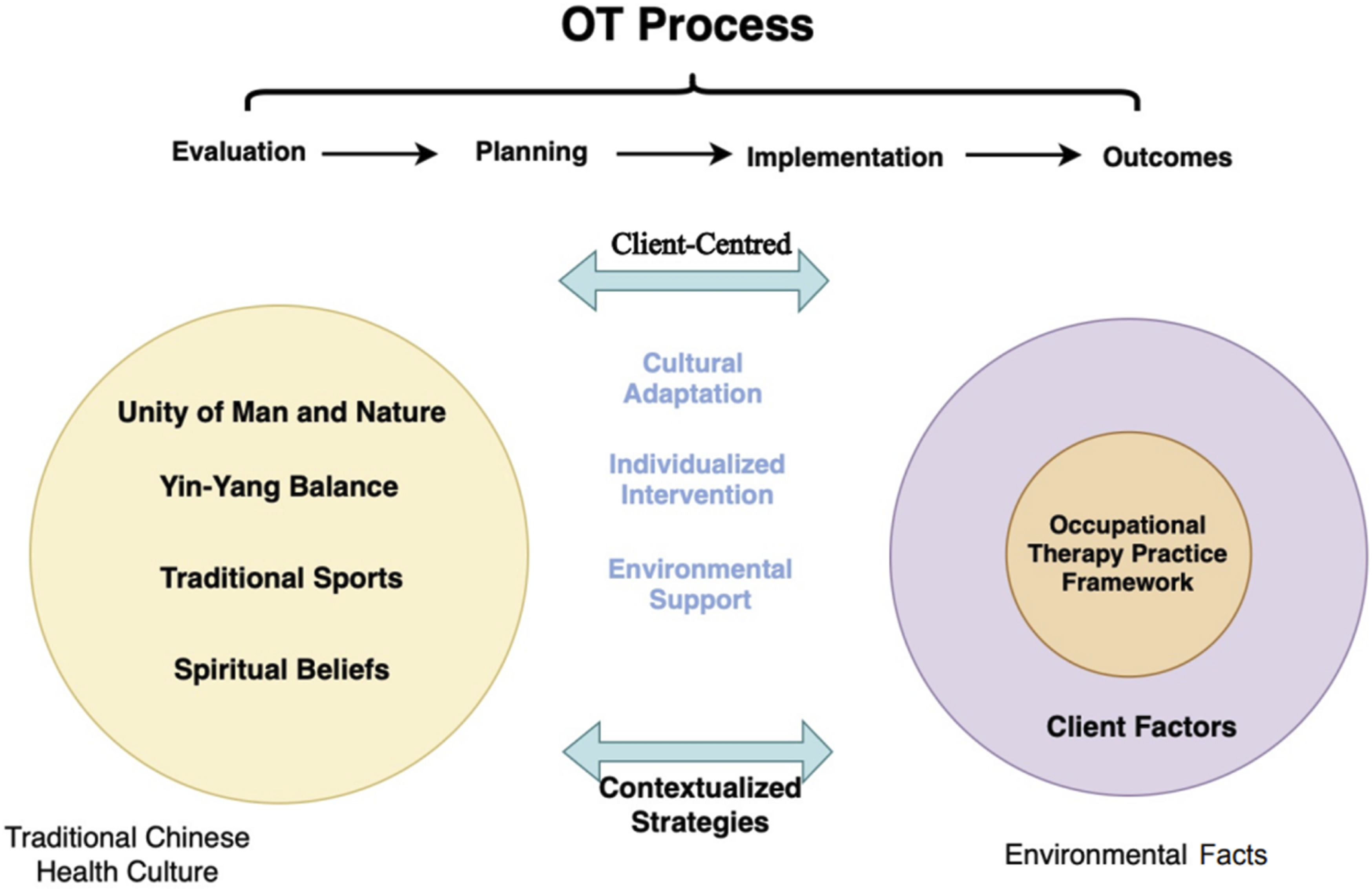
Traditional Chinese Health Culture includes core elements like Harmony between Man and Nature, advocating alignment with natural rhythms for optimal health. Yin-Yang Balance offers principles for achieving occupational balance through a dynamic interplay of work, rest, and play. Traditional practices like Tai Chi and Wu Qin Xi, enhance physical and mental well-being. Spiritual beliefs support clients’ cultural identity and intrinsic therapy motivation. The Integrative Practice Model integrates Client Factors (physical/cognitive abilities, cultural preferences) and Environmental Factors (family support, community resources) to inform interventions.
Contextualized Strategies bridge the two circles, ensuring interventions are culturally relevant, personalized, and environmentally supported. Cultural adaptation involves choosing meaningful activities like Tai Chi or embroidery. Individualized interventions customize activities to match clients’ interests and abilities, while environmental support utilizes family and community resources to boost participation.
The Occupational Therapy Process dynamically integrates cultural relevance and therapeutic goals via Contextualized Strategies, ensuring alignment throughout (American Occupational Therapy Association, 1993).
This structured yet adaptable model incorporates Traditional Chinese Health Culture into occupational therapy, promoting client engagement and meaningful participation.
Comparison Between Traditional Chinese Health Culture Activities and Occupational Therapy
Comparison Between Traditional Chinese Values and MOHO
Traditional Chinese health philosophy, like “Harmony between Man and Nature” (Tian Ren He Yi), aligns with the MOHO’s holistic perspective, which highlights the dynamic interaction between volition, habituation, and performance capacity within environmental contexts, mirroring the Chinese emphasis on balance between humans and their environments (Kielhofner, 2002).
For instance, MOHO’s concept of volition—motivation, values, and interests driving occupational choices—aligns with Confucian emphasis on role fulfilment and self-cultivation within societal and familial frameworks. In Chinese culture, harmonizing roles (e.g., parent, child, worker) is both a personal goal and a reflection of alignment with societal values, paralleling MOHO’s focus on how personal values and cultural expectations shape occupational engagement (Kielhofner, 2008).
However, differences persist between the Model of Human Occupation (MOHO) and traditional Chinese health philosophy. MOHO prioritizes individual agency and client-centred goals, whereas traditional Chinese health philosophy emphasizes collective harmony and the individual’s role within family or community. For instance, MOHO focuses on personal motivation for meaningful activities, while traditional Chinese values stress fulfilling familial/societal expectations and participating in communal activities (e.g., dragon boat racing, park Tai Chi). These differences underscore the need for occupational therapists to adapt MOHO for Chinese clients, by integrating culturally specific motivations and role expectations, creating more culturally responsive interventions aligned with clients’ worldviews and social contexts.
Comparison Between Traditional Chinese Values and PEO
The PEO model, emphasizing the interplay between person, environment, and occupation, aligns with the Chinese Yin-Yang philosophy of dynamic balance (Law et al., 1996). Yin-Yang theory posits interdependent relationships that influence and balance each other, mirroring the PEO model’s emphasis on interdependence. A harmonious fit in the PEO model—between abilities, environment, and occupational demands—enhances performance, akin to Yin-Yang’s focus on balance and adaptation. This perspective can inform occupational therapy by tailoring tasks or environments to clients’ needs, similar to adjusting routines to natural rhythms (Strong et al., 1999).
A practical case integrating the PEO model with Chinese health philosophy could involve designing Tai Chi interventions for older adults. Rooted in Yin-Yang balance, Tai Chi enhances physical function and fosters social engagement in communities. The PEO model would analyze how an individual’s physical condition (e.g., joint mobility), environment (e.g., accessible parks), and occupation (e.g., Tai Chi practice) interact to support occupational performance and well-being (Letts et al., 2003).
Traditional Chinese Health Cultural Activities and Occupational Therapy
In occupational therapy, engaging in meaningful occupations is pivotal for personal growth and life purpose. Such participation bolsters physical and mental well-being, nurturing identity, and a sense of direction (Wilcock, 1993). Occupations—the activities we undertake—underpin self-perception, survival, skill development, and the pursuit of interests and desired lifestyles. Purpose and meaning are fundamental human needs for happiness, fulfilled through engagement in personally or socially significant occupations and roles. Occupations are instrumental in helping individuals find meaning and achieve happiness, with meaning being a cornerstone of one’s occupational outlook (Charles et al., 2015). Meaningful occupations positively impact health and well-being, offering physical, mental, and social benefits. The importance of meaning has long been underscored in occupational therapy’s history (Eakman, 2003), with its roots in both the functionality of occupations and their cultural contexts.
As lifestyles change, traditional culture remains integral to daily life, with festival activities and foods symbolizing health and safety aspirations. Examples include making tangyuan at the Lantern Festival, zongzi for the Dragon Boat Festival, and enjoying mooncakes during the Mid-Autumn Festival. Practices like embroidery, Chinese knots, calligraphy, and tea ceremonies also reflect values such as reunion, health, safety, auspiciousness, harmony, and beauty (People’s Daily, 2017; Qian, 2012; Ding & Fan, 2020). These values are cherished and perpetuated through generations in these cultural activities. Furthermore, specific TCM health culture activities can be integrated into occupational therapy interventions: Dietary Activities: Preparing herbal dishes, such as medicinal soups or Bazhen cake (Eight-Treasure Cake), enhances hand dexterity, bilateral coordination, and cultural identity (Fu et al., 2021). These activities not only refine motor skills but also foster a sense of cultural connection; Traditional Physical Exercises: Tai Chi and Ba Duan Jin (Eight Pieces of Brocade) improve joint flexibility, muscle strength, balance, and emotional regulation, reducing stress—aligning with occupational therapy’s holistic goals (Liu et al., 2024; Wayne & Fuerst, 2013). Seasonal Activities: Guided by TCM’s seasonal adaptation theory, clients can adjust their habits accordingly. Spring activities like walking or gardening, and winter practices such as meditation or warm herbal teas, promote Yin-Yang balance (Wu & Liang, 2018).
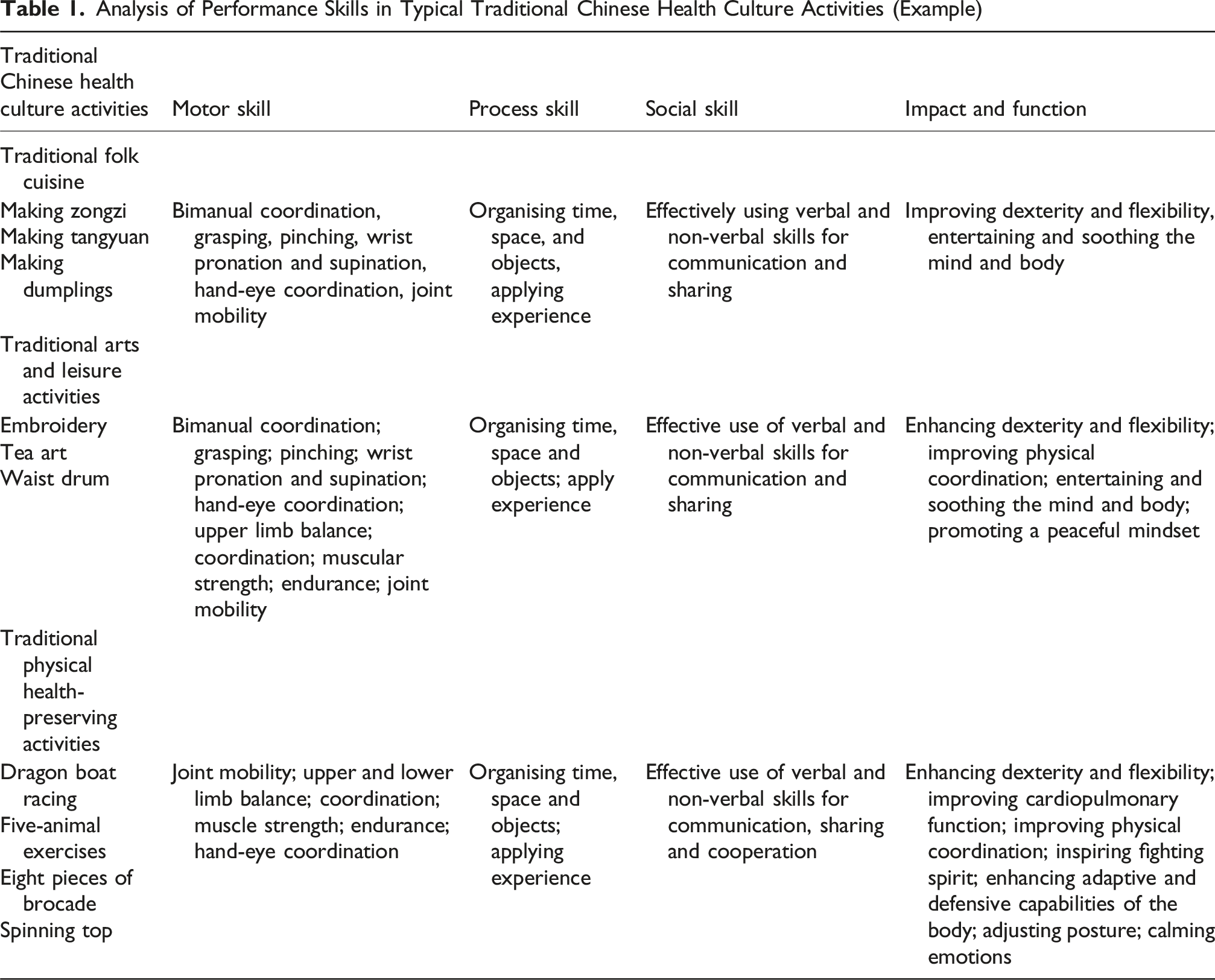
When employed as therapeutic interventions, these traditional activities can enhance rich social engagement and hone fine motor skills, hand-eye coordination, bilateral upper limb coordination, and balance. Client participation in these targeted activities signals their commitment to life and pursuit of happiness. Integrating culture into therapy is essential for developing meaningful interventions and setting relevant goals.
Traditional Chinese Wellness Activities and Occupational Therapy
Wellness activities are vital to life, health, and overall well-being, significantly benefiting both physical and psychological health. In traditional Chinese culture, physical activities are broadly classified into four categories based on their historical context (Guo et al., 2018; Jahnke et al., 2010). The first category encompasses health-preserving practices rooted in ancient medical traditions, such as Qigong routines like Yi Jin Jing, Ba Duan Jin, Wu Qin Xi, and Tai Chi. Extensive research and evidence underscore the efficacy of these mind-body activities, deeply embedded in Chinese culture in enhancing physical function, mental well-being, and quality of life across diverse populations (Guo et al., 2018; Li et al., 2021b; Zeng et al., 2014; Zhang et al., 2019).
A systematic review and meta-analysis by Guo et al. (2018) revealed that Health Qigong significantly enhanced lung function, exercise capacity, and quality of life in patients with Chronic Obstructive Pulmonary Disease. Similarly, Zeng et al.’s (2014) study demonstrated that Tai Chi effectively improved global cognitive function, particularly executive function, in cognitively healthy older adults.
The second category of physical activities, rooted in hunting, combat, and military skills, includes archery and martial arts, which served both self-defense and military training purposes while promoting physical fitness and mental discipline. The third type involves board games like Go and Chinese chess, popular during the Spring and Autumn periods, known for enhancing strategic thinking and mental acuity. The fourth category features sports emerging from cultural exchanges or regionally distinctive, such as Cuju (ancient football), wrestling, and dragon boat racing, which fostered community spirit, teamwork, and cultural identity.
In ancient Chinese society, the pivotal role of physical activities in health preservation was widely acknowledged. Health preservation, or life/Daoist nurturing, encompasses self-care practices rooted in the laws of life activities, aiming to protect life, sustain the body, enhance health, mitigate disease, and prolong longevity (Wang & Shi, 2018). These practices not only served as methods for body maintenance and disease prevention in traditional society but also embodied the Chinese philosophy of life, which underscores harmony between humans and nature.
In light of the modern rise in sedentary lifestyles and the management of chronic and age-related diseases, traditional Chinese physical wellness activities actively contribute to prevention, treatment, and rehabilitation (Liu & Wang, 2019). Research by Li et al. (2021a) indicates that Baduanjin, a Healthy Qigong form, effectively improves physical function, balance, and flexibility in older adults. Likewise, Zhang et al.’s (2019) review highlights the benefits of Liuzijue, another Health Qigong practice, for lung function and quality of life in COPD patients. These insights underscore the potential of integrating traditional Chinese physical wellness activities into occupational therapy to enhance health and well-being.
Chinese perspectives on culture and health are strongly rooted in traditional health culture. A localized occupational therapy approach in China should reflect diverse cultural experiences, highlight the influence of personal history, culture, and values, and adapt continuously. Integrating traditional Chinese physical wellness activities like Health Qigong and Tai Chi enables therapists to create culturally relevant interventions that engage Chinese clients in meaningful activities, enhancing cultural sensitivity and preserving traditional health practices.
In conclusion, traditional Chinese physical wellness activities, steeped in cultural and philosophical heritage, offer occupational therapists a valuable resource for crafting culturally relevant interventions. Integrating these practices into occupational therapy can promote physical and mental well-being, nurture cultural identity, and preserve traditional Chinese health practices. Future research should delve deeper into their efficacy, mechanisms, and potential applications in occupational therapy.
Pathways to Integrate Traditional Chinese Health Culture in Occupational Therapy Practice
Despite a later start compared to other countries, occupational therapy in China has made remarkable strides over the past three decades. In 2019, the Occupational Therapy Committee of the Chinese Association of Rehabilitation Medicine introduced the “Occupational Therapy Practice Framework” (2019 Edition), which standardized the definition, scope, procedures, and considerations for occupational therapy nationwide. The scope encompasses all factors to consider in therapy implementation, including occupation, contexts, skills, and client factors. The process outlines the steps involved, including assessment, intervention, and outcomes (Li et al., 2021b).
Occupation Domain and Occupational Therapy Skills
Occupation serves both as an intervention tool and a goal. From an occupational domain perspective, traditional Chinese health culture activities are embedded in each category of occupational activities (Li et al., 2021b).
Occupational contexts encompass environmental and personal factors affecting clients’ engagement in activities. These contexts impact opportunities for meaningful participation and the evaluation of occupational performance. Culture, a key personal factor, defines communities. In China, traditional health culture activities are popular for promoting wellness, nurturing mind and body, and boosting physical health. Occupational therapists should leverage these activities to help clients integrate into local communities.
Analysis of Performance Skills in Typical Traditional Chinese Health Culture Activities (Example)
Client Factors
Client factors encompass individual, group, or population-specific abilities, traits, or beliefs that affect occupational performance. Occupational therapists should understand that physical function and body structure limitations don’t solely dictate a client’s success or challenges in daily activities. Support—physical, social, or attitudinal—can enhance occupational performance and client factors, thereby boosting participation (American Occupational Therapy Association, 2020). Values, beliefs, and spiritual strength motivate clients to engage in occupations and give their lives meaning (Hammell, 2004). Traditional Chinese health culture activities embody these values, beliefs, and spiritual strength of the Chinese people (Xu et al., 2018).
In TCM, the circadian rhythm theory is crucial for health preservation (Li et al., 2021a). It posits that the body’s physiological functions change regularly with day and night (Wang et al., 2019). Adapting to these rhythms and adjusting daily routines helps balance yin and yang, promoting physical and mental well-being (Chen et al., 2020). Occupational therapists should assess clients’ circadian rhythm characteristics and evaluate if their daily habits align with natural laws (Leland et al., 2016). A previous study offers a practical example of circadian rhythm application in occupational therapy (Ng, 2017). The research investigates a lifestyle modification program that blends the “Midnight noon Ebb-flow” model from TCM with modern health practices. This program aims to reduce the risk of pre-clinical metabolic syndrome by aligning lifestyle adjustments with natural circadian patterns. Participants in the intervention group showed notable improvements in physiological parameters and quality of life (Ng, 2017). Furthermore, Ng and Tsang (2024) discuss integrating Eastern and Western lifestyle modification approaches in their chapter on health promotion during aging. They emphasize how aligning daily activities with circadian rhythms can improve health outcomes for older adults, advocating for incorporating these principles into community aging care (Ng & Tsang, 2024, in Tong & Fong [Eds.], Ageing Care in the Community: Current Practices and Future Directions).
When developing intervention plans, occupational therapists can provide recommendations based on circadian rhythms theory, including adjusting daily routines and optimizing the types and intensity of occupations (Gentry & Loveland, 2013). For example, clients can be encouraged to engage in more active occupations like work, study, and exercise during the day, and switch to restful activities like reading and meditation at night (Wagman et al., 2012). Additionally, therapists can guide clients in practicing traditional health techniques like Tai Chi and Qigong, which balance yin and yang and enhance sleep quality (Yang et al., 2015).
Integrating TCM’s circadian rhythm theory into occupational therapy assessments and interventions can foster regular and healthy lifestyles, enhance occupational balance, and improve quality of life (Jiang et al., 2017). This aligns with occupational therapy’s client-centred, holistic approach to promoting overall well-being (Pizzi & Richards, 2017). Practitioners should value traditional Chinese health culture, blending it with modern practices to devise more effective, culturally sensitive interventions (Twinley & Addidle, 2012).
Occupational Therapy Process
The occupational therapy process is client-centred, involving service delivery through three core components: assessment, intervention, and outcome achievement, with continuous interaction among them. The following integrates traditional Chinese health culture into this process, guided by an occupational therapy framework (see Table A1).
Discussion
Over nearly 30 years of development in China, occupational therapy has sought to incorporate traditional Chinese health culture into both educational and clinical settings. As Zhuo (2006) noted, China’s rehabilitation system is predominantly health/medical, with few occupational therapy practitioners and facilities, hindering this integration. By blending Western cultural insights with occupational therapy education and traditional Chinese rehabilitation culture, the approach illustrates the clinical application and development of Chinese cultural practices. This approach blends Western cultural studies with occupational therapy education and traditional Chinese rehabilitation culture, highlighting the clinical application and development of Chinese cultural practices. The aim is to establish an occupational therapy education system with Chinese characteristics (Hu et al., 2015). Given China’s current occupational therapy landscape, practitioners are also striving to construct a unique theoretical framework or model. For instance, Zhu et al., 2016 utilized the Tai Chi diagram to design occupational therapy practice models that resonate with Chinese patients, offering fresh insights.
In occupational therapy clinical practice, traditional Chinese exercises and folk wisdom games serve as engaging, real-life-linked therapeutic interventions. Research indicates that modified Yi Jin Jing notably enhances sleep quality and life satisfaction in elderly individuals with sleep disorders (Chen et al., 2018). Similarly, extended Tai Chi practice improves visuospatial abilities and writing speeds in older adults (Liu & Li, 2017). Further research indicates that Tai Chi also enhances overall cognitive functions and memory, with longer training leading to greater improvements (Wang & Sheng, 2019).
Traditional Chinese folk games, rooted in communal wisdom and experience, effectively enhance upper limb motor functions, hand-eye coordination, cognitive abilities, and communication skills. These engaging, skill-based games are widely embraced and valued within communities, offering a culturally resonant and accessible alternative to conventional therapeutic methods. They cater well to local rehabilitation needs, with examples like Nine Linked Rings, Tangram, and Huarong Path, etc. celebrated for their cultural heritage and therapeutic benefits (Zhang & Dong, 2011; Hu & Jia, 2009).
Conclusion
Occupational therapy practitioners must grasp the culture and context of their service population and reflect on how their own cultural background influences their practice. In clinical settings, Addressing cultural mismatches is crucial to avoid gaps when applying Western occupational therapy theories and approaches. Integrating traditional Chinese health culture into practice offers a promising solution to bridge these discrepancies, providing a solid theoretical and practical foundation for developing a Chinese-related occupational therapy model that merits further exploration and application.
Footnotes
Acknowledgments
We would like to express our sincere gratitude to the Occupational Therapy Focus Group of Chinese Association of Rehabilitation Medicine for their guidance and support throughout this research. We also thank our colleagues at the Shanghai University of Traditional Chinese Medicine and Shandong Second Medical University for their valuable insights and contributions to the development of the culturally integrative occupational therapy practice model.

Funding
The author(s) disclosed receipt of the following financial support for the research, authorship, and/or publication of this article: This work was supported by the Construction of a First-Class Undergraduate Program in Occupational Therapy (A1-U24-205-030206).
Declaration of Conflicting Interests
The author(s) declared no potential conflicts of interest with respect to the research, authorship, and/or publication of this article.
Appendix
Occupational Therapy Framework: Integrating Traditional Chinese Health Culture Into the Process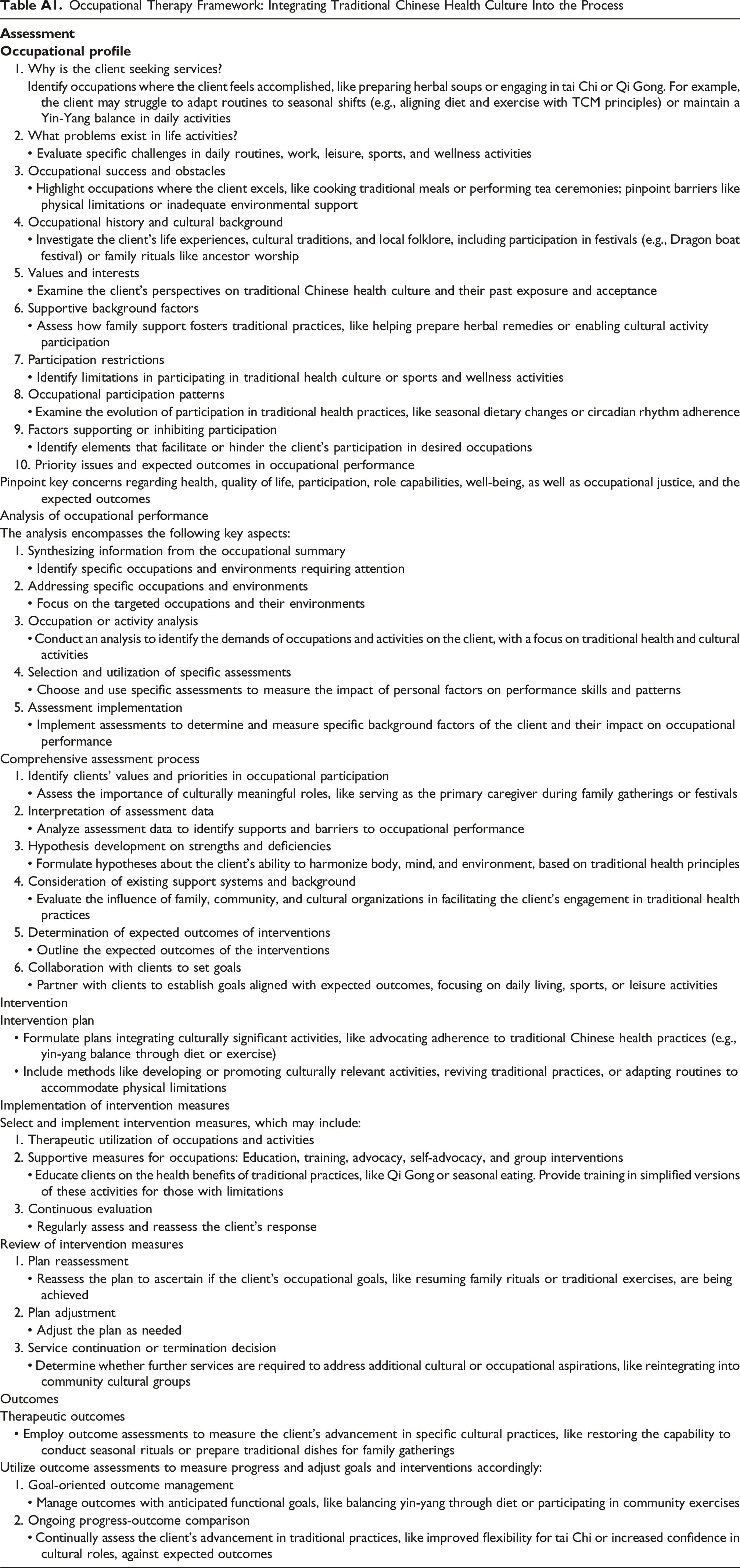
1. Why is the client seeking services?
Identify occupations where the client feels accomplished, like preparing herbal soups or engaging in tai Chi or Qi Gong. For example, the client may struggle to adapt routines to seasonal shifts (e.g., aligning diet and exercise with TCM principles) or maintain a Yin-Yang balance in daily activities
2. What problems exist in life activities?
• Evaluate specific challenges in daily routines, work, leisure, sports, and wellness activities
3. Occupational success and obstacles
• Highlight occupations where the client excels, like cooking traditional meals or performing tea ceremonies; pinpoint barriers like physical limitations or inadequate environmental support
4. Occupational history and cultural background
• Investigate the client’s life experiences, cultural traditions, and local folklore, including participation in festivals (e.g., Dragon boat festival) or family rituals like ancestor worship
5. Values and interests
• Examine the client’s perspectives on traditional Chinese health culture and their past exposure and acceptance
6. Supportive background factors
• Assess how family support fosters traditional practices, like helping prepare herbal remedies or enabling cultural activity participation
7. Participation restrictions
• Identify limitations in participating in traditional health culture or sports and wellness activities
8. Occupational participation patterns
• Examine the evolution of participation in traditional health practices, like seasonal dietary changes or circadian rhythm adherence
9. Factors supporting or inhibiting participation
• Identify elements that facilitate or hinder the client’s participation in desired occupations
10. Priority issues and expected outcomes in occupational performance
Pinpoint key concerns regarding health, quality of life, participation, role capabilities, well-being, as well as occupational justice, and the expected outcomes
Analysis of occupational performance
The analysis encompasses the following key aspects:
1. Synthesizing information from the occupational summary
• Identify specific occupations and environments requiring attention
2. Addressing specific occupations and environments
• Focus on the targeted occupations and their environments
3. Occupation or activity analysis
• Conduct an analysis to identify the demands of occupations and activities on the client, with a focus on traditional health and cultural activities
4. Selection and utilization of specific assessments
• Choose and use specific assessments to measure the impact of personal factors on performance skills and patterns
5. Assessment implementation
• Implement assessments to determine and measure specific background factors of the client and their impact on occupational performance
Comprehensive assessment process
1. Identify clients’ values and priorities in occupational participation
• Assess the importance of culturally meaningful roles, like serving as the primary caregiver during family gatherings or festivals
2. Interpretation of assessment data
• Analyze assessment data to identify supports and barriers to occupational performance
3. Hypothesis development on strengths and deficiencies
• Formulate hypotheses about the client’s ability to harmonize body, mind, and environment, based on traditional health principles
4. Consideration of existing support systems and background
• Evaluate the influence of family, community, and cultural organizations in facilitating the client’s engagement in traditional health practices
5. Determination of expected outcomes of interventions
• Outline the expected outcomes of the interventions
6. Collaboration with clients to set goals
• Partner with clients to establish goals aligned with expected outcomes, focusing on daily living, sports, or leisure activities
Intervention
Intervention plan
• Formulate plans integrating culturally significant activities, like advocating adherence to traditional Chinese health practices (e.g., yin-yang balance through diet or exercise)
• Include methods like developing or promoting culturally relevant activities, reviving traditional practices, or adapting routines to accommodate physical limitations
Implementation of intervention measures
Select and implement intervention measures, which may include:
1. Therapeutic utilization of occupations and activities
2. Supportive measures for occupations: Education, training, advocacy, self-advocacy, and group interventions
• Educate clients on the health benefits of traditional practices, like Qi Gong or seasonal eating. Provide training in simplified versions of these activities for those with limitations
3. Continuous evaluation
• Regularly assess and reassess the client’s response
Review of intervention measures
1. Plan reassessment
• Reassess the plan to ascertain if the client’s occupational goals, like resuming family rituals or traditional exercises, are being achieved
2. Plan adjustment
• Adjust the plan as needed
3. Service continuation or termination decision
• Determine whether further services are required to address additional cultural or occupational aspirations, like reintegrating into community cultural groups
Outcomes
Therapeutic outcomes
• Employ outcome assessments to measure the client’s advancement in specific cultural practices, like restoring the capability to conduct seasonal rituals or prepare traditional dishes for family gatherings
Utilize outcome assessments to measure progress and adjust goals and interventions accordingly:
1. Goal-oriented outcome management
• Manage outcomes with anticipated functional goals, like balancing yin-yang through diet or participating in community exercises
2. Ongoing progress-outcome comparison
• Continually assess the client’s advancement in traditional practices, like improved flexibility for tai Chi or increased confidence in cultural roles, against expected outcomes