




Abstract
There is abundant evidence about the impact of physical activity on health. Many of the clinical guidelines include physical activity as a strong recommendation in treatment plans to optimize health outcomes; however it is necessary to consider the interaction between medications and physical activity. There are certain medical conditions, including cardiovascular disease, diabetes, pain and urinary incontinence that may directly impact physical activity as well as medications for those conditions can affect how a person can be physically active. Having individualized conversations with patients to determine ways to incorporate physical activity into their lives, taking medications into consideration, may lead to healthier outcomes.
“Physical therapy can assist in helping people safely engage in physical activity, as well as provide non-pharmaceutical treatments.”
Introduction
There is abundant evidence about the impact of physical activity on health. Most of the clinical guidelines include physical activity as a strong recommendation in treatment plans to optimize health outcomes. While physical activity provides a multitude of benefits, it is necessary to consider the interaction between medications and physical activity. In general, there is not a contraindication to physical activity while someone is taking certain medication; however, there are “interactions” that need to be understood, and certain precautions that may need to be taken.
This article will focus on the relationship between physical activity and medications from a few different perspectives. There will be a brief review of how certain medical conditions may directly impact physical activity, as well as how the medications for those conditions can affect how a person can be physically active. For this paper, we will include the more common medical conditions and medications, including cardiovascular disease, diabetes, pain, and urinary incontinence. Then we will discuss the importance of how to discuss and coach your patient to increase their weekly physical activity.
Diabetes, Antihyperglycemic Agents, and Physical Activity
For adults living with diabetes, the American Diabetes Association (ADA) recommends 150-300 min of moderate-intensity aerobic physical activity or 75-150 min of vigorous-intensity aerobic physical activity per week plus strength/resistance training 2 or more times a week. 1 These recommendations are “dosed” to improve glucose control, decrease insulin and other medication requirements, reduce the risk of diabetes related complications, improve cardiovascular fitness, and better quality of life. 2
As patients with diabetes are prescribed physical activity, considerations that need to be taken into account include risk of hypoglycemia, especially in patients taking medications such as insulin or medications that promote insulin secretion. Other medications for diabetes can also contribute to hypoglycemia, especially when multiple of these medication classes are prescribed. The hypoglycemia may occur during exercise, directly afterward, or potentially may be delayed, with glucose levels becoming low hours later which may due to prolonged exercising causing a depletion of glycogen stores which are then replete by glucose uptake from the blood. In addition to potentially experiencing hypoglycemia with exercise, people with diabetes may also experience hyperglycemia. The mechanism for this is the increased levels of circulating catecholamines, epinephrine, and norepinephrine, which influences the liver to release more glucose. 3 Understanding the pathophysiology and explaining the relationship between diabetes, medications, and physical activity to the patient may better prepare them to prevent the adverse effects and also exercise to achieve their personal goals.
Strategies to implement when initiating and continuing physical activity include monitoring blood glucose levels, adjusting insulin doses, timing carbohydrate intake, choosing appropriate exercises and timing appropriately, staying hydrated, keeping fast acting, simple carbohydrates for hypoglycemia treatment, and listening to the body—learning to become aware of signs/symptoms of hypoglycemia or pain. Checking glucose levels may need to occur more frequently when starting or intensifying exercise. Physical activity affects each person with diabetes differently and knowing how it uniquely impacts glucose levels in each individual, monitoring blood glucose before and after, as well as if experiencing any symptoms of hyper or hypoglycemia during will allow for one to plan for exercising accordingly. Continuous glucose monitors may be especially helpful as they can continuously check the blood glucose as well as alert one if glucose is trending high or low.
Cardiovascular Disease, Medications, and Physical Activity
Cardiovascular disease encompasses many medical conditions, and the many of the conditions themselves may impact how much one can exert themselves with physical activity. As with any medical condition, individuals need to work with their health care team to determine the appropriate frequency, intensity, duration, and type of exercise that is appropriate. In addition to that baseline, many of the medications used to treat cardiovascular diseases “interact” with physical activity.
Hypertension, the most prevalent heart condition affects approximately 1.28 billion adults (ages 30-79) worldwide. 4 Most of the medication classes used first line for hypertension, including thiazide diuretics, angiotensin-converting enzyme inhibitors, angiotensin receptor blockers, or dihydropyridine calcium channel blockers, do not directly impact physical activity in an individual. 5 However, all of these medications may cause hypotension, especially if the dose is not optimal. If hypotension is present, it may cause dizziness, fatigue, tachycardia, lightheadedness, fatigue, or weakness, leading to a person not being able to exercise or even becoming injured. In addition, diuretics may lead to dehydration and electrolyte depletion, which can cause symptoms such as fatigue, muscle weakness, or cramps. Recommending that people measure their blood pressure at home, listen to their body, ensure adequate hydration, and follow up timely for lab and blood pressure evaluation is important. Additionally, continuing to evaluate blood pressure and deprescribing in some individuals as they start making lifestyle changes may be necessary.
Additional drug classes such as beta blockers, statins, diuretics, antiplatelets and anticoagulants may also interact with physical activity. Beta blockers attenuate heart rate, both at rest and during exercise; studies have shown that it can be safe and effective for people taking beta blocker to participate in physical activity. 6 As mentioned previously, diuretics may contribute to dehydration and electrolyte imbalance—when initiating and titrating doses, ensure patients follow up with labs timely, check for drug-drug interactions, and recommend adequate hydration. Additionally, orthostatic hypotension may occur, which can affect exercise tolerance. Patients will need to monitor symptoms, change positions slowly, potentially adjust or change medications if possible, and/or modify exercises. Lastly, diuretics may also make it more difficult for a person to comfortably exercise if they are having to urinate frequently. Oftentimes diuretics are taken in the morning to avoid nighttime awakening; timing the medication in a way that allows the patient to meet their goals overall can be helpful.
A side effect of statin medications include myalgia, myopathy, and rarely, rhabdomyolysis. Per the Statin Muscle Safety Task Force, the definition for myalgia is “a symptom of muscle-discomfort, including muscle aches, soreness, stiffness, tenderness, or cramps with or soon after exercise, with a normal creatine kinase (CK) level” and for myopathy is “muscle weakness (not due to pain), with or without an elevation in CK level.” While evidence from clinical trials do not show a strong difference among statin vs placebo when reporting muscle pain or weakness; in clinical practice, patients more often report myalgia type symptoms which can result in discontinuation of the statin. Certain risk factors such as the statin characteristics and dose, pre-existing neuromuscular condition, hypothyroidism, low vitamin D levels, and certain patient genetic factors may influence this side effect. While this paper is not meant to dive deep into statins and myopathy, patients need to differentiate between truly exercise induced myalgias which is common and transient vs an adverse effect of statin therapy.7,8
Antiplatelets and anticoagulants increase the risk of bleeding and bruising. Physical activity plans may need to be adjusted to minimize significant contact and collision activities. For people who are participating in the more common exercises, this may not be as much of an issue. Athletes, that are participating in contact sports require that the health care team alongside the patient balance the risks and benefits of therapy, especially considering the risk of concussions. 9 For any person taking a medication that may thin the blood, recommend caution especially because falls can occurs even with non-contact activities such as cycling, running, or skiing. While it does not mean one should avoid these activities, conversations should occur on how to minimize risk and what to do if a fall does occur.
Pain, Pain Management, and Physical Activity
Pain can be a barrier to reaching physical activity goals. Effective management of pain with appropriate analgesics can improve one’s ability to participate in physical activity, which can, in turn, improve painful conditions. Non-steroidal anti-inflammatories and acetaminophen are common over-the-counter medications used to manage musculoskeletal pain. While short-term use of these medications can be helpful for short bouts of pain, long-term use of these medications may have consequences for kidney and/or liver function and connective tissue healing. 10
For more severe, acute pain, patients may be prescribed opioids to manage their pain, which can cause altered mental state, drowsiness, decreased awareness and reaction times, or decreased awareness if an injury occurs. For persistent pain conditions, patients may be recommended tricyclic antidepressants or anticonvulsants. 11 Patients taking these medications, especially those aged 65 years or older, should be monitored closely. The exercise professional should monitor blood pressure and heart rate during physical activity. Dizziness and cognitive side effects may negatively impact balance and increase the risk of falling. 11 Physical therapy can assist in helping people safely engage in physical activity, as well as provide non-pharmaceutical treatments.
Physical activity can be very helpful to actually treat pain, but it can be challenging for people experiencing pain to engage in physical activity. The first step is to make sure that the patient is safe to exercise, which means screening for dizziness or cognitive issues that may increase the likelihood of injury. If someone is safe to participate in an activity, then the next step is to help the person get moving without making themselves feel worse. Pain is a subjective experience, and the only reliable measure is the report of the person experiencing the pain. Sometimes the pain makes perfect sense, like after a surgery. Appropriate pain management during this time is important, and analgesics should be used as needed. Persistent pain can be very distressing and more difficult to manage. The behavior of pain can assist both patient and clinician to make appropriate decisions about physical activity or further medical intervention. For example, if a person experiences a slight increase in pain when they take a walk, but their pain is no worse later that evening, it is safe for them to continue that activity, or even increase the amount of activity. If a person has a dramatic increase in pain with activity, or the pain has no pattern at all, then a referral to a physical therapist or physician may be warranted to assess for issues that would need to be addressed. Physical therapists are experts at helping people navigate increasing physical activity while also managing pain, and can help people on their journey to being more active. Pain can change, and if someone is having difficulty at reducing their own pain, then reaching out to a Physical Therapist is recommended.
Urinary Incontinence and Activity
Urinary incontinence is another condition that may negatively impact the ability of people to participate in physical activity, and medications to address urinary incontinence may also make physical activity more challenging. Urinary incontinence (UI) has been found to deter up to 46% of women from engaging in physical activity. 12 While there are many non-pharmaceutical treatments for UI, such as pelvic floor physical therapy, there are many medications commonly prescribed to treat urinary incontinence. Antimuscarinics and anticholinergics are commonly recommended to treat UI, but there are many side effects and poor adherence to these medications. 13 Side effects of anticholinergics that may impact physical activity include tachycardia, blurred vision, and diminished muscle contraction. 14 Antimuscarinics may cause bradycardia, confusion, and ironically, urinary urgency. 15
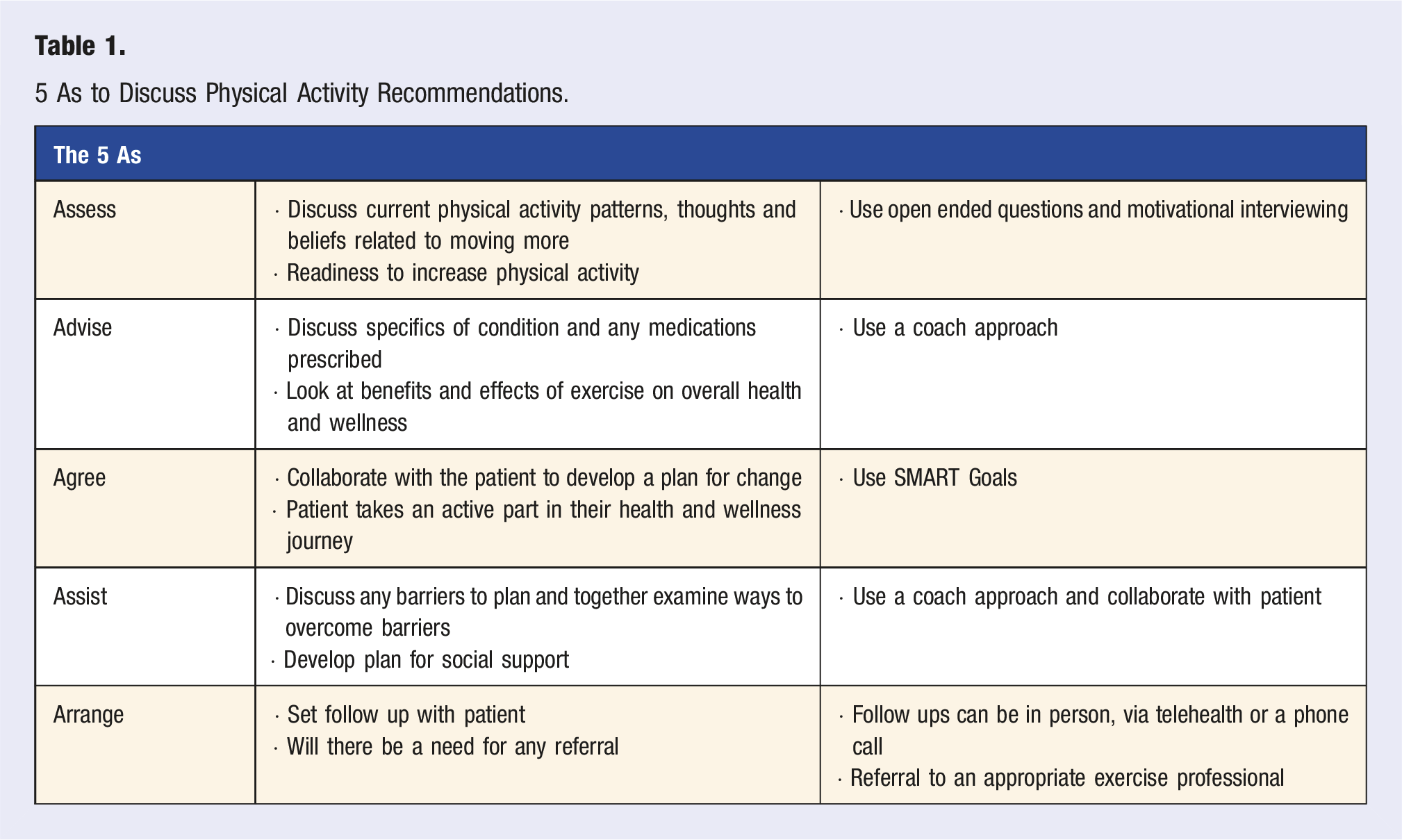
5 As to Discuss Physical Activity Recommendations.
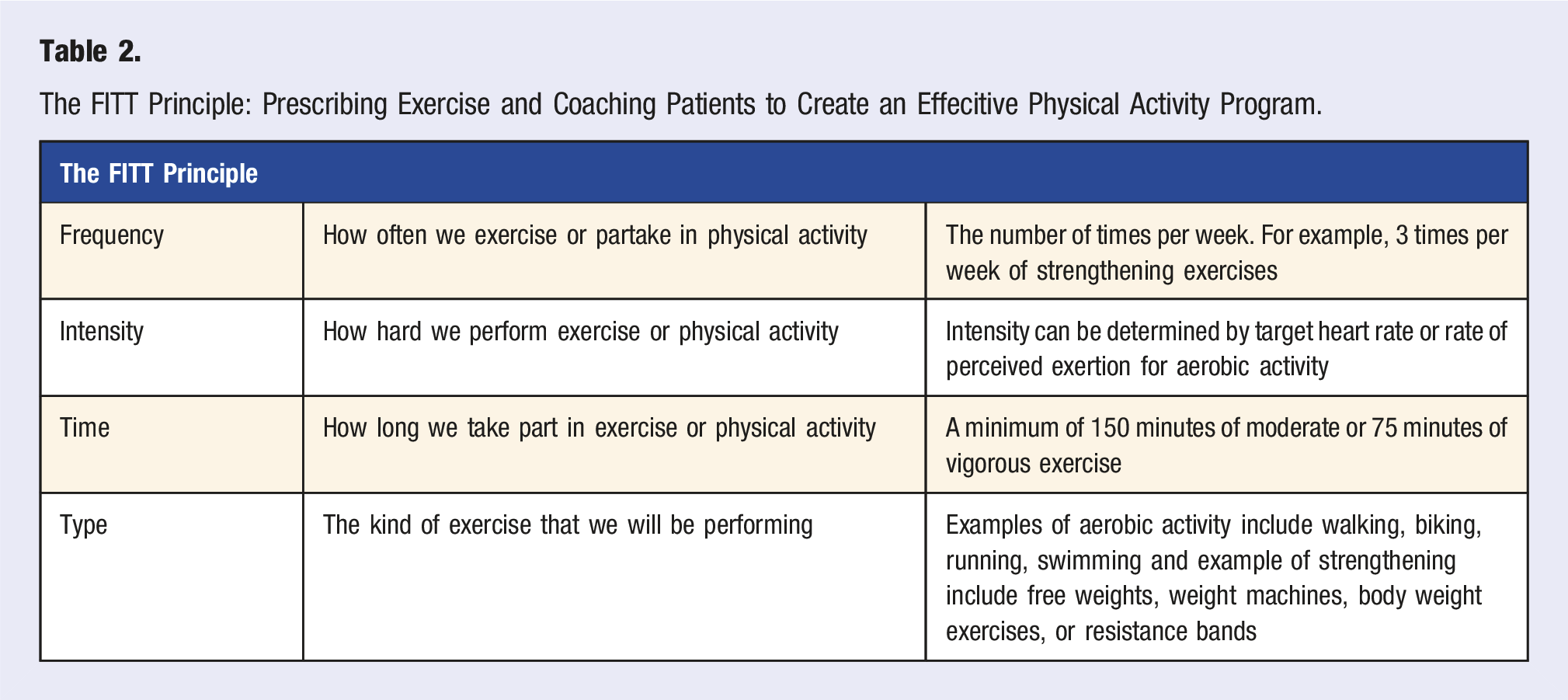
The FITT Principle: Prescribing Exercise and Coaching Patients to Create an Effecitive Physical Activity Program.
Conclusion
Personalized plans for physical activity need to occur with the patient and their interprofessional health care team. Additionally, patient should be encouraged to keep logs of activity and how they feel and wear bracelets or keep a card in the wallet that identifies what medications they are taking in case of emergencies. The health care team can work together to provide a place for patients to ask questions and provide the proper referrals.
The guidelines give recommendations that are homogeneous in nature; health care providers need to take into consideration the person’s factors including but not limited to: health, medical conditions, access, time, abilities, health conditions, medications, health literacy, and willingness. The guidelines serve as a foundation for the recommendations. Physical activity plays a pivotal role in health, and having medical conditions and taking one or many medications does not need to be a restrictive factor. There are people who participate in everyday types of physical activity for fun, for physical, mental and/or social health and others that follow intense regimens for sports, competitions, or their own reasons. Anyone, regardless of their medical history or medication list, is able to do this with an individualized approach. Attention to individualized considerations for each patient, especially in regards to their medical conditions and medications, will help shape physical activity recommendations that are more attainable and may lead to positive health outcomes, while minimizing the “side effects” and “interactions” between physical activity and medications.
Footnotes
Declaration of Conflicting Interests
The author(s) declared no potential conflicts of interest with respect to the research, authorship, and/or publication of this article.
Funding
The author(s) received no financial support for the research, authorship, and/or publication of this article.