



Abstract
Most healthcare professionals agree on the “why” behind encouraging administrators to embrace Lifestyle Medicine as a means of treating chronic conditions and improving health. It is the “how” that often evades us. How do we build our business case to justify the sustained commitment to this approach to care? Each entity has unique obstacles and opportunities inherent in their business model and organizational culture. Attempts to position Lifestyle Medicine as a fundamental means for reshaping healthcare sometimes fall flat despite the value of the requests. Advance preparation including strategic planning and a well-designed approach can make the difference by addressing barriers and opening doors. Each business case will be unique, but there are critical elements that should be common to every strategic plan. We can identify foundational tactics to substantiate the need for integration of Lifestyle Medicine as a critical part of healthcare institutions and their financial plans. Given the momentum in Lifestyle Medicine as a discipline, recommendations can be based on successful practices in the development of business cases, program pilots, sustained budgets and outcomes that justify expansion.
“The investment in Lifestyle Medicine can be easily justified when compared to the cost of prescription medications, hospitalizations and provider time spent managing chronic conditions and their complications.”
Most of us are in the field of health and wellness given our passion for helping people improve their quality of life and live longer. We value programs that reach people and impact their health. It is understandable that when we present our innovative ideas to accomplish these goals, we lead with the value it has for patients. With this in mind, we can be discouraged by the existing health care systems that do not support what should be at the core of our common goals. For the sake of exploring strategies to help your concepts become reality, I am going to encourage you to approach the conversations you will have through the lens of the people who will make decisions about whether your ideas to improve the way we deliver care earn the support they deserve.
I began my career in clinical nutrition and quickly realized that I could not have the impact I desired in a setting where patient care plans emphasize short-term solutions. I took a step back and earned my master’s in business administration with the goal of impacting systems and building models for delivery that made patient centered care meaningful and effective. My greatest lesson in business is that if we seek to understand the priorities of others, we are better positioned to influence their decisions in alignment with our goals. As Lifestyle Medicine professionals we apply this philosophy in the case of a patient knowing this will motivate them to commit to change that improves their quality of life. In the case of health and wellness organizations, we can motivate others to invest in new approaches that improve the way we deliver care.
This perspective is not intended to minimize your own priorities. In fact, it is a means to achieve those things that you desire. Have you ever entered a conversation intending to engage others by sharing a worthy idea or concept and had those conversations go flat? There is a good possibility that the interaction needed to be reframed to highlight how that same plan speaks to the motivations of the other person. When we shift our thinking and lead by addressing the priorities of others, we are better positioned to realize our own goals and priorities. “We advance towards our destiny when we encourage others to reach theirs.” -Paul Wesselmann
We can then align and create synergy where our priorities overlap. Every organization is different in terms of structure, culture, and the people involved in decision making. That said, all health care institutions will have one thing in common. They need to be a viable business entity. We can leverage this fundamental need and advance our priorities by helping others appreciate that Lifestyle Medicine makes good business sense.
Lifestyle Medicine Makes Good Business Sense
Improvements in Health + Cost Savings = Cost Effective Care. The investment in Lifestyle Medicine can be easily justified when compared to the cost of prescription medications, hospitalizations and provider time spent managing chronic conditions and their complications.
Why would any health care organization resist change that will improve care at a reduced cost? It is not enough to present Lifestyle Medicine as the obvious answer to the rising cost of health care and burnout of providers. The reality is that most health care organizations are driven by short-term demands. Drivers include the need to increase access and treat complications of chronic conditions that are overwhelming health care systems. Providers struggle to take a comprehensive approach to care in brief interactions focused on immediate concerns. Most systems need to prioritize patients if they are not well. Metrics focus on reductions of risk factors that can be achieved with prescription medication. In some situations, there is a financial incentive to engage with people who are not well. Operating budgets are established based on income from treatment of illness and complications resulting from poor health. Champions for Lifestyle Medicine are limited in their effort to influence a new way of delivering care because existing systems have interdependent processes that complicate change. Much like our patients spend a lifetime developing deeply ingrained habits, decades of evolving financial structures, metrics and processes have shaped our existing health care system in a way that makes change complicated.
To influence health care systems and ultimately the industry, we can leverage a repeatable framework to gain scaled support, deliver on meaningful outcomes and influence continual improvement with small tests of change that collectively establish new standards of care over time.
Critical steps to influence this type of change include: 1. Reflect on our collective success to date. 2. Recognize current and future obstacles. 3. Develop new approaches to planning. 4. Seek partnerships within established systems. 5. Identify priorities of critical stakeholders and decision makers. 6. Nurture synergistic relationships that bring momentum to our efforts. 7. Develop informed and effective proposals presenting Lifestyle Medicine as good business. 8. Present your case with confidence as the obvious solution to meet the decision makers’ needs.
Considerations of Sustainable Approaches to Change
Significant change takes time and requires measurable, phased, and sequential progress. Start small and use measures of success that speak to the needs of decision makers. At each milestone, reflect, refine, and repeat the same strategic approach to reach the next milestone.
Each time you demonstrate the efficacy promised in your proposal, you are better positioned to ask for incremental increases in investments by leveraging economies of scale based on this experience.
The goal of this article is to help you formulate the beginnings of your business case for Lifestyle Medicine. I suggest that before you read on, collect what is needed to take notes in your preferred format. If you actively engage in consideration of the concepts presented here, my hope would be that you will have built a new plan for the next steps toward your success. We are going to consider examples of how Lifestyle Medicine can be integrated in existing systems and your goal will be to apply the same elements of planning to your proposed intervention addressing the pillars of Lifestyle Medicine. When you develop a concept and proposal that positions Lifestyle Medicine as a strategic element of successful business, you will be contributing to our collective success.
Reflecting to Expand on Our Collective Success
You may be new to your organization and maybe even newly board certified in Lifestyle Medicine. This does not mean you are starting from the beginning. It is important to acknowledge how far our collective efforts have come to show Lifestyle Medicine can redefine the way we deliver care. The infectious energy at the 2023 ACLM Conference in Denver was an example of this momentum. Professionals that embrace Lifestyle Medicine approaches to care are riding a wave. We are in this together and the examples of standard setting programs are growing. Regardless of the size, if you have planned and executed an event or program that influenced others to embrace the pillars of Lifestyle Medicine, pause and appreciate those things that went well. In this process of reflection, ask yourself the same questions that you will use to frame your future business cases.
What did you accomplish?
How did you measure success?
What did you learn?
How would you refine and perpetuate this effort?
What are the opportunities to scale and measure impact in the future?
Develop a statement that showcases what you have accomplished, what you have learned and what you would envision for your project moving forward. Describe what future success would look like including the measures that are meaningful to you, but also to what you know of the priorities of others. A concise statement that captures these elements is at the core of any business case. As an example:
Our Lifestyle Medicine team held a one-day farmer’s market for our employees and patients. We had 100 participants that made purchases from vendors with locally grown produce. Vendors sold out 1 hour prior to the planned ending time. We had to turn away those that came later in the day. We have a commitment from additional vendors to bring produce for a monthly event with the goal of reaching 200 participants. In future events we will provide recipes specific to the seasonal produce and offer free cooking demonstrations showing participants how to incorporate the produce into their meals. The event will provide a sense of community amongst employees and perpetuate the positive experience of our patients by providing a service that encourages whole food plant-based eating. Participants will receive a discount for completing a survey measuring their perceived likelihood of using their purchases in meals and attending future on-site farmers markets. Additional questions will allow employees and patients to reflect on how this service has impacted their perception of the organization.
Statements like these highlight success for us and for others and create a vision for what is possible. Start the process of business planning by writing a similar statement for what you would like to see.
Recognizing Potential Obstacles and Opportunities
To build on your efforts, leverage your investment to date and expand on your success, you will need to look ahead and consider potential barriers to spread. Using the example above, we could ask if we have the staff needed to manage logistics and implementation of our plans. Would the cost of permits increase with the size of the event? When we attract a larger audience could we accomplish other things like demonstrations and ideas on how to incorporate everyday activity into your lifestyle? To make this happen we would need to increase the budget and would need additional manpower. Budget is one of the most common barriers to increasing our reach and impact with Lifestyle Medicine programs. With adequate funding, we can purchase much of what we need, including team members’ time. Other obstacles may be related to competing priorities of the organization. If this event grows, would it create challenges with parking and access to the building for patients coming to receive care? Would there be additional regulatory considerations to address? How will you be certain these obstacles do not prevent you from executing the intervention you envision? Once you have clarified the opportunity and taken an honest look at the obstacles to success, you can turn your attention to solutions.
Developing New Approaches to Planning
It may feel counter intuitive, but I want to emphasize that if you are trying to make the case for something you feel is important, approach the planning process by asking yourself how you can help someone else accomplish their goals with this work.
If we continue with the example of the farmers market, could you identify someone that would benefit from collaboration in this event? Maybe it is the department that is charged with employee health and wellness. Another less obvious example may be the department charged with expanding reach with flu vaccinations. These are potential stakeholders that may be interested in investing resources in this event so they can concurrently accomplish their goals. As the next step in planning, do your research to understand what potential partners have been asked to deliver within their existing budgets. What are their measures of success and what can you do to lower the barriers for them to reach their goals? If the expectations of the department tasked with flu vaccinations is to increase their reach as compared to last year, they may be happy to provide staff members while offering vaccinations at the farmers markets planned during flu season. Employee health and wellness may have a budget to help coordinate and staff the event that would reduce the incidence of flu in the workforce and encourage lifestyle changes that keep employees healthy. They may be willing to take on the role of distribution and analysis of surveys needed to measure success. Survey questions could include appreciation for the event provided by the organization and intentions to incorporate experiences in healthy lifestyle changes. Once you identify aligning departments interests, you can initiate the conversations needed to bring these partners together and build synergy. “Don’t wait for the opportunity. Create it.” -George Bernard Shaw
Seek Partnerships Within Established Systems
Lifestyle Medicine is most often a new or evolving part of any health care institution. There is opportunity inherent in aligning with partners that are integrated into existing systems and processes. If what you hope to accomplish can address a mandate or requirement this is an ideal place to seek alignment. Other priorities of the organization will be evident in the commitment of resources now and in the past. Become engaged in helping stakeholders address their priorities. If you can find a way for your concept to contribute to the success of one of these initiatives, you will open new doors by delivering on outcomes that increase the perceived value for Lifestyle Medicine.
Engage in Stakeholder Priorities
Establishing Standards Monitoring Quality Outcomes Identifying Centers for Excellence
Quality of Patient Care Cost Effectiveness Accreditation Retention of Employees
Budget Capacity Recognition
We can make some general assumptions, however, listening and understanding what is important to potential strategic partners is a critical step to moving your initiative forward. Consider which entities within your organization or community hold priorities that are aligned with your own. Seeking opportunities to engage with well-established and integrated parts of the existing system is key. Once you have identified a group of strategic partners who have aligning priorities and who are integrated into the existing systems, bring them together in a setting where you can listen to uncover overlapping priorities. This is where you can develop ideas and solutions that meet the needs of multiple stakeholders and present Lifestyle Medicine as a strategy to address these needs. Understand that you will make the most of this experience if you go into the conversation willing to flex and shift your initial vision to incorporate elements that motivate others. As a group, you can set collaborative goals that justify an investment in a pilot program that can demonstrate the efficacy of the proposed approach.
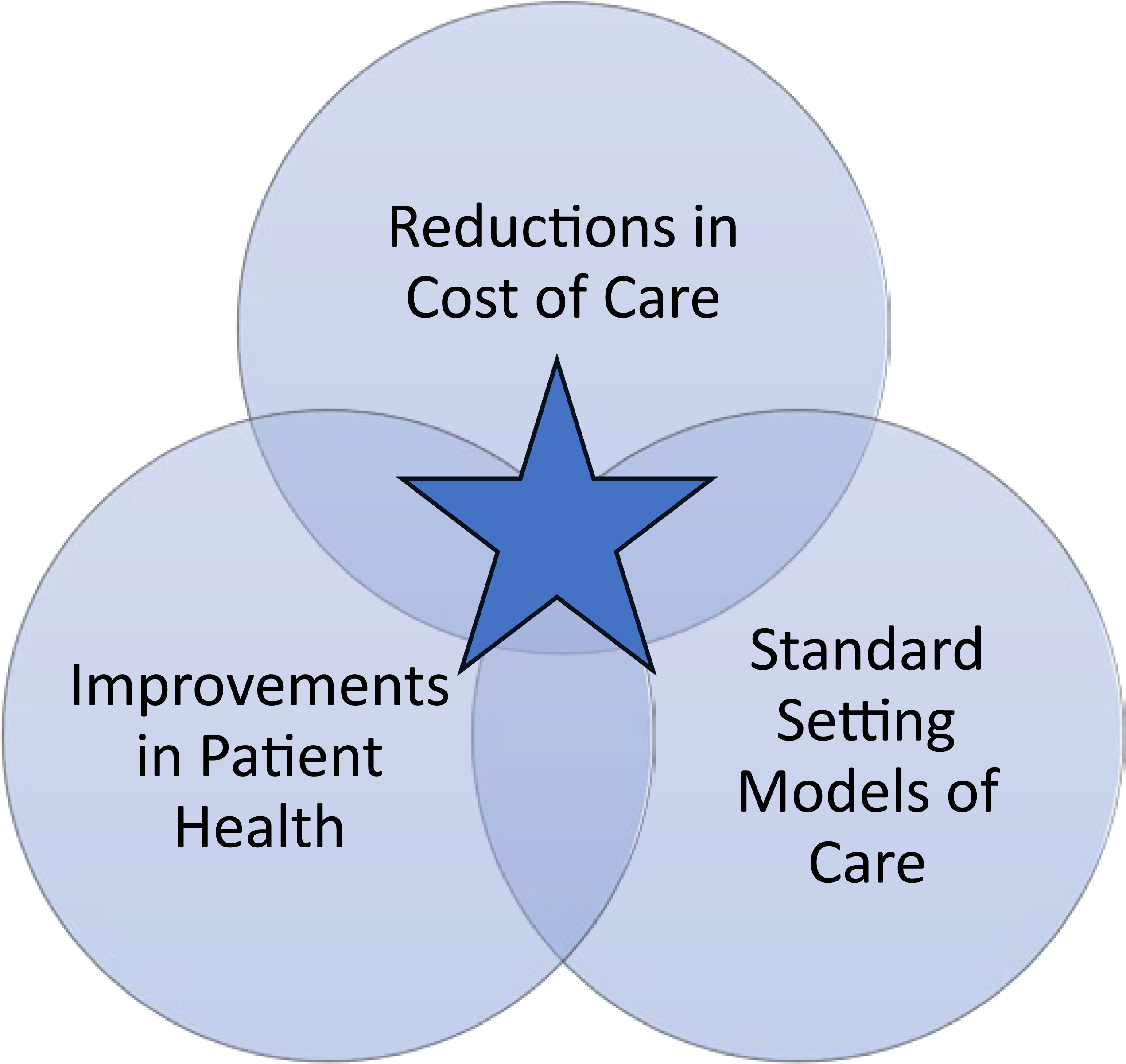
By uncovering synergistic solutions that meet the needs of the organization, we open the door to unrealized value that Lifestyle Medicine brings to the health care industry. Let’s consider the common motivator of reducing the costs of care. For a payor, reducing the cost of care means chronic conditions and their complications requiring critical care are avoided. For the provider that is paid for delivering care, a larger portion of the income is realized as profit if immediate complications are minimized and the quality of care is such that future complications are avoided. In both instances, Lifestyle Medicine contributes to approaches that reduce the cost of care. Interventions that reduce risk factors result in savings experienced with limited needs for treatment. Interventions that improve overall health reduce the length of stay, recovery time and rate of readmittance in the case of complications. Reduced cost in these instances is a result of standard setting care that improves the health of those we serve.
There is an exhaustive list of potential partners that could benefit from collaboration that includes Lifestyle Medicine interventions. The relevance of these opportunities will be unique to each entity. Your research and intent to truly understand the pressure points for decision makers will be important to develop your unique strategy. Keep in mind that it will be hard to challenge the value of a proposition that finds the intersection depicted in Figure 1. • Standard Setting Models of Care • Improvements in Patient Health • Reductions in Cost of Care The Value Proposition of Lifestyle Medicine.
If uncertain where to begin in your search for organizational priorities, consider the cost of Type II diabetes as a challenge that will resonate with most. Just a quick internet search will bring you to webpages of respected organizations with the data to support this cause. The website https://www.ncls.org/ the National Conference of State Legislatures Brief on Diabetes State Mandates and Insulin Copay Caps dated December 19, 2023, highlights the laws that place responsibility on health care organizations. 1 On the website https://www.cdc.gov/, the Center for Disease Control and Prevention highlights that 1 in 3 people in the United States have pre-diabetes and that the number of people diagnosed with Type II diabetes has more than doubled in the last 20 years. 2 The American Diabetes Association notes on https://www.diabetes.org/ that diabetes is the eighth leading cause of death. 3 The World Health Organization, 4 https://www.who.int/, sites diabetes as a major cause of blindness, kidney failure, heart attack, stroke, and lower limb amputations. On https://www.cms.gov/, the Affordable Care Act requires health insurance plans to cover preventative services without imposing cost sharing on patients. 5 There is no doubt that diabetes is a significant contributor to the rising cost of care in the United States and is impacting all health care institutions. If our goal is to impact lives and we can accomplish this with standard setting care that utilizes resources identified to address the demands of diabetes we have found a sweet spot.
Interventions that embrace the pillars of Lifestyle Medicine are at the core of the solutions for these rising costs. The Medicare Diabetes Prevention Program outlined on https://www.medicare.gov/ measures success by monitoring diabetes risk reduction with 5% of body weight loss and regular physical activity. 6 Investigation into how your institution is impacted by, and addressing these mandates for prevention will likely produce opportunities for Lifestyle Medicine to contribute to organizational goals and concurrently positively impact individual lives. The reduction or deprescription of insulin for a person with type 2 diabetes is easily quantified. A business plan that recognizes the cost of a diabetic diagnosis that can be avoided for a pre-diabetic and the cost of insulin that can be reduced for a Type II Diabetic can be used to present a cost-effective design that justifies investments in Lifestyle Medicine.
Build Synergy Through Collaborative Planning
After you have done the advance work to identify the priorities of critical stakeholders and listened to truly understand the needs of others, you can build synergistic relationships in a meeting that facilitates collaborative planning. The date and time for this meeting should be set well in advance so you can continue to generate interest and all critical players can hold their meeting schedule. The last thing you want to happen is to build momentum for your cause and then have it stopped short because a key contributor was not in the room. Ideally this meeting should be at least 90 min. The first hour should be spent with a round table discussion listening to stakeholder challenges and hearing ideas about how they feel Lifestyle Medicine may help address these needs. If you have done your job with your advance conversations, the energy in the room will already be primed. Your role is to take notes and ask clarifying questions that strategically highlight common priorities that align with your goals. At the end of this round table discussion there will already be ideas developing that meet the needs of multiple contributors. The goal will be to take these ideas forward with a bottom-up approach to build momentum that gets the attention of organizational leaders.
The next part of the agenda should be focused on consideration of ideas and solutions presented by the group. Agree upon the outcomes that will measure your collective success and develop a plan to capture the data that demonstrates these results. It is possible that the potential is greater than the short-term capacity of this collaborative team. This is to be expected. Begin with the end in mind knowing where you ultimately hope to be and consider a phased approach that is realistic to accomplish by setting short-term goals. This also allows you to make relatively small requests from decision makers as a way of introduction. Once you have their attention with your short-term success, approval of your requests to expand and continue toward your vision will come more easily. The key is to make commitments that you know you can deliver on while you are building credibility.
As a final step in the planning process the group should agree on proposed roles, responsibilities and action items needed to gain required approvals. Considering available resources and realistic timelines, individuals in the group should have a sense of ownership and a stake in the outcomes. This sets you up to develop a business case that captures the momentum and agreements resulting from your alignment with these key stakeholders.
Building Your Tailored Business Case for Lifestyle Medicine
Most healthcare professionals agree on the “why” behind encouraging administrators to embrace lifestyle medicine as a means of treating chronic conditions and improving health. It is the “how” that often evades us. How do we build our business case to justify the sustained commitment to this approach to care? Each entity has unique obstacles and opportunities inherent in its business model and organizational culture.
Your business case should be based on objective information with a commitment to quick wins and measurable outcomes that will move the stakeholders closer to their collective goals.
If you have had the necessary critical conversations, you will have the information you need to fill in the details of the template below and develop a well-received business plan. In this section intended to guide you in development of the document that will summarize your proposal, we will reiterate elements of planning and strategy that have been discussed. As a recap of the advance work, you will need to complete: • Position your proposal to address organizational priorities. • Demonstrate the value of your proposal by highlighting key stakeholders’ alignment. • Consider existing budgets, cost avoidance or cost savings to plan for cost-effective design. • Design with data collection in mind to establish metrics for meaningful outcomes.
Remember that current and pressing challenges that your organization is facing are most likely to get the attention of decision makers. Concurrently you can consider opportunities to position the organization strategically for the future. In both instances your goal is to present Lifestyle Medicine as part of the solution that concurrently serves the inherent goal of improving patient lives.
Characteristics of a Successful Business Case.
Innovative concepts that address the challenges and priorities of decision makers.
Approaches that are distinctly differentiated from the existing models of care.
A detailed plan that leverages existing resources and is aligned with strategic partners.
Clearly defined outcomes that are both measurable and meaningful.
“Ask” for a relatively small commitment to demonstrate cost-effective change that can be replicated.
A Template for Success.
The document you will develop should accomplish the following:
Address Organizational Priorities
Highlight alignment with partners that are integrated components of the existing structure of your health care organization. Spend some time getting to know their priorities and challenges. Consider how Lifestyle Medicine might be a part of the solution using existing resources that are already dedicated to addressing the needs of the stakeholders and decision makers. Use this opportunity to point out market trends, industry standards and the anticipated future that should be considered.
Highlight Key Stakeholders’ Alignment
Introduce critical stakeholders and provide an overview of your alignment created by the focused time dedicated to connecting with them individually to understand their challenges and priorities. Share the results of the meeting where all stakeholders came together and discuss opportunities to align efforts while leveraging Lifestyle Medicine approaches that address organizational needs. Share the agreements and commitments of stakeholders for this collaborative approach. Present the detailed proposal crafted because of this collaborative work.
Present Your Plan for Cost-Effective Design
Outline how your proposed solutions will successfully accomplish one or more of the following: • Leverage existing budget dollars allocated to meet organizational needs. • Justify an investment by showing how it demonstrates short-term cost savings. • Extrapolate on proposed outcomes to provide estimates of long-term cost avoidance. • Gain recognition with funding from aligning organizations.
Present Meaningful Metrics
Present intended measurable outcomes that directly address the organizational needs and stakeholder priorities. These metrics should justify an investment by spelling out the cost-effective elements you have identified. Taking into consideration value-added metrics, your plan can highlight opportunities that speak to the needs of patients, providers, and the mission of the organization and industry. Speak to how these outcomes are repeatable and offer economies of scale. As a part of these metrics showcase your cost analysis.
A cost analysis has the potential to get decision makers’ attention up front and to justify the investment repeatedly through the final stages of consideration. The question to be answered is how the current cost of care compares to the potential cost savings. Taking into consideration the cost of the proposed intervention gives you the bottom line that will have an impact on the financial outcomes.
Equations that quantify how your proposal can contribute to the bottom line include: Potential Cost Avoidance minus Proposed Cost of Intervention = Cost Avoidance OR Pre-Intervention Cost of Care minus Post Intervention Cost of Care minus Proposed Cost of Intervention = Cost Savings
Subtract what is already available to you in your budget or the budget of your newly aligned partners to arrive at the request for support for the intervention.
Making an Offer They Can’t Refuse
An opening statement about what you hope to accomplish should get the attention of the decision makers and draw their interest to the details of your proposal. The opening statement should highlight the immediate problem and the basics of how you are proposing you will address this need. There is also the opportunity to allude to how this approach has the potential to impact the future of the organization.
Following your concise opening statement, go confidently into conversations with decision makers, telling a story of strategy, collaboration and meaningful, cost-effective outcomes that justifies this investment in Lifestyle Medicine making it the logical choice. Remember, if you are being presented with critical questions, this means you have their curiosity peaked. Every challenge presented is an opportunity to show you have done your advanced work and further their confidence in your proposal. Allow time for and encourage questions keeping your audience engaged and thinking critically about the potential of your initiative. Close your business case with a specific “ask” for the support you need including financial as well as other commitments from leadership to validate your cause.
In the end, make small commitments to change and keep them. With each subsequent successful project, you will build respect as a champion for Lifestyle Medicine. Have confidence that in time you will be able to look back and see how each of the small steps forward has contributed to the greater good by helping to position Lifestyle Medicine as the future of health care. ACLM alone has over 10 000 professionals supporting your cause. We are in this together and your unique contribution matters!
Footnotes
Acknowledgments
Presented at the American College of Lifestyle Medicine Conference, Denver CO 2023.
Declaration of Conflicting Interests
The author(s) declared no potential conflicts of interest with respect to the research, authorship, and/or publication of this article.
Funding
The author(s) received no financial support for the research, authorship, and/or publication of this article.
