



Abstract
Background. Statistics show that the cardiovascular health (CVH) of young Michigan residents is problematic, yet little is known about the CVH of Michigan’s college students. This study sought to (1) estimate the prevalence of ideal levels of CVH metrics among college students, (2) assess their CVH knowledge, and (3) examine the association between students’ CVH knowledge level and sociodemographics on their CVH behaviors. Methods. A cross-sectional survey was administered online from August 2017 to April 2018. The survey included questions related to students’ demographic characteristics, CVH behaviors, presence of CVH factors, and knowledge of ideal levels for CVH metrics. The study included 341 Oakland University students aged 20 to 40 years. Descriptive statistics estimated students’ CVH status and knowledge of CVH measures. Generalized ordinal logistic regression analyses examined the association between students’ CVH knowledge level and sociodemographic characteristics on their CVH behaviors. All analyses were performed using STATA MP14. Results. More than 87% of the participants did not have an ideal body mass index level. Students’ CVH knowledge score significantly decreased (odds ratio = 0.80, 95% confidence interval = 0.67-0.96) with each increase in the number of non-ideal CVH behaviors performed. Conclusions. Michigan college students may benefit from lifestyle interventions that improve their knowledge of CVH and promote ideal CVH behaviors.
Keywords
. . . a considerable proportion of Michigan residents aged 18 to 39 years do not have ideal measures for cardiovascular health (CVH) factors and behaviors.
Despite the reduction in annual cardiovascular disease (CVD) related deaths, heart disease continues to be the leading cause of death among men and women in the United States. 1 CVD-related interventions are warranted for all ages, including young adults as the latest American Heart Association’s (AHA) 2019 Heart Disease and Stroke Statistics report indicate that CVD risk factors are prevalent among this age group. 2 Based on data from the 2013-2014 and 2015-2016 National Health and Nutrition Examination Survey, the AHA’s report shows that among U.S. adults aged 20 to 39 years, 38.3% were hypertensive, 55% were not performing the recommended physical activity level, 63.7% were overweight or obese, and 91.5% were not consuming the recommended amount of fruits and vegetables. 2
The aforementioned statistics are mirrored among young adult Michigan residents. 3 Data from the 2017 Michigan Behavioral Risk Factor Survey (BRFS) demonstrate that a considerable proportion of Michigan residents aged 18 to 39 years do not have ideal measures for cardiovascular health (CVH) factors and behaviors. Specifically, across the age groups, 8.5% (18-24 years), 15.3% (25-34 years), 21.3% (35-44 years) of Michigan’s young adults have been told that they have high blood pressure. 3 Michigan young adults’ physical activity level is also concerning as the 2017 BRFS illustrates that 19.5% (18-24 years), 28.4% (25-34 years), and 25.4% (35-44 years) of this population reported no leisure-time physical activity, 3 which has increased since the 2016 estimates: 16.6% (18-24 years), 16.7% (25-34 years), and 21.8% (35-44 years). 4 The age group surveyed by the Michigan BRFS coincides with the college student population at Oakland University, in which approximately 71% of this student population is between the ages of 20 and 40 years; 47.7% are ages 20 to 24 and 23.3% are ages 25 to 40. 5 Although no studies have examined the CVH of students at Oakland University, studies that have examined CVD risk factors among Michigan colleges warrant additional research to examine CVH metrics of this population.6,7 This is seen by a 2015-2016 cross-sectional study that examined the presence of metabolic syndrome risk factors among 462 students, aged 18 to 25 years, at Central Michigan University. 8 The outcomes of this screening found approximately 22% of participants had low high-density lipoprotein cholesterol levels, and high waist circumference measurements (12.6%) as the second most common risk factor. 8 It should also be noted that this study found the mean body mass index (BMI) value of the college participants to be 24.0 ± 3.59, 8 which is borderline overweight. 9 Although informative, this study does not provide insight into the prevalence of CVD risk factors among Michigan college students aged 25 to 40 years. Additional studies that have examined CVH metrics among Michigan college students have focused on undergraduate students, who are generally less than 25 years of age.6,7 Therefore, additional studies should be performed to address this gap in the literature.
Studies that have examined the underlying factors of college students’ CVD risk suggest that their risk may be associated with their knowledge of CVD.10,11 The results of a study performed in 2017 by Sarpong and colleagues indicated that an inadequate percentage of students aged 18 to 20 years were able to correctly identify healthy levels for cholesterol (28.7%), blood pressure (67.6%), glucose (25.1%), and BMI (29.6%). 12 Furthermore, research shows that college students’ knowledge of CVD is lower than their knowledge of sexual and mental health, and substance use. 13 The aforementioned studies portray gaps in college students’ knowledge of CVD risk factors, which varied from the findings of a study that assessed Michigan college students’ knowledge. 14 This study found that among 243 students (average age of 20.6 years), more than 80% of them were knowledgeable of signs and symptoms of diabetes, hypertension, arteriosclerosis, myocardial infarction, and stroke. 14 Therefore, additional research should be performed to further discern Michigan college students’, particularly those 26 years and older, knowledge of CVD risk factors.
Based on the known gaps in the literature on the CVH of Michigan college students age 25 to 40 years and the need to further understand Michigan college students’ CVD knowledge level, the objectives of this study were to (1) estimate the prevalence of ideal levels of CVH metrics of college students, (2) assess their CVH knowledge, and (3) examine the association between students’ CVH knowledge level and sociodemographics on their CVH behaviors.
Methods
Participants and Setting
Study participants were recruited from Oakland University located in Rochester, Michigan, between August 2017 and April 2018. The sample consisted of current students between 20 and 40 years of age. Students completed a survey via Qualtrics, 15 a web-based survey software. To ensure that the inclusion criteria were met, the first 2 questions of the survey assessed if students were a current student at Oakland University and were between the ages of 20 to 40 years. Individuals that did not meet these criteria were directed to the end of the survey and not included in the study.
Recruitment Method
To obtain a convenient sample of Oakland University’s students, various approaches were used to recruit participants. From August to December 2017, flyers with a link to the survey were placed on bulletin boards across campus. A copy of the flyer was also sent to faculty who were asked to share the flyer with their current students. Last, the study was promoted on the university’s radio station and newspaper. To help increase participation, an incentive of a $50 Visa gift card was given to the first student who completed the survey for each week. The survey was paused during the winter holidays as limited to no students would be present on campus or accessing their email during that time.
From January to April 2018, the flyer was resent to faculty across campus to share with their current students. To avoid the occurrence of students taking the survey twice, the survey asked students if they had previously taken a survey about their CVH at Oakland University. No incentives were given within this time frame, and no other recruitment methods were used. Approval was obtained from Oakland University’s Institutional Review Board to complete this study.
Guiding Model
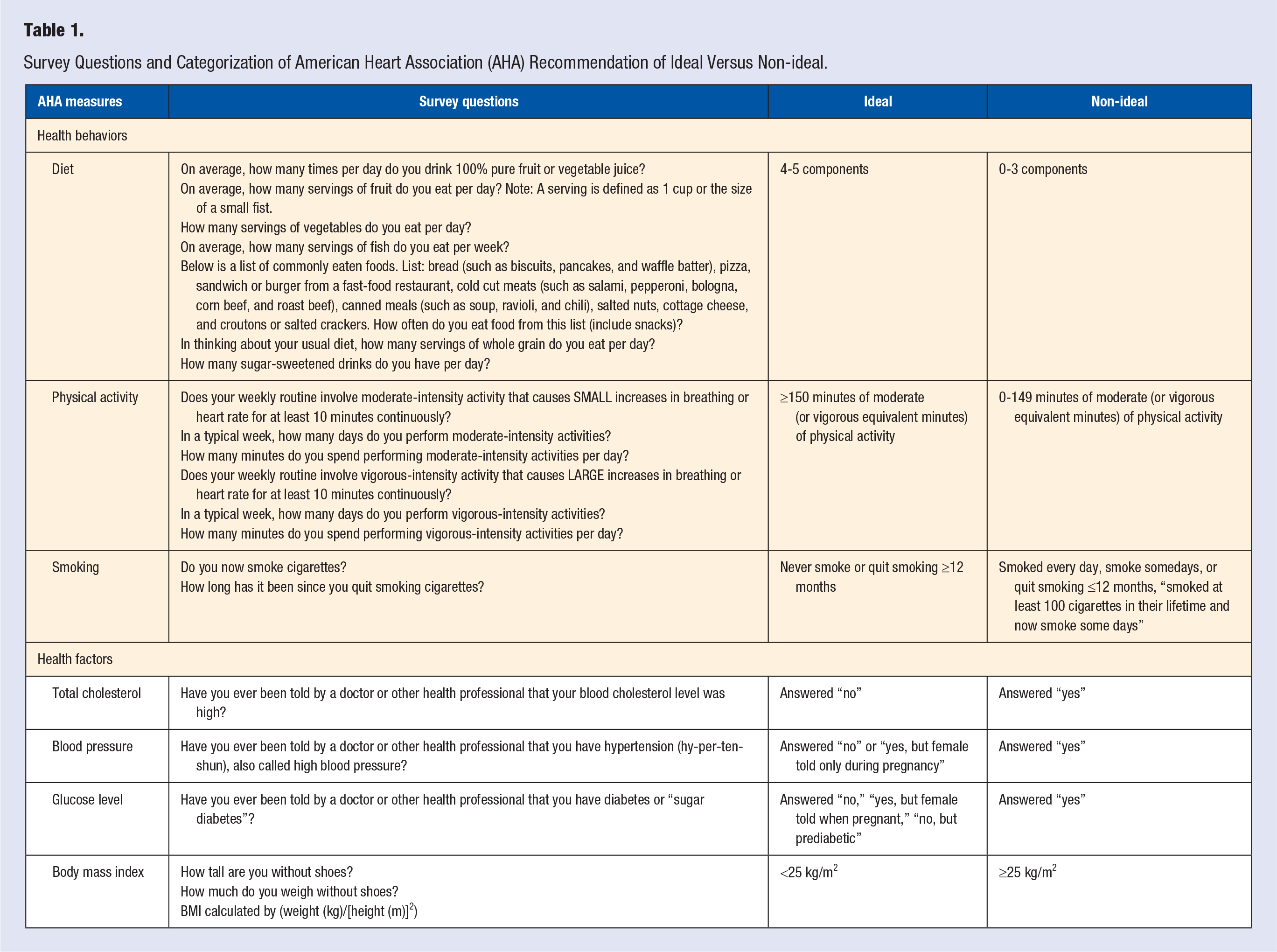
The AHA’s definition for ideal CVH (Table 1) served as a guide to completing this study’s objectives. In 2010, the AHA established the definition for ideal CVH as the absence of disease and the presence of ideal levels for 7 metrics: blood pressure, cholesterol, fasting plasma blood glucose, physical activity, diet, smoking, and BMI. 9 Extensive studies have evaluated the AHA’s definition of ideal CVH and its respective measures and found them to effectively predict the development of CVD and survival.16-19
Survey Questions and Categorization of American Heart Association (AHA) Recommendation of Ideal Versus Non-ideal.
Measures
Questions for the survey were either developed by the research team or adapted from the National Health and Nutrition Examination Survey (2005 and 2013-2014), the Behavioral Risk Factor Surveillance System (2013), and the National Health Interview Survey (2017).20-22 The preceding validated cross-sectional surveys are publicly available and were developed by the Centers for Disease Control and Prevention; the surveys are a part of a series to collect health information across the United States. The survey utilized in this study was piloted among 30 young adults between the ages of 20 and 40 years, from various degree backgrounds (e.g., health science, public health, physics, and nursing) before the implementation of the study to validate survey questions.
Demographic Characteristics
The survey assessed students’ age in years, whether they were a current Oakland University student (yes/no), gender (male/female), and whether they have a family history of heart disease (yes, no, don’t know) or diabetes (yes, no, don’t know). The survey also asked students about their race/ethnicity (American Indian or Alaska Native, Asian or Indian, Black or African American, Native Hawaiian or Pacific Islander, White, Middle Eastern or Northern African Descent, or Other); however, this variable was recategorized to minority versus nonminority students due to low responses across categories. Similarly, students’ highest level of education (grade 12 or GED, 1-4 or more years of college, 1-2 or more years of masters, and 1-4 or more years of doctoral program) was also recategorized to undergraduate versus graduate. Perceived health status (excellent, very good, good, fair, and poor) was recategorized to excellent, very good, good, fair/poor due to the limited response of poor health status. Students’ county of residence in Michigan was also captured as a substantial number of students commute to the university. The 83 counties were recategorized to students’ region of residence (Region 1, 2 North, 2 South, Region 3, Region 5, Region 6) to address limited responses.
CVH Behaviors
The CVH of students was determined using applicable survey questions that reflected the AHA’s 9 recommendations for ideal CVH (Table 1). Specifically, students were asked about their dietary habits, which included servings of whole grain (0-6 per day), fruit (0-9 or more times per day), vegetables (0-9 or more times per day), fish (0-6 or more servings per day), and the number of sweetened drinks (0-11 or more times per day). To gain insight into students’ salt intake, the survey contained a list of commonly eaten foods that have high salt content. 23 Students were asked to report how many times per day they consumed these high salt foods (0-11 or more times per day). The diet variable (0-3 components vs 4-5 components) was created based on students’ fish, whole grains, sugary beverages, high sodium foods, fruit, and vegetable intake. This variable was created based on the AHA’s dietary recommendations. 9
Students were also surveyed about their physical activity; whether they performed moderate-intensity activity (yes/no), how many days of moderate-intensity activity per week (1-7 days), the number of minutes of moderate-intensity activity per week (10-160 or more minutes), whether they performed vigorous-intensity activity (yes/no), how many days of vigorous-intensity activity per week (1-7 days), and the number of minutes of vigorous-intensity activity per week (10-160 or more minutes). These variables were then used to create the physical activity variable (10-149 minutes of moderate/10-74 minutes of vigorous activity per week versus ≥150 minutes of moderate/≥75 minutes of vigorous activity per week). Students were also asked if they smoked cigarettes (every day, some days, quit, and never), which was recategorized as current versus non-current smoker to reflect the AHA’s guidelines.
Students’ diet, physical activity, and smoking status were consolidated to create the CVH behavior variable with a score ranging from 0 to 3 (0 = perform zero non-ideal CVH behaviors; 1 = performs one non-ideal CVH behavior; 2 = performs 2 non-ideal CVH behaviors; 3 = performs all 3 non-ideal CVH behaviors).
CVH Factors
Students were also asked if they have ever been told by a doctor or health professional that they have high blood pressure (yes; yes, but during pregnancy; no; or don’t know), high blood cholesterol (yes, no, or don’t know), or diabetes (yes; yes, but during pregnancy; no, but I was told that I was borderline; I have diabetes; or no). Students’ height in inches and weight in pounds were also recategorized and used to calculate their BMI (weight (kg)/[height (m)]2). 24
Knowledge of CVH
Multiple-choice questions were created to assess students’ knowledge of CVH metrics and were based on the AHA’s definition of ideal CVH levels. 9 Specifically, students were asked to identify an ideal blood pressure (118/79, 126/95, 130/91, 140/81, or don’t know), total blood cholesterol (195 mg/dL, 210 mg/dL, 240 mg/dL, 250 mg/dL, or don’t know), blood glucose (96 mg/dL, 125 mg/dL, 134 mg/dL,140 mg/dL, or don’t know), and BMI level (21 kg/m2, 34 kg/m2, 36 kg/m2, 42 kg/m2, or don’t know). Knowledge questions were recategorized to correct or incorrect, to better assess students’ knowledge of CVH. The knowledge score variable was developed by combining the responses of the 4 knowledge questions. The responses to this variable ranged from 0 to 4, with 0 indicating 0 questions were answered correctly and 4 denoting all 4 questions were answered correctly.
Statistical Analyses
Survey responses were summarized by computing frequencies and percentages. Generalized ordinal logistic regression was performed to examine the relationship between CVH behavior variables and students’ CVH knowledge and demographic characteristics because the proportional odds assumption of ordinal logistic regression models was violated. All analyses were performed using STATA MP14 25 with a statistical significance of .05.
Throughout the study period, 461 students initiated the survey. Ninety-nine students were directed to the end of the survey for not meeting the inclusion criteria, for a total of 362 eligible students initiating the survey; ~1% response rate. Twenty-one responses were removed to only include responses where less than 79% of the responses were missing for the included variables. The study included 341 college students meeting the estimated sample size for a 95% confidence interval with a 6% margin of error.
Results
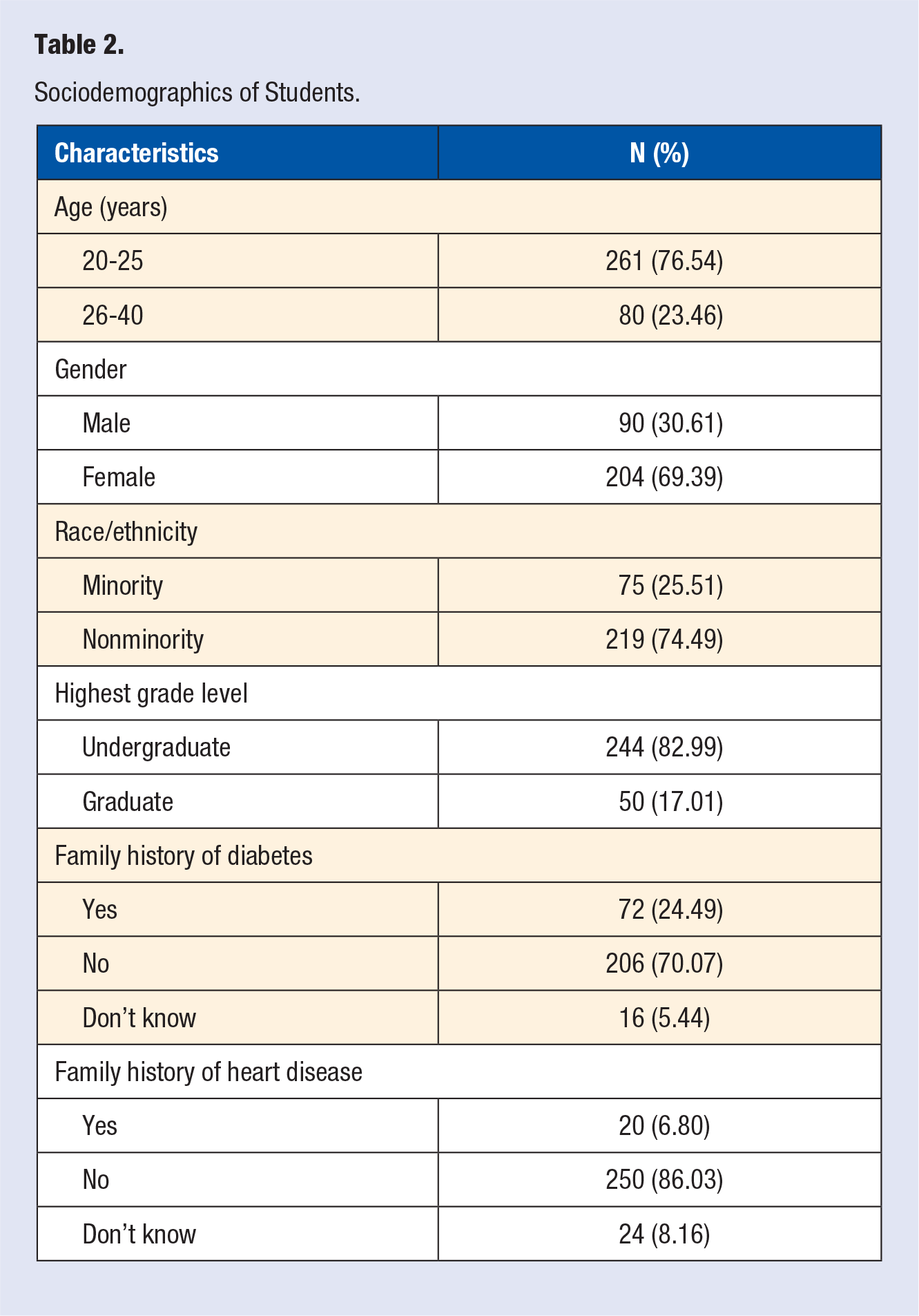
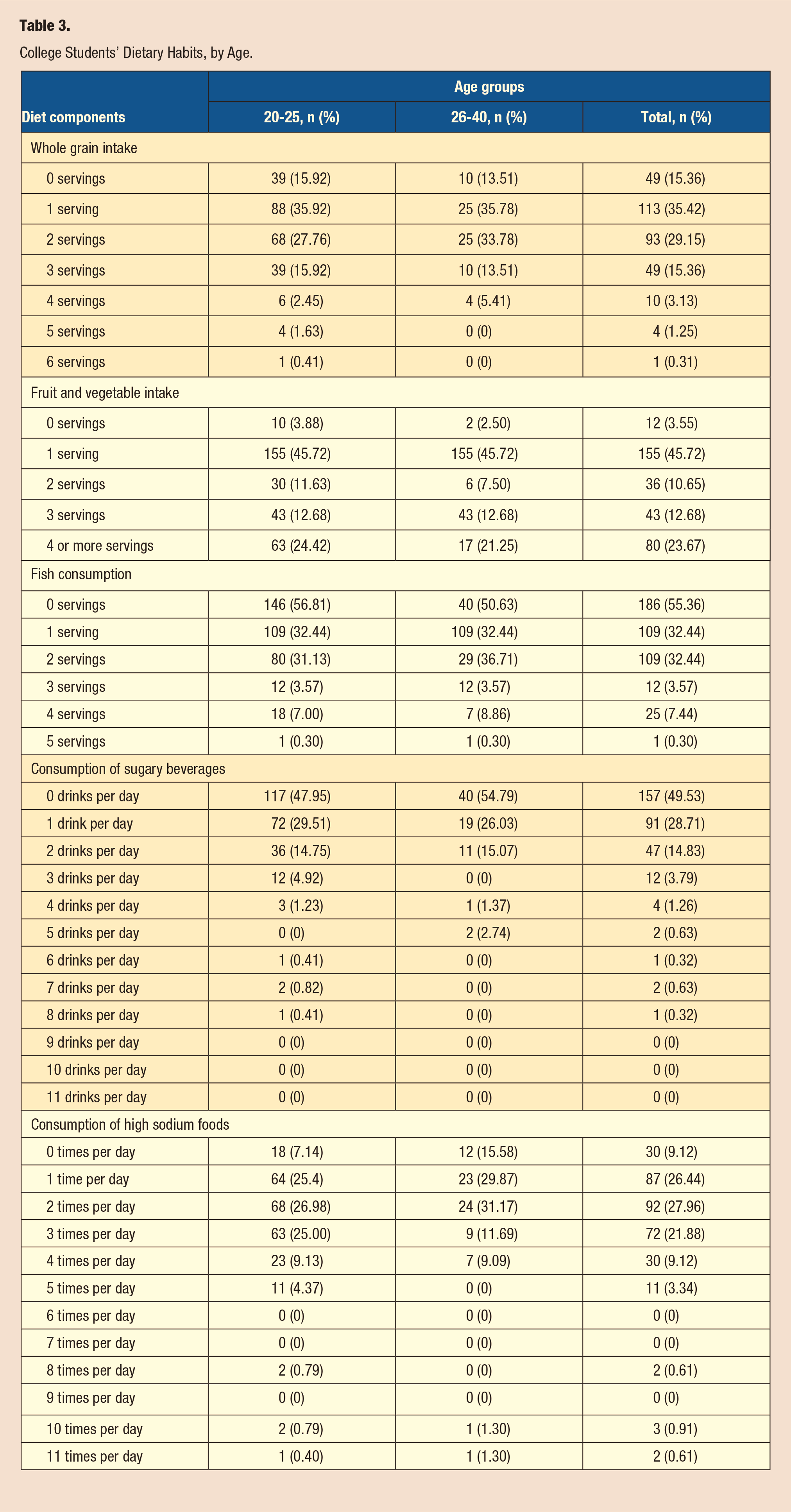
A majority of the participants were between the ages of 20 and 25 years (76.54%), female (69.39%), and an undergraduate student (82.99%; Table 2). Across both age groups, high blood glucose was identified as a metric where less than 2% of the participants were found to have a non-ideal level (Figure 1). Similarly, less than 2% of those ages 20 to 25 years were identified as a current smoker. Compared to participants age 20 to 25 years, a higher proportion of participants age 26 to 40 years were found to have non-ideal levels for cholesterol (11.21% vs 22.64%), BMI (36.09% vs 52.11%), and physical activity (34.75% vs 45.83%). Among both age groups, less than 13% of participants were found to have an ideal diet. Their dietary habits show that approximately 20% of students consume 3 or more servings of whole grain and about 45% consume fruits and vegetables 4 or more times per day (Table 3). Only 12.2% of students consume fish 2 or more times per week, and about 22% consume 2 or more sugary beverages per day. More than 64% of students reported consuming high salt content food 2 or more times per day.
Sociodemographics of Students.
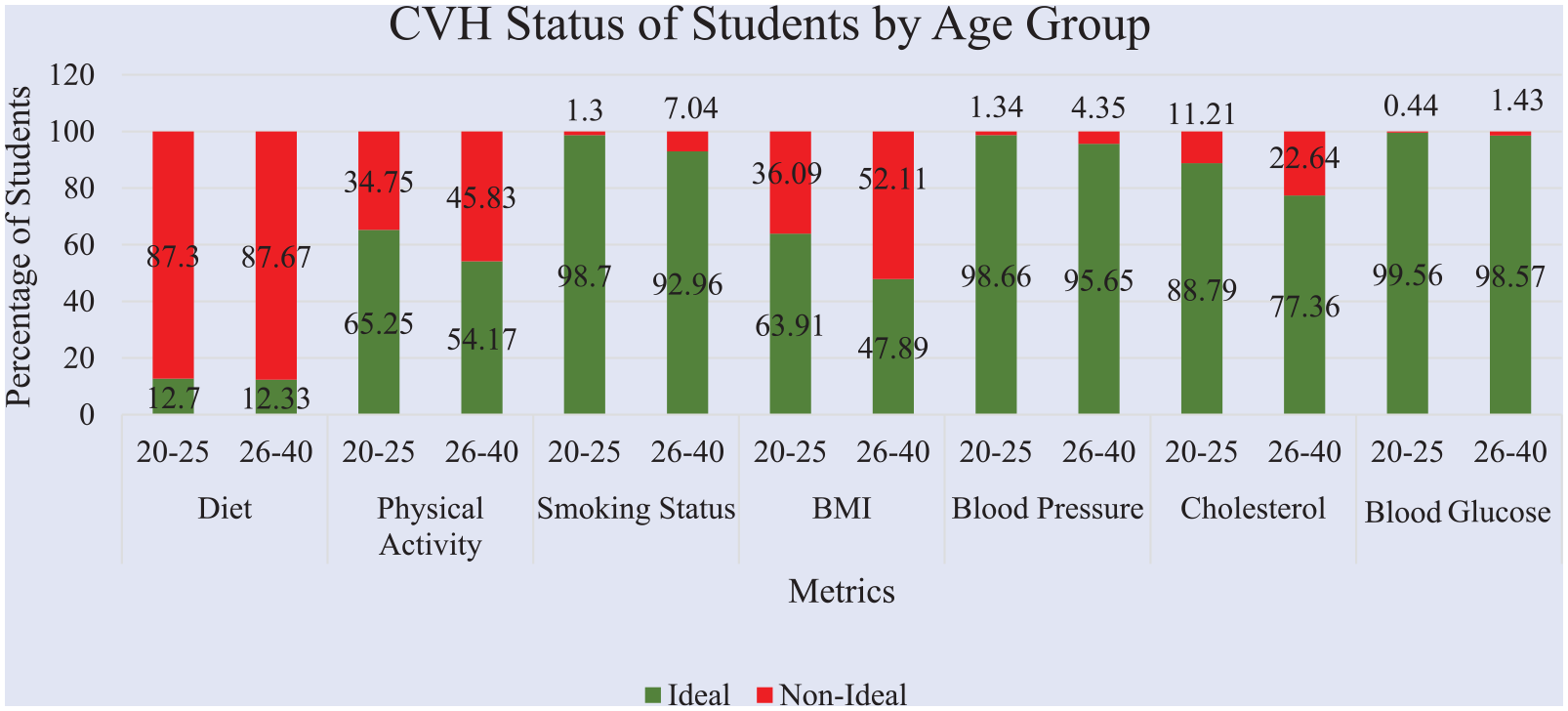
College participants’ CVH status, by age in years.
College Students’ Dietary Habits, by Age.
Regarding students’ knowledge of ideal levels for the CVH metrics, 68.42% of students ages 20 to 25 years and 76.23% of students ages 26 to 40 years identified an ideal blood pressure level (Figure 2). Students’ knowledge of an ideal total cholesterol level was assessed similarly; 32.06% of respondents age 20 to 25 years and 42.86% of respondents age 26 to 40 years answered correctly. The percentage of students who identified an ideal fasting plasma glucose (40.97% and 50.00%) and an ideal BMI (48.26% and 50.70%) were comparable across both age groups.
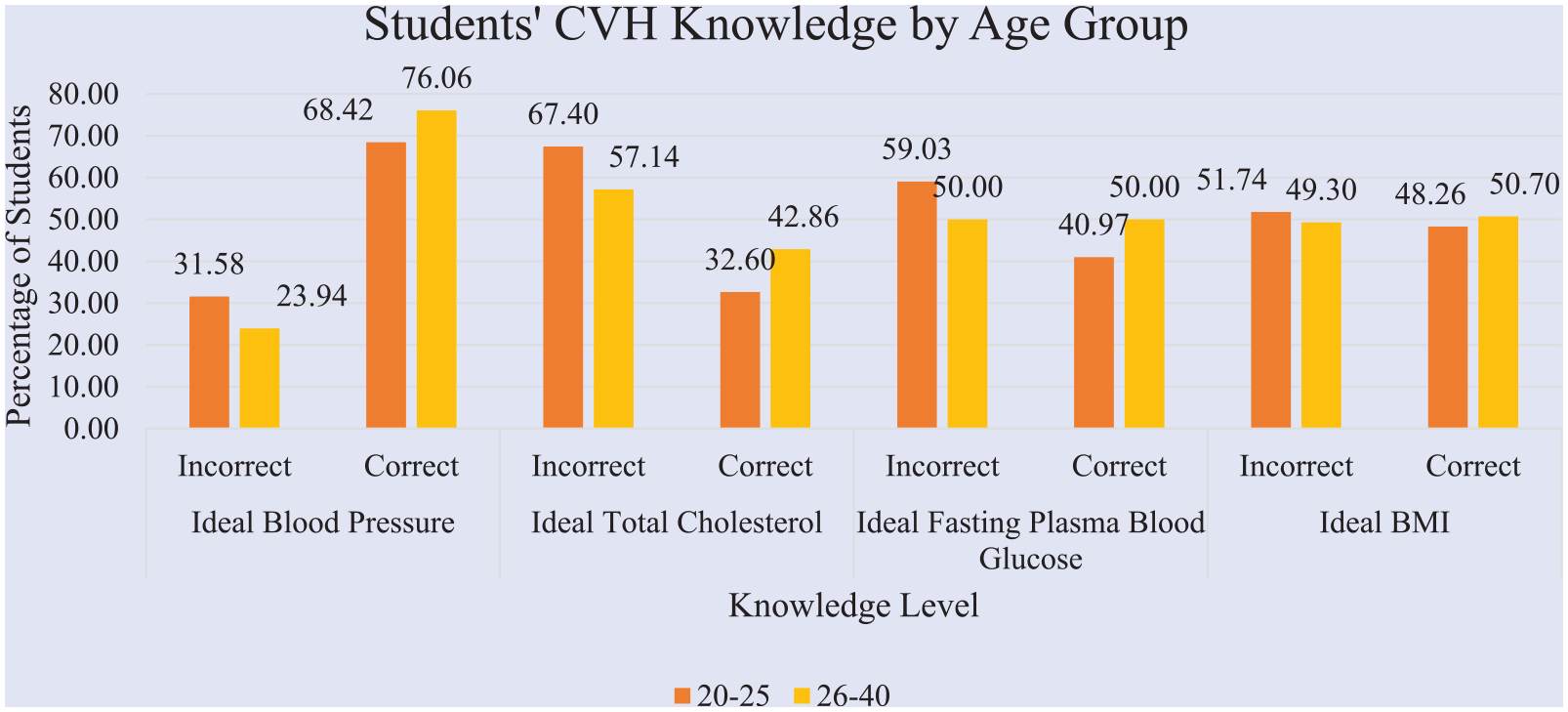
College participants’ knowledge of CVH metrics by age in years.
The generalized ordinal logistic regression analysis indicated students’ CVH behaviors were significantly associated with their knowledge of CVH measures and their sociodemographics (Table 4). Students who performed a higher number of non-ideal CVH behaviors had higher odds of having a low knowledge score (odds ratio [OR] = 0.80, 95% confidence interval [CI] = 0.67-0.96). Students who self-reported as a minority had greater odds of performing a higher number of non-ideal CVH behaviors compared to nonminority students (OR = 1.87, 95% CI = 1.04-3.34).
Logistic Regression Analysis Examining the Association Between Students’ Cardiovascular Health Behaviors and Their Knowledge, and Sociodemographics.
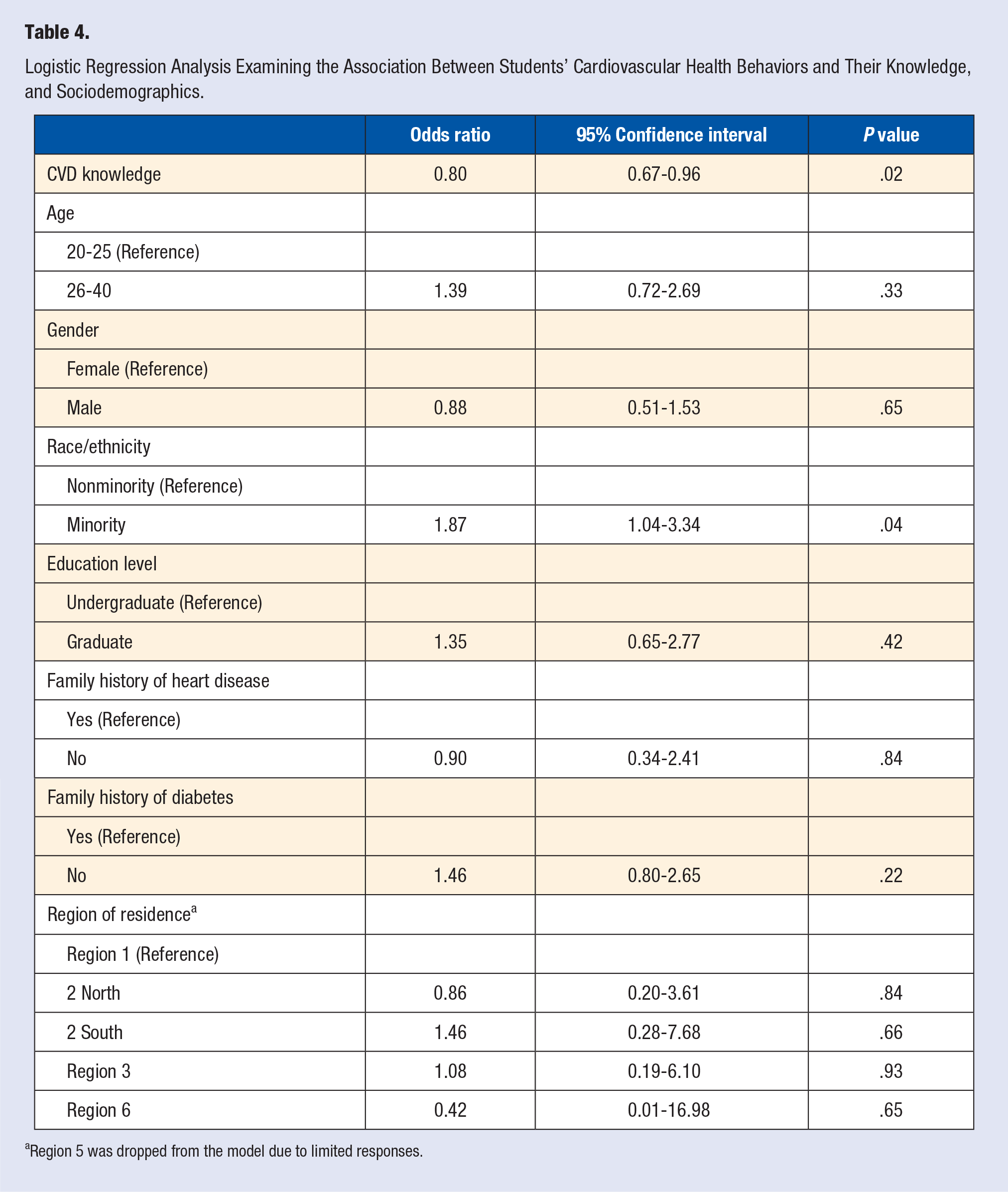
Region 5 was dropped from the model due to limited responses.
Discussion
The results of this study provide supporting evidence for enhancing Michigan college students’ CVH. In examining specific CVH behaviors, this study found that students are not consuming a healthy diet, as a limited number of them met the ideal criteria for whole grain (20.05%), fish (16.96%), and fruit and vegetable (42.18%) consumption. Students’ fruit and vegetable intake for this study coincide with those of a cross-sectional survey performed by Yahia and colleagues at Central Michigan University. 14 In surveying 237 undergraduate students with a mean age of 20.6 years, Yahia found that more than 50% of students were not consuming the recommended amount of fruits and vegetables. 6 Yahia et al’s study also had similar findings for fish consumption where 34% of males and 19% of females consumed fish 1 to 2 times per week. Participants’ sugary beverage intake is also a concern as more than 50% of participants reported drinking one or more sugary beverages per day. This finding coincides with other studies that indicate college students’ sugary beverage intake exceeds the AHA’s recommended intake.26,27
Participants’ beverage intake illustrate the importance of engaging college students in physical activity, as approximately 35% of participants aged 20 to 25 years and nearly 46% of those aged 26 to 40 years do not perform ideal levels of physical activity. Their current physical activity levels and diet may correspond with more than 36% of participants age 20 to 25 years and 52% of those aged 26 to 40 years having a BMI ≥25 kg/m2. A study performed by Yahia et al assessed the physical activity level of Michigan college students found similar results. 6 More than 50% of students were physically active but only 33% were performing adequate levels. 6 Yahia and colleagues in their study report a lower percentage of college students (29%) to have a BMI ≥25 kg/m2. 6 This difference may be associated with this study including undergraduate and graduate students, whereas Yahia’s study focused on undergraduate students.
A limited number of participants reported smoking cigarettes, which was consistent with the reported number of current smokers in a 2015-2016 study of Central Michigan University undergraduate students (1.21% of participants). 7 Participants’ smoking status is believed to be associated with the university being a smoke-free campus. Previous research has found banning smoking on campus to be linked to a reduction in smoking among students. 28 The low reported number of cigarette smokers may also be attributed to the increase in uptake of vaping among college students. 29 The Monitoring the Future survey reported a 10% increase in nicotine vaping and a 6% increase in marijuana vaping among colleges students from 2017-2018. 29
The outcomes of this study also highlight CVH factors among students that should be monitored. Approximately 11% of participants age 20 to 25 years and nearly 23% of participants age 26 to 40 years reported being told they have high total cholesterol, which is in range with the number of students reported to have high total cholesterol in other studies. In surveying 293 students at Midwestern and Southwestern Universities in the United States, Herlosky and colleagues found 6.2% of participants to have hyperlipidemia. 30 In screening male (n = 575) and female (n = 1528) college students, Morrell and colleagues found 24.7% of male and 25.8% of female students to have a total cholesterol of 200 mg/dL or higher. 31 Although the outcomes of this study show a substantial number of college participants to have ideal blood pressure, glucose, and cholesterol levels, this study does not provide insight into the number of college students that may be borderline for these factors. A study performed by Bucholz and colleagues in 2018 that examined the prevalence of CVD risk factors among US young adults aged 18 to 39 years using data from the National Health and Nutrition Examination Survey 2005-2014 and found a considerable number of individuals in this age group to be borderline for hypertension (26.9%), diabetes (18.9%), and hypercholesterolemia (21.6%). 32
In addition to enhancing students’ CVH, the results of this study illustrate the need to increase students’ knowledge of CVD risk factors. A substantial number of students were able to correctly identify an ideal blood pressure level, but relatively fewer students were knowledgeable of ideal levels for blood cholesterol, blood glucose, and BMI. These findings reflect those of Sarpong and Williams, which showed students were less knowledgeable of these respective risk factors. 12 Furthermore, the results of the generalized ordinal logistic regression suggest that students’ CVH knowledge level is associated with their CVH behaviors. This outcome provides supporting evidence to previous studies that discuss the importance of knowledge in performing healthy behaviors among college students.10,12 It also provides supporting evidence to previous research that recommends college students receive additional awareness and knowledge on CVD and its risk factors.13,33,34
The results of the ordinal logistic regression show racial/ethnic disparities among participants. Minority students were more likely to perform non-ideal CVH behaviors than their counterparts. This finding aligns with the results of previous research that have found minorities to have a higher prevalence of CVD risk factors.10,35,36 Previous research has discussed the severity of this issue and the need for programs to address CVD risk among specific minority groups, such as Black students.37,38
Limitations
This study has several limitations that should be considered. The survey data were self-reported, and therefore, students may have inaccurately reported their CVH behaviors in fear of being judged. Nonetheless, this survey was anonymous to deter such actions. Additionally, due to self-reporting, there is the potential for recall bias, which may have led to students under- or overestimating their CVH measures (e.g., servings of fruit). To prevent this, the survey contained definitions and pictures of servings of fruit, vegetables and fish, and examples of moderate and vigorous physical activity to aid in increasing accuracy in answering the questions. Due to the small sample size of the study, results may not be representative of the general population. Gender representation is another limitation, as the majority of participants were female, and having a more balanced number of female and male participants may provide a better representation of CVH among students. Results may have been influenced by selection bias due to the recruitment strategy, and response bias as students who were interested in participating and completed the survey may have had a particular interest in CVH.
In addition, clinical biochemical measurements (of fasting blood glucose, blood pressure, and total cholesterol) were not taken; therefore, some participants may potentially have been miscategorized as having ideal CVH, overestimating the true prevalence, while conditions such as diabetes, hypertension, or high total cholesterol may have not been diagnosed, underestimating the actual prevalence of CVH among the participants.
Several students started the survey but did not finish for unknown reasons and were not examined further due to the anonymity of the survey. Additionally, the sample may not be representative of the total student population because of the criteria to exclude students under 20 years and over 40 years of age.
Conclusion
The results of this study add to the growing body of literature on the CVD risk of college students and their CVH education needs. College students would benefit from additional education on CVH metrics, as the outcomes of this study suggest they have limited knowledge. Biometric screening should be performed to obtain a more accurate understanding of the presence of CVH factors among students. This information can be included in targeted health promotion activities warranted for this population. Additional research should be performed to understand the impact of social and environmental factors on minority students’ CVH, as the results of this study identified racial/ethnic differences in CVH behaviors. Further research should be performed to better understand tobacco use among Michigan college students. More studies should be performed on the CVH of college students age 26 years and older to ascertain their needs.
Footnotes
Declaration of Conflicting Interests
The author(s) declared no potential conflicts of interest with respect to the research, authorship, and/or publication of this article.
Funding
The author(s) disclosed receipt of the following financial support for the research, authorship, and/or publication of this article: This research was supported by the Oakland University Honors College Thesis Research Grant.
Ethical Approval
Ethical approval was obtained from Oakland University’s IRB.
Informed Consent
Not applicable, because this article does not contain any studies with human or animal subjects.
Trial Registration
Not applicable, because this article does not contain any clinical trials.
