




Abstract
COVID-19 is causing a global pandemic with a high number of deaths and infected people. To contain the diffusion of COVID-19 virus, governments have enforced restrictions on outdoor activities or even collective quarantine on the population. Quarantine carries some long-term effects on cardiovascular disease, mainly related to unhealthy lifestyle and anxiety.
‘The potential benefits of mandatory mass quarantine need to be weighed carefully against the possible long-term negative effects on cardiovascular risk burden.’
To the Editor:
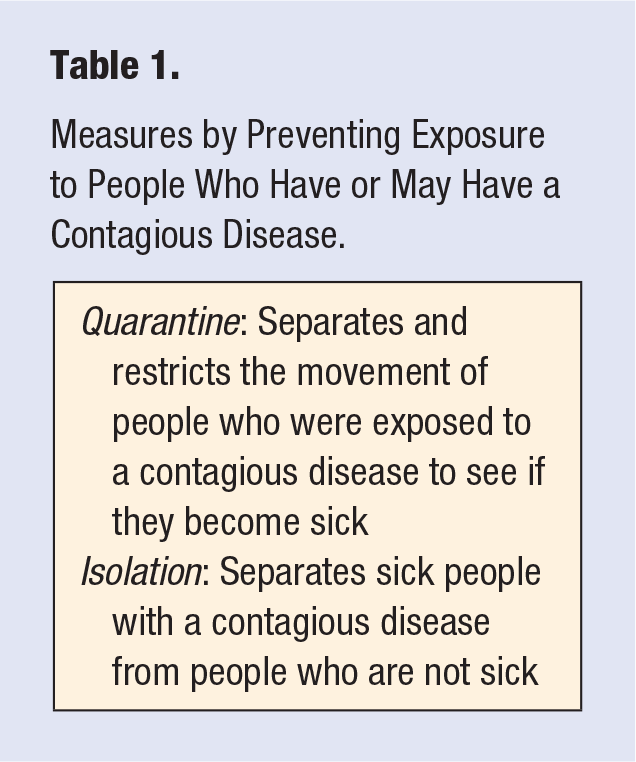
COVID-19 is causing a global pandemic with a high number of deaths and infected people. 1 To contain the diffusion of COVID-19 virus, governments have enforced restrictions on outdoor activities or even collective quarantine on the population. Quarantine and isolation can be very effective in protecting or restoring public health. For example, the experience of the 2003 SARS (severe acute respiratory syndrome) outbreak showed that infectious diseases like SARS can sometimes be contained if a series of timely measures are implemented, including the early identification of infected people, and contact tracing, as well as timely quarantine and isolation measures2,3 (Table 1).
Measures by Preventing Exposure to People Who Have or May Have a Contagious Disease.
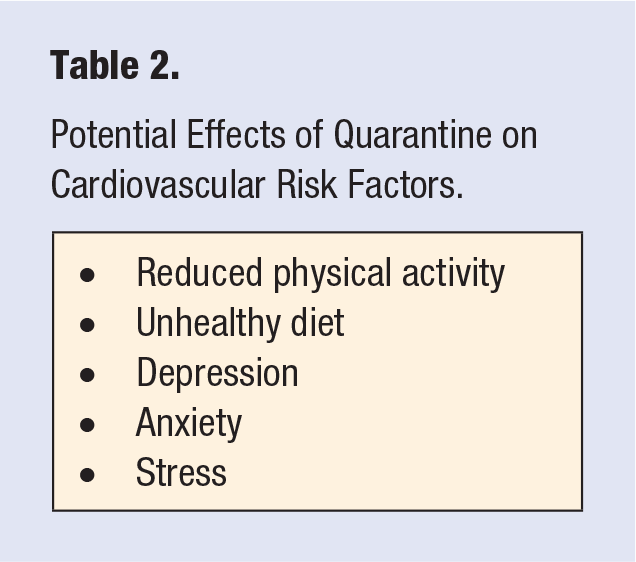
Quarantine is often an unpleasant experience for those who undergo it. Separation from loved ones, the loss of freedom, uncertainty over disease status, and boredom can, on occasion, create dramatic effects. Suicides, anger, domestic violence, and lawsuits have been the consequences of the imposition of quarantine in previous outbreaks. The potential benefits of mandatory mass quarantine need to be weighed carefully against the possible long-term negative effects on cardiovascular risk burden2,3 (Table 2).
Potential Effects of Quarantine on Cardiovascular Risk Factors.
These restrictions will strongly influence lifestyle leading to an increased burden of cardiovascular disease. The main consequence of quarantine is the reduction of physical activity. Regular physical activity is proven to help prevent and treat noncommunicable diseases such as heart disease, stroke, diabetes, and breast and colon cancer. It also helps prevent hypertension, overweight, and obesity. It can also improve mental health, quality of life, and well-being.4,5 The World Health Organization developed a Global Action Plan on Physical Activity 2018-2030 titled, “More Active People for a Healthier World.” According to World Health Organization indications, physical activity can be undertaken in many different ways: walking, cycling, sports, and active forms of recreation (eg, dance, yoga, tai chi). 6
However, government regulation for prevention of COVID-19 infection diffusion prohibited the great majority of these outdoor and social activities (eg, going to the gym), leading to reduction of physical activity. Despite the indication to workout at home during quarantine, only few subjects comply.
In addition, nutritional habits will change due to reduced goods availability and to a switch to unhealthy food. A recent rapid review on the psychological impact of quarantine 7 reported negative psychological effects including posttraumatic stress symptoms, confusion, and anger. Stressors included longer quarantine duration, infection fears, frustration, boredom, inadequate supplies, inadequate information, financial loss, and stigma. 7 Having inadequate basic supplies (eg, food, water) during quarantine was a source of frustration 8 and continued to be associated with anxiety and anger 4 to 6 months after release.8,9 Due to anxiety of future food shortage, it is plausible that people will purchase packaged and long-life food rather than fresh food.
In addition, social isolation induces depression, anxiety, and stress that have the potential to cause weight change via effects on both physical activity and energy intake. However, the effect of anxiety and stress on weight and on eating habits is not fully understood. Torres and Nowson reviewed the relationship between stress and eating behavior and found studies in which stress caused both increased and decreased eating. The discrepancy could be because some people cope with stress by eating and drinking in an attempt to feel better (“stress-related eating”). Stress-driven eaters and drinkers were more likely to eat unhealthy foods such as sausages, hamburgers, pizzas, and chocolate regularly and drink wine and spirits more frequently; also a lack of emotional support from close friends and relatives was predictive of stress-driven eating and drinking behaviors.10,11 Regarding depression and weight changes, a systematic review of 15 studies (n = 58 745) found that depression was predictive of the development of overweight (odds ratio = 1.11, 95% confidence interval = 1.02-1.22) and obesity (odds ratio = 2.01, 95% confidence interval = 1.11-3.65) in women. A possible mechanism is the adoption of an unhealthy lifestyle, such as insufficient physical exercise and unhealthy dietary preferences, leading to obesity. 12 However, vegetables and fruits have a high content of nutrients that may be of importance in the case of depressive disorders.13,14
Following the Spagnola pandemic occurred throughout 1918, we have observed a peak of cardiovascular events. Such events manifest from between 7 and 10 days after the emergence of influenza symptoms. In 1918, right after the end of the Spagnola epidemic, deaths by cardiovascular events had outmatched deaths by other causes, including superimposed pneumonia.15,16
We think cardiologists and lifestyle medicine physicians need to be prepared to face the likely increase in the number of cardiovascular events that will arise right after the end of the pandemic.
Footnotes
Author Contributions
MBP and AVM conceived the idea for the article, developed the different parts of the manuscript, and performed the final supervision. All authors contributed to and approved the final manuscript.
Declaration of Conflicting Interests
The author(s) declared no potential conflicts of interest with respect to the research, authorship, and/or publication of this article.
Funding
The author(s) received no financial support for the research, authorship, and/or publication of this article.
Ethical Approval
Not applicable, because this article does not contain any studies with human or animal subjects.
Informed Consent
Not applicable, because this article does not contain any studies with human or animal subjects.
Trial Registration
Not applicable, because this article does not contain any clinical trials.
