



Abstract
In tension, concrete is often weaker than in compression. To increased the tensile strength of concrete, fibers are added. Nylon fibers (NF) have shown promising results in previous research and tests since their presence has shown significant increases in concrete performance. The purpose of this research is to gather data from previous studies on NF-reinforced concrete (FRC). The key components of this review include concrete flowability, compressive strength, tensile strength, impact strength, rehabilitation, performance during irradiation, and fire resistance. In addition, the article examines the fracture behavior and failure patterns of nylon FRC. The results show that NF enhanced concrete performance, notably tensile capacity, owing to bridging mechanisms, but lowered concrete flow properties. However, the some researcher demonstrates that NF does not improved the compressive capacity significantly. Therefore, the study proposes more research to increase the compressive capacity of concrete by applying alternative treatments to NF or by employing secondary cementitious materials.
Keywords
Introduction
Concern about the use of fibers in place of conventional reinforcement to strengthen or repair concrete buildings has developed throughout the previous years.1–4 The term FRC refers to a kind of concrete that is created using hydraulic cement, fine and coarse aggregates, and then it is strengthened with fibers. 5 Concrete is a tension-weak construction material that is often cracked due to drying shrinkage, and other factors.6–9 Cracks typically grow with time and strain to infiltrate the concrete, consequently weakening the waterproofing capabilities and subjecting the inside of the concrete to damaging elements such as moisture, bromine, acid sulfate, and so on.10–12 The concrete deteriorates as a result of the exposure, with the steel corroding. To resist the fractures, a approach has been developed that combines concrete with discrete fibers. 13 The fibers are evenly dispersed throughout the concrete as a result of the mixing process. The evenly spaced fibers in the fresh concrete act as reinforcement to prevent the development of plastic shrinkage fractures. The consistently dispersed fibers in the hardened concrete prevent microcracks from growing into macrocracks and other possible problems.14–16 These fibers also connect and keep together the preexisting macrocracks, strengthening the concrete to resist crumbling.
To be successful, fibers for concrete reinforcement typically need to have high mechanical qualities, be readily distributed in the concrete mix, and have the right geometric configuration. Several fibers have been utilized for concrete reinforcement, and some of them are industrial or waste product. These fibers are steel fiber from rubber waste tire 17 or binding wire, glass fiber, 18 carbon fiber, 19 nylon fiber, 20 polyethylene terephthalate fiber, 21 and polypropylene fiber. 22 By replacing the conventional and power-rigorous techniques of using steel bars and wire mesh with fibers, the cost of construction might be reduced overall. 23 As a result, the cost of construction, labor costs, maintenance expenses, and project completion time will all be reduced. Additionally, power will be saved since less fiber is typically used than the amount of raw materials needed to make conventional reinforcement.
Figure 1 helps explain the behavior of FRC under loading. The undesriable brittle failure of conventional concrete change into ductile failure by providing suitable fibers which enhance the concrete tensile capacity. When the structure reaches its maximal compressive strength and is unable to bear any more load or deformation, it splits into parts. At the same peak compressive load, the structure made of fiber reinforced concrete does not break. The energy that the FRC absorbed under compressive stress is shown by the area under the curve. 24
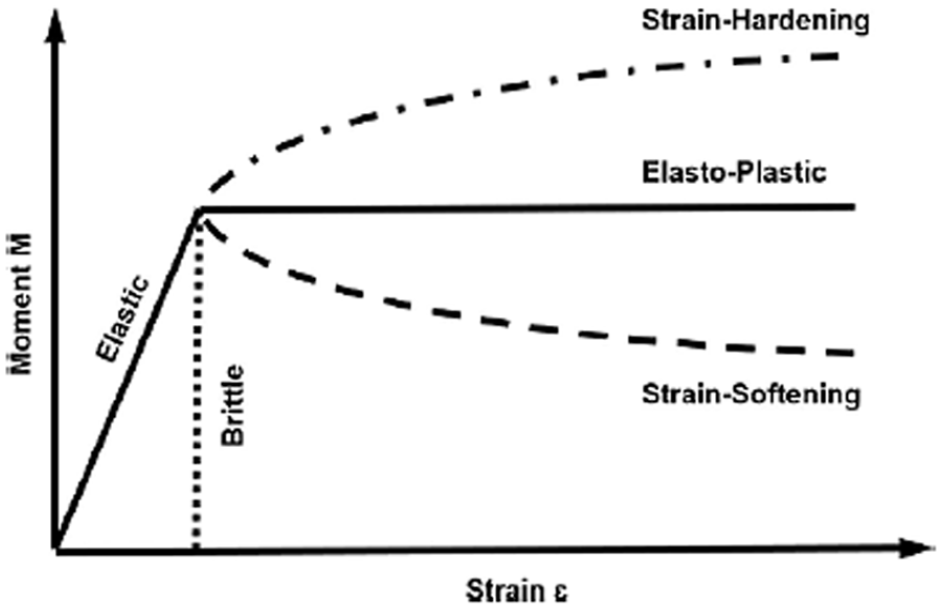
Post peak response of FRC. 25
The main benefit of introducing fibers is that they span these fissures and go through pullout mechanisms, limiting the ability of the distortion to proceed without additional energy input from the loading source. Under stress, reinforcing fibers flex more than concrete. As a result, up until it achieves its “first crack strength,” the composite system of fiber reinforced concrete is believed to function even in the presence of cracks. Fiber reinforced bridge the cracks and keeps the concrete together. With reinforcing, fibers tearing out of the composite regulate the load bearing capability. 24 Contrary to bigger steel reinforcing bars, which have a non-smooth surface that aids in physical adhesion, reinforcing fibers do not have a distorted surface. Performance is constrained by this factor to an extent that is far lower than the fiber’s yield strength. This is significant because the toughness of the concrete product in which they are inserted will be impacted by the ease with which certain fibers pull out when utilized as reinforcing. The overall amount of energy consumed prior which resist failure determines toughness. The kind of fiber used, the volume percent of the fiber, the aspect ratio, and the arrangement of the fiber in the matrix are the key factors determining the toughness and maximum loading of fiber reinforced concrete. 26
To strengthen concrete components, a variety of fibers, including organic and inorganic fibers, are employed. 27 The two groups into which fibers are often divided are metals and nonmetal fibers. The majority of metal fibers are composed of steel, whereas nonmetal fibers may be constructed of materials such as glass, propylene, carbon, and others. 28 The majority of studies concentrate on carbon, glass, propylene, and steel fibers. These fibers are extremely expensive. These fibers also can’t be purchased readily. Additionally, the substantially increased stiffness of these fibers has a negative impact on the flowability of concrete. Various research suggested using nonmetallic fibers rather than metallic ones.
One of the most often used synthetic fibers is NF (nonmetallic fibers). High tensile strength, excellent water absorption, and good wear resistance are all characteristics of NF. 29 With varying NF content, the compressive strength was examined (i.e. 0.2%, 0.25%, and 0.3% of the total volume of concrete). Fly ash was used instead of cement to the extent of 10%, 20%, and 30% in plain concrete. It was determined that adding 10% fly ash, 90% binder, and 0.2%, 0.25%, and 0.3% NF to concrete increased its compressive strength. When compared to ordinary concrete, the compressive, tensile, and flexural strengths of concrete reinforced with oil palm shell NF were increased. 20 Fibers play such a crucial role in post-cracking behavior. Nylon FRC is more durable and ductile than conventional concrete. 30
The use of fiber-reinforced composite may be affected by the type, aspect ratio, and amount of used fiber. In general, substantial fiber content is essential for mixtures to operate appropriately and have excellent execution. The ideal proportion of fiber is crucial for increased concrete performance. Instead of steel fibers, a lot of researchers are focused on NF. In addition to being costly, steel fibers also have problems with corrosion and thermal extension. However, knowledge of NF in concrete is spread, making it challenging to judge its importance. The focus of the research is on the qualities of nylon-fiber-concrete, such as fiber dispersion, flowability, compressive strength, tensile strength, cracking, impact strength, rehabilitation, performance under radiation, and fire resistance. A successful conclusion will also encourage a fresh researcher to choose and use NF in future applications and studies.
Distribution of fibers
The volume of the solution including NF was around 25% of the glass extent’s potential, which represented a 5% improvement over the solution containing polypropylene fibers. The increase suggests that the NF, when associated with the polypropylene fibers, demanded a marginally improved ability to disperse themselves throughout the concrete, dispersing the destructive stresses and enhancing the properties of the concrete in fresh and hardened conditions. 31 According to research, the properties of the fiber dispersion depended on the placement orientation. The final flexural strength was shown to be significantly influenced by fiber distribution characteristics, although the initial cracking strength was little impacted. 32 According to research, however, the fiber in concrete has limitations including low workability and compressive strength because of the fiber’s poor dispersion. 33 Despite its benefits for the durability of the matrix, the use of fibers decreased the concrete workability. Since NF has the same issue with low workabile concrete.
Engineering properties
Fresh concrete
Slump flow
The slump test of concrete reinforced with various amounts of nylon and jute fibers is shown in Figure 2. It was found that as the number of nylon and jute fibers in concrete increased the slump of freshly formed concrete decreased. This decline in flowability may be caused by a rise in the additional surface area of the fibers, which would raise the amount of slurry needed to cover their area. As a result, the amount of free water required to make reinforced concrete containing nylon and jute fibers workable was reduced. When compared to reference concrete, the decline of glass and nylon FRC is reduced by 37.5% and 68.7%, respectively. The confinement and retention action of the glass and NF reduces the droop as anticipated. 34 Although fibers in concrete provide several advantages, their presence reduces the flow properties of freshly mixed concrete.35,36

Slump flow. 47
A process known as “balling” happens when the volume dose of fibers is enhanced, making the concrete stiffer and less flowable. 37 A shorter fiber length enhanced the amount of air in the concrete, and more air had a greater adverse influence on the flow. 38 Due to the relatively large surface area of fibers, water use has increased.39–43 Concrete requires more energy to flow by its weight because the aggregate and fibers in the blends have higher friction with one another. 44 The results showed that the slump value declined as the quantity of waste rope fiber in the blend raised. At waste rope fiber proportions of 0.25%, 0.5%, and 1%, respectively, the slump reduction rates were 28.6%, 52.7%, and 84.6% in contrast to the reference sample. 45 Ahmad et al. 16 noted that the interfacial connection between concrete and fibers in concrete inhibits the distribution and raises the viscosity of the mixes, which may be used to explain this phenomenon. The capacity of the interfacial connection between the concrete and the fibers changes as the fiber content rises because more fibers need more cement paste to coat them. Additionally, according to trials, the research found that the usage of steel and glass fibers decreased the flowability more than NF. 46
Density
The densities of reference concrete, glass fiber, and nylon FRC are 2157, 2106, and 2119 kg/m3, correspondingly. Glass fiber and nylon FRC have densities that are 51 and 38.45 kg/m3 less dense than reference concrete, respectively. The densities of glass fiber and nylon FRC are lower than those of reference blends by 2.4% and 1.8%, correspondingly. Concrete with addition of low-density nylon and glass fibers results less dense concrete than reference concrete. 34 According to research, the lowest density was observed while utilizing 2% of nylon and jute fibers in concrete after 28 days, and the greatest density was 2388 kg/m3 at 0% nylon and jute fibers. It was determined that the addition of nylon and jute fibers reduces the density of concrete. Growing porosity and air voids may be to blame for this decrease in density, which led to inadequate compaction of the combination’s high nylon and jute fiber. Additionally, since nylon and jute fibers have a lower density than other concrete ingredients and trap more air in concrete than the blank blend, the density was reduced. 47
Strength properties
Compressive strength
The compressive strength of concrete with different types of fibers is shown in Figure 3 and Table 1. A study concludes that the compressive capacity of NF concrete with fiber doses of 0.9 and 1.8 kg/m3 drops by 4.9% and 6.7%, correspondingly, in comparison to blank concrete. The findings demonstrate that the concrete’s compressive qualities are not improved by increasing the fiber dose. 48 According to research, 34 the compressive strengths of glass and nylon FRC, respectively, decreased by 2.8% and 5.8% when compared to plain concrete. Plan concrete’s compressive strength may be greater than that of glass FRC and nylon FRC because of its optimum compaction. Additionally, the increased amount of glass and NF, which to some degree leads to the heterogeneity of mix, may be the cause of lower glass and nylon FRC strength. Low-density fibers in this heterogeneous combination provide low dense concrete due to the void effect. As the fibers were incorporated as a additional materials in accordance with the concrete blend design proportion. Therefore, the lower cement concentration in glass and nylon FRC may also be a contributing factor. 34

Compressive strength. 49
Performance of concrete reinforced with NF.

However, the results demonstrate that the compressive strength of the concrete reinforced with NF increased by 12.4% compared to the nonfibrous control blend. The interaction between the fibers and the cracks prevention was the main cause of the improvements. The fibrous concrete cylinders may experience lateral stress while enduring a growing compression load, which may cause cracks to form and spread. Tensile stresses perpendicular to the anticipated route of the expanding fracture caused debonding at the fiber-matrix interface to start when the crack got close to a fiber. The previously existing debonding crack caused the crack to bend. The crack’s route was even diverted as a result of the bridging process, which decreased the stress concentration at the crack’s bend. The fibrous concrete cylinders’ compressive strength was increased over the nonfibrous control concrete as a result of the fracture being blocked, and even diverted. 31 The concrete that included 1% nylon and jute fibers combined by volume demonstrated the greatest improvement in compressive strength after 90 days (11.71%). The compressive strength of mixes was, however, expected to rise with increases in the proportion of nylon and jute fibers combined up to 1% by volume fraction and increased with the curing age. When concrete is reinforced with fibers, its strength may increased as a result of the amount of fibers being increased up to a specific point, which aids in more effectively limiting the development, enlargement, and spread of fractures. 47 According to research, fiber, up to a specific concentration, enhances the compressive strength of concrete owing to the confining effect and fiber-bridging constitutive law. The energy required to tear the fibers causes a significant increase in the material’s toughness and fracture resistance. However, a larger fiber volume content might make concrete lesser workable. Due to its lack of flowability, concrete cannot be adequately compressed. High fiber content has a negative impact on concrete’s compressive strength if this occurs 46
According to research, 34 plan concrete exhibits greater cracks number, crack widths, and crack lengths at maximum load than glass and nylon FRC. At their respective maximum loads, the maximum crack length in plan concrete, glass, and nylon FRC samples increases to around 150, 75, and 100 mm, correspondingly (Figure 4). At the highest load, the concrete fragments in the plan concrete sample chip off, but they do not chip off in the glass and nylon FRC specimens. The use of glass and NF in concrete causes the bridging impact. The interfacial transition zone is where the broken specimen of plan concrete shows maximal failure, and part of the aggregates are also fractured because of its poor crushing strength. The purposeful failure of debonding of glass and NF in the concrete matrix is shown by the purposely fractured glass and nylon FRC specimens. Additionally, it demonstrates the random mixing of nylon and glass fibers in a concrete matrix. De-bonding at the crushed face causes around 85% of glass fiber failures, whereas glass fiber fracture only accounts for 15% of failures. Nearly all of the nylon strands have broken free from the fractured face. Fibers or fiber fabrics’ bridging properties provide resistance to the cracking load. Additionally, fibers or fiber fabrics dispersed at random throughout the cement-sand matrix will serve as a reinforcing and bridging element. Because of the strong bond between the fiber and the concrete, the fracture stress may be transferred to the concrete’s upper and lower surfaces in the crack regions. 55
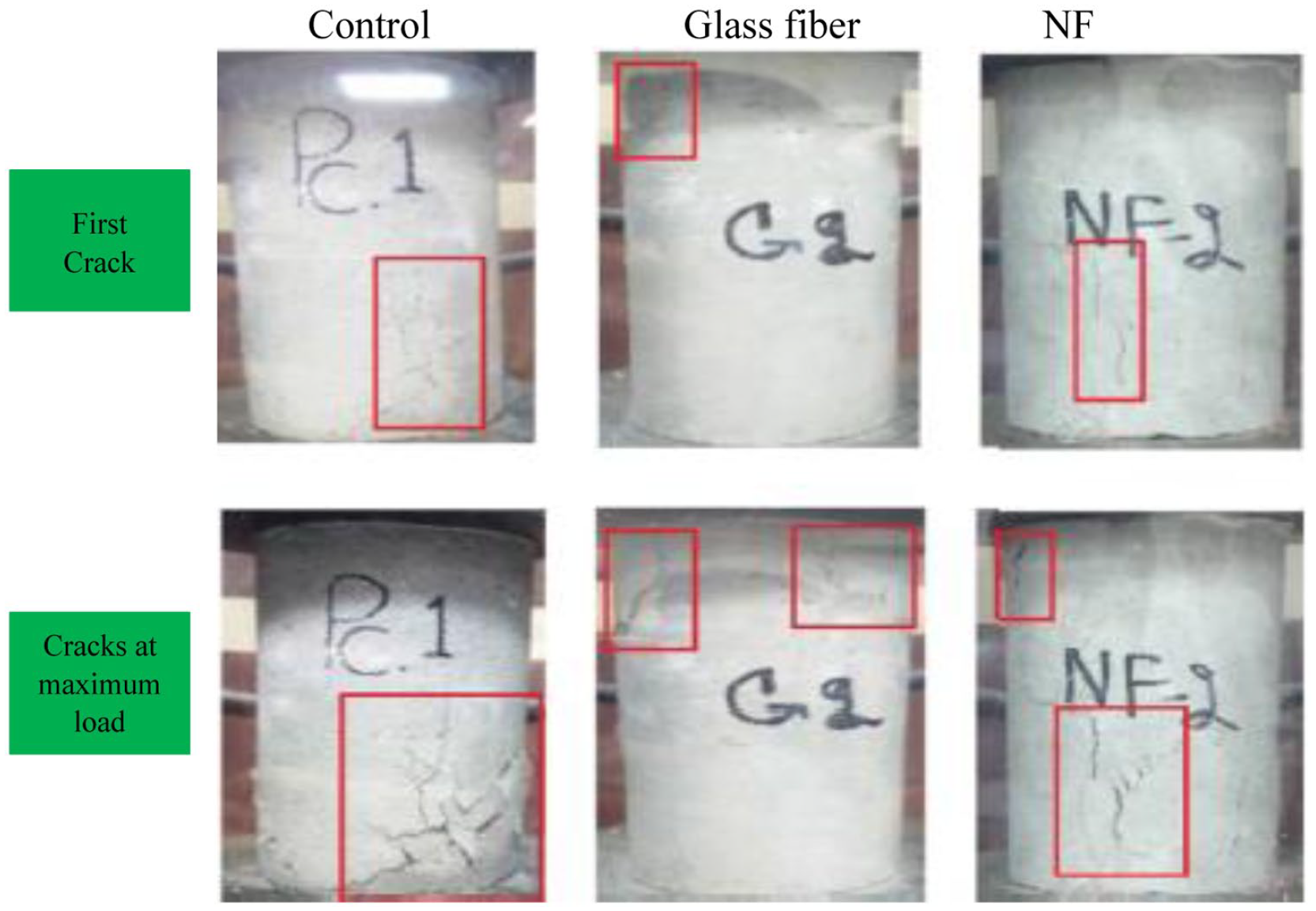
Cracks pattern due compressive load. 34
Figure 5 depicts the behavior of the NF and nylon fabric fibers at ultimate failure modes. As predicted, NF and nylon fabric fiber were both capable of holding the parts together. Some substantial portions of the nylon fabric fiber broke off when the ultimate crash samples were taken from the loading apparatus, whereas only tiny fragments were recovered from the nylon FRC.
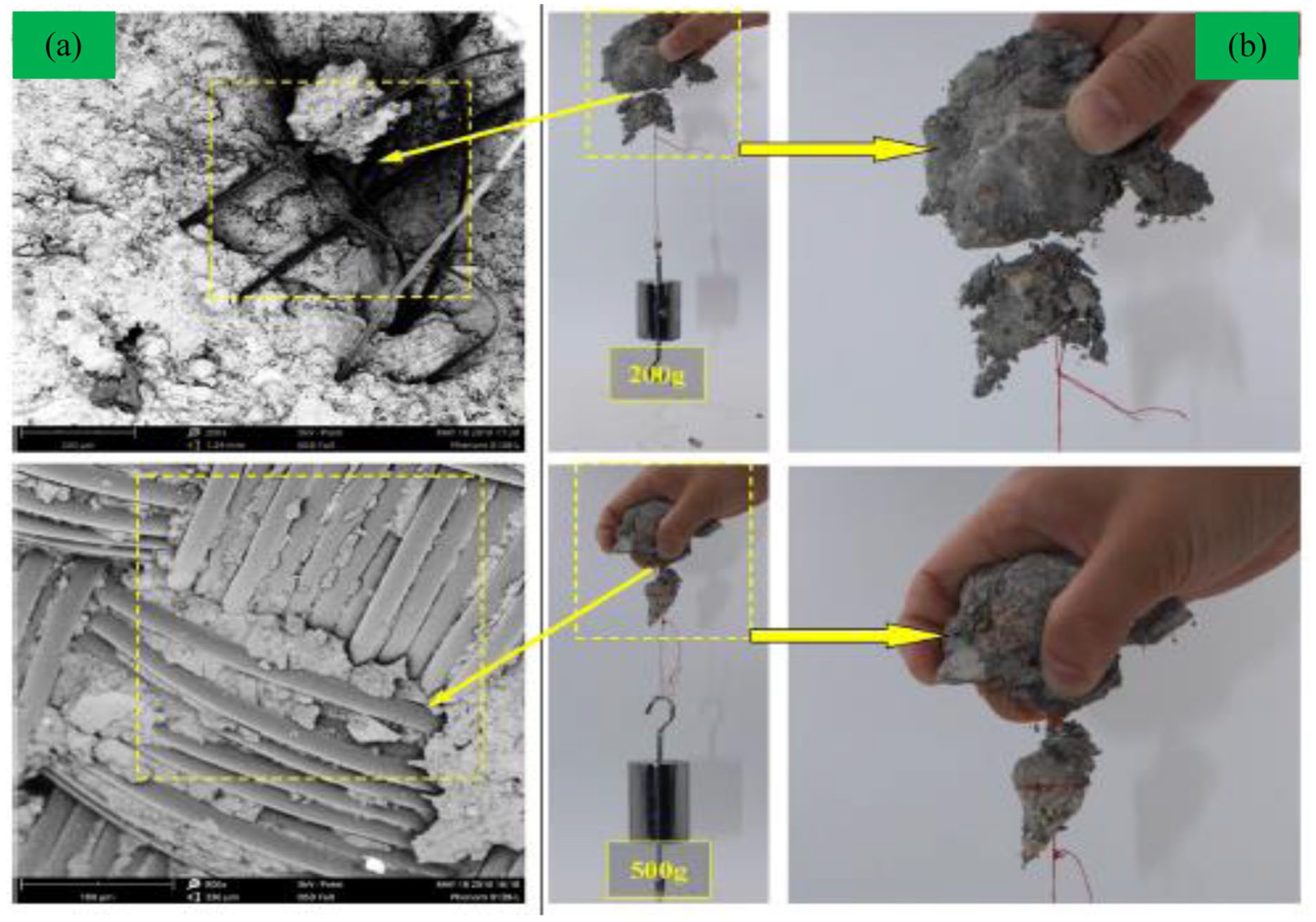
Broken sample (a) SEM and (b) binding force. 56
The authors did not remove the damaged reference blend parts from the loading instrument since they were quite loose. Nylon fabric fiber may have more bridging effects inside the cement-sand blend since the amount of NF was much greater than that of nylon fabric fiber in the reinforced cement and because the former had thinner fibers, causing a bigger specific surface area than the latter. The ability of nylon FRC to sustain greater integration than other specimens might also be attributed to this trait. Due to its straightforward construction and reduced breaking force, a single NF cannot support loads larger than nylon fabric fiber. This result may be deduced from Figure 5. NF and nylon fabric fiber were randomly dispersed in the concrete ((a) in Figure 5), and the microstructures of specimens containing these fibers were noticeably different. This was discovered by scanning electron microscopy. Nylon fabric fiber looked like tiny networks around the cement-sand matrix, while NF appeared as many rebars going through the inner section of the concrete. The nylon fabric fiber stays in excellent condition, but part of the NF is broken down or dragged out of the cement-sand matrix when a load is applied to these inner structures ((b) in Figure 5).
The primary causes of this occurrence are that nylon fabric fiber has a breaking force that is at least 59.22 times more than NF and that it has a more complicated textile structure. More loads and breaking energy can be supported and absorbed by the three-dimensional network structures of nylon fabric fiber than by NF’s straightforward form. The outcome demonstrates that the fracture’s geometry is changed by the fiber added to the concrete, and crack twisting rises as the fiber dose is increased. 48
Tensile strength
The tensile capacity of concrete reinforced with glass and NF is displayed in Figure 6. A study reported that the tensile capacity of the reinforced concrete with nylon and polypropylene fibers was 17.1% and 9.7%, correspondingly, stronger than the blank reference concrete. After the matrix started splitting and kept splitting, the fibers spanning over the split sections of the matrix functioned by transferring stress from the matrix to the fibers and progressively sustained the full load. The stress transfer raised the splitting tensile strength of the FRC compared to the unreinforced control and equivalent enhancing the tensile strain capacity of the FRC. 31 Fiber improved the tensile capacity due to the prevention of cracks.57–60
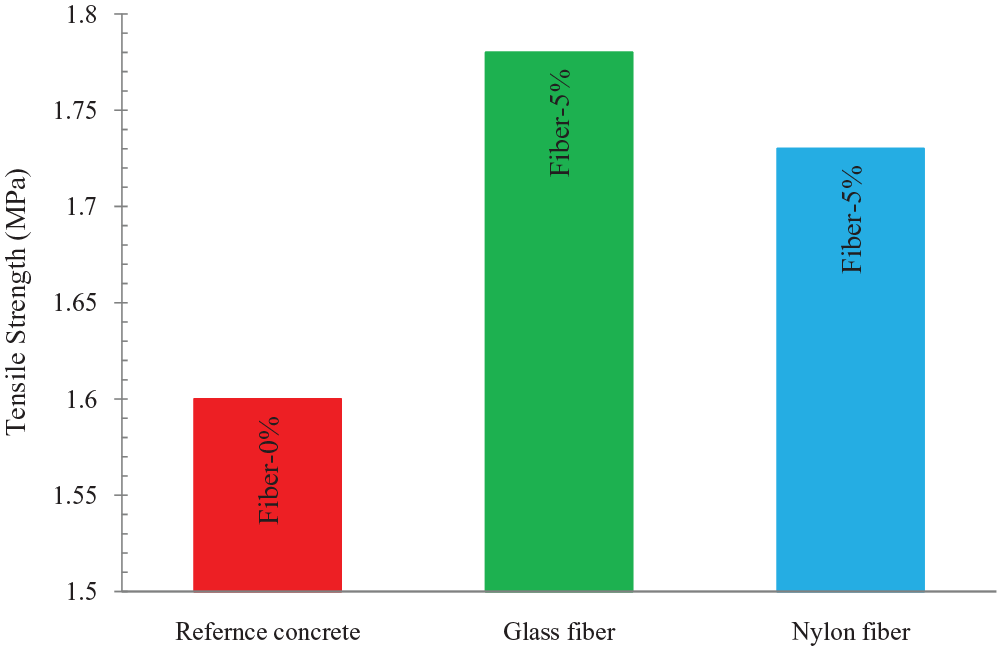
Tensile strength. 34
While the glass and nylon FRC cylinders are subjected to extreme tensile load, the reference cylinder splits into two parts as presented in Figure 7. In glass and nylon FRC cylinders, the concrete contact between the two sides has been entirely removed. The bridging effect is shown by the existence of glass and NF in concrete. The splitting of the glass and nylon FRC cylinders into two-halves allows for the observation of fiber breakdown. Visual examination reveals that 20% of the fibers in the glass FRC cylinder are pulled out of the matrix and 80% of the fibers are broken at the splitter surface area. About 60% of the fibers in the nylon FRC cylinder are pulled out, and 40% are destroyed at the broken surface area. The broken side of the half cylinder’s shorter development length is the cause of the pulled-out fibers. Less bond strength than fiber’s tensile strength results from the shorter development duration. On both sides of the halves, the destroyed fibers exhibit appropriate development length. In other words, the binding strength between the fibers and the concrete is greater than the fiber’s tensile strength. Intentionally fractured glass FRC specimens used in splitting-tensile tests have a foul odor similar to the destroyed specimen during compressive testing. 34 The improvement in the compressive capacity of the NF concrete was caused by the NF’ higher tensile strength, which caused more tensile stresses to be transmitted from a broken matrix to the NF than to the polypropylene fibers. Also supporting the rise was the fact that the NF had a more pronounced dispersion in the mixing water, suggesting that they had dispersed themselves more evenly throughout the concrete. 31 A study conclude that, due to their reduced impact on concrete’s workability compared to steel and glass fibers, NF have an excellent fiber-bridging effect. 46
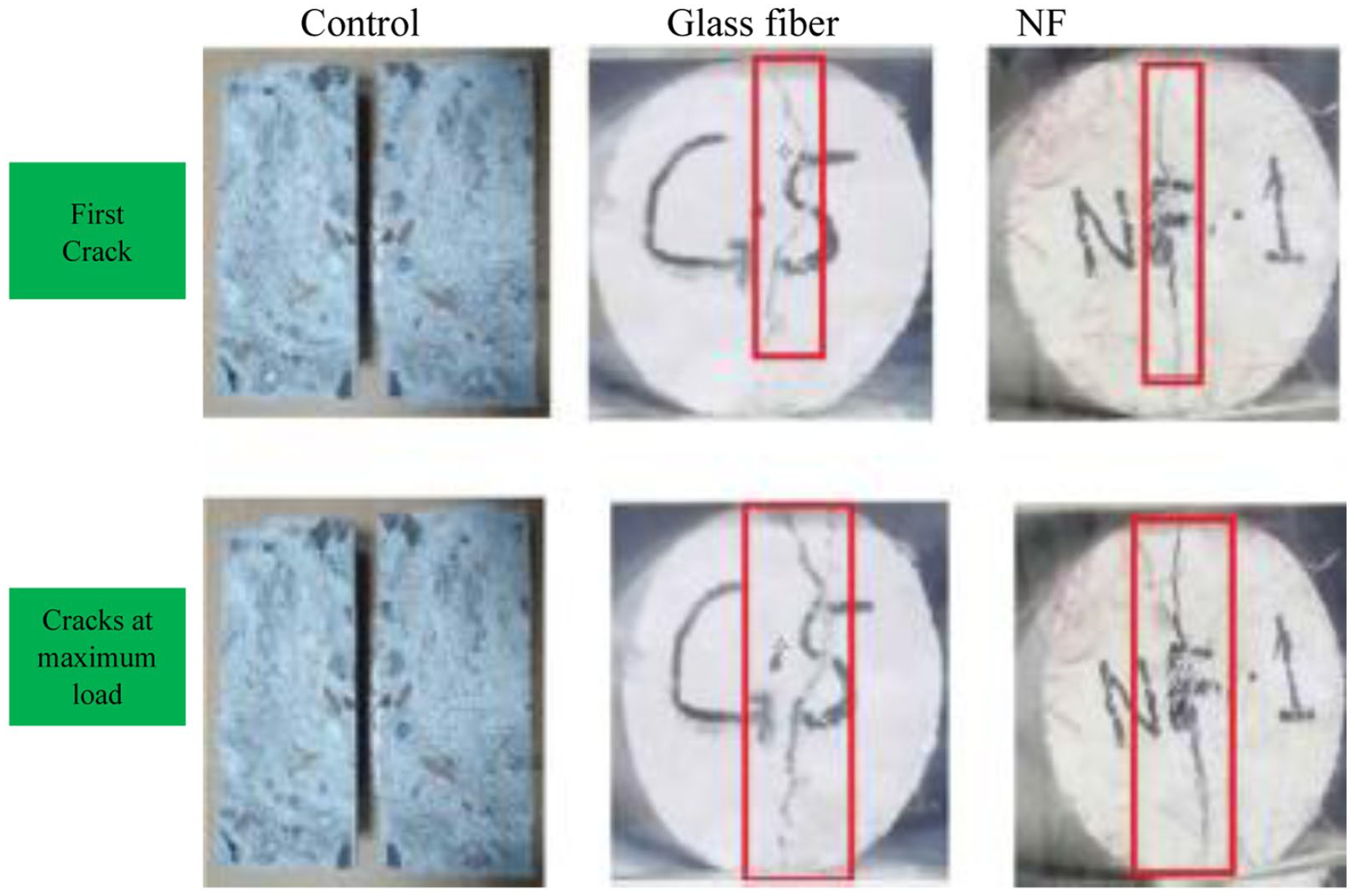
Cracks pattern due tensile load. 34
Impact strength
The mean first-crack and failure strengths of fiber concrete discs improved by 19.0% and 30.5%, correspondingly, over the blank reference discs (Figure 8), while for the polypropylene-fiber discs were 11.9% and 17.0%, correspondingly. All of these statistics showed how adding nylon and polypropylene fibers improved the two strengths, with the NF addition exceeding the polypropylene. 31 A disc may be able to postpone the ultimate failure after the first fracture appears as shown by the percentages that increased post-first crack to ultimate failure (PIFU). The NF addition was more successful than its polypropylene in postponing the eventual failure, as shown by the mean (PIFU) value of the NF concrete being 1.6 times greater than that of the polypropylene fiber concrete. The two fiber additions are declared in decreasing sequence, reducing the dispersion in the two strengths and the PIFU. During the millisecond period of each impact event, the NF addition did a better job of covering the disc’s local weakness and generated the redistribution of stresses across the disc. 31

Impact strength of FRC. 31
Rehabilitation
Simple preparation
A little quantity of concrete or mortar was first removed from the damaged area of the building. The gap was then filled with cement grout to help the old and new concrete adhere to one another. On top of the degraded area was then put concrete and/or mortar constructed with NF. Following, finishing work in plaster was completed. That rehabilitation job was finished after 24 h of cure. The rehabilitation of a column using NF is seen in Figure 9(a) and (b).

(a) Deterioration of old concrete (b) rehabilitation with nylon FRC.
Compressive strength
Figure 10 illustrates how the curing age affects the compressive capacity of concrete and mortar. The compressive capacity improved when ordinary concrete and mortar are compared to concrete and mortar filled with NF. However, a study reveals that fiber has a slight impact on the concrete’s compressive capacity. 48 Therefore, FRC and mortar may be utilized in place of regular concrete and mortar.

Compressive strength. 24
It has been shown that fibers also strengthen the repair interface, increase water tightness, and improve the capacity to regulate corrosion in the restored structure in addition to offering increased resistance to crack propagation under static and dynamic stresses. Internal expansion and strain increase internal and exterior cracking processes and speed up the pace of degradation once damaging processes like corrosion have started. By including short, randomly placed fibers of different acceptable materials, the above-described micro, and macro-fracturing activities may be improved. 61 According to research, the strength of concrete before and after the rehabilitation of columns using FRC differs significantly. This is shown by the non-destructive compressive strength test of concrete on columns (FRC). 24 Figure 11 describes the variations in concrete’s compressive capacity before and after rehabilitation, demonstrating the latter’s increase in strength relative to the former. When columns are restored using FRC, the average percentage improvement in strength is higher than when columns are restored using only ordinary concrete and mortar. Therefore, it may be claimed that employing fiber to repair columns improves the mechanical qualities of concrete. When compared to traditional techniques, the FRC retrofit methodology presented for the rehabilitation has exceeded expectations in terms of capacity enhancement. 62
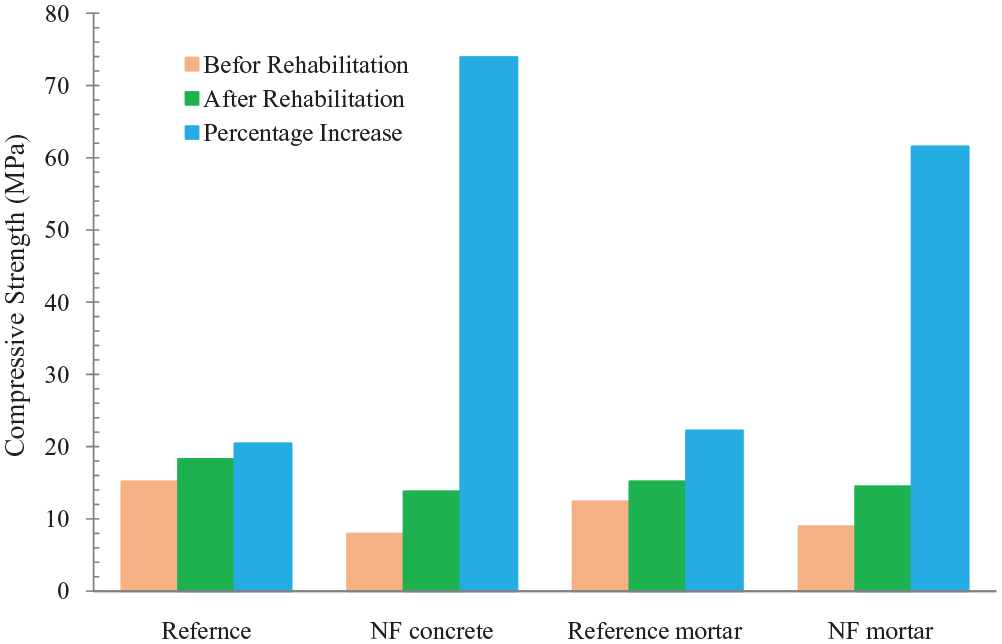
Rehabilitation of concrete with NF (NF). 24
Performance at irradiated
When the radiation amount in the fibers is raised, the compressive capacity of the concrete increase, although as can be shown in Figure 12, unfavorable behavior is seen at larger doses (100 kGy). The compressive strength, the tensile stress, and the strain of the irradiated fibers all improve as the irradiation dosage rises.

NF reinforced concrete with radiation. 63
According to the research, the extrusion technique used to create nylon filaments is known to cause the polymer chain to preferentially align along the fiber’s main axis, enabling the support of high compressive strengths. Small spheres emerge on the surfaces of the fibers as a consequence of each fiber becoming tougher when the extension decreases (over 50 kGy). It is feasible to deduce that the maximum compressive strength is produced for the maximum strain of the fiber due to a mechanism of force transmission between the concrete and fiber when an external load is applied. 63 All concrete specimens with an addition of 2.0 vol percent fibers irradiated at 50 kGy had the greatest compressive values. Therefore, compared to concrete made with polypropylene irradiated fibers, additional energy and a larger percentage of nylon-irradiated fibers are required. In the latter scenario, adding 1.5 vol percent irradiated fiber at 10 kGy yields the highest results. 64 The morphology alterations of the mineral aggregates and NF following gamma irradiation may be linked to the compressive capacity after 3 years of storage. Figure 13 displays silica sand surface alterations discovered by SEM.

SEM of irrigated concrete: (a) 0, (b) 50, and (c) 150 kGy. 65
The degradation of silica sand surfaces with increased radiation is obvious. When the radiation dosage is increased, more particles with an average size of fewer than 5 microns form on the homogenous surface of the unirradiated silica sand (Figure 13(a)), while the high dose of 150 kGy results in a degraded surface with many fractures (Figure 13(c)). This relates to fractures spreading on silica sand particle surfaces and decreased compressive strength values at larger doses.
Fire resistance
Spalling
Spalling in fire-damaged concrete causes significant surface damage to structural parts, frequently subjecting steel bars, and sometimes results in the downfall of construction buildings. In a fire, high-strength concrete is more subjected to spalling. The most well-known way for preventing spalling in high-strength concrete is to add fiber to the mix. Figure 14 shows the degree of spalling of the samples with a mix of NF and propylene fiber following the fire test.

Spalling of concrete after fires test. 68
As predicted, the reference blend without fibers had considerable spalling damage. The findings demonstrate that, as indicated in the references, a rise in fiber percentages resulted in the avoidance of spalling. 33 Surface spalling was detected to arise in samples with only propylene fiber or NF added and at a percentage underneath 0.075% for propylene fiber and below 0.05% for NF, whereas samples with contents of greater than 0.1% of propylene fiber and greater than 0.075% of NF were able to avoid spalling damage. This outcome is in line with earlier findings 66 demonstrating that propylene fiber content of more than 0.1% may avoid spalling damage. More precisely, for specimens that included both propylene fiber and NF fibers, the simultaneous addition of 0.025% each of propylene fiber and NF (for the total fiber content of 0.05%) did not cause spalling damage. When employing a combination of propylene fiber and NF fibers, the decrease in spalling is about two times as bad as when it’s prevented by utilizing only one kind of propylene fiber. However, as shown in Figure 14, spalling was discovered in the specimens that solely included propylene fiber at 0.05% and NF at 0.05%. Therefore, at the same fiber content, the hybrid fiber in concrete prevents spalling better than the separate fiber types. It is obvious that combining fibers has a positive synergistic impact. This can be explained by looking at Figure 14, which demonstrates that NF, which is up to 11 times thinner than propylene fiber, offers improved connectivity of cavities in concrete since its smaller diameter produces more fibers per unit volume of concrete than propylene fiber does at a given fiber percentage. According to the research, 67 there is an ideal level of fiber qualities for concrete’s spalling protection in fire, which may be indicated by crucial factors like the total number of fibers, the length of the fibers, and the melting point of the fibers. According to this research, the ideal degree of fiber qualities may be achieved by combining various fiber kinds, lengths, and diameters. The combination of NF measuring 9 mm in length and polypropylene fibers measuring 19 mm in length obtained the maximum level of the provided requirements (fiber effectiveness parameter) for a given fiber content, which in turn necessitates the minimum fiber for spalling protection.
To improve fire resistance without sacrificing workability, scientists 67 investigated various kinds and concentrations of fibers. More precisely, according to the authors’ study, NF performs better than other kinds of fibers in terms of flowability and fire resistance because of its smaller diameter, hydrophilic properties, and a short length. NF has a much larger number of fibers per unit volume in concrete than propylene fiber. The capacity of the fiber addition to link pores when melted in a fire determines how well the spalling protection provided by the fiber inclusion works. As a result, small-diameter fibers like NF are advantageous because they provide efficient vapor channels without suffering greater loss of workability.
Weight loss and compressive strength
Figure 15(a) and (b) show the findings of the weight loss and residual compressive strength with fiber combination during the fire test. The outcomes of the weight loss correlated with the degree of spalling. As might be predicted, the control combination without fiber underwent significant spalling damage and lost weight by around 42%. However, regardless of type or mix, weight loss in concrete containing more than 0.025% fiber was only 7%–10%, with the majority of this loss attributed to moisture loss.

(a) Weight loss and (b) residual compressive strength. 68
According to the study’s findings, the weight’s effects were proportionate to the amount of spalling. It was stated that the threshold for severe concrete spalling, at which the spalling is deemed to have happened, was identified as 20% of weight loss (including 8–10% moisture loss during the fire tests). The control concrete had the poorest results, with a weight loss of 74%. 67 The considerable internal cracking and spalling of the control mixture reduced its compressive strength. However, it was discovered that adding fiber to every concrete specimen helped sustain residual strength. More than 40% of the compressive strength’s remaining capacity was seen in the fiber-containing concrete sample. 68 According to research, 67 adding NF to all concrete is excellent for maintaining residual strength. The concretes with NF (9 mm) and polypropylene fiber (19 mm) retained residual strength the best. Comparatively, specimens containing other kinds of fibers showed no residual compressive strength at all at 0.05% fiber content, whereas this specimen exhibited a residual compressive strength of 59%. The values of specimens containing NF began to have non-zero strength at 0.02%, whereas the values of the majority of specimens began to exhibit residual strength (greater than zero strength) at 0.10%.
Conclusions
NF have demonstrated promising outcomes in earlier studies and testing since their presence has resulted in appreciable improvements in concrete performance. This study’s goal is to compile data from earlier investigations on nylon FRC. The concrete’s flowability, compressive strength, tensile strength, impact strength, rehabilitation, radiation resistance, and fire resistance are the major aspects of this study. The details conclusion based on the analysis is described below.
Although fibers in concrete provide several advantages, their presence reduces the flow properties of freshly mixed concrete. However, the usage of steel and glass fibers decreased the flowability more than NF.
NF does not enhance the compressive capacity of concrete significantly. However considerable improvement in tensile and impact strength was observed. The increase in the tensile capacity of the NF concrete was caused by the NF’ higher tensile strength, which caused more tensile stresses to be transmitted from a broken matrix to the NF than to the other (polypropylene) fibers. Also, the NF had a more pronounced dispersion in the mixing water, suggesting that they had dispersed themselves more evenly throughout the concrete. Furthermore, NF the cracking behaviors show that NF successfully improved ductile failure.
The use of NF in concrete rehabilitation is an efficient and reliable technique to increase the lifespan of concrete structures and secure structural stability. The FRC retrofit technology proposed for the restoration has outperformed expectations in terms of capacity increase when compared to traditional methods.
The compressive strength, of the irradiated fibers concrete, improves as the irradiation dosage rises. The radiation may cause the initiation of certain chemical processes. The physical and mechanical characteristics of concrete changes because of initiation chemical reaction, which improved compressive strength.
The findings demonstrate that an increase in fiber percentages resulted in the prevention of spalling. Surface spalling was eliminated with 0.075% and 0.100% NF addition. Furthermore, weight loss and residual compressive capacity were also improved with NF.
Although NF improved concrete performance. However, it adversely affects the flow of concrete. Therefore, the review recommends filler materials to improve the flow of NF concrete. Different researchers69–72 claimed that filler materials improved the flow of concrete due to filling voids, and hence more slurry will be available for flowability. Also, NF does not improve the compressive capacity of concrete significantly. Therefore, the review recommends the addition of secondary cementitious materials for high-strength concrete.
Footnotes
Declaration of conflicting interests
The author(s) declared no potential conflicts of interest with respect to the research, authorship, and/or publication of this article.
Funding
The author(s) disclosed receipt of the following financial support for the research, authorship, and/or publication of this article: This work was supported by the Deanship of Scientific Research, Vice Presidency for Graduate Studies and Scientific Research, King Faisal University, Saudi Arabia [Project No. GRANT 3,787].
