



Abstract
In this work, the effects of degumming treatment on the structure and properties of OS-BADF were discussed. Alkali degumming and biological enzyme degumming were used to obtain AD-BADF and BED-BADF respectively. Spinnability index, thermal property, macromolecular structure, bending property and antibacterial property of OS-BADF (Original Sample of Bast Fiber of Alchornea Davidii Franch), AD-BADF (Alkali Degummed Bast Fiber of Alchornea Davidii Franch), and BED-BADF (Biological Enzyme degummed Bast Fiber of Alchornea Davidii Franch) were tested. The surface morphology of the above three kinds of fiber was analyzed by SEM. The results showed that the main component of degummed OS-BADF was cellulose, and the fiber had stripes in longitudinal direction, and kidney ellipsoid, irregular polygon in the cross section. After degumming treatment, the fineness of fiber decreased obviously and reached the spinnability index. Non-cellulose substances in OS-BADF can be removed by degumming. SEM observation showed that AD-BADF and BED-BADF became smoother after degumming. Compared with AD-BADF, BED-BADF had finer linear density, better thermal stability and higher antibacterial property. The equivalent flexural modulus and flexural rigidity of AD-BADF and BED-BADF were decreased compared with OS-BADF. In particular, the equivalent flexural modulus and the flexural rigidity of BED-BADF were mostly reduced, which indicated that BED-BADF became thinner and softer. The initial thermal decomposition temperature and the highest thermal decomposition temperature of AD-BADF and BED-BADF had been significantly increased. And -OH (free group) decreased significantly after degumming treatment. The testing results of the antibacterial properties of the three blended fabrics showed that the antibacterial properties of AD-BADF and BED-BADF were improved. Compared with AD-BADF, the antibacterial properties of BED-BADF were improved significantly. On the one hand, this research can provide a basis for technological research for the development of ADF (Alchornea Davidii Franch) bast fiber blended yarn and its textile product development. On the other hand, because of the high mechanical properties of ADF bast fiber, it also provides new development idea for the development of natural high-performance fiber reinforcement composites.
Keywords
Introduction
With the development of society, people’s consumption concept has changed, paying more and more attention to green and natural fiber products.1,2 Textile is closely related to people’s life, so people have higher and higher requirements for it.3,4 Developing natural fibers and their corresponding textile with environmental protection properties has become a hot spot in current research.5,6 The unique style of natural bast fiber texitiles, which are smooth, breathable, simple and natural, have gradually attracted people’s attention.
Fibers extracted from bast of plant stems are generally called bast fibers, which are mainly composed of cellulose, hemicellulose, pectin, water soluble substances, lignin, ash, and other components.7,8 Hemp fiber, cotton stalk bark fiber, hibiscus fiber, sugarcane bark fiber, mulberry bark fiber, and banana peel fiber all belong to bast fiber. 9 In spinning engineering, ramie fiber belongs to single cell fiber, while flax, jute, hemp, and new bast fiber belong to technical fiber.10,11 The degumming of new bast fibers is generally based on the degumming method of hemp bast fibers, then different degumming processes are adopted according to the different chemical compositions.12,13 Therefore, many scholars at home and abroad have made relevant research on the above bast fibers.14,15 Yan et al. 16 put forward the technology of extracting cotton stalk bark fiber by alkali treatment at normal temperature and pressure, and characterized the chemical composition, surface morphology, crystalline structure and mechanical properties of cotton stalk bark fiber. It was found that the crystallinity of cotton stalk bark fiber was 53.72%, belonging to typical cellulose I structure. Zong et al. 17 studied the extraction technology of sugarcane skin fiber. The extracted sugarcane skin fiber is 0.4 mm–1.6 mm long and 10 –28 μm in diameter. Huang et al. 18 studied the extraction technology of hibiscus bast fiber and tested its properties. After degumming, hibiscus fiber was a bundle fiber with round or flat ribbon shape and obvious stripes on the fiber surface. Khan et al. 19 dealed with extraction and characterization of Eleusine indica grass fibers extracted from its stem by manual retting process; it was found that the Eleusine indica has higher cellulose of 61.3 wt% content. Thirumurugan et al. 7 used different percentages of NaOH such as 2%, 4%, and 6% to treat the extracted coconut tree primary flower leaf stalk fiber (CPFLSF) and explore the influence of alkali treatment over the properties of the fiber; They found that the XRD for the CPFLSF treated with 6% NaOH showed the crystallinity index of 40.12% crystallinity size of 27.25 nm. 7
ADF is also called dog tail tree and tung flower stem. It is a kind of Euphorbia, belonging to the genus Hemerocallis. 20 The survival ability of ADF is extremely strong. They can grow in country roads and courtyards, and even can be seen frequently near stone. According to related reports, the content of cellulose in the bast of ADF is as high as 45%–50%, so a certain amount of fiber can be extracted from ADF. Its mechanical and hygroscopic properties are similar to flax, jute and other hemp fibers, which can be used as raw materials for clothing, industrial and agricultural ropes, non-woven fabrics and other textile. In addition, ADF has great value in industry. For example, the seeds of ADF can be extracted with high efficiency to obtain seed oil, and the branches and leaves of ADF can also be used as medicinal ingredients, and also used for natural degradation as nutrients for crop growth. Therefore, ADF has wide application and utilization value. 21 At present, there is little research on the extraction and properties of bast fiber of ADF. In this research, the bast fiber of ADF was refined by physical chemistry and biological enzyme degumming, and the components of bast fiber of ADF before and after degumming were analyzed. The antibacterial properties of bast fiber of ADF before and after degumming were determined indirectly. The surface morphology of the fiber was observed and the bending and thermal properties of the fiber were also tested.
Testing and methods
Raw materials and preparation
Pectinase from Ningxia Heshibi Biotechnology Co., Ltd. was selected as the main agent for enzymatic degumming, and NaOH from Jinan Xinlong Chemical Co., Ltd. was selected as the main agent for alkali degumming. The bast fiber of ADF was collected from a farm in Dafeng. Electronic scales and glasses are provided by Jiangsu Eco-Textile R&D Center. Figure 1 showed B- ADF (Bast of Alchornea Davidii Franch) before and after peeling. emulsifier (OP-10) and penetrant (JFC) were provided by Jiangsu Jiafeng Chemical Co., Ltd.

B- ADF before and after peeling: (a) plant of P- ADFand (b) dry B-ADF after peeling.
Extraction method and process
Pretreatment process route(OS-BADF) 22,23: After natural and mechanical treatment, B-ADF was opened and sepaarately dipped in deionized water and dilute acid solution. Then, B-ADF was subjected to low-concentration alkaline cooking, and B-ADF was washed and separated with acid and an aqueous solution. Finally B-ADF was dried and combed to obtain OS-BADF. 24
Acid impregnation process: The concentration of H2SO4 was 3.5 g/L, the soaking time was 2.5 h, the treatment temperature was 60°C and the bath ratio was 1:30.
Low concentration alkali cooking process: The concentration of NaOH was 10 g/L, the alkali pretreatment time was 3 h, the treatment temperature was 60°C, the bath ratio was 1:30, the concentration of sodium silicate was 1.4 g/L, the concentration of sodium tripolyphosphate was 0.9 g/L, the concentration of sodium dodecyl benzene sulfonate was 0.8 g/L, the concentration of emulsifier (OP-10) was 1.4 g/L, the concentration of penetrant(JFC) was 1.3 g/L.
Chemical alkali degumming process route for AD-BADF 25,26: After fully opening OS-BADF, it was boiled with high concentration alkali solution, washed with water and wet opened; then it was washed with water again and dehydrated. After fluffing, AD-BADF was oiled and de-oiled, at last dried for use.
High concentration alkali cooking degumming parameters: the concentration of NaOH was 30 g/L, the treatment time was 3.5 h, the treatment temperature was 80°C, the bath ratio was 1:30, the concentration of sodium silicate was 1.7 g/L, the concentration of sodium tripolyphosphate was 1.0 g/L, the concentration of sodium dodecyl benzene sulfonate was 0.95 g/L, the concentration of emulsifier(OP-10) was 1.35 g/L, the concentration of penetrant(JFC) was 1.25 g/L.
Enzymatic degumming process route for BED-BADF: After fully opening for OS-BADF, it was boiled with pectinase solution, washed with water and wet opened; then it was washed with water again and dehydrated. After fluffing, BED-BADF was oiled and de-oiled, at last dried for use.
Enzymatic degumming process parameters: the concentration of pectinase was 11 g/L, the treatment time was 4 h, the treatment temperature was 55°C, the bath ratio was 1:30.
Performance testing and characterization
According to GB/T 6100-2007 Cotton Fiber Linear Density Test Method Mid-Stage Weighing Method, the linear density of bast fiber of ADF was tested. According to GB /T 14337-2008 Test Method for Tensile Properties of Short Chemical Fibers, the tensile properties of bast fiber of ADF were tested. Thermogravimetric analysis was used to characterize the thermal properties of bast fiber of ADF. The molecular structure of bast fiber of ADF was analyzed by infrared spectroscopy. According to the national standard GB 5888-1989 Quantitative Analysis Method of Chemical Components of Ramie, the chemical composition of bast fiber of ADF was tested and analyzed. The longitudinal and transverse morphology of bast fiber of ADF was studied by electron microscope.25,27
We referred to GB/T 5889-1986 《Quantitative Analysis Method of Chemical Components of Ramie》for testing the residual gum rate. We took out the bast samples of ADF with weight of 4.5–5.5 g and dried them to constant weight, then immediately put them in a dryer for cooling, and weigh them to obtain a weight value of 1. Then, the bast sample of ADF was added into 160 mL NaOH solution with the concentration of 25 g/L and boiled for 3 h, taken out and washed, dried to constant weight, cooled in a dryer, and weighed to obtain a weight value of 2. The residual glue rate was calculated according to the weight value 1 and weight value 2.
Staphylococcus aureus was selected to indirectly test the antibacterial properties of bast fiber of ADF according to the industry standard FZ/T73023-2006 《Antibacterial Knitwea》. 27 Three values of bacteria number M, antibacterial value A and antibacterial rate Y were used for evaluation, and their calculation formulas were as follows:


In the above formulas:
M was the number of bacteria put in the testing sample. Z was the average number of colonies (CFU) in two culture dishes. R was the dilution multiple. Fifteen was the amount of eluent, and the unit was milliliter.
A was the antibacterial value. Tt was the average number of bacteria measured after inoculation and culture of two samples for 18–24 h.
Y was the antibacterial rate (%). Ct was the living bacteria concentration of standard blank sample. Ty was the viable bacteria concentration of antibacterial fabric sample.
According to the testing principle of single fiber bending tester, the flexural modulus of fiber was tested by HY-1080 (portal) electronic universal material testing machine. The testing samples were washed with ether and ethanol before testing, and then placed in the standard atmospheric environment (temperature was 20°C ± 2°C) and relative humidity was 65% ± 2 % for 24 h, and then tested. The single fiber sample was clamped by the metal sheet. With the rise of the metal table, the sample bended when contacting with the top metal sheet, and the sensor outputs the data. Bending stiffness reflected the bending performance of fiber, and its size affected the stinging feeling of fiber.
When the fiber cross section was perfectly circular, its minimum moment of inertia was I0 = πD4/64, where D was the fiber diameter, which was measured on an optical microscope. For bast fiber of ADF, the diameters of fibers along the length direction were different, so the cross-sectional shape coefficient KB should be introduced when calculating the critical load of bast fiber of ADF. According to the testing results, the cross-sectional shape coefficient of hemp fiber was 0.43. Therefore, the expression of critical load Pcr was as follows:

Scanning Electron Microscope (SEM) tesing was to arrange the bast fiber of ADF orderly on the stage of SEM and observed it with JSM-5600v SEM after gold spraying.
The above physical indicators of all fibers were expressed by average and standard deviation. The average value was the average value after testing the data of 30 fiber samples, and the standard deviation was calculated based on the data of 30 samples.
Results and analysis
Component analysis of bast fiber of ADF
The content testing results of components in OS-BADF, AD-BADF, BED-BADF were shown in Table 1. The changes of fiber morphology during degumming of OS-PDF were shown in Figure 2. It can be seen from Table 1 and Figure 3 that after alkali degumming and enzyme degumming, the cellulose content of AD-BADF and BED-BADF increased to varying degrees, and the cellulose content of BED-BADF had the most significant increase. The content of hemicellulose, lignin and pectin decreased obviously, and the change of composition could greatly improve the spinnability of bast fiber of ADF. The content of each main component of OS-BADF is basically similar to the jute studied by Sanjay et al. and the sisal studied by Phani et al., which shows that OS-BADF also has good hygroscopicity and wearability.
Contents of main components of OS-BADF, AD-BADF, and BED-BADF.


Changes of Fiber Morphology during Degumming of OS-BADF: (a) B-ADF, (b) AD-BADF after Alkali degumming for OS-BADF, (c) opening ater alkali degumming for AD-BADF, (d) oil supply after opening for AD-BADF, (e) BED-BADF after Enzymatic degumming for OS-BADF, (f) opening ater Enzymatic degumming for BED-BADF, (g) oil supply after opening for BED-BADF, and (h) carding after oil supply for BED-BADF.
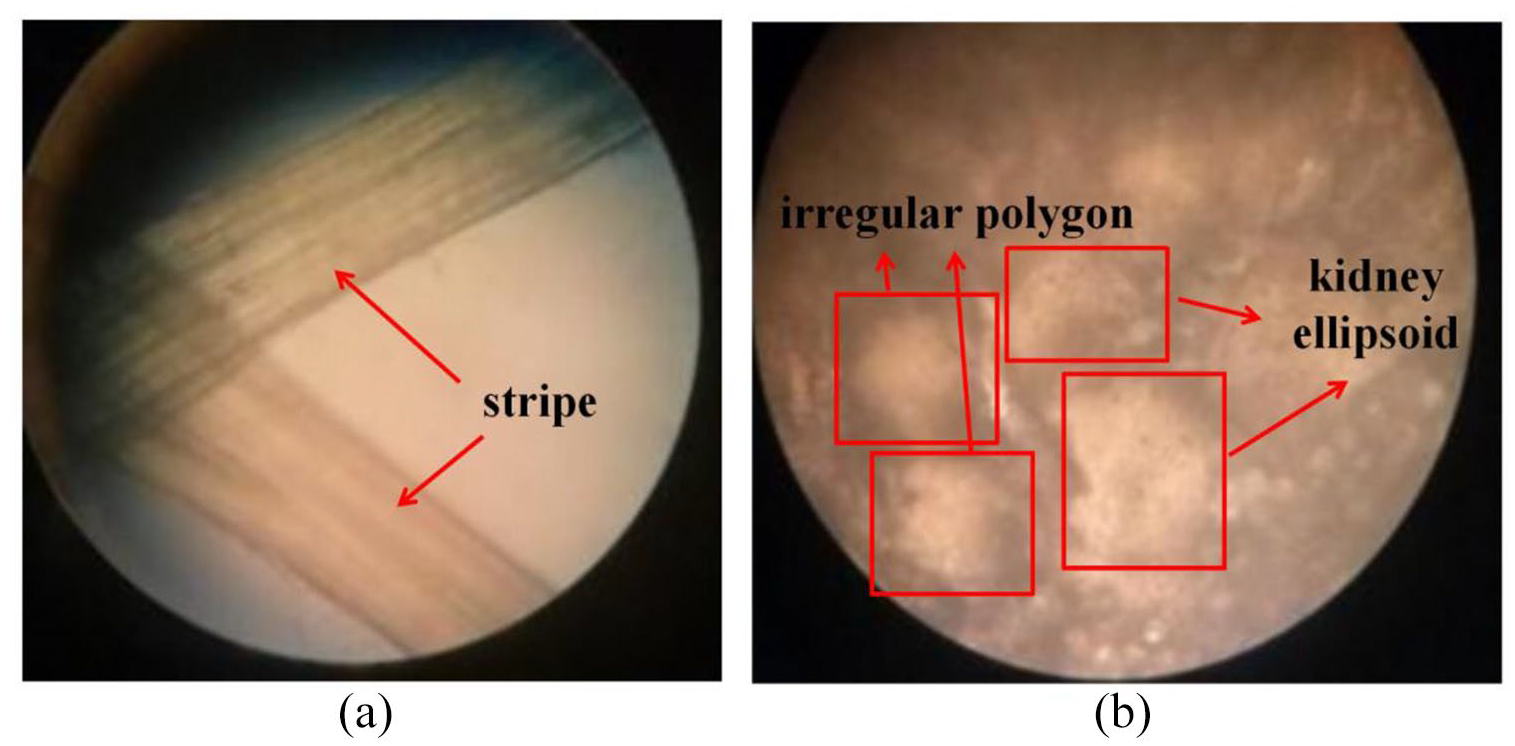
Longitudinal and horizontal morphological structure of BED-BADF: (a) longitudinal form and (b) horizontal form.
Analysis of degumming morphology of bast fiber of ADF
Figure 2 showed the changes of fiber morphology about bast Fiber of OS-BADF during two different deguming process. It could be seen from Figure 2 that there were some differences between AD-BADF and ED-PADF. The yellow color of OS-BADF was deep. After alkali treatment, the yellow color of AD-BADF fadeed a little, but it seemed that the fiber was damaged seriously. However, after degumming with pectinase, ED-PADF showed light yellow color, and the fiber was not damaged. After alkali degumming, the handle and thickness of AD-BADF were very similar to those of jute and other hemp fibers. After enzymatic degumming, the color of BED-BADF faded much more than AD-BADF, but the handle was basically similar. This showed that both alkali degumming and biological enzyme degumming removed a large amount of pigment, and biological enzyme also had a slight bleaching effect.
The vertical and horizontal morphology of bast fiber of BED-BADF was shown in Figure 3. BED-BADF was striped longitudinally, which was beneficial to increase the cohesive force between fibers. However, the cross section was kidney ellipsoid, irregular polygon, and had a small cavity, which indicated that the longitudinal and transverse morphology of BED-BADF was also very similar to jute fiber.
SEM testing and analysis of bast fiber of OS-BADF, AD-BADF, and BED-BADF
The setting test distance was 10 mm, and the working voltage was 10kv during scanning electron microscope testing. Observe the longitudinal cross-sectional shape of the fiber after 500 times magnification. Scanning electron microscope images of bast fiber of OS-BADF, AD-BADF, and BED-BADF were shown in Figure 4. It could be seen from Figure 4(a) that there were a lot of non-cellulose substances such as pectin and lignin on the surface of OS-BADF, and the single fibers were bonded together. It also could be seen from Figure 4(b) and (c) that after alkali degumming and biological enzyme degumming, hemicellulose, pectin, lignin, and other non-cellulose substances on the fiber surface were largely removed, especially after biological enzyme degumming, the non-cellulose substances on the fiber surface were most removed, and the single fibers were separated, and the fiber surface became the smoothest. At the same time, the linear density of fibers also decreased a lot.

SEM images of bast fiber of OS-BADF, AD-BADF, and BED-BADF: (a) OS-BADF, (b) AD-BADF, and (c) BED-BADF.
Bending properties of bast fiber of OS-BADF, AD-BADF, and BED-BADF
The equivalent bending modulus and bending stiffness of the fiber calculated according to formula (4) were shown in Table 2. It could be seen from Table 2 that after degumming treatment, the equivalent bending modulus and bending stiffness of AD-BADF and BED-BADF decreased. Especially, after degumming with biological enzyme, the equivalent bending modulus and bending stiffness of the fiber decreased the most compared with OS-BADF. Although the fiber diameter only changed slightly, its equivalent bending modulus and bending stiffness decreased by 41.31% and 73.67%, respectively, which indicated that the BED-BADF became finer and softer after degumming with biological enzyme.
Fiber diameter, flexural modulus and flexural rigidity of OS-BADF, AD-BADF, and BED-BADF.

Linear density and mechanical properties of OS-BADF, AD-BADF, and BED-BADF
Before testing, three kinds of fiber samples were put in a constant temperature and humidity chamber (relative humidity 65%, 27°C) to balance for 24 h, the fiber clamping length was set as 3 cm, and the tensile speed was set as 1.7 mm/min. Then 20 fiber samples were tested and averaged. Linear density and mechanical properties of OS-BADF, AD-BADF, and BED-BADF were shown in Table 3. It could be seen from Table 3 that the linear density of bast fiber of ADF decreased obviously after degumming treatment, and reached the spinnability index, and the effect of degumming with biological enzyme was better. Among the three samples, the breaking strength of OS-BADF was the smallest. After degumming treatment, the breaking strength of AD-BADF and BED-BADF was improved and the elongation at break was decreased. The main reason was that the arrangement of macromolecules inside the fiber has changed. Thirumurugana et al. 7 pointed out through infrared spectroscopy that the degumming treatment can increase the crystallinity of the bast fiber, thereby improving the mechanical properties of the fiber.
Linear Density and Mechanical Properties of OS-BADF, AD-BADF, and BED-BADF.

Thermal performance analysis of OS-BADF, AD-BADF, and BED-BADF
The thermal properties of OS-BADF, AD-BADF and BED-BADF were shown in Figure 5. It was found from Figure 5 that the initial thermal decomposition temperature and the highest thermal decomposition temperature of AD-BADF and BED-BADF had been significantly increased, and the thermal properties had been greatly improved. The reason was that after degumming, especially after enzyme degumming, most of the non-cellulose substances in the bast fiber of ADF were removed, which greatly improved the crystallinity of the bast fiber of ADF. These results were consistent with those of Qu Caixin et al. AD-BADF and BED-BADF had good thermal stability, especially BED-BADF with pectinase had better thermal performance.

Thermal analysis of OS-BADF, AD-BADF, and BED-BADF: (a) TGA Curve of OS-BADF, AD-BADF, and BED-BADFand (b) thermogravimetric curve of OS-BADF, AD-BADF, and BED-BADF.
Infrared spectrum analysis of OS-BADF, AD-BADF, and BED-BADF
The infrared spectrum of OS-BADF, AD-BADF, and BED-BADF was shown in Figure 6. From Figure 6, it could be found that several important characteristic absorption peaks (characteristic absorption peaks of O-H vibration are about 2918 cm−1–2920 cm−1, absorption peaks of C-O stretching vibration were about 787 cm−1–789 cm−1, and characteristic absorption peaks of C-O-C vibration are around 1058 cm−1–1060 cm−1) in OS-BADF were the positions of characteristic absorption peaks of cellulose I, which showed that degumming treatment had not damaged the structure of cellulose I. It could also be found from Figure 4 that the characteristic absorption peaks (1538 cm−1–1541 cm−1) of lignin, 1534 cm−1–1536 cm−1, and 1582 cm−1–1586 cm−1) of hemicellulose were weaker or even disappeared in AD-BADF and BED-BADF than those in OS-BADF, and the lignin and hemicellulose of BED-BADF weakened the most. Therefore, both alkali degumming and biological enzyme degumming could achieve the effect of removing non-cellulose substances, and the biological enzyme degumming had better effect. The results were consistent with testing results of SEM. It was also found that the characteristic absorption peak of stretching vibration of -OH in OS-BADF was 2916 cm−1–2920 cm−1, but after alkali degumming and biological enzyme degumming, the characteristic absorption peak of stretching vibration of -OH decreased to about 2912 cm−1–2914 cm−1, which indicated that the characteristic absorption peak of stretching vibration of -OH changed from high wave number to low wave number. This proved that -OH (free group) decreased significantly after degumming treatment, which was due to the rearrangement of macromolecular chains and the increase of hydrogen bonding between macromolecular chains.

Infrared spectrogram of OS-BADF, AD-BADF, and BED-BADF.
Antibacterial performance of OS-C fabric, AD-C fabric, and BD-C fabric
In order to test the antibacterial property of bast fiber of ADF, OS-BADF, AD-BADF and BED-BADF are respectively spun into 21.8 tex blended yarns with cotton fiber at the same blending ratio of 65/35, and then the above three blended yarns were respectively prepared into three fabric samples(OS-BADF, AD-BADF, BED-BADF) by using the weaving prototype. The antibacterial properties of OS-BADF, AD-BADF, and BED-BADF were indirectly determined by testing the antibacterial properties of OS-BADF, AD-BADF, and BED-BADF.
In testing the antibacterial property, the culture medium was to supply the nutrients for the growth and reproduction of bacteria. Generally, it contains carbohydrates, nitrogenous substances, inorganic salts (including trace elements), vitamins, and water. The nutrient agar medium (EA) was used in this antibacterial test.
The colony number of staphylococcus aureus in OS-BADF, AD-BADF, and BED-BADF were showed in Figure 7. It could be seen from Figure 7(a) that after antibacterial testing of OS-BADF, staphylococcus aureus in the solution formed numerous colony numbers on the Petri dish after being cultured in EA, while after antibacterial testing of AD-BADF and BED-BADF, staphylococcus aureus in the solution was difficult to survive, and the colony numbers decreased(as shown in Figure 7(b) and (c)). The antibacterial testing results of OS-BADF, AD-BADF, and BED-BADF were shown in Table 4. It could be seen from Table 4 that their antibacterial rates were 67.24%, 76.32%, and 83.58%, respectively. Because cotton fiber had no antibacterial effect, we could conclude that bast fiber of ADF had natural antibacterial effect. The testing results showed that the antibacterial property of bast fiber of ADF was improved after degumming treatment, and compared with AD-BADF, the antibacterial property of BED-BADF was improved more significantly.

Colony number of staphylococcus aureus after antibacterial testing of the fabrics: (a) colony number of bast fiber of OS-C fabric, (b) colony number of alkali degummed bast Fiber of AD-C fabric, and (c) colony number of bast fiber of BD-C fabric.
Antibacterial rate of OS-C fabric, AD-C fabric, and BD-C fabric.

Conclusions
After degumming, the main component of AD-BADF and BED-BADF were cellulose, and the proportion of other components was very similar to hemp fiber. Their vertical and horizontal morphology was also very close to that of jute. After alkali degumming and biological enzyme degumming, large bundles of fiber were separated into small bundles of fiber, and the fiber surface became smooth. AD-BADF and BED-BADF had good thermal stability, especially BED-BADF had better thermal performance.
Through this research, it concluded that AD-BAD and BED-BADF both have a higher content of cellulose, so they had better moisture absorption and comfortableness; moreover, their fineness, flexibility (bendability) and other spinnability indicators were basically close to those of jute. As a result, AD-BAD and BED-BADF could be used as pure or blended fiber, and their woven fabric had good antibacterial properties, so the textile products developed with them had a wider range of consumption. Preliminary calculations showed that AD-BAD and BED-BADF had higher strength and lower elongation at break. These performance gave them the ability to be used as a reinforcement of natural fiber reinforced composite. AD-BAD and BED-BADF reinforced composite will have certain application value in industries such as automobiles and construction, etc. Therefore, this research can not only provide greater reference value for the development of new textile fibers, but also provide new development idea for researchers who develop high-performance plant fiber-reinforced composite.
Footnotes
Declaration of conflicting interests
The author(s) declared no potential conflicts of interest with respect to the research, authorship, and/or publication of this article.
Funding
The author(s) disclosed receipt of the following financial support for the research, authorship, and/or publication of this article: The work is funded by Integration Platform of Industry and Education of Jiangsu Higher Vocational Education(Jiangsu Vocational Education 2019. No 26), the project supported by scientific research fund of Yancheng Polytechnic College(ygy2008), Jiangsu High Vocational College Academic Leaders High-end Research and Training. The work is also funded by Deeply Intergrated Training Platform of Industry and Education of Jiangsu Higher Vocational Education(Jiangsu Higher Education 2016. No 19), Qing Lan Project of Jiangsu Colleges and Universities for Young Academic Leaders(Jiangsu Teachers’ letter〔2020〕No. 10), the Integration Platform of Industry and Education of Jiangsu Higher Vocational Education(Jiangsu Vocational Education 2019. No 26), Jiangsu Province Higher Vocational Education High-level Major Group Construction Project-Modern Textile Technology Major Group.
