



Abstract
International students may experience many stressors when adjusting to their new environment. The Physical Activity and Wellness Series was an integrated wellness and physical activity program aimed at improving international students’ physical activity participation, self-efficacy, coping and social belonging, and reducing stress. Four sessions of the 8–10 week program were evaluated with N = 45 international students. Participants completed surveys at the beginning and end of the program, and a focus group following each session. Measures included self-efficacy for physical activity, social self-efficacy, coping self-efficacy, stress, social belonging, and physical activity. Focus groups assessed participant experiences including expectations, barriers, and facilitators. Most of the mean values trended in the expected direction (higher self-efficacy and physical activity, lower stress and social isolation) and focus group themes included mental and physical health, social connections, and Canadian culture. Combining mental wellness and physical activity in a weekly program resulted in positive social wellness outcomes for international students.
Introduction
There are over one million international students attending Canadian colleges and universities (Canadian Bureau for International Education, 2023). According to the government of Canada, in 2022 international students contributed 30.9 billion to Canada's GDP, 7.4 billion in tax revenue, and supported 361,230 jobs (Government of Canada, 2024). The majority of international students in Canada plan to apply for a postgraduate work permit or permanent residence (Canadian Bureau for International Education, 2023). While adapting to the Canadian context, international students may experience acculturative stress (Berry, 1997). Stress (including acculturative stress), low academic engagement, psychological difficulties, low social support, poor coping, discrimination, and language challenges may contribute to academic failure for international students at Canadian postsecondary institutions (da Silva & Ravindran, 2016). Acculturative stressors that international students may encounter include academic stress, language barriers, cultural differences, financial stress, accommodation issues, social isolation, and other stressors related to adjustment (Zhang & Goodson, 2011a, 2011b). Psychological cultural adaptation promotes well-being, while sociocultural adaptation promotes behavioral competence for success in managing daily life and interactions with host cultures (Ward & Kennedy, 1993). Both components of adaptation are important for international students to engage in healthy relationships with the host culture (Arthur, 2017; Brunsting et al., 2018; Sawir et al., 2008; Zhou et al., 2017).
Physical activity has been identified as a way for international students to adjust to a new culture for several reasons including creating interaction opportunities and reducing communication barriers (Lee et al., 2012; Li & Zizzi, 2017; Yan & FitzPatrick, 2016). Campus recreation programming offered at most North American universities may be a way to engage international students and support their adjustment (Brunette et al., 2011; Guo & Ross, 2014; Hashim, 2012; Li & Stodolska, 2006; Shifman et al., 2012; Taylor & Doherty, 2005). Recreational programming that includes physical activity such as sports, can improve social adjustment, and educational programming has been shown to improve psychological adaptation, and coping skills for students (Glass et al., 2014; Smith & Khawaja, 2014). Programs combining education, physical activity, and socialization have yet to be examined with international students despite the potential to improve multiple factors relating to student adjustment and well-being.
Despite the known benefits of campus recreation, students may not participate in campus recreation for several reasons. Some students may not know how to get involved, or other people with whom to do an activity (Selvaratnam et al., 2021). International students were found to be more constrained compared to domestic students, and facilities were believed to be less accessible (Selvaratnam et al., 2021). Other research identified constraints to participation in campus recreation for ethnic minority students including lack of space, department policies, lack of time, women's discomfort in predominantly male spaces, and lack of visibility of students of color (Hoang et al., 2016). Facilitators to participation included social opportunities, health maintenance, goal striving, maintaining cultural connections, and high quality of services and facilities (Hoang et al., 2016). Hoang et al. suggested that improving cultural competency among staff, intentionally engaging cultural groups, and teaching activities and rules for sports could help to reduce constraints experienced by ethnic minority students.
Although few interventions for international student physical activity have been studied, other similar interventions have identified some ways to promote physical activity in university students, and that these interventions can have positive behavioral and mental health outcomes (Herbert et al., 2020; Sriramatr et al., 2014). One of the few intervention studies addressing the mental health and adaptation of international students focused on enhancing coping and acculturation of 16 international students in Australia using four weekly sessions that focused on settling in Australia (i.e., cultural norms), making friends (i.e., social skills), feeling good (i.e., managing mental health), and being proactive (i.e., help seeking; Smith & Khawaja, 2014). Following the program, participants had higher psychological adaptation, social self-efficacy (e.g., confidence in language skills) and coping self-efficacy (e.g., confidence in stopping unpleasant thoughts). Another intervention with Asian international students in Australia consisted of junior and senior international students and facilitators taking a bus excursion to a popular tourist spot (Sakurai et al., 2010). The trip resulted in more friendship ties and more new friendships compared to those who did not partake in the program. Those who were not in the program had decreased local orientation and increased home cultural orientation. The sustained interest in local culture and friendships formed with local students suggests that a program including only international students could foster local–international connections. These two interventions used different approaches, yet both encouraged positive international student adaptation.
Previous interventions, social cognitive theory (SCT), and extant literature on international student transitions, can provide guidance on the most effective intervention design to improve adaptation and psychological outcomes for international students. The current study aimed to create a program that integrated an informational and physical activity intervention that encouraged students to interact with their peers, learn about important coping skills and campus services, and enjoy the physical and mental health benefits of being physically active. SCT was used to guide intervention development. SCT emphasizes the interrelations between the person (including one's cognition), their environment, and their behavior (Bandura, 1986). A central tenant of SCT is that individuals exert agency on their behavior and make choices based on their interactions with their environment and are not simply reacting to environmental stimuli (Bandura, 2001). SCT is useful in designing programs for health behavior because it includes behavioral predictors as well as guidance on how to enable, motivate, and guide people to engage in health promoting behavior such as physical activity (Bandura, 2004). Several direct and indirect relationships between physical activity and variables included in SCT have been identified including self-efficacy (i.e., situation-specific self-confidence), outcome expectations (i.e., what benefits can be gained from physical activity), and self-regulation (e.g., planning, goal setting) (Anderson et al., 2006; Bandura, 1986, 2004). Sociostructural or environmental barriers and facilitators (e.g., access) are also identified as affecting behavior, even if one's self-efficacy is high (Bandura, 2004; Lower et al., 2015; Lower-Hoppe et al., 2021). Many SCT variables are related to identified constraints and facilitators to participating in campus recreation such as accessibility, social opportunities, health maintenance, and goal striving (Hoang et al., 2016; Selvaratnam et al., 2021).
One study assessing college student and campus recreation participation using SCT found that comfort in students’ recreational environment improved use of facilities (Shaikh et al., 2018). Other research demonstrated that self-efficacy was an important mediator between mastery goals (personal improvement) and benefits of participating in campus recreation including social, intellectual, and fitness benefits (Lower-Hoppe et al., 2021). Sriramatr et al. (2014) developed an internet-based intervention using SCT to promote physical activity among female university students in Thailand. The intervention targeted self-efficacy, outcome expectations, and self-regulation. The intervention group showed improved physical activity participation, self-efficacy, outcome expectations, and self-regulation and these improvements were maintained after three months compared to the control group. These results show that interventions improving social cognitive variables can have a positive effect on behavioral outcomes in a nonwestern university student population.
The purpose of this intervention research was to examine the Physical Activity and Wellness Series (PAWS) program which aimed to improve international students’ physical activity participation, self-efficacy for physical activity, social self-efficacy, coping self-efficacy, and social belonging, and reduce their stress and feelings of isolation using an 8–10 week program. Examining the effects of an integrated education, socialization, and physical activity program contributes to the body of research on international student adaptation and provides evidence for continuation of the program. The research questions were:
Does a weekly wellness program improve international students’ perceptions of self-efficacy for physical activity, coping self-efficacy, social self-efficacy, and feelings of belonging? Does the program reduce perceptions of stress, and social isolation? Does a weekly wellness program promote physical activity?
We hypothesized that students would have increased self-efficacy for physical activity as well as increased physical activity behavior resulting from the program. We also expected that students who participated in the program would have more social self-efficacy, coping self-efficacy, and social belonging scores as well as lower stress and social isolation perceptions.
Method
Participants
The program was delivered at a large university in Western Canada. The program was advertised through university social media, email newsletters, and the campus recreation guide. Participants recruited were international students of any program or study year who were interested in participating in the program and signed up through the university's Campus and Community Recreation program.
Program Design
PAWS was designed to address the components of SCT, with the overall goal of promoting international student mental and physical wellness. Self-efficacy is influenced by experiences and feedback (Bandura, 2010), and the PAWS program aimed to improve self-efficacy for physical activity by providing instructors and a supportive environment to try new skills. Discussion topics focused on coping self-efficacy, self-regulation, and outcome expectations for being active and for mental health and wellness while engaging in studies internationally. We aimed to make the program accessible and remove as many barriers to participation as possible. Specifically, the program was offered after most class times and we provided equipment and facilities. We determined that a fee was necessary to encourage commitment to the evaluation of the intervention. Each week, participants were sent an email describing the activity for the week, and any information they needed to prepare including rules for the activity, what to wear, and where to meet. Targeting specific skills such as building self-regulation, social self-efficacy, coping self-efficacy, and self-efficacy for physical activity may provide students with cognitive skills that are widely applicable to other aspects of their studies.
Program Structure
Research ethics approval was obtained from the Research Ethics Board at the University of Alberta (Pro00087951). First, a focus group (N = 14) with international students on campus was conducted in March 2019 to examine preliminary program plans and solicit recommendations for program administration. International students provided feedback on the proposed activities, educational topics, and practical concerns. Following program development, two trial sessions were conducted in May 2019 to refine program logistics and obtain feedback from trial participants (N = 17) through focus groups and feedback forms.
Starting in Fall 2019 participants (N = 45) met once each week for a total of 1.5 hours in various locations on campus (e.g., gymnasium, squash courts, climbing wall, curling rink) depending on the activity scheduled (e.g., rock climbing, badminton, dance). See Table 1 for a sample schedule. Two facilitators, who were also students, and part-time employees of the University Campus and Community Recreation program led the sessions, and staff instructors were brought in to teach specific skills related to the physical activities. The facilitators received training on the purpose and goals of the PAWS program and were mentored by author A.V. who helped to develop the program and was a full-time staff member during implementation. Thirty minutes of each session focused on a topic related to international student mental health and the international student experience such as dealing with academic stress, relationships between physical activity and stress, goal setting, and resilience training. These sessions specifically targeted outcomes that were measured using the tools described in the next section (e.g., coping self-efficacy was targeted by discussing strategies to mitigate stressful situations throughout one's studies). The mental wellness portion was semistructured with some information provided and opportunities for students to share their experiences. Plans were generated to guide the facilitators in these sessions and create consistency between sessions. Socialization and interpersonal interaction were built into every activity. The final hour of the session included an activity that was designed to encourage socialization amongst the group while being physically active. Students engaged in a new activity each week.
Sample Physical Activity and Wellness Series Schedule.
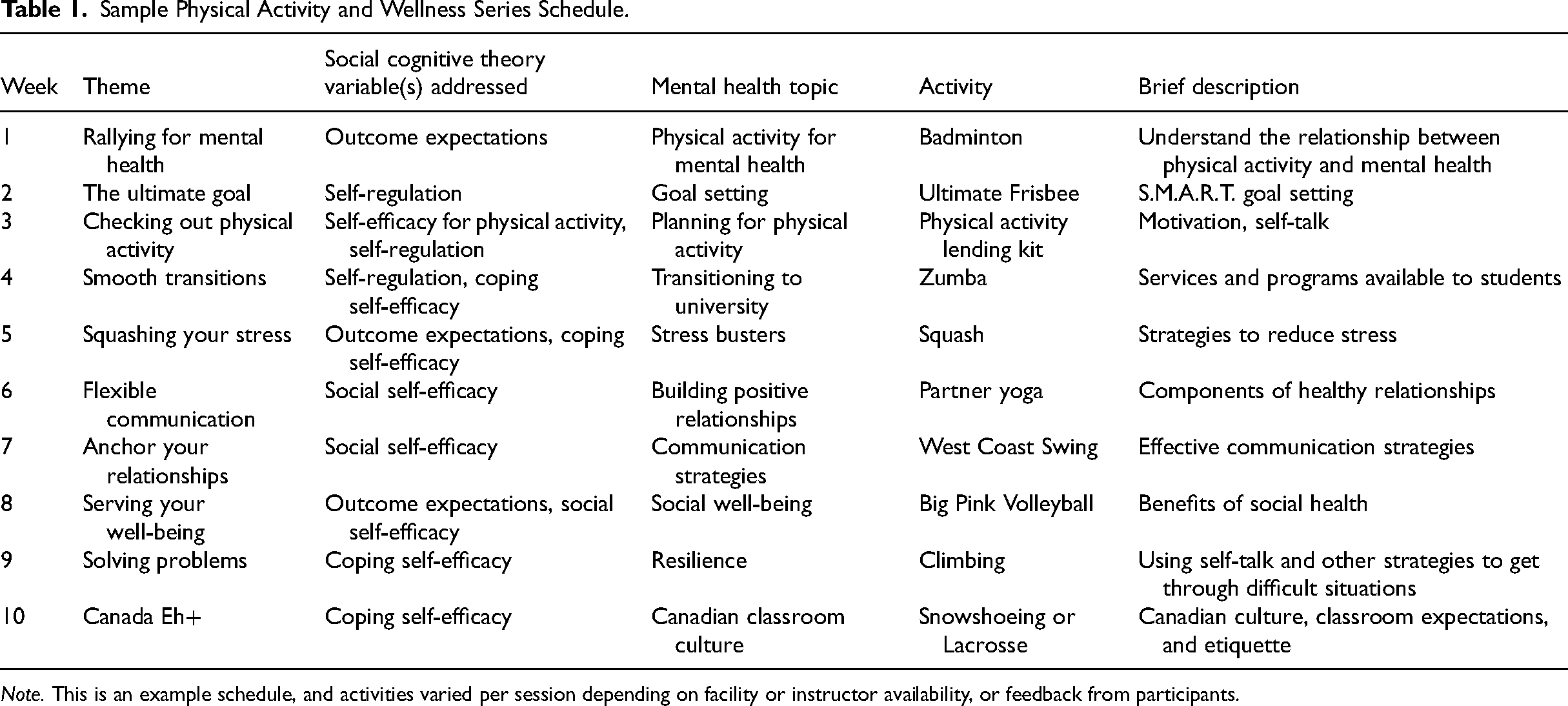
Note. This is an example schedule, and activities varied per session depending on facility or instructor availability, or feedback from participants.
Participants were charged a fee to participate in the program (45.00 CAD), but if they attended 80% of the sessions and completed the surveys, this cost was credited toward a program of their choice offered by Campus and Community Recreation (i.e., Campus and Community Recreation Gift Card). The program ran for four terms (8–10 weeks each time); Fall 2019, Winter 2020, Winter 2022, and Fall 2022. The Winter 2020 program was stopped after 7 weeks due to the COVID-19 pandemic.
Program delivery was evaluated periodically using informal surveys to ensure that program goals were being met in such a way that delivery could produce the outcomes of interest. Program leaders took detailed notes following each session on engagement, participation, and how well session objectives were met.
Evaluation
The mixed-methods evaluation was selected to measure social cognitive variables, social well-being, and physical activity behavior quantitatively, while focus groups captured barriers and facilitators to participation for the participants, as well as how they experienced the program in their own words. The Good Reporting of a Mixed Methods Study checklist guided reporting of this evaluation (Appendix 1; O’Cathain et al., 2008). Following informed consent procedures, participants filled out surveys at the beginning and end of the program (on the first and last day of the program, some were completed online in the days before or after these sessions). The first two terms included midpoint surveys, but these were stopped due to small numbers of respondents and feedback that the surveys were cumbersome. Following each term of the program, a wrap-up focus group was held to solicit feedback from the participants. The Winter 2020 term did not include a focus group due to the COVID-19 pandemic closures, and instead an online form was sent to seek feedback.
Measures
Descriptive information
Information on age, sex, program of study, ethnicity, year of arrival to Canada, and year of study was collected. At baseline students were asked how involved they are in the university community from 1 (not involved at all) to 5 (extremely involved).
Self-efficacy for physical activity
Self-efficacy for exercise was assessed using the Multidimensional Exercise Self-Efficacy Scale (Rodgers et al., 2008) which measures three dimensions of self-efficacy; task (three items), coping (three items), and scheduling (three items). Task self-efficacy refers to confidence in performing the actual behavior, coping self-efficacy is the belief in one's ability to overcome challenges to perform the behavior, and scheduling self-efficacy is the confidence in one's ability to plan effectively to add the behavior into a daily/weekly schedule. Items are rated on from 0 (not at all confident) to 100% (completely confident). The instrument begins with an explanation of moderate physical activity, and instructions, “Moderate intensity physical activity (MPA) includes activities such as fast walking, basketball, tennis, easy bicycling, and swimming. It is recommended that adults complete 150 min of MPA per week. Please indicate your confidence that you can complete the recommended amount of physical activity in the following situations from 0–100%” (Rodgers et al., 2008). In a sample of undergraduate students, the scale had an overall reliability of α = .94 (task α = .81, coping α = .81, scheduling α = .91; Rodgers et al., 2008).
Social self-efficacy
The Social Self-Efficacy Scale for Students (SSESS; Fan & Mak, 1998) was developed to address concerns specific to students from culturally diverse backgrounds. The scale has 20 items and five subscales; absence of social difficulties (nine items; e.g., “I do not handle myself well in social gatherings”), social confidence (five items; e.g., “I feel confident talking to my lecturers”), sharing interests (three items; e.g., “I have common interests with local people”), friendship initiatives (three items; e.g., “If I see someone I would like to meet, I go to that person instead of waiting for him or her to come to me”). Participants are asked to rate their agreement with each statement from 1 (strongly disagree) to 7 (strongly agree). The subscales showed reliability estimates of α = .52–.82 and adequate test–retest reliabilities (> .70). Concurrent and convergent validity of the scale was also established (Fan & Mak, 1998).
Coping self-efficacy
The Coping Self-Efficacy Scale (Chesney et al., 2006) includes 13 items. Participants are asked “When things aren’t going well for you, or when you’re having problems, how confident or certain are you that you can do the following.” There are three subscales assessing use of problem focused coping (six items; e.g., “break an upsetting problem down into smaller parts,” stopping unpleasant emotions and thoughts (four items; e.g., “keep from feeling sad”) and getting support from friends and family (three items; e.g., “get friends to help you with the things you need”). Items are rated on an 11-point scale to measure the extent to which they believe they could perform the behaviors related to adaptive coping from 0 (cannot do at all), 5 (moderately certain can do) and 10 (certain can do). Reliability (α = .95) and acceptable validity was established by Chesney et al. (2006).
Stress
The Perceived Stress Scale (Cohen et al., 1983) includes 10 items. Participants rate the frequency of certain thoughts or feelings in the past month in relation to positive (four items) and negative (six items) life events rated on a scale from 1 (never) to 4 (very often). For example, one negative perception question asks, “how often have you found that you could not cope with all the things that you had to do?” A positive item reads, “how often have you felt that you were on top of things?” Positive items are reverse scored, and the sum of the items indicates stress level. The two-factor structure was supported in an adult sample of Chinese women, and an overall reliability of α = .86 and test reliability of r = .68 was reported (Wang et al., 2011).
Social isolation
The Social Isolation subscale from the Acculturative Stress Scale for Chinese College Students in the United States developed by Bai (2016) was used to assess this construct. The items were altered to refer to life in Canada. The subscale includes eight items (e.g., “My social circles shrank after I came to Canada”) rated from 1 (never) to 7 (all the time). In a sample of Chinese students in the United States, the measure had an overall internal consistency of α = .93 (Bai, 2016).
Social belonging
Cohen's Interpersonal Support Evaluation List—College student version—belonging subscale included 12 items (Cohen & Hoberman, 1983). Questions were rated as “probably true” or “probably false” and included items such as “I hang out in a friend's room or apartment quite a lot.” Number of responses indicating probably true was summed to generate a social belonging score. The internal reliability for the belonging scale was α = .75 in a sample of college students in the United States (Cohen & Hoberman, 1983).
Physical activity
The International Physical Activity Questionnaire-short version (IPAQ; Craig et al., 2003) was used to assess self-reported physical activity over the last 7 days. Days per week and hours/minutes per day of vigorous physical activity (e.g., heavy lifting, aerobics), moderate physical activity (e.g., doubles tennis, regular biking), walking, and sitting were assessed. A systematic review found that the IPAQ frequently overestimates physical activity behavior, complicated by inconsistencies in accelerometer analyses (Lee et al., 2011). Due to a large amount of variance in self-reported physical activity in our sample we used days of vigorous physical activity, moderate physical activity, and walking in our analysis.
Focus group guide
Focus groups were conducted following each full program administration. After describing the purpose of the discussion, introductions and general protocols, the following questions were used to guide the focus group discussions:
What were your expectations going into the program? What were some things you liked about the program? What did you dislike? What would you change about the program or add to the program? What are some barriers to participating in the program that international students might experience? What is the best way to get the word out to international students about the program?
Participants were given the opportunity to add anything they thought was missed during the discussion.
Data Analysis
The survey data were analyzed using repeated measures ANOVAs to assess change in participants’ scores between time points. For physical activity, days reported for all participants were used in the analysis due to large amount of variance in the hours and minutes reported. The Winter 2020 group completed a midpoint questionnaire at 5 weeks which was used as the “post” program evaluation due to the program shut down. Participants provided feedback using an online form. The Winter 2020 participants were included in the analysis due to the small number of participants who completed both surveys (n = 12), and the facilitators recorded that the participants were very engaged in the sessions. Results were not different when these participants were removed from the analysis.
The focus groups were audiorecorded, and transcribed, and analyzed by the first author. Transcripts were analyzed using thematic analysis, and coded inductively (Braun & Clarke, 2006; Terry et al., 2017) which involves familiarizing oneself with the data, generating codes, constructing themes, reviewing potential themes, and defining and naming themes.
Our analysis integrated findings from multiple sources of data (i.e., questionnaires, focus groups, and program leader field notes). The self-reported descriptive data on self-efficacy for physical activity, social self-efficacy, coping self-efficacy, stress, social isolation, social belonging, and physical activity were not expected to influence the responses to the open-ended questions asked from participants in the focus groups. The quantitative data were integrated with the qualitative data to identify characteristics of the program that may have contributed to quantitative results or reflections of participants on their experience of the program. Comparison of aggregated quantitative results with the focus groups themes and specific results helped to identify disconfirming evidence or confirmation of themes (Creswell & Clark, 2017). One of the study authors (F.M.) who was also a program facilitator verified the results reported.
Results
Participants
Table 2 shows the demographic information for the participants across all terms (N = 45). Most of the students were in their third year of their undergraduate or were graduate students (44.4%). More females participated than males (64.4% vs. 26.7%). Many ethnicities were represented in the program with Latin and Chinese students participating the most (31.2%).
Participant Demographic Information Across All Sessions.
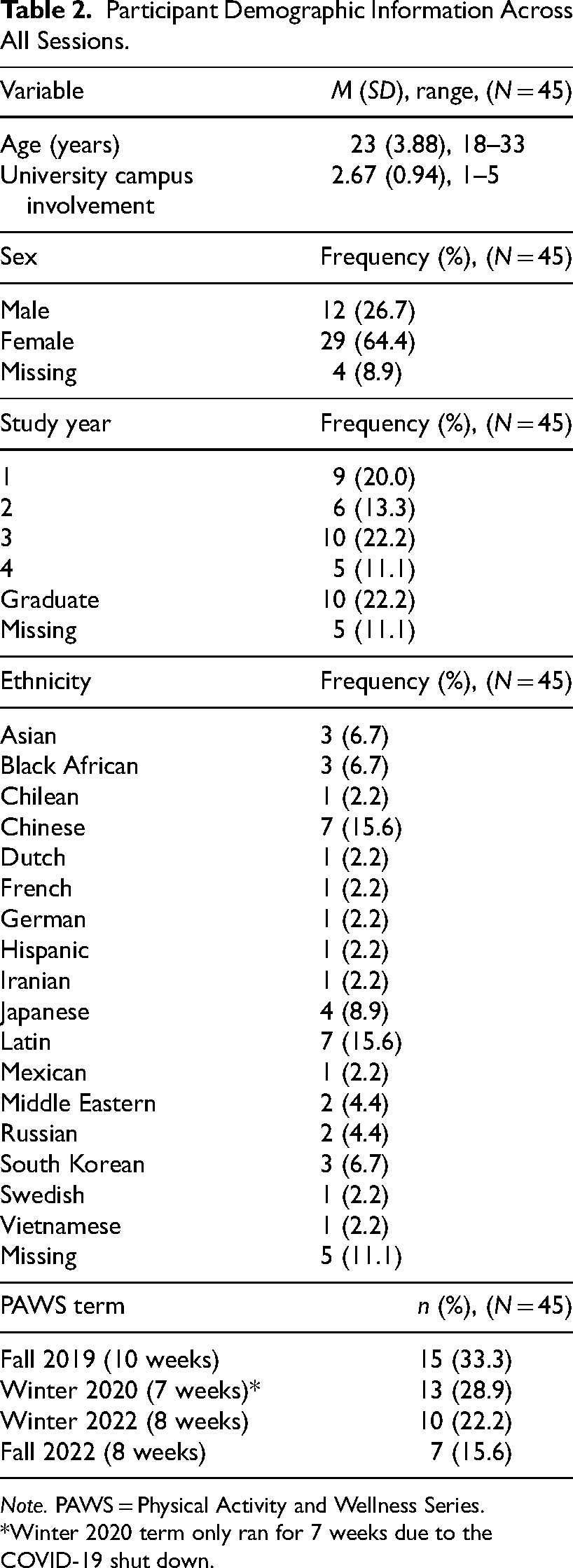
Note. PAWS = Physical Activity and Wellness Series.
*Winter 2020 term only ran for 7 weeks due to the COVID-19 shut down.
Surveys
Table 3 shows the results of the ANOVA testing changes between the pre- and post evaluations (N = 35). Significance was set at p < .05 and effect sizes are reported with a large effect defined as partial eta squared (ηp2) > .14. Given the relatively small sample, effect size is an important indicator of changes in outcomes. Most of the mean values trended in the expected direction except for general stress. We found an increase in physical activity, higher ratings of social self-efficacy, self-efficacy for physical activity and coping, lower social isolation scores, higher social belonging. General stress increased between time points. Post-hoc tests showed significant changes with large effects for two subscales of the social self-efficacy measure. These were the “friendship initiatives” subscale (F = 6.54, df = 1,34; p = .015, ηp2 = .161) and the items related to “confidence in joining a student organization” (F = 5.76, df = 1,34; p = .022; ηp2 = .145). Additionally, the “problem focused” coping self-efficacy subscale (F = 4.47, df = 1,34; p = .042, ηp2 = .116), and “stopping unpleasant emotions” (F = 4.43, df = 1,34; p = .043; ηp2 = .115) increased significantly with a medium effect.
Physical Activity, Social Cognitive, and Well-Being Values at Time 1 and Time 2 of the Physical Activity and Wellness Series (PAWS).
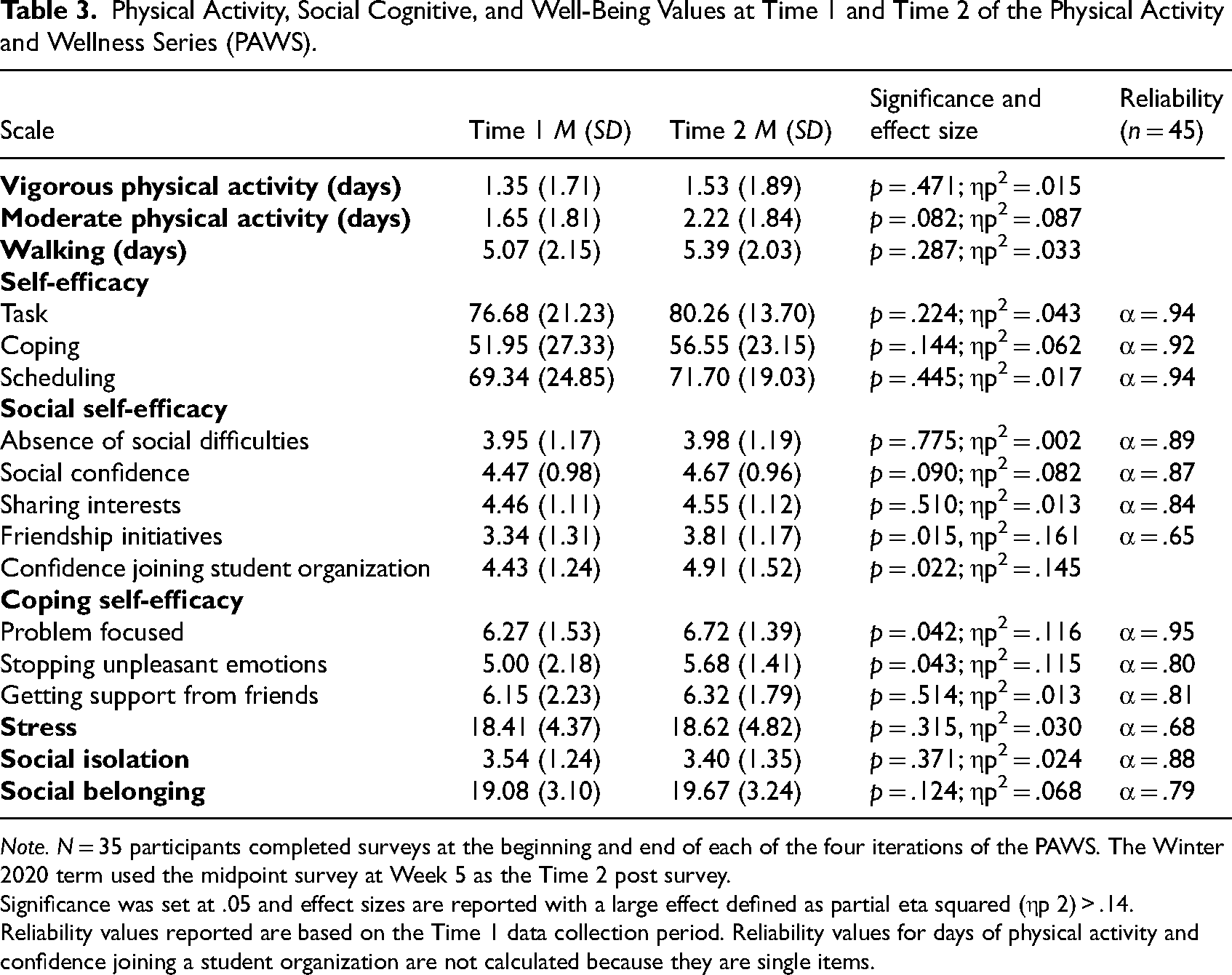
Note. N = 35 participants completed surveys at the beginning and end of each of the four iterations of the PAWS. The Winter 2020 term used the midpoint survey at Week 5 as the Time 2 post survey.
Significance was set at .05 and effect sizes are reported with a large effect defined as partial eta squared (ηp 2) > .14.
Reliability values reported are based on the Time 1 data collection period. Reliability values for days of physical activity and confidence joining a student organization are not calculated because they are single items.
Focus Group Results
The focus groups yielded rich discussions about program accessibility, characteristics, administration, and practical considerations. In addition, the participants offered insights into how they experienced the program as international students, and how it contributed to their social and physical wellness. Five themes identified were: physical activities and continuing to be active, mental and physical health connection, social interaction and connection to other international students, Canadian culture, and program characteristics and administration.
Physical activities and continuing to be active
Participants discussed the parts of the physical activities that they enjoyed, and aspects they did not enjoy as much. Often participants commented on the variety of the activities being an enjoyable part of their experience. One female participant said, “it was a good way because I’m new on campus, so it was a good way for me to be introduced to all the different sports that we have on campus, and some of these I have never done back in my home country, so it was actually an amazing experience” (F1_W2022).
Importantly, the participants spoke about how trying new activities helped them to build their skills and identify which ones they may continue in the future as described by one participant, “In this program I get to experience a lot of different activities, and now later on, next semester, like, I do plan to participate in certain activities, so this is a good opportunity for me” (F5_F2022).
Some participants noted they wanted more vigorous physical activity, or more basic sports as opportunities to develop foundational skills.
Mental and physical health connection
Participants appreciated the connection between the mental health and physical activities as the focus of the program. One male participant said, “What I did like about it was looking at physical activity as this wholesome package of being physically active and thinking about your mental health. Like, for me, I’ve been physically active for most of my adult life. Like, physical activity wasn’t anything new, but this aspect of it—of thinking of it as a way to keep aware of your mental health and thinking about those kind of things—were really interesting to me” (M3_F2019). Some used the program as “… a space to relax, to get my mind off my studies and all of that, and, like, having some fun inside the campus—like, doing exercise, learning how to do certain sports and all of that” (M1_W2022).
Other participants mentioned that sometimes the wellness portion was shortened or skipped on certain weeks due to the nature of the physical activity demanding more time for instruction or booking activity spaces (e.g., climbing, curling), or the sport itself did not lend to concurrent socialization. While they understood this necessity, they emphasized the importance of this portion of the program in their experience and the value it added to their well-being.
Some participants noted that the wellness activity and socialization part were not their favorite parts of the program, and they would have preferred they were not included. They noted sometimes it felt too long, awkward, or boring. One participant said “My opinion is quite the opposite. Like, I don’t really enjoy the game. I don’t know why … And everybody says they enjoyed it but I don’t … in my opinion it's kind of boring … because when we have some talk, like, I dunno, sometimes I just have nothing to talk, and it seems a bit awkward for me” (F2_2022).
Social interaction and connection to other international students
In addition to connecting the physical and mental health components of the program, participants noted the value of social interaction throughout the program to their well-being. The nature of the program continuing for several weeks with the same participants each session lent to the creation of small cohorts which blossomed into supportive social units. The continuity of the instructors each week was also noted as a positive factor in the program delivery. Many observances were related to the participants’ experiences as international students. One student was happy that the group was small, “I was happy that it wasn’t that many people because, especially when you’re international, in a new group, it's kind of like overwhelming with that many people, so actually that was super good. I really like that it wasn’t as many” (M1_F2019). One participant talked about the value that the socialization opportunity added to the program, “I think one thing that would prevent my international student friends from joining this program would be that, yeah, it would be, like, underestimating the importance of, like, socializing—like, socializing and exercising at the same time, yeah, ‘cause, like, most people have their own exercise routine, whether they go to the gym or do some sports, yeah, so it would be hard for me to convince them to join this, yeah”(M2_F2022).
Several participants noted the importance of promoting connection and depth in conversations rather than simple wellness activities. Participants were interested in creating meaningful relationships with their peers. One participant said, “—make it more deep—like, it's more focused. We don’t need, the variety, but we need to have some deep conversations too because international don’t have much friend—like, don’t have the kind of network that they originally have, so I think it's important to feel that connection, first, and to get to know each other, it's easier to have fun” (M2_F2019). Several noted that in their experience following the COVID-19 restrictions, there were even fewer opportunities on campus to be social, and this program helped meet that need.
The wellness activities fostered bonding within the groups and as a result they became very close and offered support to one another. One female participant said, “…but I also like that we sat down beforehand and talked a bit. Um, I mean, I was there mainly, mostly for the sports itself, but it felt good to have like-minded people, and to have a kind of support group, so I knew if something was up, I had this group as a support system because that's one thing that I have at home but I didn’t really have when I came here before” (F1_F2022).
The connection to other international students was a particularly positive feature of the program. One participant described the value of shared experiences, “I would say that it was good to find people with the same problems. Like, we are all international students, and finding out that someone also struggles, financially, with some of the residence, with environment, with society, it actually helps you to understand that you’re not alone in this, and it really helped me, for example” (F2_W2022). One student expressed how they enjoyed trying new Canadian sports and the program felt “more like a home” compared to their classes where they don’t have a lot in common with domestic students (F3_F2022).
Canadian students versus other international students
One critical component of the program design is that it recruited a cohort of international students each term. We did not recruit noninternational students and as such this influenced the way the participants interacted with the program. One participant talked about how the group was particularly welcoming despite knowing many other international students, “So, I’m not really an active person, but I really enjoyed the sports—like, trying out different things—and I really enjoyed socializing because I think everybody agrees, like, everyone said it, like I haven’t met many people that I can socialize with and relate to, not only because they are just Canadian. Like, I’ve met many international students, but I think the international students I’ve met have managed to feel more at home here than I have, so I feel like here I have managed to meet people that are more like—that I can relate to—so I’ve enjoyed meeting people that I can talk to and have conversations with that are more meaningful, and I really enjoyed the different sports we have. Those were very interesting” (F4_F2022). One participant expressed how many of their classmates already have social connections and may not be interested in making new connections with international students, “I have met Canadians here … but it seems they have a connection already here. It's very hard for us to make a new connection with them, but it's pretty easy for us to build a connection with international students because we share some common aspects, so that's where I feel it becomes easier for us to build connections among international students, but that the program was a good opportunity because we were able to meet with different people, and we had different activities based on groups, so we could build a bond, so that was a great opportunity” (M1_F2022).
One participant mentioned that international students may not want to join the PAWS program because it was targeted at international students and they wanted to meet domestic students, “At least when I told my friends, they didn’t have a problem with joining, but it was moreso, like, they’re wanting to meet more Canadian people, and because the group was about international students, they were like, ‘I don’t really want to meet anymore international people’ because most of them live in the international residence or in (residence building on campus), so most of the roommates are already international…” (F4_F2022).
Canadian culture
Some of the participants joined the program to learn more about Canadian university culture and Canadian sports. For example, one participant was excited to learn lacrosse, “I was also interested (in) Canadian sport, like, lacrosse for example. I think I’ve never—I think I’ve seen pictures of it but never how it's played” (F1_F2022). Another participant noted it was a way to get out and “learn about the culture of the place” and “do something different from what (she) was used to” (F4_F2022). Some participants talked about how they learned more about the practical things like taxes, the university cycle, and psychological well-being in relation to studying.
Program characteristics and administration
Finally, participants noted several ways the program could have been administered better, which may be useful learnings for those interested in developing a similar program. One common theme was to make the first few sessions very engaging, so people want to stay in the program. It was also important to make the program affordable for international students. Several students had ideas about advertising to international students and ideas for program descriptions, timelines, and practical features of the sign-up process that are mostly relevant to the specific university delivering the program.
Discussion
The PAWS program was a mental wellness and physical activity program designed for international students using SCT and one of the only to be comprehensively evaluated. The quantitative results demonstrated a small change in participant social self-efficacy and coping self-efficacy outcomes, and a small but statistically nonsignificant increase in physical activity. The qualitative results illustrated the unique experience offered through the program, and the diverse ways the participants engaged with the program. The integration of survey and focus group findings allows discrete measurement of the variables the program aimed to improve such as self-efficacy, coping, and stress as well as a nuanced description from the perspective of the participants on how they experienced the program. Many of the findings from the focus groups reflected the survey results, but the focus groups contributed insights such as the descriptions of participant's peer interactions, formation of a cohort, their perceptions of the program components, and why the students decided to continue in the program.
Many participants noted that they enjoyed the activities offered in the program and found activities they wanted to continue beyond the program. The nonsignificant increase in physical activity could be due to self-reporting error (Lee et al., 2011) or the frequency (once per week) of the program. In the focus groups, some participants noted the activities were not high intensity for them, while others noted they felt physically sore after the sessions. The wide range of experience with physical activity may also explain the lack of change in physical activity, as the addition of one more session per week was insufficient to change established behaviors over the rest of the week. While the positive experiences with physical activity described by the participants can contribute to feelings of self-efficacy and continued physical activity participation (Bandura, 2004; Cowley & I’Anson, 2020), some research noted that self-efficacy and physical activity goals were a better predictor of vigorous physical activity compared to moderate physical activity (Doerksen et al., 2009). This could mean that for some participants, there was a misalignment between the social cognitive skills and intensity of the physical activities. The qualitative results suggested participants developed skills that would support continued participation in recreational or leisure time physical activities. Other research noted that experiencing the facilities and becoming familiar with sport and activity offerings could help international students in particular to overcome constraints such as perceptions of inaccessibility or not knowing how to get involved (Selvaratnam et al., 2021).
There were some statistically significant results related to SCT including problem-focused coping self-efficacy and stopping unpleasant emotions. Previous research designed and evaluated using SCT has shown increases in self-efficacy, outcome expectations and self-regulation through an internet intervention with Thai university students (Sriramatr et al., 2014). Other research with Chinese international students in Canada has demonstrated that self-efficacy, intention to exercise, exercise to reduce stress, and subjective well-being was related to physical activity (Curtin et al., 2019). Whereas in the current research, skills for coping with stresses unique to international students were discussed in the wellness sessions and the friendships students formed likely contributed to their self-efficacy for coping. Other researchers reported that social support and coping skills were linked to better mental health for international students in Canada (Baghoori et al., 2022). Incentives can also influence physical activity behavior, regardless of self-efficacy (Feltz et al., 2008) and include social connection or other incentives like money or health (Parietti & Lower, 2016). The social cohort developed during the PAWS program could have acted as an incentive for participants to attend, as previous work has found that a consistent social group was an important component of sport club membership that resulted in greater social, intellectual, and fitness benefits compared to intramural sport or fitness participants (Lower et al., 2013). In the focus groups, participants noted the value and perceived motivational and social benefits of interacting with the same group on a weekly basis.
Given the emphasis on the social benefits of the PAWS program, it was expected that in the program would result in improved scores on self-efficacy for friendship initiatives, and confidence in joining a student organization. Feelings of belonging also improved although not significantly. Previous research has found that institutional and friendship support, including culturally diverse friendships, can be related to adjustment for international students (Shu et al., 2020). Many participants mentioned the friendships and socialization and that they looked forward to each session. In addition, participants demonstrated understandings of the links between physical activity and mental health emphasized in the program, and discussed how the program improved their mental health both by offering opportunities for social interaction, a reprieve from their studies, and physical activity. Research has also shown that SCT dimensions related to physical activity may vary by culture, such that for individualistic cultures, self-efficacy and self-regulation were the strongest determinants of physical activity, but in collectivist cultures, social support and outcome expectations were the strongest determinants (Oyibo et al., 2018). Sriramatr et al. (2014) suggested that the interdependent self in Thai students may have been more strongly related to the SCT variables compared to independent cultures because SCT operates on interpersonal levels and assumes humans develop their sense of self through interpersonal exchanges (Bandura, 2002; Sriramatr et al., 2014). While not measured in this work, culture could be a consideration for developing future interventions with international students using SCT.
One unique aspect of the PAWS program was that it was designed for and recruited only international students and the focus groups offered insights into the impact of this choice. Many participants remarked that they appreciated they could have space to have discussions with their peers and they felt that they had things in common with the other international students. Some students mentioned that their friends would prefer to meet domestic students. Students who wanted to engage with domestic students may not have enrolled in the PAWS program, knowing it was meant for international students. International students may also be unmotivated to interact with host nationals because they may be in their host country for a short time, are unfamiliar with social norms, lack socialization opportunities, or have difficulties balancing numerous social networks (Zhou et al., 2017). Importantly, the bus excursion described by Sakurai et al. (2010) demonstrated that programs of only international students can contribute to connections between international students and domestic students. The results of the PAWS program confirm these connections through increased friendship initiatives and confidence to join a student organization.
Application to Practice
The PAWS program is the first recreation program exclusively offered for international students at the University of Alberta and the first program to offer a mix of mental and physical wellness. Results from this program evaluation can inform practice and research in North American institutions aiming to promote wellness among international students. Although the program was intentionally designed using SCT and included a specific topic each week to improve dimensions of SCT for international students, there were some unexpected learnings that occurred. The cohort formed by the students and facilitators was a unique part of the program, as most recreation programs involve independent attendance and participation. In the PAWS program the intentional social wellness component coupled with the same group attending each week led to a unique space that was welcoming and supportive.
A key learning from the PAWS program was the importance of clear and creative marketing tailored to international students. Rather than relying solely on general campus-wide promotions, the program partnered with the University of Alberta International Centre, the Student Union, and various international student clubs. Outreach included tabling and in-person engagement at high-traffic areas frequented by international students—such as the International Centre and student orientation events. These efforts were resource-intensive, requiring staff time, coordination with campus partners, and a presence at multiple events and locations.
Flexibility in program delivery also supported participation. Activities were adapted based on group preferences, and late registration and trial sessions were permitted to be more inclusive and reduce constraints. The diverse nature of the sessions required additional planning, including booking specialized instructors and appropriate spaces. Institutions planning similar programs should anticipate these logistical and resource needs, while keeping in mind that the investment can result in meaningful improvements in social connection and emotional well-being for international students. This program took extra effort to plan due to the differing activities and need for special instructors for new skills. Each institution will have unique challenges in this regard.
Findings of the current research have some practical contributions for the campus recreation departments at universities with a high proportion of international students. By developing integrated wellness programs that combine physical activities with mental health support and is specifically tailored for international students, unique challenges faced by this population can be addressed. While improvements in physical activity were modest quantitatively, other benefits such as social connections, coping skills, and overall well-being can be undeniably significant. Practitioners should focus on creating a welcoming, cohort-based environment that fosters friendships and cultural exchange among participants. Practitioners should also aim to accommodate participants’ diverse fitness backgrounds and preferences through offering a variety of activities with different intensity levels. Additionally, as was also supported by the results, incorporating discussions on mental health and stress management specific to international student experiences can enhance the program's effectiveness. Finally, while exclusive programs for international students can create a comfortable space for peer support, there should also be consideration for integrating opportunities for interaction with domestic students to promote broader campus integration.
Limitations
The study was limited by the small sample that completed both measurements. Self-report of physical activity may have resulted in overestimation of physical activity behavior. The COVID-19 pandemic caused one of the sessions to be shortened. Delays in program start dates resulted in some variation in the length of the program that could be offered. Overall, we had a small sample of those who were interested in and chose to enroll in the program, which could result in self-selection bias. While we did not measure socioeconomic status, we can assume that the sample was not diverse in this regard.
Conclusion
The PAWS program was designed to bridge the gaps between mental, social, and physical wellness for international students, and help them adjust or manage stress during their studies. The program demonstrated that combining mental wellness and physical activity in a weekly program resulted in positive social wellness outcomes for international students. Universities and colleges should consider the unique challenges at their institutions and consider programming that meets the needs of their international student population.
Footnotes
Acknowledgments
The team would like to thank the program facilitators who enthusiastically delivered the program for its recipients. Thank you to the Campus and Community Recreation team at the University of Alberta for supporting this program. Finally, thank you to the participants for your generosity in completing the data forms and participation in the program.
Declaration of Conflicting Interests
The authors declared no potential conflicts of interest with respect to the research, authorship, and/or publication of this article.
Funding
The authors disclosed receipt of the following financial support for the research, authorship, and/or publication of this article: This work was funded by a NIRSA Foundation research grant.

Appendix 1. Good Reporting of a Mixed Methods Study Checklist.
O’Cathain, A., Murphy, E., & Nicholl, J. (2008). The quality of mixed methods studies in health services research. Journal of Health Services Research & Policy, 13(2), 92–98. https://doi.org/10.1258/jhsrp.2007.007074.
Guideline
Section: Page
Justification to use a mixed methods approach to the research question
Method, Evaluation: p. 6
Articulation of the design in terms of purpose, priority, and sequence of methods
Method: p. 5–6
Describe each method in terms of sampling, data collection, and analysis
Method: p.6–9
Delineate where and how integration occurs and who has participated in it
Data Analysis: p. 8–9
Describe any limitation of one method associate with the presence of another
n/a
Describe insights gained from mixing or integrating methods
Discussion: p. 13–15