



Abstract
Community-engaged research (CER) in disaster risk reduction requires novel approaches that move beyond raising awareness and instead employ methods that support and measure actual impacts on household risk reduction. This study introduces Community Engagement for Disaster Risk Reduction (CEDRR), a longitudinal CE-MMR approach that involves an initial dialogic engagement with a 6-month follow-up to examine how participants learned about risk, adopted protective actions, and shared insights within their social networks. By integrating quantitative indicators with qualitative impact narratives expressed during the follow-up in a joint display, CEDRR demonstrates how impacts emerge and evolve across time and place. CEDRR contributes to MMR by extending interventionalist traditions with a longitudinal design that captures nuanced participant-level change and traces its diffusion through communities.
Introduction
International challenges in supporting flood-prone communities to voluntarily adopt household-level flood risk reduction actions (Penning-Rowsell et al., 2014) underscore the need for methodological innovation in community-engaged research (CER) (Alexander, 2022; Jensen et al., 2023). CER conceptualizes engagement as the intentional cultivation of collaborative, reciprocal relationships between researchers and communities that shape both the production and use of knowledge (McCloskey et al., 2011). Yet, existing methods often prove insufficient because they lean heavily on a knowledge-deficit model (KDM) of behavior change, assuming that inaction results from a lack of information and that simply providing more risk information will motivate flood-prone households to act (Hansen et al., 2003). This assumption remains central to disaster risk reduction (DRR) practice and policy, despite long-standing evidence that one-way risk communication has limited measurable impact on household action (Cook & Overpeck, 2019; Kamstra et al., 2026; McEwen et al., 2018; Uscher-Pines et al., 2012). Here, DRR refers to household actions that prevent new and reduce existing risk (UNISDR, 2015). Although definitions of impact in DRR vary (Alexander, 2022), we define impact as a measurable change or meaningful reduction in household risk that results from CER.
Critics of the KDM and related behavioral theories argue that these models may rest on abstract, universal assumptions that risk oversimplifying the complex and context-specific nature of human behavior (Slife, 2004). For example, even when theorists estimate the potential impact of flood risk awareness campaigns (Babcicky & Seebauer, 2019), it remains uncertain whether increased awareness translates into tangible risk reduction actions (Kuhlicke et al., 2020). Consequently, the impact of awareness-raising is often inferred from proxies such as website traffic or self-reported understanding, rather than from demonstrable actions taken. Relational perspectives in the social sciences offer an alternative framing, suggesting that behavior change arises not solely from rational decision-making but also from embodied, tacit, and context-bound ways of knowing that are shaped through culture, community, and social relationships (Bourdieu, 1990; Polkinghorne, 2004; Slife, 2004). From this perspective, people act not as isolated rational actors but as relational beings whose practices are embedded in social, cultural, and institutional contexts (Bourdieu, 1990; Polkinghorne, 2004; Slife, 2004).
The absence of CER methodologies that both emphasize relational processes and directly measure impact remains a major barrier to systemic change in the global DRR sector (Imperiale & Vanclay, 2024). Without greater attention to the relational forces that shape risk reduction practices, CER methods in DRR tend to reproduce deficit-based assumptions grounded in behavioral theory, leaving the relational influences on participants’ actions largely unrecognized, unmeasured, and unexplored (Slife, 2004). In response, flood risk scholars increasingly call for CER approaches that center the measurement of demonstrable impacts rather than relying on increased awareness as a proxy for impact (Kuhlicke et al., 2023; Satizábal, Cornes, Zurita, et al., 2022; Seebauer et al., 2019; Tambal et al., 2024; Thaler & Seebauer, 2019).
Mixed methods research (MMR) is increasingly recognized as particularly well-suited to evaluating the impact of CER because it integrates quantitative indicators with qualitative evidence that emphasizes community priorities, understandings, and lived experience (Gómez et al., 2011; Molina-Azorin & Fetters, 2019; Puigvert, 2012; Sorde Marti & Mertens, 2014). Importantly, MMR does not make CER inherently participatory. Instead, it provides methodological tools to identify, interpret, and measure the diverse benefits, learning processes, or impacts generated through CER (Caldwell et al., 2015; Israel et al., 2019; Trickett & Espino, 2004). In doing so, MMR extends the analytical scope of CER by showing not only the scale of impact but also the mechanisms through which it emerges. This process is consistent with principles of complementarity and expansion (Creswell & Plano Clark, 2017) that are central to interventionalist MMR evaluations of impact (Fetters & Molina-Azorin, 2020). While community-engaged mixed methods research (CE-MMR) approaches have deep roots in public health, their relevance is increasingly recognized in behavioral sciences (Lantz et al., 2001; Wallerstein et al., 2017), education (Sorde Marti & Mertens, 2014), and DRR (Satizábal et al., 2022). Across these fields, scholars argue that MMR can deepen collaborative inquiry and illuminate the multi-layered impacts of CER.
An additional promising, yet underdeveloped dimension of relationally grounded measurement of impact is behavioral spillover effects or the broader community impacts that emerge as a result of CER (Harada et al., 2023). While spillovers have been examined in some areas of DRR using MMR (Elf et al., 2019), measurement of how CER outcomes diffuse to community-level impacts can be expanded (Banyard et al., 2023). Consequently, the wider impacts of CER on non-participants, across different risk contexts, or within community organizations are still only partly understood (Alexander, 2022). Addressing this methodological gap requires a CE-MMR approach that captures both actions and spillover effects, enabling a more comprehensive understanding of impact. Doing so provides an important empirical counterpoint to deficit-based evaluative traditions that equate impact primarily with scale rather than with action (Beck, 1992).
To advance this agenda, we developed a novel CE-MMR approach termed Community Engagement for Disaster Risk Reduction (CEDRR). CEDRR uses a longitudinal design involving an initial engagement with participants and a follow-up engagement four to 6 months later to collect data and measure both the actions and spillover effects that emerge from participation. Each engagement draws on a hybrid quantitative-qualitative engagement tool (Edmeades et al., 2010) that guides “active reflection,” a process that combines critical self-examination of one’s own experiences with a re-evaluation of prior risk reduction actions (Cook et al., 2024). During the initial engagement, quantitative survey questions assess, for example, participants’ perceptions and experiences of risk, while qualitative prompts elicit reflection and deeper clarification. The follow-up engagement uses a similar tool to identify new actions taken as a result of engagement or the spillover effects attributable to engagement (i.e., impacts). Consistent with CER’s commitment to delivering tangible community benefits (Caldwell et al., 2015), CEDRR also donates funds to a local organization on behalf of each participant and tracks how these contributions are used. This introduces an institutional dimension to assessing the beneficial impacts of CE-MMR. We apply CEDRR in a rural town in north-west Victoria, Australia, with the overarching aim of advancing CE-MMR by demonstrating how diverse forms of beneficial impact can be systematically measured while simultaneously strengthening community resilience through direct investment in not-for-profit organizations.
Positioning CEDRR Within Existing Community-Engaged Mixed Methods Research
CE-MMR encompasses a broad set of approaches that vary in how, when, and to what extent communities participate in the research process. CER scholars note that engagement operates along a continuum, with participation ranging from consultative approaches in which community members provide feedback to intermediate approaches that use qualitative data to enhance and deepen quantitative results (Key et al., 2019). At the highest level, deeply participatory designs involve community partners co-leading research decisions, interpretation, and dissemination across all phases of the process (Balazs & Morello-Frosch, 2013; Creswell & Plano Clark, 2017; Israel et al., 2019; Wallerstein et al., 2017). Deeply participatory designs are further shaped by long-standing commitments to equity, shared knowledge production, and attention to power dynamics, as illustrated by the community-based participatory research (CBPR) of Israel and colleagues (1998; 2019) and (Wallerstein et al., 2017). Although these traditions differ, they share a common orientation: CER strengthens the structuring principles that influence how MMR designs generate, integrate, and interpret impact. Within this landscape, CEDRR occupies a mid-range position on the CER continuum. It moves beyond minimal or extractive consultative approaches by grounding data generation in reflective, participant-led dialogue. By situating CEDRR within the engagement continuum, this paper positions CEDRR as a methodological innovation that aims to contribute to established CE-MMR traditions while responding to ongoing calls for CER designs in DRR that capture both direct (i.e., actions) and indirect (i.e., spillover effects) impacts (Alexander, 2022).
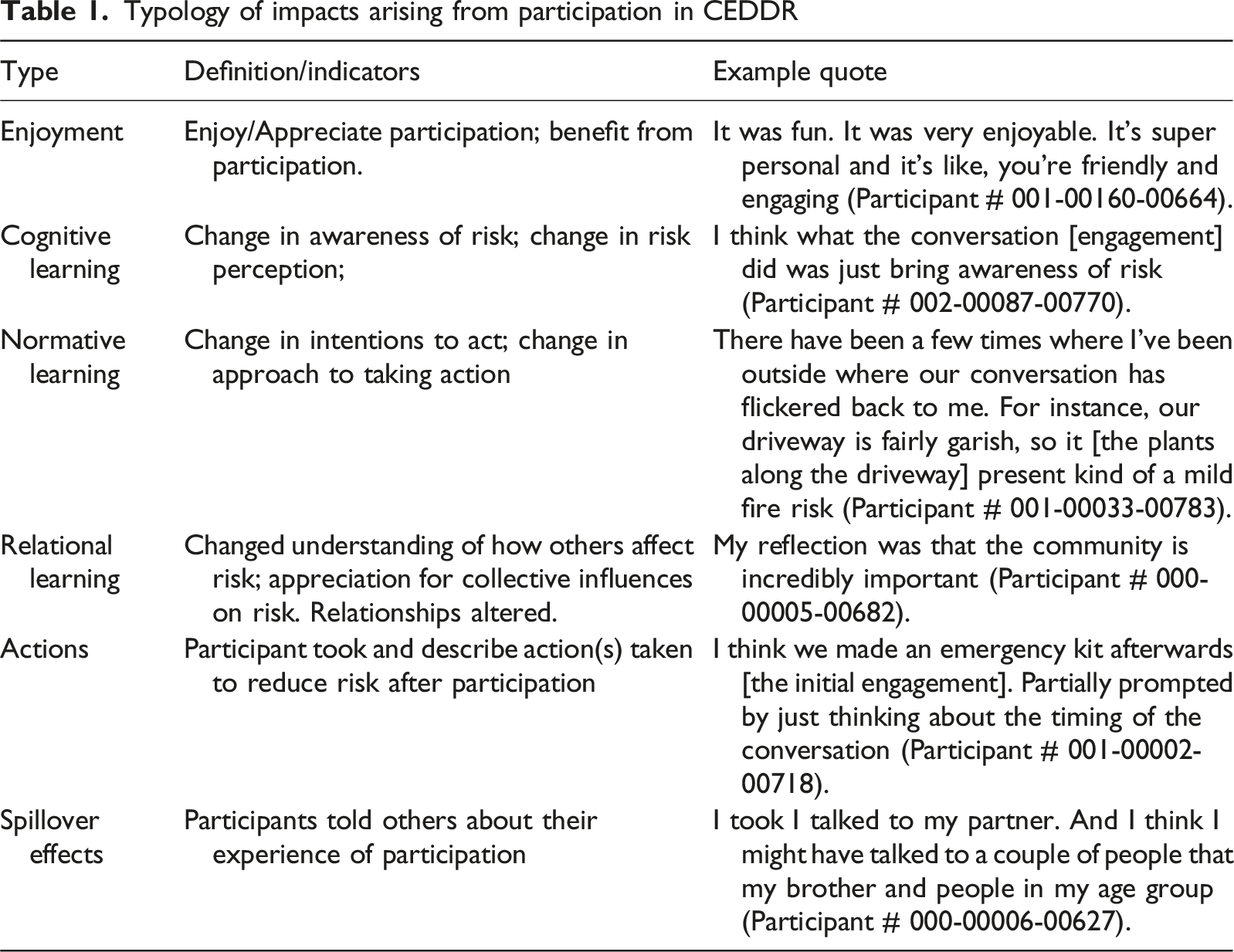
Typology of impacts arising from participation in CEDDR
More practically, relationship building is crucial for cultivating genuine interest in participating in the follow-up engagement that is conducted approximately 6 months after the initial engagement where we can assess the impact of participation (Fetters & Molina-Azorin, 2020). This timeframe was selected to allow sufficient opportunity for impacts to develop across seasonal variations, while remaining proximal enough to avoid recall decay. We offer below a detailed presentation of our CE-MMR approach, which emphasizes impacts as the basis of what has been termed an “All Hazards Approach” to CER by the United Nations Office for Disaster Risk Reduction (United Nations, 2016). This means that as part of our dialogue concerning participants’ experiences of flood risk, our CE-MMR approach is open to different risk scenarios and discussions of hazards that are important to participants. We consider the management of relational risks to be more effective than, for example, targeting one isolated environmental hazard (i.e., flooding or bushfire) when conducting engagements. As an example, our earlier research found that senior citizens who participated in engagements also benefited in terms of “ageing well” (Cook et al., 2022). In the following section, we detail CEDRR’s research design to situate our approach within established CE-MMR standards.
Research Design
CEDRR was built around a qualitatively driven convergent research design (Garcia & Ramirez, 2021), which aligned with the value placed on social impact in CE-MMR (Molina-Azorin & Fetters, 2019). In traditional convergent designs, quantitative and qualitative data are collected simultaneously, analyzed separately, and merged at the interpretation stage (Creswell & Plano Clark, 2017). While the hybrid engagements collected both survey (quantitative) and interview (qualitative) data (Edmeades et al., 2010), this qualitatively driven convergent research design intentionally prioritized participants’ qualitative narratives. The analysis presented focused particularly on participants’ qualitative accounts of actions taken and the spillover effects they described during follow-up engagements. By foregrounding participants’ own accounts of the actions they undertook following the initial engagement and the ways in which they communicated their learning to others, this study ensured that the scope and significance of impact were interpreted through participants’ lived reflections rather than imposed evaluative criteria (Garcia & Ramirez, 2021).
A GIS-based joint display (ArcGIS Pro) was used to integrate the data streams while accounting for spatial context and temporal sequencing (Fetters & Guetterman, 2021). This joint display brought together three sources of information: baseline quantitative and qualitative data from the initial engagement, quantitative and qualitative impact data from the follow-up engagement, and independently modeled flood risk exposure data. By spatially overlaying participants’ follow-up impact narratives with their baseline profiles and the mapped flood risk zones, the joint display allowed each dataset to reinterpret and contextualize the others, generating insights that would not emerge from analyzing each phase separately (Johnson et al., 2019). In this study, no integration occurred within the initial engagement phase itself; instead, all data were integrated exclusively in a joint display, where initial engagement data were integrated with follow-up impact data and flood risk exposure information (see Figure 3).
Phases of a Novel Mixed Methods Research Approach to Relationship Building
Sampling
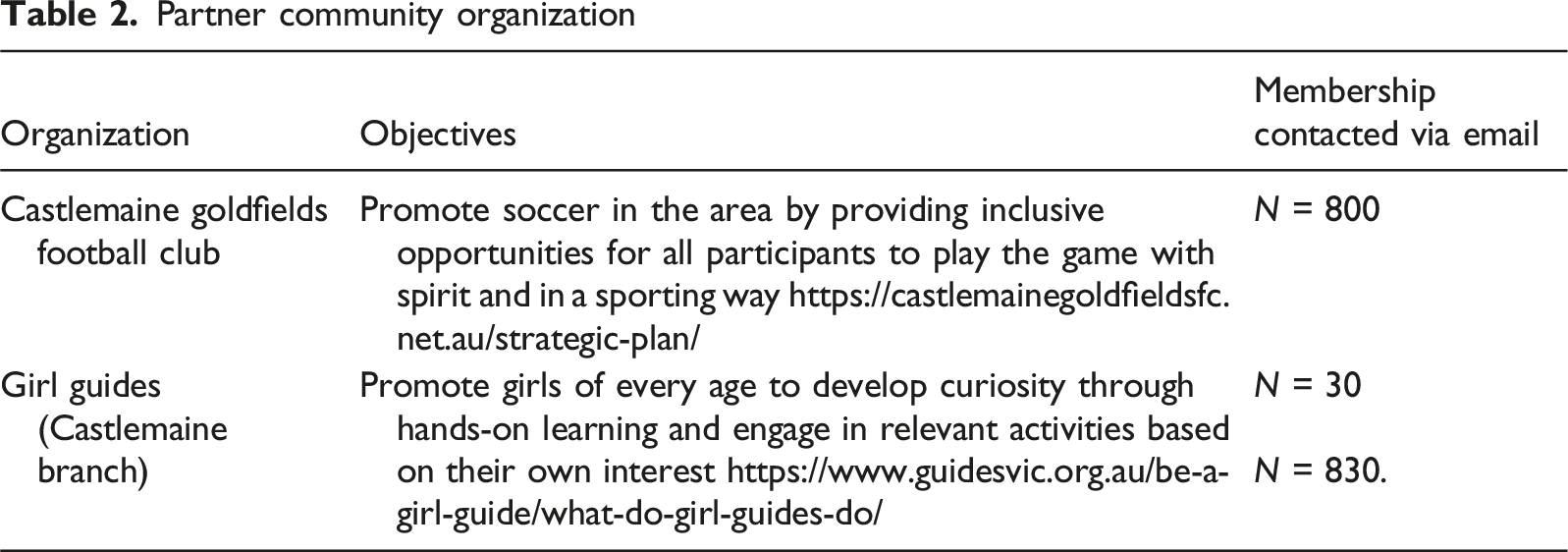
To generate a sample population for engagement, Phase 1 involved partnership development (Israel et al., 1998) by inviting community organizations in the case study area to participate in CEDRR. Once a community organization agreed, the CEDRR team introduced the project to members at community events and designated a representative to act as a focal point for the partnership. Previous CE-MMR has shown that it is important to spend time with a community organization to help establish trust (Caldwell et al., 2015). A project manager who was either the president or secretary of the community organization then invited their members to participate by emailing them an online sign-up form created using Qualtrics. This process encouraged community organizations to act as intermediaries, choosing to recruit participants on behalf of the research team with the aim of raising funds for their organization. During this process, potential participants were informed that partner organizations—not individuals—would be compensated AU$25 for each completed initial engagement and an additional AU$25 for each completed follow-up engagement.
Typically, universities prefer that participants be compensated using pre-approved and pre-paid credit card distributors. However, these cards are often costly to produce, cumbersome to distribute at scale, and restricted where they can be used. Such constraints could undermine relationship building and run counter to the goal of sharing power (Caldwell et al., 2015; Wallerstein et al., 2019), particularly by limiting organizations’ ability to allocate funds according to their own priorities. To overcome university bureaucracy while equitably compensating participants, the research team received a cash advance so that an appropriate invoice could be requested from partner organizations for the amounts raised. Funds were then deposited directly into the partner organization’s bank account during Phase 4 after initial engagements were completed (see below). The hypothesis underlying this method of fundraising and participant elicitation was that individuals invited by a known community organization—combined with the opportunity to fundraise for that organization—may be more likely to participate, engage meaningfully with the topic, and experience beneficial impacts.
Phase 2 involved the research team contacting individuals registered via partner organizations to schedule a convenient time for the initial engagement. Offering flexible scheduling gave participants control over if, when, and how they chose to engage (Caldwell et al., 2015; Wallerstein et al., 2019), which served as an additional mechanism for relationship building prior to engagement. As part of this commitment, researchers underwent training that included practicing an enjoyable and reciprocal dialogic style of engagement that prioritized critical self-reflection over risk education (i.e., a deficit model). This process helped researchers refine patience, humility, curiosity, and active listening skills before engaging participants (Kammoora et al., 2024).
Data Collection
Once a convenient time and preferred method of engagement were agreed upon (e.g. phone, Zoom, or Microsoft Teams), Phase 3 consisted of a dialogic 30-minute initial engagement designed to build a relationship with participants. Although these engagements were not intended to be educative, they provided a structured setting for the systematic collection of both quantitative and qualitative data used to construct a participant-specific baseline risk profile. Quantitative data were collected through structured survey questions administered during the initial engagement. These items captured participants’ prior experiences of flood risk, perceptions of household-level flood exposure, and baseline propensity to undertake risk reduction actions. Participants selected responses from predefined categorical lists, which had been iteratively refined through earlier engagements. Additional quantitative measures included five-point Likert-scale items assessing, for example, the level of effort participants reported having already invested in household risk reduction activities. Demographic information was also collected to support contextual interpretation of the findings. Collectively, these quantitative survey responses established the baseline risk profile against which impacts identified during the follow-up engagements were assessed.
Qualitative data was collected concurrently through open-ended prompts embedded within the survey responses during the initial engagement. These qualitative responses included narrative accounts of participants’ past flood experiences, explanations of why particular risk reduction actions had or had not been taken, and reflections on household and contextual constraints shaping decision-making. These narratives were used to deepen and contextualize the quantitative survey responses, ensuring that baseline risk profiles of each participant reflected not only reported behaviors and perceptions but also the lived experiences and reasoning underlying them (Fetters & Molina-Azorin, 2017). In this way, CEDRR aimed to contribute to interventionist mixed methods traditions (Fetters & Molina-Azorin, 2020) a longitudinal CE-MMR approach that is capable of capturing nuanced, participant-level change over time by contrasting mixed methods baseline risk profiles collected during the initial engagements with qualitative impact narratives collected during follow-up engagements.
Engagements were transcribed in real time using Otter.AI. At the conclusion of each engagement, participants were sent risk reduction resources via a “thank you” email, which also reminded them of the follow-up engagement scheduled 6 months later (Appendix 1). After participation, AU$25 per completed initial engagement was tallied, and fundraising totals were presented to partner organizations during Phase 4. This in-person event provided an additional opportunity to sustain partnerships and encourage follow-up participation (Israel et al., 1998).
During Phase 5, participants were invited to reconnect for a follow-up engagement. Where possible, researchers and participants were re-matched. Follow-up engagements were conducted over approximately 10 minutes and were structured to systematically capture both quantitative indicators of impact and qualitative explanations of those impacts. Participants were first asked to rate how enjoyable they perceived the initial engagement to be using a five-point Likert-scale item ranging from “not enjoyable at all” to “extremely enjoyable.” This provided a standardized quantitative measure of engagement experience that could be compared across participants and analytically examined in relation to impacts.
Participants were then asked a series of closed-ended yes/no questions designed to identify key impact domains. Specifically, they were asked: (1) Did you learn anything from the conversation? (2) Since the conversation, did you take any actions to mitigate risk at your home? (3) Did you speak with anyone about the conversation?’ These dichotomous responses generated quantifiable indicators of learning, behavior change, and spillover effects at the participant level. Each closed-ended question was immediately followed by an open-ended qualitative prompt to elicit descriptive detail. For example, participants who indicated that they had learned something new were asked to describe what they had learned and how it differed from their prior understanding. Those who reported taking action were asked to specify what action they had taken and what motivated the decision. Participants who reported speaking to others were asked to identify whom they spoke to (e.g., family members, neighbors, and community groups), what was discussed, and whether they were aware of any resulting actions. This structured sequencing (quantitative indicator followed by qualitative elaboration) allowed the follow-up engagements to produce measurable outcome variables while simultaneously capturing the contextual reasoning, content, and mechanisms underlying reported impacts (Figure 1). Phases of community engagement for disaster risk reduction (CEDRR)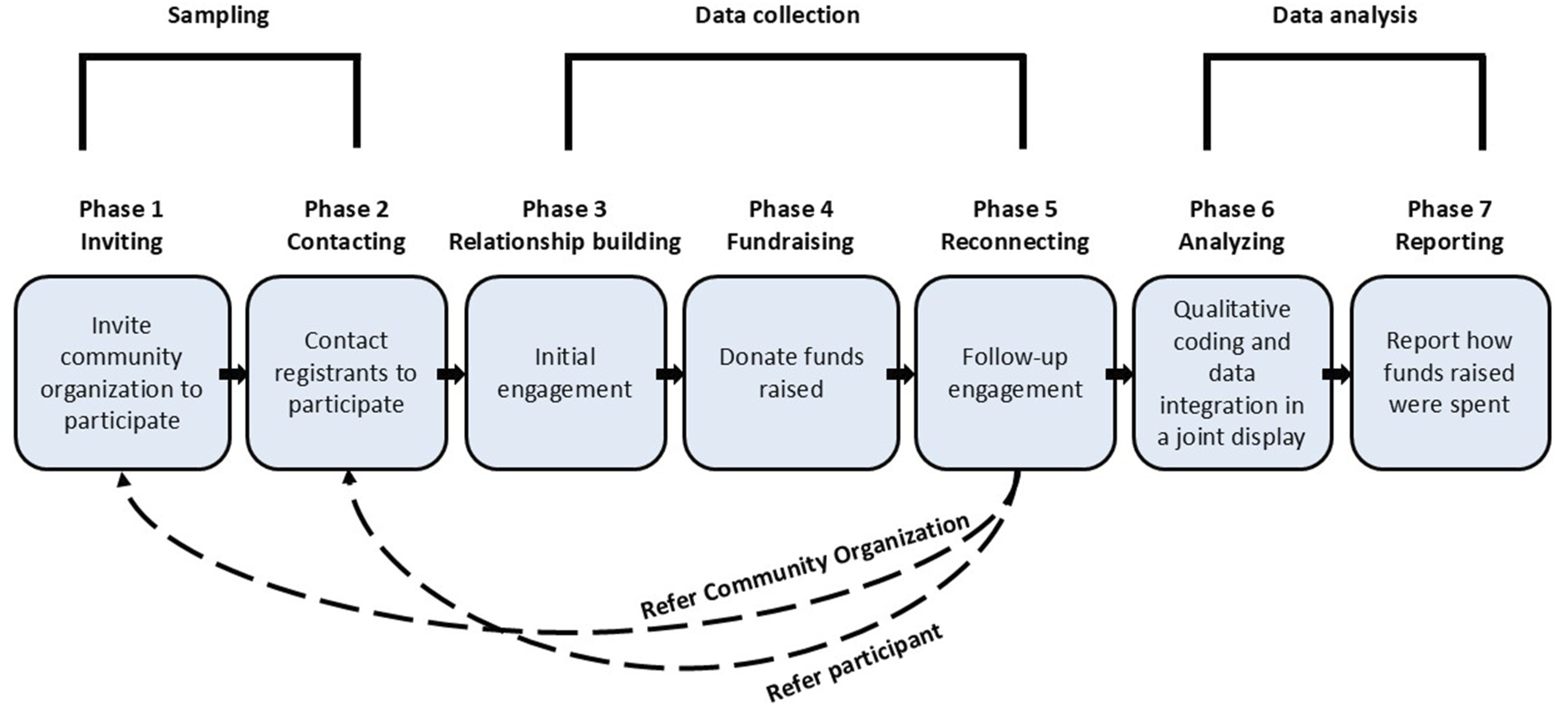
Lastly, participants were asked whether they wished to refer others or introduce new organizations. These processes reflected the project’s commitment to inclusivity. If participants introduced the research team to another individual or organization, we made contact and sent an online expression of interest form, repeating the processes from Phase 1 and 2, depending on whether the research team needed to engage a community organization (Phase 1) or an individual (Phase 2).
Data Analysis
Phase 6 involved analyzing the quantitative and qualitative data collected during the follow-up engagement to assess participant-level impacts. The analytic sequence began with examination of quantitative enjoyment ratings and related qualitative descriptions, which were descriptively summarized and used as an initial organizing variable. This was followed by deductive coding of qualitative follow-up transcripts to the adapted learning framework (cognitive, normative, and relational learning). Subsequent analysis involved inductive coding of reported household actions and spillover effects, allowing behavioral uptake and diffusion patterns to emerge from the data. The final stage integrated participants’ baseline risk profile with these quantitative indicators and flood risk exposure data within a participant-level joint display.
Quantitative data included a five-point Likert-scale measure of how enjoyable participants found the initial engagement, which provided a standardized indicator of engagement experience. Qualitative data were analyzed alongside this measure to examine how participants described what they found enjoyable or valuable, thereby identifying the relational, procedural, and contextual dimensions underpinning their ratings. Rather than treating enjoyment as a simple satisfaction outcome, the analysis positioned it as a potential enabling condition within the engagement process. Enjoyment ratings were first summarized descriptively and then used analytically to contrast variation in subsequent outcomes, including types of learning, reported household risk reduction actions, and spillover effects. By examining quantitative ratings in conjunction with qualitative explanations and outcome narratives, the analysis assessed whether and how positive engagement experiences were associated with differences in impact.
To analyze learning outcomes, this study adapted Baird et al. (2014) conceptual framework of learning to the context of household risk reduction. This framework conceptualizes learning across three domains: cognitive learning, defined as the acquisition of new knowledge or the re-evaluation of existing risk knowledge; normative learning, defined as changes in how participants approached or prioritized risk reduction practices; and relational learning, defined as changes in participants’ understanding of how communities, authorities, or other actors influence household risk reduction (Cook et al., 2024). Intercoder reliability procedures were employed to strengthen the analysis of learning outcomes derived from the follow-up transcripts (O’Connor & Joffe, 2020). Learning expressions were deductively coded against the adapted learning framework. To establish coding consistency, an initial subset of 20 follow-up transcripts was independently coded in NVivo (QSR International) by three members of the research team (PK, RK, and KP). This process was intentionally designed to surface divergent interpretations of learning expressions and boundary cases across the three learning domains. Coding differences were discussed collectively, leading to refinement and agreement on code definitions and inclusion criteria. To further enhance consistency and transparency, exemplar quotations for each learning domain were compiled and reviewed with the project lead and co-author (BC), resulting in an agreed codebook that guided subsequent deductive coding (Table 1).
This was followed by an inductive analysis of the types of actions participants reported undertaking after the initial engagement. Actions were coded without predetermined categories, allowing patterns and classifications of behavioral uptake to emerge directly from the data. This approach enabled the analysis to examine how engagement experiences(i.e., enjoyment) and different forms of learning were associated with varied trajectories of behavior change, consistent with interventionist mixed methods designs (Fetters & Molina-Azorin, 2020). Spillover effects were analyzed through a parallel inductive coding process focused on participants’ descriptions of sharing information or experiences with others. Follow-up transcripts were coded for whether participants reported discussing risk reduction with neighbors, friends, family members, or other social contacts, and for whom these exchanges occurred. These codes captured the social pathways through which engagement impacts extended beyond direct participants or diffused into non-targeted contexts.
Collectively, Phase 6 generated a mixed methods typology of impact (Table 1) by systematically integrating quantitative indicators and qualitative themes across enjoyment, learning, behavioral uptake, and spillover domains. The typology was constructed by aligning deductively coded learning outcomes, inductively derived action and diffusion patterns, and quantitative measures of engagement experience within a participant-level analytic framework. This enabled impacts to be classified not merely by their presence, but by their type, depth, and relational reach. By synthesizing these data streams, the typology distinguishes between experiential impacts (e.g., enjoyment and reflection), cognitive and normative shifts in risk understanding, tangible household-level actions, and broader social diffusion effects. In doing so, it provides an empirically grounded schema for identifying how engagement experiences translate into varying forms and scales of impact, making participant-level change analytically tractable within a longitudinal CE-MMR design.
Integrating Longitudinal Data in a Joint Display
Consistent with interventionist mixed methods designs (Fetters & Molina-Azorin, 2020), integration occurred at the interpretation and analysis stage through the construction of a participant-level joint display. Specifically, impacts reported during the follow-up engagement (quantitatively rated enjoyment; deductively coded learning; inductively coded actions and spillovers) were systematically linked to each participant’s baseline profile derived from the initial engagement. This reflects integration at the case level, where multiple data types were combined within an individual household analytic unit (Fetters et al., 2013; Guetterman et al., 2015). This method of integrating longitudinal data aligns with recent calls in the Journal of Mixed Methods Research to make analytic integration procedures transparent and traceable (Fetters & Molina-Azorin, 2017).
The joint display functioned as an analytic matrix in which each case or household would represent the following: (1) baseline quantitative indicators, (2) baseline qualitative contextual narratives, (3) follow-up quantitative outcomes, and (4) follow-up qualitative impacts. This structure enabled direct comparison across time within each case and systematic comparison across cases. Rather than treating pre- and post-engagement data as independent phases, the joint display operationalized longitudinal integration by explicitly linking reported impacts to pre-existing conditions. In doing so, this process addressed what Plano Clark (2019) describes as integration for explanation or using one dataset to reinterpret and contextualize another, while also enabling expansion by examining new outcome dimensions (e.g., spillover effects).
The second layer of integration occurred through geospatial embedding. The participant-level joint display was imported into ArcGIS Pro and spatially linked to objectively modeled flood risk exposure (1% AEP zones). This constituted integration across methodological traditions; qualitative narrative data, structured survey indicators, and externally generated spatial hazard modeling within a single analytic frame. By spatially mapping baseline profiles and follow-up impacts onto flood risk surfaces, we were able to examine whether learning, action, and spillover effects varied according to modeled exposure. This aligns with recent mixed methods guidance emphasizing the value of joint displays that incorporate contextual or environmental data to support meta-inferences that would not emerge from parallel analyses (Bazeley, 2024; Guetterman et al., 2015).
Importantly, integration moved beyond visual juxtaposition, with grounded visualization techniques (Knigge & Cope, 2006) allowing the joint display to be used iteratively to infer, for example, whether participants with modeled exposure but low baseline preparedness experienced different change trajectories than those with low exposure but higher preparedness. This analytical use of the joint display reflects what Fetters and Molina-Azorin (2017) describe as integration for theory development and refinement, as each data stream was used to reinterpret the others. Lastly, Phase 7 asked partners to report how the funds donated were spent. Measuring which impacts contribute to effective community-engaged research is essential for ensuring sustainable outcomes (Ward et al., 2018). To support this, we ask partners to articulate these impacts in their own words and use their accounts as empirical evidence and ground truthing of how funds were used and whether or not participation was perceived as beneficial (Caldwell et al., 2015).
Applying Community Engagement for Disaster Risk Reduction to a Case Study
Partner community organization
To determine whether participant households are at risk of flooding, we overlaid home addresses of participants with quantitative property-level flood data provided by the North Central Catchment Management Authority (Figure 2). Here, flood risk is defined as the risk of flooding during the “100-year” flood event or the flood that has a 1% chance of occurring in any given year. This metric is known as the 1% AEP (Annual Exceedance Probability) and is used in the United States (Wobus et al., 2017) and Australia (Lam et al., 2017) to inform flood risk planning, risk management, and land use planning. Location of case study site (black outline) and properties surrounding the case study site projected to be impacted by riverine flooding during the 1% AEP flood event (blue areas)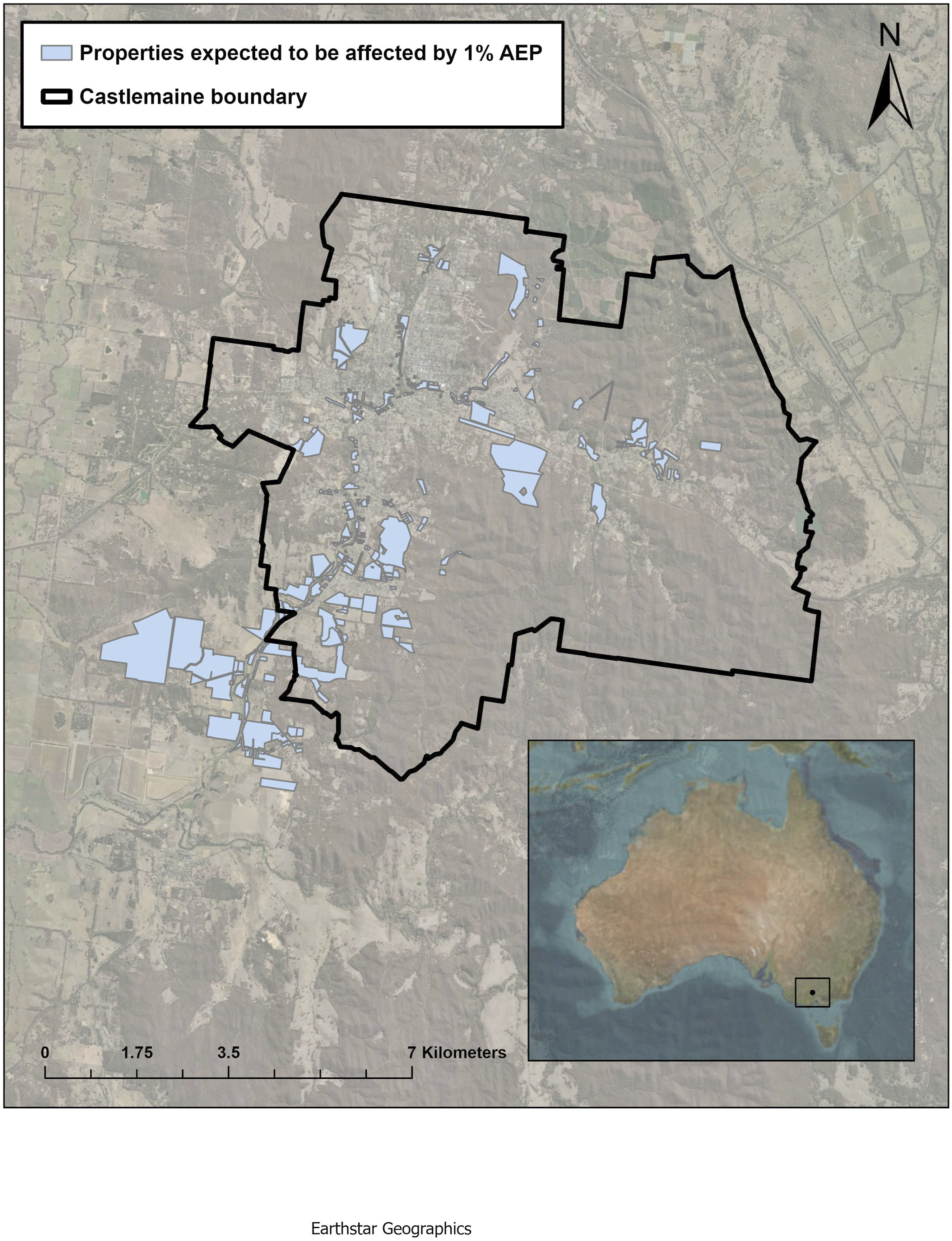
The North Central Catchment Management Authority produces flood modeling by combining multiple data sources, including LiDAR-derived topography, historical flood records dating back to the 1890s, and the Australian Rainfall and Runoff guidelines. These datasets feed into hydraulic models that simulate flood behavior and estimate risk across the 1% AEP (North Central Catchment Management Authority, 2020). Household-level flood risk information is accessible through the North Central Catchment Management Authority’s online Flood Eye tool, which was used as a visual aid during the initial engagements to discuss whether a participant’s property may be exposed to flood risk.
Results
The results begin with participants’ demographic characteristics, followed by a brief analysis of the 111 initial engagements. The subsequent, more substantive section provides a qualitative analysis of the 88 follow-up engagements, assessing beneficial impacts in terms of whether participants enjoyed the engagement, learned something, or took new actions to reduce household risk. We also examine whether these impacts spilled over to others or to different hazard contexts. Building on this, we then develop a spatially integrated joint display (Figure 3) that overlays each participant’s mixed baseline profile and qualitative follow-up impacts overtop quantitative flood risk modeling. Each red circle represents the location of qualitative actions taken by households to mitigate flood risk. The black squares represent the location of households who communicated a low quantitative perception of risk during the initial engagement. The blue circles represent the location of households who have experienced flash flooding in the past and the light blue areas represent the locations that are expected to be affected by a 1% AEP flood event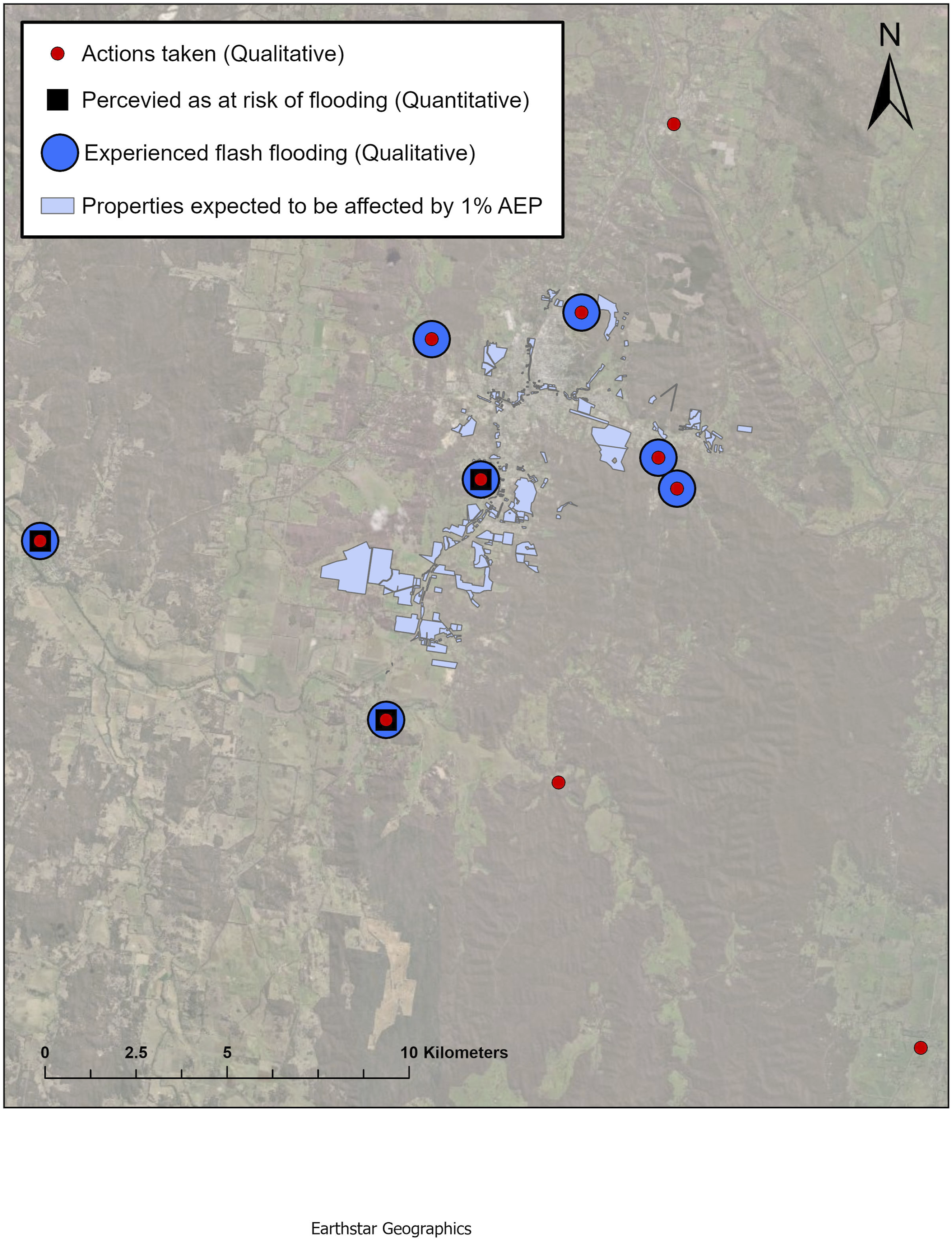
Demographics
Of the 830 Football Club and Girl Guide members who received an email invitation to participate, 111 (13%) completed an initial engagement. Most participants (n = 65) identified as female (59%) and the remaining 46 (41%) identified as male. Most participants (81%) were aged between 35 and 54 (n = 90), while an additional 6 (5%) were aged between 18 and 34 years and the remaining 14% aged over 55 (n = 15). Combined annual household income ranged throughout the sample, with most (26%) households (n = 29) earning between $120,000 and 180,000 AUD, followed by 22 households (20%) earning between $45,000 and 90,000, 20 households (18%) earning between $90,000 and 120,000, 19 households (17%) earning between $180,000 and 250,000, and the remaining 15 households earning either over $250,000 (n = 10) or under $45,000 (n = 5).
Most participants (n = 104 or 94%) owned their current home, with an additional 6 (5%) renting their current residence and one (1%) household sub-letting their current residence. Households were mainly composed of partners with dependents (n = 84 or 76%) and singles with dependents (n = 13 or 12%), mainly due to participants being members of youth organizations. Other household compositions were multigenerational (n = 6 or 5%), living with just a with partner (n = 4 or 4%), living alone (n = 1 or 1%), living in a share house (n = 1 or 1%), or other circumstances (n = 2 or 2%). Most participants were born in Australia (n = 88 or 79%), followed by being born in the United Kingdom (n = 13 or 12%). Other nationalities included Canada (n = 2 or 2%), Sweden, New Zealand, Germany, Papua New Guinea, Philippines, the United States of America, and Thailand.
Initial Engagement Results
Quantitative data shows the majority (79%) of participants did not perceive their household to be at risk of flooding (n = 88). This is unsurprising, given only one participant’s house was considered at risk of flooding during the 1% AEP. Interestingly, despite these low perceptions of household flood risk, 83% of participants had experienced a household flood event (n = 92). Of those who had experienced household flooding, the most frequent cause was flash flooding (n = 55 or 50%), followed by poor drainage (n = 32 or 29%), riverine flooding (n = 31 or 28%), and overflowing gutters (n = 21 or 19%). When asked if they had taken action to reduce flood risk, more than half (51%) had already taken action (n = 57), 46 had not acted (41%), and 9 (8%) were unaware if they had acted.
Qualitative past flood risk reduction actions commonly included “cleaning the gutters” and extending a “downpipe” in the hopes of preventing gutter “overflow,” or “moving” rainwater away from the house, as demonstrated in the quotes below: “Because we know that if we don't clean the gutters out then they're going to overflow and we also know that the garage gets flooded” (Participant # 002-00065-00024). “And we've had to expand our downpipe so that water could move. It wasn't quite right. And we've got that fixed” (Participant # 002-00013-00001).
Participant’s qualitative descriptions also pointed to unexpected flood risk reduction attitudes. For example, one participant described their frequent “landscaping” efforts, including the “digging of trenches” to “drain” or “divert” water from their homes as an ongoing, but not necessarily stressful, activity: “We've done that on purpose from a landscaping point of view. We have trenches around the house. We have trenches in our garden. So in this most recent flood event, we did go out and just dig a few more trenches. We're quite used to doing that. It just, sort of, to drain water away from the house” (Participant # 001-00042-00093).
In some cases, participants identified undertaking major flood risk reduction actions that reshaped their risk profile in ways not accounted for in larger flood risk assessments. For example, one participant had purposely “elevated” their house to prevent flood damage: “When we built the house, we built it on stumps, so it's extra elevated” (Participant # 001-00039-00058).
The actions demonstrated in the qualitative data are not currently accounted for in quantitative flood risk assessments. Instead, quantitative flood risk modeling determines whether a house is “at risk” or not, even if in some cases houses have been elevated above flood levels.
Baseline Risk Profile
When quantitative survey responses are combined with qualitative accounts of actions taken to create a baseline risk profile, a clear pattern emerges. Despite most participants not perceiving their household to be at risk of flooding (n = 88 or 79%) and only one household falling within the 1% AEP flood risk zone, more than half (n = 57 or 51%) had already taken some action to reduce household flood risk prior to engagement. This demonstrates that citizens are not “blank slates” but make decisions to reduce risk based on a complex, non-linear interplay between their perceptions, prior experiences, and other contextual factors. It also indicates that the limited effectiveness of one-way flood risk awareness campaigns stems, in part, from conventional risk management approaches overlooking participants’ relational experiences, capacities, and individualized risk reduction pathways.
Follow-Up Engagement Results
Nearly 80% of participants who completed the initial engagement participated in a follow-up engagement (n = 88). The sections below demonstrate the impacts of this CE-MMR case study, in addition to impacts that spilled over to non-participants or to other hazard contexts.
Was Participation Enjoyable?
Quantitative data shows participation in follow-up engagements seems to be associated with “enjoying” the initial engagement. Nearly all (n = 86 or 98%) those who participated in a follow-up engagement reported the initial engagement as “enjoyable.” When asked what they enjoyed, participants discussed several qualitative factors ranging from personal to the methodological. For example, one participant identified that they enjoyed CEDRR’s “conversational” method of engagement, which provided “time to consider what they think they should do instead of being told what to do”: “I liked that [initial engagement]. It was just talking to people and just saying, you know, have you considered this, have you considered that, rather than obviously, I'm not criticizing the Country Fire Authority (CFA) in any way. They and I completely understand why they are because they're on the frontline and they're dealing with the fires when they happen. But they're a bit like 'do this, do this, do this' rather than actually just saying, you know, have you considered these things? You know, it's a bit aggressive as opposed to being what's the word? Yeah, just like having a conversation” (Participant # 001-00035-00624).
Several participants noted that they experienced positive feelings of affect within this reflective and conversational method of engagement, as opposed to the one-way messaging that they normally experience from local risk authorities (i.e., CFA).
After reflecting for a moment, another participant described having enjoyed feeling more “equipped” to cope with future emergency situations: “I suppose we just [pause]. We just don't [pause]. We didn't reflect too much about it. And it made me feel quite equipped for being able to cope with, you know, any emergency” (Participant # 002-00047-00755).
The dialogic engagements facilitated in this study show that reflection-driven capacity building emerges not from the uptake of expert advice, but from participants’ own assessment of their past behaviors and their perceived need for DRR. Through this process, participants are encouraged to determine for themselves whether a problem exists that requires attention. If they do identify a need to act, they are then able to decide how, when, and whether to act based on their real-time self-assessment of risk developed during these engagements.
Participants’ enjoyment also appeared to be related to the fundraising methodology of CEDRR. For example, eight participants highlighted that they enjoyed having the ability to help fundraise for their children’s soccer club: “If you were just putting an ad in the paper describing what you were doing, I would see that in the paper and not really take action, because you've come to me via my son's soccer club, and I want to support the club as much as possible” (Participant # 002-00036-00687).
These findings demonstrate that a relationship-building approach to CER that does not “tell people what to do” and instead provides time for critical reflection is perceived to be enjoyable and, in some cases, “equips” participants to cope with future disasters (i.e., build resilience). These findings also suggest that eliciting participants via their membership in local youth community organizations is a feasible recruitment strategy that not only develops new partnerships between communities and researchers but allows for fundraising opportunities that are perceived as enjoyable and mutually beneficial.
Did Participants Learn Anything?
The opportunity to discuss and reflect on personal risk perceptions and experiences appeared to generate learning among participants. Six months following participation in the initial engagement, qualitative coding shows that more than half (56%) of participants (n = 50) reported learning something as a result of the engagement, with one-third (n = 29 or 33%) not learning anything, and 9 (10%) unsure about whether they had learned anything. Qualitative examples of such cognitive learning include participants becoming more aware of the “pre-emptive” actions that can be taken “ahead of time” to reduce risk, and a sense of “control” over household risk reduction: “It [the engagement] has [changed my awareness], in that I'm now more aware of the pre-emptive sort of things that I can do ahead of time that before I had always felt that a lot of things were out of my control” (Participant # 002-00036-00687).
Cognitive change, in the form of “changed awareness” provides evidence of how reflection can ground participants within their relational contexts of risk and, in some cases, provide a previously overlooked pathway towards action. Such cognitive impacts also led to change in the form of normative learning, as a learning experience that includes a re-evaluation of oneself or a risk context. For example, some participants described how the engagement “prompted” re-evaluation of their personal capacity as an “active participant” in risk reduction processes: “I think that the conversation [i.e., engagement] prompted me to, I guess, consider myself as an active sort of participant in risk reduction and not just sort of thinking, you know, idly going about my business, sort of, not being able to kind of enact change on that [risk]” (Participant # 002-00155-00719).
Other examples of normative learning included re-evaluations about the timing or urgency of risk reduction action. For example, one participant mentioned that the engagement had accelerated their intentions to “act,” rather than delaying action indefinitely or to “a couple of years”: “I think I tend for my intentions to look at this in a couple of years. Instead of which my intentions became to act rather than just think about or consider risk” (Participant # 000-00031-00673).
Normative change in the form of participants’ re-evaluating their previous practices, including “when” they should act, is further evidence of learning that can result from a dialogic and reflective method of engagement. Reflection leading to motivation to “act” is an important step along a risk reduction journey that is currently overlooked in deficit-based forms of engagement.
Finally, participants reported relational learning outcomes or learning that affected their capacity to relate to others in regard to DRR. For example, one participant described re-evaluating risk as a collective or “community” phenomenon rather than an “individualized” one: “I think because before that conversation [i.e., engagement] or the way I interpreted the research interest, I was thinking of it on a community level. And then some of the questions were very much about an individual level” (Participant # 000-00006-00627).
One participant described becoming less “likely to assume someone else” is responsible for managing their household flood risk, leading them to accept the need to do their “own research” and learn how to reduce their own risk: “I'm probably less likely to assume someone else's thought of it or someone else can handle it [flood risk] and probably will do my own research” (Participant # 002-00078-00665).
Unlike cognitive or normative learning, relational learning manifests in changed perceptions of relations. Collectively, these different forms of learning-impacts illustrate how the CEDRR methodology enables participants to reposition themselves within their individual and collective contexts after a period of structured reflection. Through this process, participants become better equipped to identify meaningful opportunities for reducing risk at both personal and community scales, demonstrating the wider capacity-building effects of CEDRR.
Did Participants Take Action?
The primary aim of this research was to measure how CE-MMR impacts risk reduction action at the household scale. After asking if participants had taken a new risk reduction action since the initial engagement, the qualitative coding of actions taken show that 40 (45%) participants who completed the follow-up engagement had taken a new action after participating in the initial engagement. To better situate the participants who took action, we compared those who acted with whether or not they reported learning anything. Of the 40 participants who took action, 23 (58%) reported cognitive learning compared with 30 of the participants who acted expressing normative learning. Further, only 4 participants who took action reported no learning. This suggests that learning via reflection is an important lever that can support behavior change, which is currently lacking in DRR research (Singh, 2024).
For many participants, qualitative data shows that simple actions that helped prepare for a wide range of risks were common. For example, many participants discussed or developed emergency plans in preparation for extreme “weather events”: “We [as a family] kind of discussed if something [climate emergency] was happening, and one of you got, you know, caught on the other side of weather events. What do you do? Where would you go?” (Participant # 002-00009-00724)
Other participants took more direct action to address specific household flood risks such cleaning or repairing their gutters. One individual took the initiative to replace their home’s entire guttering, identifying that supposed “professionals” may not have the context-specific understanding that household members do about highly localized flood risks: “Well, the gutters have all been changed. Yeah. The gutters were in the state of poor repair. So they're all brand new gutters around the house, and I did them myself this time, because the so called professionals which are plumbers nevertheless allowed to run at an angle too slow to drain” (Participant # 02-00015-00756).
In other cases, action was taken to enroll or collaborate with external actors to reduce risk. The participant below worked with tradespeople to change the drainage profile of their property by “redoing the rougher surfaces” to reduce the “impact” of “extreme water” [rain] events: “We have taken steps to, although it hasn't been completed by the tradespeople yet, to get outside and have our rougher surfaces redone so that water events are not quite so impactful” (Participant # 002-00109-00681).
The qualitative responses of participants also revealed how many flood risk reduction actions also served All hazard risk reduction. For example, accessing support around “alternative energy” services led one participant to move essential appliances to “less vulnerable” locations: “And so the steps I’ve taken have been to look at alternative energy supply: so it's my gas, hot water and my gas heating, looking at using some of the government rebates that are available to move those appliances, one to electricity, but also in terms of a location where they are less vulnerable” (Participant # 002-00036-00687).
What is interesting about the actions described by participants is that only 3 of the 10 participants who took action (30%) to reduce household flood risk perceived their household to be at risk of flooding. This is compared with 7 (n = 70%) of those participants having experienced a flash flooding event. This suggests that past experiences of risk (e.g., flash flooding) may be a better predictor of risk behavior change than risk perception (Figure 3).
Participants also discussed a range of longer-term impacts resulting from the engagement, even if engagements did not lead to action on current homes. One participant discussed reviewing and changing their insurance providers, as part of a wider approach for planning for floods and other “problems in the future”: “So I reviewed my insurance policy and actually changed provider to include a better kind of comprehensive cover, and also did some minor kind of groundwork to sort of avoid sort of floods, problems in the future. Yeah, I did do a couple of things, actually” (Participant # 002-00155-00719).
These results demonstrate that a dialogic approach to community-engaged research leads to a wide array of immediate and longer-term actions at the household scale.
Did Impacts Spillover?
Follow-up engagements found that impacts do indeed spillover to non-participants and to other hazard contexts. Quantitative data shows that three quarters (75%) of participants (n = 66) reported telling others about the engagement, while 19 (22%) participants did not tell anyone, and 3 (3%) were unsure about whether they told anyone. Participants qualitatively described mainly speaking to family (n = 32 or 36%) about general household exposure to risk, as demonstrated below: “I had a discussion with my husband, but yeah, there was nothing super that we had to do. We just discussed if he felt that there was any risks and stuff within a house and area and stuff like that? Yeah. General conversations like that” (Participant # 001-00098-00619).
Participants also noted that discussing the engagement with others provided a useful opportunity to further “think about risk,” reflect on the emotions surrounding inaction, and set intentions to create “change”. “I just spoke [to my brother] about this research project and I said that it sounds like translational research. And I said that it was a really good moment to sit down and actually identify risk in my life and what I could do to kind of change some of what I was already doing, and what I can do to change my risk profile and also how guilty I was in terms of I hadn't done certain things” (Participant # 002-00030-00746).
The example above demonstrates how participation in CEDRR not only spilled over to others via participants’ conversations with family (potentially leading to risk reflection and actions in non-participants), but also how spilling over provides a further opportunity for participants to reflect on and take action to reduce risk for themselves.
Participants also described sharing their learning with neighbors, suggesting wider spillover impacts from participants to a diverse array of non-participants. These accounts demonstrate that dialogic community-engaged research can initiate a relational circulation of information within local communities and create collective opportunities to receive feedback from those who are likely exposed to similar risks: “It was more just the condition of my home and just in general conversation, sharing that with others who've been in the area, who might have similar risks, or, or have completely different houses, but also highlighting for them that their risks are different because of their houses” (Participant # 002-00036-00687).
It is interesting to note that the above participant’s approach to collective risk management mirrors the CEDRR methodology in attempting to initiate dialogue with neighbors to collaboratively learn about risk, instead of trying to tell people what to do.
Participants not only spoke to others within their immediate households or neighboring area, but also to other members of their relevant community organization or club (n = 5 or 6%). For example, participation in CEDRR prompted one participant to talk about risk reduction to their partner, other members of their soccer club, as well as other members of a local Landcare organization: “I spoke with my partner. Obviously spoke with various people at the soccer club, just because, you know, we were almost a bit of a trial so kind of had conversations with them about, you know, what it was and, you know, reflecting on kind of things I've talked about now. And then a couple of people in my Landcare organization as well” (Participant # 002-00037-00677).
Recorded spillover impacts also included conversations and actions in non-flood, or non-targeted hazard contexts. For example, one participant described speaking to their family and neighbors about the immediate risk that bushfire posed to their property: “I did talk to family and some of my neighbors about it… mainly around the fact that it sort of got me thinking about fire and it got me thinking about well, there's a major tree replanting project, just right next to it on our boundary… that basically increases the fire risk and then, of course, my insurance went up because it got us talking about living in a highly bushfire prone area” (Participant # 002-00068-00731).
Moreover, the following participant described collectively discussing emergency plans and kits with their household and out-of-home adult children, as a collective approach to preparing for bushfire risk: “That was definitely around bushfire because we didn't really have a flood risk. So yes, it was more about what we would do. Who would you know, what we would grab, and the cats, and also talking to kids about it. So just saying to them, maybe informing them. I think it was so that they will be ready for it as well. Yeah. So they would have to know what to do or they would know what things to grab and what to leave behind and all that” (Participant # 002-00113-00659).
Summary of impacts from participation in CEDRR
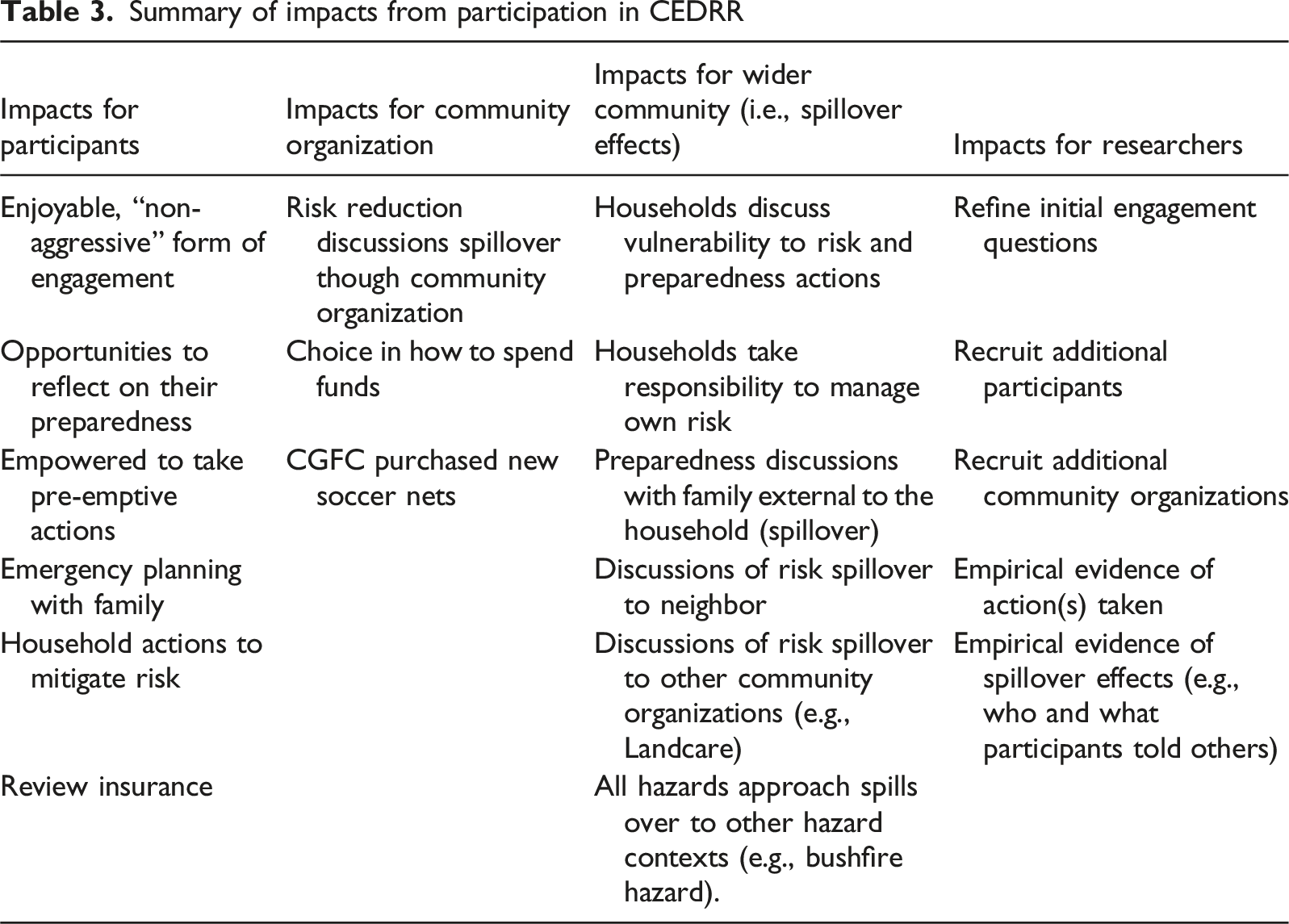
Table 3 was developed from the qualitative coding of follow-up transcripts and partner feedback rather than from quantitative frequency counts. While the quantitative data (e.g., Likert-scale ratings of enjoyment and yes/no indicators of learning, action, and spillover) established whether specific forms of impact occurred, the examples presented in Table 3 were drawn from the qualitative analysis of participants’ and partners’ narrative accounts. These qualitative data were coded deductively and inductively, then organized according to the multi-scalar impact framework proposed by Caldwell et al. (2015). Table 3 therefore serves as a structured synthesis of the types of impacts expressed, rather than a descriptive summary of their prevalence.
At the participant scale, impacts included valuing opportunities to reflect on their preparedness and subsequently undertaking new household risk reduction actions, such as reviewing their insurance coverage. At the community organization scale, impacts included organizational autonomy in allocating raised funds and tangible outcomes such as equipment purchases, as well as broader normalization of risk discussions within organizational networks. At the wider community scale, spillover effects included accounts of participants discussing preparedness with family members, neighbors, or other community groups, and in some cases extending discussions to other hazard contexts. At the researcher scale, impacts were documented through reflexive records and included refinement of engagement questions, recruitment of additional participants and organizations, and the generation of empirical evidence of behavioral action and diffusion. Thus, Table 3 functions as a visual summary that explicitly links empirically coded impacts to established CE-MMR domains. By organizing qualitative findings across Caldwell et al. (2015) framework, the table makes transparent how measured impacts align with, and contribute to, the broader CE-MMR literature.
Community Organizations Allocation of Funds Raised
Wider spillovers at the community, rather than individual, scale were measured by asking community organizations to report on how they used the funds raised by participation. A letter from the Castlemaine Goldfields Football Club secretary described the “significant benefits to the club and its membership (Appendix 2) that would result from the AU$4,000 raised through CEDRR”: “The $4,000 of received funding would be used towards the upgrade and replacement of 10 sets of junior training goals used in our Small Sided program. The program provides, an introduction to, football for kids aged 4-9. The program had 154 participants in the 2023 season. The upgrade goals will improve the future delivery of the program from 2024 onwards” (Participant # CGFC Secretary).
Wider collective impacts at the scale of the partnering community organization were prompted by tracing how the funds were used. Such an example demonstrates the possible sustainable and longer-term impacts of community-engaged research for partner organizations. For example, the Castlemaine Goldfields Football Club (CGFC) secretary discussed how the impacts of participating in CEDRR was beneficial for both the club and its members at both the organizational and individual scale: “It has also raised awareness and education to our membership, on the topic of risk reduction… The research interviews, our members took part in, provided an opportunity to reflect upon our attitudes and approaches to such risks and how we might be better prepared to face them now and in the future. For the club this was a particularly unique strategic community partnership with the University that has brought significant benefits to both the club and its membership as described” (Participant # CGFC Secretary).
While we await confirmation on how the Girl Guides spent their raised funds, the relational impacts on the CGFC evidenced above support that CEDRR’s relationship-building methodology provides long-term benefits to the communities it engages with. As evidenced above, sharing resources and power with community organizations will not only encourage the uptake of flood risk reduction actions at both the individual and collective scale, but support community-driven initiatives that foster more resilient communities long after the research project expires.
Discussion
Contribution to Disaster Risk Reduction
By partnering with two not-for-profit community organizations, we demonstrated the feasibility of conducting initial and follow-up engagements with 88 participants to assess impacts on household flood risk reduction and broader spillover effects. Although our case study focused on a single rural region and included relatively few participants living in flood-prone households, the follow-up engagement revealed beneficial impacts for participants. Over half of participants (n = 50 or 57%) reported learning-related benefits, 45% (n = 40) undertook some form of new household flood risk reduction action, and 75% (n = 66) engaged others in conversations about risk reduction, demonstrating notable spillover effects. The longitudinal structure of CEDRR enabled us to trace not only immediate impacts but also the emergence of spillover effects across social networks and hazard types (e.g., bushfire). This advances DRR by offering a rigorous CE-MMR approach that captures new actions, spillover effects, and the underlying change mechanisms (e.g., learning and enjoyment) within participants’ established risk contexts, rather than assuming they begin as “blank slates.” In doing so, CEDRR aims to contribute to interventionist studies in MMR that aim to enhance impact evaluation by linking mechanisms to context over time (Fetters & Molina-Azorin, 2020). In doing so, CEDRR introduces a robust, CE-MMR approach to impact assessment that extends to “All hazard” contexts within DRR. This approach illustrates why CER in the context of DRR should move beyond awareness-raising and deficit-based assumptions by examining how people actually interpret, share, and act on risk within their everyday networks.
These findings also echo emerging CE-MMR work demonstrating that relationship-centered, dialogic forms of CER can cultivate specific learning processes (Kakai, 2024; Mertens, 2024) that, as illustrated here, translate into tangible risk reduction actions. Importantly, the impacts measured during follow-up engagements are aligned with recommendations from the National Strategy for Disaster Resilience, which instructs people to “take action to anticipate disasters” by, for example, learning about the pre-emptive actions that they can take to prevent risk as well as to “protect themselves, their assets, their livelihoods and their possessions” (Australian Government, 2020, p. 247). This can be accomplished by reducing damages from future flood events by, for example, raising household appliances above flood levels or changing the draining profile of their property. Further, impacts generated answer calls in the recent Parliamentary Inquiry into the 2022 floods in Victoria to “develop programs that not only educate but also actively involve communities in emergency planning and response processes” (Parliament of Victoria, 2024, p. 22). This is juxtaposed against deficit-based approaches to CER and practice, which dominate global approaches to risk management and have, repeatedly, been shown to be ineffective at generating actual impacts on the ground (Cook & Overpeck, 2019; McEwen et al., 2018; Uscher-Pines et al., 2012).
Contributions to Mixed Methods Research
CEDRR contributes to CE-MMR through a set of interrelated theoretical and methodological contributions that aim to strengthen both CER theory and intervention-oriented MMR approaches. First, CEDRR helps clarify an underdeveloped segment of the engagement continuum. While the continuum is often used to distinguish consultative, collaborative, and fully participatory approaches (Balazs & Morello-Frosch, 2013; Israel et al., 1998), the intermediate spaces between these categories remain conceptually vague. CEDRR addresses this gap by theorizing a position of bounded relationship building in which mid-range participatory elements including dialogue, iterative co-learning, and longitudinal assessment of impacts are intentionally “threaded” throughout MMR procedures (Chandanabhumma et al., 2023; Creswell & Plano Clark, 2017). Through this approach, CEDRR demonstrates that relationship-centered CE-MMR can be meaningfully participatory despite structural limits on full participation across all stages of the research process. In doing so, CEDRR provides a practical and theoretical example of how mid-range engagement can be operationalized within the CER continuum, bridging the space between consultative and more participatory forms of participant involvement when limited grant funding prevents deeply participatory designs.
Second, CEDRR reconceptualizes reach (Balazs & Morello-Frosch, 2013), traditionally framed as dissemination or breadth of participation (Cargo & Mercer, 2008; Wallerstein et al., 2019), as the diffusion of spillover effects across participants’ social networks. By treating spillover as a measurable impact of CER, CEDRR broadens the analytic scope of CE-MMR beyond individual-level outcomes to include how relational and socially constructed impacts diffuse through communities. This approach directly responds to institutional and governmental expectations for broader CER, offering a scalable, empirically grounded method for demonstrating how beneficial impacts can and do diffuse through communities. As such, CEDRR contributes a novel, policy-relevant framework for capturing the wider societal reach of CE-MMR. This aligns with broader findings in participatory evaluation research, where CER approaches are recognized as generating a range of indirect or unanticipated benefits (Jagosh et al., 2015; Oetzel et al., 2018). By operationalizing and extending the concept of reach as observable spillover effects, CEDRR offers a conceptual refinement to a construct widely acknowledged as important in CE-MMR practice.
Third, CEDRR foregrounds affective engagement, specifically enjoyment, as a theoretically relevant dimension shaping how participants learn, stay engaged, and experience beneficial impacts. By structuring initial engagements as genuine dialogue “with” participants about what is important to “them” (Molina-Azorin & Fetters, 2019; Sorde Marti & Mertens, 2014) we can see 92% of participants “enjoy” the engagement, increasing the likelihood of participation in a follow-up engagement. While CER emphasizes reflection and dialogue, affective experience of participation and its influence on generating beneficial impacts has rarely been used as “tests” of relationship-building quality. CEDRR empirically demonstrates that participants who enjoy the initial engagement are more likely to take part in a follow-up engagement where impacts can be assessed. This finding underscores the importance of incorporating affective dimensions into CE-MMR designs. Future CE-MMR studies should statistically investigate how enjoyment shapes both risk reduction actions and spillover effects, thereby advancing theoretical understanding of the role of enjoyment in engagement and generating beneficial impact.
A fourth contribution to MMR research designs involves using direct investment in not-for-profit organizations as both a recruitment mechanism and an impact pathway. In CEDRR, participants appear to enjoy fundraising and contributing to community organizations with which they are affiliated, without being required to donate their own money. This creates a participatory experience that simultaneously facilitates recruitment and generates beneficial impacts. Unlike standard university practices (e.g., pre-paid cards) that provide limited community value, CEDRR channels compensation through local organizations, producing gains that build trust, strengthen community capacity, and foster a sense of meaningful contribution (Caldwell et al., 2015; Wallerstein et al., 2019). This redistribution strategy addresses a key CE-MMR challenge: retaining participants at scale while sustaining authentic relationships (Shalowitz et al., 2009). It also provides a more sustainable form of impact, akin to those observed in CPPR, but achievable within bounded relationship-building approaches where project timelines are limited. By investing in local organizations, these benefits extend beyond the immediate project period, creating lasting value while capturing organizational outcomes within the broader impact dataset. In doing so, CEDRR illustrates a replicable CE-MMR approach that integrates community benefit, engagement quality, and measurable impact, highlighting how relational and material contributions can serve as enduring pathways of influence even within the constraints of externally funded, time-limited research projects.
Lastly, CEDRR demonstrates how longitudinal joint displays can make a methodological contribution to CE-MMR by challenging implicit assumptions that participants enter engagement as “blank slates.” Rather than treating pre- and post-engagement data as discrete snapshots, the joint display in this study explicitly integrates participants’ baseline household contexts, prior experiences, and pre-existing practices with follow-up accounts of learning, action, and spillover. In doing so, the joint display functions not merely as a visual summary, but as an analytic device that foregrounds continuity, change, and path dependency in behavior change over time.
The spatially integrated results matrix shown in Figure 3 (McCrudden et al., 2015), informed by grounded visualization techniques (Knigge & Cope, 2006) also enables systematic integration of qualitative narratives, quantitative indicators, and geospatial data within a single analytic frame. By supporting iterative comparison across these data streams over time and space, the joint display functions as an analytic tool for examining how context, experience, and engagement interact to shape observed impacts. This form of integration contributes to core principles of MMR, particularly complementarity, expansion, and integration, by allowing each data stream to reinterpret the others across both temporal and spatial dimensions (Bazeley, 2024). Figure 3 also illustrates how longitudinal joint displays can be used to interrogate behavioral theory assumptions, such as the primacy of risk perception as a driver of action, by situating reported impacts within participants’ lived risk contexts and objectively modeled exposure. This means that the joint display in this study can help support theory refinement and critique, extending the methodological toolkit available to CE-MMR researchers.
By integrating qualitative and quantitative data from both the initial and follow-up engagements with spatial data, this study provides a practical and replicable example of how participant-specific impacts can be represented and analyzed spatially (Fetters et al., 2013; Guetterman et al., 2015). Importantly, the integration framework developed here is transferable beyond disaster risk reduction. In urban planning, for example, practitioners engaging residents affected by major infrastructure projects or rezoning could use an initial engagement to construct a mixed methods “baseline disruption profile,” combining quantitative perceptions with qualitative accounts of place-based concerns. Follow-up engagements could then capture post-project impacts such as enjoyment, perceived usefulness, trust, or enabling value, which are dimensions rarely measured in planning, yet central to meaningful community engagement and legitimacy (Cascetta & Pagliara, 2013).
Integrating baseline disruption profiles with post-project impacts within longitudinal joint displays would enable planners to visualize not only the spatial concentration of concerns, but also how adaptive actions, learning processes, and socially diffused benefits unfold across time and place. Similar to how CEDRR informs flood risk engagement, this approach could guide urban decision-making and resource allocation by making engagement quality, impact pathways, and diffusion empirically visible (Legacy et al., 2018). More broadly, this example demonstrates how CEDRR’s relational and longitudinal integration advances CE-MMR by treating engagement quality, behavioral change, and spillover effects as analytically tractable and transferable constructs relevant to public-sector decision-making across domains.
Limitations
This study has several limitations. First, participation in the initial engagement was constrained by logistical delays: the time lag between sign-up and scheduling reduced early momentum. Although we have since expanded the research team to improve responsiveness, the delay likely contributed to lower initial participation. Second, staff turnover meant that some follow-up engagements were conducted by different facilitators, which may have disrupted continuity in relationship building. Third, the 6-month interval between engagements, while designed to allow time for reflection and action, may have been too long for some participants to remember precisely what they had learned—a concern voiced by several participants. In future iterations, we plan to trial a shorter follow-up window (e.g., 4 months) to balance memory retention with opportunity for behavioral change. Finally, although CEDRR was inspired by CBPR principles, constraints imposed by external funding limited full participatory control. Nonetheless, the material redistribution of research funds to community partners demonstrates a meaningful step toward power-sharing and equitable research practice.
Conclusion
As CER plays an increasingly central role in DRR amid a changing climate, there is a growing need for CE-MMR approaches that both support and measure immediate impact (Weichselgartner & Pigeon, 2015). CEDRR demonstrates how a longitudinal, dialogic design focused on relationship building can measure diverse beneficial impacts on household and community resilience. It theorizes a mid-range position of “bounded relationship building,” showing how dialogue, iterative co-learning, and longitudinal measurement can be operationalized within time-limited, externally funded research projects. CEDRR also operationalizes how direct investment in local not-for-profits can serve as both a recruitment strategy and a pathway for lasting community benefit. Together, these contributions provide a replicable CE-MMR framework that balances meaningful engagement with measurable societal impact. Beyond DDR, this approach offers a model for public health, education, environmental governance, and other fields where community engagement drives learning, behavior change, and resilience. Future studies could quantify how enjoyment and other affective dimensions influence participation, learning, behavior change, and spillover effects, providing stronger evidence of causal pathways in CE-MMR designs.
Supplemental Material
Supplemental Material - Community Engagement for Disaster Risk Reduction (CEDRR): A Novel Community-Engaged Mixed Methods Approach for Measuring Impacts and Spillover Effects
Supplemental Material for Community Engagement for Disaster Risk Reduction (CEDRR): A Novel Community-Engaged Mixed Methods Approach for Measuring Impacts and Spillover Effects by Peter Kamstra, Brian R. Cook, Thomas Savige, Ruby Kammoora, and Reanna Willis in Journal of Mixed Methods Research
Footnotes
Acknowledgments
The authors would like to thank Antony Cormack and Kathy Payne at the Castlemaine Goldfields Soccer Club and Castlemaine Girl Guides respectively for their support with the research. This work is funded by Melbourne Water (ID# 302071).

Ethical Considerations
This study was approved by the University of Melbourne Human Research Ethics Committee (ID# 31529) on November 13 2023.
Funding
The authors disclosed receipt of the following financial support for the research, authorship, and/or publication of this article: This work was supported by Melbourne Water ID# 302071.
Declaration of Conflicting Interests
The authors declared no potential conflicts of interest with respect to the research, authorship, and/or publication of this article.
Supplemental Material
Supplemental material for this article is available online.