



Abstract
The methodological purpose of this article is to demonstrate how data mining contributes to rapid complex case study descriptions. Our complexity-informed design draws on freely accessible datasets reporting the public health response surrounding the onset of the COVID-19 pandemic in Alberta (Canada) and involves the cross analysis of integrated findings across six periods of fluctuation identified in the initial quantitative phase of a convergent sequential approach. We discuss how our case meta-inferences, informing how public health briefings can build credibility and trust, were derived by attending to three key concepts of complex adaptive systems: emergence, interdependence, and adaptation. This article serves as an essential reference for using data mining within a case study–mixed methods design for studying complex phenomena.
Keywords
This study contributes an illustrative example and discussion for guiding how data mining within a mixed methods convergent sequential research design informed by complexity theory can rapidly generate complex case study descriptions. The case studied in this article draws on text analysis of public health briefings to examine how these briefings built the necessary credibility and trust for effective public health communications during the unprecedented and rapidly changing conditions surrounding the onset of the COVID-19 pandemic in Alberta (Canada). In the convergent sequential design, qualitative and quantitative findings are integrated during the follow-up phase to generate a more complete understanding of the initial phase’s findings. Specifically, this article focuses on the procedures involved in the follow-up phase generating the meta-inferences from the cross analysis of the integrated findings at six key fluctuation periods identified by data mining in the initial quantitative phase. Full details of the initial quantitative phase and discussion of the integrated findings are provided elsewhere (see Bulut & Poth, 2021).
We conclude this article by discussing how attending to three key concepts of complex adaptive systems (CASs)—emergence, interdependence, and adaptation—informed the generation of the complex case description. To begin, we present some background information on the public health crisis surrounding the COVID-19 global pandemic to explain the conceptualization of the public health response as a CAS and the overall aim of the intrinsic case description of the onset of the global pandemic in Alberta (Canada) to inform effective public health communications. Then, we explain the usefulness of complexity theory for studying a CAS and the application of text mining in a case study–mixed methods (CS-MM) design with a nested convergent sequential approach for generating complex case descriptions of a rapidly changing context.
The Global Public Health Crisis Surrounding the COVID-19 Pandemic Response as a Complex Adaptive System
The public health crisis surrounding COVID-19—an infectious disease caused by a novel coronavirus named severe acute respiratory syndrome (SARS) coronavirus 2—and the declaration of a pandemic by the World Health Organization (WHO) on March 11, 2020, disrupted and changed in nonlinear and unpredictable ways how people around the world live their lives and interact with others (Cohut, 2020; Dryden & Fletcher, 2021). Phenomena that defy simplistic analyses of cause and effect and that have the capacity to adapt to contextual changes are known as a CAS (Weaver, 1948). Conceptualizing the public health response to the COVID-19 pandemic as a CAS is useful to guide its study and to more accurately represent its influence on, and ongoing adaptations to, being influenced by a large number of interacting and interrelated contexts for which there is no central control.
A key component of the initial public health response involved the use of regular publicly accessible media briefings led by regional, national, and international health authorities and government bodies (Wang et al., 2020). These media briefings became a key source of information about emerging understandings about the virus transmission rates and methods, as well as changes to risk factors and preventive measures that needed to be conveyed in a timely and accurate manner within the rapidly evolving local, national, and international circumstances. Communications between governments, health professionals, scientists, media, and the public remain central to an effective pandemic response (Cowper, 2020).
Studying the public health response to this unprecedented global pandemic as a CAS requires attending to the key concepts of a CAS in the following three ways (see Figure 1): First, that emergence results from the ability of a CAS to self-organize and be affected by other influences means that communications will necessarily convey new understandings about the virus as they become available. Second, that interdependence results from systems being interconnected and parts entwined with other parts of society, and that means that the public health communications (e.g., measures to control the virus and information about case counts) will necessarily influence as well as be influenced by various sectors and members (e.g., industries, restaurants, continuing care facilities, hospitals, and others). Third, that adaptation resulting from living systems surviving and thriving within their constantly changing environments means that the publicly accessible communications will necessarily need to reflect up-to-date information that is both accurate and timely. Therefore, the study of a CAS requires appropriate designs and data sources for measuring their nonlinear trajectories and assessing the patterns emerging within the systems that are continuously self-forming and interacting with each other. Generating in-depth descriptions and insights about the nature of the patterns of communication and how the patterns changed and evolved over time was the focus of the current empirical study with the overall aim of informing effective communication practices during the onset of a global pandemic within the western Canadian province of Alberta.
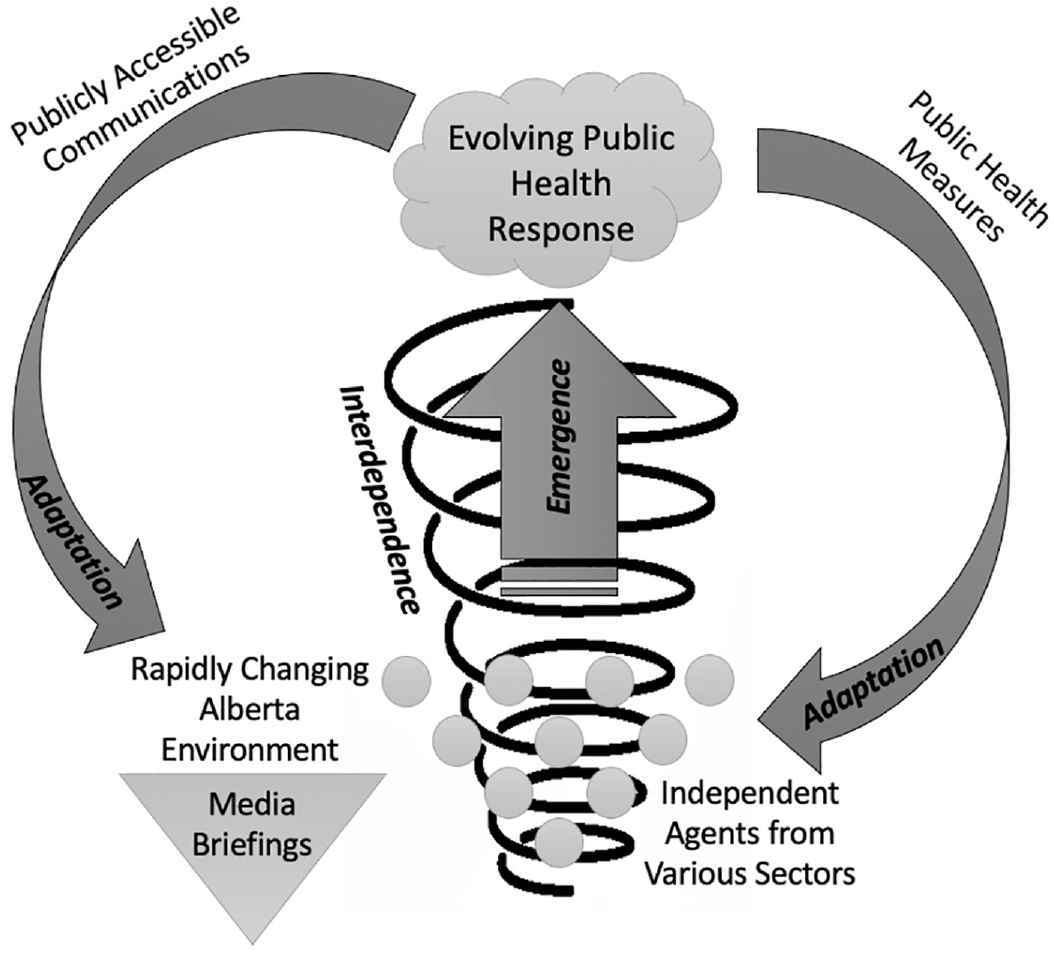
Conceptualizing the public health response to COVID-19 as a complex adaptive system.
The Usefulness of Complexity Theory for Studying a CAS Using a CS-MM Design
Complexity theory is an umbrella term for the study of complexity and complex systems. A CAS is a special case of complex systems where the whole is more complex than its parts (Holland, 1999). The study of a CAS requires new design approaches because it is no longer possible to study only the parts of the system, or even the system itself in isolation. Instead, it is necessary to study the interconnections including the possible influences to and results from the interactions within the system and surrounding systems (Poth & Bullock, in press). Case study and mixed methods, alone as well as in combination, are well established research approaches known to require extensive time to complete (Creswell & Plano Clark, 2018; Guetterman & Fetters, 2018).
A case study involves developing an in-depth description of a case within its real-life bounded system often defined by place, time, and people (Creswell & Poth, 2018). Case studies draw on diverse data sources relevant to the particular case being studied and can involve the integration of both qualitative and quantitative research in the case description (Yin, 2017). In the widely utilized typology advanced by Creswell and Plano Clark (2018), mixed methods case studies are included as one of four complex designs and described as particularly useful for studying complex systems. Our study is guided by the innovative distinction being designated as CS-MM design (Guetterman & Fetters, 2018), where the parent case study approach is characterized by an intrinsic purpose, a holistic case description, and a nested mixed methods design as a means to address the time constraints associated with data collection, analysis, and interpretations.
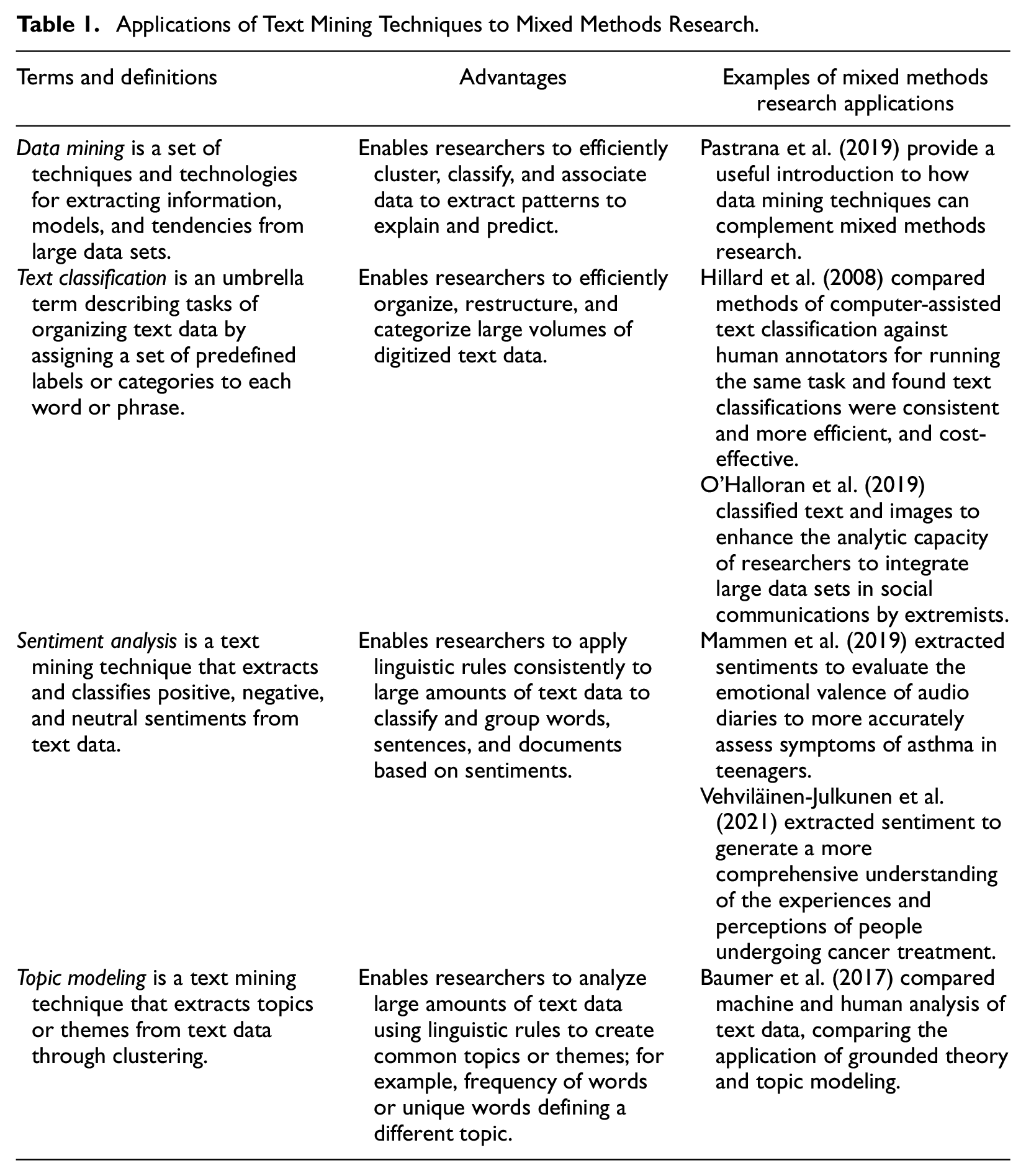
Our study design addressed the feasibility challenges we experienced as researchers to keep pace with the rapidly evolving context of the global pandemic. With the overall aim of generating a comprehensive understanding of the patterns of effective, rapid public health communications, we used a CS-MM design to guide our development of a complex case description through gathering and integrating diverse sources of data drawing on freely accessible data sets and text mining techniques. Recently, the availability of existing big data stored as text has motivated researchers to apply modern data and text mining techniques (e.g., sentiment analysis, topic modeling, and text classification) to organize, analyze, and gain insights from text data (Hillard et al., 2008; Pastrana et al., 2019).
The primary goal of text mining with big data is to analyze information to discover patterns within and across diverse segments of text (Aggarwal & Zhai, 2012; Ramage et al., 2009; Wallach, 2006). The further use of data and text mining techniques has been identified as an emerging area for methodological innovations in mixed methods research (e.g., Creswell & Plano Clark, 2018; Fetters & Molina-Azorin, 2017a; Poth, 2018). It is beyond the scope of this article to explore all the possibilities of data and text mining but Table 1 provides a definition of data mining and then differentiates three text mining techniques, as well as their advantages and examples of mixed methods research applications. Efficiency, cost-effectiveness, and consistency are common advantages for the use of text mining techniques within mixed methods research, and in research generally. This is because text mining has the distinctive ability to efficiently manage large volumes of digitized text data in ways that are more effective than humans and to consistently apply rules according to the researcher’s direction to reveal patterns that might otherwise be inaccessible (Baumer et al., 2017; Hillard et al., 2008; Mammen et al., 2019). In the application of rules, we see text mining strategies playing a similar role to thematic analysis (Isoaho et al., 2021); with the advantage in topic modeling that it may be easier to track changes over time and the disadvantage of the absence of human reasoning around classification.
Applications of Text Mining Techniques to Mixed Methods Research.
Application of a Complexity-Informed CS-MM Design With a Nested Convergent Sequential Approach
A convergent sequential design represents a departure from the three core design typologies articulated by Creswell and Plano Clark (2018). Common to both the convergent sequential design and the explanatory sequential design is an initial quantitative phase. The designs are distinguishable by the types of data and mixing purpose for the follow-up phase; whereas the explanatory sequential design traditionally uses qualitative results to explain the initial quantitative findings, the convergent sequential design uses the integration of quantitative and qualitative results to generate more complete understandings of the initial quantitative findings. The second phase of the convergent sequential design has a similar mixing purpose to the convergent design that is another core design typology described by Creswell and Plano Clark (2018).
The sequential aspect of the convergent sequential design allows researchers to find or choose a subsample from the larger quantitative results in the initial phase. Researchers have shown a great deal of interest in text mining techniques to process large volumes of data more quickly, extract hidden information, and use the knowledge in decision making (Aggarwal, 2015; Aggarwal & Zhai, 2012). We are not alone in our application of text mining to study the global pandemic. Recently, researchers around the world have employed sentiment analysis to analyze sentiments and opinions that people shared about the COVID-19 pandemic through social media posts (e.g., Barkur et al., 2020; Medford et al., 2020; Samuel et al., 2020; Zhou et al., 2020). With the rapid growth of text data in today’s digital world, text mining is likely to remain a crucial technique that social scientists will employ to better understand complex societal problems, yet it remains an underutilized approach within mixed methods research designs.
In the current study, the two sequential design phases realized the overall objective of generating a complex case description quickly: the first phase used text mining to identify key fluctuations in sentiment messaging and word counts across the case, and the second phase involved the cross analysis of the integrated findings at each of the key fluctuation periods. The case description is guided by attending to the emergence, interdependence, and adaptation of topic areas and message contents related to key areas of effective public health communications and risk assessments necessary to convince the public to follow recommendations during a pandemic (Centers for Disease Control and Prevention [CDC], 2018; Tumpey et al., 2018). Through the use of a convergent sequential approach nested within a CS-MM design, this study begins to address the methodological and practical gaps by generating empirically based meta-inferences from freely accessible data sets.
Method
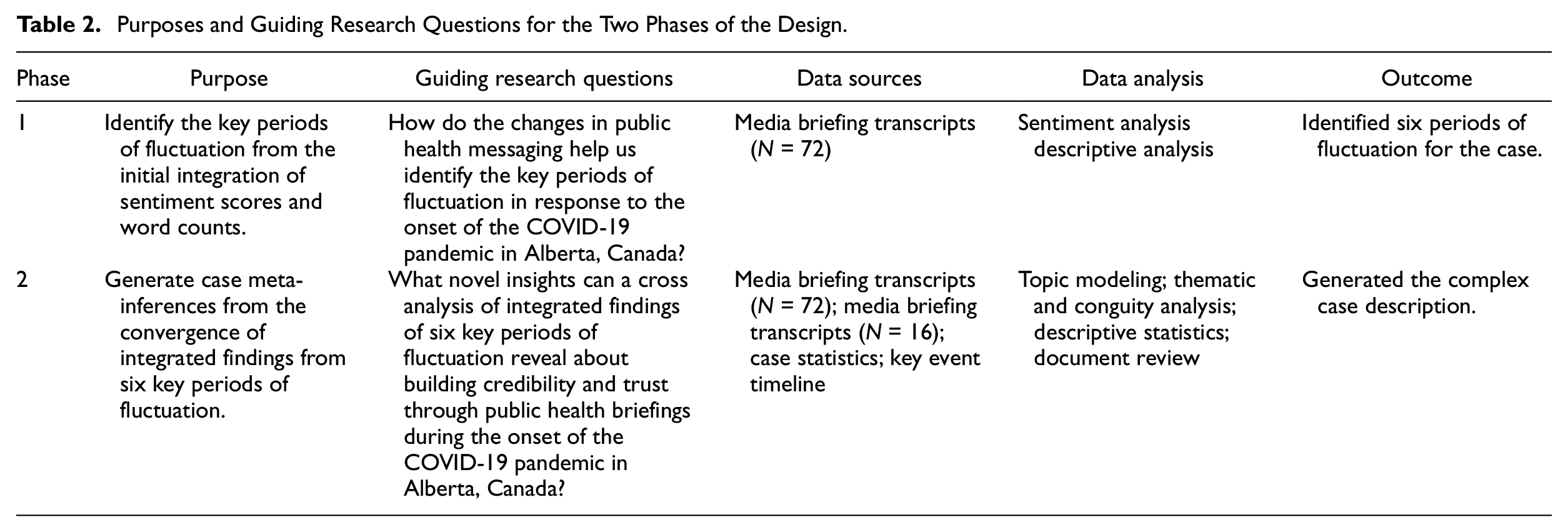
In the convergent sequential mixed methods research design, qualitative and quantitative findings are integrated during the follow-up phase to generate a more complete understanding of the initial phase’s findings. In this study, convergence in the follow-up phase was assessed across six key fluctuation periods identified in the initial phase to generate the meta-inferences informing the complex case description (see Table 2).
Purposes and Guiding Research Questions for the Two Phases of the Design.
Selection and Bounding of the Intrinsic Case Studied
Alberta, a western Canadian province, offers an intrinsic context in which to study a localized response to the pandemic situated within a country with long-established democratic rights and values, freedom of the press, credible statistical sources, and a publicly funded health care system. With a population of more than four million, Alberta represents approximately 11% of Canada’s total population, with a smaller than average proportion of residents over age 65 (13% compared with 17.5% nationally; Statistics Canada, 2019). In 2019, the Economist ranked Canada the seventh most democratic nation in its Democracy Index—tied with Denmark and ahead of all other nations in the Americas (Economist Intelligence Unit, 2019). Its mass media communications have a high level of media freedom evidenced by its ranking as sixteenth of 180 countries in the 2020 World Press Freedom Index (Reporters Without Borders, 2020). Formed in 1971, Statistics Canada is globally recognized as a producer of credible statistics for all the provinces as well as for the federal government; it regularly releases data sets and provides statistical capacity-building around the world (Government of Canada, 2020).
Since 1962, Canada’s publicly funded health care system has covered all essential basic needs delivered through the 10 provincial and three territorial systems and is governed by the Canada Health Act adopted in 1984 (Statistics Canada, 2020). The federal and provincial structures in the area of public health create unique opportunities for coordination; the Public Health Agency of Canada was established in 2004 amid the coronavirus outbreak of SARS-CoV-1 (known simply as SARS at that time) and provides oversight at the national level. Dr. Teresa Tam has served since 2017 as the Chief Public Health Officer of Canada (2020)—the lead health professional and primary spokesperson on public health-related matters for the government of Canada. The vast majority of Canadians (88%) rated the national public health response to COVID-19 in August 2020 as “good” (Devlin & Connaughton, 2020), and cases and infection rates are considered by external assessments to be lower than many global counterparts (Bejan & Nikolova, 2020). A recent survey found Canadians have a high level of trust in public health officials on COVID-19 topics (“Carleton Researchers Find Canadians,” 2020).
When considering death rate as the single most fair and reliable statistic in ascertaining how hard-hit any area has been hit by COVID-19, Alberta’s death rate at 58.6 per million is much lower than other provinces’ (as of September 21, 2020): Quebec at 648 per million and Ontario at 194 per million (Miazga-Rodriguez, 2020). The chief medical officer of health in Alberta serves as the primary spokesperson representing the Office of the Chief Medical Officer of Health in the province and provides public health expertise to support health surveillance, population health, and disease control initiatives on issues of public health importance to the province (Government of Alberta, 2020b). Dr. Deena Hinshaw was appointed to the role in 2019 and has been widely recognized as effective in her public health communications during the pandemic: “the wise and empathetic Chief Medical Officer of Health Dr. Deena Hinshaw deserves credit for helping to keep Alberta’s death rate so low while keeping the economy so open” (Staples, 2020d).
We define the current case boundaries as the province of Alberta (location), March 5 to July 5, 2020 (onset), and Hinshaw and her office (producers and communicators of the media briefings). The publicly accessible briefing transcripts provide a proxy for the communications from public health officials to members of the Alberta public. The onset date is defined by the first day the briefings were delivered on a regular (almost daily) basis until July 5, 2020.
Data Source Selection and Collection
The study drew on three sources of data: media briefing transcripts, case statistics, and a key event timeline (see Figure 2). This study did not require ethics approval because we used existing research datasets available through the public domain with no new data collected. To examine the public health communications hosted by Hinshaw, media briefing transcripts were downloaded in Microsoft Word format from the government of Alberta’s COVID-19 pandemic website (https://www.alberta.ca/covid). To estimate the change in the number of daily new Alberta confirmed cases of COVID-19, case statistics were downloaded and aggregated in Microsoft Excel spreadsheet format from the government of Alberta’s interactive COVID-19 data application website (https://www.alberta.ca/stats/covid-19-alberta-statistics.htm).
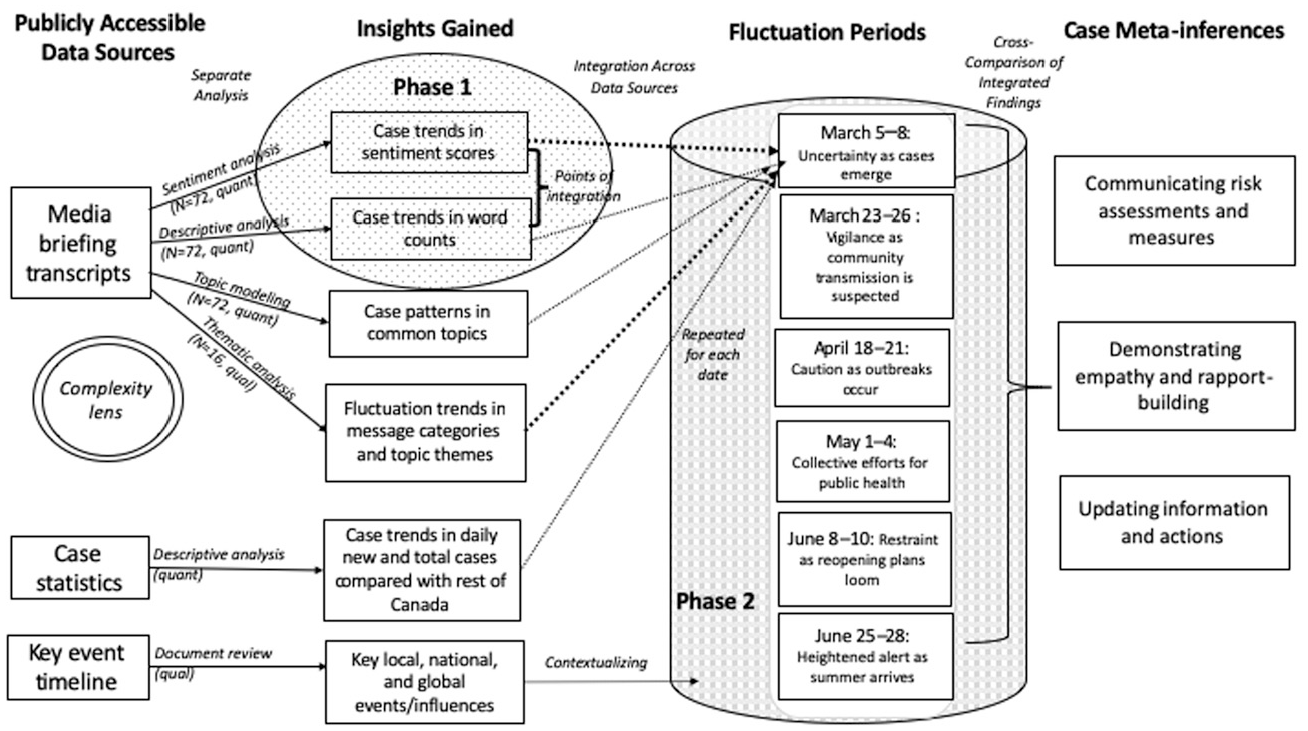
Design and procedural representation.
To contextualize the public health messaging within the rapidly evolving and embedded local, national, and international contexts surrounding the progression of the COVID-19 pandemic in Alberta, a timeline of key events was created from online news searches. Two researchers searched key dates and articles and entered them into a timeline table drawing on news sources that were local (e.g., The University of Alberta Folio, Edmonton Journal), national (e.g., Global News, Canadian Medical Association Journal News, Canadian Broadcasting Corporation, Canadian Healthcare Network), and international (e.g., British Broadcasting Corporation, Cable News Network, and WHO.
Data Analysis and Integration Procedures
The first phase involved conducting sentiment and descriptive analysis of the provincial daily media briefing transcripts to identify key fluctuation periods across the case on which to integrate during the second phase. Sentiment analysis refers to the use of text mining techniques to identify positive and negative sentiments at the word, sentence, and document levels (Yi et al., 2003). For this study, we used the sentiment scores from a previous study in which sentiment analysis was applied to extract sentiment scores from the text data in the media briefings (for a full description, see Bulut & Poth, 2021).
We applied word tokenization in the tidytext (Silge & Robinson, 2016) and tokenizer (Mullen et al., 2018) packages in R (R Core Team, 2020) to split the sentences in the media briefings into individual words (see Figure 3). After filtering out stop words (e.g., the, a, that, on), the remaining words were merged with the Bing lexicon (Hu & Liu, 2004) to categorize the words as either positive or negative. For each media briefing, the sentiment score was calculated as the difference between the number of positive and negative words (the former represented by green and the latter by red). Descriptive analysis involved the use of word counts in the media briefings. The goal of descriptive analysis was to identify the media briefings in which Hinshaw’s briefing was either very short or very long. Purposefully, we defined the fluctuations to include four days to balance feasibility of analysis with the realities that case counts and news can be delayed by a day or two.
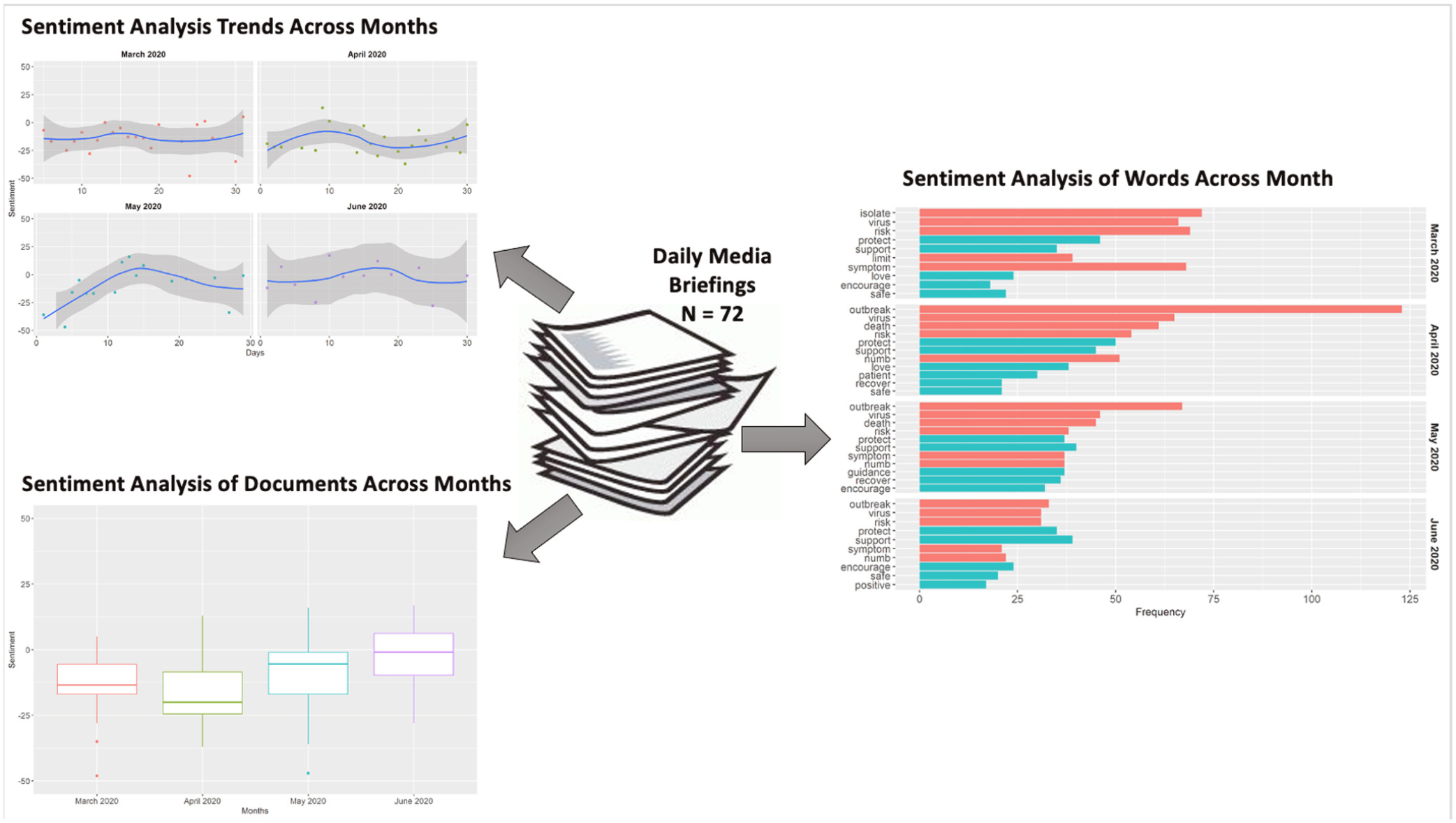
Text mining process involving sentiment analysis of words and across media briefings in Phase 1.
The second phase of the design involved conducting a cross analysis of the integrated findings at each of the key fluctuation periods identified in the first phase to generate the meta-inferences informing the complex case description. We used qualitative dominant crossover mixed analysis (Onwuegbuzie & Hitchcock, 2015) to generate the integrated findings at each of the six key fluctuation periods across the case involving findings from four data sources: qualitative themes from the media briefing transcripts, key timeline events from the online news searches, key topics and associated terms from the quantitative topical modeling, and new case statistics from the quantitative descriptive analysis.
To begin, two of the authors (Poth and Aquilina) independently conducted the qualitative analysis of the subset of media briefings organized chronologically by fluctuation period. This work was initially guided by a three stage coding cycle (Saldaña, 2015). In the first stage, we read all the transcripts delivered during key fluctuation periods (N = 16) to familiarize ourselves with the data, and then we undertook a line-by-line initial coding approach of the briefings (Charmaz, 2014). This open-ended coding method allowed us to remain aware of the possibilities emerging from the data and to develop a preliminary code list which was then reviewed by the team, revised, and organized by five themes and 11 subthemes (Miles et al., 2018).
The codes were used to guide a complementary contiguity-based analysis to capture the influences to, and influences by, the interdependent agents within the rapidly changing contexts (see Figure 1). In this way, we sought to examine the connections within and across the key fluctuation periods using the joint display (Fetters, 2020; Fetters et al., 2013) and inspired by qualitative researchers (Maxwell & Chmiel, 2014; Maxwell & Miller, 2008). To describe our approach, we use the metaphor of weaving our complex case description (see also Poth et al., 2021, for more fulsome description). In brief, weaving is a method used in the production of textiles in which two distinct sets of threads are interlaced at right angles; longitudinal threads are called “warp” and lateral threads are called “weft” (and often considered the filling). Not surprisingly, how the threads are interwoven affects the characteristics of the textile, and that the textiles vary greatly in their characteristics is especially helpful for studies involving CAS. As with our case, the weft threads are not limited to a single data source; in our case, the five themes became the weft on which we interwove the document analysis and topic modeling (see Table 3).
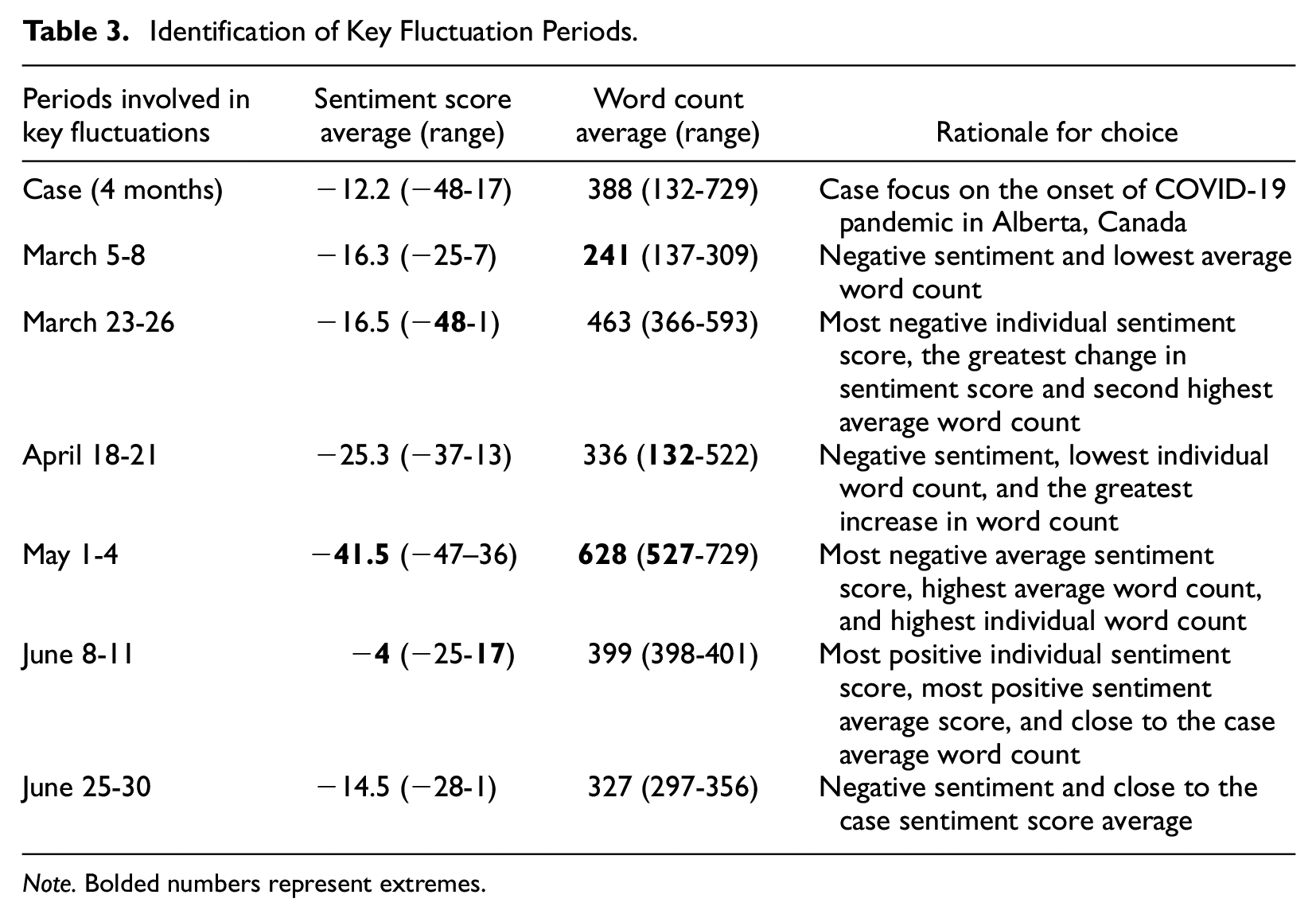
Identification of Key Fluctuation Periods.
Note. Bolded numbers represent extremes.
Selecting documents to analyze was guided by selecting key events during each key fluctuation at local, national, and international levels. Topic modeling was used to generate insights from the clustering of similar word groups and expressions that characterize the media briefings across the months using the topicmodels package (Grün & Hornik, 2011) in R (R Core Team, 2020). New case statistics were analyzed using R (R Core Team, 2020) to identify important daily fluctuations (e.g., spikes in new cases and sharp declines) in new confirmed cases of COVID-19. New case counts were chosen over the total number of cases because that enabled the detection of large daily fluctuations in the number of confirmed cases, was more easily comparable to the Canadian statistics and was deemed more accurate.
Integration, also described as our initial weaving, was undertaken for each of the six key fluctuation periods using the qualitative themes as the organizational framework on which to converge the quantitative findings from topic modeling and case statistics to generate a more complete description of the key fluctuations; both were guided by a qualitative crossover mixed analysis approach (Onwuegbuzie & Hitchcock, 2015). The application of various concepts related to the emergence of new understandings, the interdependency of the local, national, and international contexts, and the adaptation of new measures and protocols meant that the processes involved in integration were iterative and spiral-like as the integrated findings were represented narratively in the case description.
We embraced the iterative flexibility described by Heinrich et al. (2016) and spiral metaphor proposed by Schoonenboom (2019) to respond to contextualizing and contiguity opportunities described by Maxwell and Chmiel (2014) for the key timeline events as connections were made between the narrative data to bring new meaning to the numerical data. The complex case description generated from the comparisons and connections across the themes identified within the key fluctuation periods were guided by considering what Stake (2006) described in his multiple case study approach as the quintain—the overarching dilemma guiding the case description. In our study, this involved what was communicated and how these communications evolved during the onset of the pandemic.
Team Approach
Throughout the study, the interdisciplinary team of four researchers met to bring together their diverse expertise to move the research forward and, in so doing, embodied the concept of team integration described by Fetters and Molina-Azorin (2017b) as one which “involves leveraging personal and professional background experiences that lead one to consider, and hold valuable, qualitative, quantitative, and mixed methods procedures for making sense of the world” (p. 296). Poth brought extensive experience in applying complexity science to mixed methods as well as qualitative case research experiences to lead the overall design, integration, and methodological purpose. Bulut brought extensive quantitative and qualitative experiences to lead the first phase and contribute to implementation and writing. Aquilina brought training and diverse experience in qualitative and quantitative research during her doctoral workand contributed to the qualitative data analysis and integration. Otto brought experience in emergency outbreak management and public health research and practice. Together the team generated case meta-inferences that would otherwise have been inaccessible by the researchers working alone.
Case Description
Phase 1: Identification of Key Fluctuations Periods From Initial Quantitative Findings
The initial phase findings identified six key fluctuations periods to serve as the points of integration in the follow-up phase. Figures 4 and 5 present the data trends in sentiment analysis word counts of the media briefings respectively. Table 3 summarizes the sentiment scores and descriptive results to justify the selection of the key fluctuation periods (see also Poth et al., 2021, for full results description).
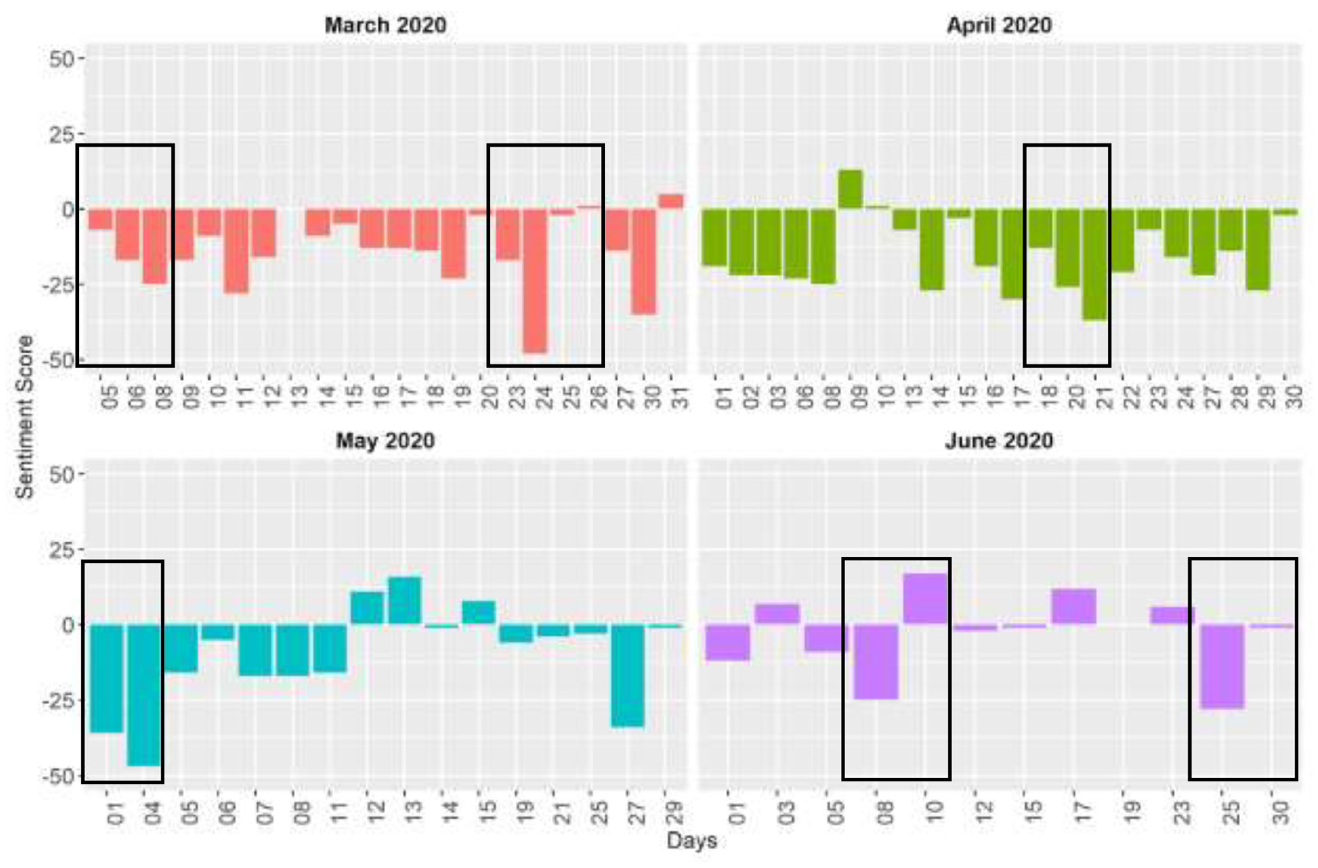
Distribution of sentiment scores in the media briefings across the months.
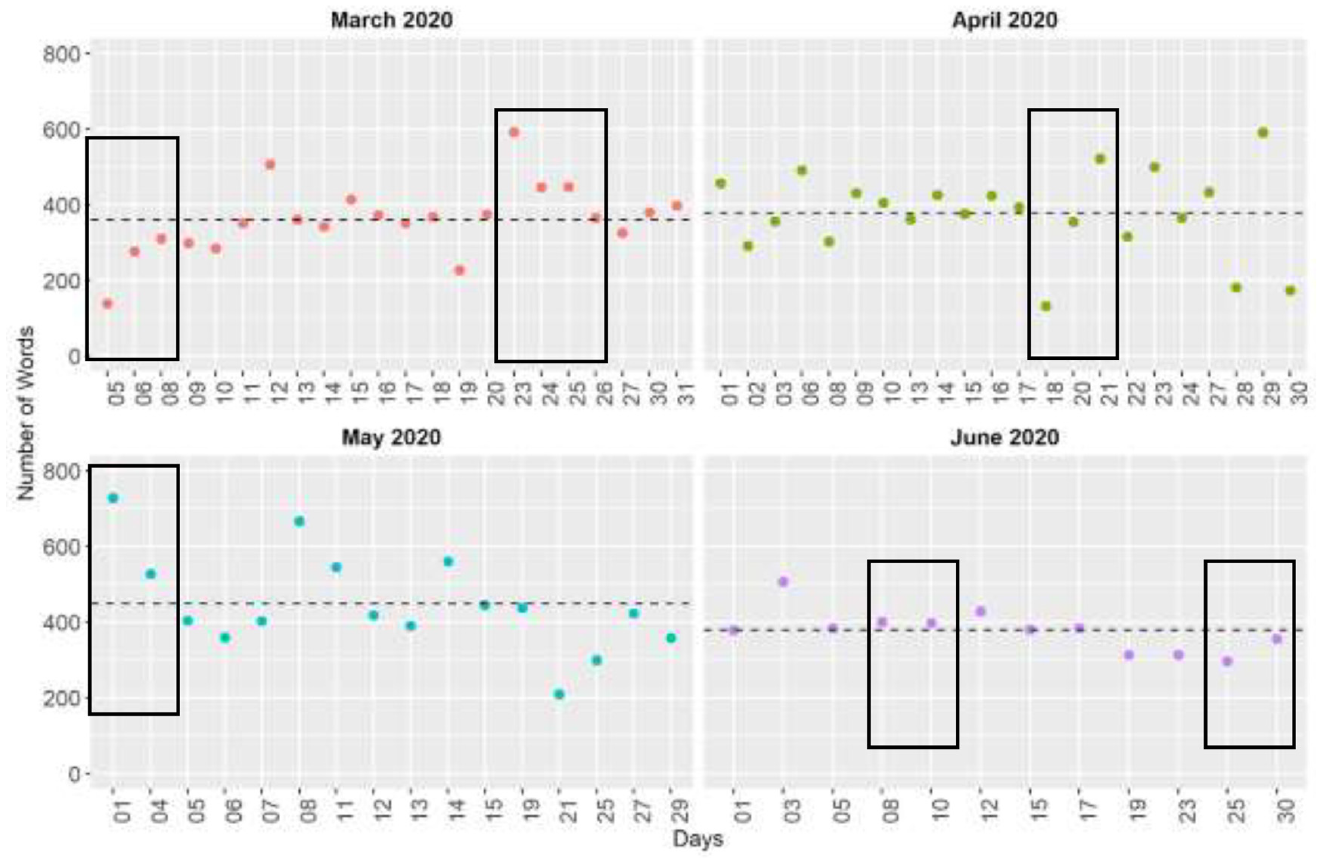
Word counts in the media briefings across the months.
Phase 2: Case Description From Cross Analysis of Integrated Findings
The complex case description begins with a general orientation to the pandemic response in Canada, presents the three meta-inferences derived from the cross analysis of the integrated findings at six key fluctuation points (see Table 4), and concludes with a brief update of the pandemic response since the study concluded.
Joint Display Summary of Cross Analysis of Integrated Findings in Key Fluctuation Periods.
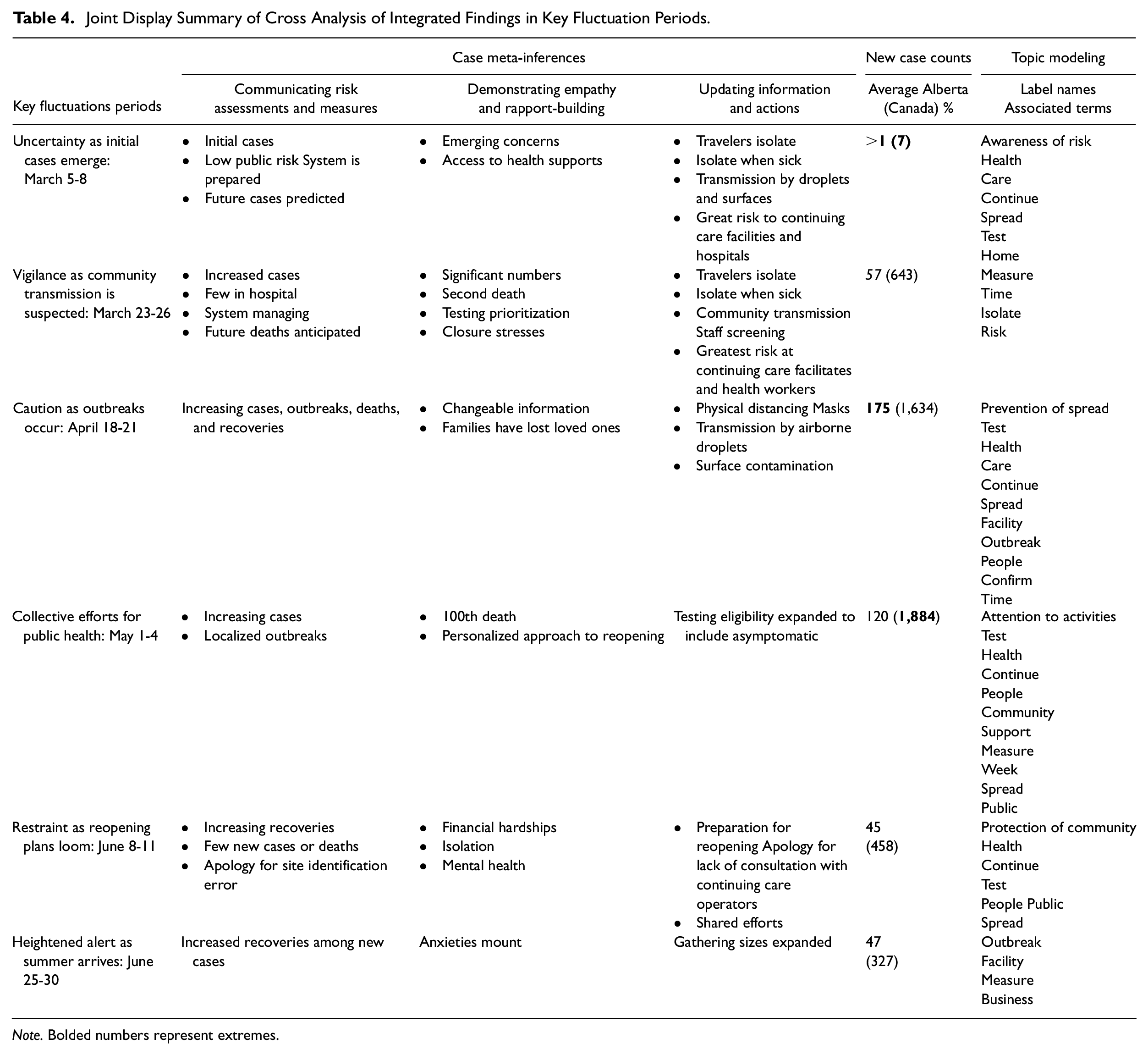
Note. Bolded numbers represent extremes.
The Pandemic Leadership Response Prior to March 5
The context changed rapidly during the first three months of 2020. The risk assessment for Canadians remained low on January 3, when Tam reported no cases of COVID-19 in Canada and noted as follows: “It is important to take this seriously, and be vigilant and be prepared. But I don’t think there’s a reason for us to panic or be overly concerned” (Slaughter, 2020). By the end of January, the WHO had declared a global health emergency and Canada’s first three cases had been reported along with further reassurances from Canada’s Prime Minister, Justin Trudeau, of the measured responses the government was taking: “I can reassure Canadians that the health risk to Canadians continues to be low. We are taking all necessary precautions to prevent the spread of infection. . . . Preventative measures are in place in airports” (Staples, 2020b). By February 14—a month before the Canadian border would close and weeks before the first case would be detected in Alberta—Hinshaw communicated information about the virus, provided directions about needed actions, and called for unity in our response, stating as follows: “Whatever the future of coronavirus, we are stronger together. Don’t let the virus divide us” (Staples, 2020a). On March 5, Hinshaw began providing regular public health briefings at 3:30 in the afternoons. She assured Albertans of their preparation since the beginning of the year.
Case Meta-inference 1: Communicating Risk Assessments and Measures
Hinshaw began each briefing by updating the numbers of new cases, total cases, hospitalizations, and deaths. Figure 6 compares the low consistent rates of new case trends in Alberta with the greater fluctuation in total new cases in Canada. During the initial briefings and throughout the month of March, Hinshaw repeatedly cautioned to isolate following travel and when not feeling well. Hinshaw led by example when, in mid-March, she, herself came down with a cold, which was not COVID-19 related, and she described the situation to model how to self-isolate properly (Staples, 2020a). She initiated what would become a trademark focus on encouraging every Alberta to take individual responsibility to manage risks as best as possible for the collective well-being.
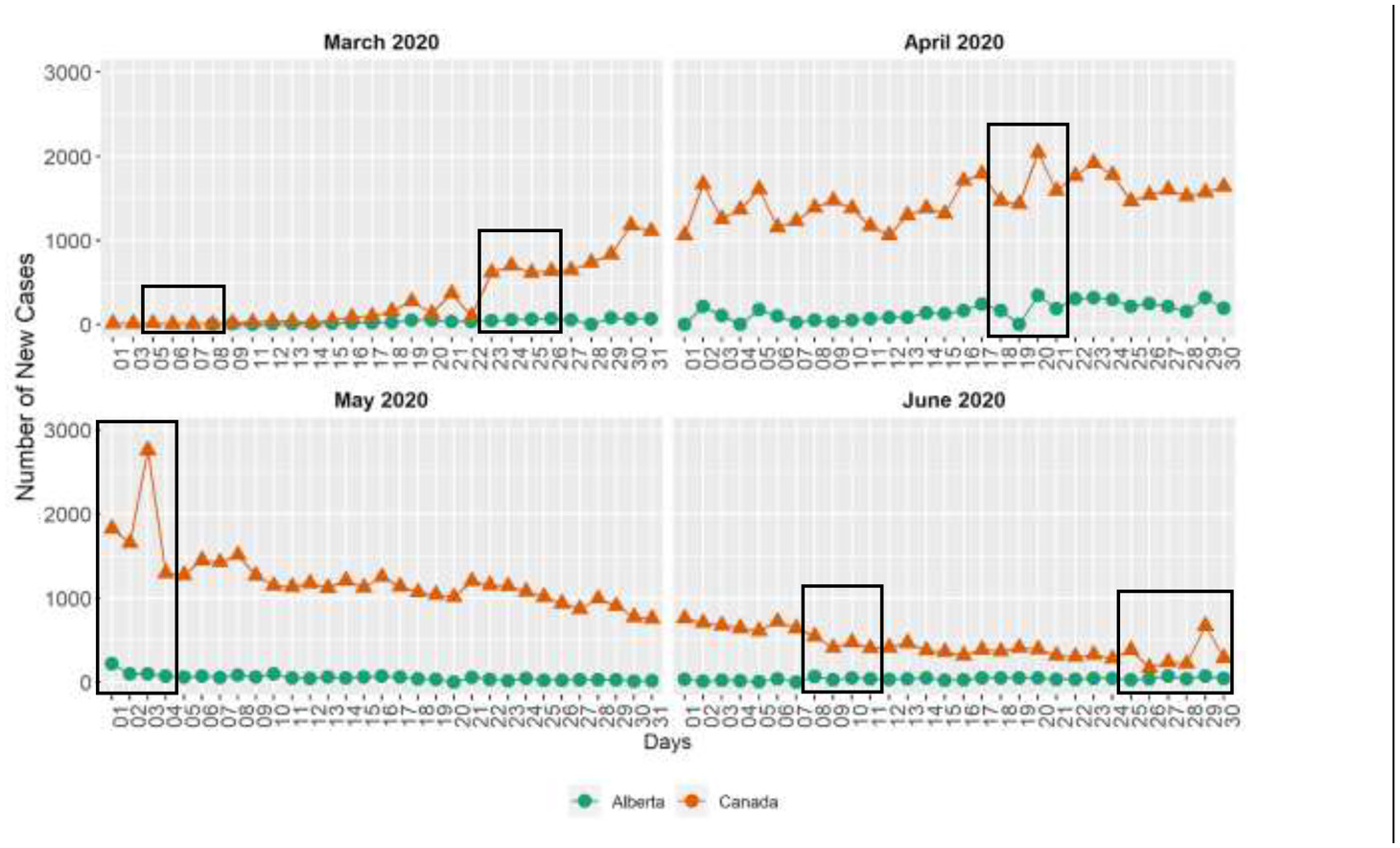
Comparison of new daily confirmed COVID-19 case trends between Alberta and Canada.
As cases initially increased in Alberta, the overall sentiment messaging was more negative and Hinshaw’s messaging shifted to emphasize the realities of the increasing case trends. The lag between exposure and symptoms was seen as a threat to others. A further foreshadowing of further cases in Alberta in the coming weeks because of the evolving national and global contexts. As the outbreaks became more numerous throughout March, the sentiment was more negative than positive and word counts increased until she announced plans to move the outbreak updates to online postings and to only focus the briefings on unusual outbreaks. Hinshaw took great care to provide accurate information evidenced by beginning one of the briefings with an apology addressing incorrect identification of an outbreak site as active when it was resolved.
Those at greatest risk were identified as elderly and residents in continuing care facilities, yet outbreaks at a social gathering eventually linked to cases across the province. This heightened the risk assessment and a shift in messaging to convey that anyone was at risk, regardless of age. This message was relayed around the time that Prime Minister Justin Trudeau began self-isolating on March 12, as his wife had tested positive for the virus following travel to the United Kingdom (Staples, 2020a). In providing her risk assessments, Hinshaw provided sufficient information to establish trust with her audience evidenced by the following description: “She’s [Hinshaw] quickly become a trusted face for Albertans, calmly delivering the facts as cases of COVID-19 are confirmed in the province” (Ramsay, 2020).
Case Meta-inference 2: Demonstrating Empathy and Rapport-Building
Hinshaw began several initial briefings with the same format: she introduced herself, identified her role, provided reassurances, and described the risk to Albertans as low. Hinshaw acknowledged deaths, anxieties, and supports both frankly and with compassion, evidenced by her provision of a realistic assessment of future deaths following the first death in the province on March 19. By late March, Hinshaw had gained national attention for her public health leadership and was described as having become a sort of guardian angel figure. She gives daily briefings, which are broadcast live and in which she manages to sound calm, kind and compassionate while being completely open and truthful about the number of people infected and the precautions that must be taken to prevent the further spread. (Steward, 2020)
Throughout the spring, Hinshaw described sources of anxiety as stemming from the constantly changing testing guidelines and the influx of information. Hinshaw’s timing of addressing the general strain being experienced by families because of school and nonessential business closures in mid-March closely aligned with the news reporting and Alberta’s relaunch plans (Government of Alberta, 2020c; Johnson, 2020). In her announcement of reopening, Dr. Hinshaw recognized that individuals may be experiencing different reactions ranging from being overwhelmed to sadness but that they were not alone.
Hinshaw repeated information about mental health supports several times and provided a range of specific ideas for managing the isolation in the briefings ranging from getting outside (while maintaining distance), using video chats, and a new concept of “cohort families” where two families agree to isolate from others and to focus on supporting one another. By openly referencing both general and more specific discomforts, Hinshaw connected with the public in ways that were described by others as: . . . [Hinshaw] has always shown calmness, compassion, and leadership that mark her daily COVID-19 updates. . . . Hinshaw has been widely commended for her calm and measured delivery in press briefings, her solid command of the pandemic response, and genuine expressions of empathy for those suffering from the disease. (McMaster, 2020)
Case Meta-inference 3: Updating Information and Actions
Hinshaw made a declaration that she would keep the public fully informed of any developments. Hinshaw took care to take responsibility for any missteps, evidenced by an apology in her May 1 briefing, addressing a lack of consultation with and notification to operators about changes to visitor policy at continuing care facilities. Areas of developments in new understandings involved that transmission was possible when asymptomatic, testing was critical for tracing and isolation, and preventive measures included enhanced screening.
Canadians were advised to stay home and avoid all nonessential travel outside of Canada in mid-March (Staples, 2020b), and around the world, borders were closing—including the U.S.–Canada border to nonessential travel on March 25 (Staples, 2020c). The Canadian government passed emergency legislation, introduced the Canada Emergency Response Benefit (Department of Finance Canada, 2020) and invoked the Quarantine Act on March 26, which mandated all returning travelers to isolate for 14 days (Staples, 2020c). Strict measures for social distancing and mass gatherings were introduced in March and described in Alberta’s Pandemic Response document (Bench, 2020). The guidelines to distance, wash hands, stay home when sick, and cover coughs and sneezes remained constant and aligned with news sources. Other preventive measures evolved over time, in response to cases—such as restricting the size of outdoor gatherings in response to case numbers.
The associated words generated by the topic modeling suggest a shift in messaging about emerging understandings: in March the focus was on awareness of risk, and by June it shifted to protection of the community. It is also interesting to note that half of the associated words are common to those 2 months (see Table 3). Many of the unique words refer to the prevention measures in place at the time; for example, in March the messages conveyed the need to stay home, isolate and take the time to care for those at risk (associated words are italicized) whereas in June the messages expressed the need to protect the public, people, businesses, and facilities from outbreaks.
Hinshaw continually highlighted the contributions of the government, their planning and mobilization efforts early on, expanding testing access, and launching the app-based tracing technology in May. There were clear connections between the comments about needing to work together to prevent the spread of infection and the associated words generated by the topic modeling. This suggests consistent messaging about needed actions and cautions in both April and May as the common words related to continuing to test, avoid spread, and care for people (associated words are italicized); whereas the unique words in April reflected what was going on at the time related to outbreaks at facilities. Then, in May, the focus shifted to supporting the community. As well, Hinshaw regularly recognized the efforts of Albertans as a whole and groups of individuals for their contributions to the public health response as lifting the province by caring for one another. Continuing to protect one another would make each Albertan proud as the communities returned to enjoy activities with caution and care. Hinshaw’s masterful ability to point out how the actions can benefit or protect the larger community is evidenced by the description bestowed on her by others, “We now count on Hinshaw. Always reassuring with her quiet, steady delivery. Always reminding us of the simple steps to protect ourselves. Always urging us to do the right thing, though never scolding” (Staples, 2020a).
The Ongoing Pandemic Response in Alberta Since July 5, 2020
On July 5, the number of new cases had stabilized and Deena Hinshaw stopped providing regular public health briefings. Alberta began its first stage of its relaunch strategy on May 14 and moved to its second stage on June 12 including physical distancing, limiting indoor social gatherings to 50 participants, and outdoors to 100 (Department of Finance Canada, 2020). Variation in municipal mask requirements was seen throughout July and August, owing to the lack of the province-wide mandate. K–12 schools planned for fall reopening with in-person classes and mandatory masking for Grades 4 to 12 (Government of Alberta, 2020a), and parents could choose between remote learning, homeschooling, or in-person in the public school system.
Alberta entered the second wave of the pandemic in fall 2020. Daily new case numbers began to increase exponentially in mid-October, with Hinshaw resuming more regular briefings. With the health care system under serious strain in late November 2020, the provincial government placed new restrictions to prohibit indoor and limit outdoor social gatherings, restrict capacity in businesses and restaurants, and move all Grades 7 to 12 schools to online learning (Pearson, 2020). Following increases in case numbers greater than 1,800 per day in early December, the provincial government enacted stricter lockdown measures to prohibit all indoor and outdoor social gatherings, mandated the first province-wide indoor public masking requirement, and limited places of worship and businesses, which were allowed to remain open to 15% of capacity. Restaurants/bars/cafes, casinos/bingo halls, recreational facilities, entertainment facilities, and personal and wellness services were all closed. This translated to a gradual decrease in daily cases to between 250 and 450 per day in February and March of 2021. Non-ICU and ICU hospitalizations decreased from peaks of 777 and 153 in late December, 2020, to fluctuate around 230 and 35, in early March, 2021 (Government of Alberta, 2021b).
Public opinion about provincial government actions began to decline in August, 2020, as parents, students, and teachers prepared for the return to in-person school. This apprehension and concern continued through the fall, as segments of the public in Alberta began to call for stricter public health measures to stem the increasing number of cases and hospitalizations. The collective result was a strict lockdown of the province over the December holiday season. Vaccine administration in Alberta began for health care workers in late December and continued for vulnerable sections of the population from January to March, 2021. However, vaccine roll out was slow over the holiday break and continued to be so through January and February. This was further disrupted by delays in supply from major manufacturers to Canada in February and some hiccups with the provincial appointment booking website for initial roll out to persons aged 75 years and older. By late February, 2021, despite declining case and hospitalization numbers, the public sentiment for Hinshaw’s messaging remained, mixed with a substantial portion of the population expressing concern for provincial actions nearing the first anniversary of the pandemic (Dryden & Fletcher, 2021; Joannou, 2021).
With the increased transmissibility of new SARS-CoV-2 variants of concern there is potential for a third wave of the pandemic in Alberta (CDC, 2021). These new variants are present in Alberta, with public information available about variant cases on government websites (Government of Alberta, 2021a). With increased supplies anticipated to arrive, Alberta is ramping up vaccination as of late March 2021 (Government of Alberta, 2021c).
Discussion and Implications
Contribution to Public Health Communication Literature
The complex case description reveals novel insights about how public health briefings can build credibility and trust within the rapidly evolving context of a global pandemic to address the Phase 2 guiding research question (see Table 2). Specifically, we see the masterful weaving of three key functions of a chief public health officer related to risk assessments and communications, demonstrations of empathy, and actionable information updates (see Table 5).
Contributions to Public Health Communications Literature.
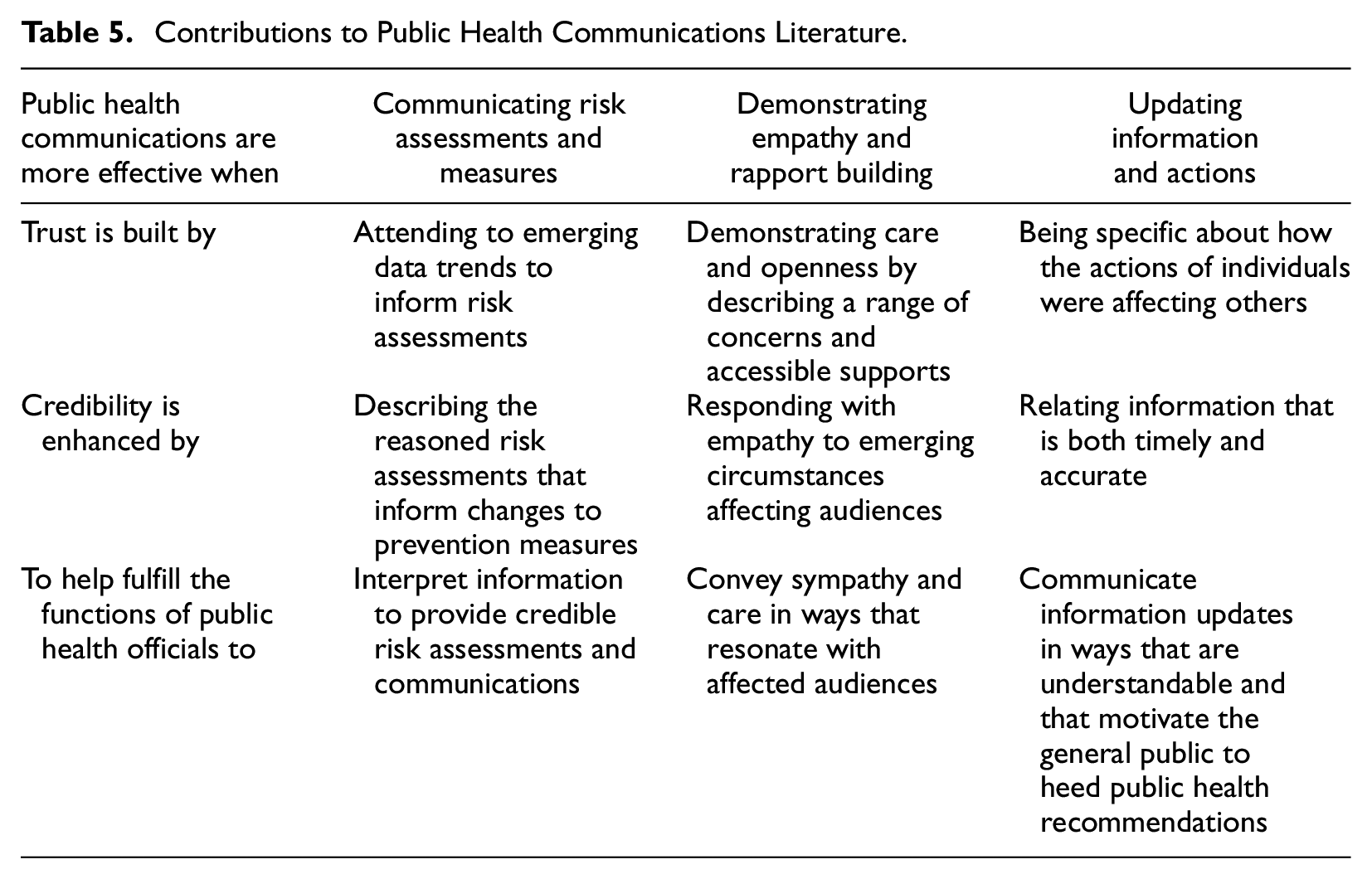
The novelty of the virus and the challenges inherent to predicting transmission rates meant that interpreting case data trends was an essential part of the chief public health officer’s function to provide credible risk assessments and communications (CDC, 2018). Our case description provides evidence of the consistent use of the same case statistics from a trusted institution to inform shifts in risk assessments and the provision of reasoned interpretations of the data as informing changes to the recommended prevention measures. The risk assessments and communications were effective when the changes to prevention measures were accompanied by detailed explanations that the shifts to risk assessments were responding to emerging data trends from trusted sources.
The unprecedented impacts on the daily interactions of the public meant that explicitly recognizing the far-reaching, changeable, and unique effects on individuals and groups was a key feature of the chief public health officer’s function to demonstrate empathy in ways that resonate with affected audiences (Tumpey et al., 2018). Our case description presents several examples of how the virus has impacted individuals and their communities. The chief public health officer’s demonstrations of empathy through expressing sympathy and describing supports became more candid and specific over time as rapport with the Alberta public was built.
Updating the public on the rapidly changing information surrounding the virus meant communicating in ways that were understandable and timely was a necessary focus of the chief public health officer’s work in motivating the general public to heed public health recommendations (CDC, 2018; WHO, 2020). Our case description draws attention to the essential roles of the media briefings to inform the general public about the actions they need to take in a timely way that is also aligned with other information sources. It seemed the information was more persuasive when focused on the benefits of individual and collective actions to protect the larger community.
Contributions to Mixed Methods Research
This study contributes an illustrative example and discussion for guiding how a mixed methods convergent sequential research design, informed by complexity theory and drawing on freely accessible data sets, can rapidly generate complex case study descriptions. Specifically, the article advances mixed methods research practice in two ways, and in so doing, heeds the calls for illustrative examples of novel combinations of data procedures constituting methodological advancements (Creswell & Plano Clark, 2018; Mertens et al., 2016). First, text mining efficiently managed the consistent analysis of large volumes of freely accessible data at two points in the CS-MM design. In the first phase, sentiment analysis was used to identify atypical periods of sentiment fluctuation to serve as the points of integration within the second phase of the sequential convergent mixed methods design.
For the complex case description to generate information to inform the rapidly changing context, sentiment analysis provided a useful way to detect negative and positive patterns efficiently within a large text database of media briefings. In the second phase, topic modeling was used to discover patterns of topics covered in the document briefings during the key period of fluctuation. Together, the text mining techniques for media briefings and authentically capturing the public health communications, contributed to our approach to both compare, as well as connect, our qualitative and quantitative data across the onset of the pandemic. To that end, our generation of a holistic complex case description benefited from the use of text mining within the integrated findings at the six key fluctuation periods and the cross analysis.
Second, the use of a complexity-informed CS-MM design to study complex phenomena for the purpose of generating novel public health insights aligns with one of the four theoretical conceptions of complexity theory for mixed methods researchers advanced by Kallemeyn et al. (2020). Our CS-MM design procedures, informed by complexity theory, and our integration procedures using a weaving metaphor provide practical guidance for documenting the emergent, interdependent, and adaptive realities of the initial public health response to the COVID-19 pandemic. By engaging multiple researchers in the analysis and sense-making involved in advanced integration, we avoided any pitfalls associated with relying on one interpretation. Instead, our findings reflect a synergistic approach.
According to Hall and Howard (2008), synergy is the understanding that the combination of qualitative and quantitative elements yields a greater combined effect than the sum of their discrete effects. In doing so, we provide an empirical example of how researchers facilitate conversations among members of an interdisciplinary team with diverse methodological expertise and the data to generate a more complex case description than what could have been achieved by independent researchers or monomethod approaches to a case study of rapidly changeable contexts. We provide an essential reference for others to learn from and build on.
Strengths, Limitations, and Future Directions
Reliance on freely accessible data creates new opportunities for the use of text mining techniques within mixed methods research designs as an efficient means to detect trends within large data sets. While the use of media briefings is unique as a means of accessing the message conveyed by public health authorities, it is also limited because we do not have data about the impacts of the messages on the public’s behaviour. Future studies could include interviews with the public health authorities involved in the creation and delivery to seek an “insider” perspective, including Hinshaw herself, if possible. Our case boundary of the onset period of the pandemic should be considered in light of the fact the pandemic is ongoing at the time of writing, and global public health response and communication efforts are continuing. Future studies could expand the case boundaries to include further data sources and time periods and examine the impact on public behaviour.
Conclusion
The integration of freely accessible data during the unprecedented and rapidly changing situation surrounding the onset of the COVID-19 pandemic in Alberta (Canada) contributes to novel insights about how public health briefings can try to build credibility and trust within the rapidly evolving context of a global pandemic. Text mining procedures was used to efficiently and effectively discover data patterns within the provincial media briefings for further examination. We provide practical examples of a chief public health officer’s three key functions related to risk assessments and communications, demonstrations of empathy, and actionable information updates for enhancing the effectiveness of public health communications during the onset of a pandemic. The current article demonstrates how text mining procedures within a mixed methods convergent sequential research design, informed by complexity theory and drawing on freely accessible data sets can generate complex case study descriptions. This study highlights the usefulness of conceptualizing the public health response to the COVID-19 pandemic as a complex adaptive system, the generation of a complex case description as emergent, and calls for further application of complexity science in mixed methods research designs.
Footnotes
Declaration of Conflicting Interests
The author(s) declared no potential conflicts of interest with respect to the research, authorship, and/or publication of this article.
Funding
The author(s) received no financial support for the research, authorship, and/or publication of this article.
