



Abstract
Physical activity is associated with cancer of the male genitalia. However, the genetic causality of this association remains unclear. In this study, Mendelian randomization (MR) was used to explore the potential causal relationship between different intensities of physical activity and cancer of the male genitalia. This study utilized single nucleotide polymorphisms (SNPs) associated with vigorous exercise obtained from published genome-wide association studies (GWAS) and summary genetic data associated with male genital cancer from published GWAS. The main analysis method used was the inverse variance weighted (IVW) method for two-sample MR analysis. The heterogeneity of the results was assessed using Cochran’s Q statistic, while horizontal pleiotropy was assessed using MR-Egger. Sensitivity analysis included a “leave-one-out” test. The results showed that light DIY activity was a risk factor for male genital cancer (OR = 1.045, 95% confidence interval [1.004, 1.089], p = .033). The result passed the sensitivity test. This study found the effect of light DIY activities on male genital cancer. Future studies should further explore the impact of different types of physical activity on specific types of male genital cancer to improve relevant prevention strategies.
Introduction
Cancer of the male genital (COMG), including prostate cancer, testicular cancer, and penile cancer, represents a significant threat to male health worldwide. According to the World Health Organization (WHO), prostate cancer is one of the most common cancers among men, with its incidence showing considerable regional and racial differences (Siegel et al., 2022). Although testicular cancer is relatively rare, it predominantly affects younger men and has a profound impact on reproductive health and quality of life (Rosenvilde et al., 2023). With the global aging population and changes in lifestyle, the incidence of male genital cancers has shown an upward trend, necessitating a deeper investigation into their etiology and preventive strategies.
Physical activity, as a modifiable lifestyle factor, has been widely demonstrated to have preventive and alleviative effects on various chronic diseases, including cardiovascular diseases, diabetes, obesity, and certain types of cancer(Dempsey et al., 2022; Diao et al., 2023; Gallardo-Gomez et al., 2024; Garcia et al., 2023; Oppert et al., 2023; Perry et al., 2023). Physical activity exerts its health benefits through multiple biological mechanisms, such as regulating hormone levels, improving metabolic function, enhancing the immune system, and reducing chronic inflammatory responses (Fiuza-Luces et al., 2024). Particularly in cancer prevention, physical activity is believed to lower the risk of certain cancers by reducing body fat, modulating sex hormone levels, and improving immune surveillance (Taylor et al., 2023).
Although the association between physical activity and various types of cancer has been extensively studied, the causal relationship between physical activity and male genital cancers remains unclear. Existing studies are predominantly observational in design, and their results show inconsistency. Some studies suggest that active physical activity may reduce the risk of prostate cancer (Friedenreich et al., 2021), while others have not found a significant association(Bergengren et al., 2023). Moreover, different types and intensities of physical activity may influence tumor occurrence and development through distinct biological mechanisms, but this has not been thoroughly explored in the current literature (Yang et al., 2024). Observational studies are prone to confounding factors and reverse causality, which limits their validity in causal inference.
Mendelian randomization (MR), a method that uses genetic variation as an instrumental variable to assess the causal relationship between exposure and outcomes, has gained widespread application in epidemiological research in recent years (Birney, 2022). MR methods leverage the random allocation of genes, which can partially overcome confounding bias and reverse causality issues inherent in traditional observational studies, thereby providing more reliable causal inference (Ference, 2022). In cancer research, MR has been used to explore the causal relationship between various potential risk factors and cancer incidence, demonstrating its tremendous potential in uncovering the mechanisms of disease etiology (Birney, 2022). Despite the significant achievements of MR methods in multiple health domains, systematic MR studies on the causal relationship between physical activity and male genital cancers remain limited. Existing studies mainly focus on the impact of physical activity on specific types of male genital cancers, such as prostate cancer, often using a single physical activity measure, lacking a comprehensive evaluation of different types and intensities of physical activity (Schwartz, 2024). Furthermore, the sample sizes of existing studies are relatively small and lack diversity, which limits the generalizability and robustness of their findings. Therefore, there is a pressing need to use MR methods based on large-scale genome-wide association studies (GWAS) data to systematically assess the causal relationship between different types and intensities of physical activity and male genital cancer risk.
Study Design and Methods
Experimental Design
This study employs MR to explore the causal relationship between physical activity (including heavy DIY activities (weeding, lawn mowing, carpentry, and digging), light DIY activities (pruning and watering the lawn), high-intensity exercise, and leisurely walking) and stress urinary incontinence. The MR method utilizes genetic variation as an instrumental variable, thereby circumventing common confounding bias and reverse causality issues in traditional observational studies, thus providing more robust causal inference.
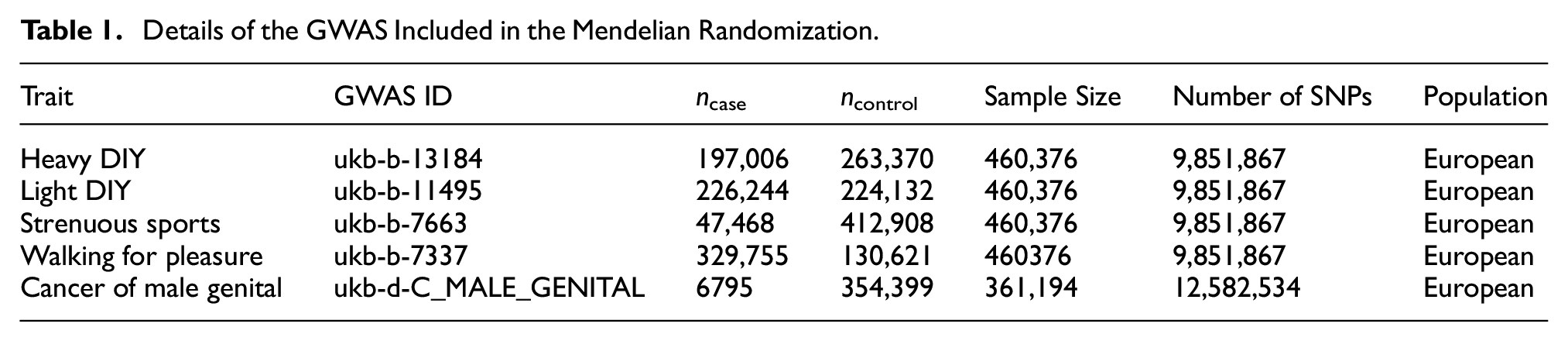
In this study, the summary statistics for physical activity were obtained from the IEU OpenGWAS project (https://gwas.mrcieu.ac.uk/). Specifically, we selected four different intensities of physical activity as exposure variables, including heavy DIY (197,006 cases, 263,370 controls), light DIY (236,244 cases, 224,132 controls), vigorous exercise (47,468 cases, 412,908 controls), and walking (329,755 cases, 130,621 controls). These categories of physical activity cover a broad range, from daily light activities to high-intensity exercise, aiming to comprehensively evaluate the impact of different intensities of physical activity on the risk of male genital cancers.
The summary statistics for male genital cancer GWAS were also sourced from publicly available GWAS databases, which include multiple independent large-scale studies. The data specifically cover major types of male genital cancers, including prostate cancer, testicular cancer, and penile cancer, involving a large number of patients and control groups to ensure the breadth and reliability of the data. The related data include the incidence, epidemiological characteristics, and other relevant information about these diseases. The specific data sources are as follows: Prostate cancer: integrated data from multiple large-scale GWAS studies; Testicular cancer: GWAS data from European and other populations; Penile cancer: fewer studies, but combined with existing public datasets. All data used in this study are derived from public databases and do not involve any personal privacy information. These data come from several independent GWAS studies, ensuring their breadth and reliability (Table 1).
Details of the GWAS Included in the Mendelian Randomization.
Selection of Instrumental Variables
To ensure the validity of the MR analysis, we strictly adhered to the following criteria for selecting instrumental variables: (a) Selection of single nucleotide polymorphisms (SNPs), significantly associated with each type of physical activity, with the genotype-physical activity association reaching genome-wide significance (p < 5 × 10⁻⁸). (b) Clumping by Linkage Disequilibrium (LD), to ensure that the selected SNPs are independent across the genome. Specifically, the clumping method was employed with an LD threshold of r2 < .001 and a window size of 10,000 kb. (c) Exclusion of SNPs associated with potential confounders (such as smoking, alcohol consumption, etc.) to avoid pleiotropic effects of the instrumental variables. (d) Ensuring that each selected SNP meets the efficacy assessment criteria for instrumental variables, namely, that the F-statistic is greater than 10, to avoid the bias of weak instrumental variables. The formula for calculating the F-statistic is as follows: F = R2(N−k−1)/k(1−R2), where N is the sample size, k is the number of instrumental variables, and R2 is the variance explained by the instrumental variables. A value of F significantly greater than 10 indicates that weak instrument bias can be excluded(Borges et al., 2022; Gupta et al., 2017; Levin & Burgess, 2024).
Analysis
MR analysis was used to assess the causal relationship between different intensities of physical activity (heavy physical activity, light physical activity, vigorous exercise, walking, and other forms of exercise) and male genital cancers (including prostate cancer, testicular cancer, and penile cancer). To ensure the reliability and robustness of causal inference, we employed the inverse variance weighting (IVW) method, the MR-Egger regression method, and the weighted median (WM) method. These methods each have their own advantages and provide consistent causal effect estimates under different assumptions.
The IVW method is one of the most commonly used MR estimation methods and is suitable when all instrumental variables satisfy the assumption of no pleiotropy. This method obtains an overall causal effect estimate by taking a weighted average of the causal effect estimates for each SNP. Pleiotropy occurs when a genetic variant influences multiple traits, which can introduce bias in causal inference. When this assumption holds true, IVW generates an overall estimate of the causal effect by computing a weighted average of the causal effect estimates from each SNP. The weighting is done based on the inverse of the variance for each individual SNP estimate, which gives more weight to SNPs with greater precision. This makes IVW a highly effective method for causal inference, provided the assumptions about the IVs are satisfied. The MR-Egger regression method allows for the presence of directional pleiotropy (i.e., SNPs affecting the outcome variable through other pathways) and detects and adjusts for the impact of pleiotropy on causal effect estimates via the intercept term. The WM method provides a robust causal effect estimate against some invalid instrumental variables by assigning different weights to each SNP. This method allows for consistent causal effect estimates even if up to 50% of the instrumental variables are ineffective. MR-Egger regression not only detects the presence of pleiotropy but also adjusts for its influence on causal effect estimates. This adjustment is made by modeling the pleiotropic effect through an intercept term in the regression, which allows for a more accurate estimation of the causal relationship even when pleiotropy is present.
To ensure the robustness and reliability of the MR analysis results, we implemented several sensitivity analysis methods aimed at detecting and correcting potential pleiotropy, heterogeneity of instrumental variables, and the influence of individual SNPs on the overall results. First, Cochran’s Q statistic was used to assess the heterogeneity between instrumental variables (SNPs), specifically to determine if there were significant differences in the causal effect estimates of individual SNPs. A p-value less than .05 suggests significant heterogeneity, indicating that some SNPs may have pleiotropic effects or other potential biases. In the absence of significant heterogeneity, the homogeneity assumption for the instrumental variables is supported. Second, MR-Egger regression introduced an intercept term to detect systematic pleiotropy. If the intercept term significantly deviates from zero (p < .05), it suggests the presence of directional pleiotropy, which may require further adjustment; otherwise, the exclusion hypothesis for instrumental variables is supported (P. Li et al., 2022). Third, the MR-PRESSO (Pleiotropy RESidual Sum and Outlier) method was used to detect and correct SNPs with pleiotropic effects. This method involves three steps: detection of SNPs with significant pleiotropic effects, correction by removing the identified outlier SNPs, and re-estimation of the causal effects after exclusion to ensure robustness. This method effectively identifies and corrects pleiotropic SNPs, improving the accuracy of causal effect estimates (Verbanck et al., 2018). In addition, leave-one-out analysis was employed to assess the influence of individual instrumental variables on the overall causal effect estimate by sequentially removing each instrumental variable, recalculating causal effects, and observing changes in results. Lastly, funnel plots were used to visually display the distribution of effect sizes of the instrumental variables, enabling the detection of potential biases and heterogeneity. Through these multiple sensitivity analysis methods, we ensured the robustness and reliability of the MR results, providing a more comprehensive evaluation of causal effects.
Results
The MR analysis results for physical activity and male genital cancers are shown in Figure 1. The sensitivity analysis results are summarized in Tables 2 and 3. The MR estimates indicated that light DIY activity is a risk factor for male genital cancers (OR = 1.045, 95% CI [1.004, 1.089], p = .033). No causal relationship was observed between male genital cancer and the other three types of physical activity. Cochran’s Q test showed no heterogeneity (IVW, Q = 23.694 [df = 16], p = .096), and no outliers were detected according to the MR-PRESSO test. Both MR-Egger and MR-PRESSO indicated no horizontal pleiotropy (MR-Egger intercept no different from zero, p = .773; MR-PRESSO global test p = .445). Figure 2 shows the scatter plot of the MR analysis of the causal effect of physical exercise on male genital cancers. According to the leave-one-out (LOO) analysis (Figure 3), no SNP significantly influenced the causal effect between light DIY and cancer of male genitalia, and the funnel plot showed overall symmetry (Figure 4). The F-statistic for the light DIY instrumental variable was 35, well above 10. We can conclude that light DIY is associated with cancer of the male genitalia, and this causal effect is both reliable and robust.
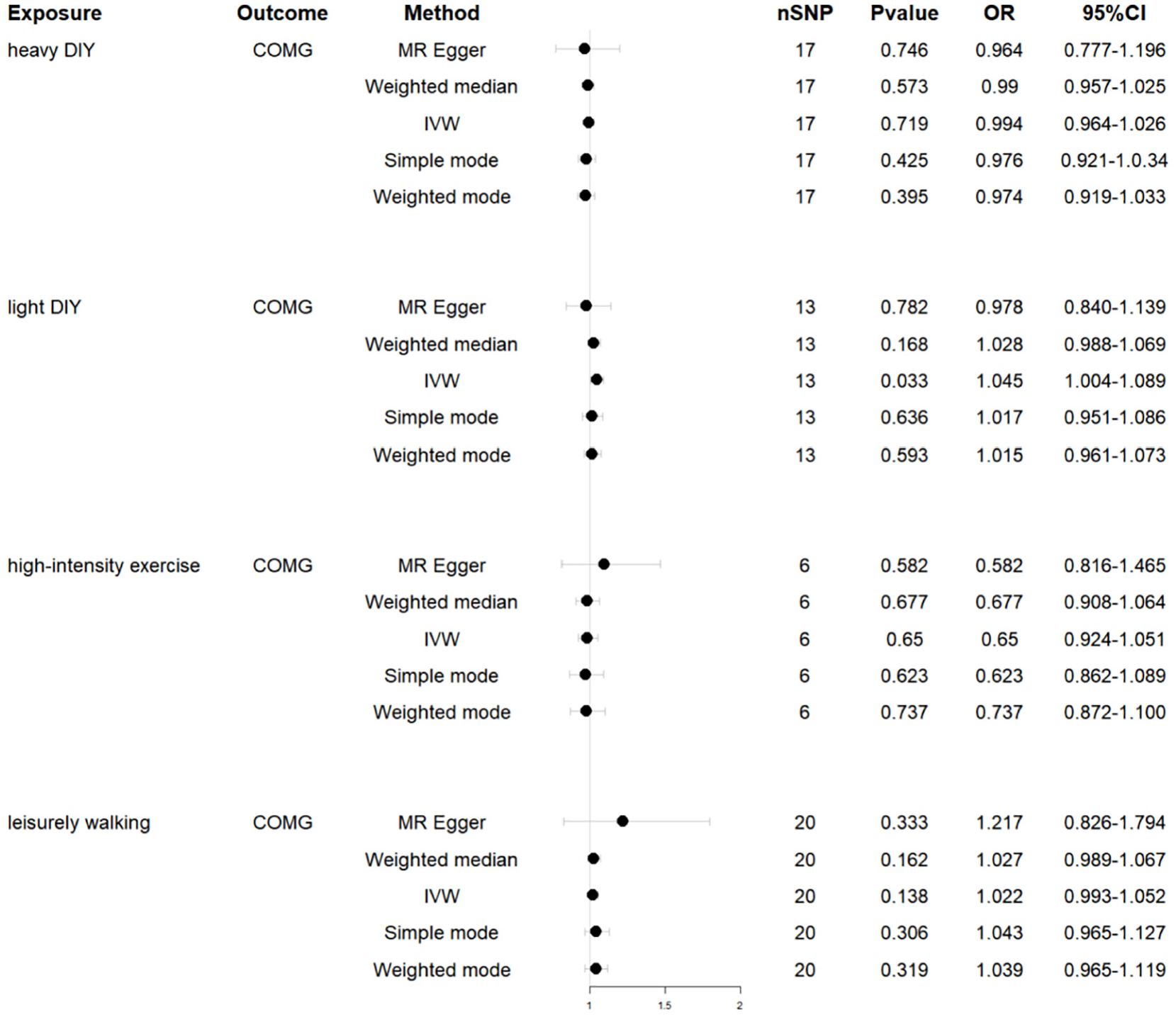
MR results for association of physical activity and COMG.
Heterogeneity of MR Analysis for Physical Activities and Cancer of Male Genital.

The Results of MR-Egger Intercept Analysis, MR-Pleiotropy Residual Sum and Outlier Methods for Risk of Physical Activities and Cancer of Male Genital.


Scatter plot of the association between physical activity and COMG.

The Leave-one-out analysis of physical activities and cancer of males. heavy DIY(A), light DIY (B), strenuous sports (C), walking for pleasure (D).
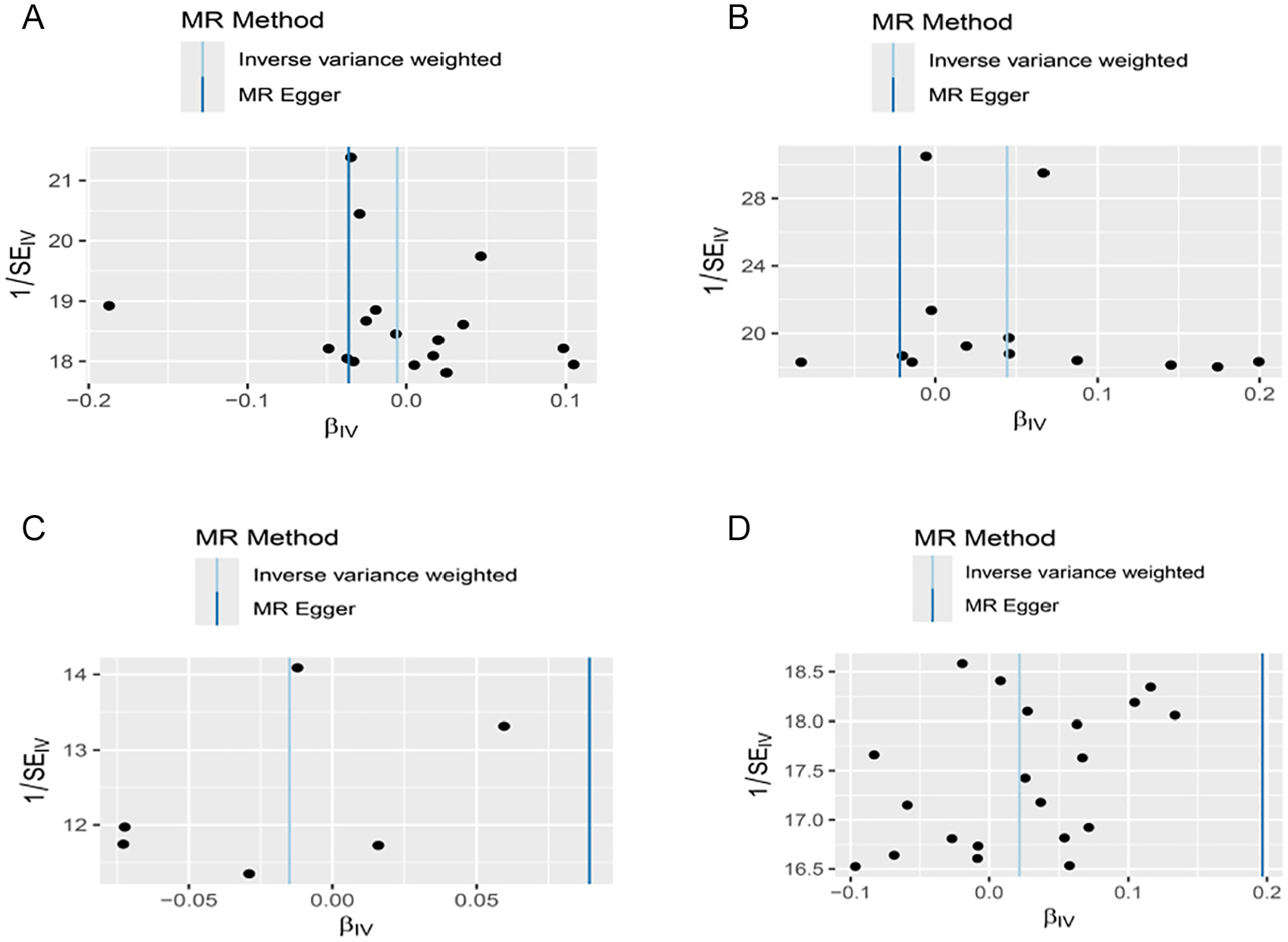
The funnel plot of physical activities and cancer of males.
Discussion
This study systematically evaluated the causal relationship between four different intensities of physical activity (heavy DIY, light DIY, vigorous exercise, and walking) and the risk of male genital cancers (COMG) using MR analysis. The results showed a positive association between light DIY activity and the risk of COMG (OR = 1.045, 95% CI [1.004, 1.089], p = 0.033), suggesting that light DIY activity may slightly increase the incidence of male genital cancers. No significant association was observed between other types of physical activity (heavy DIY, vigorous exercise, walking) and the risk of male genital cancers.
Regarding the relationship between physical activity and the risk of male genital cancers, existing literature mainly focuses on prostate cancer. Some observational studies suggest that vigorous physical activity may reduce the risk of prostate cancer through mechanisms such as reducing body fat, regulating sex hormone levels, and enhancing immune function(Hamblen et al., 2023; Schmidt & Rudolph, 2023). However, there is currently a lack of systematic research on the relationship between light DIY activity and the risk of male genital cancers. This study, for the first time, uses MR to reveal the potential causal relationship between light DIY activity and male genital cancers, filling a gap in this field of research.
Light DIY activity, as a form of daily physical activity, may slightly increase the risk of male genital cancers through various complex biological mechanisms. These mechanisms can be explored from the following aspects: (a) Chronic Inflammation and Oxidative Stress: Light DIY activity may involve prolonged repetitive movements or local muscle tension, which could trigger chronic inflammatory responses. Chronic inflammation is considered one of the key factors in the development of various cancers. Through sustained inflammatory responses, large amounts of reactive oxygen species (ROS) and inflammatory mediators are produced in the body, leading to DNA damage and gene mutations, thereby promoting tumor initiation and progression(Fernandes et al., 2024; Tezcan et al., 2024). In addition, oxidative stress not only directly damages cellular DNA but also activates signaling pathways such as nuclear factor-kappa B (NF-κB), further promoting inflammation and cell proliferation (Forman & Zhang, 2021; Hajam et al., 2022). (b) Hormonal Regulation: Physical activity has a significant impact on hormone levels in the body, particularly those related to the male reproductive system, such as testosterone and estrogen. Light DIY activity may cause slight fluctuations in testosterone levels, and testosterone plays a key role in the pathogenesis of prostate cancer. Studies suggest that both excessively high and low levels of testosterone may affect the proliferation and apoptosis of prostate cells, thus influencing cancer risk (Hayes et al., 2015; Schwanbeck et al., 2020). Moreover, light DIY activity may regulate the insulin-like growth factor (IGF) system, thereby modulating cell proliferation and apoptosis, and impacting tumor formation (D. Song et al., 2024). (c) Immune Function and Immune Surveillance: Physical activity has a dual regulatory effect on the immune system, potentially enhancing immune function, but in some cases, it may lead to immune system overactivation or fatigue. Light DIY activity may be insufficient to significantly enhance immune system efficacy and, in certain cases, may lead to immune dysfunction, reducing the ability to recognize and eliminate tumor cells (Lv et al., 2022). A weakened immune surveillance function creates conditions for tumor cells to escape detection and proliferate, increasing the risk of cancer (Goddard et al., 2024). (d) Lifestyle and Psychological Stress: Light DIY activity is generally considered low-intensity physical activity, which may be accompanied by higher psychological stress, especially related to time management and task completion. Long-term psychological stress has been shown to be associated with the onset of various cancers. By affecting the hypothalamic-pituitary-adrenal (HPA) axis, psychological stress alters hormone levels in the body, increases cortisol secretion, and consequently suppresses immune function and promotes inflammation (Bauer et al., 2022; Kuckuck et al., 2024). Additionally, psychological stress may impact health through behavioral pathways, such as irregular eating habits and poor sleep quality, which could indirectly increase cancer risk (Chen et al., 2022; Wakui et al., 2023). (e) Microenvironment Changes and Cell Signaling: Physical activity may also influence the body’s microenvironment, representing a potential mechanism. Light DIY activity may lead to changes in local blood circulation, affecting the oxygen supply and nutrient distribution in the tissue microenvironment. Hypoxic conditions can activate vascular endothelial growth factor (VEGF) and other angiogenic factors, promoting tumor angiogenesis and growth (M. Li et al., 2022; Melincovici et al., 2018; Takahashi, 2011; X. Zhang et al., 2024). Furthermore, physical activity can affect cell signaling pathways, such as the Wnt/β-catenin pathway, which plays a key role in cell proliferation, differentiation, and apoptosis. Abnormal activation of this pathway may promote tumorigenesis (P. Song et al., 2024; Y. Zhang & Wang, 2020).
The study offers several advantages. Employing the MR method and genetic instrumental variables, minimizes the influence of confounding biases and reverse causality, common in traditional observational studies, thereby enhancing the reliability of causal inferences. In addition, the study integrates large-scale summary statistics from multiple independent GWAS studies, significantly improving statistical power and the robustness of the results. Sensitivity analyses using IVW, MR-Egger regression, and WM methods were conducted, ensuring the robustness and consistency of the findings. However, the study also has certain limitations. Despite carefully selecting instrumental variables, some SNPs may still have pleiotropic effects, potentially affecting the accuracy of causal effect estimates. Furthermore, since the study primarily relies on GWAS data from European populations, the results may not fully apply to other ethnic groups or populations, limiting the generalizability of the findings. To improve the reliability of causal inferences, future studies should place more emphasis on the consideration of multiple and confounding effects.
Although the study found a mild positive correlation between light DIY activity and the risk of male genital cancers, its clinical significance should be interpreted with caution. Physical activity, as a critical lifestyle factor, offers multiple health benefits, including the prevention of cardiovascular diseases, improvement of metabolic functions, and enhancement of immune function. Therefore, while promoting physical activity, attention should be given to the proper balance of activity types and intensities to avoid the potential risks associated with excessive or improper light physical activities. Moreover, public health interventions should consider the risks and benefits of different types of physical activity and develop personalized, precise health guidance to optimize the overall impact of physical activity on male reproductive health. Health education targets the middle-aged and older male population. A moderate pattern of exercise and activity can be promoted for these groups by encouraging them to participate in moderate physical activities (e.g., walking, yoga, and Tai Chi) that are effective in improving overall health and reducing cancer risk while avoiding overburdening. In this way, individuals can be helped to enjoy the benefits of exercise without increasing unnecessary health risks.
Future research should further explore the effects of different types and intensities of physical activity on specific types of male genital cancers, particularly prostate cancer, testicular cancer, and penile cancer. In addition, expanding the diversity of study populations to include various ethnic groups would enhance the generalizability and applicability of the results. Combining longitudinal cohort studies with mechanistic experiments to investigate the specific biological mechanisms through which physical activity affects male genital cancer risk will provide a scientific basis for developing more targeted and personalized prevention strategies. Future studies should also consider using more detailed physical activity classifications and quantification metrics to capture the subtle impacts of different activities on health. Future research further explores the role of mechanical stress and localized tissue damage in cancer development, particularly how they play a role in long-term DIY activities.
Conclusion
This study, using MR analysis, is the first to reveal the potential causal relationship between light DIY activity and the risk of male genital cancers, suggesting that light DIY activity may slightly increase the incidence of male genital cancers. However, no significant association was observed between other types of physical activity and the risk of male genital cancers. While the findings hold academic value, their clinical significance requires further validation. Future research should continue to investigate the effects of various types of physical activity on specific male genital cancers to refine preventive strategies.
Footnotes
Acknowledgements
We thank all the researchers who contributed to this MR study. We also thank all the institutions and researchers who provided data for this MR study.

Ethical Considerations
Ethical approval was not provided for this study on human participants because we used the publicly available GWAS catalog to conduct a two-sample MR study. No additional ethical approval was required due to the re-analysis of previously summary-level data. The patients/participants provided their written informed consent to participate in this study.
Funding
The author(s) received no financial support for the research, authorship, and/or publication of this article.
Declaration of Conflicting Interests
The author(s) declared no potential conflicts of interest with respect to the research, authorship, and/or publication of this article.
Date Availability
The original contributions presented in the study are included in the article/Supplementary Material. Further inquiries can be directed to the corresponding authors.