



Abstract
Hispanic men have the highest prevalence of obesity relative to other racial and ethnic subgroups; however, this population is consistently underrepresented in weight management interventions. This systematic review aims to provide an overview of behavioral weight management interventions adapted for Hispanic men and describe their tailoring strategies and efficacy. Six online databases were selected for their abundant collection of high-quality, peer-reviewed literature and searched for studies which evaluated and reported weight outcomes for a cohort of adult (>18 years) Hispanic men. Of 6,508 unique publications screened, 12 interventions met inclusion criteria, the majority of which were published in the past 10 years. Only one study regarding an intervention tailored for Hispanic men was a randomized controlled trial adequately powered to assess a weight-based outcome; the remaining assessed feasibility or utilized quasi-experimental methods. Intervention characteristics and tailoring strategies varied considerably, but content was most frequently based on the Diabetes Prevention Program. Tailoring strategies commonly focused on improving linguistic access and incorporating social or family support. Follow-up varied from 1 month to 30 months and mean change in weight, the most common outcome, ranged from 0.6 to −6.3 kg. Our findings reveal a need for more fully powered randomized controlled trials evaluating the efficacy of interventions systematically tailored specifically for Hispanic men. Although the majority were not fully powered, these interventions showed some efficacy among their small cohorts for short-term weight loss. Future directions include exploring how to tailor goals, concepts, and metaphors included in interventions and comparing individual to group delivery settings.
Introduction
The prevalence of overweightness and obesity in Hispanic men—79% and 40%, respectively—is among the highest compared to men of other racial and ethnic subgroups in the United States (Pagoto et al., 2012; Valdez & Garcia, 2021). By extension, the prevalence of obesity-related comorbidities such as type II diabetes mellitus, cardiovascular disease, nonalcoholic fatty liver disease (NAFLD), and dyslipidemia is higher among Hispanic men compared to non-Hispanic white men and non-Hispanic Black men (Alemán et al., 2023). Structural and social factors, as well as chronic stress, predispose Hispanic men to obesogenic risk factors, including poor diets and physical inactivity (Velasco-Mondragon et al., 2016). Notably, Hispanics who were born in the United States or spent long periods of their life in the United States have the highest prevalence of obesity compared to those who were foreign-born or spent less time living in the United States (Carmen et al., 2015). It has been hypothesized that this is due to the obesogenic environment of the United States. Of pertinence to addressing these risks, prior research has demonstrated that Hispanic men also express significantly less weight-related concern than other populations (Pagoto et al., 2012; Valdez & Garcia, 2021).
The Hispanic population remains the largest and fastest growing demographic in the United States, accounting for 62.1 million people censused in 2020— a growth of 23% in one decade (Jones et al., 2022; Passel et al., 2022). Despite the growing burden of obesity among Hispanic men, there is a dearth of research assessing the unique health experiences of Hispanic men in relation to weight management (Ghazal Read & Borelli Smith, 2018). Hispanic men remain significantly underrepresented in published weight loss trials and there is a lack of knowledge regarding effective obesity management for this population (Garcia et al., 2017; Pagoto et al., 2012). As such, there is an urgent need to identify the behavioral interventions that have focused on weight management specifically among Hispanic men.
The relationship between social determinants of health, behavioral risk factors, and obesity is fundamental to the development of successful weight loss interventions among Hispanics. As such, behavioral weight loss interventions are often culturally tailored to overcome structural and social obstacles (Perez et al., 2013). For example, a recently published systematic review analyzed the efficacy of culturally adapted weight loss interventions in Latina women in the United States; the most common strategies employed by reviewed studies included recruiting bilingual and bicultural research staff, delivering interventions in Spanish, referencing traditional Hispanic foods, incorporating Latin dancing, and including family members (Morrill et al., 2021). Among fifteen studies that were included, only eight led to significant improvements in body mass index (BMI) or weight and the majority of included studies were limited in duration and feasibility (Morrill et al., 2021). Because modest weight loss improves cardiovascular disease outcomes, glycemic control, blood pressure, and dyslipidemia, further development of these interventions is essential (Magkos et al., 2016; Morrill et al., 2021; Wing et al., 2011). Despite their unique gender and cultural needs, to our knowledge, a review of culturally adapted behavioral weight loss interventions among Hispanic men does not yet exist.
The objective of this study was to provide an overview of behavioral weight management interventions tailored for Hispanic men and published to-date. Through a systematic review of the literature, we identified the various strategies used to tailor interventions for this population and described their efficacy in relation to weight reduction. Results can serve as a reference for the development and optimization of weight management interventions tailored for Hispanic men.
Methods
This methodology was prepared according to the Preferred Reporting Items for Systematic Reviews and Meta-Analyses (PRISMA) Statement and registered in advance with the International Prospective Register of Systematic Reviews (PROSPERO) (registration number: CRD42022343322) (Page et al., 2021). This study was determined to be exempt from Institutional Review Board (IRB) oversight by the Weill Cornell Medicine IRB committee.
Study Population
We herein use the term “Hispanic” to classify persons of Mexican, Cuban, South or Central American, Puerto Rican, or other Spanish culture or origin, regardless of race, but recognize the continued evolution of terms used to denote self-identity in racial and ethnic groups. Our search aimed to acknowledge the diversity of existing terms, including Hispanic, Latino/a, Latinx and Latine. We recognize the heterogeneity of the Hispanic population in relation to several dimensions, including Hispanic origin; however, these descriptors were not included here given they were not reported in most interventions selected for review.
Search Strategy and Eligibility Criteria
We comprehensively searched the following databases for manuscripts published up until July 19, 2024: MEDLINE (Ovid), Embase (Ovid), CINAHL (EbscoHost), PsycINFO (EbscoHost), Cochrane Library (Wiley), and Scopus (Elsevier). These databases were selected as they are high-quality and have a broad collection of peer-reviewed manuscripts. Reference lists from extracted articles and from existing literature reviews were used. Only publications written in English were included. Supplementary Table 1 details the keys terms searched.
Inclusion criteria were: (1) Study sample includes Hispanic/Latino adult (>18-year-old) men living in the United States; (2) Evaluation of behavioral or lifestyle intervention with the goal of weight loss or weight gain prevention; (3) Outcomes measure the effectiveness of weight management or cultural tailoring. Studies that recruited both men and women or children were included if results for Hispanic men were reported individually. Those conducted on a special subset of the target population (e.g., only individuals with an existing health condition such as diabetes mellitus 2, cancer, or NAFLD) were not included. Interventions aiming to prevent chronic disease (i.e., diabetes mellitus 2) were included if weight reduction was a primary goal. Interventions that included a pharmacological or surgical component were not included. Supplementary Table 2 further delineates the inclusion and exclusion criteria used.
Study Selection and Data Extraction
Publications resulting from the search were uploaded by KP to Covidence, a reference and systematic review management software. Four reviewers used the predetermined inclusion and exclusion criteria to screen the primary literature pool in two stages. First, a title and abstract screening was conducted. Manuscripts not eliminated in this phase then underwent a whole text screening to produce the final literature pool. At least two individuals reviewed each manuscript at both stages and made the decision of whether to include each manuscript. Disagreements were resolved by reaching a consensus at meetings including all four reviewers.
Manuscripts which met all inclusion criteria were reviewed during the data extraction phase. Basic information about each study, including author and publishing date, objectives, setting, study design and methodology, results, and participant characteristics were transferred to a data table. This data table was informed by previously published systematic reviews regarding weight loss interventions (Corona et al., 2016; Perez et al., 2013). The Ecological Validity Framework was used to systematically evaluate how interventions were tailored for Hispanic men. This framework, developed by Bernal and Saez-Santiago, outlines 7 dimensions of an intervention that can be modified to optimize cultural sensitivity: language, persons, metaphors, content, concepts, goals, methods, and context (Bernal & Sáez-Santiago, 2006). These dimensions are further described in Supplementary Table 3. Intervention methodology details which matched one of these tailoring strategies were included in the data table. Two members of the research team analyzed each manuscript and extracted data into a standardized table independently. Differences in the extracted data were reconciled by a third research team member to ensure fidelity of information provided. If there were multiple manuscripts associated with one intervention, such as a protocol published separately from results, these were all referenced when extracting data regarding a specific intervention.
Quality Assessment
Publications included in this study underwent risk of bias and quality assessment using the Effective Public Health Practice Project (EPHPP) Quality Assessment Tool for Quantitative Studies. This tool has been validated for quality assessment during systematic literature reviews and has excellent interrater agreement for global study rating (Armijo-Olivo et al., 2012; Thomas et al., 2004). Two members of the research team each conducted a quality assessment using the EPHPP tool, and their responses were reconciled by a third team member. Each study was assessed for selection bias, study design, confounders, blinding, data collection methods, withdrawals and dropouts, intervention integrity, and data analysis. Based on this assessment, each study was then given a global rating of strong, moderate, or weak that was agreed upon by all reviewers.
Data Synthesis
All collected data was synthesized using thematic analysis. Prominent themes among the included interventions were summarized in narrative format. Meta-analysis was not possible given heterogeneity in study design, target population, and results reported. In addition, most results (8/12) from these trials were not powered to detect statistical significance and as a result it was difficult to draw conclusions about their efficacy. Qualitative synthesis focused mainly on describing methods and tailoring strategies implemented to target the Hispanic male population.
Results
Of 6,508 publications initially screened, 137 full text articles were reviewed, of which 16 met final inclusion and exclusion criteria describing 12 unique interventions (Baltaci et al., 2022; Frediani et al., 2021; Garcia et al., 2019; Gary-Webb et al., 2018; Guerrero et al., 2023; Mitchell et al., 2015; O’Connor et al., 2020; Rocha-Goldberg et al., 2010; Rosas et al., 2015, 2022; Singh et al., 2020; West et al., 2008). Figure 1 presents a complete flow diagram for the reviewed articles.

Literature Selection Flowchart
Characteristics of Included Studies
All studies included were published after 2008, and the majority (n = 10) were published within the past 10 years (Baltaci et al., 2022; Frediani et al., 2021; Garcia et al., 2019; Gary-Webb et al., 2018; Guerrero et al., 2023; Mitchell et al., 2015; O’Connor et al., 2020; Rosas et al., 2015, 2022; Singh et al., 2020). Five studies focused specifically on Hispanic men, only one of which was a fully powered randomized controlled trial (Rosas et al., 2022). The remaining studies were either feasibility studies (Frediani et al., 2021; Garcia et al., 2019; Gary-Webb et al., 2018; Guerrero et al., 2023; Mitchell et al., 2015; O’Connor et al., 2020; Rocha-Goldberg et al., 2010) and/or used one-armed quasi-experimental designs (Frediani et al., 2021; Gary-Webb et al., 2018; Rocha-Goldberg et al., 2010; Singh et al., 2020) and/or obtained a sample beyond Hispanic men, including those identifying as other race/ethnicities (Gary-Webb et al., 2018; West et al., 2008), genders (Guerrero et al., 2023; Mitchell et al., 2015; Rocha-Goldberg et al., 2010; Rosas et al., 2015; Singh et al., 2020; West et al., 2008) or age-groups (Baltaci et al., 2022; O’Connor et al., 2020; Guerrero et al., 2023; Singh et al., 2020). Total number of Hispanic men included in an intervention arm across all studies was 535. Most studies required that participants have a BMI-based inclusion criteria (Frediani et al., 2021; Garcia et al., 2019; Gary-Webb et al., 2018; Mitchell et al., 2015; O’Connor et al., 2020; Rosas et al., 2015, 2022; West et al., 2008) often requiring a BMI of at least 25 kg/m2, but inclusion criteria were otherwise variable. Several studies sampled those with additional diabetes risk factors (Frediani et al., 2021; Gary-Webb et al., 2018; West et al., 2008), cardiovascular risk factors (Rocha-Goldberg et al., 2010; Rosas et al., 2015, 2022), or parents of children at risk for obesity (Baltaci et al., 2022; Guerrero et al., 2023; O’Connor et al., 2020; Singh et al., 2020). Four studies recruited patients who identified Spanish as their primary language (Baltaci et al., 2022; Mitchell et al., 2015; Rocha-Goldberg et al., 2010; Rosas et al., 2015). The included studies varied considerably in their setting. The majority primarily recruited participants from clinical sites (O’Connor et al., 2020; Rocha-Goldberg et al., 2010; Rosas et al., 2015, 2022; Singh et al., 2020; West et al., 2008) and the remaining studies recruited participants from community sites (Baltaci et al., 2022; Frediani et al., 2021; Garcia et al., 2019; Gary-Webb et al., 2018; Guerrero et al., 2023; Mitchell et al., 2015). Notably, one study aimed to sample farmworkers and recruited participants at their workplace (Mitchell et al., 2015). Sample sizes of Latino men varied substantially (7-186). Given the heterogeneity of these studies, and the dearth of adequately powered results, a meta-analysis was not possible. Table 1 describes study characteristics in further detail.
Characteristics of Included Studies
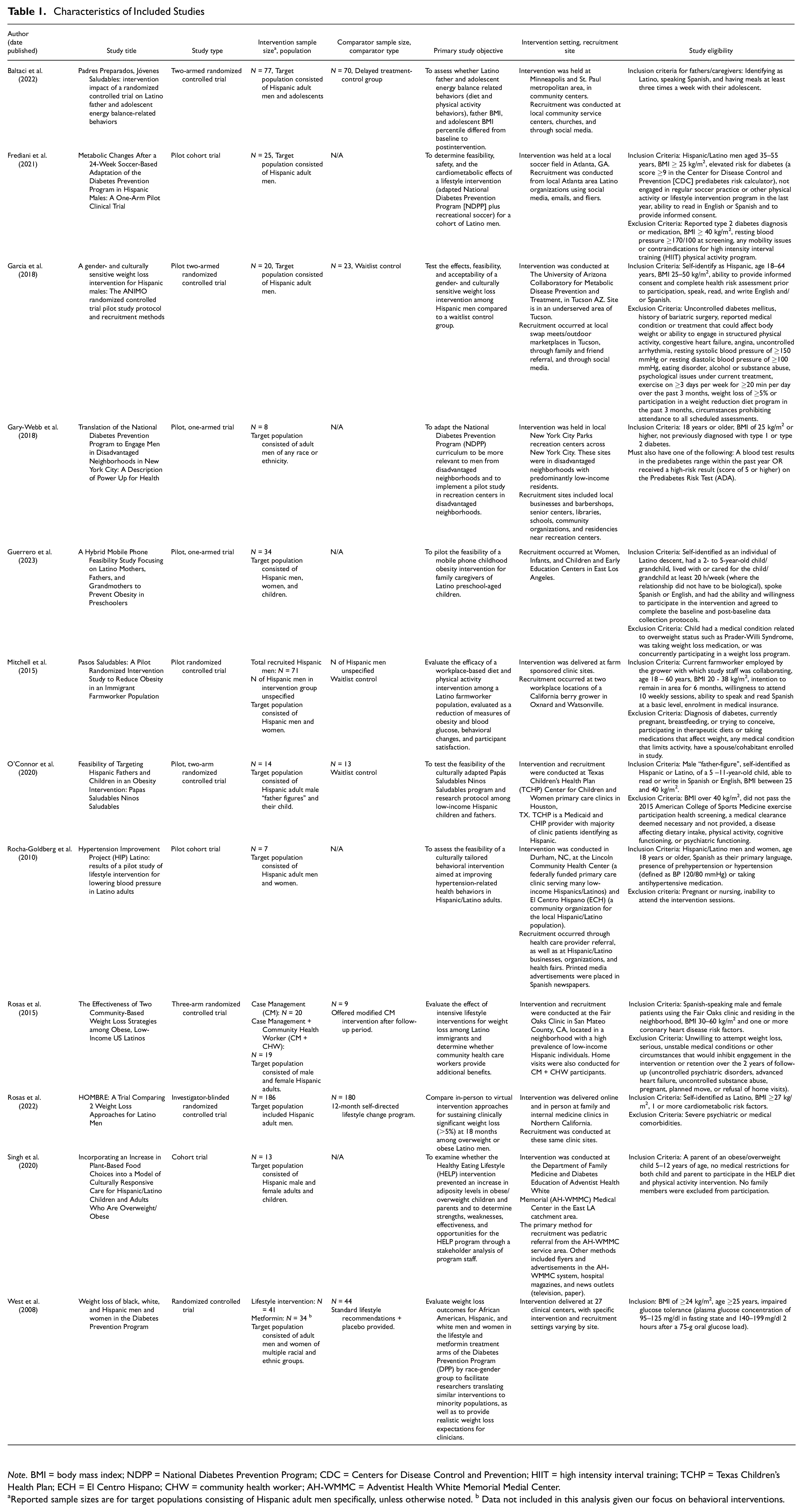
Note. BMI = body mass index; NDPP = National Diabetes Prevention Program; CDC = Centers for Disease Control and Prevention; HIIT = high intensity interval training; TCHP = Texas Children’s Health Plan; ECH = El Centro Hispano; CHW = community health worker; AH-WMMC = Adventist Health White Memorial Medial Center.
Reported sample sizes are for target populations consisting of Hispanic adult men specifically, unless otherwise noted. b Data not included in this analysis given our focus on behavioral interventions.
Characteristics of Included Interventions
The majority of interventions had intensive phases, lasting 1 to 12 months, followed by maintenance phases extending the intervention to a range of 2 months to 2 years (Baltaci et al., 2022; Frediani et al., 2021; Garcia et al., 2019; Guerrero et al., 2023; Rosas et al., 2015, 2022; Singh et al., 2020; West et al., 2008). The remaining interventions consisted of only a single phase and ranged from 6 to 16 weeks. Interventions most often consisted of weekly group sessions lasting 45 to 150 minutes. Notably, one study supplemented group sessions with individual sessions (Rosas et al., 2015), while two others consisted explicitly of individual sessions (Garcia et al., 2019; West et al., 2008).
Intervention content and structure was most often theoretically informed by the DPP (Frediani et al., 2021; Garcia et al., 2019; Gary-Webb et al., 2018; Rosas et al., 2015, 2022; West et al., 2008). Several interventions engaged participants in physical activity and/or cooking during the sessions. Some of the interventions had remarkably unique components, such as incorporating the DPP curriculum into twice weekly soccer matches (Frediani et al., 2021), encouraging Hispanic men to be change agents for their children (O’Connor et al., 2020; Singh et al., 2020), and coordinating community health worker home visits and photovoice activities in which pictures of participants’ food and physical activity were leveraged for goal setting and problem-solving (Rosas et al., 2015). Others incorporated supplementary mobile health educational materials (Garcia et al., 2018; Guerrero et al., 2023). Table 2 describes intervention characteristics in further detail.
Intervention Characteristics of Included Studies

Note. NDPP = National Diabetes Prevention Program; HIP = hypertension improvement program; CHW = community health worker; AH-WMMC = Adventist Health White Memorial Medial Center.
National Diabetes Prevention Program (Albright & Gregg, 2013). b Diabetes Prevention Program (“The Diabetes Prevention Program”, 1999).
Use of Tailoring Strategies
Tailoring strategy use is summarized in Table 3 and described below.
Cultural Tailoring Strategies of Included Studies

Note. ECE = early childhood education; CHW = community health worker; AH-WMMC = Adventist Health White Memorial Medial Center.
Language
All interventions provided an option for engagement in Spanish. One study dedicated a single site where the intervention was held entirely in Spanish (Frediani et al., 2021), whereas other studies paired bilingual interventionists with individual subjects based on their language needs.
People
Nearly all the interventions were led by bilingual personnel who could deliver the content in the participant’s language of choice (Baltaci et al., 2022; Frediani et al., 2021; Garcia et al., 2019; Gary-Webb et al., 2018; Guerrero et al., 2023; Mitchell et al., 2015; O’Connor et al., 2020; Rocha-Goldberg et al., 2010; Rosas et al., 2015, 2022; Singh et al., 2020) and explicitly identified as bicultural or Latino/a (Garcia et al., 2019; Gary-Webb et al., 2018; Mitchell et al., 2015; Rocha-Goldberg et al., 2010; Rosas et al., 2015, 2022; Singh et al., 2020; West et al., 2008). Notably, only four programs were led specifically by bilingual men (Baltaci et al., 2022; Frediani et al., 2021; Garcia et al., 2019; Gary-Webb et al., 2018).
Metaphors
Three interventions were delivered in familiar community settings, such as local parks and recreation centers or soccer fields (Baltaci et al., 2022; Frediani et al., 2021; Garcia et al., 2019; Gary-Webb et al., 2018). One study ensured that decor and information posted on the walls of their intervention site were linguistically and culturally appropriate (Garcia et al., 2019).
Content
Six interventions included educational materials described as culturally and linguistically adapted (Frediani et al., 2021; Garcia et al., 2019; Guerrero et al., 2023; Mitchell et al., 2015; O’Connor et al., 2020; Rocha-Goldberg et al., 2010; Singh et al., 2020; West et al., 2008), and some sent culturally tailored messages directly to participants through phone or social media (Frediani et al., 2021; Garcia et al., 2019; Gary-Webb et al., 2018; O’Connor et al., 2020); details about how content was culturally adapted was often not reported. Two studies made use of mobile health materials, one of which was web-based due to evidence that minority populations are high users of mobile phones but are less likely to be receptive to downloading applications (Garcia et al., 2018; Guerrero et al., 2023). One study adapted the reading level of their materials (O’Connor et al., 2020), while others made use of educational materials requiring no reading, such as the My Plate Visual, to communicate concepts to participants with limited literacy (Mitchell et al., 2015; Rosas et al., 2022).
Concepts
Several interventions drew upon the concept of familismo (familism), encouraging engagement or support from participant’s family members (Baltaci et al., 2022; Frediani et al., 2021; Garcia et al., 2019; Guerrero et al., 2023; Mitchell et al., 2015; O’Connor et al., 2020; Rosas et al., 2015, 2022; Singh et al., 2020). One study incorporated concepts of respeto (respect), and colectivismo (collectivism) into lessons, encouraging reciprocal reinforcement between fathers and sons (O’Connor et al., 2020). Another centered communication around cultural concepts of personalismo (personalism), simpatia (kindness), and respeto (respect) (Garcia et al., 2019), while a third study used the concept “Football is Medicine” to tie a culturally significant sport into health education (Frediani et al., 2021).
Goals
Several interventions developed made use of physical activity and nutrition goals. One study set goals related to fatherhood and activities with children (O’Connor et al., 2020). Another set goals related to portion control and ingredient substitution rather than elimination of culturally significant foods (Garcia et al., 2019). A number of studies had participants set their own individualized goals (Mitchell et al., 2015; O’Connor et al., 2020; Rocha-Goldberg et al., 2010; Singh et al., 2020).
Methods
Methodological adaptations were leveraged in all studies. To appeal to the target population, half of the interventions featured all-male participant groups (Frediani et al., 2021; Garcia et al., 2019; Gary-Webb et al., 2018; O’Connor et al., 2020; Rosas et al., 2022), and one aimed to provide flexibility by allowing participants to complete the interventions through synchronized video conferences or asynchronous prerecorded videos (Rosas et al., 2022). To facilitate social support, one study delivered the DPP curriculum between group-soccer activities and used WhatsApp group messaging (Frediani et al., 2021). Other methods included local supermarket tours and mapping out neighborhood walking routes for “virtual walking groups” (Singh et al., 2020). Three programs adapted recipes to feature ingredients familiar to Hispanic populations (Baltaci et al., 2022; Rocha-Goldberg et al., 2010; Singh et al., 2020). Resources were frequently utilized, such as providing a 6-month park membership with access to all of New York City (NYC) recreation centers, water bottles, calorie tracker books, and measuring utensils (Garcia et al., 2019). Families from one study were given a set of culturally adapted game cards with a bag of sports equipment to encourage family bonding and physical activity at home (O’Connor et al., 2020).
Recruitment strategies were frequently tailored. One study recruited participants at Hispanic Health Fairs (Rocha-Goldberg et al., 2010). Another recruited participants from outdoor marketplaces (swap meets) frequented by the local Hispanic population (Garcia et al., 2019). A third had male outreach workers distribute flyers to barbershops and other community-based organizations frequented by Hispanic men and collaborated with the NYC Housing Authority to mail flyers to eligible residents (Gary-Webb et al., 2018).
Context
Ten interventions aimed to address issues related to the larger context in which these studies occurred, such as those related to access or barriers to participation (Baltaci et al., 2022; Garcia et al., 2019; Gary-Webb et al., 2018; Mitchell et al., 2015; O’Connor et al., 2020; Rocha-Goldberg et al., 2010; Rosas et al., 2015, 2022; Singh et al., 2020; West et al., 2008). One study considered the financial burden of participating in exercise programs and provided transit passes to cover transportation costs (Gary-Webb et al., 2018). Another referred participants to health care services and community resources such as health insurance programs and immigration assistance programs, as needed (Rosas et al., 2015). A third provided a $100 budget per participant to overcome individual barriers to participation (West et al., 2008). Several studies addressed the context of gender or family roles during intervention sessions by including content on male-specific health issues, addressing the relationship between gender role strain and weight loss efforts, or holding discussions on fatherhood and the difficulties of raising children in a different culture than their own (Baltaci et al., 2022; Garcia et al., 2019; Gary-Webb et al., 2018; O’Connor et al., 2020).
Weight Outcomes
Follow-up varied considerably among studies from1 month to 30 months. Mean change in weight was the most common outcome, ranging from 0.6 kg (at 14 weeks, no p value nor confidence interval [CI] provided) to −6.3 kg (at 12 weeks; 95% CI −8.1, −4.4; p < .01) (Garcia et al., 2019; Mitchell et al., 2015). Mean change in waist circumference was available for several studies, ranging from −0.2 cm (at 14 weeks, no p value nor CI provided) to −6.6 cm (at 24 weeks; 95% CI −8.0, −0.9) (Frediani et al., 2021; Mitchell et al., 2015). Mean change in BMI was assessed in a number of studies, ranging from 0.7 kg/m2 (at 24 months; 95% CI −1.4, 0) to −1.4 kg/m2 (at 24 weeks; 95% CI −1.8, −0.9) (Frediani et al., 2021; Rosas et al., 2015). Only one study assessed the proportion of participants that reached a 5% weight loss goal, finding that 27.4% reached that goal at 18 months, compared to 20.6% in control (p = .13) (Rosas et al., 2022). Notably, this was the only randomized controlled trial adequately powered to detect a statistical difference in the primary outcome of interest among Hispanic men. Most studies were not adequately powered to detect between-group differences in any weight-related outcome. Two studies nonetheless showed statistically significant differences between groups, including one tailored specifically for Hispanic men and another for fathers and their children (Garcia et al., 2019; O’Connor et al., 2020). Other studies showed statistically significant changes in a weight-related outcome within one group compared to baseline (O’Connor et al., 2020; Singh et al., 2020; West et al., 2008). Table 4 describes intervention outcomes in further detail.
Outcomes of Included Studies

Note. BMI = body mass index; CI = confidence interval.
p values not reported in original study. b Bolding denotes statistical significance. c Mean age of entire cohort (Black and/or Latino men). d Point estimates; absolute values not reported in original study. e Mean age of entire cohort, including men and women. f SD not reported in original paper.
Risk of Bias and Quality Assessment
A summary of the distribution of evaluations for each study across various domains is described in Figure 2. Overall, four studies were given a global rating of “Weak” (Guerrero et al., 2023; Rocha-Goldberg et al., 2010; Rosas et al., 2022; Singh et al., 2020), seven studies were given a global rating of “Moderate” (Baltaci et al., 2022; Frediani et al., 2021; Garcia et al., 2019; Gary-Webb et al., 2018; Mitchell et al., 2015; Rosas et al., 2015; West et al., 2008), and one study was given a global rating of “Strong” (O’Connor et al., 2020). No studies received a “Strong” rating in the selection bias category because their participants were either not representative of the target population or, as was more commonly found, less than 80% of potential participants agreed to participate in the study. For the study design category, seven studies received the “Strong” rating due to their randomized controlled trial design (Baltaci et al., 2022; Garcia et al., 2019; (Mitchell et al., 2015; O’Connor et al., 2020; Rosas et al., 2015, 2022; West et al., 2008). Half of the studies were rated as “Moderate” for the confounders category as these studies had one or more important differences between groups which were not controlled for during analysis (Baltaci et al., 2022; Garcia et al., 2019; Rocha-Goldberg et al., 2010; Rosas et al., 2015; Singh et al., 2020; West et al., 2008). Two studies received a “Strong” rating for the blinding category as both outcome assessors and participants were blinded to exposure status or research question, respectively (Garcia et al., 2019; Rosas et al., 2015). Four studies have both reliable and valid data collection measures and received a “Strong” rating (Garcia et al., 2019; Gary-Webb et al., 2018; O’Connor et al., 2020; West et al., 2008). One study received a “Weak” rating as it included self-reported measures which have not been found to be valid or reliable (Rosas et al., 2022). Four studies received a “Strong” rating for the withdrawals and dropouts category as withdrawals and dropouts were reported and over 80% of participants completed the study (Garcia et al., 2019; Gary-Webb et al., 2018; Rosas et al., 2015, 2022). Among these 10 studies, the strongest categories include selection of appropriate study design and controlling for confounders. The areas for improvement include minimizing selection bias and conducting proper blinding of both interventionists and participants. Detailed individual study ratings can be found in Supplementary Table 4.

Summary of Risk of Bias and Quality Assessment of Included Studies
Discussion
This systematic review of the literature found that there are just three studies assessing the efficacy of behavioral weight management interventions aiming to sample Hispanic men specifically. Among those found, there is only one published sufficiently powered randomized control trial to-date. Several strategies have been used to tailor behavioral interventions to the needs of Hispanic men, though these have largely focused on recruiting participants from predominantly Hispanic settings, offering the intervention in Spanish, adapting the content to make it culturally relevant, or adapting the methodology to potentially improve the capacity for engagement. Regarding quality, the studies included were weakest in selection bias and blinding and strongest in study design and confounders categories. While published studies suggest there may be some weight loss benefits to these interventions, the heterogeneity and quality of existing studies at this time precludes a cohesive analysis, and there remains a need for more rigorous assessment of these interventions.
Although we expected few results given that men are underrepresented in weight management interventions, it was notable just how few interventions were found. We were particularly surprised that there was only one adequately powered randomized controlled trial focusing on this population. Over half of the interventions included were published in the last 5 years, following the trend observed in previously published reviews and demonstrating the lack of representation of Hispanic men in weight loss interventions. For example, a systematic review conducted by (Griffith et al., 2018) found 1 physical activity intervention focused on Hispanic men when searching 9 electronic databases for research published between 2011 and 2017. A review of lifestyle weight loss interventions by (Haughton et al., 2018) conducted in 2018 found that among participants in 94 studies only 8.7% identified as Hispanic or Latino, further emphasizing the low rates of inclusion and small number of studies focusing on this population. Notably, the review by (Griffith et al., 2018) also included an assessment of the interventions aiming to increase physical activity among African American men. Findings were similar: there is a lack of interventions targeting African American men, who have a relatively high risk of weight-related complications and historically low representation in weight management interventions. More recently, interventions have aimed to better recruit and engage African men as well; however, as with the studies we identified, those evaluating the effectiveness of such interventions, while promising, have usually consisted of nonrandomized pilot studies, limiting the interpretation of results (Griffith et al., 2023). While most of the studies included in our review were pilot studies, several have since been developed into ongoing randomized controlled trials—such is the case for the study by (Gary-Webb et al., 2018). These randomized controlled trials would help bridge the inequities in inclusion of Hispanic men in lifestyle interventions.
Although not powered to detect a significant difference, several of the studies found at least temporarily statistically significant reductions in weight at the 6-week to 30-month time point. These results are promising and may suggest a degree of efficacy for tailored interventions promoting weight loss among Hispanic men. Given the heterogeneity of studies and small sample sizes, it is difficult to draw conclusions about the effects of these interventions on weight-related outcomes, and even more so to evaluate the effect of incorporating specific cultural tailoring strategies. The only study that was sufficiently powered to detect a between-group difference in weight change found a mean weight difference that only approached statistical significance (−0.79 kg, p = .06) (Rosas et al., 2022). Participants in the intervention group chose from three different delivery methods (i.e., coached, online, in person), thus confounding the effect of specific tailoring strategies used in each modality. Overall, more fully powered randomized controlled trials are needed to determine the most efficacious delivery strategy of lifestyle interventions for this population.
We found the use of tailoring strategies to be limited in the studies included. Often, even reporting of certain strategies was limited. This may reflect the lack of studies tailored for this specific group, or the intensity of resources needed to tailor an intervention. The most frequently used strategy was to simply offer the program in Spanish. Every study provided participants with this option and six interventions made use of bicultural individuals who shared demographic characteristics with their target population. The involvement of bilingual and bicultural research staff is a well-established strategy that has been implemented in a number of weight loss interventions tailored for Hispanics with significant outcomes (Garcia et al., 2017). Indeed, the personal and professional attributes of researchers play an important role in both participant recruitment and research delivery. Along with increasing diversity of research staff, other strategies that have been used include creating community advisory boards to help design and implement studies (Khubchandani et al., 2016). Overall, the least common tailoring dimensions incorporated were metaphors, concepts, and goals. This demonstrates the potential for future exploration into how interventions may be further tailored for the Hispanic population by making use of these dimensions. Several strategies seemed theoretically fruitful: soccer-paired DPPs; all-male groups; addressing male-specific topics; flexible delivery options; and recipe education centered around culturally familiar foods. The wide variety of methodologic strategies highlights the breadth of possibility and has the potential to be combined as more interventions are developed.
One common theme among the interventions was the salience of social support. Most of the interventions were informed by the National DPP, a group-based adaptation of the DPP informed by social-cognitive theory. Even individual-based interventions provided community through coaches, direct tailored messages, or case managers and community health care workers (Garcia et al., 2019; Rosas et al., 2015; West et al., 2008). One surprising finding was that two of the interventions primarily focused on Hispanic men as change agents for family members, incorporating elements of familismo or family-centeredness. As evidenced by the original DPP, individual-based interventions are often effective. Such interventions may offer optimal opportunities for tailoring since they can specifically account for the needs of an individual; however, these interventions are rarely scalable due to the required resources (Rosas et al., 2015). On the other hand, social support was cited as an integral component of behavioral weight management programs, suggesting group-based interventions are more scalable and have added positive impact. Future studies will need to continue weighing the benefits and drawbacks of intervention delivery setting and potentially consider a hybrid that allows for an individual component supplemented with group support. One study offered a self-paced, individually delivered version of its program and found no differences in the proportion of participants that reached the 5% weight loss goal relative to the group-based program, potentially suggesting that these options are equally effective (Rosas et al., 2022). Future studies should consider evaluating the effectiveness of a self-paced individual intervention supplemented with group sessions in relation to standard of care (i.e., receiving weight loss recommendations from a physician or nutritionist).
This review was mainly limited by the heterogeneity and low number of published studies falling within our search criteria. The variation in intervention design and results reporting made an analysis of relative intervention efficacy presently unfeasible. With the publication of more and larger weight management interventions tailored for Hispanic men, recommendations for the development of effective interventions can be made. Detailed information about the studied samples, including country of origin, was rarely available in the studies included, limiting our assessment about the transferability of results to other populations. This review was also limited to evaluating cultural tailoring within specific categories of the Ecological Validity Framework (Bernal, Sáez-Santiago, 2006). Other studies have used different frameworks, for example, a 2013 review of obesity treatment interventions in U.S. Hispanics assessed interventions through the lens of the socioecologic model (Perez et al., 2013). Although limited to certain categories, no tailoring strategies from any studies were excluded from our analysis which was comprehensive.
Conclusion
This review found a pronounced lack of behavioral weight management interventions tailored for Hispanic men. The majority of those found had their results published during the last 10 years and were smaller feasibility studies. These interventions, though not appropriately powered, showed some efficacy for short-term weight loss which was statistically significant within their small cohorts. A limited number of tailoring strategies were incorporated, such as involving interventionists of similar background to participants, addressing broader cultural and gender context, and incorporating social or familial support. Future directions include exploring how to tailor goals, concepts, and metaphors included in interventions and comparing individual to group delivery settings. This is an essential area of research given the overwhelming lack of Hispanic male representation in weight management interventions and the urgent need to address obesity among this growing population.
Supplemental Material
sj-docx-1-jmh-10.1177_15579883241290344 – Supplemental material for Behavioral Weight Management Interventions for Hispanic Men in the United States: A Systematic Review
Supplemental material, sj-docx-1-jmh-10.1177_15579883241290344 for Behavioral Weight Management Interventions for Hispanic Men in the United States: A Systematic Review by Hana R. Flaxman, Noelia G. Hernandez, Brian Critelli, Brittney K. Chong, Karolina Sadowska, Kevin Pain and Christopher J. Gonzalez in American Journal of Men's Health
Supplemental Material
sj-pdf-2-jmh-10.1177_15579883241290344 – Supplemental material for Behavioral Weight Management Interventions for Hispanic Men in the United States: A Systematic Review
Supplemental material, sj-pdf-2-jmh-10.1177_15579883241290344 for Behavioral Weight Management Interventions for Hispanic Men in the United States: A Systematic Review by Hana R. Flaxman, Noelia G. Hernandez, Brian Critelli, Brittney K. Chong, Karolina Sadowska, Kevin Pain and Christopher J. Gonzalez in American Journal of Men's Health
Supplemental Material
sj-pdf-3-jmh-10.1177_15579883241290344 – Supplemental material for Behavioral Weight Management Interventions for Hispanic Men in the United States: A Systematic Review
Supplemental material, sj-pdf-3-jmh-10.1177_15579883241290344 for Behavioral Weight Management Interventions for Hispanic Men in the United States: A Systematic Review by Hana R. Flaxman, Noelia G. Hernandez, Brian Critelli, Brittney K. Chong, Karolina Sadowska, Kevin Pain and Christopher J. Gonzalez in American Journal of Men's Health
Supplemental Material
sj-pdf-4-jmh-10.1177_15579883241290344 – Supplemental material for Behavioral Weight Management Interventions for Hispanic Men in the United States: A Systematic Review
Supplemental material, sj-pdf-4-jmh-10.1177_15579883241290344 for Behavioral Weight Management Interventions for Hispanic Men in the United States: A Systematic Review by Hana R. Flaxman, Noelia G. Hernandez, Brian Critelli, Brittney K. Chong, Karolina Sadowska, Kevin Pain and Christopher J. Gonzalez in American Journal of Men's Health
Footnotes
Author Contributions
H.F. and C.G. conceived the study. K.P., H.F., and C.G. conceptualized the study. H.F., B.Ch., K.S., B.Cr., and K.P. conducted the literature search and analysis. H.F., N.H., and C.G. wrote and critically revised the manuscript.
Declaration of Conflicting Interests
The author(s) declared no potential conflicts of interest with respect to the research, authorship, and/or publication of this article.
Funding
The author(s) disclosed receipt of the following financial support for the research, authorship, and/or publication of this article: This project was funded by the Weill Cornell Medicine Career Advancement for Research in Health Equity (CARE) T37 program. The CARE T37 program is made possible (in part) by 1T37MD014220 from the National Institute on Minority Health and Health Disparities. Dr. Gonzalez was supported by the Mastercard Diversity-Mentorship Collaborative at Weill Cornell Medicine, the Robert Wood Johnson Foundation Harold Amos Medical Faculty Development Award (grant no. 234326-01), the NHLBI R25HL126146 subaward no. 13969c, the Cornell Center for Health Equity and Cornell Center for Social Science.

Data Availability Statement
Template data collection forms, data extracted from included studies, and data used for all analyses are available in Tables 1–3 and Supplementary Table 4.
Supplemental Material
Supplemental material for this article is available online.
References
Supplementary Material
Please find the following supplemental material available below.
For Open Access articles published under a Creative Commons License, all supplemental material carries the same license as the article it is associated with.
For non-Open Access articles published, all supplemental material carries a non-exclusive license, and permission requests for re-use of supplemental material or any part of supplemental material shall be sent directly to the copyright owner as specified in the copyright notice associated with the article.
