



Abstract
Although several studies have reported an inverse association between masculine discrepancy stress—the perceived failure to conform to internalized normative expectations of masculinity—and well-being, researchers have yet to consider the potential moderating or buffering role of religiosity. Regression analyses of data collected from a national sample of men (n = 2,018), the 2023 Masculinity, Sexual Health, and Politics survey indicated that masculine discrepancy stress was consistently associated with lower levels of subjective well-being, including poorer self-reported mental health, less happiness, and lower life satisfaction. We also observed that these associations were attenuated or buffered among men who reported regular religious attendance and greater religious salience. Taken together, our findings suggest that different expressions of religiosity may help to alleviate the psychological consequences of masculine discrepancy stress. More research is needed to incorporate dimensions of religion and spirituality into studies of gender identity and subjective well-being.
Keywords
Introduction
Masculine discrepancy stress is defined as a perceived failure to conform to normative expectations surrounding masculinity (Sileo et al., 2022). The concept of “discrepancy stress” is an aspect of masculinity that has been described as a form of intrapsychic strain that results when men perceive that they have failed to meet masculine ideals that they have internalized through years of gender socialization (Pleck, 1995). As Eisler and Skidmore (1987) note, discrepancy stress arises when men who subscribe to traditional gender norms are unable to “cope with the imperatives of the male role” (p. 125). Scholars have developed a measure of discrepancy stress that allows for a direct assessment of the degree to which men perceive that others see them as less masculine than their own internalized standards (Reidy, Berke, et al., 2016).
Although gender role discrepancy—or the nonconformity to socially prescribed masculine gender norms—is not necessarily problematic in itself, the strain or stress associated with the perceived loss of masculine identity (masculine discrepancy stress) may serve as a potent risk factor for unhealthy lifestyles and poor psychosocial functioning among men (Reidy, Brookmeyer, et al., 2016; Sileo et al., 2023). To date, several studies have linked gender role discrepancy stress with a range of risky behaviors, including, for example, unprotected sex (Fleming et al., 2014; Reidy, Brookmeyer, et al., 2016), heavy alcohol consumption (Gottert et al., 2018; Reidy et al., 2014; Yang et al., 2019), the perpetration of intimate partner violence (Reidy, Brookmeyer, et al., 2016; Reidy et al., 2014; Sileo et al., 2022), and lower rates of preventive behaviors that are relevant to chronic and infectious diseases (Mesler et al., 2022; Sileo et al., 2023). The idea is that some men attempt to “compensate” for the perceived loss of masculine identity by acting in ways that demonstrate invincibility and power with respect to their health and intimate relationships. In terms of well-being, masculine discrepancy stress has been linked with lower levels of self-esteem (perceived worthlessness) and mastery (perceived powerlessness) and higher levels of emotional distress (Rummell & Levant, 2014; Shields, 2002; Sileo et al., 2022, 2023).
In this study, we use national survey data to build on previous research in two ways. First, we consider several outcomes that have been understudied in the masculine discrepancy stress literature, including self-reported mental health, happiness, and overall life satisfaction. The question is whether the direct effects of masculine discrepancy stress extend to these unique indicators of well-being. Second, we examine whether the association between masculine discrepancy stress and well-being varies as a function of religiosity. Some research has considered the direct effects of religious affiliation on masculine discrepancy stress (T. D. Hill et al., 2022), but no prior studies have tested whether religiosity could moderate (amplify or attenuate) the harmful consequences of masculine discrepancy stress on subjective well-being.
Background
Masculine Discrepancy Stress and Well-Being
While the specific meaning of masculinity differs across Western societies (e.g., Connell, 1995), it is generally characterized by representations of traditional (and stereotypical) masculine culture (Connell & Messerschmidt, 2005). Traditional masculinity reflects dominant beliefs about what it means to be “manly” and the standards ascribed to the masculine gender role (Levant et al., 2013; Thompson and Pleck, 1986). The traditional masculinity framework suggests that men should strive to be respected for their accomplishments, never show weakness, seek risk and adventure, and actively reject what is defined as feminine (David & Brannon, 1976). Once learned and valued, claims to masculinity require ongoing effort to satisfy and conform to these social norms and expectations (Bosson & Vandello, 2011; Vandello et al., 2008).
As defined above, masculine gender role discrepancy occurs when men perceive that they have somehow fallen short of traditional masculine norms (Pleck, 1995; Reidy, Brookmeyer, et al., 2016). This discrepancy can be stressful when men perceive it as undesirable (Reidy et al., 2014). For example, when a man perceives himself as not living up to traditional masculine ideals while wishing he did, he is experiencing masculine discrepancy stress. Masculine discrepancy stress is important because it is a chronic stressor (as masculinity is constantly negotiated) that can undermine self-esteem and contribute to poorer mental health (Berke et al., 2022; Mesler et al., 2022; Olivardia et al., 2004; Reidy et al., 2018; Rummell & Levant, 2014; Yang et al., 2018).
The Moderating Role of Religiosity
In this paper, we propose that religiosity could moderate the inverse association between masculine discrepancy stress and well-being in two competing ways. The first way is that religiosity could amplify or exacerbate the inverse association between masculine discrepancy stress and well-being. Given that institutions of religion often support traditional cultures of masculinity (Bartkowski, 2001; Bartkowski & Hempel, 2009; Irby, 2014; Perry & Whitehead, 2021), more religious men could be especially vulnerable to the psychological consequences of masculine discrepancy stress. The idea is that falling short of masculine norms directly contradicts the cultural imperatives of religious institutions that tend to favor masculine identities. Cognitive dissonance is an important social psychological bridge between religious group commitments and well-being. Cognitive dissonance theory states that perceived conflicts among cognitions, self-conceptions, and behavior can contribute to psychological discomfort (Aronson, 1999; Elliot & Devine, 1994; Festinger, 1957; Pitt, 2010). Deviating from internalized group norms could conceivably undermine the well-being of men by contributing to cognitive dissonance (Exline, 2002; Mannheimer & Hill, 2015; Pitt, 2010).
The second way is that religiosity could attenuate or buffer the inverse association between masculine discrepancy stress and well-being. Numerous studies have documented a pervasive stress-buffering role of religiosity (Abu-Raiya et al., 2016; Acevedo et al., 2014; Ano & Vasconcelles, 2005; Bradshaw & Ellison, 2010; Brewster et al., 2016; DeAngelis et al., 2021; Ellison et al., 2019; Ellison & Henderson, 2011; Ironson et al., 2020; Jung, 2014, 2018; Kendler et al., 1997; Krause, 1998; Krause, 2006; Krause et al., 2017; Lechner et al., 2013; Lee et al., 2021; Park et al., 1990; Schnittker, 2001; Shah, 2019; Strawbridge et al., 1998; Stroope et al., 2017; Tavares et al., 2019; Upenieks, 2021; Upenieks et al., 2023; Whitehead & Bergeman, 2020). In this literature, religiosity has been shown to mitigate the effects of a wide range of stressors, including, for example, stressful life events, health problems, race-based discrimination, internalized heterosexism, financial hardship, work-related demands, work-family conflicts, childhood abuse, relationship loss, neighborhood stressors, negative media portrayals, and religious and spiritual struggles. These studies have also examined an impressive array of health-related outcomes, including, for example, sleep quality, anxiety, depression, happiness, nonspecific psychological distress, life satisfaction, poly-drug use, biological functioning (cortisol, C-reactive protein, viral load, glucose tolerance, and body mass), physical health, and mortality risk. The stress-buffering role of religiosity has also been observed across indicators like general religiosity, intrinsic religiosity, religious salience, religious attendance, frequency of prayer, meditation, scripture reading, religious coping, spiritual beliefs, spiritual help-seeking, church-based support, the sense of divine control, secure attachment to God, God salience, assurance of salvation, belief in an afterlife, religious sense of meaning in life, and religious hope. Taken together, previous studies suggest that a wide range of stressors are less detrimental to a wide range of health-related outcomes among individuals who express their religiosity through a wide range of religious beliefs, behaviors, and experiences.
In this study, we operationalize religiosity as religious attendance and religious importance or salience. Religious attendance could buffer the adverse psychological consequences of masculine discrepancy stress through the promotion of social resources like social support and social acceptance. The ritual of religious attendance (repeated and patterned engagement with like-minding people) is consistently associated with more supportive religious and nonspecific social networks (Bradley et al., 2020; Chatters et al., 2018; Ellison & George, 1994; Ellison et al., 2009; Krause, 2006b; Merino, 2014; Nooney & Woodrum, 2002). In these contexts, members of religious communities routinely exchange socioemotional support, helping to make others feel loved, valued, and cared for in ways that foster successful adjustment to stressful events and conditions (Chatters et al., 2018). These processes could extend to men who fall short of established masculine ideals.
Religious importance could also diminish the noxious effects of masculine discrepancy stress through the promotion of religious values. Religious importance or religious salience is the extent to which people carry their religious beliefs, values, and practices into all aspects of their daily lives (Worthington et al., 2003). Although religious communities are known to judge and sanction people for deviating from established religious norms, these same communities are often centered around role models (e.g., David, Moses, and Jesus) who were chosen for living virtuous lives, not for living up to masculine ideals. Religious communities could reject men for being less manly or just as easily value these same men for their morality. The idea is that expressions of masculinity (e.g., excess weight, sexual risk-taking, and substance abuse) (Courtenay, 2000; T. D. Hill & Needham, 2013) often violate the established morality standards of religious communities. In this sense, men who try carry their religious commitments into all aspects of their lives may derive greater acceptance from their religious groups than men who are more masculine.
Hypotheses
In accordance with these arguments, we developed three hypotheses to guide subsequent analyses:
Data and Methods
For this investigation, we use data from the 2023 Masculinity, Sexual Health, and Politics (MSHAP) survey. The primary purpose of the MSHAP survey is to empirically document the intersection of masculinity, sexual health, and politics in the United States. More specifically, the MSHAP survey is based on a national probability sample of 2,024 community-dwelling men aged 18 and over living in the United States. Respondents were sampled from the National Opinion Research Center’s (NORC) AmeriSpeak© panel, which is representative of households from all 50 states and the District of Columbia (AmeriSpeak, 2022). Sampled respondents were invited to complete the online survey in English between March 30, 2023, and April 12, 2023. The data collection process yielded a weighted cumulative response rate of 4.7%. The weighted cumulative response rate, which considers all panel recruitment and retention rates, is the overall survey response rate that accounts for survey outcomes in all response stages, including the panel recruitment rate, panel retention rate, and survey completion rate. It is weighted to account for the sample design and differential inclusion probabilities of sample members.
Our cumulative response rate is within the range (4%–5%) typically reported by high-quality general population surveys (see Pew Research Center, 2021). The multistage probability sample resulted in a margin of error of ±3.08% and an average design effect of 2.00. Margin of error is defined as half the width of the 95% confidence interval for a proportion estimate of 50% adjusted for design effect. A figure of ±3.08% is therefore the largest margin of error possible for all estimated percentages based on the study sample. A margin of error of ±3.08% at the 95% confidence level means that if we fielded the same survey 100 times, we would expect the result to be within 3.08% of the true population value 95 times. A margin of error of 3.00 is considered to be a very good margin (Cui, 2002). The average design effect is the variance under the complex design divided by the variance under a simple random sampling design of the same sample size. The design effect is variable-specific and the reported value is the average design effect calculated for a set of key survey variables. Design effects account for deviations from simple random sampling with a 100% response rate. A design effect of 2.00 is very good because it means that the variance is only about twice as large as would be expected with simple random sampling (Kish, 1965). The median self-administered web-based survey lasted approximately 10 minutes. All respondents were offered the cash equivalent of US$3.00 for completing the survey. The survey was reviewed and approved by the institutional review boards at NORC and the lead author’s university. Written informed consent was obtained from all participants.
Dependent Variables: Subjective Well-Being
We use three variables, all self-reported, to measure subjective well-being. The first is self-rated mental health (Ahmad et al., 2014). Respondents were asked, “In general, would you say your mental health is excellent, very good, good, fair, or poor?” Responses were coded from 1 = “Poor” to 5 = “Excellent. As a second measure of subjective well-being, we use a measure of happiness (Lyubomirsky & Lepper, 1999). Respondents were asked, “In general, I consider myself. . .” The response choices were, 1 = “A very unhappy person,” 2 = “A mostly happy person,” 3 = “A somewhat unhappy person,” 4 = “Neither happy or unhappy,” 5 = “A somewhat happy person,” 6 = “A mostly happy person,” and 7 = “A very happy person.” Finally, our third measure of subjective well-being is life satisfaction (Cheung & Lucas, 2014). All respondents were asked, “In general, how satisfied are you with your life?” Response options followed the same coding scheme as for happiness, ranging from 1 = “Completely dissatisfied” to 7 = “Completely satisfied.”
For the purposes of comparison across our three outcomes of subjective well-being, and for ease of interpretability of interaction terms, we treat all outcomes as linear variables and employ ordinary least squares regression models. We note, however, that all main findings did not change if we treated each of our outcome variables as categorical with ordinal logistic regression models.
Key Independent Variables
Masculine Discrepancy Stress: We use a modified version of a scale developed by Reidy et al. (2014) to measure masculine discrepancy stress. Four items were included to measure discrepancy stress, or the strain men feel about perceiving themselves to be less masculine than their internalized ideals, including: (1) “I wish I was more ‘manly,’” (2) “Sometimes I worry about my masculinity,” (3) “I worry that people judge me because I am not like the typical man,” (4) “I worry that others find me less attractive because I am not as ‘manly’ as other guys.” Responses ranged from 1 = “strongly disagree” to 5 = “strongly agree” and were average to form a scale where higher scores indicated greater masculine discrepancy stress (alpha = 0.87).
Religious Attendance: All men were asked, “How often do you usually attend church, synagogue or other religious meetings (either in-person or remotely)? Responses options were 1 = “Never,” 2 = “Less than once per month,” 3 = “1 to 3 times per month,” 4 = “Once per week,” and 5 = “Several times a week.”
Religious Salience: This was measured by the question, “How important is religion in your life?” Response categories were as follows: 1 = “Not important,” 2 = “Slightly important,” 3 = “Moderately important,” 4 = “Important,” and 5 = “Very important.”
Control Variables
To ensure that the association between masculine discrepancy stress and subjective well-being was not due to confounding, we adjust for a number of covariates in all statistical models. All demographic variables were coded in their original form (e.g., no variables were collapsed or re-coded). All models adjust for age (years), race/ethnicity (1 = White, non-Hispanic, 2 = Black, non-Hispanic, 3 = Hispanic, 4 = Other race), educational attainment (1 = less than high school, 2 = high school graduate or equivalent, 3 = some college/associates degree, 4 = bachelor’s degree, and 5 = post graduate/professional degree), employment status (1 = employed, 0 = otherwise), personal income, where respondents were given the option of four different categories (1 = US$30,000 or less, 2 = US$30,000–US$60,000, 3 = US$60,000 to under US$100,000, and 4 = US$100,000 or more), and relationship status of men (contrasting men who were married/living with a partner to those who were widowed, divorced, separated, and never married).
We also adjusted for respondents’ religious affiliation. This variable contrasted those of Protestant faith (reference group) with Catholic, Other Christians, Other Religion, No Religion, Atheists, and Agnostics. We also discuss how future research may include religious affiliation when considering masculine discrepancy stress and subjective well-being or related outcomes.
Analysis
Ordinary least squares regression techniques were used to estimate all statistical models. All statistical models were conducted in Stata 15. We tested a series of three models for each of our three outcome variables. In Model 1, we tested the baseline association between masculine discrepancy stress and subjective well-being, net of all study covariates. Model 2 then tested the interaction term between masculine discrepancy stress and religious attendance, adjusting for all study covariates. Finally, Model 3 tested the interaction term between masculine discrepancy stress and religious salience. In cases where we observed a significant interaction term, we plot predicted subjective well-being scores across low, moderate and high levels of masculine discrepancy stress (defined as 1SD below, at, and 1SD above the mean) and various categories of religious attendance or religious salience using the margins command in Stata 15, holding all other covariates at their respective means. All figures were generated in Microsoft Excel using the Stata margins estimates.
Listwise deletion was the method used to handle missing data, where we removed any cases missing on one of our study variables. This yielded a final analytic sample of 2,018 men. Multiple imputation with chained equations produced a similar pattern of results.
Poststratification weights were used to address sampling error and nonresponse bias. NORC developed poststratification weights for MSHAP via iterative proportional fitting or raking to general population parameters. These parameters included age, gender, census region, race/ethnicity, education, housing tenure, household phone status, and the interaction of age and gender (Age × Gender).
Results
Descriptive statistics for all study variables are presented in Table 1. On our outcome variables of subjective well-being, we observe that self-rated mental health variables ranged from 1 to 5, with a mean of 3.50 and a standard deviation of 1.06. Happiness ranged from 1 to 7 and had a mean of 5.31 (standard deviation = 1.32). Finally, life satisfaction was also measured on a 7-point scale and had a mean of 5.29 (standard deviation = 1.37). Moving to our measure of masculine discrepancy stress, this ranged from 105, and men had an average score of 2.05, but with some variation (standard deviation = 0.80).
Descriptive Statistics

On our two indicators of religiosity, by far the most commonly reported category of religious attendance was “never attends,” which represented 49.11% of the male sample (n = 9,191). About 13% (n = 262) of men attended once a week, and 5.84% (n = 118) of men attended several times a week. As with religious attendance, men were most likely to report that religion was “not important” in their lives, making up 34.18% (n = 690) of the sample. Still, however, over 1 in 5 (21.97%, n = 443) of men reported that religion was “very important in their lives,” with a fairly even distribution across the other three categories of religious salience.
Demographically, the average age of men in our sample was 40 years, and the sample was comprised of 61.71% White men (n = 1,245), 12.45% Black men (n = 251), 18.33% Hispanic men (n = 370) and 7.51% “Other” race (n = 156). About 1 in 3 men (n = 666) had earned a Bachelor’s degree or higher. Finally, just over half the sample was married or living with a partner (52.72%, n = 1,064), and 67.88% (n = 1,370) of men reported being employed at the time of the survey.
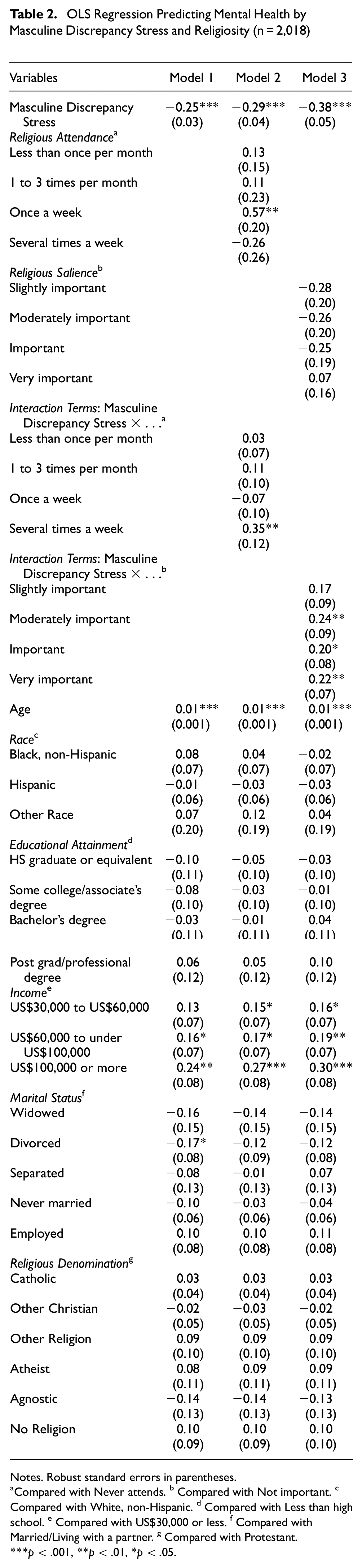
Table 2 presents results pertaining to self-reported mental health scores. We observe in Model 1 that masculine discrepancy stress was associated with lower self-reported mental health (b = −0.25, p < .001). This represents about a ¼ of a standard deviation difference in self-reported health scores for each one-unit increase in masculine discrepancy stress and supports the predictions of Hypothesis 1. In Model 2, we observe the presence of a positive interaction between religious attendance several times a week and mental health scores (b = 0.35, p < .01). This suggests that weekly religious attendance buffers the association between masculine discrepancy stress and mental health scores. Figure 1 visualizes this interaction term. As presented in Figure 1 in the third set of bars, mental health scores were higher among men who attended religious services several times a week relative to other attendance frequencies. We therefore observe support for Hypothesis 2: the relationship between masculine discrepancy stress and mental health scores was attenuated at higher frequencies of church attendance.
OLS Regression Predicting Mental Health by Masculine Discrepancy Stress and Religiosity (n = 2,018)
Notes. Robust standard errors in parentheses.
Compared with Never attends. b Compared with Not important. c Compared with White, non-Hispanic. d Compared with Less than high school. e Compared with US$30,000 or less. f Compared with Married/Living with a partner. g Compared with Protestant.
p < .001, **p < .01, *p < .05.
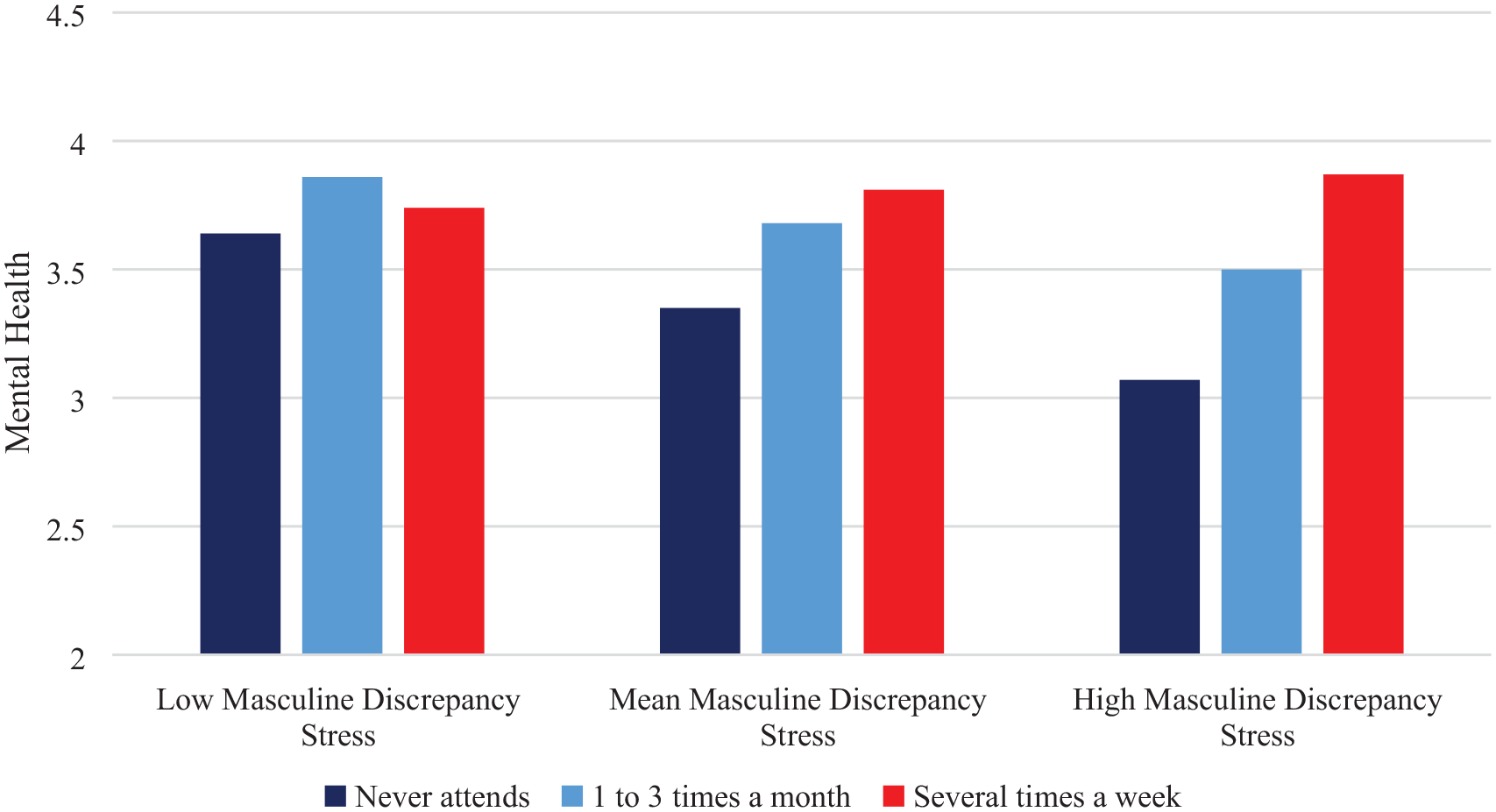
Masculine Discrepancy Stress × Religious Attendance in Predicting Mental Health
In Model 3, we also observe positive interaction terms between masculine discrepancy stress and religious salience, at moderately important (b = 0.24, p < .01), important (b = 0.20, p < .05), and very important (b = 0.22, p < .01). Mirroring the results for religious attendance, Figure 2 shows that the relationship between masculine discrepancy stress and lower mental health scores is weakened at higher levels of religious salience. Mental health scores are higher among men with high masculine discrepancy stress if they also held religion to be “very important” in their lives. This provides support for Hypothesis 3.

Masculine Discrepancy Stress × Religious Salience in Predicting Mental Health
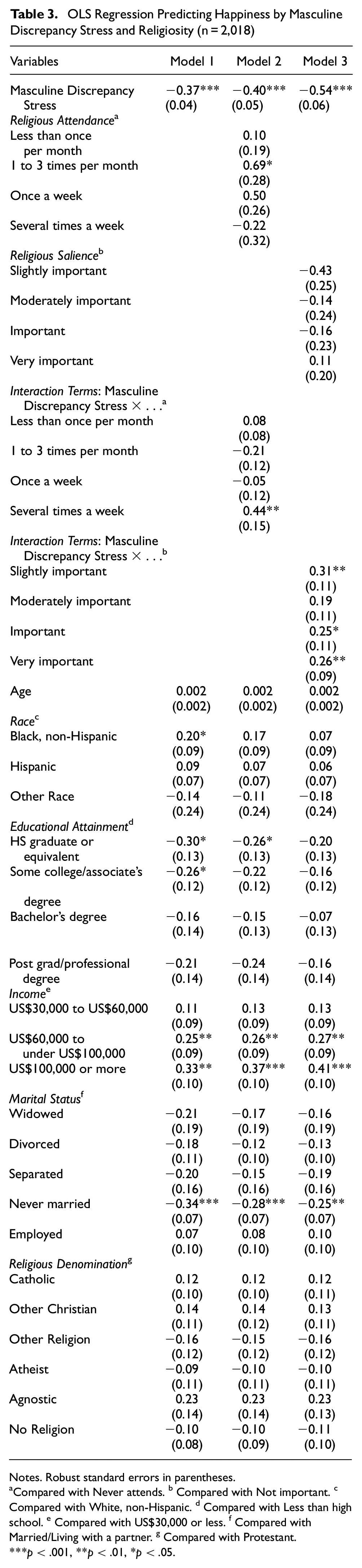
Table 3 presents results from an identical set of models, this time taking happiness as the outcome of subjective well-being. Model 1 shows that greater masculine discrepancy stress predicts lower happiness (b = −0.37, p < .001). This represents over ¼ of a standard deviation lower happiness scores for every 1-unit increase in masculine discrepancy stress. Model 2 shows the presence of a positive interaction term between masculine discrepancy stress and religious attendance several times a week (b = 0.44, p < .01). Figure 3 presents this graphically. As with mental health scores, the inverse relationship between masculine discrepancy stress and lower happiness is attenuated at higher levels of religious attendance, as illustrated in the third set of bars. Model 3 also shows that greater religious salience also buffered the deleterious consequences to happiness of discrepancy stress, where relative to those holding religion as not important, those holding it as slightly important (b = 0.31, p < .01), important (b = 0.25, p < .05), and very important (b = 0.26, p < .01). Figure 4 shows the same pattern of moderation that has been emerging. Men with high masculine discrepancy stress who reported religion as “very important” were protected from feeling the full consequences of this stress. For happiness, as for mental health scores, Hypotheses 1, 2, and 3 were supported.
OLS Regression Predicting Happiness by Masculine Discrepancy Stress and Religiosity (n = 2,018)
Notes. Robust standard errors in parentheses.
Compared with Never attends. b Compared with Not important. c Compared with White, non-Hispanic. d Compared with Less than high school. e Compared with US$30,000 or less. f Compared with Married/Living with a partner. g Compared with Protestant.
p < .001, **p < .01, *p < .05.

Masculine Discrepancy Stress × Religious Attendance in Predicting Happiness
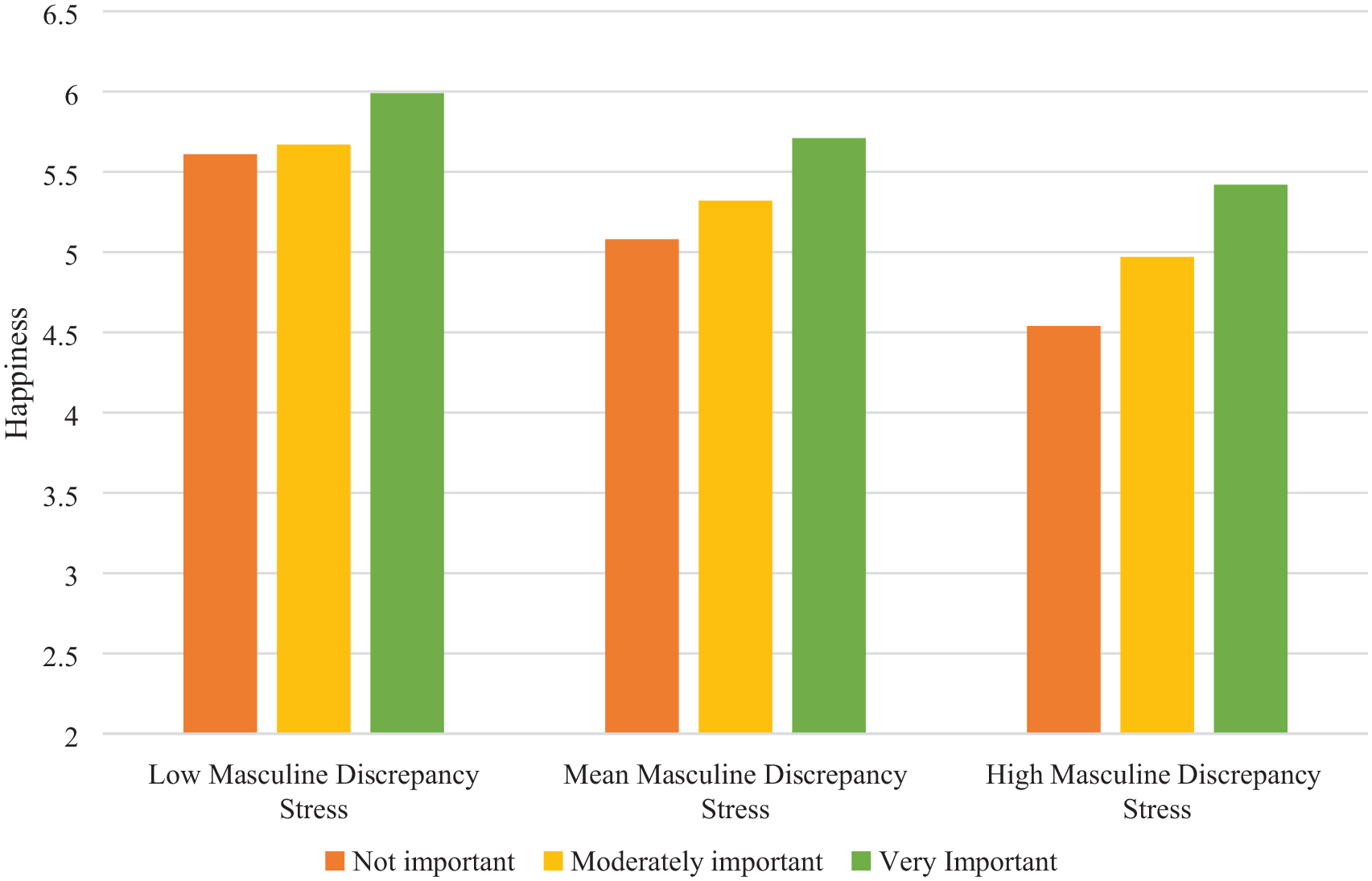
Masculine Discrepancy Stress × Religious Salience in Predicting Happiness
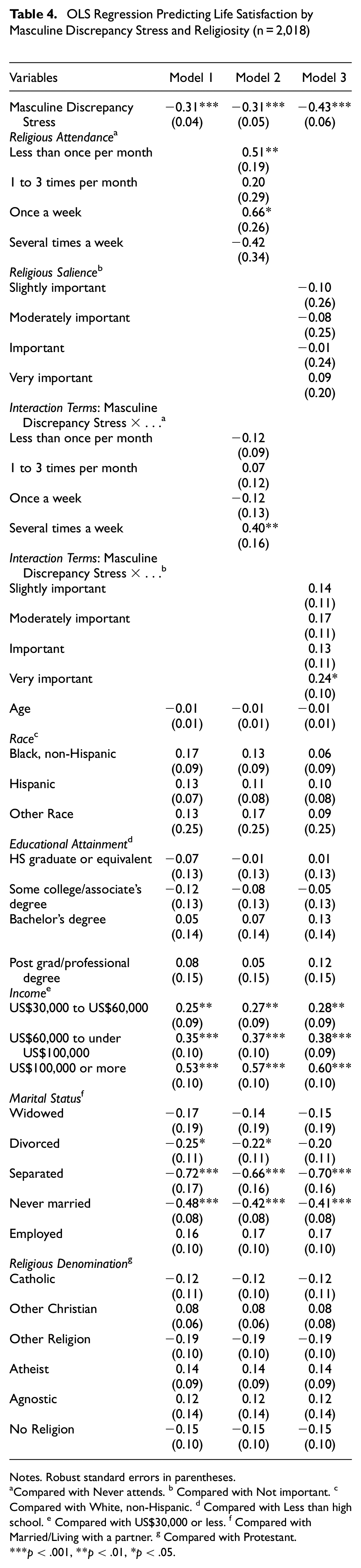
Finally, results for our final subjective well-being outcome of life satisfaction are reported in Table 4. Model 1 shows that masculine discrepancy stress is associated with lower life satisfaction (b = −0.31, p < 001). Once again, we see in Model 2 that religious attendance several times a week buffers this association (b = 0.40, p < .01), such that men with high masculine discrepancy stress who attend religious services several times a week reported greater life satisfaction, as shown in Figure 5. We also observe in Model 3 that men with high masculine discrepancy stress who reported religion as “very important” in their lives were also protected from feeling a decrease in life satisfaction. As we observed for our two other outcomes of subjective well-being, Hypotheses 1 to 3 were all supported for life satisfaction. Altogether, across our outcomes, we see that higher religious attendance and greater religious salience were protective for the subjective well-being of men experiencing high levels of masculine discrepancy stress (Figure 6).
OLS Regression Predicting Life Satisfaction by Masculine Discrepancy Stress and Religiosity (n = 2,018)
Notes. Robust standard errors in parentheses.
Compared with Never attends. b Compared with Not important. c Compared with White, non-Hispanic. d Compared with Less than high school. e Compared with US$30,000 or less. f Compared with Married/Living with a partner. g Compared with Protestant.
p < .001, **p < .01, *p < .05.

Masculine Discrepancy Stress × Religious Attendance in Predicting Life Satisfaction
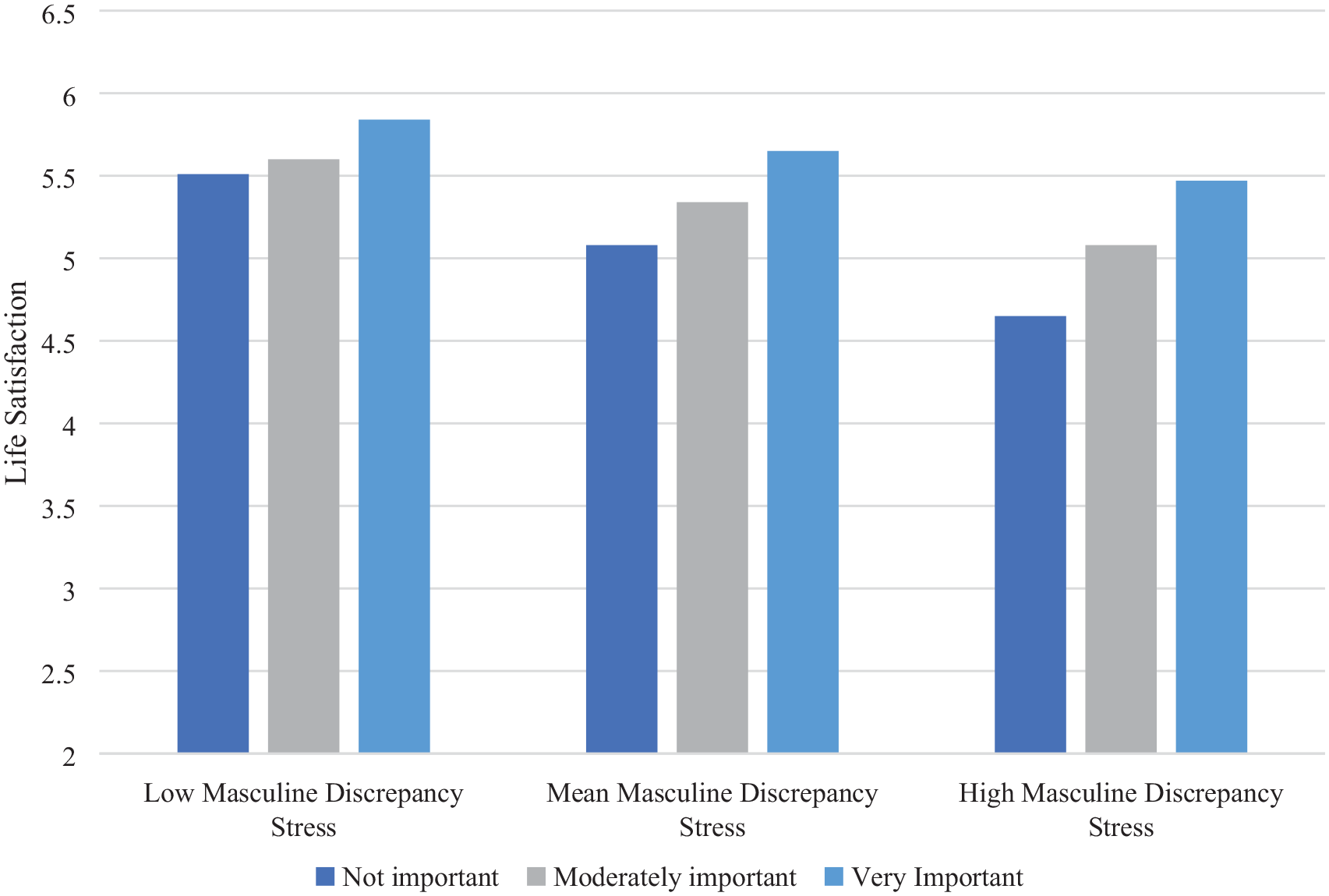
Masculine Discrepancy Stress×Religious Salience in Predicting Life Satisfaction
Supplemental analyses also considered whether our main pattern of relationships may differ by religious denomination, given that some conservative Christian traditions valorize the patriarchal family and men as “head of the household.” We therefore tested three-way interaction terms between religiosity, masculine discrepancy stress, and religious denomination. No statistically significant interaction terms appeared, suggesting that our results were not further conditioned by religious denominational affiliation.
Discussion
The current study sought to examine the impact of masculine discrepancy stress on subjective well-being and examined the role of religiosity in buffering this association. Masculine discrepancy stress is a perception of not feeling like one is living up to traditional masculine ideals and norms (Reidy et al., 2014) and is prevalent in American society as men are socialized from an early age to strive to be respected for their accomplishments, never show weakness, and appear “manly” by having a lean, muscular physique. Drawing from a unique, national sample of American men, our results revealed several important findings.
In support of our first hypothesis, our results suggested that masculine discrepancy stress was associated with lower subjective well-being, in the form of lower self-reported mental health scores, less happiness, and lower life satisfaction. This result is consistent with research reporting that men experiencing greater masculine-related distress are more likely to engage in risky sexual behavior (Fleming et al., 2014), binge drinking (Yang et al., 2019), and greater psychological maladjustment, in the form of greater substance abuse and lower self-esteem (e.g., Mesler et al., 2022; Olivardia et al., 2004; Reidy et al., 2019). Our study adds to this growing body of literature which also suggests that men who have greater masculine discrepancy stress report worse mental health and are less likely to be happy or satisfied with their lives, thereby adding to the wide swath of outcomes that are negatively affected by discrepancy stress. Some scholars have argued that psychological distress (e.g., depression and anxiety) and psychological well-being (e.g., happiness and other indicators of positive affect) are related but ultimately distinct continua (Westerhof & Keyes, 2010). Our analyses suggest that the general conclusions of previous studies of psychological distress may also extend to indicators of psychological well-being.
The central contribution of our study, however, was to test whether two elements of religiosity, religious attendance and religious salience, could moderate the deleterious impacts of masculine discrepancy stress. To the best of our knowledge, no previous study has considered this possibility. Men are often reported to be less religious than women (Schnabel, 2018), but this does not diminish the importance of religiosity as a stress buffer for men, as our results clearly illustrate. One of the most fundamental needs that religion satisfies concerns helping people deal with adversity. This makes sense because stress is ubiquitous, and humans experience a number of stressors as they move through the life course. Researchers in religion have taken advantage of this work by identifying and assessing how a number of different religious resources offset the pernicious effects of mental health, and this study added in a form of stress that has yet to be integrated into this line of work—masculine discrepancy stress. The core insights of the stress process model are highly flexible and can be taken advantage of to address a range of specific stressors.
Across all three outcomes of subjective well-being, we found two consistent patterns of moderation that were more consistent with the stress-attenuation model (Hypothesis 3) than the stress-amplification model (Hypothesis 2). The first pattern was that for men who reported high masculine discrepancy stress, reported as 1SD above the sample mean, attendance at religious services, group, or meetings several times a week (i.e., more than once a week) was associated with greater subjective well-being scores. In other words, the relationship between masculine discrepancy stress and lower subjective well-being was weakened or attenuated at more frequent levels of religious service attendance.
It is noteworthy that religious attendance “several times a week or more” was needed to blunt the pernicious effects of masculine discrepancy stress and reveals some important insights about what might be operating to produce this buffering effect. Religious believers are taught to “not be conformed to this world” (New International Version [NIV] Bible, 2022, Romans 12:2), and this message might be reinforced during church services. If this belief is held by members of a religious community, then men experiencing discrepancy stress may be able to experience self-affirmation within the auspices of a supportive religious congregation. It was instructive that men needed to be at their church more than once a week. Involvement in a religious community can include supportive interactions with co-congregants that can foster well-being and help to de-emphasize some of the ideals surrounding masculine norms, such as the need for power or wealth, and the need for one’s physique to look a particular way (e.g., Goulet et al., 2017; Henderson & Ellison, 2015). However, it appears that it takes involvement multiple times a week to internalize the group’s traits and norms (Tajfel & Turner, 1986). This may explain why weekly church attendance, the norm for people attending religious services on Sunday, might not have been enough to move the needle in buffering the adverse effects of masculine discrepancy stress. In all likelihood, men would not attend church-related gatherings more than once a week if they were not having a positive experience in such settings.
Though we cannot specifically to which norms were internalized due to religious group membership, we can speculate that frequent messages to turn away from the hyper-materialized, appearance-driven standards of American society might help quell the distress felt by not living up to masculine norms. Religious congregations often emphasize using the gifts and talents given by God to serve others and the world in positive, prosocial ways (Homan & Boyatzis, 2010; Inman, 2014), using Jesus and other religious role models as exemplars. Religious communities that men find themselves deeply engrained in might prime the social identity to base one’s sense of worth on one’s relationship with God and with co-congregants (Avants et al., 2001; Kim, 2006), which could work against the pressures to live up to the societal standards of “manliness.” The consistency of moderation patterns observed for each of our three outcomes of subjective well-being offers an important extension on previous research, which found that church attendance weakened the inverse relationship between eating disturbances and self-esteem (Henderson & Ellison, 2015) by adding an important form of gender-identity distress.
We also observed an identical pattern of moderation, this time for religious salience. Men with masculine discrepancy stress who reported that religion was “very important” in their lives experienced greater subjective well-being compared with their counterparts with high stress who did not ascribe such a role to religion. As with religious attendance, religious salience attenuated the pernicious consequences of masculine discrepancy stress on subjective well-being. Religiosity is a multi-faceted concept (Worthington et al., 2003), but that we documented consistent patterns of moderation across both a public (attendance) and a private (salience) dimension of religiosity speaks to the robustness of this finding. Men may rely on their religiosity to counteract masculine discrepancy stress, as we elaborate below.
With a concept as broad such as religious salience, it is difficult to determine what this actually captures. This raises the important question of which specific beliefs, characterized by a religious salience rating of “important” were likely to matter in producing this buffering effect. Past studies have relied on a framework of attachment to God to explain the positive role of religion/spirituality, where God is seen as an attachment figure who can provide security and comfort (P. C. Hill & Pargament, 2003). Religious salience should not be conflated with attachment to God, but it could be an important indicator. We would surmise that religious salience could include beliefs surrounding the body or the status of men, including that God created the body to be unique, and that the body houses God (Tylka, 2011, 2012; Wood-Barcalow et al., 2010) The latter idea is formalized in some Christian denominations through the act of taking Holy Communion or the Eucharist, the consumption of bread and wine to symbolize the body and blood of Christ. This security and attachment derived from one’s relationship with God could provide a coping resource against the difficult challenge of living up to masculine ideals. As with religious attendance, a higher religious salience can give men a chance for positive self-affirmation, where feelings of divine love and transcendence might act as a buffer and help men overcome the perceived failure of living up to society’s masculine standards, both in appearance and accomplishments.
A greater religious salience might also help men dealing with masculine discrepancy stress to disengage from the goals of this earth, including bodily appearance but also power, money, and status. Upenieks and Schieman (2023), for instance, reported that men who felt underpaid at work yet reported greater intrinsic religiosity were protected from feeling higher psychological distress. We suspect a similar mechanism might be at play here, where not living up to the expectations of “manliness” from the perspective of accomplishments like power and money could be compensated for by the security felt through God, and make men more to view their lives and purpose through a religious lens: to be a son of God, working to establish a relationship with Him and viewing any gifts and talents as tools to serve others.
Despite several strengths of this study, including data from a national probability-based sample of over 2,000 American men, several limitations should be kept in mind. First, with respect to our self-reported measures of subjective well-being, social desirability and recall bias may have contributed to overreporting of mental health, happiness, and life satisfaction. However, the use of self-administered online surveys may have reduced the impact of social desirability in our study. We would encourage future research to examine masculine discrepancy stress and well-being in other samples, ideally also including measures of religiosity. We would especially note that a more detailed measure of religious denomination would be crucial, especially to distinguish between conservative and liberal Protestant denominations which are likely to espouse different gender ideologies.
As a second limitation, we also modified the masculine discrepancy stress scales to reduce scale redundancy and reduce the overall time burden on study participants. However, this limits our ability to compare the scores on our measure of masculine discrepancy stress with other studies that have used the Reidy et al. (2014) measure. Third, this study also relied on cross-sectional data, which limits our ability to infer temporal order or causation in the variables measured. While we test a theoretical model that implies causation, that religious attendance and salience attenuate the relationship between masculine discrepancy stress and subjective well-being, future studies are needed that replicate and expand on our findings with longitudinal data. Finally, while we control for key socio-demographic characteristics in our analyses, such as age, race/ethnicity, sexual orientation and socioeconomic status, teasing apart potential differences by these variables was beyond the scope of this study but should be of interest to future work. These groups tend to be underrepresented in the literature on masculine discrepancy stress and body image, and it could be possible that men in these marginalized or underrepresented groups are more affected by masculine stress given structural barriers to access traditional markers of male success, such as status/power and money. Qualitative work is also needed to explore how men with stigmatized sexual identities navigate masculine discrepancy stress within religious congregations, especially because sexual minorities are more prone to experience greater discrimination in religious congregations (Beagan & Hattie, 2015).
We would also be remiss if we did not acknowledge the possibility of religious factors that might pose a risk for men dealing with masculine discrepancy stress. Though our findings suggest that religious attendance and salience are important buffers for men experiencing high levels of masculine discrepancy stress, religious factors that might be riskier for men include the idea that one’s must earn God’s grace, instead of believing God’s grace is freely given (Greig, 2017). Scholars have also recognized the existence of religious perfectionism, known as scrupulosity (Allen et al., 2023), which could impact masculine discrepancy. In some conservative Protestant denominations, for instance, religiosity could heighten adherence to masculine norms, as these faiths are more likely to take literally interpret the ideas of the Bible of men as provider for the family and traditional conceptions of manhood (Whitehead & Perry, 2019). Such an interpretation of scripture could place more pressure on man to attain the traditional masculine ideal and would not provide a reprieve for those already experiencing high levels of masculine discrepancy stress. Taking what some scholars have termed the “dark side of religion” (Ellison & Lee, 2010) into account, religiosity could buffer or possibly exacerbate the impact of masculine discrepancy stress on subjective well-being. Future research would be well-advised to consider these possibilities alongside the religious denominational affiliation of men into account.
Conclusion
Taken together, our findings suggest that men who are more religious are better able to cope with masculine discrepancy stress. Although institutions of religion tend to support traditional cultures of masculinity, the well-being of more religious men is less sensitive to the stress of falling short of masculine ideals. Religious communities are more likely to support and value men who are less masculine because their overall lifestyles are more consistent with the mortality standards of their religious communities. We encourage researchers to incorporate more concepts related to religion and spirituality into studies of gender and stress.
Footnotes
Declaration of Conflicting Interests
The author(s) declared no potential conflicts of interest with respect to the research, authorship, and/or publication of this article.
Funding
The author(s) disclosed receipt of the following financial support for the research, authorship, and/or publication of this article: The data collection for this study was supported by funding from Change The Ref, an organization that “uses urban art and nonviolent creative confrontation to expose the disastrous effects of the mass shooting pandemic.” Change The Ref played no role in the planning or implementation of the study.
Ethical Approval and Consent to participate
Ethical approval was granted by the Institutional Review Board at the University of Texas at San Antonio. All participants gave written informed consent.
