



Abstract
Men’s Sheds are a community-based health promotion concept which brings men together to engage in joint activities. Prior research reported beneficial effects on health and well-being of the participants; however, evidence is limited. The main objective of this systematic review is to provide an extensive overview of current research on the effectiveness of Men’s Sheds on self-rated health, social isolation, and well-being by applying a mixed-methods approach. In addition, this review aims to identify how to successfully transfer and implement the concept. Eligible for inclusion were all studies published in English, German, or French that specifically referred to the concept of Men’s Sheds. Four databases were searched for eligible studies, followed by a hand search on websites and reference lists. Methodological quality of included studies was assessed using checklists developed by the Joanna Briggs Institute. Following the convergent integrated approach, quantitative data were transformed and merged with qualitative data to conduct a thematic analysis. Overall, 35 qualitative, nine quantitative, and eight mixed-methods studies were included. We found evidence regarding benefits of shed participation on self-rated health, social isolation, and well-being. We identified three key characteristics of a successful Men’s Shed, including appropriate shed facilities, sufficient funding as well as a participant-driven management and organization of the shed. This mixed-methods systematic review provides a comprehensive overview of the evidence base concerning Men’s Sheds and highlights the need for longitudinal studies investigating causal relationships and gathering sufficient information on how to successfully transfer and implement the concept of Men’s Sheds in other countries.
Introduction
Due to the aging world population, strategies for healthy aging are increasingly being focused on in research and politics. In the context of health promotion and disease prevention, older men are a specific target group with its own needs and preferences. The physical health of older men in Germany is characterized by a high prevalence of lifestyle-related diseases. According to the Robert Koch Institute, 21.9% of men between the ages of 65 and 74 years are obese, 31.0% have a cardiovascular disease (e.g., myocardial infarction, coronary heart disease), and 54.9% have hypertension (Robert Koch Institute, 2015). Next to physical health, mental health is a further crucial factor for healthy aging. In the age group of 65 to 74 years, 3.4% of men in Germany have depression (Robert Koch Institute, 2015); however, the actual number is probably higher as many men are not diagnosed (Oliffe, Rossnagel, Seidler, et al., 2019). With recent retirement, men in this age group experience a major life transition and along with their job, they often lose parts of their social network (Kauppi et al., 2021). In this way, many men get socially isolated (Taylor, 2020), and 8.3% of older men in Germany feel lonely (Huxhold & Tesch-Römer, 2021). Recent research has shown that social isolation is associated with a decrease in mental health in older adults (Seifert et al., 2021).
Compared to women, men are more prone to a risky health behavior such as physical inactivity, unhealthy dietary habits, and substance abuse (White et al., 2011). In addition, low health literacy levels amplify their reluctance for health help-seeking (Oliffe, Rossnagel, Kelly, et al., 2020). This includes their use of health services (Seidler et al., 2016; Teo et al., 2016) as well as their engagement in health promotion and prevention programs (Gavarkovs et al., 2016). The reluctance of men to engage in health promoting behavior has been linked to masculinity with unhealthy behavior as one way to demonstrate manhood (e.g., dangerous driving behavior, excessive alcohol consumption; Courtenay, 2000).
Engaging men in health promotion and prevention is an important but challenging task. Oliffe et al. framed eight lessons learnt in community-based men’s health promotion programs (Oliffe, Rossnagel, Bottorff, et al., 2020). For instance, they emphasize the importance of activity-based programs in familiar spaces which offer purpose and structure without pressuring participants to chat (Oliffe, Rossnagel, Bottorff, et al., 2020). One concept of sex-specific community-based health promotion that addresses these recommendations is Men’s Sheds. Men’s Sheds are nonprofit and noncommercial organizations that provide a safe and friendly environment for all men (Australian Men’s Shed Association, n.d.). They are usually set up in communal spaces where men can get together to engage in joint activities and work on meaningful projects (Australian Men’s Shed Association, n.d.). The general conditions and the range of activities vary from shed to shed; however, woodwork and metalwork—often for social and charitable purposes—are very common (Ford et al., 2015; Foster et al., 2018). The main objectives of Men’s Sheds are to improve the member’s health and well-being (Australian Men’s Shed Association, n.d.). For this purpose, activities in the shed are often accompanied by visits from health practitioners and health promotion events (Bergin & Richardson, 2021). The concept of Men’s Sheds was originally developed in Australia and has gained increasing popularity since the 1990s. Meanwhile, Men’s Sheds were implemented in further countries, predominantly in the United Kingdom, Ireland, New Zealand, and Canada. In Germany, the concept of Men’s Sheds is not widely known, even though there is a need for men-specific health promotion programs (Robert Koch Institute, 2014). To implement Men’s Sheds in further countries, summarized information on how to successfully transfer and implement the concept is needed.
Two scoping reviews (Kelly et al., 2019; Milligan et al., 2016) and one narrative review (Wilson & Cordier, 2013) summarize the growing evidence base regarding health benefits through shed participation. All three reviews come to similar conclusions. They report promising results, albeit of limited evidence, for beneficial effects on health, well-being, and social isolation (Kelly et al., 2019; Milligan et al., 2016; Wilson & Cordier, 2013). The body of evidence is particularly low for physical health, while results on mental health benefits are more substantiated (Milligan et al., 2016). The quality of included studies is criticized by all authors, especially due to small sample sizes (Milligan et al., 2016; Wilson & Cordier, 2013) and a lack of validated measures (Kelly et al., 2019; Milligan et al., 2016). A systematic review on health effects of Men’s Sheds is missing.
This systematic review aims to provide an extensive overview of current research on Men’s Sheds by applying a mixed-methods approach. The primary objective is to summarize evidence on the effectiveness of community-based Men’s Sheds on self-rated health, social isolation, and subjective well-being. As secondary objective, the transfer and implementation of Men’s Sheds will be investigated, with a focus on general conditions and characteristics of a successful Men’s Sheds as well as subgroups of participating men and undesirable effects.
Review Questions
This systematic review is guided by the following main research question:
Because there is little evidence on how to successfully transfer and implement the concept of Men’s Sheds, this review also aims to answer the following questions:
Method
This mixed-methods systematic review is registered at the International Prospective Register of Systematic Reviews (PROSPERO; CRD42020219390) and a review protocol was published (Albrecht et al., 2021). The recommendations of the “Manual for Evidence Synthesis” of the Joanna Briggs Institute (JBI) were followed (Aromataris & Munn, 2020). Since this systematic review only includes published literature, ethics approval was not required.
Inclusion Criteria
Eligible for inclusion in this systematic review were qualitative, quantitative, and mixed-methods studies that were published in English, German, or French. There were no restrictions in regard to the study design. Studies were included if they investigated complex community-based interventions that explicitly refer to the concept of community-based Men’s Sheds. Because this review focuses on older men aged 50 years and above, studies were included if a minimum of 50% of the study population are at least 50 years old or if separate results for the target population were described. Men who do not participate in Men’s Sheds served as the control group; however, studies without control groups were also eligible for inclusion. Because an initial literature search showed that available studies on Men’s Sheds predominantly report subjective outcomes, the primary outcomes of this systematic review included self-rated health, subjective well-being, and social isolation.
Self-rated health encompasses physical and mental health and is a frequently used parameter in epidemiological and public health research (Jylhä, 2009). A widely applied instrument for assessing self-rated health is a single question from the 36-item Short Form Survey (Jenkinson et al., 1994), which has high content validity across countries (Baćak, Ólafsdóttir, 2017). In this systematic review, results are assigned to this outcome if the terms “health,” “physical health,” or “mental health” were used without further definition, if validated instruments for self-rated health were applied, or if they reported symptoms of diagnosed mental illnesses.
Subjective well-being is a well-established construct in health-related research (Bech et al., 1996; Jylhä, 2009). One instrument for assessing subjective well-being in qualitative research is the five-item questionnaire World Health Organization (Bech et al., 1996), which has a high clinical validity (Topp et al., 2015) and good test–retest reliability (Schougaard et al., 2018). In this systematic review, if the included studies did not apply validated instruments for assessing subjective well-being, all results using the term “well-being” or terms of other aspects of well-being such as “mood,” “sense of purpose,” or “pride” are also assigned to this outcome.
The multidimensional construct of social isolation has been investigated under various terms (i.e., “lack of social network,” “loneliness”), and there is no standard instrument for measurement (Cudjoe et al., 2020). A frequently used scale is the Lubben Social Network Scale, which showed high validity in a three-country sample of older adults (Blozik et al., 2009). In this systematic review, this outcome includes all results of quantitative measures on social isolation and qualitative results on social isolation using terms such as “social interaction,” “sense of belonging,” or “loneliness.”
Secondary outcomes included the characteristics of men who participate in Men’s Sheds and of those who do not, potentially undesirable effects and their prevention as well as general conditions and characteristics of a successful Men’s Shed in terms of participation and sustainability.
Search Strategy
The search strategy applied in this systematic review included searches in the databases MEDLINE (via PubMed), Web of Science, Scopus, and OpenGrey. In addition, a hand search on the websites of 10 Men’s Sheds’ associations (Australia, New Zealand, the United States, Canada, Denmark, Ireland, the United Kingdom, Scotland, Northern Ireland, International Men’s Sheds Organization) and in the reference lists of the three previously published reviews (Kelly et al., 2019; Milligan et al., 2016; Wilson & Cordier, 2013) was conducted. Because the overall number of publications on Men’s Sheds is not very large, the search terms focused exclusively on the intervention (Appendix A). There were no restrictions regarding the publication date. The websites of the Men’s Sheds associations provided sufficient information about ongoing research projects. No information was obtained from experts in this respect. The main search was conducted in January 2021, followed by a final search in October 2021 to identify relevant studies that were published in the meantime.
Study Selection
Results of the searches were exported to the reference management program Citavi (Swiss Academic Software GmbH, Wädenswil, Swiss) to identify and remove duplications. To select the studies eligible for inclusion, a three-step strategy (title, abstract, and full-text) was applied in this systematic review. Citations were independently screened by two authors (B.M.A., L.F.) using the review software System for the Unified Management, Assess-ment and Review of Information (SUMARI; Joanna Briggs Institute, Adelaide, Australia). Discrepancies in any step of the study selection process were first tried to be solved by consensus procedures and otherwise by a third author (K.B.).
Assessment of Methodological Quality
The methodological quality of the eligible studies was assessed using three different JBI critical appraisal checklists in dependence of the study design (one qualitative, two quantitative; Lizarondo et al., 2020). The checklist for qualitative studies includes questions to determine the congruity between the philosophical perspective and the methodology as well as the congruity between methodology and research questions, method of data collection and analysis, and representation of data. The cultural or theoretical background of the researcher, the influence of the researcher on the research, adequate representation of the participants, ethical approval, and the conclusions drawn from the data are being addressed. Quantitative studies were critically appraised for methodological quality using the JBI checklists for cross-sectional and quasi-experimental studies. The questions of these quantitative checklists depend on the study design and include, for example, questions on the definition of inclusion criteria, the description of study subjects and setting as well as the measurement of exposure, condition, and outcomes. For mixed-methods studies, the respective applicable checklists were applied.
Two authors (B.M.A., L.F.) conducted the assessment independently by answering the questions of the checklists with “yes,” “no,” “unclear,” or “not applicable.” While “unclear” implied that sufficient information to answer the question was missing although authors could have provided it, “not applicable” was used if the information was missing but could not be provided by the authors due to, for example, the study design. Discrepancies between both authors were solved by consensus procedures. The methodological quality of the studies had no influence on their inclusion in the systematic review.
Data Extraction
The JBI data extraction tools for qualitative, cross-sectional, and quasi-experimental studies (Lizarondo et al., 2020) were modified and expanded by the authors. The extraction criteria for each study design is presented in Appendix B. Data from the included studies were extracted by two authors (B.M.A., L.F.) independently and discrepancies between the authors were solved by consensus procedures.
Data Transformation and Synthesis
Following the convergent integrated approach, data extracted from quantitative studies as well as from the quantitative components of mixed-methods studies were transformed into textual descriptions by conducting a narrative interpretation (“qualitizing”). Qualitized data were then merged with the qualitative data (Lizarondo et al., 2020). Subsequently, a thematic analysis was conducted by coding the assembled data on the basis of similarity in meaning. Thereby, both data types were weighted equally. The iterative coding process included deductive codes representing the primary and secondary outcomes of this systematic review as well as inductive codes which emerged during the analysis. To validate the results of the thematic analysis, codes and subcodes were reviewed and discussed several times by two authors (B.M.A., L.F.) during the course of the project.
Results
Study Inclusion
Figure 1 presents the flow chart of the study selection process. The search of the electronic databases MEDLINE (via PubMed), Web of Science, Scopus, and OpenGrey generated 310 citations. After deduplication, the titles of the remaining studies (n = 219) were screened, and 140 irrelevant citations were removed. Ten further citations were excluded during the abstract screening due to various reasons (review paper, age, newspaper article, intervention, editorial, and topic). The subsequent full-text screening resulted in 36 studies eligible for inclusion. Additionally, 12 studies identified through hand search and four studies which were published after completion of the main study selection process and identified in the final search were included. In total, 52 studies were included in this mixed-methods systematic review.
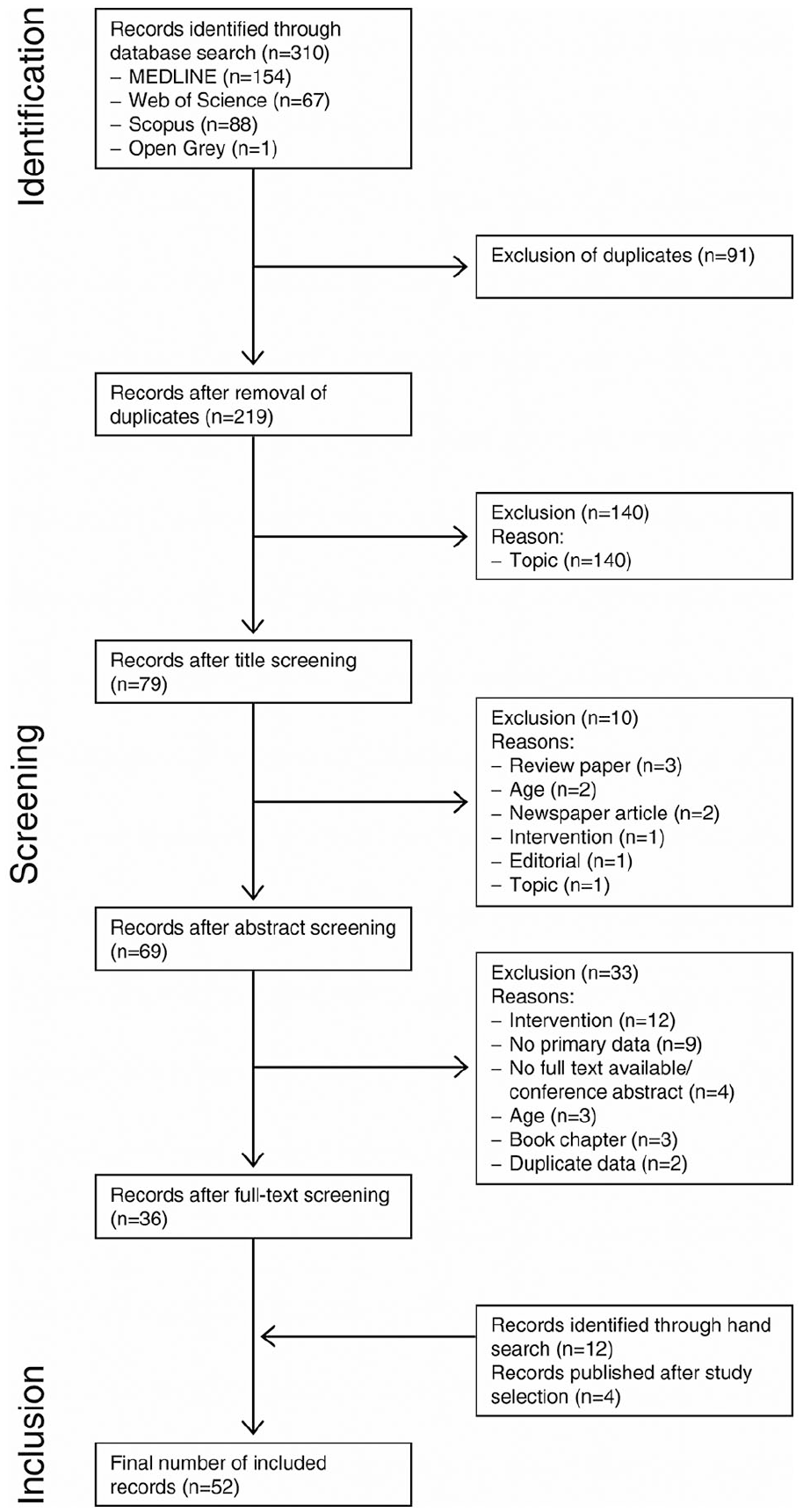
Flowchart Outlining Study Inclusion.
Characteristics of the Included Studies
In this systematic review, 35 qualitative, nine quantitative, and eight mixed-methods studies were included. An overview of the included studies is presented in Table 1. The publication years ranged from 2007 to 2021. Most of the investigated Men’s Sheds were based in a single country, predominantly in Australia (n = 28, 67.3%). The other studies were conducted in the United Kingdom (n = 8, 15.4%), Ireland (n = 5, 15.4%), New Zealand (n = 3, 5.8%), Canada (n = 3, 5.8%), and Denmark (n = 1, 1.9%). Two projects investigated Men’s Sheds in an international context, one in Denmark and New Zealand (Hedegaard & Ahl, 2019) and one in Australia, Canada, New Zealand, Ireland, and the United Kingdom (Cordier & Wilson, 2013; Wilson et al., 2015, 2016). Approximately one third of the included studies (n = 18, 34.6%) assessed data in one Men’s Shed, while the maximum of investigated sheds in one study was 383. Study participants were predominantly shed members, followed by shed coordinators, partners of shed members, stakeholders, and non-shed members. The sample size of participants ranged between five (Ormsby et al., 2010) and 1,636 (Flood & Blair, 2013).
Overview of the Included Studies.

Publications with the same numeral coefficient of superscript are based on the same data set.
Methodological Quality
The results of the assessment of the methodological quality of all included studies are described in the Tables 2 to 4. Most of the qualitative studies did not provide information on the underlying methodology. Questions regarding the congruity of the methodology and the philosophical perspective, research questions, method of data collection and analysis as well as representation of the data (Q1–Q5) could therefore only be answered as “unclear” (Table 2). Studies that did provide information on the methodology (e.g., Grounded Theory, case study) were congruent. The appraisal of cross-sectional studies identified an overall low methodological quality accompanied by a lack of information. Most studies did not sufficiently define inclusion criteria, describe characteristics of the study population, or address confounding factors. Instruments used for outcome assessment were predominantly self-developed and were not tested regarding validity and reliability (Table 3). Of the two included longitudinal studies, one did not provide sufficient information while the other study showed better performance in the quality assessment (Table 4).
Quality Assessment of Qualitative Studies.
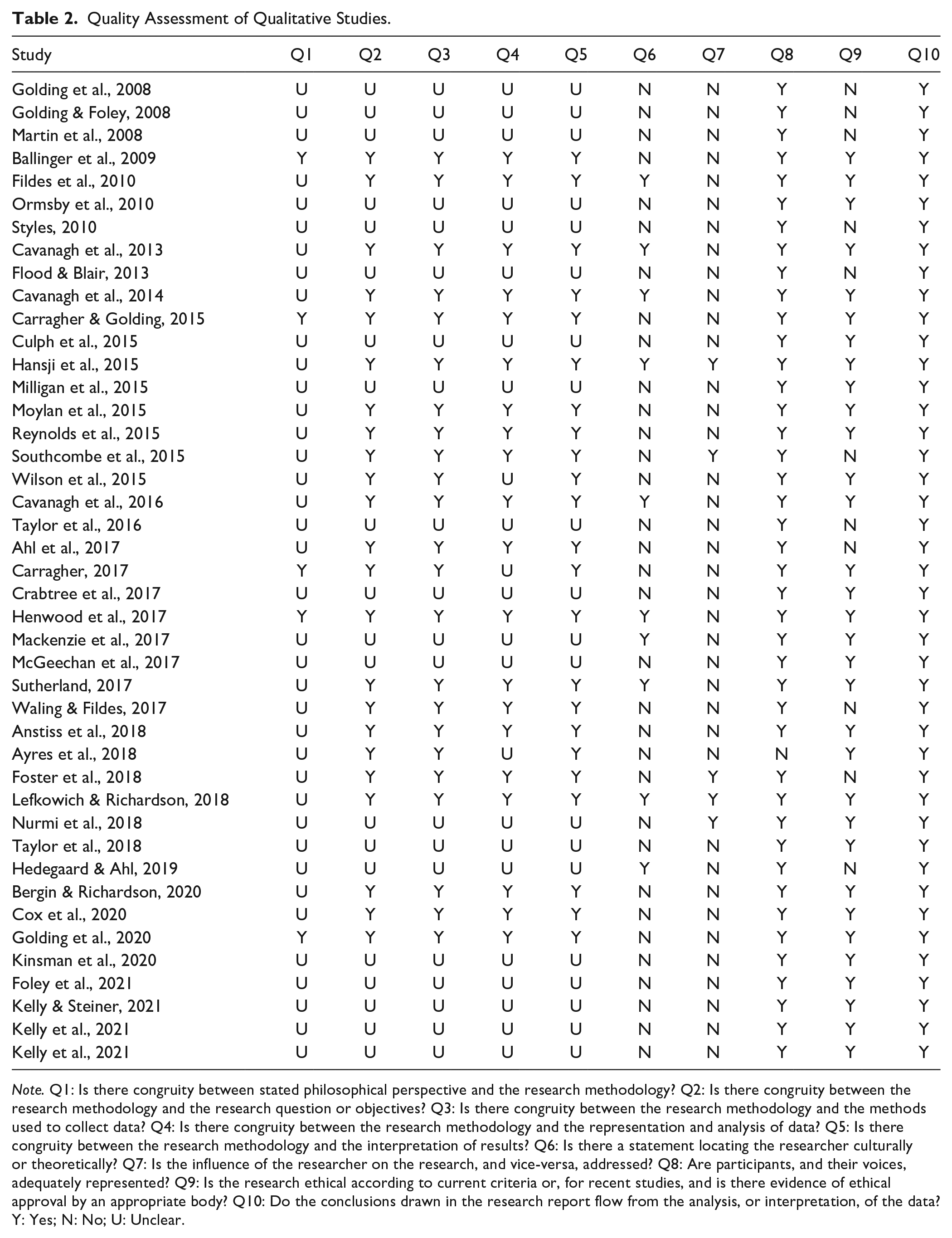
Note. Q1: Is there congruity between stated philosophical perspective and the research methodology? Q2: Is there congruity between the research methodology and the research question or objectives? Q3: Is there congruity between the research methodology and the methods used to collect data? Q4: Is there congruity between the research methodology and the representation and analysis of data? Q5: Is there congruity between the research methodology and the interpretation of results? Q6: Is there a statement locating the researcher culturally or theoretically? Q7: Is the influence of the researcher on the research, and vice-versa, addressed? Q8: Are participants, and their voices, adequately represented? Q9: Is the research ethical according to current criteria or, for recent studies, and is there evidence of ethical approval by an appropriate body? Q10: Do the conclusions drawn in the research report flow from the analysis, or interpretation, of the data? Y: Yes; N: No; U: Unclear.
Quality Assessment of Cross-Sectional Studies.

Note. Q1: Were the criteria for inclusion in the sample clearly defined? Q2: Were the study subjects and the setting described in detail? Q3: Was the exposure measured in a valid and reliable way? Q4: Were objective, standard criteria used for measurement of the condition? Q5: Were confounding factors identified? Q6: Were strategies to deal with confounding factors stated? Q7: Were the outcomes measured in a valid and reliable way? Q8: Was appropriate statistical analysis used? Y: Yes; N: No; U: Unclear; N/A: Not applicable.
Quality Assessment of Longitudinal Studies.
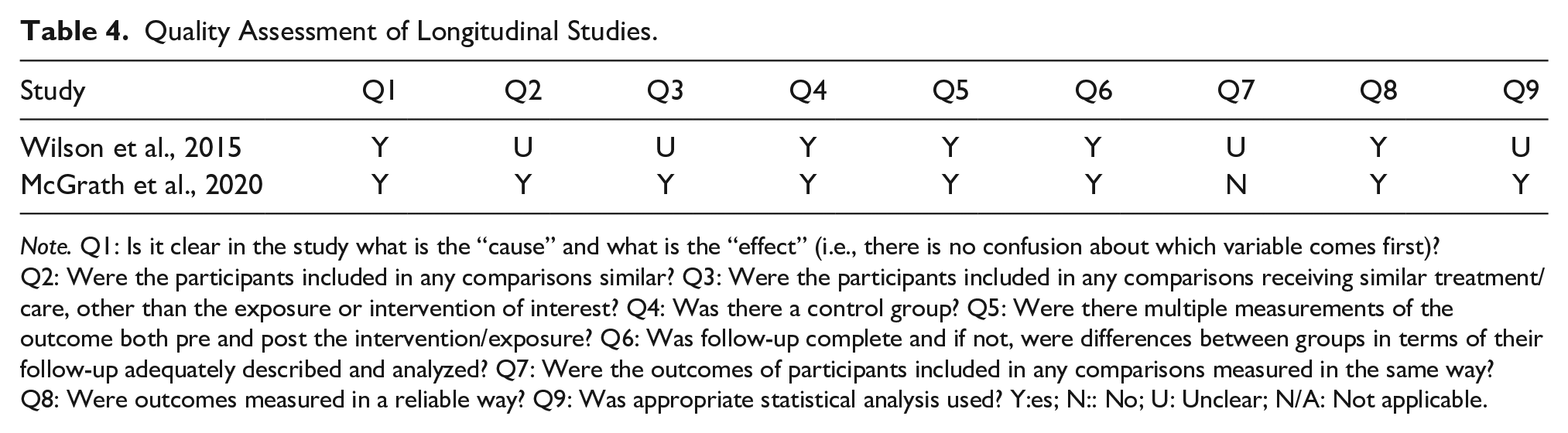
Note. Q1: Is it clear in the study what is the “cause” and what is the “effect” (i.e., there is no confusion about which variable comes first)? Q2: Were the participants included in any comparisons similar? Q3: Were the participants included in any comparisons receiving similar treatment/care, other than the exposure or intervention of interest? Q4: Was there a control group? Q5: Were there multiple measurements of the outcome both pre and post the intervention/exposure? Q6: Was follow-up complete and if not, were differences between groups in terms of their follow-up adequately described and analyzed? Q7: Were the outcomes of participants included in any comparisons measured in the same way? Q8: Were outcomes measured in a reliable way? Q9: Was appropriate statistical analysis used? Y:es; N:: No; U: Unclear; N/A: Not applicable.
Health-Related Benefits of Men’s Sheds
Table 5 presents the findings on how the participation in community-based Men’s Sheds is associated with self-rated health, subjective well-being, and social isolation in men aged 50 years and older as well as what characteristics contribute to the success of a Men’s Shed (deductive codes).
Health-Related Benefits and Successful Implementation of Men’s Sheds (Deductive Codes).

Reported self-rated health benefits are mainly related to mental health as most studies did not investigate physical health. The shed members emphasized the importance of an informal, male-friendly, and safe shed environment. It helps them to open up and talk about health issues in a comfortable and secure way. By sharing their individual health and illness experiences as well as knowledge with their peer group, the participating men gain social support which helps them to deal with their own health issues. As one study describes, There is a natural and informal sharing of information in Sheds. [. . .] These less formal health interventions are seen by Shed members to be highly informative and practical. Advice from a peer is seen to be relevant, believable, understandable and endorsed. (Flood & Blair, 2013, p. 14)
The data showed that shed participation facilitates physical activity of the participants by taking part in the practical shed activities.
Participation in Men’s Sheds is also associated with subjective well-being, especially for people with diagnosed mental health issues. By attending the shed, men forget about their worries, feel happier and more motivated. One participant described, “I look forward to coming in—it improves your mood and mentality” (Foster et al., 2018, p. 533). As a result of taking part in the practical and social shed activities, the shed members develop a sense of purpose and pride, which also contributes to improvements in well-being: “I get pleasure out of anything that turns out. When you get a product like that, that finishes off nicely. It’s so satisfactory,” “It’s given me a purpose to be here. That’s what this place is. This place gives people a purpose . . . It makes me feel like I’m worth something again” (Culph et al., 2015, p. 312).
The shed environment also facilitates social interaction between the shed members which can counteract social isolation especially in retirement. In the included studies, communication among shed members is often referred to as “shoulder to shoulder” communication. One shed coordinator described, The first day they stand shoulder to shoulder, working, with their attention to the task at hand. The next day they continue, but start talking to each other, and the third day they see each other in the eyes and begin to talk like a woman. (Ahl et al., 2017, p. 325)
By attending the shed, the men develop a sense of belonging. For instance, one study reported that 97% of the participants feel at home in the shed (Golding et al., 2007). Another study described that 90.4% of the shed members felt an increased sense of belonging since joining the shed (Foster et al., 2018). Referring to the companionships and new connections established in the shed, the participants value the function of the Men’s Shed in reducing social isolation: “It’s a good place to meet and keep in contact with people,” “It’s a great place for people to come instead of sitting at home or who are lonely” (Foster et al., 2018, p. 532).
While there is evidence for the relationship between shed participation and each individual outcome (self-rated health, subjective well-being, and social isolation), the analysis also showed that these outcomes are strongly interwoven with each other. For instance, one study reported that “Social contact through the [Shed] was particularly emphasized by a number of participants as a way the [Shed] contributed to their health and well-being” (Moylan et al., 2015, p. 227). Referring to improvements in mental health, another study described, “Aspects that are frequently said to contribute to better mental health include better physical health and energy levels, improved confidence, better partner relationships, new friendships, etc.” (Flood & Blair, 2013, p. 17).
Successful Implementation of Men’s Sheds
We identified three key characteristics contributing to the success of Men’s Sheds in terms of participation and sustainability. Representing a significant change from their work life, the shed members valued the participant-driven management and organization of the shed which enables them to make their own decisions, for example, about which projects they want to work on, and to be flexible in terms of their frequency and duration of participation. Because insufficient funding limits the choices of shed members regarding their participation in different shed activities, funding was identified as another key characteristic. One shed member explained this relationship as follows: Because of the funding that we do get it’s . . . less pressure on producing . . . a lot of Men’s Sheds I hear they’re self-funded and they have to produce to sell to . . . pay their expenses. We don’t have that pressure here. (Hansji et al. 2015, p. 278)
Hansji et al. (2015, p. 278) concluded as follows: This funding alleviates pressures at the Shed as members do not need to make things if they do not want to or are potentially not able to. Rather, they are able to enjoy the social aspect of the Men’s Shed more and all benefits it has to offer [. . .].
In addition, the size and layout of the shed facilities contribute to the success of the Men’s Shed by determining the activities and resources of the Men’s Shed. For example, Ormsby et al. (2010, p. 610) describe that “The men with skills in woodwork and building spoke of frustra-tion with the limitations of the Shed, particularly by the lack of equipment and limited space.” Wilson et al. (2015) categorized Men’s Sheds according to their primary function in utility (“defined as a useful place or space for gathering men together to participate in several activities”) or social (“defined as a space for men to get together to socialize”). They reported that Men’s Sheds categorized as utility were more often in larger buildings and were more likely to have construction equipment compared to Men’s Shed categorized as social.
A large number of the included studies provided none or limited information regarding the characteristics of their study population, which prohibited to identify specific subgroups of men who participate in Men’s Sheds. However, some existing sheds try to specifically target men with culturally and linguistically diverse backgrounds or disability. Because no sufficient data on potentially undesirable effects could be obtained from the included studies, this review does not provide findings on which potentially undesirable effects exist and how they can be prevented.
Additional Findings
During the thematic analysis, six additional themes covering relevant aspects of the Men’s Shed emerged (Table 6). Reasons for participation in the shed included shed activities and social aspects, for example, the need for social interaction with other men. While initial reasons for participation primarily focus on shed activities, social aspects become increasingly important for the men over the course of participation. One study reported as follows: “Initially, it was the Shed’s activities that attracted the men to each programme. However, they soon discovered the Shed to be more of a place of social gathering rather than work” (Ormsby et al., 2010, p. 609). Furthermore, we found a linkage between shed participation and previous work life of the men. As a result of taking part in the practical and social activities, the participants (re-)establish a social network as well as a routine which helps them to regain a structure in life. The shed members see their participation as a valuable opportunity to give back to the local community. One study, for example, described that 95% of the participants (Carragher & Golding, 2015) regard the shed as a place to give back to the community. As one of the included studies indicated, shed participation also contributes to improvements in the relationships with family and friends outside the shed: “The participants reported that they could contribute to the family household with increased handyman skills, plus various goods produced, and that the [Shed] provided a discussion point for the family” (Moylan et al., 2015, p. 227). We identified benefits of shed participation for the shed member’s partners. One shed member’s wife, for example, reported, “The Shed allows me to have space and freedom to do my own thing.” (Foley et al., 2021, p. 13) Another partner described benefits for her own mental health:
Additional Findings on Men’s Sheds (Inductive Codes).

It’s not that I don’t want him home, it’s just nice to have . . . I feel like a teenager a little bit . . . that freedom. It’s just that nice feeling that he’s doing something that he likes to do, and for me it’s a feeling of, gee, I’m free for the day. (Foley et al., 2021, p. 12)
The results of the thematic analysis showed that the informal learning environment of Men’s Sheds enables exchange of knowledge and skills among shed members. The shed was seen by men as a “suitable setting for informal learning about hobbies and crafts (88.4%), trade and construction (76.9%), health (74.3%), and exercise (54.1%)” (Misan et al., 2017, p. 212). In addition, several Men’s Sheds offer formal intergenerational mentoring programs in which the shed members (mentors) and younger men (mentees) have the opportunity to learn from each other.
Discussion
This mixed-methods systematic review provides a comprehensive understanding of the current research on community-based Men’s Sheds. Findings indicate that participation in Men’s Sheds is associated with self-rated health, subjective well-being, and social isolation in men aged 50 years and older. Although we found that shed members are physically more active through shed participation, health benefits of Men’s Sheds are mainly related to mental health. This is in line with past research (Kelly et al., 2019; Milligan et al., 2016), reporting that there is only little evidence of Men’s Sheds’ impact on physical health. In accordance with Wilson & Cordier (2013), we found that improvements of subjective well-being especially relate to people with diagnosed mental health issues (e.g., depression). Regarding benefits of shed participation on social isolation, our results are consistent with findings of the reviews (Kelly et al., 2019; Milligan et al., 2016; Wilson & Cordier, 2013), which show, for instance, that shed participation counteracts social isolation and loneliness of older men (Milligan et al., 2016) and leads to improvements in their well-being (Wilson & Cordier, 2013). We identified three key characteristics that contribute to the success of a Men’s Shed in terms of participation and sustainability, including appropriate shed facilities, sufficient funding, and a participant-driven management and organization. However, further information regarding the transfer and implementation of Men’s Sheds, for example, characteristics of the participating subgroups or undesirable effects, could not be obtained from the included studies. Future studies should therefore focus on gathering sufficient information on how to successfully transfer and implement the concept of Men’s Sheds in other countries.
Research on Men’s Sheds is characterized by a high proportion of qualitative studies. This is also reflected in this review, which included considerably more qualitative than quantitative studies. Most of the included quantitative studies were based on self-developed questionnaires and cross-sectional data. Statistical analyses were mostly descriptive and did not consider confounding factors. This severely hampers the interpretability of the study results. To draw valid and meaningful conclusions on the health benefits of Men’s Sheds, quantitative studies of high quality are needed. These should (a) apply valid and reliable instruments for outcome assessment, (b) involve a control group, (c) implement a longitudinal study design, and (d) include confounding factors.
This systematic review has some limitations that should be addressed. First, only studies published in English, German, or French were included. However, the risk of a language bias is low as Men’s Sheds are predominantly implemented in English-speaking countries. Second, the age restriction (mean age of minimum 50 years) could not be consequently verified as many studies did not provide sufficient information on characteristics of the study population. Studies without any details on participants’ age were still included, if the provided information indicated that the study participants were rather older than younger (e.g., mostly retired). Finally, the already criticized methodological weakness of many included studies does not allow a conclusive result, especially with regard to causal relationships.
This is the first comprehensive systematic review that investigates the effectiveness of Men’s Sheds as a concept for health promotion. Furthermore, we extended the current evidence base on Men’s Sheds by providing useful implications regarding the transfer and implementation of Men’s Sheds in other countries. To ensure that older men fully benefit from participating in Men’s Sheds, practitioners should provide appropriate shed facilities as well as a sufficient funding. The results further indicate that a participant-driven management and organization is a key factor of a successful Men’s Shed. The participating men should therefore be actively involved in the development of the Men’s Shed. They must also be given sufficient opportunities to make their own decisions regarding their participation in the shed, for example, about which projects they want to work on.
Conclusion
This mixed-methods systematic review provides a comprehensive overview of the evidence base concerning Men’s Sheds. The results indicate that older men can benefit from shed participation in regard to mental health, well-being, and social isolation. To promote health in older men, the implementation of sheds in further countries should be encouraged. These should be scientifically accompanied and evaluated to close the gap of longitudinal studies investigating causal relationships.
Footnotes
Appendix A
Search Terms

| Database | Search terms |
|---|---|
| Medline (via PubMed) | (“Men’s shed*”) OR (“Men in sheds”) |
| Web of Science | TS=(“Men’s shed*” OR “Men in shed*”) |
| Scopus | TITLE-ABS-KEY(“Men’s shed*” OR “Men in shed*”) |
| OpenGrey | “men* shed*” |
Appendix B
Extraction Criteria

| Country | |
|---|---|
| Extraction criteria of qualitative studies: | |
| Methods | Methodology |
| Data collection | |
| Data analysis | |
| Participant characteristics and sample size | Number of observed sheds |
| Sample size | |
| Age | |
| Employment status | |
| SES | |
| Ethnicity | |
| Specific target group | |
| Other characteristics | |
| Setting, culture, context | Funding |
| Organizational structures | |
| Shed activities | |
| Health promotion programs | |
| General conditions | |
| Phenomena of interest | |
| Description of main results | Health status |
| Well-being | |
| Social isolation | |
| Participation | |
| Characteristics of a successful Men’s Shed | |
| Other conclusions of the authors | |
| Extraction criteria of cross-sectional studies: | |
| Methods | Exposure instruments |
| Outcome instruments | |
| Data collection | |
| Data analysis | |
| Participant characteristics and sample size | Number of observed sheds |
| Sample size | |
| Age | |
| Employment status | |
| SES | |
| Ethnicity | |
| Specific target group | |
| Other characteristics | |
| Setting, culture, context | Funding |
| Organizational structures | |
| Shed activities | |
| Health promotion programs | |
| General conditions | |
| Description of main results | Health status |
| Well-being | |
| Social isolation | |
| Participation | |
| Characteristics of a successful Men’s Shed | |
| Other conclusions of the authors | |
| Extraction criteria of quasi-experimental studies: | |
| Methods | Exposure instruments |
| Outcome instruments | |
| Data collection | |
| Data analysis | |
| Time of baseline and follow-up assessment | |
| Participant characteristics and sample size | Number of observed sheds |
| Sample size | |
| Age | |
| Employment status | |
| SES | |
| Ethnicity | |
| Specific target group | |
| Other characteristics | |
| Setting, culture, context | Funding |
| Organizational structures | |
| Shed activities | |
| Health promotion programs | |
| General conditions | |
| Intervention | |
| Description of main results | Health status |
| Well-being | |
| Social isolation | |
| Participation | |
| Characteristics of a successful Men’s Shed | |
| Other conclusions of the authors | |
Note. SES: socioeconomic status.
Declaration of Conflicting Interests
The author(s) declared no potential conflicts of interest with respect to the research, authorship, and/or publication of this article.
Funding
The author(s) disclosed receipt of the following financial support for the research, authorship, and/or publication of this article: This work was supported by the German Federal Ministry of Education and Research as part of the MASH project (BMBF; grant number 01EL2026). The content of this article reflects only the authors’ views, and the funder is not liable for any use that may be made of the information contained therein.
