




Abstract
Queer criminology is quickly growing but is often not integrated within orthodox theoretical frameworks. Moreover, many studies analyze the experiences of LGBTQ+ individuals as a monolithic experience instead of investigating the nuances between sexuality and gender identity. This study bridges these gaps by using a national sample of college students and applying an intersectional, queer criminological lens to a general strain theory framework to understand how LGBQ and trans and non-binary individuals experience and respond to strain in relation to self-harm. We find distinct variations among these groups. We discuss the implications of these findings and directions for future research.
According to Gallup (Jones, 2023), the percentage of adults in the United States (US) who identify as something other than heterosexual (e.g., gay, lesbian, bisexual, etc.) has doubled in the last 10 years from 3.5% in 2012 to over 7% in 2022, with one in five Generation Z adults (i.e., those born between 1997 and 2012) identifying as LGBQ. New studies find that 1.4% of people in the US aged 13–17 identify as transgender (Williams Institute, 2022) and 1.6% of US adults identify as transgender or non-binary, with 5.1% of adults under the age of 30 identifying as such (Brown, 2022). While more individuals are identifying as part of the LGBTQ+ 1 community, they are still under constant threat and attack as evidenced by numerous recent laws passed or still advancing at the time of authorship (e.g., in Florida, Texas, Tennessee, South Carolina, North Dakota, Arkansas, and others [see ACLU, 2024 for a full map of legislative attacks on the LGBTQ+ population 2 ]). In Florida, for example, Governor Ron DeSantis signed into law four bills in 2023 (HB 1521, SB 254, SB 266, and HB 1069) attacking the LGBTQ+ population, including banning gender affirming care for transgender youth, requiring transgender individuals to use facilities based on assigned biological sex at birth (including public restrooms and correctional facilities), banning performances like drag shows, and restricting diversity programs in colleges, as well as the way in which teachers and students can ask about and/or use preferred pronouns in public schools and state universities. 3
As is clear, LGBTQ+ individuals face distinct lived experiences, including unique stressors that other individuals do not face as they move through their everyday life and interact with various institutions and society. While much of the criminological research on understanding these lived experiences focuses on their victimization (e.g., Button, 2015; Button, 2019; Button & Worthen, 2014; Williams et al., 2021), this discussion has not always been well-situated within the orthodox criminological theories. Additionally, many studies analyze the experiences of queer individuals using a measure with all queer persons lumped together (e.g., LGBQ and trans/non-binary). We know, though, these experiences vary, and therefore it is vital to disentangle gender identity from sexual identity (Worthen, 2013; see Rogers et al., 2023 for a study that separates these identities). As such, this study attempts to bridge these gaps by using a national sample of college students and applying an intersectional, queer criminological lens to a general strain theory (GST) framework to understand how LGBQ and trans and non-binary individuals respond to strain in their community. Specifically, we examine the effect of various strains on self-harm for LGBQ and trans/non-binary students compared to cisgender and heterosexual students. In what follows, we discuss the central tenets of GST with a specific focus on applying this theory to the LGBTQ+ community. Next, we present our empirical investigation. Finally, we turn to a discussion highlighting the important implications of our findings. We also discuss how these findings may inform policy discussions at the local, state, and national level.
Queering GST
According to Agnew (1992), individuals experience three different types of strain – the loss of something positively valued, the presence of noxious stimuli, and the inability to achieve a positively valued goal. These strains are then likely to lead to negative emotions like anger, depression, and frustration. If individuals do not have the appropriate coping mechanisms to handle these emotions, they are more likely to turn to criminal and/or deviant behaviors (Agnew, 1992; 2001; 2006). Agnew (2001) also argues that when strains are high in magnitude, viewed as unjust, and combined with low self-control, individuals are more likely to utilize negative coping mechanisms, such as self-harm. While much of the extant GST literature focuses on outwardly directed deviant and criminal behaviors, such as violence, Agnew (2006; Broidy & Agnew, 1997) also argues some may respond to strains with self-directed, internalizing negative behaviors, such as self-harm, disordered eating, and suicidality, especially when strains are associated with a range of negative emotions beyond anger. This is particularly true for those that are often marginalized or vulnerable, such as women (Broidy & Agnew, 1997; Piquero et al., 2010; Sharp et al., 2001) or those in the LGBTQ+ community (e.g., Button, 2015; 2016; de Lange et al., 2022).
Since 1992, GST has been a prominent criminological theory subjected to many empirical tests that demonstrate its generalizability and adaptability. More recently, progressive scholars have called for orthodox criminological theories to address the lived experiences of marginalized populations. GST has heeded that call to a degree. In particular, researchers have shown GST’s utility in explaining the deviant and criminal behavior of marginalized and oppressed populations by formulating gender-specific, race-specific, ethnicity-specific, and culturally-specific iterations of the theory (see for e.g., Agnew, 2015; Broidy & Agnew, 1997; Isom & Grosholz, 2019; Isom & Mikell, 2019; Isom et al., 2021; 2023; Kaufman et al., 2008; Pérez et al., 2008). More recently, scholars have begun to assess the role of GST in explaining the experiences of LGBQ and transgender and non-binary individuals (Button, 2015, 2016, 2019; Button & Worthen, 2014, 2017; Dolliver & Rocker, 2018; Schweizer & Mowen, 2022; Snyder et al., 2016; Teasdale & Bradley, 2022). We expand the utility of GST even further in this study by taking an intersectional approach to understanding how sexuality and gender identities interact to impact one’s lived experiences and responses to strain, particularly their likelihood of engaging in self-harm.
Strain in the LGBTQ+ Community
As previously mentioned, GST posits that experiences of strain, particularly those high in magnitude and viewed as unjust, can lead people to engage in deviant, criminal, or harmful coping behaviors (Agnew, 1992; 2001). One type of strain that is particularly prevalent among the LGBTQ+ population is victimization. For instance, young LGBTQ+ people are almost four times more likely to be victimized than their cisgender, heterosexual peers (Williams et al., 2021). Given this, academics have used GST to examine the impact of victimization experiences on criminal and deviant outcomes for LGBTQ+ individuals. Button and Worthen (2014) found that LGBT youth and youth engaged in same-sex sexual behavior who have been victimized were more likely to engage in substance use and suicidality regardless of gender. When comparing LGBQ and heterosexual youth, Button (2015) found that while both groups were more likely to engage in suicidality than their non-victimized counterparts, the odds of LGBQ youth engaging in suicidality is much higher than heterosexual youth. In particular, heterosexual youth that have experienced victimization are 17% more likely to engage in suicidality than non-victimized heterosexual youth, while LGBQ youth are 53.8% more likely to engage in suicidality than non-victimized LGBQ youth (Button, 2015). Thus, there is consensus among the limited research that victimization is a significant form of strain for all youth, but LGBQ youth are at a much greater risk of engaging in harmful behaviors.
However, victimization is not the only form of strain that can lead LGBTQ+ individuals to engage in deviant or harmful behaviors. For instance, Button (2019) conducted 20 in-depth interviews with young adults who self-identified as LGB and found that outside of victimization, strains such as lack of resources and identity confusion led to negative emotions which then led to engaging in risky behaviors such as substance use and experiencing mental health issues. Some other examples of potential strains associated to deviant and harmful behaviors among the LGBTQ+ population are social isolation (Button & Worthen, 2017), bullying, and negative family treatment (de Lange et al., 2022). Thus, it seems LGBTQ+ individuals experience a range of strains and are likely to cope with such through various harmful, deviant, or criminal coping behaviors.
These studies, though, suffer from limitations that our study addresses. First, many of these studies use state-wide data, thus limiting the inherent generalizability of their findings (Button, 2015; Button & Worthen, 2014, 2017; Schweizer & Mowen, 2022). Second, the prior literature either uses a limited sexual identity variable (Button & Worthen, 2014, 2017; i.e., heterosexual, homosexual, bisexual, or not sure) or no measure at all (Schweizer & Mowen, 2022). Lastly, the prior research is limited in their victimization measures. For instance, Button (2016) only examines victimization by peers at school and does not include other forms of victimization like abusive relationships and sexual victimization. We fill these gaps by employing a large national sample of college students that also allows for the disentangling of gender identity and sexuality. Furthermore, we assess the impact of various strains, including a range of victimization experiences, social strains, familial strains, financial hardships, and health stressors, among others, allowing us to better understand variations in the experiences and responses to a broad range of stressors beyond victimization.
Finally, we also focus on an underexamined outcome – self-harm. According to a meta-analysis by Xiao and colleagues (2022), approximately 22% of adolescents engage in self-injurious behaviors at some point in their lifetime. Furthermore, Fox et al. (2018) report those in the LGBTQ+ community are at a higher risk of self-harm, as they begin such behaviors at an earlier age and engage in self-injurious behaviors more often. And, Speer and colleagues (2022) find self-injurious actions vary within the LGBTQ+ community, finding greater prevalence among bisexual adolescents compared to their heterosexual, gay and lesbian counterparts as well as a greater prevalence among transgender individuals compared to non-transgender individuals. Our study builds on this limited research, further examining the differences within LGBTQ+ emerging adults as well as compared to their non-LGBTQ+ counterparts in their experiences and responses to strains and engaging in self-harm. And, this is best achieved by employing an intersectional, queer framework.
An Intersectional, Queer Approach to Strain
Queer criminology seeks to not only challenge the orthodox or ‘male-stream’ (Daly & Chesney-Lind, 1988) criminological theories and methods, but also the heteronormativity of traditional research (Ball, 2016; Ball, et al., 2014). The LGBTQ+ experience is often overlooked in orthodox literature in common ways: (1) there is a lack of data; (2) extant scholarship largely focuses on sexual deviance; and (3) there is little theoretical engagement with gender identity or sexuality in the canonical schools of thought (Woods, 2014). Queer criminology aims to disrupt orthodox understandings by putting queer individuals and communities at the center of inquiry.
Here we seek to better understand the experiences of individuals who do not necessarily identify along the socially constructed binary schemas (i.e., homosexual/heterosexual, male/female, cisgender/transgender). Limited research distinguishes between sexuality and gender identity, thus grouping lesbian, gay, and bisexual (LGB) into the same category as trans (T) people. Although orthodox criminology sometimes includes the queer community in samples, gender identities and sexualities are not often incorporated and questioned as distinct, salient characteristics (Peterson & Panfil, 2014).
Additionally, much like the critiques of ‘add and stir’ scholarship by progressive scholars before us (e.g., Ball, 2016; Daly & Chesney-Lind, 1988), queer-centric scholarship cannot simply add other characteristics such as race or gender and ‘stir’ into existing research. Scholars must understand that the influence of identities, such as race, gender, and sexuality, are transformed through their intersections with one another; studying one without attending to the convergences of the others ignores this (McCall, 2005). Intersectional perspectives allow us to explain how various identities, resulting from power and oppression, intersect to make up a person’s unique location in society (Collins, 1986, 1990; Crenshaw, 1989). Intersectionality complicates the orthodox ideas that addressing gender, race, or even sexuality, alone is sufficient for sociological inquiry. Everyone has a unique set of characteristics and intersecting identities. Consequently, not only are trans people, for example, oppressed by others due to their gender identity, but they could also be oppressed, or empowered by others, because of their race, ethnicity, sexuality, geographic location, religion, citizenship status, or victim-survivor status, among others. Within the current study, we aim to assess distinct differences within and between the social statuses of sexuality and gender identity, while accounting for race and ethnicity disparities, to provide a more comprehensive, yet still incomplete, look at the varied experiences of people living at these intersections—to our knowledge, something that has yet to be done in the GST literature.
The Current Study
Existing LGBTQ+ GST research finds those in the queer community experience a range of strains and often cope with such with self-directed negative behaviors. However, no known research has examined the varied experiences and responses to strains between sexual and gender identities, nor has explored how such characteristics condition each other. Employing a national survey of college and university students and utilizing an intersectional, queer GST framework, we assess the following research questions: 1) Do experiences of strain and self-harm vary between (a) LGBTQ+ and cisgender and heterosexual college students; (b) LGBQ and heterosexual college students; and (c) transgender/non-binary
4
and cisgender college students? 2) What are the associations between strains and self-harm for LGBQ college students? 3) Are the associations between strains and self-harm for LGBQ college students conditioned by gender identity? 4) What are the associations between strains and self-harm for trans/non-binary college students? 5) Are the associations between strains and self-harm for trans/non-binary college students conditioned by sexuality?
Method
Data and Sample
We use the Fall 2016 survey of the American College Health Association’s National College Health Assessment II (ACHA-NCHA II) 5 for the current analysis, which includes 33,512 students from 51 colleges or universities located in the US (ACHA, 2017). Beginning Fall 2015, the ACHA-NCHA II includes a more expansive range of options for gender, sex, and sexuality compared to the antiquated binary options in previous versions. In this sample, 18.9% identify as a sexuality other than heterosexual—lesbian, gay, bisexual, pansexual, queer, questioning, same gender loving, or another identity – making it ideal for the current study. Given our focus on LGBQ and transgender/non-binary (trans/NB, henceforth) identities, participants not providing information on biological sex assigned at birth, transgender status, gender identity, or sexuality were cut from the sample (n = 450). The original survey asked respondents three questions related to sex and gender: (1) their biological sex assigned at birth (1 = female, 2 = male); (2) if they identified as transgender (1 = no, 2 = yes); and, (3) their gender identity (1 = woman, 2 = man, 3 = trans woman, 4 = trans man, 5 = genderqueer, 6 = another identity). Based on the responses to the above, the original investigators created a variable labeled “sex and gender” with the following categories: 1 = female, 2 = male, and 3 = non-binary. Given our present aim of disentangling gender identity from sexuality and to be as inclusive of all non-cisgender identifying individuals as possible, we examined the intersections of all four of these questions to identify our trans/NB subsample. First, if one’s biological sex assigned at birth did not correspond to their reported gender identity (e.g., one reporting being assigned female at birth and identifying as anything besides a woman as their gender identity), they were flagged as trans/NB. Additionally, if someone answered either the biological sex at birth question or the gender identity question, but were missing the latter, they were coded as male, female, trans, or non-binary based on that sole response. This identified 589 individuals in the original sample and aligned with the original investigators’ “sex and gender” variable. Individuals’ gender identity and transgender status were also assessed, further identifying 269 individuals who did not identify as trans (i.e., responded “no” to are you transgender?) but classified themselves as a non-cisgender person under the gender identity question. Additionally, this new categorization was cross-tabulated against respondents’ self-classification as transgender, further increasing the trans/NB subsample to 835, but dwindled to 711 following preliminary data analysis (see note 6), accounting for 2.4% of the overall sample, as they had in the full raw dataset.
Furthermore, those missing responses on central variables of interests or controls were deleted listwise from the overall sample. 6 Our full analytical sample totals 29,598 college students, with most of the sample identifying as women (68.3%) and white (70.6%). As would be expected with a college sample, the vast majority range in age between 18 and 22 years old (75.4%), are unmarried (91.3%), and live off campus (56.1%). The LGBTQ+ sample includes all those within the larger sample that identified as either part of the LGBQ community and/or as transgender or non-binary, totaling 5,801. Within this subsample, the majority identify as women (67.2%), are white (69.4%), and range in age between 18 and 22 years old (76%). The LGBQ subsample includes only those who self-identified as not heterosexual (n = 5542), and is majority women (67.6%), white (69.2%), and range in ages 18–22 years old (76.1%). Finally, the trans/NB sample includes all those who self-identify as not being a cis-gender woman or man (n = 711) 7 , and is majority non-binary (54.4%), white (74.5%), and between 18 and 22 years old (78.5%). The sexuality (LGBQ) and gender identity (trans/NB) subgroups do not total the LGBTQ+ sample because these characteristics are distinct, though not mutually exclusive. For instance, there are 259 individuals in the total sample that identify as transgender and heterosexual, thus they are included in the LGBTQ+ and trans/NB samples, but not the LGBQ sample. 8
Measures
Dependent Variable
Participants were asked three questions: “Have you ever… intentionally cut, burned, bruised, or otherwise injured yourself; seriously considered suicide; attempted suicide” with responses being 1 = no/never; 2 = no, not in the last 12 months; 3 = yes, in the last 2 weeks; 4 = yes, in the last 30 days; and 5 = yes, in the last 12 months. Responses were recoded into a dummy variable (responses 3–5 recoded to 1 = yes), tallied, and then collapsed into a dichotomous indicator of self-harm.
Independent Variables
We assess sixteen independent strains that are prominent in college age samples (e.g., Broidy, 2001; Capowich et al., 2001; Isom & Mikell, 2019; Moon et al., 2009; Smith et al., 2013). Participants were asked the following prompt: “Within the last 12 months, have any of the following been traumatic or very difficult to handle?” followed by a series of situations and yes or no responses. Strains related to appearance, academics, career, financial, family problems, family health, family death, relationships, social strain, subjective general health, and other strain were measured with these dichotomous indicators.
Sexual victimization was measured by combining four dichotomized questions: “Within the last 12 months… were you sexually touched without your consent?; was sexual penetration attempted (vaginal, anal, oral) without your consent?; were you sexually penetrated (vaginal, anal, oral) without your consent?”; along with “Within the last 12 months, have you experienced any of the following when drinking? – someone had sex with me without my consent” (all recoded to 1 = yes). Higher scores indicate greater experiences of sexual victimization. Physical victimization was measured by tallying four dichotomized items: “Within the last 12 months… were you in a physical fight?; were you physically assaulted (do not include sexual assault)?; were you verbally threatened?; were you a victim of stalking (e.g., waiting for your outside your classroom, residence, or office; repeated emails/phone calls)?” (1 = yes). Higher scores indicate more experiences of physical victimization.
Participants were asked the following, “Within the last 12 months, have you been in an intimate (coupled/partnered) relationship that was: (a) emotionally abusive? (e.g., called derogatory names, yelled at, ridiculed); (b) physically abusive? (e.g., kicked, slapped, punched); (c) sexually abusive? (e.g., forced to have sex when you didn’t want it, forced to perform, or have an unwanted sexual act performed upon you)” with responses being yes or no. ‘Yes’ responses were totaled to provide the measure of abusive relationships. Subjective general health was measured by a single item asking participants to rate their general health on a scale from 1 = poor to 5 = excellent. Responses were reverse coded and dichotomized due to skewness (0 = good/very good/excellent, 1 = poor/fair) with 1 representing poorer self-reported health. Participants were also asked if they had been diagnosed with a series of physical health issues over the last year, including any sexually transmitted diseases; any ear, nose, and throat concerns; injury-related issues; any respiratory infections; weight related issues; and any other physical health diagnoses. Objective physical health issues were summed as an indicator of physical health strains. Finally, participants were asked about their chronic health conditions, ranging from chronic illness, hearing loss, to blindness. Reported chronic conditions were totaled and dichotomized due to skewness; thus, 1 indicates the participant has at least one chronic health concern.
Conditioning Variables
Participants were provided several categorical responses for sexuality: asexual, bisexual, gay, lesbian, pansexual, queer, questioning, same gender loving, straight/heterosexual, another identity. Those whom self-identified as straight/heterosexual were recoded as zero and all other identities were collapsed into LGBQ status (=1). 9 Following the coding process described in the Data and Sample section above, gender identity was determined, categorizing individuals into distinct dummy variables as either trans/NB, cis-women, or cis-men, with cis-men serving as the reference category.
Control Variables
Control variables were selected based on extant literature related to GST, particularly within the LGBTQ+ community, as well as college students. Negative emotions play a central role within a GST framework (Agnew, 2006). Participants were asked, “Have you ever… felt things were hopeless; felt overwhelmed by all you had to do; felt exhausted (not from physical activity); felt very lonely; felt very sad; felt so depressed it was difficult to function; felt overwhelming anxiety; felt overwhelming anger” (1 = no/never; 2 = no, not in the last 12 months; 3 = yes, in the last 2 weeks; 4 = yes, in the last 30 days; 5 = yes, in the last 12 months). ‘Yes’ responses were recoded to 1 and tallied to provide a measure of negative emotionality, with higher scores indicating greater negative emotions. Race and ethnicity were coded as distinct dummy variables by the original investigators and include: White; Black or African American; Hispanic or Latino/a (Latine) 10 ; and Asian or Pacific Islander (AAPI). American Indian, Alaskan Native, Native Hawaiian; Biracial or Multiracial; and Other Race/Ethnicity were collapsed into Other Race or Ethnicity for the present study. White served as the reference group in all analyses. Additional demographic factors include participants’ age, year in school, if they are an international student, enrollment status, relationship status, GPA, and military service. Contextual factors include if a student lives in campus housing, is a member of a Greek organization, or is a student athlete in addition to controlling for campus size, community size, and if the college is a public university, a 4-year institution, or a minority-serving institution. Region of the country is also controlled for with the Northeast serving as the reference group compared to the Midwest, South, and West.11,12
Analytical Strategy
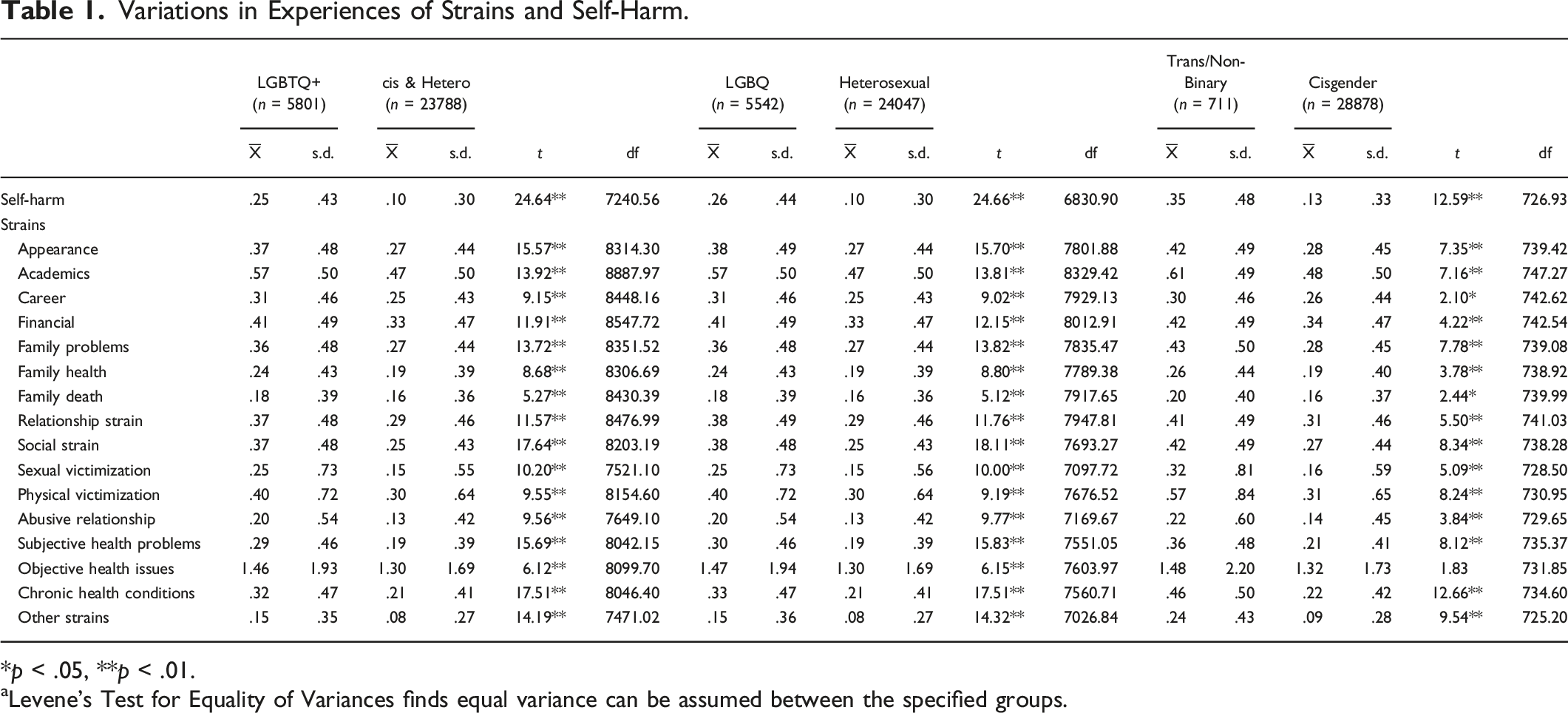
We utilized a series of independent samples t-tests and binary logistic regression analyses to assess our research questions. To answer our first question, independent samples t-tests were conducted between the LGBTQ+ sample and the remaining cisgender and heterosexual sample between experiences of strain and self-harm. We then assessed for significant mean differences based solely on sexuality (i.e., between the LGBQ sample and the heterosexual sample) and then solely based on gender identity (i.e., between the trans/NB sample and the cisgender sample). We then repeated these series of assessments to determine if there were differences between experiences of self-harm between the subgroups.
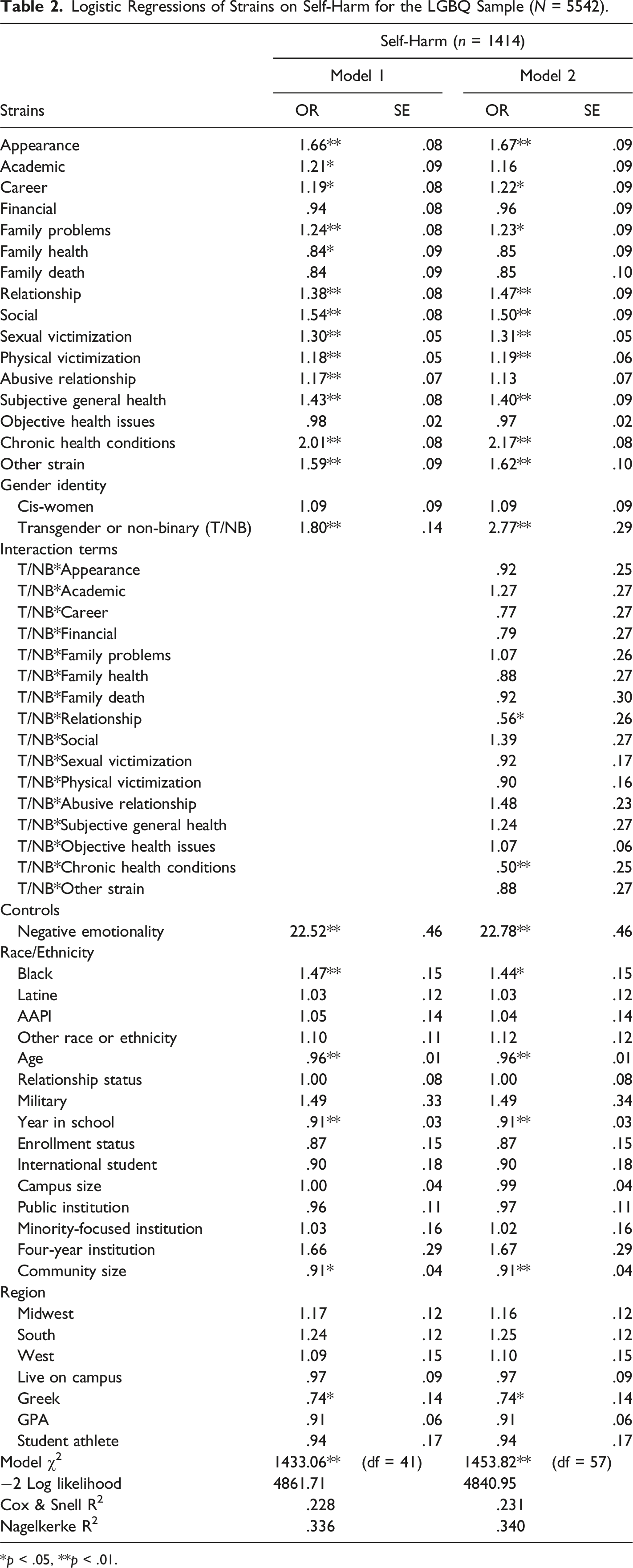
Given the dichotomous nature of our self-harm measure, we employed binary logistic regression analyses to answer our remaining research questions. Odds ratios (OR) are presented for ease of interpretation, with results above one signifying higher odds of the self-harm and lower odds indicated by results below one. We first assessed the associations between strains and self-harm within the LGBQ sample. We then created interaction terms between trans/NB status and each strain to investigate the conditioning effects of gender identity on the experiences and response to strains within this specified sexuality context. We repeated these series of analyses with the trans/NB sample, first assessing the varied associations between strains and self-harm for this group and then the conditioning effects of sexuality within this specific gender identity subsample. Variance inflation factors suggest none of the present measures suffer from multicollinearity. We cleaned and analyzed the data using SPSS27.
Results
Variations in Experiences of Strains and Self-Harm.
*p < .05, **p < .01.
aLevene’s Test for Equality of Variances finds equal variance can be assumed between the specified groups.
Logistic Regressions of Strains on Self-Harm for the LGBQ Sample (N = 5542).
*p < .05, **p < .01.
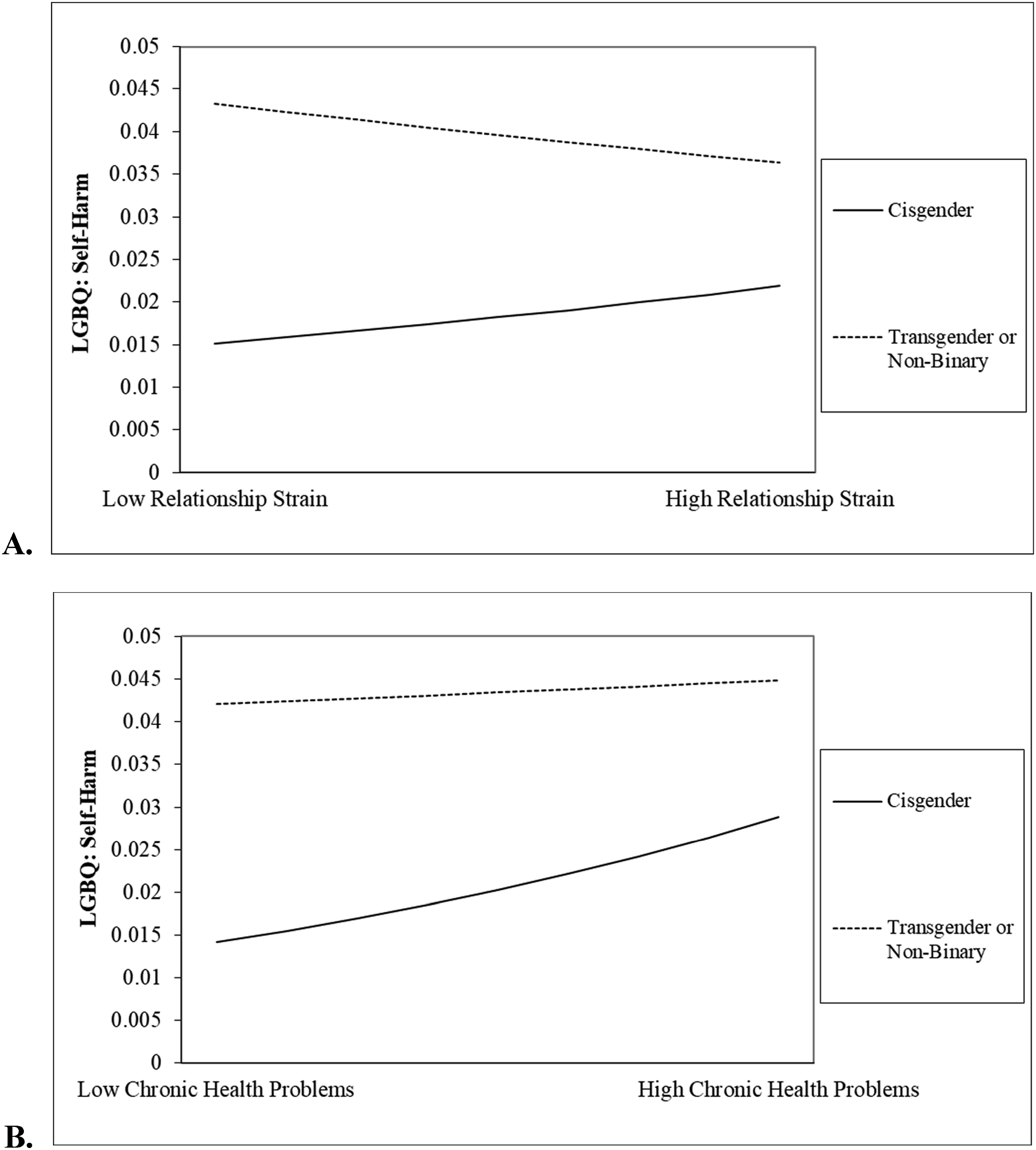
Significant interactions of gender identity and strains for the LGBQ sample.
Figure 1(A) reveals while the odds of self-harm are overall higher for trans/NB LGBQ college students, the odds of self-harm among the cisgender LGBQ students increase as they experience more relationship strains, while they slightly decrease for the trans/NB students. And Figure 1(B) shows the odds of self-harm increase as one experiences more chronic health problems for the cisgender LGBQ students, but the odds of self-harm remain stable across all levels of strain for the trans/NB LGBQ students.
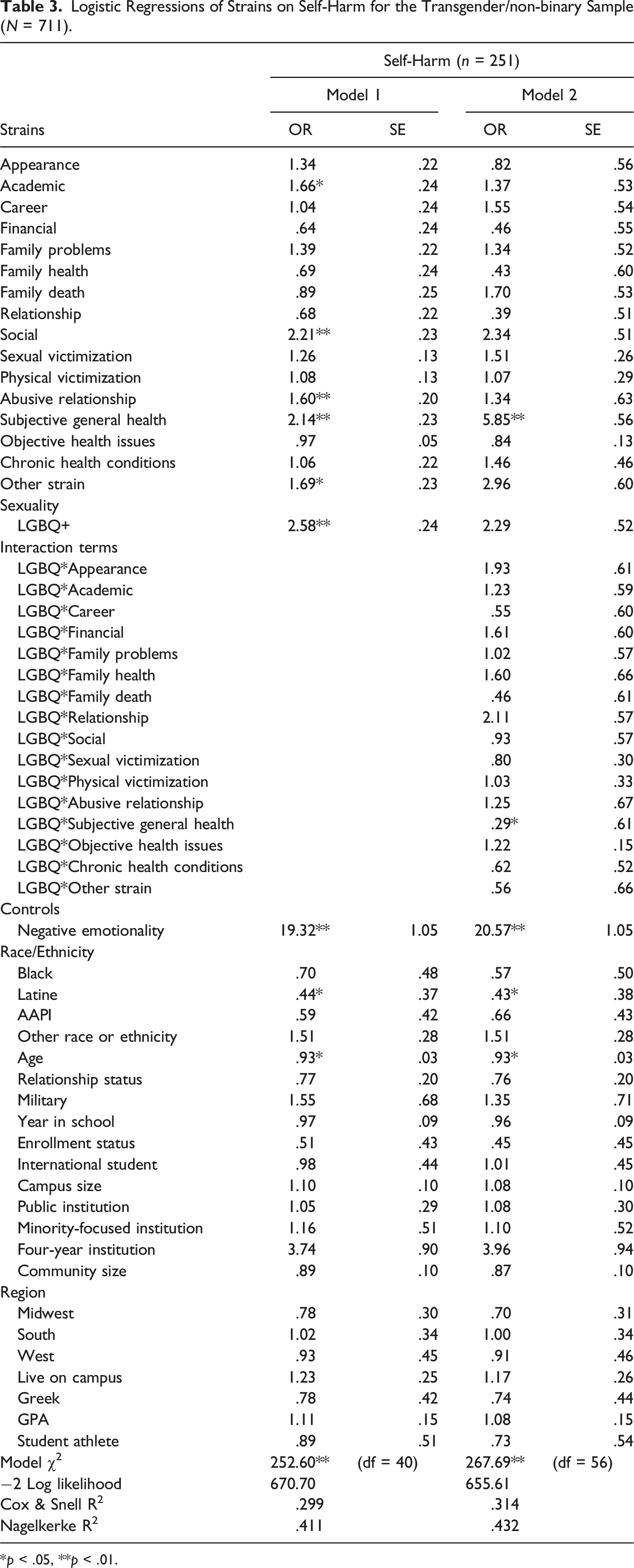
Logistic Regressions of Strains on Self-Harm for the Transgender/non-binary Sample (N = 711).
*p < .05, **p < .01.
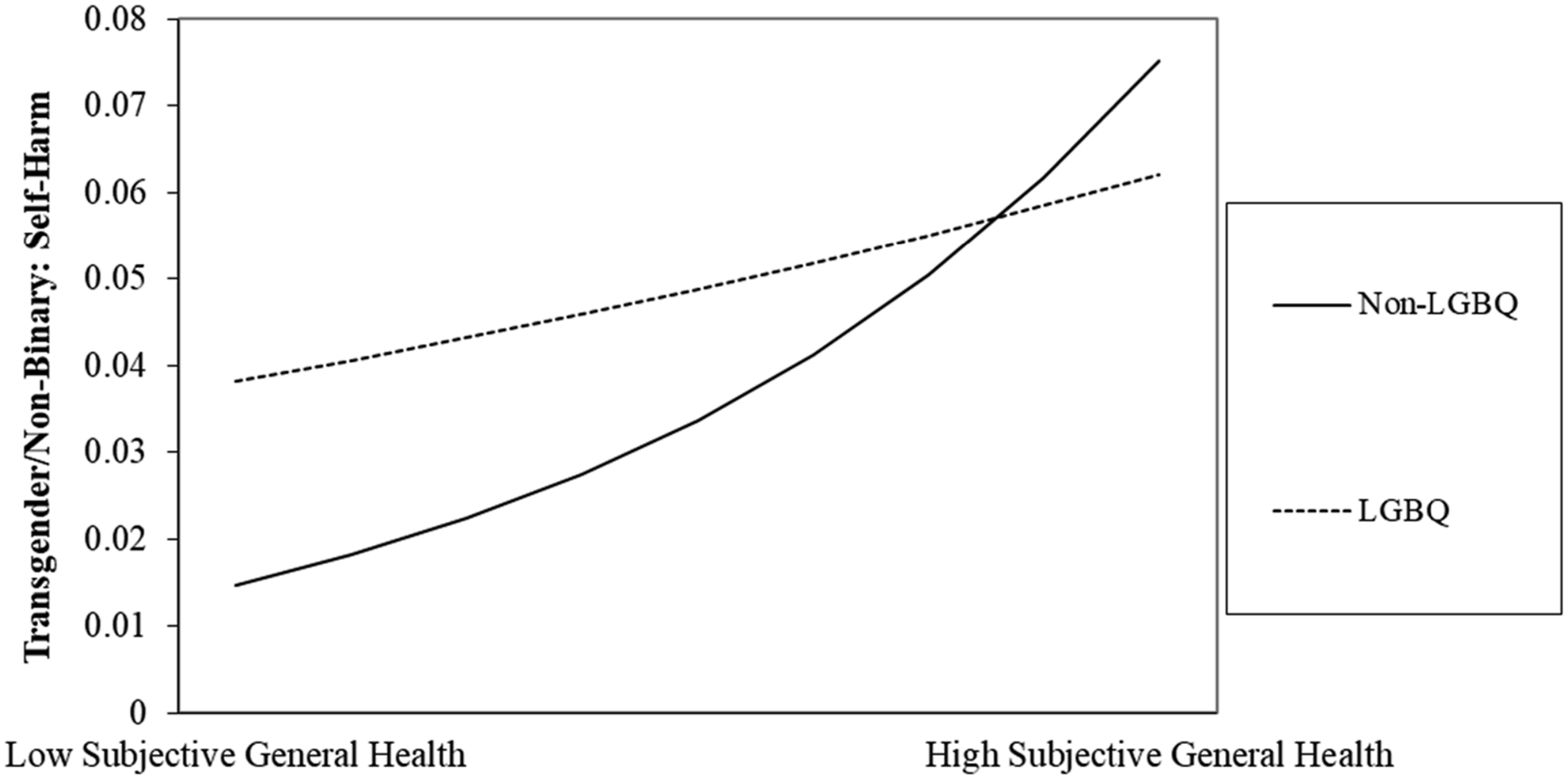
Significant interactions of sexuality and strains for the transgender/non-binary sample.
Figure 2 reveals an increase in the odds of self-harm as one experiences more subjective health problems for LGBQ trans/NB students, but this association is even more dramatic for their heterosexual trans/NB counterparts. Thus, there are varied associations between experiences and responses to strain between those of diverse sexualities and gender identities. Furthermore, gender identity and sexuality often interact in distinct ways further impacting the differing experiences and responses to strains.
Discussion
Overall, we sought to apply an intersectional, queer lens to a GST framework to assess the varied associations between strains and self-harm between and across gender identity and sexuality for LGBTQ+ college and university students. First, our results find those across the LGBTQ+ community experience more strains and self-harm than their heterosexual and/or cisgender counterparts. Furthermore, our findings lend credence to the need to disentangle gender identity from sexuality as there were distinct differences in experiences and responses to strains between the sexuality and gender identity subgroups. For instance, while the mean levels of reported strains were fairly consistent between the LGBQ and trans/NB subgroups, the trans/NB subgroups reported much greater levels of self-harm than their LGBQ counterparts (
Furthermore, differences in types of strain and degree of strength of associations with self-harm emerged between the LGBQ and trans/NB group; thus, it can be assumed these identities distinctly and uniquely impact one’s experiences and responses to various strains. Specifically, of the sixteen strains assessed, only three were not significantly associated with self-harm for the LGBQ subsample, with all but one (family health) being associated with an increased odds of engaging in self-injurious actions. Yet, despite reporting experiencing all the assessed strains at very similar levels to their LGBQ counterparts, only five of the sixteen strains were associated with self-harm for the trans/NB students. This in combination with the higher reported levels of self-injurious behaviors among trans/NB students compared to LGBQ students lens credence to the varied significance of these identities. Moreover, while trans/NB students report experiencing strain and engaging in harmful actions towards themselves at relatively similar or higher rates than LGBQ students, the associations between the two are not as direct as for their LGBQ counterparts. Thus, there is likely something about their lived experience as a trans/NB person that mitigates these direct associations. This difference is similar to the experiences of fear found between LGBQ and trans/NB students by Rogers and colleagues (2023). While beyond the power of the present data and scope of the current study, unpacking how and why this may be with future research is warranted.
Relatedly, within each subgroup, those that identified as both LGBQ and trans/NB had significantly increased odds of engaging in self-harm (LBGQ subsample, T/NB status: OR = 1.80; Trans/NB subsample, Sexuality: OR = 2.58). Yet, this intersection only conditioned the experiences of strain in a few instances, and often in surprising ways (i.e., weakening ties between strains and self-harm). Overall, it seems that those who identify as transgender or non-binary as well as LGBQ have higher odds of engaging in self-injurious behaviors despite the degree of strains they experience. Furthermore, protective factors, such as social support and self-efficacy, often do not function the same for LGBTQ+ individuals. Similar to extant literature by Button (2015; 2016), much of the controlled for protective factors were not significantly associated with reduced odds of self-harm for either the LGBQ or trans/NB subsamples, but particularly for the trans/NB subsamples. Similar findings have been found in terms of fear of victimization (Rogers et al., 2023). This is highly significant and warrants additional investigation as we continue to think of intersectionally-informed, identity-centric ways to aid LGBTQ+ individuals with their experiences and responses to strainful events.
While strain can lead to similar deviant and harmful coping in LGBTQ+, cisgender, and heterosexual people, different protective factors vary in their helpfulness in reducing their risk of engaging in such behaviors. Button (2015) found that social support and self-efficacy reduced the risk of suicidality among heterosexual youth but not LGBQ youth. Similarly, Button (2016) demonstrated that social support does not moderate the relationship between strain and negative outcomes for LGBQ youth. In some circumstances, social support can increase LGBQ youth’s risk of negative outcomes (Button, 2016). One explanation is that the social support LGBTQ+ people are receiving is not coming from a helpful source. For example, if their peers are dealing with their strain with risky behaviors, then they are not going to be able to give advice that leads the individual to a more positive path (Button, 2015). Therefore, it is essential that research continues to explore potential protective factors specific for LGBTQ+ individuals to help them better cope with their negative experiences.
While the primary aim of the present study was to investigate the distinctiveness and intersections of gender identity and sexuality, exploring and understanding the intersectional impacts of other statuses and identities are vital. A significant strength of the ACHA-NCHA II data are their inclusivity, not only of gender identities and sexualities, but racial and ethnic groups as well as other distinct statuses, identities, and experiences. Looking at Table 2, we find Black LGBQ students are more likely to engage in self-harm. Among the trans/NB subsample, however, we see few racial and ethnic differences. Table 3 reveals only Latine trans/NB students had significantly lower odds of engaging in self-harm. Thus, at least on the surface, gender identity, particularly in terms of trans/NB status and sexuality, seem to mitigate some of the differences known to exist in terms of experiences and response to strains between various racial and ethnic groups (e.g., Isom et al., 2021; Isom et al., 2023; Isom & Grosholz, 2019; Noh & Isom, 2023). A more thorough intersectional analysis is warranted to better disentangle the varied experiences within and between racial and ethnic groups across gender identity and sexuality.
Furthermore, while not a central focus of the present study, the significant and strong associations revealed between negative emotionality and self-harm warrant attention. Within the LGBQ subgroup, for every 1 unit increase in negative emotionality, their odds of self-harm increased 22.5 times (OR = 22.52), net the strains and the controls. Similarly strong connections are found among the trans/NB subgroup (OR = 19.32). Thus, given the extant literature on mental health, negative emotionality, and self-harm among LGBTQ+ populations in other fields (i.e., public health, psychology, sociology, medicine) (e.g., Claes et al., 2015; Inderbinen et al., 2021; Liu et al., 2019), the role of negative emotions within this context and framework merit further attention. Moreover, negative emotions play a central and multifaceted role within GST. Agnew (2006) outlines the role of trait negative emotionality, as currently controlled, compared to the state emotional responses to strain in GST. Broidy and Agnew (1997), also, clearly argue for gendered variations in emotionality and emotional responses to strain. Thus, future work should further examine the intricacies of anger and depression, both as state emotions and personality traits, while also assessing the role of other negative emotions like frustration, guilt, or sadness, especially through a queer and intersectional lens. These variations and specifications seem to be particularly relevant for the groups presently assessed and would provide further enlightenment to the intricate associations and pathways between varied identities, negative experiences, and harmful outcomes.
Finally, it is also worth noting that while we highlight an often-under investigated outcome – self-harm – recognition of how these behaviors are responded to across and between those with various social privileges and oppressions is warranted. Our data do not allow us to know how often respondents sought help following their self-injurious actions or how they were treated by medical professionals and officials. Across the globe, self-injurious actions are often criminalized, particularly when engaged in by those that are marginalized and oppressed, such as people of Color and those in the LGBTQ+ community (The Lancet, 2023; World Health Organization, 2023). Investigating the disparities in social responses to self-harm by those of various identities is a needed next step in this line of research.
Limitations
While our results reveal important answers to our research questions, as with all research, this study has limitations, mostly linked to the use of secondary data. While the ACHA-NCHA II has significant strengths that allow for inquiries that have long been overlooked in the orthodox criminological literature, it still fails to capture all the factors warranted as completely and comprehensively as desired. For instance, it captures numerous strains that are known to impact the specified demographic – college students – but fails to fully gauge the breadth and depth of distinct strains faced by oppressed and marginalized groups, such as those in the LGBTQ+ community. In particular, measures of discrimination, a known strain for LGBTQ+ individuals, are lacking within the data. A recent report from the Center for American Progress (Medina & Mahowald, 2023, para. 3) found that LGBTQI individuals experienced significantly higher rates of discrimination in all settings studied compared to non-LGBTQI individuals. More specifically, one in three LGBTQI individuals experienced some form of discrimination (e.g., housing, workplace, healthcare, and public spaces) in the year prior to survey collection in 2022 with many of these individuals altering their everyday experiences to avoid potential discrimination. In addition, Schweizer and Mowen (2022) found that experiences of discrimination can lead to suicidality and substance use among transgender individuals. Thus, specific attention to the varied experiences of and responses to discrimination across and between gender and sexual identities is a warranted next empirical step. Furthermore, there is an absence of nuance to the strains that are included, thus limiting the knowledge that can be gained about the scope of various strainful experiences. Moreover, this iteration of the ACHA-NCHA II was collected in 2016, and significant social and political changes impacting the LGBTQ+ community have occurred since then. Thus, these indicators of strain, while greatly significant, are conservative.
As noted earlier, additional intersectional analyses are merited to aid understanding of the intricate disparities between those of various multiplicative identities. Future research should employ qualitative methodologies in addition to quantitative inquires to assess not only if there are differences but to better understand how and why differences exist through individuals’ own voices. Doing so would provide a more comprehensive guide to policy makers on how to best provide the most inclusive care and support for all students, including the most vulnerable. Additionally, while focusing on college students provides significant insight into an emerging adulthood population, higher education is a privilege many in marginalized groups, including the LGBTQ+ community, do not have. Further investigations utilizing samples of a broader population are needed. And finally, like all cross-sectional research, causal order of the associations between strains and self-harm cannot be presently determined. Data that allows for assessments of time-order are required to better assess causal relationships between strains and self-harm, particularly for those in the LGBTQ+ community.
Conclusion
In sum, our findings lend support to the need for queer, intersectional scholarship to investigate the within and between variations and complexities among different groups. Our findings solidify the importance of disentangling statuses and identities, particularly within the LGBTQ+ community. We find sexuality and gender identity differentially impact the experiences and responses to strains in addition to distinctly conditioning the influence of each other in various situations. We call on scholars to continue to explore these various contexts and complexities to best inform inclusive reforms and policies.
In addition to a call to scholars, we too urge legislators to reconsider legislation designed to further marginalize the LGBTQ+ population. As our research solidifies, those in LGBTQ+ community are already facing substantial amounts of strains which are often associated with negative outcomes. Policies, such as those mentioned at the beginning of this paper, only exacerbate the strains encountered by LGBQ and trans/NB people, particularly victimization, academic stress, health strains, and general stress, among other factors. Students who identify as part of the LGBTQ+ community are uniquely and increasingly vulnerable to scrutiny by their peers and college administrators at universities and colleges governed by state legislation. We ask administrators and politicians to be aware of the added harm they are causing an already vulnerable population. While our findings do not speak directly to the impacts of hostile campus environments and discriminatory policies, they do highlight many of the stressors experienced by these groups of students. Therefore, it is a first step in understanding the various experiences and responses to strains for some of our most at risk students. We hope this inspires the additional steps needed to truly better serve and protect all people, especially those that are most vulnerable.
Footnotes
Declaration of conflicting interests
The author(s) declared no potential conflicts of interest with respect to the research, authorship, and/or publication of this article.
Funding
The author(s) received no financial support for the research, authorship, and/or publication of this article.
Data Availability Statement
Analyses were conducted on data obtained from the American College Health Association. (American College Health Association-National College Health Assessment, Fall, 2016 [data file]. Silver Spring, MD: American College Health Association [producer and distributor]; 2022–08-22 of distribution). The ACHA-NCHA data are exclusively property of the ACHA. The data are confidential and proprietary and cannot be transferred or shared without permission from the ACHA. Data are available through an application and proposal process with the ACHA: 