




Abstract
Sexual harassment and other forms of transit crime are everyday occurrences for women and girls around the world. The absence of safety hampers the ability of numerous women to engage freely in school, employment, and public activities without being alert. This research explores women’s safety experiences, particularly focusing on young women in diverse rural and urban environments. We utilized chi-square analysis and regression models to analyze data obtained from a survey distributed to railway passengers in 2022 across neighboring municipalities in southern central Sweden. Findings show that being young makes women more likely to be victimized. Although rural women feel safer than their urban counterparts, they are more often willing to take precautionary measures before taking a trip (e.g., more often traveling with someone in the evening or avoiding certain stations). These findings call for gender-age-sensitive mobility policies, taking into account the intersectionality of transit safety, and reflecting women’s and girls’ safety needs in particular rural contexts.
Keywords
Introduction
The 67th session of the United Nations Commission on the Status of Women reached a consensus on ways and means of achieving gender equality and the empowerment of women and girls with a particular focus on rural women. The agreed conclusions adopted by the Commission indicate that the existence of schools, jobs, and health care across rural areas is an essential component of the empowerment of women and girls around the world (Commission on the Status of Women Sixty-Seventh Session, 2023). However, despite these efforts, the narrative of these documents neglects the basic conditions for women’s mobility, which is essential for their economic and social autonomy. Access to safe, reliable, and affordable transportation for rural women to access schools, jobs, etc., is still poorly understood and not considered a priority in international policy. Yet, it is essential for an individual’s future life opportunities.
While young women are statistically more at risk of being victimized, older and/or disabled individuals tend to be more fearful (Lagrange & Ferraro, 1989). There is a need to better understand the effects of individual factors on victimization and fear of crime, (such as age, ethnicity, or frequency of use of the transportation system) but also their intersections to situational circumstances, for instance, living in remote rural areas. Therefore, we approach women’s safety from an intersectional perspective (Crenshaw, 1989), recognizing that various factors such as age and gender identity intersect to shape unique experiences of vulnerability. In areas where public transport is available, poor road infrastructure and unreliable timetables make women and children vulnerable along roads in rural areas (Njenga & Davis, 2003). By acknowledging these intersecting dimensions, our approach addresses the diverse and nuanced challenges women may face particularly in rural contexts.
Women’s transit safety conditions are a relevant issue worldwide and have been widely reported in urban environments (Gopal & Shin, 2019; Loukaitou-Sideris & Fink, 2008; Lubitow et al., 2017; Stanko, 1990; Valentine, 1990), but less so in rural contexts. Women’s transit safety needs are important because women in most parts of the world are ‘transit captives’, and are overly reliant on public transport for their mobility. The risk of being a victim of crime is exacerbated by poor road infrastructure and unreliable vehicles and timetables. Sparsely populated areas make it difficult for women to count on bystander intervention if anything happens (Hollis & Hankhouse, 2019). Although a particular concern of women is the fear of being a victim of sexual assault while in transit, an issue that seems quite universal (Ceccato & Loukaitou-Sideris, 2020), the evidence on women’s and especially young women’s transit safety in rural areas, is scant.
Our research contributes to this knowledge base by reporting on women’s and girls’ transit safety in a Scandinavian country, Sweden. By comparing victimization and safety perceptions of women living in the most remote areas with those living in urban areas, we aim to investigate women’s and girls’ strategies to reduce the risk of victimization and/or neutralize feelings of fear, by identifying women’s most common strategies and daily precautions. Sweden serves as an ideal country for this study due to its advanced and longstanding public policies promoting gender equality. These policies have been recognized globally, with the United Nations naming Sweden as the most gender-equal country in the world during the 1990s (Rothstein, 2012). Yet, 59% of young women feel safe in transit against 69% among men in the same age group (Svensk Kollektivtrafik, 2022). Another indicator of concern comes from a recent survey that shows that almost half of the respondents declare being subjected to violence (often sexual) in public places by people they do not know well and a quarter of this violence happens in transit environments (Westerstrand et al., 2022). Yet, none of these figures take into account potential differences between rural and urban areas in women’s victimization and/or safety perceptions.
Women’s Transit Safety in Rural Contexts: A Brief Overview
The current study contributes to the international literature on the multifaceted nature of transit safety perceived by women in both rural and urban contexts. We start by defining fear and fear of crime then we review research on fear of crime that has considered complementary components of fear: dispositional fear, which reflects inter-individual differences in the tendency to experience fear, and situational fear, which refers to a transitory state of experiencing fear for instance while in transit (Gabriel & Greve, 2003; Kappes et al., 2013), also noting that situational and dispositional safety perceptions influence each other.
Fear is, according to Warr (2000, p. 453), “an emotion, a feeling of alarm or dread caused by awareness or expectation of danger.” If one concentrates on looking at “fear of crime” only, Ferraro (1995, p. 8) defines it as “an emotional reaction of dread or anxiety to crime or symbols that a person associates with crime.” Past studies have demonstrated that an individual’s apprehensions are influenced by personal attributes, encompassing factors like physical capabilities, age, gender, socioeconomic status, and ethnic background. Below we discuss these.
Dispositional Fear
Among the most important individual factors in defining the risk of victimization and perceived perceptions are gender and age. Traditionally, women are portrayed as being more fearful than men (in particular in public places) about their personal safety (Box et al., 1988; Koskela, 1999; Loukaitou-Sideris, 2005). As previous research has suggested, women’s fear of crime is an expression of women’s fear of men’s violence and works as a barometer of women’s actual and perceived vulnerability to men’s physical and sexual violence (Stanko, 1990). Most recent feminist scholarship has enriched this analysis with intersectional perspectives, taking into account multiple axes of oppression based not only on ethnic background and class, but also on age and gender status (for a review, see Barberet, 2014). Studies with older and disabled individuals found that they tend to be fearful and express particular safety needs (Ceccato & Bamzar, 2016; Iudici et al., 2017; Killias & Clerici, 2000; Sundling, 2016; Yin, 1980), as those who belong to the LGBTQI community and those who are economically disadvantaged (Box et al., 1988; Garofalo & Laub, 1978; Pain & Smith, 2008; Sundling & Ceccato, 2022). Additionally, among individual factors, prior victimization is often considered as a determinant of an individual’s fear, particularly in discussions about the situational conditions of crime and fear of crime in rural areas (Hale, 1996; Killias & Clerici, 2000).
Situational Conditions of Crime and Fear in Rural Transit Contexts
Women often report being more fearful than men in transit environments (Ceccato, 2013; Cresswell & Uteng, 2008; Dymen & Ceccato, 2012; Loukaitou-Sideris, 1999), even though men are more often victims of reported crime in these environments than women (Morgan & Smith, 2006). However, crime and harassment against women are also often underreported. For example, in an international study, only between 3 and 17% (depending on the country) of the women who had been subjected to harassment or assault had reported it (Whitzman et al., 2020). Moreover, women’s fears are different than men’s as women are more subjected to sexual crime than men but also to recurrent sexual harassment that can cause fear of more serious crime (Lorenc et al., 2013). This is important to note as women are sometimes accused of having “irrational” fears (Mellgren & Ivert, 2019). Yet, “as consumers of transport, women have too often been assumed to have identical needs to men’s, it is clear that women have travel needs as significant to those of men and in many respects distinct from them. There are significant differences between women’s transport demands as opposed to men’s to justify treating women separately” (Hamilton & Jenkins, 2000). Previous research shows that victimization is dependent on surveillance conditions, emptiness, crowdedness, CCTV, maintenance, and lighting conditions (e.g. Block & Davis; Ceccato et al., 2013; Ouimet & Tremblay, 2001; Piza & Kennedy, 2003). What remains unclear is whether women’s safety needs in rural and urban contexts are similar.
In comparison with those who live in urban areas, rural individuals often lack reliable public transportation, forcing women to rely on personal vehicles or walk long distances (Ceccato, 2016). Great distances between residences and sparse population density can exacerbate the sense of isolation and make women feel more vulnerable to crime. Rural areas, compared to urban areas, have fewer police patrols which they can turn to, heightening their fear of crime, as they may perceive a lack of protection and do not see the point in reporting crime victimization (Abraham & Ceccato, 2022). Additionally, in close-knit rural communities, where people often know each other, women may fear that reporting a crime or seeking help could lead to social stigma, ostracism, retaliation, or the spread of rumors. This fear can discourage women from coming forward or speaking out about their experiences which for some may occur in the domestic realm (DeKeseredy, 2015; DeKeseredy & Joseph, 2006).
Women who feel anxiety when waiting for the train to come after dark may avoid such spots in the future, restricting their mobility (Bromley et al., 2000). An individual may create ‘avoidance strategies’ that generate modifications in one’s behavioral patterns to avoid future exposure to risk (e.g. avoiding a particular route when it is dark) or appeal for ‘risk management strategies’ to mitigate risks once they appear by manipulating factors in the environment which are the source of stress (Gordon & Riger, 1989; Riger et al., 1982), for instance, by sitting close to the driver in an evening bus after feeling stalked.
Individuals’ fears do not solely manifest themselves in restricted use of public space but in extreme cases may also lead to self-confinement, making them ‘prisoners in their own homes’ (Henderson & Bialeschki, 1993, p. 45). This is a clear example of what Jackson and Gray (2010) refer to as ‘dysfunctional fear’, whereby anxiety impairs an individual’s agency and reduces the quality of life. In some cases, precautionary actions can be perceived positively as they are in fact ‘functional’ (Gray et al., 2011). In that case, fear becomes the main motivation for one to take action, as it supports activities that make crime and victimization more difficult to occur, such as participating in patrols or watch schemes.
Research Design
Therefore, for this case study, we followed the recent strand of Western research on transit safety and set out to investigate the following research questions.
RQ1 – Does victimization in transit environments vary between riders from rural and urban areas? Are women more victimized? Does it vary by age, location and modality?
RQ2 – Do safety perceptions of riders vary during the trip (on the way to/from the station) and between rural and urban areas? Are women more fearful? and where, and how?
RQ3 – What are the most common precautionary measures taken by women? Do they differ in rural and urban contexts?
The Study Area
Sweden has 10.4 million inhabitants and one of the largest land areas in Europe. The winters are long and dark, often with snowcapped grounds, especially in the north, while summers are bright, even late in the evening. The population density is substantially higher in the south, where the study area is located. As of 2019, around 88% of Sweden’s population lived in urban areas, while the remaining 12% lived in rural areas (World Bank, 2022). Our study area is composed of 47 rail-bound stations distributed over three railway lines stretching through central and southern Sweden, serving 28 municipalities, which together have a total population of 1.78 million inhabitants (SCB, 2020). Altogether, 64,000 passengers travel on these railway lines in an average year (Swedish Transport Administration, 2009). In this study, ‘urban area’ encompasses all respondents living in the urban core of a municipality while ‘rural area’ includes all respondents outside of the urban core. Most of the stations are located in small towns with a population of less than 15,000 inhabitants, but looking at the municipal group division, many of these small towns seem to be close to at least one larger city or municipality. For example, it may be that many of the residents of a small town commute to a nearby larger city for work (15,000 – 37,499 inhabitants). There are several medium-sized urban areas on the three routes, such as Södertälje, Eskilstuna, Örebro, Norrköping and Linköping. Gothenburg is the only one that qualifies under the big city category (above 37,500 inhabitants). The stations included in the study are thus long-distance railway stations. Some of them also have a bus terminal or a bus stop nearby. Alcohol-selling outlets, restaurants, and coffee shops are relatively common in the vicinity of the stations. Schools are often located near the stations, not in direct connection but at a certain walking distance. There are many parks and woodlands surrounding the stations, and they usually have a parking lot within 100 m of the station. A higher-than-average proportion of women is found residing close to small and medium-sized stations (SCB, 2020). This principle can also be applied to the proportion of people living in apartment buildings, particularly concentrated in the vicinity of medium-sized and large stations.
Data
This analysis is based on a unique dataset collected for the funded grant proposal entitled “The effect of the station environment on crime and passenger’s safety perceptions” funded by the Swedish Transport Administration with a particular focus on policy recommendations towards user-centered and sustainable public transportation. In cooperation with the National Association of Transit Riders, we conducted a systematic and detailed inspection (winter 2021 and summer 2022) of all stations and their surroundings (including photo documentation). In this inspection, amenities in each station area were assessed and documented, for example, if there is a restaurant or café. Other features that may be important for safety or victimization were also assessed, such as tunnels. Following approval by the Swedish Ethical Review Authority, data was collected between May and November 2022.
We combined answers from two quasi-identical surveys, one in print and one online survey in the Swedish language. To promote the survey, posters and cards were set up during fieldwork inspection in the summer of 2022. The survey was also distributed in Facebook groups by the municipalities and other groups and organizations. The web-based platform, Crowdsignal (https://crowdsignal.com/), was used to administer the questionnaire, consisting of 27 questions. The total sample of women was 2076 and the basis for this study consisted of N = 3402 individuals who responded to the questionnaire (but the N may vary by question). The sampling fraction was calculated by dividing the number of individuals in the sample by the total population size (3402/64,000 = 0.05) which is 5%. In our case, the sample is representative of the whole system following stratification by station size/population gender/night/day passengers. Of these 74% are urban and 26% are rural, 61% identified as female, 34% as male, 3% as LGBTQI (lesbian, gay, bisexual, transgender, queer or intersex), and 2% selected the category “other”. According to recent statistics from Sweden, women are also more inclined to use public transport regularly, with 56% reporting monthly use, compared to 43% of men (1% other) (Svensk Kollektivtrafik, 2024). A large majority of the respondents were between 30 and 59 years old and born in Sweden, but 29% of the respondents were younger than 30 years old, and 12% of the respondents were born outside Sweden. This is comparable with national data indicating that young people (under 26 years old in this case) account for 22% of public transport users, with the majority being middle-aged (Svensk Kollektivtrafik, 2024). In this study, young women are defined as “girls” who are 18 years old or younger (123 are 18 years old and younger, 7.2%). A large share of the surveyed passengers reported that they travel by train less than once a month (32%), while almost the same share are frequent users (27%), using the train at least four days a week. Travel frequency among the general population of riders is similar, which shows that 36% use public transport less than once a month, but 20% use it almost every day. Most people are categorized as “switchers”, meaning they travel with both car and public transport at least once a month (Svensk Kollektivtrafik, 2024).
Modelling Crime and Fear of Crime
Logistic regression results of Y = Victimization (a) and Y = Fear of Crime (b) at the station and on the way to the station.
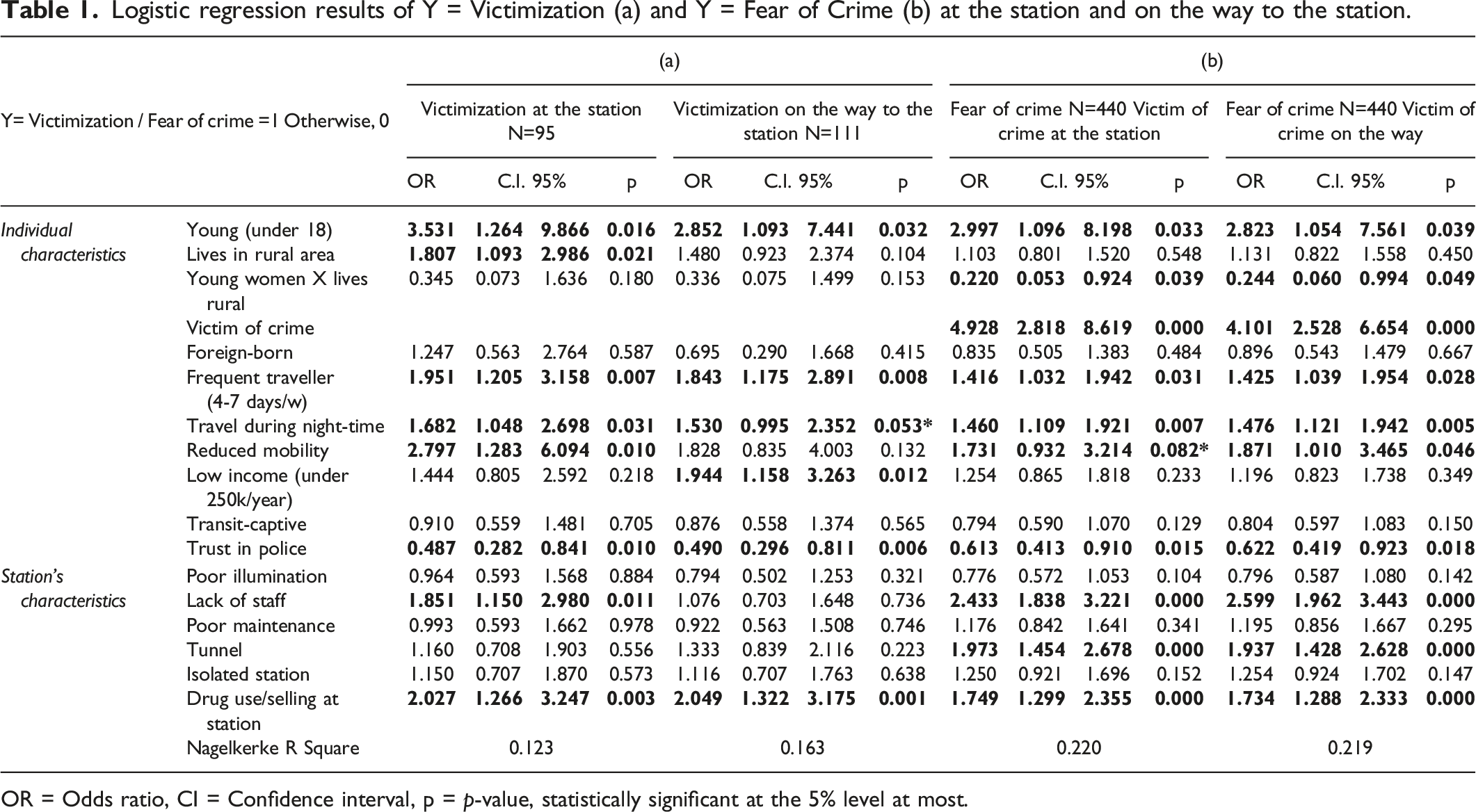
OR = Odds ratio, CI = Confidence interval, p = p-value, statistically significant at the 5% level at most.
Results
Victimization and Safety Perceptions Among Women
The results of the bivariate analysis of victimization and safety perception are found in Appendix 2. Of women riders, 15% declared they had been victimized in the last five years while in transit using rail-bound transportation (N = 2031). Of these, by far the most common types of victimization experiences were of a sexual nature including stalking (46%), and sexual harassment (45%). Less common were property crime, violence, and threat or hate crime. Figure 1 shows the percentage of women who have been victimized by various types of crimes, along with the corresponding fear levels reported by those women who feel unsafe. Most women riders said they had been victimized on the train (56%), platform (54%), or on the way to the station (52%). Fewer incidents took place in the station environment (waiting room, toilet) or its immediate surroundings, such as the bus terminal or car park. Girls 18 years old and under were victimized more than those who are older – a quarter of the girls reported having been victim to any crime, compared to 15% of women above 18 years old (χ2 (1, N = 1670) = 8.5, p < .004). However, fewer girls were the victims of aggressive panhandling (χ2 (1, N = 262) = 9.6, p = .002) compared to women above 18, and they experienced stalking to a greater extent (χ2 (1, N = 262) = 4.6, p = .032). Women’s transit safety: The relationship between women’s victimization and fear of crime. Nvictim = 297 and NFear = 795.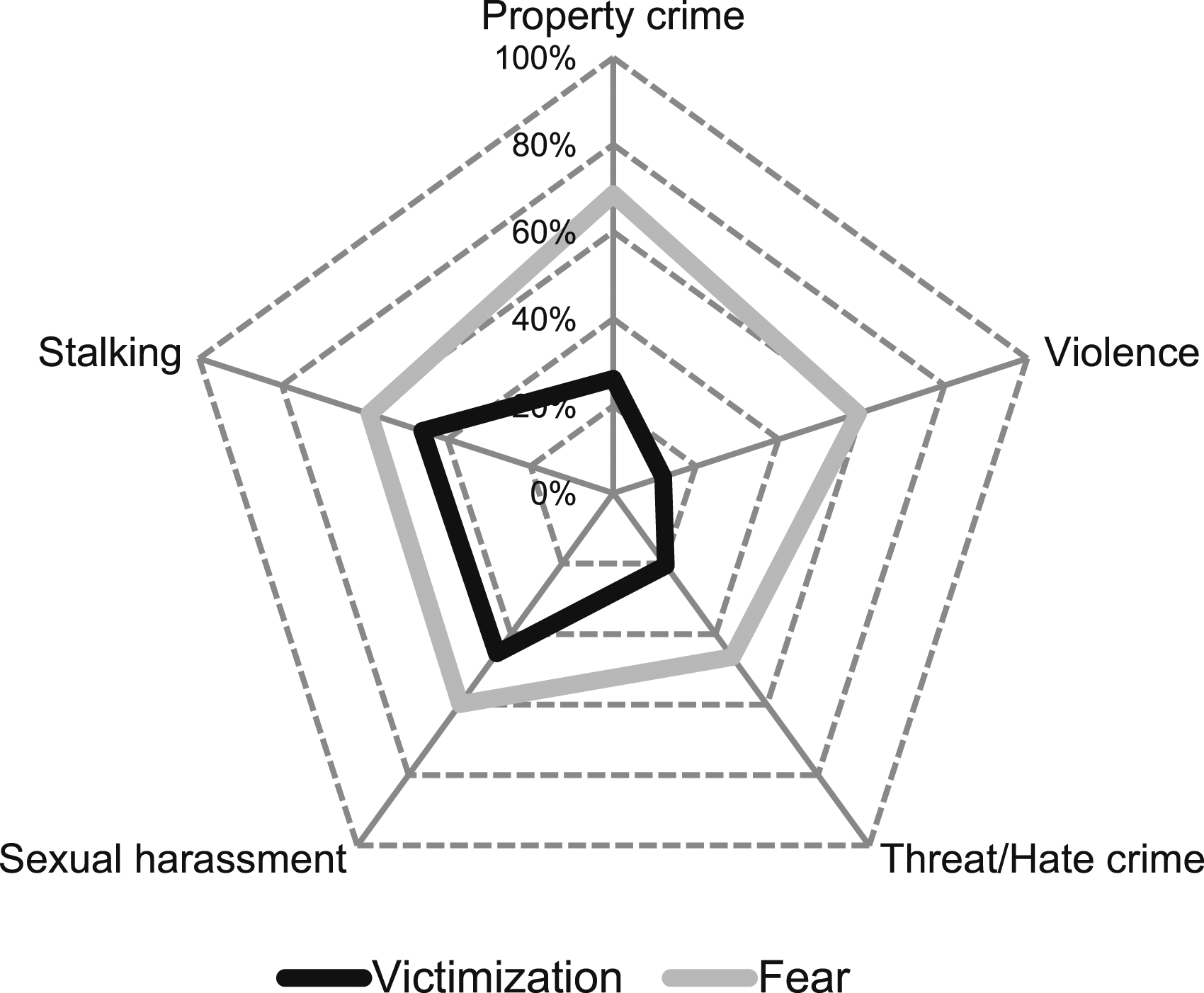
Rural women tend to feel safer at home (where they live), only 9% of rural women feel unsafe where they live, compared to 13% of urban women; (χ2 (1, N = 1830) = 5.1, p = .24) and at the station (14% of rural women always feel unsafe at the station), compared to 19% of urban women; (χ2 (1, N = 1716) = 5.7, p = .017) than urban women do. However, there were no significant differences between rural and urban women about crime type of victimization and location of the incident. As many as 39% of women said they had experienced fear of being victimized while in transit using rail-bound transportation (N = 2029). They were most fearful of property crimes, such as theft or robbery (69%), while many also said that they were afraid of being victims of sexual harassment (60%), violence (59%), and stalking (59%) (Figure 1).
Figure 2 shows that of the women who experienced fear, most reported that they felt unsafe in the tunnel/bridge connecting to the platform (86%) and on the way to the station (74%). They generally felt safer while on the platform or the train. There were no significant differences in fear between rural and urban women about these transit settings. Women’s transit safety: The relationship between Women’s victimization and fear of crime by transit setting. Nvictim = 297 and NFear = 1018.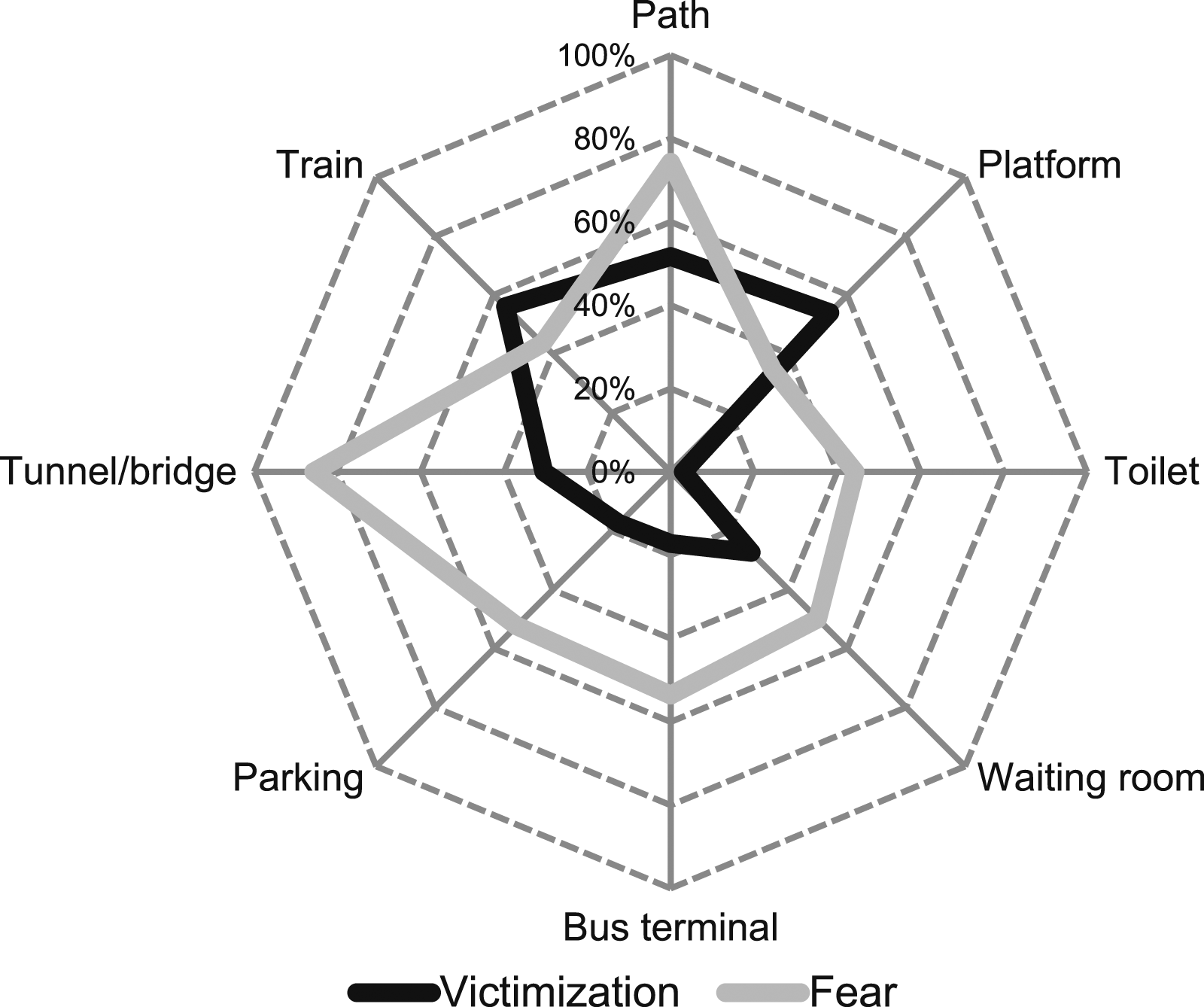
There is no significant difference between girls aged 18 years or younger in fear of victimization compared to women above 18 years old (χ2 (1, N = 1672) = 1.6, p = .210), but in comparison with all other riders, the difference is significant (χ2 (1, N = 2982) = 8.5, p = .004). However, young girls are less fearful of property crimes (χ2 (1, N = 717) = 15.8, p = .001) and violence (χ2 (1, N = 717) = 7.1, p = .00) when compared to women above 18 years old, but more afraid of being victims of sexual harassment (χ2 (1, N = 717) = , p = .001) and stalking (χ2 (1, N = 717) = 6.7, p = .009).
In the next section, we assess how factors such as age and disability interact with other factors to determine women’s victimization and patterns of fear (Figure 3). Women’s transit safety: The relationship between Women’s fear of crime by transit setting. N<=18yrs = 58 and N >18yrs = 1010.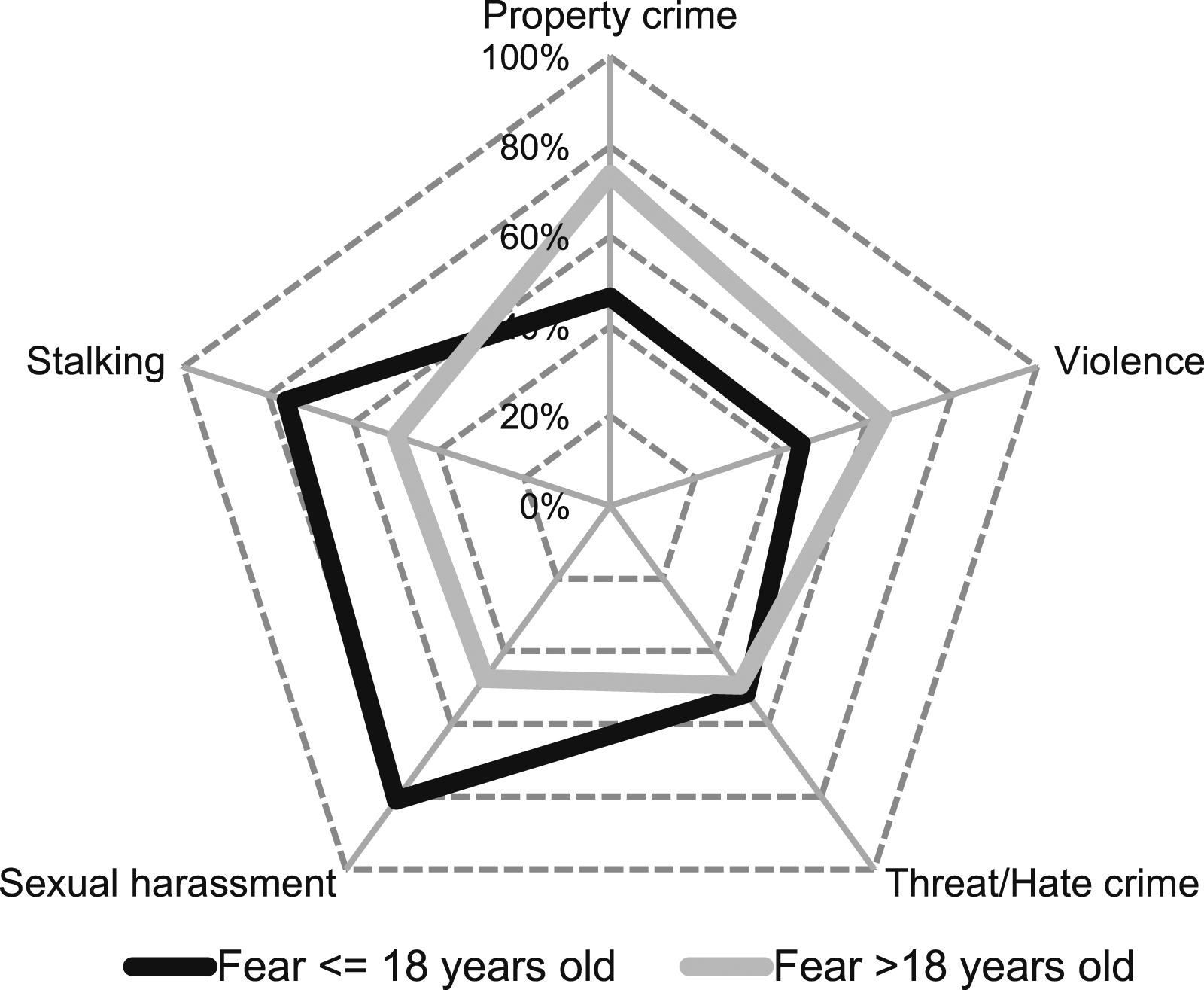
Modeling Fear of Victimization and Safety Perceptions Among Women
Table 1 reports the results of the modeling of women’s transit safety, taking characteristics of the individual and the station into consideration, classified here as ‘victimization’ and ‘fear of crime’.
Victimization
Women who live in rural areas are 1.8 times more likely to be victimized at the station (often a smaller station) than those living in urban areas. For women being victimized on the way to the station, the difference was not significant between women living in rural and urban areas (Table 1). Age is a powerful explanatory factor for experiencing crime as well as fear of crime. Young girls (aged 18 years or younger) are 3.5 times more likely than older women to have experienced crime at the station. On the way to the station, the likelihood is slightly smaller but still significant: young women are 2.8 times more likely to be victimized than older women. Young women living in rural areas were not more likely to be victimized on the way to the station than older women. Having reduced mobility significantly increases the likelihood of women being victimized both at the station as well as on the way to it (2.7 times at the station and 1.8 times on the way to the station). Women who frequently travel (1.9 times) are more likely to be victimized at the station and on the way to the station (1.8 times more likely) than those who do not travel as often. Those who travel during the night-time are 1.7 times more likely to be exposed to crime at the station and on the way to the station (1.5 times).
How one experiences transit environments has a direct and significant impact on the likelihood of being exposed to crime. This suggests a complex and multifaceted relationship between women’s trust in law enforcement and their experiences of victimization. Victim-blaming or insensitive treatment by law enforcement can further discourage women from coming forward. Women from marginalized communities may have poorer confidence in the police due to historical or systemic factors. These communities may also face higher rates of crime, leading to increased victimization. Note that in our sample, women declaring themselves to be victims of crime in transit tend to be twice as exposed to stations that have open drug markets at the station or on the way to the station. Lack of staff seems to affect the victimization of women at the station only. They are 1.8 times more likely to be victimized in stations with a lack of staff, however other factors such as the location of the station (whether it is isolated) or indicators of maintenance or illumination, are not significant. The absence of station staff is only significant for one model, specifically the one addressing the likelihood of victimization during the journey to the station.
Fear of Crime
Young women are nearly three times as likely to feel fear of crime at the station or on the way to it compared to older women. Interestingly, young women living in rural areas feel less fear of crime than their urban counterparts (Table 1) both at the station and on the way to the station. Being previously victimized increases women’s chances of experiencing fear of crime, both at the station and on the way to it. Women living in rural areas do not appear to be a significant factor in any of the models of fear of crime. At the station, women with disabilities or reduced mobility are more likely to say they feel unsafe than those without disabilities. Being a frequent traveler and travel during the night increases the likelihood of feeling fear of victimization. Poor trust in the police increases the chances of increased fear among women both at the station or on their way to it. Being low-income, being transit-captive, or foreign born –are all irrelevant when it comes to explaining the geography of fear of crime. Among the variables that characterize the station, drug use/selling at the station reduces safety (Table 1). The quality of illumination, poor maintenance, and isolated stations are not significant factors affecting women’s victimization in transit. However, women spending time in stations with a lack of staff are 2.4 times more likely to feel unsafe. Similarly, those exposed to tunnels at the station and in between are nearly twice as likely to feel unsafe compared to those who are not.
Findings indicate that the intersectional experience of being young and identifying as a woman increases risk of victimization. For models of safety perceptions, previous victimization increases the likelihood of women’s fear nearly five times compared to those who haven’t previously been victimized. Having reduced mobility increases the likelihood of victimization at the station but not on the way to the station. The presence of tunnels at the station or close to it increases the likelihood of women’s fear of crime but not women’s actual victimization. The following variables were insignificant: born abroad, being transit-captive, or living in a low-income household. The only exception for low-income households was the model on women’s victimization on the way to the station, which shows that women are twice as likely to be victimized on the way to the station if they belong to a low-income household.
Women’s Precautionary Measures: Rural and Urban Differences
Although rural women say they feel safer in their place of residence (9% of rural women feel unsafe where they live, compared to 13% of urban women; (χ2 (1, N = 1830) = 5.1, p = .24) and in transit environments (14% of rural women feel unsafe at the station), compared to 19% of urban women; (χ2 (1, N = 1716) = 5.7, p = .017) than urban women do, they take several precautionary measures to prevent themselves from victimization, however some of these measures are similar to their urban counterparts. For instance, rural women are more likely to avoid certain stations in the evening (χ2 (1, N = 1760) = 4.5, p = .033) and travel with someone in the evening (χ2 (1, N = 1760) = 4.0, p = .046) than urban women. Urban women on the other hand report that they avoid wearing certain clothing as a precautionary measure (χ2 (1, N = 1760) = 4,0, p = .044).
Discussions of the Results
Although only one sixth of women were victimized in transit, nearly half were in fear while at stations and or on the way to them. Stalking and sexual harassment (around 45% of those victimized) are the most common types of crimes against women, while a large majority of women are afraid of being robbed, being victims of theft, and sexual harassment. This dominance of sexual offenses against women has been previously confirmed by research in Sweden and elsewhere (Ceccato et al., 2019; Gekoski et al., 2017). Younger women, those experiencing reduced mobility, night-time travelers and those previously victimized are more at risk of crime than other female riders using railways (for similar findings, see also Ding et al., 2020). The importance of the intersectionality of gender and age in women’s safety is corroborated by results from the regression models, showing that regardless of where one lives, being young (18 years old and under) makes a woman more likely to be victimized in transit than older women. Note that as soon as we start breaking the data into subgroups to execute the analysis (for instance, young women in rural areas), it is difficult to be certain that we have a representation of all these subgroups for each station or track, therefore caution is needed when interpreting results.
The places of victimization and fear are not always the same (see also evidence in Ding et al., 2020 and Loukaitou-Sideris, 2006). It makes sense that women are more victimized on the train and platform, as these places are locations where people converge to take the train, providing opportunistic scenarios for perpetrators. However, the most fearful places as perceived by women are tunnels/bridges, or other places on the way to the station, which tend to be more isolated, promoting anonymity and limiting any type of intervention if anything happens (Hollis & Hankhouse, 2019). The isolation amplifies the perception of vulnerability, as these areas limit the presence of witnesses or assistance, contributing to heightened fear among women, especially in long dark winters.
Rural women are almost twice as likely to be victimized at railway stations in rural areas as their urban counterparts after controlling for other individual and situational factors. However, this pattern of victimization does not impact fear – quite the opposite. Those who are 18 years old or younger and living in rural areas say they feel safer both at the station and on the way to it than their urban counterparts and the question is why? A possible explanation might be associated with women’s “conditions of full acquaintance that offer security and familiarity” in rural areas as suggested by Milgram (1974, p. 46). In other words, they feel safe at their homes and in their immediate areas – a feeling that is transferred to other places, including at the station and on the way to them. Signs of physical deterioration are also thought to be more important determinants of fear of crime than the actual crime itself (Skogan, 1990; Wilson & Kelling, 1982). Urban blight like abandoned buildings, litter, vandalism, and loitering can trigger fear of crime (Lewis & Maxfield, 1980). Fear can also be linked to implicit stereotypes about race and deprivation, at least in urban areas, which help perpetuate segregation and suspicion among groups and fear (Sampson & Raudenbush, 2004). However, trying to untangle causal mechanisms between victimization and fear is a difficult task since these transit environments are embedded in different contexts and our sample of women was not stratified by gender at the station level.
It is also worth noting that rural women, despite feeling safer overall than urban women, are more likely to: avoid certain stations when it is dark and travel with someone in the evening compared to urban women. Given that long dark winters are typical in Scandinavian countries, this type of avoidance behavior is bound to generate extra ‘daily safety work’ (Vera-Gray & Kelly, 2020) for rural women. Urban women on the other hand reported a higher degree of risk management strategies (Gordon & Riger, 1989) such as avoiding wearing certain clothing as a precautionary measure. Future research should investigate the nature of women’s fear of crime given that their fear may not reflect just the offense but also its consequences, which may differ for women in urban and rural areas.
Conclusions and Recommendations
This study provides an examination of the factors influencing women’s transit safety in Sweden, especially young women in rural areas. We show that the risk of victimization is neither homogeneously distributed among women nor across different transit environments. Findings also indicate that although rural women feel safer where they live or while in transit, they may take more precautionary measures against being victimized than their urban counterparts. Yet, little is known about the costs of taking these precautions for women (Natarajan, 2016) or the effectiveness of these precautions and safety interventions.
At the turn of the millennium, Hamilton and Jenkins (2000) argued that failure to produce a public transportation system that meets women’s needs is a matter of exacerbating exclusion and a commercial disaster because women are the prime users of public transportation worldwide. It is frustrating that even after more than two decades, the 2023 Agreed Conclusions of the United Nations Commission on the Status of Women highlight ways to empower rural women and girls but not once mention the words “mobility”, “transport”, “transit” and “safety”! When security is mentioned in the document, it is done either in relation to “food security” or “tenure security” (Commission on the Status of Women Sixty-Seventh Session, 2023) suggesting that accessibility and remoteness are not relevant components of the rural context.
Current transportation policies at national and local levels can no longer afford to implement gender-age-neutral mobility policies that neglect the intersectionality of transit safety. National guidelines that involve the creation of educational campaigns and policy frameworks are also essential. Public transport authorities should launch awareness campaigns for the general public against transit crime, sharing strategies and getting institutions, organizations, and the public at large to work together to reduce these incidents.
Improvements in the environment women are exposed to along their trips are necessary to make women feel safer, especially those who have longer trips from their homes to the stations. An important area of future research is to identify settings and places that should be improved to decrease victimization and maximize safety perceptions. Transport nodes with signs of poor social control, poor lighting, signs of social disorder, and desolate settings are often mentioned as problematic. At the local level, planners and transport operators can work together, as suggested in the three examples below: • • •
A holistic approach remains a challenge in many parts of the world as it requires better coordination between different transport operators, police, municipal administrations, and other entities responsible for public environments. Interventions in transit environments could also be complemented by the use of security technology, information and media campaigns (e.g., campaigns in public transportation against crime and fear), and specific policies aimed at reducing the fear of all involved, both passengers and personnel.
We believe that ‘the whole journey approach’ to safety is fundamental in the context of the United Nation’s 2030 Agenda and its goals for sustainable development. Only when we know about women’s safety patterns over time and space both in rural and urban areas, will we be able to achieve safe travel from door to door. Our findings indicate that different types of crime take place in different environmental conditions, and this seems to be true also for fear of crime. This necessitates a research agenda that inquiries about the variations of safety risk during the whole trip. Rural women in particular are bound to use multiple types of public transportation to achieve their destination. Focusing on rural women is essential to understand the differential levels of vulnerabilities; in particular, the vulnerabilities of women with disabilities, who are often an easy target of sex offenders, and also those who identify themselves as part of the LGBQTI community. How crime and fear of crime in transit environments affects gender-nonconforming and transgender individuals is a topic that needs further exploration.
This study, like others of its kind, is subject to limitations. Although our overall sample is large, we are aware that for some questions and particular subgroups by age and gender, the sample was small. We have reported them in the paper and in certain cases caution may be needed. Another limitation is that the available estimated flow of passengers by station was dated. Data permitting future research should use not only new data on passenger flow but also explore the use of data coming from automatic travel cards, if available. We acknowledge the possibility that we might encounter sampling bias, recall bias, and variations in background risk levels among the women.
Safety interventions should be based on the needs of groups in society that have exhibited higher levels of fear and/or vulnerability to crime and harassment, for example, women, the elderly, and LGBTQI people. Their voices should be included in the planning process and decision-making around transport and safety and evaluations in which the proposed interventions reach these groups, and their effectiveness can be assessed. Travelers are the real experts on where, when, and how crime takes place in transit environments; where they feel mostly in fear and vulnerable; and what it will take to mitigate this. Therefore, more women should be prominently involved in the (re)designing and planning of transport services and transit facilities, and more women should find work in the transportation sector, a sector that is currently male-dominated in most countries (Ceccato & Loukaitou-Sideris, 2020). This study takes a step forward in this direction by stating relevant questions about women’s victimization, fear of crime, and precautions in transit environments.
Footnotes
Acknowledgments
The authors would like to thank the Swedish Transport Administration (Trafikverket) for funding this research (Grant number TRV 2020/22903) and in particular, our colleague Charlotta Palmlund who was key for this research project’s conception, execution and competition (a big thanks!). We are also grateful to all those who answered the survey or directly and indirectly supported the data collection. Finally, thanks Russel James for proofreading the article.
Declaration of Conflicting Interests
The author(s) declared no potential conflicts of interest with respect to the research, authorship, and/or publication of this article.
Funding
The author(s) disclosed receipt of the following financial support for the research, authorship, and/or publication of this article: This work was supported by the Trafikverket (TRV 2020/22903).
