




Abstract
This study examines how risk and strength factors inform treatment typologies over time and how these typologies relate to reoffending outcomes for 1,684 women on community supervision in Alberta, Canada. Latent transition analysis was conducted using three assessment timepoints. Three profiles consistently emerged across timepoints: a Low need/low strength profile, a Low need/high strength profile with adversity and mental health concerns, and an Aggressive, high need/low strength profile, which had the highest rate of reoffending. Results underscore the utility of incorporating gender-neutral and gender-responsive needs and strengths in typological development. Treatment typologies help inform effective service delivery, programming, and supervision practices.
Typology research conducted on justice-involved populations has been prominent in gender-responsive and traditional correctional research, whereby individuals are categorized based on similar characteristics, often risk factors. The use of typologies can help build our understanding of why people engage in criminal activity, it can help inform treatment approaches and intervention protocols, it can help guide case management practices, and it can help determine which individuals are more likely to reoffend (Jones & Harris, 1999). Studies have used numerous statistical techniques to develop these typologies including multidimensional scaling, path analysis, latent class analysis, and cluster analysis. Given the various techniques used to classify individuals, there has been variability in the number of identified subtypes that have emerged. There is also variability in terms of how typologies are derived based on theories of criminal behavior. Mainstream correctional researchers (e.g., gender-neutral researchers) have typically derived typologies using reoffense rates, risk/need factors, and characteristics rather than theory and tend to fall into one of two categories—trajectory-based typologies and risk/need based typologies. In contrast, gender-responsive researchers have typically relied upon theoretically derived pathways to crime, including factors that have little quantitative empirical support (due to lack of research) in predicting offending—such as child abuse and victimization.
Although typology research has been prominent in the criminal justice field, there are several areas that have not yet been explored, or that are missing from typological studies. First, while gender-neutral and gender-responsive researchers have examined typologies, few studies have incorporated both gender-neutral and gender-responsive variables in the typology building process. Second, virtually no typology or strengths-based studies have examined how strengths may aid in the development of typologies. Third, studies focusing on typologies of women have typically used small samples. Finally, most typology studies have been cross-sectional in design and do not examine how profiles change, which can be useful for informing treatment protocols and understanding how dynamic risk and strength factors that cluster together change over time. The current study combines tenets of gender-neutral, gender-responsive, and strengths-based theoretical perspectives to examine typologies of women on community supervision over time. 1
Justice-Involved Female Typology Research
Upon review of the literature, only one dynamic risk typology study operating through a gender-informed lens has been completed (Dembo et al., 2008) that includes both traditional, gender-neutral risk factors—that is, risk factors that operate to explain criminal behavior for both genders (e.g., peer relationships and education), as well as gender-responsive risk factors—that is, factors that are thought to explain criminal behavior more so for girls and women than boys and men (i.e., mental health issues and maltreatment). A latent transition analysis (LTA) was conducted on a sample of 137 youth (52% male) from Florida, USA. Latent profile analysis (LPA) was conducted at baseline and one year later. Then an LTA was conducted to examine if the typologies were stable over time and whether there were changes in typological membership. Overall, four risk areas were examined: family relationships, peer relationships, mental health experiences, and education. Two typologies emerged at both timepoints—one scoring high on all risk categories and one scoring low on all risk categories.
Upon examining the changes in typologies at each timepoint, two classes of latent transitions were found: a class demonstrating change (i.e., changes from low to high factor category or from high to low factor category from Time 1 to Time 2) and a class that demonstrated stability (i.e., stayed in low or in high factor category across both timepoints). Overall, gender was not found to be a significant covariate and girls were included in the analyses with boys. It is possible that partitioning out the results by gender would yield different findings. This study used a small sample of youth assessed only at two timepoints and strengths were not included in the development. Without strengths, the taxonomic structure may be incomplete, thus integrating strengths may enhance the explanatory power of these taxonomies.
Feminist-Driven Typology Research
Feminist theory-driven typology research emerged with Daly’s (1992) study, which illustrated that not all girls and women follow a gender-responsive course into the criminal justice system. Rather, there are numerous pathways; some appear more gender-neutral, whereas others appear more gender-specific. Upon qualitatively examining the pre-sentence reports of 40 justice-involved women, Daly (1992) determined that there are five pathways women follow to the justice system. The first is labeled Street women (n = 10, 25.0%), defined as experiencing abuse in the home, which leads to running away, prostitution, substance abuse, dropping out of school, pro-criminal partners, and/or continued criminality. The second is labeled Harmed and harming women (n = 15, 37.5%), defined as experiencing abuse in childhood, substance use in youth, and emotional harm with an inability to cope. The third is labeled Drug-connected women (n = 5, 12.5%), defined as engaging in experimental use of and selling of drugs with family and partners but having limited criminal history. The fourth is labeled Battered women (n = 5, 12.5%), defined as being in an abusive relationship and criminal involvement is related directly to that negative relationship; and, finally, the last category is labeled Other/economically motivated women (n = 4, 10.0%), defined as women whose criminal involvement is directly related to having a comfortable and secure lifestyle. Since Daly, other qualitative studies have reported similar findings, highlighting women’s paths into the criminal justice system (e.g., DeHart, 2008; Marquart et al., 2001).
More recently, studies formulating typologies of women have emerged using various quantitative statistical techniques (e.g., Brennan et al., 2008; Brennan et al., 2012; Perkins, 2010; Salisbury & Van Voorhis, 2009). One of the first quantitative studies to test women’s pathways to crime was a study conducted by Salisbury and Van Voorhis (2009). Using a sample of 313 women probationers from Missouri, USA, a path analytic approach outlined three gendered pathways to offending. The first highlights childhood victimization and the substance abuse and mental illness that follows. The second pathway highlights women’s dysfunctional intimate relationships often accompanied by adult victimization, low self-efficacy, mental illness, and substance abuse. Finally, the third pathway highlights challenges in education, financial difficulties, family support, and low self-efficacy. This study, however, only included variables thought to be specific to women, failing to include gender-neutral risk factors that have garnered strong empirical support (i.e., Central Eight; Bonta and Andrews, 2017).
A more recent study conducted by DeHart (2018) used a sample of 60 women incarcerated in a maximum-security correctional facility to identify groupings first using qualitative approaches, followed by quantitative analyses. The groups were categorized by variables relevant to women’s backgrounds and programming needs including experiences of prior victimization (such as intimate partner violence), mental health concerns, and alcohol and drug use as a means of coping with violent intimate partner relationships, as well as types of offending behavior. Five unique groupings emerged. The first was labeled Aggressive career offenders (n = 27) defined as having generalized violence and multi-crime backgrounds, history of substance use, experiences of intimate partner violence, and mental health problems. The second was labeled Retaliatory/defensive violence group who offend against family (n = 15) defined as having experienced severe intimate partner violence, and who have committed violent crimes in retaliation or defense of themselves or loved ones. The third group is labeled the Child maltreatment group who offend against their own children (n = 8) defined as committing child abuse or neglect, having petty criminal history, and substance use. The fourth group is labeled Substance dependent offenders (n = 6) defined as non-violent offending related largely to substance dependence, experienced intimate partner violence, and often have multi-crime careers. Finally, the fifth grouping is referred to as Social capital offenders (n = 4) defined as having grown up in poor households, have no history of intimate partner violence and limited victimization history, as well as limited criminal history.
Brennan et al. (2012), in contrast, included a large variety of both gender-neutral and gender-responsive variables. Using a sample of 718 women who were 60–180 days away from their expected release onto parole in California, USA, the taxonomic structure was assessed using a person-centered approach (k-means cluster analysis). An 8-profile structure emerged that was combined into four main subtypes of women. Specifically, two types of normal functioning, but drug-abusing women emerged; one comprised of younger, single mothers (n = 144, 20.0%), and one comprised of older women (n = 106, 14.7%). Two types of victimized/battered women emerged. The first was comprised of stressed, single mothers characterized by abuse, depression, substance abuse, and an abusive romantic relationship (n = 89, 12.3%), and the second was comprised of abused older women with conflicted relationships, chaotic lives, unsafe housing, and chronic drug problems (n = 81, 11.3%). Two types of socialized subcultural pathways emerged; the first was comprised of younger, marginalized, and stressed single mothers with low self-efficacy (n = 119, 16.6%), and the second was comprised of addicted older isolated women characterized by extreme marginalization, poverty, and low self-efficacy (n = 86, 11.9%). Finally, two types of aggressive, antisocial women emerged. The first was comprised of abused, aggressive, and antisocial women with hostile, antisocial personalities, mental health issues, marginalization, and homelessness (n = 67, 9.3%). Finally, the second group was comprised of marginalized, abused, and addicted single mothers with serious mental health concerns who are aggressive and violent (n = 26, 3.6%).
Another study that included both gender-neutral and gender-responsive needs and strengths was Perkins (2010), who looked at 733 women and 726 men who were incarcerated in a Canadian federal penitentiary. This study used LCA and found that four classes emerged for women and two classes emerged for men. For women, the first class is labeled the Potential economic and other class (36.0%), which are defined as individuals who have stable accommodation, education, good coping skills, positive relationships with parents, and no history of mental health concerns. The second class is labeled the Problematic coping, substances, and associates class (27.7%), defined as engaging in substance abuse and spending time with substance abusing peers, and demonstrates poor coping with stressful situations. The third class is labeled the Poor mental health and coping class (9.7%) and are defined as having unstable accommodations and poor coping skills with stress and mental health concerns. Finally, the fourth class is labeled the Overall high need class (26.6%) and are defined as having negative parental relationships, poor coping with stress, substance abuse, and associations with substance abusers. In contrast, men are divided into two classes: 1) the Potential economic and other class, and 2) the Problematic coping, substances, and associates class, which are parallel to the first two classes of women. Notably, pathways identified by Brennan et al. (2012) and Perkins (2010) were two of the few studies to include gender-neutral and gender-responsive risk/need and strength factors (e.g., self-efficacy).
Overall, research has demonstrated that distinct typologies of women can be delineated; however, further research is needed to examine if these typologies are dynamic. Examining whether the same typologies emerge over time and determining whether individuals remain in the same typologies over time can assist with understanding how various risk and strength factors change both generally, and in combination with other factors. Understanding patterns of change among specific risk and strength factors that cluster together can provide directions for tailoring and modifying treatment and case management planning efforts over time. To advance theoretical integration more research using longitudinal, multi-wave designs are required.
Current Study
Typology research with justice-involved women has predominately relied on small samples, has refrained from examining strength factors in typology construction, and tends to focus on one timepoint. The current study examines theoretically integrated typologies that merge tenets of gender-neutral, gender-responsive, and strengths-based paradigms. This research is conducted to help inform the treatment and rehabilitation of justice-involved women. Because typological research focusing on women has been cross-sectional in nature, the assessment of typologies over time is exploratory in nature. It is expected that typologies made up of more risk factors, especially aggression and criminal attitudes, will have higher rates of reoffending, whereas profiles made up of more strengths or lower risk will be less likely to reoffend.
Method
Participants
The sample consisted of a subset of women who initially started community supervision in Alberta, Canada between 2009 and 2012 and were serving a provincial community sentence 2 , including either stand-alone community supervision, or supervision post-release from a provincial correctional facility. To be included in this study, each woman had to be assessed by the Full Assessment Service Planning Instrument (SPIn; Partners, 2003) across three timepoints, thus maintaining supervision over a 9 to 14-month period (depending on time of the third assessment). That is, women included in the study had to have at least three assessments, with one assessment at Time 1 (initial assessment within 90 days of the start of supervision), one assessment at Time 2 (3–8 months post initial assessment), and one assessment at Time 3 (9–14 months post initial assessment). If there were multiple assessments within one time period, a random assessment was selected to represent that point in time. These selected time periods allowed for the inclusion of the largest number of women and adhered to SPIn re-assessment guidelines, which indicate that SPIn re-assessments should occur every 6 months. Given that data are required on all timepoints for all individuals when assessing transitions between profiles, those who reoffended prior to having three completed assessments (one at each timepoint selected above) were removed from analyses. This resulted in a sample of 1,684 women. The average age of the sample was 33.3 years old and 23.9% self-reported as Indigenous.
Measures
The Service Planning Instrument (SPIn) 3
The SPIn (Partners, 2003) is a gender-informed risk, need, and strength assessment and case management planning tool used with adults in either institutional or community-based justice settings. Information is obtained from semi-structured interviews and file reviews and informs both the Pre-Screen version and the Full Assessment version of the SPIn. The SPIn Full Assessment contains 90 items, of which 35 are used to calculate the Pre-Screen risk and strength scores. The items in the Full Assessment make up 11 content domains, which include: Criminal history, response to supervision (e.g., institutional misconducts, violations), aggression, substance use, social influences, family, employment and education, attitudes, social and cognitive skills, stability, and mental health. Most domains contain a combination of static and dynamic items except for criminal history and response to supervision which are both comprised purely of static items. In comparison, domains such as social influences, attitudes, and social/cognitive skills are comprised entirely of dynamic items. Further, most domains assess both strength and risk; however, criminal history, response to supervision, mental health, and substance use domains solely assess risk items. The Pre-Screen SPIn has predicted well across various outcomes in both community and custody samples of men and women, with AUCs ranging from .64 to .87. The domain scores, however, have evidenced lower AUCs, ranging from .54 to .76 (Jones & Robinson, 2018).
Specific SPIn domains used in the current study are described as a function of their role in the analysis. Indicator variables are factors utilized for typology formation. Covariates are used to predict profile membership and improve classification accuracy. Auxiliary variables are not used directly in the analysis, but instead are examined after typological development.
SPIn-derived LPA/LTA indicators
The following 18 SPIn-derived variables were included as indicator variables to form latent profiles in the analyses:
Criminal history—static risk domain
This domain assesses six items including past offenses, youth dispositions, previous adult convictions, age at first arrest, and past incarcerations (range from 0 to 20; α = .72). Scores from 1 to 3 indicate low risk, scores of 4–8 indicate moderate risk, and scores of 10 or more indicate high risk.
Aggression/violence—dynamic risk domain and dynamic strength domain
The Aggression/violence domain assesses aggressive behavior, opinions on verbal and physical aggression, and frequency of conflicts. The risk score includes four items (range from 0 to 8; α = .80) and scores of 4 or more indicate high risk. The strength score includes four items (range from 0 to 8; α = .89), and scores of 5 or more indicate high strength.
Substance use—dynamic risk domain
This domain assesses the types and number of times using various substances and whether it disrupts functioning. Eleven different substances are examined including: alcohol, marijuana, cocaine/crack, ecstasy or other club drugs, heroin, hallucinogens, inhalants, amphetamines, methamphetamines, prescription drug misuse, and other problematic substance use (range from 0–28). Scores from 1 to 4 indicate low risk, 5 to 17 indicate moderate risk, and 18 or more indicate high risk. This domain is made up of three main items, with sub-items for each substance. Thus, internal consistency could not be assessed.
Social influences— dynamic risk domain and dynamic strength domain
Social influences items include peers and community engagement, associations with gangs, negative influences, and support. The risk score is comprised of six items (range from 0 to 26; α = .64) where scores of 7 or more indicate high risk. The strength score includes five items (range from 0 to 15; α = .56), where scores of 9 or more indicate high strength.
Family—dynamic risk domain and dynamic strength domain
The family domain assesses family involvement, intimate relationships, pro-social models, and attachment to children. The risk score includes seven items (range from 0 to 26; α = .49) where scores of 8 or more indicate high risk. The strength score includes seven items (range from 0 to 14; α = .62) where scores of 6 or more indicate high strength.
Employment—dynamic risk domain and dynamic strength domain
The employment domain assesses employment performance and plans, marketability, education, and job search skills. The risk score includes six items (range from 0 to 14; α = .75) where scores of 7 or more indicate high risk. The strength score includes five items (range from 0 to 12; α = .75) where scores of 8 or more indicate high strength.
Attitudes—dynamic risk domain and dynamic strength domain
The attitudes domain assesses attitudes toward crime, law-abiding attitudes, ability to accept responsibility, commitment to criminal lifestyle, and the criminal justice system. The risk score includes nine items (range from 0 to 14; α = .77) where scores of 6 or more indicate high risk. The strength score includes nine items (range from 0 to 14; α = .87) where scores of 11 or more indicate high strength.
Social/cognitive skills—dynamic risk domain and dynamic strength domain
The social/cognitive skills domain assesses hostility, impulsivity, behavioral control, problem solving skills, goal setting, and interpersonal skills. The risk score includes eight items (range from 0 to 18; α = .83) where scores of 5 or more indicate high risk. The strength score includes eight items (range from 0 to 18; α = .87) where scores of 10 or more indicate high strength.
Stability—dynamic risk domain and dynamic strength domain
The stability domain assesses financial situation, accommodation, life skills, and transportation. The risk score includes four items (range from 0 to 13; α = .49) where scores of 6 or more indicate high risk. The strength domain includes four items (range from 0 to 7; α = .42) where scores of 5 or more indicate high strength. Notably, the internal consistency may be poor for both stability risk and strength domains due to the small number of items making up these domains.
Mental health flag
The mental health flag is a count of mental health concerns, aggregated into a variable rated from 0 (no flags) to 2 (two or more flags). This variable assesses history of mental health concerns such as suicidal ideation, sexual aggression, victimization, and self-injurious behaviors. Due to limited number of items, internal consistency was not examined.
Adverse childhood experiences
The original ACEs study found that having a greater number of 10 key negative childhood experiences (scored as 0 = absent; 1 = present) increases the likelihood of future problems including alcoholism, drug abuse, depression, and suicide attempts (Felitti et al., 1998). In the current study, a proxy ACE score was calculated from the SPIn using the following items: uses substance use to cope with trauma, comes from a single parent home, experienced physical abuse, experienced sexual abuse, experienced violence in the home, experienced instability in the home or foster care, parental substance use, and parental mental health issues. For each item deemed present, a score of 1 was added with total scores ranging from 0 to 8 (α = .71). While original ACEs was comprised of 10 items, only 8 items could be scored by proxy. This method has demonstrated validity (Baglivio et al., 2015).
Covariates: total static risk score and age
Covariates are variables that are thought to influence responses on the indicator variables used to create the profiles. The total static risk score and age were included as covariates. Static factors typically include historical information (e.g., response to supervision and history of homelessness) that usually does not change. Total static risk scores ranging from 1 to 20 indicate low static risk, scores ranging from 21 to 47 indicate moderate static risk, and scores of 48 or more indicate high static risk. Internal consistency was found to be good (α = .81). The second covariate was age at time of initial SPIn assessment to examine any differences that would result as a product of biological age. The age ranged from 17 to 74 (M = 33.3, SD = 11.0) at the start of supervision.
Auxiliary variable: Indigenous status
Auxiliary variables are not used directly in the analysis but are examined after the LPAs are conducted to explore differences in typology composition. For example, Indigenous status was specified as an auxiliary variable to assess whether profile membership varied among non-Indigenous and Indigenous (i.e., First Nations, Métis, or Inuit) women. Indigenous status was a self-identified, dichotomous variable (yes/no).
Outcomes
Three dichotomous (yes/no) outcomes were examined independently, which were based on reoffense records indicating recontact with correctional services in the province of Alberta. Technical violations included incidents that violate or breach conditions while on supervision. Violent charges included uttering threats, assault (including causing bodily harm, assault with a weapon, assault of a peace officer, and simple assaults), any weapon-related offenses, harassment, robbery, dangerous driving or operation causing bodily harm, damage by arson, and any murder charges (but not sexual-based charges). Finally, any new charges included charges for offenses that were non-violent, sexual, or violent in nature, but excluded any technical violations. Each outcome was assessed over a 3-year fixed follow-up from the start of community supervision (which translates to 22–27 months post Time 3).
Analyses
In recognition that criminality and risk factors for criminal behavior are not stagnant and vary from individual to individual, researchers have begun to incorporate person-centered approaches to modeling crime trajectories. Instead of focusing on the relationships among variables, these models focus specifically on the behavior of individuals. LPA classifies individuals into various typologies based on comparable patterns of individual characteristics (Collins & Lanza, 2010), whereas LTA measures typology stability or change over time (Collins & Lanza, 2010). The fit indices examined included Akaike’s Information Criterion, Bayesian Information Criterion, and sample size adjusted Bayesian Information Criterion; lower values on these indices indicated better model fit. Entropy was examined and values closer to 1 indicated better model fit. Lo–Mendell–Rubin test was used to determine whether a k profile model fit the data better than a k-1 profile model. Overall, the best fitting model was determined based on fit indices criteria, theory, and through examination and interpretation of the various profile structures.
Results
Data Screening
Data screening was conducted in SPSS (version 25; IBM Corp, 2017). There were no missing data on each of the 18 indicator variables used to generate LPA/LTA profiles, as well as the covariates and auxiliary variables across the three timepoints. Covariance matrices for the variables used in the LPAs were examined, which suggested good coverage. Domain scores across all timepoints were positively skewed; however, given that it is expected that latent profile models are made up of a variety of normal distributions from different subpopulations, variables are treated as normally distributed continuous variables (Kreuter & Muthén, 2008).
Descriptives
Based on SPIn Full Assessment static risk scores, the majority of women were low risk (62.5%), about a third were moderate risk (33.3%), and very few were high risk (4.3%). In terms of index offenses, 36.8% committed a non-violent offense, 30.5% committed a violent offense, and 1.1% committed a sexual offense. For the SPIn initial Full Assessment, the average total dynamic risk score was 17.1 (SD = 14.8) and the total dynamic strength score was 27.7 (SD = 17.2). Finally, in terms of recidivism, 3.6% received a new violent charge, 8.8% received any new charge, and 5.8% received a technical violation within 3 years after the initial SPIn Full Assessment.
Latent Profile Analyses
Relative Fit Statistics for Time 1, 2, and 3.
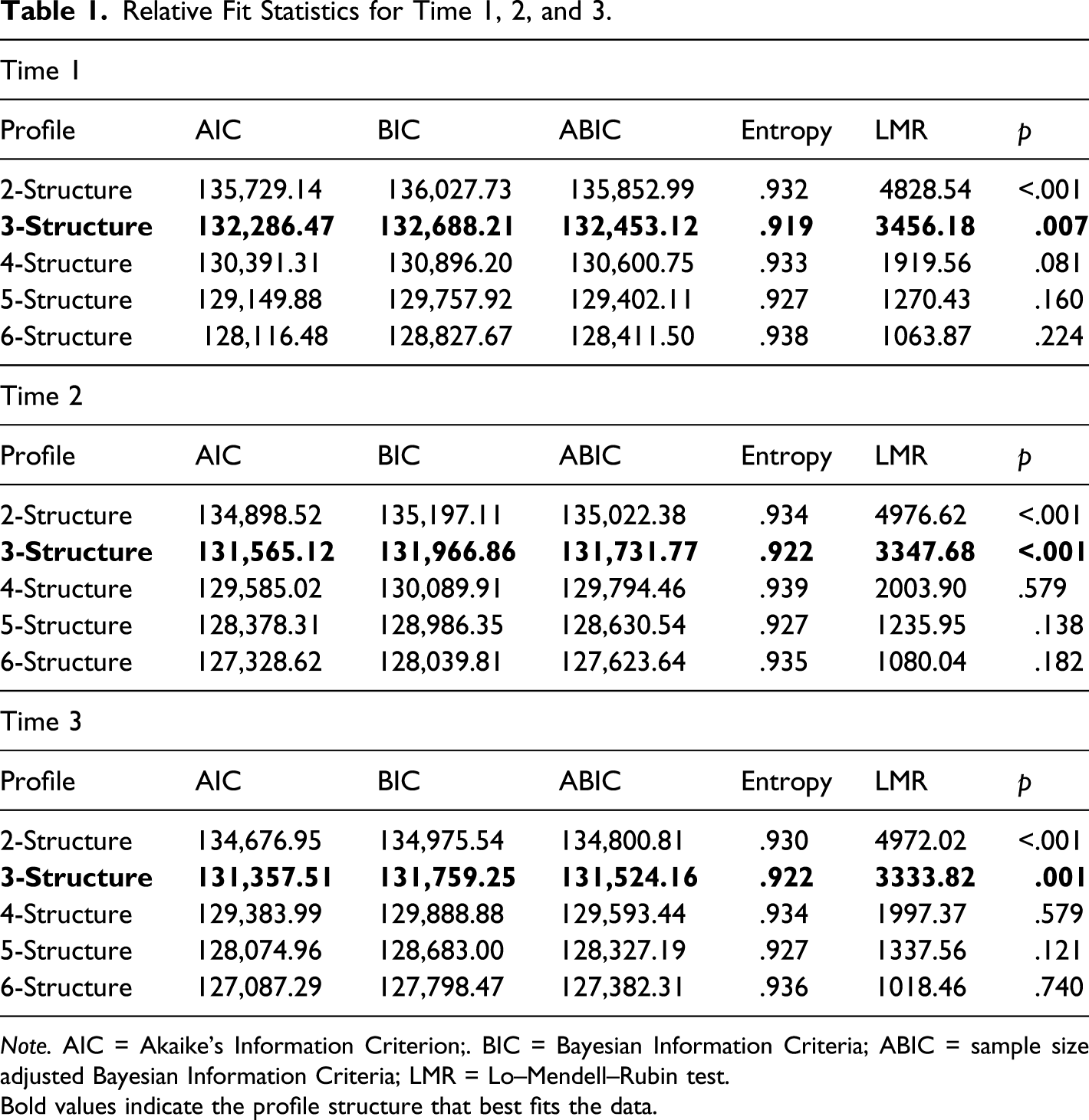
Note. AIC = Akaike’s Information Criterion;. BIC = Bayesian Information Criteria; ABIC = sample size adjusted Bayesian Information Criteria; LMR = Lo–Mendell–Rubin test.
Bold values indicate the profile structure that best fits the data.
Means for Each of the Risk and Strength Domains Across the Three Profiles at Time 1.
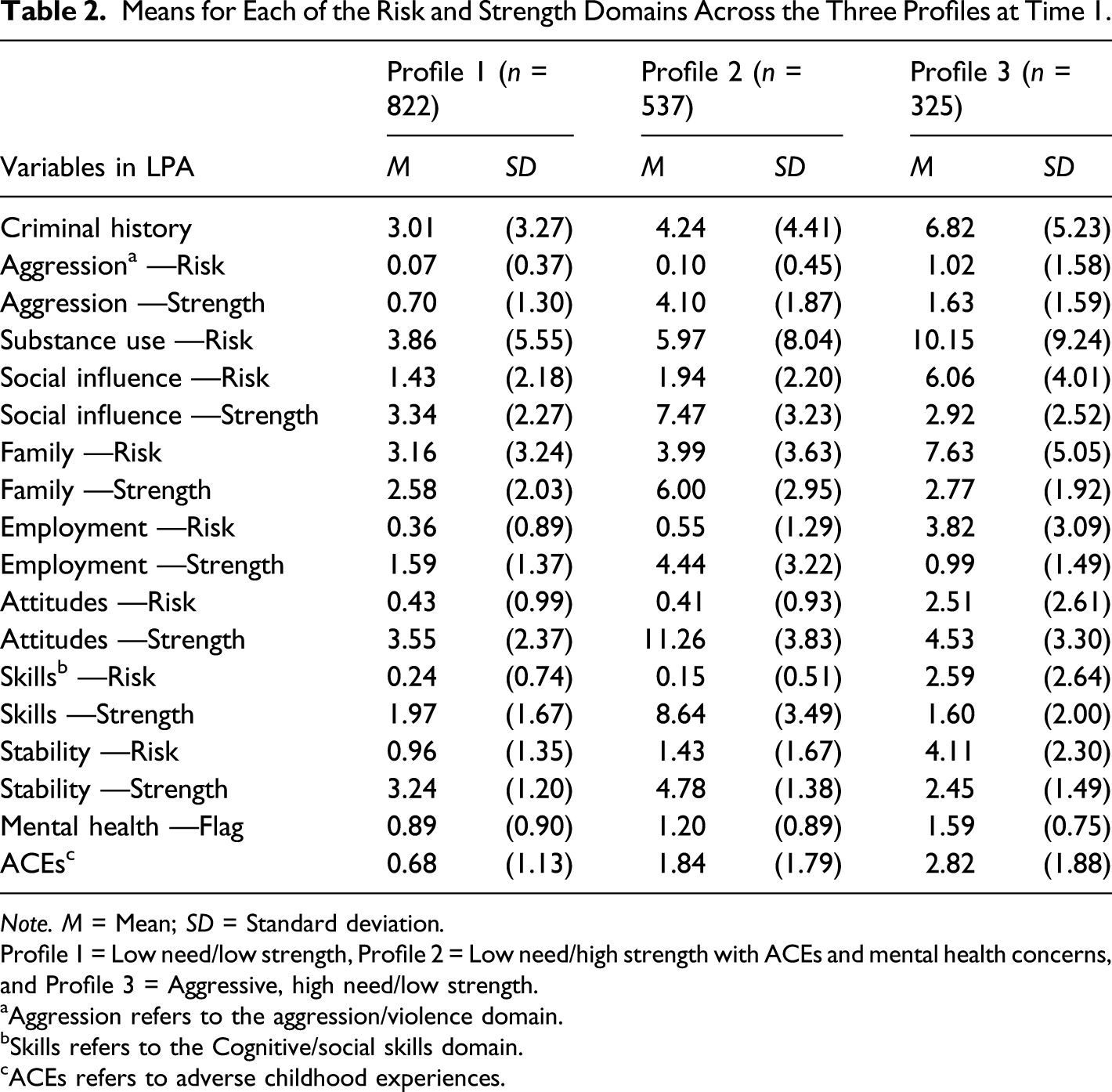
Note. M = Mean; SD = Standard deviation.
Profile 1 = Low need/low strength, Profile 2 = Low need/high strength with ACEs and mental health concerns, and Profile 3 = Aggressive, high need/low strength.
aAggression refers to the aggression/violence domain.
bSkills refers to the Cognitive/social skills domain.
cACEs refers to adverse childhood experiences.
Means for Each of the Risk and Strength Domains Across the Three Profiles at Time 3.
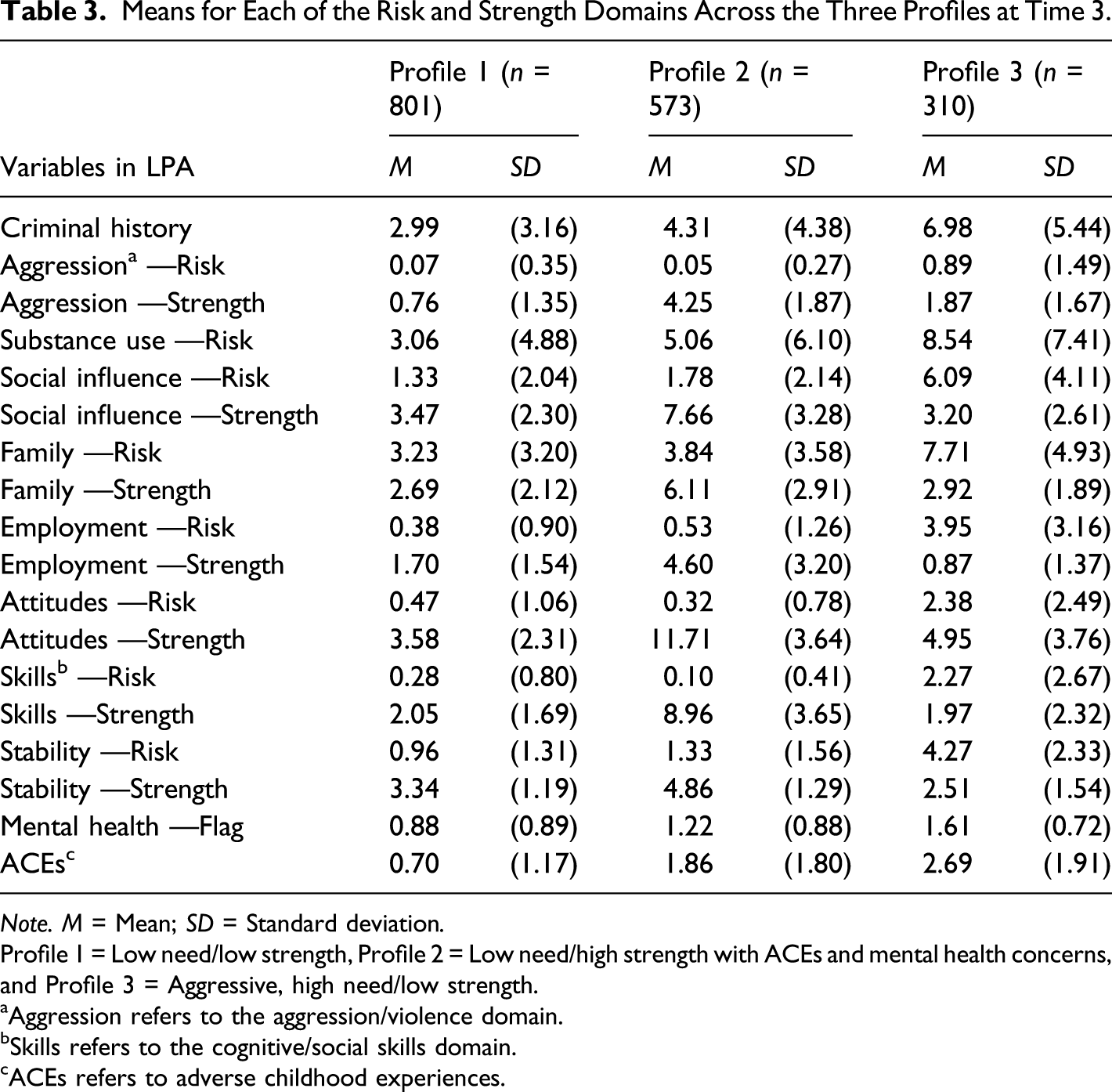
Note. M = Mean; SD = Standard deviation.
Profile 1 = Low need/low strength, Profile 2 = Low need/high strength with ACEs and mental health concerns, and Profile 3 = Aggressive, high need/low strength.
aAggression refers to the aggression/violence domain.
bSkills refers to the cognitive/social skills domain.
cACEs refers to adverse childhood experiences.
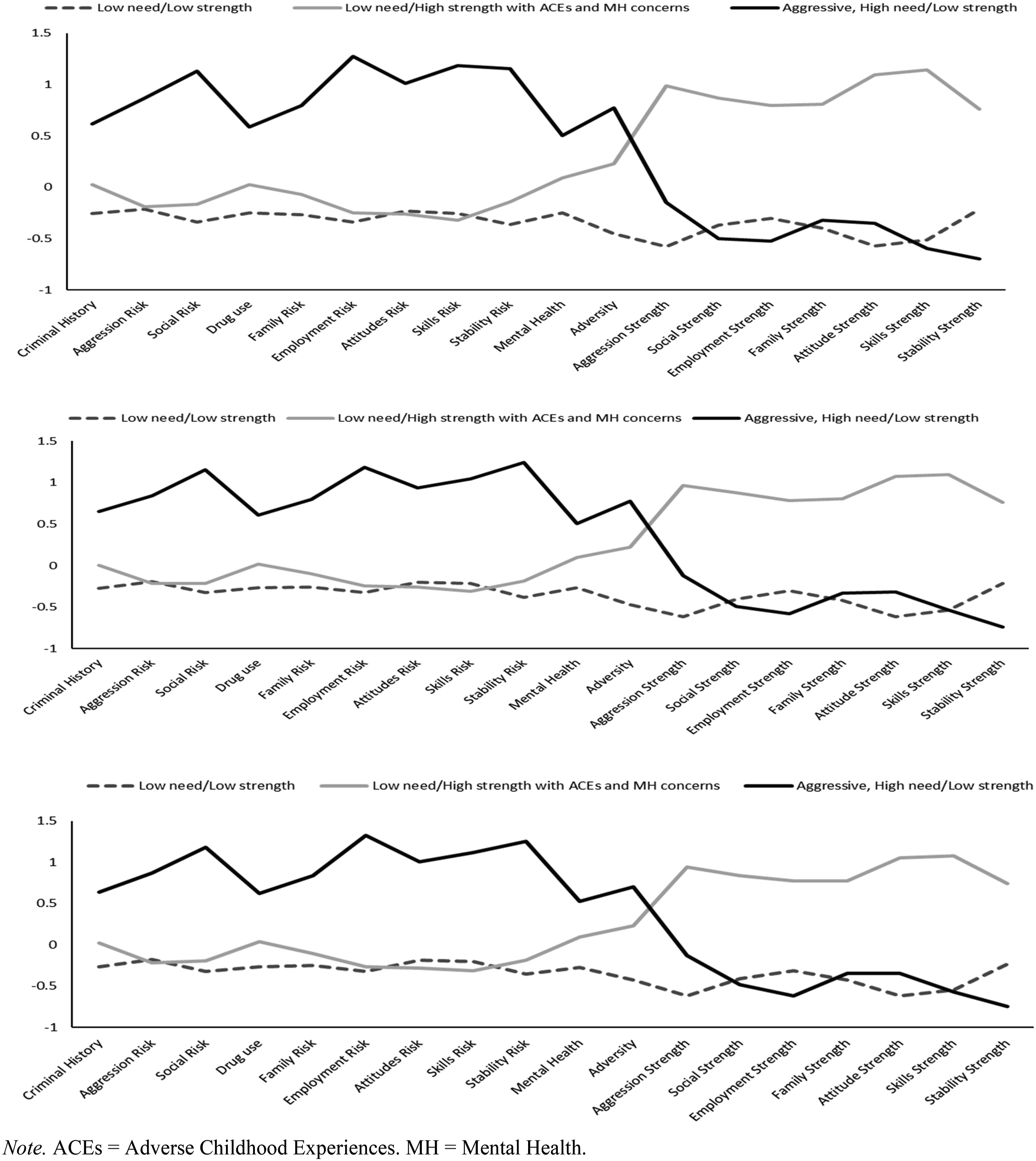
Comparison of standardized domain scores for profiles at Time 1, Time 2, and Time 3. Note. ACEs = adverse childhood experiences. MH = mental health.
Profile 1: Low Need/Low Strength 4
This profile is defined as having low scores across all dynamic domains (both risk and strength domains). This profile is also defined as having the lowest scores on mental health and childhood adversity. These women are non-aggressive, as evidenced by low scores on the aggressive risk domain.
Profile 2: Low Need/High Strength with ACEs and Mental Health Concerns
This profile is defined as scoring low on all dynamic risk domains, except for mental health concerns and experiences of childhood adversity—factors deemed especially important for women based on gender-responsive research. This profile also scores highest on all dynamic strength domains, relative to the other profiles, and is classified as non-aggressive, as evidenced by low scores on aggressive risk.
Profile 3: Aggressive, High Need/Low Strength
This profile is defined as scoring highest across all dynamic risk domains and gender-responsive domains, such as childhood adversity and mental health concerns. This profile also scores highest on criminal history and aggression, indicating prior conflicts and violent behavior. This profile scores low across all dynamic strength domains, especially the employment and stability strength domains.
Covariate Analyses: Age and Total Static Risk
Mean Age and Static Risk Scores for Each Profile Across Timepoints.
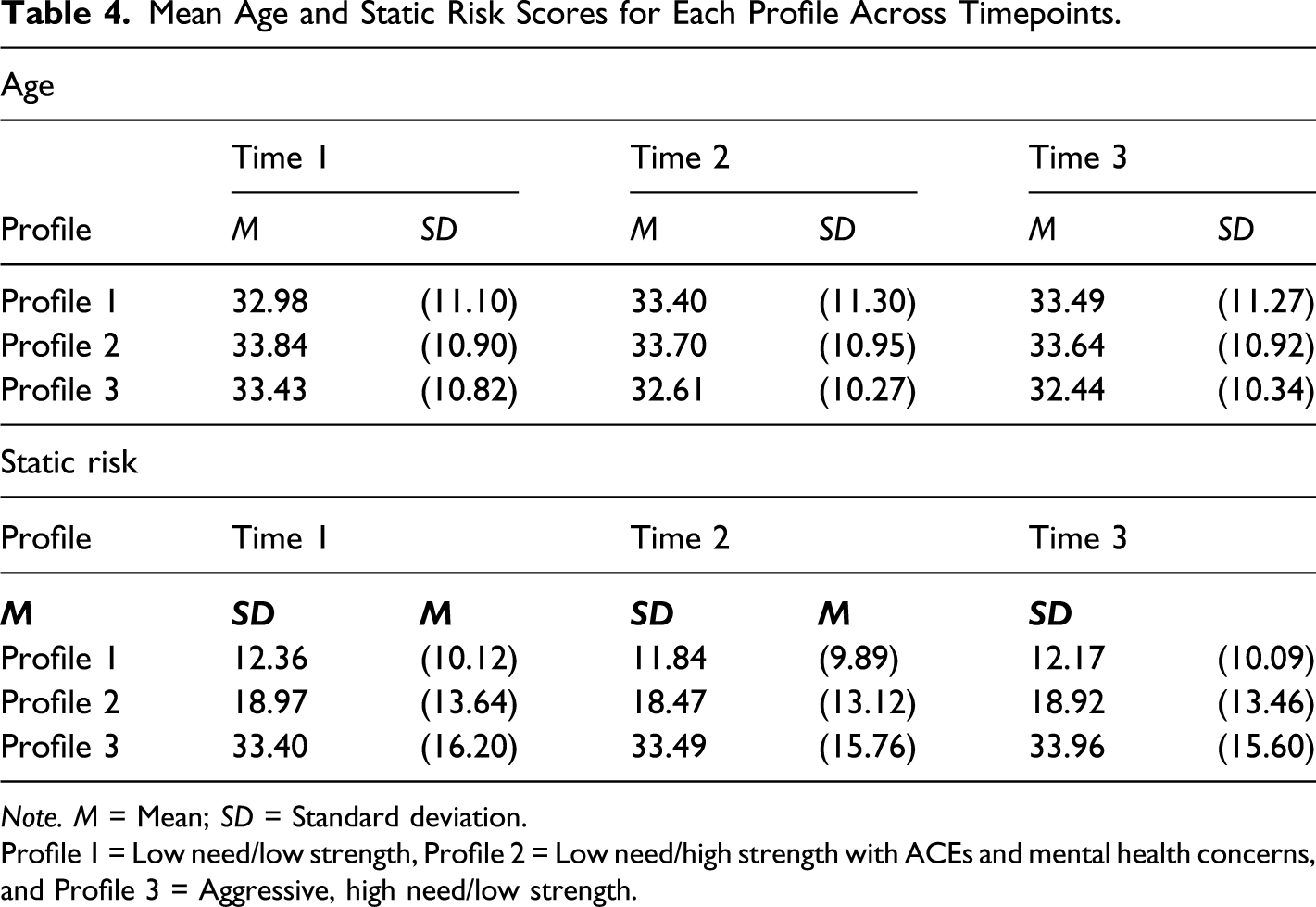
Note. M = Mean; SD = Standard deviation.
Profile 1 = Low need/low strength, Profile 2 = Low need/high strength with ACEs and mental health concerns, and Profile 3 = Aggressive, high need/low strength.
Auxiliary Analyses: Indigeneity
Proportions of Indigenous and Non-Indigenous Women in Each Profile.
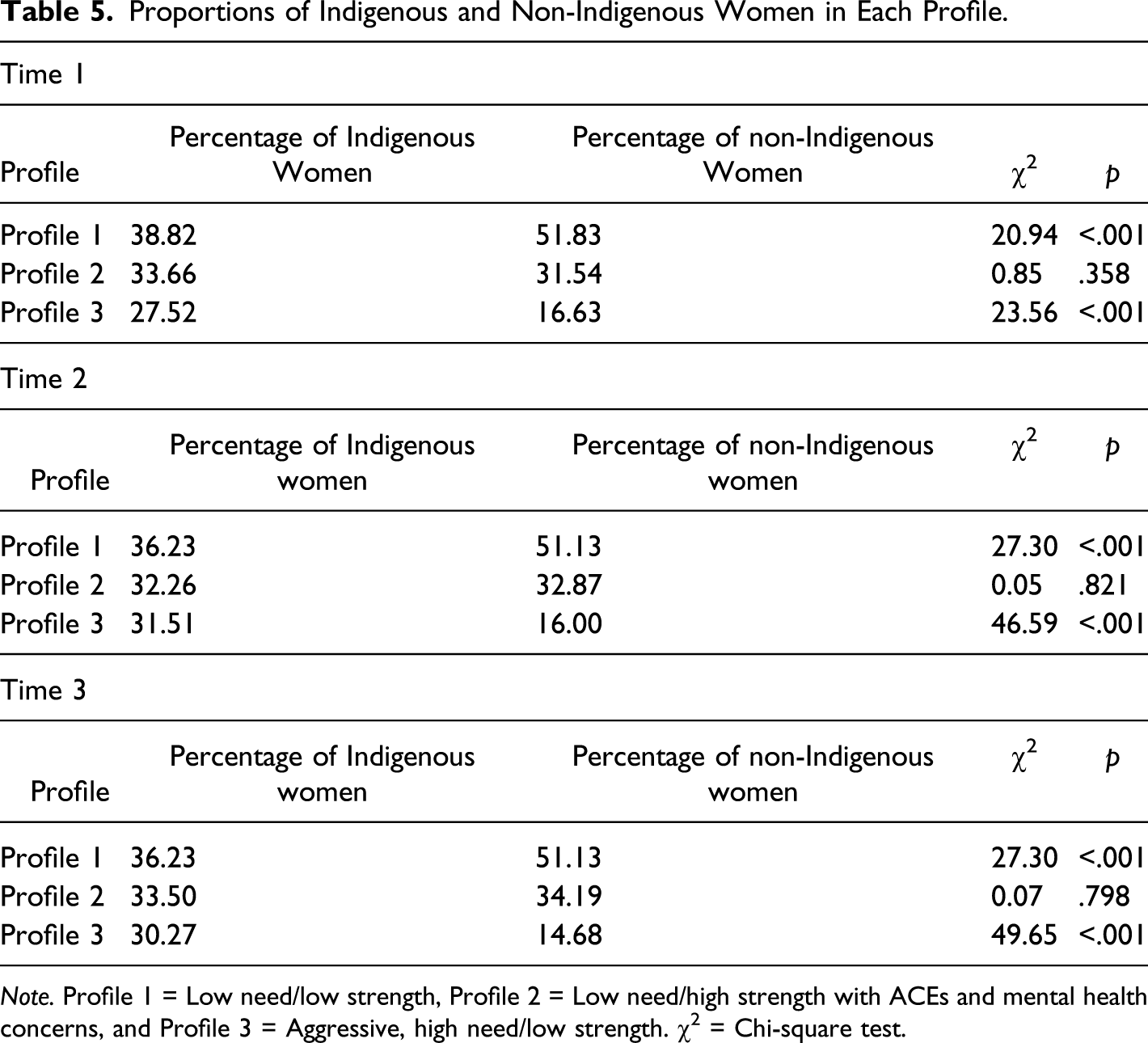
Note. Profile 1 = Low need/low strength, Profile 2 = Low need/high strength with ACEs and mental health concerns, and Profile 3 = Aggressive, high need/low strength. χ2 = Chi-square test.
Latent Transitional Probabilities
Profile Transitions Over time.
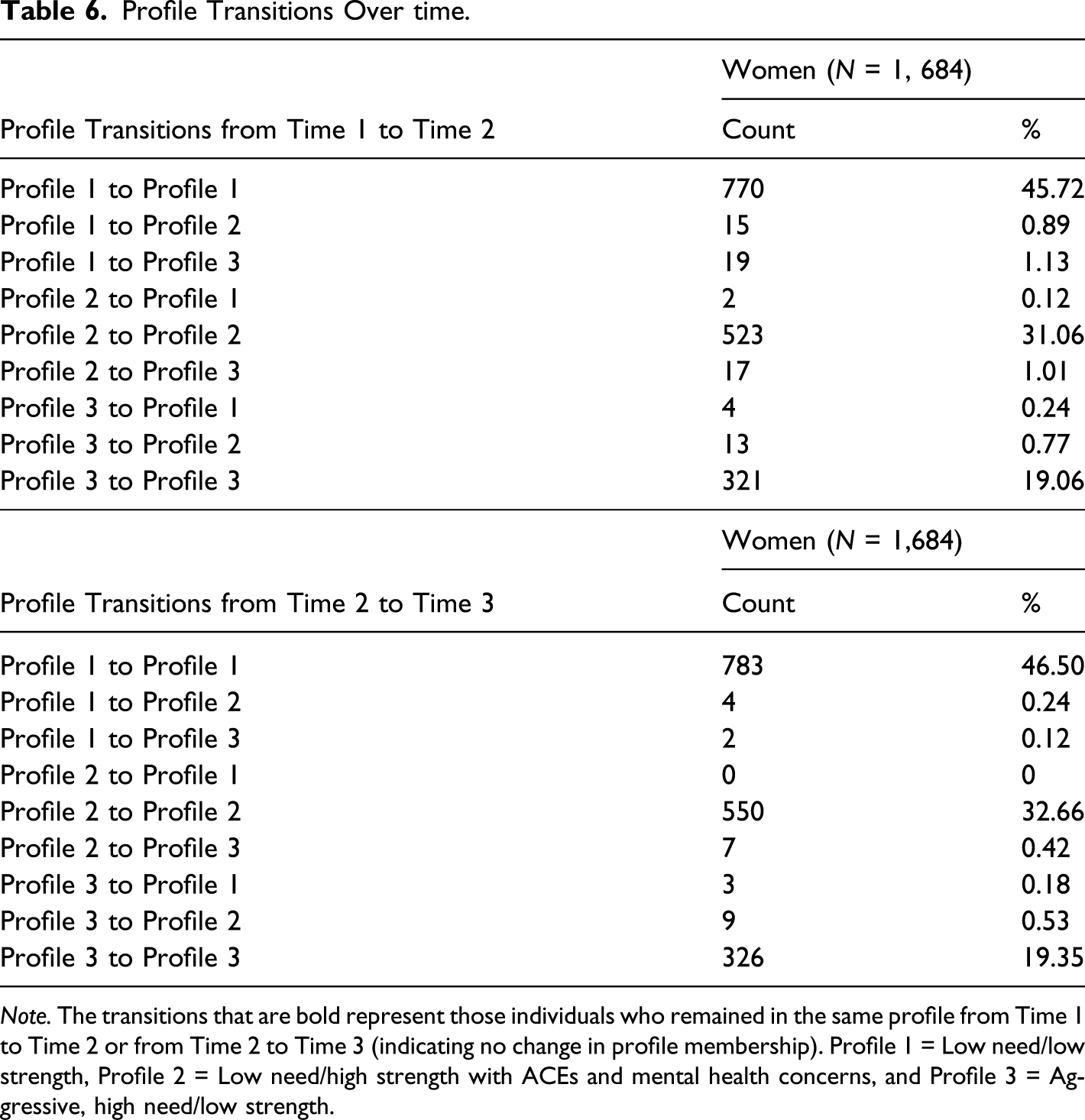
Note. The transitions that are bold represent those individuals who remained in the same profile from Time 1 to Time 2 or from Time 2 to Time 3 (indicating no change in profile membership). Profile 1 = Low need/low strength, Profile 2 = Low need/high strength with ACEs and mental health concerns, and Profile 3 = Aggressive, high need/low strength.
Typological Structure and Criminal Outcomes
Proportions of Women who Reoffended from Each Profile at Time 3
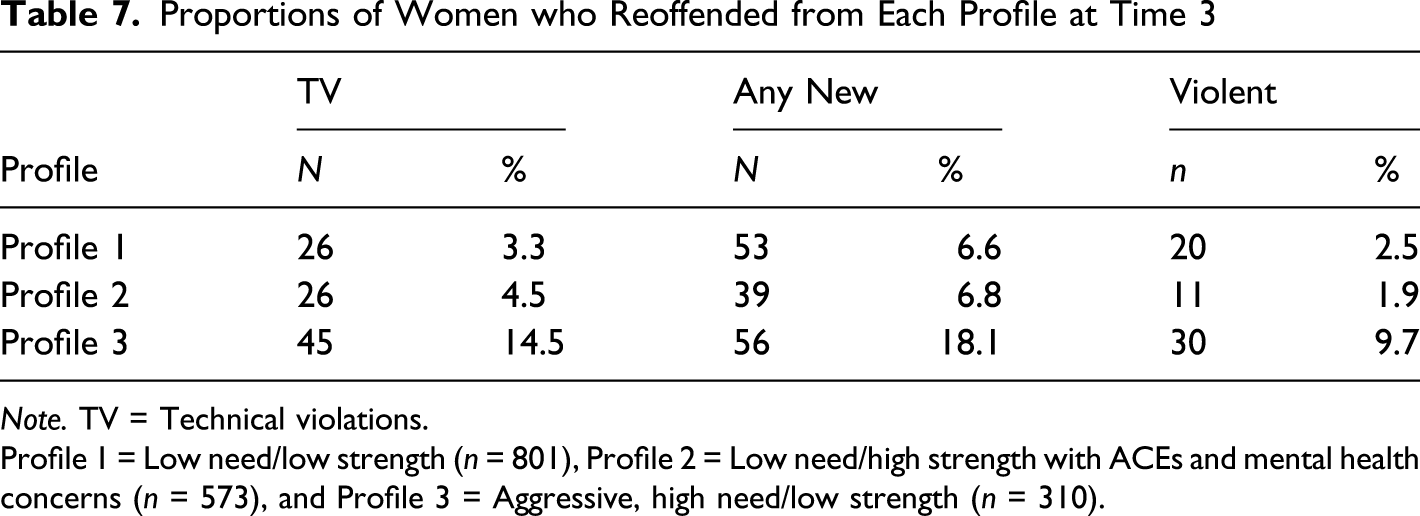
Note. TV = Technical violations.
Profile 1 = Low need/low strength (n = 801), Profile 2 = Low need/high strength with ACEs and mental health concerns (n = 573), and Profile 3 = Aggressive, high need/low strength (n = 310).
Discussion
The current study was the first to incorporate gender-neutral and gender-responsive dynamic risks, needs, and strengths to assess typologies of women on community supervision, and examine how these typologies change (or remain stable) over time. A secondary goal of this study was to examine the relationship between typologies and reoffending outcomes. The results demonstrated that women on community supervision can be classified into three distinct typologies based on treatment needs and strengths. The following profiles emerged at each timepoint: (1) Low need/low strength profile scoring low across all domains; (2) Low need/high strength with ACEs and mental health concerns profile scoring low across all dynamic risk domains, with the exception of mental health and childhood adversity needs, but highest on all strength domains; (3) Aggressive, high need/low strength profile scoring high on aggression and violence and all dynamic risk and gender-responsive domains, but low on strength domains.
An important finding is that two distinct types of low risk profiles emerged, one scoring low on strengths and one scoring high on strengths. This may have implications on the treatment, classification, and management of low risk women, including determining frequency of contact with community supervision officers and program placements. Given that the current sample was predominately low risk, it is important to examine whether moderate- and high-risk samples also display similar patterns of strengths—as this could be a potential direction for the use of overrides (i.e., security classification and frequency of contact with supervision officers).
While previous research has continuously indicated that gender-neutral risk domains are relevant for women (e.g., Scanlan et al., 2020), no profiles made up of solely gender-neutral domains emerged. These findings denote the utility of incorporating gender-informed approaches; that is, combined gender-neutral and gender-responsive perspectives, to assessing risk, need, and strengths among justice-involved women. Another interesting finding was that those who scored higher on aggression had a mix of gender-neutral and gender-responsive needs, and scored low on strengths. This indicates that criminogenic needs co-occur with mental health concerns and ACEs, which has implications for women who are higher risk and/or aggressive whereby treatment should target criminogenic needs in a trauma-informed way. These results align with previous findings that victimization is prevalent among women and trauma-informed services should be combined with correctional programming (e.g., DeHart, 2018).
Based on the profiles that emerged, it is evident that the use of holistic treatment that is gender-informed, trauma-informed, and strengths-based would be beneficial for women on community supervision. Throughout the literature, correctional researchers have argued that because victimization experiences are highly prevalent among justice-involved women, trauma-informed services should be combined with correctional programming (Covington, 2016; DeHart, 2018; King, 2017). In this study, trauma-informed services would be particularly important for Profile 2 (Low need/high strength with ACEs and mental health concerns). Given that experiencing ACEs can lead to several issues, including problems maintaining relationships and behavioral problems (which can affect relationships with probation officers; Ford et al., 2012; Haider et al., 2018), ensuring that women on community supervision have access to mental health professionals would assist with the rehabilitation process. Evidence has also suggested that in addition to reducing reoffending outcomes, incorporating a strengths-based approach to treatment while under community supervision can improve psychological wellbeing and likelihood of remaining and participating in treatment (Messina et al., 2012). Incorporating a strengths-based approach would be particularly important for Profile 1 (Low need/low strength) and Profile 3 (Aggressive, high need/low strength), both of which were comprised of women scoring low on strengths. Overall, theoretical integration of the gender-neutral, gender-responsive, and strengths-based perspectives can lead to more comprehensive rehabilitation efforts by which treatment programs may accurately target all relevant risk/need factors, as well as help identify and build strengths to promote success.
Stability of Typological Membership
Results of the latent transitions indicated that there was limited change between profiles from Time 1 to Time 2 and from Time 2 to Time 3. Although limited, there was greater change in profiles between Time 1 and Time 2 in comparison to change in profiles between Time 2 and Time 3 (4% vs. 1.5%) and the change did not follow a specific pattern. There are several plausible reasons for this. First, the women are mainly low risk (62.5% based on SPIn overall risk score) and as such, there may be less room for change in dynamic risk scores (floor effect). Second, although the indicators were comprised of dynamic SPIn domains, not all dynamic items change at the same rate. Whether the items making up the dynamic domains are stable dynamic versus acute dynamic remain unknown. Stable dynamic factors are long-standing and change over a matter of months or years, and acute dynamic factors change more rapidly over time, such as days or weeks (Hanson et al., 2007). Research examining rate of change among dynamic SPIn items is needed.
Typological Membership and Criminal Outcomes
One of the main reasons for identifying typologies is to determine if there are certain groups of justice-involved women that are more likely to reoffend (Jones & Harris, 1999). If certain profiles are more likely to reoffend than others, treatment and rehabilitation efforts can be tailored to target the domains most pertinent to those profiles and better inform supervision efforts (e.g., frequency of contact). Results indicated that significantly more women in Profile 3 (Aggressive, high need/low strength) reoffended than women in the other two profiles. However, there were no significant differences in criminal outcomes between Profile 1 (Low need/low strength) and Profile 2 (Low need/high strength with ACEs and mental health concerns). Strengths did not seem to influence reoffending rates, whereby those who were Low need/low strength and those who were Low need/high strength had similar rates.
Indigenous Women and Profile Membership
Given the large proportion of Indigenous women (n = 403; 23.9%), Indigenous status was assessed as an auxiliary variable. Results found that more Indigenous than non-Indigenous women were classified as having both gender-neutral and gender-responsive needs. These findings are not surprising given that past research has found that women have a host of complex needs, including high rates of childhood abuse, witnessing violence, mental health concerns, and substance use needs (Brown et al., 2018; Stewart et al., 2017). Indigenous women have needs that are arguably unique and more complex compared to non-Indigenous women (Gutierrez & Wanamaker, 2021). For instance, in addition to these gender-responsive needs, other needs may stem from residential school experience, intergenerational trauma, child welfare involvement, family history of suicide, and extreme poverty and poor living conditions on reservations (Office of the Correctional Investigator, 2015). Culturally relevant factors were not included in the typological development, and thus results for Indigenous women should be interpreted with caution. Nonetheless, these findings highlight the importance of considering differences between Indigenous and non-Indigenous women. Identifying whether unique typologies emerge for Indigenous women that incorporate culturally relevant factors in addition to gender-neutral and gender-responsive factors, can assist with tailoring treatment planning.
Limitations and Directions for Future Research
Ensuring that there were three assessment periods resulted in losing cases who recidivated within the 14-month time period, limiting the sample to those who are predominately low risk. Incorporating women who reoffended prior to three assessments would likely result in the emergence of additional typological profiles. Furthermore, it is important to acknowledge that the reoffending rates across each profile type (especially the Aggressive, high need/low strength profile) may not be reflective of the true reoffending rates, due to the limitation of having removed women who reoffended within the first 14 months of community supervision. Thus, typologies are not generalizable to all justice-involved women on community supervision, but rather to those who are successful in the community. Research conducted by Bourgon et al. (2018) has concluded that the median risk score on the SPIn in Alberta corresponds to a classification of low risk. As such, while the typological findings from the current study may not be representative of the larger population of individuals in the community more generally, the findings may be reflective of a large proportion of women on community supervision in Alberta.
Although the SPIn is considered a gender-informed risk assessment tool which captures both gender-responsive and gender-neutral needs and strengths (Jones & Robinson, 2018), there may be additional gender-responsive needs that are not captured. For example, gender-responsive researchers have highlighted the following gender-responsive needs: self-esteem, self-efficacy, parental stress, victimization and abuse, relationship dysfunction, mental health concerns (especially depression), and poverty and homelessness (Belknap, 2015). Upon inspection, the majority of these gender-responsive items are captured within the SPIn Full Assessment, with the exception of self-esteem and self-efficacy.
Arguably, while the SPIn is considered a gender-informed tool, gender-responsive researchers have questioned the utility of gender-informed assessments (Salisbury et al., 2016). Specifically, while incorporating a combination of gender-neutral and gender-responsive items that have demonstrated improved predictive accuracy of reoffending outcomes (Salisbury et al., 2016; Van Voorhis et al., 2010), gender-responsive scholars argue that women remain an afterthought. These gender-informed tools are thought to be amended gender-neutral tools whereby a few gender-responsive items are added which are operationalized or captured in a traditional manner (Salisbury et al., 2016; Van Voorhis et al., 2010). Despite these arguments in support of gender-responsivity, there has been a substantial amount of research highlighting the predictive utility of gender-neutral risk factors for justice-involved women (e.g., Scanlan et al., 2020). Thus, including both gender-neutral and gender-responsive items can ensure a holistic approach to risk assessment practices. Nonetheless, additional research is needed focusing on the role of gender-responsive needs with justice-involved women (and men).
The current study also utilized domain level information, each comprised of several items, to inform treatment typologies. Thus, the influence of any specific item was masked by the combined domain total score. Additionally, many of the domains had gender-responsive items embedded within, making it difficult to determine the nature of the items that were influencing domain scores and thus the treatment profiles. For example, while gender-responsive researchers have highlighted the importance of childhood abuse and maltreatment on women’s involvement in crime (e.g., Belknap, 2015; Van Voorhis et al., 2010), the current study included a measure of adverse childhood experiences, but could not speak specifically to childhood abuse. Moreover, the items included in the ACE score were also included within the other domain scores. That is, it was not possible to extract the items that were included to create the ACE score from the various domains. Future research should examine SPIn item-level data to see if there are specific items that that are most predictive of reoffending outcomes.
Summary
The current study was the first to incorporate gender-neutral and gender-responsive dynamic risks and strengths to inform treatment typologies among women on community supervision. Using a person-centered approach, the typological structure was assessed over time. Results indicated that three typologies consistently emerged. There were two low need profiles—one with high strengths and one with low strengths. A profile comprised of aggression and high need emerged and had highest rates of technical violations, violent charges, and any new charges. Treatment typologies can help inform effective service delivery, including programming and supervision practices, which can be tailored in accordance.
Footnotes
Author Note
This article is based on Kayla Wanamaker’s doctoral dissertation (2020) entitled A Multi-wave Longitudinal Examination of how Strengths and Risks Inform Risk Assessment and Treatment Profiles for Justice-Involved Men and Women using the Service Planning Instrument (SPIn).
The authors would like to thank Orbis Partners Inc. and Alberta Justice and Solicitor General for providing access to SPIn and reoffense datasets.
Declaration of Conflicting Interests
The author(s) declared no potential conflicts of interest with respect to the research, authorship, and/or publication of this article.
Funding
The author(s) received no financial support for the research, authorship, and/or publication of this article.
