




Abstract
Objective:
The objective of this study was to assess our institutional outcomes for aortic surgery through a ministernotomy approach.
Methods:
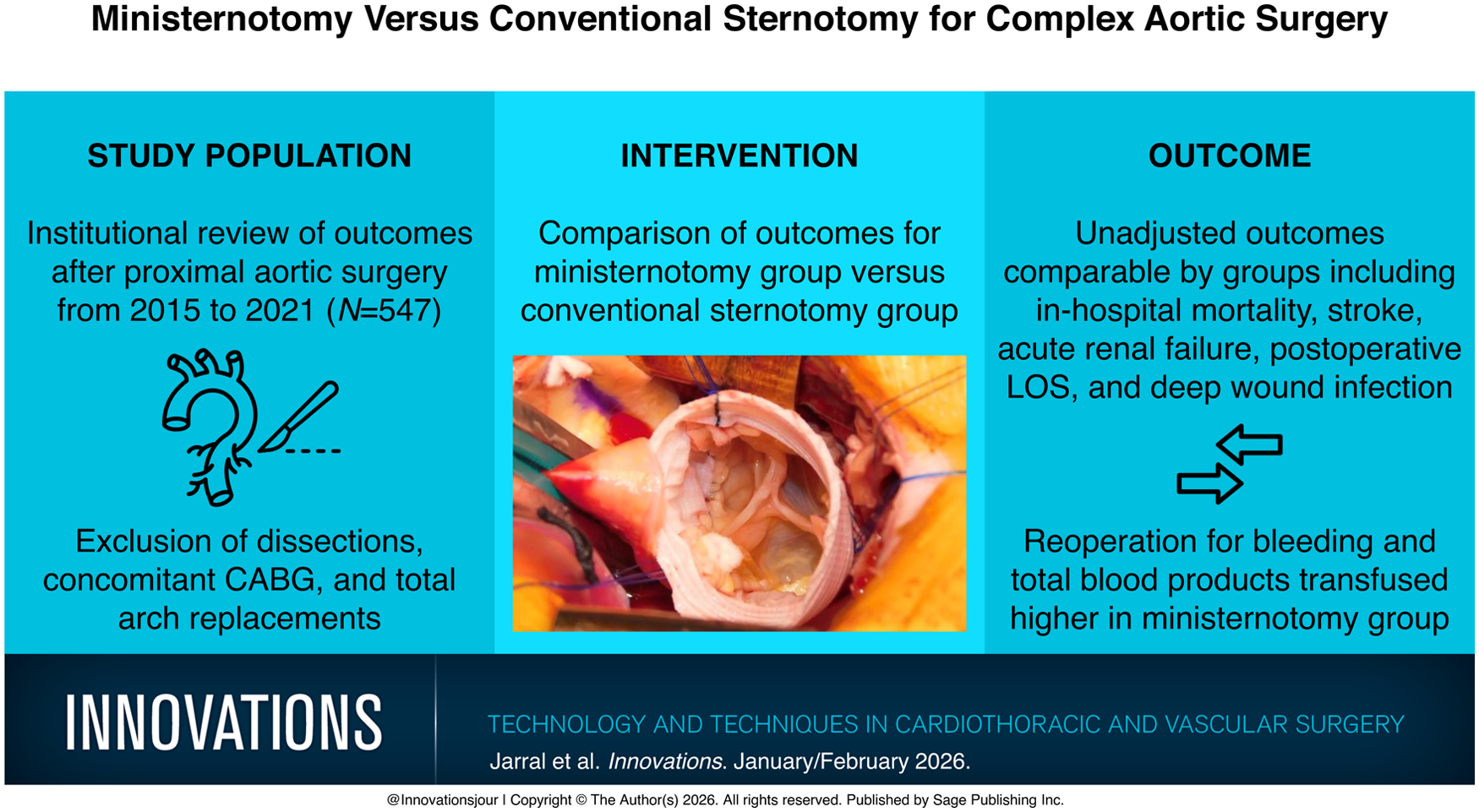
A prospectively maintained database was used to retrospectively obtain outcomes for adult patients undergoing elective proximal aortic surgery between January 2015 and December 2021. Patients with chronic dissections and those undergoing isolated aortic valve replacement, redo, concomitant coronary artery bypass grafting, or total arch procedures were excluded. Multivariable logistic and linear regressions were used to explore the influence of surgical approach on a composite outcome of mortality, stroke, acute renal failure, and reoperation for bleeding. Secondary outcomes were total blood products transfused for the hospital stay and total intensive care and postoperative length of stay.
Results:
There were 547 patients included in this analysis, of whom 74 (13.5%) had a ministernotomy. The mean age of the cohort was 61.6 ± 14.5 years, and 121 (22.1%) were female patients. Unadjusted outcomes were comparable between the groups in terms of in-hospital mortality, stroke, acute renal failure, postoperative hospital stay, and deep wound infection. Reoperation for bleeding and total blood products transfused were higher in the ministernotomy group, which may be secondary to a higher proportion undergoing concomitant arch procedures and the effect of the learning curve. Multivariable analysis did not find the ministernotomy approach to be associated with the primary or secondary outcomes.
Conclusions:
The ministernotomy approach is a safe and effective way to perform complex proximal aortic surgery in selected patients. The outcomes of this study add to the growing evidence base of minimal access aortic surgery.
Keywords
Get full access to this article
View all access options for this article.