




Abstract
Objective:
Open aortic repair is considered the standard of care for patients with connective tissue disease (CTD) due to the perceived durability advantages compared with endovascular intervention. However, some complex CTD patient presentations increase risk with open repair, favoring endovascular intervention. This analysis sought to review our experience with endovascular intervention in CTD patients and identify scenarios in which this approach may reasonably be considered.
Methods:
Patients with CTD undergoing endovascular intervention at our institution from 2006 to 2023 were retrospectively reviewed. The primary outcome was freedom from aorta-related mortality. Secondary outcomes included all-cause mortality and freedom from secondary intervention.
Results:
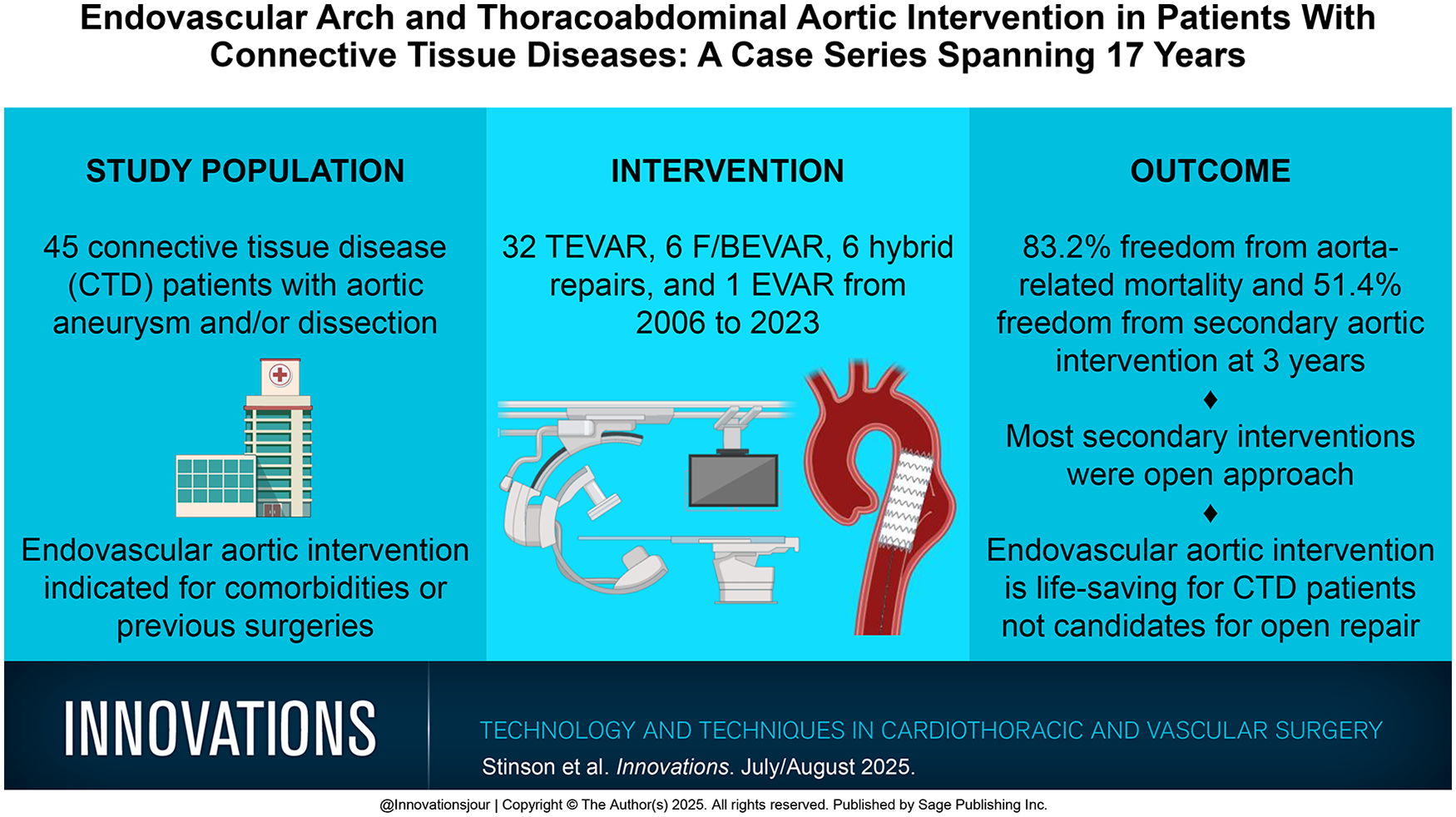
Forty-five CTD patients underwent endovascular intervention. Thirty-five patients (77.8%) had at least 1 previous aortic intervention. Urgent or emergent presentation was common (n = 31, 68.8%). At index hospitalization, 32 patients (71.1%) underwent thoracic endovascular aortic repair, and 6 patients (13.3%) underwent fenestrated and/or branched endovascular repair. Aneurysm (n = 40, 88.9%) and dissection (n = 36, 80.0%) were the most common indications; many patients (n = 31, 68.9%) presented with both. Freedom from aorta-related mortality was 88.7% ± 5% and 83.2% ± 6% at 1 and 3 years, respectively. No clinical or procedural factors were predictive of aorta-related mortality. Twenty-one patients (46.7%) required secondary intervention; the median time to secondary intervention was 6.5 months (6.5, 18.9 months). Freedom from secondary intervention was 60.0% ± 8% and 51.4% ± 9% at 1 and 3 years, respectively.
Conclusions:
Endovascular intervention is often lifesaving in CTD patients who are not initially candidates for open repair. Aorta-related mortality was low, and fewer than half of patients required secondary intervention during the study period. This illustrates the utility of endovascular intervention in bridging CTD patients to definitive open repair.
Get full access to this article
View all access options for this article.