




Abstract
Objective:
This study aims to identify the perceived barriers and factors contributing to the slow adoption of robotic technology among coronary surgeons.
Methods:
We administered an anonymous online survey during the 2023 Society for Thoracic Surgeons (STS) Coronary Conference and included questions about factors associated with the lack of, or slow adoption of, robotics in coronary artery bypass surgery.
Results:
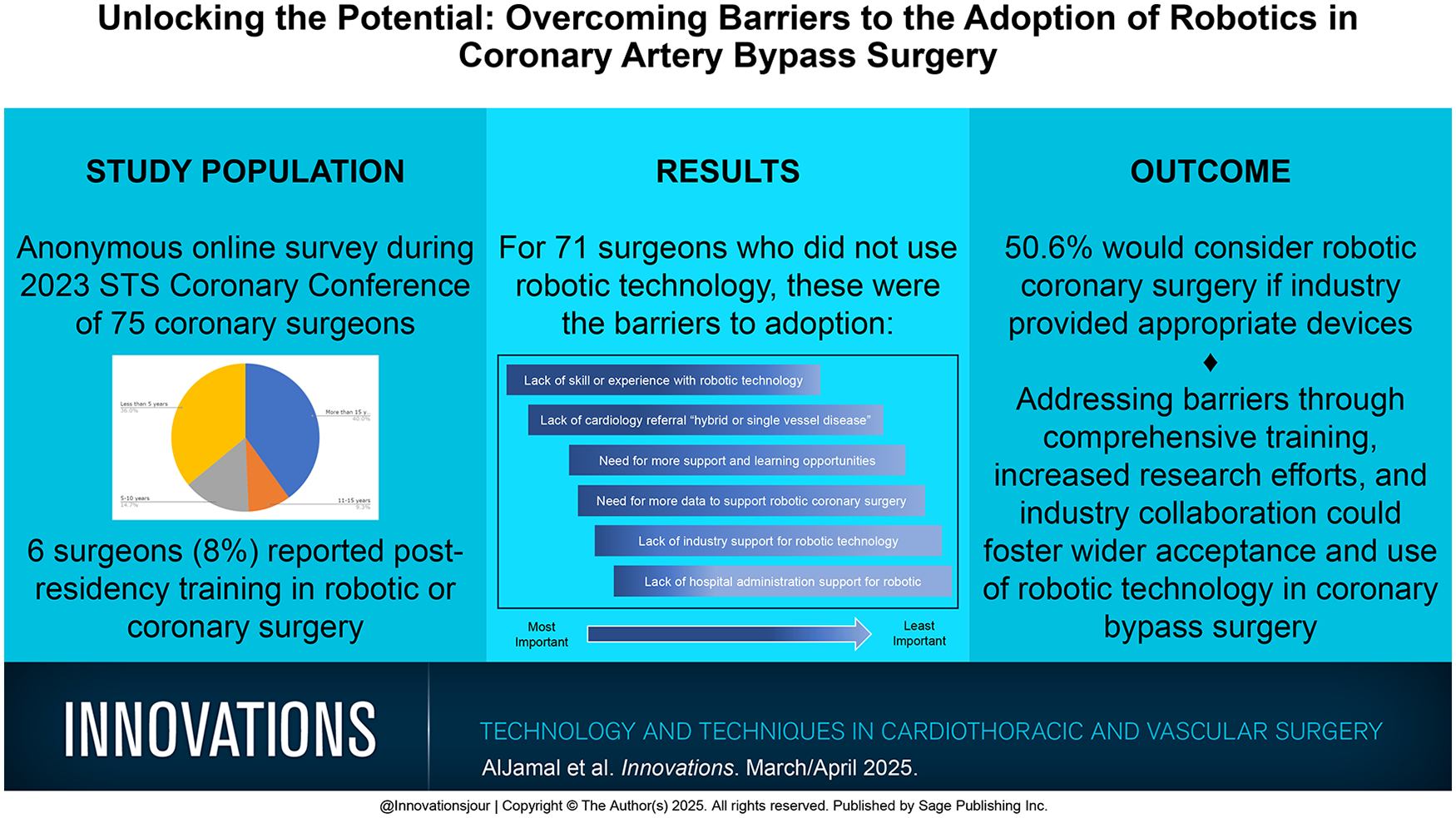
A total of 75 coronary surgeons completed the anonymous online survey. Of these respondents, 30 surgeons (39.4%) reported having more than 15 years of experience as independent coronary surgeons. Among the 71 surgeons (95%) who were not using robotic technology, the barriers to adoption (from most important to less important) were lack of skill or experience with robotic technology (mean score, 2.56 ± 1.84), followed by the lack of referral of patients with hybrid or single-vessel disease from cardiologists (2.81 ± 1.76), the need for more support and learning opportunities (e.g., hands-on courses, online courses; 3.44 ± 1.98), and more data to support the efficacy and safety of robotic coronary surgery (3.63 ± 2.22). Moreover, 38 surgeons (50%) expressed a willingness to consider robotic coronary surgery if industry provided appropriate devices such as stabilizers and automated anastomotic devices. Finally, 53 surgeons (69.7%) reported being unaware of the Thoracic Surgery Foundation and STS Advanced Robotic Cardiac Surgery Fellowship award with a coronary track.
Conclusions:
The findings from this survey identify the barriers to adopting robotic technology in coronary surgery. Addressing these barriers through targeted interventions could foster wider acceptance and use of robotic technology in coronary bypass surgery.
Get full access to this article
View all access options for this article.