




Abstract
Objective:
Hybrid coronary revascularization is a clinical strategy that uses a combination of surgical revascularization and percutaneous coronary intervention (PCI). Data on the hybrid approach for coronary artery disease involving the left main (LM) are scarce. We analyzed our cohort of hybrid coronary revascularizations with minimally invasive direct coronary artery bypass (MIDCAB) using robotic left internal mammary artery harvesting and PCI for multivessel disease with and without LM involvement.
Methods:
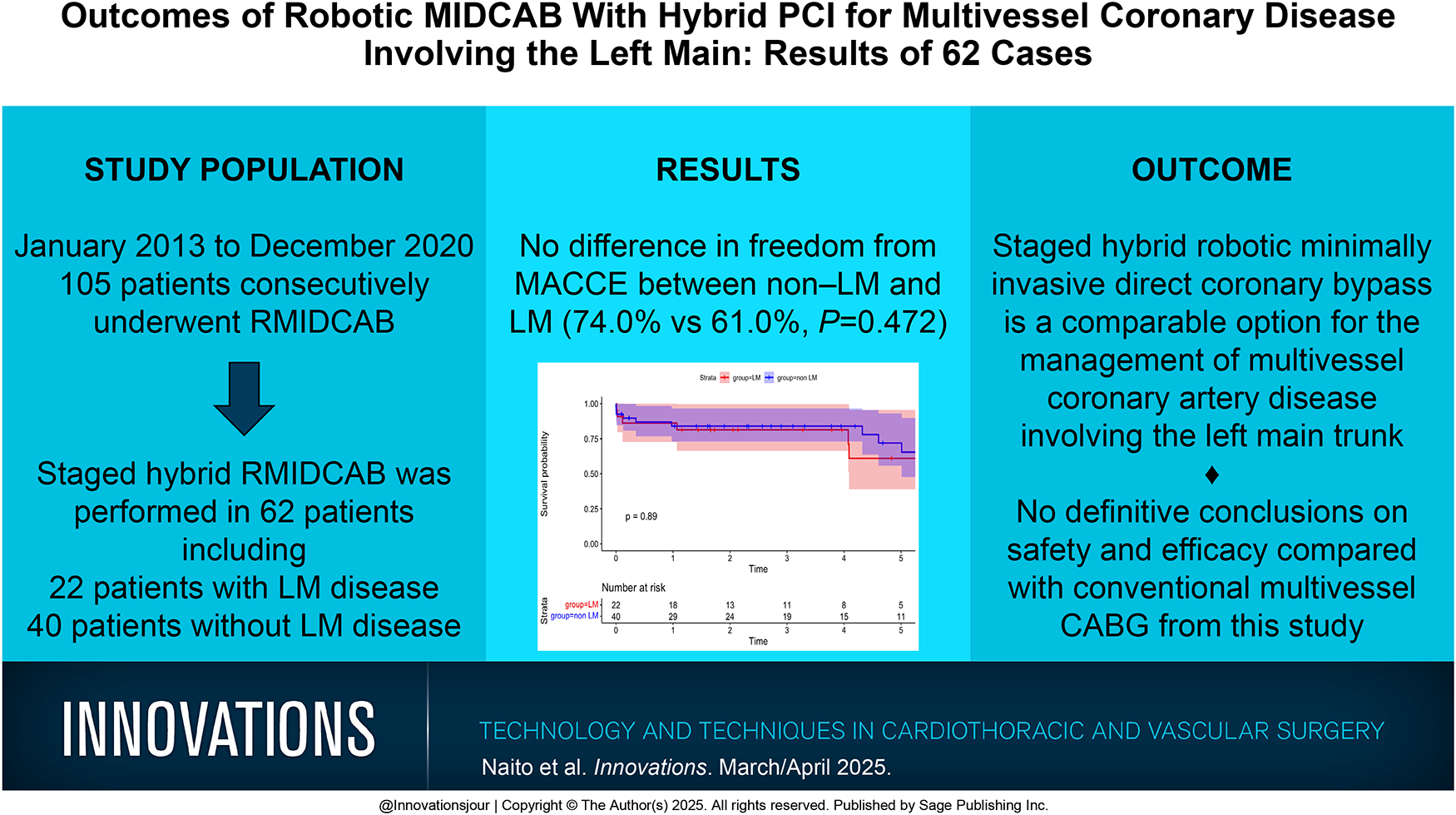
Between January 2013 and December 2020, 105 patients consecutively underwent robotic MIDCAB. Of those, 62 patients (59.1%) had multivessel coronary artery disease and underwent revascularization via the hybrid approach using robotic MIDCAB and PCI. Patients were then stratified into 2 groups for comparison: LM disease (n = 22, 35.5%) and non-LM disease (n = 40, 64.5%).
Results:
The SYNTAX scores were significantly lower in the non-LM group compared with the LM group (19.06 ± 6.41 vs 24.86 ± 7.04, P = 0.002). There were no other significant differences in demographics between the groups. There were no 30-day mortalities in either group. Freedom from major adverse cardiac and cerebrovascular events at 5 years was 72.2% in the non-LM group and 61.0% in the LM group (P = 0.89). There were no significant differences in 5-year overall survival (94.1% vs 83.3%, P = 0.074) or freedom from coronary reintervention (83.4% vs 75.4%, P = 0.699).
Conclusions:
Hybrid robotic MIDCAB for patients with and without LM disease can be performed with acceptable results in selected patients. However, it is not possible to draw definitive conclusions regarding safety and efficacy compared with conventional coronary artery bypass grafting.
Get full access to this article
View all access options for this article.