




Abstract
Objective:
We evaluated the effectiveness of a consistent and structured self-practice coronary anastomosis program using a homemade low-fidelity beating-heart simulator.
Methods:
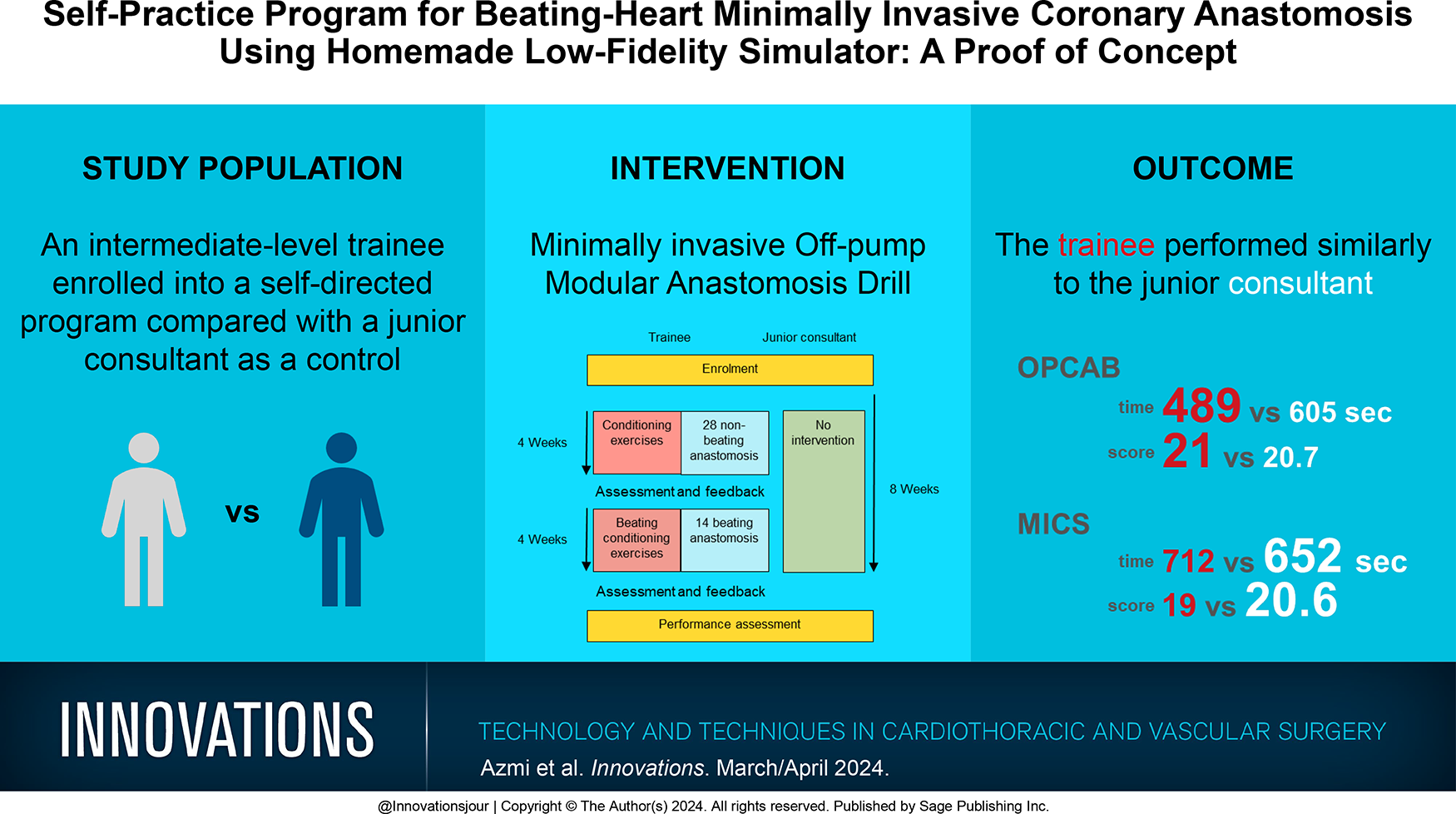
An intermediary trainee was subjected to an 8-week structured self-practice program. The program was divided into 2 parts of nonbeating and beating practices with a minimum number of timed anastomoses. Each part was followed by an assessment using an objective skills assessment tool score. The beating-heart simulator was built using motorized toy blocks connected wirelessly to a smartphone application. This was coded to enable rate selection. A junior consultant was compared to the subject at the end of the program. Both were tasked to perform 1 coronary anastomosis for both off-pump coronary artery bypass (OPCAB) and minimally invasive CAB (MICS) setup. The primary outcomes were anastomotic time and score compared with the junior consultant. Secondary outcomes were progression of anastomotic time and score throughout the program.
Results:
Overall performance of the studied subject approached the performance of the junior consultant in terms of time (OPCAB, 489 vs 605 s; MICS, 712 vs 652 s) and scores (OPCAB, 21 vs 20.7; MICS, 19 vs 20.6). There were inverse correlations between anastomosis time and number of practices for both nonbeating and beating anastomoses. Overall improvement was observed in terms of assessment scoring by 26.6%.
Conclusions:
A structured self-practice program using an affordable and accessible simulator was able to help trainees overcome the MICS anastomosis learning curve quicker when introduced earlier. This may encourage earlier adoption of MICS among surgeons.
Get full access to this article
View all access options for this article.
References
Supplementary Material
Please find the following supplemental material available below.
For Open Access articles published under a Creative Commons License, all supplemental material carries the same license as the article it is associated with.
For non-Open Access articles published, all supplemental material carries a non-exclusive license, and permission requests for re-use of supplemental material or any part of supplemental material shall be sent directly to the copyright owner as specified in the copyright notice associated with the article.
