




Abstract
Objective:
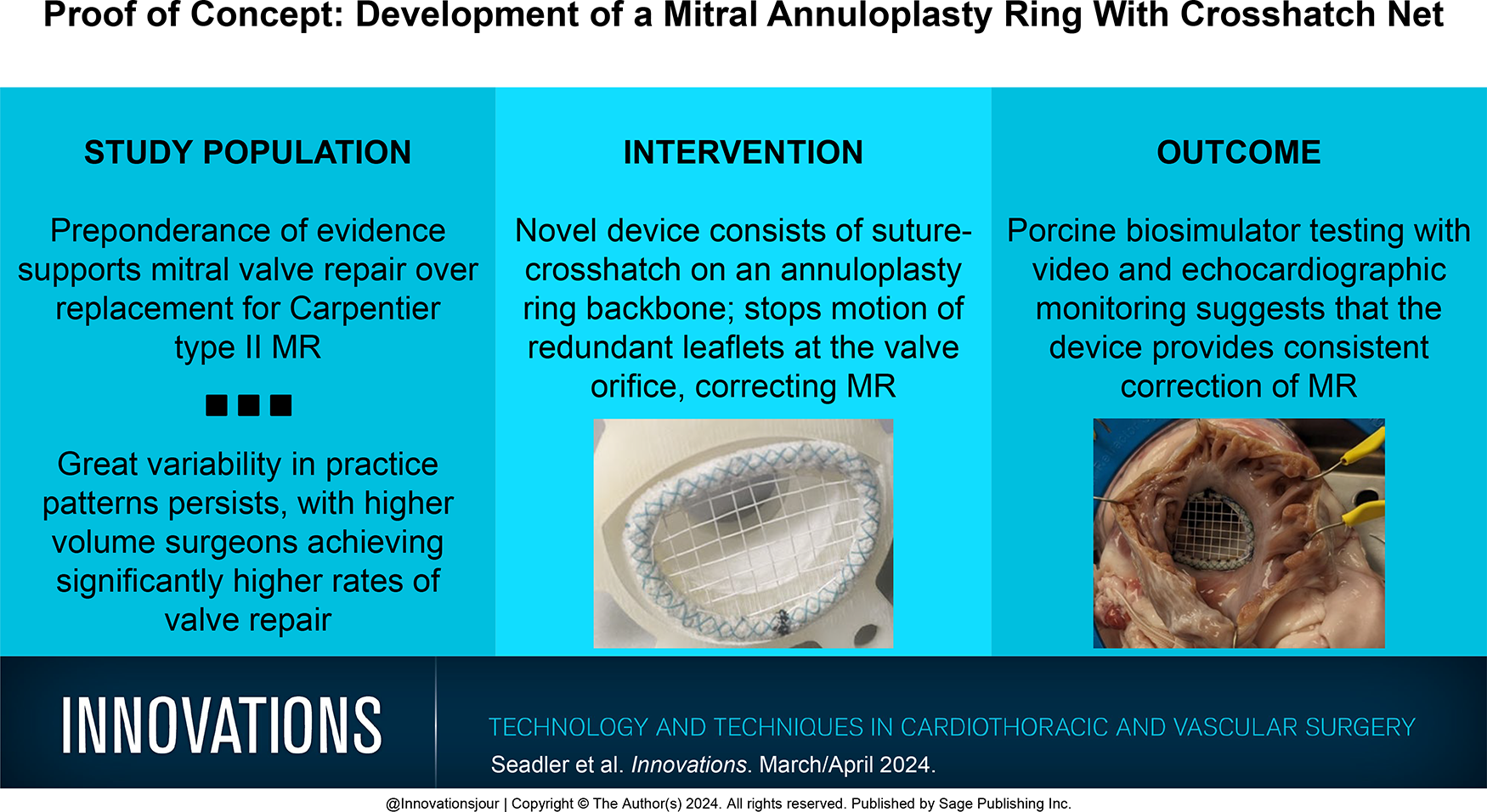
Here we report our preclinical, proof-of-concept testing to assess the ability of a novel device to correct mitral regurgitation. The Milwaukee Heart device aims to enable any cardiac surgeon to perform high-quality mitral valve repair using a standard annuloplasty ring with a crosshatch of microporous, monofilament suture.
Methods:
Hemodynamic, echocardiographic, and videographic data were collected at baseline, following induction of mitral regurgitation, and after repair using porcine hearts in an ex vivo biosimulator model. A commercially available cardiac prosthesis assessment platform was then used to assess the hydrodynamic characteristics of the study device.
Results:
Porcine biosimulator pressure and flow metrics exhibited successful correction of mitral regurgitation following device implantation with similar values to baseline. Hydrodynamic results yielded pressure gradients and an effective orifice area comparable to currently approved prostheses.
Conclusions:
The study device effectively reduced mitral valve regurgitation and improved hemodynamics in our preclinical model with similar biophysical metrics to currently approved devices. Future in vivo trials are needed to evaluate the efficacy, biocompatibility, and freedom from the most likely adverse events, such as device thrombosis, embolic events, and hemolysis.
Get full access to this article
View all access options for this article.
References
Supplementary Material
Please find the following supplemental material available below.
For Open Access articles published under a Creative Commons License, all supplemental material carries the same license as the article it is associated with.
For non-Open Access articles published, all supplemental material carries a non-exclusive license, and permission requests for re-use of supplemental material or any part of supplemental material shall be sent directly to the copyright owner as specified in the copyright notice associated with the article.
