



Abstract
To address the increasing rates of anterior cruciate ligament (ACL) injury among young sports participants, the Hospital for Special Surgery (HSS) and the Aspen Institute convened a meeting of a new national coalition to make ACL injury prevention a fundamental aspect of youth sports. This executive summary outlines the National ACL Injury Coalition’s goals as defined at its inaugural meeting held at HSS on March 27, 2023. Using a theory of change called “collective impact” designed to support collaboration and drive systems-level change, the coalition focused on 4 strategic priorities intended to reduce ACL injury rates in high school sports participants: widespread implementation of interventions (ensuring that student athletes are adequately trained), high-quality education (raising awareness among many stakeholders), equitable access (ensuring that all high school sports participants, regardless of the resources available at their schools, have access to injury prevention resources), and aligning stakeholders (uniting disparate entities—schools, sports clubs, parents, coaches, and others in these efforts). The group outlined short-range, medium-range, and long-range goals over a 3-year period, including the launch of an ACL injury prevention toolkit for use by adolescent sports participants and teams, athletic trainers, coaches, and other key stakeholders.
Keywords
Introduction
Over the past 2 decades, understanding of anterior cruciate ligament (ACL) injury—its causes, treatments, consequences, and prevention strategies—has increased exponentially. Unfortunately, incidence has risen as well. Children and adolescents have been especially affected, with incidence increasing at a rate of 2.3% annually over a 20-year period [1] and rates of ACL injury peaking during the high school years [1,23]. In the short term, research has shown, such injuries can increase a young person’s risk of depression, inactivity, and reinjury [6,7,20]. In the long term, more than half of young athletes will develop knee osteoarthritis up to 20 years after a knee injury, as opposed to just 5% of uninjured youth [7,15,16], leading to the unfortunate moniker “young patient, old knee.” The aftermath of ACL injury has been shown to be even more detrimental to female high school sports participants, who after ACL reconstruction are 5 times more likely to have a new ACL injury than their male peers [6].
Research has shown that up to 70% of ACL tears among athletes are non-contact injuries resulting from improper movement patterns [4]. Anterior cruciate ligament injury incidence rates have been shown to be higher among females in sex-matched high school sports, such as basketball (10.3 vs 2.3 injuries per 100,000 athletic exposures) and soccer (12.2 vs 4.8 injuries per 100,000 athletic exposures) while peak incidence occurs at age 16 for females and age 17 for males [1,10]. Multiple non-modifiable risk factors have been identified, such as hormone levels, genetics, and age [17]. However, the cause of non-contact ACL injury is often biomechanical and therefore, modifiable. Movements that put an athlete at risk of tears include stopping, jumping, landing, and other sudden change-of-direction maneuvers. One example is dynamic knee valgus (“knock knees”). This is a high-load position that strains the ACL, leading to the possibility of tear or rupture. This and other biomechanical deficiencies are modifiable with neuromuscular training (NMT) [2], which improves the quality of athletic movements and allow athletes to change speed and direction with greater strength and body control. With regular and consistent practice, optimized movement control can become automatic, shielding athletes from unnecessary harm.
Research has shown the effectiveness of NMT in preventing injury in young sports participants [18,25]. Indeed, these NMT programs have been consistently shown to reduce the risk of ACL injury by 50% to 80% and reduce the risk of all time lost from injury by 30% to 40% in high school athletes playing field and court sports (while simultaneously improving athlete performance) [14,21,27] (Fig. 1). So why are these programs not more widely available? One answer, unfortunately, is that high school coaches lack the time, knowledge, training, and resources to properly implement [24] programs for teen sports participants. Injuries among adolescents are rising at an annual rate higher than that of adults [30], resulting in long-term consequences and complex social, cultural, and financial issues. ACL injury in young sports participants is a problem with a substantial public health burden. The solution—and the challenge—lies in the widespread implementation of NMT programs for high school sports participants.
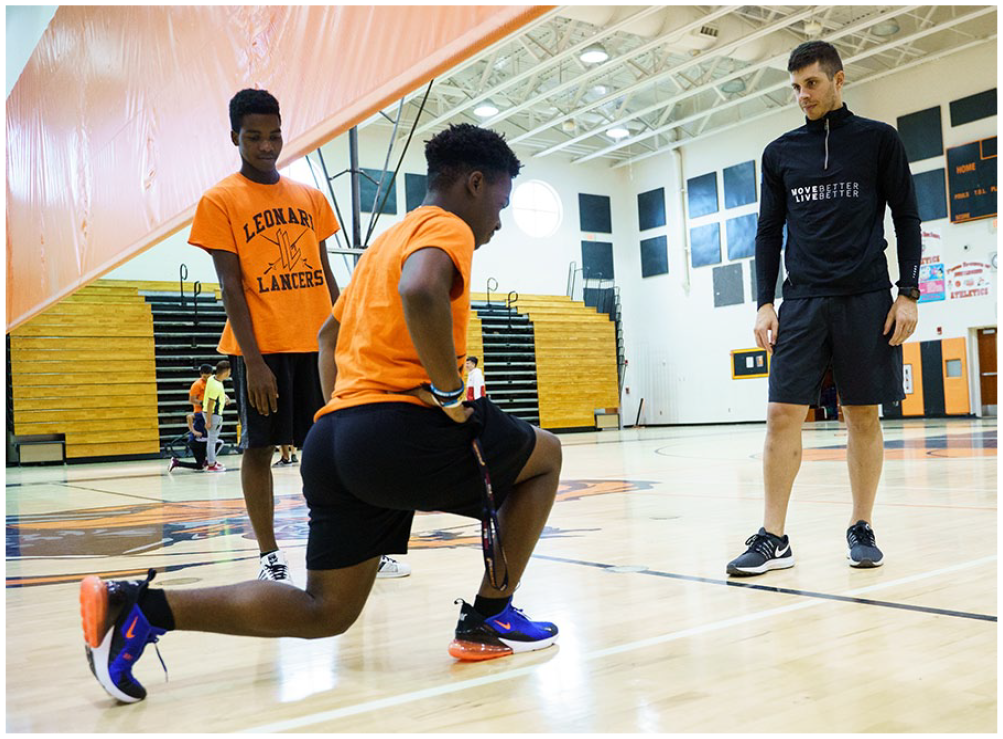
An adolescent sports participant receiving feedback from a health educator about proper technique when performing neuromuscular training activities.
The National ACL Injury Coalition
The National ACL Injury Coalition is the first national coalition devoted solely to reducing ACL injuries in high school sports participants. Formed through a partnership between the Hospital for Special Surgery (HSS) and the Aspen Institute, the coalition encompasses leaders in the fields of medicine, sport, insurance, public health, and education (Table 1).
National ACL injury coalition.
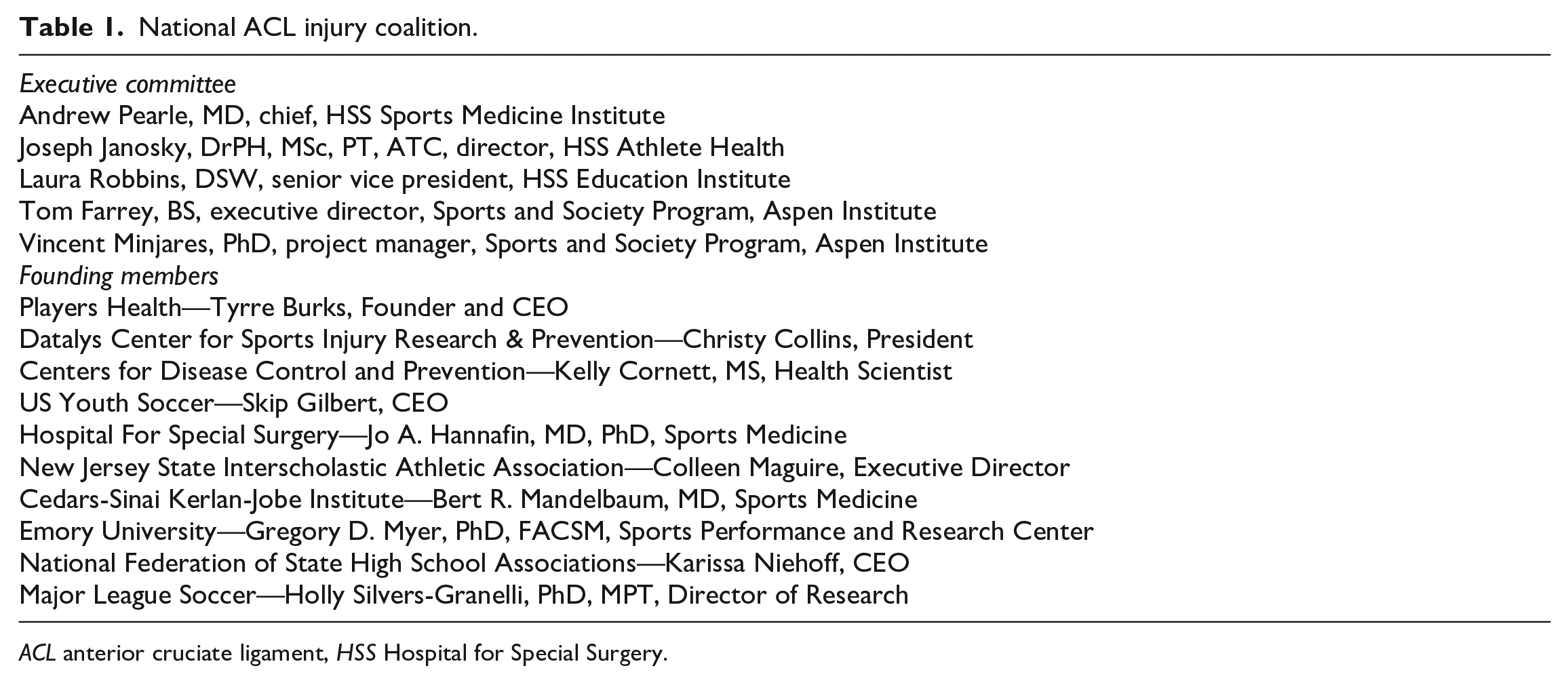
ACL anterior cruciate ligament, HSS Hospital for Special Surgery.
Through a series of multiyear initiatives (2023–2026), the coalition aims to make ACL injury prevention fundamental to high school sports. It envisions a sports ecosystem in which high school participants implement foundational NMT to move better and face fewer threats to serious injury, so that, they can remain active for life. This merges the goals and expertise of the founding partners, HSS and Aspen Institute. It is the first major initiative of the Aspen Institute’s Reimagining School Sports playbook, which calls for prioritizing health and safety in school sports (learn more at as.pn/schoolsports). Orthopedic surgeons at HSS also attest to this need. Every year, they perform more than 1200 ACL reconstruction procedures, many of these for young people [29].
The 2023 Inaugural Meeting
The inaugural meeting of the National ACL Injury Coalition took place on March 27, 2023, in New York City. It was attended by 10 experts representing 6 organizations. Hosted by HSS, the convening sought to familiarize participants with the core challenges surrounding ACL injury prevention in youth and to come to a common agenda moving forward. Following a brief introduction on the history of the project and collective impact methodology, evidence was presented in a series of short presentations.
Bert Mandelbaum, MD, reviewed the science over the past 20 years. Serious attention to non-contact ACL tears began in 1999, when Mandelbaum and 20 other physicians and researchers representing 4 major orthopedic associations convened to discuss the anatomic, environmental, hormonal, and biomechanical risk factors and prevention strategies for non-contact ACL injuries [8]. Reviewing the presentations and analysis, the group identified neuromuscular control as the major modifiable risk factor for ACL injuries and the most significant cause of the higher rate of injury in women. The consequent development of a 5-step warm-up program now known as Prevent Injury and Enhance Performance (PEP), resulted in injury reduction of 88.1% in the first year [17]. Subsequently, members of the FIFA Medical Assessment and Research Center devised “the 11,” a series of training exercises designed to improve athletes’ coordination, stability, flexibility, and strength. In 2009, a revised version, FIFA 11+, was disseminated and popularized throughout the FIFA network [2,5]. Finally, the link between genetic variants and the risk of ACL injury is emerging as an important research question [12].
Joseph Janosky, DrPH, MSc, PT, ATC, presented on youth sport participation and modifiable ACL injury risk factors. There has been a push to improve sport participation among America’s young people [19,28]. In fact, in 2019, roughly half of children and adolescents participated in sports and less than a quarter of adolescents got enough aerobic exercise [19]. The US Department of Health and Human Services has set goals to raise those rates to 63.3% and 30.6%, respectively, by 2030. Undoubtedly, this is an important goal, but more participants can mean more injuries—especially without appropriate training. A recent HSS study found that among 8 to 10 year olds, only 2.7% of girls and 7.8% of boys could perform a lunge properly; this ability improved slightly in 12 to 15 year olds (10.6% of girls and 11.8% of boys) but dropped significantly among 16 to 17 year olds (3.6% of girls and 6.5% of boys) [13]. This is not surprising given that only 7.9% of coaches receive ACL injury training, yet after receiving training, 88.9% of coaches reported using NMT warm-ups [9].
Andrew Pearle, MD, presented on biomechanical mechanisms of ACL injury [3], evidence-based NMT interventions [18], best practice guidelines, and RIIP REPS, an app designed to facilitate the implementation of NMT programs for high school sports participants. Dr Pearle reviewed the tremendous amount of research dedicated to the study of NMT; he was able to distill the evidence to highlight what exercises need to be done in which athletes to have the greatest impact. Specifically, training programs have been shown to be most effective in high school and middle school sports participants (especially girls) playing soccer, basketball, lacrosse, football, field hockey, and handball. Best practice guidelines for NMT programs include lower body strengthening exercises, such as lunges, heel/calf raises, and Nordic hamstring curls, as well as landing stabilization exercises, such as skater hops and broad jumps [21]. These NMT sessions should be done for 30 to 60 minutes per week, started 2 weeks prior to the start of the season, and continued throughout the season to achieve maximum protective effect. Programs were most effective when a trainer or coach was included.
RIIP REPS is an app developed by HSS that enables teams to implement NMT programs at a minimum of cost and effort. An acronym for Reduce Injuries Improve Performance, RIIP REPS is based upon the best practices guidelines described above. After being invited to join by their team, sports participants perform expert-guided 7-minute training sessions, 4 times a week (Fig. 2). No special equipment is necessary. Audio, text, and visual cues enhance learning—which focuses on skills, such as accelerating, stopping on a dime, jumping, cutting, and landing. Coaches and athletic directors can monitor participation.
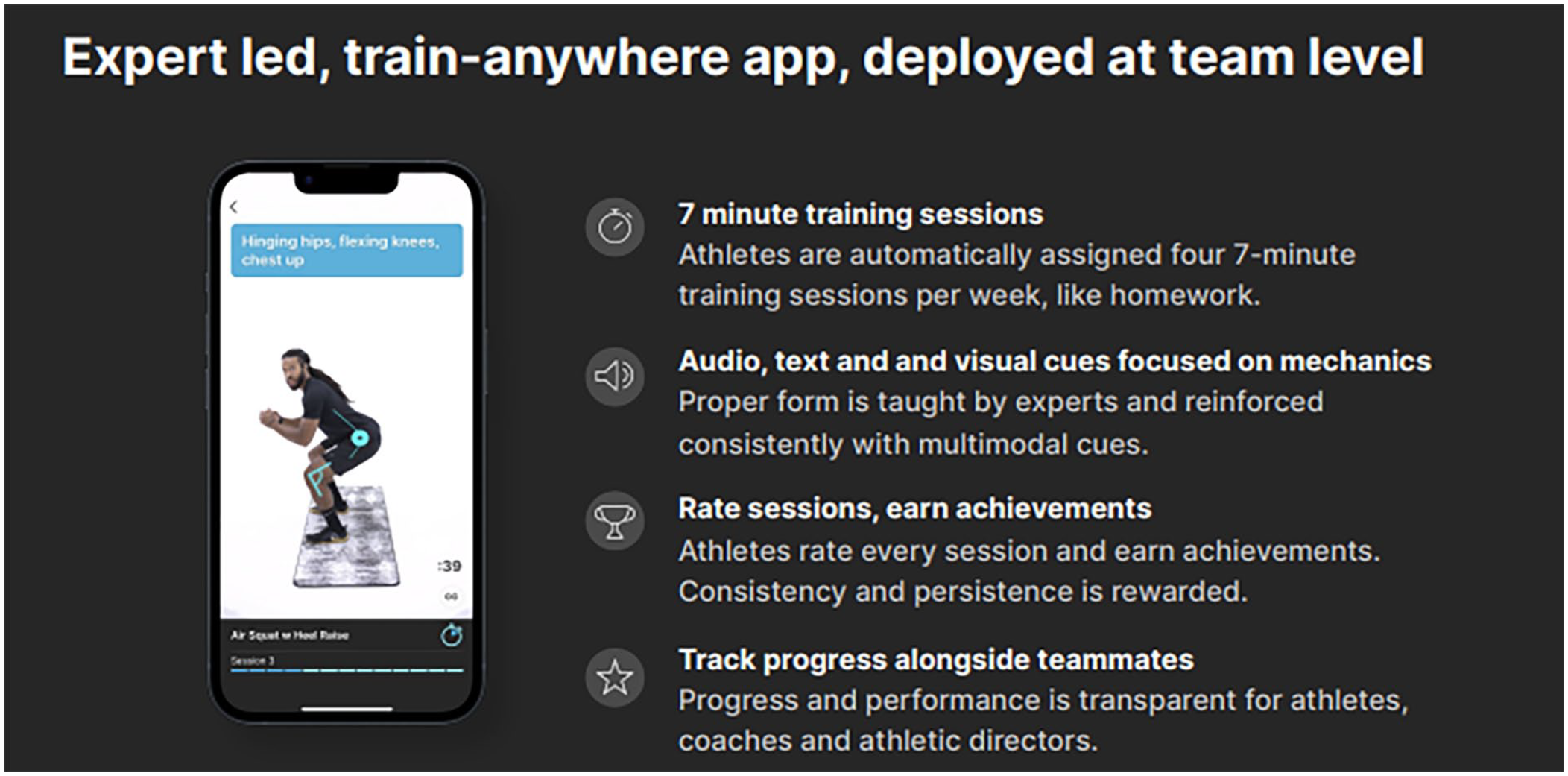
The RIIP REPS app, part of the anterior cruciate ligament (ACL) injury prevention toolkit, supports individual student athletes in proper neuromuscular training techniques, while also allowing team members to communicate with one another and coaches and athletic trainers to monitor students’ progress.
Following the presentations, the group spent the afternoon in discussion and planning.
Achieving Consensus Using Collective Impact
No single organization or intervention can solve the complex problem of reducing ACL injury rates among high school sports participants. Sustainable interventions require activating change at the systems level. To approach such transformation and capitalize on the diverse expertise of its members, the coalition uses a theory of change called “collective impact,” which is designed to support collaboration among community members and drive systems-level change to achieve a shared objective [11]. The following are the 5 principles of collective impact as they relate to the coalition’s goals.
Common Agenda
Presentations established a shared understanding of the complex factors contributing to ACL injuries in youth and adult athletes, evidence-based strategies for teaching young people how to move better, and the challenges to implementing them. A subsequent discussion enabled participants to share ideas and ultimately agree upon an agenda to guide the coalition’s actions. The group acknowledged that dynamic knee valgus resulting from inadequate neuromuscular control in young sports participants is a modifiable risk factor that can be improved upon with training. The shared vision foresees an ecosystem in which high school sports participants receive support to develop foundational athletic strength and movement—an essential aspect of reducing the threat of knee injury While the coalition’s efforts will initially target high school sports participants, industry leaders have been included as founding members of the Coalition to facilitate the development and delivery of interventions to stakeholders in non-school sports settings (i.e., organizations that offer recreational and competitive sports opportunities).
Because the problem of ACL injury in youth sports participants has such a high level of public health burden, the coalition defined the following 4 strategic priorities to address the many contributing factors.
Shared Measurements
Tracking progress and accessing data are essential to the collective impact model as the project moves forward. Although there was impassioned discussion about targeting ACL prevention training for other populations, the coalition agreed to focus on high school sports participants, to capitalize on the existing evidence supporting NMT efficacy in adolescents, as well as current sports associations and available databases. For example, the National Federation of State High School Associations, which organizes high school sports across the United States, funds High School RIO, an internet-based data collection platform that tracks injuries throughout the school year. One limitation of RIO is that data are collected from schools that have athletic trainers, who make weekly reports. Research has found that schools without athletic trainers have higher overall and recurrent injury rates than schools with them [22]. In addition, Players Health, which provides secondary health insurance coverage for nearly 700 US high schools, will provide access to its de-identified ACL injury insurance claims data for approximately 300,000 high school sports participants. These shared measurements will provide the Coalition with current epidemiologic and financial data specific to ACL injury among high school sports participants and the ability to quantify changes in injury rates and expenditures in the future.
The importance of focusing on widespread implementation of ACL injury prevention interventions was highlighted. The group was reminded that, while outcomes are important, 20 years of data already exist showing that ACL injury prevention programs are efficacious. Thus, it was suggested that close attention be paid to barriers to implementing interventions. For example, what attitudes of coaches (or parents) might hinder adoption of a program? Could incentives be helpful? Identifying and addressing barriers can create a significant opportunity for growth. Finally, it was put forward that future assessment would be done through effectiveness studies, not efficacy studies; the latter determines performance under controlled circumstances with rigid protocols, while effectiveness studies take place in real-world settings and account for the influences of external and system-level factors [26]. It was agreed that the conversation about shared measurement would be ongoing.
Mutually Reinforcing Activities
Collective impact stresses collaboration among diverse stakeholders, each responsible for activities in which they excel. These activities are coordinated to support the common agenda as well as the efforts of other participants. In the afternoon session, coalition members broke out into small groups for brainstorming around the common agenda’s 4 strategic priorities (widespread implementation of interventions, high-quality education, equitable access, aligning stakeholders) according to short-term, medium-term, and long-term achievements. Each group was asked to consider 2 questions: What actions can coalition members take to support training implementation and adherence? and What actions can coalition members take to address threats of injury across the wider ecosystem (ie, more systemic or structural issues in athletics and education)? After each of these 2 breakout sessions, the group reassembled to present ideas and determined which would be priorities for short-term, medium-term, and long-term goals.
One of the first major short-term goals will be to introduce an ACL injury prevention toolkit encompassing NMT programs, such as the RIIP REPS app, and implementation guidance for coaches, athletic trainers and other key stakeholders in the sports participants’ lives. The full list of initially recommended activities can be found in Table 2.
Initial mutually reinforcing actions agreed on by the council.
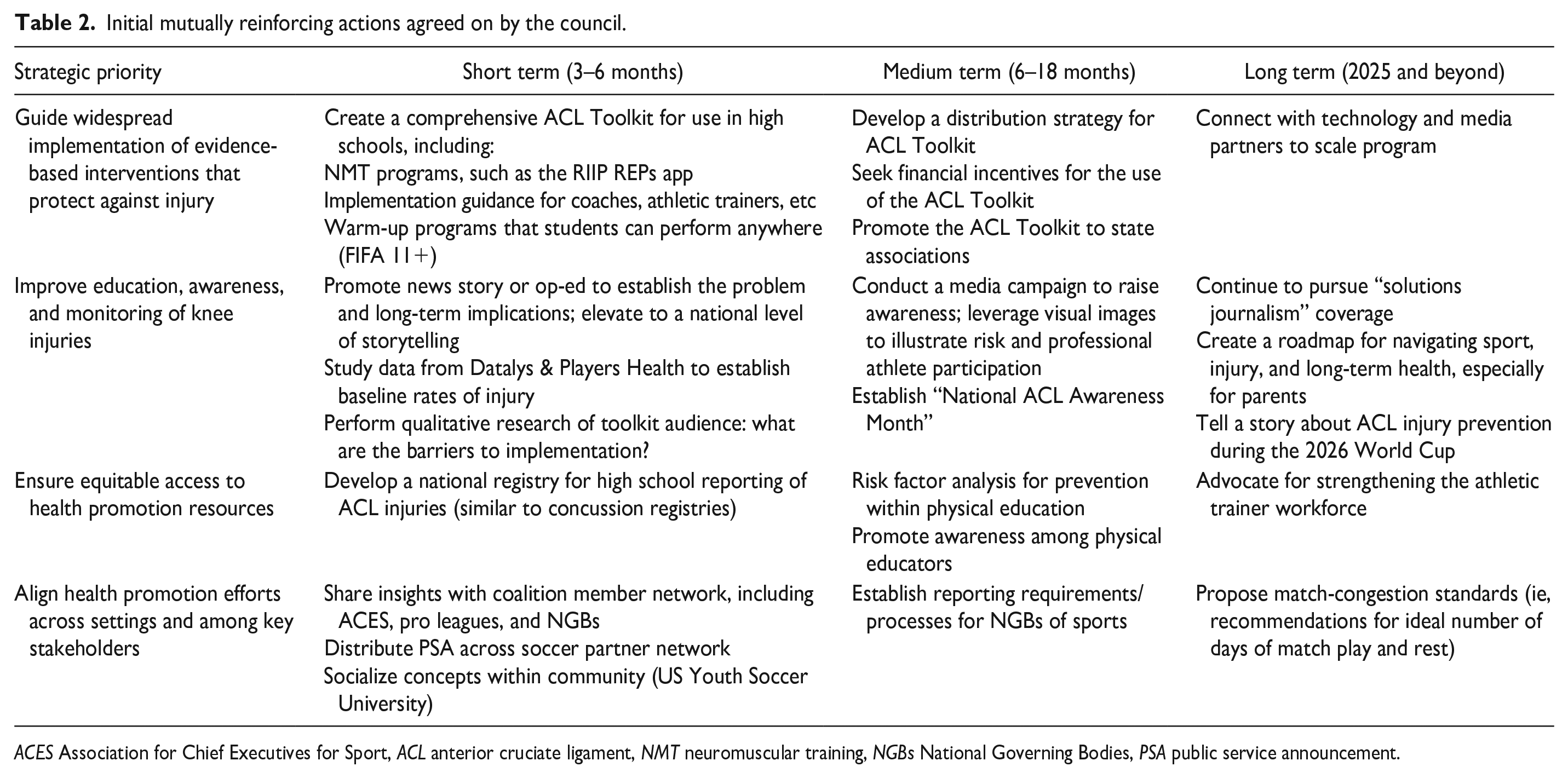
ACES Association for Chief Executives for Sport, ACL anterior cruciate ligament, NMT neuromuscular training, NGBs National Governing Bodies, PSA public service announcement.
Continuous Communication
The coalition will meet twice a year over the 3-year period: once virtually and once in-person. Each month, an email with updates on activities and progress will be distributed to group members; additional outreach will take place when appropriate. Additional dialogue will be fostered among stakeholders through sharing content at events, such as the Aspen Institute’s Project Play Summit. Also, public awareness will be elevated through social media, blogs, reports, and educating news media. In conclusion, as founding partners, HSS and the Aspen Institute will serve as the coalition’s backbone, providing services that build and sustain its initiatives. This includes recruiting member organizations, hosting meetings, helping to identify shared/mutually reinforcing activities, supporting the development of tools/resources, collecting/distributing data to measure progress, analyzing impact of prospective interventions/programs, celebrating wins, and generating storytelling to raise media and public awareness.
Supplemental Material
sj-pdf-1-hss-10.1177_15563316231211320 – Supplemental material for Preventing Anterior Cruciate Ligament (ACL) Injuries in High School Sports Participants: An Executive Summary of the Inaugural Meeting of the National ACL Injury Coalition
Supplemental material, sj-pdf-1-hss-10.1177_15563316231211320 for Preventing Anterior Cruciate Ligament (ACL) Injuries in High School Sports Participants: An Executive Summary of the Inaugural Meeting of the National ACL Injury Coalition by Laura Robbins, Tom Farrey, Joseph Janosky, Vincent Minjares, Bert R. Mandelbaum and Andrew Pearle in HSS Journal®
Supplemental Material
sj-pdf-2-hss-10.1177_15563316231211320 – Supplemental material for Preventing Anterior Cruciate Ligament (ACL) Injuries in High School Sports Participants: An Executive Summary of the Inaugural Meeting of the National ACL Injury Coalition
Supplemental material, sj-pdf-2-hss-10.1177_15563316231211320 for Preventing Anterior Cruciate Ligament (ACL) Injuries in High School Sports Participants: An Executive Summary of the Inaugural Meeting of the National ACL Injury Coalition by Laura Robbins, Tom Farrey, Joseph Janosky, Vincent Minjares, Bert R. Mandelbaum and Andrew Pearle in HSS Journal®
Supplemental Material
sj-pdf-3-hss-10.1177_15563316231211320 – Supplemental material for Preventing Anterior Cruciate Ligament (ACL) Injuries in High School Sports Participants: An Executive Summary of the Inaugural Meeting of the National ACL Injury Coalition
Supplemental material, sj-pdf-3-hss-10.1177_15563316231211320 for Preventing Anterior Cruciate Ligament (ACL) Injuries in High School Sports Participants: An Executive Summary of the Inaugural Meeting of the National ACL Injury Coalition by Laura Robbins, Tom Farrey, Joseph Janosky, Vincent Minjares, Bert R. Mandelbaum and Andrew Pearle in HSS Journal®
Supplemental Material
sj-pdf-4-hss-10.1177_15563316231211320 – Supplemental material for Preventing Anterior Cruciate Ligament (ACL) Injuries in High School Sports Participants: An Executive Summary of the Inaugural Meeting of the National ACL Injury Coalition
Supplemental material, sj-pdf-4-hss-10.1177_15563316231211320 for Preventing Anterior Cruciate Ligament (ACL) Injuries in High School Sports Participants: An Executive Summary of the Inaugural Meeting of the National ACL Injury Coalition by Laura Robbins, Tom Farrey, Joseph Janosky, Vincent Minjares, Bert R. Mandelbaum and Andrew Pearle in HSS Journal®
Supplemental Material
sj-pdf-5-hss-10.1177_15563316231211320 – Supplemental material for Preventing Anterior Cruciate Ligament (ACL) Injuries in High School Sports Participants: An Executive Summary of the Inaugural Meeting of the National ACL Injury Coalition
Supplemental material, sj-pdf-5-hss-10.1177_15563316231211320 for Preventing Anterior Cruciate Ligament (ACL) Injuries in High School Sports Participants: An Executive Summary of the Inaugural Meeting of the National ACL Injury Coalition by Laura Robbins, Tom Farrey, Joseph Janosky, Vincent Minjares, Bert R. Mandelbaum and Andrew Pearle in HSS Journal®
Supplemental Material
sj-pdf-6-hss-10.1177_15563316231211320 – Supplemental material for Preventing Anterior Cruciate Ligament (ACL) Injuries in High School Sports Participants: An Executive Summary of the Inaugural Meeting of the National ACL Injury Coalition
Supplemental material, sj-pdf-6-hss-10.1177_15563316231211320 for Preventing Anterior Cruciate Ligament (ACL) Injuries in High School Sports Participants: An Executive Summary of the Inaugural Meeting of the National ACL Injury Coalition by Laura Robbins, Tom Farrey, Joseph Janosky, Vincent Minjares, Bert R. Mandelbaum and Andrew Pearle in HSS Journal®
Footnotes
Acknowledgements
The authors thank Lisa Santandrea for assistance in writing this summary.
Declaration of Conflicting Interest
The author(s) declared the following potential conflicts of interest with respect to the research, authorship, and/or publication of this article: Andrew Pearle, MD, reports relationships with DePuy, Smith+Nephew.
Funding
The author(s) disclosed receipt of the following financial support for the research, authorship, and/or publication of this article: Hospital for Special Surgery (HSS) and Aspen Institute Sports & Society Program funded the meeting of the National ACL Injury Coalition in March 2023. HSS also funded the writing of this article and owns the RIIP REPS app mentioned in the article.
Human/Animal Rights
All procedures followed were in accordance with the ethical standards of the responsible committee on human experimentation (institutional and national) and with the Helsinki Declaration of 1975, as revised in 2013.
Informed Consent
Informed consent was not required for this executive summary.
Required Author Forms
Disclosure forms provided by the authors are available with the online version of this article as supplemental material.

References
Supplementary Material
Please find the following supplemental material available below.
For Open Access articles published under a Creative Commons License, all supplemental material carries the same license as the article it is associated with.
For non-Open Access articles published, all supplemental material carries a non-exclusive license, and permission requests for re-use of supplemental material or any part of supplemental material shall be sent directly to the copyright owner as specified in the copyright notice associated with the article.
