




Abstract
Introduction
The past decade has witnessed a remarkable increase in biomedical and social science research, with collaborations spanning across continents (Coccia & Bozeman, 2016; Lee & Haupt, 2021). While this cross-cultural exchange of knowledge has enriched scientific advancements, it has also raised critical questions about the applicability and adaptability of established research methodologies, particularly in the Global South (Haelewaters et al., 2021; Lunn, 2014). In their well-intentioned quest to adhere to global standards, researchers often inadvertently employ a standardized approach that may overlook the intricate sociocultural dynamics, potentially undermining the cultural norms, values, practices, and integrity of research participants in the majority world, particularly within certain African contexts (Appiah, 2022; Wilson Fadiji et al., 2022). Central to the research ethical paradigm is the aspiration to safeguard individual autonomy, ensuring that participants are not only cognizant of the research objectives but also willingly engage in the process (Beauchamp & Childress, 2019). That research and medical procedures should essentially benefit or promote the good of other persons, and that research should be conducted in fairness for individuals, groups, and communities, are widely acknowledged concepts with unified interpretations across contexts and cultures (Anabo et al., 2019; Miracle, 2016). However, the conceptualization of individual autonomy, rooted in a Western individualistic ethos, may be discordant with the prevailing communal ethos found in non-Western societies, such as Africa and Asia, where social cohesion, familial interconnectedness, and communal decision-making often overshadow individual autonomy (Appiah, 2021; Visagie et al., 2019).
Although the collective contributions of the four fundamental principles of (research) ethics (i.e., autonomy, non-maleficence, beneficence, and justice) in advocating and propagating ethical research and practice have been widely acknowledged, the principle of ‘respect for autonomy’ has been criticized by scholars and ethicists for its overemphasis on individual autonomy (Metz, 2017), and for its failure in recognizing the variations in social orientations and the conception of personhood across cultures (Behrens, 2018). For instance, Behrens (2018) argued that ‘respect for autonomy’ is insufficiently narrow as a basic principle of bioethics given its individualistic orientation, and that it ignores the important fact that individuals are embedded within communities. Instead, Behrens (2018) re-emphasized the universality of the principle of ‘respect for persons’ (as originally postulated in the Belmont Report) because of its propensity to recognize the decisional authority of individuals and their relationality with others. Other scholars and bioethicists have shared similar views, arguing that the shift of the principle from ‘respect for persons’ to ‘respect for autonomy’, engineered by Beauchamp and Childress, reduces respect to a mere protection of persons from ‘non-interference’ (Lysaught, 2004; Wispe, 2022).
Traditionally, the standard informed consent (IC) adopts an individual-based consent model, where norms of decision-making emphasize respect for individual autonomy (Azétsop & Rennie, 2010; Nishimura et al., 2013). The question of whether all principles and ethical guidelines (e.g., the autonomy-focused IC model) are universally applicable to all research contexts has been raised by researchers working in the relatively collectivistic context of Africa (Appiah, 2020, 2021; Molyneux et al., 2005; Tekola et al., 2009; Vreeman et al., 2012a). Largely, collectivist cultures foster a sense of the self that emphasizes interpersonal harmony rather than individual private engagement (Gavi et al., 2022; Gyekye, 2011; Mpofu, 1994), with an individual's self-identity often conceived in terms of their connectedness with other members of the family or society. In spite of their close affinity to family and clan, individuals in collectivist societies are responsible for taking their personal life decisions (Molefe, 2018), and society, for the most part, neither determine one's actions or choices nor dictates specific rational life plan for everyone (Ikuenobe, 2018). Collectivists, however, are expected to take others into account in their decision-making and to contribute to advancing the goals of the group (Gavi et al., 2022; Mpofu, 1994), engendering an elevated notion of ‘duty to others’. This contrasts with the notion of ‘individual rights’ in Western social orientation, where the emphasis is placed on personal independence, self-determination, and privacy (Behrens, 2018).
While much of the social organizations of Asia and South America have been described as collectivistically socially oriented rather than individualistic (Ikuenobe, 2018; Markus & Kitayama, 1991), the anthropological literature describes African societies as among the most collectivist in their construction and view of the self (Eaton & Louw, 2000; Gyekye, 1996; Triandis, 1989). In most of sub-Saharan Africa, individuals belong to an extended family system, are loyal to their clans, and may use teknonyms as part of their social affiliation and identities (Gyekye, 2014; Mpofu, 1994; Nwoye, 2017). In the more rural, close-knitted, relatively collectivistic context of sub-Saharan Africa, for instance, a person's failure to show concern or participate in the resolution of a misfortune of a member of the family or community could be construed as perfunctory and unceremonious, which is frowned upon (Gyekye, 2011). A person's time and resources spent in helping others to resolve their problems are regarded as the individual's contribution to advance the victim's freedom – as this contribution essentially alleviates the anxiety and stress associated with the problem. The collectivism notion of the African people is ubiquitously explicated by Kwame Gyekye, a renowned Ghanaian philosopher, that in the Akan and other African moral systems, an individual can be a human being without being a person, thus distinguishing between the concept of a human being and the concept of moral personhood (Gyekye, 2011). Gyekye further argued that, people, functioning as human beings, are naturally oriented toward other persons, hence are social beings who require social ethics rather than ethics of individualism, explaining that Aristotle's dictum, politikon, is better translated as ‘social’ rather than ‘political’ (Gyekye, 2011).
Nevertheless, similar to many regions of the world, the social organization of many African societies largely co-exist as collectivist and individualist orientations, with a collectivist orientation more pronounced in the culturally-laden rural and peri-urban settings, in contrast to the characteristics of individualist orientations that are observed in the urban and industrialized settings (Ikuenobe, 2018; Phillips & Wong, 2016). In the rural, relatively communal settings of Ghana, for instance, despite acknowledging their individual identities, residents express a high sense of social interconnectivity, with the decision-making process of prospective research participants and the processes to obtain IC taking on greater complexity (Appiah, 2021). Yet, the question of whether and to what degree cultural norms and practices (e.g., gatekeepers’ involvement in the research and decision-making processes) violate the individual rights of prospective participants and/or its effect on the integrity of the research process is the cause of considerable debate (Honan et al., 2013; Liamputtong, 2008; Marshall & Batten, 2003; Obijiofor et al., 2018; Ojeda et al., 2011).
At the core of research ethics lies the objective of safeguarding individual autonomy and welfare. However, the very concept of autonomy can take on varied meanings when transposed onto societies with deeply rooted communal identities (Visagie et al., 2019). The principles of individual autonomy that guide the IC process may diverge from the priorities and norms prevalent in collectivistic societies like Africa (Appiah, 2020, 2021; Behrens, 2018). In many African and Asian cultures, community interests often take precedence over individual desires (Gyekye, 1996, 2014; Mpofu, 1994; Nwoye, 2017), thereby posing a complex challenge to the conventional IC model. This incongruence between Western ethical norms and the ethico-cultural underpinnings of Africa (and much of the Global South), necessitates a comprehensive investigation into the specific challenges that arise when applying the individual-based IC model within African contexts. Although a growing body of literature across Africa suggests that the standard, individual autonomy-oriented IC model presents ethico-cultural and implementation challenges when applied in the relatively collectivistic African cultural context (Marshall et al., 2014; Visagie et al., 2019), the extent and implications of these challenges on the integrity of the research process are not known. Research guidelines also generally take a more global perspective that typically posit a universalism that obscures their profound alignment with the cultural norms of ‘Western’ thought, thus raising critical concerns about their cultural-fitness and utility in non-Western cultural settings (Schroeder et al., 2019).
Drawing on empirical studies and theoretical models of bioethics, Barugahare (2018) provides some methodological insights for bioethics in Africa, pertinent to addressing challenges associated with implementing individual-based IC frameworks in relatively collectivistic contexts of Africa. Firstly, Barugahare contends that while embracing African perspectives, it is crucial for researchers and practitioners to maintain a balanced approach that respects diverse moral viewpoints (Barugahare, 2018). This inclusive stance ensures culturally sensitive practices without compromising universal ethical principles, which are also vital for navigating the ethico-cultural and practical challenges reported to confront the administration of individual-based IC frameworks in certain contexts of Africa. Secondly, Barugahare (2018) suggests that (bio)ethical principles should be assessed for their inherent value rather than their origin. This recommendation urges researchers and practitioners to conduct an impartial analysis to identify ethical frameworks that align with African values and effectively address contemporary health (and social) challenges, facilitating the development of robust research and clinical practices while transcending cultural biases. Barugahare further proposed that rather than dismissing Western (bio)ethics, efforts should focus on integrating global standards with African moral insights. This perspective resonates with the extant literature that suggests that adapting existing principles ensures ethical standards are upheld while respecting cultural norms. Lastly, Barugahare (2018) argued that critical thinking abilities are essential for navigating complex ethical issues in research and practice, and challenges researchers to foster intellectual rigor in order to address challenges with (bio)ethical frameworks, ensuring decisions are grounded in reasoned analysis rather than cultural biases.
Although recent efforts have generated toolkits to support researchers to navigate research ethical conflicts (Reid et al., 2021), they do not provide detailed descriptions of the ethical, cultural, and practical challenges akin to specific cultural contexts. Identifying and characterizing the challenges associated with the IC and research processes, particularly in low- and middle-income countries (LMICs) could enhance our understanding of the research trajectory and challenges in specific contexts and inform the development (or adaptation) of context-tailored IC approaches. Insights from such efforts could also facilitate the conduct of ethical research in underserved communities and thereby minimize ethics dumping – the export of unethical research practices from high-income to lower-income settings (Schroeder et al., 2018, 2021). This review explored scholarly literature describing the ethico-cultural and implementation challenges associated with the universal IC framework in Africa, in order to identify the nature and extent of these challenges. The study also identifies strategies suggested in the literature to manage the challenges more appropriately. This review was guided by the questions: a) What ethical, cultural, and implementation challenges are associated with the IC model when applied in research in the African context?, and b) What are the suggested recommendations to manage these challenges more appropriately?
Methods
We followed the scoping review methodological framework suggested by Arksey and O’Malley (Arksey & O'Malley, 2005), and additionally relied on the (Preferred Reporting Items for Systematic reviews and Meta-Analyses extension for Scoping Reviews (PRISMA-ScR) guidelines (Tricco et al., 2018) to inform the development of the search, selection, synthesis, charting, and interpretation of the results of this review. We systematically searched across four databases, including PubMed, PsycINFO, Web of Science, and Scopus for literature examining or describing the ethico-cultural and implementation challenges associated with the IC model or procedures in Africa. Our research team consists of individuals with expertise in public health, positive psychology, global mental health, community-based participatory research, and research methods.
The search strategies were developed by an experienced librarian, and further refined in consensus with the research team. A combination of search terms relating to topical (“Consent” OR “Informed consent model” OR “Informed consent process” OR “Consent procedures” OR “Consent practices”) AND disciplinary (“Biomedical research” OR “Medical research” OR “Social science research”) AND conceptual (“Ethical challenges” OR “Ethical issues” OR “Ethical considerations”) AND location (“Africa” OR “African countries” OR “sub-Saharan Africa” OR “Algeria” OR “Angola” OR “Benin” OR “Botswana” OR “Burkina Faso” OR “Burundi” OR “Cabo Verde” OR “Cameroon” OR “Central African Republic” OR “Chad” OR “Comoros” OR “Congo” OR “Djibouti” OR “Egypt” OR “Equatorial Guinea” OR “Eritrea” OR “Eswatini” OR “Ethiopia” OR “Gabon” OR “Gambia” OR “Ghana” OR “Guinea” OR “Guinea-Bissau” OR “Ivory Coast” OR “Kenya” OR “Lesotho” OR “Liberia” OR “Libya” OR “Madagascar” OR “Malawi” OR “Mali” OR “Mauritania” OR “Mauritius” OR “Morocco” OR “Mozambique” OR “Namibia” OR “Niger” OR “Nigeria” OR “Rwanda” OR “Sao Tome and Principe” OR “Senegal” OR “Seychelles” OR “Sierra Leone” OR “Somalia” OR “South Africa” OR “South Sudan” OR “Sudan” OR “Tanzania” OR “Togo” OR “Tunisia” OR “Uganda” OR “Zambia” OR “Zimbabwe”) were applied. The final search string is included as Supplementary file (eTable 1). Studies were eligible for inclusion if they were peer-reviewed biomedical, medical, or social science studies, set out to examine or describe the ethico-cultural and implementation challenges associated with the IC model or process in Africa, and were published in English between 2000 to 2023. The search was not limited to any specific type of study design. Gray literature was excluded. We broadly operationalized ethico-cultural and implementation challenges to include participants’ conception and expression of autonomy and communitarianism (i.e., how the emphasis on individual autonomy in the IC model aligns with or conflicts with traditional communitarian values prevalent in African cultures); cultural beliefs and practices (i.e., how cultural beliefs, rituals, and practices intersect with the Western concept of IC and how they influence decision-making); community engagement (i.e., the strategies for engaging communities in the development and/or implementation of IC processes that are culturally appropriate and respectful); and family and community decision-making (i.e., the role of family members and community leaders in making decisions about research participation and how this dynamic interacts with the individual-based consent model). The electronic search was conducted in October 2022 and updated in July 2023. A total of 82 articles were retrieved from the databases. All citations were imported into EndNote to remove duplicates using the automatic deduplication function, reducing the number to 78. Fourteen articles were excluded after the initial title and abstract screening. We performed full text review of 64 articles and excluded 29 articles after the inclusion criteria were applied.
We used descriptive numerical summary and qualitative thematic analysis to analyze the extracted data, which were then presented in Tables and Figures. Following Clarke and colleagues’ principles of thematic analysis (Clarke et al., 2015), the first author and an expert reviewer independently read the extractions severally to familiarize themselves, coded the data, and searched for patterns of emerging themes by comparing the data in order to group similar concepts into categories. Findings were compared and differences reconciled through consensual discussions.
Results
Study Characteristics
Of the 35 eligible studies, 15 were qualitative studies, 10 were commentaries and perspectives, three adopted mixed methods design, four were narrative reviews, two were surveys, and one cluster randomized trial (Figure 1). The vast majority of the studies were conducted in the context of social science (61%), followed by biomedical (28%), and theoretical (11%) research. In terms of study settings, the majority of the studies were conducted in Ethiopia (5; 14.3%), with an equal number also originating from studies conducted across multiple countries (5; 14.3%). Three studies (8.6%) were each conducted in Ghana, Kenya, and Nigeria; two each (5.7%) in Botswana, Eswatini, Egypt, Malawi, and South Africa; and one each (2.8%) was conducted in Burundi, Cameroon, Mali, Zambia, and Zimbabwe. The majority (86%) of the studies offered some recommendations to guide researchers to navigate the identified challenges. A thematic summary of the ethico-cultural and implementation challenges, together with the suggested approaches to manage them, are discussed below.
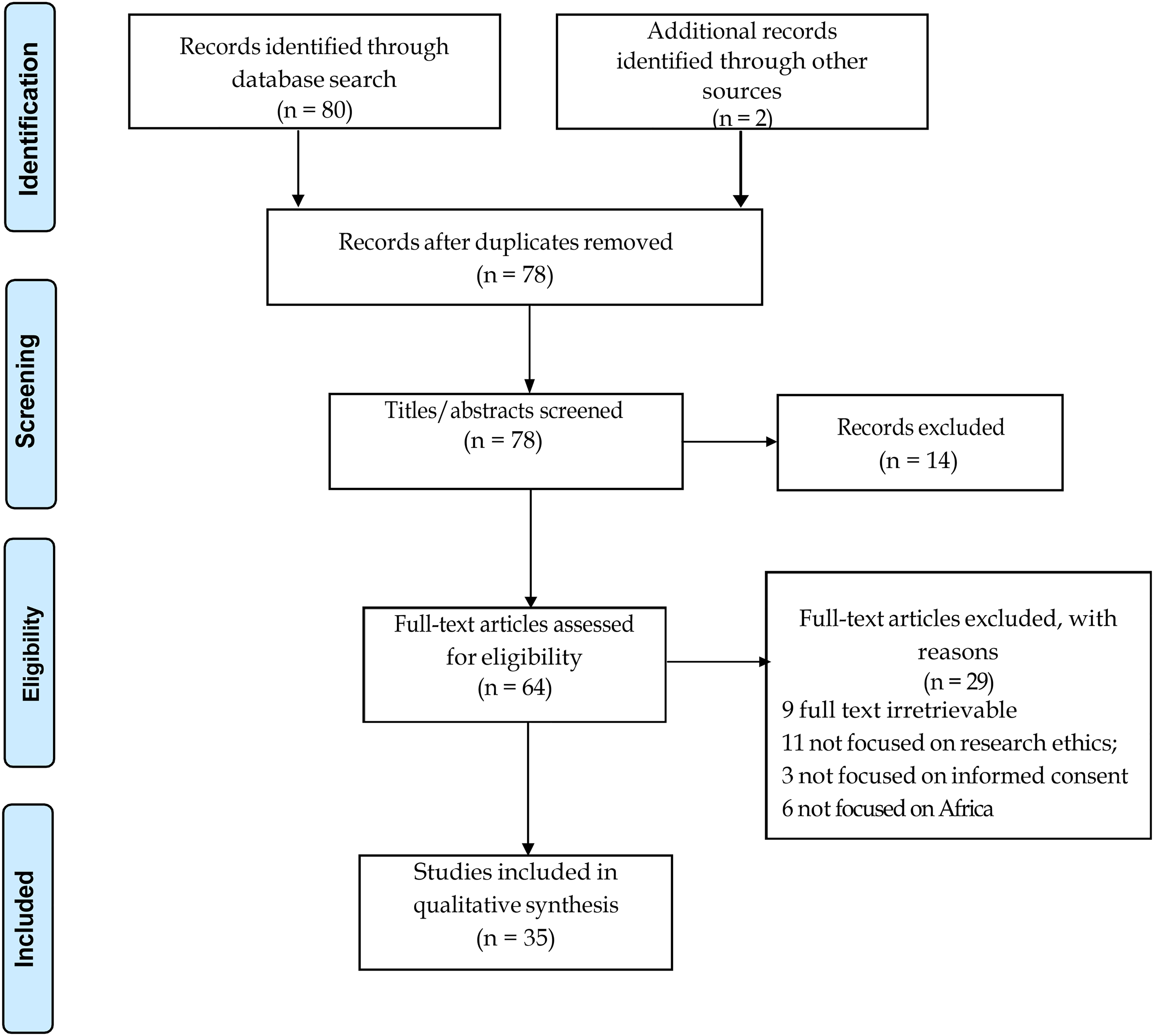
PRISMA flowchart.
Ethico-Cultural and Implementation Challenges
Misalignment with African Social Values and Ethos
Twenty seven studies argued that the autonomy-driven IC model fundamentally presents theoretical and practical challenges when applied in most African settings because it unquestionably conflicts with the collectivistic social orientation and relational notion of personhood expressed in most African communities (Abay et al., 2016; Abdel-Messih et al., 2008; Addissie et al., 2014, 2016; Akpa-Inyang & Chima, 2021; Appiah, 2020, 2021; Araali, 2011; Behrens, 2018; Chukwuneke et al., 2014; Dunin De Skrzynno & Di Maggio, 2018; Frimpong-Mansoh, 2008; Gebresilase et al., 2017; Jegede, 2009; Jeko et al., 2012; Marshall et al., 2014; Molyneux et al., 2005; Moodley, 2002; Moyer et al., 2022; Osamor & Kass, 2012; Princewill et al., 2017; Ramabu, 2020; Rashad et al., 2004; Shaibu, 2007; Tindana et al., 2006; Visagie et al., 2019; Vreeman et al., 2012b; Table 1). These challenges are partly reported to stem from the fact that the principle of autonomy, on many counts, is incongruous with the collectivistic social orientation and the pluralistic conception of personhood in many African communities (Akpa-Inyang & Chima, 2021; Visagie et al., 2019). The autonomy-based IC model places the decisional authority of whether or not to participate in research in an age-appropriate and cognitively capable individual, yet, in many African communities, personhood is largely conceived on social terms (Behrens, 2018; Gyekye, 1996, 2011) and the individual is, for the most part, a part of the whole – who also owes allegiance to the family or community and may involve them in their decision-making (Chukwuneke et al., 2014). A study that examined the degree to which participants in biomedical research in a traditional Nigerian community involved others in the decision-making process reported that three-quarters (78%) of participants discussed the enrollment decision with someone else; whereas 39% reported obtaining permission from a spouse or family member to participate (Osamor & Kass, 2012). In the same study, half of the female participants sought permission from their spouses before enrolling. Another study reports that Africa largely adopts communal or social autonomy, as opposed to individual autonomy, and contended that a strict application of the Western concept of autonomy in research involving human subjects in certain African contexts without careful consideration of the values and beliefs of the research setting, is inappropriately narrow (Jegede, 2009). In a study that compared the IC process between Egypt and the United Kingdom, researchers found that decision-making in the Egyptian society usually involves other important members of the family or community such as father, teacher, or employer (Rashad et al., 2004). The study urged researchers working in the Egyptian context to provide opportunities for inputs by these stakeholders.
Summary of Articles.

Other studies emphasized the discrepancies between individualist social orientations (on which the IC is premised) and the relatively collectivist African sociocultural orientation and viewpoint of personhood (Abdel-Messih et al., 2008; Addissie et al., 2014; Akpa-Inyang & Chima, 2021; Appiah, 2021; Araali, 2011), and the collectivistic rather than the individualistic nature of decision-making in most of Africa (Dunin De Skrzynno & Di Maggio, 2018; Jeko et al., 2012; Moyer et al., 2022; Shaibu, 2007) to explain the cultural inappropriateness and source of the various ethico-cultural challenges associated with the autonomy-driven IC models in parts of Africa.
Subversion of Gatekeepers’ Functions
Seven studies reported that the standard IC model, with its emphasis on individualism, essentially neglects the important functions of community leaders and gatekeepers in research, particularly in the rural, socioeconomically disadvantaged settings of Africa (Diallo et al., 2005; Gondwe et al., 2022; Kengne-Ouafo et al., 2014; Molyneux et al., 2005; Tekola et al., 2009; Tindana et al., 2006; Vreeman et al., 2012a). Studies find that gatekeepers, including chiefs and council of elders, Assembly representatives, Unit Committee members (e.g., for health, education, sanitation, etc) are elected, often politically, to govern and preserve the culture of the group, to spearhead developmental activities and well-being of residents, and to protect members from exploitation (Appiah, 2021). However, the involvement of gatekeepers, such as the head of a household or husband of a prospective married female participant in the decision-making process could be construed as a potential source of interference and considered a violation of the principle of respect for autonomy that underpins the IC model (Azétsop & Rennie, 2010; Ikuenobe, 2018). By backing their claims with evidence from anthropological research that suggests that much of African communities are collectivist, which are governed by elected leaders to protect the interest of members (Chukwuneke et al., 2014; Gyekye, 2014), the studies contend that a strict adherence to the principle of autonomy inferentially alienates the important (protective) functions of gatekeepers, such as from the exploitation of crude researchers and to minimize ethics dumping. Of note, the majority of studies arguing the subversion of gatekeepers’ roles did not recommend a blanket, community level consent as sufficient approach to consenting, but instead, suggested a diversified, multi-step approach that seeks consent at both community and individual levels. For instance, a study in Kenya that examined community members’ perspectives on the IC procedures, and their suggestions on how to conduct context-appropriate IC process, found a widespread consensus by community members that chiefs and elders should give approval to researchers to conduct the study in the community, but that households and individuals should provide autonomous IC (Molyneux et al., 2005). In a study in Ethiopia that explored the perspectives of community members on the procedure to follow to gain consent, participants recommended that researchers approach prospective participants through, or in the presence of, locally trusted individuals (Tekola et al., 2009). This notion was also echoed by participants in Burundi (Dunin De Skrzynno & Di Maggio, 2018), Cameroon (Kengne-Ouafo et al., 2014), Ghana (Tindana et al., 2006), Kenya (Vreeman et al., 2012a), Malawi (Gondwe et al., 2022), and Mali (Diallo et al., 2005).
Despite the reported claim of the functional roles of community leaders and gatekeepers in research in some African contexts, we retrieved three studies that critically questioned the implications of gatekeepers’ involvement in research, implicating them, instead, of abuses of power and undue coercion of community members to participate in research. For instance, a qualitative ethnographic study that explored the ethical issues arising from community engagement in Malawi found that although the involvement of community leaders in research is considered culturally appropriate (that could possibly boost participation) in most Malawian settings, authoritarian leadership structures could potentially coerce and undermine individuals’ autonomy to make voluntary decisions about participation (Nyirenda et al., 2020). In Eswatini, research was conducted to interrogate the social relations of IC in community-based participatory research in a rural Swazi community, and to investigate how obtaining community-level consent influenced community members’ autonomy to provide individual-level consent (Brear, 2018). The study found that whereas participants recognized the essence of involving community leaders in the research process, they also acknowledged that the “symbolic power” of community leaders has the potential to constrain individual agency. Similarly, among a sample of Yoruba women in Nigeria, Princewill and colleagues found that a combination of patriarchal, religious, and cultural factors colludes to adversely impact on the autonomy of women with respect to research participation (Princewill et al., 2017). The study further revealed that although men feel they were protecting women by making decisions for them, the women interpreted this ‘protection’ as a stratagem by the men to limit their autonomy, suggesting that authoritarian community leaders and male figures in highly patriarchal societies may despise the requirements of the individual-based, autonomy-driven IC model and argue its inappropriateness in their context.
In two studies, participants showed a mixed preference for either individual or community level consenting for research participation. In exploring the ethical issues and challenges associated with approaching communities and gaining IC in Cameroon, participants generally showed preference for a centralized permission-giving structure that they expect researchers to follow (Kengne-Ouafo et al., 2014). However, a considerable number of participants with higher levels of educational attainment objected to this structure, and instead, opted for an individual-based consenting model. Similarly, in Botswana, participants (comprising policy makers and practitioners) in the village and urban areas both showed preference for an individual autonomy model of consenting when asked to suggest the IC process for bioethics research in Botswana communities. On the other hand, whereas caregiver participants in the cities exercised individual autonomy to participate in the study, their counterparts in the villages requested that permission be obtained from community leaders before they could participate (Ramabu, 2020). Findings suggest a co-existence of collectivist and individualist orientations in parts of Africa, mostly with characteristics of individualism among educated individuals dwelling in the urban settings, and collectivism among people in rural settings.
Recommendations to Manage IC-Related Challenges
Adopt a Multi-Step Approach to IC
Several studies (18) in this review recommended the adoption of a multi-step approach, that solicit consent at both the community and individual levels (Abdel-Messih et al., 2008; Behrens, 2018; Brear, 2018; Dunin De Skrzynno & Di Maggio, 2018; Frimpong-Mansoh, 2008; Jegede, 2009; Marshall et al., 2014; Molyneux et al., 2005; Moodley, 2002; Osamor & Kass, 2012; Princewill et al., 2017; Ramabu, 2020; Shaibu, 2007; Tekola et al., 2009; Tindana et al., 2006; Visagie et al., 2019; Vreeman et al., 2012a, 2012b; Table 2). Rather than operationalize the IC to be solely individual-centered, the studies recommended a diversified approach, wherein IC is sought both at the community and household levels, if required, in addition to individual level consent. The studies argued that this pluriversal approach could essentially satisfy the cultural norms and expectations of the communities, as well as the autonomic requirement of the IC model. When asked about their perspectives on the IC procedures and suggestions for context-appropriate IC process in Kenya, participants recommended that researchers should allow gatekeepers to provide IC at the community level, while individual participants provide independent, autonomous consent (Molyneux et al., 2005), thus operationalizing the IC as a multi-step process rather than a once-off exercise. Frimpong-Mansoh (2008) contends that most African communities require researchers to obtain approval from leaders and elders of the community, in addition to seeking IC at the individual level. Inherently, a multi-step approach to IC would also serve as a multi-step gatekeeping strategy to protect members from undue exploitation and safeguard them from potential invasive and harmful experiments. Rather than forcefully apply the individual-focused IC model, Shaibu (2007) argued that researchers in collectivist social settings should carefully consider a diversified IC model that acknowledges and blends the cultural values and practices of the African people with the science and principles underpinning the standard research ethical codes, as appropriate. That a blended, multi-step approach to IC is more appropriate for much of African communities has also been vociferously advocated in the literature by scholars in Botswana (Ramabu, 2020), Burundi (Dunin De Skrzynno & Di Maggio, 2018), Ghana (Appiah, 2021; Tindana et al., 2006), Eswatini (Moyer et al., 2022), Ethiopia (Gebresilase et al., 2017), Kenya (Vreeman et al., 2012b), Malawi (Gondwe et al., 2022; Nyirenda et al., 2020), Nigeria (Osamor & Kass, 2012; Princewill et al., 2017), and South Africa (Akpa-Inyang & Chima, 2021; Moodley, 2002).
Ethico-cultural and Implementation Challenges and Suggested Guidance Related to Informed Consent Identified in the Literature.

Conduct a Rapid Ethical Assessment
We found six studies that either recommended or reported on the design, implementation, or evaluation of a rapid ethical assessment to examine plausible ethical issues and challenges akin to a particular population group, prior to conducting a study (Abay et al., 2016; Addissie et al., 2014, 2016; Gebresilase et al., 2017; Kengne-Ouafo et al., 2014; Zulu et al., 2019). The rapid ethical assessment involves the conduct of a brief qualitative research to familiarize with the context, explore local contextual factors that could potentially constrain the research process, and to identify ways to approach communities and manage potential ethico-cultural issues related to the IC and research process. By conducting a rapid ethical assessment ahead of their study, researchers in Ethiopia found that only a fraction of study participants was satisfied with the current standard consent process (with its emphasis on individual autonomy), suggesting gaps with the consent process that need to be further explored and resolved (Addissie et al., 2014). In north west Cameroon, participants acknowledged the permission-giving structures in their communities, and intimated that the rapid ethical assessment approach would guide the conduct of context-appropriate, ethically-sound IC processes for future studies (Kengne-Ouafo et al., 2014). Again, in Ethiopia, participants (i.e., researchers and IRB members) emphasized the need for a pre-test of the consent form and information sheet in the study site to assess its suitability and appropriateness, prior to the main study (Gebresilase et al., 2017). In the same study, participants implored researchers to explore and understand the concerns of the local population and to incorporate their values and beliefs into the IC and research processes in order to satisfy the interests of both stakeholders. Abay and colleagues argued that, overall, rapid ethical assessment could potentially reveal important sociocultural issues which could serve as invaluable resource in modifying the consent information documents to suit the study context (Abay et al., 2016).
Generate an African-Centered IC Model
Sixteen studies noted that because the standard IC model is essentially based on the Western concept of libertarian rights-based autonomy, its theoretical underpinnings do not fit well with the African notion of being or personhood, which emphasizes more on an individual's relationality with others (Abdel-Messih et al., 2008; Akpa-Inyang & Chima, 2021; Appiah, 2020, 2021; Araali, 2011; Chukwuneke et al., 2014; Diallo et al., 2005; Gebresilase et al., 2017; Jeko et al., 2012; Marshall et al., 2014; Molyneux et al., 2005; Moyer et al., 2022; Tekola et al., 2009; Visagie et al., 2019; Vreeman et al., 2012a; Zulu et al., 2019). These studies argued the need for a pluriversal IC model that takes into account the values, beliefs, and practices of the African peoples to facilitate the conduct of research with human subjects in Africa. Molyneux et al. (2005) noted the growing need for context-appropriate IC procedures to facilitate the research process at the community level that reflect the ideals and values of the communities involved in the study. Likewise, Abdel-Messih et al. (2008) implored researchers and research administrators to collaborate with local communities to develop culturally-competent and diversified recruitment and consent procedures that acknowledge and incorporate the cultural, political, and social practices of the local context. Tekola et al. (2009) also entreated researchers in Ethiopia to tailor and evaluate the effectiveness of the consent process in order to optimize comprehension and participants’ decision-making on a study-by-study basis. In Ghana, Appiah (2021) argued for a more pluriversal approach to IC and urged researchers, universities, research institutions, and institutional review boards in Africa to collaborate with local communities and stakeholders to design and implement context-appropriate IC models and procedures to build mutual trust and respect, increase interest and participation, prevent ethics dumping, and safeguard the integrity of the research process.
Discussion
This review maps and critically evaluates studies that report on the ethico-cultural and implementation challenges associated with the standard, individual-autonomy driven IC model in the African context. The review also examined suggestions and recommendations in the literature to manage these challenges.
At the theoretical level, ethical principles, values, and codes are largely conceptualized to reflect the sociocultural values and belief systems of the context in which the codes have been developed (Killawi et al., 2014; Leong & Lyons, 2010). This suggests that some values underpinning (research) ethical guidelines may not necessarily have universal utility. Ruiz-Casares argues that applying the Western standards for voluntary individual decisions in non-Western, more collective community settings, which mostly emphasize the needs of groups over individuals, can be problematic (Ruiz-Casares, 2014). This review found that although efforts to protect the autonomy of prospective participants in the African context are important and laudable, a stringent prioritization of individual autonomy over and above other moral values such as collective autonomy or decision-making, are inappropriately narrow. Although some researchers in Africa acknowledge the disparities between the requirements of the traditional IC model and the cultural values and practices of the local population, they refrain from making revisions to the consent forms, partly because of the bureaucracy involved in making these amendments to the research protocol (Addissie et al., 2016).
A cardinal requirement of the IC is that cognitively capable adults be allowed to decide on whether or not to participate in research or clinical treatment, thus upholding their right to self-determination (Kadam, 2017; Nijhawan et al., 2013). Yet, the findings of this review suggest that in most African communities, members of the family (and leaders of the community) primarily function as gatekeepers and support systems – who also have politico-culturo-moral obligations to protect the interests of community members, and support them to weigh their decisions and choices for their personal and collective good. Overall, the findings suggest that the decision-making process in parts of Africa is largely multi-layered rather than a solely personal endeavor. Views and insights solicited from, and shared by, close others are principally intended to provide additional perspective to help the member to further appraise their decisions and choices, and not necessarily to impede or interfere with the decision-making process (Visagie et al., 2019).
A substantial number of the reviewed studies suggested that the standard IC model essentially neglects the important gatekeeping functions of community leaders and other political authorities in the communities. In most rural, collectivist settings of Africa, the chief and other gatekeepers are culturally mandated to welcome researchers into the community, evaluate the potential risks and benefits of the study, and when satisfied, to inform community members about the presence of the researchers in the community and to request members’ support for the research activities (Appiah, 2020, 2021; Msoroka & Amundsen, 2018; Tindana et al., 2006). The role of gatekeepers, particularly in the rural settings, serve to protect the interest of community members, some of whom may have low educational attainment, are socioeconomically disadvantaged, and potentially vulnerable. There was, however, evidence of potential abuse of power and coercion of members to participate in research activities by authoritarian leaders in highly patriarchal societies (Brear, 2018).
We note the argument advanced by some researchers regarding the unethicality of community consent and the involvement of gatekeepers in the IC process. For instance, Andoh (2016), by taking a more developmental perspective, dismissed the possibility of cultural influences on the IC process and surmised that other socioeconomic factors, such as low literacy and poverty, are responsible for the challenges associated with implementing the IC in some African contexts. Andoh opined that community consent should be subverted for community dialogue and community education in research in Africa, and further argued for mechanisms to improve comprehension and capacity of “vulnerable populations living in extreme poverty and affected by high levels of ignorance” (Andoh, 2016, p. 122). We note, however, that in a later work that critiques the universality of biomedical ethics, Andoh argues that ‘genuine development of bioethics in Africa must be rooted on core communitarian ethical principles and must rest upon the innate authentic African communitarian theories’ (Andoh, 2016). Unquestionably, communal consent and the involvement of gatekeepers in the IC process poses a fundamental challenge to the individualistic oriented IC model (Mkhize, 2006; Segalo & Molobela, 2019). Yet, the studies in this review contend that if ethical guidelines are primarily enacted to conduct ethical research, then the principle of respect for persons should also be extended to demonstrate respect for the cultural and customary beliefs, values, and expressions of the people in the communities that are researched (Behrens, 2018; Visagie et al., 2019). Overall, the evidence suggests that gatekeepers and community leaders could contribute to research activities by facilitating the community entry process, by helping the research team to navigate the communities, and by assisting researchers to identify eligible or vulnerable individuals and groups for research. Nonetheless, some authoritarian leaders might employ their power to compel individuals to participate or to hinder them from doing so, particularly in highly patriarchal societies (Brear, 2018).
Much of the reviewed literature proffered diverse strategies to guide researchers to overcome specific ethico-cultural and implementation challenges. A multi-step approach to IC that allows researchers to seek consent at both the community-, household-, and individual-levels was widely recommended as ideal for research with human subjects in the relatively collectivistic African context. The suggested multi-step approach is argued to have the potential to ensure that the researcher meets communal norms and requirements for community entry, while also granting individuals the space to express their cultural beliefs and values and to involve others in the decision-making process, if they so desire. This approach enables the researcher to establish that the final decision rests with the prospective participant (Ikechukwu Osuji, 2014), thus satisfying both the basic requirements of IC and the cultural milieu of the local population. Similarly, in their effort to create awareness and guide researchers to envision and manage research implementation challenges in more appropriate ways, researchers have advocated for, designed, evaluated, and propagated an ethnographic assessment, termed as rapid ethical assessment (Abay et al., 2016; Addissie et al., 2014, 2016; Gebresilase et al., 2017; Kengne-Ouafo et al., 2014). This pre-study qualitative assessment is intended to guide researchers to discover, describe, and respond to potential ethico-cultural issues (e.g., beliefs and cultural characteristics and practices) akin to a population group. While not the ultimate panacea to the challenges posed by the ideological and ontological dichotomies between the individualistic-oriented IC and the collectivistic African worldviews, the rapid ethical assessment can potentially minimize ethics dumping and critically ensures that the design of IC procedures considerably aligns with the traditional cultural values and practices of the target population.
The literature is replete with suggestions for African-based researchers to collaborate in generating an African-centered IC model to facilitate research with human subjects in Africa. This call is largely premised on the argument that if the principle of respect for persons or autonomy appeals to the researcher to respect the individuality and rights of research participants, then it is even more important that this right is extended to respect the cultural values and beliefs of the local population who agree to participate in research (Behrens, 2018; Visagie et al., 2019). Visagie and colleagues took a more pragmatic view, arguing that the principles underpinning the standard IC framework is particularly suited for biomedical research and practice (Visagie et al., 2019), and that there is urgent need for a framework that is tailored towards the goal and scope of social science research in Africa, where collective (e.g., family- and group-based) decision-making is ubiquitous.
Implications and Recommendations for Research and Practice
The findings of this review have several important implications for research and clinical practice in some African settings. Firstly, many African philosophical perspectives and ontologies conceptualize the individual as a distinct being who also maintains strong ties and shares their identity and self with the community (Gyekye, 2011). The main challenge with the individual-based IC model in some African communities arises from the fact that the IC framework is heavily aligned with the Western-individualistic worldview of personhood, which starkly contrasts with the collectivistic, inter-relational view of personhood practiced in most parts of Africa (Gyekye, 2011; Mpofu, 1994). The evidence from this review suggests that people in collectivist societies regularly confer with significant others and members of the community as a secondary mechanism to solicit views and affirm their decision, if they were unsure. Furthermore, gatekeepers (e.g., chiefs, community elders, unit committee members) also play a crucial role in protecting community members, many of whom have little or no formal educational attainments, from deceit, exploitation, and ethics dumping (Appiah, 2020, 2021). Again, some socioeconomic factors, such as low literacy, which are often overlooked in the discourse, could constrain a person's capacity to make an informed decision about a specific subject matter that is unfamiliar to them, even though they are capable of making decisions about issues of daily living.
In line with the findings of this review and in consensus with the extant literature (Blanch et al., 2008; Nembaware et al., 2019; Tiffin, 2018), we strongly endorse the adoption of a multi-step approach to IC in highly collectivistic African communities. Our support for this approach aligns with a broader scholarly consensus advocating for nuanced and culturally sensitive practices to facilitate research with human subjects in the relatively collectivistic context of Africa. Furthermore, the findings of the present review acknowledge the distinctions in preferences for a multi-layered IC approach within certain African contexts. These variations, often influenced by socio-cultural factors and educational backgrounds (Appiah, 2021; Heerman et al., 2015; Kiguba et al., 2012), underscore the imperative of a flexible, multi-step IC model. The diverse perspectives, in themselves, are critical for ensuring inclusivity and cultural sensitivity in the IC process, further necessitating the need for an adaptable, context-tailored IC model for the African peoples.
Secondly, an essential criterion for autonomous decision making, besides the person being fully aware of making a decision in the face of adequate information to inform the decision-making, is that the decision-making process must be free from controlling influences, which is operationalized to encompass all premeditated actions that contravene the beliefs, values, and desires of the decision-maker that have the potential to sway the decision (Nelson et al., 2011; Papillon & Rodon, 2017). Controlling influences typically include coercion, manipulation, lying, threats, nondisclosure of information, or suggestions of urgency in non-urgent situations (Beauchamp, 2010; Nelson et al., 2011), yet, it may be difficult, if not inappropriately narrow, to categorically equate a person's expression of their cultural norm or their quest to seek the view of another to inform their decision on whether or not to participate in research, to a premeditated controlling stratagem. We agree with Visagie et al. (2019) that the concept of individual autonomy – which drives the IC framework – significantly misaligns with the decision-making structure in much of Africa, which is relatively collectivistically socially oriented. This review finds that the autonomy-driven IC potentially creates intercultural power inequalities and colonial legacies that need to be explored and addressed to facilitate an ethical research process that also acknowledges the cultural practices, values, expectations, and contributions of the local population group, while also safeguarding the integrity of the research process.
Thirdly, although models and frameworks that provide research guidelines from global perspectives are important, they are inappropriately narrow in envisioning, managing, and providing guidance for specific contexts, particularly in LMICs, where the research process presents a distinct set of complexities (de Vries et al., 2015). Typically, much attention is spent ensuring that the research methodology and procedures adhere to the standard, universal ethical guidelines approved by the ethics committees. However, to the extent that an individual's decisional trajectory and their conceptualization, understanding, and behavioral expressions of phenomena are partly determined by their sociocultural orientations (Han & Ma, 2015; Matsumoto, 2007), the influence of cultural norms and practices on the research process cannot be ignored. Findings from the present review underscore the need for researchers to carefully explore and integrate context-specific factors and cultural values and norms of the local population into their IC and research procedures.
Fourthly, the reviewed studies revealed some nominal aggregations in the findings across countries, with the main themes cross-cutting all blocs of the continent. For instance, in Kenya, east Africa, there was a widespread agreement by community members that chiefs and elders should give approval to researchers to conduct the study in the communities, but that households and individuals should provide autonomous IC (Molyneux et al., 2005). However, in Cameroon, a central African country, despite objections by some educated individuals, the majority of participants described a centralized permission-giving structure in their communities that they expect researchers to abide by, including through the health center and the Fon (traditional leader) (Kengne-Ouafo et al., 2014). Yet, in Eswatini, a southern African country, participants recognized the essence of involving community leaders in the IC process, but also noted that gatekeepers could coerce participation (Brear, 2018). On the other hand, in Mali, west Africa, participants recommended a community level consent, in addition to individual level consent, noting that community level consent could facilitate the process of disclosure for individual IC (Diallo et al., 2005). Taken together, these findings suggest marked similarities and peculiarities in the requirements for ethical research across Africa. Therefore, it is crucial to approach the implementation of IC frameworks in African research with careful consideration of the diverse values inherent to African peoples. The findings, therefore, emphasize the importance of considering the unique cultural and contextual factors within each African community, promoting ethical research practices that align with the values of the populations under study. Overall, the present review's findings implore researchers to recognize the need for nuanced, localized approaches to IC practices across African communities.
Lastly, the concept of an African methodological approach to research also encompasses the realm of bioethics. For instance, Barugahare (2018) argues that while advocating for an African approach to bioethics is commendable, it is accompanied by certain methodological challenges that warrant deeper exploration and consideration. The methodological insights presented by Barugahare (2018) to address these challenges are in concordance with the findings and recommendations articulated within this review. Firstly, researchers are encouraged to recognize the significance of African cultural identity when examining the broader ethical implications, thus ensuring inclusivity and objectivity in bioethical discussions. This approach aligns with the recommendations outlined in this review, advocating for researchers to adopt a balanced stance on consent that both respects cultural values and addresses ethical concerns. Secondly, Barugahare argues that evaluating bioethical principles based on their inherent merit fosters a culturally relevant yet morally sound approach to healthcare challenges. This underscores the necessity of adopting a multi-step approach to IC in Africa, wherein principles are impartially evaluated to accommodate cultural nuances and uphold ethical integrity. Thirdly, instead of outright rejection of Western bioethics, Barugahare (2018) suggests complementing existing frameworks with African moral insights, facilitating the adaptation of global standards while honoring cultural norms. These insights are congruent with the findings of the present review, which advocate for a rapid ethical assessment process to tackle the implementation challenges of individual-based IC frameworks in African contexts. Finally, Barugahare (2018) argues that by prioritizing contemporary realities in bioethical discussions, we can develop responsive frameworks to address evolving healthcare challenges. This highlights the imperative of developing an African-centered consent paradigm that integrates contemporary healthcare methodologies and emerging technological advancements. Such an approach resonates with the overarching focus on addressing pragmatic and implementation obstacles within IC frameworks.
Conclusions
This review is the first to provide an overview of the ethico-cultural and implementation challenges associated with the individual-based, autonomy-driven IC model in the African context, with suggested strategies to manage the challenges. Overall, the study finds that the individual-based IC presents considerable ethical, cultural, and practical challenges when administered for research in the relatively collectivistic settings of Africa. This finding does not in any way suggest that researchers in Africa should waive or disregard the traditional research requirement for individual decision-making with respect to the IC. Instead, the evidence contributes to the ongoing discussions and calls for a re-examination of the appropriateness of the autonomy-oriented IC model in the relatively collectivistic social context of Africa. A multi-step approach, where consent is sought at both the community and individual levels, was widely recommended. This model, among others, is envisaged to help prevent ethics dumping, safeguard the cultural values and practices of local communities, and simultaneously meet the requirements of individual autonomy and voluntariness of participation. Although there is evidence of potential abuse of power by authoritarian community leaders in highly patriarchal societies, the contribution of gatekeepers in research in African communities cannot be underestimated. Models and frameworks that restrict people's liberty to involve others in their decision-making process could lead to contentions in some African contexts (Appiah, 2021; Behrens, 2018; Ikuenobe, 2018) and needs to be carefully examined. If the overarching goals of research ethics codes and principles are to protect research participants from harm and safeguard their rights of autonomy (Behrens, 2018; Jegede, 2009; Visagie et al., 2019), then the findings of this review seek to suggest that researchers conducting community-based research in Africa should take every measure to ensure that this right is also extended to respecting the cultural values of research participants and their communities.
When research engagements are conceived and executed with local population groups (cf. community-based participatory action research; citizen science), then an urgent question is whether IC procedures should be diversified to embrace and respect the cultural values and practices (e.g., social/collective autonomy) of local communities, or to keep assuming that individuals in all contexts make important decisions about their lives on their own. Although the universal ethical codes for research acknowledge that the family and members of the community may be involved in the decision-making process in some settings, there are no specific guidelines that describe in detail the nature of these ethico-cultural and practical challenges and how they can be managed, particularly in the relatively collectivist context of Africa. Given that participatory decision-making is a customary practice in most African settings (Appiah, 2021; Marsh et al., 2019), the ethico-cultural challenges posed by the current individual-focused IC model deserve critical considerations and resolutions.
Best Practices
The findings of this study can serve as a useful guide to research institutions, researchers, and IRBs in several ways. Firstly, researchers and research institutions can leverage these findings to emphasize the importance of respecting and understanding the local norms, practices, and beliefs of the communities they engage with. This awareness can lead to more culturally sensitive and ethically sound research practices, thereby minimizing ethics dumping and safeguarding the research process. Secondly, IRBs can incorporate the recommendations from the study into their review processes and encourage researchers to adopt a multi-step approach to IC, ensuring that potential participants are adequately informed and have the opportunity to engage with the research process. Thirdly, researchers can work closely with community gatekeepers and leaders, acknowledging their authority and involving them in the research process. This can, in many ways, help build trust and foster mutual collaboration between researchers and local communities. Fourthly, the recommendation urging researchers to conduct a rapid ethical assessment can become a standard practice before initiating research projects in these settings, especially for studies aiming to enroll a large number of participants. This assessment can help identify potential ethical challenges and ways to mitigate them proactively. Lastly, based on the recommendations in the literature, researchers, research institutions, and ethics committees could collaborate to generate and evaluate pluriversal, African-centered IC models that align well with the cultural values and practices of the local people, while also upholding the basic ethical principles of IC.
Research Agenda
The findings of this review can inform future research agendas by highlighting the context-specific nature of the ethical and cultural challenges associated with the individual-based IC model when implemented in the relatively collectivistic African communities. For instance, researchers can commission studies specific to their particular African contexts to delve deeper into the challenges identified in this scoping review, thereby allowing for a nuanced understanding of how these challenges manifest in different regions and communities. Moreover, comparative studies could be conducted to explore variations in ethico-cultural challenges related to the IC process, identifying both commonalities and differences across diverse African settings, with a concentrated focus on their implications for IC practices. As suggested in the recommendations of the study, there would be need for researchers to engage in collaborative efforts with local communities, community leaders, ethicists, and social scientists to co-create context-specific solutions for IC challenges, as a measure to promote inclusivity and to ensure that the solutions are culturally appropriate. Subsequently, there would be need for longitudinal studies to assess the effectiveness of the implemented solutions over time. This would allow for a dynamic understanding of how these solutions evolve in response to changing cultural dynamics, thereby providing valuable insights into the ongoing refinement of IC practices in the African context.
Educational Implications
The educational implications of these findings are significant, as they can influence how research ethics is taught and practiced in African educational institutions. The findings of this review implicitly call on educational institutions across the continent to consider revising their curricula to incorporate lessons from field experiences and empirical findings regarding the challenges associated with IC in the relatively collectivistic African contexts. Such an effort can help future researchers and ethicists better understand and navigate these issues. As another important implication, the findings can be a useful resource for institutions to provide guidance to research supervisors on how to mentor students and researchers conducting fieldwork in African communities, with critical considerations for ethical and culturally sensitive research practices. Lastly, the findings serve to provide practical information on the ethico-cultural and practical challenges associated with the individual-based, autonomy-driven IC process across the continent, and thus serve as invaluable resource to inform ethics committees within educational institutions to become more aware of these unique challenges within the African contexts. Based on these findings, ethics committees can further examine the challenges and suggested solutions proffered for their specific regional setting and adapt their review processes to address these challenges and provide guidance to researchers accordingly.
Supplemental Material
sj-docx-1-jre-10.1177_15562646241237669 - Supplemental material for Balancing Ethics and Culture: A Scoping Review of Ethico-Cultural and Implementation Challenges of the Individual-Based Consent Model in African Research
Supplemental material, sj-docx-1-jre-10.1177_15562646241237669 for Balancing Ethics and Culture: A Scoping Review of Ethico-Cultural and Implementation Challenges of the Individual-Based Consent Model in African Research by Richard Appiah, Giuseppe Raviola and Benedict Weobong in Journal of Empirical Research on Human Research Ethics
Footnotes
Acknowledgements
The first author is profoundly thankful to the Center for African Studies, Harvard University, for his admission into the Postdoctoral- Research Fellowship Program and providing financial support for his fellowship project, of which this paper forms part. He is deeply indebted to Professor Giuseppe Raviola and Professor Benedict Weobong for their friendship, mentorship, and support during the Fellowship. Our profound gratitude to Reuben A. Adjei (Information Professional/Librarian, University of Ghana) and Martin Ackah (Northumbria University) for their contribution in generating the initial search strings. The first author respectfully dedicates this study in honor of the loving memory of Professor Seth Oppong, whose scholarly contributions served as both inspiration and as a driving force in advancing the contextualization of psychological research and praxis within the African context.
Credit Authors Statement
RA conceived and designed the study with input from GR and BW. RA conducted the study selection, data extraction, and analysis, assisted by an independent expert reviewer. RA drafted the initial manuscript. GR and BW made substantive contributions to all subsequent versions of the manuscript. All authors have read and approved the final manuscript.
Data Availability
Data will be made available on request.
Declaration of Conflicting Interests
The authors declare that they have no known competing financial interests or personal relationships that could have appeared to influence the work reported in this paper.
Funding
The author(s) disclosed receipt of the following financial support for the research, authorship, and/or publication of this article: The first author received funding from the Center for African Studies, Harvard University, through the Center for African Studies Postdoctoral Research Fellowship Program for his fellowship project, of which this paper is a part.

Supplemental Material
Supplemental material for this article is available online.
Author Biographies
References
Supplementary Material
Please find the following supplemental material available below.
For Open Access articles published under a Creative Commons License, all supplemental material carries the same license as the article it is associated with.
For non-Open Access articles published, all supplemental material carries a non-exclusive license, and permission requests for re-use of supplemental material or any part of supplemental material shall be sent directly to the copyright owner as specified in the copyright notice associated with the article.
