



Abstract
Ethics guidance recommends that researchers engage stakeholders and that RECs review research for such engagement. The ethics review process may present a unique opportunity to support stakeholder engagement practices for HIV prevention studies. We conducted 28 interviews with experts from 12 countries to explore this issue, and analyzed the data using Thematic Analysis. We found that the value of engagement and review processes was strongly endorsed. However, we identified 3 major thematic complexities, namely: “Tokenism” where processes risk being “tick-box”; “Toxicity”, where practices may inadvertently have negative consequences; and “Tailoring”, where processes need careful variation in intensity. We make recommendations for how these “Ts” can be addressed during the review process to help contribute to thoughtful review of meaningful stakeholder engagement in research.
Introduction
Despite available HIV prevention tools, it is critical that new modalities are researched in clinical trials to address the needs of at-risk sub-groups (Bekker et al., 2020). Clinical trials of HIV prevention modalities are complex. Participants have multiple vulnerabilities (e.g. marginalization from services) as may community stakeholders (e.g. low research literacy) (MacQueen et al., 2015; Tindana et al., 2007). Complex scientific designs are common and uncertain uptake of knowledge or interventions is expected. Ethics guidelines recommend that researchers engage stakeholders in order to strengthen protections for participants and for community stakeholders, as well as increase the rigor and uptake of scientific outcomes which can benefit future beneficiaries (Adhikari et al., 2020; CIOMS, 2016; Slack et al., 2018; UNAIDS, 2021).
International ethics guidelines for health research with humans (CIOMS, 2016; WHO, 2011), and for HIV prevention trials specifically (UNAIDS, 2021; UNAIDS & AVAC, 2011) recommend that stakeholder engagement show certain features. More specifically, that it be inclusive of relevant stakeholders (i.e., involving parties that can influence or are affected by trials); occur across the lifecycle of trials and be responsive to context and dynamic over time (Slack et al., 2018). Research Ethics Committees (RECs) promote the ethical production of knowledge and judge the ethical acceptability of protocols (Amdur & Bankert, 2010; CIOMS, 2016). Ethics guidelines encourage RECs to review engagement in clinical trials for HIV (UNAIDS, 2021; UNAIDS & AVAC, 2011), for TB (AERAS, 2017; CPTR, 2012) and for emerging pathogens, for example COVID-19 (WHO, 2016; 2021). RECS are also encouraged to review engagement in health research more generally (CIOMS, 2016; WHO, 2011). CIOMS (2016) says that “The research protocol or other documents submitted to the Research Ethics Committee should include a description of the plan for community engagement” (p.25).
Despite such encouragement, previous empirical studies exploring what issues RECs typically focus on in ethics review suggest that stakeholder engagement is not a common focus (Silaigwana & Wassenaar, 2019; Tsoka-Gwegweni & Wassenaar, 2014). Tsoka-Gwegweni and Wassenaar (2014) assessed the minutes from one South African REC and found that “collaborative partnership” or stakeholder engagement was the ethics issue least frequently raised. Silaigwana and Wassenaar, (2019) reviewed the minutes of two South African RECs and found that collaborative partnership was ranked fifth out of the eight ethics issues raised. Wilkinson et al. (2021) reviewed REC documents, (e.g. application forms and SOPs) from 37 South African RECs and found many missed opportunities for RECs to encourage the planning and review of sound engagement through such documents. In a systematic review conducted by Abbott and Grady (2011), “community consultations” in emergency research were described by REC members as “vague and difficult to implement” (p.5). In an interview study with non-science members of IRBs as well as Community Advisory Board (CAB) members, Solomon Cargill (2017) suggested that many IRBs lack the training and capacity to review community engagement in research.
The ethics review process may present a unique opportunity to support meaningful stakeholder engagement practices. RECs are well placed to identify sub-optimal engagement practices, and to encourage better practices through their inquiries. Researchers applying for ethics review and approval are also well placed to use the review process to critically reflect on the quality of their engagement practices. However, there has been insufficient in-depth exploration of this issue with relevant stakeholders. This study aimed to explore how engagement could best be facilitated during the ethics review process including achievements and complexities.
Method
This study adopted a qualitative approach to allow in-depth exploration. Ethics approval was secured from the University of Kwazulu-Natal Biomedical Research Ethics Committee (BE38/19). Potential interviewees were recruited using purposive and snowball sampling methods. Potential interviewees were invited because they could potentially provide rich, diverse data relevant to the study questions (Tong et al., 2007) and interviewees nominated other potential interviewees with likely useful insights about the study questions (Etikan & Bala, 2017). Before interviewees were approached, we received permission from organizational authorities, where relevant. First person written consent was obtained from each interviewee.
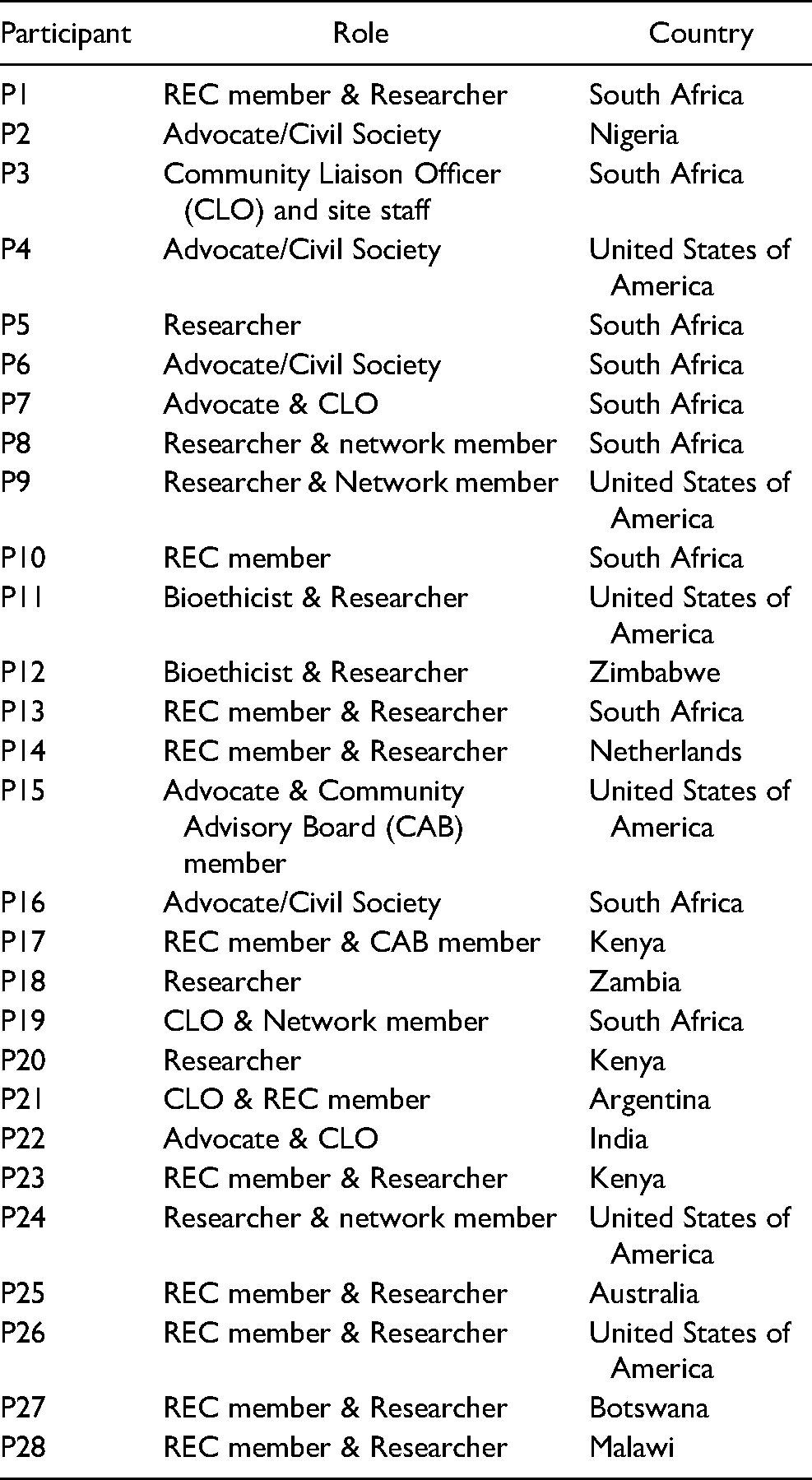
Between April 2019 and January 2021, 28 interviews were conducted with experts (17 women and 11 men) from 12 countries (See Table 1). The interviewees were from various stakeholder groups. Interviewees were drawn from HIV prevention trial researchers, network representatives, Community Liaison Officers (CLO), CAB members, RECs and advocates. Researchers (n = 16) were persons with experience in overall trial leadership, study coordination, and implementation of clinical trials. Some had experience in development of protocols and submission for ethics review, liaison with CABs, and even implementation of some engagement activities. Experiences were focussed on HIV prevention trials yet many had worked in other disease areas. CLOs (n = 4) worked at clinical trial sites and were responsible for implementing community engagement activities locally, such as capacity building and educational initiatives. CAB members (n = 2) had experience representing local community stakeholders in a structured advisory forum at sites, and in the review of protocols or support documents to ensure they addressed community needs. REC members/Bioethicists (n = 12) undertook various responsibilities—such as chairing, co-chairing of RECs or being members who reviewed protocols. Some had experience conducting site reviews. Many had conducted some research themselves, but not necessarily prevention trials. Several had acted as advisors to researchers, networks, taught bioethics in some form, or developed ethics training materials. Some identified as bioethics researchers involved in empirical ethics and/ or had contributed to research ethics guidance. Advocates (n = 7) were involved in a variety of roles and functions at national and international levels, including advocacy for improved engagement by researchers and networks, capacity building of community stakeholders, advocacy for access to proven prevention products by host governments and for policy changes that addressed inequitable access. Some interviewees belonged to more than one stakeholder group. e.g. researcher and REC member.
Interviewees.
The interviews were guided by a semi structured interview schedule which included the following: interviewee role and experience regarding engagement, ethics review or both; perceived complexities and successes in engagement; perceived complexities and successes in ethics review; perceived complexities and opportunities regarding ethics review of engagement; and additional insights. See Appendix 1 (supplemental material) for more detail. All interviews (barring one, who sent written responses) were individual and conducted telephonically or online using Zoom or Skype and took approximately 1 h. Interviews were recorded and transcribed verbatim. Interviewees were offered a modest payment to offset their time and inconvenience, approved by the REC.
The analysis of transcripts was informed largely by Thematic Analysis (Braun & Clarke, 2012). Coding used a deductive and inductive approach, where some codes emerged from the literature and other codes from the data (Sandelowski, 2010). Text was coded using NVIVO software by two independent coders and coding differences were resolved by “reconciliation discussions” (Boyatzis, 1998, p. 152). Feedback was given to interviewees after the analysis for the purpose of results dissemination, and we engaged our most affected stakeholders about findings to enable them to refine their practices, in order to enhance social value.
Results
Most interviewees perceived that stakeholder engagement was rooted in and could achieve many ethics and scientific goals. These included strengthened protections for participants, for community stakeholders, and for future beneficiaries by impacting the rigor of research. A detailed analysis of this issue is the subject of another manuscript.
Many interviewees described engagement and review successes and positive experiences. “I’ve been kind of involved with the whole process, but I would say that the development of the good participatory practice guidelines was a major milestone. I think there are a lot of … within research, broadly, stepping outside of clinical trials, stepping outside of HIV, within research, very broadly, there's a lot of good work, and guidance out there” (P9, Researcher/REC, U.S.A.).
“the Ugandan ethics committee incorporated the GPP guidelines into the ethics review and they have a very robust national CAB, so it's been mainly through the GPP and various other engagements at that level.” (P4, Advocate, U.S.A.).
For both processes of engagement and ethics review, interviewees described grappling with 3 major thematic issues. Firstly, tokenistic engagement and ethics review; secondly, potentially harmful engagement and ethics review (which we have termed “toxic”); and lastly, how to adequately tailor the intensity of engagement and ethics review to the study at hand.
Theme 1—Tokenism
Theme 1.1.—Grappling with Token Engagement
Almost all interviewees recognised that a key challenge in engagement for clinical trials is “tokenism”—engagement as a “checklist” (P23, Researcher/REC, Kenya). One interviewee noted, “… sometimes I look at people nowadays, they use this good participatory practice, and it's kind of like a tick-box” (P8, Researcher/Network, S.A.). Another stated, “It just comes across as very piecemeal (…) It's almost as if stakeholder engagement is the annoying ‘have-to-do’” (P6, Advocate, S.A.). In some ways stakeholder engagement sadly boils down to making sure […] you know, I have checked all the checkboxes, […] and defeats the ethics or the principles of stakeholder engagement, or the vision with which you wish to engage the stakeholders. (P22, Advocate/CLO, India).
Interviewees characterized token engagement in various ways, firstly, when engagement is “just towards ensuring […] participant recruitment and ensuring participant retention.” (P2, Advocate, Nigeria). Here, engagement is understood as mainly supporting the scientific goals of data collection: “one example of tokenised stakeholder engagement, […] you’re just doing it as an exercise to get the required amount of participants, but without really doing it in the proper way … (P12, Bioethicist/Researcher, Zimbabwe).
Tokenism was also perceived when engagement was not conducted early in the research process, “community voices were not included early on, right […] it felt like we were ticking boxes, you know” (P16, Advocate, S.A.), or sustained across the trial—“Parachute research” (P23, Researcher/REC, Kenya), or “like a speed dating thing, here today, gone tomorrow.” (P8, Researcher/Network, S.A.).
Engagement was criticized for being token by interviewees when it narrowly focused on one set of stakeholders, namely gatekeepers, for the sake of accessing potential participants, as opposed to engagement that is meaningfully broad and inclusive: “(…) in the absence of partnership, which is what many kinds of research do, is that you come to the field via community entry basically to kind of get permission to be able to go there. That's a very limited form of engagement (…) and I think it's really sad” (P2, Advocate, Nigeria).
Several interviewees were concerned that engagement is overly focused on CABs as “the default position” (P13, REC/Researcher, SA)—where engagement becomes CAB-centric. Other concerns with CABs included failure to address CAB concerns, their representativeness and the capacity and motivation of CAB members—“energy just kind of phases out” (P16, Advocate, S.A.). It was noted that CABs may also lack independence and become the “promotional cheer-leading category” (P15, Advocate/CAB, U.S.A.). (…) they end up really not providing authentic true input, because—I don't know—either they become brainwashed by the sites, or they think if they say something against what the site wants to do, then it's going to be problematic, they’re going to be chased away. (P16, Advocate, S.A.).
The issue of gender inclusivity was of particular concern for several interviewees—“stakeholder engagement needs to involve the voices of women and trans-persons, and that's not always been the case” (P15, Advocate/CAB, U.S.A.).
Token engagement was implicated when staff and practices become “stale” over time, when “people become entrenched (…) and they stop thinking critically (P15, Advocate/CAB, U.S.A.) and where engagement does not “make adjustments” (P17, REC/CAB, Kenya) to the changing context: “When researchers set up their operation, they create an engagement plan and that engagement plan stays in effect for the next 20 years. There is very little review, like has the community changed?. (P1, REC/Researcher, S.A.).
Tokenism was also recognized when stakeholders are inadequately consulted about their inputs—“fundamental changes to the initial design were made without essentially consulting us” (P6, Advocate, S.A.).
Also, where inputs are inadequately addressed or taken into account: “You don't really take into account the views of your stakeholders, you don't take into account any concerns, you just convene, and you tick a box to say, yes, we’ve convened” (P19, CLO/Network, S.A.).
“I’ll call it simplistic—for lack of a better word—ways of bringing people to the table and sort of expecting them to agree, and rubber stamp, and accept, whatever is proposed as a way forward” (P20, Researcher, Kenya).
And they will tick the box to say yes that engagement has been done. But have we addressed the issues that came out from those meetings? (P28, REC/Researcher, Malawi).
Token engagement was also perceived when the socio-economic, political, racial and cultural context are ignored. “You don't get to do ethical research in one of the most unequal societies in the world (…) How do you go ahead and conduct your research in a context like that without at least attempting to address, in a meaningful way, some of these socioeconomic issues?” (P6, Advocate, S.A.).
“Science does not think like mothers, fathers or grandparents. Nor does it think about shame, stigma and discrimination. I would answer your question as follows: the day I see small, everyday goals in a protocol, which affect ordinary people, I will be convinced that the community has had its say” (P21, CLO/REC, Argentina).
Interviewees expressed concern about engagement mechanisms that do not address the potential for bias and loss of independence of stakeholders, for example where stakeholders are on the “payroll” (p6, Advocate, S.A) because of the potential pressure to make inputs that are agreeable to researchers. CABs and community stakeholders who were also flown in for the meeting, and not a single one, and of course, I’m not saying everyone needs to agree with our stuff. But not a single one of them stood up […] For me that was just clear, […] my perception that if you’re receiving money from a trial, I can't regard you as independent. (P6, Advocate, S.A.).
Token engagement was implicated when engagement is poorly resourced and not budgeted for—“the funders don't want the luxury model, they want the bus” (P9, Researcher/Network, U.S.A.). Also in not involving community staff in budgeting—“community engagement, managers and officers, don't even have a voice on the management of their community engagement budgets.” (P16, Advocate, S.A.).
Token engagement was characterized further through what many interviewees considered a lack of monitoring and evaluation of stakeholder engagement activities, when “no one seems to care about the processes and how they’re done” (P16, Advocate, S.A.). Lastly, interviewees implicated tokenism when they described that there seems to be a “gap between what is aspirational, and what is really happening on the ground” (P13, REC/Researcher, S.A.) where despite the ethics guidance, engagement activities are not adequately implemented or assessed in the field.
Theme 1.2.—Grappling with Token Ethics Review of Engagement
In terms of ethics review of engagement, some interviewees noted that this can have a “tick-the-box” approach (P8, Researcher/Network, S.A.) and interviewees reported wanting ethics review of engagement to be more than a “window dressing” (P14, Researcher/REC, Netherlands) and more than just a “form filling exercise” (P23, Researcher/REC, Kenya).
Interviewees noted that engagement is often an unprioritized issue in the review process—“pretty superficial, to-date” (P15, Advocate/CAB, U.S.A.) and “… it's more that it's being mentioned, rather than providing a plan for review. I have not been asked to do that [by the IRB]” (P9, Researcher/Network, U.S.A.). Some claimed that RECs do not ask questions about engagement specifically—“community stakeholder engagement seems to be a neglected part of the ethics review process.” (P10, REC, S.A.).
Also, interviewees reported that both parties in the review process do not have clarity or consensus of what constitutes good or “appropriate” engagement for different studies—no “explicit criteria” or “no established indicators” (P10, REC, S.A.), no “well known metrics” (P12, Bioethicist/Researcher, Zimbabwe) or no “great metrics” (P26, Researchers/ REC, USA). This makes it difficult to know what to “look for” when reviewing various studies. “So if there isn't adequate training to know, what are you even looking for, I mean, just check the box, there's a title there, there's a subheading on stakeholder engagement or community engagement or community participation, and move on swiftly” (P20, Researcher, Kenya).
Some interviewees viewed REC members as removed from, not “conscientised” about and lacking first-hand experience of community, and less able to “pick up” on issues regarding communities: “It is very interesting because it is an academic exercise that is done by people that you can argue have never set their foot in the communities. In fact they are people who are socially removed from what communities are about” (P7, Advocate/CLO, S.A.).
Several interviewees raised concerns that “community” is not adequately represented on the REC, or questioned their power to voice opinions, e.g.: “What I’ve seen, is it's a lot of very powerful personalities included on the ethics review committee, and so I’m wondering what kind of work is done to potential [lay/community]members to prepare them. Almost to, if not to articulate their issues, to ensure and track those issues” (P6, Advocate, S.A.).
Theme 2—Toxicity
Theme 2.1—Grappling with “Toxic” Engagement
Some interviewees raised concerns about engagement practices having inadvertent negative or harmful consequences (which we have termed “toxic”) for various groups, namely for participants, for engaged parties and for the scientific study.
Engagement was seen as harmful when it inadvertently puts pressure on potential participants to take part in research: “For example, chiefs and elders take it upon themselves to kind of—almost persuade community members to join studies. “ (P23, Researcher/REC, Kenya).
It was noted that engagement may sometimes increase stigma for an engaged person from a marginalized group, e.g. “If you had a general Community Advisory Board, and you said “who's your MSM [men who have sex with men] representative?” that could place that individual at quite significant risk.” (P13, REC/Researcher, S.A.).
Another challenge was engagement that inadvertently reinforces gender inequalities through inadequate attention to gender disparity or by not challenging such disparities: “… there is a huge gender divide and in many cases it is the men who are gatekeepers […] the men to have access to any sort of telephone. If they [women] want to scream, or if they want to talk to someone they need to, the men in the house have that control” (P22, Advocate/CLO, India).
“… you can be gender unaware—which is what I think most people are—you can walk in and see inequalities, whatever, and then you can exploit it to your benefit. You can also accommodate it, it's like okay, I don't agree with this, but have to get the work done” (P9, Researcher/Network, U.S.A.).
One interviewee gave an example of engagement materials (videos developed for informing stakeholders about HIV prevention research) that may have unthinkingly reinforced negative stereotypes of community stakeholders: “So, the first video opens with images of young coloured folk, shirtless, smoking […] and then it went to the usual poverty porn, where you had a kid sitting on a bucket in Khayelitsha next to sewage (…) it went on and on and on” (P6, Advocate, S.A.).
Engagement that perpetuated power inequalities between researchers and communities was viewed as problematic. One interviewee gave an example of where researchers are portrayed as “saviors” of those targeted communities: “That is a very critical issue about the privileged who come in and paint themselves as saviors, who want to do research on those who are less privileged” (P7, Advocate/CLO, S.A.).
Some interviewees highlighted that engagement may be harmful if community stakeholder representatives are not legitimate insofar as their true interest may not be to advance community concerns: “I suppose because we live in a context in which corruption is a daily experience, and there may be people with corrupt interests, who say, you’re going to deal with us, and they’re not necessarily legitimate” (P10, REC, S.A.).
“[…] you have to weigh whether these people will understand it, will be receptive of it (…) without just bombarding them with information because they might just leave[…] misunderstood a lot of things and then go out into the community and misinform the rest of the people.” (P3, CLO, S.A.).
Theme 2.2.—Grappling with “Toxic” Review of Engagement
A few interviewees were concerned that REC review of engagement may unintentionally have negative impacts.
A few interviewees suggested that RECs review of engagement might impact the quality of “I also think that people struggle with … if they put something about engagement activities into a protocol for IRB review, is that going to restrict what they can do, in terms of engagement? And so I think there may be some reluctance to get into detail” (P9, Researcher/Network, U.S.A.). “So I think that the best we can probably do, is to, hopefully, see that it's [engagement plans] in the protocol, and then to ask about it [engagement] on annual review, on annual progress reports, and say, tell us about how it [engagement] went, what were your successes? What did you struggle with?” (P13, REC/Researcher, S.A.). “when anything is a requirement, you run the risk of push-back and people behaving badly, you want to try […] to facilitate and improve; I think, […] that softer language, to facilitate, to encourage, to try and promote, is quite important with ethics. I think if you made it [stakeholder engagement] a dead requirement, then I can see that a lot of people would just either not do it, or would avoid the process of … as much as they could.” (P13, REC/Researcher, S.A.). it's difficult for IRBs sometimes to understand the fine line […] I know of one very specific example, there was a very tested campaign to promote HIV vaccines, that involved an African American individual, sort of in boxing pose with a person wearing a virus in place of a head, and our local IRB said that was not appropriate; and it had been tested, and shown to be acceptable and productive in the targeted community[…] So it could become nuanced and complex, for instance, if you’re asking ethics committees to review stakeholder engagement (P15, Advocate/CAB, U.S.A.).
Theme 3—Tailoring
Theme 3.1.—Grappling with Tailoring Level of Engagement
Interviewees perceived that not all studies require the same level, or intensity of engagement—“there are levels within community engagement or stakeholder engagement” (P22, Advocate/CLO, India). Various factors were suggested or implied as important when trying to tailor the intensity of engagement responses.
The level of engagement was perceived to depend on the level of study risks to participants, where it was recognized that different studies hold out the prospect of generating various levels of risk for participants: “It depends on the level of sensitivity of what you want to find out and the potential individual and social vulnerabilities that the investigation can generate. If I want to find out the exact number of supporters of a football club, I can do a survey on Facebook. If I want to know the psychological consequences on women who have been raped or sexually abused within a 5-year period after the rape, I will bring up the vulnerabilities in an extreme way…” (P21, CLO/REC, Argentina).
“engagement is conducted as depending […] on the relevant stigma associated with the study” (P19, CLO/Network, S.A.).
Linked to the level of risk was the study type, including whether the study was interventional versus non-interventional. Here a few interviewees noted that the level of engagement appeared to differ between clinical trials and non-interventional studies, where observational studies that do not involve an investigational intervention with uncertain risks are generally associated with less engagement: “I mean, you also have to distinguish between clinical trials and non-interventional research, so I think in most clinical trials, nowadays, it [stakeholder engagement] does get a mention, it is acknowledged. There's probably room for it to be fleshed out or detailed […] I think for studies that are non-interventional, just observational studies, or epidemiological studies […] I also think that's defensible, because the risk for that community is minimal.” (P10, REC, S.A.).
Linked to the level of risk was the level of vulnerability of the study population—that is the level of susceptibility to harm of specific populations and subpopulations—which was viewed as relevant to the level of engagement. “I think the populations you’re working with become really important[…] if you are enrolling people who […] you have a lot of power over, and they are disempowered, or impoverished, or vulnerable, in so many potential ways, that the potential for exploitation, to serve the researchers’ goals, is just so much bigger, in that regard, and the potential for harm is so much greater. So yes, I think you’d absolutely need a much more thoughtful, and accountable approach, there.” (P9, Researcher/Network, U.S.A.).
Possibly also linked to the level of risk was the novelty or innovativeness of the trial design which was perceived by a few as relevant to the level of engagement. Innovativeness implies originality and freshness of approach which may signify a level of uncertainty regarding potential harms—although this deserves more exploration: “I think there's a reasonable argument, that if a study protocol is not particularly innovative, that it is of a design and in a population, another product or purpose, that has been done repeatedly in the past, that the intensity of the stakeholder engagement is not as high … the intensity of the stakeholder engagement that is needed, is not as high” (P15, Advocate/CAB, U.S.A.).
Also possibly linked to risk, a few interviewees saw the disease under investigation as impacting engagement levels. One interviewee recognized that engagement for HIV trials has been particularly intense given the context of human and civil rights accompanying HIV, which is a highly stigmatized condition.
Some interviewees perceived that the level of engagement would depend on the phase of the trial where the size, and cross-setting scope seemed important. While different phases may enrol participants at different levels of risk of acquiring HIV, risk per se did not seem directly relevant to these interviewees: “I think it [stakeholder engagement] looks very different if it's a phase one safety study, versus a phase three multinational, multi-continent, prevention trial.” (P15, Advocate/CAB, U.S.A.).
A few interviewees suggested that a factor affecting engagement levels was study duration, although the reasons why longer studies were perceived to require more engagement was not made explicit: I do think that there has to be a sort of a sliding scale that the intensity of community engagement has to match […] the duration of the studies (P10, REC, S.A.).
One interviewee expressed that study funding, including whether the study is investigator led versus “externally funded”, could be a pragmatic factor in determining the level of engagement that could be supported in a study, even while this does not address the level of engagement that should be undertaken: “It's really easy, maybe, for a NIH funded study to, perhaps, direct some funding towards stakeholder engagement. But then do you require the same standards from an investigator-led study, where it's sort of self-initiated research?” (P13, REC/Researcher, S.A.).
Theme 3.2.—Grappling with Tailoring Level of Review of Engagement
Some interviewees recognized that because research studies may need different levels of engagement this makes it difficult to identify in the review process what sound engagement is for various studies—i.e. that review of engagement across various studies cannot be applied “in a clear-cut way” (P15, Advocate/CAB, U.S.A.). “… I think it's hard for the RECs to judge the best approaches to engaging with communities for different types of studies (…) (P23, Researcher/REC, Kenya).
A few interviewees perceived that RECs may benefit from guidelines to assist reviewers to recognize the right level of engagement for the study at hand, to inform their decisions about the acceptability of the stated approach: “… maybe we need a framework, a guidance framework, specifically which can guide the ethics committee. What should they be looking for when they have a high risk study? What should they be looking for when they have a minimal risk study? (…) how they should go about community engagement.” (P27, REC/Researcher, Botswana). I guess it [review or engagement] might be to do with the potential for the size of a study. How many people it involves, who it involves. Whether it goes out of a small bubble of sub community as it were or whether it's quite contained. How harmful or potentially harmful or risky the interventions are that are involved. The specific topic and how much there's a potential for stigma or anxiety around that particular topic. (P23, Researcher/REC, Kenya).
Even in adolescents, when you work with a sensitive topic, the REC should check your engagement plan and how they will address certain risks (P1, REC/Researcher, S.A.).
Suggested Solutions
Interviewees also suggested several solutions that could address some of the perceived complexities.
For tokenism, RECs could encourage engagement that is broad, inclusive and beyond requiring gatekeeper permission, e.g. assessing if research has “tried to have representation from various groups, not just the gatekeepers but the quiet voices” (P1, REC/Researcher, S.A.). Furthermore, RECs could encourage early and sustained engagement, “hopefully, it starts […] before REC approval; and hopefully stakeholders are engaged in a very early part of that process […] And after REC approvals, stakeholder engagement is still needed” (P14, Researcher/REC, Netherlands). Interviewees also suggested that RECs could “evaluate if there is a plan” (P21, CLO/REC, Argentina), however, “leaving room for flexibility” (P3, CLO, S.A.). Some interviewees suggested that a description of the stakeholder engagement plan can be prompted in the REC application, “I think you could build a reasonably practical template for that, so it would describe who, what, where and how” (P15, Advocate/CAB, U.S.A.) and RECs could provide guidance for doing appropriate engagement: “most RECs, on their websites, will actually provide researchers with a sample information sheet and consent form […] And I think there's lots of room for RECs to start having a similar page, […] how to do stakeholder engagement”(P10, REC, S.A.).
To support engagement that is tailored in intensity, a few interviewees felt that RECs may need “some sort of understanding of what might be appropriate for different types of studies” (P13, REC/Researcher, S.A.); because engagement becomes “nuanced and complex” in specific communities (P15, Advocate/CAB, U.S.).
Discussion
Tokenism
Our findings suggest much concern with potentially token engagement in trials, consistent with the views of many commentators—that engagement can be “reduced to window dressing”, having an “outlier” status (MacQueen & Auerbach, 2018, p. 1), or be a tokenistic add-on (Simwinga et al., 2018). Our findings show how tokenism is characterized which resonates with some previous observations, that community stakeholders and gatekeepers are prioritized (Ahern, 2014; MacQueen & Auerbach, 2018); that there is over-reliance on the CAB model (Tindana et al., 2015); that there are questions about CAB representativeness (Campbell et al., 2015; Kruger et al., 2014; Simwinga et al., 2018), and independence (Campbell et al., 2015; Kruger et al., 2014); that engagement is prioritized at the early stages of trials e.g. recruitment (Adhikari et al., 2020; Day et al., 2018; MacQueen & Auerbach, 2018); that stakeholder voices are ineffectual (Simwinga et al., 2018; Smith & Dransfield, 2019; Vicari et al., 2019); that engagement is inadequately funded (King et al., 2014; Newman et al., 2006) and poorly documented (MacQueen & Auerbach, 2018; MacQueen et al., 2015). We show that “stale” engagement is also perceived as problematic.
In terms of the ethics review of engagement, our findings indicate that engagement should be reviewed by RECs in a non-tokenistic manner by conscientized, empowered reviewers who have guidance to accomplish this across a diverse range of studies. Previous scholars have encouraged REC attention to community engagement (de Vries et al., 2015; Wilkinson et al., 2021). Also the need for community representatives to meaningfully contribute to ethics review has been underscored (Kruger et al., 2014). Klitzman (2015) identifies the need to have community representatives on the REC who have “shared membership in, as well as knowledge of a community” (p.328). Previous scholars have noted that there is little consensus regarding how to ethically assess stakeholder engagement (King et al., 2014; Vicari et al., 2019) while the increasing diversity of studies has been noted by Grady (2015, 2019) and Bain et al. (2018).
Toxicity
Our findings suggest that the negative consequences of engagement (even if unintentional) are important to recognize and avoid. Other scholars have recognized that engagement might make people feel obligated to take part (Molyneux et al., 2016) or that engagement might inadvertently exacerbate “problematic social relations” (Dempsey, 2010, p. 359; Molyneux et al., 2016; Rubincam et al., 2018); or that engagement might attract attention that increases stigma for some study populations (e.g. MSM, sex workers, transpersons and injection drug users (IDUs)) (Molyneux et al., 2016; Vicari et al., 2019).
Our findings indicate that it is important for research stakeholders to avoid “toxicity” in the review process. e.g. undermining post-approval engagement in the field by imposing inflexible engagement at approval, or by increasing the resistance of researchers to engagement, or by undermining the prior inputs of community stakeholders. There is little literature on this issue precisely but several commentators have bemoaned RECs being needlessly stringent (Ryan, 2016) or inflexible (Bain et al., 2018). Previous commentators have argued that researchers should try to forge a collaborative relationship with RECs (Wassenaar & Slack, 2016) and guidance encourages the same (UNAIDS & AVAC, 2011).
Tailoring
Our interviewees recognize that the level of engagement should not necessarily be the same across various studies. This issue has been recognized by previous scholars but they note this is an unsettled issue—posing the question “how much (…) stakeholder engagement is necessary?” (Lavery, 2018, p. 555). Others have noted that certain engagement activities may not be appropriate for all research and “issues of scale” have yet to be worked out (King et al., 2014, p. 4). In terms of factors impacting the level of engagement, one study observed that engagement may be “arguably intensified” for studies involving highly stigmatized and sometimes illegal behavior (e.g. studies with MSM) (Molyneux et al., 2016, p. 2). Our findings go further to illustrate some of the factors perceived as important by stakeholders in the field. Our findings also suggest that the intensity with which engagement is REC-reviewed should likely vary, however, very few scholars have commented on this issue specifically.
Best Practices
Addressing Tokenism
RECs should ask applicants insightful questions to prompt applicants to implement meaningful engagement i.e. inclusive, sustained, dynamic and well-resourced engagement. Their Application Forms should also be amended accordingly where needed (Wilkinson et al., 2021). Useful questions might include: “How have you engaged all relevant stakeholders for your study?”; “How will engagement encompass the life-span of the study?” and “How will engagement practices respond to evolving developments?”.
Addressing Toxicity
RECs should consider asking applicants careful questions such as “Could your engagement activities have any inadvertent harms?”. Researchers should consider which stakeholders might be at increased risk of harm if engaged, and consult community experts regarding mitigation. Also, RECs should adopt a “reflexive” approach versus a “compliance” approach (Jennings, 2010) where RECs encourage applicants to surface ethical considerations rather than comply with a set of rules.
Addressing Tailoring
RECs and researchers should assess whether engagement is “dosed” appropriately depending on risks and affiliated concerns e.g. the sensitivity of the topic, the vulnerability of the study population, the innovativeness of the design, and other factors. Efforts should be made to develop a body of practice about how engagement is, and should be, scaled across studies depending on relevant factors.
Research Agenda
This study suggests that while there is a clearer sense of what constitutes “token” and “toxic” engagement, there is less clarity regarding what constitutes appropriately “tailored” engagement for various studies, in part because the factors that may trigger higher levels of engagement are still being articulated. Further research should expand on the initial factors raised by interviewees, and explore these across various cases (e.g. with varying levels of risk of study procedures, of vulnerability of participants and other linked factors). Research exploring this issue could inform ethics guidance to help researchers and RECs recognize acceptable engagement across the full range of studies.
Educational Implications
Ethics guidelines should be amended to better address these empirically-identified complexities. Most guidelines appear to counter “token” engagement very well, however, they do less to spell out how engagement should be “tailored” differently depending on levels of risk and other relevant factors (CIOMS, 2016; UNAIDS & AVAC, 2011). Only the HPTN (Brown et al., 2020) guidelines begin to address this issue—asserting that where factors like risk are present, then engagement should be more intensive. Also, it may be beneficial to develop a resource to help RECs identify sound (non-toxic, non-token and tailored) engagement, given the particular study under review. It is hoped that these findings will help to inform the development of such a resource. Finally, an online course aimed at Strengthening Engagement Through Ethics Review (SETER) (https://engage.avac.org/courses/strengthening-stakeholder-engagement-through-ethics-review-hiv-prevention-trials/) may help empower community/lay members on RECs to contribute to ethics review including the critical issue of engagement, and REC chairs should support this goal.
Limitations
Our sample comprises many South Africans (n = 10), however, South Africa is a major hub for clinical trials of all HIV prevention products. We did not sample any community stakeholders directly however, we hope the community perspective was well represented by advocates and CAB members. Generalizability is normally not a priority with qualitative research as the aim is to capture experience and perspective, however, findings did reach some level of saturation and we triangulated our findings by having a sample of diverse nationalities and roles. We hope the insights derived from this context might be useful in contexts with similarities (cf. Yardley, 2008).
Conclusions
Interviewees all described the central importance of engagement in achieving ethical and scientific goals, and endorsed its overall value.
Interviewees articulated several characteristics of “token” engagement, which suggests that token engagement is becoming more recognizable by stakeholders in the field. Also, interviewees cautioned against engagement having potentially negative consequences, which suggests careful consideration of this issue is important. Finally, interviewees wrestled with how to calibrate the level of engagement that is appropriate for various studies, identified several factors that might be relevant and recommended more guidance, which suggests that more careful conceptual and empirical work is required in this regard. RECs have a key role to play in supporting excellent engagement in the field but ethics review of engagement itself should also avoid tokenism, negative consequences and be tailored appropriately to the study at hand.
Supplemental Material
sj-docx-1-jre-10.1177_15562646221078415 - Supplemental material for “It’s Almost as if Stakeholder Engagement is the Annoying ‘Have-to-do'…”: Can Ethics Review Help Address the “3 Ts” of Tokenism, Toxicity, and Tailoring in Stakeholder Engagement?
Supplemental material, sj-docx-1-jre-10.1177_15562646221078415 for “It’s Almost as if Stakeholder Engagement is the Annoying ‘Have-to-do'…”: Can Ethics Review Help Address the “3 Ts” of Tokenism, Toxicity, and Tailoring in Stakeholder Engagement? by Abigail Wilkinson, Catherine Slack, Siyabonga Thabethe and Jessica Salzwedel in Journal of Empirical Research on Human Research Ethics
Footnotes
Acknowledgments
We would like to extend our sincere thanks to all the interview participants for providing their invaluable insights on this topic. We would also like to thank colleagues at AVAC and USAID for their helpful comments and advice.
Declaration of Conflicting Interests
The author(s) declared the following potential conflicts of interest with respect to the research, authorship, and/or publication of this article: Catherine Slack is a member of a DSMB that has oversight of several HIV vaccine trials.
Funding
The author(s) disclosed receipt of the following financial support for the research, authorship, and/or publication of this article: This research was funded by the US President's Emergency Plan for AIDS Relief (PEPFAR) and the US Agency for International Development (USAID). * Cooperative Agreement No. AID-OAA-A-16-00031 - Coalition to Accelerate and Support Prevention Research (CASPR).
Ethics Approval
UKZN BREC (BE38/19).

Supplemental Material
Supplemental material for this article is available online.
Author Biographies
References
Supplementary Material
Please find the following supplemental material available below.
For Open Access articles published under a Creative Commons License, all supplemental material carries the same license as the article it is associated with.
For non-Open Access articles published, all supplemental material carries a non-exclusive license, and permission requests for re-use of supplemental material or any part of supplemental material shall be sent directly to the copyright owner as specified in the copyright notice associated with the article.
