



Abstract
Player experiences of minimalist video games are not well documented. This article addresses this gap by exploring players’ experiences of the minimalist horror video game Iron Lung. This game is identified as employing unique methods of gameplay toward affecting players. A case study design was framed using Caroux et al.’s player–video game interactions and Nealen et al.’s minimalist video game design characteristics and observed through affect theory to consider how bodies (video games) affect other bodies (players). A selection of player reviews was thematically analyzed, and three video streams were observed and analyzed. Results demonstrate that most players were affected as the developer intended using obfuscation, deliberately clumsy mechanics, and unique gameplay pacing. This article contributes to the field of minimalist design by filling the gap of player experiences of minimalist game design. This is useful to video game designers, minimalist designers, interactive experience designers, scenographers, or environmental design specialists.
Introduction: Contribution of Minimalist Game Design
Triple AAA developers—such as EA Games, Ubisoft, and Activision Blizzard—tend to create games with high-quality cinematics, expansive gameplay features, reward systems, and multiplayer options. These inclusions do not always improve the experience but are nevertheless generally regarded as markers of quality. Nealen et al. (2011, p. 44) refer to this approach as “modern-day techno-fetishism.” Minimalist 1 video games oppose this techno-fetishist approach, instead exploring and experimenting with new types of game manifestations through deliberate constraints on content and design (Nealen et al., 2011, p. 38). Today the indie game developer movement is a major force in minimalist design philosophy (Lankes, 2020, p. 451), but despite the academic attention on indie developers, minimalist games and minimalist game design remain understudied—and especially with respect to players’ experiences thereof.
The aim of this article is to contribute to this gap by exploring players’ experience of a specific minimalist video game. This article argues that this approach can be highly effective due to its concise intention and imagination stimulation approach. Where the player's imagination is understood as the part of the mind that makes inferences of new experiences based on existing knowledge. Iron Lung (Szymanski, 2022a) is selected as a contemporary game that uses limited interactions and an obfuscated game environment to engage players. To achieve the aim, this article will consider related literature and then discuss the framework through the lens of affect theory used for analysis. This is then followed by description of the case study according to framework and a discussion of the results. To achieve the aim, this article will first determine whether the developer's intention of “horror based around building dread and paranoia” 2 was experienced by players. Secondly, how the developer achieved this through minimalist game design.
Literature on Minimalist Game Design Experiences
Styhre and Remneland-Wikhamn (2021, p. 481) describe indie games as the “creative and less commercial fringe of the video game industry … the avant-garde of video game development.” Indie developers can experiment with video games in ways that large-scale developers cannot. Although indie games are not necessarily minimalist games, the developers often employ minimalism to reduce aspects of their games to produce a functional product with their available resources. The indie scene has been highly influential as academic discourse demonstrates studies in design approaches (Wilson, 2005), differences between indie and mainstream approaches (Latorre, 2016), creative freedom versus financial viability (Styhre & Remneland-Wikhamn, 2019), and their entrepreneurial potential (Styhre, 2020). Minimalist horror games such as Slender: The Eight Pages (Parsec Production, 2012) and Five Nights at Freddy's (FNAF; Cawthon, 2014) were experimental indie games that achieved great success. Slender: The Eight Pages was followed by Slender: The Arrival (Blue Isle Studios, 2013) and a film adaptation of Slender Man (White, 2018). FNAF was developed into nine sequels and 11 spin-off games as well as a film adaptation Five Nights at Freddy's (Tammi, 2023).
Concerning minimalism in video games, Nealen et al. (2011) developed a seminal minimalist game design methodology. According to Nealen et al. (2011, p. 38) minimalist games are characterized by “small rulesets, narrow decision spaces, and abstract audio-visual representations,” yet do not compromise on depth of play or possibility of space. Minimalist games are not limited to a game genre but are rather designed around specific elements such as interactions, visuals, audio, game mechanics, or a combination of the above (Lankes, 2020, p. 452). Nealen et al. (2011, p. 39) state that minimalist games have a theme rather than narrative and that players’ experience “emerges from the theme, aesthetics, rules, and mechanics.” An explicit theme can have deliberate omission on the part of the developer because only the elements that are considered necessary to communicate the developer's idea are included in the game design. Consequently, the developers let players “fill in the rest of the scenario with their imagination, creating a diegetically detailed and rich play environment” (Nealen et al., 2011, p. 40). Additionally, the visuals are often abstracted “requiring players to fill in the visual and narrative gaps” (Lankes, 2020, p. 452).
Another feature of minimalist games is the minimal controls where “small player effort can lead to large changes in the game state” (Nealen et al., 2011, p. 39), or have simplified controls that result in more complex behaviors (Lanzi et al., 2022, p. 2). With regard to the notion of depth of play, Nealen et al. (2011, p. 38) observe that this is achieved through procedural methods, combinatorial complexity, probability, obfuscation, challenge, or a combination of any of the aforementioned. Considering player experience of minimalist game design, Juul (2021, p. 379) observes that in minimalist game design, the design is centred around concepts rather than realistic depictions. This approach considers how players will interact with the game and not just what will be represented visually. Because of this user-centred focus, players can accept stylized visual representations if they are consistently applied in the game world (Juul, 2021, pp. 378–379).
Nealen et al. (2011, p. 40) argue that placing constraints on the design space results in a more compelling product. For minimalist design purposes, focusing on how a player will interact with an object in a game is more beneficial than just including an object to fill up the space. Every element of the game contributes to the experience of players in a deliberate way (Nealen et al., 2011, p. 38). From a minimalist design perspective, there is value in communicating a clear concise message to the user to avoid information overload and providing simple but engaging gameplay.
Lanzi et al. (2022) experimented with professional game designers and master-level students in a video game design course on minimalist video game design. Although the experiment did not demonstrate any patterns in the submitted designs, the exercise demonstrated the value for game designers to experiment with minimalist design approaches. Nealen et al. and Lanzi et al.'s focus is on the broader application of minimalism in design and does not specifically explore player's responses.
Other research employed a narrower focus such as Lankes’ (2020, p. 450) study that explored the role of social gaze in minimalist games. The study concluded that social gaze assists in the interpretation of game objects as players “tended to see the abstract entities as characters instead of lifeless game objects.” This demonstrates players’ ability to engage with visually abstracted design elements. Juul (2021) discussed why players see pixels as objects rather than pictures in video games. They concluded that players identify objects not from a list of properties but rather from the implicit rules on the type of object and what players intend to do with the object. Additionally, the audio-visual aspects are fundamental, Juul (2021, p. 378) proposes that “to seem present in the same world, objects have to have similar audio-visual presentation.” Friedman (2015) conclude that visual design and game design combine their qualities to form a game and that attributes aesthetic value to gameplay. The above research focused on very specific aspects of minimalist video game and how these aspects affect player experience and interpretation.
With regard to player experience in video games, in general, research demonstrates that video games are complex networks that require conscious effort from the player to create meaning which is in turn determined by the developers (Seiwald, 2023). Enjoyment of the experience depends on the genre of the video game and the expectations of the player (Eshuis et al., 2023). Player imagination and interpretation are important factors in player agency within the diegesis (Cole & Gillies, 2019). Interpretive fictional agency games “gives the player a minimal narrative framework and encourages them to build their understanding” and the effort on the part of players leads to nuanced personal engagement and a “higher chance of significant emotional payback and a deeper emotional experience” (Cole & Gillies, 2019, p. 199). In the context of mainstream games, Straat and Verhagen (2018) illustrated that a high-budget game, supported by an extensive marketing campaign, captured players’ initial attention. However, interest waned over time, correlating with an increase in boredom among players.
Analyzing the experiences of players in the context of minimalist video games is a relatively underexplored area in the existing literature, despite the extensive research on indie games, minimalism in video games, and player experiences in various gaming contexts. In the absence of specific studies on the player experience of minimalist horror video games, such as Iron Lung, there is an evident gap in academic scrutiny. Iron Lung offers a unique method of gameplay and visual obfuscation that is novel to the horror video game genre. Player's experiences with minimalist games remain unexplored and this article attempts to fill this gap.
Affect Theory and a Framework for Video Game Player Experiences of Minimalist Design
Affect theory observes a body's capacity to affect and be affected by other bodies where bodies can be living, nonliving, or even abstract concepts. Ahmed (2010, pp. 29–30) describes affects as “sticky” because they “sustain or preserve the connection between ideas, values and objects.” Affect requires at least one body to be a living entity that can experience an encounter. Iron Lung approximates the experience of being confined and isolated in a small space with limited connection with the outside world (Szymanski, 2022b).
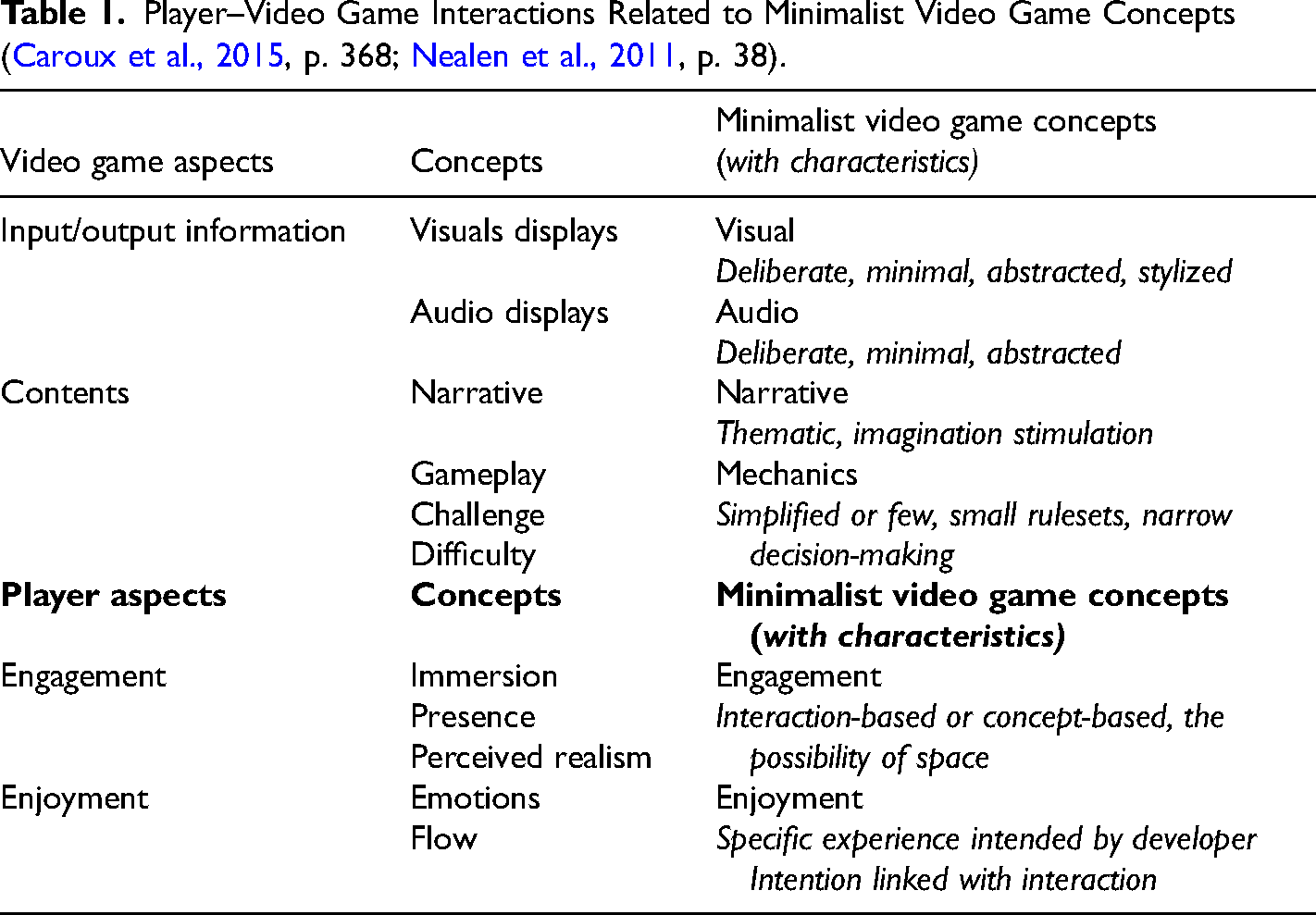
Eshuis et al. (2023, p. 209) state that players’ experience of a game depends on players’ individual qualities and the attributes of the game. The game attributes, in this article, are considered as the aspects that are used by the developer to affect the player. The aspects selected for this article derive from the characteristics of minimalist game design from Nealen et al. (2011, p. 38) applied to the player–video game interactions of Caroux et al. (2015, p. 368) (refer to Figure 1), as demonstrated by Table 1. The aspects of “ways of control” and “multiplayer” are omitted due to the minimal nature of Iron Lung. The game only features keyboard or controller methods of control and is a single-player game. The aspects included are as follows.
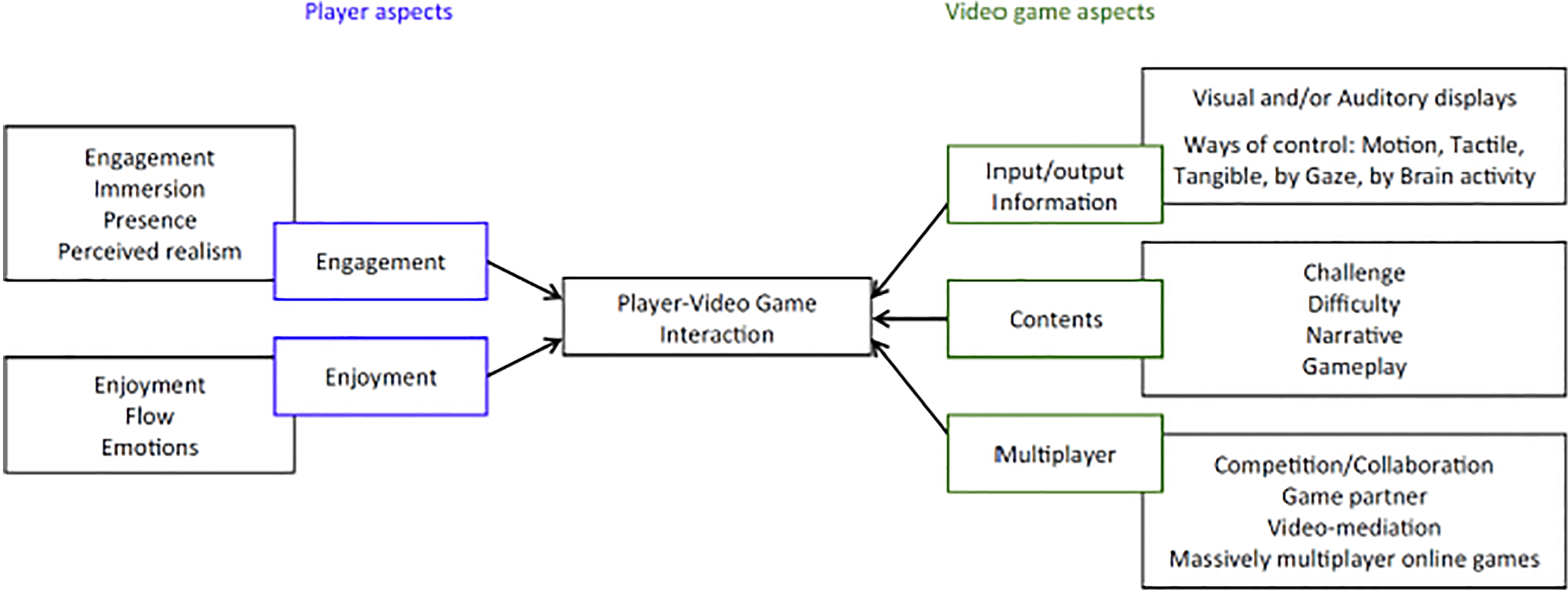
Player–video game interactions (Caroux et al., 2015, p. 368).
Player–Video Game Interactions Related to Minimalist Video Game Concepts (Caroux et al., 2015, p. 368; Nealen et al., 2011, p. 38).
Visual and Audio
Visual and audio relate to the input/output information of the game (Caroux et al., 2015, p. 370). This aspect encapsulates the visual or audio displays and the methods of control. The input information describes how players can interact with the game, while the output information describes the information that the game presents to players to interact with.
Narrative
Narrative is a component of video game content (Caroux et al., 2015, p. 372). Narrative considers the story that is being told by the game and how it is being told. Rouse (2009) observes that a vague narrative in the horror genre is more effective as this utilizes the power of players’ imagination. The excessive use of cutscenes, narration, and exposition breaks player immersion due to inhibiting flow during play.
Mechanics
The gameplay and challenge components of contents (Caroux et al., 2015, p. 372). Gameplay is the design choices that determine what players can do within the game also understood as physical rules of what has been programmed and how much of a challenge these present to players.
Engagement
The level of involvement of players with the game encapsulates immersion, presence, and world-building (Caroux et al., 2015, p. 368). Immersion describes the feeling of being part of the experience presented by the game. Presence describes the simultaneous perception of sitting in front of a device but being transported to another world in the game. Coppi et al. (2014, p. 2) observe that presence also includes components such as attention and a sense of control over the experience. With regard to horror game experiences, a state of vigilance keeps players prepared but in a state of suspense (Atkinson & Parsayi, 2019). Perceived realism describes the world-building and realism of the situations played out in the game about the context of the game. Griffin (2019, pp. 4–6) observes horror game developers employ limited player control, skewed player interpretation, surreal sound effects, and restrictive narrative to enhance player engagement.
Enjoyment
The level of pleasure and amount of positive player reactions during game play (Caroux et al., 2015, p. 369). This aspect further encapsulates a state of flow and the emotions players experience. Erlingsson (2021, p. 8) states that experienced players more easily achieve flow than inexperienced ones. Concerning horror video games, a positive experience would include feelings of anxiety, stress, or tension.
Methods and Case Study Description
This article aims to determine players’ experience of a minimalist video game with a deliberate intention on the part of the developer and to observe the design considerations used to achieve the intention. Iron Lung is selected as a contemporary case study due to its deliberate horror experience through minimalist game design. The case study method is used for the in-depth examination of a specific case in a particular context.
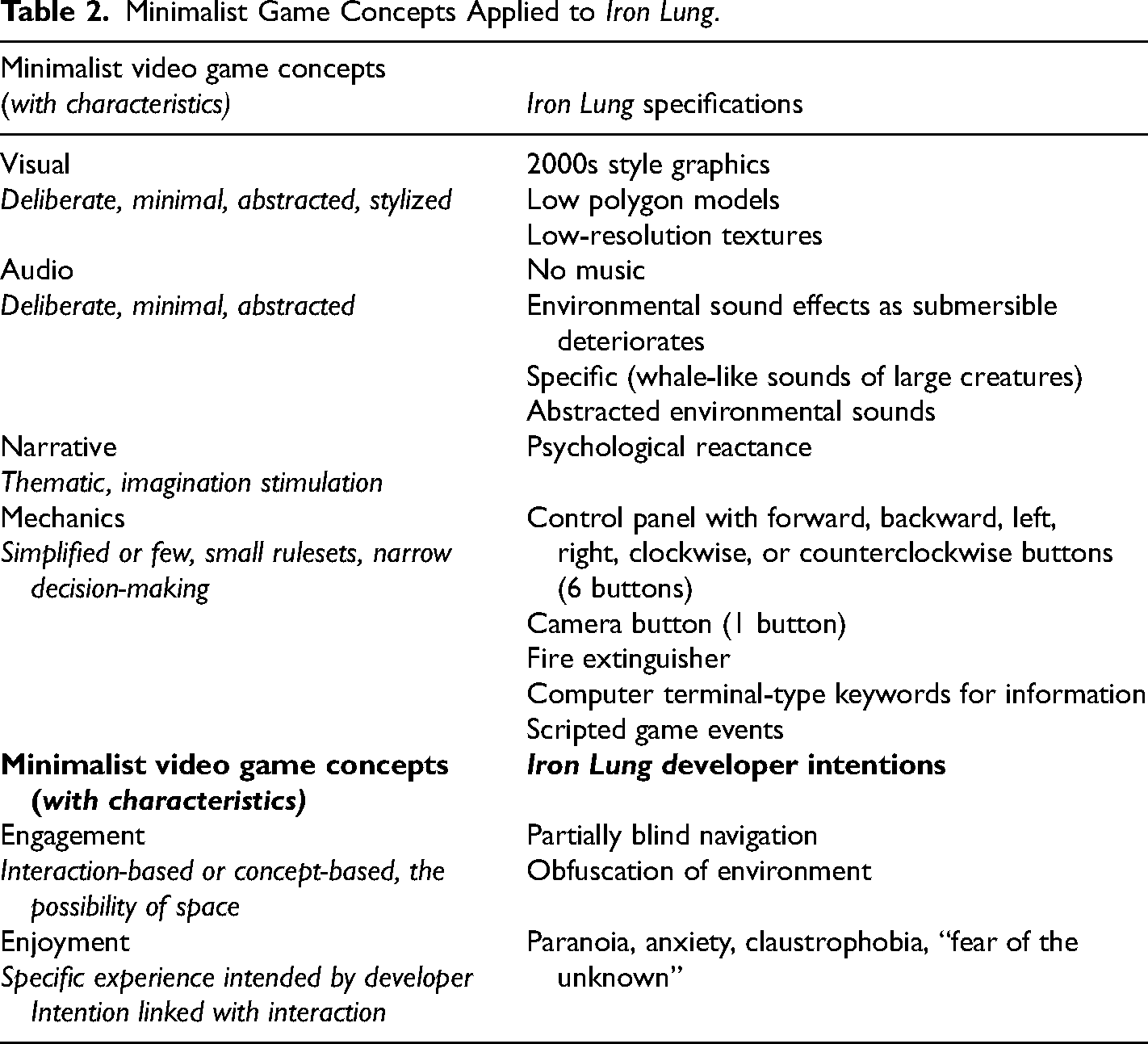
Secondary data were collected from public and anonymous Steam reviews of Iron Lung. The reviews were acquired using Steam's data analytics application programming interface. Sixty-four samples were selected for analysis, the selection was based on reviews that referred to the minimalist design of the game and was of sufficient length of more than 200 characters (excluding spaces). The reviews for the thematic analysis were coded R1–R64 to present reviewers 1–64. The themes used for the analysis were based on player–video game aspects related to minimalist game design as captured in Table 2.
Minimalist Game Concepts Applied to Iron Lung.
Additionally, streams by three horror video game streamers were purposefully selected using an observation checklist. Streamers were selected on the criteria of being experienced horror video game players, having a minimum of five years of experience creating content, and showing their faces throughout the stream. Markiplier (2023b) is a veteran streamer with over 35 million subscribers and has created more than 5,500 videos over 11 years. 8Bit-Ryan (2023a) has over 3 million subscribers and has created more than 2,400 videos over 8 years. Insym (2023) has over 700,000 subscribers and has created more than 2,300 videos over 5 years. Streams were observed on YouTube where streamers freely share their content. The observation checklist captured responses to the scripted events of the game. The streams of their first playthroughs of Iron Lung are observed (8-BitRyan, 2023b; Insym, 2022; Markiplier, 2022).
Case Study: Iron Lung
Iron Lung qualifies as a minimalist gaming experience, with players confined to a submarine, limiting their interaction to a constrained rule set and decision space. The external environment is glimpsed only through photos taken by an exterior camera, yet the game hints at a vast universe through contextual lore and atmospheric audio, employing obfuscation to convey depth by revealing little but implying much.
The game adopts PlayStation 1-style graphics, characterized by low-polygon models and low-resolution textures. The sound design is inspired by Doom 64 and executed by the developer (Szymanski, 2022b). User input is limited, with players navigating the submarine using a four-button control panel, accessing a satellite map for location information, and using a camera to capture points of interest (POIs).
Regarding narrative, Iron Lung is set in a postrapture era where humans explore moons covered in oceans of blood. Conceptually, Iron Lung draws parallels with the medical device of the same name, serving as a negative pressure ventilator, creating controlled environments for survival in extreme conditions. However, in the game, this connection is ironic, as player demise is virtually certain. The game demonstrates theme rather than narrative by approximating psychological reactance (Brehm, 1966). Reactance motivates individuals to act when their behavioral freedoms are reduced or threatened (Miron & Brehm, 2006, p. 1). The game's confined and isolated setting evokes a desire for greater freedom and control. Shen and Coles (2015, p. 225) observe that psychological reactance is activated when fear is aroused but inhibited when fear is aroused and then reduced.
The goal of the game is to take photos of the 10 POIs indicated on the map. Although the submarine is restricted to the underwater trenches there are unmapped sections that the player can explore. However, the game mechanics make exploration a challenge. Exploration is suggested rather than openly encouraged. This unique design results in the confined environment acting as an antagonist by impeding the player's ability to control and understand the game world (King & Krzywinska, 2003, p. 108). Although there is a fish that attacks and ultimately kills the player, the environment is more prevalent and constantly threatening throughout.
The player–character is controlled from the first-person perspective to enhance the feeling of psychological reactance. King and Krzywinska (2003, pp. 113, 115) observe that first-person perspective games allow for the greatest sense of presence or immersion and often require more immediate responses from the player. Furthermore, the game does not use a user interface to provide the player with information on the state of the submarine. Rather the player must move to the control panel or access the map. This enhances immersion as the player perceives the environment just like the player–character and does not have access to meta-information.
The game lacks a tutorial, challenging players initially, but as they engage with the controls, navigation becomes clearer. Events are scripted at specific locations on the map. This allows the developer to better control the cues designed to generate suspense (King & Krzywinska, 2003, p. 109). Damage to the submarine cannot be repaired, enhancing the sense of vulnerability intended for the player (Szymanski, 2022b).
The developer's intention is for players to experience psychological reactance within the game's confined space, limited control, and lack of knowledge about the outside world. The details of the developer's intent are captured in Table 2.
Results
Thematic Analysis
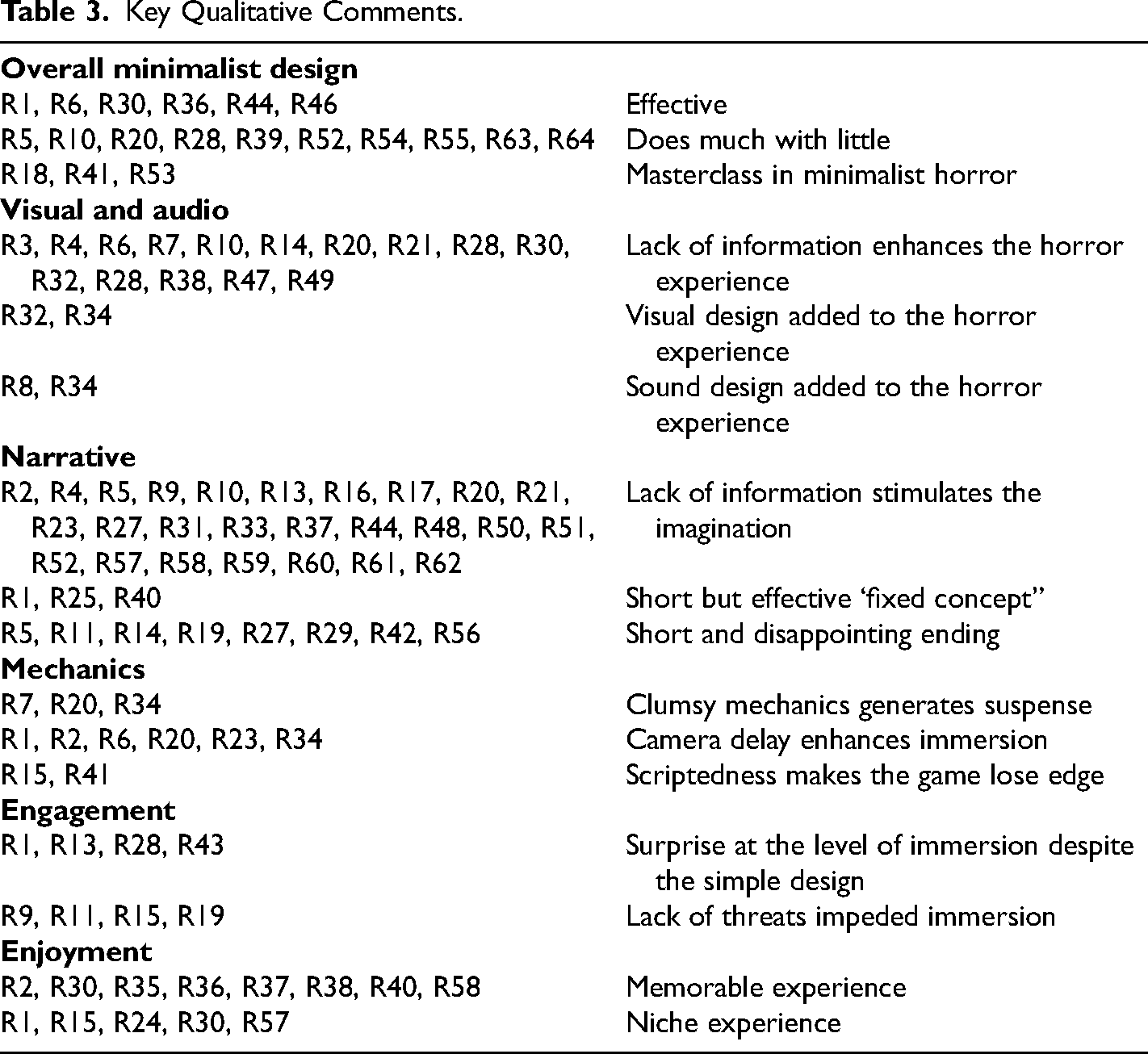
Most reviewers responded positively to the minimalist design of Iron Lung. Reviewers described the game as effective and exploiting its simple mechanics with deliberate design. Some described the game as a masterclass or a masterful example of minimalist horror. The following section discusses the reviewers’ experiences as demonstrated in Table 3, based on the framework. The blocked brackets indicate information included for clarity.
Key Qualitative Comments.
Visual and Audio Aspects
The reviewers’ experience of the visual and audio aspects demonstrates how the game utilizes the obfuscation technique and how it is interconnected with the engagement:
R3: [The game] has a unique approach to gameplay that completely robs you of any real visual engagement with the horror … make staring at a couple coordinates and maps far more compelling than you might expect.
The limited information affects how players make sense of the game. The reviews demonstrate this technique enhanced the horror experience. Reviewers felt that this limitation made the game more effective by creating feelings of helplessness and generating an atmosphere. The limited information forces players to make their assumptions about what is happening. The game provides visual and audio cues for stimulation and players’ imagination fills the gaps.
Narrative Aspects
Due to the thematic use of narrative reviewers did not reference the story but rather mentioned how the obfuscation technique stimulated their imagination:
R10: Most of the time you do not see anything that should alarm or outright frighten you, but through certain visual and audio cues the game guides your imagination and makes you fear the things you can't see. R13: [The game] uses your own imagination against you, as the horror of this game is very rarely actually visual.
Some reviews experienced the game as short but effective and that the game utilises a fixed concept that could not have been exploited further. While other reviewers were disappointed that the game was too short without a satisfying conclusion.
Mechanic Aspects
Reviewers experienced the game mechanics as effective in enhancing the overall horror experience. Most referred to the limitations as a technique used to cause tension, where players can either look at the map, pilot, or take photos. One reviewer discussed how the mechanics are used as a distraction technique:
R7: The part that awes me the most is that I knew [the jumpscare] was coming; the thing that scared me was so predictable, yet the game so beautifully manages to keep your mind off that. It keeps you doing myriad other things to make sure you don't brace for it.
Additionally, the delay effect employed to provide players with information was praised as effective. Some players observed how this affects the amount of control players have and how it keeps players on edge. The delay also allows for imagination stimulation leaving players to wonder about what is outside while waiting for the photo to develop:
R6: Slowly waiting till the image is taken and then processed onto the screen is extremely clever, you don't see what's there right now, you see what was there just a moment ago … but the developer knows that it works and uses it very very well.
Engagement Aspects
The use of the minimalist design was received well by players who were able to become immersed in the experience. Some reviewers indicated surprise at the level of immersion that was achieved:
R1: At some point I didn’t even think about it as a game, so to say … that level of immersion isn’t always possible. R13: There were moments that were so tense my hands were physically shaking, while all I was doing was reading map coordinates and comparing them to the map. R43: Wild to find myself shaking over a couple knobs and intermittent map checking by the end of it.
Other reviewers were not immersed due to the lack of threats, and some mentioned that without stakes there is no motivation to fear the suggested danger. Others mentioned that as soon as they realized the events were scripted, they were no longer experiencing tension and lost immersion.
Enjoyment Aspects
Several reviewers indicated that the game was memorable and that the experience thereof stuck with them for some time:
R30: The relationship to a game's value and its longevity are directly tied to each other. But it's not the length of quality playtime that's important – it's the amount of time the game will occupy your thoughts in a meaningful way.
Some reviewers described the game as a niche experience that not everyone would enjoy. While others compared the minimalist approach to the AAA games industry:
R44: It's a really simple game, with simple graphics, simple sound, simple music, and simple mechanics. But somehow mood and the atmosphere are top-notch. It's a completely different thing than stuff AAA games fed us. No jump scares, no gore, just your imagination and a few pictures you take to check where you are. R46: As a cheap, but effective horror game, Iron Lung is damn effective at what it's trying to do. Minimalist story and gameplay, but hey, who needs a AAA budget to scare the **** out of someone?
Streamer Observations
Overall, all three streamers were immersed in the game as observed in Table 4. Markiplier roleplayed his character as a pilot narrating and reporting on his movement. 8Bit-Ryan responded to the confined space and appeared tense throughout most of his stream. Insym was tremendously interested in the POIs and attempted to take many photos and navigate close to the POIs. With regard to the mechanics all three streamers, despite their experience playing video games, had to get used to the mechanics. Some made mistakes with the coordinates and struggled to get the first POI correct. However, once they understood how to navigate and use the map they progressed well and maintained flow. All three streamers demonstrated high levels of concentration throughout their play. They stared intensely at the coordinates while moving and often consulted the map, but some started to intuitively navigate with the proximity detector. All streamers constantly narrated their navigation thoughts. Concerning involuntary responses, all streamers would contort their faces when experiencing tense moments. Jumpscare moments were often accompanied by sharp breath intake, vocalization, and sometimes recoil from the computer. Insym and 8Bit-Ryan would often laugh after a tense moment or after a jumpscare.
Streamer Observations.
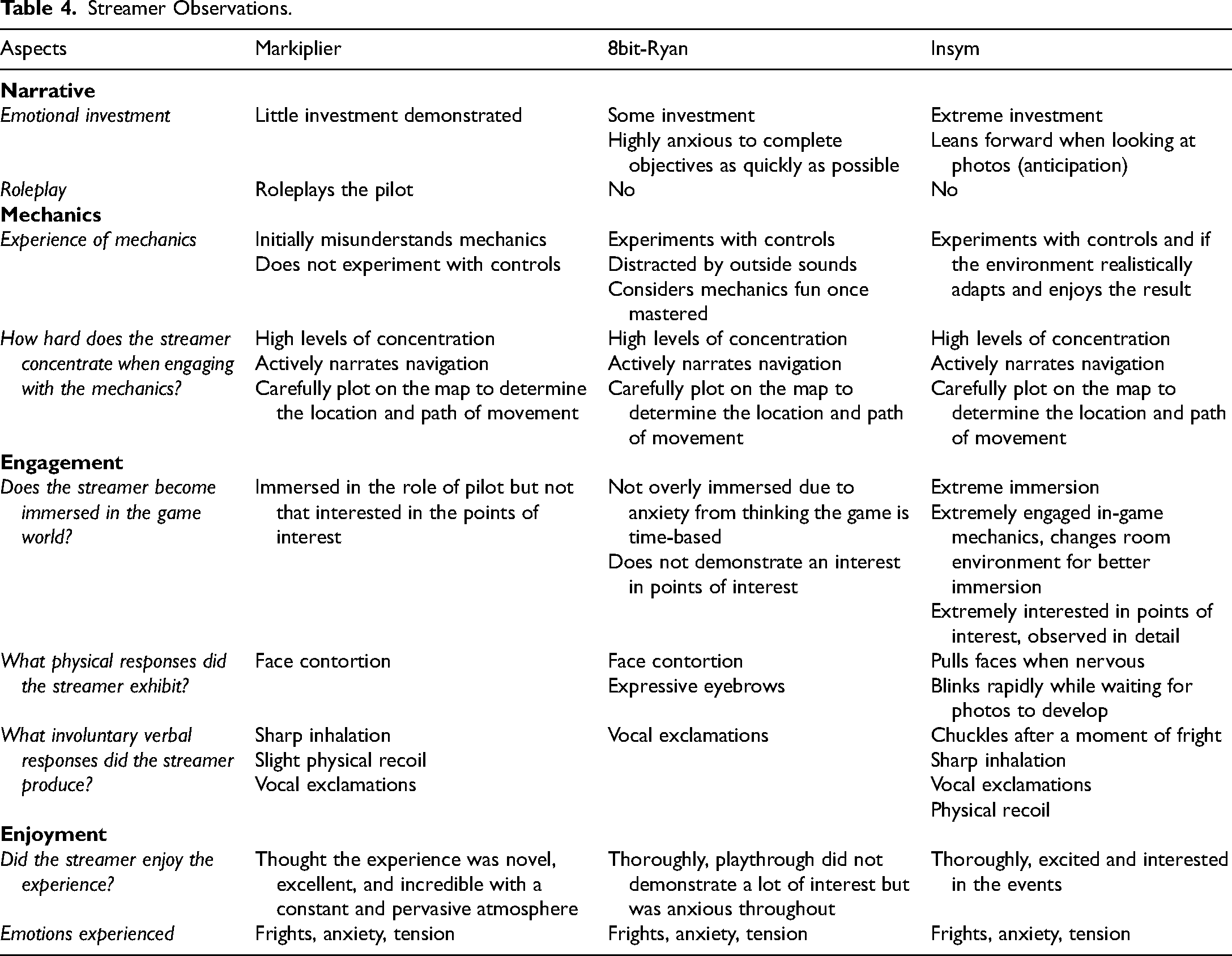
The analysis of the scripted events demonstrated some of the techniques used by the developer to affect players. The slow start allowed the streamers to become familiar with the mechanics of the game. The occasional distant noise outside the submarine presented some presence but at this stage it was nonthreatening. However, for Insym, the first whale sound set the atmosphere and expectation (refer to Figure 2). The first oxygen warning trigger resulted in some minor fright responses from players as this first scripted event is unanticipated and is the first noteworthy sound from the submarine itself. This also made all the streamers think that the game was time-based rather than event-based and created a sense of urgency. In the open space, the developer effectively uses the proximity sensor by activating it when streamers are aware that they are far away from the trench walls. As they rush to take a photo the delay ensures there is nothing to be seen. This mechanic is relied on three times with the first two resulting in no image. This sets the expectation that streamers are likely to be too late to capture a photo of the giant fish. However, on the third attempt, the iconic eye looks back at the camera and most streamers demonstrate an intense fright reaction to this moment (refer to Figure 3). The developer also targets moments of intense concentration to cause fright. At one stage, the streamer moves through a narrow channel that they approach at an angle. They must concentrate to move through the opening and just as they are inside, one of the valves inside the submarine bursts. This resulted in an intense fright reaction from all streamers. The final moment of the game also gave all the streamers a major jumpscare as they were rushing to get the submarine in the correct position for the final photo before the submarine implodes and were so focused on this task that they were taken by surprise when the fish came through the side of the submarine (refer to Figure 4).
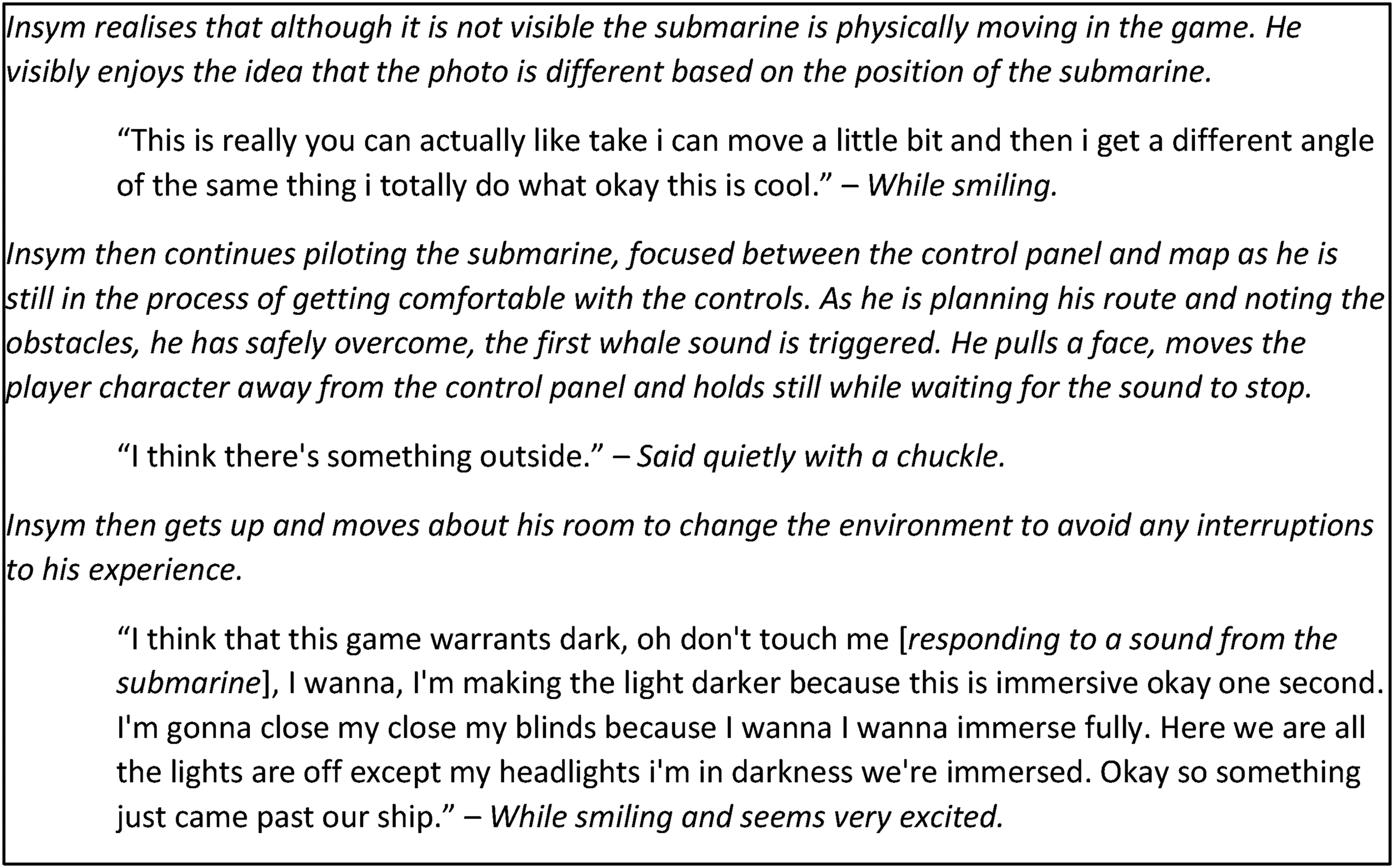
Insym vignette—first whale sound trigger.
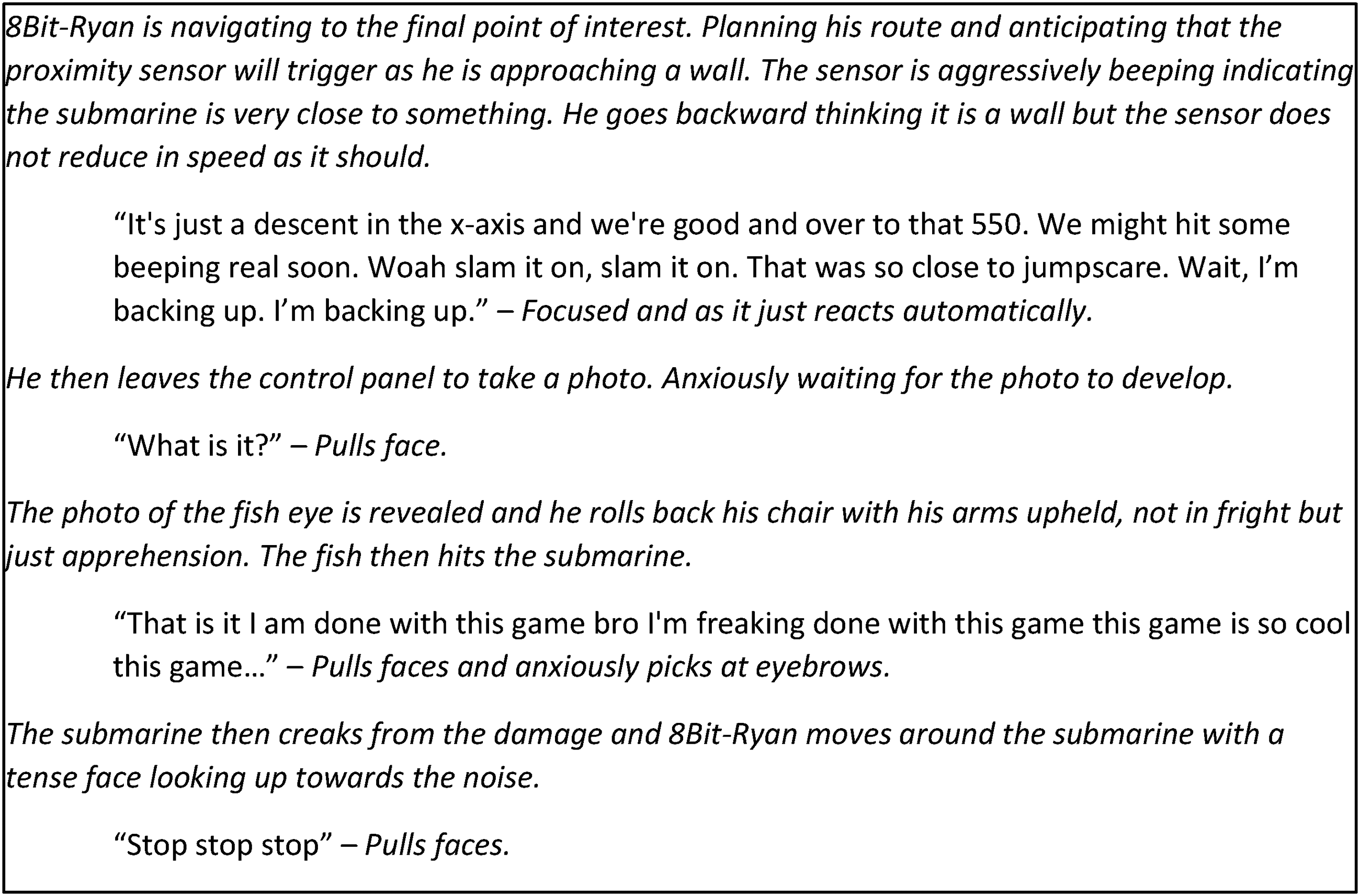
8Bit-Ryan vignette—fisheye event.
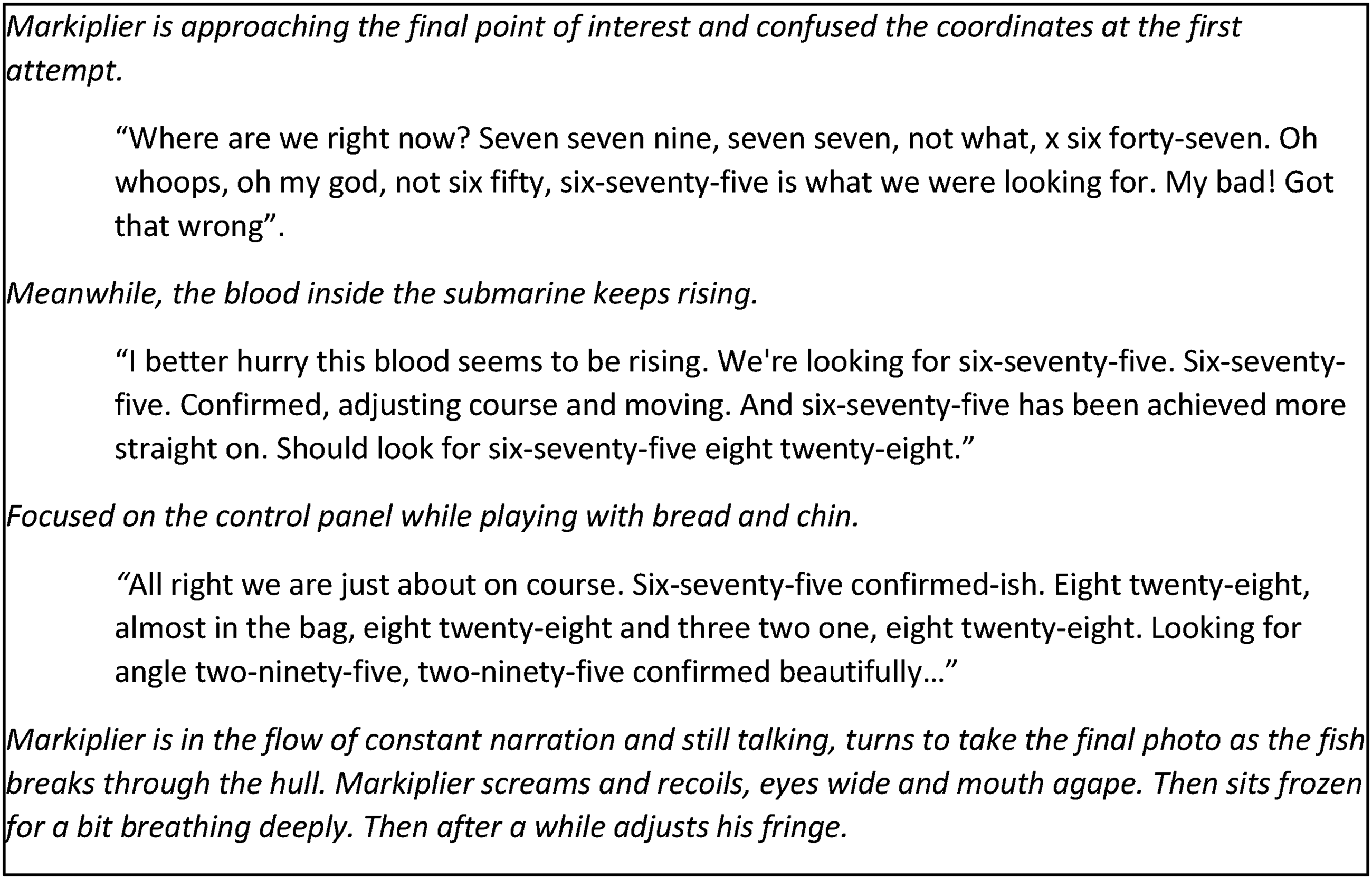
Markiplier vignette—ending.
Due to the lack of visual information, the developer relied heavily on sound and the proximity thereof. The threats shift from the environment outside the submarine to the submarine itself creating a “constant and pervasive atmosphere” according to Markiplier (2022). The whale sound did not induce fear in the streamers because it was recognizable, and it occurred often enough for streamers to become used to it. Rather, streamers responded with interest and confusion to the unfamiliar sounds produced by the POIs, and this caused tension. The streamers became tenser as the game progressed and they were susceptible to minor cues to cause fright such as the steam bursts inside the submarine.
As the veteran Horror video game player, Markiplier demonstrated less affective responses to the other two streamers. His playthrough did not demonstrate much of a desire to explore the game world but rather an interest in simply experiencing the game. However, his follow-up playthrough explored the game world in greater detail and the game mechanics by playing the game backward (Markiplier, 2023a). He has since directed, acted in, and co-wrote with Szymanski an Iron Lung film based on the game (IMDb, 2024).
8Bit-Ryan was the most affected by the time-based illusion and rushed to try and complete the game. The game world acted as a strong antagonist in his playthrough as he was tense and sometimes leveled accusations against the game for wasting his time. He demonstrated the highest desire for control in his playthrough focused on successfully completing the game.
Insym was the most interested in exploring the game world and spent his time trying to understand the POIs. He was intrigued by the story and the atmosphere and to immersive himself fully he attempted to experience everything the game had to offer. The antagonistic game world was more an invitation to explore and uncover than a force to escape in Insym's playthrough.
Analysis
Mechanics
The mechanics in Iron Lung demand active player participation while intentionally introducing a degree of clumsiness. Several design strategies related to mechanics were identified through both player reviews and streamer observations.
Firstly, the analytical control method requires players to understand the map and controls to navigate the submarine effectively. This mechanic compels players to maintain focus and actively engage with the gameplay. Other horror games tend to rely on intuitive control mapping that is ubiquitous across games. For example, in most games, players move the player-character and a potential vehicle using the standard WASD keys, although the player-character in Iron Lung is controlled in the same fashion the submarine is not.
Secondly, the game employs a limited control scheme where players cannot control all functions of the submarine simultaneously. The map and control panel cannot be interacted with simultaneously, and using the camera button requires players to move to the back of the submarine. This intentional limitation in control forces players to disengage with certain control functions to engage with others, creating a sense of reduced control and vulnerability.
Thirdly, the navigation equipment provides unreliable information. The proximity sensor only alerts players to something approaching the submarine, and players must take a photo to determine what the sensors are picking up. Additionally, the photo quality is intentionally poor, further affecting players’ ability to discern what is outside the submarine. This mechanic introduces doubt and uncertainty, intensifying the player's sense of vulnerability. This additionally suggests exploration as the player can move closer to the POI for better photos. However, the falsely implied time-based nature of the game results in some players ignoring exploration to meet the objectives in time.
Finally, information from the navigation equipment is not instant. Players must position the submarine correctly to take a photo, and the photo takes a few seconds to develop, resulting in information received from past events. This mechanic adds to the tension and anxiety, as players have a limited understanding of the threats they face. It is this moment that stretches the player's imagination to the extreme as they are not engaged in the navigation of the submarine but are simply waiting.
While some reviewers expressed surprise at how an analytical method of navigation could affect them, the game's design capitalizes on the heightened focus it demands. For some players, the scripted nature of events reduced immersion, but the developer relies on this script to exploit the focused state of players, as demonstrated in streamer observations.
This relates to King and Krzywinska's notion of the game world as an antagonist. The game utilizes a unique method of pacing in the gameplay that requires constant investment from the players. The moments of navigation require intense focus from the player where they must navigate correctly or face definite destruction at the trench walls. This constant threat enhances suspense in the players as they are acutely aware that they are in control. In contrast, the information gathering through photography moments detaches the player from the control panel and they simply press the photo button and wait. Affectively the players were just in a state of suspense from navigation and are now in an even more suspense as they are forced to simply wait for the photo to develop. This movement requires no control or focus from the player and rather gives them a suspenseful moment of inaction for their imagination to activate. Depending on their progress through the game and their prior knowledge their imaginations will be seeking many different explanations. The short duration of the game allows for a distinctive flow between periods of intense navigation and brief moments of suspenseful waiting, followed by uncertainty in the resulting photograph due to the deliberately poor visual quality.
Some reviewers indicated that they experienced little engagement due to the perceived lack of actual danger in the game. However, this design choice is deliberate and aims to minimize the monotony of the mechanics. Frequent player deaths and repetition of exploration areas would lead to player frustration and disconnection from the diegesis. The more the player dies the more they must redo a certain section. Although this creates a challenge that some players enjoy, it also breaks immersion. Additionally, death results in a break in tension and as the player redoes a section, they know what to anticipate. The longer the player is alive the more they feel they have accomplished and the more they may lose when threatened with death, resulting in greater investment and tension at losing all that was achieved.
Narrative
The game relies on theme-driven storytelling to provide context rather than narrating events explicitly. By using a theme, the game taps into players’ imagination since it offers little explanation about the game world. This approach aligns with restrictive narrative used in the horror genre to heighten suspense, as indicated by Rouse (2009), and the minimalist use of theme, as indicated by Nealen et al. (2011) to allow players to form their own interpretations of the game.
Additionally, the game minimizes player disconnection by avoiding cutscenes, narration, and exposition. This limited information approach enhances player engagement with the theme, as players are naturally curious and motivated to explore and build their understanding of the events that have taken place. The minimalist narrative approach in Iron Lung encourages player immersion and active participation, allowing their imagination to play a central role in shaping the game's story.
Visual and Audio
The audio was generally praised as effective in building tension. As Juul (2021) proposed but extended to in-game events, the consistent and realistic audio-visual presentation enhances the players’ experience. The obfuscated visuals forced players to rely on audio cues to understand the environment outside the submarine. The streams demonstrated that the recognisable sounds generated less tension than the unrecognisable sounds.
This reliance on audio cues further enhances the stimulation of player imagination, as it leaves a significant portion of interpretation to the players, creating a more visceral and affective experience. As revealed by reviewers, many of them were aware that the game intentionally left much of the interpretation to them.
From an affect theory perspective, this reliance on players’ experiences results in highly visceral experiences, as nothing is prescribed, and the game does not overstimulate but instead suggests, inviting active player participation.
The choice of whale sound effect unfortunately did not add much in terms of suspense to the experience since whales are generally considered nonthreating animals when compared, for example, to sharks. If the developer had used a less recognizable sound effect, it might have generated more tension in the players and further stimulated their imaginations to decipher the unknown.
Engagement
Streamer observations indicate that the streamers were intently focused on piloting the submarine, with each streamer having a slightly different experience based on their interpretations of the game. This corresponds with the invitation for active participation discussed earlier. Minimal interruptions to gameplay ensure continuous engagement, as is evident in the streams.
The game creates the illusion of achieving gratification through achieving the objectives. The final objective (regardless of the order they are met) always results in the player-characters' death. This prohibits the player from concluding the game and might leave some players feeling unsatisfied as little has been achieved by the player in terms of the objectives set out.
The true gratification of Iron Lung lies in the exploration of the game world. The introduction makes it clear that the player-character is doomed to die and accepting this gate by simply spending the game exploring the world and uncovering well-hidden secrets 3 to learn more about the world is more gratifying to some players than completing objectives. This explains to some degree, why some players felt unsatisfied with their experience while others were highly affected.
Some player reviews mentioned the experience of “sticking” with them for a while after playing. The game atmosphere and the inconclusive ending are responsible for this. The intense emotional experience maps itself in the bodily system and such strong feelings (even when experienced regularly by horror video game enthusiasts) stick to the body. While the inconclusive ending keeps the player's imagination active by guessing at potential explanations for some of the occurrences in the game world. Especially the POIs which were difficult to observe in the photos and produced strange and unexpected sounds. The game offers no explanation for these constructs whether they were man-made or naturally occurring.
Enjoyment
Overall players enjoyed their experience of Iron Lung. The reviews were mostly positive, and the streamers highly praised the game at the end of their playthroughs. The visible emotional responses of streamers (some theatrical and some instinctive) demonstrated the scare moments overall affected the players to have a horror experience.
The developer intended players to experience “horror based around building dread and paranoia.” The unique pacing was effectively used to build dread in players by fluctuating them between “focused and in control states’ and ‘waiting in anticipation without control moments.” The obfuscation technique was used well to build paranoia as the player only receives little information and must make their own interpretations throughout most of the game.
Conclusion
The analysis of Iron Lung reveals how its deliberate minimalist design engaged players through obfuscation techniques, clumsy mechanics, and unique pacing. The use of spatial exploration, involving intense active navigation and suspenseful in-active waiting, creates a distinctive flow, keeping players tensely invested and immersed. The narrative approach, relying on theme-driven storytelling rather than explicit narration, aligns with horror genre conventions, maximizing suspense by leaving much to the player's imagination. The absence of cutscenes and exposition enhances player engagement, allowing them to form their own interpretations. The deliberate visual obscurity forces players to rely on audio cues and their imaginative capabilities. Some players found themselves surprisingly immersed, while others desired more structured guidance. Many players reported that the game's impact lingered long after they had finished playing. The illusion of gratification through achieving objectives adds a layer of complexity, with the true satisfaction lying in the exploration of the game world and uncovering its secrets.
The enjoyment of Iron Lung is evident in positive reviews and streamer praise. The emotional responses and visible reactions from streamers underscore the game's success in delivering a horror experience centered around building dread and paranoia. The results of the thematic analysis and streamer observations demonstrate that Iron Lung achieved the goal of providing players with a visceral and memorable horror experience through its minimalist game design.
This article contributes to video game academia by exploring the experiences of players in minimalist video game design. These findings can be of use to the realm of interactive and affective experience design, applicable not only to video games but also to diverse contexts such as art installations and exhibition design. While the study primarily focused on video game design, its findings can readily inform designers in other domains. Whether crafting video games, art installations, or exhibition experiences, the insights gleaned from this case study provide information for those seeking to captivate and affect their audiences.
Limitations
It is important to acknowledge that the study is limited to the assessment of players’ experiences within the specific context of the game Iron Lung and does not include comparisons with other games.
Furthermore, the findings may be subject to any potential biases inherent in the data collection process. The affective experience and level of engagement with a video game are highly dependent on players’ preferences in video games and personalities (Ng et al., 2018). Due to the anonymous collection of secondary data, the type of player that shared their experiences of Iron Lung on Steam cannot be determined.
Footnotes
Declaration of Conflicting Interests
The author(s) declared no potential conflicts of interest with respect to the research, authorship, and/or publication of this article.
Funding
The author(s) received no financial support for the research, authorship, and/or publication of this article.
