



Abstract
This article advances a framework for the analysis of digital game biopolitics that addresses 1) how games represent the governance of life, 2) how games, themselves, govern life, and 3) how games enable forms of player-driven biopolitics. I define two concepts — biopolitical markers and biopolitical paradigms — and provide a set of research questions to help identify and classify various game elements that indicate specific categories of biopolitics: biopower, thanatopolitics, community, and veillance. Ultimately, rather than produce a separate theory of game biopolitics, this article builds on work in other fields to construct a method for studying the governance of life in, by, and through games.
Introduction
The main problem explored in this article is the relationship between biopolitical systems and their representation or ludotopian implementation in digital games (Günzel & Aarseth, 2020; Maj, 2021a). I aim to introduce an analytic framework for identifying different systems governing the populace and life in games. I decided to focus on digital games and not a broader concept of gamification, although studies of gamification touch on both the problem of governmentality and deploy a biopolitically oriented critique of behavioral control (Schrape, 2014, pp. 36–37) which I find extremely useful when thinking about how games control the lives of players. The eponymous metaphor of mapping corresponds with the notion of ludotopia, which defines games as “playable, explorable and habitable game worlds” (Maj, 2021b, pp. 46–47) following the spatial turn in game studies, which uncovers the impact of digital game spaces on the physical world on the one hand, and production of hybrid spaces on the other hand (Nitsche, 2020, p. 207). With this in mind, I use the term mapping to describe the process of analysis endorsed in this article, broadly known as concept mapping.
Biopolitics here is understood as a systemic, sociological, political, and economic strategy for governing life. The notion itself is grounded in philosophical and sociological works analyzing the historical evolution of various institutions and policies concerning healthcare, demography, and life quality (Agamben, 1998a; Esposito, 2008; Foucault, 2010; Rose, 2009). Biopolitical problematic touches upon subjects such as reproduction rights (Mills, 2011, 2018), political and judiciary framework of life (Agamben, 1998a; Esposito, 2008), immunization and communization (Esposito, 2012), biomedicalization of everyday life (Rose, 2009), or political production of enemies and strategies of maximalization of killing (Mbembe, 2016, 2020). The biopolitical problematic can be seen as a map of different areas where policies, mechanisms of power, and control are deployed to govern the contemporary social, political, and economic functioning of humanity, as well as other forms of life defined by specific policies. The major trends in this governance can be seen as paradigmatic and defined along the lines of strategies of the protection or negation of life (Esposito, 2017).
Contemporary digital game studies on biopolitics offer numerous angles of approach to singular game problems, yet no research focused on aggregating their overall contribution to what might be called a subfield of game biopolitics. Many game scholars have researched various problems related to biopolitics in digital games. Most notable studies focus on: the role of the avatar as a vehicle of biopolitical strategies (Apperley & Clemens, 2016; Gordon et al., 2009; Zarzycka, 2017), questions concerning identity (Baerg, 2013), habitus and technologies of the self (Zhu, 2018, 2023), representations of health in games (Köhle et al., 2021; Rogers, 2020), mechanics and power relations (Kłosiński, 2020; Piero, 2020; Wencel, 2015), interface design (Lenkevich, 2021), relations between biopower and play (Christiansen, 2014; Kattenberg, 2015; Rutherford & Bose, 2013; Väliaho, 2014), and finally, politics of death in play (Christiansen, 2014; McAllister & Ruggill, 2018; St. Jacques & Tobin, 2020). A series of studies have also explored the relationship between games and governmentality (Jagoda, 2021; Lassila, 2022; Schrape, 2014). This is where the framework proposed in this article comes into play as a means for connecting various theoretical and critical studies of biopolitics in social sciences and humanities, with contemporary inquiries into specific issues related to games and play. The framework has been developed to serve researchers in studying both the biopolitical knowledge effects produced in games (Servitje, 2016, p. 85) and the direct ways in which they govern our lives (Lassila, 2022, pp. 12–13).
This article presents the framework in the form of simple steps and ways for identifying biopolitical markers: significant game elements pointing to strategies of life governance that can be found at all levels of game ontological complexity (Aarseth & Grabarczyk, 2018, p. 7): 1. physical, 2. structural, 3. communicational and 4. mental, as well as their sublayers. The presented framework consists of three elements: A) a set of research questions informed by biopolitical theory; B) a set of definitions of biopolitical markers and biopolitical paradigm; and C) a research matrix to be supplemented with data. This framework is a set of instructions that will inform researchers in their analytical and interpretative endeavors.
Biopolitics provides an important approach for game research because it allows us to see how games represent life, convey problems with governance, depict systems of control, and make these the focus of player operations. To better understand the biopolitical problematic that games simulate and let us engage in, is to better understand how they are life experimental devices and vehicles for the contemporary logic of neoliberalism (Jagoda, 2021, pp. 52–53). The biopolitical approach offered by the framework allows one to analyze and reflect on the widely accepted and almost invisible omnipresence of biopolitical elements in games. To my knowledge, no other mapping-oriented approach has been proposed to interrogate games and question their engagement with biopolitical problematic. This framework can therefore be used in different processes: from case study analysis, through teaching about game representations of life, to broader reconceptualization of life in games. The framework is therefore a unique research and comparative tool allowing for wider extrapolation of case study data and further mapping correlations between biopolitical problematic and games. The framework can also help in organizing the vast amount of biopolitical problematic found in games into more precise categories, enabling researchers a top-down perspective on the systemic character of different elements related to the governance of life.
The idea was inspired by available analytical frameworks, namely the player character research framework (Fizek, 2014), MDA and its advancements (Walk et al., 2017), and game analysis frameworks based on Actor-Network Theory (Vozaru, 2022). The procedure will be deployed under three assumptions. Firstly, most games operate with some indicators referencing politics of life as part of their algorithmic governance of avatar HP (Galloway, 2006, pp. 89–92; Mitchell, 2018). This aspect of games will not be considered as a paradigm-forming condition in itself. Secondly, and similarly to the first condition, the act of killing will not be treated as a good enough reason to formulate a paradigm with the use of this framework. The third assumption is that biopolitical paradigms are not omnipresent, and in that regard, they differ from other forms of game specification such as genre patterns or ludonarrative conventions.
This study was informed by studying different biopolitical game interpretations as well as the author's exploration of different game titles using game hermeneutics (Arjoranta, 2015; Fiadotau, 2018; Karhulahti, 2015; Kłosiński, 2022; Roth et al., 2019), followed by concept mapping. For clarity, one game title for each aspect of the framework was chosen to exemplify the procedure. The framework questions were formulated based on both the research material and findings from other biopolitical studies.
Methodology and Core Concepts
The following set of research questions has been extrapolated from studies analyzing the shape of policies and politics, mechanisms of social and economic control over the population, as well as the ideological critique of political economy in general, giving insights into dispositives related to fostering life and its extermination produced by governmental systems. The initial case study findings were compared and contrasted with different theoretical positions developed within the paradigm of biopolitical studies and the corresponding game studies research. Based on the key components of game ontology, a matrix of markers was proposed to differentiate between particular forms of governance.
Considering the general scope of the research in games and biopolitics, this framework encompasses all three areas in which games have been analyzed using biopolitical theories: 1. the way games represent governance of life, 2. the way games govern life themselves, and 3. games as spaces of the emergence of player-driven biopolitics. Therefore, this research relates to both a) biopolitics proper to the epistemology and ontology of worldbuilding (such as rules, objects, and shape of the world), b) games themselves as media of specific policies (like PEGI, army recruitment, design intent, daily quests), and last but not least, c) biopolitics as an expression of player agency (for example bullying, group dynamic, digital protests, self-reflexivity). Sometimes only one of these areas is relevant for the analysis, but most of the time all of them play some role in the biopolitical map of the game. The mapping process is the core idea of the following questionnaire. Each of the identified elements should be linked with other elements and assigned to a separate biopolitical cluster to present a more complex data set for further analysis and interpretation, forming a map of biopolitical elements and their interconnections and dependencies. Mapping as a method can be divided into three major approaches: relational, cluster, and word frequency (Conceição et al., 2017, pp. 3–4). Here, mapping denotes a mix of cluster and relational approaches, to expose, understand, analyze, and pinpoint significant game elements related to biopolitics. What mapping offers for the reflection on biopolitics and digital games is an easy-to-use tool for reflection, learning, and conducting research (Conceição et al., 2017, p. 11; Kandiko et al., 2013, p. 82). Because this article puts forward the idea of a framework for individual or collective mapping of biopolitical problematic in games, I want to stress that the final choice of mapping approach may vary depending on the purpose (reflexivity, learning, teaching, etc.) and I insist on leaving the final choice of mapping method to the researchers using this framework.
The framework is built around two concepts: the biopolitical marker and paradigm. The biopolitical marker is a signifying element that indicates the possibility of uncovering politics and policies related to the governance of life. Biopolitical markers in games can be found at all levels of their ontological complexity: 1. physical, 2. structural, 3. communicational, and 4. mental, but also in the eventfulness of gameplay or procedural rhetoric (Bogost, 2010). The concept of the biopolitical marker has further been divided into four subcategories: a) biopower (lifesaving and governing), b) thanatopolitics (killing and extermination), c) veillance (surveillance and invigilation), and d) community (gift economy and group dynamic). Different configurations of biopolitical markers can be seen as paradigms. Analogically to Thomas Kuhn's discussion of paradigms in science (Devlin, 2015, p. 158; Kuhn, 1996, pp. 182–187), I understand biopolitical paradigms as disciplinary matrixes which produce shared exemplars. A disciplinary matrix consists of a set of biopolitical markers which represent the ludotopian space, the game world, its rules, regulations, and system or systems of governance. It is a set of implicit or explicit rules and agendas that govern the populace, HP, and assumptions concerning allies and enemies. A shared exemplar consists of a set of biopolitical markers that represent the ways players exercise agency and control over life and death. It is a set of implicit or explicit rules and agendas that govern possible solutions to game problems, such as extermination, care, co-existence, etc. Biopolitical paradigms may be used to describe any one of the areas of biopolitics in games, but they can also uncover significant tensions or interconnections between them.
This framework is a method for uncovering the configurations of markers into paradigms and therefore serves as an extension of the previous research findings into a more compact and useful tool for game analysis, interpretation, and critique. The research questions formulating this framework are meant to help identify biopolitical markers, examine policies and dispositives of power related to the governance of life and death, and map their functions. This process aims to uncover biopolitical ideology in a multitude of its vehicles, from game mechanics, and discourses, to performative aspects related to specific forms of life and death governance. As such, this framework is mostly descriptive, while the weight of interpretation falls on the researchers who would use it in their studies.
The methodology behind the critique of biopolitics employed here has been formulated based on different sociological and philosophical approaches to the politics of life and death by core researchers describing various aspects of the governance of life. Most of them, like Esposito, Mbembe, and Weheliye produce new categorizations to escape a terminological conflation of their reflection on biopolitics and debate against positioning them under the Foucauldian umbrella term (Foucault, 2003, p. 243). Their perspectives differ when it comes to formulating diagnoses and operationalizing the notions concerning the governance of life and death, for example, Esposito uses the notion of immunity to show a tension between what Foucault sought to describe as positive and negative biopolitics (Esposito, 2017, p. 24), Weheliye focused on race as a political notion disguised as a biological one (Weheliye, 2014, p. 51), Mbembe writes about necropolitics to reinforce a postcolonial standpoint (Mbembe, 2020, p. 59), Agamben focused on thanatopolitics and the logic of concentration camps and state of exception (Agamben, 1998b; Piero, 2020, p. 64), Rose expands Foucault with insights into contemporary biomedicalization (Rose, 2009, pp. 39–40) and Mills focuses on questions of reproductive rights (Mills, 2018, p. 153). Instead of analyzing bifurcations between various approaches to biopolitics, I see them as critical expansions mapping previously unexplored or blurry areas. That is why I did not try to avoid competing perspectives, but strived, instead, to incorporate them into this framework. Thus, when using the notion of dispositive or apparatus, I refer to the arrangement of discourses, institutions, systems, and the network that binds them together (Agamben, 2009, pp. 2–3), as well as anything that organizes and normalizes behavior, control, power structures, and subjectivities via techniques, technologies, representations, and narratives (Agamben, 2009, p. 14). The genealogy of apparatus in Foucault's works has been debated, and I stand with Matteo Pasquinelli, who argues that the concept of dispositive acquires its full meaning when analyzing the relationship between the normative power (normalization) and the abnormal (subject's autonomy) (Pasquinelli, 2015, p. 80). When talking about dispositives, I will, therefore, assume that these are normalizing and disciplinary practices (Nohr, 2022, p. 74) concerning how we play, what we do in play, what is normalized in our relationship with others via ludotopian space and in our relationship with the game as an object (Janik, 2021). A simple example would be the normalization of a neoliberal economy in producing subjectivity by positively evaluating wealth accumulation, grinding practices, and conforming to the market economy in decision-making (Möring & Leino, 2016).
The most notable mixing of approaches to biopolitics in this framework can be found in the designation of biopolitical markers. The choice of the naming convention for particular categories was dictated by the pragmatic assumption that different analyses of biopolitics focus on specific aspects of life governance. At the onset of this framework, only two categories were used: biopolitics and thanatopolitics – strategies of positive governance and care, and those of killing. Following Esposito's idea that these are two poles of one process of immunization and communization (Esposito, 2017, pp. 13–15) revealed that a more precise system has to be developed for game analysis because the original categorization was reductionist when applied to a multilayered medium involving player agency, rules of the program, audiovisual aspects of representations, narrative and procedural complexity, as well as external agendas dependent on socio-economic and political context of the game's cultural functioning. Therefore, marker descriptions were chosen based on four aspects found through exploratory studies of different games and analysis of previous studies of biopolitics performed by game scholars. The four categories depict four major themes through which games mediate biopolitics: biopower (lifesaving and governing), thanatopolitics (killing and extermination), veillance (surveillance and invigilation), and community (gift economy and group dynamic). These categories can overlap, function separately, or share dependencies. For example, markers of veillance are separate biopolitical indicators in games where players sneak-peek on another character, a subcategory of biopower when players build watchtowers to control the populace, and thanatopolitics when players use mechanics of stealth kills as part of a clandestine in-game operation. Similarly, markers of community may overlap with thanatopolitical ones in diegetic information about zones of infection, or function separately in representations of happy families we govern. Because markers are indicators, a singular element can indicate more than one idea: a health bar marks the biopolitics of our avatar, as well as our thanatopolitical gaze at the enemy when we calculate how long it will take to kill them.
Five Framework Questions
How Does the Game Represent Life?
The most fundamental question for this framework concerns how games represent life. What we want to look at are interfaces, narrative assumptions, and mechanics. The aim here is to distinguish basic elements constructing the idea of life in our game: is it a singular unit reserved to the player avatar, or a populace to be governed; a simple unit represented by a token; or a complex structure of health and needs? By reconstructing the idea of life in any given game, we uncover the politics and policies already at work and driven by specific biopolitical ideologies. Some of these have been critically deconstructed as economic models of neoliberalism (Dyer-Witheford & Peuter, 2009; Möring & Leino, 2016), forms of technological control over player's life (Apperley & Clemens, 2016; Väliaho, 2014), or extensions of contemporary health politics (Rogers, 2020). As described by Catherine Mills, for biopolitical studies life can be understood as: 1. an attribute (to be alive), 2. a possession (to have life), 3. a collective form (life of populace), 4. a vitality (a source of living), 5. an object of biological science, 6. a condition of existence, 7. a temporal frame (from conception to death), 8. a biographical narrative account, and 9. a subjective expression of a way of life (Mills, 2018, p. 4). For this framework, it is, therefore, important to uncover how our game frames and produces life with the use of its signifying elements and procedural rhetoric (Bogost, 2010). For example, Frostpunk (11 bit studios, 2018) represents life as a collective form (populace) consisting of individuals possessing singular, qualitative, and biographical existences, who can become ill, die, or undergo treatment. The quality of life depends on three factors: housing, health, and food. The game differentiates between two stages of life (childhood and adulthood), and four states of life (healthy, ill, disabled, dead) and projects the vision of life as a workforce, dividing the populace into workers and technicians. In short, Frostpunk conjures life as a biological economic resource to be governed (Figure 1).
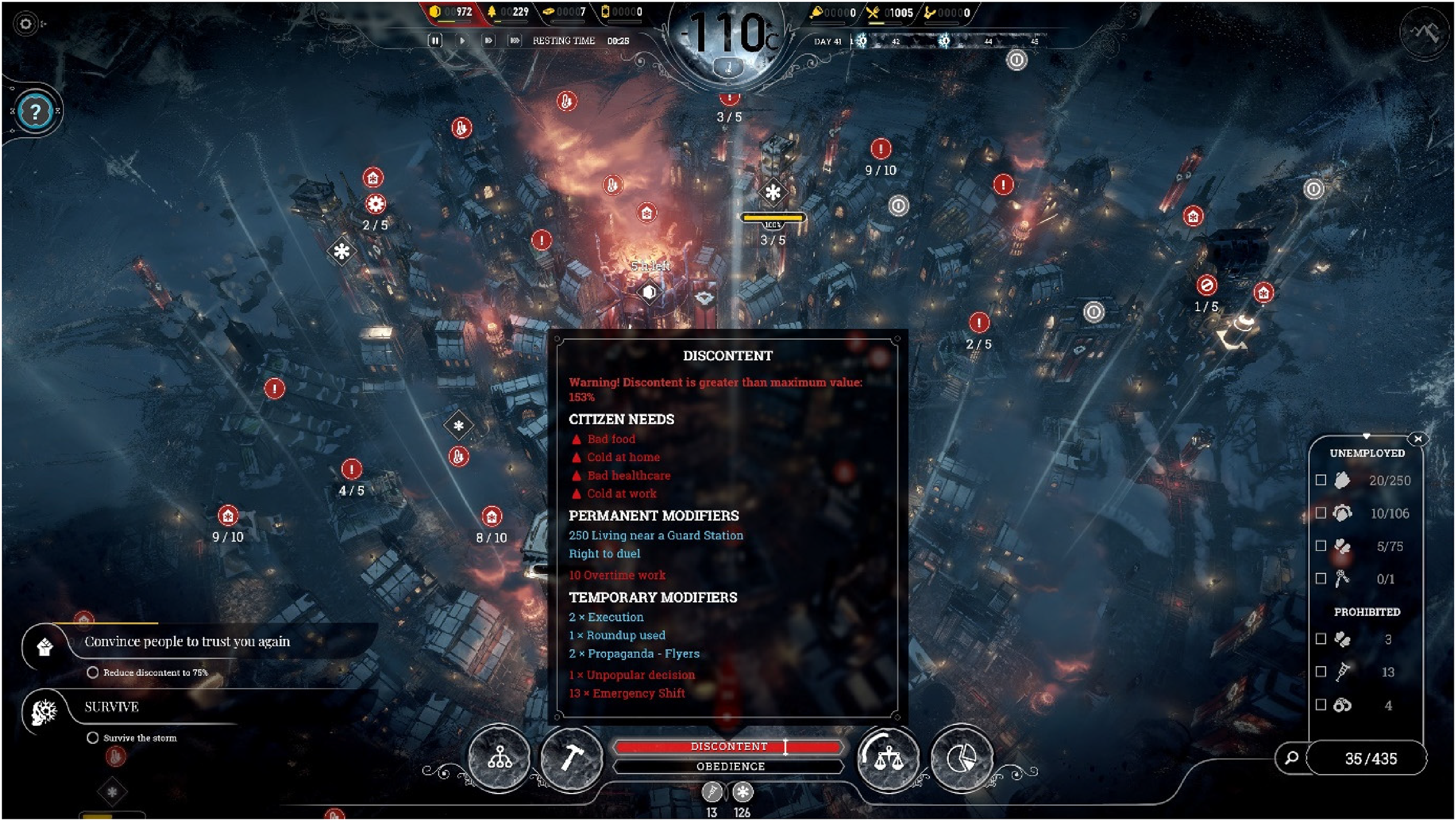
Screenshot depicting life representation in Frostpunk (2018).
The second inquiry concerns the things our game asks us to do with life. What we are interested in here are victory conditions, implicit and explicit goals, procedural rhetoric, game loops, and gameplay justification. Here, we come to the identification of vectors for the biopolitical analysis: are we there to govern life, or are we there to exterminate it; or maybe just to control a singular existence striving to survive in a harsh environment? By asking about the incentives, goals, and mechanics, as well as the reasons we are given for our agency, we focus on the political reasoning behind specific types of governance. Previous studies have uncovered the politics of killing and governance over death (Christiansen, 2014), procedures proper to imperialism (Dyer-Witheford & Peuter, 2009), and colonization (Majkowski, 2019; Mukherjee, 2017). At this point it is crucial to see how the game justifies governance procedures: what reasons are given for saving or exterminating life? The justification helps us to understand the implications and presuppositions of the system and the politics of inclusion and exclusion: how does the game produce life worth saving and causes worth killing for? This is especially important when we are asked to intervene in the name of a different biopolitical order than the dominant one represented in the game or to “fight the system.” For example, Dishonored (Arkane Studios, 2012) asks us to save the heir to the throne and exact vengeance on the leaders of the coup who introduced a rat plague to the city of Dunwell to purge the poor. However, the game's procedural rhetoric of surveillance, subterfuge, and non-lethal takedowns works to build the player's inner justification for not killing enemies in order not to spread the plague and reach a better conclusion to the outcome of the young empress’ rule. Similarly, Frostpunk asks us to construct a city so that our populace survives an apocalyptic winter and does not rebel against our rule. We are offered multiple tools to govern our populace, such as a judiciary system, technology tree, city planning, workforce assignment, expeditions, choice, and consequence quest system. We are to utilize these game systems to pursue the game goals with different mixtures of life-saving and life-extinguishing strategies. Both Dishonored and Frostpunk quite explicitly make population governance a moral and political problem, questioning what we are willing to do with life when facing a state of exception. The games justify our agency by using plague or apocalypse as the singular events but also question our choice of tools for the task at hand (Figure 2).
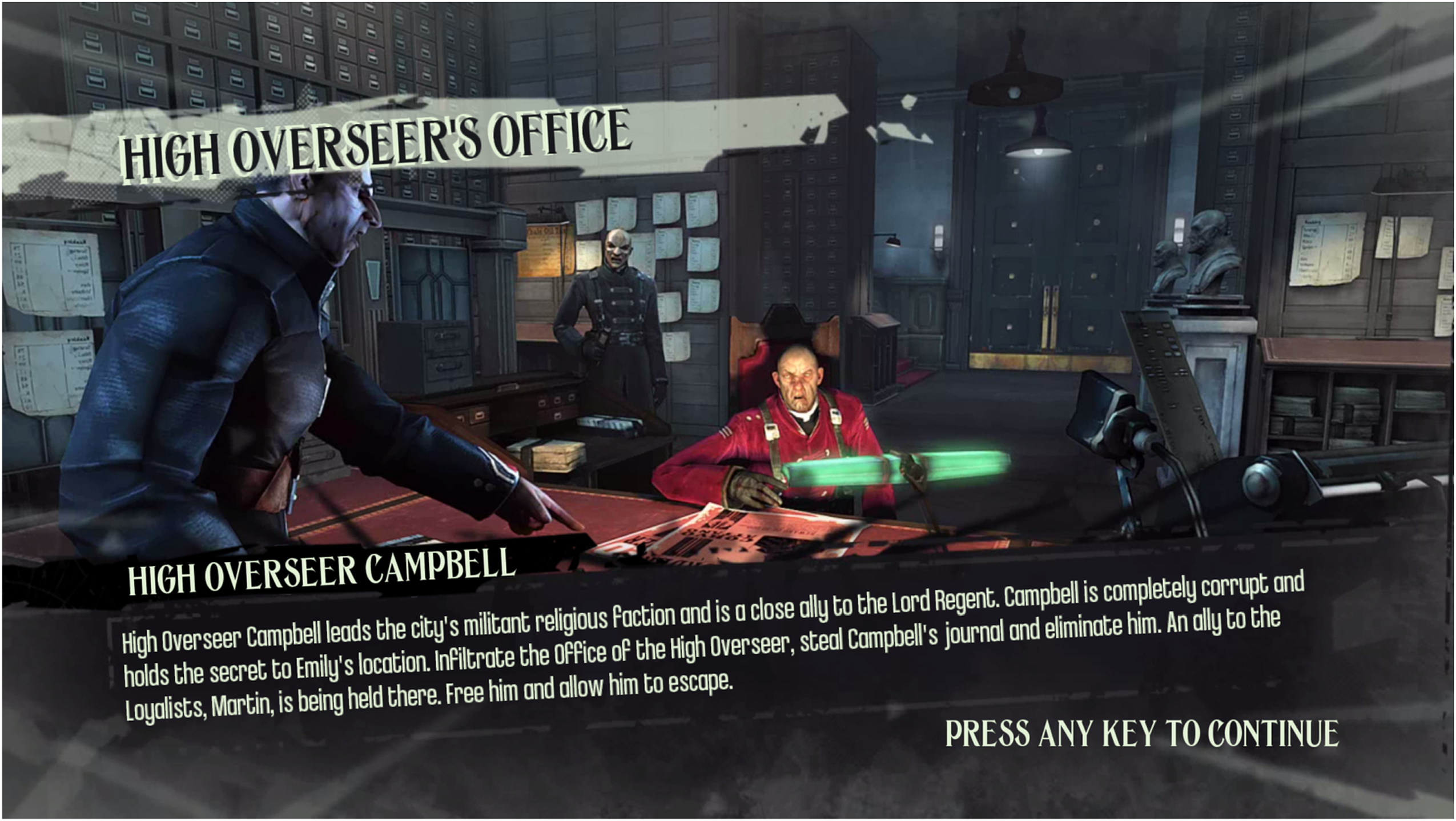
Screenshot depicting justification of protagonist's agency in Dishonored (2012) at the beginning of the mission.
The third inquiry concerns the analysis of power assemblages and dispositives. Here, we are interested in the inner workings and interconnections of life governance systems deployed in the game. In short: how do we save life, how do we exterminate enemies, how are we informed certain places are off limits, how do we produce or reproduce life? For example, Rogers analyzes visual cues related to health and debuffs as the biomedicalization of life according to masculine rationality (Rogers, 2020, p. 331), whereas Piero critically disassembles the function of abjection and framing the protagonist's existence as ‘bare life’ (Piero, 2020, p. 63). The ‘how” of game biopolitics can be found by analyzing dispositives and power assemblages of in-game institutions: hospitals, clinics, asylums, prisons, borders, and checkpoints, but also in the intricate data systems we operate with statistics, resources, population indicators, map legends, and social structures. In Frostpunk the “how” defines gameplay to the extent that players can choose whether to build a religious or surveillance dictatorship, measured separately with indicators of hope and order respectively. The game also operates with a decision-making system that delineates choice and consequence logic behind biopolitical decisions, but it is the decision-maker who fills the role of sovereign power. Moreover, Frostpunk deliberately procedurally generates biopolitical scenarios loaded with issues concerning morality. By doing so, the game supplements its apocalyptic narrative with a morality based on economic principles – the “how” of biopolitical decisions is always measured with concrete economized data. On the other hand, in Cyberpunk 2077 (CD Projekt Red, 2020) we govern the life of our protagonist “V” by using posthuman technologies of augmentation which represent life as undergoing complex biomedical procedures that change its survivability and killing potential. It is easy to reduce game logic to allegories of algorithmic control (Mitchell, 2018, p. 33), but such reductions tell us little about the complexity of power assemblages at the player's disposal. Questions related to the “how” of game biopolitics give us an irreplaceable insight into the systemic character of power relations and their configurations at the scale between positive and negative extremes in the politics of life and death (Figure 3).
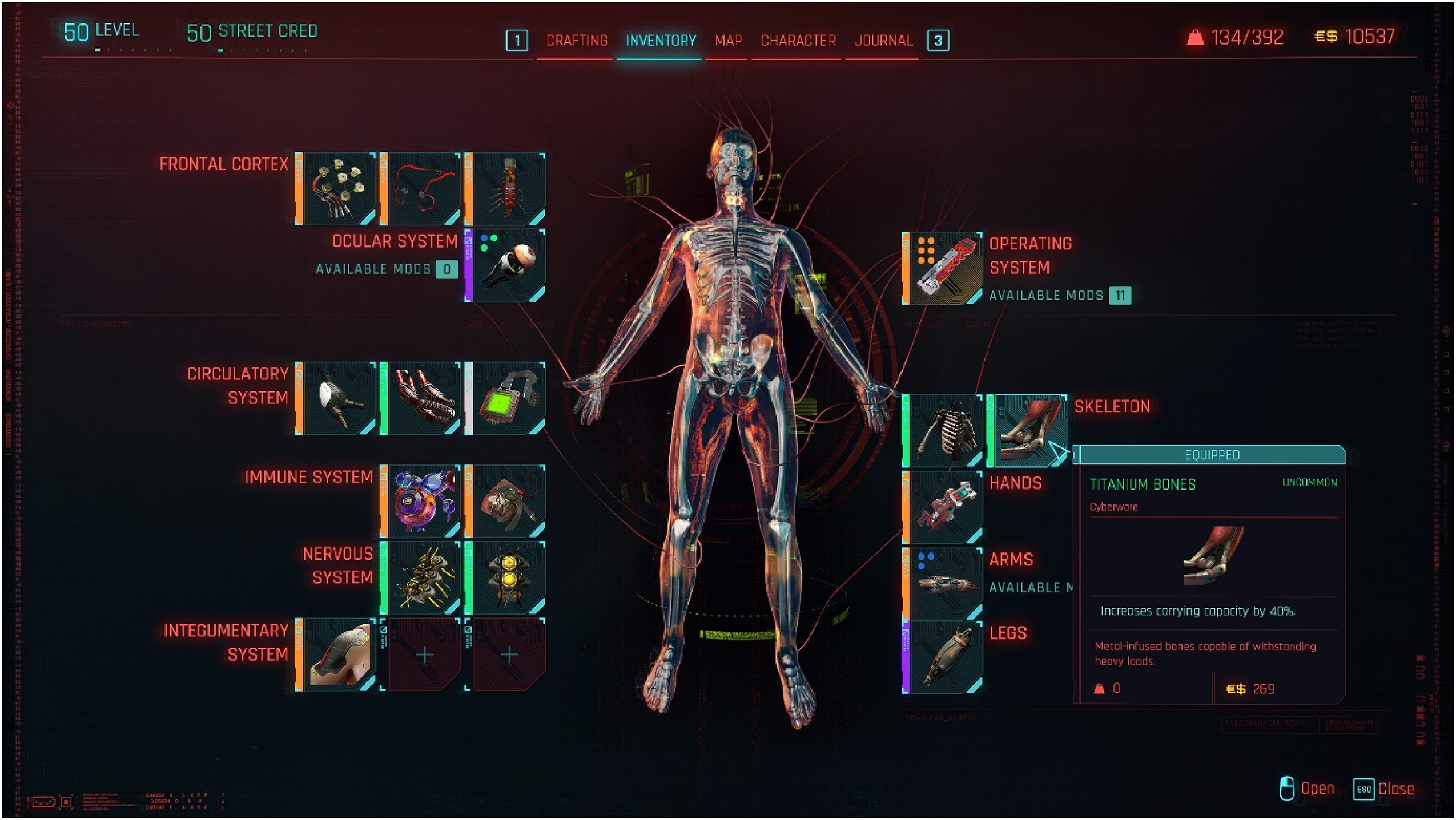
Cyberpunk 2077 (2020) screenshot depicting dispositives of life control as part of augmentation interface.
The inquiry into dispositives brings us to the critical question concerning video games as biopolitical apparatuses governing player life. At this point, we have to take into account the relationship between the game as a biopolitical device and its user. A perfect exemplification of such analysis is the critique of avatar as a device retraining players under the guise of its mastery (Apperley & Clemens, 2016, pp. 120–121), the modulation of populace behavioral patterns with representations of violence (Väliaho, 2014, p. 81) or governing players by transforming them into data and controlling the time of their engagement in the game (Lassila, 2022, pp. 18–20). Therefore, what we are mapping here is the game biopolitics in its most immediate form of governance of player life deployed by the producers, government, or any normalizing force. This analysis constitutes a separate aspect of this framework, one that focuses on all dispositives produced to govern us through our avatars, daily quests, monthly events, login rewards, achievements, and behavioral feedback loops. In Frostpunk a function of incentivizing players to spend more of their time in the game was added under the name of “Endless mode,” with separate achievements for successful governance over one's city for 50 and 100 in-game days. Furthermore, Frostpunk trains players in relating economy to morality and thus strengthens neoliberal ideology underlying its core mechanisms: utilitarianism, productivity, accumulation, and pragmatism. A different example can be found in a game designed to captivate a player life time and govern regular in-game activity: Genshin Impact (MiHoYo, 2020), in which daily and weekly quests, as well as daily stamina mechanics and gambling (in the form of gatcha) systems, are used to govern player attention within a model of big data economy (Figure 4).

Exclusive time-gated event reward system for consecutive logins in Genshin Impact (2020) screenshot.
The last question concerns the performative uses of the game that emerge in its ludotopian space. At this point, we have a basic idea about the meaning of life in the game, the justification for our agency, and the scope of power dispositives at our disposal. We have also identified which governance structures are aimed at the player's existence. Here, we are interested in the resistance to life governance and emergent biopolitical uses of the game by the players, their agency framed as political, social, and economic performatives, but also as “practices of the self”, understood as culturally established models, used by individuals to constitute their identities (Mills, 2011, p. 49). Our focus here is on player events, communities, bullying, protests, asset generation, metagaming, counterplay (Mukherjee, 2017), and critical play (Flanagan, 2013) practices related to the governance of life and death, of self-fashioning and cultivation (Zhu, 2018). In short, this is the part where we try to identify to what extent ludotopias become fields of emergent biopolitics and resistance to life governance thanks to player behavior: anti-racist protests, xenophobic outbursts, forming of utopian or intentional communities, but in equal right building one's relation to the self (Zhu, 2018, pp. 86–87). These aspects of biopolitical analysis have been prevalent in literature concerned with player resistance and backlash against real money trading (Dyer-Witheford & Peuter, 2009, pp. 139–151), in-game extensions of gender inequality (Jenson & Castell, 2018), digital game impact on mental health in general (McGonigal, 2016), or during and after COVID-19 Pandemic (Rodríguez et al., 2022), and the ambivalent relationship between self-reflexivity and neoliberal instrumentalization (Zhu, 2018, p. 98). For example, Dyer-Whiteford and de Peuter describe the player-organized hunting parties in World of Warcraft (Blizzard Entertainment, 2005) to kill Chinese gold farmers interested in real money trading as part of biopolitical and economic struggle and extension of global capitalism's biopolitical regime (Dyer-Witheford & Peuter, 2009, pp. 146–148). Thus the game was a space of biopolitical struggle between real players with the use of avatars and game economy. Another example of an emergent biopolitics-oriented behavior was Joseph Delappe's performance in America's Army (United States Army, 2002), where he read the names of soldiers who died in Iraq to subvert the game's pro-militaristic agenda. Finally, Zhu analyzed the gamer habitus in Magic: The Gathering Arena (Wizards of the Coast, 2018) showing complex forms of self-reflexivity in players who refashion play strategies by turning different gamer habituses into objects of knowledge and meta-analysis (Zhu, 2023, pp. 48–50). In short, the emergent forms of biopolitics uncover the complicated status of in-game resistance to neoliberalism (Figure 5).
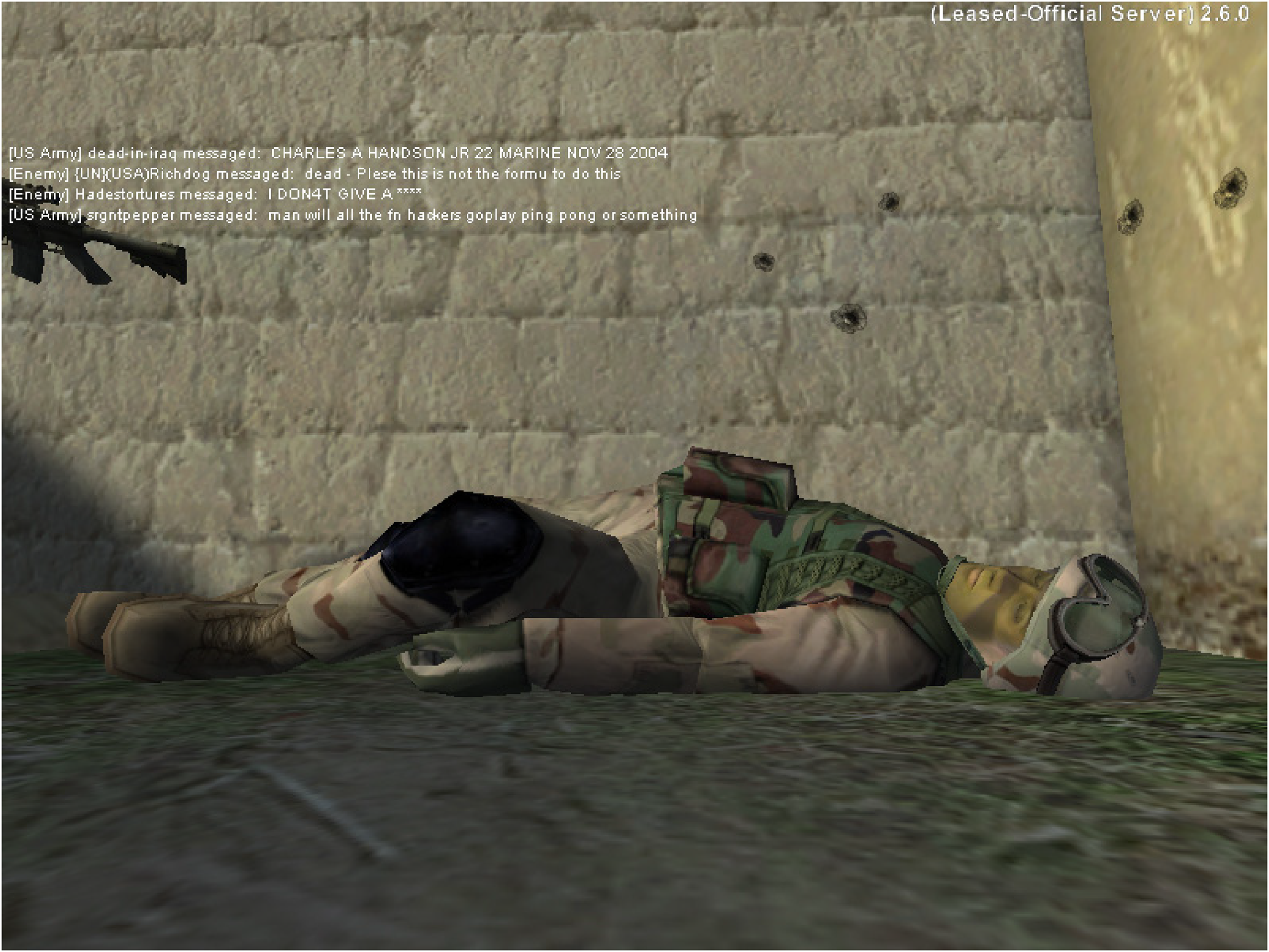
Joseph DeLappe reads names of dead soldiers in America's Army (2002) game as part of his anti-war performance.
Conclusion
This framework established five basic areas of inquiry into the problems of biopolitics in games. The initial question concerns life as an in-game construct, the “what” of biopolitics. The second one renders the justification of life politics in-game, the “why” of biopolitics. The third inquiry targets the performative aspect of life governance, the “how” of biopolitics. The last two questions provide an extension to the previous ones. The fourth addresses the way normalizing forces behind games control players. The fifth focuses on games as spaces of the emergence of player resistance to life governance.
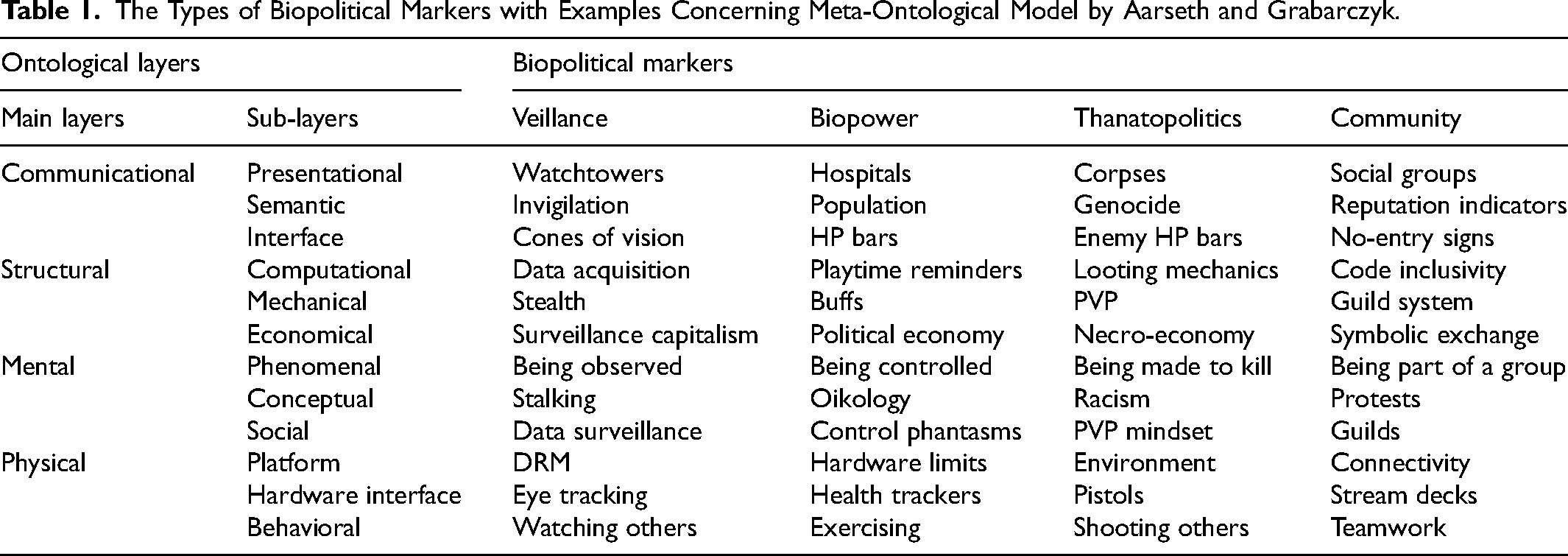
The framework questions were developed to speed up the process of identifying biopolitical markers in any game and providing their detailed descriptions. The markers were divided into four categories: Veillance, Biopower, Thanatopolitics, and Community corresponding to four main layers of the ontological meta-model (Aarseth & Grabarczyk, 2018, p. 7): physical, structural, communicational, and mental, together with their corresponding twelve sublayers, as presented with examples in Table 1. The division serves two purposes: it is a pragmatic taxonomic tool for associating game ontology to different styles of governance observed in cultural studies, and an identification mechanism helpful in mapping the granularity of markers, their correlations, distribution, and occurrence in video games.
The Types of Biopolitical Markers with Examples Concerning Meta-Ontological Model by Aarseth and Grabarczyk.
Biopolitical markers are identified as significant game elements: mechanics, representations, interface objects, procedural rhetoric, and emergent behaviors. Each marker functions as a descriptor for specific forms of life government, as exemplified by the screenshot from Horizon Zero Dawn (Guerrilla Games, 2020) below. Green circles indicate markers related to biopower, these are protagonist HP, Stamina, Shield, and Level interface elements as well as their corresponding mechanics of health regeneration conveyed by the bottom left icon of medicine usage. Red circles indicate thanatopolitical markers, these are enemy HP, representations of destruction of the machine in the foreground and fires in the background as well as the information about our chosen weapon. There is one veillance marker in a blue circle, indicating that the protagonist has been spotted, and one community marker in a yellow circle, related to the quest to defend the ridge, and thus protect the community against an incoming threat (Figure 6).
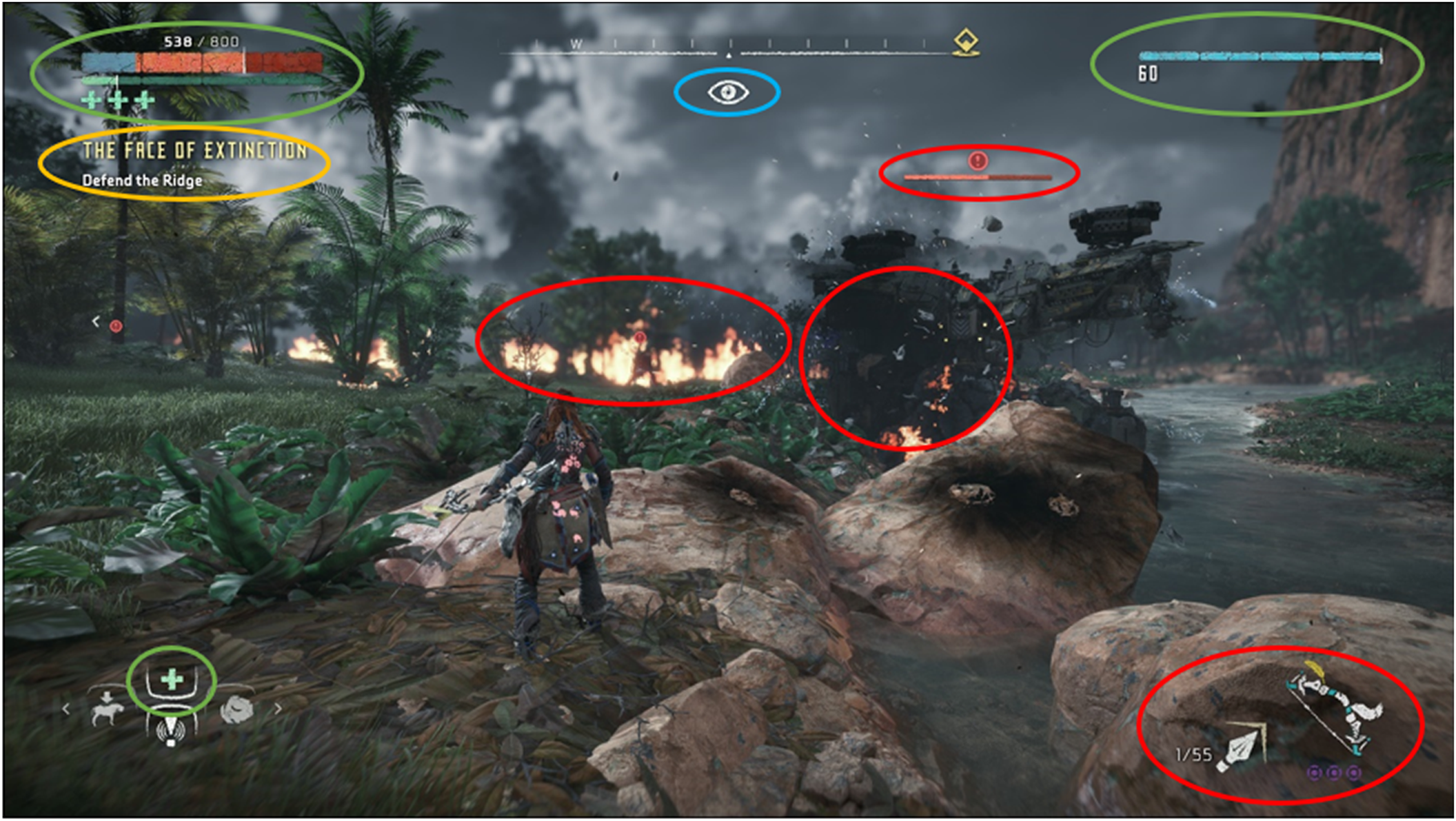
Horizon: Zero Dawn (2020) screenshot with markers in colored circles.
Therefore, a short marking of just one screenshot shows the structural and communicational elements that can be used as nodes in reconstructing the biopolitical framework of the game. With other screenshots and descriptions, or motion capturing of mechanics and procedural rhetoric, it is possible to identify four major areas to further divide the marked elements into markers associated with other meta-ontological layers and sublayers. The final matrix of markers can then be used to describe the paradigms of our game. When defining biopolitical paradigms, I referenced the structure described by Tomas Kuhn to bring attention to the relation between a paradigm as a set of markers pertaining to the game world, its rules, ideologies, and regulations – the disciplinary matrix, and a paradigm as a set of possible solutions to the problems this world generates – the shared exemplar. This division was necessary for two reasons. Firstly, games often offer and reward multiple contradictory solutions to one problem. Secondly, players can produce their own shared exemplars as part of emergent biopolitics in the form of game protests, performances, or other activities related to the governance of life and death.
The final framework takes the shape of a set of research questions, the types of empirical marker data to look for and a proposed configuration of the identified markers into biopolitical paradigms and shared exemplars these paradigms produce for the players (Figure 7):
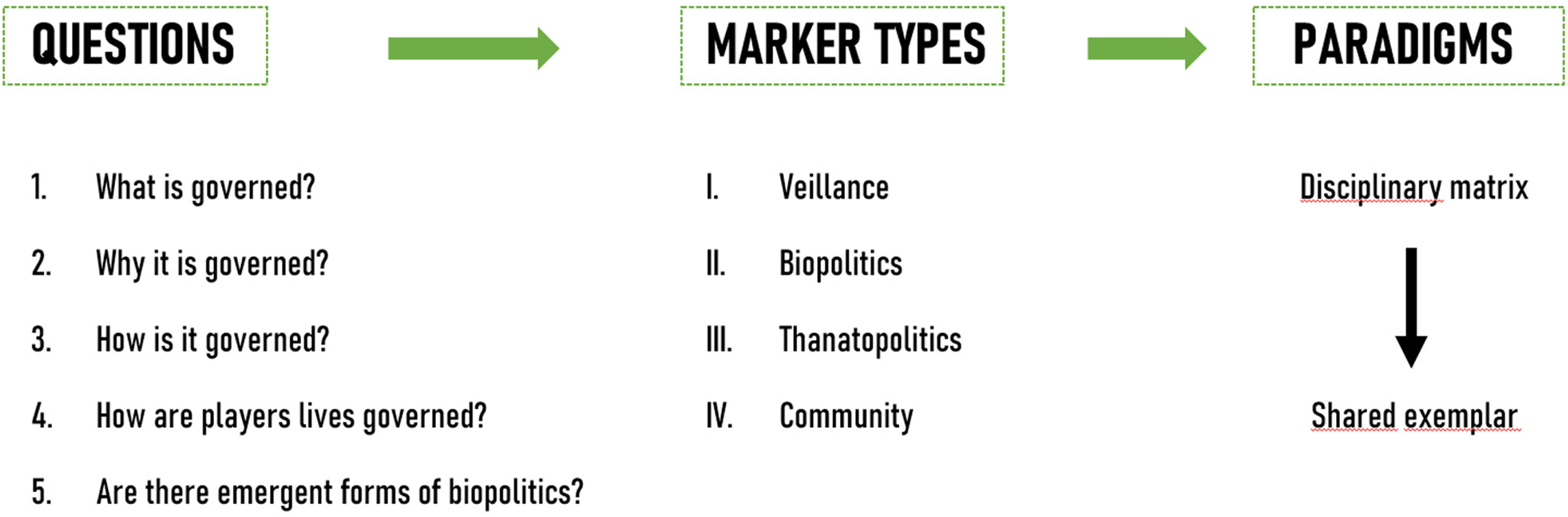
Biopolitics analysis framework.
With this final codification of the framework I have operationalized the notion of marker and paradigm, presented a set of research questions and a method of analysis which can be applied in the analysis and interpretation of game biopolitics at three levels: 1. the way games represent governance of life, 2. the way games govern life themselves, and 3. games as spaces of the emergence of player-driven biopolitics. This division serves as a general top-down view of different levels at which biopolitics can be further researched and problematized.
This method assumes that analytical and interpretative effort is put into identifying biopolitical markers and describing their functionality. Because this framework was developed to encompass the entirety of one game, it is imperative to stress that sufficient empirical material has to be gathered for this method to produce satisfactory results. Because games have varying play times and complexity, I assume that sufficiency is achieved when no new markers can be identified during the playthrough and data-gathering process.
This framework has been produced with the idea that extending the field of biopolitical research in game studies should start with combining previous achievements with a more general outlook at formulating new methods of analysis. The framework can be used as an analytic tool in case studies, but it can also be scaled to illuminate trends and strategies in game production or the political use of video games in longitude analyses.
Footnotes
Declaration of Conflicting Interests
The author(s) declared no potential conflicts of interest with respect to the research, authorship, and/or publication of this article.
Funding
The author(s) disclosed receipt of the following financial support for the research, authorship, and/or publication of this article: This research was funded by Polish National Science Centre Grant, number: 2021/43/B/HS2/01017 titled: Mapping Game Biopolitics: Immunological Paradigms in Video Games.
