



Abstract
In this essay, we work over the imageries of exoplanetary exploration in digital games, observing their connections with concepts from media theories and science fiction studies. This articulation aims to comprehend how, in a philosofictional manner, games fictionally extrapolate the conditions of possibility for astronomical observation, allegorizing a series of contemporary themes regarding the technoscientific knowledge of space and planetary systems. As an analytical procedure, we observe game assets, images, and design dynamics, articulating them theoretically in three axes: technoscientific paraphernalia, compared planetology, and oblique orbits. With this, we understand how games can creatively approach (and, in the light of science fiction, extrapolate) contemporary relationships between science, technology, and society.
Keywords
Introduction
This essay is a result of approximations between media theories (Bonfiglioli 2018; Bratton 2019; Kittler 1999; McLuhan 1994), science fiction (SF) theory (Barossi 2017; Felinto 2018), and aesthetic and imaginary aspects of the game Outer Wilds (2019). As we understand them, digital games can be included in the genealogy of the present time, and their language and material aspects help us to decipher a little about the manners of understanding and experiencing the world in a given historical context. The Kittlerian critique of Foucault's archaeology of knowledge observed, even if within the epistemic structure developed by the French philosopher, that the analysis of textual documents was insufficient to deal with the media landscape following the so-called “Gutenberg galaxy” (Kittler 1999). With electricity and the specific technical media developed from the modern technoscientific complex, the contextual analysis of knowledge would further require to have the materialities of communication in sight, without which we would miss insights about the ways of processing, storing, and transmitting information. These materialities not only characterize the sensory experience of human communication as a whole but also mark the way scientific knowledge is produced and made sense of at a given time. In this interim, digital games also are a part of the archive of our epoch, although the analyses conferring them such function are not yet so numerous. We understand that there are games that take the fictional potential of computation, that is, the endemically speculative property of computer simulation, as its most important potential. Although the majority of triple-A titles and a significant portion of indie games understand simulation as a catalyst for repaginating genres established by other media, we would like to explore in this text how digital games, as fictional pieces of our time, arouse an aesthetic potential which allows for speculation over the very structures of knowledge and contemporary technology.
Developed by Alex Beachum and Loan Verneau, Outer Wilds offers a sort of space odyssey through a peculiar solar system both dynamic and mysterious. The game is characterized as an adventure, action, and survival game merging themes of astronomy and archaeology under the light of SF. From this basis, we analyze Outer Wilds as a prosthesis for philosofiction, one that incorporates and extrapolates several elements of contemporary science and technology. Szendy (2013) utilizes the term philosofiction to refer to the thoughtful exploration of the nebulous zones between the domains of reality and imagination, which fulfills the task, often observed in SF works, of producing real knowledge through fictional elaboration. With this, we inquire in which manner Outer Wilds develops and articulates a philosophical dimension of exoplanetary exploration in the simulated experiences within its game world.
Through the observation of assets, technical instruments, and images of the game world, interlaced with the discussion of elements from contemporary observational astronomy, we unfold the analyses in this essay in three dimensions: technoscientific paraphernalia, compared planetology, and oblique orbits. More than the specificities of game design, the experience of Outer Wilds interests us due to how it brings to the foreground epistemic elements constitutive of contemporary scientific technoculture (Luersen 2020).
Technoscientific Paraphernalia
In SF literature, stories very often speculate and imagine futures that allude to the beginning or end of a world. In these utopic worlds, representations of imaginary media, futuristic objects, and speculative technical apparatus arise with great frequency. In digital games, this is a very usual strategy that functions to associate diegetic components to habitual game mechanics, such as the use of weapons, communication tools, and transportation utilities within the fictional environments, as one can observe in Beyond Good and Evil (Ubisoft 2003), Death Stranding (Kojima Productions 2019), or in No Man's Sky (Hello Games 2016), which deals with space travel specifically. In Outer Wilds, technical devices appear as probes that establish the conditions of knowing (about the present and the past of planets and the solar system) within the game world. These objects not only convey a representation of the more common metaphors and functions usually performed in games—attacking, running away, capturing, and inventorying—but also are effectively embedded as contributors to the evolution of the knowledge players acquire about the world they are meant to explore. Such knowledge coincides, plotwise, with the very cultural and technological evolution of the species corresponding to the player avatar (a Hearthian, a term alluding to the coexistence of human and earthly life). This bonds the experience of the game character with a memory of the planet they inhabit—who I am here and now, how I get to know myself, and how this changes my conscience regarding the environment I inhabit.
These knowledge-bearing objects emulate the scientific practice of developing instruments to interpret the world. The tools utilized throughout the experience of Outer Wilds, such as the signal scope, the probe, and the translation tool, are part of the media modeling of the phenomenological, in-game “worldview,” of the avatar, which unfurls from these imaginary hearthian–machine interfaces. In the game world, the signal scope (Figure 1) is an instrument utilized to detect acoustic vibrations produced by other lifeforms in the solar system, monitoring the activities happening in other stars. In practice, it operates as a sort of handheld radio telescope from which it is possible to monitor distances, identify exogenous signals, and discover novel events in the game universe. The probe (Figure 2), in its turn, is a photographic rig that produces images and examines restricted and inaccessible locations in the environment, besides allowing the investigation of the interior of black holes and detecting ghost matter, a toxic substance invisible to the naked eye. The translation tool (Figure 3) helps in deciphering messages left in stones and scrolls by an extinct alien civilization, the Nomai. Players have access to traces of the Nomai civilization from the ruins of the civic environments and the communication infrastructures they built while inhabiting the solar system. The messages left by these predecessors are thus key to uncovering the game universe, and the translation tool becomes one of the critical means to collect information about the solar system and explore both the geomorphological composition and physical–chemical phenomena in each of the different planets.
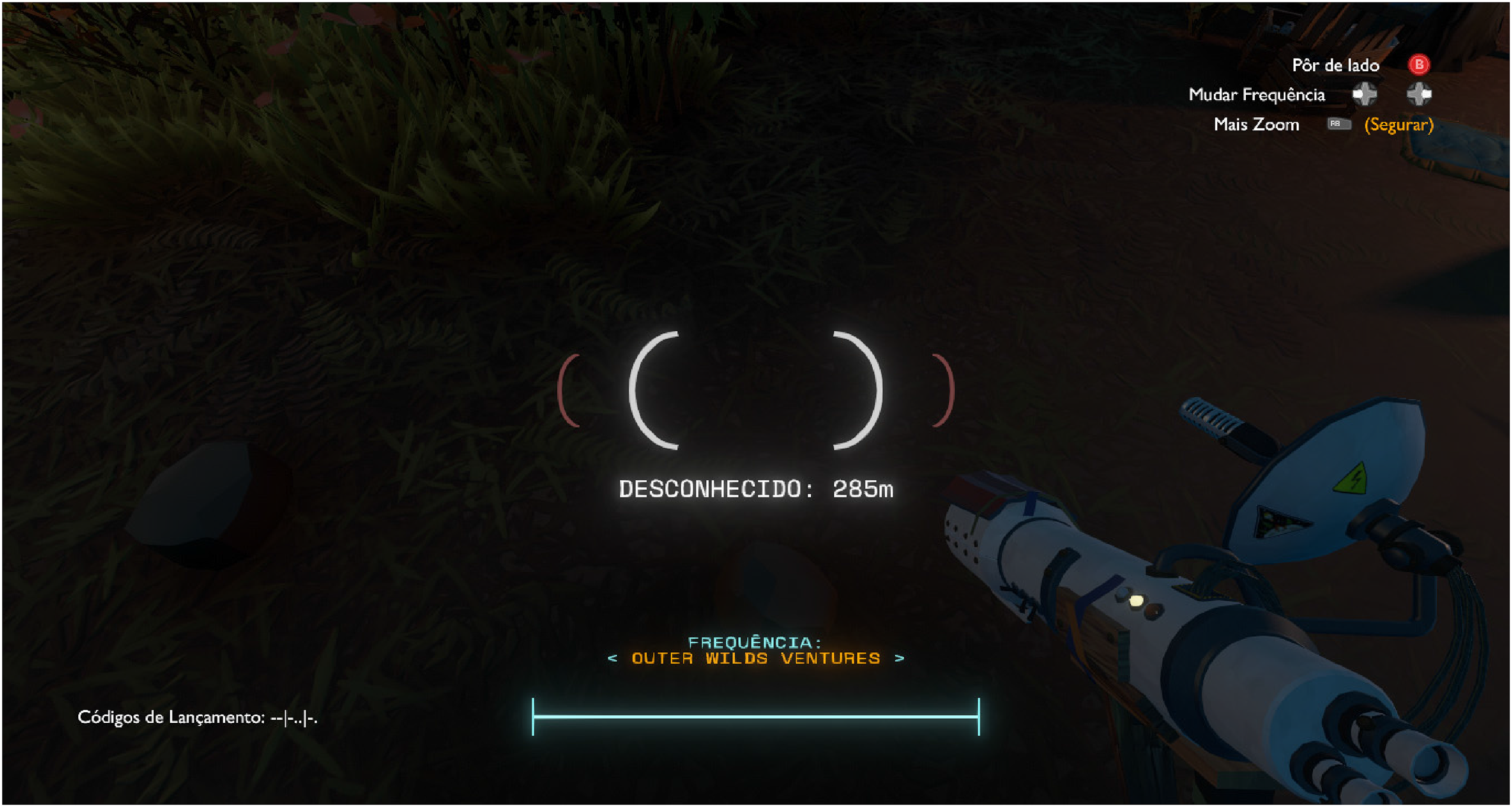
Signal scope.
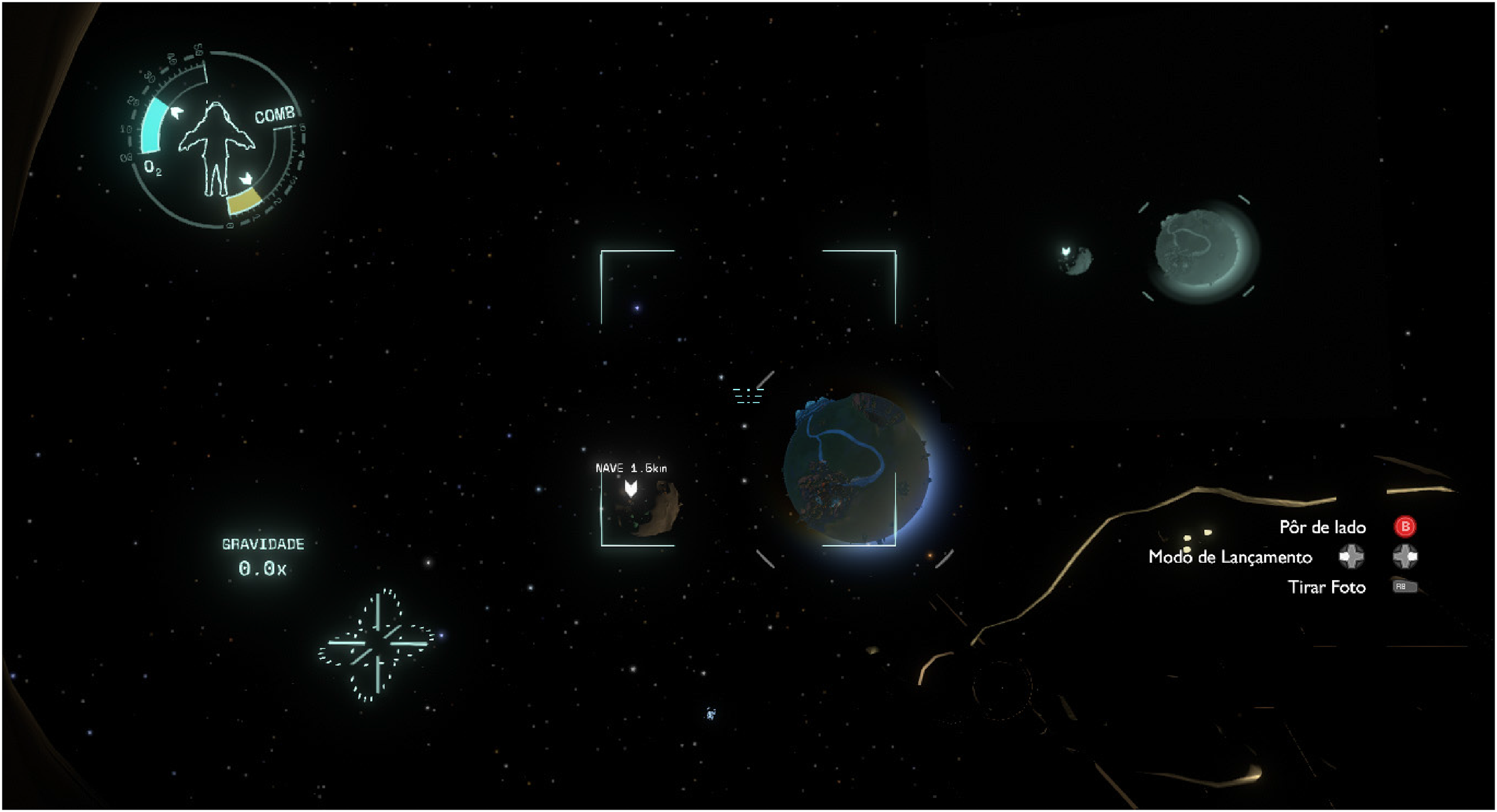
Probe.
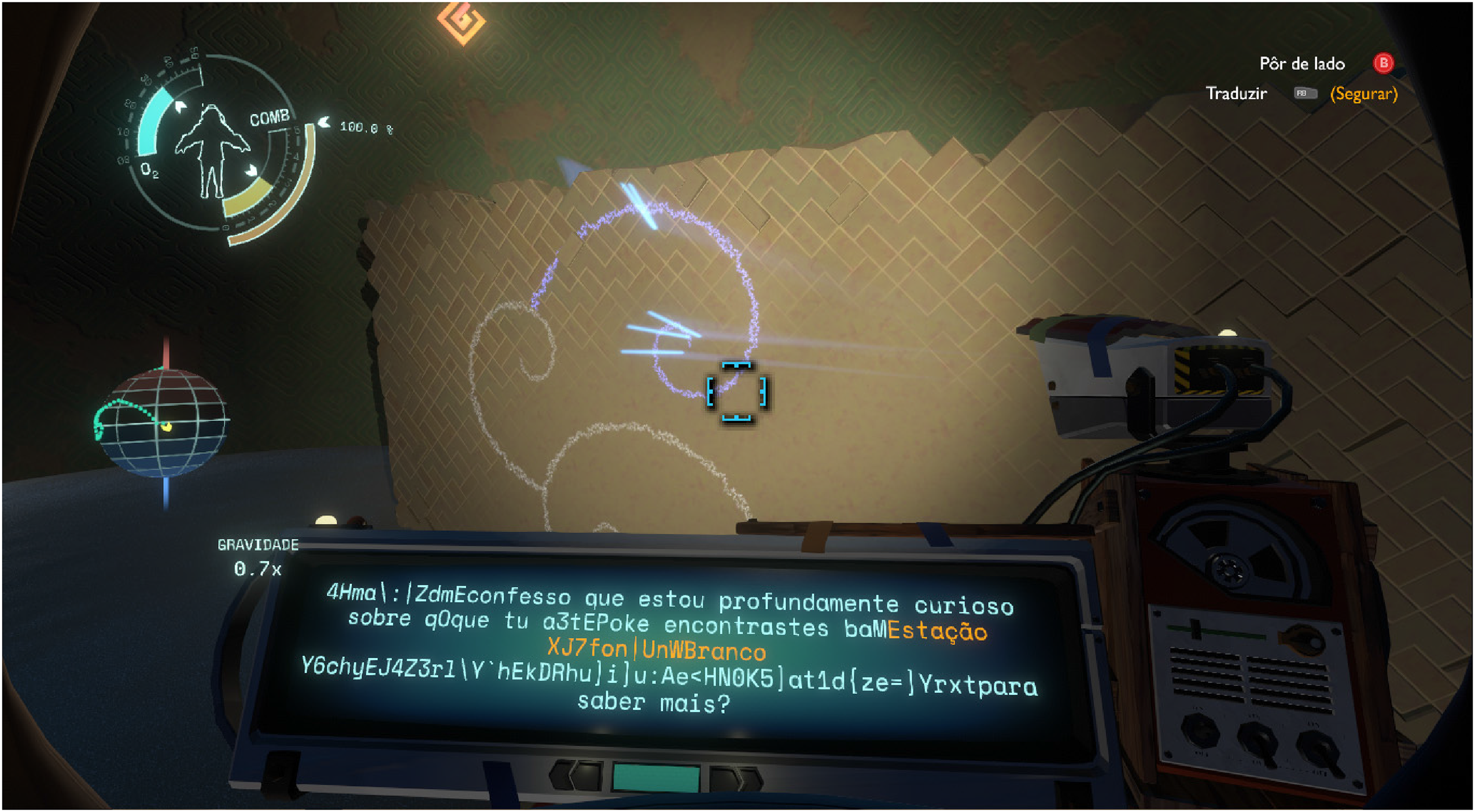
Translation tool.
It is important to highlight that, although creating assets as in-game tools and instruments is generally common in digital game design, in Outer Wilds the relationship between the player, these instruments and the data they reveal about the environment is an essential component to properly engage with an experience of discovery. Players engage with the meaning and function of these tools through in-game tutorials held in the early stages of the experience and by interacting with characters in Timber Hearth or Hearthian astronomers found on other planets during the game. These instruments are part of the fabulation of a fictional infrastructure of telecommunications that, during gameplay, successively operates as a means to unravel the game's universe. More important to our analysis is the fact that such infrastructure is inspired and exceeds ideas of communication technologies associated with current observational astronomy, which refer more profoundly to the contemporary manners of investigating the geomorphology of the solar system 1 .
A tool such as the signal scope only extrapolates the function of instruments like radio telescopes, responsible for detecting radio waves from celestial bodies such as stars, planets, asteroids, natural or artificial satellites, or even black holes. As telescopes allow for capturing only visible phenomena (to the human eye, that is, only phenomena within a very small range of frequencies within the electromagnetic spectrum), radio telescopes are important devices to detect other portions of the spectrum and convert them to graphic representations. In the game, wave detection is sonified with poetic freedom, allowing players to hear a sonic representation of distances in the universe through musical objects. The artifact is also portable, and as a device for personal usage, it allows the player to move toward the captured emissions, stimulating curiosity around these signals. The end goal of this instrument is analogous, still, to what is expected of an efficient radio telescope. Therefore, the knowledge structure of astronomical radio telescopes underlies the game experience, while extrapolated in the game as an available user interface which allows disclosing distant regions of the universe.
In this case, there is an implicit inspiration in the functions of radio-astronomical instruments aimed to comprehend the behavior of cosmic radiation and solar energy emissions or to estimate the movement and age of stars and galaxies. Actual radio telescopes were initially invented by engineers of the Bell Laboratories to study how radio frequencies could interfere in transatlantic telephonic communication, but the technology was further developed with post-war military research (Kellermann 2012). Even though aerospace research had been strongly propelled during the Cold War due to defense concerns of the USA, the USSR, and China, it was also due to such research agenda that more robust investments in university programs in Earth and Space Sciences arose. This was due to the fact that, although in most countries such research had originated in military or government-controlled laboratories, the implementation of scientific projects later came to be conducted by universities and civilian research laboratories (Kellerman et al. 2020; Kellermann 2012). In Outer Wilds, this scientific purpose is extrapolated, and the player proceeds to accumulate knowledge on the solar system and the natural phenomena of the planets and their past, producing a network of information gathering regarding the universe. The extrapolation occurs through intergenerational, accumulated information shared between cosmologists and astronauts from different civilizations. The learning regarding the Nomai people happens by means of the tool that translates the records of their past journeys of astronomic observation. With this, the player begins to progressively reveal and starts to describe the phenomena experienced throughout the game. Planetary orbits, supernovas, ghost matter, black holes, white holes, energy sources, the origins of planets, as well as the mysterious 22-min loop of the solar system events are all composites, and their meanings are apprehended through this time-crossing, collaborative communication between Hearthians and Nomai scientists established through the translation tool. Therefore, the theme of extraterrestrial space exploration in the game is strongly tinted by one of the positive social aspects of on-the-ground scientific practices on Earth.
It is interesting to highlight that it is precisely the collaborative storage, transmission, and processing of information that characterizes several contemporary Earth and Space Science endeavors—and the game does nothing more than amplify this condition through a fictional tool. If today scientists are able to study dark matter, question themselves over quasars in the center of distant galaxies, or even understand the reality of climate change on the very Earth, such advent owns greatly to the organizational capacity of universities and research centers in transnational networks, which characterize widely recognized knowledge infrastructures. By design, these infrastructures reflect “projects for permanent, unified, world-scale institutional-technological complexes that generate globalist information not merely by accident” (Edwards 2010, 25). This is especially the case when considering the dynamics of sharing the information collected through satellites and telescopes spread throughout several parts of the globe and the capacity to calculate and process these data on a planetary scale through informational systems. As Sagan (1997) notoriously observed, international cooperation was strongly stimulated by space exploration programs, especially regarding scientific cooperation. Eventually, the astronomic observatory from a laboratory in a given country requires observable data obtained through a perspective unavailable in their hemisphere, for instance. More importantly, questions of common interest (such as climate change) came to be shared and discussed through a mutually comprehensible scientific language, and this commonly-established parameter becomes a necessary condition for the understanding of Earth as a system that is shared, integrated, and interdependent with other systems. The dissent, disagreements, and heated debates regarding this topic (Veiga 2019) are also qualified with the support of this shared language. This supranational interest in Earth systems is what allows one to affirm that, from the height of a terrestrial orbit, even “the most deeply engrained nationalisms begin to erode. They seem the squabbles of mites on a plum” (Sagan 1997, 104). More than a point of intersection for international relations, space sciences generate this interspersed knowledge on the solar system, an archive of the planetary reality that is shared between scientists and interested civilian organizations and goes beyond geopolitical disputes of nation-states (even though they are not invulnerable to them)—a condition that is also extrapolated in Outer Wilds.
After all, in the game, it is precisely this shared archive of exogenous planetary dimensions that mobilize a generalized understanding, common to both the cosmologists inhabiting the Timber Hearth and the ancient Nomai astronauts. In this sense, it is interesting to mention that the inscriptions interpreted with the prototypical translation tool generate entries in a player-retained information file, the ship log (Figure 4). Throughout the several exoplanetary travels performed by the player, this log ends up arranging a complex atlas, filled with archival data over the solar system. This repository groups the messages left by the Nomai which were collected and translated by the player's Hearthian avatar during expeditions. It also includes hypotheses and references provided by the Hearthian network of cosmologists allocated to each planet. From a game design standpoint, the ship log can also be thought of as a kind of centralized database archiving and organizing the events and phenomena observed throughout the gameplay.
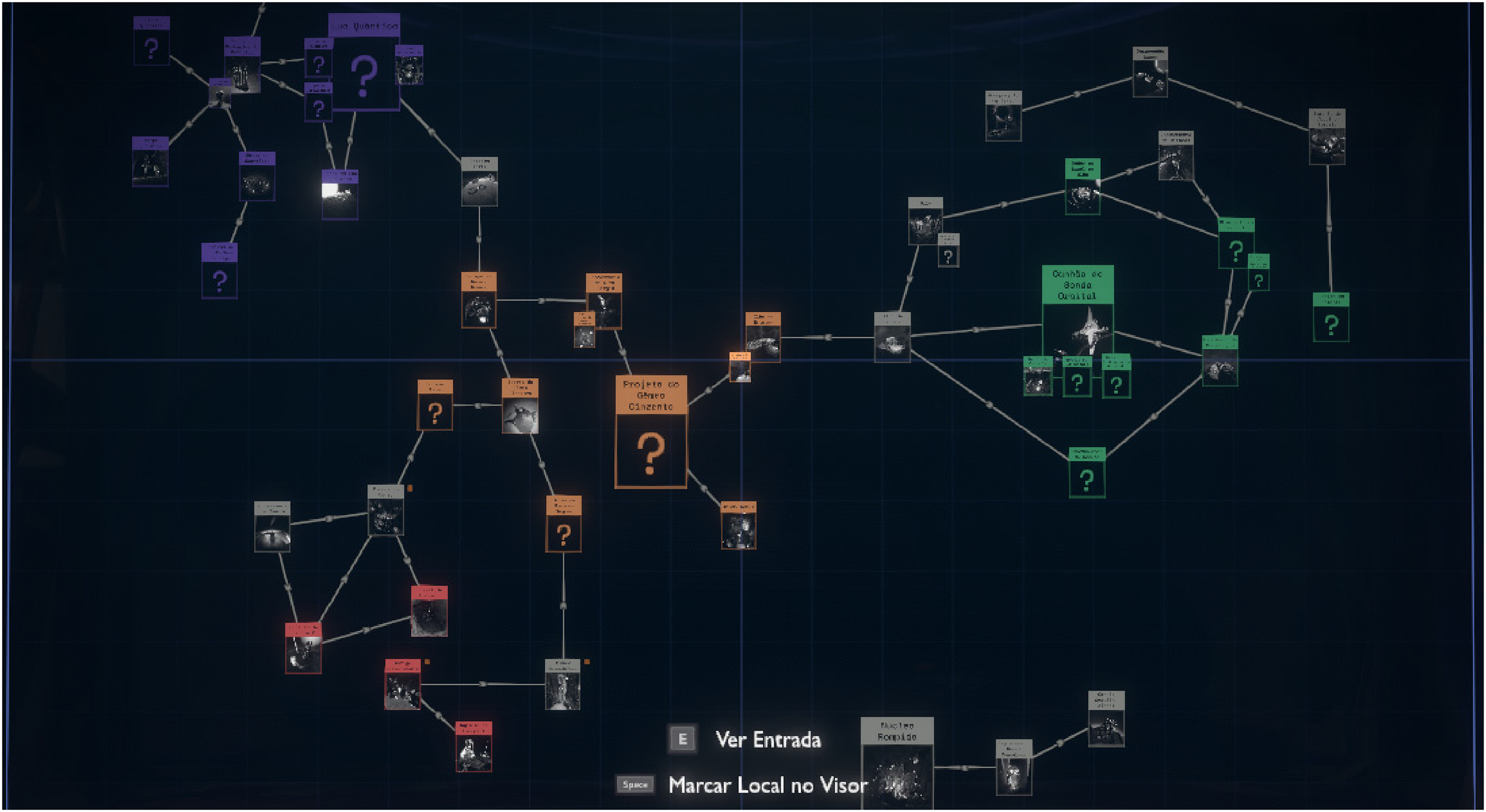
Ship log.
By completing the ship log, the player receives the Archaeologist achievement, a reference to the function of a space archaeologist. As a field aimed at “the material culture relevant to space exploration that is found on Earth and in outer space (i.e., exoatmospheric material) and that is clearly the result of human behaviour” (Gorman & O’Leary 2013, 409), space archaeology focuses on illuminating the interaction between human action and aerospace technology. It attempts to utilize the material heritage of space missions to better understand their past and plan their future, having methods such as interplanetary debris excavation in sight. Besides the hundreds of tons of aerospace garbage entering orbit annually from rocket staging and equipment pieces abandoned by space programs (Thill 2015), space archaeologists find their work materials in the obsolete objects reentering Earth's atmosphere until they reach an oceanic pole of inaccessibility—as the spaceship graveyard comprehending a remote 1,500 km² area in the middle of the Pacific Ocean is known. As media archaeologists have been arguing for several years now (Kluitenberg 2011; Zielinski 2006), the excavation of past media cultures is not only an important activity itself but it also participates in strengthening the critical capacity of cultural practices still to come. This is a very interesting aspect to observe regarding the fictional game universe, as the tech paraphernalia invented for the game seems to echo such a conception. From this stance, debris from rockets, space capsules, satellites, and the ruins of laboratories and workstations utilized by the Nomai are also devices for interpreting the past of this civilization (Figure 5). In such a manner, found debris helps in updating information and improving the formulated hypotheses displayed in the ship log, besides allowing the tracking of phenomena experienced by the player in the present time of the storyline.
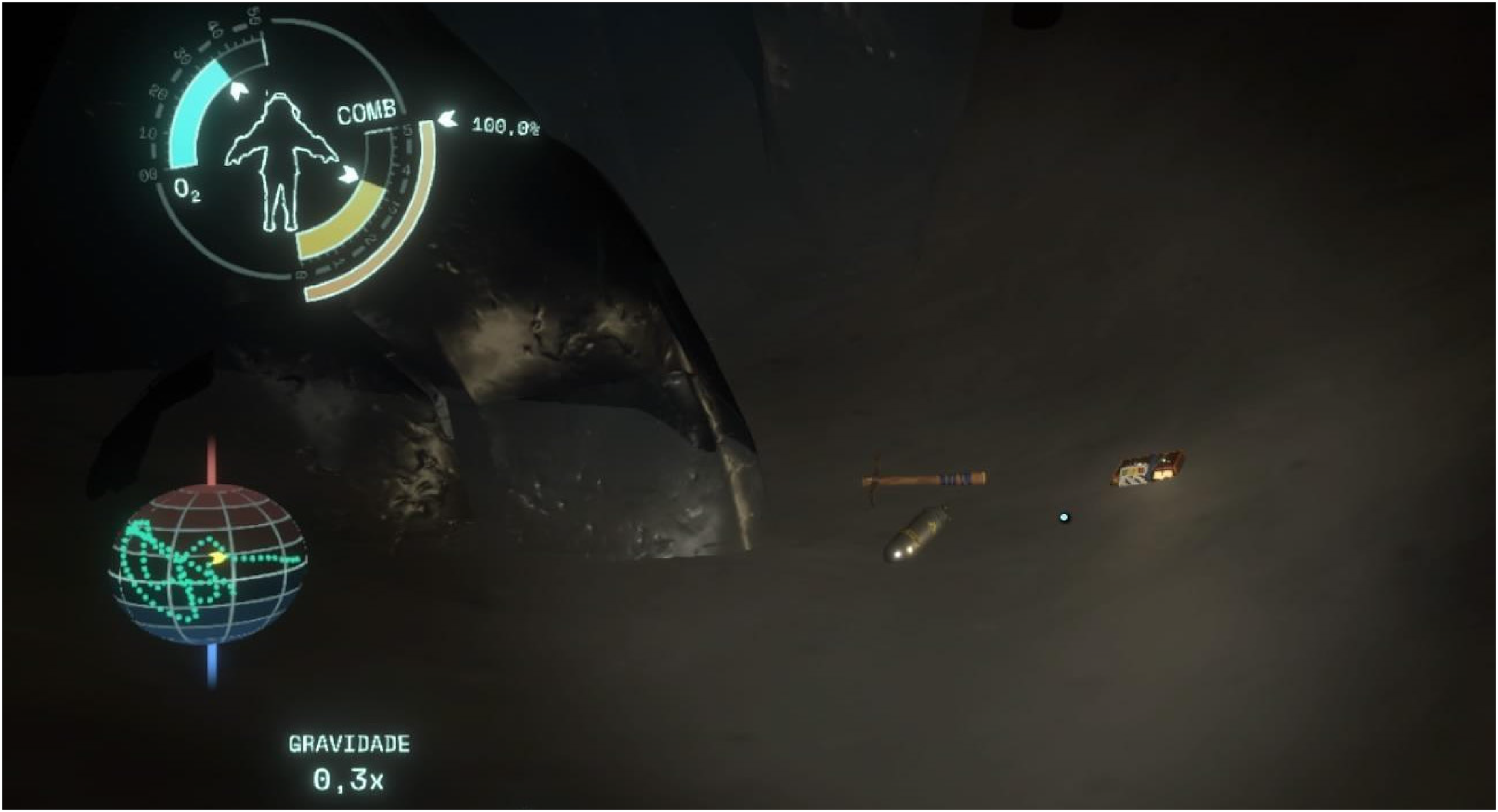
Debris from a crashed spacecraft and several abandoned objects.
Compared Planetology
But if the fabulation of tools available to the player makes use of technological extrapolation in order to create a particular, fictional vision of contemporary space travel in Outer Wilds, there are other conceptual intersections that the game elaborates regarding the technical conditions of astronomical observation.
There are several imaginary aspects of the designed space of the game that function as a device to promote an interest in the exogenous and the unknown. The game builds its own heliocentric galaxy composed of six planets (Timber Hearth, Giant's Deep, Ember Twin, Ash Twin, Dark Bramble, and Brittle Hollow) and an asteroid (The Interloper) which orbit around the sun (Figure 6). The fabrication of an astronomical system is one of the main aesthetic and enunciative devices of the game, as the dynamics of the interaction between celestial bodies help formulate a cosmological perspective within the game experience. Therefore, the main function during gameplay—taking off to explore the cosmos and learn more about oneself through the physical, chemical, and geomorphological properties of the surrounding planets—traces back to the subfield of astrogeology known as comparative planetology, which aims to find relatable principles between the material properties and the history of different celestial bodies (Anderson 2007). By gaining knowledge about various natural phenomena, geological formations, biogeochemical compositions, dimensions, atmospheres, and so forth, it becomes possible to establish parallels and gain a deeper understanding of the interdependencies among various celestial bodies. The evolution in the ways we comprehend and investigate the universe is accompanied by technical imagery that stimulates reflections on other planets and our own place of residence. Astronomical imaging, enhanced by photographic and computational equipment and processes, nuances our experience in relation to Earth and space, contributing to the conception of our place within this system.
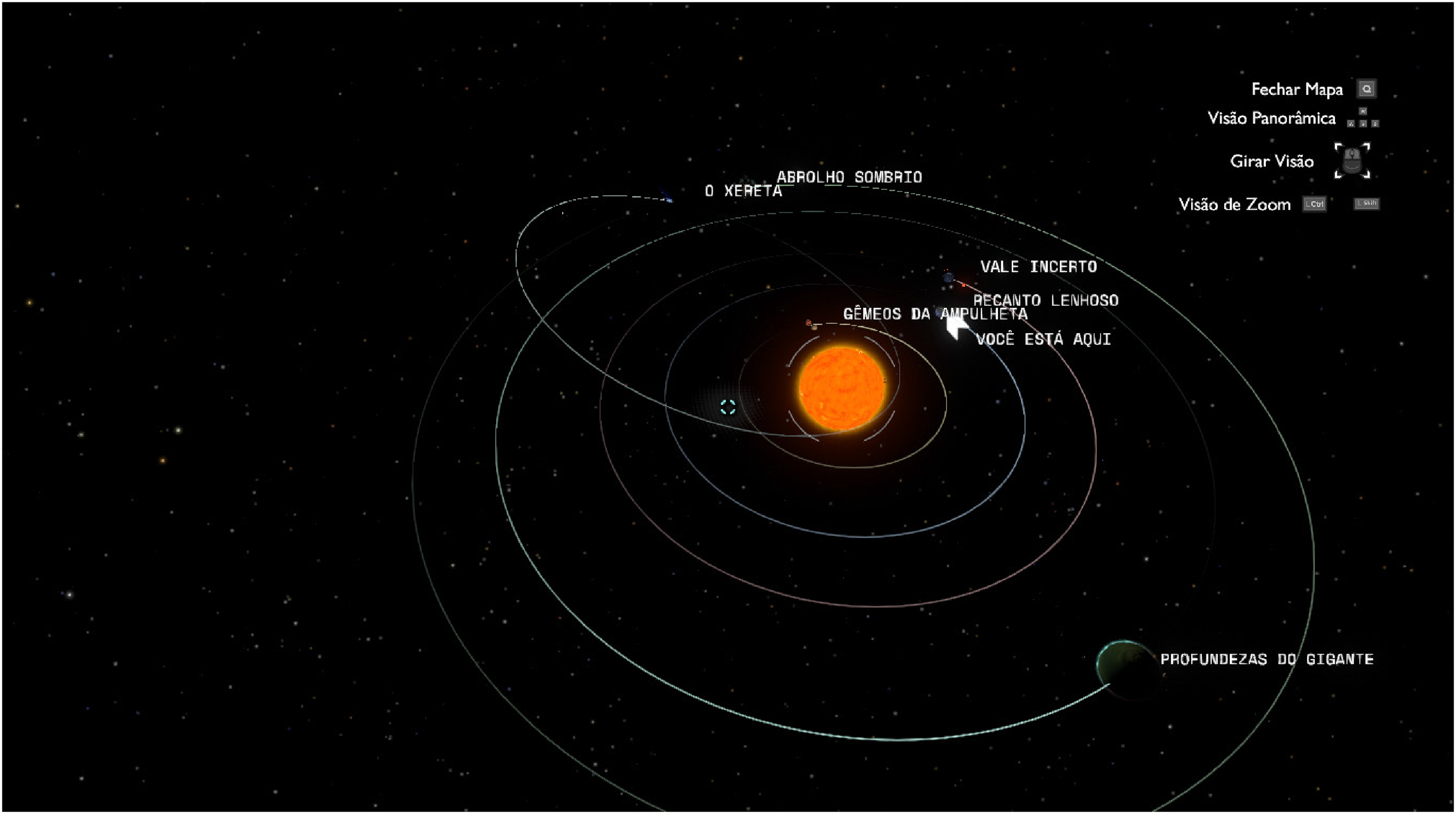
Fictional astronomic system of Outer Wilds.
In a similar fashion, it is often said that the celebrated Earthrise photograph (Figure 7), taken by one of the crew members of Apollo 8 in 1968, implies more than simply a different angle to see the Earth. For Bonfiglioli (2018), this image radicalized a common sight among earthlings. It established a common communication means regarding the Earth's surface by attributing poetic and geopolitical contours to it, different from the first black-and-white shots taken by satellites. By producing images with different graphic and resolution qualities, this technological leap accentuated both a conceptual transition, in dislocating the protagonism of the human subject in visual recording, and an ecological one, due to the environmental projects that it would entail. Although the first images of Earth from space date from the 1940s, the image of the planet as seen from the moon became known for providing a face to the emergent ecological movements by the end of the 1960s. One of the main publications proposing to reinvent the ecological movement, the Whole Earth Catalog (1968) by Stewart Brand, had precisely Earthrise as its cover illustration. Attempting to connect the ecological foundations of the San Francisco Bay counterculture with applied interventions of the design science of Buckminster Fuller, the Whole Earth Catalog is an emblematic expression of the technocultural verve of that time. Aligned with cosmopolitan interests, formal attempts of supranational organization and renewed Promethean aspirations, some of the most well-known utopias from the dawn of the digital age arose from this publication, which also had a role in imagining such emerging technological infrastructures (Turner 2006).
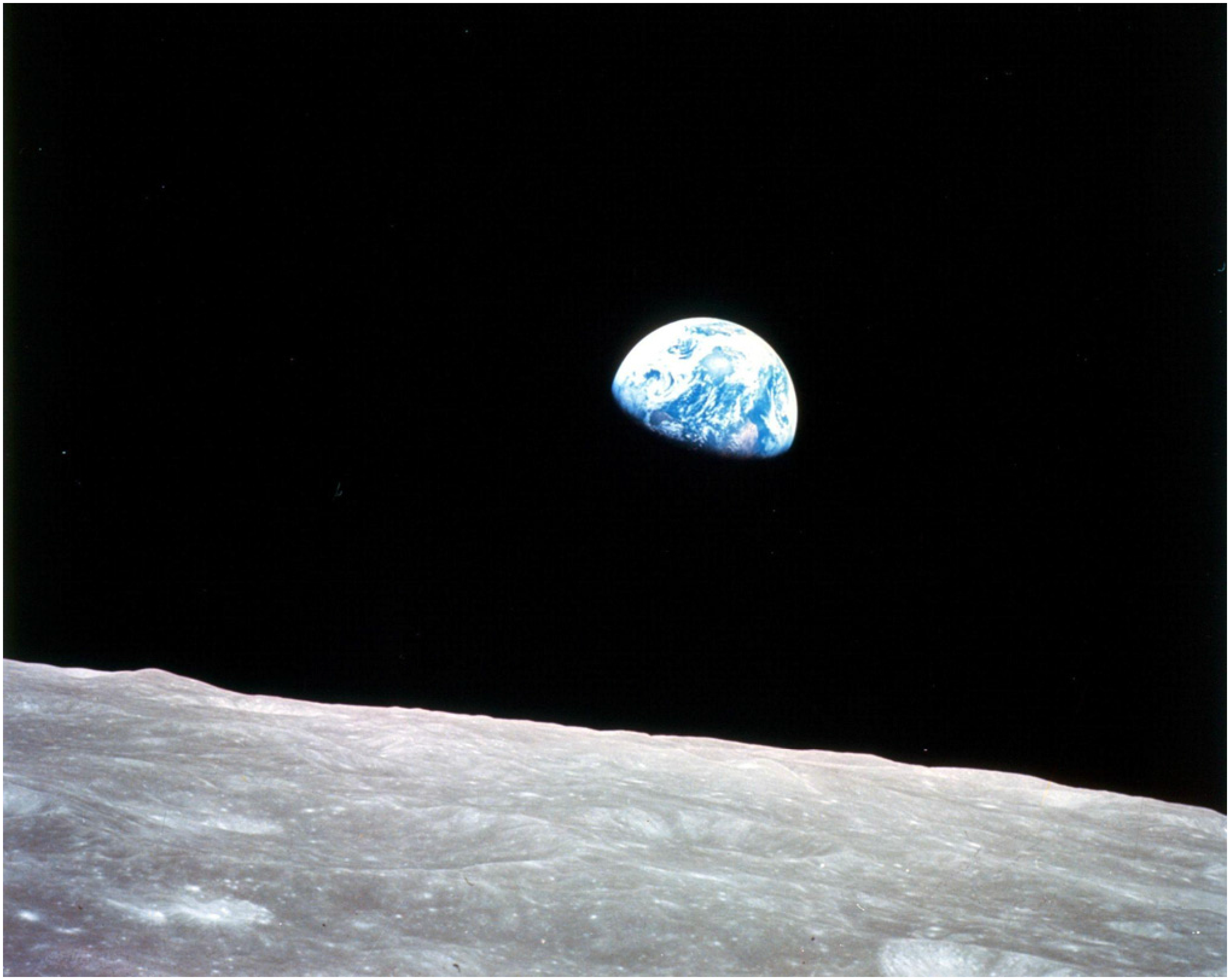
Earthrise.
It is interesting to observe how astronomical imaging correlates with these technocultural aspirations. Earth as seen from the outside, seemingly homogenous, is a visual metaphor that can be related to the idea of a “global village,” as coined by McLuhan (1964/1994). Even though McLuhan referred more specifically to the effects of the electrical revolution and emerging media systems over human modes of perception, it is hard to think that images such as the Earth seen from space as a blue marble (Figure 8) do not visually illustrate, in an almost literal fashion, the idea of “a planet reduced to village size by new media” (McLuhan 1994, 149).
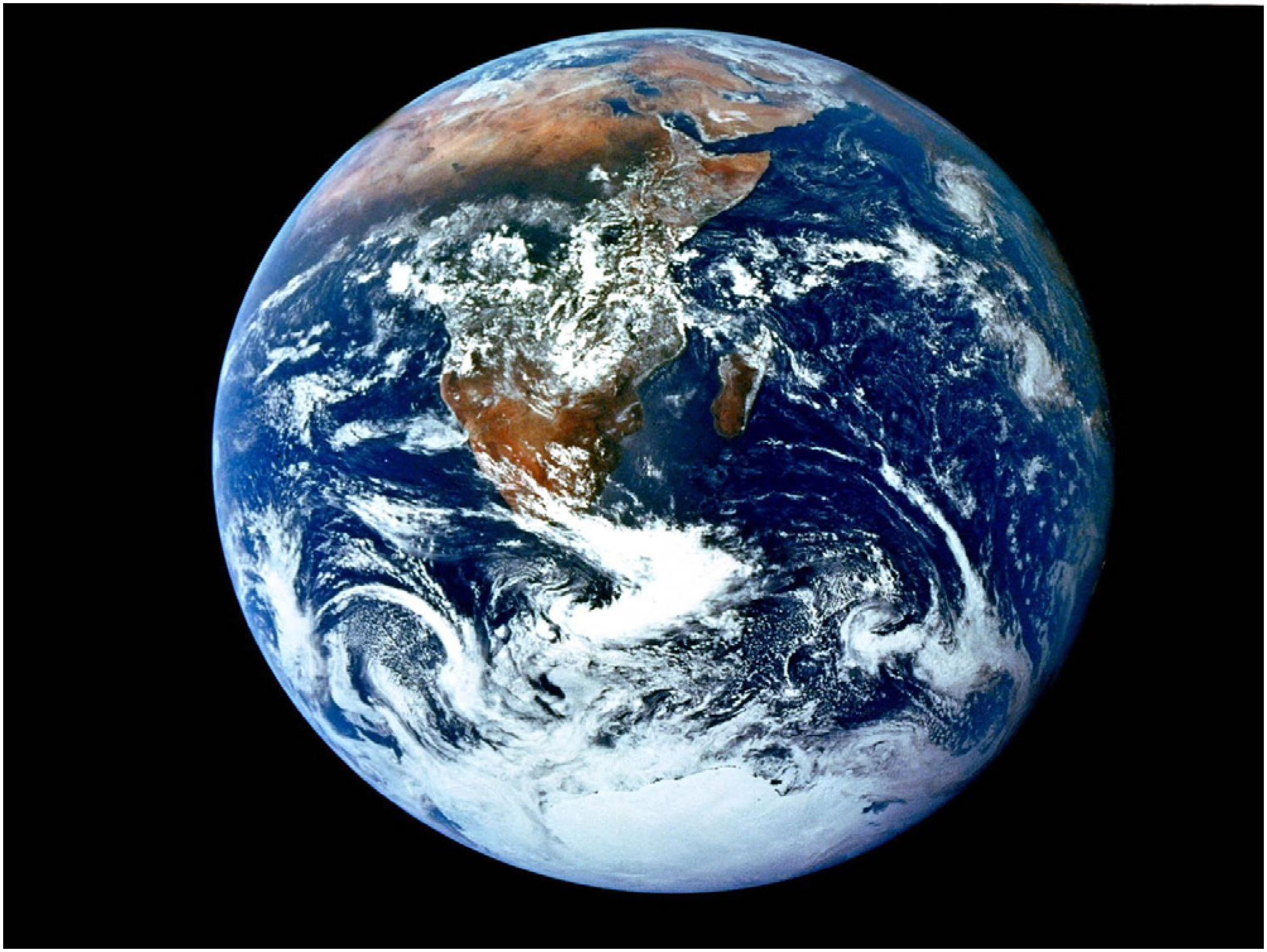
Blue marble.
The relationship between space programs and such a conception becomes even clearer when one considers the technologies developed to monitor and study the Earth and the solar system. It was with this purpose, for instance, that in 1957 the Soviet Union launched from the Baikonur Cosmodrome the first artificial satellite to orbit the Earth, Sputnik 1. In a 1974 essay, McLuhan wrote retrospectively on Sputnik, declaring in his well-known prophetic tone that, after its launch, for the first time the natural world was completely enclosed in a man-made container. At the moment that the earth went inside this new artifact, Nature ended and Ecology was born. “Ecological” thinking became inevitable as soon as the planet moved up into the status of a work of art (McLuhan 1974, 49).
Perhaps the main problem in evaluating the global village hypothesis is not the premise itself, but its indiscriminate generality. If there are effects of contemporary media in relation to our perception of the dimensions of Earth, as there seems to be, maybe it is because they more strictly substantiate the mobilized technical conditions to describe planets and trace their stories collectively. From the epistemological principle that we know our surroundings and ourselves through technical means that expand (and constrict) the human conditions of knowing, it becomes necessary to situate the role of technological infrastructure in this supposed paradigmatic cleavage. To be more precise, one should properly evoke an inversion of one of the main slogans from McLuhan's media theory. It was the media theory of Friedrich Kittler that, although still very much inspired by McLuhan (Winthrop-Young 2011), decidedly inverted the McLuhanian formula: instead of understanding technologies as extensions of man, Kittler (2016) suggested that the “so-called man” was in fact the subsequent extension of underlying technological processes and structures. Technical mediation is, for Kittler, a material a priori that defines the conditions of possibility of knowing and acting in the world.
This digression through media theories is important to discuss the game because we understand that such processes and structures underlying technology appear in the very astronomical imaging evoked by it. If one finds images of the reminiscent anthropocentric perspective, under which humans are capable of provisioning orbiting planets in a single glance, other images can be found to dislocate this human-centered perspective in light of the contemporary technological conditions of astronomical observation, as we examine next.
We must first observe, though, how Outer Wilds embeds these traditional images of astronomical imaging into the experience of players. Like in the celebrated Blue Marble picture, the first-person voyage through space in Outer Wilds confronts players with tens of small planetary marbles (Figure 9) which can then be surrounded to have their terrain monitored, so that one can choose the proper hemisphere to land the ship before proceeding with the exploration.
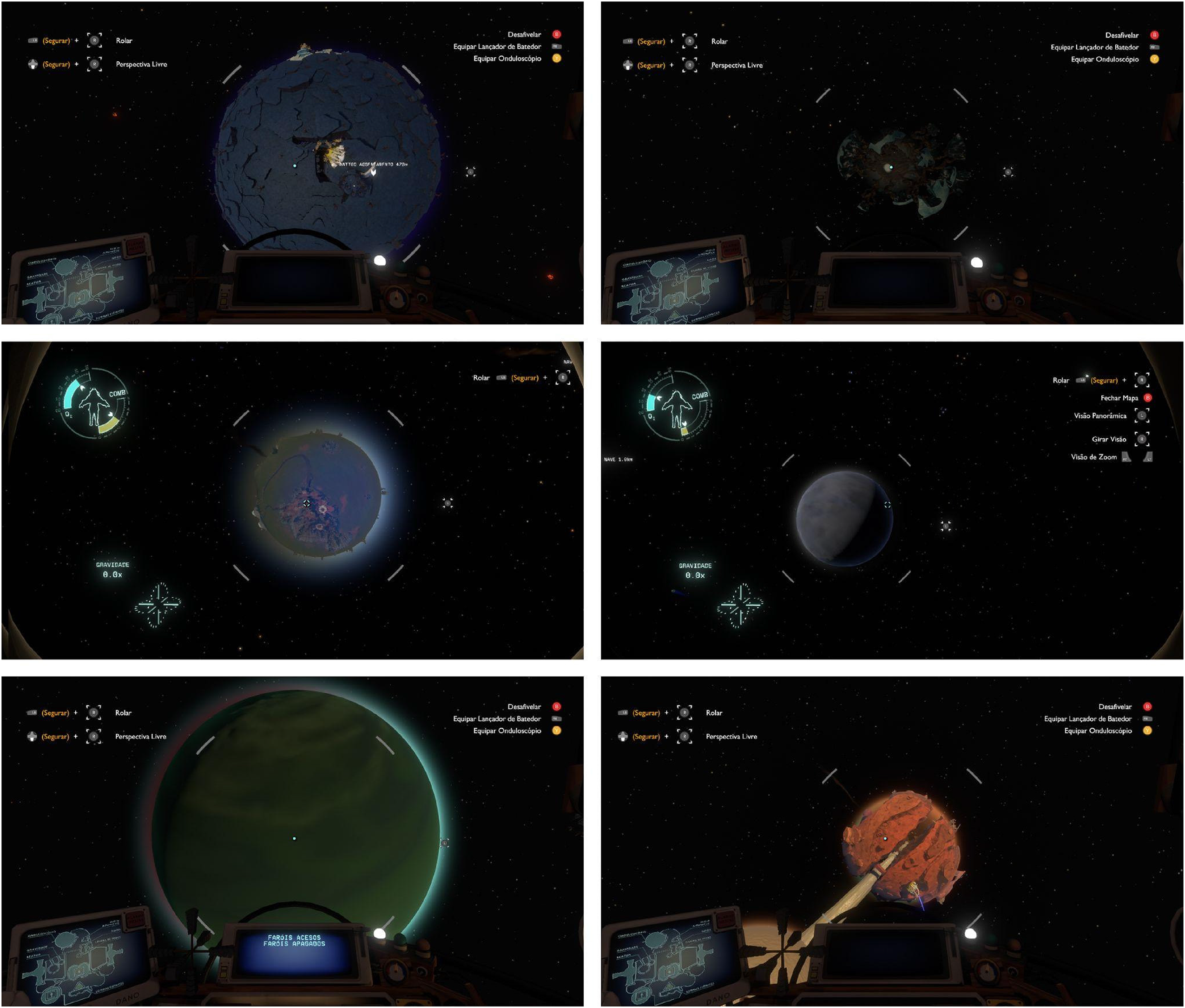
Collection of images of several game planets, all seen as small marbles.
It is also possible to obtain images from the surface of satellites, planets, or space stations with the probe tool, supplementing the images of planets as homogenous and voluminous spheres seen from an exogenous territory in the fashion of Earthrise (Figure 10). In the game, we have several opportunities to observe and compare the planets, as well as their interactions, through interfaces such as planetariums, astronomical observatories, and telescopes.
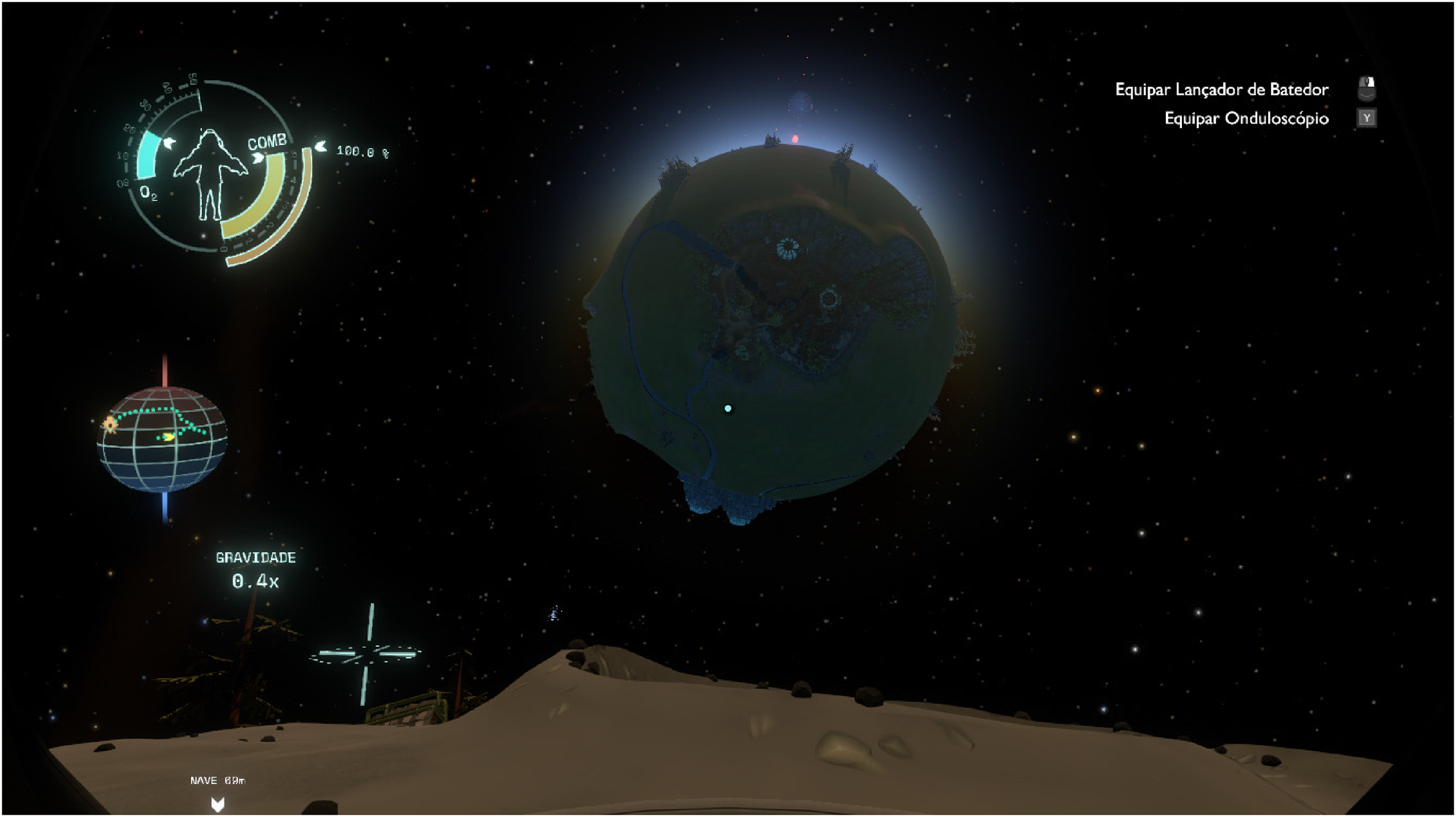
Outer Wilds screenshot taken in the fashion of Earthrise.
If we affirm that a decades-old photographic image of a purportedly whole Earth taken from the far reaches by a satellite materializes certain conditions of knowledge of the world, it is also important to question what are the technological preconditions of observation applied nowadays in particular. It is in this sense that Kittler's observation about the “so-called human” as a composite, an extension of knowledge structures and technological processes, becomes more pertinent. After all, digital games as technical objects of computer modeling also provide significant images of how we come to understand the world, ourselves, and other species in a given period. These images are part of the imaginations of spaces, fictional or otherwise, that we develop contemporarily.
In this sense, current astronomical imaging cannot be separated from its interfacing with computational astrophysics. It is under this perspective that Bratton (2015, 2019) suggests that we can think of Earth, in the current stage of planetary-scale computation, as a robust camera composed of an extensive mesh of satellites, antennas, and photosensors that perform a shutter function to capture a discrete and well-defined image of exteriorities. This planetary, computational view from Earth toward the cosmos is what allowed, for instance, the Event Horizon Telescope project to obtain the first image of the shadow of a black hole in 2019. The image features a shining ring circulating a dark center, the black hole, which can only be deduced by its shadow. The area, located approximately 55 million light-years from Earth, could be visualized due to the combination of an ensemble of eight radiotelescopes and synchronized supercomputers located in different regions of the world.
This more-than-human gaze is not the perspective from a conventional camera equipped with lenses to view like a technology-enhanced human eye. The image of the black hole has immediately generated copyright disputes, with uncertainties regarding ownership that put challenges to jurisdiction issues. Debates followed asking whether the image is in fact a photographic piece, a share of a database or a computer-generated work (Li 2019). But what would this image be, then? As a collection of visualizations from several imaging devices located in eight geo-distributed observation stations, the visual output is the result of a coordinated attempt to produce a single gaze through the technique of interferometry. In astronomy, interferometers combine the light collected by more than one telescope. Put together, these images let telescopes act as one bigger virtual device. The waves of light from each telescope are added together, making the output brighter. Interferometry made it possible to see fainter elements in greater detail, allowing astronomers to reconstruct massive-scale images of the black hole in the center of the elliptical galaxy Messier 87 (The Event Horizon Telescope Collaboration 2019).
If we try to imagine a kind of compared planetology that examines, more than the planets and their properties themselves, the different ways of seeing them, we can then exercise a brief analogy between these different technocultural conditions for observing space, in order to understand how fictional works articulate them. We already highlighted here that Outer Wilds features in its fictional world some of the visual tropes that imagine the Earth as a small global sphere, in the manner of the technocultural vision that influenced ecological movements in the 1970s. It is also relevant to comment on how the technoculture of planetary-scale computation, which originated the black hole image, appears in the game. Highlighting the more-than-human condition of its realization, Bonfiglioli (2018) and Zylinska (2017) point to the decentering of the human subject both as the theme and the authoring of this image. Although exploratory activities and images in Outer Wilds are generated by a Hearthian agent, the transitory time-lapse through which the character has to explore the vastness of the universe testifies about the autonomy of the system itself, which keeps following its course regardless of the choices of the player. Agency, therefore, appears to be superseded by the inherent structure of the physical system—both gameplay mechanics and the narrative converge to that.
The different images provided by different modes of astronomical observation culminate in distinct relationships of humans with our self-image toward outer space. If the image of Earth as seen from the outside modeled the planet as a marble, a regularly shaped landmass to be sustained and managed with care under an ecological approach, the meaning of the black hole image leads toward a slightly different pathway. Through it, the anthropic agency is indeed limited and understood through a comprehensive network of distributed knowledge. The silhouette of the black hole is produced by numerous human and inhuman agents working in cooperation to produce a meaningful image through abstraction, much more radically interdependent than the previous technical images of Earth from outer space.
In the fictional universe of Outer Wilds, the Nomai created a complex, shared cluster laboratory built to control densely concentrated energy mechanically, to manipulate space-time axes in order to send objects to the past. The 22-min loop, the primary procedural rhetoric of the game (as the player must indelibly deal with the journey restarting), originates from this event. Every 22 min the sun is due to explode because of this experiment. Thus, throughout its fictional universe, the game model infers that the anthropic struggles with technology can alter the course of nature, but the outbursts from these acts are very unexpected. Players are apparently preordained to experience the same pathway at each cycle, in a brief spasm of time which cannot be fully understood by the perception of the single individual. Players, nonetheless, must clear the flow of time in the narrative (which is also the most determining gameplay mechanism) by undoing this procedural cycle. This action, which ultimately leads to the ending of the game, can only be accomplished after players go through the process of exploration, associating the knowledge of Hearthian cosmonauts with the messages left by the Nomai from their previous experience in the solar system. As Lev Manovich notoriously put it, the relationship between what is expected from players of digital games and the behavior of algorithms should not be taken for granted: games demand that the player execute an algorithm in order to proceed (Manovich 2001, 222). As players proceed in a game, they gradually discover the rules that operate in the universe constructed by this game. In games in which the gameplay departs from simply following an algorithm, players engage in the experience by trying to discover the algorithm itself: playing is a continuous loop between the user and the computer, with players trying to build a mental model of the computer model employed. In Outer Wilds, the gradual discovery of such a model is coupled with the idea of learning how the game's (solar) system works, through the several tentative journeys of exoplanetary exploration. Trying to decipher the algorithm is overlaid with connecting the traces of the actions made by an anthropic-like species in previous generations. An understanding starts to form through the patchwork of information collected from different sources and successive, iterative processes of exploratory observation.
The Blue Marble imagery illustrated the emerging ecological movement and, perhaps paradoxically, a renewed form of humanism. Under such a perspective, the Gaia hypothesis, which understood Earth as a living and self-sustainable organism 2 (Lovelock 1972), as well as the Medea hypothesis, the vision of a cruel and hostile planet destined to generate mass extinctions (Ward 2009), both can be said to express profoundly vitalistic epistemological stances. The evolution of the planet was at the time imagined through a teleological heuristic model articulating the Earth with a purported holistic wholeness. Contemporary astronomical images seem to resonate with a third hypothesis (of greater dismay to the more narcissistic) describing a nature lacking any finality (Tyrell 2013), a perspective that could also be said to manifest itself in the image of the black hole. The Earth that becomes a colossal photographic camera measures not only itself but also aims to the outside from a virtual and abstract place calculated by synchronized image processors.
These instruments, even though of anthropogenic origin, allow for the formulation of an image of the world that does not reflect an anthropocentric gaze to the outside, just as the images generated by the probe tool, which can be sent to the orbit of places unreachable even to the most ambitious astronaut. In this journey, however, a privileged view of these universes that consume themselves materially is offered both to the player and to the Hearthian protagonist. This vision, beyond wonder and dismay, also presents itself as one of the main philosophical insinuations of Outer Wilds.
Oblique Orbits
If it is no longer the case of imagining a balanced and self-governed universe, neither, otherwise, one which conspires against us, the alternative imagery in contemporary technoscience allegorizes the more restricted, but still privileged mediation role played by anthropic agents in the world.
Akin to this, we understand that the manner by which the player experiences space travel through Outer Wilds suitably materializes the position of the contemporary science philosofictionalist, whose gaze is mediated by a series of artificial sensory devices. This is the vision of an individual that observes through multiple, collaborative tools and elaborates on this condition. What further enforces the existential tone of this journey is, nonetheless, a very proverbial feature: the game engenders curiosity, in particular, as a preponderant value of the fictional experience (Beachum 2013).
Philosofiction refers to the production of knowledge over what is real through fictional elaboration, while exploring the frontiers between reality and imagination (Felinto 2018; Szendy 2013). In this regard, we can say that in Outer Wilds the experience of learning and knowing proceeds from an obstinate tension toward the unknown. This is not meant in a didactic sense, but as game mechanics that value curiosity and exploration over achievements. As the player roams throughout the unknown space without clearly defined objectives, the sense of curiosity is amplified. And it is precisely this point that should be highlighted: even though throughout its level design the entirety of the game setting is focused on cosmological motifs, the whole project is ultimately geared toward experiencing discovery and exploring strange, unknown phenomena and places. This journey of discovery and reconnaissance is permeated with existential matters referring to the Nomai species, indirectly having the protagonist questioning the past of the very Hearthian species—which suggests questioning the place of the human itself in a universe so profoundly examined and yet so much unknown.
However, differently from the aesthetics of games that so frequently connect unknown spaces to terror (as often is done through the alien threat motif in outer space settings), in Outer Wilds the cosmos is not a place for confrontation or dispute. Instead, players attempt to explore space while waiting for a supernova that will successively reconstruct the universe at the interval of 22 min. After the explosion, one simply awakes and gets up on the same planet, with a renewed opportunity to uncover its surroundings (suggestively, the player always already awakes right next to the spaceship launch area).
This is not new in terms of game design. Such mechanics are very frequently used in walking simulators, where the experience of players is expected to be centered around contemplation and fruition of the gameworld's atmosphere. Even though there are in fact gratification bonuses (game achievements) when playing through Steam, X-Box, or PS4, the game does not possess a necessary progression system or an acquired skill tree, resulting in the possibility of finishing the experience in simply 22 min or, otherwise, taking more than 50 h. There are no enemies to face, and most of the items found along the way are not operationalizable. Crafting mechanics (manipulating objects and resources from the game environment), which is recurring in ecologically themed games, is of little use in Outer Wilds.
Nonetheless, this points out to the central enunciation of the game, and where its philosofictional aspect is highlighted in comparison to other space-themed games. The whole structure of Outer Wilds implies that, even when encountering materials or debris throughout an expedition, the main task of the player is to continue investigating the complex and vibrant ecosystems (Pozzo 2020), engaging further with the gaps still left to understand. Demanding that the choice of the flight destination be of the player-cosmonaut, the fundamental game mechanics is a sense of progression intertwined with the discovery of unknown phenomena in a given time and space within the game. As game writer Beachum (2021) puts it, looking at the sky, as it happens at the beginning of each 22-min loop, is a widespread metaphor for the experience of curiosity and the sense of unknowing. While thinking of what to do next, what arises is a simple and uncomfortable acknowledgment by the player: “I don’t know.”
Eskelinen (2001) argues that while in literature, theater, and film the dominant function of users is interpretation, in digital games configuration also plays a central role, and gaming operates through a highly iterative process of gaming situations enacted in the event of playing. The situations in Outer Wilds engender the sense of exploration as an end in itself, as a matter of cognitive estrangement. Widely pervasive in SF studies, the situation of cognitive estrangement presents slightly distinct definitions. In the more conventional and general sense treated by Suvin (1979), Wegner (2005), and James and Mendlesohn (2003), estrangement provides a meaning to the specificities of fictional worlds and its imagined inhabitants in every workpiece, having especially processes of acclimation in sight: the characters, the language, the manners of working, dressing, acknowledging oneself and interacting with others. Such estrangement participates in the emotional outcome of SF works, creating a sensation of enchantment that is peculiar to the genre, as SF writer Bruce Sterling (2009) put it. SF can also be understood to create aesthetic and poetic effects reflecting a social structure which is familiar, but that also possibly provokes displacements from daily events (Barossi 2017). Cognitive estrangement is connected to this structure, as a form that oscillates between the knowable and unknowable, establishing a degree of alterity and raising a critical and diachronic stance within the work. [E]strangement is, as any other affection, a result of an agency, of a meeting between bodies in a given percept (setting). Thus, I propose the diachronic parallax of estrangement as a compositional variation of a “reading” body with the narrative body in a given context and the composition of the reading body with the narrative body in another context. (Barossi 2017, 25–26, our translation)
As its most particular contribution in comparison to other games, Outer Wilds operationalizes this aesthetic trope of SF as a consistent gaming situation. This means adapting it to the medium and exploring its particular features. In this case, the game engenders cognitive estrangement through the particular iterative ways a player engages with digital games. It is also through this aspect that Outer Wilds manifests how SF engages critically with speculation, understood here simultaneously as a method and an “art of the consequences” (Sehgal 2017, 177): speculation as the tentative and in certain degrees pragmatic imagination of unknown futures unfolding over certain material conditions. Therefore, we can say that Outer Wilds is designed toward allowing the player to critically experience the strangeness and the unknown as basic qualities of SF, in a way that is much more familiar to how it is often explored in literature than in digital games.
Therefore, as a game majorly exploring situations of cognitive estrangement one can identify in Outer Wilds objects, images, and concepts familiar to astronomy, while also experiencing a fictional image of the world ending every 22 min, something completely displaced from preexisting reality. Like several SF works, especially in literature, Outer Wilds outlines the gazing toward an unexpected world where the main motivation is a journey to the unknown. Through this motif, it leads players to faraway and yet strangely familiar places each launch and landing of the ship.
Seeking to express a similar, yet nonsimulative condition, Yuk Hui (in Dunker 2020) reminds us that in his Gay Science, Nietzsche was already versed on the sensation of unknowing intrinsic to sailors abandoning the solid ground of terra firma in a world by then still unrecognized as a globe. The philosopher mentions the infinite horizon which was described by those leaving the continent behind. Being confronted by an immense and apparently endless ocean, they faced the fear of the seemingly infinite, of lacking a ground where to return. At the heart of this sentiment would lie the estrangement of the exploration of the unknown.
Notwithstanding, one should remember how stories of marine expeditions are intertwined with the doings of colonialism, and much of the rhetoric concerning space exploration also backs up such an association. Outer Wilds allegorizes the sense of exploration typical of a recognition expedition, while fabulating over such impulse in a different direction. In contemporary times, when new space races are characterized as hobbies of big tech investors playing with rockets, the aesthetics of the game seems to possess an inherent critical component. By launching into space as conquerors of new worlds, the private explorers of Mars and the Moon do not refrain from adopting the widely known narrative of exploration for the sake of extractive principles and colonization. While typical of imperialist world views, such initiatives are often justified with the argument that these are enterprises meant “for the common good,” 3 an argument that was often ingrained in transoceanic expeditions of not-so-distant colonial expansionism. This motif is very recurrent in literary SF works, and it is even more frequent in games of the genre. There is, though, a fine line separating these different kinds of experience, as they offer contrasting perspectives toward the unknown.
As one can notice while observing the crowdfunding campaign subsidizing the game, 4 exploration led by curiosity was a guiding principle since the earliest development of Outer Wilds. The player is tasked with observing and unraveling the dynamic changes and the natural and anthropogenic phenomena occurring in the solar system since launching the spaceship. To enter the Interloper asteroid, for instance, it is necessary to land the ship in one of the crevices of its rocky surface and observe how the planets interact, waiting for the sun to rise and melt the ice, warranting a passage toward the interior of the comet.
Besides, the aforementioned in-game technoscientific paraphernalia provides elements to connect a fabulative dimension to the imagery of exploring the unknown. As Telles (2017) observes from Kluitenberg (2011), all technology produces an image of itself and its implementation is surrounded by a wider spectrum of technological imageries. Media as imageries always exceed media as functioning devices. It is also this excess value of imaginary media that allows for the technical devices of Outer Wilds to be utilized as a prosthetic toward philosofictional elements that explore the unrealized potentials of space exploration. The fictional elaboration of such tools, which operate in an alternative fashion to their counterparts in the context of scientific research in astronomy, eventually produces atypical modes of imagining the apprehension of exoplanetary images and sounds. To the scope of this article, it is very interesting how the fabulation of in-game instruments takes part in conceiving astronomical observation technologies and the observation itself. As if describing oblique orbits between the real and the imaginary, the imagery of the fictional tools performs movements of long separation regarding the technoscientific motifs in which they are inspired in reality, to then vertiginously approximate to them at some specific point in their trajectory. As Felinto (2018, 112) puts it, this is what after all should be expected from SF: “the production of knowledge via a reduction of the absurd operating through fiction,” that is, fiction as an epistemological tool traversing the fictional worlds in their entirety to only then encounter the nonfictional.
Final Considerations
In concluding terms, it is worth highlighting the intertwining between the topics of technoscientific paraphernalia, compared planetology, and oblique orbits while sustaining the argument of the article that, beyond the more habitual imaginations of apocalyptical and eschatological future worlds, digital games also produce experiences engrained with fictionalizing the present time, even when not representing it explicitly. In this sense, one can emphasize that through its extrapolation of scientific practices and tools, Outer Wilds is particularly engaged with the principle of salvaging the cognitive estrangement and the impetus of SF for exploring the unknown.
We have analyzed the mechanisms and basic processes constituting the design project of the game. Even though players are allowed to just enjoy the camp by napping, roasting marshmallows, or interacting with the other inhabitants of Timber Hearth until the end of the 22 min cycle, the gaming situations do not stimulate players to do so, and players would not find any change in the game status or progress in the storyline. Having the epistemic potential of digital games in sight, one can conclude that the fictional world of Outer Wilds allegorizes and creatively extrapolates how astronomical phenomena are currently observed in order to engender an aesthetic of curiosity.
In this sense, the case of Outer Wilds is interesting due to how it brings to the foreground epistemic elements constitutive of contemporary scientific technoculture. This is not something completely original. However, the articulation of gaming situations with cognitive estrangement manages to effectively engender a core feature of sci-fi aesthetics in the game, positioning the fostering of curiosity as a central element of the experience. Furthermore, the game allegorizes how technical devices and other nonhuman agents participate in how researchers conceive their subject, and also how contemporary astronomical observation relies upon communicating collaborative networks sharing codes, techniques, and practices. The game articulates this in particular by providing glimpses of significant concepts, ideas, and world visions that inhabit contemporary technoscientific imagination, while also stretching them through cognitive estrangement.
The philosofictional approach allows us to discuss how in particular Outer Wilds deals with the theme of astronomical observation and space exploration creatively. What the game presents is, therefore, a speculative exercise intersecting game aesthetics with astronomical imaging, providing gaming situations that ignore frequent strategies of games in the same genre, also deviating from popular rhetorics of space exploration that convey predatory, self-interest projects, and expeditions. With this, the game approaches more openly, and quite surprisingly, the knowledge infrastructures implicated in contemporary modes of astronomical observation. This demonstrates the significant permeation of digital games with a wider fabric of practices, techniques, aesthetics, and modes of knowledge in contemporary technoscience and technoculture.
Footnotes
Declaration of Conflicting Interests
The author(s) declared no potential conflicts of interest with respect to the research, authorship, and/or publication of this article.
Funding
The author(s) disclosed receipt of the following financial support for the research, authorship, and/or publication of this article: This work was funded by the Federal Ministry of Education and Research (BMBF) and the Baden-Württemberg Ministry of Science as part of the Excellence Strategy of the German Federal and State Governments. We would also like to acknowledge the support of the Zukunftskolleg at the University of Konstanz and the Science Communication Department at Unisinos University.
