



Abstract
Previous research on player profiles or types is based on players’ in-game behaviors and their motivations to play games. However, there are many other activities related to digital games beyond playing the games properly. Using learning analytics methods, the study investigates the prevalence and interconnections between these different metagame activities and classifies gamers based on their use thereof into distinct profiles. The results show that digital game–related information-seeking activities are key metagame activities with connections to other metagame activities. Three distinct profiles of players were identified based on their metagame activities: versatile metagamers, strategizers, and casual metagamers. The results contribute to the existing literature on metagaming and provide insights for game studies, game design and marketing, and digital games and learning.
Keywords
Introduction
Digital games constitute a diverse group of games to which players give various meanings. For some people, digital games are an occasional pastime, but for others, games and gaming can play a central role in their social lives or be a serious hobby that requires great dedication. Like other media, games can form an important part of one's identity (Hjorth et al., 2020; Thorhauge & Gregersen, 2019). The existence of different types of players, the meanings players give to games, and players’ in-game behaviors have been topics of interest to researchers for a long time, and gamers have been categorized and profiled from many different perspectives. Richard Bartle (1996), for example, classified the players of multi-user dungeons (MUDs), the text-based predecessors of today's massively multiplayer online games, according to their playing styles into achievers, explorers, socializers, and killers. Tseng (2011) clustered online gamers based on their in-game motivations into groups of aggressive players, social players, and inactive players, and gamers have also been classified based on their gamer mentalities (Kallio et al., 2011).
Even though actual gameplay often has a central role in digital gaming, in a broader sense, gaming is a multifaceted phenomenon consisting of a collection of activities intertwined with other media and everyday life (Kahila, 2022). In addition to playing the actual game, gamers discuss games and look for information about games, plan game strategies, watch gameplay videos, and produce and modify various game-related products themselves (Kahila, Tedre, Kahila, Vartiainen, & Valtonen, 2021, Kahila, Tedre, Kahila, Vartiainen, Valtonen, & Mäkitalo, 2021 among others. These beyond-the-game activities related to digital gaming are referred to as metagame activities (Carter et al., 2012; Salen & Zimmerman, 2003).
Metagame activities are a large part of many people's digital game–related activities. Game videos or live streams are sometimes watched, even by people who do not actively play digital games themselves (Orme, 2021). However, those who strongly identify themselves as gamers usually participate more actively in digital game–related activities outside of playing the actual game (Iacovides et al., 2014). In competitive gaming, the use of various metagame aspects is an important part of the player's expertise and a prerequisite for in-game success (Donaldson, 2017; Kiourti, 2022). Moreover, the metagame is not only related to the in-game success of players but is also important for the commercial success of games (Sicart, 2015). Well-implemented metagame elements, such as smooth YouTube integration, are a significant reason for the success of Minecraft and Fortnite, for instance (Carter et al., 2020; Hjorth et al., 2020). In addition, metagame activities have been identified as an important factor in terms of learning from digital games (Gee, 2011; Gee & Hayes, 2012; Kahila, 2022).
Metagame activities are an essential part of players’ gaming experience and in-game success, as well as an important part of game design, which strongly influences the game's commercial success (Sicart, 2015). Despite this, existing player typologies are heavily focused on players’ in-game activities and playing motives. Players have been classified based on how they play (Drachen et al., 2009; Kallio et al., 2011) and why they play (Tseng, 2011; Yee, 2006), but the metagame aspect has received very little attention. This study contributes to this gap in knowledge with the aim of providing knowledge on different types of metagamers based on 142 Finnish sixth- and ninth-grade students’ metagame activities.
Conceptual Framework
The conceptual framework of this study consists of two different themes. The first theme reviews the concept of the metagame, and the second theme draws on existing research on different player types.
Metagame Concept
The metagame concept was adopted in the context of entertainment games from the field of game theory (Howard, 1971), and the term is now widely used in various gaming contexts (Boluk & Lemieux, 2017). The meaning of the term, however, is not uniform but varies depending on the game being played. In traditional role-playing games, metagaming refers to the use of real-world information that the played player character should not know about (Carter et al., 2012; Elias et al., 2012). In eSports, a metagame refers to “an optimized strategy based on the game and the game's surrounding structures” (Kokkinakis et al., 2021). A metagame can also refer to achievement systems and other official elements outside the actual core game provided by digital distribution platforms, such as Steam and PlayStation Store (Carter et al., 2012; Cruz et al., 2017). While the use of the term varies by context, the different meanings have in common a reference to something beyond the game proper.
The metagame is also used in a broader sense to refer to the entire ecosystem, all activities, and sociocultural contexts around games (Garcia, 2017; Salen & Zimmerman, 2003). According to Richard Garfield (2000), a metagame refers to how “a game interfaces outside of itself” and includes four categories: what a player brings to a game, what a player takes away from a game, what happens between games, and what happens during a game other than the game itself. Sicart (2015) also defines a metagame very broadly as including “any aspect external to interacting with game loops that influences the play experience of a game,” further dividing metagames into informational metagames, fictional metagames, economic metagames, performative metagames, and physical metagames.
Understood in this way, a metagame is a very broad concept. It includes “all the activities connected with the game that aren't part of playing the game itself,” which means that, for example, reading game-related online forums, preparing for games, or watching others' gameplay, but also having game-related dreams, are all metagame activities (Elias et al., 2012). Moreover, the concept of a broad metagame also encompasses playing the game in ways that were not originally intended (Boluk & Lemieux, 2017). A recent Finnish study also approached metagames from this broad perspective and explored children's metagame activities. In the results, metagame activities were grouped into the main categories of game-enabling activities, strategizing activities, discussing activities, information-seeking activities, creating and sharing activities, and consuming activities (Kahila, Tedre, Kahila, Vartiainen, Valtonen, & Mäkitalo, 2021). The current paper is based on this broad view of the metagame concept.
Previous Studies on Player Types
Player types and different ways of playing digital games have been studied before. Interest in the motivations to play and different player types stems not only from a desire to understand the phenomenon but also from commercial reasons. Understanding gaming motivations and different player types provides the game industry with tools to design and market its products for a suitable target group (Cowley & Charles, 2016; Kallio et al., 2011). Players of digital games have been categorized using a variety of typologies. However, most models have been developed by studying either players’ in-game behaviors or their different motivations to play games (Hamari & Tuunanen, 2014; Vahlo et al., 2018).
An early and widely referred to typology is Richard Bartle's (1996) player typology, which divides MUD players into achievers, explorers, socializers, and killers based on their preferred playing style. Although Bartle's typology has been criticized for oversimplification, it has served as the basis for many later typologies and has been widely used by game designers (Hamari & Tuunanen, 2014). Bartle based his work on his observations. However, player types have also been studied using player in-game behavior data, such as game logs and telemetry data (Vahlo et al., 2018; Yannakakis, Spronck, Loiacono & André, 2013). Drachen et al. (2009) studied players of the Tomb Raider: Underworld game. Their analysis was based on the data of the total number of deaths, the causes of death, the game's completion time, and the number of times the player requested help. In the results, players were clustered into Veterans, Solvers, Pacifists, and Runners. More advanced approaches have also been used to process in-game behavioral data. Cowley and Charles (2016) combined the features of play, psychological temperament theory, and machine-learning methods in their “behavlets” concept, developed for mapping and understanding different player types.
Players’ motivations vary and, in addition to in-game behaviors, player types have been studied based on different motivations to play digital games. However, these two approaches often overlap and are difficult to distinguish (Hamari & Tuunanen, 2014). Gaming motivations can affect players’ in-game behavior (Tseng, 2011), for instance. Many of the studies based on motivation focus on a specific game genre. Yee (2006) studied players’ motivations to play massively multiplayer online role-playing games and based his study on Bartle's (1996) typology, dividing motives to play into the main components of achievement, social, and immersion. His results also revealed that, although the games were played with different motivations, the motives to play did not preclude each other, but the same players had many motives for choosing to play the game. In Tseng's (2011) study, the perspective was especially the marketing of products to different players of online games, and players were clustered into aggressive gamers, social gamers, and inactive gamers. The motives behind digital gaming have also been studied more comprehensively. Kallio et al. (2011) approached players through different gaming mentalities. They divided player mentalities into social mentalities, casual mentalities, and committed mentalities. Social mentalities were further divided into gaming with kids, gaming with mates, and gaming for company, and casual mentalities were divided into killing time, filling gaps, and relaxing subcategories. Committed mentalities were split into the subcategories of having fun, entertaining, and immersing. Their study emphasized that digital gaming is often integrated into people's everyday lives and players’ mentalities can change depending on their life situation. Unlike other reviewed studies on player types, Kallio et al.'s (2011) study also considers social activities outside of game situations.
As digital games are now recognized not only as entertainment but also as an engaging medium for learning (Gee, 2007; Mizuko Ito et al., 2013 Plass et al., 2020; Kahila et al., 2020), player types have also been studied from the perspective of game-based learning. Contrary to playing entertainment games, players of educational games usually do not get to choose a game to play, and the game often does not match the players’ preferred playing style or learning style (Magerko et al., 2008). To enable the consideration of different player types in the design of educational games, Bontchev et al. (2018) aligned their player typology—consisting of Competitor, Dreamer, Logician, and Strategist player types—to correspond with different learning styles (Honey & Mumford, 1992).
Players of digital games have been characterized from many perspectives. However, while digital gaming includes many metagame activities in addition to playing the actual game (Elias et al., 2012; Kahila, 2022; Kahila, Tedre, Kahila, Vartiainen, Valtonen, & Mäkitalo, 2021), the metagame perspective has received very little attention in previous player typologies. This study takes a broad perspective on digital gaming and focuses on different player types specifically from the perspective of players’ metagame activities.
Methods
The aim of this study is to outline the types of metagamers (profiles) based on the metagame activities of Finnish sixth- and ninth-grade students. This study continues the research by (Kahila, Tedre, Kahila, Vartiainen, Valtonen, & Mäkitalo, 2021) and poses the following research questions (RQs):
What are the most common metagaming activities, and how are the different metagaming activities related to each other? What kinds of metagamer types can be identified based on the six metagaming activities?
Participants and the Data
The research data used within this research were originally based on the study by (Kahila, Tedre, Kahila, Vartiainen, Valtonen, & Mäkitalo, 2021). Within that research, the qualitative data were collected from 142 participants from eight school classes, including 73 sixth graders (31 females and 42 males) and 69 ninth graders (33 females and 36 males). The research data contained respondents’ essays and their lists about their metagaming activities. Data were collected during normal school days, across two 45-min class periods, one school class at a time. At the beginning of the first period, the researcher briefly explained the study, after which the participants discussed in small groups and brainstormed a list of possible activities related to digital games (other than playing the game proper). After that, the groups presented their lists of digital game–related activities to the rest of the participants. As the final activity of the first period, each participant wrote their personal list of digital game–related activities they have engaged in. During the second period, the participants completed their lists (if something more had come to their mind) and wrote an essay about their digital game–related activities. The length of the essays varied from a few sentences to several pages. Prior to the analysis, each participant's essays and lists were combined into one document per person.
The data were analyzed using qualitative content analysis (Cohen et al., 2011) with ATLAS.ti qualitative research software, resulting in six main metagame activity categories: Consuming activities, Game-enabling activities, Information-seeking activities, Creating and sharing activities, Discussing activities, and Strategizing activities. All six categories contained three subcategories (see Table 1). The entire data set was coded by the first author. However, to increase the trustworthiness of the analysis, a randomized portion of the data (10.5%) was selected for assessment of interrater agreement and was coded by the second researcher. Differences and similarities were discussed between the researchers, and a percentage agreement of 98.5% was established (McHugh, 2012).
Categorization of metagame activities.
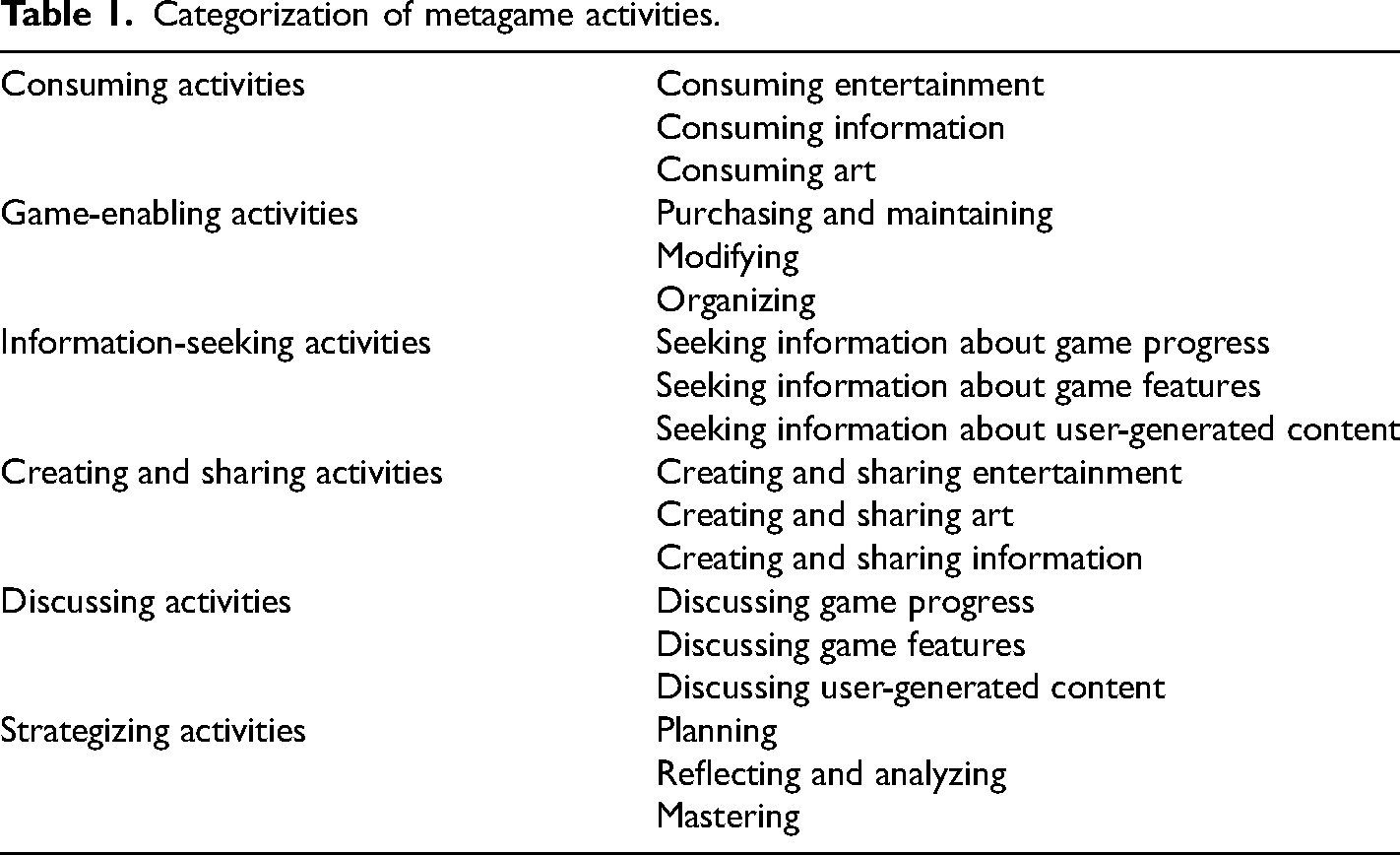
This two-layer categorization provided a way to quantify the qualitative data from the original study. All six main categories were given a value from zero to three per respondent. A score of zero for a category indicated that the respondent did not mention anything that would belong to that category or its subcategories. Values from one to three indicated the number of subcategories the respondent mentioned; that is, the variety of metagame activities.
Quantitative Analysis
To answer RQ1, we first used descriptive statistics to determine the frequency of metagame activities across all participants. To examine how activities are connected to one another, we estimated a partial correlation network. The partial correlation between any two metagame activities indicates a correlation after controlling for the rest of the activities in the network, similar to a regression. We used the R package bootnet (Epskamp et al., 2018) to estimate and visualize the network. When visualizing a partial correlation network, a blue edge represents a positive partial correlation, and a red edge represents a negative partial correlation, whereas the thickness of the edge is proportional to the magnitude of the correlation.
To answer RQ2, we clustered students by their use of metagame activities model-based clustering. We used the R package depmixS4 (Visser & Speekenbrink, 2010), which offers mixer modeling capabilities and can handle categorical and continuous data. We estimated ten models ranging from one to ten clusters in each model. To determine the optimal number of clusters, we computed the Bayesian information criterion (BIC) and the Akaike information criterion (AIC). The BIC showed no local minimum (the BIC kept decreasing with an increasing number of clusters), and thus, we relied on the AIC (as it had the lowest value of 1847.3), which corresponded to three clusters. We plotted the cluster centroids to examine the common metagame activities in each cluster. To examine the interconnections between activities in each cluster, we used an epistemic network analysis (Bowman et al., 2021; Shaffer, 2012). This method allows us to identify which metagaming activities co-occur together within the same player text and visualize these connections in a network for each cluster. For this purpose, we relied on the R package rENA (Marquart et al., 2018). The resulting networks represent each of the metagame activities as nodes with fixed positions across all clusters, which allows for an easy comparison of the interconnections between the nodes (Csanadi et al., 2018). An edge connecting two nodes (two metagame activities) indicates that they co-occur together, and the strength of the edge reflects the magnitude of the co-occurrence.
In the last analytical phase, the original qualitative data were reviewed considering the obtained clusters. Moreover, to make the results more vivid and nuanced, and to allow the voice of the participants to be heard, we added verbatim quotes to the results.
Results
We first report the descriptive statistics for the whole cohort (Table 2). Overall, the mean values for different categories remained rather low within the scale from zero to three, indicating that respondents typically did not mention more than one subcategory for each main category. In addition, the differences between the main categories were rather small. The results show that the Consuming activities were the most popular metagame activity with the highest mean value (Mean = 1.10) and with the smallest variation among respondents (SD = 0.62). The mean values for both Consuming activities and Game-enabling activities were close to one, indicating that the average participant typically named at least one subscale from both main categories. The mean values for Information-seeking activities and Creating and sharing activities were also close to one, recognized as metagame activities that were typically conducted. The most seldom-mentioned activities were Discussing activities and Strategizing activities, with the lowest mean values.
Descriptive statistics.
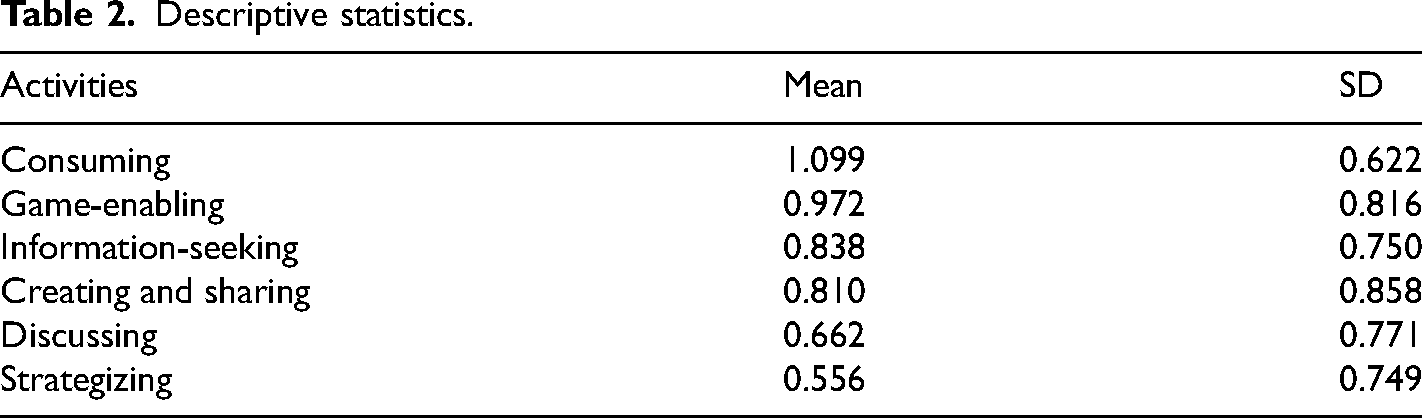
Figure 1 outlines the associations between the different categories. The strongest association was negative between Strategizing activities and Game-enabling activities. This suggests a tendency to divide respondents between those who strategize and those who favor game-enabling activities. However, the negative association was still rather weak (−0.33). The rest of the associations above 0.20 in magnitude were all positive. The Information-seeking activities were related to the Discussing activities (0.27), Strategizing activities (0.26), and Consuming activities (0.24). This shows that Information-seeking activities can be seen as the core activity that is connected most actively with all the other categories and has the highest predictability (pie chart around the node). The rest of the relations were below 0.20 in magnitude.
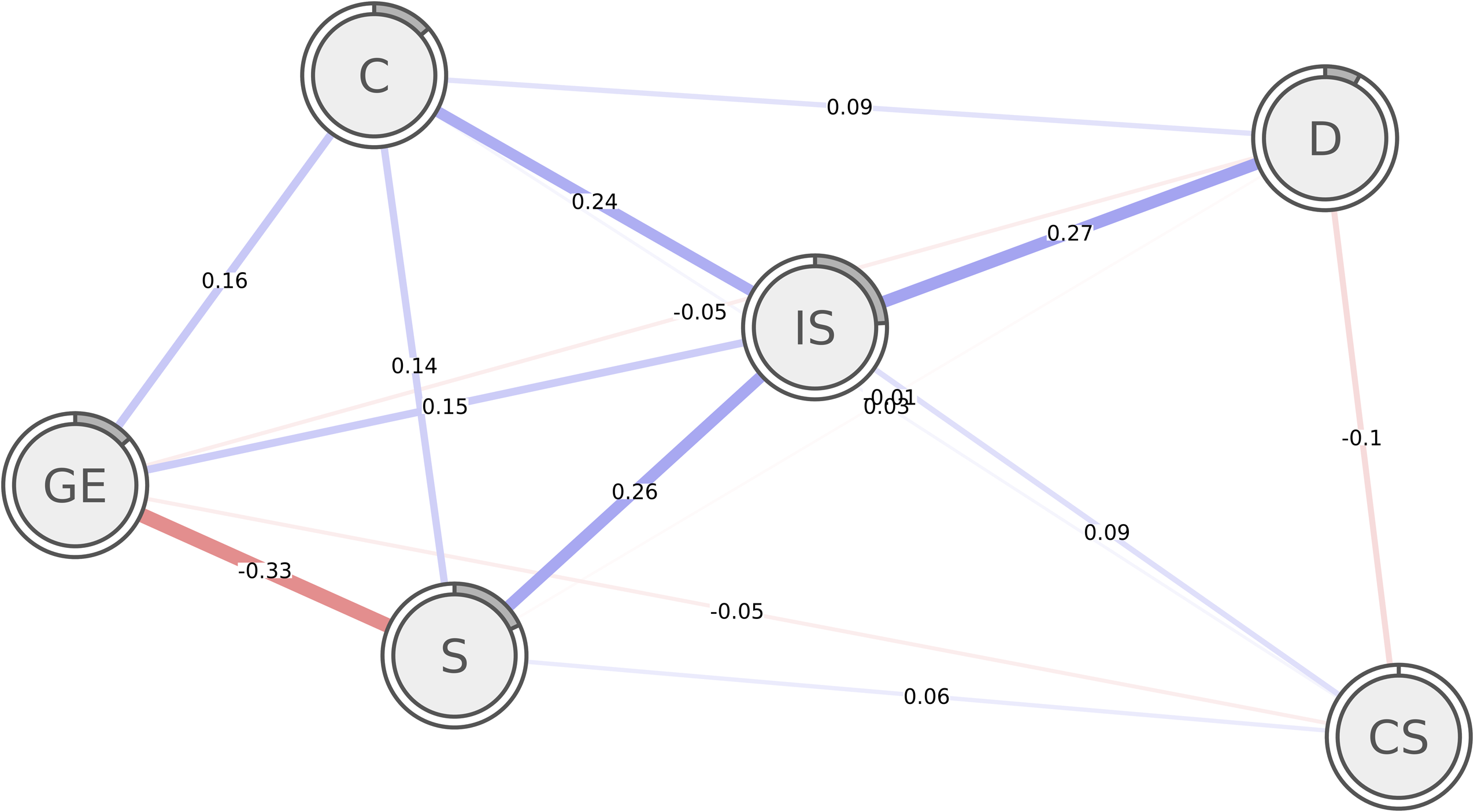
Partial correlation network. C: Consuming activities; GE: game-enabling activities; IS: information-seeking activities; CS: creating and sharing activities; D: discussing activities; and S: strategizing activities.
The next step in the analysis was clustering using mixed models. The analysis pointed to a three-cluster solution. The three-cluster solution was also the most meaningful and readable model for this research context. The three-cluster model clearly indicates the qualitative differences between respondents, and with reasonable size clusters—the size of the clusters varied from 27 to 65 respondents (Table 3).
Metagamer clusters.
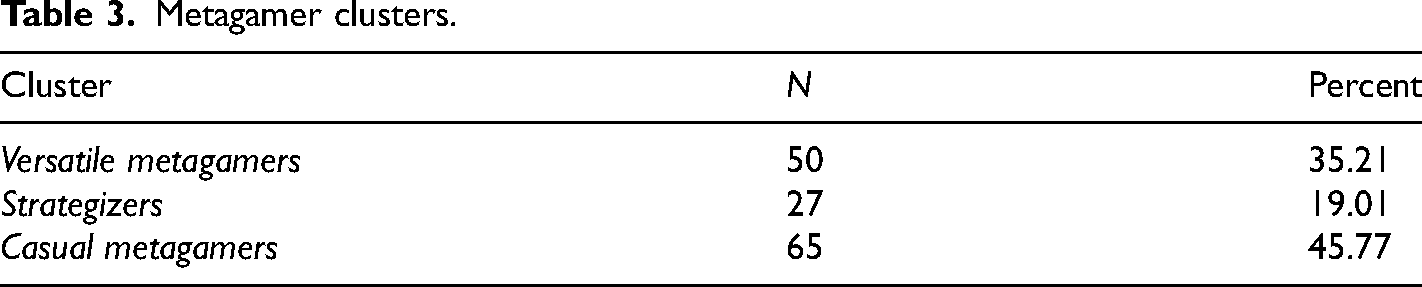
The largest cluster was the Versatile metagamers (n = 50, 35.21%). Within Versatile metagamers, all the metagame activities were above the average level except for the Strategizing activities; also, the Creating and sharing activities were at the average level. The other metagaming activities were higher than average; the cluster centroids (the mean value in the cluster minus the overall mean) ranged from 0.28 to 0.36; that is, the difference from the average was moderate. The second cluster was the Strategizers (n = 27, 19.01%). The profile of this cluster shows a strong presence for Strategizing activities (0.96). It is the only cluster where the Strategizing activities were above average. Another noticeable feature within this cluster was the negative value of the Game-enabling activities (−0.86). The third cluster was the Casual metagamers (n = 65, 45.77%), who differed from the average and from the other clusters with their low values for most of the metagaming activities. Only the Game-enabling activities and Creating and sharing activities were barely above average (Figure 2).
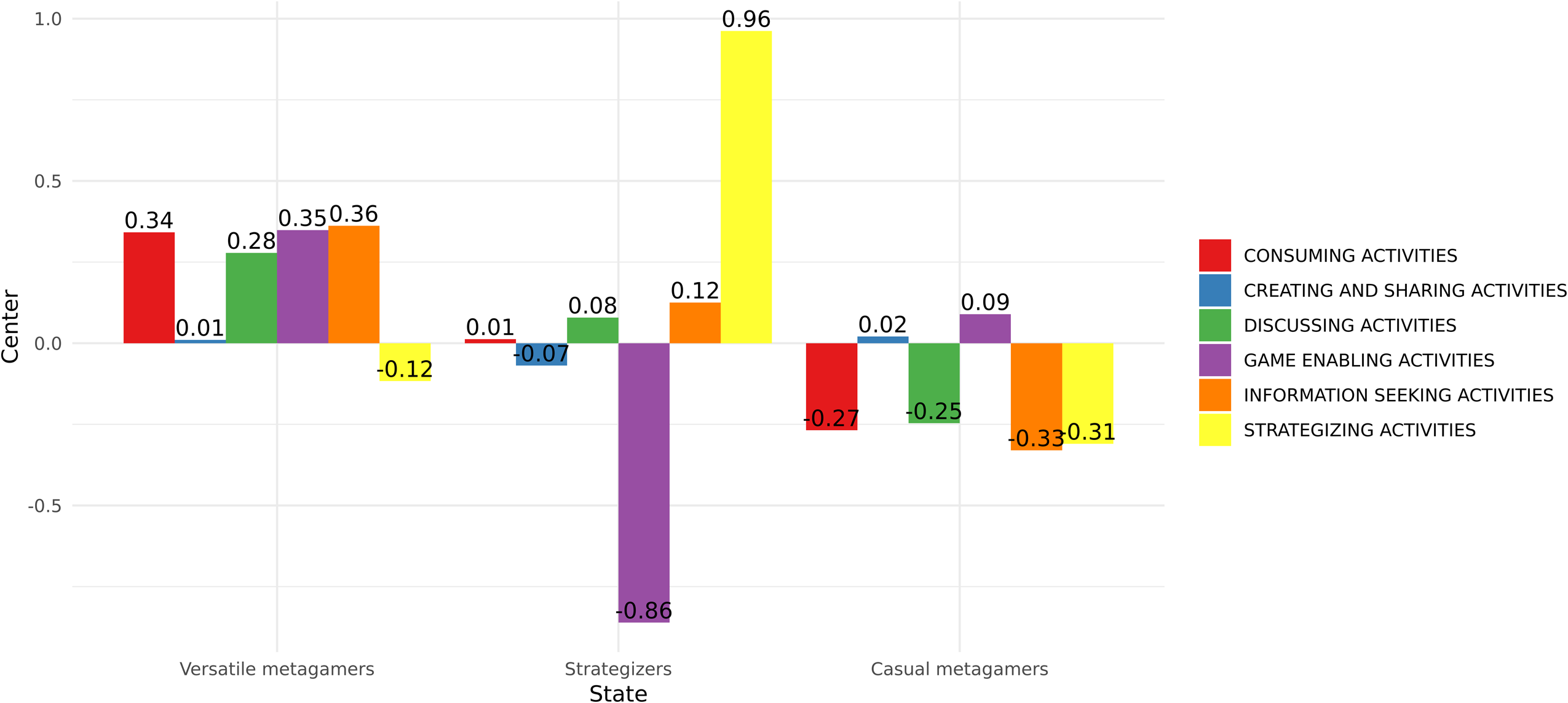
Cluster centroids for each of the identified clusters. The centroid was calculated by computing the mean value of each variable per cluster and subtracting the overall mean of each variable (to center the centroids around zero).
In the next phase of the study, we provide deeper perspectives for the clusters by outlining the associations between metagame activities and with quotations from the qualitative data. This is done separately for each cluster.
Versatile Metagamers
In Figure 3, we can see the association map for the Versatile metagamers cluster. This association shows a triangle for the Consuming activities, Information-seeking activities, and Game-enabling activities. These three activities, along with Discussing activities, have altogether the highest positive values of all clusters. Again, the remaining categories that are close to the mean level can be seen as separate areas.
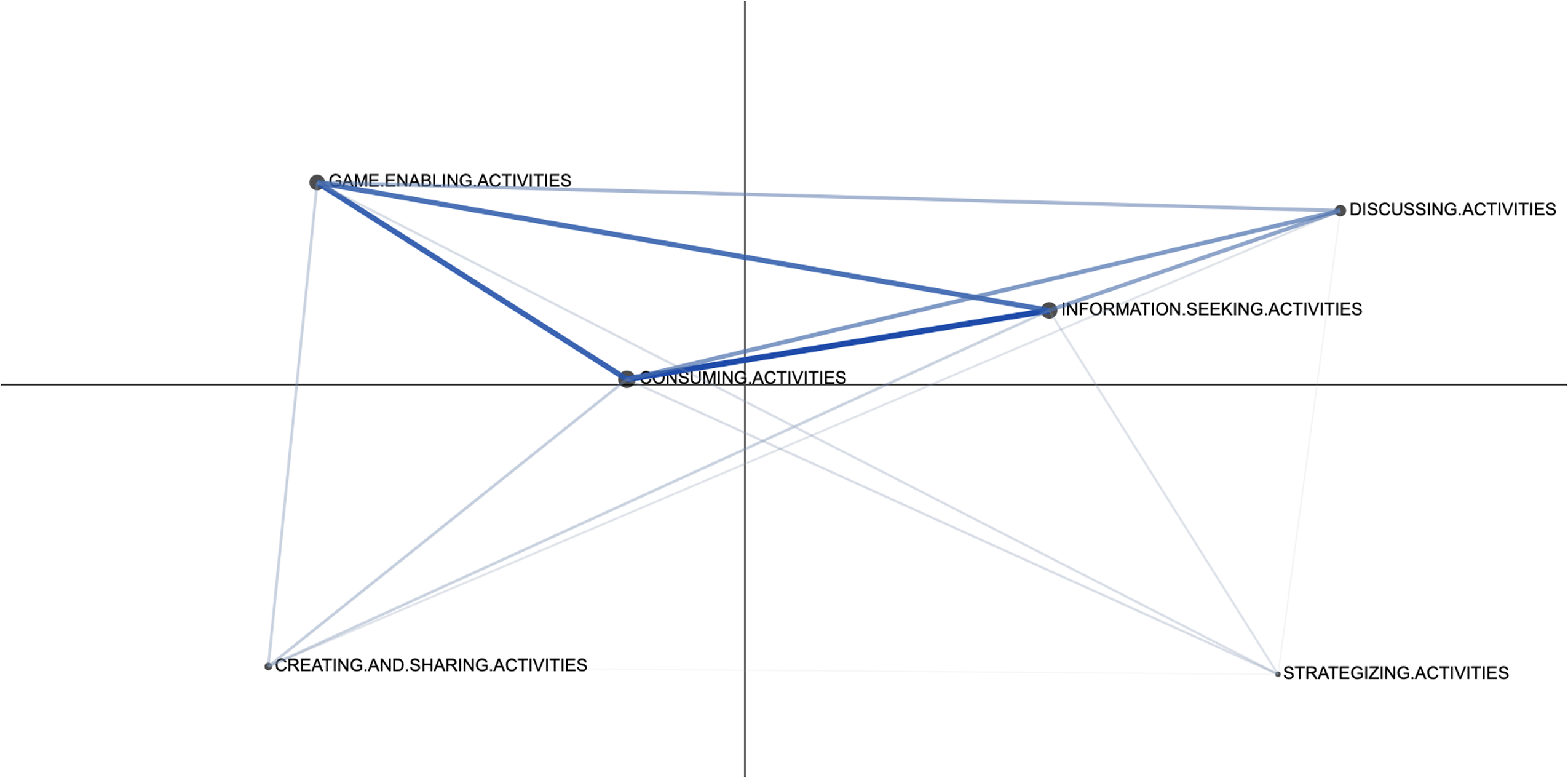
Epistemic network for Versatile metagamers.
The qualitative data for this cluster provide a picture of these respondents as versatile metagamers who actively seek information and consume game-related materials. The qualitative data especially highlight the role of videos as a way of consuming and seeking information. Digital game–related videos are used frequently in order to gain information and to learn about new games or different aspects of gaming.
I have tried to learn about the game. I've watched gameplay videos; sometimes they've been helpful, and sometimes they haven't. (A sixth-grade girl) I have watched the videos and learned from them. (A sixth-grade boy)
The qualitative data also emphasize the participants of this cluster as social and collaborative actors who are active participants in the community. The respondents discussed various digital game–related topics with their peers. The results show the reciprocal nature of the community. The respondents indicated that they could ask for help with different game-related topics, but they also provided help and support for others.
I have helped others and asked for help. (A sixth-grade boy) I have also discussed the games with, e.g., friends. I have talked about how good a game is or how difficult it is. If I hear about an interesting new game, I might even wait for it. I can hear about new games from advertisements appearing in other games. (A sixth-grade girl)
Strategizers
The Strategizers cluster is the only one where the Strategizing activities are strongly emphasized and connected with Consuming and Information-seeking activities as well as, to a lesser extent, with the rest of the activities, excluding the Game-enabling activities, which are absent in this cluster and not connected to any other areas (Figure 4).
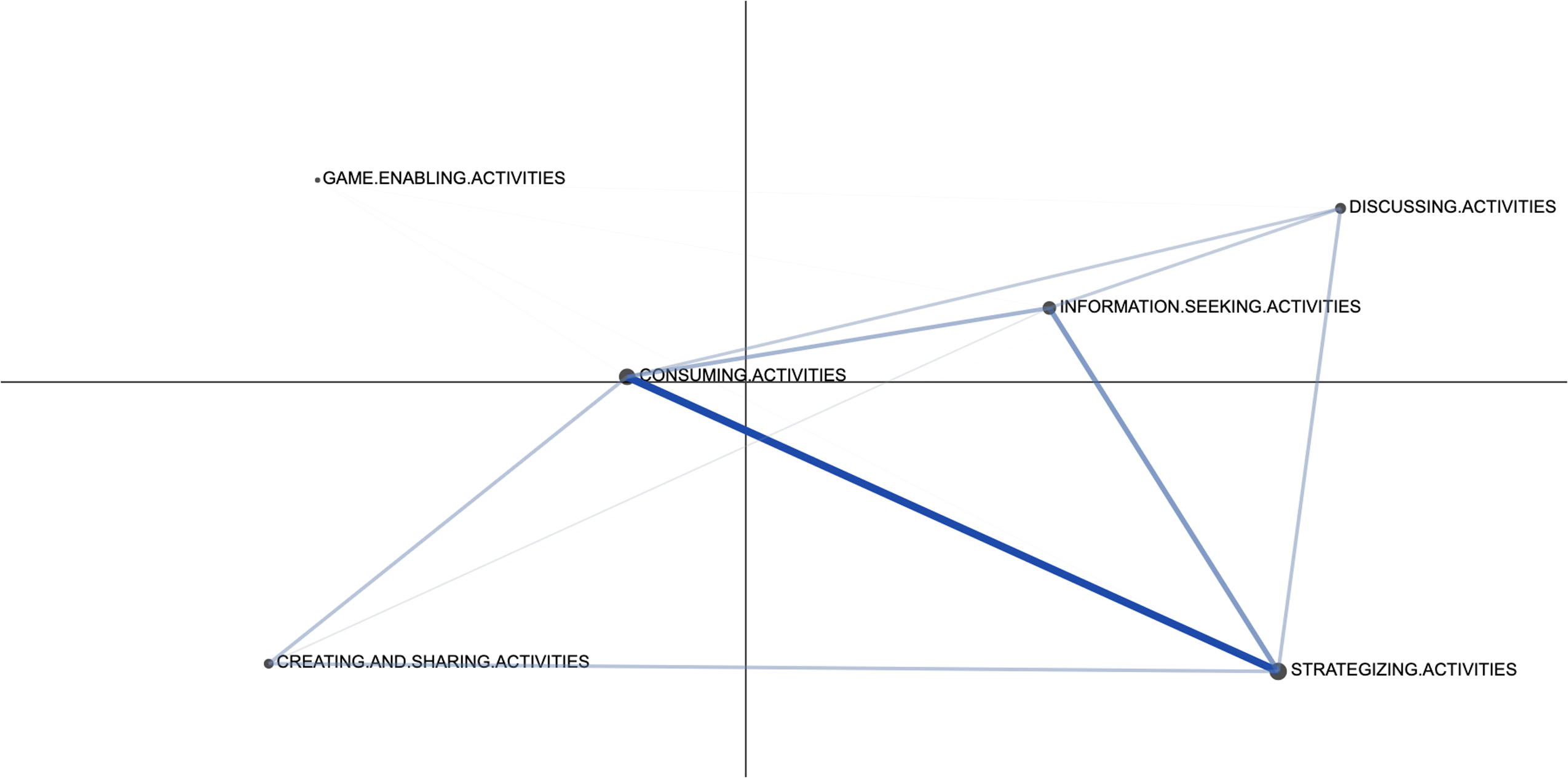
Epistemic network for strategizers.
The qualitative data show that strategizing was often done in order to improve a player's chances of success in a game and to develop themselves as a player. The qualitative responses explain the relations between Strategizing, Consuming, and Information-seeking activities. In order to develop their gaming skills, respondents watched game-related videos and also otherwise sought information that was useful in the game from different sources. I have searched for information on the Internet and in books. On the Internet, I have found good gaming websites with a lot of information about different things. I have borrowed books from the library. The books also have good information, and a lot of it. I have also watched tutorial videos on YouTube. At first, it was difficult to find “good” websites and videos. (A sixth-grade boy)
I have watched the streams. They are nice to watch. For example, I have planned for Fortnite where to collect the weapons, where to land, and who does what. (A sixth-grade girl)
The results show that Strategizing activities are not just passive entertainment and a way to pass the time but are instead rather challenging and purposeful activities. Consuming and information-seeking activities are often goal-oriented activities conducted collaboratively with friends. Information, ideas, and expertise are often shared among peers. I have talked with my friends about game graphics, game stories, pros and cons, game mechanics, strategies, cost of the games, and how it corresponds with the gaming experience. (A ninth-grade boy)
If you want to be good at what you want, you have to train your abilities and brain, and of course, learn a lot more about the game, e.g., the mechanics, the maps, etc. If you don't do well in the game, you have to learn new tactics and watch game videos/instructions. (A ninth-grade boy)
Some participants in this cluster immersed themselves deeply in the topic to increase their in-game knowledge. Moreover, the means to succeed, such as looking for information, testing, and using graphical glitches in-game, were sometimes on the borderlines of the game rules. We also look for points/things that disrupt the game, which can, for example, change the character's movements or actions. These also include things that shape the game world itself, such as holes in the ground that you can't see, but from which you still fall under in the game world. The last thing that broke the game was immortality in the game called Fortnite, probably familiar to everyone. (A ninth-grade boy)
Casual Metagamers
The profile for Casual metagamers shows the relation between Game-enabling activities and Consuming activities. Moreover, Creating and sharing activities have moderate connections with both of these activities. All the other activities remained separate, without any strong relationships with other activities (Figure 5).
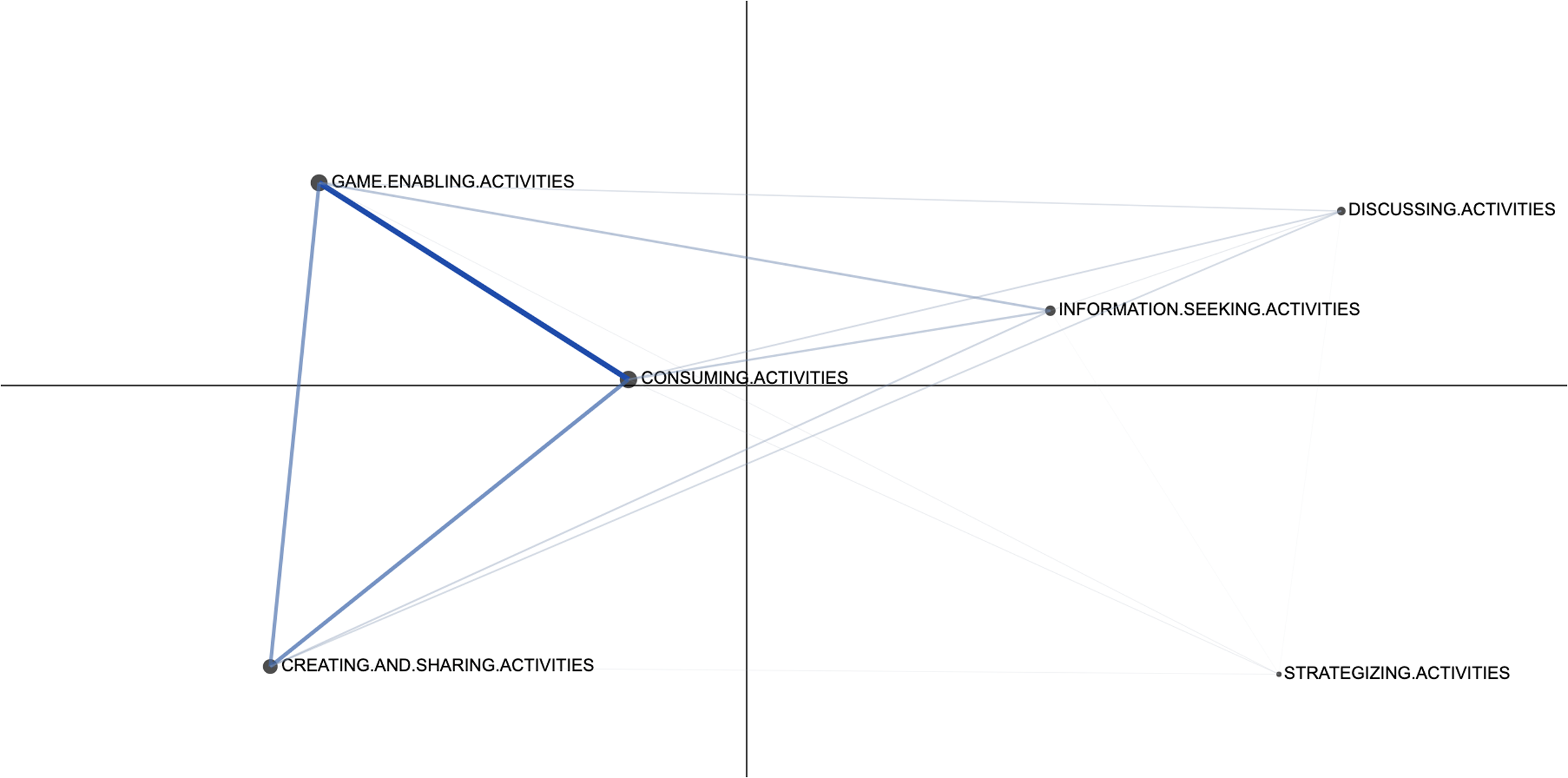
Epistemic network for casual metagamers.
While these respondents conducted different metagaming activities, the number of mentions was lower compared to the other groups. Moreover, the qualitative data showed that digital gaming and metagame activities often did not play such a significant role in the lives of these respondents; rather, what could be indicated from the responses, in general, was the awareness of digital games and metagaming, but often no real personal fascination or enthusiasm for them. I don't have a computer for gaming, but that's okay. I have sometimes talked about games with my friends, but it annoys me that everyone always talks about Fortnite. I think that game is completely overrated. (A ninth-grade boy)
I sometimes watch when someone else is playing a game because I don't play very much. I once bought a game that I still play. (A ninth-grade boy)
Although gaming does not play as central a role in the daily lives of many of these respondents as it does for the other groups, metagaming was not excluded. Like others, also casual metagamers had to acquire and install their games to play them. Since then I have also bought and installed the Sims 2 game on my computer. Installing the game requires patience, as the base game came with four installation disks. (A ninth-grade boy)
The responses show that these respondents also often watched gaming videos on YouTube. The production of game-related content also emerged. In terms of content production, games—the world of games—typically served as a source of inspiration for creating various types of work. I've drawn a lot of game characters, and I've drawn most of them from the game Paladins. The characters are quite simple, and most of the characters have “main colors,” i.e., the same colors are used in their outfit and hair. I start drawing by looking at the model of the character, and then I look at the colors I need. I also like to decorate my room with “game stuff” that I usually make myself. (A ninth-grade girl) I also like to watch game videos, mostly from Finnish YouTubers. (A ninth-grade boy)
Watching YouTube videos with a gaming theme was very common among all participants. Casual metagamers also actively watched gaming videos.
Discussion
The aim of this study was to investigate school-age adolescents’ digital game–related metagame activities, their prevalence and interconnections, and different types of metagamers. The results revealed digital game–related information-seeking activities as the central metagame activity, with connections to other metagame activities. The three different types of metagamers that emerged from the results were Versatile metagamers, Strategizers, and Casual metagamers. Participants in these groups differed in the number of metagaming activities they engaged in, and in the emphasis they placed on different metagame activities. Various typologies exist regarding the players of digital games. However, previous typologies are largely based on players’ motives to play games or on their in-game behaviors. Moreover, existing studies are often limited to a specific game or game genre (for an overview, see Hamari & Tuunanen, 2014). Digital games are a diverse group of different games, and gaming is a multifaceted phenomenon that goes far beyond actual gameplay (Elias et al., 2012; Kahila, 2022). The results of this study provide insights for game studies, the game industry, and the field of digital games and learning.
These results add to the research work conducted to better understand the differences between players of digital games (see Bartle, 1996; Hamari & Tuunanen, 2014; Vahlo et al., 2018; Yannakakis et al., 2013), especially from the metagaming perspective. With the Strategizers, the results reflect the respondents’ strong commitment to actual gameplay and desire to develop as players. Their metagame activities are strongly oriented toward supporting success in the game proper, and a lot of thought and effort is put into this goal outside the actual game events. The importance of metagame activities is also highlighted by Versatile metagamers. However, instead of focusing on optimizing changes for success in the actual game, for them, the metagame is a more holistic phenomenon, which is also seen as entertainment and as a pastime. Versatile metagamers engage in a variety of metagame activities. They discuss, look for information, and actively consume metagame material produced by other players. Game videos played an important role not only as entertainment but also as a source of information. With Casual metagamers, metagaming was more one-sided, and for many, gaming, overall, was not as important as for the other two types of metagamers. However, Casual metagamers also played digital games and engaged in metagame activities. They purchased and installed the games they played, and game worlds inspired and supported their creativity and hobbies, such as the visual arts. Altogether, these results show how games play different roles in young people's lives, varying from a goal-oriented hobby to a source of entertainment and inspiration for other activities. As Consalvo (2017) argued, instead of acting as a central activity, games can also play a supporting role in other activities and media.
Player typologies are used by the game industry. For example, Bartle's (1996) player typology has been largely used by game designers to ensure that games contain appealing elements for all types of players (Hamari & Tuunanen, 2014). However, existing typologies mostly based on playing motivations (Tseng, 2011; Yee, 2006) or game-time behavior (Cowley & Charles, 2016; Drachen et al., 2009; Yannakakis et al., 2013) largely ignore the importance of metagames, despite the fact that their importance for playing experience and for the success of games is widely recognized (Carter et al., 2020; Elias et al., 2012; Hjorth et al., 2020; Sicart, 2015). Therefore, the results of this study provide not only important insights into the phenomenon itself but also knowledge, perspectives, and tools for the games industry. From the game designer's perspective, strategizers appear as gamers who are interested in the actual game and in succeeding in it. In addition, their metagame activities often support this goal. However, it is also important to consider other metagamer types, their preferred metagame activities, and the potential of these activities. These potentials could include, for example, broader integration of actual games and entertaining metagame activities, such as game videos, and better consideration of game-related creating and sharing activities and game-related fanart in game and metagame design. Altogether, the results of this study highlight the importance of considering metagame activities and different metagamer types in game design processes. These results cohere with previous observations by Carter et al. (2020), who explain Fortnite's popularity with its approachable and real-life relationship-reinforcing sociality, its interwoven and symbiotic relationship with YouTube, and many opportunities it provides for building one's social capital.
Furthermore, the digital game–related metagame is not only relevant for game studies and the game industry but it is also relevant from the perspective of digital games and learning (Gee, 2011). In existing studies, metagame activities have been identified as a self-directed and meaningful way to practice and use the various skills needed in society, and they also hold potential for formal education (Kahila, 2022; Kahila et al., 2023; Kiourti, 2022). Player types have also been studied from the perspective of digital game–based learning, enabling the consideration of different playing styles in the design of learning games (Bontchev et al., 2018; Magerko et al., 2008). Just as player types are useful and should be considered in the design of learning games, knowledge about different types of metagamers is useful when pedagogically utilizing metagame activities in formal education. The results of this study provide a better understanding of the different types of metagamers and, thus, of the tools that could be used to evaluate and plan metagame-related learning tasks for different groups and students.
From a broader point of view, the results of the study resonate with the different ways in which children participate in today's new media ecology (Ito et al., 2009). For some children, metagaming is part of their participation in online knowledge cultures, with a focus on developing deep expertise in a specific area of interest. For others, metagaming activities are more of a form and a means of social participation, something that children do while they are hanging out with their friends and interest groups. Alternatively, those who are not particularly interested in gaming itself may consume game fandom sites and videos online, and get ideas and support for their own creative production in offline settings. Taken together, the different ways that children engage in metagame activities also illustrate the different types of participation in valued practices of youth culture (Ito et al., 2009).
Limitations and Future Research
Our study is not without limitations. First, the sample, although not small in size, was limited to a cohort of school students. Therefore, the interpretation of our results should be framed within this specific population. The generalizability of our results to other contexts should be empirically confirmed. Furthermore, clustering is an unsupervised method and has its own limitations; however, the very low classification error in our study points to this being an unlikely situation. Moreover, qualitative coding is done by humans; therefore, the limitations of manual coding apply here. In addition, the results concerning the cluster of Strategizers raise questions and a need for further research. The results indicated that within these responses by the Strategizes, there were very few mentions of Game-enabling activities. This poses some further questions: Are these respondents not doing these activities, or are these activities perceived as something that is taken for granted that is not worth mentioning?
Nevertheless, the findings of this study provide a new perspective on player types and a starting point for future research. As digital games spread to new areas of life, technologies develop, and new metagame phenomena appear (Stenros & Kultima, 2018), it is increasingly important to study gamers and digital gaming holistically by considering various metagame activities and different types of metagamers. According to Kallio et al. (2011), players’ mentalities and the amount of playing change depending on life situations. Moreover, previous studies indicate that players sometimes continue to follow game worlds even after quitting gaming (Carter et al., 2020) and that metagame content is used as a substitute for gaming when the actual game cannot be played (Harviainen et al., 2012). In the future, it would be interesting to study in more detail how the different types of metagamers correspond to the amount of actual gameplay, and how the metagamer type changes with changes in life. For example, which metagame activities will remain or decrease when playing decreases or when players quit gaming, and which metagame activities will possibly replace playing the game proper. In addition, comparing different metagamer types and game performance is an interesting subject for future research.
Classifying players based only on actual gameplay behaviors and playing motives excludes many digital game–related activities. Unlike previous player typologies, this study focused on adolescents’ digital game–related metagame activities and grouped them into the versatile metagamer, strategizer, and casual metagamer types. The results provide a starting point for future research related to different metagamer types as well as important insights for game studies and the game industry. In addition to game studies, the results contribute to the field of games and learning.
Supplemental Material
sj-docx-1-gac-10.1177_15554120231187758 - Supplemental material for A Typology of Metagamers: Identifying Player Types Based on Beyond the Game Activities
Supplemental material, sj-docx-1-gac-10.1177_15554120231187758 for A Typology of Metagamers: Identifying Player Types Based on Beyond the Game Activities by Juho Kahila, Teemu Valtonen, Sonsoles López-Pernas, Mohammed Saqr, Henriikka Vartiainen, Sanni Kahila and Matti Tedre in Games and Culture
Footnotes
Declaration of Conflicting Interests
The author(s) declared no potential conflicts of interest with respect to the research, authorship, and/or publication of this article.
Funding
The author(s) received no financial support for the research, authorship, and/or publication of this article.
Supplemental Material
Supplemental material for this article is available online.

Author Biographies
References
Supplementary Material
Please find the following supplemental material available below.
For Open Access articles published under a Creative Commons License, all supplemental material carries the same license as the article it is associated with.
For non-Open Access articles published, all supplemental material carries a non-exclusive license, and permission requests for re-use of supplemental material or any part of supplemental material shall be sent directly to the copyright owner as specified in the copyright notice associated with the article.
