



Abstract
This study evaluated the change in usability, mental workload and information transfer rate associated with an augmentative and alternative communication (AAC) interface designed through ecological interface design (EID). The design and development process is detailed in Shea et al. (2021). Digital AAC interfaces are considered high-tech interventions for individuals who experience complex communication needs (e.g., from etiologies such as cerebral palsy) and enable users to select language options from a visual display. Interface usability, mental workload and information transfer rate collectively influence users’ communication. Ten AAC-naïve participants engaged in three semi–scripted conversations (verbal, AAC-mediated commercial interface, and EID interfaces) with an actor. Augmentative and alternative communication interfaces were accessed through a single switch pathway. Information transfer rate, error rate, heart rate variability and subjective workload performance measures were recorded for every trial. During AAC-mediated trials, interface interactions were also documented. The EID AAC interface presented improved communication in 5 out of 7 performance measures (p < .05). The EID AAC interface was associated with a significantly higher information transfer rate, lower error rate, less time elapsed between switch activations, less switch activation per word communicated and lower subjective workload. The application of EID to an AAC interface can lead to a significantly improved communication experience.
Keywords
Introduction
Augmentative and Alternative Communication
Augmentative and alternative communication (AAC) is a common intervention for individuals experiencing complex communication needs that may arise from autism spectrum disorder (ASD), cerebral palsy, brain–stem stroke, or acquired central nervous system injury, among other conditions (Light & Mcnaughton, 2012). Electronic speech generation is a form of high-tech AAC technology that enunciates machine-generated words (Light, McNaughton, et al., 2019). Typical electronic speech generation devices, an example from AssistiveWare B.V. (2019) is shown in Figure 1, comprise an interface display of possible word selections among which the user navigates and selects through an access pathway. An AAC interface typically arranges possible word selections into specific taxonomies. Vocabulary requirements depend greatly on environmental factors such as the physical context, the partners in the conversation (Baxter et al., 2012; Ferm et al., 2005), as well as personal characteristics such as literacy level, developmental stage (Beukelman et al., 1991) and personal preferences (Thistle & Wilkinson, 2015). To communicate a word during a conversation, an AAC user navigates the interface and makes selections through an access pathway. Configurations of access pathways depend on the voluntary control commanded by users. For example, single switch access provides interface control through a single binary input; sensors and transducers allow for varied pathways that leverage a user’s abilities to generate the binary input (i.e., humming, blinking, pressing a button or volitional cortical potentials). To support control through binary input, the display sequentially highlights areas of the screen in which items can be activated. This software functionality is available within accessibility settings of many electronic devices (i.e., Switch Control in Accessibility within iOS Settings or Switch Access in Services in Accessibility within Android Settings). With two binary inputs, the movement and activation of the highlighted area are both controlled independently. However, with a single switch input, the speed and pattern of the movement are predetermined through software settings. A sample of a possible home screen of the Proloquo2Go Apple application. Retrieved from (AssistiveWare B.V. 2019) on 10 May 2021.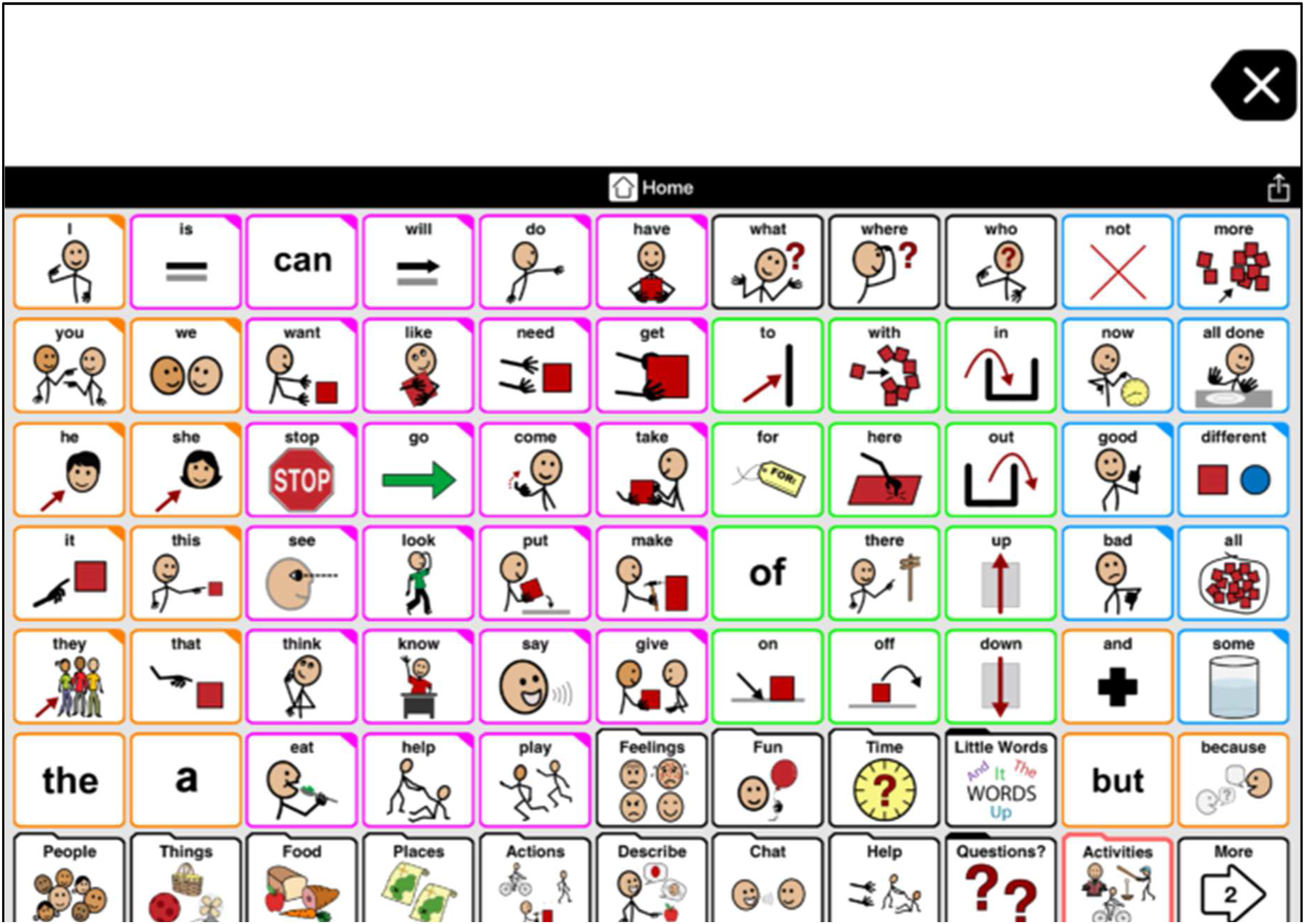
Despite its many potential benefits, AAC can constrain a user’s expressive communication as systems often only afford messages with incomplete context and inadequate detail (Hoag et al., 2008). Slow communication is a frustrating challenge for AAC users that creates negative interactions and perceptions (Baxter et al., 2012). Users of strictly text–based devices in particular experience more restrictive information transfer rates compared to image-based or combined image and text-based systems (Baxter et al., 2012). Despite this, Hoag et al. (2008) shows that the relevance of a newly formed message is preferred by communication partners over reduced elapse time of a pre-recorded message. For these reasons, usability of AAC systems impacts an individual’s capacity to participate in day-to-day activities and may be enhanced through empirically driven design (Light, Wilkinson, et al., 2019).
Food Ordering Use Case: Example Commercial AAC Interface
Figure 1 depicts an example home screen of the Proloquo2Go AAC interface. The following example depicts how a user of the commercial AAC device might order a sandwich. In the AAC system’s idle state, the user’s interface shows a home screen of a grid of colourful word and category cells with a blank message bar above.
As ‘buy’ is not a regularly used word that appears on the home screen, the user searches for and selects the ‘Actions’ category. Words and categories within the ‘Actions’ category replace some of the words on the home screen. The user searches for and selects the word cell corresponding to the verb ‘buy’. The system enunciates the word ‘buy’, which now also appears in the message bar. The interface then automatically reverts to the home screen. The user now searches for the ‘Food’ category, and once selected, the display updates with words associated with food and selects the noun ‘sandwich’, which is enunciated by the system. At the completion of the phrase the customer presses on the word bar. The system articulates the selected words again, that is, ‘buy sandwich’. The server asks for clarification in the form of a yes/no question. The AAC user searches and selects the Small Words Category. Words within the ‘Little Words category replace some of the words on the home screen. The customer searches and selects either ‘yes’ or ‘no’ and selects the word cell. The user can identify specific items for their sandwich within the category ‘Food’ and its subcategories (not shown in Figure 1).
Ecological Interface Design
Ecological Interface Design (EID) is a framework derived from cognitive work analysis (CWA; Vicente, 1999) that relays work domain constraints through the interface to allow the user to focus cognitive resources on such tasks as decision making and problem solving (Vicente & Rasmussen, 1992). Ecological Interface Design applies two phases of CWA, namely, work domain analysis (WDA) and worker competency analysis (WCA), to inform user interface design (Burns & Hajdukiewicz, 2004). The framework identifies and maps work domain constraints, as well as constraints for user perception, to interface display elements (Holt et al., 2015). Work domain analysis maps the goals of the AAC system to the functionality of the system components (i.e., the unit forms of English) to identify constraints on the system and the information required to understand system control. Worker competency analysis identifies the information necessary to support the user behaviours required to fulfil system goals (Vicente & Rasmussen, 1992).
The EID framework considers the bounds of system actions imposed by the constraints of the work domain and user capacity to inform user interface design. As a result, EID yields interface designs that optimize human cognition and support users’ response to novel, unplanned, events (McIlroy & Stanton, 2015; Naikar, 2013). Ecological Interface Design is increasingly used to model complex sociotechnical systems (St-Cyr et al., 2013). Ecological Interface Design implementation in intent–driven systems, such as AAC, can yield superior user performance compared to alternatively designed interfaces (Bennett & Flach., 2019; Euerby & Burns, 2014).
Ecological Interface Design Application to an AAC Interface
Recently, Shea et al. (2021) applied EID to develop a prototype AAC interface (refer to Figure 2) to support the communication goals of an AAC user. Through WDA the information required to provide sufficient understanding of the AAC system, and the function needed to support user control were identified, while the behaviours necessary to convey a communication act were delineated through WDA. Annotated image of the EID user interface designed by Shea et al. (2021).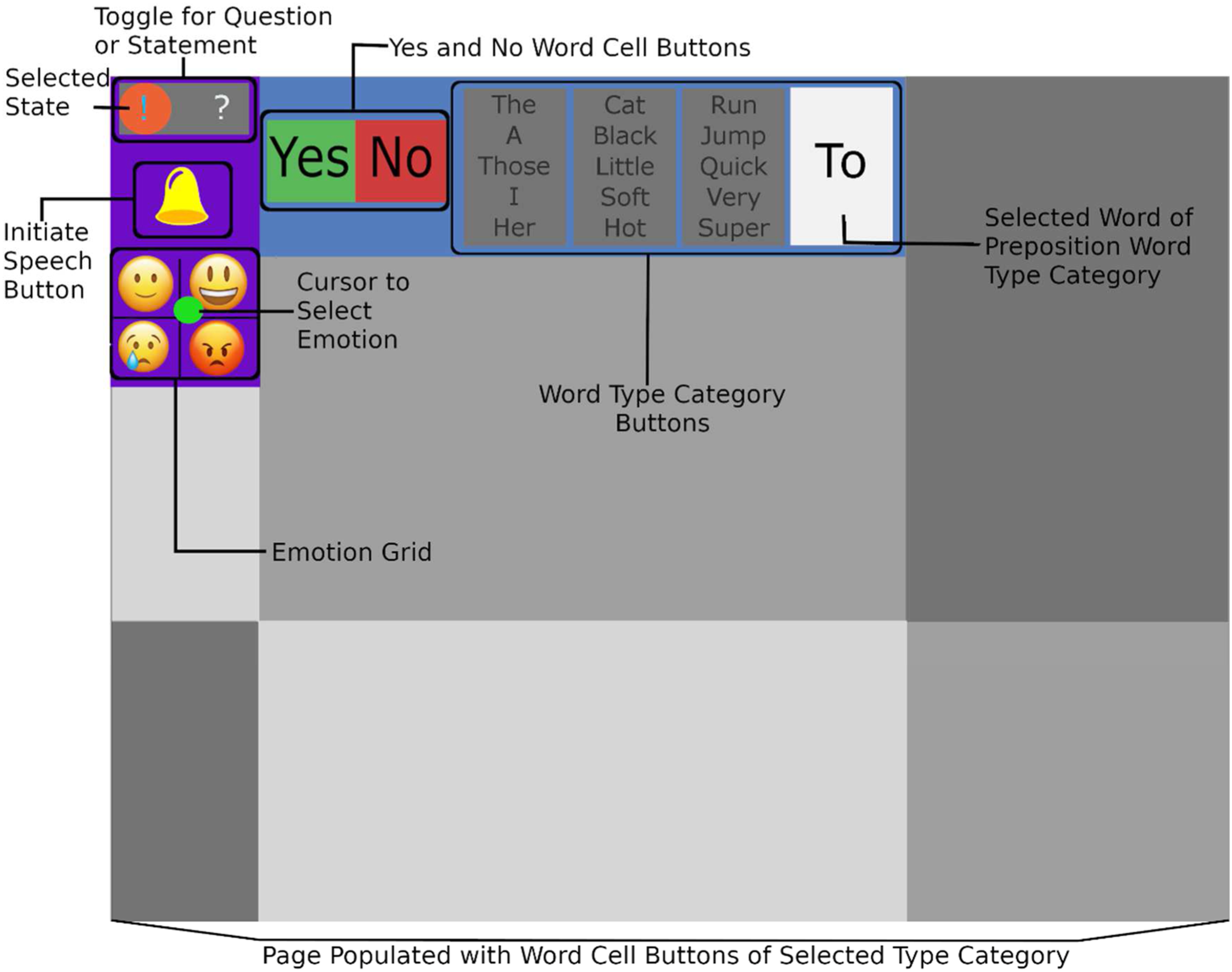
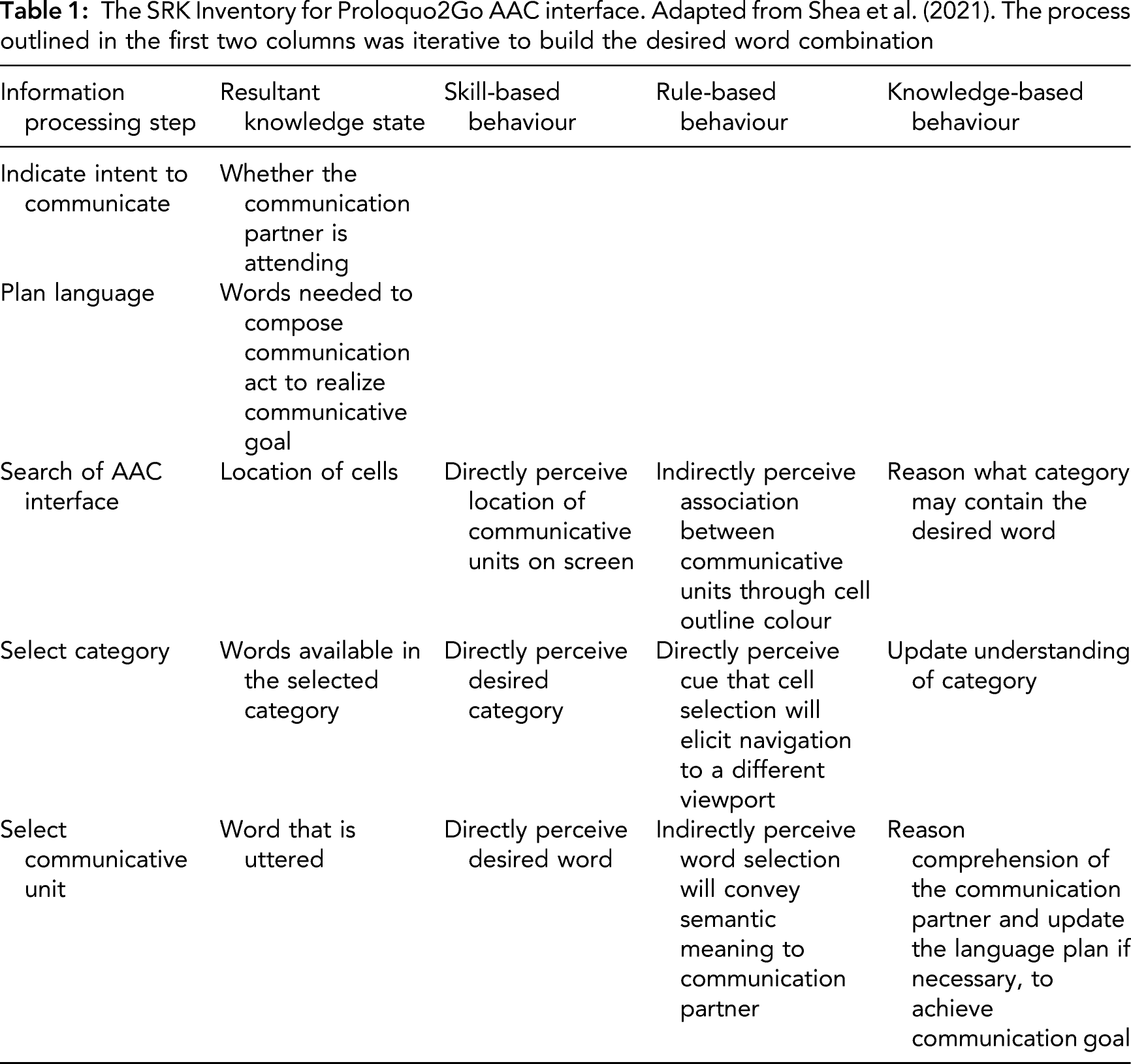
The SRK Inventory for Proloquo2Go AAC interface. Adapted from Shea et al. (2021). The process outlined in the first two columns was iterative to build the desired word combination
Food Ordering Use Case: EID AAC Interface
Figure 2 shows an annotated home screen of the EID AAC interface. The following example depicts how a user of the commercial AAC device might order a sandwich. In the system home screen, the user’s interface is mostly a blank grey screen with the purple and blue bars containing the Emotion Grid, Initiate Speech Button, Question-Statement Toggle, Yes and No Word Cells, and Word Type Category Buttons.
The customer selects the Word Type Category containing verbs. The customer’s interface is populated with verbs clustered by themes. The customer searches and locates the verb ‘buy’ and presses the word cell. The system enunciates the word ‘buy’ and the system returns to the home screen. These actions are repeated with the noun ‘sandwich’. If the server has clarifying questions the customer would press the Yes or No Word Cells accessible from the system home screen. The user can identify specific items for their sandwich within the Word Type Category containing nouns.
Interface Evaluation
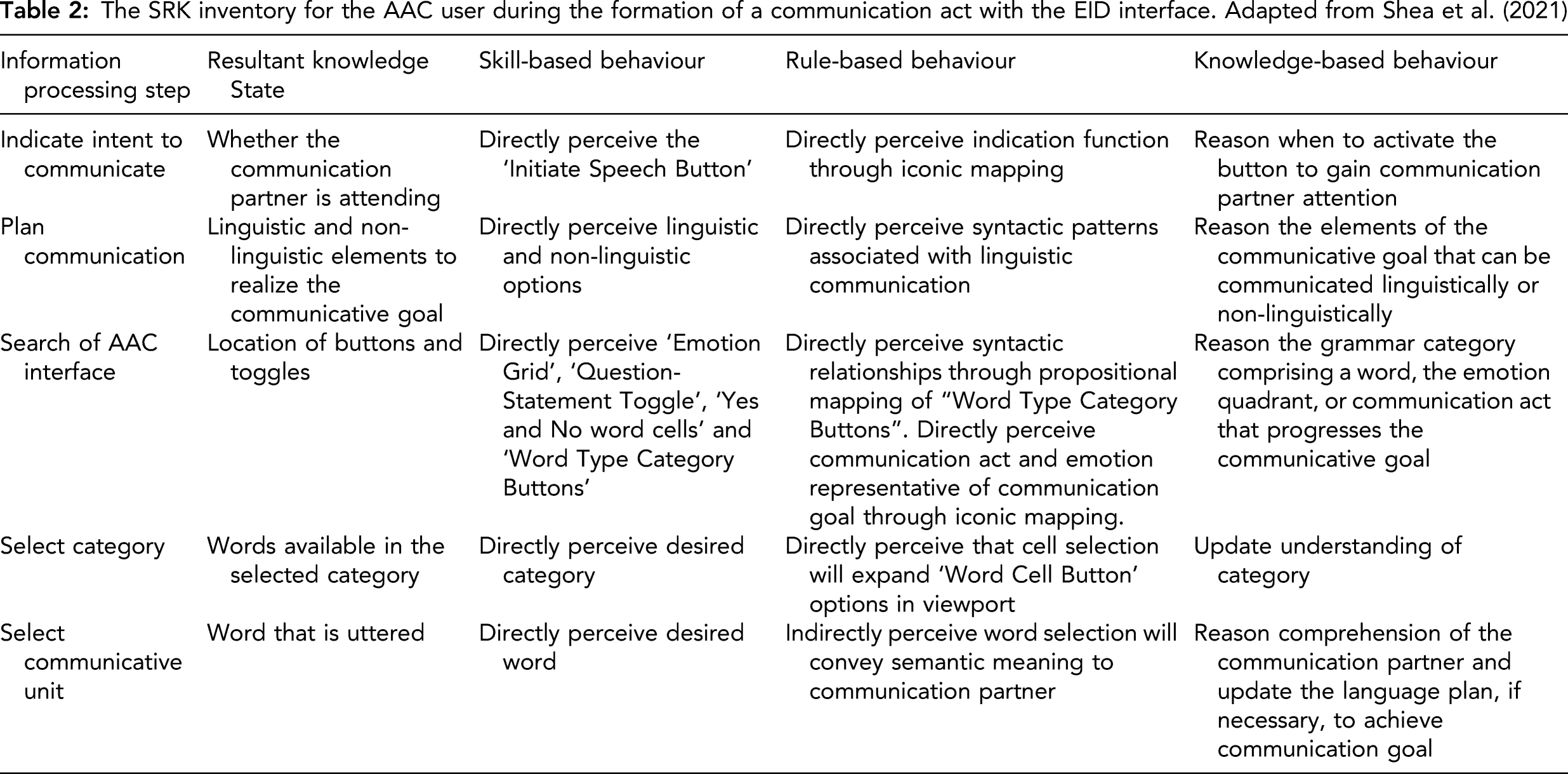
The SRK inventory for the AAC user during the formation of a communication act with the EID interface. Adapted from Shea et al. (2021)
Current Study
This article discusses the EID interface performance through the lens of the SRK taxonomy. To empirically evaluate performance of the EID display, an experimental paradigm was developed to simulate a real–world conversation between two people. Augmentative and alternative communication interface–related performance measures were information transfer per conversation, error rate, usability and mental workload. During AAC-mediated trials, participant behaviour measures of time elapsed between switch activations and switch activations per word were also recorded.
Mental workload is modulated by the degree to which a necessary behaviour is supported by the interface and is strongly associated with performance ability (Marinescu et al., 2017). Poorly supported navigation, for example, exacts high working memory demands on the user (Light & Mcnaughton, 2012). Several physiological measures provide objective information on mental workload and are sensitive to instantaneous changes (Charles & Nixon, 2019). Heart-rate variability is often measured simply through a blood-volume pulse sensor on a digit (e.g., Charles & Nixon, 2019). Other common physiological measures of mental workload, such as eye–blinks and pupil size were not considered due to the visual nature of study tasks. Additionally, an accepted standard for evaluating subjective mental workload in literature is the NASA Task Load Index (NASA-TLX) (Hart & Staveland, 1988) while perceived usability of interfaces is commonly assessed via the system usability score (SUS) (Tullis & Albert, 2013). We anticipated that, compared to a commercial AAC alternative, the prototype EID interface would generally improve system usability and reduce mental workload.
Methods
This research compiled with the American Psychological Association Code of Ethics and was approved by the Research Ethics Boards of the University of Toronto and Holland Bloorview Kids Rehabilitation Hospital. The usability, mental workload, and information transfer rate of the EID interface were evaluated using three conversational trials: a speech trial to provide baseline physiological measurements; a control trial involving a commercial AAC interface; and an experimental trial using the EID interface.
Instrumentation and Experimental Set-up
The iOS application, Proloquo2Go (Figure 1), was used for the control trial and an iOS implementation of the EID interface (Figure 2) was used for the experimental trial. The communication partner interface was not considered in this study such that the communication partner and participants remained oblivious to the type of trial. The AAC software was hosted on an Apple iPad 2 iOS 9. Scanning style, scanning speed, dwell time, number of scanning loops before system time-out, and tap actions were set up equivalently for single switch access in the accessibility settings of each device.
Single switch access was chosen as the access pathway for the AAC interfaces. Although some users can access AAC interfaces directly (e.g., touching the screen), the vast majority of alternative access pathways designed to accommodate users without this level of motor control are based on single switch technology (Tai et al., 2008). Participants controlled both AAC interfaces with button presses using the Orby button-style switch (Origin Instruments, n.d.) (refer to Figure 3). Switch activations (i.e., button presses) were either navigation events or word selections, and were recorded through Thought Technology ProComp Infiniti Encoder at a sampling rate of 2048 Hz (Thought Technology Ltd. 2018). Orientation of participant, actor and instrumentation during data collection tasks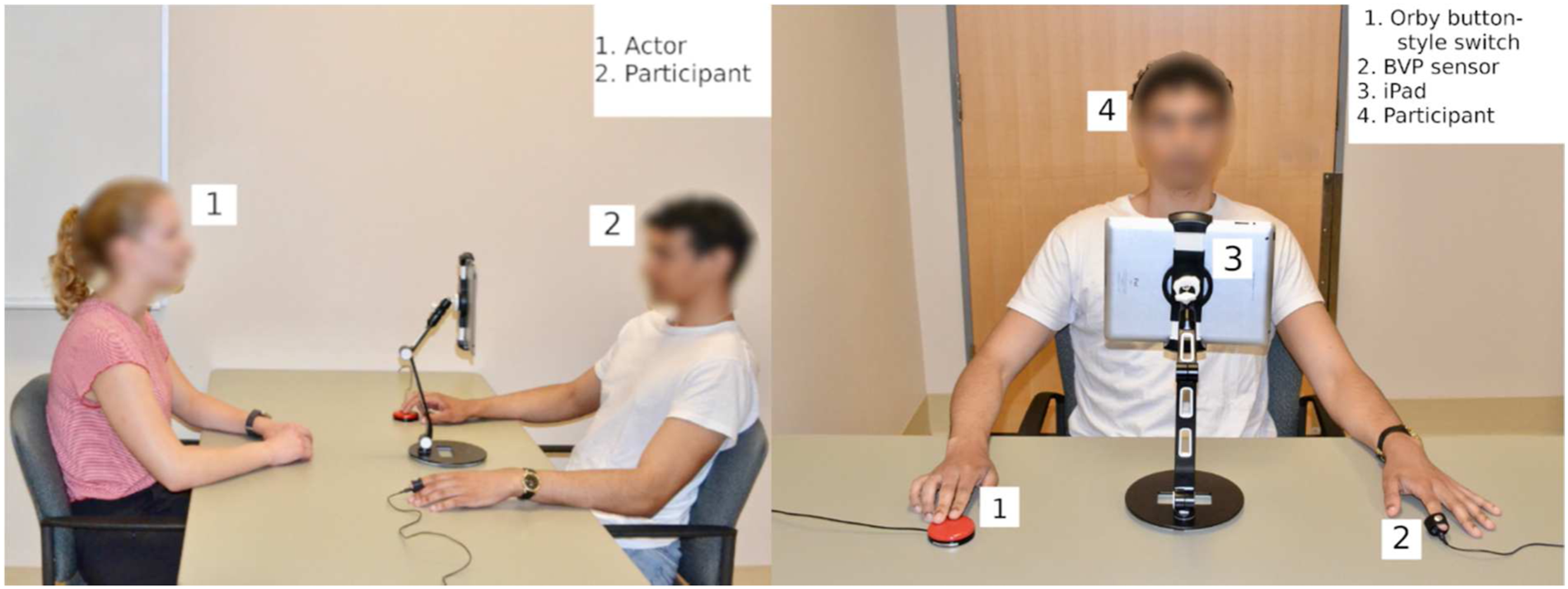
Heart rate of the participant was recoded using a Thought Technology blood volume pulse sensor (BVP) (Thought Technology Ltd. 2018). The BVP sensor was fastened to the index figure of the participant’s left hand with a Velcro strap (refer to Figure 3). Heart rate was sampled at 2048 Hz.
Participants
Participants consisted of 10 typically developed adult volunteers (23 ± 4°years; eight females) who were able to converse fluently in English but with no prior experience with AAC interfaces. Augmentative and alternative communication-naïve participants were used to remove the potential of a learning bias associated with using a familiar interface. Participants provided informed written consent. The study protocol was approved by the local research ethics board.
Study Design
In this within-subject design, participants completed three trials; each participant underwent one speech-based trial and two AAC-mediated trials. The order of AAC interface presentation was counterbalanced through assigning the participants to two groups. Group 1 completed the control (conversing with the commercial AAC) prior to the experimental (conversing the EID AAC interface) condition, while Group 2 did the reverse. Participants within groups were matched on educational level, age, and sex. Immediately prior to an AAC-mediated trial, participants received a brief description of the interface (Appendix B) and underwent a 2-minutes self-guided orientation.
In all three trials, participants held a semi-scripted conversation with a contracted actor who had no prior acquaintance with the participants. The actor had specific training to normalize facial expressions and conversational flow between participants. The actor was not aware of which device was being used in a trial. The actor’s script was designed by the actor and a research team-member to balance the number of switch activations required to access anticipated words between the two interfaces and the two alternative script pathways (Appendix A). The semi-scripted scenario was also designed to mirror a scenario to which all participants would have been exposed in their lived experiences (Appendix A). The actor’s conversational turns followed the script while participants were independent in their conversational choices. Participants were given agency to simulate the pressure of language planning and decision making encountered in an uncontrolled setting. All trials were stopped after 10°minutes, even if the conversational script remained incomplete, to standardize trial length. No trials completed the script in less than 10°minutes.
Measures
Several performance measures were computed: short-term heart rate variability; the time elapsed between switch activations; the number of switch activations per word; the number of words communicated per trial; and, the number of errors (incorrect communicated words as determined by the conversational partner) per trial. Short-term heart rate variability served as a physiological indicator of mental workload. Specifically, the root-mean sum-of-squared differences (RMSSD) between adjacent inter-beat intervals, 
The NASA TLX was completed by participants immediately post-trials. Participants rated six dimensions of perceived mental workload (mental demand, physical demand, temporal demand, performance, effort, and frustration), each on a 21-gradation scale between low and high. Participants also indicated the relative importance of each factor for the task they performed through a series of pairwise factor comparisons; the weighted sum of the scores for each of the six factors yielded the overall rating of subjective mental workload (Hart & Staveland, 1988). Following AAC-mediated trials, the SUS was also administered to capture each participant’s perspective of system usability (Brooke, 1996; Tullis & Albert, 2013).
Data Analysis
Performance measures were compared independently between the two AAC interfaces. Interparticipant analyses were conducted with a nonparametric paired Wilcoxon test (Python 3.8) for each measure separately, as assumptions of normality were not upheld. Heart rate variability data were normalized relative to each participants’ speech-based baseline trial by subtracting RMSSD values.
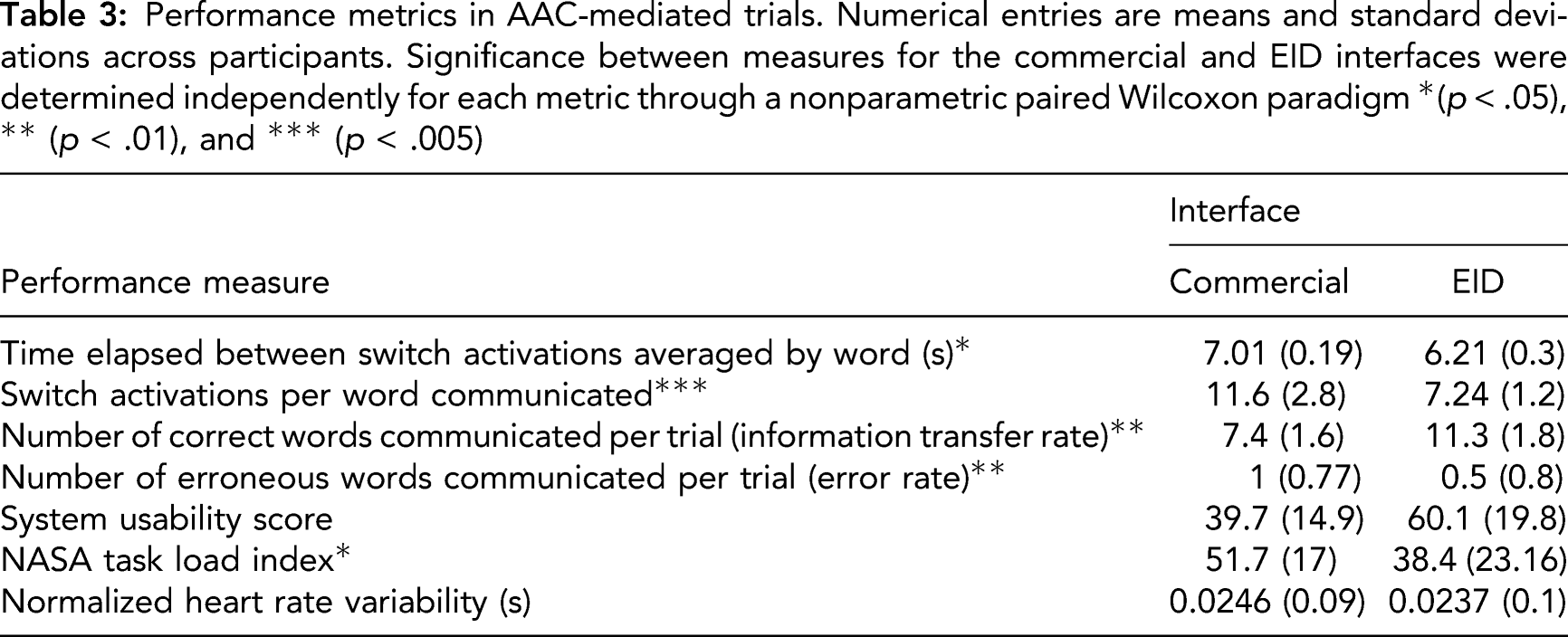
Performance metrics in AAC-mediated trials. Numerical entries are means and standard deviations across participants. Significance between measures for the commercial and EID interfaces were determined independently for each metric through a nonparametric paired Wilcoxon paradigm *(p < .05), ** (p < .01), and *** (p < .005)
The logistic regression model was run in a Shuffle-Split cross-validation framework (a.k.a. Monte Carlo cross validation) to optimize data availability. The area under the receiver operating characteristics curve (AUC) was derived from tenfold cross-validation as a measure of model performance. The ROC curve depicts the trade-off between sensitivity (true positive rate) and specificity (true negative rate) of model predictions. AUC of 0.8–0.9 is considered good, whereas 0.9 to 1 is considered excellent (Bradley, 1997). Models were further evaluated by estimating their accuracy through permutation tests. The permutation test for classifier performance generates random permutations of the class label vector while the feature matrix retains its original order such that existing dependency between features and labels is removed. The test generates n permutations and trains the machine learning model with the original features and each permuted label vector. The test output describes the fraction of permutations for which model performance improves compared to that trained with the original feature matrix and class-label vector. Permutation tests mitigate the risk of false discoveries of significant effects. This is a particular source of concern with a low quantity of sampled data. Permutation test scores provide information on the dependency between features and classes captured by a classifier (Ojala & Garriga, 2010).
Backward recursive elimination (BRE) and forward stepwise regression (FSR) were applied to consider the influence of features on logistic regression model performance. Following the elimination or addition of a feature, a permutation test of 1000 iterations and AUC were used to determine the significance of each feature to the interface use profile. To visualize the structures of the optimized, select-feature model compared with the model trained on all features, linear discriminant analysis (LDA) was employed. Linear discriminant analysis applies supervised probabilistic modelling to identify attributes that account for the greatest variance between known binary response variables. In this model, the binary response variables are the two classes: use of a commercial AAC interface or use of the EID AAC interface. We implemented eigenvalue decomposition to identify linear separability between covariances calculated for each response variable. The performance of the LDA classifier reflects the linear separability of the data being modelled, that is, the ability to correctly assign membership of the data points using a linear decision boundary (Pedregosa et al., 2011).
Results
Significant differences were found across participants, between the commercial and EID AAC interface use performance in 5 of 7 measures (see Table 3). Figure 4 shows time elapsed between switch activations during the conversational trials of the commercial or EDI AAC interfaces for one participant. For this participant, the EID interface seemed to have required only episodic selections with supra-5s elapse times. Time elapsed between switch activations during AAC-mediated trials of Participant 4 during use of the commercial AAC interface (a) and EID AAC interface (b). Dotted lines denote the mean elapsed time in each trial. Black arrows show the selection of a correct word.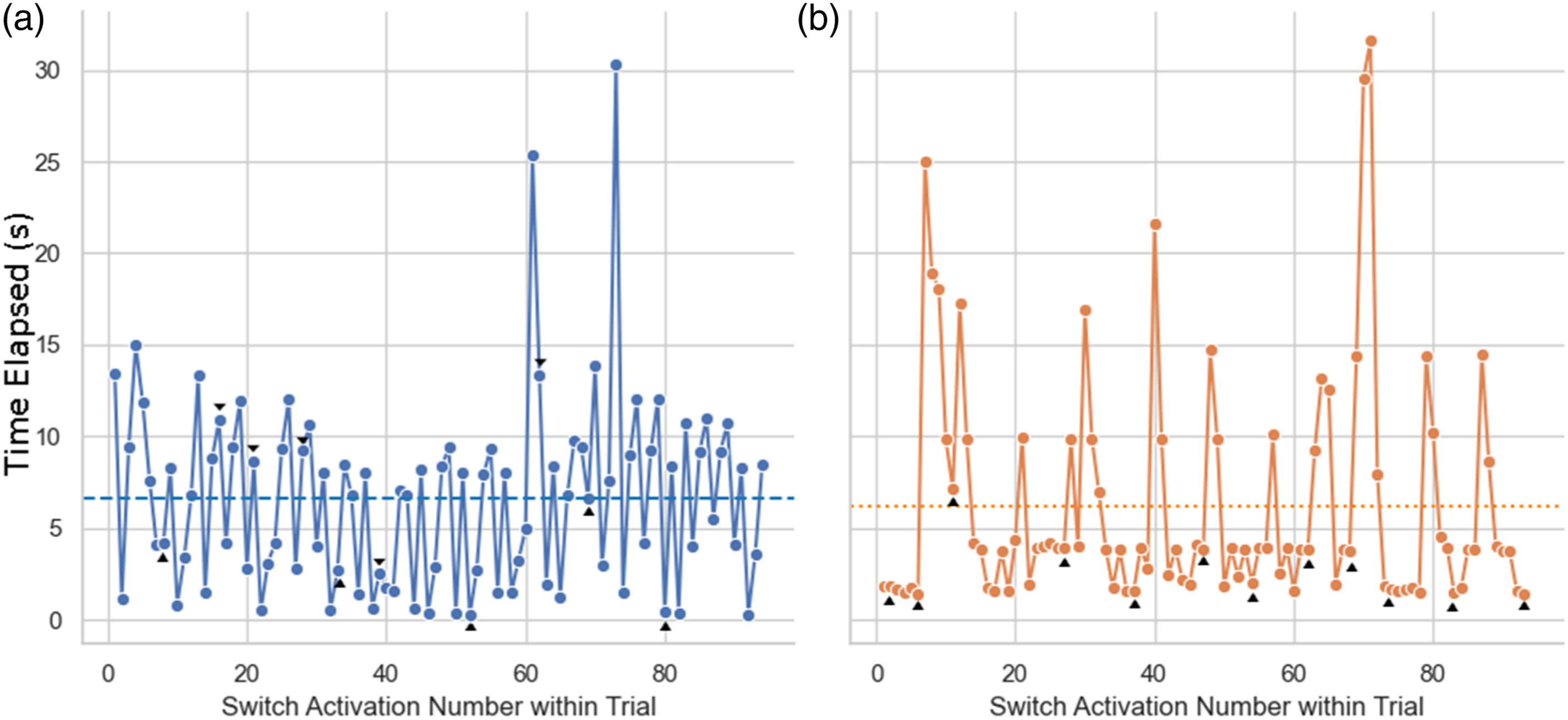
The EID interface required significantly fewer switch activations to communicate each word. It should be noted that the variance in the average number of activations per word was much higher for the commercial prototype than for the EID interface. The consistency in the number of selections for each word during EID interface use is evident in Figure 5. The more correct words communicated using the EID interface relative to the commercial interface is mostly due to participants progressing further in the semi-scripted conversation during EID interface use. Errors were uncommon throughout both types of AAC trials and were committed deliberately in the face of navigational uncertainty, to backtrack in their interface navigation. In both interfaces, the selection of a word resulted in the immediate return to the home screen. For the commercial interface, this action removed the need to navigate back through multiple menu levels using the ‘back’ button or to locate the ‘home’ button (see Figure 1). For the EID interface, the action eliminated the need to wait for a timeout that returned the system to the home screen after inactivity (Shea et al., 2021). Number of switch activations per word during AAC-mediated trials across all participants. Boxes show first quartile, median, and third quartile of data distribution; whiskers show the spread of the data, excluding outliers. Single data points are shown at words 14 and 15, as a single participant used more than 13 words during their EID interface trial. Quantity of participants measured at each word is shown parenthetically (commercial, EID).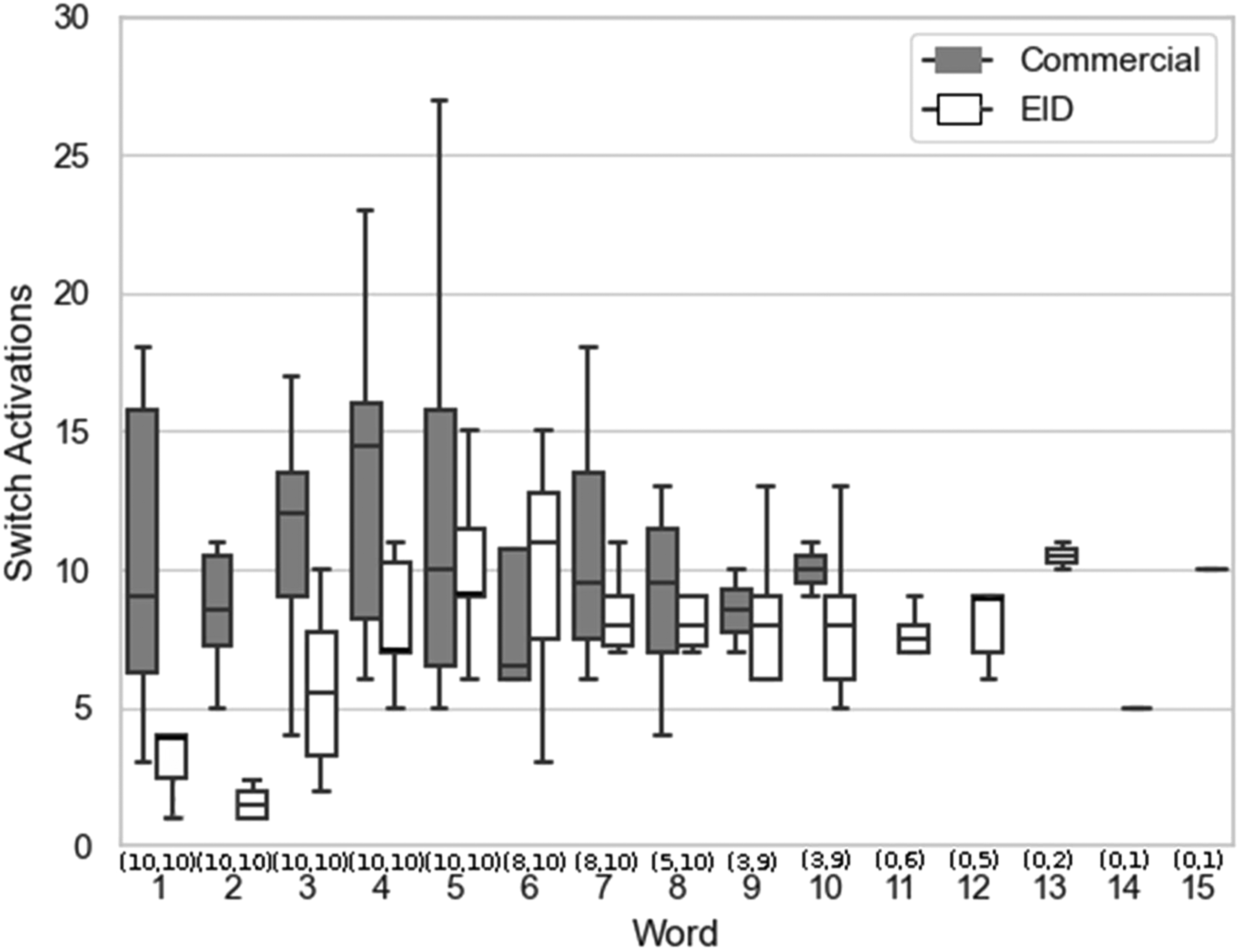
The subjective workload and system usability measures reflected participant preference for the EID interface over the commercial alternative. Although the difference between the mean SUS scores measured after the commercial and EID interface uses were not significant. Ecological interface design interface use resulted in significantly lower subjective mental workload measurements (p < .025) from the NASA TLX. No influence of interface use was found through HRV measures across participants (Table 3).
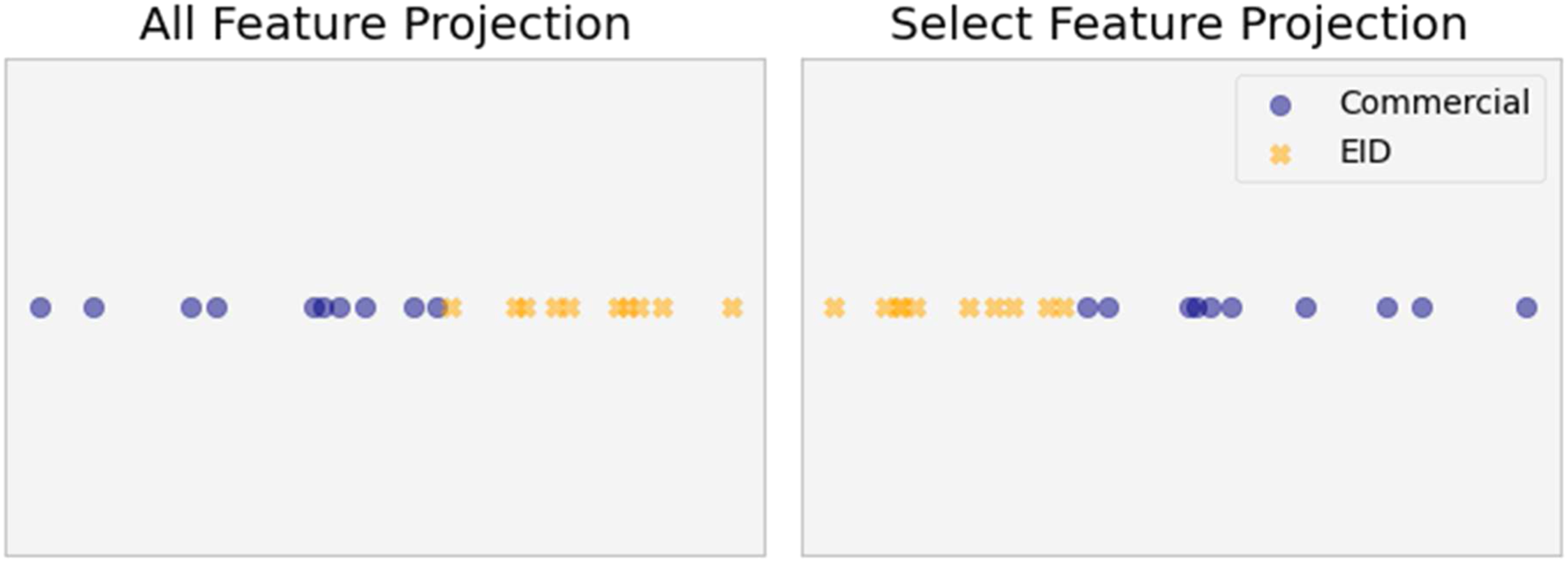
The logistic regression classifier was able to accurately identify the interface associated with participant use profiles at a rate of 81.6% and AUC value of 0.87. The probability score obtained through the permutation test (p < .01) suggested that the logistic regression classifier captured dependency between features and classes to maximize classification accuracy. The most salient features for accurate model identification were determined to be: (1) the number of selections per word communicated; (2) the total number of words communicated; and (3) the number of erroneous words communicated. Figure 6 shows the impact on classification accuracy when each feature was independently omitted. Figure 7 shows the linear separability of the classes through optimal feature projection of an LDA model trained on all the features and an LDA model trained on the three most salient features as identified through BRE and FSR. As shown by the lack of overlapping features in Figure 7, linear separability, and thus accurate class identification through linear machine learning architecture, was achieved by both models. The number of selections per word, number of words communicated, and number or erroneous words communicated were the variables which distinctly identified the interface in use. The impact of each feature on the classification accuracy obtained through a logistic regression model. Features considered include order of presentation (present), time elapsed between switch activations (time), selections per word (selections), words communicated (word), errors (error), system usability score (SUS), NASA task load index (TLX), and heart rate variability (HRV). Each point represents estimated accuracy with omission of the feature noted on the x–axis. The grey baseline indicates the accuracy obtained with all features included. A visualization of LDA optimal feature projection for a model trained on all available features (left) and a model trained on the three features identified through BRE and FSR (right). In both projections, class separability was achieved through a linear decision boundary.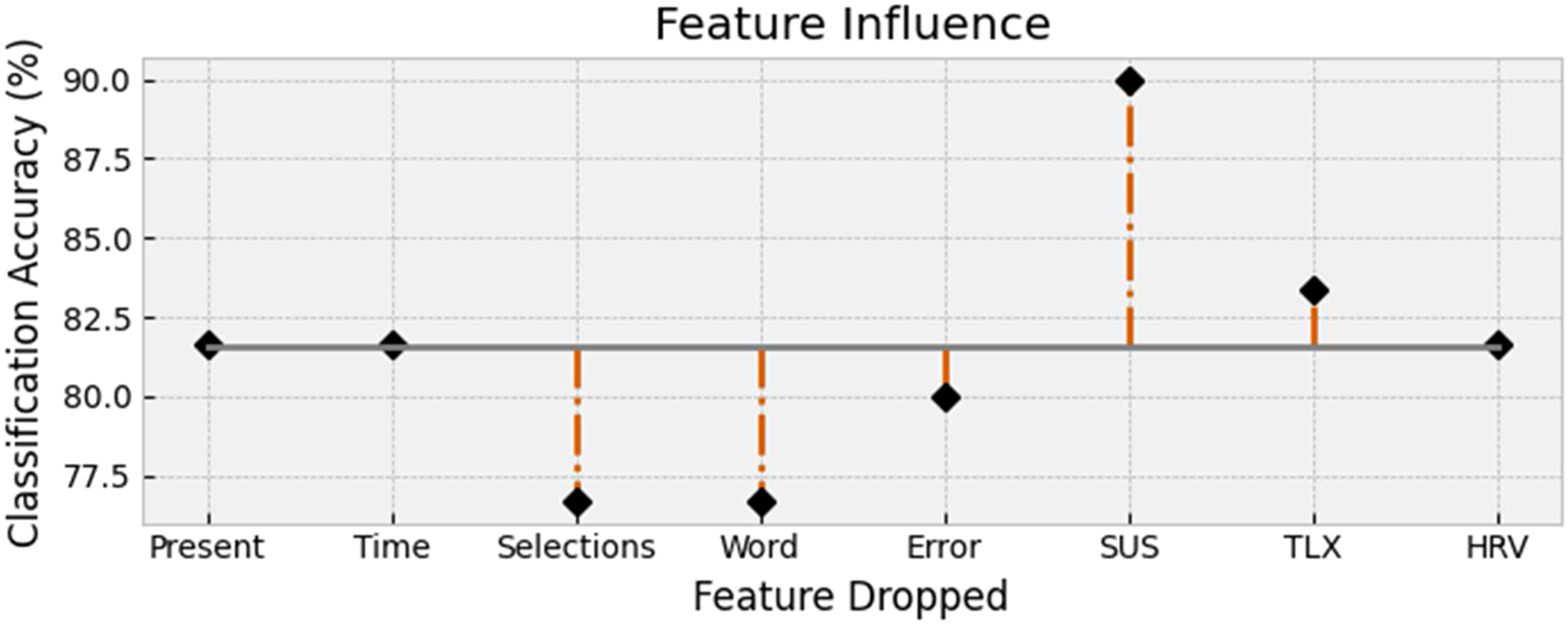
Discussion
We compared conversational trials of a commercial AAC interface and a recently proposed EDI-designed alternative. To effectively realize a communication goal, AAC users must initiate communication, plan language, search the interface, navigate the interface, and perform a selection (Akcakaya et al., 2014). Augmentative and alternative communication interfaces must support SRK-based behaviours for each stage of communication. Table 1 and Table 2 highlight the discrepancies in behavioural support between the commercial and EID interfaces. Using the EID-designed interface, participants experienced lower subjective mental workload (p < .05), reduced elapse time between navigation actions (p < .05), reduced number of switch activations required per word communicated (p < .005), increased information transfer rate (p < .01), and a decrease in erroneous words communicated (p < .01). Observations made throughout the trials provided insight into the different behaviours supported by the EID and commercial interfaces. Collectively, behavioural measures (e.g., quantity and time elapsed between switch activations), subjective mental workload, and system usability results suggest a better user experience with the EID interface for communication in a simulated conversation scenario. Descriptive statistics applied independently to analyse each performance measure are supported by the performance of a binary classification machine learning model that considered the overall performance profile of interface use. Due to experimental restrictions, word type category buttons and viewport organisation were the main EID design elements implemented.
Elapsed Time
The time elapsed between switch activations encompasses the time for language planning, interface information processing, and cursor scanning time. As scanning speed and dwell time were equivalent between the devices, the significantly reduced elapsed time observed in the EID interface can be attributed to interface design. The greater variance in elapsed times with the EID interface can be explained by considering the time series for time elapsed between switch activations. Considering Figure 4, we observe that the interface navigation behaviour was different between interfaces. While there exists consistently moderate to long elapsed times throughout commercial interface navigation, participants using the EID interface required long elapsed times at the initiation of a response selection, but these were followed by rapid subsequent selections.
Noted in communication actions of ‘Plan Language’ and ‘Search AAC Interface’ in Table 2, the EID interface uniquely included design elements that directly supported SRK-behaviours for language planning and navigation. The word type category buttons (annotated in Figure 2) of the EID interface afforded a grammatical overview of language units located in different viewports which served as a representation of the syntactic limits for phrase formation. To effectively navigate an interface, it is important for users to maintain a mental model and understand the hierarchical structure of the system through support of knowledge-based behaviour (García et al., 2014; Rasmussen, 1983). The word type category buttons integrated multiple levels of system information, as well as provided visual momentum to support skill-based behaviour for navigation events. For example, when a participant navigated to a word category, the word type category buttons remained visible with a visual indication of the selected category. A lack of rule-based behavioural support for category navigation results in procedural traps (Vicente & Rasmussen, 1992). The commercial interface did not include emergent features reflective of the hierarchical nature of language and participants were subjected to procedural traps of navigating through several categories prior to finding the viewport of their desired word. The impact of this design difference was shown in the participants’ performance. The consistent, 5°s–15°s time elapsed between switch activations during commercial interface navigation, shown in Figure 4, suggested a static level of familiarity with categories, navigation options and word orientation in viewports. Participants’ familiarity with the interface did not increase during the trial; they resorted to exploratory navigation throughout commercial interface use. In contrast, with the EID interface (see Figure 4), participants planned their navigation acts. The support for interface search and navigation behaviours can be attributed to the word type category buttons that served as emergent features and a transparent taxonomy (Holt et al., 2015).
Required Number of Switch Activations
Control through low bandwidth access pathways such as brain-computer interfaces can be very challenging for the user (Silva et al., 2008). Thus, the number of switch activations needed to communicate a word is an important metric for characterizing ease of access. The number of switch activations required to locate and select the desired word was significantly higher with the commercial interface (p < 0.005). The highest number that a participant required was 35 switch activations to communicate a single word (see Figure 5). Due to the multilevel menu structure of the commercial interface, each navigational goal required multiple switch activations to reach a viewport displaying the desired word option. Other taxonomies that similarly distill large datasets into deep hierarchical structures have been found to be time-consuming to search, require several decisions about thematic relationships and entail complicated navigational paths (García et al., 2014).
The greater consistency in the number of switch activations per word during EID interface use across participants (Table 3) suggests that similar strategies for EID interface navigation were adopted across participants due to a functional-level control of the AAC interface (Hajdukiewicz & Vicente, 2002). This finding highlights the knowledge-based behavioural support for language planning through hierarchical organisation of linguistic elements of the EID interface. The demonstrated knowledge-, rule- and skill-based behavioural support from word type category buttons allowed participants to plan language and circumvent procedural traps to achieve significantly higher communication rates (number of correct words per trial as shown in Table 3).
Mental Workload
No significant differences were found in measures of physiological workload. This finding contrasts with changes observed in participants’ subjective mental workload. A possible explanation for the lack of measured change in physiological mental workload is that, as participants were AAC-naïve, the activity of using an AAC interface to mediate a conversation for the first time may have induced a high mental workload. Due to steps taken to counterbalance AAC interface presentation, the resultant physiological workload measure would yield no significant difference between the interfaces. Physiological signals are generally not sensitive to small changes in mental workload (Charles & Nixon, 2019). Conversely, the NASA TLX survey prompts participants to reflect on their experiences through controlled questions (Hart & Staveland, 1988). Thus, the NASA TLX survey was more suited to capture subtle mental workload changes. Overall, changes to mental workload observable through the NASA TLX survey (refer to Table 3) were not accompanied by significant physiological responses when the interfaces were navigated by typically developed adults through single switch access. In single switch users with severe disabilities, the physical and mental effort (e.g., attention, visual scanning, and timed action) associated with each switch activation would be significantly higher. Consequently, the mental workload and usability experiences of these users may be more responsive to changes in interface design (Light, McNaughton, et al., 2019).
Limitations and Future Work
To fully understand the efficiencies provided by the EID application in AAC interface design, we must examine the deployment of the combined user and communication partner displays (Shea et al., 2021) and assess the support provided for language planning and initiating non-situational topics. Currently, paediatric users of AAC interfaces minimally initiate communication spontaneously (Andzik et al., 2016) and generally cannot choose a topic of communication beyond that of the immediate activity or prompt (Ferm et al., 2005). Consequently, these children experience limitations in participation and inclusion in education and social interactions (Andzik et al., 2016; Ferm et al., 2005). The communication partner interface presents the intention to initiate speech, the goal of the communication act, the effect of the communicator and completeness of phrase formation. In displaying these components of communication, the additional interface supports the communication partner in understanding the wishes of the AAC users and the context of communication. The value of such a communication-partner interface will be evaluated in future research.
Limitations exist in the experimental paradigm that impacts the statistical power of the data analysis, and generalizability of findings. The high variance in subjective measures (i.e., SUS, and NASA TLX) suggests a larger sample size may have yielded more conclusive findings.
This study presents an initial evaluation comparing the EID AAC interface to a single representation of current commercial AAC interfaces. It is important for future research to investigate the impact of the EID application to AAC interfaces for individuals who use AAC technology to supplement or replace their primary communication pathway. Although we discuss the expected implications of design decisions and empirical findings for AAC users and various access pathways, future research must consider populations from the target demographics for a comprehensive conclusion on the potential of EID application to AAC systems.
Conclusion
Barriers in AAC interfaces limit participation and inclusion for people who experience complex communication needs. This study empirically evaluated an AAC interface previously developed through the systematic and scientific design process of EID. Our findings suggest that the EID interface has potential to improve information transfer rate (p < .01), and mental workload (p < .025) compared to a commercially available AAC interface.
Footnotes
Declaration of Conflicting Interests
The author(s) declared no potential conflicts of interest with respect to the research, authorship, and/or publication of this article.
Funding
The author(s) disclosed receipt of the following financial support for the research, authorship, and/or publication of this article: This work was supported by Brain Canada and the Kids Brain Health Network Training Awards in Developmental Neuroscience Research Competition.
