




Abstract

Introduction
Bioeconomy offers a range of solutions for grand challenges, directly related to the transgression of planetary boundaries and issues such as an increasing (and aging) population, climate change, and biodiversity loss. Due to its cross-sectoral nature, the bioeconomy directs our fossil-based market system toward production and consumption patterns, which may improve sustainability in all economic sectors. Although the bioeconomy holds huge potential for a sustainable future, there is an urgent need to further advance and implement the bioeconomy in all European Union (EU) Member States and their regions. Supportive framework conditions to foster bioeconomy innovation and commercialization, and effective dissemination of this knowledge across the EU and its Member States, are of key importance.
The following commentary provides an analysis of key cornerstones of bioeconomy developments and derives selected recommendations to establish such supportive framework conditions.
Analysis and Methodology
The following analysis is derived from the ShapingBio (Shaping the future bioeconomy across sectoral, governmental, and geographical levels) project, funded by Horizon Europe, aiming to enhance the EU bioeconomy innovation ecosystem by providing information and recommendations for a more coherent and globally competitive bioeconomy across the European Union. Overall, the research conducted in the project comprised intensive desk research, 47 workshops as well as surveys for specific sub-topics.
A key structural element of the analysis is to identify the status quo and needs along the different stages of the innovation chain from lab to fab to market (see the middle block in Fig. 1) for bio-based innovations. These activities along the innovation chain should be framed by coherent EU and national governance for the bioeconomy as well as cross-sectoral collaboration and stakeholder integration.

Schematic overview of analysis categories.
Coherent Bioeconomy Policy
BIOECONOMY POLICY APPROACH IN THE EUROPEAN UNION
The European Bioeconomy Strategy considers moving beyond research and innovation toward a strategic and systemic approach as paramount for exploiting the economic, social, and environmental benefits of the concept. After the first adoption in 2012 and an update in 2018, the European Commission (EC) presented a new bioeconomy strategy 1 at the end of 2025 to take full advantage of the biotechnological potential. With the repositioning of the EC after the elections in 2024, the shift of responsibility from Directorate General (DG) RTD to DG Environment implies a stronger focus on implementation, in a joint effort with Directorate-General for Agriculture and Rural Development (DG AGRI) and DG GROW. Seen as vital for the future of the bioeconomy, topics such as scaling-up and accelerating innovation, financing scale-ups, lead-markets, improving circularity, or securing sustainably sourced biomass supply are core pillars of the strategy. This bioeconomy goes along and partly aims to integrate several other EC strategies, such as the Biotech Act I (2025), the planned Biotech Act II (2026), the European Life Science Strategy 2 and the EC Start-up and Scale-up Strategy. 3
All these recent and strategic activities of the EC underline the ambition to expand and better coordinate the bio-based sector, in which groundbreaking products and services are developed by innovative companies paving the way toward bioeconomy maturity.
STRATEGIC APPROACHES AND CHALLENGES IN EU MEMBER STATES
While the EU strategy fosters a coherent strategic approach to the bioeconomy, challenges and hurdles are still present at the national and regional levels (horizontal policy alignment) as well as across governance levels (vertical alignment).
To date, 11 EU Member States have published a dedicated bioeconomy strategy or related policy document, and actions for implementation have already been taken. Countries do not follow the same pattern or similar pathways toward their respective bioeconomy strategies. Figure 2 shows that the Member States have taken different approaches regarding strategy setting and implementation until now. While some countries have developed dedicated strategies and action plans (e.g., Austria, France, Ireland), other countries have been active, but without developing very dedicated approaches for the bioeconomy (e.g., Denmark, Belgium, Sweden). The process moving from strategy elaboration to implementation is not necessarily linear, and several states used windows of opportunity (e.g., EU presidency, favorable national political constellations) to advocate for bioeconomy as a political priority or publish their bioeconomy strategy. Both top-down initiatives, taken by governments, as well as bottom-up initiatives, taken by stakeholder groups, or a mix of both approaches, can be observed. 4

State of play of bioeconomy policy approaches in the EU. Source: Fraunhofer ISI. *Non-bioeconomy dedicated policy instruments relate to instruments that are horizontal across many sectors beyond the bioeconomy or only refer to single bioeconomy sectors (e.g., fisheries, agriculture).
In countries without a dedicated bioeconomy strategy, bioeconomy-related goals and activities are fragmented and scattered across several sectoral strategies and policies. There are different reasons why these countries haven’t developed a strategic approach yet, ranging from lack of acknowledgment of the benefits and added value of an additional holistic and coherent bioeconomy policy to time-consuming processes of coordination and stakeholder engagement.
POLICY COORDINATION
Strategic activities in the bioeconomy are of cross-sectoral in nature and intersect with established policy domains. This requires vertical coordination across governmental levels, but also a horizontal coordination between different national ministries and departments (e.g., research, agriculture or economic ministries). Moreover, coordination of bioeconomy policy with other policy fields such as industrial, circular economy, research and innovation, environmental, and climate policies is required: decisions in these policy fields may have a significant impact on the bioeconomy, and the bioeconomy may contribute important solutions in these fields. EU Member States have chosen different options to establish a coordination-supportive environment: They range from a formally established coordination body (e.g., Italy) to a more network-such as type of coordination (e.g., Germany). However, although no one-size-fits-all solution exists, success factors in the setup of the coordination-supportive environment are the careful selection of the institution, ministry or person who chairs the coordination process, coordination platforms or processes between participating entities, a clearly defined mandate and terms of reference, and the provision of sufficient resources in terms of budget, staff, and time for (sometimes resource-consuming) coordination processes.
IMPLEMENTATION PATHWAY
The EC should elaborate a highly ambitious strategy that covers the interlinkage of the bioeconomy with different policy areas. In doing so, it should continue its efforts to coordinate bioeconomy policy across the involved DGs, to ensure that bioeconomy specificities are considered in related strategies, action plans, and acts and to exploit synergies between them.
The EC should also support EU Member States and their regions without a bioeconomy strategy in their efforts to develop holistic, coherent bioeconomy policies with dedicated bioeconomy strategies. Moreover, in all Member States and regions with strategies, coherent bioeconomy policy implementation is needed through both horizontal coordination (between the responsible ministries and with related policy fields and strategies) and vertical coordination (across geographical governance levels). Options that could be considered as support at the EU-level are commissioning studies on what good practice strategies and coordination entail, evaluations, Coordination and Support Actions, and exchange of good practice in suitable fora (e.g., conferences, European Bioeconomy Forum, CBE JU, group of national representatives, OECD, G20).
From Lab to Fab to Market
For innovations, the transition from laboratory research to industrial fabrication (from lab to fab) and then ultimately entering the market covers different crucial stages and activities. The following key issues emerge in the case of EU bioeconomy innovations.
SCALING UP IN OPEN ACCESS PILOT AND DEMONSTRATION FACILITIES
For the transition phase from lab-scale prototype to industrial scale operation and market readiness, technical infrastructure, actor capabilities, and appropriate financial resources are perquisites. From a bio innovator’s perspective, one of the main barriers to market entry is the high cost associated with scaling up biotechnology innovations, particularly during the transition from lab-scale to pilot and industrial-scale manufacturing. This phase often demands substantial infrastructure for demonstration trials and specialized equipment, yet financial support at this critical juncture remains scarce and fragmented. Open access, multipurpose, shared pilot and demo infrastructures (PDIs) play an important role in supporting innovation from the laboratory to the industrial scale. There is already a strong PDI scene in the EU, brought together by the Pilots4U 1 network, which includes over 120 PDIs (see Fig. 3) in different countries. The PDIs encompass more than 50 distinct technologies within 12 identified technology domains. An interview-based survey of 30 PDIs showed that there is currently sufficient technical and operational capacity (89% positive confirmation) and physical and scheduling availability (94% positive confirmation) of open-access PDIs. A large proportion of the surveyed PDIs have an inherent drive to keep their infrastructures state-of-the-art (91%). However, in 2024–2025, a macroeconomic slowdown in the biotech sector was observed, resulting in significantly lower scale-up demand at the existing PDIs by bio innovators. 5

Geographical distribution of open access pilot and demonstration plants within Europe. Source: BBEPP.
CONTINUOUS FUNDING ALONG THE INNOVATION CHAIN AND PUBLIC-PRIVATE PARTNERSHIPS (PPPS)
In addition to the use of open-access PDIs, significant costs and hurdles for innovators occur in all pilots, demonstrations, and commercial activities along the innovation chain. According to interviews and workshop results from within the ShapingBio project, especially at higher Technological Readiness Level (TRL) stages, financing becomes a key bottleneck. Currently, there are explicit programs only in Germany and Ireland (Table 1).6–8 Additionally, some other countries have either broader bioeconomy funding programs (e.g., Portugal) or more general industry-related programs (e.g., France), which provide funding possibilities for bio-based demonstration or commercial plants.



The example on the EU level in Table 1 is the CBE JU as an institutionalized Public-Private-Partnership (PPP). Such PPPs can address the access-to-market challenge by combining public funding with private expertise and networks to navigate market entry and support de-risking investments. The CBE JU is highly valued by stakeholders, and a recent evaluation points out its creation of many novel cross-sector interconnections within the bio-based sector as well as the highly active participation of a diverse range of entities (SMEs, public research, etc.). 9
A potential complementary activity is the ongoing effort to establish an “Important Project of Common European Interest (IPCEI)” for biotechnology and biomanufacturing, pushed forward by 14 European Member States since January 2025. 2 An IPCEI is a transnational project of common European interest to the European industry and the economy through state funding. IPCEIs are special projects without EU-funding, but with rules that enable Member States to cover up to 100% of a project’s funding gap with public funding for eligible activities (research and development and first industrial deployment). The 10 approved IPCEIs are in the range of €1–8 billion of public funding. 3
START-UP FINANCING
A strong business climate and innovative bio-based SMEs are indispensable for advancing the bioeconomy. For spin-offs, start-ups, and other SMEs, access to financing is of decisive importance in order to establish their business and bring innovations to market. Yet, despite a range of available funding mechanisms, securing financing remains far from straightforward. Bioeconomy investments are often perceived as high-risk, owing to the capital intensity of early-stage investment compared with other sectors, heterogeneity of technologies, regulatory frameworks, and market conditions in this sector.
An analysis of investment rounds in the EU bioeconomy using the Dealroom database (01.01.2021–08.08.2024) highlights the role of a wide spectrum of public and private financial instruments– including angel investment, growth equity, grants, and Series A–H funding—in supporting bio-based companies. 10 Notably, close to three-quarters of the total investment volume calculated in sum of investment in the EU bioeconomy originates from investors headquartered outside Europe. This reflects a dynamic in which non-European actors participate in fewer, but more mature and higher-value, deals. According to the classification of the European Innovation Scoreboard, investments from investors with headquarters in the EU come predominantly from strong innovators (9% of the total sum of investments) and lead innovators (6%). Moderate and emerging innovators together account for less than 1% (see Fig. 4).
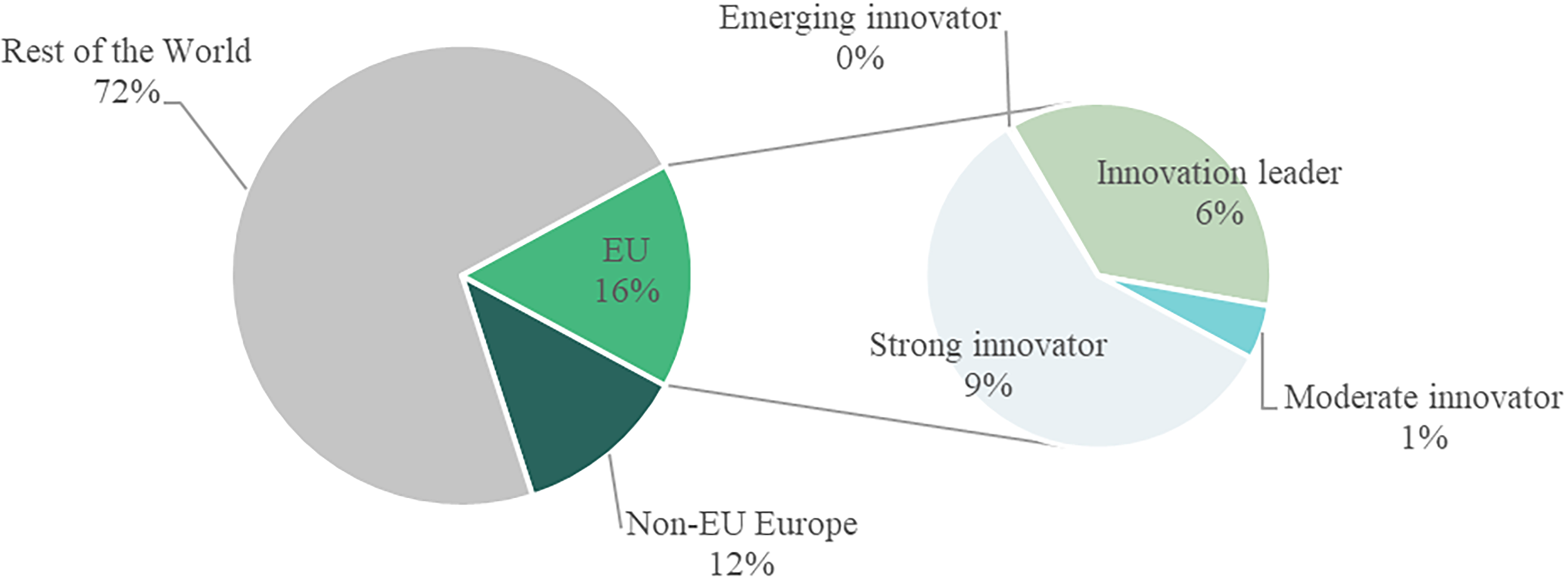
Investors in the EU bioeconomy by the sum of investment amounts. Source: Garthley (2024), based on Dealroom.co.
Regarding the geographical distribution of the financed companies, a similar picture emerges, with mainly the lead and strong innovator countries participating in deals and receiving more than 85% of the investment amounts. Moreover, an online survey among companies and investors 10 shows that there is a lack of sufficient financing for SMEs, particularly in moderate or emerging innovative countries moderate or emerging innovator countries. This disparity underlines the need for targeted measures to address geographic imbalances and to strengthen the financing landscape for bioeconomy start-ups across all EU regions.
MARKET GROWTH AND FORMATION
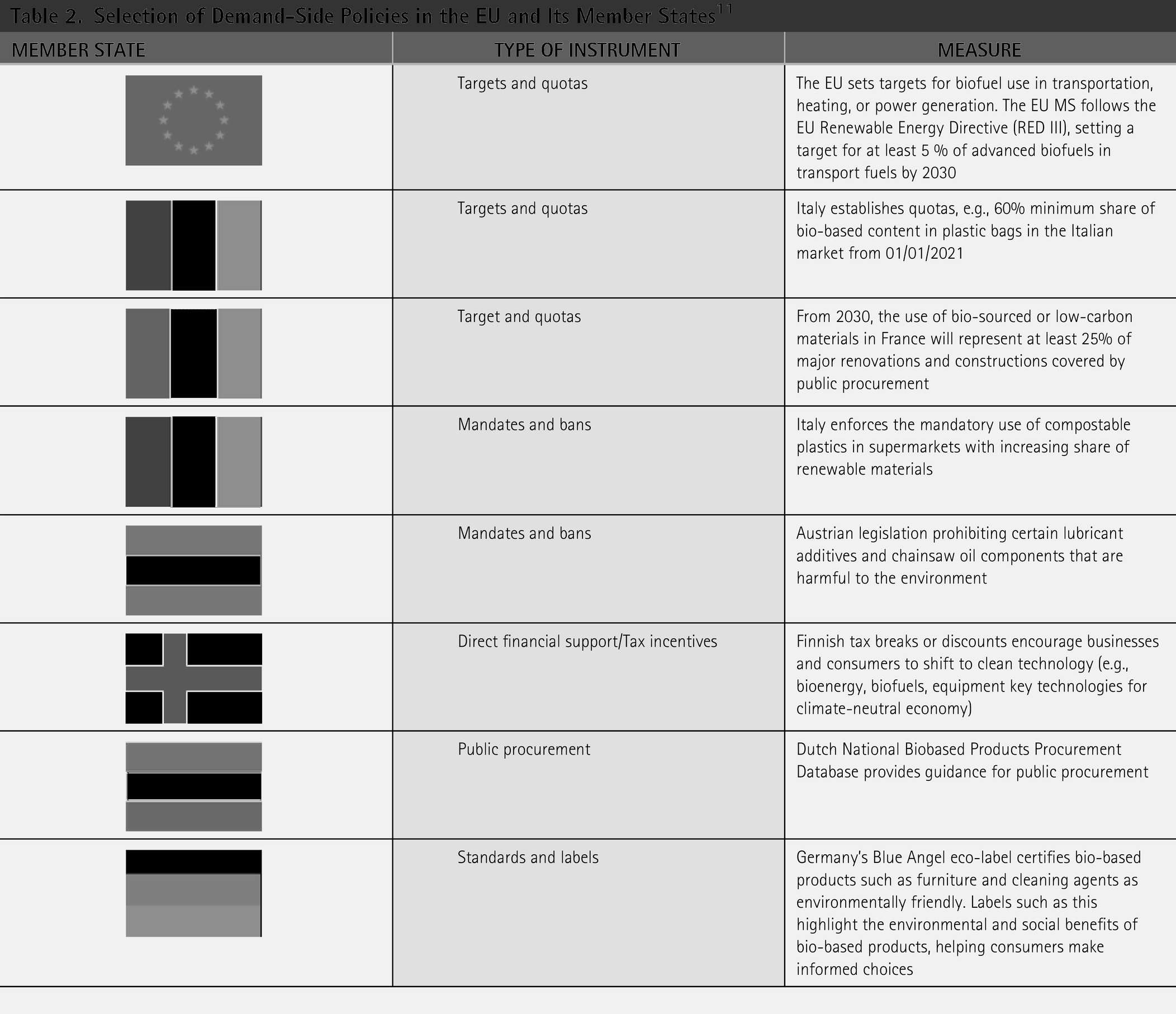
Market development in the bioeconomy is essential for driving innovation, generating economic growth, and potentially addressing environmental challenges, as it enables the translation of scientific advancements into commercially viable products. Typically, bio-based products face not only higher production costs compared to conventional industries, but also regulations, infrastructure, user practices, and preferences aligned with the needs of existing (usually fossil-based) technologies. Hence, demand-side policies to foster bio-based products are much needed and justified. Today, such policy instruments are highly scattered in terms of covered EU geographical areas, segments of bio-based products addressed, and instruments used. The lack of political will to implement such measures and lobby interests hampers implementation (Wydra 2025). Currently, a range of these policy instruments is discussed at the EU-level and in a few MemberStates, focusing on quotas, modifications, or additional emissions trading systems that favor biogenic carbon or better GHG-emission performance of bio-based products (Table 2). 11
Selection of Demand-Side Policies in the EU and Its Member States 11
In a similar vein, often the regulatory and administrative environment is a significant hurdle for emerging innovations. Examples include regulations for alternative meat, aquaculture, or microbiome innovations. Regulatory frameworks, which were tailored to conventional processes, products, and services, are not fit for purpose for these innovations. Administrative hurdles are authorisations, licenses, permissions, and surveillance of these innovations, which often fall into the competency of several different regulatory or administrative authorities. Those challenges are exacerbated by the heterogeneity across EU Member States and/or regions regarding the regulatory and administrative environment as well as the number and expertise of the responsible administrative authorities. Therefore, a holistic and coherent bioeconomy policy must anticipate such regulatory and administrative challenges and proactively address these with appropriate measures.
RECOMMENDATIONS
In order to realize the full potential of innovations in the bioeconomy, the described bottlenecks along this innovation chain should be addressed. Overall, funding frameworks should be modified to allow projects to apply for support at different stages of their lifecycle, from scale-up to commercialization, ensuring that critical long-term projects receive continuous investment and meet the changing needs during that journey. Among others, this includes providing innovators with co-funding support to efficiently use open access pilot and demo facilities, regardless of their location, e.g., vouchers for cross-regional use. Moreover, the existing PDIs should be supported to remain state-of-the-Art and to invest in new equipment, and more PPP activities aimed at bioeconomy sectors should be established. To derisk investment for companies and investors, demand-side policies, the EC and its Member States should put stronger emphasis on demand-side policy and economic instruments for bio-based products and services. A coherent policy mix ideally consists of several measures, disincentivizing the use of fossil products (e.g., by higher taxes or reduced subventions) and simultaneously incentivizing bio-based products.
Stakeholder Integration and Cross-Sectoral Collaborations
Engaging in collaboration allows stakeholders from different sectors to bring together their unique and complementary perspectives and expertise, as well as resources, and presents a significant opportunity for established bioeconomy sectors to develop new technologies and production processes. The importance of collaboration in the bioeconomy has already been recognized by the community due to its manifold significance. While the number of national/regional bioeconomy-related clusters, hubs, etc. is difficult to determine, a stock-taking of trans-national European collaborative structures (networks, associations, forums, hubs, platforms, programs, and clusters as well as PPPs) shows a significant increase in research and innovation programmes (see Fig. 5).
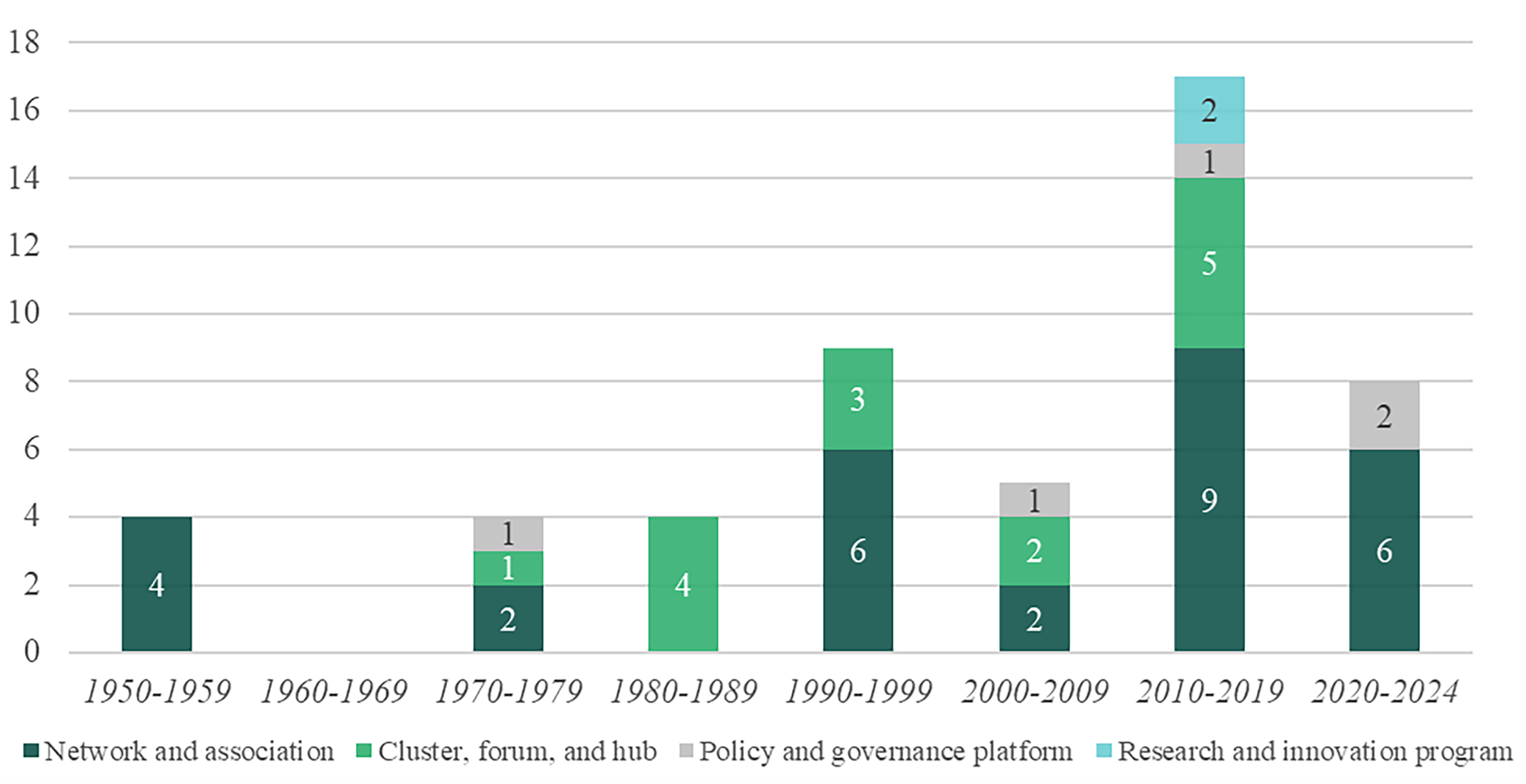
Development of transnational collaborative structures in the EU Bioeconomy. Source: Fraunhofer ISI.
However, in EU regions where the bioeconomy concept has not yet been fully implemented, there is often a scarcity of physical spaces for stakeholders to facilitate the exchange of ideas. Moreover, the services offered by intermediaries and collaborative platforms face the challenge of not adequately aligning with the evolving needs of their members in a rapidly changing environment. Additionally, it is essential to involve a greater diversity of stakeholder groups along the bioeconomy value chains. One example is to involve primary producers more intensively, by showcasing opportunities and incentivization.
Next to integrating the relevant stakeholders along the value chain, integration of broader stakeholder groups has an important role for legitimacy of the bioeconomy and its directionality toward social benefits. Some stakeholder groups have been weakly represented so far (e.g., some NGOs, youth). An exception is the EU Bioeconomy Youth Ambassadors (BYAs) program, organized by the bioeconomy team of Directorate-General for Research and Innovation (DG RTD) in 2022 for the first time, which engaged 15 young talents across Europe, from different backgrounds. 4 The main goal of the group was to champion bioeconomy values and inspire younger generations, creating valuable bridges with policymakers and professionals alike. BYAs are actively involved in outreach and formal events in several countries, with Brussels as the main focal point, to directly involve EC personnel. The first cohort published a document called Bioeconomy Youth Vision (BYV), with the goal of showcasing how young people portray the development and application of bioeconomy. 12 The second cohort, starting from August 2025, demonstrates the commitment of the EC to the involvement of young talents in shaping the upcoming revised version of the bioeconomy strategy.
FUTURE DIRECTIONS
Aligning services offered by intermediaries and collaborative platforms with actors’ needs is crucial. This includes regular assessments of needs and dedicated funding to develop custom-made services for the members (e.g., networking, training, resource sharing, administrative support).
Moreover, the EC should sustain a multi-actor approach in bioeconomy that fosters iterative dialogues among the diverse stakeholder groups. The EC could consider the option of a future-oriented Bioeconomy Dialogue modeled after the Strategic Dialogue on the Future of EU Agriculture, followed by a European Board on Bioeconomy, similar to the European Board on Agriculture and Food. The EC should encourage and support Member States to also conduct multi-actor approaches and dialogues. For example, the aforementioned BYV lists some recommendations aimed at better integrating younger stakeholders, such as introducing life cycle and systems thinking to children (i.e., early in the educational system), promoting the use of social media platforms to communicate bioeconomy-related topics, transforming farming into a viable and attractive career choice for young people, and pushing formalization processes (in terms of recognition) of youth groups, to give greater accountability and trust to these individuals.
Conclusion
The EU has unique strengths in the bioeconomy as a whole, by producing different feedstock alternatives (biomass), having an emerging bioeconomy infrastructure, and being strong in different bio-mass converting industries across the Member States and Regions. However, in order to achieve global competitiveness, the EU has to reach a high level of innovativeness in many member states and to realize its full potential and strengthen its industrial capabilities. Therefore, it is urgent to implement the new EU Bioeconomy Strategy at the EU level as well as the Member States strategies, which still need to be developed in the majority of the countries. Key issues are to support the availability of financial capital for high TRL-projects as well as innovative start-ups, to enhance the cross-sectoral potential of the bioeconomy, and to introduce a coherent policy mix. The latter consists ideally of several measures, which combine supply and demand side instruments to incentivize bio-based products.