



Abstract
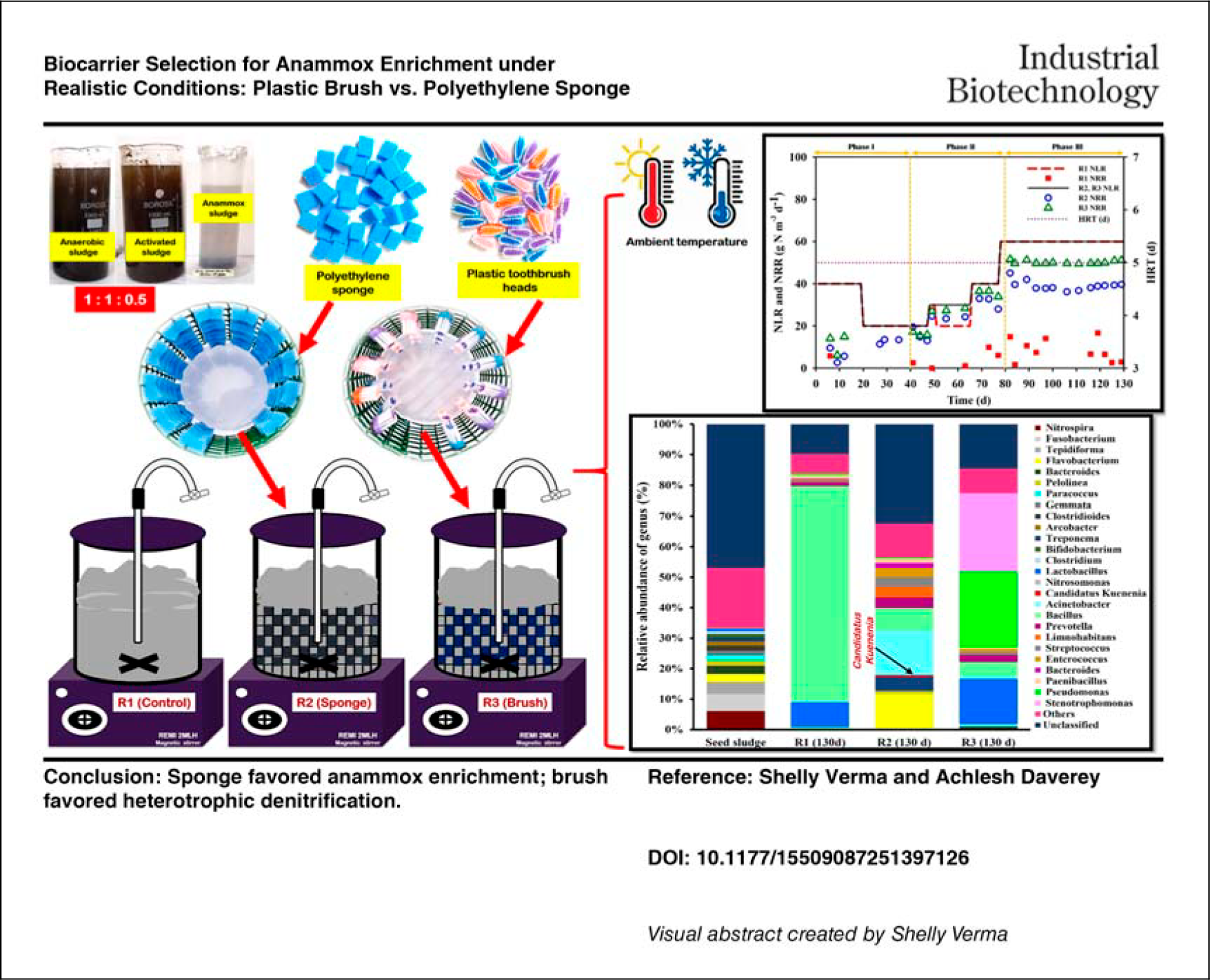
This study evaluated the performance of two distinct biocarriers—plastic brush (bristle-containing toothbrush heads) and polyethylene sponge—for enriching anaerobic ammonium oxidation (anammox) bacteria under realistic (nonsteady state) conditions. Over a 130-day period, three sequencing batch reactors (R1–R3) were operated with a mixed seed inoculum (anaerobic, activated, and anammox sludge; 1:1:0.5). R1 served as the control (no carrier), while R2 and R3 used sponge and brush carriers, respectively. All reactors were operated at ambient temperatures, without dissolved oxygen (DO) control, under varying nitrogen loading rates (NLRs) (20–60 g N m−3 d−1). Performance evaluation across operational phases revealed a statistically significant difference during Phase III (p < 0.05): R1 showed the lowest total nitrogen removal efficiency (∼12%), R2 moderate (∼65%), and R3 the highest (∼83%), despite declining ambient temperatures. However, 16S rRNA gene sequencing revealed contrasting microbial communities. R1 was dominated by Bacillus (70.29%) and Lactobacillus (7.92%), suggesting poor anammox enrichment. R2 fostered a more diverse community, including Acinetobacter (14.77%), Flavobacterium (11.72%), and a threefold increase in Candidatus Kuenenia (0.18–0.54%), confirming successful anammox enrichment. R3 was dominated by denitrifiers such as Stenotrophomonas (25.48%) and Pseudomonas (24.9%), implying total nitrogen removal was primarily via heterotrophic denitrification. Overall, polyethylene sponge proved more suitable for anammox enrichment, while brush-type carriers supported heterotrophic denitrification. Notably, this study demonstrates the first use of plastic toothbrush heads as biocarriers under realistic conditions, offering a novel comparison with conventional sponge carriers for nitrogen removal.
Get full access to this article
View all access options for this article.