




Abstract
Cultural heritage is based on the aspects of our past that we cherish, want to keep and pass on to future generations and the outside world. Most cultural heritage resources preserved in memory institutions, including libraries, archives, and museums (LAMs), give us unique insights into the past, help us understand our present and determine our future. However, these priceless materials are not fully utilized by the public due to inadequate promotion strategies. Worse still, LAMs in Tanzania seem to be working in silos when promoting access to available cultural heritage resources in their holdings. This study attempted to investigate the views of museum professionals from the National Museum of Tanzania concerning collaboration strategies in promoting access to the country’s cultural heritage resources. Twenty-two museum professionals participated in the study by completing an online survey. A documentary review of legislations governing LAMs was conducted to determine whether collaboration is encouraged and supported legally. The findings of the study indicated that the existing legislations lack provisions for collaborations in promoting and raising public awareness of heritage resources preserved in LAMs. The study provides recommendations that could strengthen ties between libraries, archives and museums so as to promote further access to the Tanzanian cultural heritage resources maintained in LAMs.
Introduction
Cultural heritage includes tangible and intangible, movable and immovable cultural heritage resources. Cultural resources reveal the history and physical and cultural changes in human behavior from the past to the present (URT 2008). Cultural heritage institutions, also known as memory institutions, can refer to organizations that operate under a culture/subculture to preserve or promote cultural heritage. They include institutions such as museums, libraries and archives. The roles and practices of cultural heritage institutions are to collect, preserve, and facilitate access to cultural heritage knowledge, provide a better understanding of the diverse culture and heritage, fulfil educational needs, and promote literacy, knowledge, and scientific research (Tanackovic and Badurina 2009).
Much of our cultural heritage is preserved in archives, libraries and museums. The artefacts therein give us unique insights into the lives of people long gone and methods of working with materials long forgotten (Gorman 2007). Based on this fact, one would expect a high influx of people visiting these institutions, which can help them understand society better and shape its future (Trant 2009). Archives and artefacts preserved in archives, libraries and museums belong to the people as they document rich information about past events in their society. Such unique information materials may contribute to people’s enjoyment and inspiration, cultural values, learning potential, economic prosperity and social equity (Kamatula 2011).
In Tanzania, diverse cultural heritage resources of national and international significance exist. The country’s records are preserved at the National Museum, National Library, documentation and information centers, and antiquities stations by both public and private institutions and individuals (URT 2008, 13). However, these institutions have been implementing their typical roles separately, especially when it comes to promotion, dissemination of information and awareness creation to the public about the rich cultural heritage they preserve (Ekwelem, Okafor, and Ukwoma 2011).
With the advent of fast-developing information and communication technologies (ICTs) and the ever-growing diverse information needs of the public, library, archives and museum (LAM) professionals realize that the task of preserving and communicating world heritage surpasses their institutional boundaries and that their mission would be better accomplished if they collaborated within the cultural heritage sector (Saurombe and Ngulube 2018). ICTs provide opportunities for collaboration by bringing these cultural institutions closer together (Marcum 2014). In this networked world, these independent memory organizations with their unique professional histories now realize that users of their content want information about subjects, not information from a particular source (Marcum 2014). In this regard, LAM professionals have plenty of opportunities to operationalize their representations of the future as a part of their daily work. The perceived relevance of the collaboration of LAMs and the introduction of such umbrella concepts as “memory institutions” have captured political, civic and professional thoughts to a degree that it is easy to argue that the notion of convergence of LAMs’ roles is necessary (Trant 2009).
In this paper, the authors explore the need for the National Museum of Tanzania (NMT) to collaborate with other cultural heritage institutions, such as the Tanzania Library Services Board (TLSB) and the President’s Office, Records and Archives Management Department (PO-RAMD), towards raising awareness about Tanzania’s heritage. The study involved museum curators, education officers, and conservators from all existing NMT centers located in various regions of Tanzania, including the Arusha Declaration Museum (Arusha), National Natural History Museum (Arusha), and Mwl. J. K. Nyerere Museum (Mara); Majimaji Memorial Museum (Ruvuma); Museum and House of Culture (Dar es Salaam); Village Museum (Dar es Salaam) and Dr Rashid Mfaume Kawawa Museum (Ruvuma). Even though collaboration among libraries, archives, and museums is not a new concept, there is seemingly limited information on experiences from East Africa in the literature. Therefore, this study’s findings could be a valuable addition that could boost collaboration strategies in this sector.
Colonial Context of the National Museum of Tanzania
The National Museum of Tanzania (NMT) is a government institution established under the National Museum Act, No. 7 of 1980, and it is charged with collecting, conserving, displaying, and researching all materials relating to Tanzania’s cultural and natural heritages. The history of cultural heritage management in Tanzania dates back to the year 1900, during the German colonial period, when the first collections were made while constructing the central railway line. Also, establishing a museum in Tanzania’s mainland (by then Tanganyika) began during German colonial rule in 1912 when a German geographer, Dr Hans Meier, offered funds to build a museum in Dar es Salaam. This idea was then picked up and consolidated by Sir Harold Mac Michael, the Governor of Tanganyika Territory, during the British occupation (1934–1938). Following the death of King George V in 1936, funds were raised from the public and government to build a memorial museum for Him. The King George V Memorial Museum was opened to the public on December 7th, 1940, by the British Governor of Tanganyika, Sir Mark Young.
Post-Colonial Context of the National Museum of Tanzania
After Independence, efforts were geared to popularize the museum, and it was decided that two new wings must be built: one to house the Department of Antiquities and the other to add exhibition halls and storage rooms. The construction of these new wings started in 1963 and was completed in 1964. After that, the King George V Memorial Museum and the two added new wings were renamed the National Museum. More collections were collected, and national laws and regulations concerning the protection of cultural heritage were enacted, including the National Museum of Tanganyika Act of 1963, which was later amended by the National Museum Act No. 37 of 1965. In 1980, the National Museum was renamed the National Museum of Tanzania (NMT) following a proclamation of the National Museum of Tanzania Act No. 7 of 1980. Currently, NMT incorporates seven museum centers, including the Museum and House of Culture (MHoC), located in Dar es Salaam; the Village Museum (VM) in Dar es Salaam; the Arusha Declaration Museum (ADM), which is in Arusha; the National Natural History Museum (NNHM), located in the heart of Arusha City; the Mwl. Julius Kambarage Nyerere Museum (MJKNM) is in Butiama, a town in Mara Region; the Maji Memorial Museum (MMMM) is in Songea town, in Ruvuma Region; and the Dr Rashid Mfaume Kawawa Memorial Museum located in Ruvuma region.
Problem Statement
Cultural heritage refers to the legacy of physical artifacts and intangible attributes of a group or society that are inherited from the past generations, maintained in the present, and bestowed for the benefit of future generation (UNESCO 2015). The National Museum of Tanzania (NMT) has been at the forefront of educating the public and tourists about the country’s socioeconomic development, including information from before and after the country’s independence. However, over the past 40 years, the Museum has experienced a decline in visitors seeking to learn more about Tanzania’s political history, culture and heritage. Taking an example from one of the museum centers—the Arusha Declaration Museum, statistical reports indicate that in 1982, the Museum was visited by 10,607 people; in 1988, 25,251 visited the Museum, but from the 1990s to date, the number of visitors who are registered on a daily basis is drastically decreasing (ADM Annual Reports—1982 to 2022). For this reason, the Museum has sought to upgrade its facilities and explore other strategies to help market and promote access to the natural and cultural heritage housed in museums and other heritage organizations (a.k.a memory institutions) in Tanzania.
Literature on heritage management reports on challenges such as funding, lack of expertise, and, recently, the COVID-19 pandemic affecting activities around promoting access to museums, archives, libraries, and other cultural organizations (Mlemwa 2020). NMT’s strategic plan leverages stakeholder engagement to overcome these challenges and strengthen its operational strategies, among which is outreach (OCLC 2021; URT 2021).
There is limited information on collaboration strategies among museums and other heritage or cultural organizations, such as African archival repositories (Saurombe 2020). Therefore, this study investigated how museum professionals perceived the concept of collaboration with other memory institutions, more specifically archival institutions and libraries, to boost their outreach activities. Museums and other memory institutions, such as archives and libraries, house valuable records for society. Therefore, these memory institutions should not remain hidden treasures available to a select few. The study also explored how legislation supported access to and use of records on heritage, culture, and identity through collaboration. These findings will likely be of value to other memory institutions in Africa pursuing similar objectives.
Study Objectives
The general objective of this study was to investigate the collaborative strategies employed by the National Museum of Tanzania in raising public awareness of the country’s cultural heritage and assess their effectiveness in promoting accessibility among diverse audiences. Specific objectives were:
to evaluate the extent to which legislation linked to history, culture and heritage management supports collaborative efforts among museums and other heritage/cultural and information institutions such as archives, libraries and others;
to assess the condition of the artefacts, archives and other collections available at the National Museum of Tanzania from the museum’s professionals’ perspective;
to determine the level of awareness related to collaborative strategies in the field of heritage management by curators, conservators and education officers from the National Museum of Tanzania;
to map collaboration activities at the National Museum of Tanzania; and
to identify possible opportunities at the National Museum of Tanzania in their quest to raise awareness about Tanzania’s history, culture, heritage and identity.
Conceptual Framework
A conceptual framework in a study describes how essential elements in a particular study are integrated to provide a better understanding of how the study should be carried out. Frey (2018) explains that the conceptual framework integrates related ideas and that all conceptual frameworks are based on these three elements:
the researcher’s personal experience and viewpoints,
existing information, and
knowledge of the phenomenon under study.
This study utilized a multi-method approach with post-positivist foundations. The post-positivist perspective aligns with the study’s aim to explore and understand the challenges and opportunities in promoting cultural heritage through collaboration. Employing an online survey of museum professionals allowed the researcher to explore personal and professional views on collaboration, providing a rich understanding aligned with the conceptual framework. Similarly, by conducting a comprehensive literature review and documentary analysis of existing policies and legislations related to LAMs, the study gained a foundational understanding necessary for comparing current collaboration practices and identifying gaps in policies and legislation. By aligning these research methods with the elements of the conceptual framework, the study followed a coherent and comprehensive approach to investigating collaborative strategies in promoting Tanzania’s cultural heritage.
Various studies have explored the benefits and disadvantages of collaboration between libraries, archives, and museums. For example, Zaid and Abioye (2010) investigated how these entities could strengthen their preservation operations through collaboration; Mabe and Potgieter (2018) explored how collaboration among LAMs in South Africa could strengthen digitization skills. Saurombe and Ngulube’s (2018) and Mosweu’s (2019) studies focused on collaborative outreach strategies in raising awareness about memory institutions in East and Southern Africa. This study utilized concepts linked to the objectives and elements of the stakeholder engagement theory (Freeman 1984). This theory purports that organizations can achieve more and overcome challenges by involving stakeholders in strategic plans and implementation. NMT subscribes to this theory in museum management (NMT Strategic Plan 2021–2026). However, though the plan speaks of related stakeholders such as donors, institutions of higher learning and other government entities, the plan does not explicitly highlight the involvement of archivists, librarians and other professionals in heritage or information management.
Furthermore, museums as public entities adhere to public administration conventions. In this case, the government and the ministry concerned have a direct influence on the operations of NMT. For that reason, public administration theories may also be helpful in shaping the outreach strategies of museums. In this case, the theory of New Public Governance (Dickinson 2016), which emphasizes achieving organizational goals more effectively and efficiently through collaboration and community participation, seemed better aligned to guide museums such as the NMT on collaboration strategies that will help to achieve set goals effectively and efficiently.
Therefore, the study sought the opinions of Tanzanian museum professionals regarding collaborating with archivists in their mandate to attract more local audiences to benefit from the cultural, historical and heritage information at museums and other memory institutions.
The conceptual framework for the study is depicted below to show the different concepts under investigation and address this study’s objectives.
Brief Literature Review
To meet various information needs, including those for cultural, historical, and heritage information, libraries, archives, and museums are crucial organizations (Duff et al. 2013). Although these organizations hold significant information, Hedegaard (2004) emphasizes that they also have unique cultures and methods for facilitating access to this information. The lack of comprehension of these cultures has hampered the public’s knowledge of and access to these priceless resources. Therefore, describing these institutions and what they accomplish is vital before addressing collaborative strategies.
The American Library Association (ALA 2022) describe a community library as follows:
A library is a collection of resources in a variety of formats that are (1) organised by information professionals or other experts who (2) provide convenient physical, digital, bibliographic, or intellectual access and (3) offer targeted services and programs (4) with the mission of educating, informing, or entertaining a variety of audiences (5) and the goal of stimulating individual learning and advancing society as a whole.
On the other hand, the International Council on Museums (ICOM 2022) describes museums as;
Non-profit, permanent institutions in the service of society and its development, open to the public, which acquire, conserve, research, communicate and exhibit the tangible and intangible heritage of humanity and its environment for education, study and enjoyment.
While the Glossary of Archival and Records Terminology defines archives as:
A collection of primary source records generated by an individual, family, private or public organisation has been selected for permanent or long-term preservation due to their cultural, historical, or evidentiary value. It also refers to an institution responsible for organising, preserving, storing, and making accessible archived material.
Collaboration is not a novel idea among LAM institutions, according to Duff et al. (2013), and Wakimoto (2017). Collaboration methods have included things like joint publishing projects, educational endeavors, and cultural events, to name a few. Most recently, Larsen, Kann-Rasmussen, and Rydbeck (2023) and Mabe and Potgieter (2018) explain that most collaboration strategies among LAMs have focused on digitization projects. Duff et al. (2013) state that, among other reasons, LAMs collaborate because they are motivated to serve users better, support scholarly activity, take advantage of technological developments, and achieve budgetary and administrative efficiencies.
Although there is evidence of LAM collaboration, according to Wakimoto (2017), sufficient. More is needed for these institutions to gain much from these activities. She emphasizes, for instance, how these professionals still largely work in isolation. They do not interconnect in areas like professional organizations, conferences, research publications, education, and debate of developments that affect their institutions, which makes this clear. Therefore, these professionals must develop ways to strengthen collaboration tactics. This action will assist these organizations in more effectively addressing information requirements related to social justice, heritage, history, and community connectedness (Wakimoto 2017).
LAMs operate in line with legislation and policies because they are public institutions. Yakel (2005) describes American archives and museums’ initiatives to support laws and regulations that would benefit their organizations. Similarly, Saurombe (2016) outlines the difficulty of running collaboration initiatives in East and Southern Africa due to contradicting legislation and policies among LAMs. For example, archival closure regulations can contradict Freedom of Information Laws (Chaterera and Ngulube 2019) and, therefore, could prevent the public from accessing information. Nevertheless, collaboration initiatives must be governed by the existing legislative frameworks to ensure that the information service provided is fair and would not negatively affect the collaborative institutions (Audunson et al. 2020).
LAMs are responsible for raising awareness about their nation’s history, culture, and heritage (Saurombe and Ngulube 2018). Mosweu (2019) reports on the underutilization of documentary and cultural heritage in Africa, which has forced LAMs to be more strategic in their outreach and marketing ventures. Though LAMs are legally obligated to promote cultural and documentary heritage (Saurombe 2016), it has not always been easy, particularly in Africa, where these institutions are affected by budget constraints, staff shortages, lack of expertise and minimal political support (Chaterera 2015; Mosweu 2019). It is for these reasons that LAMs worldwide have worked together to alleviate such challenges (Duff et al. 2013). Most likely, increasing awareness among the public will not only help to attract more patrons but also advocate for more support from influential bodies and individuals (Saurombe 2020). Mosweu (2019), focusing on Botswana, believes that collaboration among LAMs, specifically from a public programing perspective in Botswana and other countries with similar socio-economic conditions, could benefit from the following:
strengthen the LAMs public standing;
increase access to and usage of collections;
increase knowledge of services offered by LAMs by the public;
shared resources could extend promotion opportunities; and
increase the visibility of the LAMs.
Collaboration initiatives are never without problems, ranging from a lack of capacity, budgetary constraints, buy-in, and skills shortage (Saurombe and Ngulube 2018). For example, Mabe and Potgieter (2018) report on collaboration among LAMs in South Africa, which faced challenges such as a need for more funding and collaborative policies. Reasons for collaboration vary (Chaterera 2015; Yarrow, Clubb, and Draper 2008); however, this paper focuses on collaboration among LAMs from the perspective of museum professionals to increase public engagement and use of these institutions’ cultural and documentary heritage.
Massi, Piancatelli, and Ghilardi (2019, 367) explain that museums have evolved from being “imperious and didactic” institutions to more “inclusive, accessible and dynamic” organizations. There is a paradigm shift towards making museums more people-centered, focusing on collecting, preserving, and conserving artefacts and other resources related to the culture of their communities (Chaterera 2015). Nevertheless, Massi, Piancatelli, and Ghilardi (2019) report that this change has not been without challenges; these include limited efforts in the sector directed towards outreach and public programing activities. The fact remains that just as archives and libraries, museums compete for limited resources from their parent organizations, affecting outreach strategies (Marcum 2014, Saurombe 2020). Massi, Piancatelli, and Ghilardi (2019) seemingly outline that another major problem for museums is that they are detached from the marketplace. As a result, they do not know their users and potential users. According to these authors, joint public programing initiatives are one way of building relationships with various stakeholders that can positively impact museums’ use and operations. Therefore, collaboration should be encouraged and where possible shared experiences and best practice from LAMS in Africa could benefit other institutions interested in doing the same. For example, Antonites and Johan (2019) share their experience at the Voortrekker Monument in Pretoria, South Africa. Their strategy involved adapting to changing user needs and collaborating with heritage organizations.
Most accounts regarding collaboration among museums, libraries and archives in the literature seem to be from the West, with limited accounts from sub-Saharan Africa (Kann-Rasmussen and Rasmussen 2021; Mosako 2020). This study aims to contribute towards filling this gap with the perspectives of museum officials from the NMT.
Research Method
To fulfil the research objectives of this study, a multi-method approach with post-positivist foundations was used (Pickard 2017). According to Ryan (2006, 12), the post-positivist perspective affirms the importance of values, passion, and politics in research. The post-positivist researcher assumes a learning role rather than a testing role. Post-positivists do not see themselves as inevitably solving the problems they set out to investigate, but equally, the research can be about problem setting. This is an intrinsically valuable scholarly activity. The post-positivist approach combines elements of both quantitative and qualitative research methods to address the research problem. In this case, the use of an online survey and the review of literature and legislation provided insight into the collaborative efforts of museum professionals in Tanzania.
The findings of this study cannot be generalized to characterize cooperative techniques used by all Tanzanian museums and other cultural, information, and heritage organizations. However, this information may be helpful in defining potential strategies and directing further research. Only professionals working at the various state museums in Tanzania were consulted, as the paper’s focus was on the insights of these museum professionals. The findings may also be helpful in initiating collaborative outreach initiatives with libraries, archives, and other related organizations in Tanzania.
The first phase of the study involved the review of related legislation that guides documentary and cultural heritage management in Tanzania. This is also described as content analysis. White and Marsh (2006) describe qualitative content analysis as an inductive method whereby researchers read texts and scrutinized to determine concepts and patterns that align with the study’s objectives. In conducting content analysis, researchers had to go through various steps, including the identification of relevant legislation, collection of legislation texts from various sources, including websites and official publications, content analysis, interpretation analysis and linking legislation to study objectives. By following these steps, the study was able to assess the legislative framework’s effectiveness in supporting cultural heritage management and collaboration among LAMs. As such, the content analysis process made it possible to outline the link between legislation and raising public awareness about Tanzania’s history, culture, and heritage. Furthermore, the study was able to determine if legislation supports collaboration among museums and other cultural organizations, such as archives and libraries. In this case, a number of existing legislations were reviewed to determine whether they offered the necessary foundation for collaborative strategies among LAMs. In this context, two indicators were used to guide this review process. The first indicator was the legal framework for cultural heritage preservation, where the presence and comprehensiveness of laws and policies aimed at preserving cultural heritage in LAMs were examined. The second indicator was the availability of provisions for collaboration, in which an assessment was conducted on whether the legislations encourage or mandate collaboration among cultural institutions such as museums, libraries, and archives.
An online survey was developed for museum professionals working for the National Museums of Tanzania. Tanzania is vast, with centers across the country, so an online survey made it possible to reach out to the various respondents in their different locations. Online surveys have been successfully applied in other studies of a similar nature (Mojapelo, Modiba, and Saurombe 2021; Saurombe and Schellnack-Kelly 2023). The survey was launched on Google Forms. The survey was pretested at the NMT by three curators and adjusted accordingly. The survey included closed and open-ended questions. The key indicators for the survey included the existing museum activities for raising public awareness about cultural heritage, marketing activities available, existing collaborations among LAMs, and challenges faced in marketing activities. Targeted respondents included nine (9) curators, four (4) conservators and nine (9) education officers from museum centers located in different regions in Tanzania. The survey link was distributed via email to the identified respondents. Each email contained a brief introduction to the study, instructions for completing the survey, and a link to the Google Forms survey. Out of the twenty-two (22) respondents, seventeen (17) responded, yielding a satisfactory response rate (Leedy and Ormrod 2015).
On the same Google platform, descriptive statistics were used for data analysis. Descriptive statistics, such as statistics and percentages, were chosen because they provide a straightforward and clear summary of the data, making it easier to identify patterns and trends. The results are communicated in tables and charts to make the findings more straightforward to understand. A Chart and a Table were used because they summarized and visually represented the data, making the information more accessible and easier to interpret. The findings of the study are discussed in the following section.
Study Findings
The study engaged officials working at the NMT in various portfolios and levels of experience. Seventeen (17) out of the twenty-two (22) employed NMT officials completed the online survey. Sub-sections below provide study findings based on the objectives of the study.
Legislations Governing Heritage, Culture, and History in Tanzania
This section examines several existing legislations governing issues related to cultural heritage in Tanzania. The objective was to establish whether existing legislations have provisions that support collaborations between memory institutions in raising awareness about cultural heritage in the country. The study findings identified five legislations which were expected to address critical issues and instructions concerning cultural heritage preservation in Tanzania. Sub-sections (a–e) below provide brief descriptions of legislation sections related to cultural heritage preservation, promotion and raising of public awareness to improve accessibility in LAMs. The reviewed legislations include: The National Museum of Tanzania Act, 1980; the National Records and Archives Management Act, 2002; the Tanzania Library Services Board, 1975; the Tanzania Antiquities (Amendment) Act, 1979, and the Tanzania Tourism Act of 2008 (URT 1975a, 1975b, 1979, 1980a, 1980b, 2002).
The National Museum of Tanzania Act of 1980
The National Museum of Tanzania Act No. 8 of 1980 was enacted to repeal and replace the National Museum Act, 1962. This Act underwent some Miscellaneous Amendments in 2022. According to Section 2 of this Act, the National museum of Tanzania is meant to be an educational and cultural institution for the collection, preservation and research of scientific and cultural objects. Section 4 (1) of this Act stipulates about the establishment and functions of the Board of Directors vested with powers to control, manage and develop National museum of Tanzania. However, it is unfortunate that this Law is silent on issues of collaborations and partnerships with other institutions that deal with matters related to Tanzania’s cultural heritage.
The National Records and Archives Management Act of 2002
The study findings indicated that, the Records and Archives Management Act of 2002, is the principal law regarding public records in the United Republic of Tanzania (URT). It is this law which established and mandated the Records and Archives Management Department (RAMD) to provide for the proper administration and better management of public records and archives throughout their life cycle. The law among other things requires all public offices from Tanzania Mainland and Zanzibar, to create adequate records of their actions and transactions, and to ensure that those records are properly maintained for so long as there is a continuing need for them. Regarding the issue of collaboration with other memory institutions, the study observed that there is no specific clause that directs the national Archives and other memory institutions to partner or collaborate in promoting or Raising Awareness about the rich cultural heritage that the country has. Instead, Section 13(2) (f) which stipulates that, one of the responsibilities of the Director of the National Archives is to: “enter into arrangements with other institutions for the joint management of conservation and restoration, reprographic or other technical facilities.”
The Tanzania Library Services Board Act of 1975
The Tanzania Library Services Board (TLSB) was enacted in 1975, repealing the one in 1963. The study findings revealed that this legislation does not have any provision that directly addresses the question of collaboration or partnership on issues of promotion and creation of public awareness of cultural heritage. The only provision in the TLSB law that touches in a nutshell on the phenomenon at hand is Section 4(2), which states that:
The Board shall have regard to the need of making accessible to the people of Tanzania books and other literary works which would promote a better understanding of the principles of socialism and cultivate and enhance respect for indigenous and traditional literature and shall discourage the people of Tanzania from books and other literary works which are immoral or which, any manner or whatsoever, glorify or encourage criminal or other undesirable activities (URT 1975a, 1975b).
The Antiquities (Amendment) Act, 1979
The Tanzania Antiquities (Amendment) Act was enacted in 1979 to provide for the preservation and protection of sites and articles of archaeological, historical or natural interest and of related matters. Section 20 of this Act established the Advisory Council for Antiquities. The functions of this Council, which are stipulated in Section 21(1), includes sub-Section (1) (g), which states one of the functions of the Antiquities Department is to:
Promote the documentation and dissemination of information on any research or publication on matters relating to antiquities and for that purpose, to publish any paper, journal or periodical and to participate in or make arrangements for conferences, seminars and discussions.
Apart from this clause, there is no other section that directs collaboration on promoting and raising public awareness of Tanzania’s cultural heritage.
The Tanzania Tourism Act, 2008
The documentary review revealed that the Tanzania Tourism Act was enacted to provide for institutional framework, administration, regulation, registration and licensing of tourism facilities and activities and for related matters. According to Section 6(1) of this Act, the functions of the Tourism Division includes the function of facilitating the efficient development and marketing of tourism; and promoting and encouraging the establishment and development of appropriate tourism facilities, activities and amenities. About collaboration in promoting and raising public awareness of the country’s heritage, it is well stipulated in Section 6(2) where the Director of tourism is urged to consult other public authorities, and devise strategies aimed at promoting and maintaining working relationship between the Division and various public authorities where tourism activities are undertaken. Table 1 below provides a summary of findings based on selected legislations related to collaboration in promoting and raising public awareness about cultural heritage in Tanzania.
Legislations with Reference to Collaboration in Promoting Cultural Heritage in Tanzania.
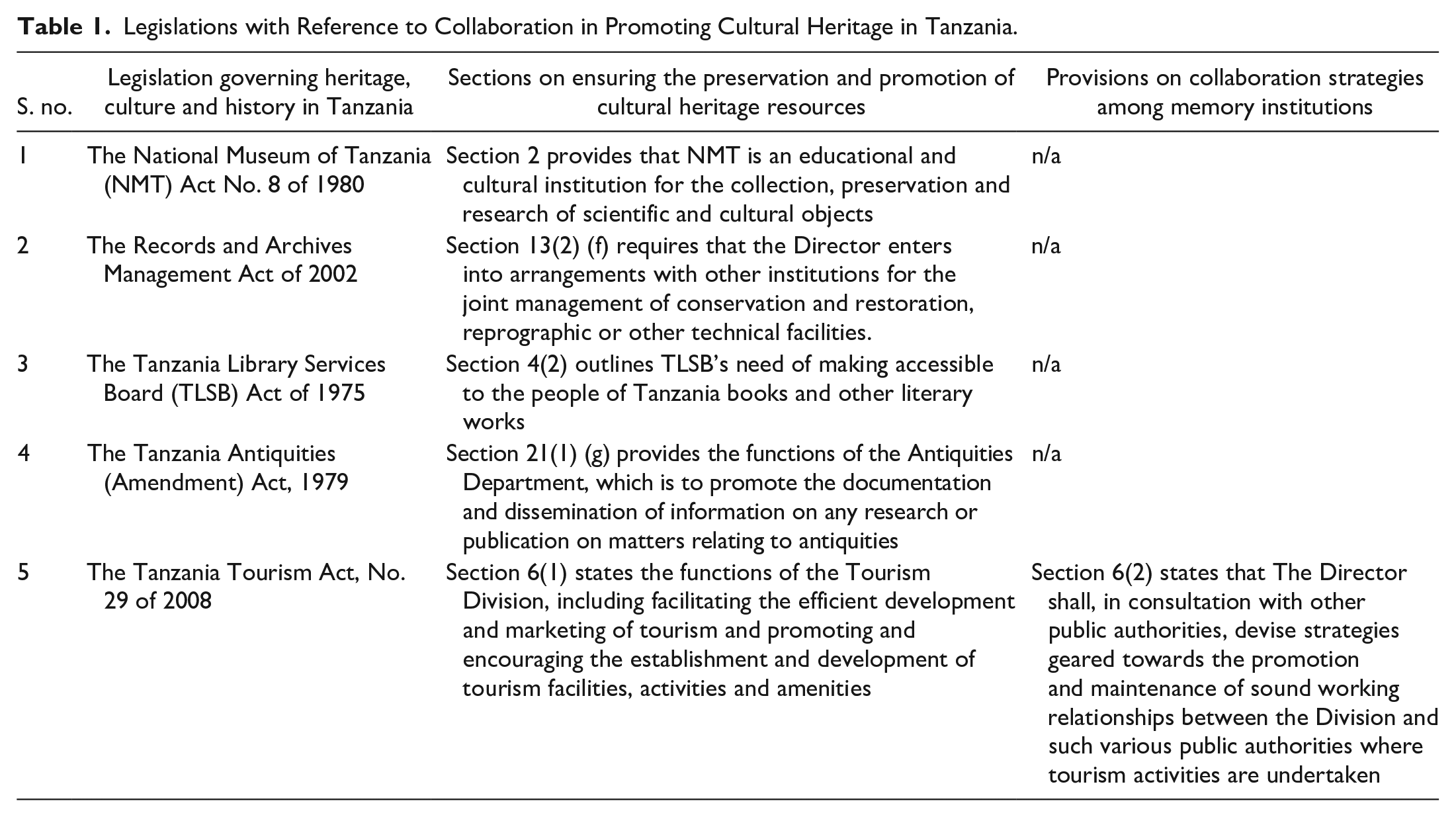
Table 1 and sub-Sections (a–e) above indicate that although the legislations that govern cultural institutions have sections that give directives on the need for the preservation and promotion of the country’s cultural heritage, most of them are missing important sections concerning collaboration and partnership strategies towards promotion and awareness-raising among cultural institutions regarding cultural resources available. This would help improve visitation and access to cultural heritage resources housed in Libraries, Archives and Museums (LAMs). Among the reviewed legislation, at least the Tourism Act (2008) has a provision that somewhat provides directives to the Director of the Tourism Division to involve other public authorities in promoting tourism activities. Its Section No. 6(2) states that:
The Director shall, in consultation with other public authorities, devise strategies geared towards the promotion and maintenance of sound working relationships between the Division and such various public authorities where tourism activities are undertaken.
Based on these findings, it was clear that, apart from the National Tanzania Tourism Act (2008), other legislation did not have provisions that explicitly supported collaboration among LAMs for promoting cultural heritage, as described in Table 1. This lack of legislative support hinders the development of coordinated initiatives to raise public awareness about the rich cultural heritage housed in LAMS for public access. Further, the study found that existing collaborations are focused on operational activities which do not necessarily contribute to promotional efforts aimed at increasing public interest and engagement with cultural heritage.
Condition of Artefacts at the Museums of the National Museum of Tanzania
Outreach strategies will prove worthless if the museum, archives or other heritage organizations lack content or if the content within the institution needs to be in better condition (Ngoepe 2019). Furthermore, outreach campaigns can only be successful if the responsible staff have a sound knowledge of their artefacts, records, or collections (Saurombe and Ngulube 2018). Considering this, it was necessary to understand the respondents’ views regarding the collection they were required to promote. Firstly, the respondents indicated that the museums they work at had various artefacts and records ranging from ethnographic objects, Lithic bones, artistic paintings, botanical and zoological collections, faunal remains, and archaeological records, manuscripts, and archives as well as pottery, stone tools, and ceramics. The survey further probed them to discuss the condition of these artefacts; eleven (69%) of the respondents believed these items were in good condition. The rest of the respondents mentioned that their artefacts were reasonably good. The respondents who mentioned that their artefacts were in fair condition were given the opportunity to elaborate their responses further; according to them, the infrastructure required upgrading or fixing to ensure the longevity of the artefacts. Care of museum artefacts is of utmost importance and museums worldwide are at the forefront of conserving and preserving these precious artefacts. However, this is not always easy in constrained budgetary environments (Mosweu 2019; Wakimoto 2017).
Level of Awareness of Collaborative Strategies Among NMT Museum Professionals
Some of the arguments in the literature are that most professionals working in museums, archives and libraries rarely cooperate in outreach activities because the education and training they have received have not prepared them to work jointly, and as a result, they pursue their promotional strategies separately (UNESCO 2015; Wakimoto 2017). Referring to the study’s conceptual framework, the stakeholder engagement theory and the new public governance theory speak of the disadvantages of organizations, particularly public entities working in silos. Dickinson (2016) argues that the ever-changing societal needs, budgetary constraints, and the need to improve efficiency in the public sector are driving forces that make collaboration a necessity. Though the legislation mandates that governments manage heritage, culture, and records for the benefit of society (Kann-Rasmussen and Rasmussen 2021; Kann-Rasmussen et al. 2019; Mosweu 2019; Saurombe 2020), many times, these institutions’ needs are not prioritized. Considering this, museums, archives, libraries, and other heritage or cultural organizations working together intentionally in promotion strategies would most likely help put these institutions on the radar of their governing authorities and the communities they serve (Saurombe and Ngulube 2018).
The respondents were asked whether they had engaged in any activities linked to raising awareness about the artefacts and archives housed in the museums they worked at. The majority (16 out of 17 respondents or 94%) responded affirmatively. According to them, these activities included outreach programs, museum visits, organized events/festivals/conferences, education programs, school tours, media, social media, and marketing programs.
As highlighted above, a total of 17 museum professionals participated in the survey. The sample size (n = 17) was chosen based on the targeted respondents, which included nine (9) curators, four (4) conservators, and nine (9) education officers from museum centers located in different regions in Tanzania. This sample was deemed appropriate to provide a good understanding of existing collaborative activities related to public awareness of cultural heritage in Tanzania. The reason for this was that, 17 out of 22 invited respondents participating in the survey, therefore resulting in a response rate of 77.3%.
The study sought to determine which population group was the most common target for museum marketing activities. The responses are illustrated in Figure 2 below.
The findings in Figure 1 indicate that the museums worked closely with schools (17% or 100%), followed by tourists (15% or 88%). Seemingly, pensioners, professionals and families ranked low in this survey. It seems easier for museums to work with schools and other educational institutions because the curriculum is linked to the content within the museum (Van der Walt 2011; Sas 2012). Tourists usually are excited to learn about a country’s culture. Therefore, it makes sense that it appears as the second highest-ranking group of the population targeted for marketing by museums. The concern is how to get more local families, professionals and young adults into the museums to engage with their heritage and culture. Other heritage and information institutions seem to experience the same, whereby individuals from educational institutions rank as their top clients rather than families, professionals and pensioners (Mosako 2020; Mosweu 2019; Saurombe and Ngulube 2018).
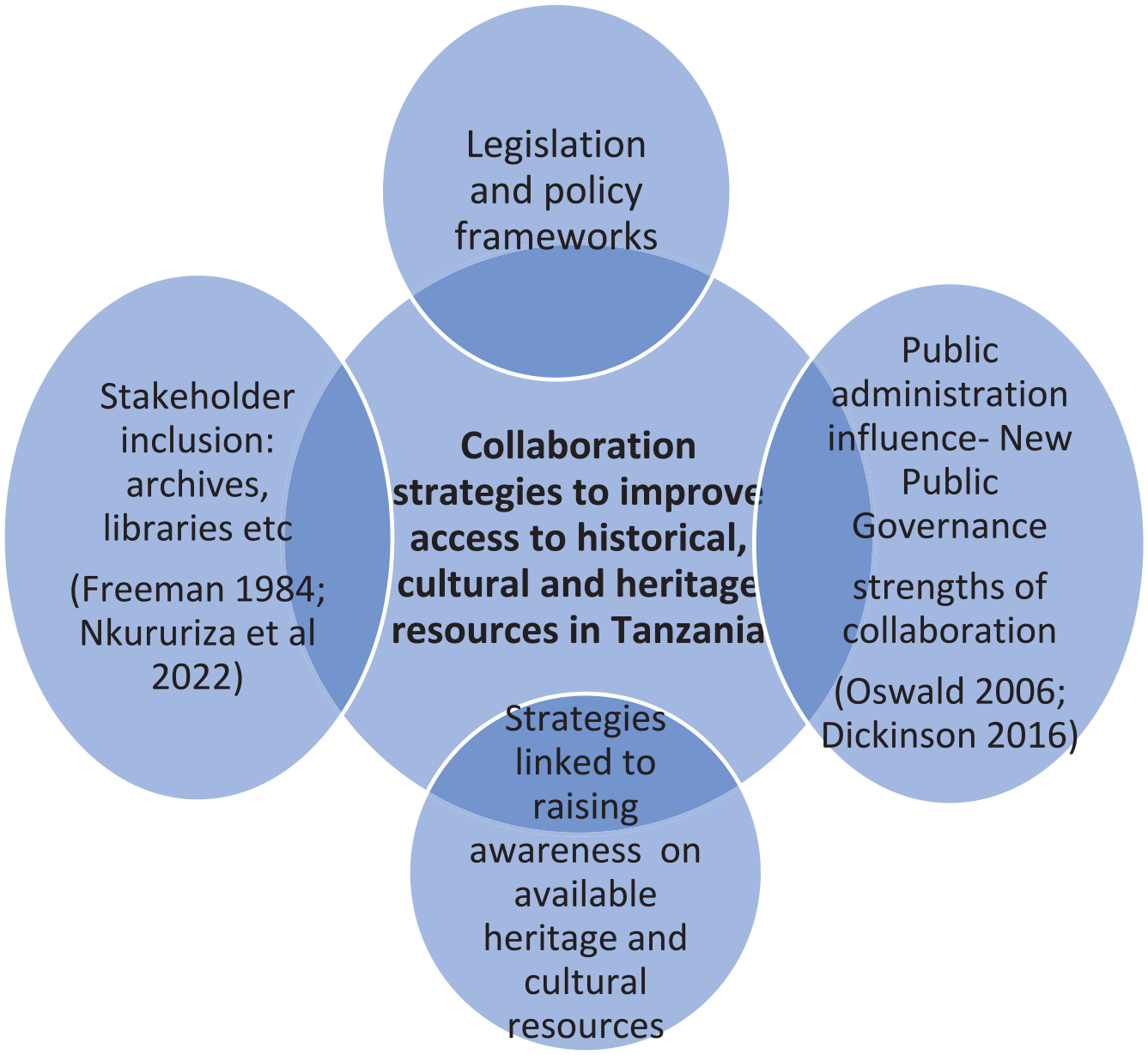
Conceptual framework for the study.
Existing Collaborative Strategies at the National Museum of Tanzania
The survey offered the respondents a chance to elaborate on any collaboration activities that they got involved in. Most respondents (10% or 60%) replied that they got involved in collaborative projects, while the rest (7% or 30%) did not. The survey probed that they mention the other institutions that they collaborated with. The responses were as follows: museums from other parts of the world, embassies, the National Ministry of Education, the entertainment industry, the Bank of Tanzania, Clubs, Tourism bodies, Universities, Libraries and Archives.
The survey went on to ask if the respondents had collaborated with archival institutions to promote heritage and culture. In this case, only seven (41%) stated that they did so, while the remaining respondents did not. When asked to mention what the activities entailed, the respondents highlighted the following:
training;
document and archival scanning;
provision of research resources;
exchange of historical documents; and
capacity building in records management.
A closer look at these items indicates that the collaboration was more aligned with operational activities than marketing initiatives involving the public. It is commendable that there are existing links between the museum and other institutions aimed at raising awareness about the museums and their content. However, archives and museums should focus on public engagement programs in addition to their existing activities (Kampschulte and Hatcher 2021; Kann-Rasmussen and Rasmussen 2021).
The study also sought to understand the challenges the respondents faced in their promotional strategies. Two key challenges emerged from their responses: budgetary constraints (11% or 65%) and skills and knowledge of marketing strategies (6% or 35%). These findings are like those highlighted in the literature (Chaterera 2015; Yarrow, Clubb, and Draper 2008).
After determining the challenges, the respondents were asked to comment on how the museums could overcome these challenges. Their responses included fundraising, further training, an increased budget, grant applications, and more collaboration efforts. The respondents were then asked whether they thought working with libraries and archives would be worth trying to get more of the public interested in these institutions. All respondents agreed that this would be a worthy effort, allowing them to learn more about each other’s work and optimally use resources such as infrastructure, resources, and staff. The matter of training was also raised again, with an emphasis that marketing skills are at the core of any successful marketing strategy. The respondents highlighted the need to market collections using platforms such as social media with a broad nationwide reach.
It is promising to note that the responses are in alignment with the theories outlined in the conceptual framework for this study, with the respondents agreeing on the necessity to collaborate. Museums, archives and libraries have double responsibilities. Della Corte, Aria and Del Gaudio (2017) outline these responsibilities as preserving works and informing and promoting content. In the face of politics, globalization and a competitive economic environment, the emergence of a new generation of users with a diversity of views, aspirations and demands, it would be wise for museums and archives to collaborate to remain visible, relevant and engaging with the public (Dickinson 2016).
Conclusion and Recommendations
This study sought to find out the existing collaborative strategies for raising awareness about Tanzania’s heritage, history, and culture among memory institutions, including libraries, archives, and museums (LAMs). The general objective of this study was to investigate the collaborative strategies employed by the National Museum of Tanzania in raising public awareness of the country’s cultural heritage and assess their effectiveness in promoting accessibility among diverse audiences. To address this objective, the study determined the current collaborative strategies among LAMs in Tanzania for promoting cultural heritage and specific questions from it were addressed. The researchers reviewed legislation related to LAMs to determine whether collaboration is encouraged and supported legally. The findings of the study indicated that, apart from the National Tanzania Tourism Act (2008), other reviewed legislations do not have any provisions for collaborations in promoting and raising awareness on cultural heritage resources preserved in Libraries, Archives and Museums (LAMs). Instead, the study observed the existing collaboration, which only aligns with operational activities rather than promotional activities that would cultivate public interest in visiting and accessing information and artefacts on the country’s heritage, history, and culture. As revealed by UNESCO (2015) and Wakimoto (2017), most professionals working in museums, archives and libraries rarely cooperate in outreach activities because the education and training they have received have not prepared them to work jointly. As a result, they pursue their promotional strategies separately.
Based on these findings, it is recommended that,
Museums, archives, libraries, and other memory institutions should work together in promotion strategies instead of working in silos. Such would most likely help put these institutions on the radar of their governing authorities and the communities they serve (Saurombe and Ngulube 2018). For instance, the National Museum of Tanzania; the Records and Archives Management Department; and the Tanzania Library Service Board; instead of the current situation of promoting and raising public awareness about the cultural heritage independently, as shown in the findings section of this paper, these institutions should develop collaborative promotion strategies. This would help improve visitation and access to cultural heritage resources housed in their holdings.
Increasing public awareness campaigns of their heritage and culture will not only help attract more patrons but also advocate for more support from influential bodies and individuals (Saurombe 2020). For example, as shown in Figure 2 of this paper, museums marketing commonly targets tourists, schools and other educational institutions. The public awareness and marketing programs should also focus on how to get more local families, professionals and young adults into the museums to engage with their heritage and culture.
An overview of the existing legislation and policy frameworks did not reveal a vital link for collaboration among museums and other institutions involved in rendering information related to heritage and culture. Therefore, a review of these frameworks is necessary to set a foundation for collaborative strategies among LAMs. For instance, the LAMS legislations reviewed in this paper should consider including a provision that specifically directs such memory institutions to involve other public authorities in promoting cultural heritage resources. A good example is Section 6 (20 of the Tourism Act of 2008 as discussed in the sub-section about Legislations governing heritage, culture and history in Tanzania in this paper.
Rapid technological developments marked by the fourth and fifth industrial revolutions have had a direct impact on the information needs of people in Tanzania and beyond. This requires professionals working in museums and similar institutions to upskill to address the changing needs of the people they serve. As discussed in the literature review section of this paper, collaboration among LAMs may help to strengthen digitization skills. Thus, LAMs should focus on digitization projects and take advantage of such technological developments, and achieve budgetary and administrative efficiencies (Duff et al. 2013; Larsen, Kann-Rasmussen, and Rydbeck 2023; Mabe and Potgieter 2018).
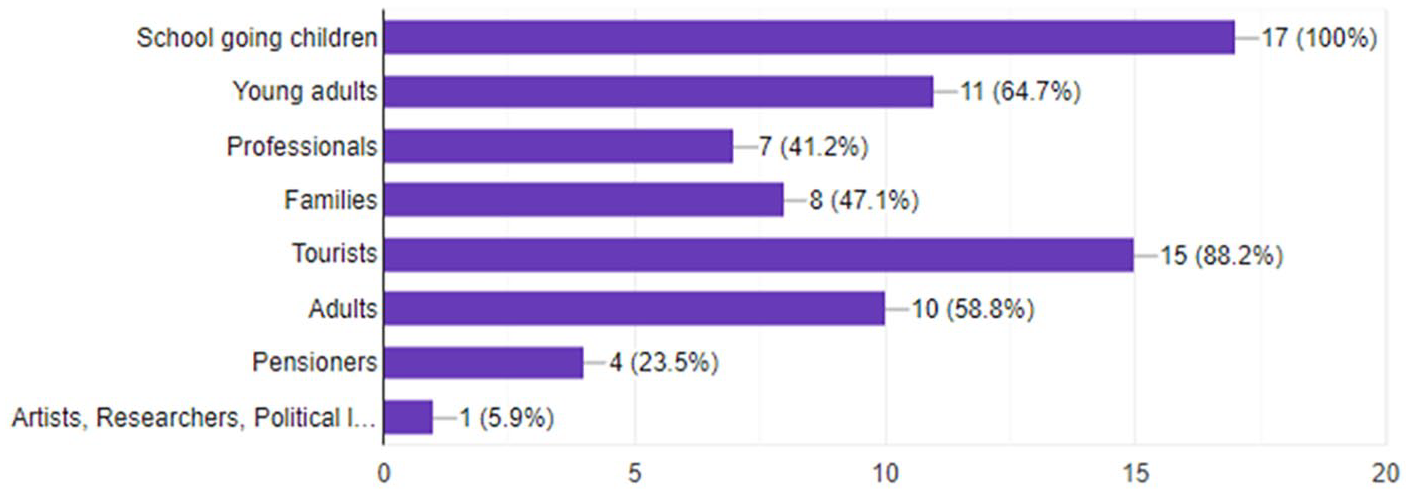
Population groups targeted for marketing activities.
The history, culture and heritage of Tanzanians continue to play a significant role in their daily lives. Consequently, museum professionals and other relevant organizations must look for ways to increase public access to this vital information. Therefore, one way to accomplish this is through collaboration (Mosweu 2019; Saurombe and Ngulube 2018). More cooperative efforts could support Tanzania’s LAMs in carrying out their crucial mission of providing people with knowledge related to their history, culture and legacy, especially in these challenging economic times.
Footnotes
Declaration of Conflicting Interests
The author(s) declared no potential conflicts of interest with respect to the research, authorship, and/or publication of this article.
Funding
The author(s) received no financial support for the research, authorship, and/or publication of this article.
