




Abstract
Founded in 1796, Kendal Museum is a small public museum in the northwest of England. The museum’s collections reflect both the social history of the area and the connections between the district and the wider world. Particularly significant, in this respect, is the museum’s “World Wildlife Gallery,” a permanent display of hundreds of taxidermy animal and pinned insect specimens, arranged thematically by continent in “naturalised” dioramas. In 2023/2024 Kendal museum began a project to “reimagine” the World Wildlife Gallery, through engagement with regular museum visitors and the local community more broadly. Project and Community Officer, Ila Colley; local artist and community contributor Lavinia Haslam; academic and researcher Joe Rigby, and friend of the museum and contributor to a recent reinterpretation of the museum’s geological collection, Peter Lincoln, reflect on their experiences of the “Reimagining the World Wildlife Gallery” (RWWG) project.
How Did You Come to Be Involved in the RWWG Project?
I started working at Kendal Museum in the summer of 2023. I had been told at interview that a key objective would be to address the complex ethical issues surrounding the museum’s collection of Victorian taxidermy. The development team and I were keen to involve people from the local area to inform the reframing. After connecting with several enthusiastic and knowledgeable visitors, I put together a project outline and a wider callout.
I grew up in and around Kendal and had visited the museum more than once as a child. I had not visited as an adult, however, until I took my two young children during the school holidays. I was struck by the way the mounted taxidermy animal heads, or “hunting trophies”, were all gilded with the initials “EGH,” for “Edgar Garston Harrison,” a Colonel in British colonial forces, who was born in a small village outside Kendal. I spent some time researching Harrison and returned to the museum to share what I had found. I then met Ila, who explained the aims of the RWWG project, and asked if I would like to contribute to it.
As Secretary of the Westmorland Geological Society, I had recently been involved in a project to reinterpret the display of Kendal Museum’s geology collection. When Ila contacted me about the RWWG project I was keen to be involved. The early discussion sessions were lively and interesting. While the volunteers all brought different perspectives, they were united in their passion for the museum and its collection.
I was invited to participate in the RWWG project, which provided a fantastic opportunity for me to engage with their wildlife collections. I am an artist interested in identity, place, belonging, social justice and climate change. I am currently working on a project focusing on Cumbria’s historical ties to slavery and colonialism, drawing inspiration from flows of water and migration. The RWWG project brought these themes together in unexpected ways.
What Was Your Contribution to the RWWG Project?
I acted as a project manager and facilitator, commissioning members of the group to lead research and interpretation, art production, and graphic design, and coordinated support from curators and facilities internally. I also contributed to discussion and the writing and editing of final texts.
I helped produce a new interpretation panel introducing E.G. Harrison and the World Wildlife Gallery. The gallery was built in 1939 and paid for by Harrison specifically to house his collection: primarily animal skins and heads taken from eastern Africa between 1895 and 1905. I discovered an issue of the London Gazette from 1905 in which Harrison was commended for leading operations against the Nandi people, who had opposed the building of the Kenya-Uganda railway and British settlement in their lands. I then found contemporary reports of ongoing calls from members of the Nandi community, including descendants of those directly affected by Harrison’s actions, for reparations and an apology from the British government for the violence committed against them. The RWWG project enabled this story of oppression and resistance to be included in E.G Harrison’s interpretation panel, recognising it as an important part of the history of the collection, and the ethical and political questions it raises.
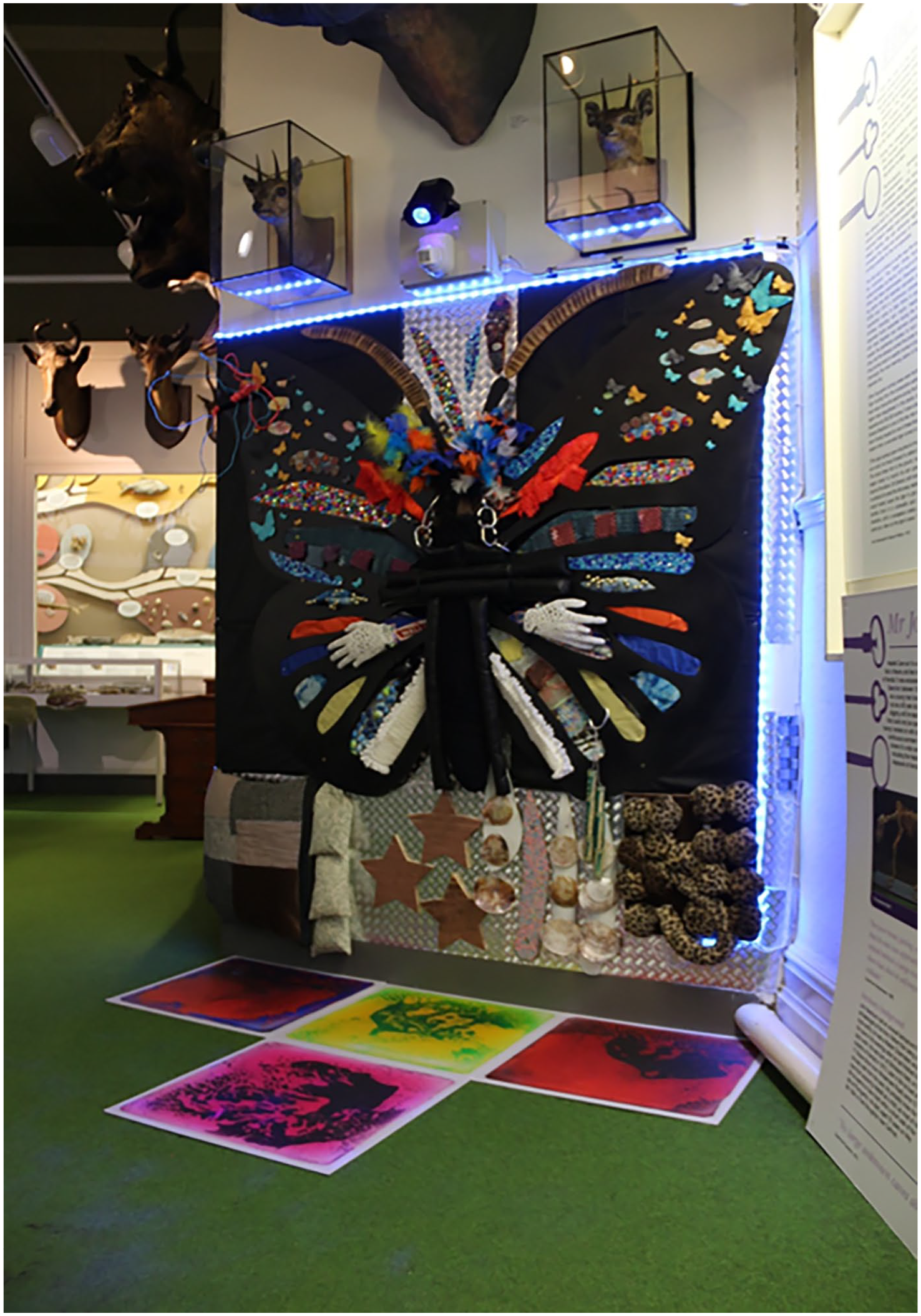
I created a tactile display inspired by the museum’s collections, particularly focusing on butterfly migration and its connection to themes of displacement, resilience, and transformation. Butterflies, with their delicate yet resilient wings, embark on incredible migratory journeys that mirror human migrations. Their migration, influenced by weather and climate, is a powerful symbol of survival, adaptation, and transformation. I was inspired by the way butterflies must be resilient and adaptable to navigate human-altered landscapes, just like marginalized human communities have shown remarkable agency in preserving their histories and cultures against dominant narratives. I also created a memorial piece acknowledging the untold, in Kendal at least, history of the Nandi resistance, and of their political and spiritual leader Koitalel Arap Samoei, connecting his story to the museum’s narrative of donated wildlife artefacts and their complex colonial histories.
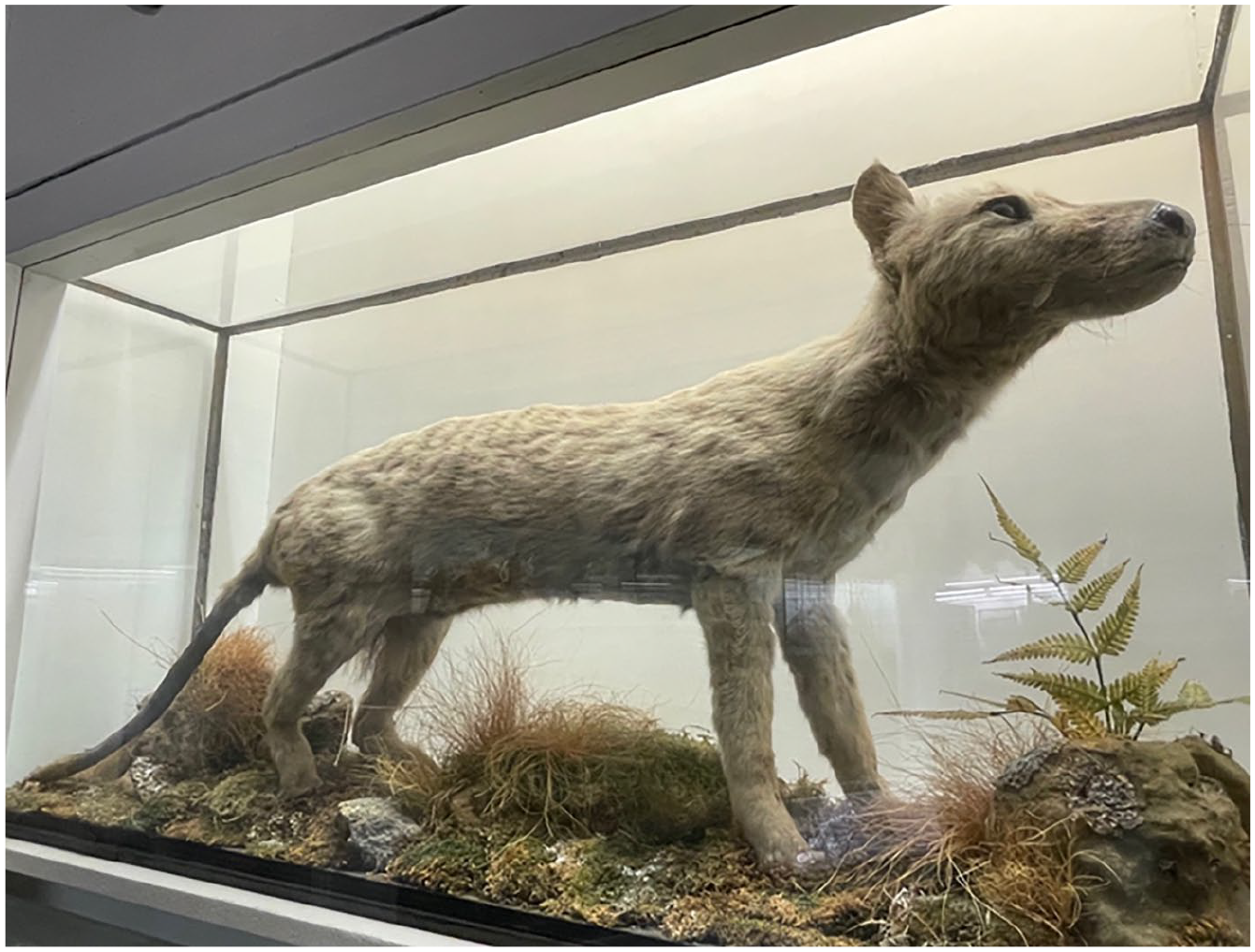
I contributed to an interpretation panel highlighting the museum’s thylacine, connecting the story of the thylacine to issues of colonisation, genocide and species extinction. Tasmanian thylacines were declared extinct in 1986, having been persecuted by European settlers since the early 1800s—a policy that mirrored the way the indigenous population of Tasmania was treated over the same period.
Lavinia Haslam’s tactile Butterfly installation, commissioned though the “Reimagining the World Wildlife Gallery,” project, Kendal Museum.
Source. Image courtesy of Kendal Museum.
Thylacine, World Wildlife Gallery, Kendal Museum.
Source. Image courtesy of Peter Lincoln and Kendal Museum
What Did You Learn from Working on the RWWG Project?
To me the success of the project was predicated on the rich skills, interests, and collaborative sensibility of the participants, which helped maintain momentum through various challenges, including shortages in resourcing and internal divisions at the museum. I feel privileged to have learnt from this group of generous individuals.
Being able to participate in the redisplay of Kendal museum’s geology collection and the World Wildlife Gallery has further entrenched my belief that public museums are valuable civic spaces. Like many other museums, however, it faces significant financial pressures. Working effectively with local communities and interested parties is particularly important in this context.
The RWWG project helped me appreciate how museums and their collections offer not just a window on to how the world was viewed, and made, by people in the past, but can be an important resource for understanding and grappling with the problems of today too.
Collaborating with the museum staff and community contributors rearmed my belief in the power of co-creation and the importance of amplifying marginalised voices. It has also reinforced my commitment to creating spaces where diverse histories and cultures are acknowledged. I look forward to continuing this journey and contributing to a more inclusive and reflective understanding of our shared heritage.
Footnotes
Declaration of Conflicting Interests
The author(s) declared no potential conflicts of interest with respect to the research, authorship, and/or publication of this article.
Funding
The author(s) received no financial support for the research, authorship, and/or publication of this article.
