




Abstract
With the rapid development of mobile Internet and Internet of Things business, the 5G mobile communication process has been accelerated. This article summarizes the Internet technology under 5G mobile communication, analyses the connotation of Internet of Things, and studies the integration of 5G mobile communications and Internet of Things technology. Through the analysis and discussion of the new possibilities in the Internet of Things era under 5G mobile communication technology, the research shows that the simulation analysis combined with the cell breathing technology and the base station dormancy technology aims to decrease the energy consumption of the base station under the premise of ensuring the communication quality, thereby improving the network energy efficiency. Research shows that in the dense and uniform user distribution scenario, the power consumption has a small decrease due to the increase of power consumption, but the system capacity is significantly improved and the communication quality is improved. It can ensure the user’s fairness and system capacity to achieve, and meet the rate requirements of different users. The analog results verify the accuracy of the theoretical analysis.
Introduction
5G mobile communication technology has attracted wide attention from all walks of life in the world. The technology can transmit data at a speed greater than 1 Gbps in the 35 GHz ultra-high frequency band, and the longest transmission distance can be 2 km. 1 The data transmission speed is fast, the stability is good, the transmission distance is long, the security is good, and so on. 5G mobile communication technology has its own advantages and large wireless coverage. It has been enhanced in user experience and system security of communication technology and has been widely used in different fields. 2 According to the plan, China mobile and others will carry out field tests in the second half of the year in the frequency band below 6 GHz. 3 China Telecom has also made it clear that by 2018, it will carry out 5G scale technical test and commercial test in the frequency band below 6 GHz. 4 The 5G network with 100 times higher speed, 50 times lower delay, and 10 times higher density will greatly enhance the technological market space of mobile communication. 5 The concept of 5G technology has obtain attention and careful from all end the global. It transmits data at a speed of about 1 Gbps, which will provide more convenience for users. 6 According to estimates by global telecom operators, 5G mobile services will be applied around 2020. 7 Most of the multiple-input multiple-output (MIMO) antennas are connected to the base station through optical fibers, such as densely populated areas, high-density buildings, commercial streets, and so on. 8 Small cell is also a good choice. In this process, a certain number of virtual cells need to be deployed as a supplement to ensure outdoor coverage and data transmission rate. 9
In 2015, the deployment of 5G technologies in smart city and smart home wireless transducer network was proposed. 10 Since 2016, the virtualization and scheduling methods of wireless networks based on 5G cognitive radio have been studied by relevant scholars. 11 After that, the contributing factors, architecture, and business model of the Internet of Things (IoT) in the 5G era were proposed. 12 With the development and expansion of the Internet, many new vocabularies emerged; “IoT” is one of them. It is not only a significant section of the new generation of message technique, but also a significant phase of development in the message age of the 21st century. 13 Bill Gates talked about his unique views on IoT technology in his book more than 20 years ago. With the fast popularization of computers and the Internet, the IoT is emerging as the third wave in the development of the Internet. 14 The currently commercial 4G mobile communication system has effectively improved the transmission rate and communication capacity by improving and enhancing the network architecture and key technologies on the basis of 3G. 15 5G mobile communication technology has not only greatly improved its speed, but also has undergone major changes in technology. It is neither a single technological evolution nor a combination of several new technologies, but a combination of multiple technologies to meet different needs. 16 Information edge caching and delivery, information storage and distribution functions in traditional mobile networks will be transferred to the access network, and information is pushed according to the actual needs of users, thereby continuously improving the user experience. 17
5G mobile communication has been developing toward intelligence and automation, which makes 5G mobile communication has the characteristics of low energy consumption, good performance of communication system, and high spectrum utilization and has a good development prospect. 18 The core content of 5G research technology is mainly divided into three aspects: first is the key technology test, second is the technical scheme verification, and last is the system verification. 19 In the development of 5G mobile communication technology, spectral efficiency has been paid more and more attention, and large-scale MIMO technology (i.e. multi-input multi-output technology) has been introduced. 20 MIMO technology refers to the use of multiple antennas on the sender and receiver, so that signals can be transmitted and adopt multiple antennas at the transmitter and receiver. This multiple antennas technique can significantly better the reliability of systematic spectrum and transmission. 21 And the introduction of new wireless transmission and network technology, to achieve user transmission rate, system capacity is greatly improved compared to 4G mobile communication system. 22 At the same time, for a big number of intelligent terminal in the application of IoT technology to achieve information transmission and intelligent traffic safety information for fast and reliable transmission applications. 23 5G will also achieve effective performance guarantees in terms of multi-connection support, low latency, and high reliability transmission. It is under the channel model adopted by 3rd Generation Partnership Project (3GPP) and under the default deployment parameters of the basics stand. The user-perceivable macro basics stand signal strength is significantly stronger than that of the miniature basics stand and the little basics stand, which causes some base stations to cause congestion and user experience degradation due to excessive access.24,25 In this article, the key technology optimization simulation analysis of 5G mobile communication network of IoT technology is discussed. 26
Materials and methods
In the process of using the IoT, large data will be generated. In large data, it often contains important information such as location, time, and behavior. Once improperly processed, it will be attacked and lead to information leakage. The information generated in the use of IoT involves not only personal privacy and production information, but also state secrets. There are a series of processes in the use of data, such as perception, transmission, and application. 5G mobile communication technology has begun to provide basic platforms for different network services and provide convenience for users. According to the forecast of communication professionals for the development of 5G removable communication technique, the future 5G removable communication technique will be vigorously innovated on the basis of 4G network technology. In clause of system structure, the IoT consists of three tiers: use tier, perception tier, and network tier. Mainly to provide a variety of services, including monitoring services, industrial monitoring services, smart grid, environmental monitoring, and so on. Based on this, in the future research on lasso, it is necessary to combine MIMO technology, which plays a key role in analyzing resource sharing technology and networking. Better release of signals can bring more convenience to different groups of people. In addition, the expansion of 5G removable communication network equipment has improved the frequency efficiency of 5G removable communication. With the support of 5G network, the future social network will certainly make rapid development of human civilization. In addition, another technical challenge of the same-frequency full-duplex communication technology is how to support the MIMO system. Because it is a multi-antenna system, the complexity of the same-frequency full-duplex communication technology will be eliminated with the MIMO system. The number of antennas has increased dramatically. The impact factors of 5G mobile communication factors are shown in Table 1 and Figure 1. The comprehensive data simulation analysis is shown in Table 2 and Figure 2.
Influencing factors of 5G mobile communication.

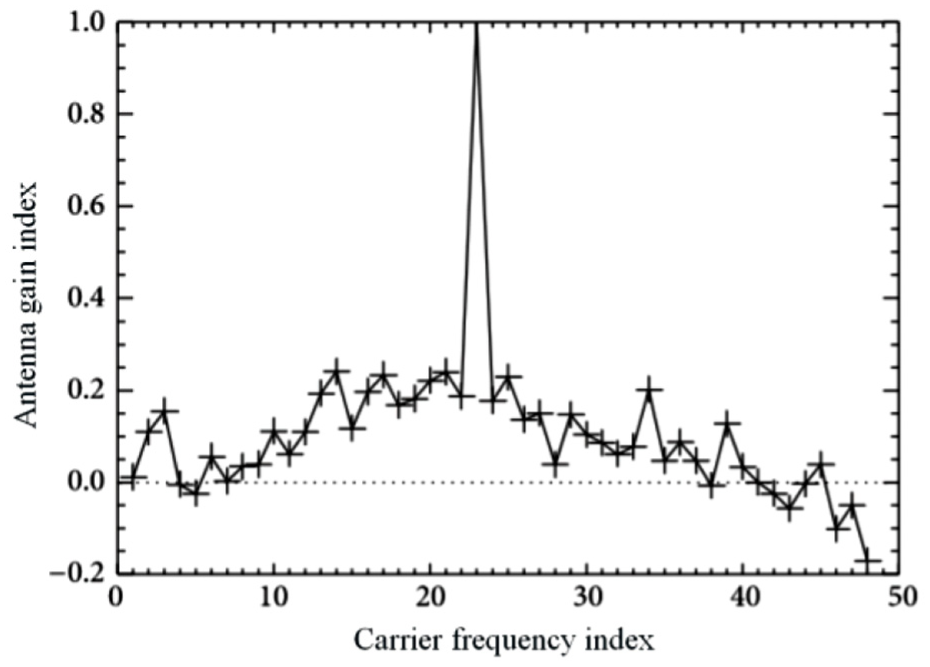
Influencing factors of 5G mobile communication.
Comprehensive data simulation analysis.


Comprehensive data simulation analysis.
We consider the cloud wireless access network and analyze the outage probability and traversal rate of the line access network. The stochastic geometry tool is used to characterize the randomness of the base station location. Compared with the existing cloud radio access network analysis results, the results obtained by Gauss–Chebyshev integral are more accurate. The condition of network access selection may be that a new user first requests access to the network, or that a network has been accessed before. After that, network handover occurs due to dropout, performance degradation, and other reasons, which leads to new network access requests. In either case, the goal of network layer selection is to choose the most proper networks access for a multimode user. By adopting software-defined network (SDN)-based network architecture, the traditional network structure can be effectively closed and rigid, record transfer and forward capability is highly finite, and resources utilize is low. However, due to the reduction of node distance, network deployment becomes more complex and incompatible. At the same time, it will bring great interference and reduce the network energy efficiency. Self-organizing network technology refers to enhancing the self-organization ability of the network, enabling the network to perform operations such as self-planning, self-configuration, self-optimization, and self-healing. The traditional communication method is mainly carried out by electromagnetic propagation of a single antenna between a base station and a mobile phone. The large-scale aerial array is based on the theory of multi-user beam-forming, that is, when the base station has multiple antennas, the base station can automatically adjust and find the optimal phase to achieve the best reception effect and finally achieve the purpose of improving the received signal strength. Self-interference cancellation is achieved by modulating the radio frequency (RF) to the RF through an additional transmit channel. The self-interference achieved in the simulation field is to synthesize the equal-amplitude reverse signal of the self-interference signal using the radio frequency circuit, thereby realizing the elimination of the self-interference signal. The SDN parameter table is shown in Table 3 and Figure 3. The network route loss models are shown in Table 4 and Figure 4.
SDN parameter table.
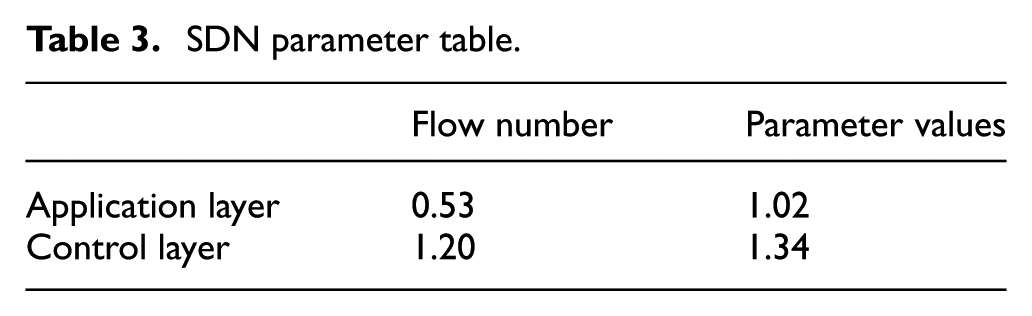

SDN parameter.
Path loss models for networks.

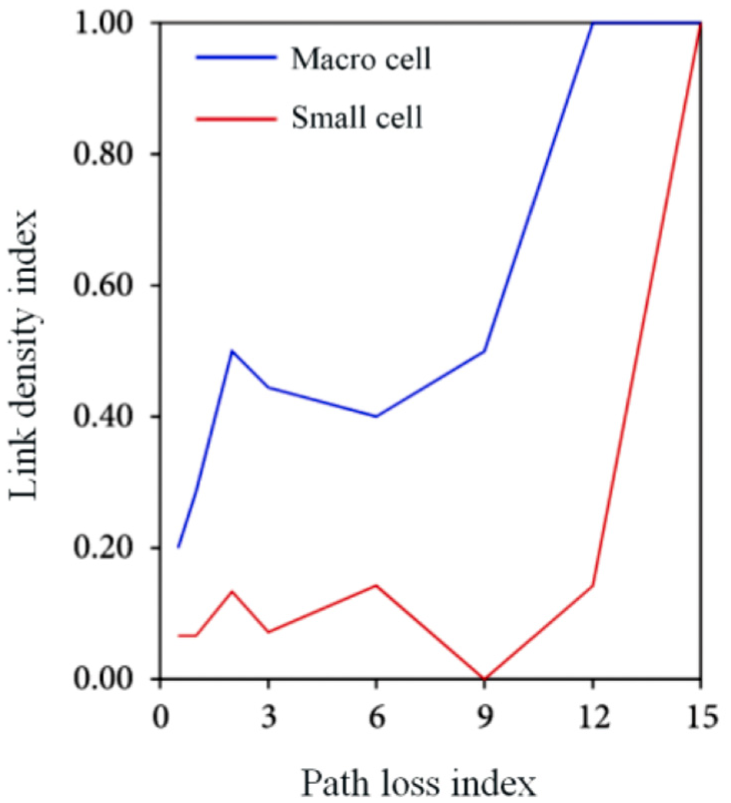
Path loss models for networks.
5G will also adopt ultra-dense network technology, that is, deploy multiple types of cellular cells in an area close to the user in the ultra-dense mode. While greatly reducing the cost of cell deployment, the flexible configuration of dense cells can be realized to decrease inter cell and inter-user interfere, better energy efficiency, and large better user transfer rate and network capacity. In radio communication networks, for both sides of communication, the higher the power of signal transmission, the stronger the received signal and the larger the noise-to-signal ratio, the better the channel quality. It can effectively increase channel capacity and reduce bit error rate. However, on the other hand, the signals transmitted by communication devices other than the two sides of the communication will bring interference to the communication. Sometimes, this interference is extremely serious, which has the opposite effect. Consider cognitive radio cooperative networks, including an elementary recipient, a second sender and a second receiver, and an energy-gathering relay, and assume that all nodes are single antenna. Cognitive transmitters communicate information through relays and cognitive receivers. Therefore, ultra-dense network technology will become the main force of local network pressure, including the addition of the number of wireless transmission stations and the reduction of the distance of wireless transmission stations. Ultra-dense network technology can not only greatly improve the network coverage, reduce the interference of the network, but also focus on efficient frequency reuse. The development of IoT technology requires connecting massive amounts of data and enabling 1s transmission, which is not possible with 4G networks. The performance of 5G removable communications networks can better meet the develop needs of IoT technique, so the development of 5G removable communications networks is in line with the development trend of IoT technique, which can promote the continuous development of IoT technology. The comparison of the peak transmission speeds of different networks is shown in Table 5 and Figure 5.
Comparison of peak transmission speed in different networks.


Comparison of peak transmission speed in different networks.
According to relevant forecasts, by 2020, the scale of the IoT industry will surpass that of the widely used Internet. It may even be 20 times the size of the Internet and becomes a new industry in modern society. In our country, the development of communication module manufacturers has been very mature. The three major telecommunication enterprises have sufficient advantages in the development of IoT technique and are expanding to the field of IoT technology. Therefore, we can say that network technology can dig deep into the space, grasp the spatial dimension well, and help different users to carry out communication activities flexibly and freely at the same time and within the same scope. The enhancement of spatial spectral efficiency can be achieved without further processing of base station density. Each user does not need to build a separate contact network; they can use the existing full-featured IoT technology system to achieve their own goals. In recent years, the global IoT technology is developing in the direction of “cross-border integration, integration, and innovation,” and showing a “leapfrog” development trend. Only when the length exceeds the number of sub-channels, the response characteristics of the prototype filter can be guaranteed to be consistent with the frequency. Therefore, the complexity of the prototype filter is relatively high in practical application. Therefore, during the future research, the application of the algorithm is highly valued. The distance between each node in the data transmission will increase the probability of problems. Therefore, it is necessary to increase the research intensity of heterogeneous ultra-dense technology, so that 5G technology can achieve better results. Thus, the intensity of the self-interference signal before entering the receiver is approximately equal to the received signal strength, thus avoiding saturation of the receiver. Second, the offset on the RF domain is not affected by the linear and nonlinear distortion factors of the receive channel and the phase noise of the transceiver local oscillator. The ultra-dense networking technology is densely deployed by the base station, which can effectively improve the frequency reuse efficiency and achieve a capacity improvement of 100 times in the local hotspot area. Full spectrum access technology increases system capacity and transmission rate by making full use of multiple spectrum resources such as high and low rate band and asymmetric spectrum. The relation among the high and low rate band and the number of asymmetric spectrums is shown in Table 6 and Figure 6.
Quantitative relation among high and low rate band and asymmetric spectrum.

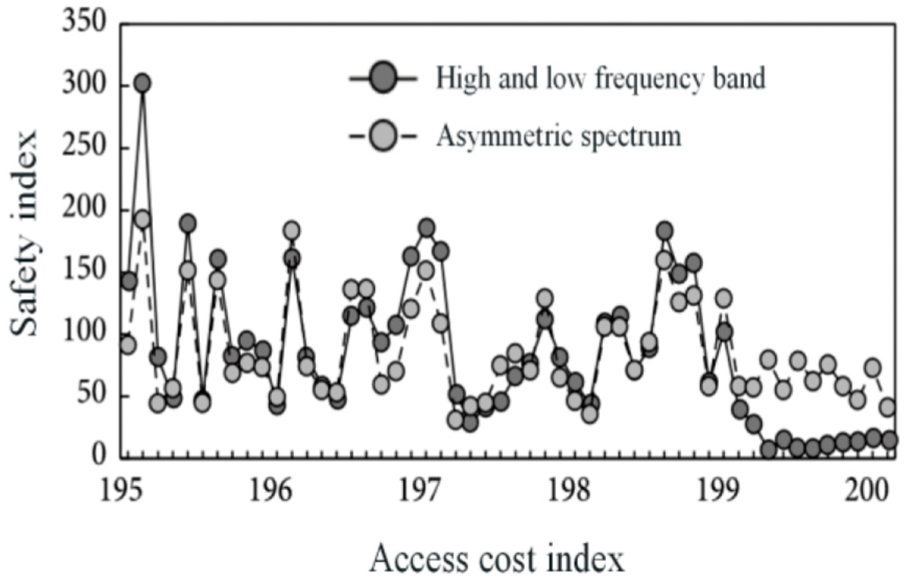
Quantitative relation among high and low rate band and asymmetric spectrum.
Result analysis and discussion
Because the IoT technology has a very high terminal density, two adjacent nodes are very close, and the communication modules of different terminals are very different in frequency, format, and other technical indicators. 27 This is very different from the traditional network protocol algorithm, so it is necessary to improve the traditional network protocol. For mobile communication networks, speed, capacity, and delay are the three most concerned indicators. The new 5G multiple near technique can add the number of mobile network access nearly a hundred times and has super-large capacity and low latency. 5G mobile communications allow higher density mobile broadband users, support inter-device, ultra-reliable, and large-scale machine communications. During the application of this network technology, radar signal processing and multi-carrier technology can be realized through the application of multi-carrier technology based on filter banks. It saves the orthogonal time of different carriers without the tedious cyclic insertion. On this basis, 3G, WIFI, RFID (communication technology that uses radio signals to identify specific targets and read and write related data without the need to identify mechanical or optical contact between the system and a particular target), UVB (an outdoor ultraviolet light that is directly injected into the skin when people are outdoors), and other technologies have gradually become hot spots of wireless communication technology, which has promoted the development of wireless communication technology in China. And it will have a large market share in the global wireless communication field. From the perspective of market development in the field of wireless communications, China’s wireless communication technology has broad development space and market prospects. In addition, if combined with large-scale technology, the millimeter-wave band mobile communication technology can provide better spatial resolution, further improving the spectrum utilization efficiency. Regarding the millimeter-wave band mobile communication technology, research and verification have been carried out by many countries and research institutions. The device status information can be obtained to generate a global network topology view. By sending control information to the infrastructure layer device, policy formulation and table item delivery are performed, thereby implementing unified control functions. Through the northbound interface with the application plane, the control layer provides the abstract underlying network device resource information to the upper application through the application programming interface (API). Device status information can be obtained to generate a global network topology view. The performance requirements of the millimeter-wave band mobile communication system are shown in Table 7 and Figure 7.
Performance requirements of millimeter-wave band mobile communication system.


Performance requirements of millimeter-wave band mobile communication system.
The noise-to-signal ratio represents the ratio of effective signal strength to the noise signal strength. The effective signal power referred to the signal strength obtained from the user access to the basics stand. According to the formula, the size of the noise-to-signal ratio is the decisive factor for the upper limit of user rate and network throughput. The formula for calculating the signal-to-noise ratio is as follows

Thermal noise is approximately uniform in the frequency spectrum of a certain bandwidth and belongs to white noise

The formula for calculating the power intensity of the received signal from the base station is as follows

Transmission loss calculated by path loss model is

The final equation for calculating the signal-to-noise ratio is

The load balancing effect can be measured by the size of the load balancing factor, and the load balancing coefficient is expressed as

According to the characteristics of the network, the size varies according to the nature of the network, reflecting the nature of various networks. The size of different networks is as follows

The combined equations can be expressed as the following equation

Before and after the base station transmits power changes, the received signal power at the coverage edge of the base station does not change and is expressed by the formula

The size of the power received by the user is

The power control technology in this article is for micro base stations, so the formula is

Network energy efficiency is defined as the rate of the total channel capacity of the access network user to the total transmit authority of the basics stand. The network energy efficiency is expressed as

The relationship between the change of the basics stand transmit power and the news report of the cell is obtained


In terms of building systems, the IoT is mainly constructed in three levels: apply tier, sensing tier, and network tier. The apply tier serves as a service and can also implement monitoring services such as industrial monitoring, smart grid technology, and environmental control. The sensing tier implements sensing functions, including information collection, information acquisition, and item identification. Using the central controller, network coordination can be optimized, and the effective management of wireless resources is also facilitated. In addition, a network security mechanism has been formed, and the operation of the Internet of Things technology is safe. The best choice for IoT bearers is the mobile communication network, which forms a self-organizing network system through wireless networks. However, the network architecture also has limitations, and there are problems such as difficulty in resource allocation, status reporting, and imperfect handover technologies. In the future, in order to ensure proper application of SDN technology in mobile communications, we have adopted D2D discovery and communication control operations, D2D bodily tier modulation and code adaptation, hybrid automatic repeat request (HARQ) operations and distributed random access mechanisms. The BS (structure unifies the client and centralizes the core part of the system’s functional implementation to the server, simplifying system development, maintenance, and use) controller divides the radio resources of the plurality of cellular base stations into virtual slices to implement radio resource management and scheduling. The high-level RAN controller can manage the low-level controller to realize the management of wireless resources in geographical areas. In addition, the interruption performance of cognitive users is better than that of constrained users without maximum transmission power constraints. This is because when the cognition sender has transmission authority limitation, the transmission power is smaller than the transmission power without power limitation, so the curves are parallel in the high signal-to-noise ratio region. Compared with traditional cognitive relay networks, SWIPT (new type of wireless communication, it can transmit signals and energy at the same time to provide energy to wireless devices while interacting with wireless devices) in cognitive mid-dimensional networks will not lose diversity gain. When the network energy efficiency is optimal, the iteration is stopped, and the base station power will not be adjusted, waiting for the next algorithm to execute. At the beginning of the cycle, if the network energy efficiency is not optimal, return until the network energy efficiency reaches the optimal or iteration, the number of times reaches the maximum. The integrated simulation analysis process is shown in Figure 8.
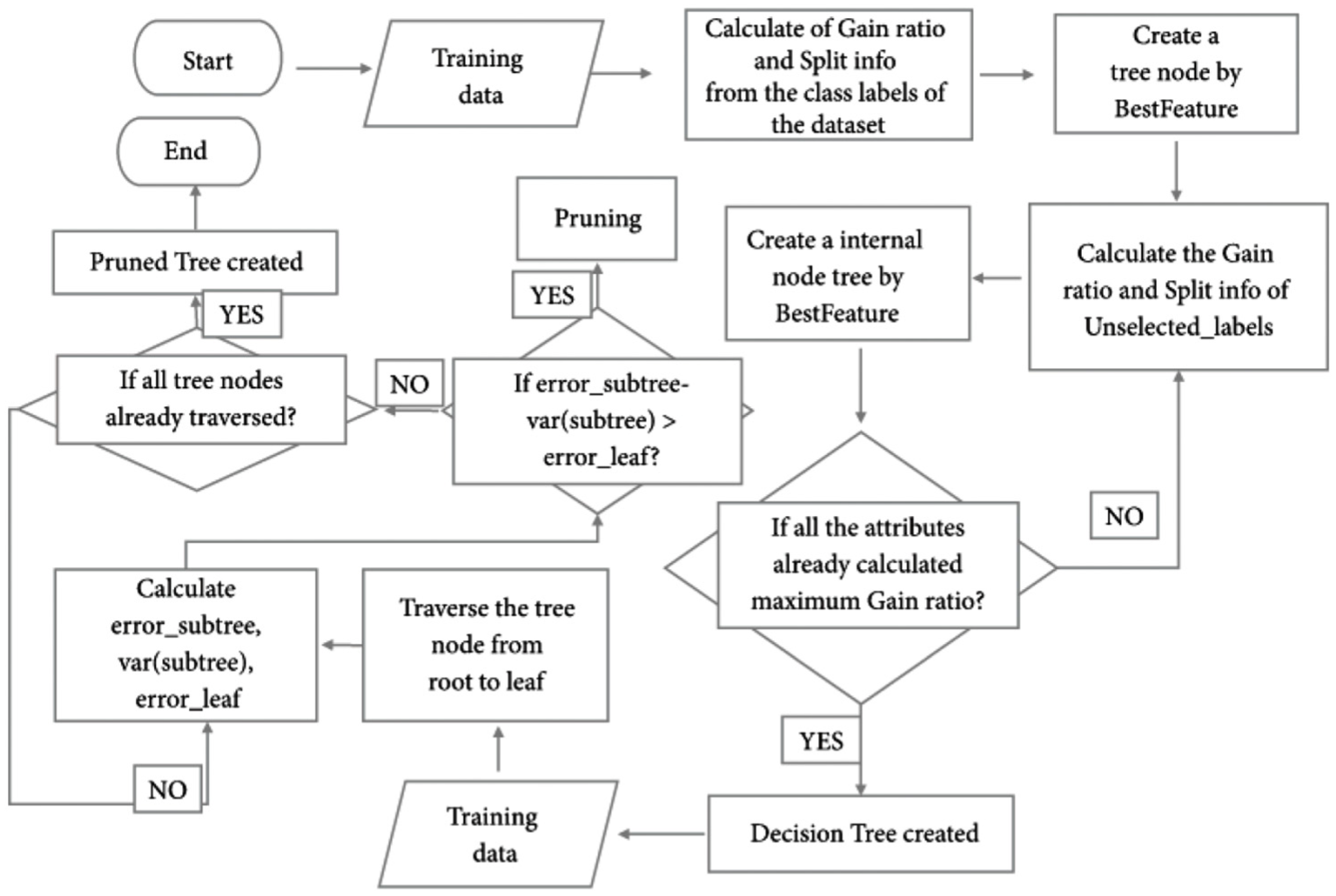
Flow chart of synthetic simulation analysis.
The simulation analysis is used to verify the accuracy of the analysis expression. Compared with the existing results, the analysis results are more accurate and suitable for any path loss index and signal-to-noise ratio. The unified control function is implemented by sending control information to infrastructure layer equipment, executing policy formulation, and issuing under tables. Through the northward interface with the application plane, the control layer provides abstract network equipment resource information to the upper application through API. For ultra-dense heterogeneous systems, the network system is more dense, resulting in closer distance between node terminals and nodes, thereby effectively enhancing power and speeding up frequency. The space capacity of the network system is enlarged and the flexibility is improved. It should be noted that in order to ensure the best nutritional effect of ultra-dense heterogeneous network communication technology. In the network layer, the object is connected to the information network to finish the transfer of message and ultimately achieve the purpose of communications. At present, IoT technique is the core technology system of Easy RFID, which applies the identification technology, sensing technology, network communication technology, data processing, and storage technology. The time-sharing mode is changed to the same-frequency full-duplex technique. It is necessary to overcome the problems of inter-frequency interference and digital interference, and use technology to change the frequency and time of the uplink and downlink to improve the throughput of the system. Therefore, the same-frequency full-duplex technique will play a significant part in 5G mobile communication. The core SDN controller of the architecture is a logical entity, and can be connected to each programmable entity in the network to implement centralized control, or may be distributedly deployed on different physical devices. Form a hierarchical controller structure to improve network scalability and management performance. Parameters as well as fuzzy math, neural networks, and auction theory are used to directly compare sizes. The ultimate goal is to enable users to access the appropriate network. A good network selection algorithm is not only to achieve a certain preference. For example, the user has the highest rate, the strongest received signal strength, and the lowest cost and needs to achieve the effect of not affecting the overall network performance or even optimizing the overall network performance. The base station load status is divided as shown in Table 8 and Figure 9.
Base station load state partition.
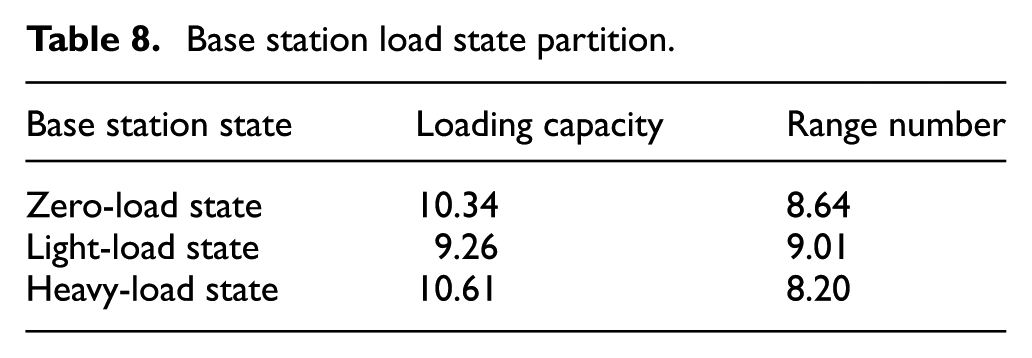

Base station load state partition.
According to the above analysis, all remote module filters must be upgraded and adjusted to eliminate the “step” status quo. The digital filtering mode adopted in the upgrade of distributed remote acquisition module is digital filter (cascade integral dressing digital filter) without compensation. Millimeter-wave front-end array will be the main part of the system design, then with the IF subsystem (3.80 GHz), while the other parts will be the same as the usual communication system components, in addition to the additional set of vibration module and power system. One of the most obvious examples is its application in communication system. The transmission power of mobile station will cause serious multiple access interference to other communication users in the cell. However, the CDMA (wireless communication technology) system is a system with limited interference. It is necessary to limit the transmission power of mobile devices so as to minimize the total power level of the system. In addition, power limitations on mobile devices can also reduce power consumption and extend battery life. The service under one base station corresponds to a huge number of terminals, that is, one content corresponds to a group of terminals, and any one of these terminals can use reserved resources for data transmission. Therefore, any sub-frames may participate in the competition. The number of reserved resources may be many, so the terminal will make a timeout judgment. If it times out, it will reuse the reserved resources to transmit data. Here we call it retry. The timeout of the timeout is also affected by the use of reserved resources, so we introduced the concept of a retry window. The exact expression of the probability of interruption and the average data rate of the user in the uplink and downlink power domain non-orthogonal multiple access technology (PD-NOMA) system is obtained. Compared with the existing changeless authority distribution-based PD-NOMA and cognition radio heuristic PD-NOMA, a more balanced compromise between user fairness and system capacity can be achieved by this solution. Numerical analog results verify the accuracy of the theoretical results. The existing resource allocation and data transmission of the core network are shown in Figure 10.
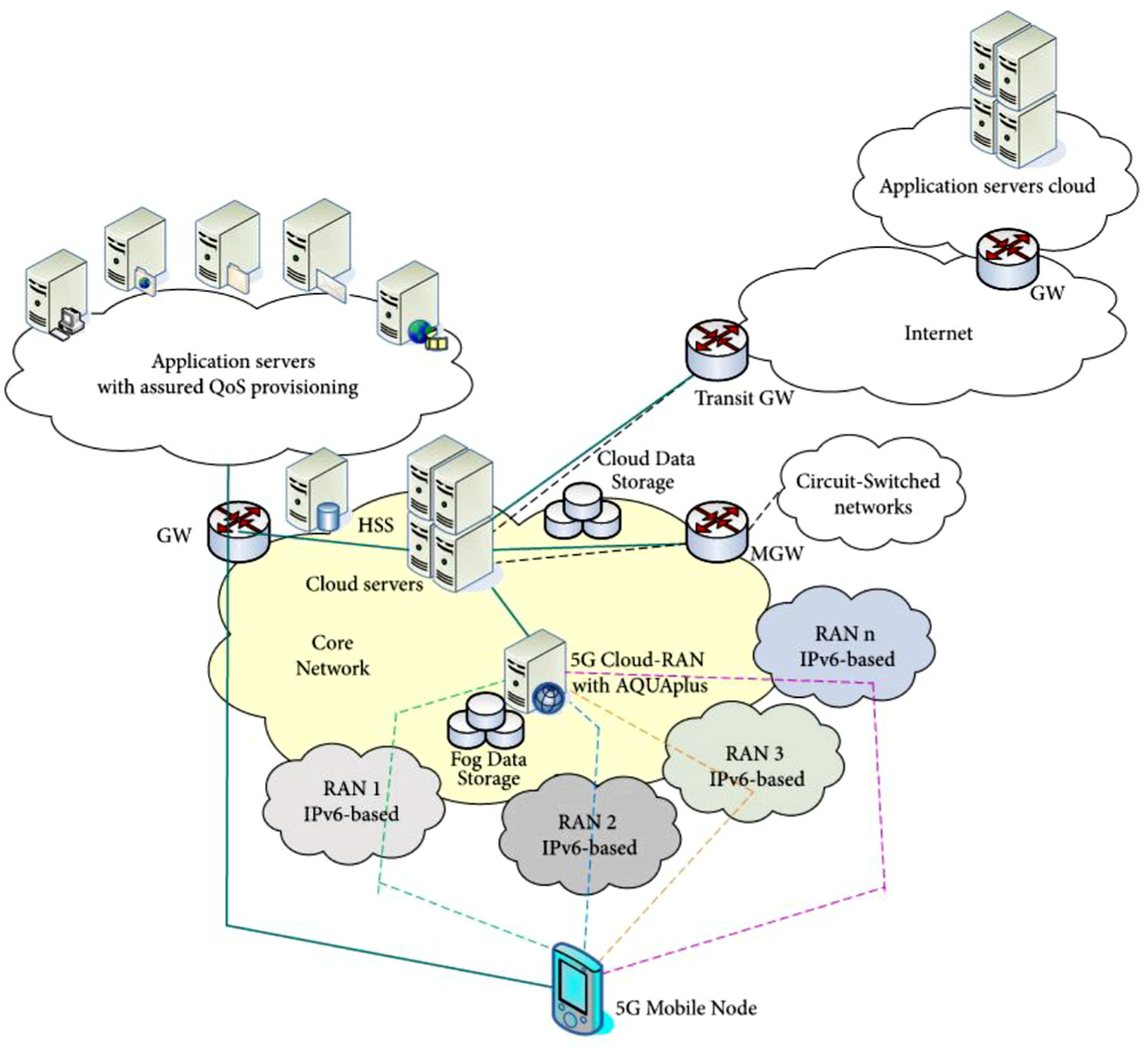
Existing resource allocation and data transfer flow chart of core network.
Conclusion
In this article, the current simulation analysis algorithm of 5G mobile communication technology combines base station dormancy technology and existing power control technology, aiming at reducing base station energy consumption and improving network energy efficiency on the premise of ensuring communication quality. The plan of the algorithm is to divide the base station into four working states: zero load, light load, normal load, and heavy load according to the number of users accessed by each basic stand. Then, the transmission power of each basics stand is adjusted according to the working state of the base station, so as to achieve the effect of the expansion of the base station coverage area. The symbiosis of 5G removable communication technique and the IoT is positioned. The use of 5G network provides an excellent environment for the development of the Internet of Things. At the same time, the development of the Internet of Things also provides a basis for the development of 5G removable communication technique. 5G removable communication network technique is being continuously researched and developed, and the continuous development of the economy puts higher demands on the Internet of Things. Through the optimization simulation analysis experiment of parameter configuration during the use of reserved resources, the foundation for the resource use process after resource reservation is laid. In short, in the future, the Internet of Things and 5G mobile communications will achieve synergistic development and promote each other. The global Internet of Things can achieve rapid development and meet the diverse development need of user. It is also needful to fully consider the compatibility and technology scalability of the network with existing and new 5G access technologies to guarantee the capability guarantee of the systematic under wide-area and large-scale business requirements.
Footnotes
Handling Editor: Jinsong Wu
Declaration of conflicting interests
The author(s) declared no potential conflicts of interest with respect to the research, authorship, and/or publication of this article.
Funding
The author(s) received no financial support for the research, authorship, and/or publication of this article.
