




Abstract
The increasing complexity of modern defense projects requires a structured and adaptive approach to systems integration. This paper defines complexity as the interplay of multiple interdependent components within Systems of Systems (SoS) in defense environments. Mission Engineering (ME) has emerged as a strategic framework to tackle these complexities by facilitating comprehensive integration and adaptability. Leveraging the methodology outlined in the 2023 Department of Defense Mission Engineering Guide V2.0, this research applies ME across several case studies to assess its limitations and identify opportunities for enhancement. Through these case studies, we uncover critical weaknesses in the current framework and provide insights into how ME can be refined to improve decision-making and system adaptability. The findings lead to the proposal of an enhanced fidelity-driven ME framework, incorporating new and modified components (e.g. dynamic fidelity tiers, modular decomposition procedures, automated feedback loops) to boost its applicability and efficiency in defense scenarios. This study significantly contributes to the field by offering practical refinements to existing ME methodologies and establishing a foundation for future research aimed at enhancing the resilience and effectiveness of defense systems engineering.
1. Introduction
In the complex landscape of modern defense projects, the integration and adaptation of diverse systems have become vital to achieving mission success. The concept of Mission Engineering (ME) has emerged as a strategic framework to address the complexities of Systems of Systems (SoS) within defense environments. 1 The evolving nature of warfare, rapid technological advancements, and the increasing interdependence of military systems demand a holistic approach that surpasses traditional engineering models.
ME encompasses a comprehensive set of principles and methodologies geared toward optimizing the performance of interconnected systems to fulfill key mission objectives. 2 As defense projects evolve into complicated networks of systems, the need for a systematic and consistent approach to their design, implementation, and operation becomes increasingly evident. This paper explores the critical role of ME within the context of SoS, exploring its significance in enhancing the effectiveness, adaptability, and resilience of defense systems. The integration of disparate systems within defense projects brings forth unique challenges, ranging from interoperability issues to the seamless coordination of diverse capabilities. ME addresses these challenges by providing a structured framework that aligns technical solutions with mission goals. As defense systems evolve toward greater complexity, 1 the traditional isolated approach to system development becomes inadequate. ME, in contrast, emphasizes a holistic understanding of the mission environment, ensuring that systems operate synergistically to achieve overarching goals. 3
This paper aims to critically examine and apply the existing ME process, as outlined in the Department of Defense (DoD) ME Guide V2.0, 4 to defense SoS. By analyzing several case studies, the paper identifies limitations and areas for improvement within the current framework. The research seeks to provide practical insights into how ME can be enhanced to better address the complexity, adaptability, and resilience needs of modern defense systems. As defense projects continue to evolve in increasingly dynamic and uncertain environments, the refinement of ME process becomes essential for ensuring mission success and operational efficiency. This paper contributes to the ongoing discourse in defense systems engineering by proposing an improved Fidelity-driven ME framework based on lessons learned from real-world applications.
The paper is structured as follows: Section 2 reviews recent literature on ME principles and defense applications. Section 3 explains the DoD ME framework. 4 Section 4 presents case studies applying this framework, highlighting limitations and areas for improvement. Section 5 discusses the results and insights from the case studies, leading to the proposal of an enhanced Fidelity-driven ME framework. Section 6 summarizes the contributions, and Section 7 concludes with key findings and future research directions.
2. Literature review
Mission Engineering (ME) is a key discipline within systems engineering, focusing on developing and optimizing complex systems to achieve specific mission objectives. As organizations face increasing challenges across defense, space exploration, and commercial sectors, a systematic approach to mission success is crucial. This literature review provides an overview of the key concepts, principles, and practices of ME, synthesizing insights from various sources to highlight the field's evolution.
ME applies systems engineering principles to address mission-critical challenges, taking a holistic view that includes technical aspects, human factors, environmental conditions, and the interaction between system elements. Key principles include mission-centricity, ensuring alignment with mission goals; modularity, promoting flexible and scalable system design; and resilience, emphasizing adaptability to unforeseen challenges. The literature also highlights the growing role of emerging technologies in shaping ME practices. Artificial intelligence, machine learning, and advanced analytics contribute to enhanced decision-making capabilities, automation, and the optimization of resource utilization. 5 Furthermore, the integration of digital twins and simulation technologies enables comprehensive testing and validation of mission scenarios, while minimizing risks and uncertainties.6,7 ME necessitates collaboration across diverse disciplines, fostering a convergence of expertise in engineering, operations, and domain-specific knowledge. The literature emphasizes the importance of establishing effective communication channels and collaborative frameworks to facilitate seamless information exchange and decision-making among multidisciplinary teams. Recognizing the inherently unpredictable nature of complex missions, the literature underscores the significance of robust risk management practices. ME endeavors to identify, assess, and mitigate risks throughout the system lifecycle, acknowledging that uncertainties may arise from technological, environmental, or operational factors. This proactive approach to risk management contributes to increased mission success probabilities. The significance of ME extends beyond the defense sector, permeating various applications where the coordination of complex systems is essential. Some key areas where ME proves to be highly relevant are defense and military operations,3,8 space exploration, 9 critical infrastructure protection, 10 emergency response and disaster management 11 and healthcare systems integration. 12 ME is foundational in defense applications, ensuring that military systems operate cohesively to achieve mission success. 13 It enables the optimization of systems and resources, enhancing the adaptability and resilience of military forces in diverse operational environments. In space exploration, where multiple systems must work together seamlessly, ME is vital for coordinating spacecraft, satellites, and ground systems to achieve scientific missions, exploration goals, and satellite constellations. ME principles are also essential in protecting critical infrastructure like energy grids, transport networks, and communication systems, ensuring coordinated functioning to maintain reliability and security. In addition, ME provides a framework for optimizing resources and systems during emergency response and disaster management, improving efficiency and enabling rapid, effective crisis responses. In healthcare, ME principles can be applied to streamline processes, ensure interoperability of medical systems, and enhance overall care delivery.
ME in the defense domain is a multidisciplinary approach that aims to optimize the planning, execution, and evaluation of military operations. Over the years, researchers have explored various aspects of ME, contributing to the evolution of methodologies and technologies that enhance the effectiveness and efficiency of defense missions. In Wasson, 14 the concept of ME as a holistic approach to systems engineering in the defense domain has been introduced. The work outlines the principles of ME, emphasizing the importance of aligning mission objectives with engineering solutions to optimize mission effectiveness. Horning et al., 15 explore the application of ME principles to military operations. The study highlights the benefits of adopting a mission-centric approach in defense planning and decision-making, showcasing how ME can enhance operational efficiency and effectiveness. An integrated ME framework for defense acquisition processes is presented in Zimmerman et al. 8 The framework integrates systems engineering, operational analysis, and cost estimation to support informed decision-making throughout the acquisition lifecycle, addressing the unique challenges of defense acquisitions. The work of literature16,17 focuses on the application of ME principles to Joint All-Domain Command and Control (JADC2) initiatives. The research explores how ME can facilitate interoperability and integration across multiple domains, enabling seamless command and control in joint military operations. Cook and Pratt 18 introduced a literature review that examines recent advancements in ME tools and techniques. The paper discusses emerging methodologies, software tools, and modeling techniques that enable defense practitioners to effectively apply ME principles in real-world scenarios. In the work of Ellis et al. 19 the application of ME principles to the integration of autonomous systems in defense operations has been explored. The study addresses challenges related to interoperability, autonomy, and human–machine teaming, highlighting how ME can facilitate the integration of autonomous capabilities into mission workflows.
While ME offers a promising framework for addressing the challenges within defense SoS, it is essential to acknowledge its inherent gaps and limitations (Figure 1). One of the primary challenges lies in the dynamic and unpredictable nature of modern warfare, which introduces uncertainties that traditional engineering approaches may struggle to accommodate 2 . ME frameworks may need further refinement to adapt to rapidly changing operational environments and emerging threats. Interoperability remains a critical concern, 20 as the integration of systems from different vendors and generations often leads to compatibility issues. ME must continually evolve to keep pace with advancements in technology and address the interoperability challenges associated with integrating legacy systems with state-of-the-art components. Moreover, the complexity of defense projects may introduce challenges related to scalability and resource allocation. 21 As missions expand or contract, ME frameworks must be robust enough to scale seamlessly, ensuring that the coordinated systems remain effective and efficient. In addition, ME may face difficulties in achieving comprehensive stakeholder collaboration. 22 Effective communication and cooperation among diverse stakeholders, including military, industry, and academia, are crucial for the success of ME efforts. Bridging the gap between these stakeholders and establishing a shared understanding of mission objectives pose ongoing challenges.
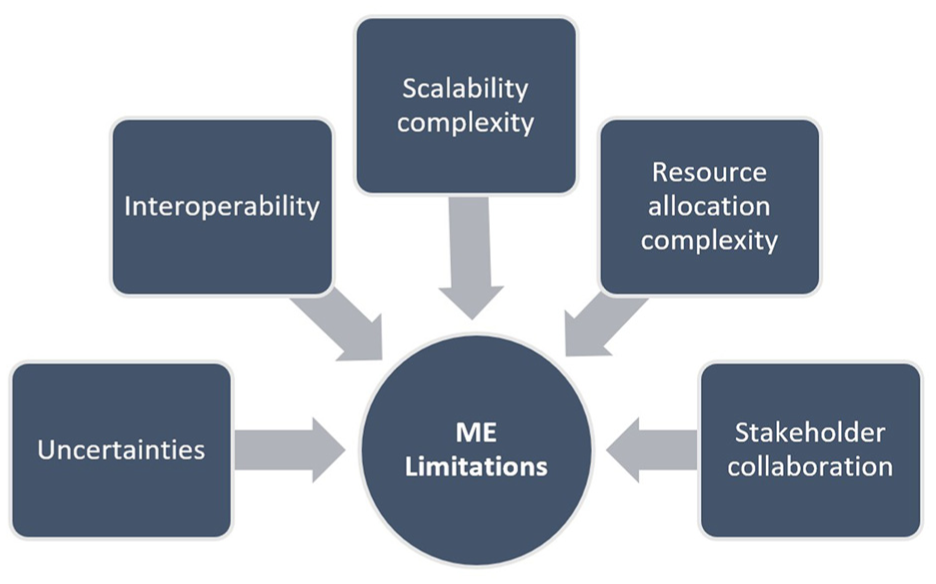
Existing challenges and limitations in applying ME across defense applications.
This paper aims not only to highlight the merits of ME but also to shed light on these gaps and limitations. By addressing these challenges head-on, the defense community can contribute to the continuous improvement and evolution of ME process, ensuring its effectiveness in an ever-changing defense landscape. As defense projects become more complex and demanding, understanding, and mitigating these limitations will be instrumental in enhancing the resilience and adaptability of defense systems within SoS.
3. Research design and methods
3.1. Steps of the ME process
The literature review served as a first step in our research methodology, providing a comprehensive understanding of ME concepts, principles, and practices. Understanding the theoretical underpinnings of ME along with the challenges and limitations associated with the practical applications and implementation of ME practices guided us to the next stage of the analysis, which involved examining case studies to assess how a broader ME process developed by the Department of Defense (DoD) Mission Engineering Guide V2.0 4 (Figure 2) could be adapted to address real-world defense planning and decision-making issues.
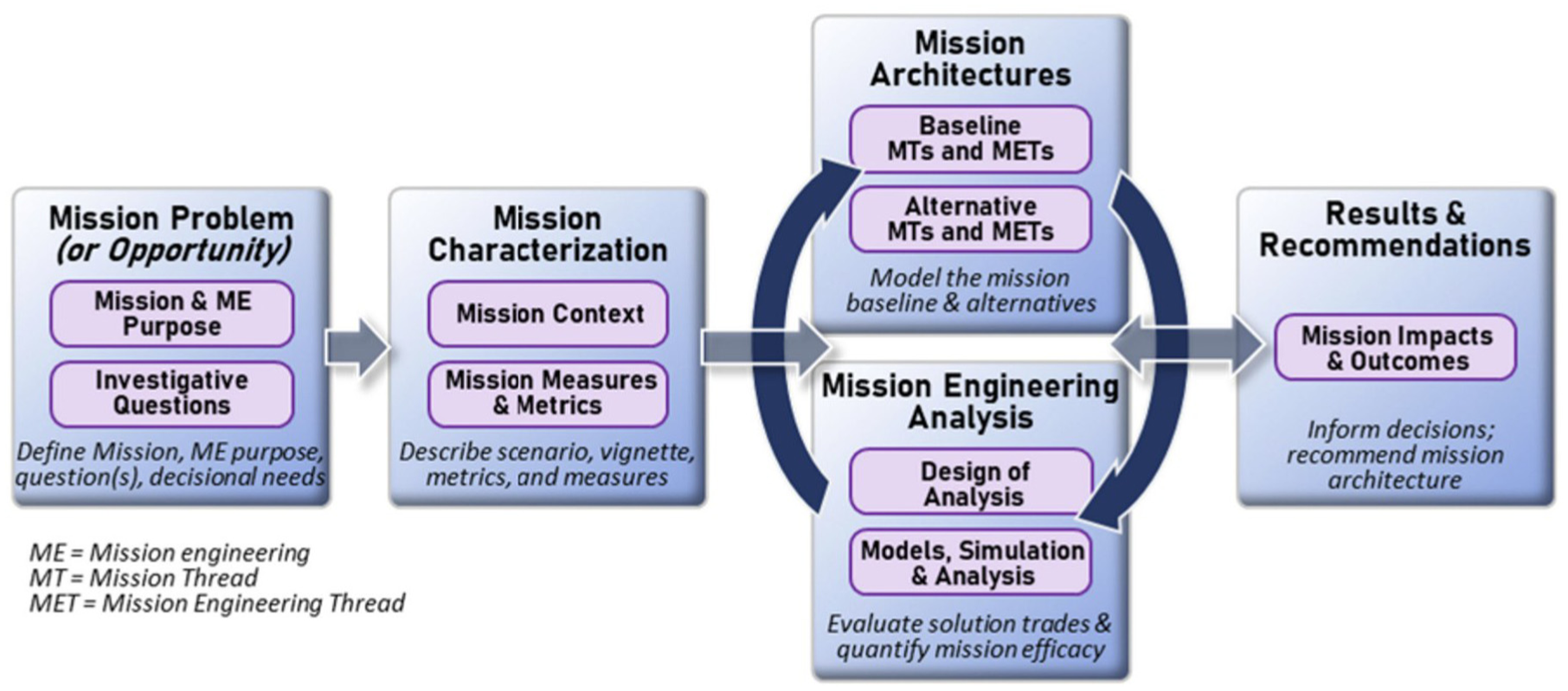
Steps of ME process as adapted from. 4
The ME process starts with the end in mind, followed by a carefully articulated definition of the problem and the system, characterization of the mission and its success metrics, collection of data and models leading to the analysis of the mission and reporting and capturing the results. 4 The ME approach and methodology contain the following five key steps:
Mission Problem or Opportunity. In this step, a detailed and clear problem statement is developed. The statement defines the mission's objective, highlights the gap between current capabilities and stakeholder needs, and sets the stage for the mission analysis. This step ensures that the focus is aligned with strategic goals, clarifying what the mission aims to achieve, and the systems involved. A well-crafted problem statement also identifies the context in which the problem exists, including any constraints, assumptions, or key considerations that will impact the analysis.
Mission Characterization. This step involves defining the mission’s scope, purpose, and key operational details, such as its timeline, geographic setting, and external influences. Accurate characterization is crucial for capturing mission nuances, including constraints, operational scenarios, and assumptions, ensuring a shared understanding among stakeholders. It also considers uncertainties and potential risks by exploring different mission scenarios to support robust planning. At this stage, mission metrics are established to assess success. These include Measures of Success (MoS) to determine if objectives are achieved and Measures of Effectiveness (MoE) to evaluate system performance in context. The metrics are specific, measurable, and aligned with mission objectives, providing a clear way to assess mission success or failure.
Mission Architectures. In this step, Mission Architectures are developed to outline the structure and execution of essential activities, tasks, and events necessary for achieving mission objectives. This involves creating Mission Threads (MTs), which detail the sequence of operations, and Mission Engineering Threads (METs), which assign specific actors to these tasks. The development process is iterative, allowing for continuous refinement based on stakeholder feedback and analysis.
Mission Engineering Analysis. In this step, an analytical framework is created to assess mission success. It involves selecting the most suitable tools, models, and methodologies—such as simulation models, data analysis techniques, and systems engineering frameworks. The analysis design ensures that all variables and scenarios are explored, with the correct methods applied to address key questions about system performance and mission viability. It also ensures alignment between analytical methods and the defined mission metrics. Models and simulations are run to generate data, which is then used to test the mission under various conditions, helping to identify potential weaknesses and areas for improvement. Multiple scenarios may be analyzed to account for uncertainties and validate the effectiveness of mission designs. The results provide insights into system behavior across different mission contexts, enabling decision-makers to evaluate whether current capabilities can meet mission objectives.
Results and Recommendations. The final step involves documenting the results of the analysis and formulating conclusions based on the data. This includes creating detailed reports, briefing leadership materials, and recommendations for system improvements or mission adjustments. The documentation should provide clear evidence to support decision-making, ensuring that findings are communicated effectively. The knowledge captured during this phase is crucial for future mission planning and making informed decisions on acquisitions, resource allocation, and system upgrades.
It is crucial to capture lessons and identify unknowns that need to be known at every phase of the ME process in order to facilitate the execution of a thorough engineering analysis along with the analysis of technical aspects, human factors, and environmental conditions. Ultimately, the ME process allows for exploring outcomes of mission approaches and supports collaboration on subsequent recommendations.
3.2. Research questions and objectives
In our research design, we collect and analyze data from the reviewed case studies across the common methods and techniques usually implemented to address defense planning and decision-making issues while using the lens of the five steps in the ME process as a guiding framework. This study examines the case studies to answer the research questions listed as:
How aligned was the execution of the case studies with the ME process?
What are the common gaps between how the case studies were executed and the ME process?
Based on qualitative assessment, did the utilization of components of the ME process contribute to the outcomes realized in the case studies?
Could full alignment to the ME process have contributed to better outcomes for the case studies?
To explore the research questions, this study sought to achieve the following primary objectives:
To provide a thorough understanding of ME concepts, principles and practices, and to identify the current state of research and its applications in the defense domain.
To conduct case studies and models’ analysis to identify the common gaps between the execution of the case studies and ME process, highlighting areas where the current framework may fall short.
To qualitatively assess whether full alignment with the ME process could have contributed to better outcomes for the case studies.
To propose an improved Fidelity-driven ME framework based on the insights gained from the literature review and case studies, aimed at increasing the applicability and efficiency of ME in defense.
3.3. Case studies and models analysis
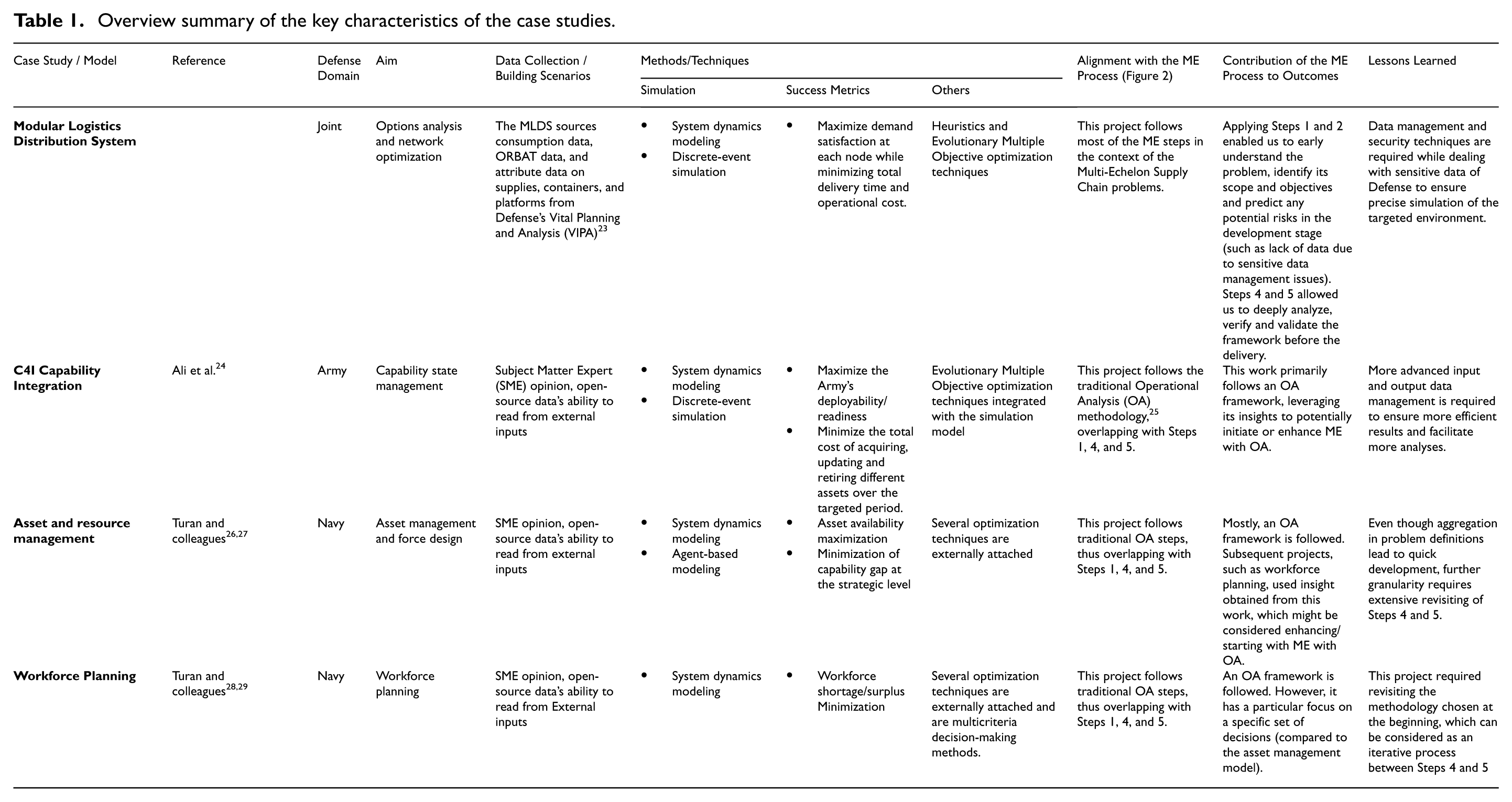
To explore how the ME process can be adapted for missions of varying sizes and complexities in defense applications, we gathered insights from four case studies covering diverse defense areas, such as asset management, capability integration, and workforce planning. These case studies used various modeling techniques, including simulation and scenario building, and addressed challenges such as interoperability, scalability, and stakeholder collaboration. Section IV details the case studies, and Table 1 summarizes key aspects.
Overview summary of the key characteristics of the case studies.
The selected case studies meet the following criteria:
They cover a range of defense applications, showcasing how ME can enhance operational efficiency and decision-making.
They are publicly available as peer-reviewed publications, allowing scrutiny of the models.
Co-authors have direct knowledge of the processes and outcomes, providing valuable insights.
3.4. Proposed fidelity-driven ME framework
The comprehensive analysis and results of the case studies conducted in this study highlighted a number of limitations in the existing DoD ME process, dictating the need for an improved framework. To address these limitations, this study proposes a new Fidelity-driven ME framework that introduces enhanced feedback and validation loops, modular system definitions, and dynamic system adaptation to improve flexibility and responsiveness. By focusing on mission resilience and efficiency, the new framework aims to better support decision-making and system adaptability in complex defense environments. This approach is designed to enhance the overall effectiveness of defense systems engineering, ensuring that systems can adapt to evolving mission requirements and technological advancements, thereby increasing the likelihood of mission success in dynamic and unpredictable scenarios.
4. Case studies
4.1. Modular logistics distribution system
This case study showcases how the Modular Logistics Distribution System (MLDS), a mission-centric logistics system, aligns with the principles of ME as described in the DoD ME Guide V2.0. 4 The system was tested under various mission scenarios, such as High-Intensity Operations, Peacekeeping, and Emergency Humanitarian Aid, demonstrating its capacity to handle diverse operational demands.
4.2. Capability integration
This case study addresses the C4I Capability Integration problem, with a focus on fleet modernization within the Australian Army.24,30,31 Following a ME process, it explores how a simulation-optimization approach enhances military fleet readiness, minimizes costs, and streamlines operational transitions.
4.3. Asset and resource management
This project centers on strategic decision-making in defense asset and resource planning, a topic that is critical for both the current and future performance of defense forces, particularly in terms of operations and costs. The project investigates a broad spectrum of decision-making challenges related to asset management and resource planning, including fleet size and composition, workforce planning, maintenance scheduling, capacity allocation, and lifecycle analysis.27,29
4.4. Workforce planning
The project focuses on modeling, analyzing, and addressing the strategic workforce planning needs of the Navy. Strategic workforce planning is designed to fulfill the transformational objectives of the organization while ensuring the optimal allocation of personnel—specifically, the right number of individuals possessing the appropriate skills for designated tasks at the right time. This study explores a range of decision-making challenges associated with (1) workforce planning, encompassing recruitment, separation, retention, and career progression (e.g. promotion), and (2) the interconnections and dependencies between strategic workforce planning and other defense dimensions, such as fleet management. 28
5. Results and managerial implications
5.1. Analysis and insights
The case studies presented in Table 1 highlight a variety of defense-related domains where the current framework from the DoD ME V2.0 has been applied. Each case study emphasizes a different aspect of military operations, ranging from modular logistics systems to asset management and workforce planning. While the framework has provided a structured approach, several difficulties and limitations have emerged, particularly in the areas of data integration, modeling flexibility, and response adaptation.
5.1.1. Real-time data integration challenges
Across all case studies, a key challenge was the lack of integration of real-time data into the model, which limited the system's flexibility and adaptability to evolving mission conditions. The models struggled to adjust dynamically as new information emerged, hindering their ability to respond effectively to unexpected changes. In addition, data management issues exacerbated these challenges, with a heavy reliance on SME opinion and open-source data from external sources. These inputs were often incomplete or outdated, leading to inaccuracies during the simulation phase and delays in decision-making. The inability to seamlessly incorporate real-time data further compromised the quality of analysis and reduced the overall efficiency of mission planning and execution.
5.1.2. Rigid system architecture
In the case of Workforce Planning and Asset and Resource Management, the current framework’s SoS definitions and system architecture were not flexible enough to accommodate changes mid-process. For example, the lack of dynamic adaptation during system definition stages (step 4 of the current framework—Figure 2) required iterative revisions between different phases back to Mission Characteristics. This hindered the agility required for real-time decision-making and continuous process improvement.
5.1.3. Limited scenario variability and feedback loops
The Asset and Resource Management case study revealed key shortcomings in the current ME process, particularly in handling scenario uncertainty and adaptability. Without robust scenario variability and flexible feedback loops, early-stage mission threads became outdated, requiring significant updates in later phases. In dynamic situations, such as sudden resource shortages or infrastructure disruptions, the lack of real-time feedback hampered the model’s ability to adjust quickly. In addition, there was insufficient learning from past outcomes to refine current and future operations. These gaps highlight the need for improved adaptability, data integration, and iterative validation to enhance decision-making and mission success.
5.2. Proposed fidelity-driven ME framework
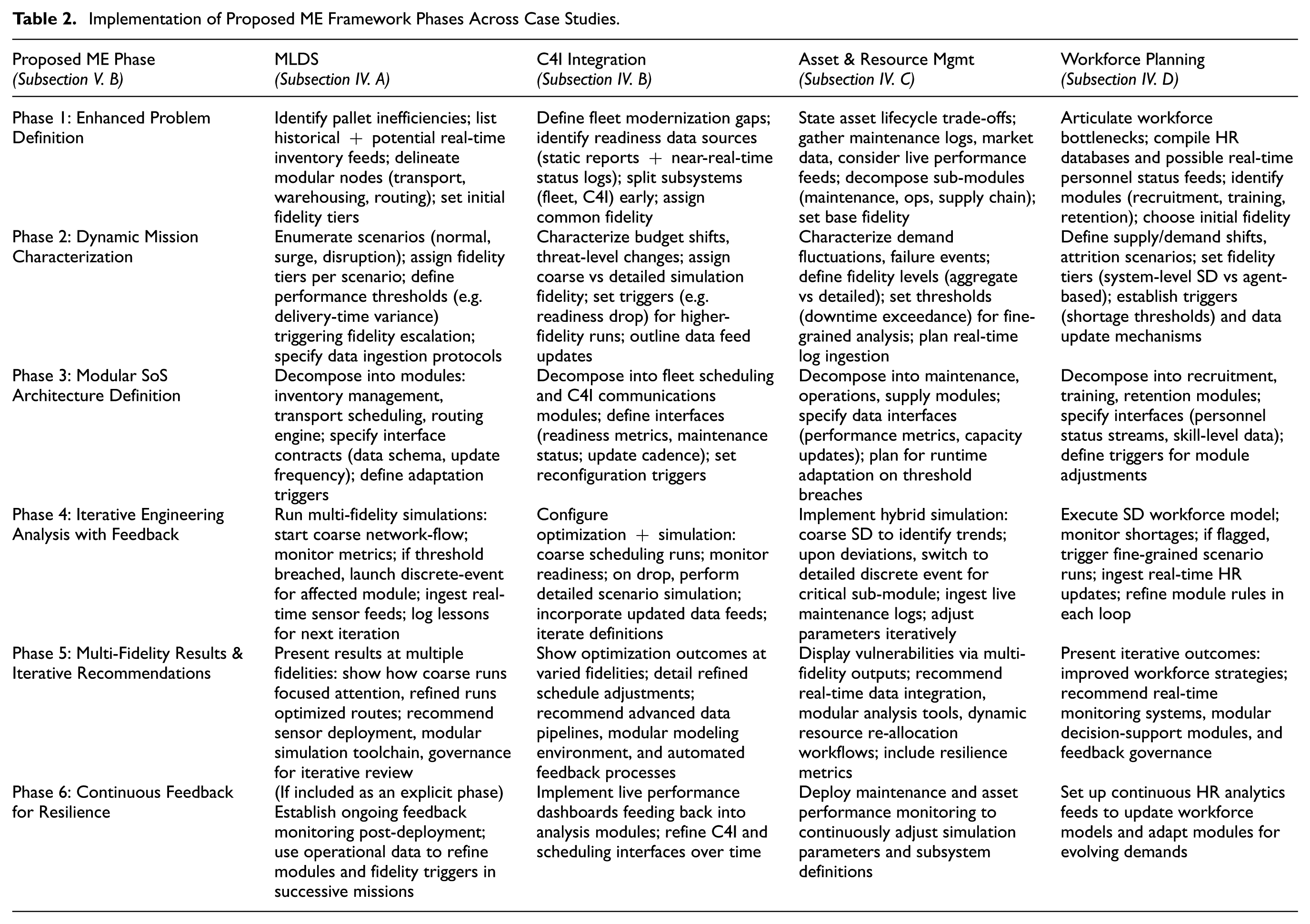
The proposed Mission Engineering Stages Hierarchy Based on Fidelity (Figure 3) introduces a structured, iterative approach that enhances the efficiency and effectiveness of achieving mission objectives. Key strengths include its adaptability, as continuous feedback loops between simulation, system definition, and results allow for dynamic adjustments based on evolving mission requirements. Modularity is emphasized through the System of Systems Definition stage, enabling flexible subsystem updates without overhauling the entire mission. The framework also promotes flexibility, allowing for real-time adjustments and integration of new variables, ensuring that mission plans remain resilient and optimized under varying conditions. To further demonstrate how the proposed enhancements can be operationalized in practice, Table 2 presents a cross-case mapping of how each ME phase is implemented across the four case studies.
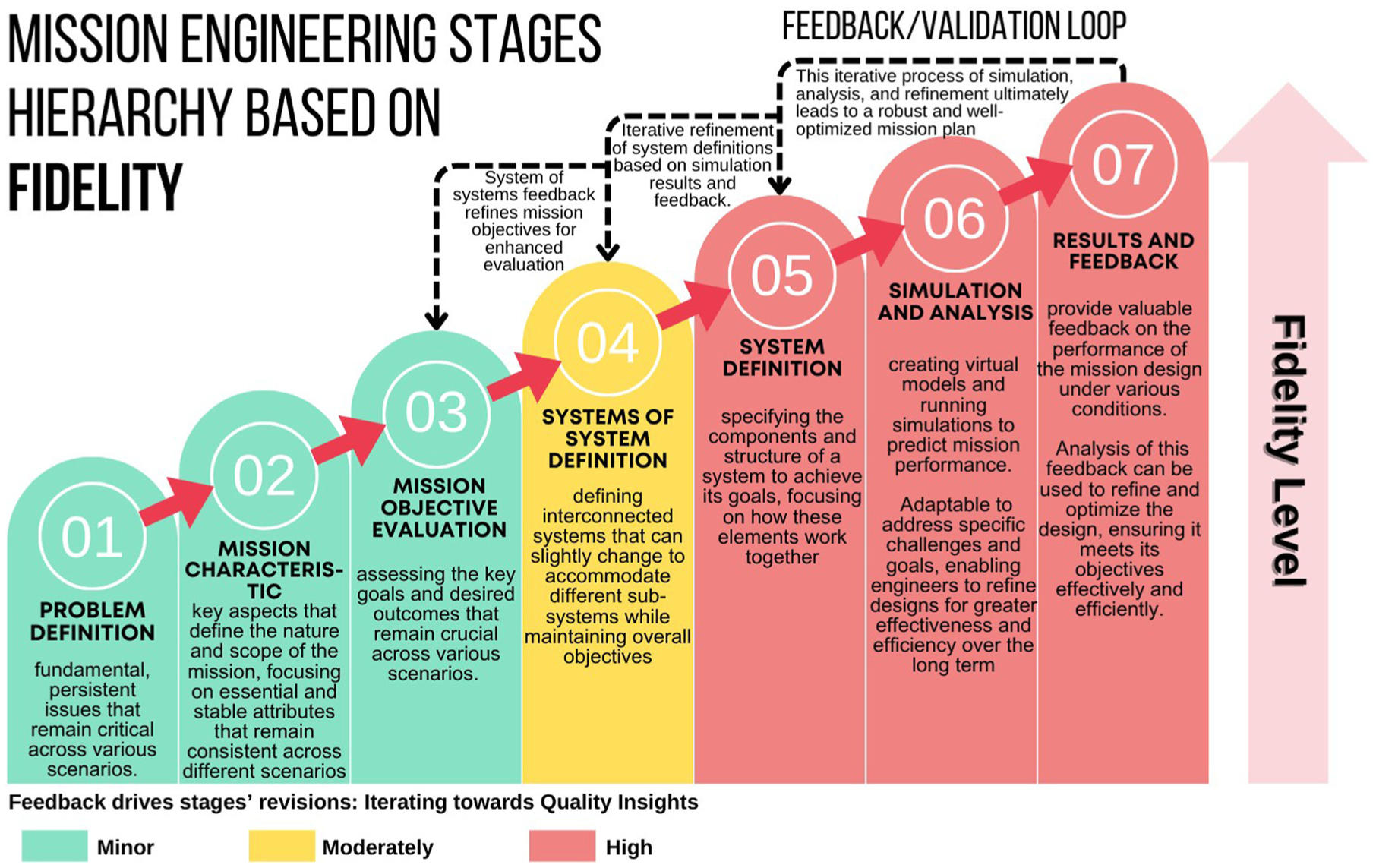
Outline of the Proposed Fidelity-driven ME Framework.
Implementation of Proposed ME Framework Phases Across Case Studies.
The new proposed Fidelity-driven ME framework (Figure 3) addresses the challenges identified in the existing ME Guide framework (Figure 2). Key differences and improvements include:
5.2.1. Enhanced feedback/validation loop
One of the most significant enhancements in the proposed framework is the integration of frequent feedback and validation loops between each stage. This iterative process facilitates continuous refinement and adjustment of system definitions, simulations, and the analysis of results/feedback, ensuring that mission requirements are dynamically aligned with evolving conditions. The flexibility of these loops allows for quicker identification and correction of inefficiencies, reducing costly delays and ensuring the system remains responsive to emerging challenges. For example, in the Modular Logistics Distribution System, early feedback from preliminary simulation runs can inform real-time adjustments to system definitions, leading to more accurate supply chain models. This not only improves the reliability of the logistics network but also helps to optimize resource allocation and performance metrics across different scenarios. The frequent feedback mechanism also enables better handling of uncertainties and changing mission objectives, ensuring the overall system remains resilient and adaptable under varying operational conditions. This adaptive cycle results in more robust and well-optimized mission plans, ultimately improving mission effectiveness and decision-making.
This feature primarily addresses
5.2.2. Modular system of systems definition
The System of Systems Definition (Step 4) has been strategically restructured to incorporate modularity, allowing for subsystems to dynamically adapt without requiring a complete overhaul of the mission structure. This modular approach empowers decision-makers to adjust specific elements of the system in response to real-time changes, without compromising the overall mission framework. For instance, as demonstrated in the Workforce Planning case study, managers were able to modify workforce allocation strategies based on emerging needs or unexpected disruptions, all while keeping the broader mission objectives intact. This modularity can increase flexibility and, at the same time, reduce the time and resources needed for system adjustments. Subsystems can be fine-tuned individually, ensuring the mission can respond rapidly to changes, whether it's in resource availability, threat landscapes, or technological advancements. By enabling that, the framework ensures that evolving requirements are met without requiring extensive redefinition or resource-intensive overhauls, ultimately enhancing mission resilience and efficiency. This feature primarily addresses
5.2.3. Dynamic system definition
In the existing framework, the System Definition stage (Step 5) was often a bottleneck, especially when trying to incorporate new variables or respond to unexpected mission changes. The proposed framework makes this stage more adaptable, allowing for the integration of new elements or technology as the mission evolves. For example, in the C4I Capability Integration case study, the system definition could evolve dynamically to better incorporate real-time communications technologies as they become available. This feature primarily addresses
5.2.4. Focus on mission resilience and efficiency
The proposed framework emphasizes mission resilience and efficiency in its final stages. This is exemplified in the Simulation and Analysis (Step 6) and Results and Feedback (Step 7), where detailed simulations and results are consistently evaluated for their efficiency, allowing decision-makers to not only verify the current mission effectiveness but also proactively adjust strategies to pre-empt potential risks. In the Asset and Resource Management case study, this would mean refining asset allocation models based on real-time performance data and continually iterating toward more efficient use of resources. This feature primarily addresses
5.2.5. Integrating fidelity for enhanced precision and adaptability
In the proposed Fidelity-driven ME framework, fidelity plays a crucial role as it defines the level of detail and precision at each stage of the mission engineering process. The integration of fidelity into the framework allows for a more granular and realistic assessment of mission performance, helping to enhance decision-making. In Figure 3, fidelity increases progressively across the stages, from Problem Definition (Step 1) to Results and Feedback (Step 7). In earlier stages, such as Problem Definition and Mission Characteristics, a lower level of fidelity is sufficient to outline broad objectives and persistent issues. However, as the framework moves toward Simulation and Analysis (Step 6) and Results and Feedback (Step 7), the fidelity levels rise, allowing for more detailed simulations and evaluations. This ensures that the outputs reflect real-world scenarios more closely, increasing the accuracy and reliability of the results. For example, in the Modular Logistics Distribution System case study (Subsection IV.A), early-stage simulations with moderate fidelity could be used to assess general logistics requirements. As the simulation progresses and feedback is looped into the system, higher fidelity models could refine the placement of assets, adjust routes in real-time, and enhance resource allocation strategies. This approach ensures that mission planners have both broad strategic insight and detailed operational clarity. The feedback loop, tightly linked to fidelity, ensures that each iteration of the system becomes progressively more refined, increasing the solution quality. The Asset and Resource Management case study (Subsection IV.C) demonstrates how higher fidelity in simulations can help to fine-tune asset allocations and maximize availability with minimal gaps in capability. This feature primarily addresses
5.3. Managerial implications
The managerial implications of this proposed framework are substantial, particularly in improving decision-making agility and system adaptability. Incorporating dynamic feedback loops and flexible system definitions enables military operations to adjust more quickly to changing scenarios. Decision-makers can engage in continuous learning, applying insights gained from earlier stages to refine and improve future mission outcomes. Moreover, this framework’s ability to handle complex, data-driven scenarios with greater flexibility positions it as a valuable tool in defense operations that require real-time adaptations, such as humanitarian aid missions or rapid deployment strategies. The increased focus on resilience ensures that even in highly variable environments, mission objectives can be met with fewer interruptions, supporting a more robust and sustainable operational framework.
In practical terms, adopting this proposed Fidelity-driven ME framework could lead to more efficient resource management, improved response times, and greater operational coherence across interconnected systems. By addressing the limitations identified in the current Department of Defense framework, defense agencies can expect enhanced mission success rates, particularly in dynamic and unpredictable operating environments. While Figure 3 summarizes the structural enhancements of the proposed ME framework, Table 2 provides a detailed case-level mapping that links these enhancements to specific implementation actions.
5.4. Detailed implementation and mapping of the fidelity-driven ME framework
To concretize how the enhanced ME framework can be applied in practice, we introduce an Implementation Mapping Matrix (Table 2). This matrix aligns each phase of the proposed framework with specific tasks, data sources, fidelity tiers, modular decomposition steps, feedback triggers, and real-time integration mechanisms for each case study. By situating abstract enhancements within concrete implementation contexts, the matrix bridges theory and practice, showing readers exactly how to operationalize the new framework in diverse defense scenarios.
In Table 2, each row corresponds to a phase of the proposed ME framework (Figure 3). The top columns list the case studies (MLDS, C4I Integration, Asset & Resource Management, Workforce Planning) detailed in Section IV. Cells describe how that phase is realized or extended in each study, indicating, for example, which real-time data feeds are identified, how modular boundaries are defined, what fidelity escalation triggers are used, and how feedback loops are performed. This structured presentation clarifies both common patterns (e.g. early identification of data feeds and modular subsystems) and domain-specific variations (e.g. differing fidelity triggers for surge logistics vs workforce shortages).
The significance of this matrix lies in its demonstration of feasibility and Generalizability. It provides a clear blueprint for practitioners to follow when implementing the enhanced framework, highlights where tooling or data pipelines are most critical, and indicates opportunities for shared solutions across domains. By anchoring our retrospective outlines and future prototype plans in this table, we ensure that the proposed enhancements are conceptually sound and also demonstrably actionable, thereby reinforcing the practical relevance of the fidelity-driven ME framework.
6. Contributions to ME research
Building on the analysis and findings presented in the previous sections, different advances in ME research and practices are proposed. This research approaches ME from a multi-method perspective by examining various techniques and methods that serve as ME enablers. The emphasis on aligning ME practices with their supporting techniques ensures a cohesive framework where theoretical principles are matched with practical implementation tools. This alignment is fundamental for enabling effective application of ME principles, providing practitioners with validated and functional toolsets for their work. Furthermore, by establishing clear connections between ME practices and their corresponding implementation methods, this research reveals significant gaps in existing methodologies and identifies necessary advancements to transform these methods into genuine ME enablers.
Another key contribution of this research, which stemmed from focusing on ME applications, is the fidelity-driven ME framework which addresses some of the limitations in the existing ME frameworks. The proposed framework introduces key improvements including integrated feedback and validation loops that enable continuous refinement between stages; a modular system of systems definition approach that allows dynamic subsystem adaptation without complete mission restructuring; and a fidelity analysis mechanism that ensures appropriate levels of details and precision across different ME stages. The framework’s architecture emphasizes dynamic system definition, which facilitates real-time integration of new elements and technologies while maintaining a strong focus on mission resilience and efficiency through simulations and continuous evaluation of simulation results. These features address key challenges in current ME practices, particularly in areas of uncertainty management, resource allocation, scalability, and stakeholder collaboration. The incorporation of varying levels of fidelity throughout the ME process—from initial problem definition to results and feedback. The framework enables both broad strategic planning and detailed operational precision, making it particularly valuable for complex applications that demand real-time adaptability and robust decision-making capabilities.
This research also highlights the importance of adopting holistic approaches rather than analyzing decision-making dimensions in isolation. It emphasizes the need to integrate exploratory analysis and modeling techniques into the mission analysis processes to complement traditional ME practices. Unlike conventional methods, future ME processes must account for deeply uncertain factors when evaluating strategies and architectures. In early mission planning stages, critical information such as adversarial capabilities or shifts in strategic priorities, often remain unknown. Ignoring these uncertainties during mission architecting can pose significant risks. Exploratory modeling and analysis provide valuable insights by helping decision-makers assess risks, identify robust strategies, and explore trade-offs between alternatives. It also uncovers critical uncertainties and the conditions under which mission success or failure is likely. These insights enable more informed, evidence-based decision-making, acting as an early warning system that suggests preventive measures and helps identify opportunities for monitoring and adaptation. This proactive approach ensures that mission designs remain resilient and responsive to evolving or unforeseen conditions.
7. Conclusion
Mission engineering is essential in critical domains involving SoS, where the complexity of interactions and high levels of uncertainty require adaptive strategies and robust planning. This research introduces a framework that enhances ME practices through the integration of five key improvements to existing frameworks. First, it introduces frequent feedback and validation loops between stages, enabling continuous refinement of system definition, simulations, and results to dynamically align mission requirements with evolving conditions. Second, it incorporates modular SoS definition allowing subsystems to adapt independently without overhauling the entire mission structure, improving scalability and flexibility. Third, the framework enhances the system definition stage, making it more dynamic, allowing new elements or technologies to be integrated as the mission evolves therefore addressing uncertainties and scalability challenges more efficiently. Fourth, it emphasizes mission resilience and efficiency, using real-time performance data to optimize and refine mission design to mitigate risks proactively. Finally, the integration of fidelity at varying levels throughout the framework ensures precision by tailoring the level of details to each stage’s needs, providing broad strategic insights early on and more detailed operational clarity in later phases. This iterative fidelity-driven approach strengthens mission adaptability and decision-making in complex evolving environments.
The outcomes of this research underscore the critical importance of viewing ME frameworks not as static artifacts but as living ones that evolve through continuous validation and refinement from practical applications. The findings demonstrate that ME frameworks must establish a bidirectional relationship between theoretical development and practical application, moving beyond the traditional unidirectional flow from theory to practice. This symbiotic relationship enables frameworks to remain relevant and effective in addressing emerging challenges in complex environments. Similar to how the proposed fidelity-driven framework emerged from practical case study insights, future ME research should actively incorporate feedback from field implementation to inform theoretical advancement. This reciprocal relationship will foster continuous learning and improvement in both research and practice.
This reciprocal relationship not only fosters continuous learning and improvement but also ensures that ME frameworks remain aligned with the unique demands of the domains in which they are applied. Different domains, such as defense, healthcare, or disaster response, introduce distinct challenges, uncertainties, and operational complexities. As such, ME frameworks must be adapted and reflect these domain-specific characteristics to remain effective and relevant. By tailoring frameworks to the realities of each operational environment, ME practices can promote resilience, scalability, and agility. This adaptability ensures that ME frameworks not only address current challenges but also evolve to meet future demands and enable sustainable mission designs.
Footnotes
Acknowledgements
The authors express their sincere gratitude to Travis Hunt, Grant Moran, Kumudu Amarawardhana, and Zarish Khan for their thorough revision of this paper and for providing valuable feedback that greatly improved the quality of the manuscript.

Funding
The authors received no financial support for the research, authorship, and/or publication of this article.
Declaration of conflicting interests
The authors declared no potential conflicts of interest with respect to the research, authorship, and/or publication of this article.