




Abstract
Over the past two decades, interest in collective approaches to leadership has grown, with recent viewpoints arguing that shared leadership (SL) is a more powerful predictor of performance than vertical leadership. Despite a surge in SL research, however, little is known about the patterns of leadership that emerge within teams, when members perform leadership collectively. The purpose of this article is to address this gap, by exploring how team members share the leadership space in different contexts. Adopting a longitudinal qualitative perspective, this article explores the predominant patterns of SL that emerged in five organizational teams in Ireland, over the period of a year. Grounded in social exchange theory, insights are gained through multiple case studies in authentic organizational settings, using critical incident technique, participant diaries, and semi-structured interviews. Significantly, the predominant patterns of SL which emerged were not the same in all contexts, and five distinct forms are identified including withdrawal, specialization, rotation, simultaneous enactment, and centralization of leadership behaviors. The findings advance our understanding of SL by identifying and connecting different forms of SL arrangements with underlying contextual and relational conditions.
Introduction
Over the past two decades, leadership research and practice have increasingly emphasized informal, collective, reciprocal leadership processes over formal, hierarchical, and leader-centric approaches (Cook et al., 2020; Zhu et al., 2018). Shared leadership (SL) in particular has been advocated as a way to enable team-based organizations to meet the challenges of increasing complexity along with high rates of change and uncertainty in the modern landscape (Gichuhi, 2021). A surge of research has been undertaken to identify the antecedents, moderators, and outcomes of SL (Wu et al., 2020) and several studies have provided evidence that sharing leadership can deliver improvements in team effectiveness (Wang et al., 2014) and performance (Ensley et al., 2006; Solansky, 2008) over and above vertical leadership.
There are now many supporters of a shared approach, with some suggesting that “in the twenty-first Century organization, everyone will need to share the experience of serving as a leader” (Raelin, 2005, p. 18). While Raelin (2005) proposed a shared approach to leadership that is concurrent and collective (i.e., leaders co-exist at the same time and all together), little is known about how team members share the leadership space in practice (Chreim, 2015). Some question whether team members should undertake overlapping roles, engaging in the same leadership responsibilities, or unique roles, where each individual engages in a specific leadership role (Dust & Ziegert, 2012). Undoubtedly, collective forms of leadership present a spectrum of possible arrangements ranging from top-down vertical leadership, to shared simultaneous leadership (Contractor et al., 2012). SL is defined as a team phenomenon, which entails the distribution of leadership roles and influence among team members (Carson et al., 2007). To date, however, the pattern or arrangement of leadership roles emerging within teams when leadership is distributed remains unclear. While Lorinkova and Bartol (2021) recently studied the patterns of SL that developed in self-managed teams (identifying a curvilinear pattern), they focused on the overall frequency of combined SL behaviors in the teams studied over time. While this aids our understanding of the aggregate occurrence of SL, it contributes little to our understanding of the arrangements that arise within teams, when the source of leadership is diverse. SL implies a role for multiple team members in the leadership of their team, but existing research has not explained how this happens (Endres & Weibler, 2020).
The purpose of this research is to uncover the predominant patterns of leadership behaviors that emerged within the teams studied when multiple team members shared the leadership space. Adding to findings already published from this research (Sweeney, 2022) which reported that team members frequently share in a wide variety of leadership behaviors, the research question addressed by this article asks “How do team members share in the leadership of their team?” To address this question, an in-depth exploration of the interactions of team members as they engaged in SL, provides an insight into who exhibited leadership (source), and in what context. This study contributes to theory development, not only by uncovering potential forms of SL in organizational teams but also by exploring the contextual and relational conditions underpinning SL arrangements in each case. Furthermore, the qualitative nature of the research addresses a tendency in the existing literature to rely on quantitative, cross-sectional approaches (Serban & Roberts, 2016) frequently in simulated environments (Sweeney et al., 2019). The dominance of such approaches to date means we have few insights into how contextual and relational conditions within authentic teams influence SL arrangements in practice. The importance of context has been well established in leadership reserach (Bryman & Stephens, 1996), however it has been neglected in SL studies to date. Addressing this gap, this article provides an in-depth exploration of the predominant forms of SL that emerged within five organizational teams in Ireland, over the period of a year. Importantly, the qualitative nature of this study enables the provision of new insights into how SL is experienced by team members, providing a perspective on SL that has been absent to date.
Literature Review of SL
Leadership is the art of influencing followers toward the achievement of organizational goals (Northouse, 2016). Traditionally, this was deemed to be the responsibility of an individual, appointed to a position of authority within an organization. Apart from a few references to group influences, most twentieth-century views advocated such vertical approaches, featuring a sole leader exercising top-down authority in a “command and control” style. While these views dominated much of the last century, such approaches are found to be inadequate to deal with the turbulent post-internet landscape facing organizations in the twenty-first century (Marques, 2015). Contemporary scholars and practitioners have increasingly recognized that individualistic approaches may not be a sustainable way to lead in a complex world where no individual leader can possess all the answers (Pearce & Sims, 2000), and SL has emerged as an alternative and distinctive leadership approach (Conger & Pearce, 2003) leading us to this study.
Herein, leadership is increasingly seen as a collective social process (Uhl-Bien, 2006) where leadership roles and influence are dispersed among team members (Sato & Makabe, 2021). Advocates suggest that benefits are derived from the synergy enabled by the combination of multiple sources of expertise to address leadership functions within teams (Gupta et al., 2010). Reported team benefits include fewer conflicts, greater consensus, enhanced intra-group trust, and higher cohesion among members (Bergman et al., 2012). Others found that SL motivates team potency and improves creativity (Hoch & Kozlowski, 2014). Importantly, research has also shown that SL positively influences the performance of teams in commercial organizations (Chen et al., 2020; Han et al., 2021; Karriker et al., 2017) with some suggesting that SL is a better predictor of team performance than vertical leadership (Ensley et al., 2006; Hoch & Kozlowski, 2014). Researchers explain that SL accounts for a greater occurrence of social integration and problem-solving quality, and is more effective at implementing change, than leadership exhibited by a single appointed leader (Waldersee & Eagleson, 2002).
In the last decade, the research focus has shifted from the evaluation of outcomes toward the examination of antecedents, mediators, and moderators (Ramthun & Matkin, 2012). Referring to the internal team environment, evidence suggests that SL is facilitated when the three conditions of shared purpose, social support, and voice are present (Carson et al., 2007; Daspit et al., 2013). Fausing et al. (2015) further explain that task interdependence is positively related to SL emergence. Others explored trust, team collectivism (Small & Rentsch, 2010), and team potency (Boies et al., 2010), concluding that these conditions contribute to SL emergence. In relation to the external team environment, several authors identify the need for empowering behaviors from vertical leaders as an antecedent (Carson et al., 2007; Fausing et al., 2015), along with a supportive culture (Erkutlu, 2012), organizational conditions of power sharing and a horizontal structure (Jain & Jeppesen, 2014). More recent studies suggest that a collaborative leadership approach is vital in the face of global challenges such as extreme weather events and the COVID-19 pandemic, suggesting that this trend toward SL is likely to continue (Doffer et al., 2020). Wu et al. (2020) confirm that SL has become a major theme in leadership research, which still needs attention in future studies.
In summary, SL allows multiple sources of expertise to address leadership functions and can motivate team potency, positively influence performance in commercial organizations, and potentially lead to reduced conflict, greater consensus, enhanced trust, higher cohesion, greater occurrence of social integration and problem-solving quality, improved creativity, and effective change management. However, for these benefits to be realized, both internal and external team environment antecedents, mediators, and moderators need to be considered within the team's social context. The importance of the social context on the emergence of SL behaviors is reflected in this study through the theoretical framework selected to underpin the research.
Theoretical Framework: Social Exchange Theory (SET)
Most authors concur that leadership is an activity that cannot exist outside the social context, that is, “others are required for leadership to occur” (Northouse, 2016, p. 3). Given the importance of the team's social context as highlighted in the SL literature above, this study sought a theoretical framework appropriate for analyzing social interactions, leading to the selection of SET. SET is frequently used in social sciences and organizational research to analyze and understand social relationships, interactions, and exchanges, and for this study, it provides a useful lens for exploring how individual team members interact to lead one another to the achievement of goals.
Within SET, leadership is viewed as a process of influence, which “is not just the job of the leader but also requires the cooperative efforts of others” (Hollander, 1980, p. 1). Here, the leader receives approval from other group members (e.g., in the form of status), and the followers receive the benefits of the leader's efforts (e.g., in the form of favorable group results). A lack of group success removes the major benefit provided by the leader, and thereby puts his or her future ability to influence at risk (Hollander, 1980). In line with modern views of SL, this asserts that leadership influence is not static, and thus underlines the dynamic nature of the concept. SET explains that, over a series of interactions, feelings of personal obligation and trust exist to sustain relationships (Blau, 1964). For the relationship to continue, individuals who receive benefits from the contributions of others are obligated to reciprocate (Blau, 1964). Applying this concept to SL, Daspit et al. (2013, p. 37) posit that “individuals who experience support from their team will experience an obligation to repay the team”. The underlying assumption in SET is that exchange in any relationship must be reciprocated (Blau, 1964) and that the relationship is likely to cease if reciprocity is violated (Zafirovski, 2005). However, where reciprocity is present, over time, as individuals experience mutual benefits from exchanges, trust and commitment develop (Blau, 1964). This view of leadership suggests that the nature of relationships within each team is of central importance in influencing the emergence and stability of SL over time. Common indicators of exchange relationships include perceptions of organizational and peer support, trust, and affective commitment (Colquitt et al., 2014). While this is not an exhaustive list, in this study, these indicators are applied as a framework to categorize the relational conditions present in each team. This is an approach supported in previous studies where these variables have been shown to be salient with respect to the nature of exchange relationships (e.g., Settoon et al., 1996). For clarity, the indicators of exchange relationships included in this study are now briefly discussed.
Perceived Support
Perceived support is defined as the extent to which one exchange partner values the contributions of the other and shows concern for his/her well-being (Eisenberger et al., 1986). It is generally targeted at the level of employee–organization exchanges (perceived organizational support [POS]) referring to the employee's perception of the extent to which the organization values their contribution and is concerned about their well-being. According to Wayne et al. (1997), high levels of POS create feelings of obligation which can manifest in extra-role behaviors like organizational citizenship. In addition to featuring in employee–organization exchanges, perceived support has also emerged as significant in peer–peer exchanges (perceived peer support [PPS]). This has been referred to in the literature as perceived co-worker support, referring to co-workers assisting one another in their tasks when needed as well as providing encouragement, support, and concern for well-being (Zhou & George, 2001). Some studies have already identified social support as a boundary condition for SL (Lorinkova & Bartol, 2021) suggesting that the presence of PPS might encourage employees to engage in its practice.
Trust
Trust refers to one's willingness to accept vulnerability to another party in the absence of the ability to control or guarantee the other party's actions (Mayer et al., 1995). Colquitt et al. (2014) explain that trust can be cognition-based (rooted in rational assessments of trustworthiness) or affect-based (rooted in emotional ties). In the context of an organizational team, trust is the mechanism through which one member accepts the influence of another, to achieve a desired group outcome. As leaders depend on influence to successfully carry out their role (Hollander, 1980), trust is an essential pre-condition of SL, enabling the transfer of leadership influence when one member's expertise outweighs that of others (Small & Rentsch, 2010). When leadership influence is accepted, and the desired outcome is achieved, trust forms (McAllister, 1995).
Affective Commitment
Affective commitment refers to the degree to which one exchange partner has an emotional attachment to the other (Colquitt et al., 2014). It has primarily been used to describe the extent to which employees feel attached to their organization, but scholars have also referred to team affective commitment to describe the extent to which team members feel affectively committed to the group of which they are members (Ohana, 2016).
In summary, according to SET, conditions of perceived support, trust, and affective commitment play a role in shaping the team's social context and influence an individual's willingness to engage in a social exchange, such as SL. In this study, these indicators provide a framework for analyzing the social context pertaining to each team.
Methodology
To gain a contextual understanding of the patterns of SL emerging within organizational teams over time, a multiple case study approach was employed, using qualitative sources of evidence. A purposive approach (Patton & Applebaum, 2003) to selecting the participant organizations optimized the opportunity to include cases where SL might be prevalent. Based on a review of extant literature, organizations that were knowledge-oriented and team-based, where employees are likely to experience high autonomy and engage in interdependent, complex tasks (Fausing et al., 2015) were sought. Six organizations operating in the IT and pharmaceutical industries in Ireland were invited to participate and four agreed. From these four organizations, five teams and their line managers agreed to participate in the study (34 participants). Table 1 summarizes the organizational and team characteristics, while a more detailed profile of each team is provided below. Organization names have been anonymized at the request of participating companies.
Summary of Organizational and Team Characteristics.
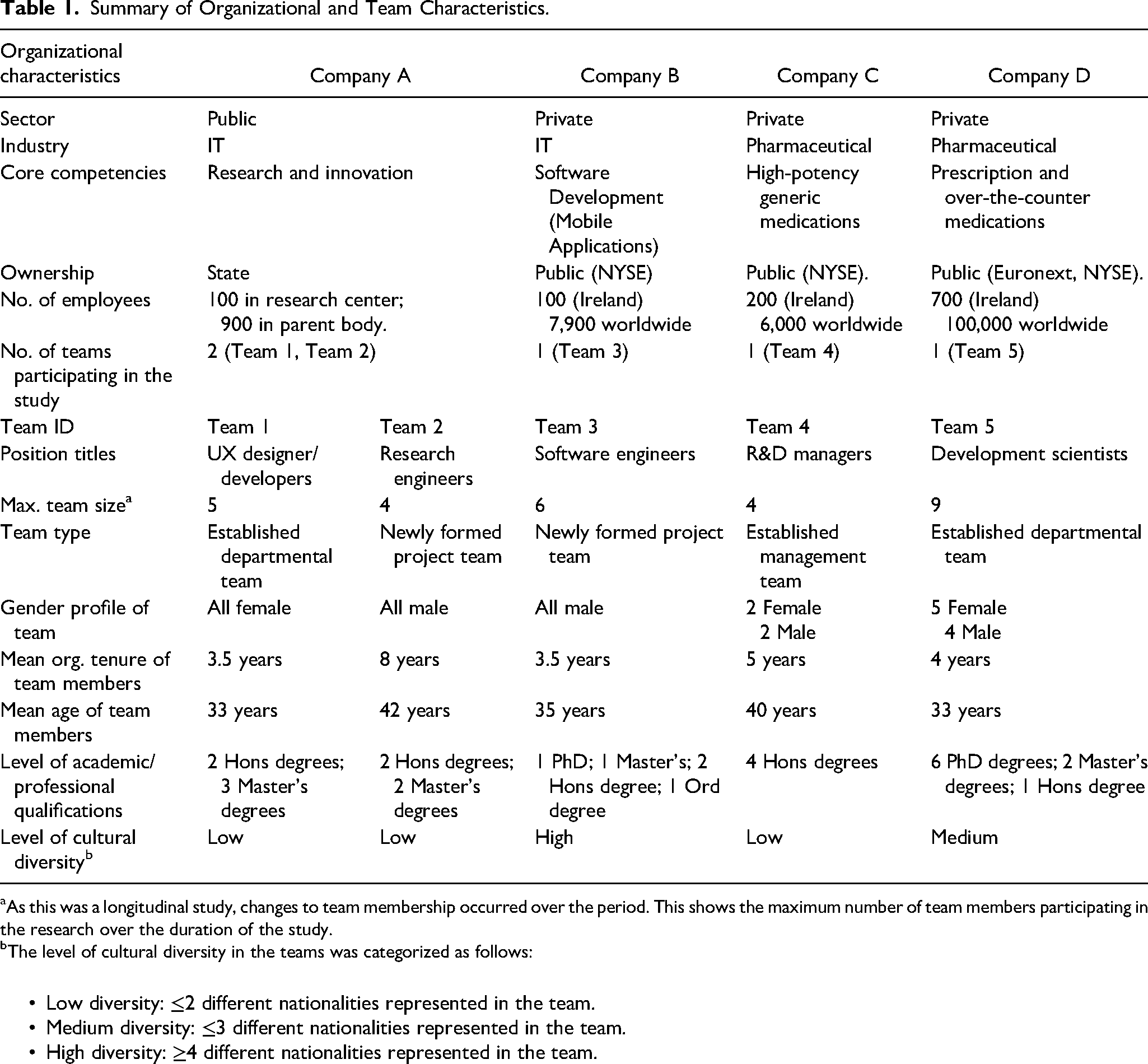
As this was a longitudinal study, changes to team membership occurred over the period. This shows the maximum number of team members participating in the research over the duration of the study.
The level of cultural diversity in the teams was categorized as follows:
Low diversity: ≤2 different nationalities represented in the team. Medium diversity: ≤3 different nationalities represented in the team. High diversity: ≥4 different nationalities represented in the team.
Profile of Participating Teams
Team 1
Team 1 is comprised of five female user experience (UX) designers/developers operating in the Technical Design unit of a research and innovation center (Co. A), established at an Irish state-funded university. The main remit of the team is to plan and design new technologies for new business start-ups in the region. The team shares an open plan office where they work on projects ranging from small-scale logo design or artwork for marketing to the design and development of websites and new applications for mobile devices. While some projects are long-term and require multiple resources, team members also work on solo projects. However, they regularly interact with other team members informally, either to solve technical problems or for social purposes. Project tasks can be quite unstructured and somewhat complex in nature depending on the technologies involved.
Team 2
Team 2 operates in the Mobile Technology unit of the same research center as Team 1 (Co. A). This team is comprised of four male research engineers, working together to co-ordinate a European-funded research project to develop new technologies to be deployed in the next generation (5G) of telecoms. Team 2 was selected by the European Commission to co-ordinate the project, which spans 12 research organizations across Europe, with a budget of approx. €6 million. Three of the team members are located in two adjacent offices at the research center, while the fourth member works remotely. The multinational scale of the project combined with the technical scope means that the level of complexity is high.
Team 3
Team 3 is comprised of six male Software Engineers who work in the Engineering Department of a global software company (Co. B), recognized as one of the world's leading suppliers of open source 1 solutions. The Engineering Department is growing, resulting in a recent relocation to new offices. The primary purpose of the department is software development for the mobile space and most employees are software engineers. During this study, Team 3 was focused on a project to enable their cloud-based mobile application platform to be hosted by customers on their own servers. For the duration of the project, the team shared an open plan office, though members occasionally worked remotely, connecting with the team electronically. The overall approach to work within the team was highly collaborative, necessitated by the complex nature of the project.
Team 4
Team 4 is a management team with four members (two male and two female), operating in the R&D department of an Irish-based pharmaceutical organization (Co. C). The company develops, manufactures, and supplies high-potency pharmaceutical products to over 40 countries worldwide. This team is comprised of two Functional Managers (a Formulation Manager and an Analytical Services Manager) and two Project Managers, who together are responsible for coordinating the development of all pharmaceutical products developed at the company. The nature of the work in the team is highly interdependent. To deliver a project successfully, the team must co-ordinate the activities of each of their functional areas. The two Project Managers work closely with the Functional Managers to plan tasks for each project against timelines and monitor progress on an ongoing basis. The level of complexity associated with the projects delivered by the team increased significantly during the study when the company adopted a strategic change in direction to move away from the manufacture of generic drugs, toward the development of new drug applications.
Team 5
Team 5 is comprised of nine Development Scientists (four male, five female) employed in the Technical Development department at a global life sciences company (Co. D), which provides a wide range of healthcare products globally, including human vaccines and medications. The team provides essential technical expertise for new product introductions as well as scientific knowledge to support the manufacture of products at the plant. The nature of the work carried out by Team 5 is complex, requiring high levels of expertise in biochemistry and physical science, and many of the team are educated to PhD level. While dual projects occur, team members are often assigned individual goals, so task interdependency can be low.
Data Collection
The case studies were carried out in parallel over a 21-month period. Data collection techniques included the completion of participant diaries by team members followed by a series of one-to-one semi-structured interviews (see Appendix A for participant diary templates and interview guides). To ensure data collection was focused on incidents of SL, the approach incorporated critical incident technique (CIT) (Flanagan, 1954). CIT was primarily used in the study to define a trigger event (an SL interaction between team members), allowing the research to focus on a situation of interest, and providing a systematic means of gathering relevant data. Participants were asked to record in their diaries any SL incidents they witnessed within their team over the duration of the study. Given the indefinite nature of the term “shared leadership” participants were provided with a definition. Consistent with the underpinning theoretical framework (SET) and the literature in the field, the definition of SL adopted for this study was: A workplace interaction where an individual(s) without formal authority influenced the actions, behaviour or development of you or others in your team, leading to the achievement of a goal.
Summary of Interviews Conducted.
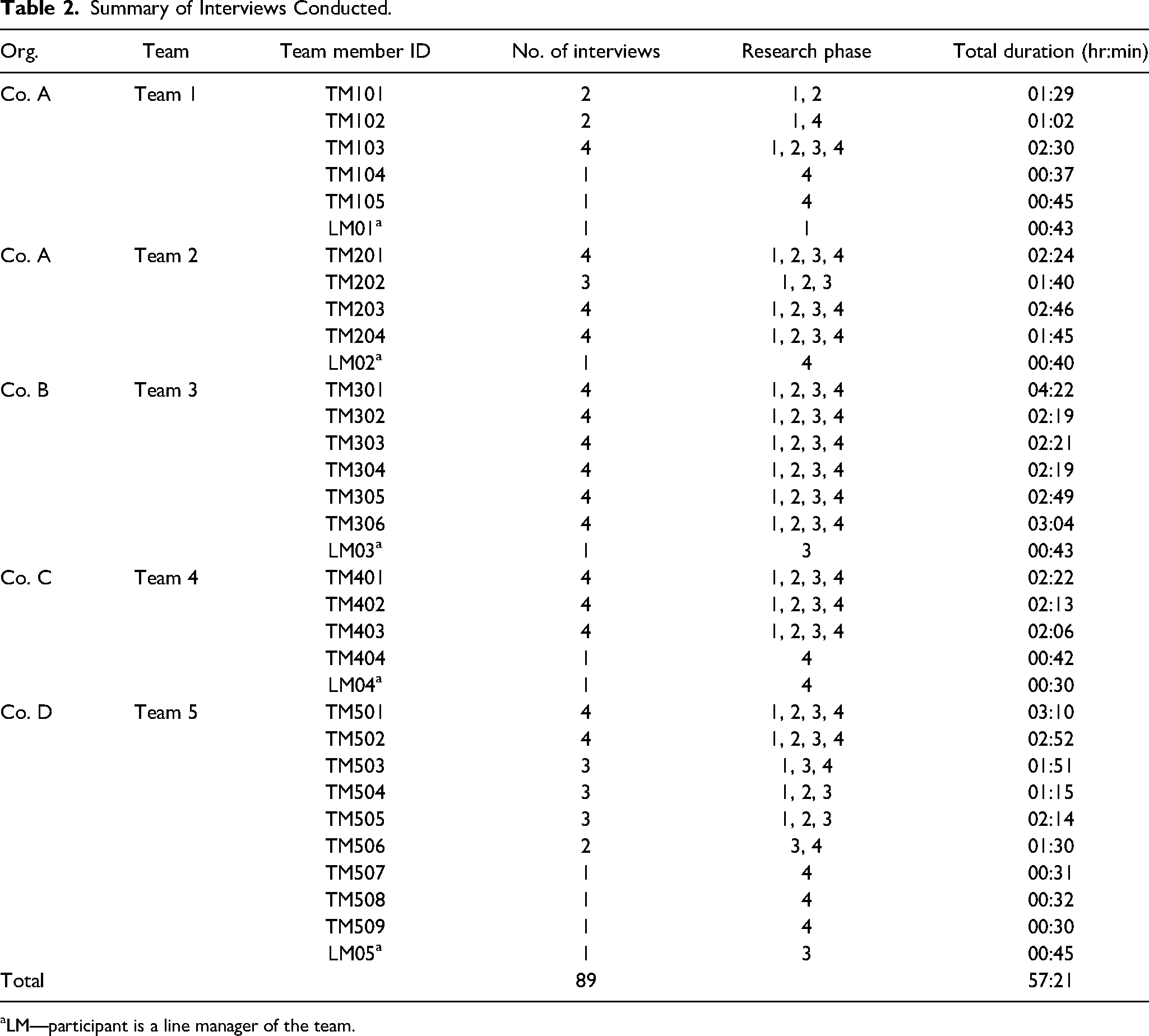
LM—participant is a line manager of the team.
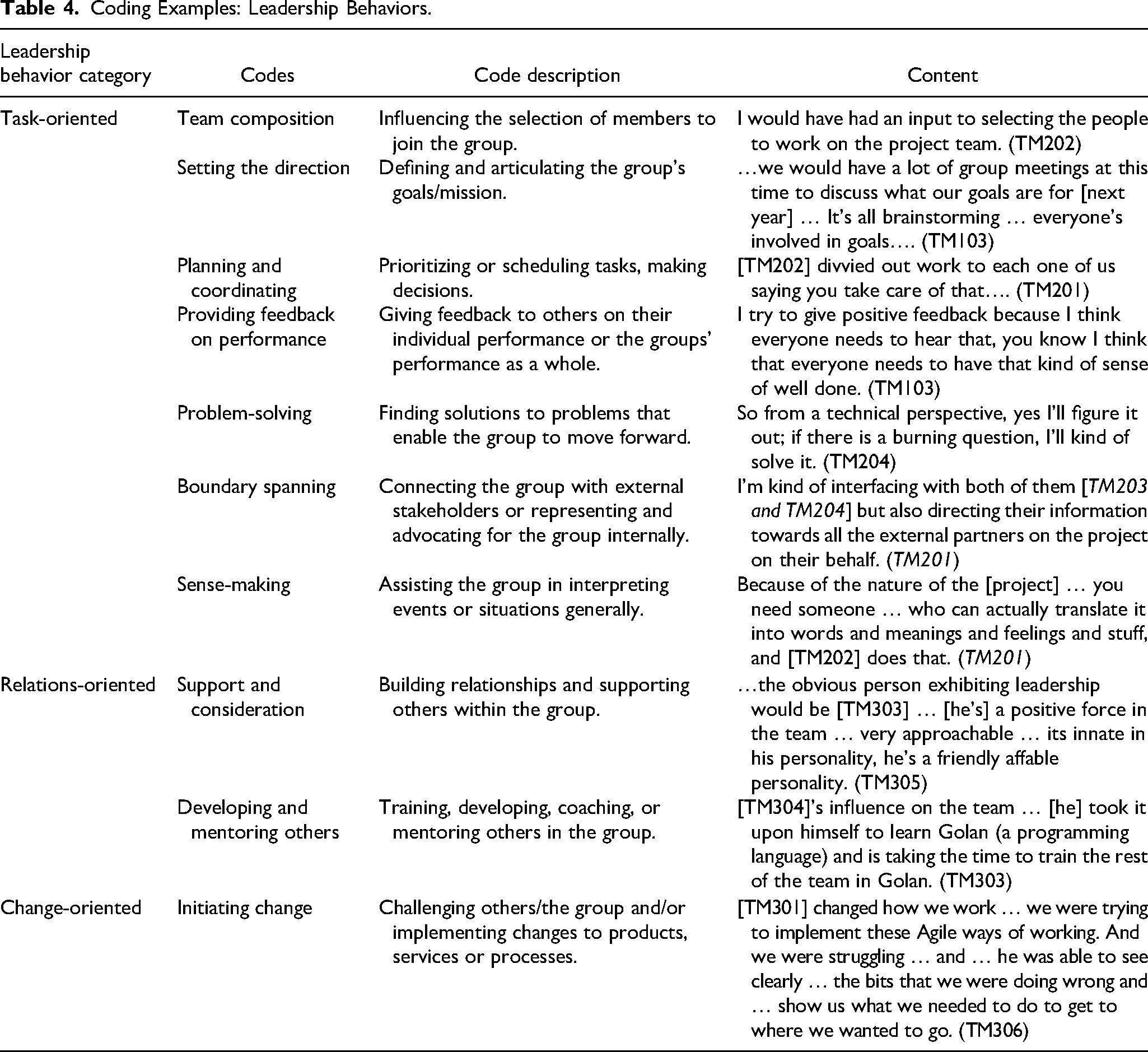
The resulting dataset from this study was previously analyzed to investigate the frequency and types of leadership behaviors shared by team members. From that analysis, Sweeney (2022) reported that SL became widespread over time in each team, with team members frequently sharing 10 different leadership behaviors. While this research article addresses a separate research question, there is an overlap in the methodology section of this article, specifically in relation to Table 2 (summary of interviews conducted) and Table 4 (coding examples to illustrate data analysis approach) below.
Data Analysis
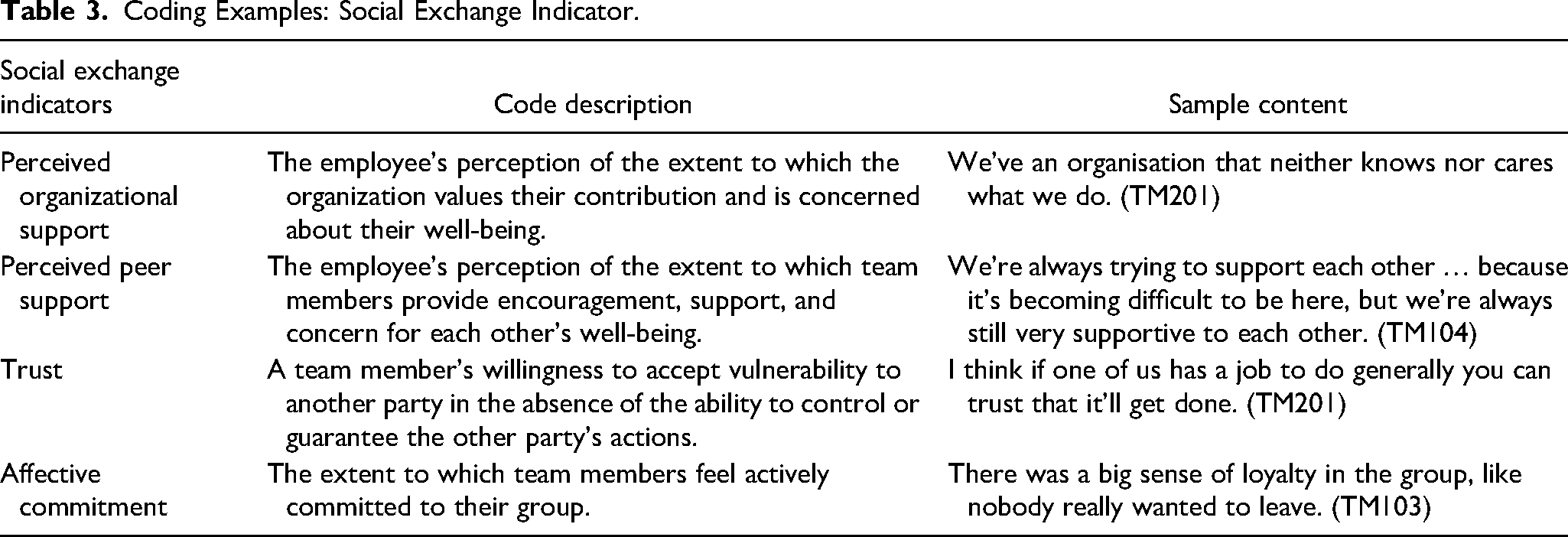
Data analysis commenced with data collection as each interview was audio recorded, transcribed verbatim, and stored on NVivo for analysis. A thematic approach to data analysis was adopted which is considered suitable for qualitative data such as interview transcripts (Braun & Clarke, 2006). Entries in participant diaries were compared to corresponding interview transcripts and to line manager interviews, to help crystallize the data. Thematic coding involves grouping and categorizing codes together that are related to the same content. Sections of transcribed data were united by theme and categorized by assigning them a code. The code assigned resulted from the identification of common themes within and across transcripts that were relevant to the practice of SL within each team. This process was informed by the underlying theoretical framework (SET) and the SL literature. Table 3 provides an example of the codes assigned, linking data collected with social exchange indicators. This allowed the researcher to aggregate the data relating to relational conditions in the teams and thus enabled a new view of the data (Richards, 2015).
Coding Examples: Social Exchange Indicator.
Similarly, codes were assigned linking data collected with the leadership behaviors reported by participants. Referring to the leadership literature where leadership behaviors have been widely documented (Morgeson et al., 2010; Yukl, 2010), allowed the researcher to aggregate the data relating to specific leadership behaviors exhibited by team members. Examples of this coding are provided in Table 4 while further examples are provided in Appendix B. Sweeney (2022) provides a more detailed analysis of the leadership behaviors exhibited across the five teams.
Coding Examples: Leadership Behaviors.
This process of exploring and coding the data was iterative in nature, continuing throughout the data analysis phase, with many revisions and refinements. Thus, as further codes arose in a new transcript, the researcher returned to previous transcripts to re-analyze the data. This process continued until no new codes were developed. Throughout this process, the patterns of SL behaviors within each team started to emerge.
Findings
The overall aim of this study is to understand how team members share the leadership space, by revealing the patterns of SL that emerge in organizational teams over time, and the contextual and relational conditions that may be underpinning such leadership arrangements in each case. This builds on previous work which revealed that SL permits a wide range of leadership behaviors to be expressed (Sweeney, 2022), to explain the predominant manner in which team members interact to share leadership responsibilities in different contexts. To achieve the aim of this article, the analysis uniquely reveals the contextual and relational conditions prevalent within each of the teams studied. Subsequently, findings in relation to the SL patterns that emerged during the study are discussed. (A full summary of findings in relation to each team studied is attached in Appendix C.)
Contextual Conditions Prevalent in Each Team
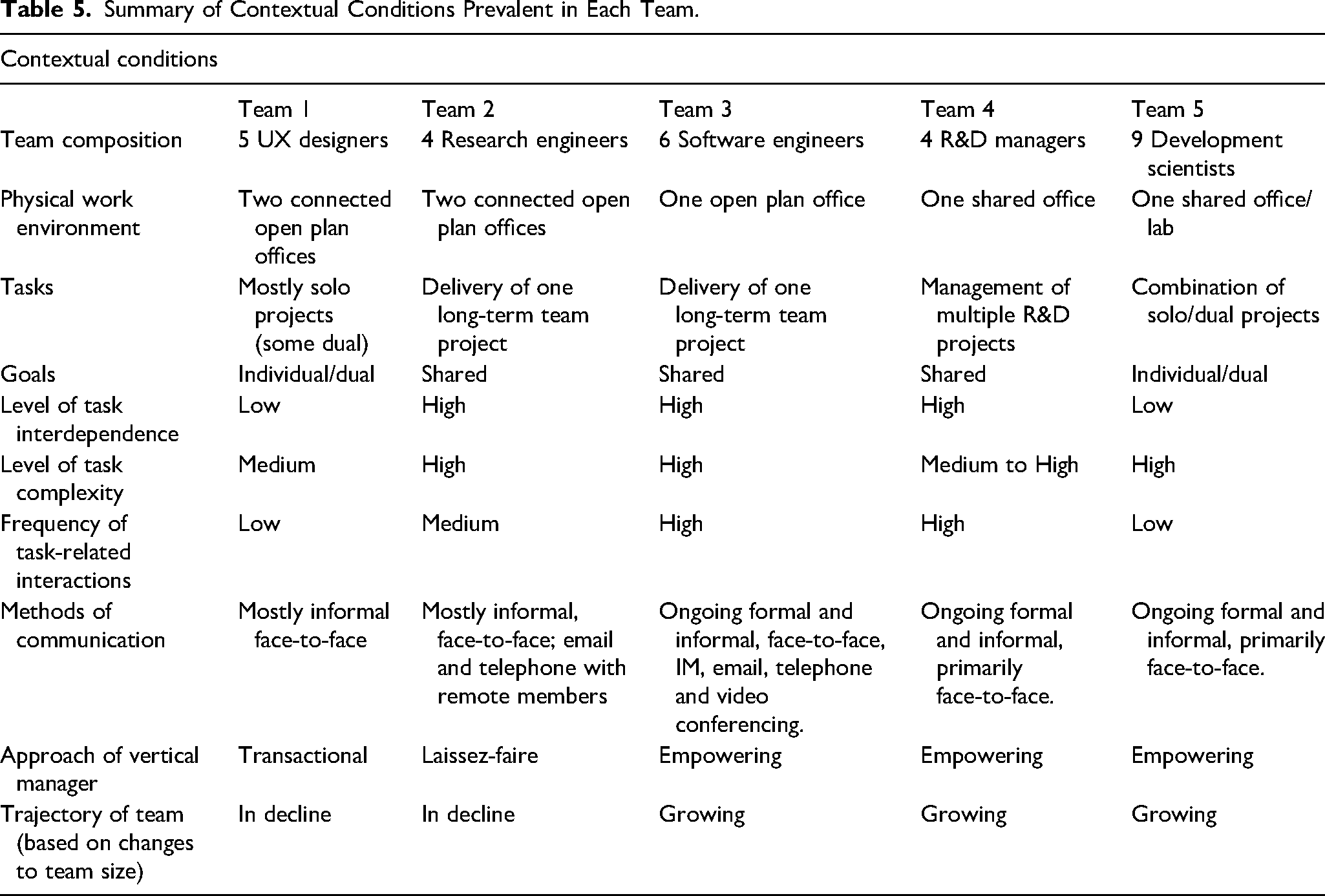
To understand the contextual conditions prevalent in each team, data pertaining to the physical work environment, the nature of tasks, the level of task complexity, the level of task interdependence, the approach of the team's vertical manager, and the overall trajectory of the team were examined. In terms of the physical work environment, all five teams share open plan or connected office spaces, enabling frequent and ongoing communication between team members. Communication methods are comprised primarily of formal and informal face-to-face interaction supplemented with online communication (in Teams 2 and 3), which was found to be an effective way to communicate with team members who were working remotely.
In relation to tasks, Teams 2, 3, and 4 report high levels of task interdependence, with shared goals necessitating frequent and, in some cases (Team 3), intensive information sharing. In these teams (2, 3, and 4) the frequency of task-related interactions is medium (Team 2) to high (Teams 3 and 4). “We’re talking at least every day … making sure that we’re all on the same page” (TM201). “Virtually on a bi-second basis … it's constant [information sharing]” (TM303). “We’d be working together all day every day … we’re always interacting” (TM401). In contrast, Teams 1 and 5 report lower levels of task interdependence, with participants typically assigned solo or dual objectives, resulting in a low frequency of task-related interactions. “In our unit, it tends to be solo projects, we don’t often work collectively” (TM102). “A lot of the time I wouldn’t know what each person is actually working on” (TM504). Task complexity appears high in Teams 2, 3, and 5: “This piece of work has never been done before—by definition, it's new for everybody…” (TM202). “I think it's the most complicated system I’ve worked with in my years of experience … you’re talking cloud, mobile, everything” (TM303). “What we do … is a very niche area within the pharma industry. It's kind of … the last thing to do with a product … you have to stabilise very unstable products” (TM501). In Team 1, tasks are less complex in nature, though this depends on the technologies involved in each project. In Team 4, the level of complexity associated with the projects delivered by the team was low but increased during the study when the company adopted a strategic change to move from generic manufacturing to developing new drug applications.
In three of the teams (Teams 3, 4, and 5) the approach of line managers is described as empowering while two teams (Teams 1 and 2) describe transactional and laissez-faire approaches, respectively. For instance, Team 4 report that their line manager sets the direction for the department before enabling the team to self-determine how they achieve their objectives. Team 1, however, described a more transactional approach “[Manager] approves my holidays, that's about it” (TM102). In Team 2, the approach is described as laissez-faire “It's very distant … I would say that rather than being over-bearing, it's actually completely detached” (TM202). Furthermore, in these two teams (1 and 2), the trajectory of the team in terms of team size, appears to be in decline. While Team 1 had grown consistently in the 12 months prior to study commencement, since that time it has been declining with fewer projects being funded and more employees leaving the organization. Over the period of the study, the overall number of employees in the unit decreased from nine to three. Similarly, Team 2 has been impacted by employee turnover, which is acknowledged by the line manager “we have some people leaving so yeah we have reduced in size again” (LM201). During this study, one member of Team 2 left the organization while two additional team members planned to leave the project shortly after the completion of the study. This specifically affected the team's ability to deliver aspects of the project. “There's nothing but missed opportunities now … given the high turnover of staff in the group” (TM204). Conversely, Teams 3, 4, and 5 grew during the period of this study. A summary of the findings in relation to the contextual conditions prevalent in each team is provided in Table 5.
Summary of Contextual Conditions Prevalent in Each Team.
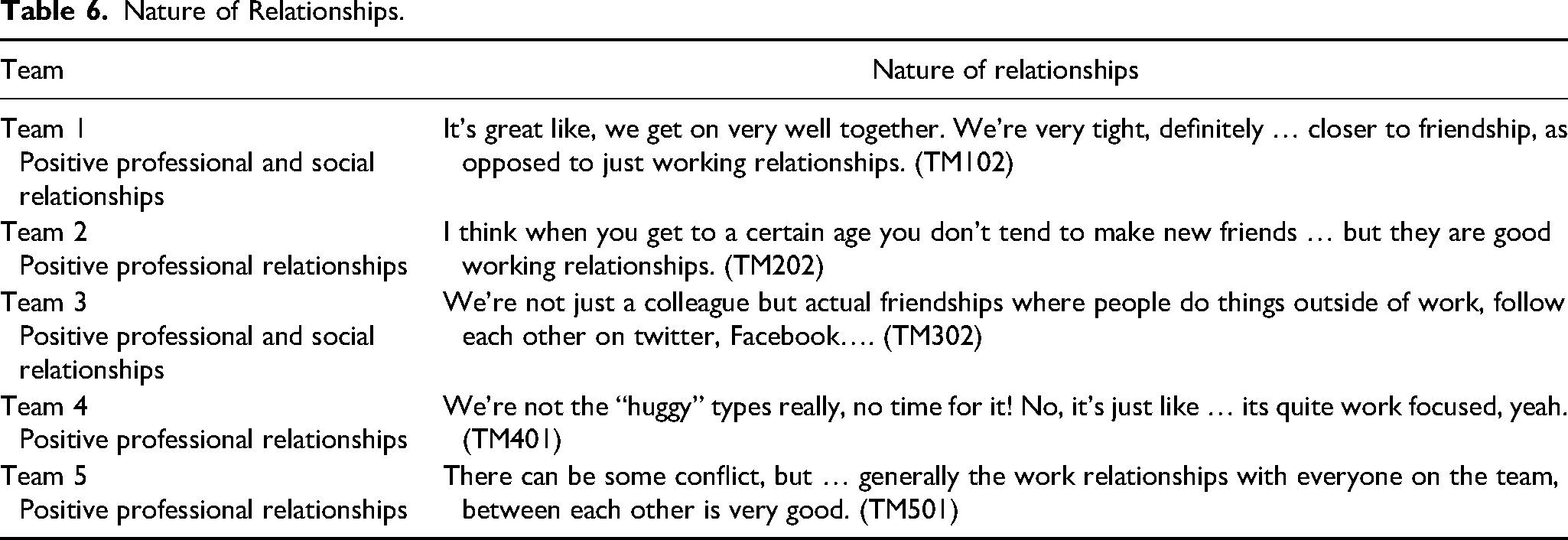
Nature of Relationships.
Relational Conditions Prevalent in Each Team
In all teams studied, the relationships between team members appear to be positive being described in most cases as “good working relationships.” Two of the teams studied (Team 1 and Team 3) identified social ties between team members in addition to professional ties, indicating that team members frequently interact outside of the workplace. Table 6 belowillustrates these findings.
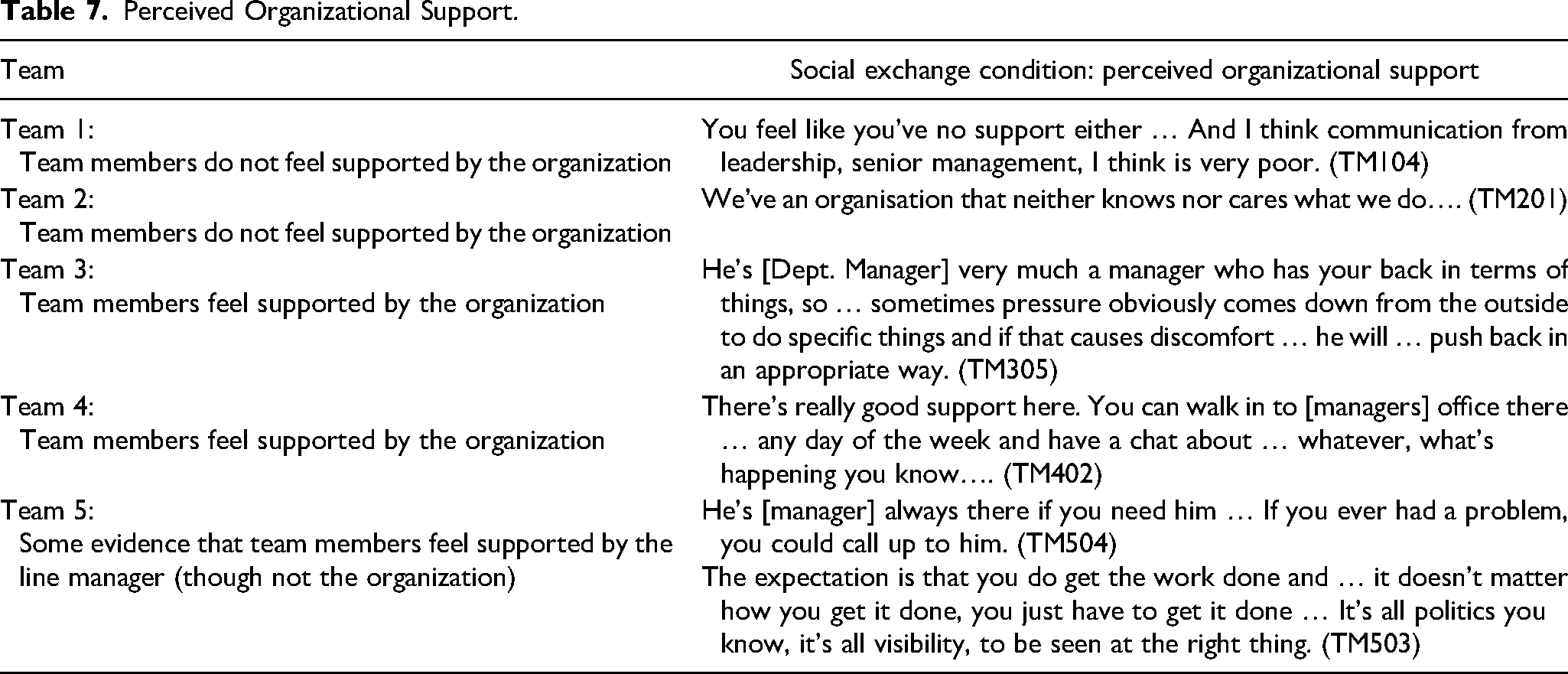
Perceived Organizational Support.
In exploring the nature of relationships within each team, themes that emerged from the analysis include perceptions of organizational and peer support, trust, and commitment. These concepts are commonly regarded as indicators of social exchange relationships (Colquitt et al., 2014) and are considered in further detail below.
POS
Members of both Teams 1 and 2 explicitly state that they do not feel supported by the organization. By comparison, evidence from Teams 3 and 4 suggest that team members do feel supported by their manager, and the organization in general. In Team 5, there is some evidence that team members feel supported by their line manager, but not the organization. Evidence of POS in each team is illustrated in Table 7.
PPS
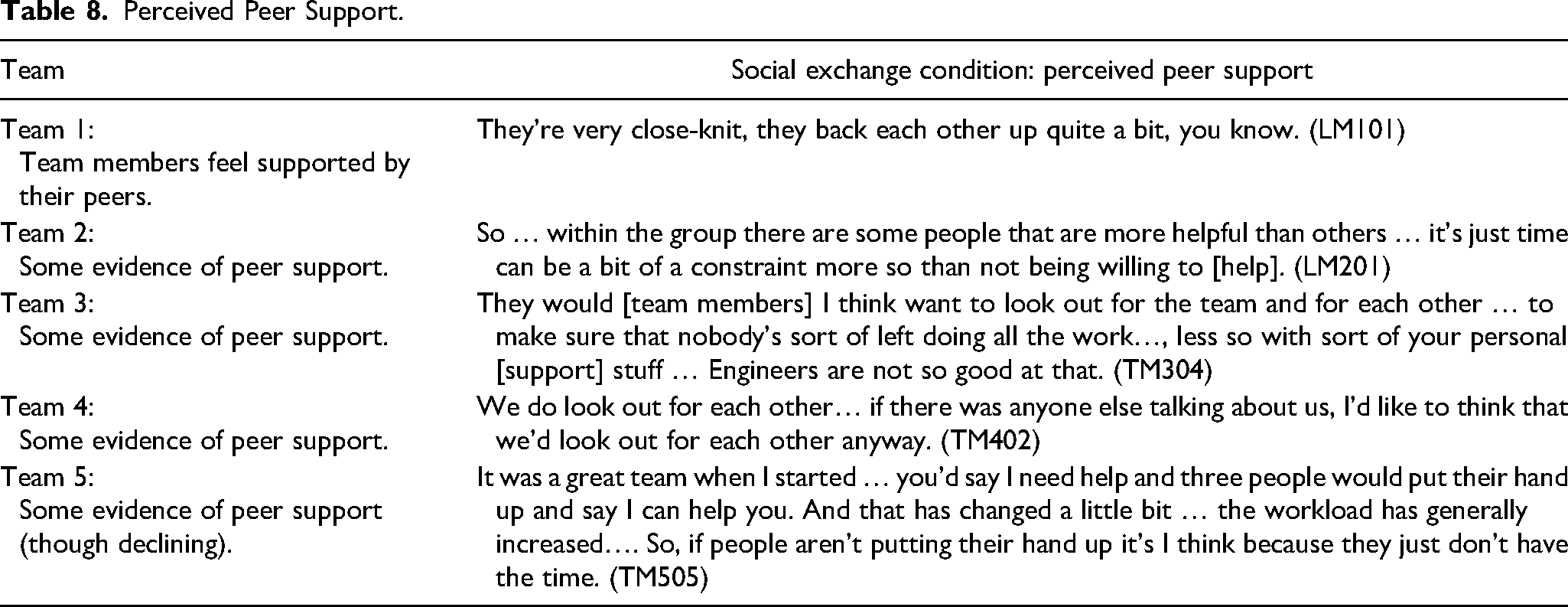
While there is no evidence of POS in Teams 1 and 2, there is evidence of team members providing support and expressing concern for each other's well-being (PPS). This is particularly true in Team 1, where all team members felt supported by their peers. In Teams 3 and 4, while there is evidence of the existence of POS, only some of the team members felt supported or cared for by peers, suggesting instead that the focus in each team was primarily on tasks. Finally, in Team 5, an increase in the workload appears to have reduced the existence of peer support, though there is some evidence of members expressing concern for one another's well-being. Evidence of PPS in each team is illustrated in Table 8.
Perceived Peer Support.
Trust
In each of the teams studied, it was evident that all participants viewed trust as an essential component of their working relationships. In some cases (Team 1), it was evident that affect-based trust was present, while in others (Teams 2 and 3), evidence of cognition-based trust emerged. In Team 4, while most team members expressed the view that they trusted their colleagues, the inability to consistently deliver tasks in accordance with planned timelines has begun to undermine expectations that commitments will be honored. Similarly, in Team 5, while some team members agree that they trust others on the team, this is not the case for all team members. Evidence of competitive behaviors have impacted trust between team members in this context (Team 5). These findings are illustrated in Table 9.
Trust.
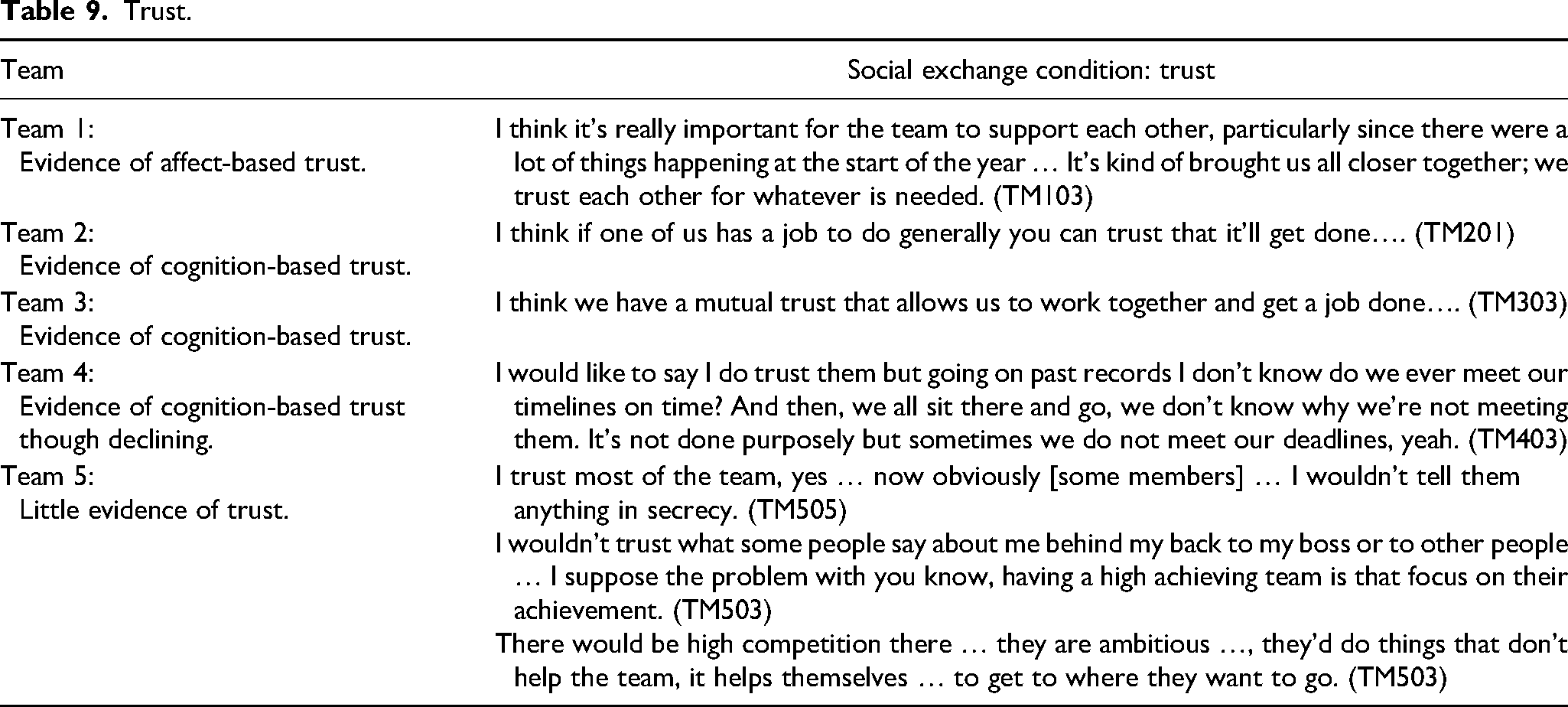
Team Affective Commitment
In the teams studied, only Team 1 provided evidence of team affective commitment, as team members exhibited strong emotional reactions to the news that a team member was leaving the organization. In other teams (Teams 2, 3, 4, and 5) team members expressed an acceptance that team membership may change, and indeed that such changes were to be expected. These findings are illustrated in Table 10.
Team Affective Commitment.
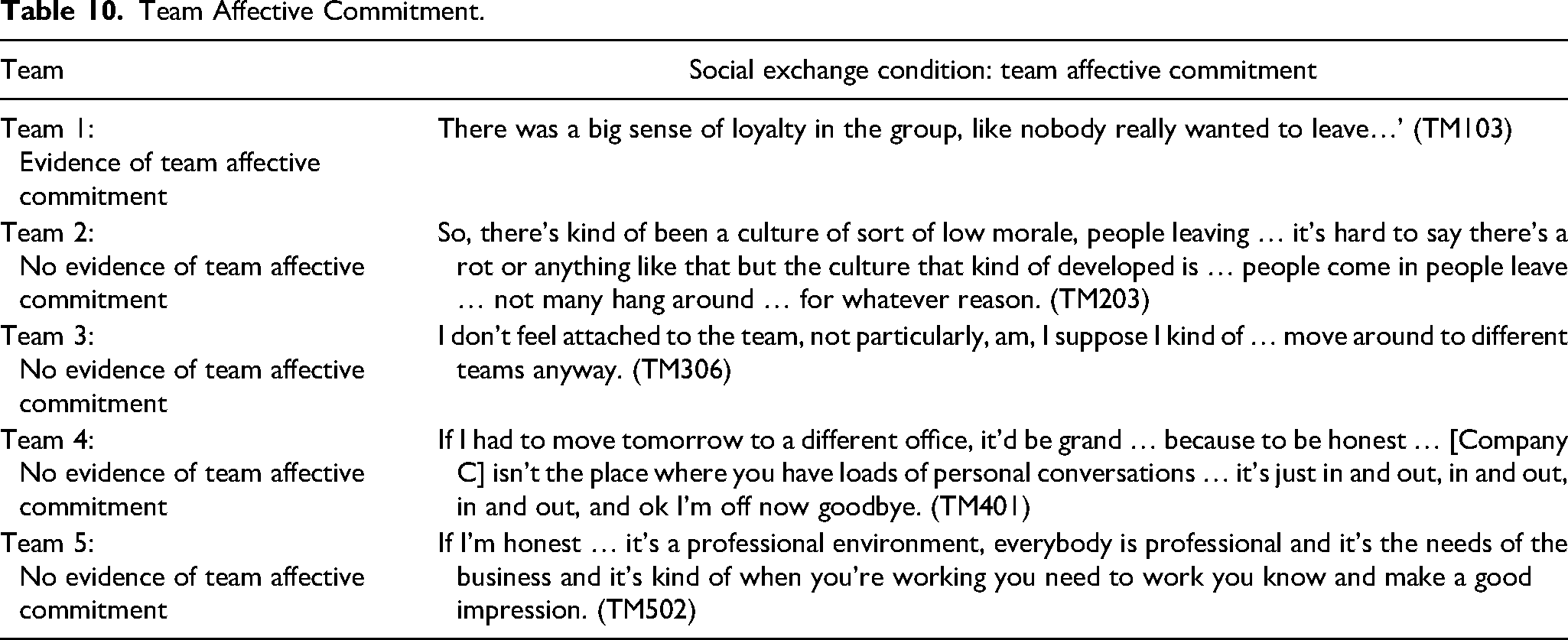
In summary, all teams report positive working relationships between team members and two teams (Teams 1 and 3) report positive social relationships. There are subtle differences in social exchange conditions such as trust and affective commitment, which are in evidence in some teams (Team 1) and appear to be absent or lacking in others (Team 5). Having discussed the underlying contextual and relational conditions prevalent, the findings in terms of SL incidents recorded in each team are now discussed.
SL Incidents
In total, 284 SL incidents were reported during this study. SL incidents were initiated by almost all participating team members with 27 out of 28 team members initiating acts of SL (96%). The average number of leadership acts attributed to each participating team member was 10. The highest number of SL incidents occurred in Team 3 (average of 13.2 SL incidents per team member), and the lowest number of SL incidents occurred in Team 1 (7.1 SL incidents per team member). Table 11 shows a breakdown of the frequency of SL incidents by team, and by phase of data collection (t1–t4). Overall, the findings illustrate that SL occurred frequently in all teams studied.
Frequency of SL Incidents by Team.
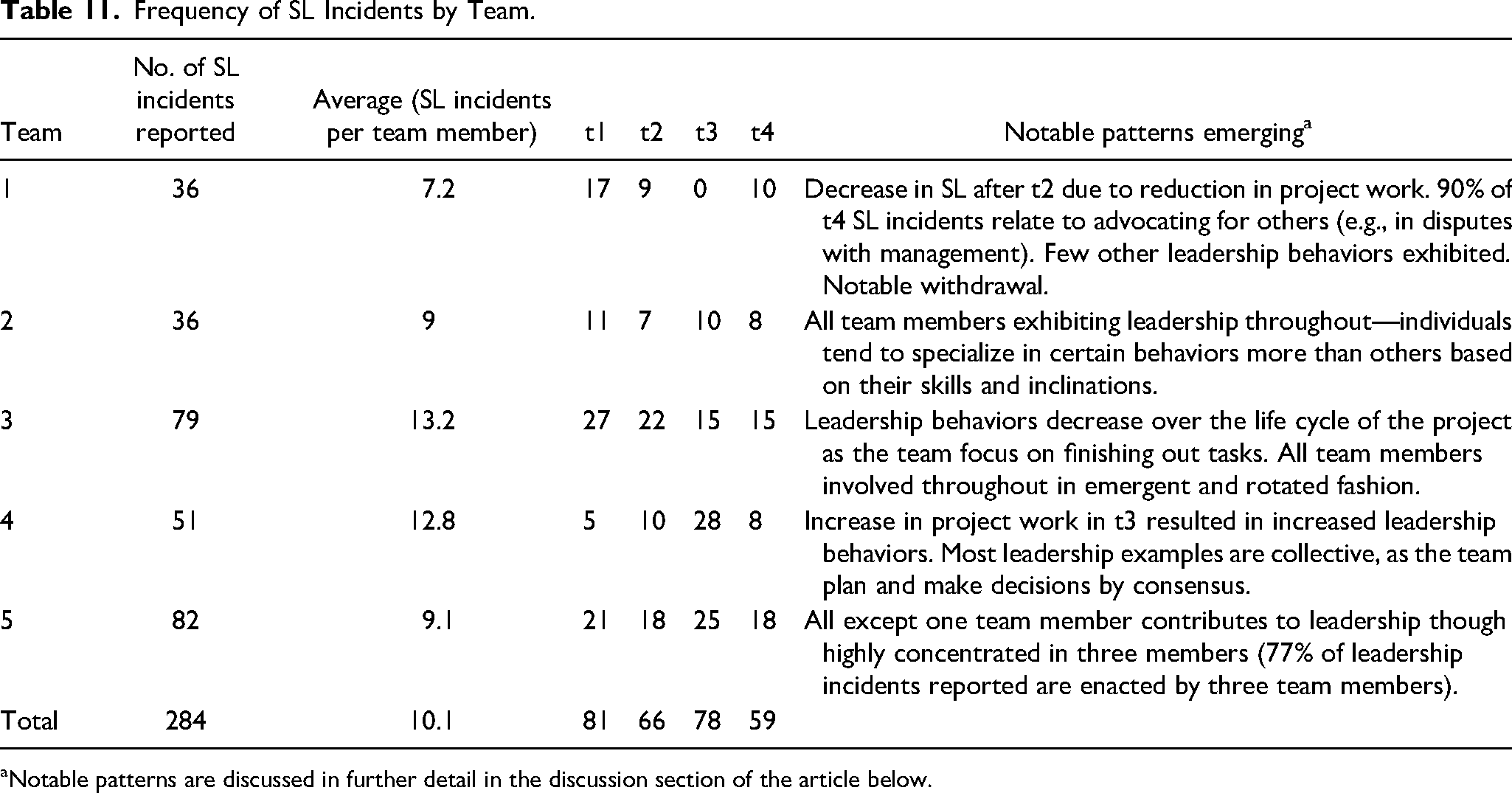
Notable patterns are discussed in further detail in the discussion section of the article below.
Discussion—Patterns of SL
As outlined in Table 11, 284 SL incidents were reported across the five teams studied, providing strong support for the notion that leadership can be shared by multiple team members. While at first glance, the findings suggest that SL was more frequent in some teams rather than others (e.g., higher average SL interactions per team member in Team 3), it is important to note that team stability in this team (Team 3) was high throughout the study and all team members participated in all phases of the study. By comparison, team stability in Team 1 was low, with a number of team members leaving the organization during the study. Thus, meaningful comparisons of the overall frequency of SL within the participating teams cannot be drawn. Further research specifically to investigate the impact of team stability on SL emergence would be useful.
The purpose of this study is to explore the leadership interactions of team members to identify the type of leadership behaviors enacted, the source (team member enacting leadership), and the notable patterns or forms of SL that emerged from these interactions within each team over time. Findings concerning the type of leadership behaviors exhibited by team members have been discussed by Sweeney (2022) who concludes that SL allows a wide range of task, relationship, and change-oriented leadership behaviors to be expressed. Sweeney (2022) further explains that some leadership behaviors were rarely or never fulfilled by team members (team composition, performance monitoring, and resource allocation), suggesting that these specific leadership behaviors are not amenable to sharing. This article builds on that work, revealing that, while each of the teams studied exhibited a shared approach to leadership, the predominant pattern of leadership which emerged within each team varied in each context. This is not to suggest that the patterns observed are mutually exclusive to each team, however. Indeed, there were commonalities in terms of leadership behaviors exhibited across the teams (Sweeney, 2022). However, an analysis of the predominant patterns of SL interactions in each context studied, suggests that each team tended to display one form of SL more than others. In line with the objectives of this article, the distinctive leadership patterns that emerged in each team are discussed below.
Withdrawal From SL Behaviors
In four of the five teams studied, team members continued to engage in SL for the duration of the study. In Team 1, however, this was not the case. While members of Team 1 shared in the performance of multiple leadership responsibilities in the early part of the study, in the latter phases, there was a distinct reduction in SL behaviors. Several contextual and relational conditions may have influenced this. First, the failure to secure new business for the team meant that there was little project work for the team to perform in the final period of the study. Project work that was secured tended to be individual/solo in nature, reducing the level of task interdependence between team members. With no projects requiring collaboration, few task-related leadership behaviors emerged. This is consistent with Pearce and Sims (2000) who propose that the opportunity for SL decreases, if tasks are independent. Second, the lack of POS experienced by the team led team members to withdraw from engaging in any extra-role behaviors, including SL. While examples of SL were noted in the team in the final phase of data collection, most of these (90%) related to relations-oriented leadership behaviors, representing efforts by team members to support others in the team or advocate on their behalf internally. This may have been influenced by the presence of team affective commitment and PPS in this context. Over time, however, in this context, the predominant pattern featured a withdrawal from SL behaviors. Some team members reflected that taking on leadership responsibilities within the team disadvantaged the team in the long term. “You became so self-sufficient that people leave you alone altogether, and if you … work outside of your duties it definitely backfires” (TM103). The highlights potential negative consequences of SL which warrant further investigation.
For clarity, the contextual and relational conditions underpinning the predominant pattern of SL which emerged in Team 1 are illustrated in Figure 1.
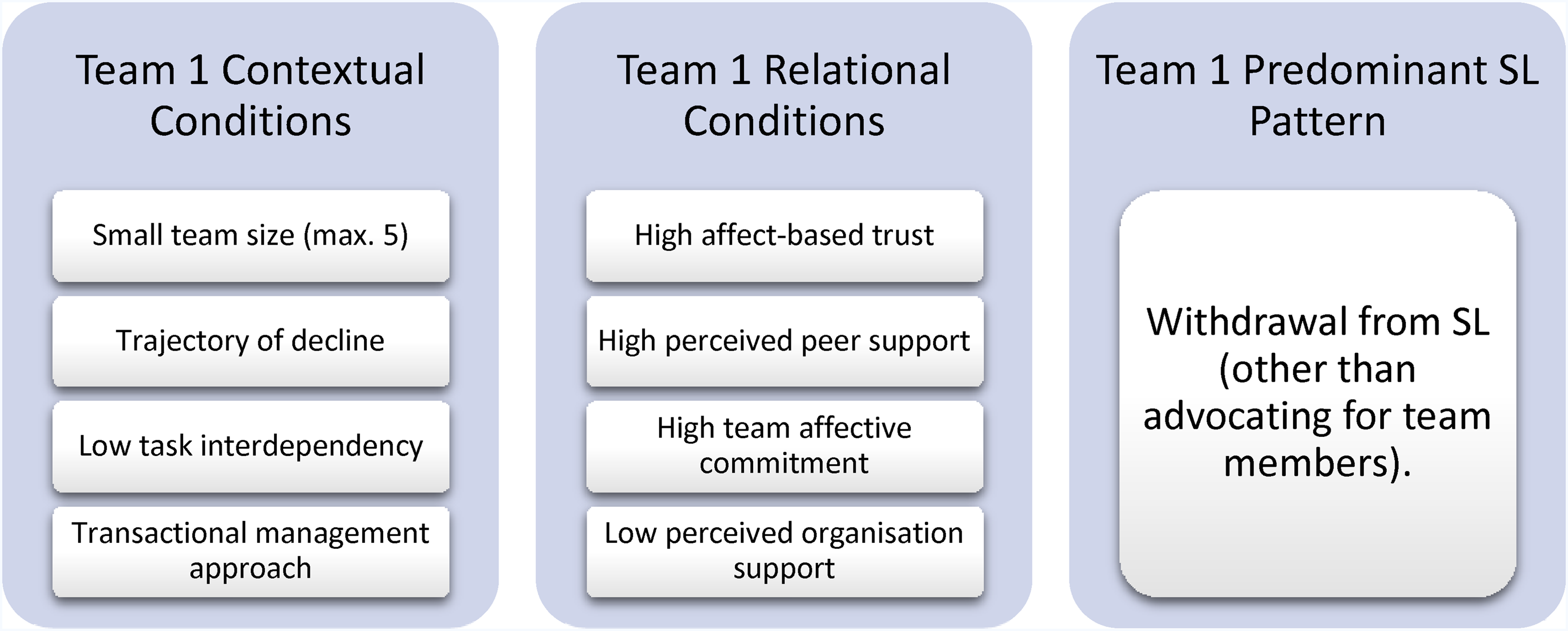
Contextual conditions and predominant SL pattern in Team 1.
Specialization in Leadership behaviors
Previous research on shared approaches to leadership has proposed that team members sharing leadership may be more inclined toward one type of leadership behavior than others (Barry, 1991). Thus, an individual team member may be willing to undertake a specific leadership responsibility, but unwilling and/or unable to fulfill other leadership roles within the team. This specialization in leadership behaviors within a team can be advantageous, as it permits team members’ inclinations and abilities to engage in preferred leadership behaviors to complement each other (Bradford & Cohen, 2011). Furthermore, this configuration can also prevent role duplication and ultimately benefits group performance (Seers et al., 2003). According to Contractor et al. (2012), however, this can incur costs in terms of coordination across roles.
Team 2 provides an example of this form of SL. While team members engaged in multiple leadership behaviors from time to time, the predominant pattern which emerged indicates that each individual team member tended to focus on a narrower scope of leadership activities within the team. With little evidence of organizational support, these team members divided the leadership responsibilities of their project, based largely on the skills and inclinations of individual team members. For instance, TM202 articulated the vision for the project in ways that influenced the direction of the team and the planning of tasks undertaken by other members of the team. TM203 was influential in coordinating team activities, assuming responsibility for project reporting, and pursuing the completion of tasks. TM201 emerged as an influential social leader and boundary spanner, whose social skills helped maintain connections between team members and drive interactions with external research partners. TM204 emerged as a creative problem-solver and technical mentor, being recognized by others as the most experienced technical member of the team. The team concur that there was no overall leader making all the decisions; rather, they all contributed to the leadership of their team depending on their skills and the requirements of the situation. “We’re kind of very flat in that … there's no real hierarchy … everybody has their own thing to do so everybody takes a leadership role at times” (TM203).
This approach was not formally planned, rather it emerged from a combination of the needs of the project and the skills and availability of the individual team members. This was facilitated by the relational conditions in the team, where the presence of cognition-based trust suggests that team members were willing to rely on one another and had confidence in each other's capabilities. This approach was both efficient (avoiding the duplication of leadership roles), and effective (allowing each team member to play to their strengths). However, the reliance on individuals to perform key leadership roles created dependencies that left the team vulnerable when these individuals were unavailable. Indeed, in the later stages of the project, TM202, who had an important influence on directing the project, left the organization and this significantly impacted the leadership of the project. “There was nobody to come in to try and help us with the … steering of the project and overall direction … we were kind of left to muddle along” (TM201). Nonetheless, the remaining team members continued to engage in SL, motivated by their sense of professionalism and concern for their own reputation; “I couldn’t stand back and watch something burn … it's for your own sense of professionalism, your own sense of self-worth” (TM201). Pursuing this form of SL has implications for team composition, and for people management practices generally, particularly concerning the selection of individuals with complementary leadership skills and the retention of team members thereafter. For clarity, the contextual and relational conditions underpinning the predominant pattern of SL which emerged in Team 2 are illustrated in Figure 2.
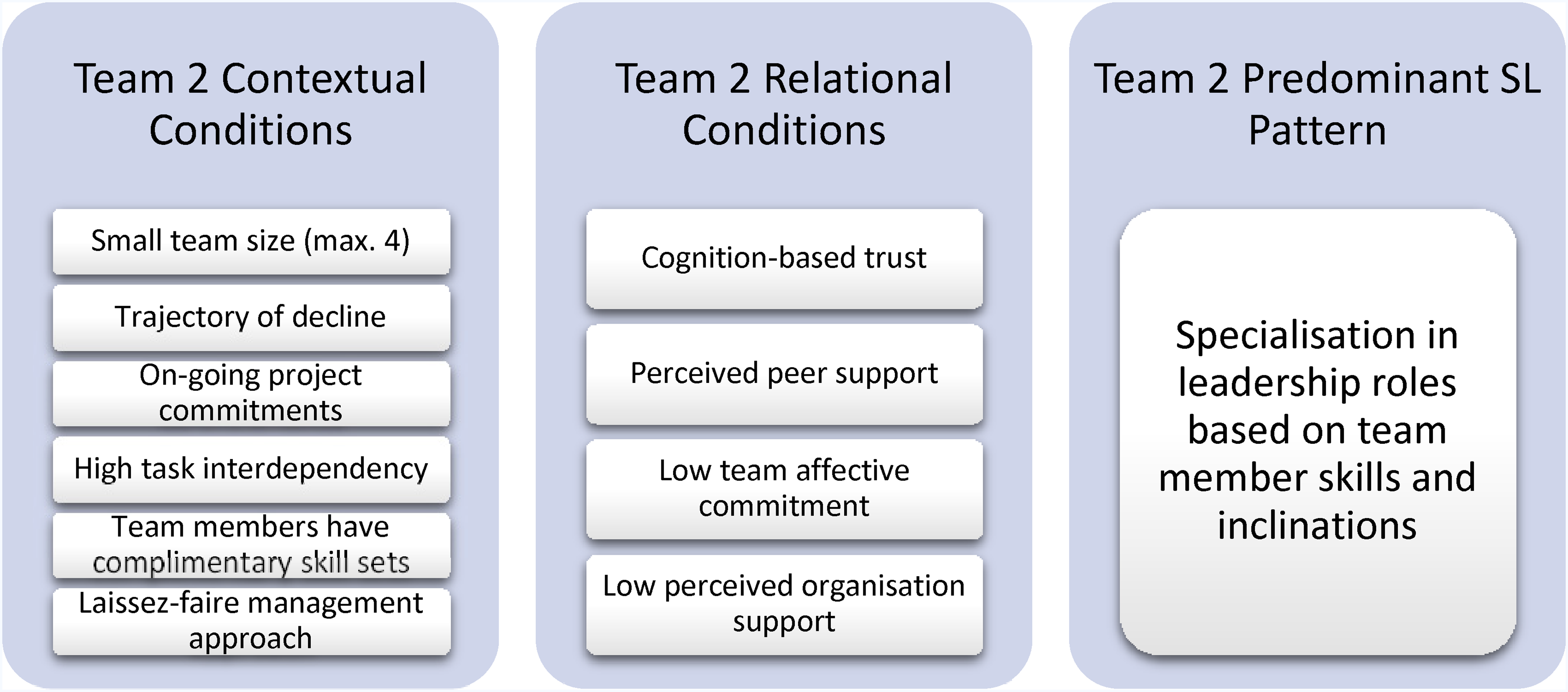
Contextual conditions and predominant SL pattern in Team 2.
Rotation of Leadership Responsibilities
Leadership multiplexity occurs where interactions between team members involve more than one type of leadership behavior (Contractor et al., 2012), for example, where the individuals setting the direction are also the individuals developing and mentoring others within the team. While this requires individuals to develop a wider range of leadership capabilities, it does incur benefits in terms of increased coordination across leadership functions and can result in more creative outcomes (Hoch & Kozlowski, 2014). It also reduces the dependency on any one team member for specific leadership behaviors. While leadership multiplexity was evident in all teams to some extent, Team 3 provided the strongest illustration of this over time, both through the emergent behaviors of team members and the planned rotation of leadership responsibilities in the team.
In contrast to Teams 1 and 2, Team 3 is a growing team with empowering line managers in a supportive organization. The team is composed of a diverse group of flexible individuals with a wide range of skill sets. In this context, all team members voluntarily contributed to the leadership of the team, both in an emergent and planned fashion. For instance, multiple individuals undertook responsibility for leading the team on a voluntary, two-weekly rotating basis. “Yes, it rotates, I’ve done it a few times, I think [TM302] has done it, and [TM306] has done it recently”. This was facilitated by the presence of cognition-based trust as team members expressed confidence in the intentions and capabilities of others to periodically assume this important role in the team. This had the benefit of providing the team with a wide range of capable leaders, reducing the reliance on any one individual. This sequential approach is supported by Erez et al. (2002) who found that rotating the leadership role allows each team member to feel responsible for the team's success. However, Contractor et al. (2012) warn that rotated leadership may reduce continuity over time and may not always be in the team's best interests, for example, if the team is not capitalizing on the key strengths of individual members. While this issue did not arise in Team 3, it was observed that, in situations of high urgency, one individual (TM304) tended to assume a leadership role for extended periods, to ensure imminent deadlines were met. Pursuing this form of SL, where leadership roles are rotated among team members, has significant implications for training and development as all team members need to develop the skills required to effectively facilitate the team's work. According to Tafvelin et al. (2019), teams receive significant efficiency benefits from such leadership training. The contextual and relational conditions underpinning the predominant SL pattern which emerged in Team 3 are illustrated in Figure 3.
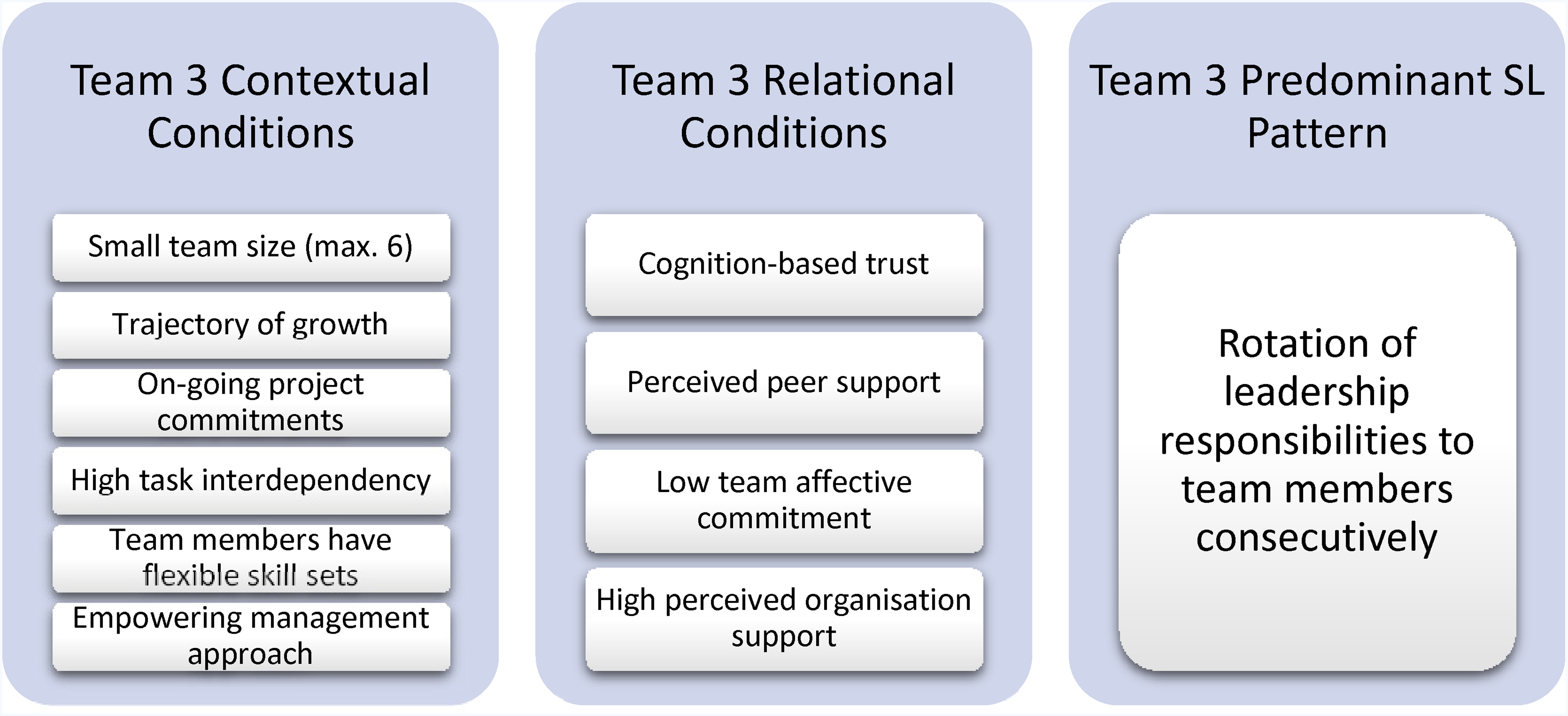
Contextual conditions and predominant SL pattern in Team 3.
Simultaneous Enactment of Leadership
In contrast to the configurations described above, a further, distinct pattern of SL emerged from the study, where all members of a team tended to participate in leadership activities simultaneously. This provides evidence of Seers et al.'s (2003, p. 93) proposition that “various members of a group can … simultaneously contribute influence to activities within the work group”. This is described in the literature as leadership co-enactment (Dust & Ziegert, 2012) and features multiple leaders overlapping in the same leadership behaviors at the same time. Team 4 provides an example of this form of SL, where all members are involved in planning and coordinating activities, decision-making, problem-solving, and sense-making, as a unit. This is perhaps explained by the composition of the team (team members have equivalent managerial status and complementary technical skills) and the highly interdependent nature of their work. In Team 4, multiple individuals concurrently influenced the planning process, and typically, decisions are made by consensus. “It's normally by consensus … We try to agree as much as possible together because … at the end of the day we need to work together” (TM403). This enabled the team to make decisions that are consistent with the needs of each of their functional areas.
This co-enactment of leadership behaviors may be beneficial to teams by enabling members to offer backup behaviors, minimizing the negative impact of an unavailable team member (Klein et al., 2006) and there is evidence of this in Team 4. It is also noted, however, that such configurations may incur costs from an efficiency perspective (Dust & Ziegert, 2012), though this was not identified as an issue in Team 4. Moreover, multiple members enacting leadership behaviors simultaneously can result in additional opportunities for misinterpretation and the potential for resistance (Ilgen & Hollenbeck, 1991). While these issues were not evident in Team 4, there was some evidence of role ambiguity, particularly concerning the responsibilities of the project managers versus functional managers. “So, I suppose she's [Project Manager] giving the direction but is relying on me [Functional Manager] to tell her what's possible … I think … at times she doesn’t know exactly what her role is or where she is supposed to get involved or where she's not” (TM401). Pursuing this form of SL has implications for team composition which should feature a cross-functional approach, and for job design and goal setting, both of which should be built around task interdependencies. The contextual and relational conditions underpinning the predominant SL pattern that emerged in Team 4 are illustrated in Figure 4.
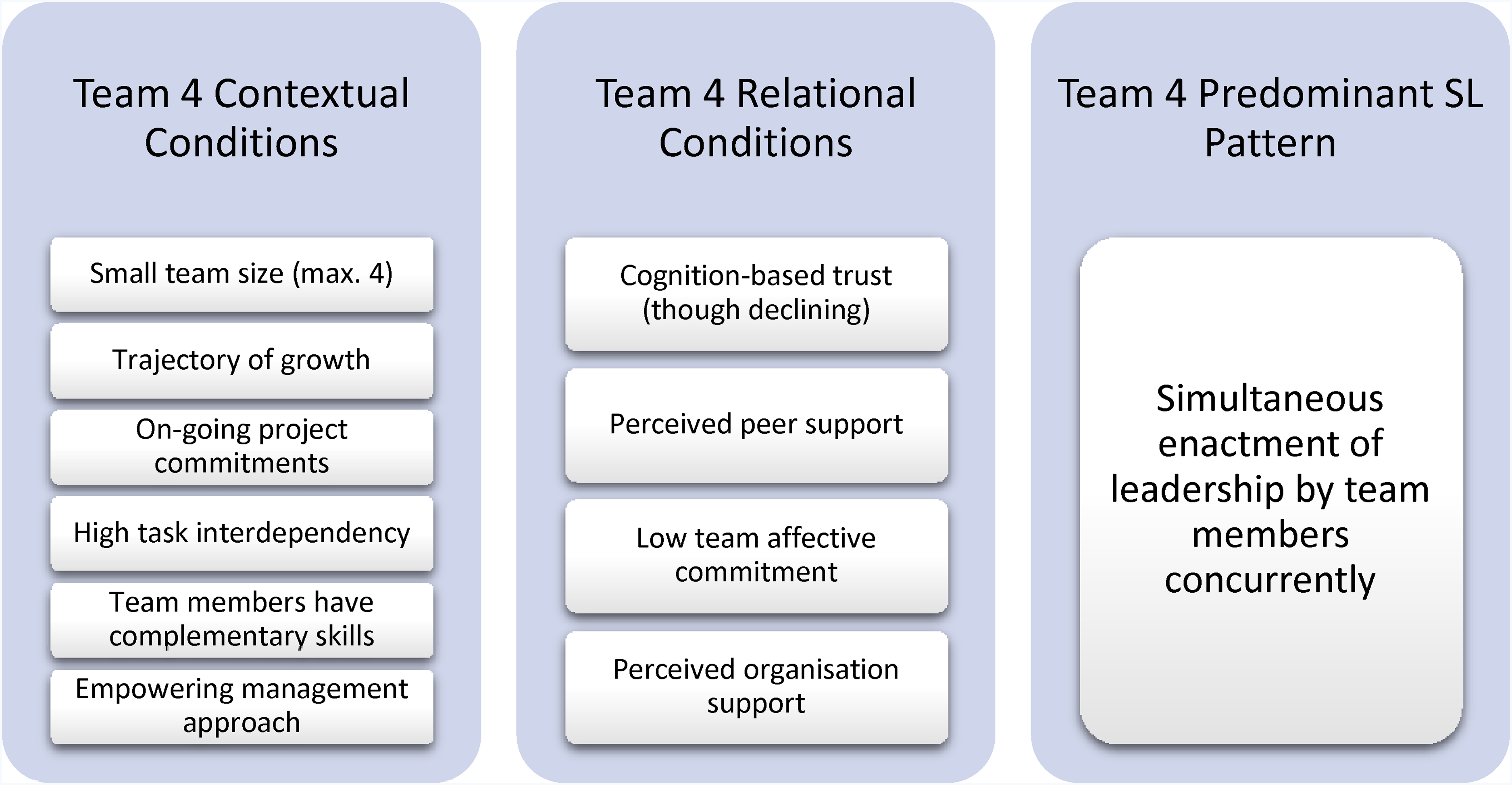
Contextual conditions and predominant SL pattern in Team 4.
Centralization of Leadership Activities
According to Contractor et al. (2012, p. 995), “a centralised form of leadership occurs when the leadership influence is concentrated in one or very few members of the collective”. The pattern which occurred in Team 5 over time is one where leadership activities were distributed predominantly among three individuals within the team, as evidenced by the fact that 77% of SL incidents recorded were enacted by three of the nine team members. Thus, Team 5 exhibited a more centralized form of SL than was the case in the other teams. Throughout the study, there were examples of three team members (TM502, TM503, and TM506) engaging individually (e.g., developing and mentoring others, providing feedback to others), and collectively (e.g., planning and coordinating team activities) in leadership behaviors. This concentration of leadership in Team 5 might be explained by the frequency of changes in team composition observed in the team throughout the study which arose due to resignations (one), new hires (two), internships (two), and secondments into or out of the team (three). While there was no explicit hierarchy within Team 5, the ongoing changes to team membership resulted in an implicit hierarchy where those who had long team tenure, and/or high levels of expertise tended to have more influence than those who were new to the team and/or the organization. “There is a bit of an implicit hierarchy because … some of the junior scientists need coaching, development…, So [TM506], [TM502] and [TM503] add value here” (LM501). In many cases, these leadership behaviors were emergent in nature. Toward the end of the study, however, this implicit hierarchy became more formalized as these three team members attended a planned, bi-weekly meeting with the department manager to prioritize work within the team.
A contributing factor to the emergence of a centralized pattern of SL in this team may also be the team size. With nine team members, Team 5 is larger in size than the other participating teams. While some authors have speculated that larger team sizes should facilitate SL (Pearce & Sims, 2000), others suggest that where teams are large enough to develop an internal hierarchy, SL might be inhibited as the need for efficient coordination becomes paramount (Seers et al., 2003). Finally, it is noted that the relational conditions in Team 5 featured a lack of trust. It may also be the case that where there is a lack of trust between team members, leadership will be less distributed. Further investigation of team size, and levels of trust on SL emergence in different contexts would be useful to investigate these issues further. Nonetheless, a high frequency of leadership incidents, encompassing a wide range of leadership behaviors, was observed in Team 5. The advantage of this approach was that individuals with high levels of expertise were providing leadership to meet the task and relational needs of the team, which in most cases, other team members found beneficial. However, centralized approaches risk alienating others who may feel they are outside the circle of influence, and some comments from new team members suggest that resentment may be growing within the team in this regard. ‘Some people would feel that they’re above other people in a decision, [they] kind of act as a manager, where that's not their role within the group … they kind of catapult themselves into that role, whether it's wanted or not” (TM508). Thus, there may be some adverse effects of such an approach in the long-term necessitating the development of conflict management skills within the team. The contextual and relational conditions underpinning the predominant pattern of SL that emerged in Team 5 are illustrated in Figure 5.
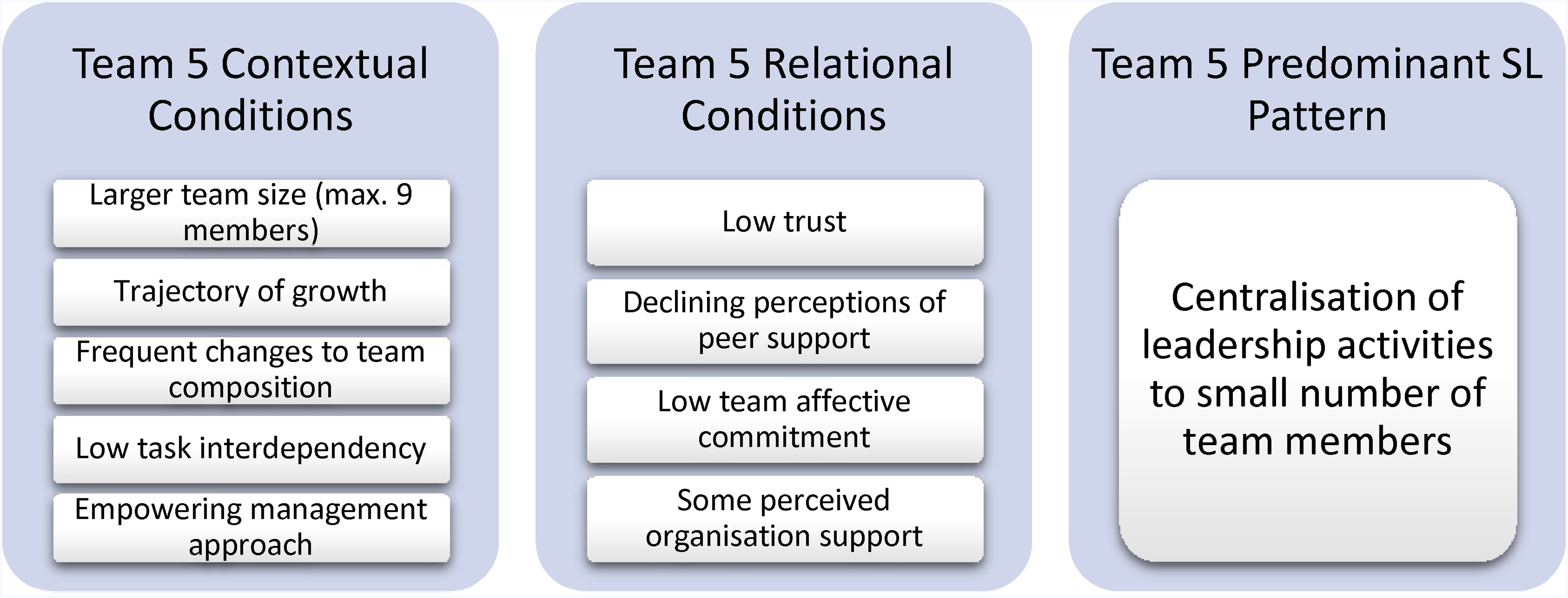
Contextual conditions and predominant SL pattern in Team 5.
Summary
The purpose of this research was to explore the predominant SL patterns which emerged within five teams in varying contexts. While this research has identified five distinct patterns or forms of SL that emerged in each context studied, it is important to note that such patterns were dynamic and fluid, varying according to the requirements and complexity of the tasks facing the team. For instance, while Team 3 displayed a preference to rotate leadership responsibilities among team members voluntarily, in situations of high urgency (e.g., imminent deadlines), leadership tended to become centralized to one experienced individual. Similarly, while leadership in Team 5 was predominantly centralized in three team members, other team members exhibited acts of leadership from time to time.
Conclusion
This research sought to understand how team members share in the leadership of their team. An in-depth empirical exploration of five organizational teams revealed the contextual and relational factors that give rise to different forms of SL. In so doing, this article has made theoretical, practical, and methodological contributions to the study of SL and several propositions for further research can now be developed. Along with the limitations of the study, these are now discussed.
Theoretical Contributions
Key theoretical contributions include the identification of diverse forms of SL emerging in different conditions, providing a contextual understanding of SL that has been absent in the literature to date. In addition to linking forms of SL with contextual conditions, this study has provided insights into how different SL arrangements are experienced by team members in practice. In most cases, the experience is largely positive, where team members report benefits arising from the reciprocal nature of SL. However, as the evidence in Team 1 has shown, not all team members regard SL as a positive experience: “You became so self-sufficient that people leave you alone altogether, and if you … work outside of your duties it definitely backfires” (TM103). This not only adds depth to our theoretical understanding of SL, but also highlights important avenues for further research to explore the potential negative consequences of such leadership approaches.
This study also contributes to existing discussions in the SL literature. Contrary to existing research (Fausing et al., 2015), this study reports that SL continued to emerge in situations of low task interdependency (Team 5), albeit in a more centralized form. Moreover, examples of relationship-oriented SL behaviors continued to emerge in Team 1, when task interdependency was also low. This suggests that perhaps the task-focused nature of existing studies in the field has neglected to consider an important dimension of leadership behavior, that is, relationship-oriented leadership, which is also amenable to SL (Sweeney, 2022). Similarly, SL continued to emerge in contexts where the management approach was laissez-faire, rather than empowering (Team 2) suggesting that the professionalism of the team members themselves may have been a substitute for empowering vertical leadership. Further studies would be useful to expand our understanding of this relationship (employee professionalism as a substitute for empowering vertical leadership). In terms of relational factors, it is notable that where trust was declining, leadership became more centralized (Team 5). As other factors may have influenced this (e.g., team size), further studies to examine this would also be beneficial. Although team affective commitment was low in all teams studied (other than Team 1), SL continued to emerge, suggesting that this relational condition is not a pre-requisite to SL.
Practical Contributions
On a practical level, this study underscores the potential for SL to increase the leadership capacity of team-based organizations, while also highlighting the complexities involved in implementing SL within teams. Organizations aiming to adopt this leadership approach must consider the unique contextual and relational factors at play in the team's social context. Moreover, the strategic selection and development of team members with the appropriate skills and inclinations is important to enable specific forms of SL such as specialization or rotation. This has been illustrated in Figures 1–5 in this article. Recognizing these nuances is crucial for organizations seeking to foster collaborative leadership approaches.
Methodological Contributions
Methodological contributions are derived from the qualitative approach used in the study which allowed for an in-depth exploration of SL in authentic settings, offering a nuanced and context-specific perspective that enriches our understanding of this leadership approach. The application of SET as a theoretical framework enabled the research to focus on the epicenter of SL, that is, the interactions of team members as they lead one another to achieve goals. By drawing on team members’ experiences of SL, the study provides valuable insights into how SL is practiced and experienced within teams, providing a fine-grained view of SL at a grassroots level. This approach enriches the existing literature, which to date has been dominated by quantitative approaches.
Limitations
In terms of limitations, the author notes the small number of teams participating in this study, which aimed for depth of understanding. Further research of more teams in a wider variety of contexts would be useful for comparative purposes. It is also important to acknowledge that changes to team composition occurred in four of the teams throughout the study. While the researcher endeavored to be transparent about team member participation at each stage of the research, nonetheless, the impact of changes in team stability over time is a factor that requires further examination. Additionally, it is acknowledged that this is an exploratory study and as such, the aim was to illuminate aspects of SL that may have been overlooked by an over-reliance on quantitative approaches to date. However, exploratory research does not provide conclusive answers regarding cause-and-effect relationships between variables, so further research initiatives that focus on testing the causal mechanisms leading to the emergence of different forms of SL would be useful to advance this field of study. Finally, while the qualitative approach adopted facilitated depth, a noted limitation of such an approach is the lack of generalizability to other contexts. Thus, it cannot be claimed that these findings present the full range of possible SL arrangements. Further studies to uncover additional forms of SL are therefore encouraged.
Future Research
Based on the findings and insights obtained from this study, several research propositions can be formulated to guide future research endeavors. First, future research could examine the relationship between task interdependency and forms of SL. The adaptability of SL to conditions of low task interdependency (as illustrated in Team 1) is not yet fully understood. As this study suggests, while the sharing of task-oriented leadership behaviors might be low in this context (low task interdependence), team members may continue to engage in relationship-oriented leadership behaviors. Second, the relationship between team size and forms of SL could be investigated. This study suggests that larger teams may experience more centralized forms of SL (as observed in Team 5) but this requires further investigation. Relatedly, the relationship between levels of trust and SL could also be explored. Studies of teams of varying sizes with relational conditions of low trust could illuminate the impact of this factor on the emergence of centralized forms of SL. The proposition here is that, in conditions of low trust, the distribution of leadership will be limited to a smaller number of team members, but this has yet to be tested. Third, the compensatory role of employee professionalism in the absence of empowering leadership (as noted in Team 2), provides grounds for future investigations to further our understanding of SL antecedents. Additionally, as noted above, the relationship between team stability and SL emergence warrants further investigation. Furthermore, while research is beginning to address the dark side of SL (Chen & Zhang, 2023) this study suggests that the negative consequences of SL for team members could be an important area of study. Finally, the study's qualitative nature offers a foundation for quantitative research, allowing for testing of the causal mechanisms leading to the emergence of different forms of SL. This would enable the development of more robust theoretical frameworks in the field. These research propositions can serve as a foundation for future studies of SL, to expand our understanding of this leadership approach and its implications in a variety of organizational contexts.
Footnotes
Acknowledgments
The author would like to thank Professor Malcolm Higgs, Professor of Organisational Behaviour and Human Resource Management (HRM) at the University of Hull, and Professor Nicholas Clarke, Professor of Organisational Behaviour and HRM at Loughborough University, for their important contributions to this research.
Declaration of Conflicting Interests
The author declared no potential conflicts of interest with respect to the research, authorship, and/or publication of this article.
Funding
The author disclosed receipt of the following financial support for the research, authorship, and/or publication of this article: The author would like to thank the School of Business at South East Technological University for funding the development of this article.

Notes
Appendix A. Data Collection Tools
Appendix B. Coding Examples
Team
Team member ID
Sample of SL incidents reported
Code assigned to SL incident
Leadership behavior category
1
TM103
…I was discussing, with the younger members, like what skills do they want to develop further and then I talked to our unit manager about that and both of us decided that we would assign online courses to them … that wouldn’t usually be my role but … we were kind of working together on that a little bit.
Developing and mentoring
Relations-oriented
2
TM202
I definitely think that [TM201] has kind of stepped up to the plate … In terms of interactions with the other [external] partners for example … Like with documents, he’ll keep sending the documents back to them saying … this or that isn’t addressed.
Boundary spanning
Task-oriented
3
LM301
[TM302] … so he was working on a specific problem within the last week. Am, and, he went off on his own bat, found some software some technology within [Company B] that looked like it would fit the purpose, found the person who was the key maintainer of it and reached out to them …, and he's relatively new to the team, he's probably about 5–6 months in, am, and to see him proactively going out and finding people and reaching out and trying to progress things, rather than coming back and saying, oh I’m blocked, I don't know what to do…, I would certainly look at that as taking a leadership approach.
Problem-solving
Task-oriented
4
TM403
I felt that the Thursday [senior management] meetings, you’re going in and getting grilled on why certain actions aren’t getting done … But it shouldn’t be that. You’re meeting with the senior team, so it should be like these are the issues we’re having, so this is why we’re not on track and this is the impact of it. Before it felt like it was a nit-pick at individuals. So I just said, look there's a horrible vibe in that meeting on Thursdays, and he [line manager] did agree … I said, we should be doing project charters, we should be managing our change better, you know, so we need to do this and this. My idea was to get people to sign up for their project as a team, and we did that.
Change initiation
Change-oriented
5
TM501
…everyone helps out and its fairly busy but [TM502] has kind of stepped up a lot in terms of organising, scheduling and things like that which is needed like you know … So, I think [TM502] does a lot around the scheduling and organisation and kind of streamlining that … so, kind of, takes a lot of effort away from everyone else, like you’re not going to five other people asking are they going to be using that piece of equipment.
Planning and co-ordinating
Task-oriented
Appendix C. Summary of Findings for Each Team Studied
Team 1
Team 2
Team 3
Team 4
Team 5
Contextual conditions
Team composition (max size)
5 UX Designers
4 Research Engineers
6 Software Engineers
4 R&D Managers
9 Development Scientists
Tasks
Mostly solo projects (some dual)
Delivery of one long-term team project
Delivery of one long-term team project
Management of multiple R&D projects
Combination of solo/dual projects
Goals
Individual/shared
Shared
Shared
Shared
Individual/dual
Level of task interdependence
Low
High
High
High
Low
Level of task complexity
Medium
High
High
Medium
High
Approach of vertical manager
Transactional
Laissez-faire
Empowering
Empowering
Empowering
Physical work environment
Open plan offices
Open plan offices
Open plan offices
Shared office
Shared lab
Trajectory of team (based on changes to team size)
In decline
In decline
Growing
Growing
Growing
Relational conditions
Nature of relationships between team members
Positive professional and social relationships
Positive professional relationships
Positive professional and social relationships
Positive professional relationships
Positive professional relationships
Perceived organizational support (POS)
No evidence of POS
No evidence of POS
Evidence of POS
Evidence of POS
Some evidence of support from line manager
Perceived support from team members (PPS)
All team members feel supported by their peers
Some evidence of peer support
Some evidence of peer support
Some evidence of peer support
Some evidence of peer support (though declining)
Trust between team members
Evidence of affect-based trust
Evidence of cognition-based trust
Evidence of cognition-based trust
Evidence of cognition-based trust (though declining)
Little evidence of trust
Affective commitment (Emotional attachment to the team)
Evidence of team affective commitment
No evidence of team affective commitment
No evidence of team affective commitment
No evidence of team affective commitment
No evidence of team affective commitment
SL patterns
No. of SL incidents reported during the studyNo. of SL incidents reported during the study
36 total/average
7.2 per team member36 total/average
9 per team member79 total/average 13.1 per team member
51 total/average 12.8 per team member
82 total/average 9.1 per team member
Distribution of leadership behaviors among team members
All members shared in leadership at some point
All members shared in leadership at some point
All members shared in leadership at some point
All members shared in leadership at some point
Almost all members shared in leadership at some point.
Predominant pattern observed
Withdrawal from most leadership behaviors (other than advocating/supporting others).
Specialization in leadership behaviors based on team members skills/inclinations.
Rotation—planned rotation of leadership to each team member.
Simultaneous enactment as leadership is exhibited by team members collectively.
Centralization—majority of SL acts attributed to three members.
Primary patterns of SL which emerged over time.
Withdrawal from SL over-time as project work diminished. Some relational SL behaviors in evidence.
Ongoing, skills-based enactment (leadership activities divided based on member skills and inclinations).
Ongoing, combination of consecutive (rotated) leadership roles and skills-based enactment.
Ongoing, simultaneous enactment of leadership by all team members together.
Ongoing, small number of members form core leadership group.