




Abstract
While observer reactions to perceived supervisor incivility (PSI) have been substantially studied, observer silence (i.e., bystanderism) and the emotional mechanisms and contingencies that engender it have been empirically underexplored. Drawing on deontic justice theory and the “cultural regulation of emotion” perspective, our research offers theoretical arguments and empirical evidence to understand observers’ anger in response to PSI and the resulting bystanderism. Across three studies using an online scenario, an online experiment, and a survey, we test a mediation model, moderation models, and moderated mediation models, respectively. Study 1 demonstrates that observer anger negatively mediates the relationship between PSI and bystanderism. Study 2 substantiates the buffering moderation effect of observer power distance on the positive relationship between PSI and anger. In addition to replicating the findings from the first two studies, Study 3 shows that observer power distance and collectivism mitigate the negative relationship between anger and bystanderism and then the negative indirect relationship between PSI and bystanderism via anger. Taken together, our findings suggest that although observers feel anger in response to PSI, the expression of such anger can be suppressed by power distance and collectivism, ultimately leading to bystanderism. We also discuss the implication and limitations (e.g., generalizability of our online experiment) of our study and call for further research involving leaders and followers in real-world contexts.
Keywords
“Silence in the face of evil is itself evil: God will not hold us guiltless. Not to speak is to speak. Not to act is to act.”–Dietrich Bonhoeffer.
Supervisor incivility is a prevalent form of unethical behavior in the workplace (Cortina et al., 2017; Reio & Sanders-Reio, 2011). As observers frequently witness supervisor incivility toward their coworkers, substantial numbers of researchers have taken an interest in understanding observer reactions for various reasons (Liu et al., 2021; Mitchell et al., 2015; Priesemuth & Schminke, 2019). Among them, some researchers (Folger, 2001; Haidt, 2003) have argued that upon perceiving uncivil supervision as violating moral principles, observers tend to experience moral anger, and subsequently manifests a range of behavioral responses (e.g., helping behavior toward the victims, punitive behaviors against supervisors).
In this sense, the deontic justice theory has recently gained widespread support among researchers, leading to a growing body of empirical evidence on observer reactions (Liu et al., 2021; Mitchell et al., 2015; Priesemuth & Schminke, 2019). Nevertheless, prior studies have predominantly focused on observable behaviors, such as direct communications, punitive behaviors against supervisors, and helping behavior toward the victims. In turn, little research has explored observers’ vital yet invisible reaction (i.e., observer silence) (Huang et al., 2019). To fill this void, we propose that observers’ angry reaction to perceived supervisor incivility (PSI) may translate into invisible and elusive behaviors, namely, observer silence (i.e., bystanderism).
In terms of exploring bystanderism, we rely on Pinder and Harlos’ (2001) suggestion that silence includes not only acquiescence (i.e., limited awareness of injustice) but also quiescence (i.e., deliberate omission of outward behavior). According to this perspective, employee bystanderism (specifically, quiescent form) may indicate feeling anger while refraining from speaking up against injustice. Despite its covert nature, employee bystanderism may be misinterpreted as an endorsement because it fails to signal to the perpetrators that uncivil behaviors are unacceptable. As Dietrich Bonhoeffer said, “Not to speak is to speak. Not to act is to act,” employee bystanderism allows injustices to go unchecked and continue (Hudnut, 1971). Consequently, the perpetrators may remain unaware of the severity of their uncivil behaviors and perceive the status quo as acceptable, which leads to routinized and chronic incivility (Pinder & Harlos, 2001; Staub, 2002). Given the adverse influences of bystanderism at work (Huang et al., 2019), it is crucial to explore whether and how observer PSI toward coworkers leads to employee bystanderism via anger.
Unsurprisingly, not all observers may experience anger when witnessing supervisor incivility, and even if anger is felt, some may nonetheless remain silent. Regarding these mechanisms, the perspective of “cultural regulation of emotion” suggests that individuals’ cultural values can impact various workplace behaviors by modulating the unfolding process of emotions (Mesquita et al., 2014). Applying the cultural regulation of emotion perspective to our study, observers’ individual-level cultural values may moderate the emotional experiences in response to PSI and the subsequent behaviors. In particular, among the cultural values suggested by Hofstede (2011), some are more likely to buffer angry reaction to PSI (i.e., power distance) and amplify silence (i.e., power distance, collectivism) (Lin et al., 2013; Matsumoto et al., 2010; Shao & Martin, 2020; Voswinckel et al., 2019). Specifically, upon observing PSI, observers with high power distance may be induced to not only take supervisor incivility for granted (Moon et al., 2018) but also suppress their expression of anger beneath the surface (Matsumoto et al., 2010). In addition, observers with high collectivism will emphasize group harmony, thereby leading them to withhold the outward expression of their anger (Matsumoto et al., 2010; Voswinckel et al., 2019).
As mentioned above, observers’ cultural value can affect their emotional experience in response to PSI (i.e., power distance) and subsequent behaviors (i.e., power distance and collectivism) (Lin et al., 2013; Matsumoto et al., 2010, Voswinckel et al., 2019). Given this, there is a pressing need to explore the roles of cultural values in the observer PSI-anger-silence process. To narrow this gap, we propose that observer power distance acts as a boundary condition on the relationship between PSI and anger, while both power distance and collectivism do so on the relationship between anger and bystanderism (Matsumoto et al., 2010; Moon et al., 2018; Zhang & Liao, 2015).
Our study makes several contributions to the literature on observer reactions to PSI by exploring the processes and conditions under which observer PSI leads to silence. First, we expand the scope of theorizing about observers’ emotional and behavioral reactions to PSI by investigating the underexplored phenomenon of employee bystanderism. Over the years, empirical studies on deontic justice theory have largely focused on how and when observer anger manifests into visible and outward behaviors (Mitchell et al., 2015; Priesemuth & Schminke, 2019; Zhang et al., 2020) while neglecting the possibility of anger translating into an invisible and covert behavior, that is, employee bystanderism. Still, considering the documented prevalence of observer silence and bystander passivity in the face of injustice (Huang et al., 2019; Staub, 2002), it is plausible that observer anger may be channeled toward covert, unobservable, and elusive bystanderism. Thus, by unveiling the mechanisms linking observer anger and bystanderism, we contribute to filling in a missing piece of empirical research on observers’ emotional and behavioral reactions to PSI.
Second, our study contributes to an in-depth understanding of the nuanced yet pervasive phenomenon of observer silence in the face of PSI and the resulting deontic anger by integrating the perspective of cultural regulation of emotion with deontic justice theory. While the deontic justice principle has been widely used to understand observers’ emotional and behavioral reactions to PSI (Liu et al., 2021; Mitchell et al., 2015; Priesemuth & Schminke, 2019), little attention has been given to the perspective of cultural regulation (Mesquita et al., 2014), that recognizes the influences of observers’ cultural values on their emotions and behaviors in unjust workplace situations. Therefore, by disentangling how the deontic justice principle interacts with cultural values (i.e., power distance and collectivism), our study facilitates an in-depth understanding of observers’ emotional and behavioral reactions to PSI.
Theory and Hypothesis Development
The conceptual framework of the present study aims to explore observer responses to PSI directed at coworkers incorporating existing research on observer reactions to PSI, employee bystanderism, and individual-level cultural values. Building upon deontic justice theory (Folger, 2001), we propose the positive relationship between observer PSI and anger, the negative relationships between observer anger and bystanderism, and the mediating role of observer anger in the relationship between PSI and bystanderism. Subsequently, drawing from the perspective of cultural regulation of emotion (Mesquita et al., 2014), we posit that observer power distance moderates the process in terms of (a) the emergence of anger (i.e., the first step of our model) and (b) whether anger leads into bystanderism (i.e., the second step), as well as (c) our mediation model. Finally, we propose that observer collectivism moderates (a) the process of whether anger leads to bystanderism (i.e., the second step) and (b) our mediation model. Taken together, our final conceptual model (Figure 1) is a moderated mediation model (Preacher et al., 2007) that explores the degree to which the indirect effect of anger on the relationship between PSI and bystanderism depends on power distance and collectivism.
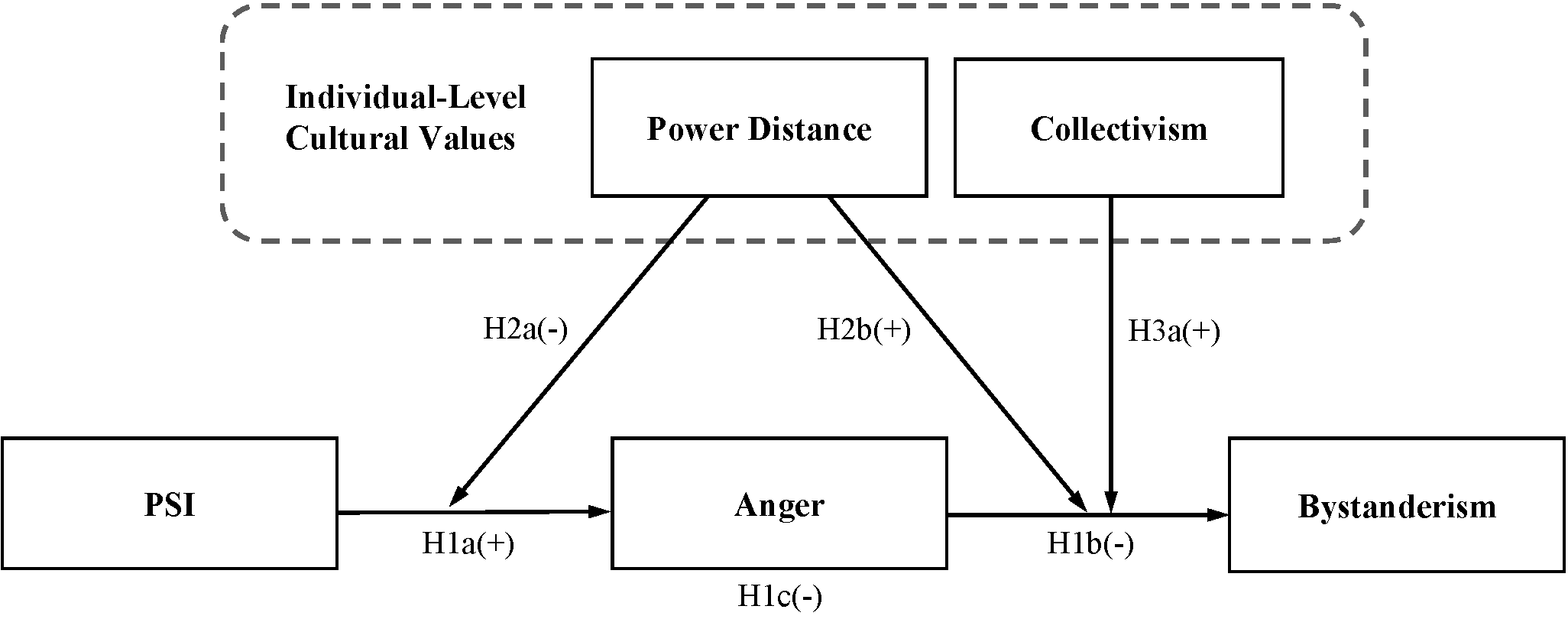
Research model.
Observer PSI, Anger, and Bystanderism
Supervisor incivility is defined as low-intensity deviant behavior, exhibited by a supervisor, that carries ambiguous intent to harm a subordinate, but clearly violates workplace norms for mutual respect (Andersson & Pearson, 1999, p. 457). Typically, supervisor incivility involves unethical behaviors initiated by a supervisor, such as hurtful comments, snippy emails, gossip, public criticisms, slander, rude and discourteous behavior, and ostracism (Cortina et al., 2017; Reio & Sanderd-Reio, 2011). Given that supervisor incivility often occurs in public, understanding observer reactions to PSI is of critical importance in looking for ways to reduce supervisor incivility (Liu et al., 2021).
The phenomenon that observers undergo specific emotions against PSI and, in turn, exhibit behavioral reactions has often been explained by deontic justice theory (Liu et al., 2021; Mitchell et al., 2015; Priesemuth & Schminke, 2019). According to deontic justice theory, observer anger is triggered when they perceive that PSI violates their moral principles, apart from their own self-interested goal (Folger, 2001). Notably, moral anger, an automatic and compelling gut feeling, propels observers to take approach-oriented actions, such as confronting and fighting a perpetrator on behalf of the victims (Haidt, 2003; Zhang et al., 2020).
So far, the deontic justice principle has been supported by a substantial body of empirical research (Liu et al., 2021; Mitchell et al., 2015; Priesemuth & Schminke, 2019; Zhang et al., 2020). However, some empirical evidence shows that observers’ PSI-induced anger is not significantly associated with outward behaviors, such as coworker support (Mitchell et al., 2015) and protective behavior (Priesemuth & Schminke, 2019). Intriguingly, this evidence raises the possibility that an invisible and elusive behavior exists within the repertoire of the behavioral response to anger. For instance, observers may choose to remain silent despite experiencing anger in response to PSI. Consistent with this, we propose that observer silence (i.e., bystanderism), as an intentional behavior not to intervene in the situation, should be included in the repertoire of the behavioral response to anger in the process through which the deontic justice principle is unfolded.
In this sense, we define bystanderism as observers’ withholding genuine expression about their cognitive, affective, and/or behavioral evaluations of PSI, drawing from the definition of silence by Pinder and Harlos (2001). Given this definition, bystanderism is a multifaceted concept that is not limited to the absence of voice but an active and dynamic process (Kish-Gephart et al., 2009; Morrison, 2014; Pinder & Harlos, 2001). For example, observers high in bystanderism may push their expression of anger beneath the surface. Specifically, while witnessing a supervisor mistreating a coworker might trigger anger, such anger may not be enough to override the fear of challenging the authority and the norms of the group (Kish-Gephart et al., 2009). As a result, observers may remain in a state of quiescence, deliberately refraining from overt behaviors (Pinder & Harlos, 2001). Here, it is important to note that even though the action tendency of observer anger may not manifest immediately, it still lingers in their minds and potentially resurface at some point (Gross & John, 2003).
Therefore, even when observers experience anger in response to PSI following the deontic justice principle, their anger may manifest both a visible, overt, and observable actions as well as nuanced, elusive, and unobservable behavior. This suggests that the action tendencies of anger can also be redirected toward bystanderism, depending on the intensity of anger. Specifically, individuals with lower levels of anger tend to exhibit lower action tendency and, consequently, demonstrate higher levels of bystanderism compared to individuals with a higher level of anger. As a result, experienced deontic anger in response to PSI may translate into both unobservable (e.g., bystanderism) as well as an observable (e.g., helping behavior) form of behavior, where observers with a lower level of anger are more likely to remain silent than those with a higher level of anger. Based on the preceding discussion, we propose the following hypotheses to illuminate the processes through which observer PSI leads to bystanderism.
Cultural Values as Moderators
With regard to emotional and behavioral reactions to PSI, the importance of cultural values can be articulated by the perspective of cultural regulation of emotion (Mesquita et al., 2014). According to this perspective, individual-level cultural values play a powerful role as reappraisers and suppressors in the processes through which emotion unfolds over time (Gross & John, 2003; Mesquita et al., 2014). Specifically, power distance, which itself focuses on the perception of a source (i.e., supervisor) of anger, is expected to serve as a reappraiser bringing about cognitive change (i.e., the first step moderation in Figure 1) and also as a suppressor of action tendencies induced by anger (i.e., the second step moderation in Figure 1) (Lin et al., 2013; Matsumoto et al., 2010; Zhang & Liao, 2015). In contrast, collectivistic individuals tend to prioritize the evaluation of the situation and the parties involved in terms of their impact on disrupting collective interest, which is expected to have a limited influence on their reappraisal of supervisor incivility (Shao & Martin, 2020; Voswinckel et al., 2019). For these reasons, we propose that collectivism only functions as a suppressor that modulates behavioral responses to anger evoked by PSI (i.e., the second step moderation in Figure 1) (Huwaë & Schaafsma, 2018; Matsumoto et al., 2010). Consistent with the aforementioned, we explore whether power distance and collectivism act as boundary conditions on our mediation model.
Power Distance
In relation to supervisor incivility, power distance has received the most attention among cultural values (Zhang & Liao, 2015). Power distance refers to the degree to which individuals accept the unequal distribution of power within institutions or organizations (Clugston et al., 2000, p. 9). In light of the definition, power distance likely plays an important role in how employees interpret, evaluate, and react to PSI (Lin et al., 2013; Zhang & Liao, 2015). Indeed, individuals high in power distance are more likely to perceive their supervisors as holding innate power, superiority, and status, while those low in power distance are inclined to view supervisors as not possessing any special status (Kirkman et al., 2009; Moon et al., 2018).
From the perspective of the cultural regulation of emotion, power distance acts as a reappraiser that engenders cognitive change (Mesquita et al., 2014). In other words, taking unequal distribution of power for granted (Hofstede, 2011), individuals with high power distance are more likely to reappraise uncivil supervision as acceptable rather than unfair. Consequently, they may be less inclined to experience anger in response to PSI (Lin et al., 2013; Zhang & Liao, 2015). Interestingly, individuals high in power distance may perceive such leadership behaviors as a form of “tough love” (Zhang & Liao, 2015). In a similar vein, Moon et al. (2018) found that people high in power distance are more accepting of injustices committed by high-ranking perpetrators compared to those done by low-ranking ones.
More notably, power distance not only contributes to the reappraisal of supervisor unfairness (Lin et al., 2013; Zhang & Liao, 2015) but also to a suppression of the action tendencies of anger (Matsumoto et al., 2010). Specifically, even when individuals experience anger, those high in power distance are more likely to obey an uncivil supervisor who is considered a powerful figure or a source of resources as voicing dissent is seen as excessively risky (Kish-Gephart et al., 2009; Moon et al., 2018). In other words, individuals may think withholding outward behaviors is the best strategy to protect themselves against the source of authority. In short, a high power distance orientation may lead individuals to be acquiescent (i.e., having limited awareness of supervisor incivility) through reappraisal and subsequently quiescent (i.e., deliberate omission of voice or helping behaviors) through suppression.
Drawing on the discussion to date, we argue that employees with high power distance are more inclined to exhibit bystanderism than their counterparts with low power distance, for their reappraisal about PSI (i.e., low anger), their suppression of the expression of anger (i.e., bystanderism), or both. Accordingly, we examine the contingencies that observer power distance moderates the first (i.e., reappraisal) and the second steps (i.e., suppression) of our research model, and the overall mediation models. As such, we propose the following hypotheses.
Collectivism
Collectivism is defined as the tendency to consider oneself interdependent with a specific group, prioritize the group's goals, and willingly sacrifice personal interests for group welfare (Thomas et al., 2016). Consistent with the definition, collectivistic individuals place importance on interpersonal relationships within the in-group, concerned with gaining the approval of the collective, and prefer avoidance strategies in high-intensity conflict (Triandis et al., 1988). Collectivist individuals are also supposed to exercise self-restraint and moderation in displaying emotion and thus withhold the verbal and nonverbal expressions of anger to conform to the group (Matsumoto et al., 2010). In this way, giving greater weight to group harmony, collectivists prefer conformity over individual uniqueness and are attentive to the needs of group members (Kim & Shapiro, 2008; Liu et al., 2009). As such, individuals are reluctant to stand out as different and intend to be similar to members of the group (Triandis et al., 1988). As a result, collectivists are more likely to mask their anger and in turn unobtrusive behaviors (e.g., bystanderism) compared to their counterparts who are low in collectivism (Matsumoto et al., 2010).
Collectivists’ tendency to conform may act as a suppressor in the response-focused emotion regulation process through which evoked emotions translate into behaviors (Huwaë & Schaafsma, 2018; Matsumoto et al., 2010; Voswinckel et al., 2019). This suppression exhibited by collectivists to conform to in-group norms can be further articulated by social exchange theory, in which social life involves exchanges based on the potential benefits and costs at social relations (Huang et al., 2016). Specifically, the suppression of collectivists may incur cognitive costs as it requires individuals to exert effort to regulate emotional expression, thus depleting cognitive resources (Gross & John, 2003). In exchange for these cognitive costs, the group members may gain the benefit of the diffusion of responsibility and obligation in the future (Blau, 1964). As this diffusion of responsibility and the blurred causal agency may lead to disengagement of overt behaviors (e.g., voice) (Mazar & Aggarwal, 2011), observer anger may lose its driving force and ultimately translate into bystanderism. In practice, some empirical evidence demonstrated that although collectivistic individuals experience negative emotions (i.e., anger and irritation), they are shown to suppress the expression of such emotions (Huwaë & Schaafsma, 2018; Matsumoto et al., 2010).
Similarly, even when collectivist individuals experience anger, they may remain quiescent (i.e., deliberately withholding angry behaviors) through their suppression to conform to the norm of the in-group. Therefore, we examine the contingencies that observer collectivism affects the relationship between anger and bystanderism and, ultimately, the relationship between PSI and bystanderism through anger. Therefore, we propose the following hypotheses.
Method Overview
The following three studies test the hypothesized relationships between observers’ PSI, anger, and bystanderism, as well as the moderating roles of power distance and collectivism. Specifically, Study 1 utilizes an online scenario to examine the mediation model, where observer anger would negatively mediate the relation between PSI and bystanderism (Hypotheses 1a, b, and c). In Study 2, an online experiment is used to test the moderation effect of power distance at the first step of our model (Hypotheses 1a and 2a). Finally, Study 3 uses a survey to examine the moderating effects of power distance and collectivism (Hypotheses 2a, 2b, and 3a), as well as the conditional indirect effects of moderators (Hypotheses 2c, 2d, and 3b).
Study 1
Procedures and Samples
We recruited participants using Amazon Mechanical Turk (MTurk). Over the years, MTurk samples have offered reliable data (Hauser & Schwartz, 2016), but some researchers have recently raised concerns about the quality of MTurk data (Chmielewski & Kucker, 2020; Kennedy et al., 2020). Therefore, to ensure high quality of data, we first leveraged MTurk's qualifications to include only participants with a high reputation in the system (Kennedy et al., 2020; Peer et al., 2014). Second, a screening survey with filler items was utilized to exclude savvy test-takers who might provide false information in an attempt to qualify for the main survey. Third, we scrutinized the MTurk Worker IDs and IP addresses throughout the survey processes to screen out repeated participants (Kennedy et al., 2020). Lastly, we incorporated attention checks (Newman et al., 2021) and monitored the time participants spent answering the survey (Aguinis et al., 2021).
The recruitment process followed the steps given below. Initially, the Qualtrics link was posted on the MTurk platform until 300 eligible employees responded. Participants were required to be full-time employees working in the United States for at least 1 year. The 15 min Qualtrics survey contains a scenario and the relevant questionnaires. The survey is designed to randomly assign participants to one of two conditions (i.e., high uncivil supervision vs. low uncivil supervision).
After reading each assigned scenario, participants completed the questionnaires to assess observer PSI, anger, bystanderism, own experience of supervisor incivility, and demographic information. The final participants are 293 employees (i.e., high uncivil supervision: 143, low uncivil supervision: 150) whose average age is 40.95 years old (standard deviation [SD] = 11.49), and 55.6% (N = 163) are females.
Manipulation
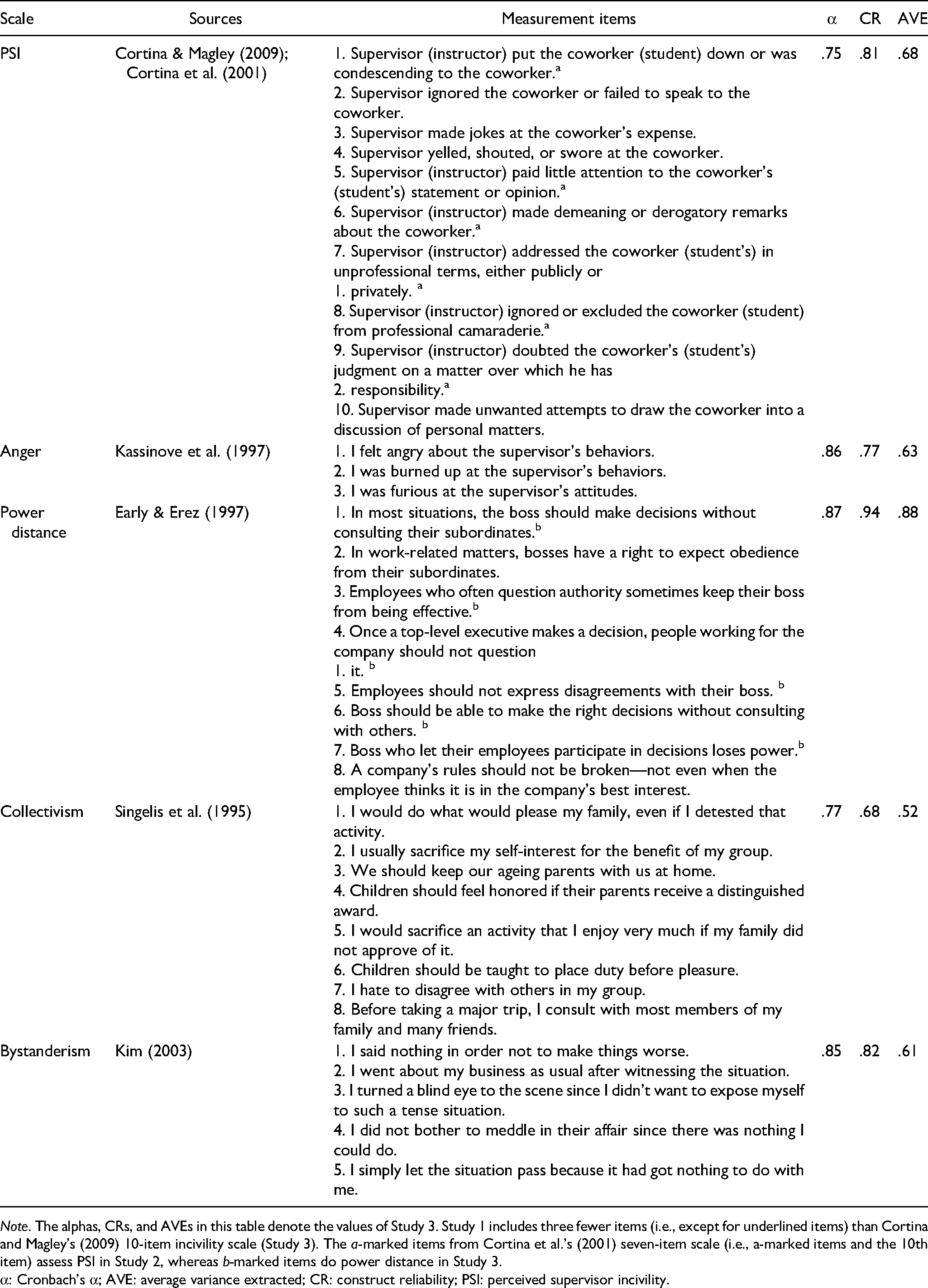
We used two backdrops of the scenario from Park et al. (2018) study: (a) the coworker's conversation with their supervisor and (b) the office meeting. When developing the scenario, we incorporated seven items from Cortina and Magley's (2009) 10-item incivility scale (i.e., except for underlined items in Appendix 1) into the existing backdrops. In doing so, we tightly controlled for gender, race, age, and appearance of both a supervisor and a coworker in the scenario in the detailed description to avoid inadvertently manipulated other variables except for supervisor incivility. The scenarios were reviewed by two experts with Ph.D. to ensure that the construct of supervisor incivility is validly reflected.
Participants were presented with the following statement: “In this survey, you will read a short scenario and then complete a series of questionnaires. Try to imagine yourself as a colleague of the victim portrayed in the following scenario. Please read all instructions carefully and answer all questions.” Participants assigned to each condition encountered two scenes (i.e., the coworker's conversation with the supervisor, the office meeting), which depicted the supervisor's behaviors.
Manipulation Check
To confirm whether the manipulation worked as intended, we assessed PSI using seven items from Cortina and Magley's (2009) 10-item scale (Appendix 1) that are reflected in the scenario. After reading the scenario, participants rated the extent to which each statem agrees with the situation they witnessed in the scenario. All items are measured on a five-point Likert scale (1=strongly disagree; 5=strongly agree). An example is: “The supervisor addressed the coworker in unprofessional terms, either publicly or privately.” The coefficient α for this scale was .93. The results of analysis of covariance (ANCOVA) were significant for manipulation (high uncivil supervision condition [mean = 4.49, SD = .42], low uncivil supervision condition [mean = 2.54, SD = .80], F [1, 291] = 673.39, p < .001, η2 = .70). Therefore, our manipulation was effective.
Measures
Anger
To assess anger, we utilized three items (Appendix 1) with high factor loading from Kassinove, et al. (1997) confirmatory factor analysis (CFA) on the state anger scale. To prevent participants from becoming overly sensitive to anger, we included five filler items in addition to the three items assessing anger. Participants rated the extent to which they experienced specific emotions while witnessing the supervisor's behaviors in the scenario. They responded to the items on a five-point scale (1=not at all and 5=extremely). A sample item is: “I felt angry about the supervisor's behaviors toward the coworker.” The coefficient α was .95.
Bystanderism
To capture bystanderism, we used five items (Appendix 1) potentially related to supervisor incivility from the bystander attitude factors from Kim's (2003) study. The translation of the items from Korean into English followed the procedures outlined by Brislin (1973) in which two experts who are bilingual in Korean and English reconciled any discrepancies after translating and back-translating the items. Subsequently, a third bilingual expert who was blind to this study revised the scale after examining two versions. Participants were asked to rate how they would have reacted as an observer in such situations. All items were measured on a five-point Likert scale (1=strongly disagree, 5=strongly agree). A sample item is like: “I would have said nothing in order not to make things worse.”
Since we extracted five items from Kim's (2003) bystander attitude factor, we conducted CFA to assess the validity of the scale. To yield stable and acceptable estimates of all parameters, we parceled items with the highest correlations and then used average scores of a subset of items as indicators of focal latent variables (Bandalos & Finney, 2001; Cattell, 1994; Little et al., 2002, p.162). CFA results showed good fit indices (χ2 = 64.61, df = 5, p < .05, Tucker-Lewis index [TLI] = .90, comparative fit index [CFI] = 0.95, standardized root mean square residual [SRMR] = .03) (Kline, 2011). Our study excluded root mean square error of approximation (RMSEA) following Kline's (2011, p. 276) recommendation that RMSEA is not appropriate for small models with several measured items (e.g., five items). Average variance extracted was .73(>.50) (Fornell & Larcker, 1981), and construct reliability was .93(>.70) (Anderson & Gerbing, 1988), indicating acceptable convergent validity of a unidimensional scale. The coefficient α for this scale was .93.
Control Variables and Measures
Participants’ gender and own experiences of supervisor incivility were included as control variables. Prior studies have indicated that observers’ emotional and behavioral reactions to PSI can be influenced by their gender (Cortina et al., 2017; Mitchell et al., 2015; Reio & Sanderd-Reio, 2011). Specifically, women have been found to be more sensitive to emotional information than men (Bloise & Johnson, 2007) and exhibit significant differences from men in angry reactions to PSI and subsequent coping strategies (Mitchell et al., 2015). Also, previous studies showed that prior repeated exposures (especially, stressor exposures) can sensitize individual's emotional responses to similar stimuli (Chen & Yang, 2020; Greenwood et al., 2014) and the exposure to stimuli resembling a previously stored memory can evoke the same feelings that are attached to the previous experience (Tyng et al., 2017). In line with this, since experiencing incivility can sensitize an individual's emotional responses to similar events, we controlled for participants’ own experiences of supervisor incivility. To assess this variable, participants answered a single-item question regarding whether they had ever experienced uncivil behaviors from any of their supervisors up until now (e.g., putting you down). The question was rated on a five-point scale (1=never, 5=always).
Results
Table 1 presents the means, SD, and zero-order correlations of our study variables. To test Hypothesis 1a, we ran a hierarchical regression analysis in which we entered the control variables (i.e., gender, own experiences of supervisor incivility) in the first block and PSI in the second block. Results showed that observer PSI accounted for a significant amount of variance in anger (ΔR 2 = .408; b = 1.70, p < .001). These results supported Hypothesis 1a, indicating that observer PSI would be positively related to anger. For Hypothesis 1b, we also ran a hierarchical regression analysis and found that observer anger explained bystanderism significantly (ΔR2 = .165; b = –.34, p < .001). These supported Hypothesis 1b that observer anger would be negatively related to bystanderism. The mediation effect (Hypothesis 1c) was tested using the PROCESS Macro (Hayes, 2013; Mackinnon et al., 2000), and b coefficients were significant in both the paths from observer PSI to anger (R2 = .463, b = 1.69, p < .001) and from anger to bystanderism (R2 = .174, b = –.27, p < .001) (Table 2). Using 5000 bootstrap samples (Shrout & Bolger, 2002), results showed that observer anger negatively mediated the relationship between PSI and bystanderism (b = –.46, SE = .11, 95% CI [–.6777, −.2416], providing support for Hypothesis 1c.
Means, SD, and Bivariate Correlations Among Study Variables (Study 1).
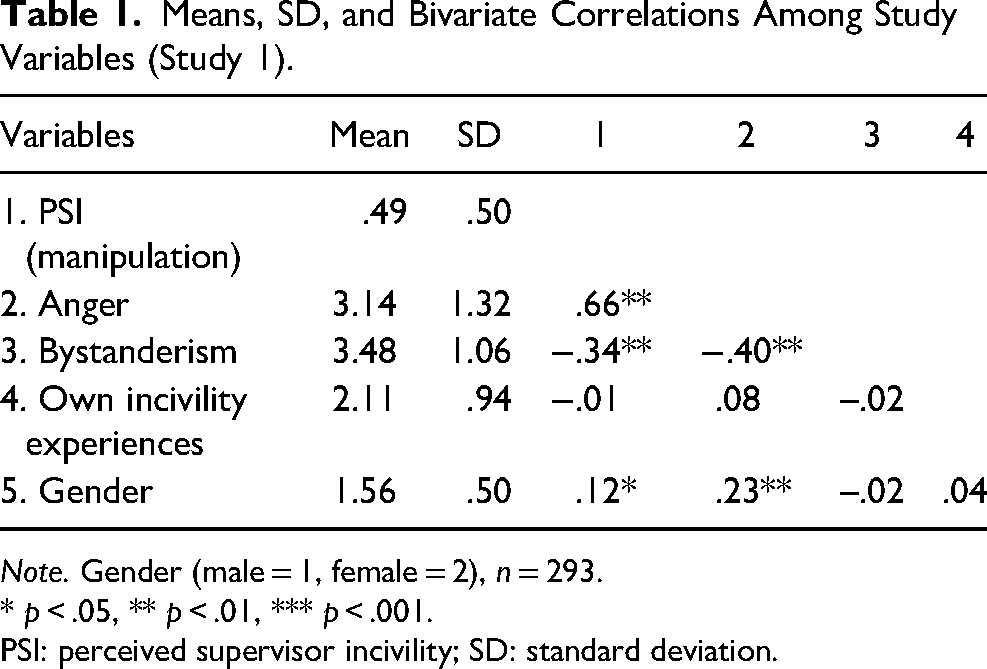
Note. Gender (male = 1, female = 2), n = 293.
* p < .05, ** p < .01, *** p < .001.
PSI: perceived supervisor incivility; SD: standard deviation.
Regression Analysis Results: The Mediating Effect (Study 1).
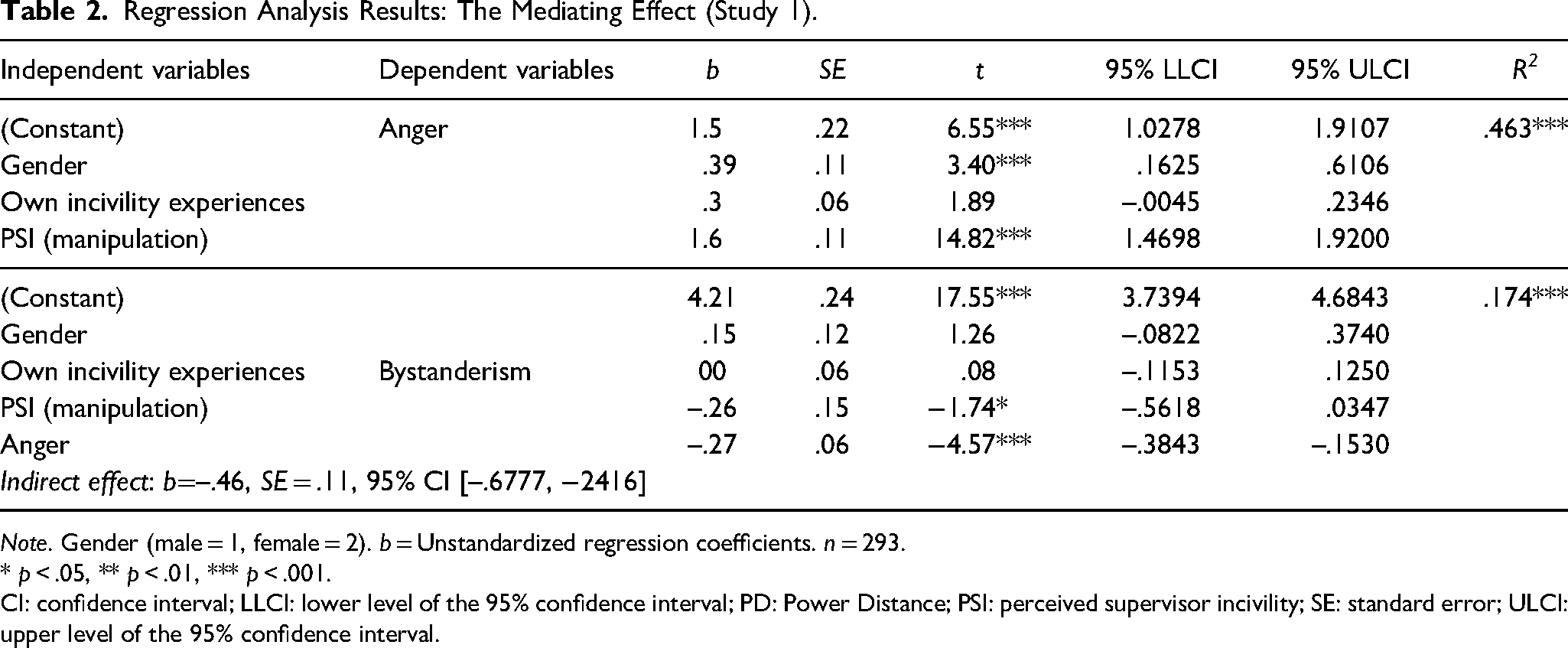
Note. Gender (male = 1, female = 2). b = Unstandardized regression coefficients. n = 293.
* p < .05, ** p < .01, *** p < .001.
CI: confidence interval; LLCI: lower level of the 95% confidence interval; PD: Power Distance; PSI: perceived supervisor incivility; SE: standard error; ULCI: upper level of the 95% confidence interval.
Discussion
Study 1 provided support for Hypotheses 1a, b, and c. Specifically, for Hypothesis 1a, our findings corroborated that observer PSI was positively associated with anger. Our results also demonstrated that observer anger was negatively related to bystanderism (Hypothesis 1b). Finally, our findings showed the mediation role of observer anger in the negative relationship between PSI and bystanderism (Hypothesis 1c). Since our research model proposes that the mediation effect can be contingent upon power distance and collectivism, we conducted Study 3 to explore our full model. Before testing the full model via a survey (Study 3), we examined the moderation effect of power distance at the first step of our research model by manipulating supervisor incivility (Study 2).
Study 2
Sample and Procedure
One hundred and twenty-five students taking business courses at a large southeastern university were invited to participate in our experiment on a voluntary basis, in exchange for extra credit. All procedures were conducted in a video conference room (i.e., Zoom) with the sessions recorded. At the beginning of each session, students were told that the purpose of our study was to investigate personal values that might influence their creative performance. To establish a vertical relationship between the instructor and students, it was emphasized that only the instructor (i.e., confederate) had the authority to assign extra credits. Groups were randomly assigned to be in either the high or low uncivil condition, with each group consisting of four to 20 participants.
Throughout the session, the manipulation was implemented twice while the participants were engaging in two separate activities. Specifically, supervisor incivility was enacted (a) when the latecomer (i.e., confederate) arrived late while others were finalizing the first activity and (b) when the instructor was providing instructions for the second activity. To prevent unexpected animosity toward the student who arrived late for the session due to the anticipated delays in the study's progression, the instructor reminded participants at the beginning of the study that the study would take only no more than 40 min out of the initially prescribed time (1 h). In the first activity, participants completed questionnaires capturing power distance and creative performance (i.e., filler task), which took approximately 15 min. In the second activity, participants rated items related to observer PSI, anger, and their own experience of supervisor incivility and provided demographic information (approximately 10 min).
After ensuring that their participation had been recorded, participants were debriefed, thanked, and dismissed. The entire procedure lasted no more than 40 min. Seven students were excluded from our data analysis due to failing attention checks (e.g., questions about the gender of the instructor and the latecomer). The final participants are 118 students (high uncivil supervision: 61, low uncivil supervision: 57) with an average age of 22.95 years old (SD = 5.72), and 49.2% (N = 58) were females.
Filler Task
The filler task, in which participants engage in a creative activity, was designed based on Murray's (1971) thematic apperception test and Torrance's (1990) verbal task. First, participants were presented with a picture that depicts a boy sitting in the doorway of a log cabin (Murray, 1971). Following the guidelines of Torrance's (1990) verbal task, participants performed the creative task. Specifically, they portrayed a story from the picture, described their thoughts and feelings about the person, and generated ideas regarding the possible causes and consequences of the depicted situation.
Manipulation
Our experimental manipulation incorporated six items (a-marked items in Appendix 1) except for one item from Cortina et al.'s (2001) seven-item incivility scale to prevent participants from experiencing excessive discomfort during the session (American Psychological Association, 2017). To ensure the treatment validity of supervisor incivility, the final script was reviewed by two Ph.D. experts. Before running the session, we conducted three 1h training sessions for each confederate (i.e., the instructor and the latecomer) to ensure they could portray their roles convincingly.
The manipulation was delivered twice during the session. The first manipulation used Cortina et al.'s (2001) items in Porath and Erez's (2009) procedure. Approximately 10 min after the start of the first activity, a confederate playing the role of student showed up, apologized for being late, and asked if they can join our study. In response to the student, the first manipulation was enacted as follows: in the high uncivil supervision condition, the instructor responded to the student's apology by saying, “I don't appreciate these kinds of late arrivals. You can't just come in whenever you want when there are other sessions available?” and “Excuses are irrelevant. You can't have any excuse when you are working in a real job, right? Well, I was explaining the creative task.” In the low uncivil supervision condition, the instructor accepted the student's apology by saying, “No problem. Please click the link and be quick. We cannot give you extra time for this because we will get this done in 40 minutes sharp.”
The second manipulation also utilized Cortina et al.'s (2001) items in the following procedure designed for this study. After participants completed the creative task within the allotted 15 min, the instructor attempted to wrap up the activity, and then the latecomer (i.e., confederate) apologized and asked for a couple more minutes. At this point, the second manipulation was enacted. In the high uncivil supervision condition, the instructor said, “Now, now…why is this taking so long? Do you have any trouble reading it? Get this done so we can move on already. You are directly holding up the group. I’m a very busy person, and this is not the only session I’m dealing with. I have quite a few more today.” In the low uncivil supervision condition, the instructor politely refused to give extra time for the students and proceeded to the second activity.
Manipulation Check
To determine whether our manipulation was successful, we utilized six items from Cortina et al.’ (2001) scale that were included in the manipulation. After completing the filler task, participants were asked to indicate the extent to which each statement is aligned with the behaviors of the instructor they observed during the session. All items were measured on a 5-point Likert scale (1=strongly disagree; 5=strongly agree). An example is: “Instructor made demeaning or derogatory remarks about the student (i.e., the latecomer).” The coefficient α for this scale was .89. We tested the difference between the two groups using ANCOVA, and the results were significant for PSI manipulation (high uncivil supervision condition [mean = 2.75, SD = .99], low uncivil supervision condition [mean = 1.29, SD = 0.54], F [1, 116] = 97.60, p < .001,
Measures
Anger
As in Study 1, anger was measured with three items from Kassinove et al.'s (1997) state anger scale (Appendix 1). Participants rated the extent to which they felt each emotion while witnessing the instructor's behaviors toward the latecomer on a five-point Likert scale (1=not at all and 5=extremely). The coefficient α for this scale was .93.
Power Distance
We assessed power distance with Earley and Erez's (1997) eight-item scale (1=strongly disagree, 5=strongly agree) (Appendix 1). An example is: “Employees should not express disagreements with their boss.” The coefficient α for this scale was .76.
Control Variables and Measures
As in Study 1, Study 2 controlled for participants’ gender and own experiences of supervisor incivility (Cortina et al., 2017; Mitchell et al., 2015; Reio & Sanderd-Reio, 2011). Also, we included team size as a covariate because it may affect participants’ anger (Paulin & Griffin, 2016).
Results
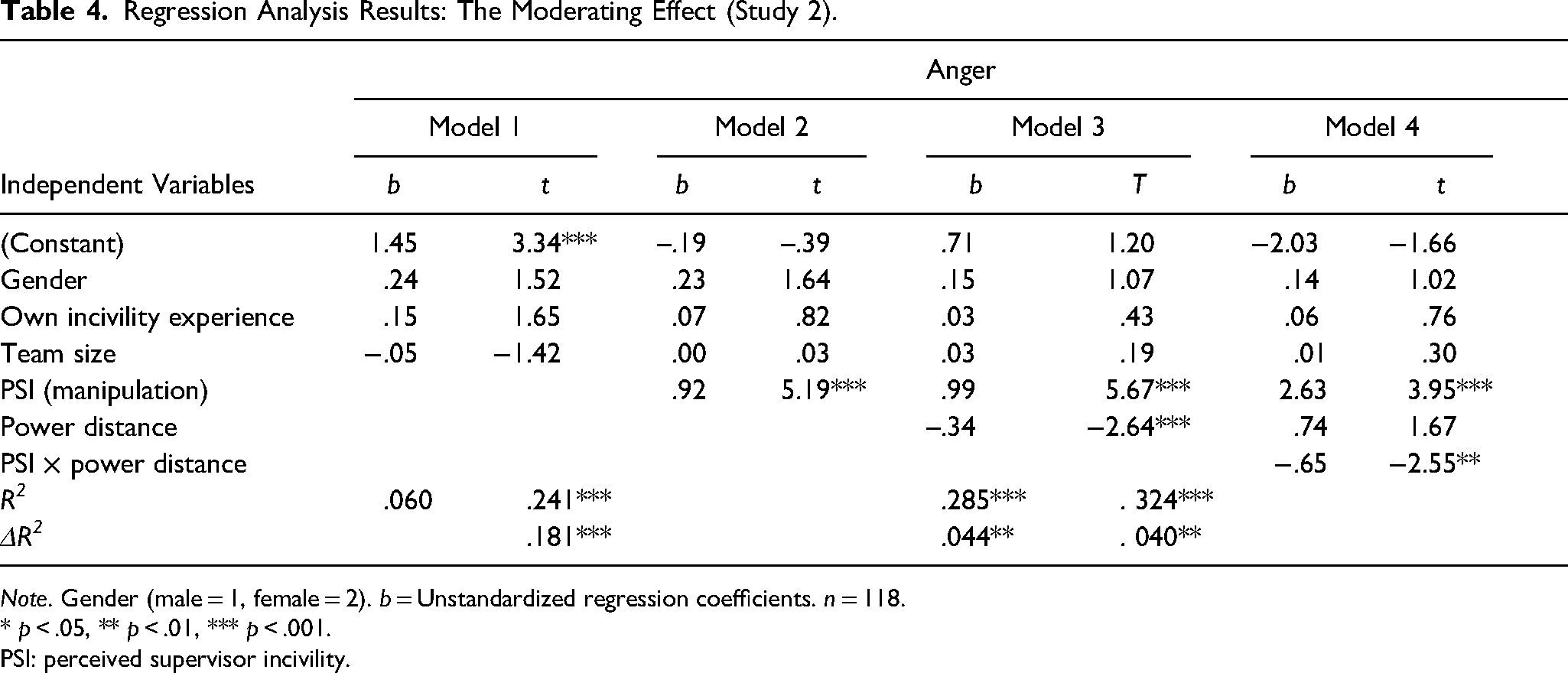
Table 3 shows the means, SDs, and zero-order correlations of our study variables. To test Hypotheses 1a and 2a, we ran a hierarchical regression analysis. First, to test Hypothesis 1a, we entered control variables (i.e., gender, own experiences of supervisor incivility, and team size) in the first block and observer PSI in the second block. Results showed that observer PSI explained a significant amount of variance in anger (ΔR2 = .181; b = .92, p < .001). As in Study 1, these results supported Hypothesis 1a that observer PSI would be positively associated with anger.
Means, SD, and Bivariate Correlations Among Study Variables (Study 2).
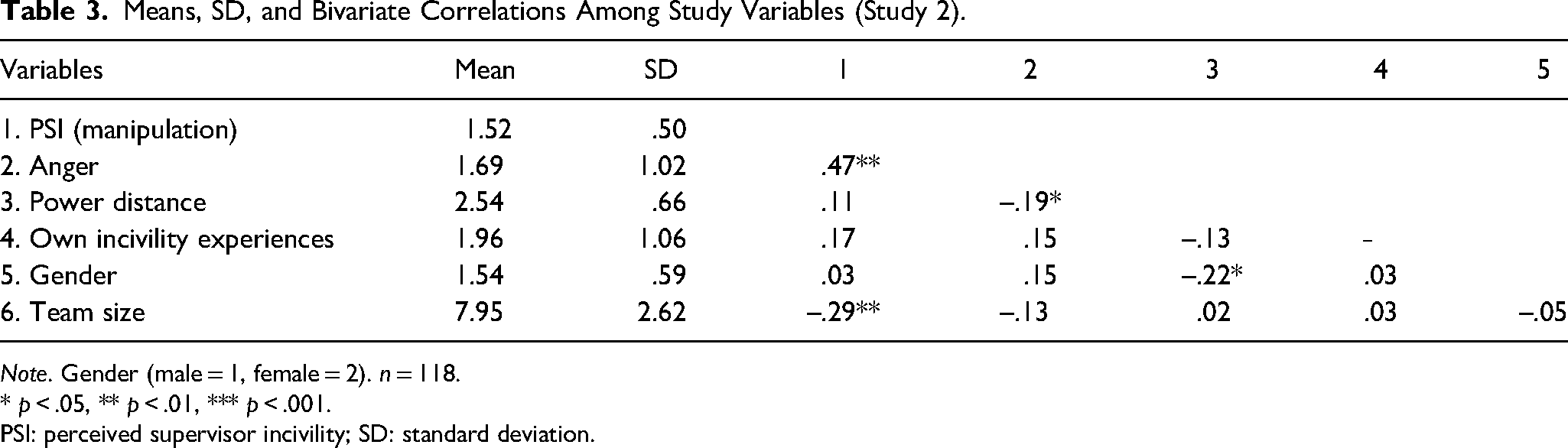
Note. Gender (male = 1, female = 2). n = 118.
* p < .05, ** p < .01, *** p < .001.
PSI: perceived supervisor incivility; SD: standard deviation.
Subsequently, we centered the mean of power distance and then tested Hypothesis 2a following Baron and Kenny's (1986) three-step procedure after entering control variables in the first block. Hypothesis 2a predicted that the positive relationship between observers’ PSI and anger would be moderated by power distance at the first step of the research model, such that the relationship was weaker when power distance was higher rather than lower. As predicted, findings revealed that the interaction term between observer PSI and power distance was significant (ΔR2 = .040; b = −.65, p < .01) (Table 4). Figure 2 shows the interaction graph plotted at low (slope = 1.40, SE = .23, p < .001) and high (slope = .54, SE = .24, p < .05) levels of power distance (Aiken & West, 1991). All results supported Hypothesis 2a.
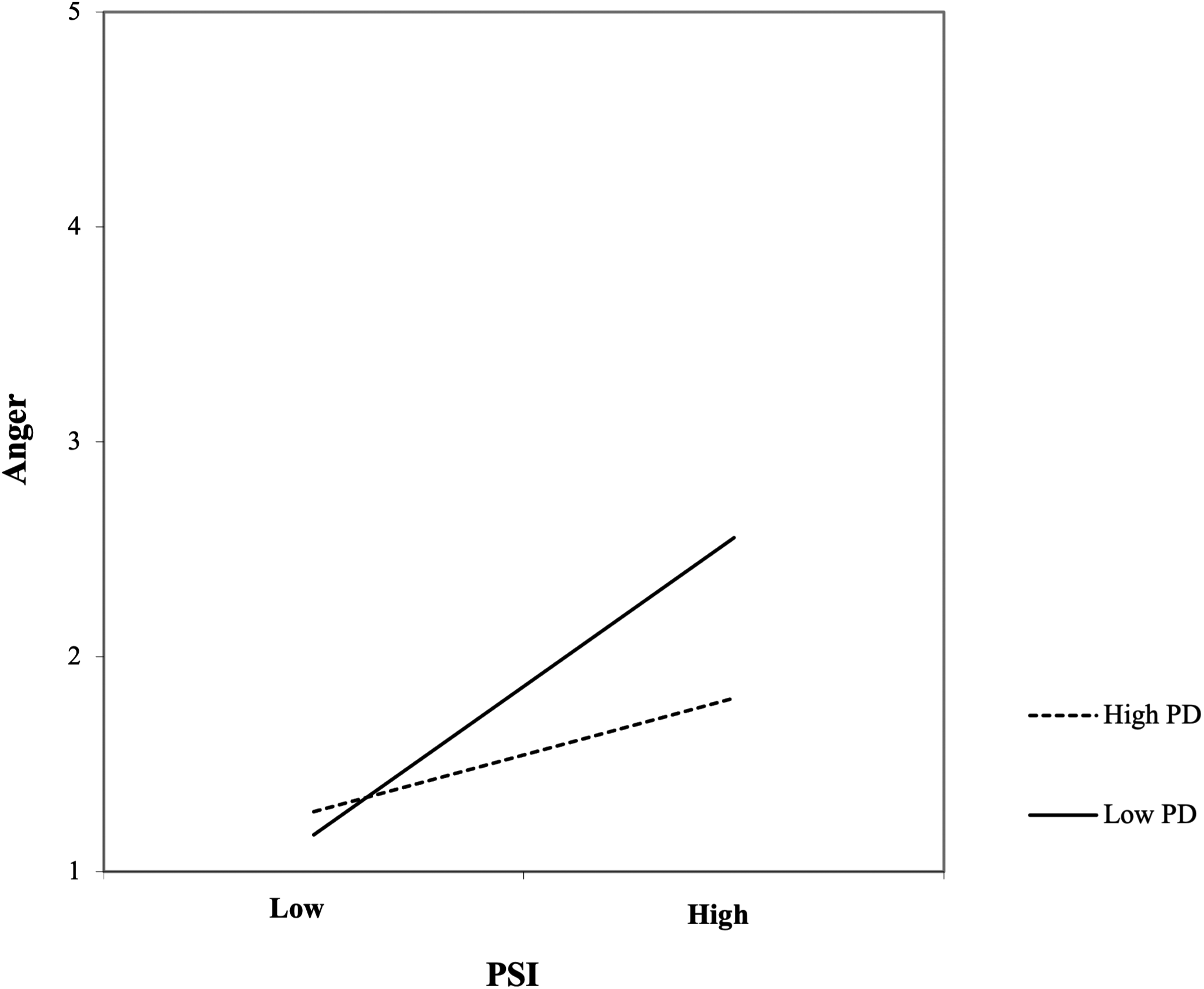
Moderating effect of power distance (Study 2). This figure shows the moderating effect of power distance at the first step on the relationship between PSI and anger. PSI: perceived supervisor incivility.
Regression Analysis Results: The Moderating Effect (Study 2).
Note. Gender (male = 1, female = 2). b = Unstandardized regression coefficients. n = 118.
* p < .05, ** p < .01, *** p < .001.
PSI: perceived supervisor incivility.
Discussion
Study 2 supported Hypotheses 1a and 2a. As a result, Study 2 provided further support for the positive relationship between observer PSI and anger found in Study 1. In addition, Study 2 offers evidence for the moderation effect of power distance at the first step of our research model. Moving forward, Study 3 expands upon the mediation model in Study 1 and the moderation model of power distance at the first step in Study 2 to test our full research model.
Study 3
Procedures and Samples
To recruit eligible participants for our study, we used the MTurk platform as we did in Study 1. The recruitment process involves one screening survey and two main surveys.
First, a screening Qualtrics link was posted on the MTurk platform until 700 full-time employees had responded. The screener set criteria to exclude those who had already participated in Study1 to prevent survey bias. Additionally, filler items were included to screen out savvy test-takers who might attempt to answer the survey in order to qualify for the main survey. The criteria to examine eligible employees for the current study were: (a) full-time employment status for 1 year or more and (b) an experience of having witnessed supervisor incivility.
For participants who met the criteria, they were automatically directed to the first main survey (i.e., a 5 min survey). This time 1 survey includes scales to measure observer PSI, anger, and own experiences of supervisor incivility. Including observer PSI and anger scales in the first survey allowed us to measure anger immediately after participants recalled the instance of supervisor incivility (Mitchell et al., 2015). Before answering the questionnaires, participants were asked to read the following instruction: “In the screening survey, you have answered that you have ever witnessed your supervisor mistreating your coworkers. Please recollect your most recent experience of witnessing the supervisor's such conducts toward one of your coworkers. What's the look on the supervisor's face? Gestures? What's the look on the target's face? Do you recall the scene vividly?”
One week after completing the first survey, a link to the time 2 survey was sent through the Mturk group message. Reminder for the time 2 survey was sent twice over the course of 1 week, and we closed the survey 1 week after the first reminder. The time 2 survey included the remaining scales (i.e., bystanderism, power distance, collectivism, and social distance scales) and demographic information and took approximately 15 min to complete. The final participants were 398 employees with an average age of 38.31 years old (SD = 9.49), and 41.7% (N = 166) were females.
Measures
Taking the characteristics of our focal variables into account, we used only self-report measures. Relatedly, a meta-analytic study on sensitive data (Berry et al., 2012) provided evidence that self-report data are a viable alternative to other reports (e.g., supervisor's report). Requesting the superior (i.e., the perpetrator) and the coworker (i.e., the victim) to rate observer PSI, anger, and bystanderism may make the observers be in a dire predicament (American Psychological Association, 2017). For these reasons, as we collected data from the same source, we adopted temporal separation and assessed the potential common method variance (CMV) with the unmeasured latent method construct (ULMC) technique (Melamed et al., 1995; Podsakoff et al., 2003).
PSI
We used Cortina and Magley's (2009) 10-item scale to measure observer PSI (Appendix 1). Based on their recall of the supervisors’ behavior treating their coworkers in uncivil ways, participants rated the extent to which they witnessed the supervisor's following behaviors toward the coworker. They rated each item on a five-point Likert scale (1=strongly disagree, 5=strongly agree). An example is: “The supervisor addressed the coworker in unprofessional terms, either publicly or privately.” The coefficient α for this scale was .75 (Appendix 1).
Anger
Power Distance
We assessed power distance with six items (b-marked items in Appendix 1) from Earley and Erez's (1997) scale. This is because the deleted two items showed low factor loadings in a CFA to test our measurement model. Participants were asked to indicate their agreement with each item on a five-point Likert scale (1=strongly disagree, 5=strongly agree). The coefficient α for this scale was .87 (Appendix 1).
Collectivism
To measure collectivism, we used eight items assessing a vertical collectivism directly related to organizational settings from Singelis et al. (1995) scale. Based on Triandis and Gelfand's (1998) study, we chose vertical collectivism for our study. Compared to horizontal collectivism, which emphasizes complete equality, vertical collectivism involves viewing oneself as an integral part of the in-group while acknowledging differences among members (i.e., some may possess higher status than others), which makes it relevant for the workplace where hierarchies are present (Triandis & Gelfand, 1998). Participants were asked to indicate their agreement with each item on a five-point Likert scale (1=strongly disagree, 5=strongly agree). A sample item is: “I usually sacrifice my self-interest for the benefit of my group.” The coefficient α for this scale was .77 (Appendix 1).
Bystanderism
To measure bystanderism, we used a five-item bystanderism measure as in Study 1. Participants rated how they reacted as an observer after witnessing the supervisor's such behaviors toward the target on a five-point Likert scale (1=strongly disagree, 5=strongly agree). The coefficient α for this scale was .85 (Appendix 1).
Control Variables and Measures
We controlled for participants’ gender, own experiences of supervisor incivility, and social distance from the coworker. As in Studies 1 and 2, we controlled for observer gender and own experiences of supervisor incivility (Cortina et al., 2017; Mitchell et al., 2015; Reio & Sanderd-Reio, 2011). In doing so, participants answered a one-item question about whether they have ever experienced uncivil behaviors from the supervisor (e.g., putting you down; 1=never, 5=always). In addition, since people are more likely to feel empathetic anger and take action to help for socially closer individuals, we controlled for the social distance between an observer and their coworker (Cialdini et al., 1997; Priesemuth & Schminke, 2019). To measure social distance, we adopted three appropriate items for the work context from Peters et al.'s (2014) scale. Participants selected the choice that best agrees with their opinions about the specific coworker on a five-point Likert scale (1=extremely negative, 5=extremely positive). The items are: “How would you feel about renting a room in your home to the coworker?”, “How about being a worker in the same small group with the coworker?”, and “How would you feel having the coworker as a neighbor?” All items are reverse scored. The coefficient α for this scale was .78.
Results
Preliminary Analyses
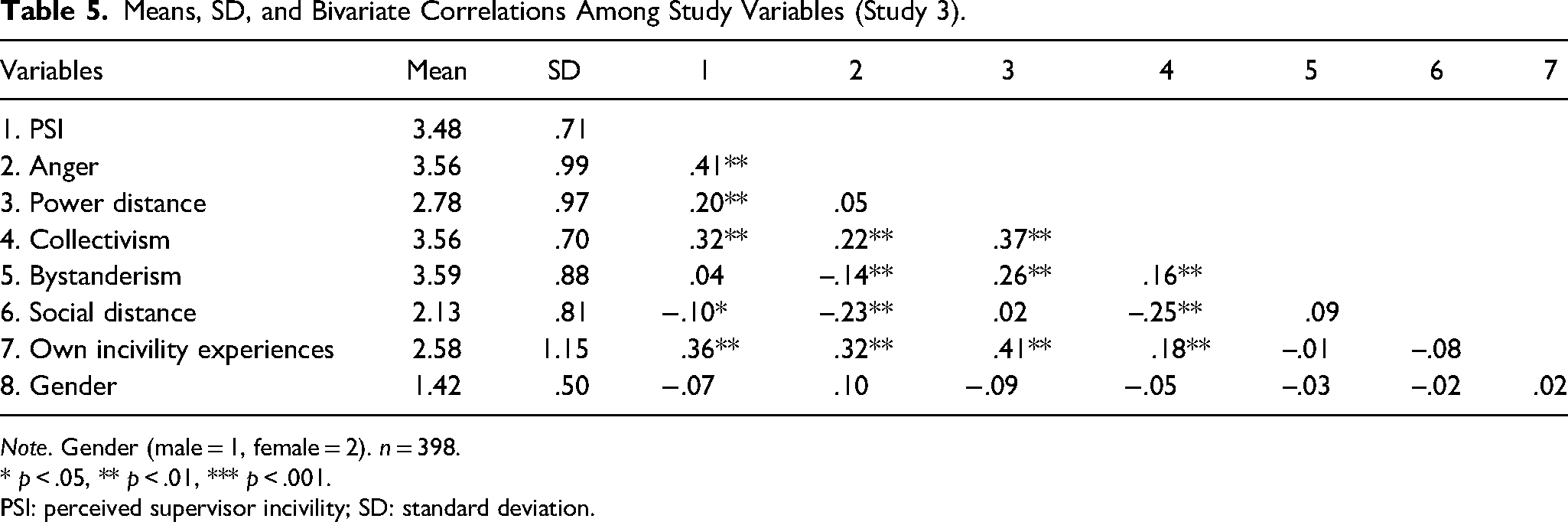
Table 5 shows the means and SDs of focal variables and the zero-order correlations among them. After parceling items with the highest correlations (Bandalos & Finney, 2001; Cattell, 1994), we averaged the scores of a subset of items as indicators of focal latent variables (Little et al., 2002, p.162). Subsequently, we ran CFAs to examine the distinctiveness of the five latent constructs (i.e., PSI, anger, power distance, collectivism, and bystanderism) using the R statistics package. The hypothesized five-factor model showed an acceptable fit to the data (χ2 = 119.79, df = 44, p < .001, CFI = 0.96, TLI = .95, RMSEA = 0.07, SRMR = .05) (Brown & Cudek, 1993) and was better than other alternative models: (a) a four-factor model in which PSI and anger were fixed to load on a single factor (Δχ2 = 208.12, Δdf = 4, p < .001, CFI = .87, TLI = .82, RMSEA = .12, SRMR = .09), (b) a four-factor model in which power distance and collectivism were set to load on a single factor (Δχ2 = 129.04, Δdf = 4, p < .001, CFI = .91, TLI = .87, RMSEA = .10, SRMR = .09), and (c) the three-factor model in which PSI and anger were fixed to load on one single factor, while power distance and collectivism were set to load on another single factor (Δχ2 = 325.74, Δdf = 7, p < .001, CFI = .82, TLI = .76, RMSEA = .14, SRMR = .11). Thus, the CFAs results indicated the validity of our measurement model.
Means, SD, and Bivariate Correlations Among Study Variables (Study 3).
Note. Gender (male = 1, female = 2). n = 398.
* p < .05, ** p < .01, *** p < .001.
PSI: perceived supervisor incivility; SD: standard deviation.
Next, we examined the potential impact of CMV with the ULMC (Melamed et al., 1995), and found that CMV accounted for approximately 1% of the total variance, substantially lower than the median (25%) of method variance in self-report studies at work (Richardson et al., 2009). These results suggest that little or no CMV issue biased our findings.
Hypothesis Tests Results
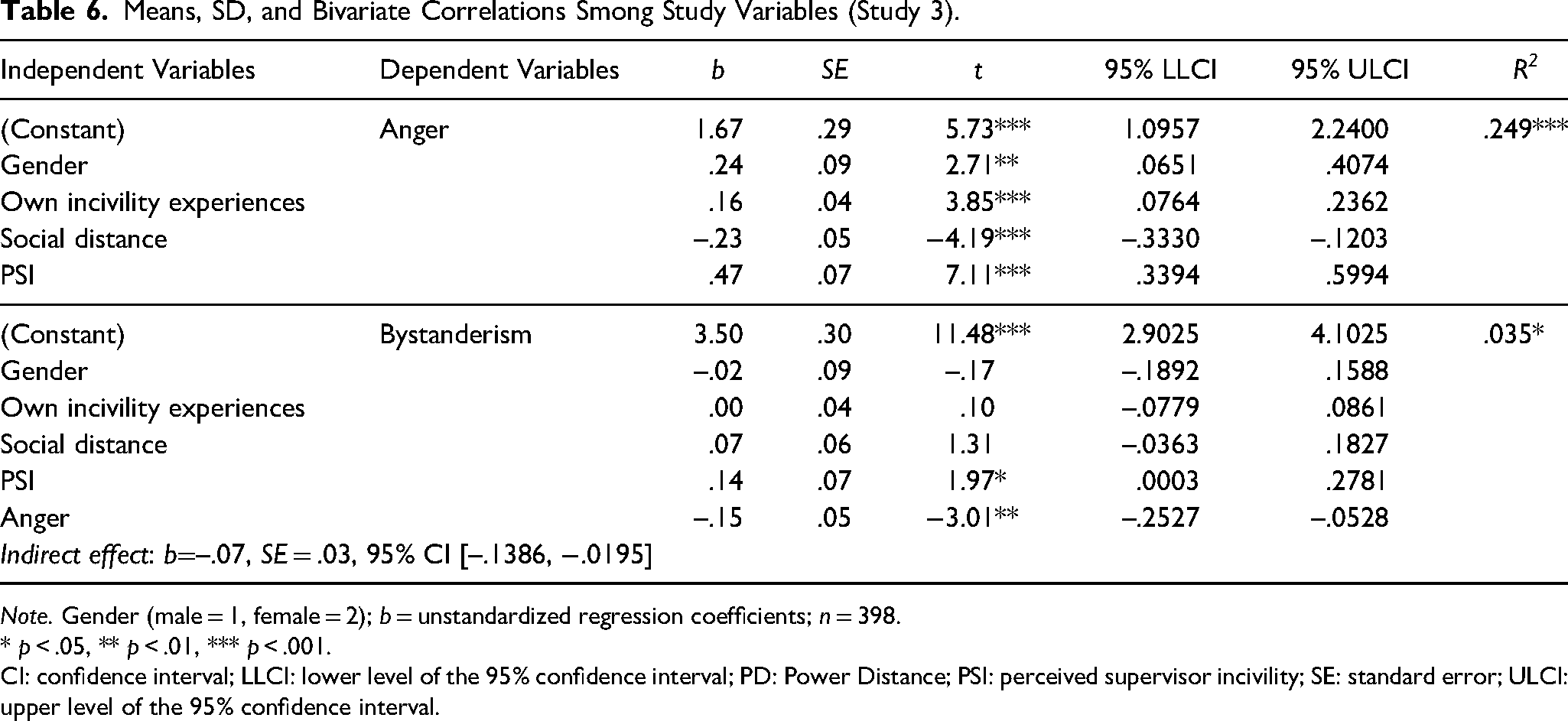
To test Hypothesis 1a, we ran a hierarchical regression analysis in which we entered control variables (i.e., gender, social distance, and own experiences of supervisor incivility) in the first block and then PSI in the second block. As in Studies 1 and 2, our results demonstrated that observer PSI explained a significant amount of variability in anger (ΔR2 = .097; b = .47, p < .001), indicating additional support for Hypothesis 1a. To test Hypothesis 1b, we also conducted a hierarchical regression analysis, and the results showed that observer anger explained bystanderism significantly (ΔR2 = .015; b = −.12, p < .01). These provided additional support for Hypothesis 1b. Next, using PROCESS Macro (Hayes, 2013; Mackinnon et al., 2000), the results of mediation analysis showed that b coefficients were significant for the path from PSI to anger (R2 = .249, b = .47, p < .001) and for the path from anger to bystanderism (R2 = .035, b = –.15, p < .01) (Table 6). Subsequently, we generated 5,000 bootstrap samples to estimate 95% confidence interval around the estimated indirect effect (Shrout & Bolger, 2002). Same as Study 1, findings showed that observer anger negatively mediated the relationship between PSI and bystanderism (b = −.07, standard error [SE] = .03, 95% confidence interval [CI] [–.1386, −.0195]). Thus, Hypothesis 1c also received additional support.
Means, SD, and Bivariate Correlations Smong Study Variables (Study 3).
Note. Gender (male = 1, female = 2); b = unstandardized regression coefficients; n = 398.
* p < .05, ** p < .01, *** p < .001.
CI: confidence interval; LLCI: lower level of the 95% confidence interval; PD: Power Distance; PSI: perceived supervisor incivility; SE: standard error; ULCI: upper level of the 95% confidence interval.
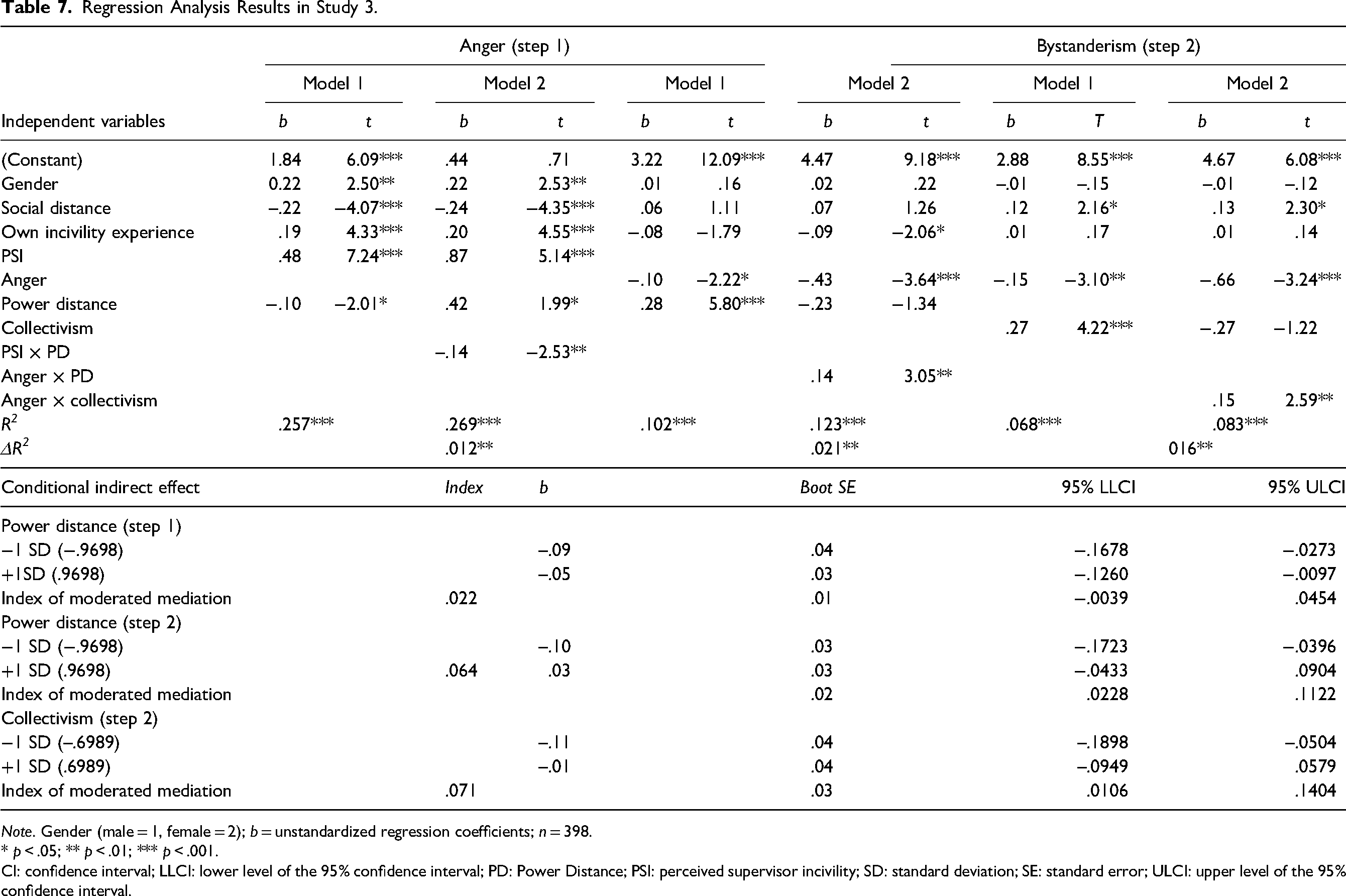
To test the moderation effects and the conditional indirect effects (Baron & Kenny, 1986; Hayes, 2013), we mean-centered all the predictors and tested the hypotheses, and the results were shown in Table 7. Hypothesis 2a predicted that the positive relationship between observer PSI and anger would be moderated by power distance at the first step of the research model, such that the relationship would be weaker when power distance was higher rather than lower. As predicted, findings revealed that the interaction term between PSI and power distance was statistically significant (ΔR2 = .012, b = −.14, p < .01). Figure 3 shows the interaction graph plotted at the low (slope = .61, SE = .09, p < .001) and high (slope = .34, SE = .09, p < .001) levels of power distance (Aiken & West, 1991). Therefore, consistent with Study 2, Hypothesis 2a was also supported in Study 3. Hypothesis 2b proposed that the negative relationship between observer anger and bystanderism would be moderated by power distance at the second step of our research model, such that the relationship would be weaker when power distance was higher rather than lower. Findings showed that the interaction term between observer anger and power distance was statistically significant (ΔR2 = .021, b = .14, p < .01). The interaction graph plotted at low (slope = –.21, SE = .06, p < .01]) and high (slope = .06, SE = .08, p > .05, ns.) levels of power distance is shown in Figure 4 (Aiken & West, 1991). Thus, Hypothesis 2b was supported.
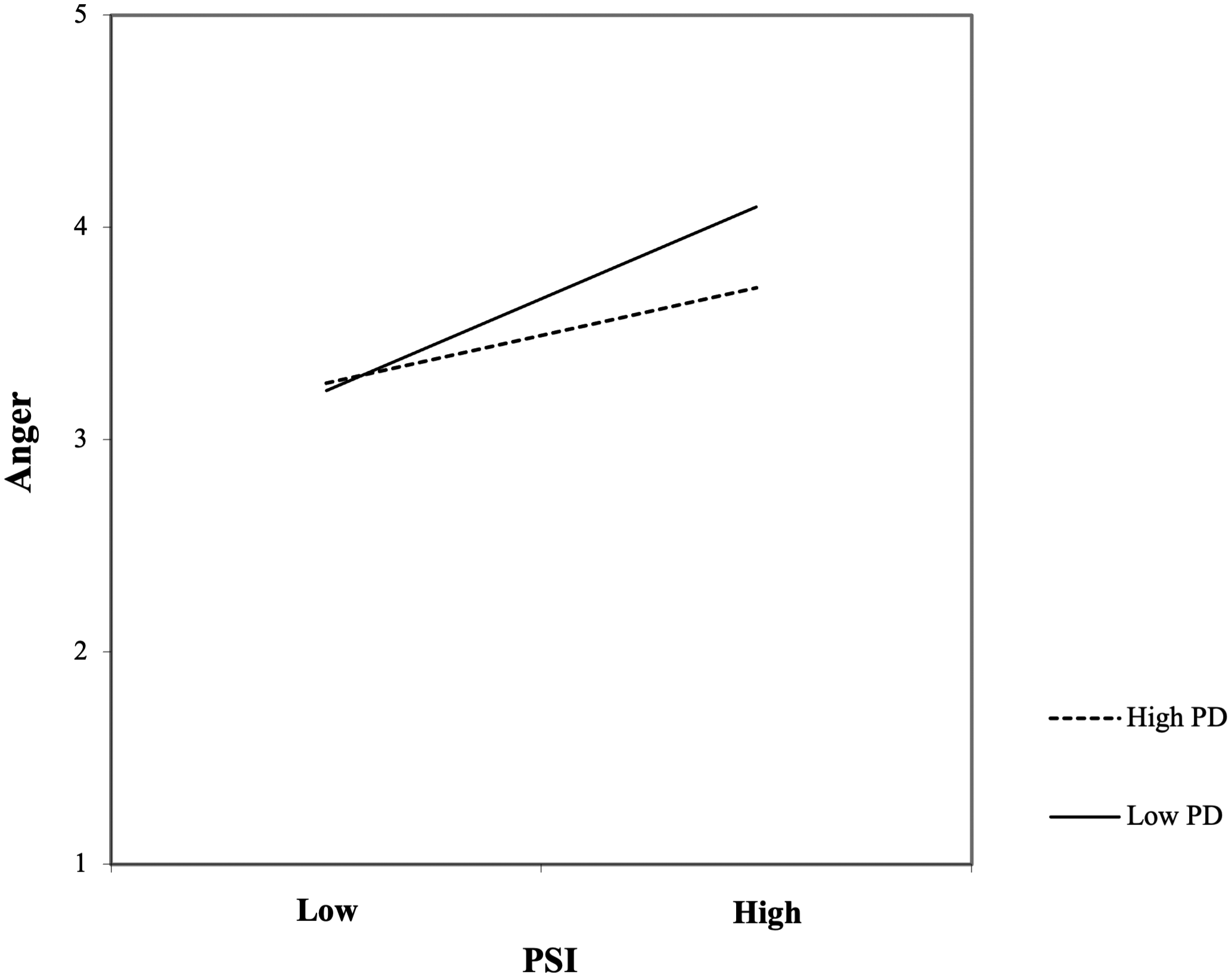
Moderating effect of power distance (Study 3). This figure shows the moderating effect of power distance at the first step on the relationship between PSI and anger. PSI: perceived supervisor incivility.
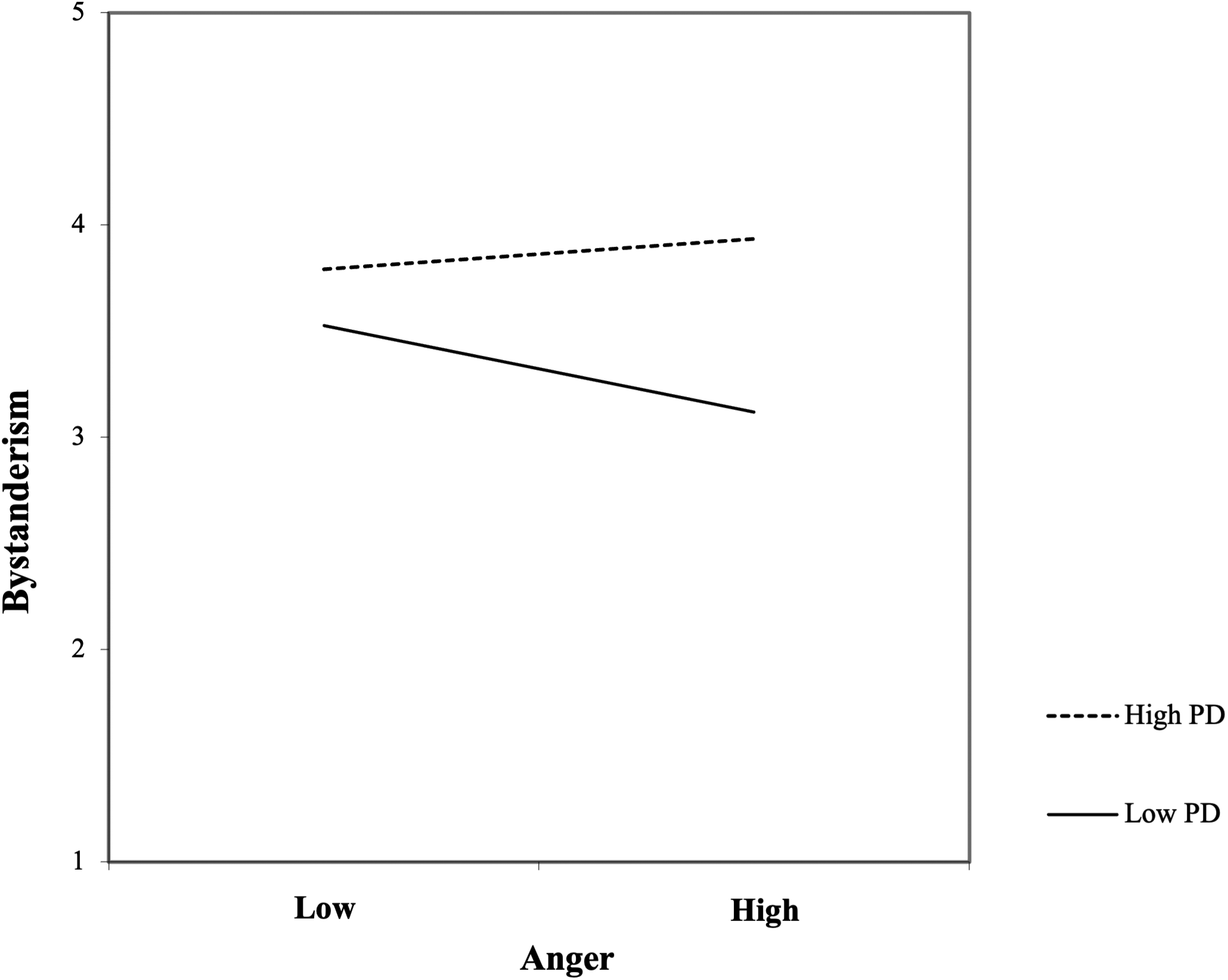
Moderating effect of power distance (Study 3). The figure shows the moderating effect of power distance at the second step on the relationship between anger and bystanderism.
Regression Analysis Results in Study 3.
Note. Gender (male = 1, female = 2); b = unstandardized regression coefficients; n = 398.
* p < .05; ** p < .01; *** p < .001.
CI: confidence interval; LLCI: lower level of the 95% confidence interval; PD: Power Distance; PSI: perceived supervisor incivility; SD: standard deviation; SE: standard error; ULCI: upper level of the 95% confidence interval.
For Hypothesis 2c, we tested the conditional indirect effect by power distance at the first stage (Hayes, 2013). Using 5000 bootstrap samples, results showed that the conditional indirect effects were significant for power distance at both a low level (conditional indirect effect = –.09, SE = .04, 95% CI [–.1678, −.0273]) and a high level (conditional indirect effect = –.05, SE = .03, 95% CI [–.1260, −.0097]). However, the index of moderated mediation indicated no conditional indirect effect of PSI on bystanderism via anger across values of power distance (Index = .022, SE = .01, 95% CI [–.0039, .0454], ns.). Thus, Hypothesis 2c was not supported. Hypothesis 2d posited that the negative indirect relationship between PSI and bystanderism via anger would be moderated by power distance at the second step of the model, such that the relationship would be weaker when power distance was higher rather than lower. The bootstrapped results showed that the conditional indirect effect was significant when power distance was low (conditional indirect effect = –.10, SE = .03, 95% CI [–.1723, −.0396]), but was not significant when power distance was high (conditional indirect effect = .03, SE = .03, 95% CI [–.0433, .0904], ns.). The index of moderated mediation was statistically significant (Index = .064, SE = .02, 95% CI [.0228, .1122]). Taken together, our findings supported Hypotheses 2a, 2b, and 2d; Hypothesis 2c was not supported.
Hypothesis 3a proposed that the negative relationship between anger and bystanderism would be moderated by collectivism, such that the relationship would be weaker when collectivism was higher rather than lower. Findings showed that the interaction term between anger and collectivism was statistically significant (ΔR2 = .016, b = .15, p < .01). The interaction graph was plotted at low (slope = –.24, SE = .06, p < .001) and high (slope = –.03, SE = .07, p > .05, ns.) levels of collectivism (Aiken & West, 1991) (Figure 5). Thus, the results supported Hypothesis 3a. Finally, Hypothesis 3b posited that the negative indirect relationship between observer PSI and bystanderism via anger would be moderated by collectivism, such that the relationship would be weaker when collectivism was higher rather than lower. With respect to Hypothesis 3b, the bootstrapped results showed that the conditional indirect effect was significant for low level of collectivism (conditional indirect effect = –.11, SE = .04, 95% CI [–.1898, −.0504]), but not significant for a high level of collectivism (conditional indirect effect = –.01, SE = .04, 95% CI [–.0949, .0579], ns.). The index of moderated mediation was statistically significant (Index = .071, SE = .03, 95% CI [.0106, .1404]). Thus, Hypothesis 3b was supported.
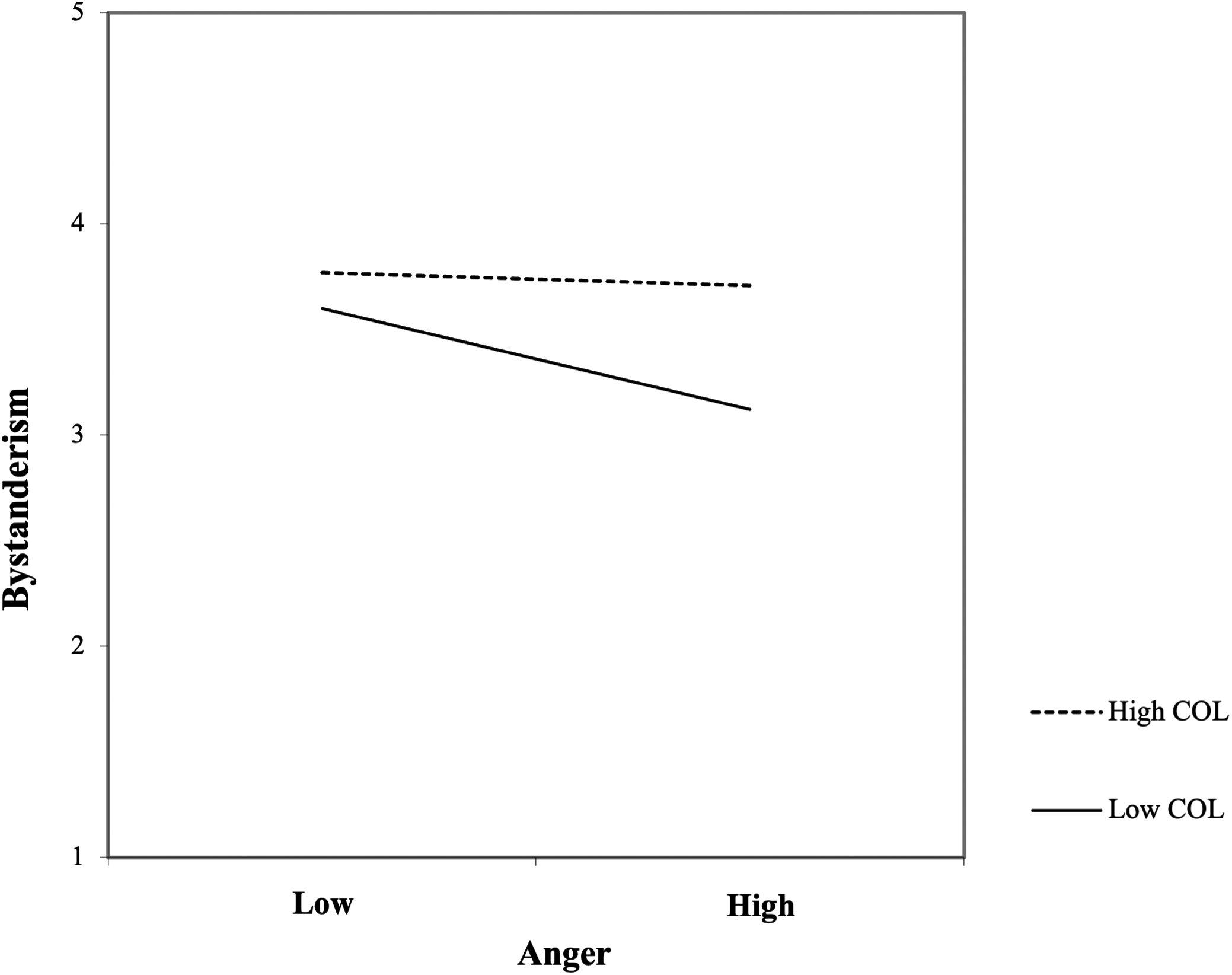
Moderating effect of collectivism (Study 3). This figure shows the moderating effect of collectivism on the relationship between anger and bystanderism.
Discussion
Study 3 supported Hypotheses 1a, 1b, 1c, 2a, 2b, 2d, 3a, and 3b except for Hypothesis 2c. Therefore, Study 3 offered additional support for the mediation effect found in Study 1 and the moderation effect of power distance at the first step found in Study 2. In addition, Study 3 revealed that power distance and collectivism at the second step were statistically significant in their moderation effects and moderated mediation effects.
General Discussion
Across three studies, we investigated the mechanisms and conditions under which observer PSI gave rise to bystanderism through anger. Specifically, using an online scenario (Study 1), we corroborated the mediation model in which anger would negatively mediate the relationship between PSI and bystanderism. Subsequently, with an online experiment (Study 2), we substantiated that observer power distance moderated the positive relationship between PSI and anger. Finally, a survey study (Study 3) replicated the findings in Study 1 and 2, and added the evidence that observer power distance and collectivism at the second step showed the moderation effects as well as the moderated mediation effects. In the following sections, we discuss the theoretical and practical implications of our findings.
Theoretical and Practical Implications
Integrating the perspective of cultural regulation of emotion with deontic justice theory, our study has several theoretical and practical implications. First, our study contributes to the existing literature on observers’ emotional and behavioral reactions to PSI by introducing bystanderism and examining the underlying mechanism that gives rise to it. Specifically, our study corroborates that as observers perceive higher levels of supervisor incivility, they are more likely to experience anger (Folger, 2001; Haidt, 2003), which in turn leads to less withholding of a genuine expression about their cognitive, behavioral, and/or affective evaluations of PSI. These results suggest that while a high level of anger is likely to translate into visible and observable behaviors, there still exists a spectrum of behavioral response to anger that remains beneath the surface. Put another way, it implies that bystanderism can be considered a behavioral response to anger that falls below a certain threshold. This empirical evidence supports the existence of an invisible behavioral response to anger, such as quiescent bystanderism which deliberately suppresses the expression of an angered mind (Pinder & Harlos, 2001).
Second, our study contributes to the understanding of a paradoxical phenomenon that bystanderism is pervasive (Huang et al., 2019; Kish-Gephart et al., 2009; Pinder & Harlos, 2001; Staub, 2002) despite the presence of observers’ anger reaction to ubiquitous PSI by integrating the perspective of cultural regulation of emotions with deontic justice theory. According to deontic justice theory (Folger, 2001; Haidt, 2003), it is expected that observer PSI will evoke a strong approach-oriented emotion, anger, and thereby decrease bystanderism. However, the reality tells a different story. Workplace bystanderism continues to prevail despite frequent occurrences of supervisor incivility and the subsequent anger experienced by observers (Huang et al., 2019; Kish-Gephart et al., 2009; Morrison, 2014; Pinder & Harlos, 2001; Staub, 2002). To unravel this paradoxical phenomenon, our study examined the dynamic process by which observer PSI leads to bystanderism via anger by shedding light on the reappraisal and suppression effects of power distance, along with the suppression effect of collectivism. As a result, our finding revealed that observers’ power distance and collectivism act as buffers, mitigating the influence of anger evoked by PSI and contributing to the persistence of this paradoxical phenomenon.
Third, our study urges organization leaders to be beware of employee bystanderism and implement appropriate solutions for both supervisors and subordinates. When employees feel anger in response to PSI, their bystanderism may indicate the deliberate omission of overt behaviors (e.g., punitive behaviors against supervisors, and helping behavior toward the victims). In this case, since the action tendency of observer anger may still linger in their minds (Kish-Gephart et al., 2009), the suppressed expression of anger may resurface at a later time (e.g., supervisor-directed deviant behaviors and low work commitment). Furthermore, since bystanderism fails to signal that uncivil behaviors are improper (Hudnut, 1971), it may let supervisors miss an opportunity to recognize the seriousness of their uncivil behaviors, potentially leading to chronic incivility. Given these, the presence of employee bystanderism can have negative impact on supervisor, employees, and the organizations at work. To prevent employee bystanderism, organization leaders should not only set the norms of desirable supervisory behaviors that managers should follow but also include such norms in mandatory training programs for managers. At the same time, support systems should be in place to create an environment where employees feel safe from supervisor incivility and have proper channels to express their feelings, opinions, and thoughts (e.g., regular employee surveys and exit interview).
Finally, our study suggests that organization leaders should be aware of employees’ increasingly diverse cultural values and implement formal policies and practices that take this deep-level of diversity into consideration. Our findings demonstrated that individual-level cultural values act as a suppressor of the action tendency of anger and, in turn raise bystanderism. Therefore, organizational leaders should be aware that this suppression may not only lead to a decrease in assistance for victims (e.g., helping behavior and voice) but also have long-lasting effects by inhibiting the expression of positive emotions later on (Gross & John, 2003; Mesquita et al., 2014). Furthermore, the deliberate suppression of emotional expression to manage lingering anger consumes cognitive resources that can otherwise be allocated to job performance (Gross & John, 2003). It would thus behoove organization leaders to implement a variety of proactive measures (e.g., anonymous surveys, training programs for managers) that empower employees to utilize their resources for job performance instead of consistently suppressing the expression of their negative emotions.
Limitations and Future Directions
As with any research, this study also has some limitations. First, similar to most studies on supervisor incivility, our study has a limitation in inferring causality about a mediation effect. In Study 1, although an online scenario was used, the scales measuring anger (i.e., mediator) and bystanderism (i.e., dependent variable) were administered at the same point in time. Likewise, in Study 3, a cross-sectional design was employed. For these reasons, it is difficult for us to establish a causal inference inherent in the mediation path. Therefore, future researchers should consider adopting a longitudinal design to provide more robust evidence for causal relationships.
Second, in Study 2, although we carefully designed and conducted an experiment using a sample of college students with fully trained confederates to ensure internal validity (Porath & Erez, 2009; Cho et al., 2021), the situation-specific sample within a laboratory setting may pose a threat to the generalizability of our study results. Particularly in leadership research, compromising external validity can be more of a concern, considering the power dynamics and unique superior–subordinate relationships that leadership entails (Brutus & Duniewicz, 2012; Yammarino et al., 1998), both within and beyond the confines of our study setting. Therefore, we urge future researchers to employ ethically sound methods to examine the covert aspects of workplace incivility and bystanderism that involve both leaders and followers in the real-world context. In addition, the current study needs to be replicated in other types of jobs and organizations to further examine the generalizability of our study results.
Third, Study 3 may be susceptible to CMV issues because all responses to the focal variables in Study 3 were collected from self-reported single-source (i.e., followers). Despite this concern, Berry et al. (2012) argued that someone else would likely fail to have sufficient awareness of the covert aspects and intentions of others. Since most of our focal construct (i.e., observer PSI, anger, and bystanderism) involves sensitive and covert aspects of individuals, it would be difficult and deficient to capture such aspects by asking someone else. In addition, requesting the coworker (i.e., the victim) and superior (i.e., perpetrator) to rate observer PSI, anger, and bystanderism may place the observers in an uncomfortable situation (American Psychological Association, 2017). Given the nature of our study, we believe that self-report data is a reasonable alternative to test our model. Having said that, to address potential concerns caused by CMV, we implemented several proactive measures, which will be outlined below. First, we followed a temporal separation recommended by Podsakoff et al. (2003). In addition, using the ULMC technique to detect the degree to which CMV is present in our data, we corroborated that CMV is unlikely to be a factor in our data (Melamed et al., 1995). Finally, given that CMV can severely deflate interaction effects (Siemsen et al., 2010), the significant moderation effects of power distance and collectivism gave us additional confidence that our findings are not due to CMV. That said, we hope future research adopts the more advanced methods that are better insulated from CMV concerns.
Conclusion
In this article, we explored bystanderism—an invisible behavior of the observers—in contrast to the visible behaviors (e.g., voice and helping) to obtain new insight into a paradoxical phenomenon of the widespread coexistence of PSI and bystanderism. To unveil the mechanisms and contingencies under which observer PSI translates into bystanderism, we first proposed that observer anger would mediate the relationship between PSI and bystanderism. Subsequently, our model further suggests that the mediation effect would be buffered when observer power distance and collectivism are high. Empirical evidence from three studies largely supported our theoretical model, suggesting the importance of viewing supervisor incivility as an organizational issue rather than a personal conflict between individuals. Based on these findings, we emphasize the need for decision makers to implement formal policies and practices aimed at reducing bystanderism in the workplace. By addressing covert and elusive bystanderism, organizations will be able to mitigate insidious supervisor incivility, thereby fostering a virtuous cycle of organizational justice.
Supplemental Material
sj-sav-1-jlo-10.1177_15480518231205436 - Supplemental material for Feeling Anger yet Not Speaking Up: The Role of Observers’ Cultural Values in Anger and Bystanderism in Response to Supervisor Incivility
Supplemental material, sj-sav-1-jlo-10.1177_15480518231205436 for Feeling Anger yet Not Speaking Up: The Role of Observers’ Cultural Values in Anger and Bystanderism in Response to Supervisor Incivility by Da Yeon Her and Hock-Peng Sin in Journal of Leadership & Organizational Studies
Supplemental Material
sj-sav-2-jlo-10.1177_15480518231205436 - Supplemental material for Feeling Anger yet Not Speaking Up: The Role of Observers’ Cultural Values in Anger and Bystanderism in Response to Supervisor Incivility
Supplemental material, sj-sav-2-jlo-10.1177_15480518231205436 for Feeling Anger yet Not Speaking Up: The Role of Observers’ Cultural Values in Anger and Bystanderism in Response to Supervisor Incivility by Da Yeon Her and Hock-Peng Sin in Journal of Leadership & Organizational Studies
Supplemental Material
sj-sav-3-jlo-10.1177_15480518231205436 - Supplemental material for Feeling Anger yet Not Speaking Up: The Role of Observers’ Cultural Values in Anger and Bystanderism in Response to Supervisor Incivility
Supplemental material, sj-sav-3-jlo-10.1177_15480518231205436 for Feeling Anger yet Not Speaking Up: The Role of Observers’ Cultural Values in Anger and Bystanderism in Response to Supervisor Incivility by Da Yeon Her and Hock-Peng Sin in Journal of Leadership & Organizational Studies
Footnotes
Acknowledgment
The lead author expresses gratitude to Ravi S. Gajendran for his continuous support and to Stav Fainshmidt for providing valuable advice during the initial stages of idea development.
Declaration of Conflicting Interests
The authors declared no potential conflicts of interest with respect to the research, authorship, and/or publication of this article.
Funding
The authors disclosed receipt of the following financial support for the research, authorship, and/or publication of this article: This work was supported by the Florida International University.

Supplemental Material
Supplemental material for this article is available online.
Author Biographies
Appendix 1. Scales,Validity,and Reliability
| Scale | Sources | Measurement items | α | CR | AVE |
|---|---|---|---|---|---|
| PSI | Cortina & Magley (2009); Cortina et al. (2001) |
1. Supervisor (instructor) put the coworker (student) down or was condescending to the coworker.a 2. Supervisor ignored the coworker or failed to speak to the coworker. 3. Supervisor made jokes at the coworker's expense. 4. Supervisor yelled, shouted, or swore at the coworker. 5. Supervisor (instructor) paid little attention to the coworker's (student's) statement or opinion.a 6. Supervisor (instructor) made demeaning or derogatory remarks about the coworker.a 7. Supervisor (instructor) addressed the coworker (student's) in unprofessional terms, either publicly or 1. privately. a 8. Supervisor (instructor) ignored or excluded the coworker (student) from professional camaraderie.a 9. Supervisor (instructor) doubted the coworker's (student's) judgment on a matter over which he has 2. responsibility.a 10. Supervisor made unwanted attempts to draw the coworker into a discussion of personal matters. |
.75 | .81 | .68 |
| Anger | Kassinove et al. (1997) |
1. I felt angry about the supervisor's behaviors. 2. I was burned up at the supervisor's behaviors. 3. I was furious at the supervisor's attitudes. |
.86 | .77 | .63 |
| Power distance | Early & Erez (1997) |
1. In most situations, the boss should make decisions without consulting their subordinates.b 2. In work-related matters, bosses have a right to expect obedience from their subordinates. 3. Employees who often question authority sometimes keep their boss from being effective.b 4. Once a top-level executive makes a decision, people working for the company should not question 1. it. b 5. Employees should not express disagreements with their boss. b 6. Boss should be able to make the right decisions without consulting with others. b 7. Boss who let their employees participate in decisions loses power.b 8. A company's rules should not be broken—not even when the employee thinks it is in the company's best interest. |
.87 | .94 | .88 |
| Collectivism | Singelis et al. (1995) |
1. I would do what would please my family, even if I detested that activity. 2. I usually sacrifice my self-interest for the benefit of my group. 3. We should keep our ageing parents with us at home. 4. Children should feel honored if their parents receive a distinguished award. 5. I would sacrifice an activity that I enjoy very much if my family did not approve of it. 6. Children should be taught to place duty before pleasure. 7. I hate to disagree with others in my group. 8. Before taking a major trip, I consult with most members of my family and many friends. |
.77 | .68 | .52 |
| Bystanderism | Kim (2003) |
1. I said nothing in order not to make things worse. 2. I went about my business as usual after witnessing the situation. 3. I turned a blind eye to the scene since I didn't want to expose myself to such a tense situation. 4. I did not bother to meddle in their affair since there was nothing I could do. 5. I simply let the situation pass because it had got nothing to do with me. |
.85 | .82 | .61 |
Note. The alphas, CRs, and AVEs in this table denote the values of Study 3. Study 1 includes three fewer items (i.e., except for underlined items) than Cortina and Magley's (2009) 10-item incivility scale (Study 3). The a-marked items from Cortina et al.'s (2001) seven-item scale (i.e., a-marked items and the 10th item) assess PSI in Study 2, whereas b-marked items do power distance in Study 3. α: Cronbach's α; AVE: average variance extracted; CR: construct reliability; PSI: perceived supervisor incivility.
References
Supplementary Material
Please find the following supplemental material available below.
For Open Access articles published under a Creative Commons License, all supplemental material carries the same license as the article it is associated with.
For non-Open Access articles published, all supplemental material carries a non-exclusive license, and permission requests for re-use of supplemental material or any part of supplemental material shall be sent directly to the copyright owner as specified in the copyright notice associated with the article.
