



Abstract
Organizations performing in stressful life-risking environments have unique features that directly influence human lives and communities’ well-being. Such organizations allocate vast resources to identify potential leaders as early as possible to direct and train them for leadership positions. Combat military contexts represent such organizations. The current manuscript offers a 5-year prospective study, addressing a critical gap in the literature regarding the generalization of established predictive leadership success models to leadership in extreme conditions. The study integrates leaders’ characteristics, followers’ perceptions, leadership training, and real-life contexts. Findings show that leadership traits measured years before enlistment related to leadership success, years down the line, when congruent with specific training contexts. Candidates higher in both task and relationship characteristics and in leadership emergence progressed to the senior leadership course compared to dropouts. Leadership emergence, measured in the first phase of leadership training, was the most relevant, stable, and reliable leader’s success predictor, directly and indirectly, of leadership development, above and beyond leadership characteristics. Findings emphasize the important influence of contextual congruency on leadership success in extreme organizations. Current findings may foster better leadership prospects for communities’ well-being and may improve cost-effectiveness in the leadership development processes in extreme occupations.
Introduction
Strong leadership is a vital component of thriving organizations (Deal et al., 2001) that affects work-team processes and outcomes (Randall et al., 2011). It may even influence the very existence of some organizations and their members (Eversole et al., 2012). Specifically, extremely stressful occupational disciplines are unique in their atypical levels of pressure and danger (Kellett, 2013) and the consequences of ineffective performance (Bell et al., 2018). Repeated calls have been heard for more research to facilitate the understanding of the factors that contribute to the leader's effectiveness within such crucial organizations (Keeton et al., 2012). This study accepted the challenge and concentrated on the unique aspects of the leadership development structure in these organizations that usually apply active sorting and training processes (Kotter, 2006) to locate their potential leaders among those who grew inside the organization and include differentiated phases of training and real-life, as such, extreme organizations have a situational strength that summons implicit leadership cues and strict explicit instructions regarding the desirability of potential behaviors which enhance the nature of predictor and performance relationships (Collins et al., 2019; Meyer et al., 2010). Due to the inherently high environmental risks and dangers, organizations operating in extreme high-risk, high-gain environments have a great need for effective leadership (Hannah et al., 2009). These specific leadership requirements promote the necessity of the most professional and trained leadership for better capability and functioning (Korelskaya et al., 2019). Therefore, high-risk, high-gain organizations are especially challenged to identify and develop potential leaders (Avolio & Vogelgesang, 2011) and are often willing to invest significant amounts of resources in the pursuit of optimal leadership identification, sorting, training, and assigning (Waldman et al., 2013). Nevertheless, the complexity of uncovering leadership potential lies in its fundamental essence since it refers to someone who may take on the leadership role at a future point (Luria et al., 2019a). As such, the identification process of potential candidates must rely on the search for preliminary features among those who are not yet in formal leadership positions (Lombardo & Eichinger, 2000). Research on identifying such features, mostly in conventional contexts, uncovered the importance of personality profiles (Bonner, 2010) and environmental demands (Killian et al., 2011). The current research aimed to expand the existing knowledge by exploring their interaction effects on leadership success in high-risk environments.
Research projects typically focus on one aspect and explore its relationship to concurrent leadership success. Short-term studies have shown the independent influence of leaders’ characteristics (Luria et al., 2019b; Showry & Manasa, 2014) and context (Kaplan et al., 2010) on leaders’ success. Importantly, leadership success depends on the congruency between leadership characteristics and the context (Oh & Moon, 2014), and higher congruency promotes leadership success (Holland, 1996). Complementary leaders’ characteristics such as motivation to lead and cognitive ability were found to predict leadership emergence (Luria & Berson, 2013) and influence organizational success in specific contexts (Guzmán et al., 2020).
Preferable leadership features have been thus suggested to include a mix of behavioral, cognitive, and social skills that depend upon situational factors. Padilla and Lunsford (2013) offer an integrative approach regarding leadership as a triangle of three major components: (A) the leader's characteristics and qualities, (B) the followers’ perceptions of the leader (Acton et al., 2019), and (C) the context in which the influencing process occurs. These insights suggest that understanding the interaction between the leadership elements expands possibilities for better leadership implementation and functioning. Taken together, this study aspired to elaborate on the existing understandings about leadership success by integrating the congruency notion with the leadership components and observing their reciprocal influence along a long-term prospective progressive leadership development process as they ship from junior to senior training phases through real-life performance. Additionally, the study addresses a critical gap in the literature regarding the generalization of established leadership models to leadership in extreme conditions.
Focusing on two well-differentiated leadership characteristics and followers’ perceptions about the leader in different typical contexts of high-risk, high-gain organizations, we enrolled the project beginning with the preliminary phase of candidates’ sorting and identification during the recruitment phase, proceeding to leadership training and professionalization until the fulfillment of the formal role of a leader, so to be able to explore the claims that each of these components, leadership traits, followers’ perceptions, and context, depend on and influences each other. Together, they constitute the leaders’ ability to perform adaptively and effectively.
Positive impacts of both task- and relation- leadership orientation on subordinates (Gangwar et al., 2013) indicate that each cluster has an important influence, and both are necessary for the leadership role (McCleskey, 2014). Nevertheless, the traits’ effects on leader behavior and effectiveness are enhanced by the relevance of the traits to the situation in which the leader functions (Tabernero et al., 2009), meaning that in certain contexts, specific characteristics may contribute to success in emergent leaders (Virtaharju & Liiri, 2019). Importantly in extreme organizations, task-oriented characteristics are crucial in life-risking situations as it empowers the leader and reduces role ambiguity and conflicts (Bobbio et al., 2012). Task-orienting characteristics may thus be most augmented in leaders already in their early leadership training and early real-life phases for combat leader roles as compared with senior training and experienced leaders.
Recognizing and accepting an individual as a leader is an inevitable element in determining who will elicit trust and obligation from followers (Ammeter et al., 2002) when fulfilling the leadership role (Schneider et al., 2017). The term leadership emergence refers directly to this conceptualization. It relates to the followers’ perceptions and attributions regarding the leader as meaningful and worthy of leadership responsibilities (Wellman, 2017). Leadership emergence is connected to attaining more leadership positions (Reichard et al., 2011) and more effective and appreciated performances (Foti & Hauenstein, 2007). Thus, it may be that being recognized as a leader by others is the most predictive factor for eventually becoming a successful leader (DeRue & Ashford, 2010); and possibly the most stable and relevant element among the leading elements. Leadership theories suggest that leadership emergence interacts with traits in a cyclical pattern, such that leaders can respond to the needs of their followers as a function of specific situational factors in a way that is dependent on their own abilities and characteristics (Karriker, 2005). Therefore, it is suggested that leader characteristics and leadership emergence may interact to produce the most successful leadership abilities in certain situational contexts.
Extreme contexts demand professional and effective leaders who can cope with stress and respond to this highly stimulating and challenging work environment (Kellett, 2013). Thus, long-term training procedures are common for obtaining the most professional and prepared employees and team leaders in these organizations. Such heightened training relies on a developmental leadership model based upon the idea of growing the leadership ranks out of their realms (Avni, 2010). Deriving from this model is the supposition that being a leader in extreme occupations is a gradual process with several phases of identifying and developing suitable candidates at different levels while screening out those less suited (Bishop, 2004). Each phase is considered a different context, each with its unique demands and targets.
In this study, we focused on a test case of the Israeli Defense Force (IDF) combat leadership setting as a model of an organization that operates in a demanding and stressful environment. Organized in a hierarchical leadership structure, this organization is strictly structured and divided to clear methodological leadership phases. It offers a well-documented hierarchy of leadership training, with a bountiful amount of potential leadership candidates, along with a rare opportunity of comparing those who proceed with the leadership process and those who do not. Thus, it provides a fertile ground for investigating the relationship between the primary leadership components in different contexts of distinct progressive phases of appointing the most optimal leaders in high-risk, high gain organizations: starting with two leadership training contexts, Junior and Senior; through the context of the first formal leadership functioning in real-life combat units.
Leadership training is essential for preparing leaders and vital for organizational success (Anthony, 2017) in extreme organizations (Cohen, 1999). Specifically, training has proven beneficial in preparing leaders and organizations for varied situations, establishing identification and commitment to the organization (Kets de Vries, 2005), improving team outcomes (Bertram et al., 2015), and conflict resolution (Farver et al., 2016). Although all are directed to train and develop, different leadership training programs differ in their target population, purposes, and the ways to fulfill them (Tett & Burnett, 2003). While training context was proven effective and reliable (Bertram et al., 2015; Farver et al., 2016) in predicting leadership success in real-life (Lacerenza et al., 2017), several differences exist between training and real-life contexts. One major difference concerns the unique shielded characteristics of training (Rausch & Allio, 2005), where people learn to interpret situations similarly and possess similar beliefs regarding appropriate behavioral responses (Dalal et al., 2020), as compared to the less certain and less structured nature of real-life context (Bartone et al., 2013). Therefore, the current research explored and compared success in the context of three leadership phases:
Phase 1: Junior leadership training context—introduces and integrates young potential leaders to the leadership role. This phase emphasizes more uniformity and professionalism (Pang & Yeo, 2012) and aims to train junior leaders to express conformity (Narad et al., 2013), comply with instructions of their superiors, limit individual judgment (Shuai et al., 2011) and get the task done while keeping their leadership position and attending their subordinates. Thus during this phase, task-oriented characteristics are most relevant since this context requires obligation and the implementation of instructions (Rabinowitz et al., 2000).
Phase 2: Senior leadership training context—prepares and develops senior leaders for expanded responsibilities, including the supervision of junior leaders and their subordinates indirectly and the involvement with a broader vision of the organizational needs and its cohesion. As senior leaders in extreme organizations evolve from lower ranks (Avni, 2010), the advanced training programs rely upon cadets’ familiarity with the organizational values and their richer experience. Hence, they are given more responsibility and allowance to express autonomy and personal values and motivate subordinates out of identification, which involves personal emotions and beliefs regarding their role (Chan et al., 2008). These demands emphasize the relation-oriented characteristics, including social relations and the ability to commit to a long-term cause (Rabinowitz et al., 2000).
Phase 3: Leadership in real-life context—while job-analytic approaches may relate more to specific characteristics relevant to performance in structured leadership training contexts, this may not apply to the first real-life contexts (Fallesen et al., 2011). An emerging leader is expected to achieve organizational targets in a variety of methods, given the more loosened and unexpected real-life context that demands flexibility yet uncompromised importance for goal attainment. In contrast to training contexts, particularly in the first real-life leadership role in combat contexts, success depends on one's ability to respond to situational demands and be acknowledged by followers as a leader right from the start (Judge et al., 2009). Therefore, leadership emergence may be relevant across contexts, above and beyond specific personality characteristics, particularly when a person shifts from the relatively shielded training environment to the real-life combat leader role (Alavi & Gill, 2017), where it may even act as a compensating factor when certain characteristics are lacking. Taken together, we develop a leadership success model in high-risk organizations (Figure 1).
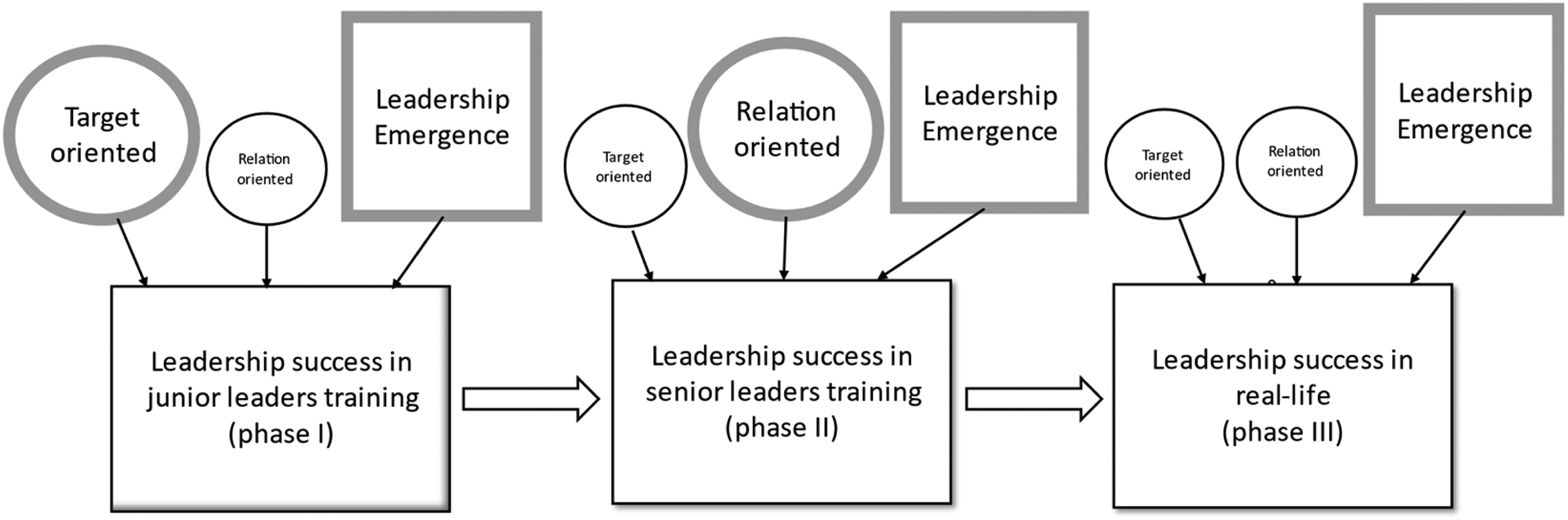
The prediction model of leadership success in extreme organizationsa
The model yields two main operational hypotheses:
Each phase of combat leadership context demands different leadership characteristics that will predict leadership success. Specifically, in the training context, there is a gradual process whereby at first, mainly the presence of task-oriented characteristics is related to success in junior leadership training. In contrast, relation-oriented characteristics relate mostly to success in advanced leadership training. In real-life contexts, where being perceived as a leader is vital to achieving goals, leadership characteristics are not directly related to leaders’ success, but task orientation may interact with leadership emergence in predicting success. Leadership emergence interacts with leadership characteristics across contexts and gains dominance as the leadership process progresses. As such, leadership emergence attained years before a first real-life leader’s role takes place may compensate for the lack of the preferred characteristics and will inevitably become the primary predictor of leadership success above and beyond specific leadership characteristics, particularly in a real-life context.
Method
Study Design and Procedure
The study employed a longitudinal prospective follow-up design (Flow chart in Figure 2). Participants’ data regarding cognitive and behavioral scores, combined with personality self-reports, were collected prospectively in four consecutive phases of their military service.
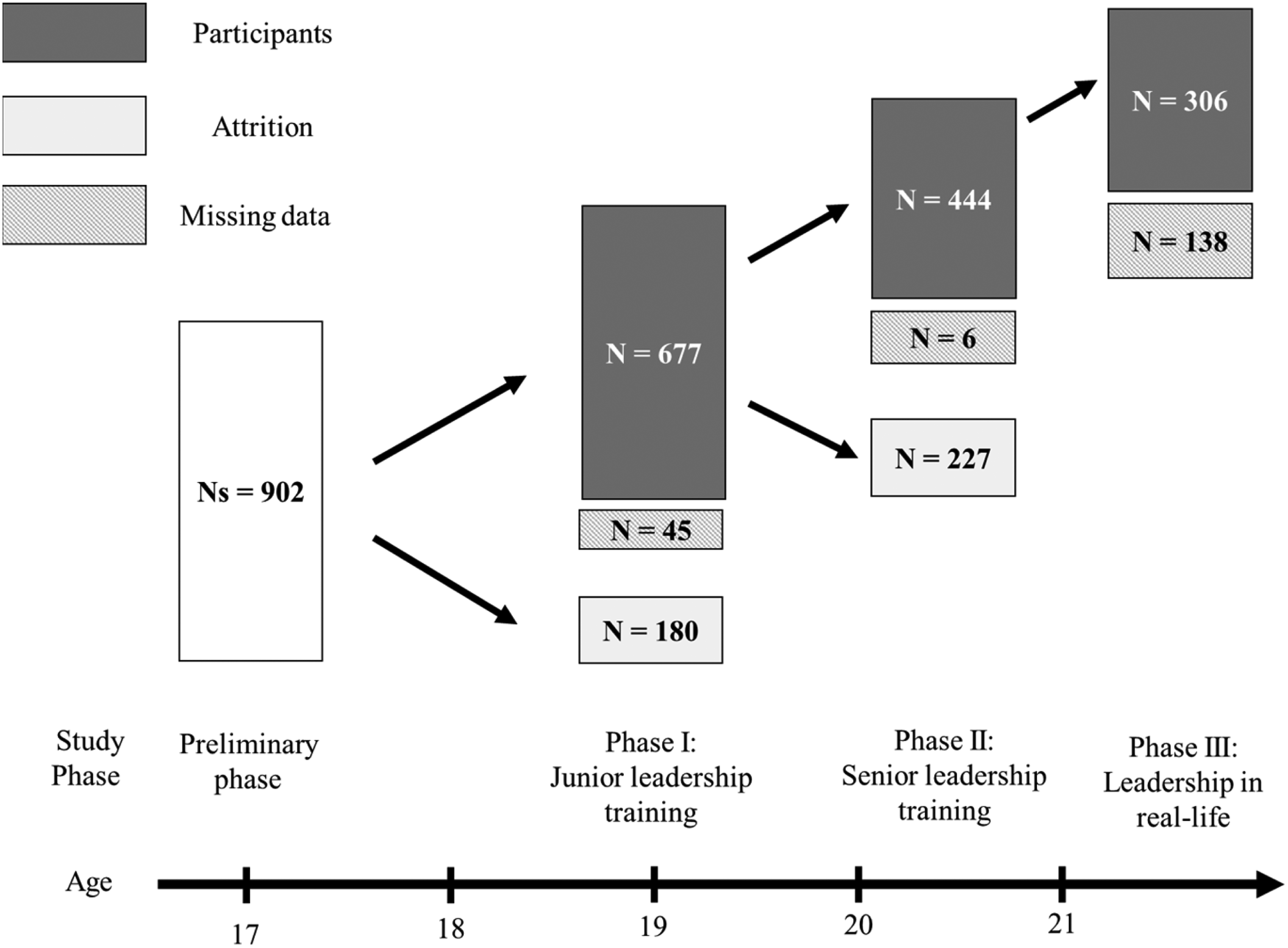
Candidates climbing successfully the leadership development process and those who dropped out.
Participants
Data from a population of 902 late adolescent Israeli native males were collected prior to enlistment to a military combat unit in the IDF. Participants started as high-school students in their last two years of studies and were followed until their roles as formal officers in real life. As anticipated, not all participants progressed to all stages of leadership, leading to an inevitable participant 'dropout' from attaining a leadership role of 407 participants during the 3.24 years follow-up period until the end of the training phases. It should be clarified that the dropout processing across phases does not mean data absence. Instead, it is a normal process of selection in which the best fitting according to professional standards, system needs, and leadership motivation continues to the next leadership level (Goldenberg, 2004). The dropout rate in the current project matches that of previous reports. Importantly, the characteristics of those who dropped out were compared to those who proceeded on the leadership ladder at each phase (Goldenberg, 2004).
Preliminary phase: Appraisal and sorting of candidates for military service in the recruitment phase before enlistment using a structured interview for scoring task- and relation-oriented characteristics.
Junior leadership training: Designated for training candidates for the role of junior commander of squads in combat units. An overall junior leadership score and a leadership emergence score were collected for each participant at the end of the training. Of the 721 participants who completed the junior leadership training course (180 did not), 45 commanders had missing data (4.88%; 6 had missing grades, 38 had missing leadership emergence scores). No significant differences were found in leadership characteristics (task: t(312.66) = 0.88, n.s; and relation orientation: t(334.04) = 1.58, n.s) between participants who completed junior leadership training (task: M = 3.522, SD = 0.668, people: M = 3.635, SD = 0.432) and those who failed to proceed (task: M = 3.476, SD = 0.627, people: M = 3.584, SD = 0.376). There was no difference in leadership emergence score between participants who completed junior leadership training (M = 32.250, SD = 25.727) and those who failed to proceed [(M = 34.360, SD = 24.539), t(139.73) = -0.79, n.s]. Participants who completed junior leadership training showed lower intelligence score (M = 66.957, SD = 13.141) than participants who did not (M = 69.358, SD = 13.304), t(293.88) = -2.19, p = .029, d = -0.18; and younger age at enlistment (M = 18.991, SD = 0.681) than participants who did not (M = 19.112, SD = 0.707), t(288.32) = -2.08, p = .038, d = -0.18.
Senior leadership training—Designated for training candidates for the role of a senior commander of platoons in combat units, which demands higher responsibility and authority than the junior commander role. An overall senior leadership score was collected for each participant. Of the 444 junior leaders who completed the training course, and their data were collected at the end of the course (227 did not), 6 had missing data. Participants who completed senior leadership training showed higher leadership emergence (M = 39.189, SD = 28.46) than participants who failed to proceed (M = 28.982, SD = 26.122), t(507.86) = 4.68, p < .001, d = 0.37; higher relation orientation (M = 3.687, SD = 0.44) than participants who failed to proceed to this phase (M = 3.536, SD = 0.4), t(511.56) = 4.49, p < .001, d = 0.35; as well as higher target orientation (M = 3.573 , SD = 0.676) than participants who failed to proceed to this phase (M = 3.425, SD = 0.645), t(491.20) = 2.80, p = .005, d = 0.22. Participants who finished senior leadership training also performed better in junior leadership training (M = 86.432, SD = 1.609) than participants who failed to proceed (M = 84.472, SD = 1.598), t(425.50) = 3.82, p < .001, d = 0.32; had higher intelligence score (M = 68.221, SD = 1.609), than participants who failed to proceed (M = 64.549, SD = 1.598), t(434.80) = 3.38, p <.001, d = 0.28. No difference in age during evaluation in junior leadership training was found between participants who completed senior leadership training (M = 19.769, SD = 0.727) and those who failed to proceed (M = 19.780, SD = 0.728), t(62.07) = −0.10, n.s.
Leadership in real-life—The leading role in combat units. 306 leaders were evaluated in their first formal leadership role. A structured leadership appraisal of supervisors and colleagues regarding leadership functioning was gathered at the end of at least 3 m. in a real-life leader's role. One hundred thirty-eight graduates from senior leadership training had not yet reached at least 3 m. in a real-life leader’s role at the time of data collection, and therefore their data are not available.
Measures
Measures of Leaders’ Characteristics
Relying on the classification of leadership characteristics into task-orientation and relation-orientation clusters (Yukl et al., 2002), task-oriented leadership covers task management features that require the responsibility of supervising and organizing followers to reach organizational targets (Rüzgar, 2018). On the other hand, relation-oriented leadership focuses on the followers’ job satisfaction, motivation, and work-life balance (Rüzgar, 2018). These leaders treat their followers as equal, acknowledge their ideas and feelings, and actively encourage them to add their input (Henkel et al., 2019). Thus, characteristics of responsibility and organizational ability are relevant to the task-oriented cluster, while characteristics of social ability, autonomy, motivation, and activeness relate more to the relation-oriented cluster.
Factor analysis confirmed this classification (Suppl. 2). Relying on the structured interview and its 6 sub-scales, these sub-scales were combined into two factors (based on Eigenvalue>1), using a principal component analysis (PCA). The two factors explained 47.9% of the variance of the structured interview. Following Varimax rotation, factor 1 included the organizational ability and responsibility sub-scales, while factor 2 included the sociability, individual autonomy, motivation, and activeness sub-scales. This analysis confirmed our theoretical characterization that responsibility and organizational ability should be grouped to represent task-oriented characteristics, while sociability, individual autonomy, motivation, and activeness should be combined to represent relation-oriented characteristics.
Measures of Leadership Success
Data Analyzes
Three regression models with moderation were calculated to predict success at each leadership training phase, as well as in the first role in the real-life context. For each model, age and intelligence were entered as covariates. Next, leadership emergence and task- and relation-oriented characteristics were included, followed by the interaction between leadership emergence and each leadership characteristic. All variables were mean-centered before analysis.
Results
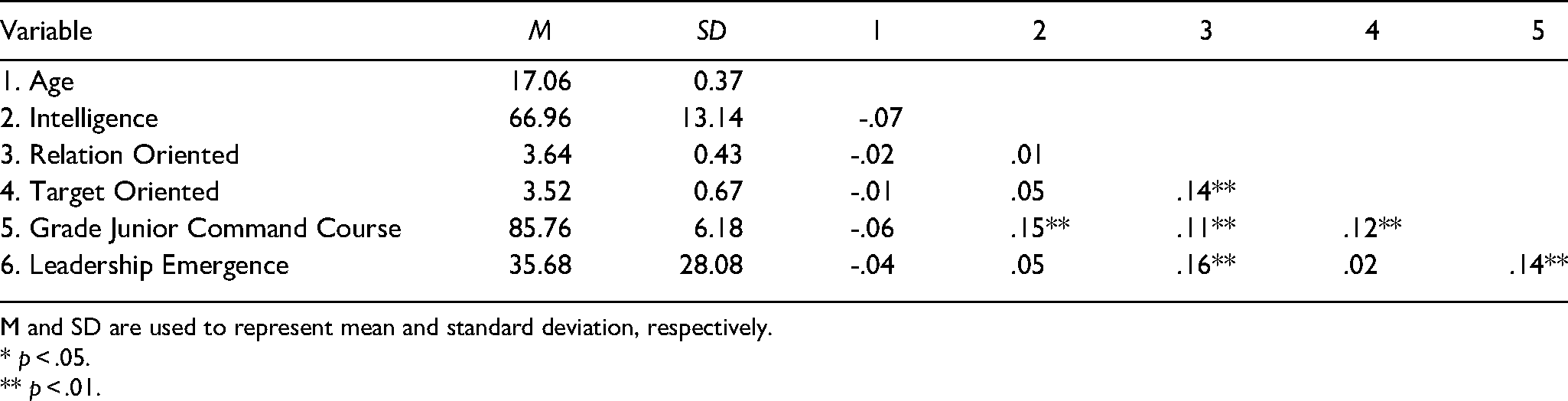
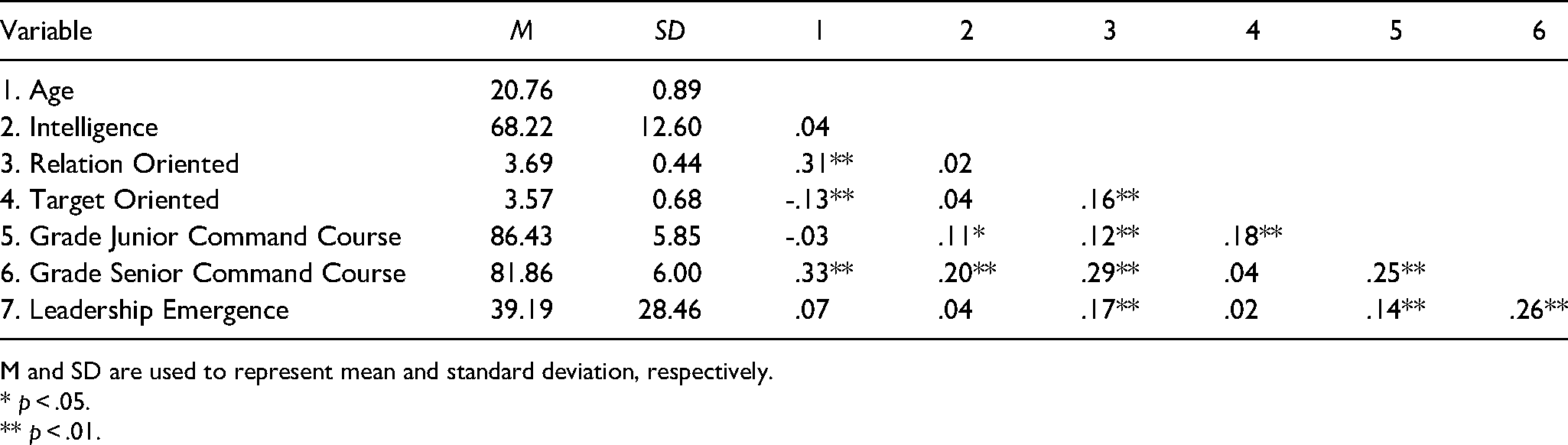
First, we calculated Pearson's correlations between the study variables at each phase as a preliminary investigation of the relationships between leadership scores and leadership orientations and emergence. Tables 1–3 present means, standard deviations, and correlations.
Leader Characteristics: Means, Standard Deviations, and Correlations at the Junior Command Course (N = 677).
M and SD are used to represent mean and standard deviation, respectively.
* p < .05.
** p < .01.
Leader Characteristics: Means, Standard Deviations, and Correlations at the Senior Command Course (N = 444).
M and SD are used to represent mean and standard deviation, respectively.
* p < .05.
** p < .01.
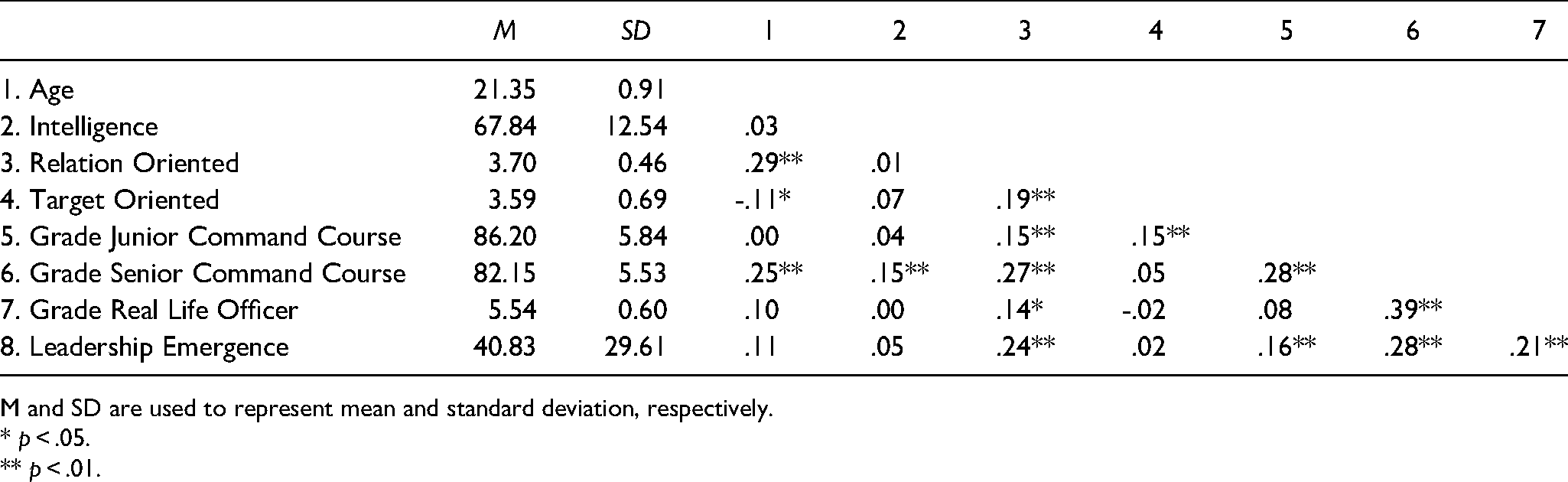
Leader Characteristics: Means, Standard Deviations, and Correlations at Real Life Officer Phase (N = 306).
M and SD are used to represent mean and standard deviation, respectively.
* p < .05.
** p < .01.
Some stability was found between leadership scores in the three research phases. Specifically, higher leadership scores in junior training were associated with higher leadership scores in senior training. Leadership scores at senior training were positively associated with real-life leadership scores. However, leadership scores in junior training were not associated with real-life leadership scores. Relational orientation and task orientation were moderately associated, suggesting that they are partially dependent on each other and partially distinct.
As hypothesized, higher leadership scores at junior training were associated with stronger task orientation, relation orientation, and higher leadership emergence scores. As postulated, higher leadership scores were associated with stronger relational orientation and higher leadership emergence scores at senior training and in real life, but not with task orientation. In addition, intelligence was associated with leadership scores in junior and senior training. Age also played a role. Older participants (age range 18.66–22.01) displayed higher leadership emergence and higher relation orientation, and less task orientation.
Predicting Leadership Success Using Leadership Characteristics and Leadership Emergence in Different Leadership Functioning Contexts
To understand how leadership emergence interacts with task-oriented and relation-oriented characteristics in improving leadership success in different phases of leadership, Junior and Senior training courses, and a real-life leader role, we examined 3 regression analyzes with a moderation model predicting success in the 3 phases, respectively. For all three prediction regression models, moderations were represented by interactions between leadership emergence × task-oriented and leadership emergence × relation-oriented characteristics, while age and intelligence were included as covariates. All predictor variables were mean-centered.
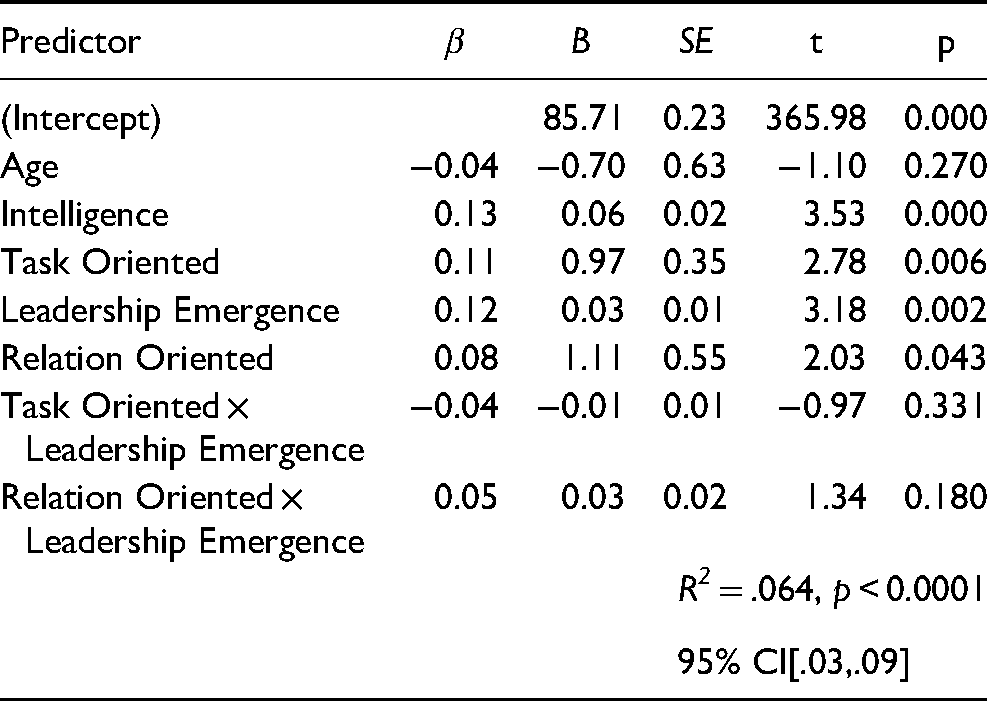
Predicting leader's success in Junior leadership training—For regression results, see Table 4. The overall model was significant (R2 = .064, F (7,699) = 6.52, p < .001), with a small effect size (f² = 0.068). Both characteristic factors were positively related to leadership score, with more influence on task-orientation compared to relation-orientation, signifying that the more task-orientation, and to a minor extent also relation-orientation a cadet exhibits, the greater the success in Junior leadership training. Also, intelligence and leadership emergence were positively related to the junior leadership training score, indicating that higher cognitive abilities and higher leadership emergence relate to success in this phase. As opposed to the hypothesis, no significant interaction effects between task-orientation or relation-orientation and leadership emergence were seen in predicting success in the junior training phase.
Regression Results Predicting Junior Leadership Training Success Score.
Predicting leaders’ success in senior leadership training
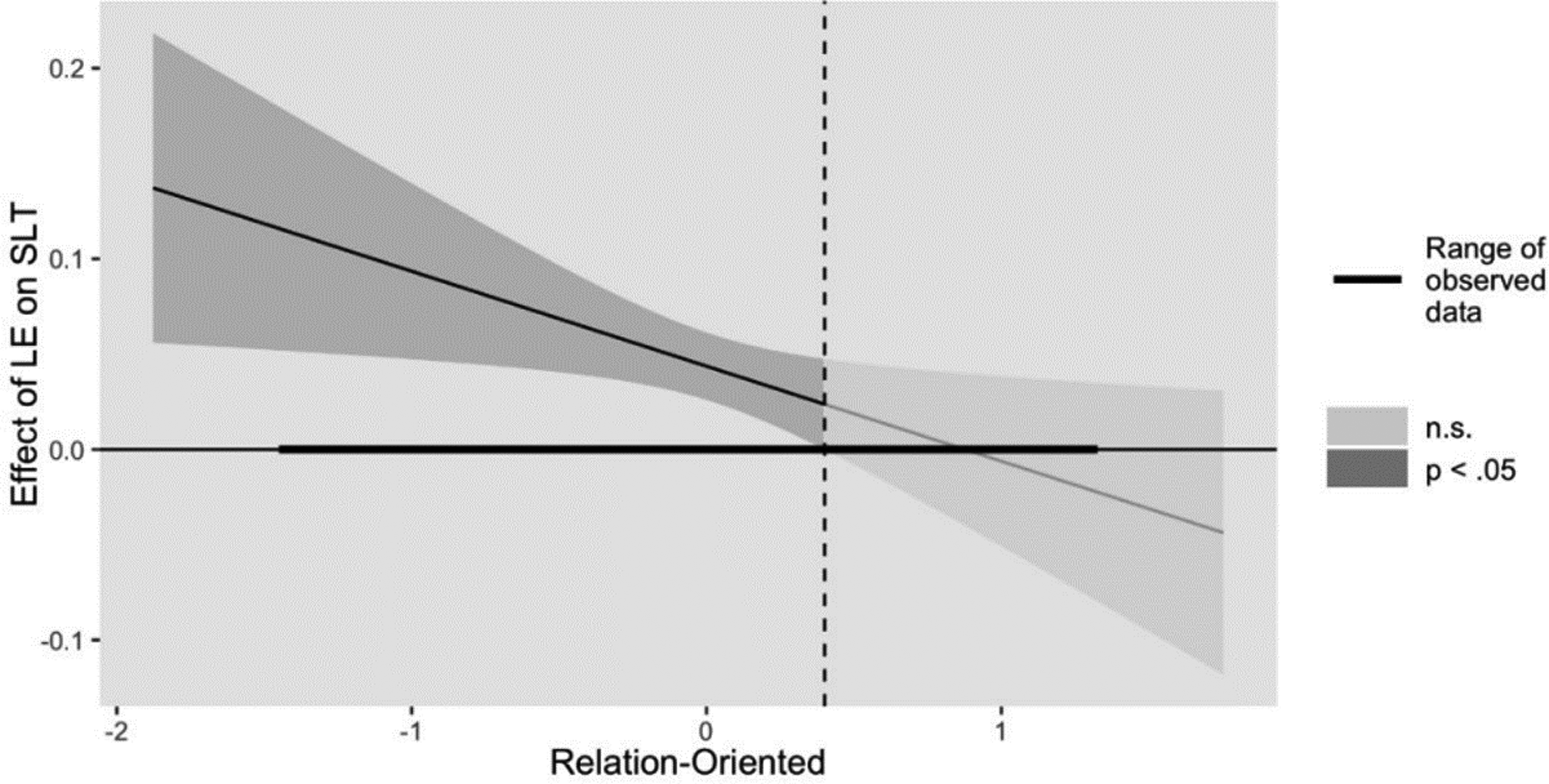
The moderating effect of relation-oriented characteristics on the relationship between leadership emergence and success scores in senior leadership traininga,b
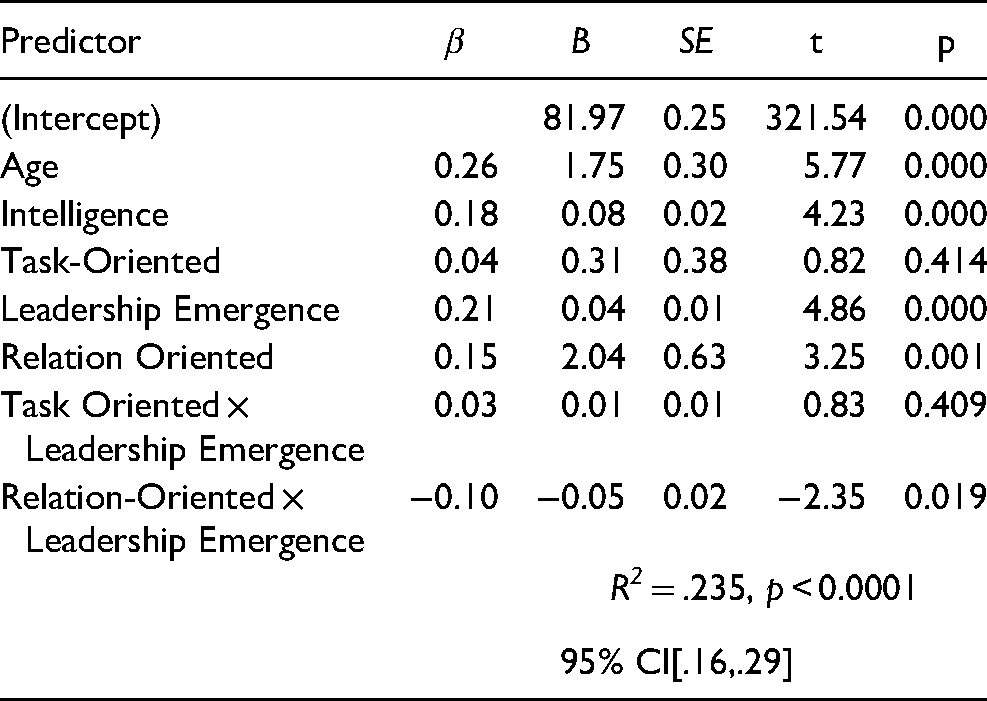
Regression Results Predicting Senior Leadership Training Success Score.
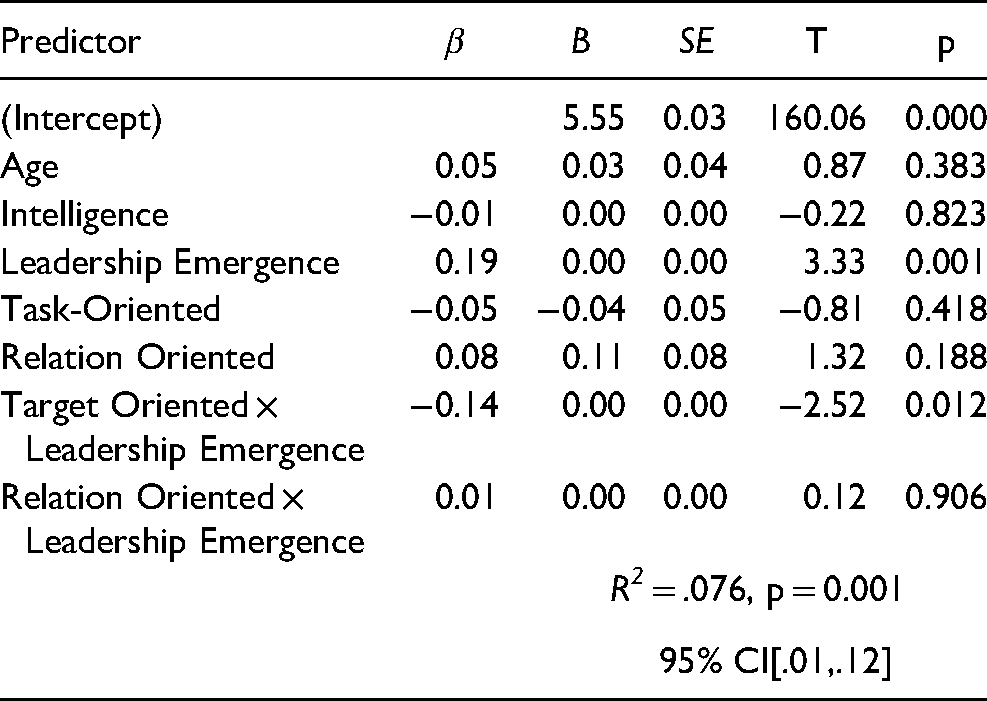
Predicting leaders’ success in real-life—The overall regression model was significant (Table 6, R2 = .076, F (7,298) = 3.503, p = .001), with a small effect size (f2 = 0.082). While leadership characteristics and intelligence had no relation to leadership success in this phase, leadership emergence was positively related to leadership success. Additionally, task-orientation characteristics moderated the relationship between leadership emergence and success score. Directions were such that when task orientation was low, leadership emergence was positively related to success scores in real life, suggesting that leadership emergence compensates for lacking traits (Figure 4).
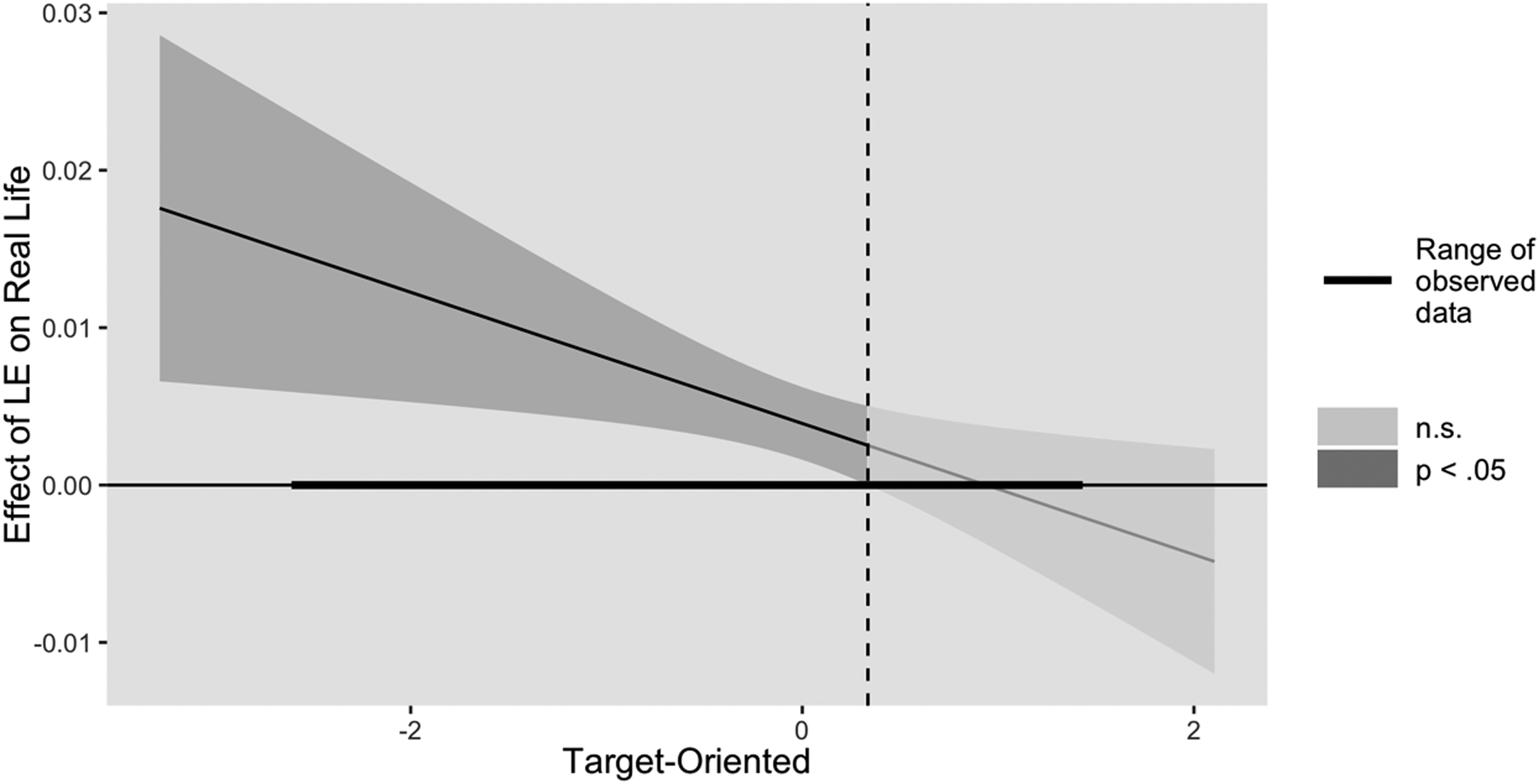
The moderating effect of target-oriented characteristics on the relationship between leadership emergence and leadership success scores in real lifea
Regression Results Predicting Real-Life Leadership Success.
Taken together, the findings provide support for an integrated model positing the importance of congruency enabled by the interactions between leader's traits, and leadership emergence, in extreme dynamic settings such as leading combat unit operations.
Discussion
This comprehensive prospective longitudinal research was designed to expand the knowledge concerning leadership components and the way they influence leadership quality in meaningful phases of leaders’ development with a particular focus on extreme high-risk, high-gain organizations as are leadership combat unit operation roles. The study addresses a critical point missing so far regarding the inclusion of established leadership models, built based on normal environments, on leadership in extreme conditions such as military combat leadership. Current findings show that the interaction between the notion of leader-organization congruency with cardinal preliminary leadership components has a positive impact on congruent leadership characteristics in combat leadership training contexts. Further, findings show a positive impact of leadership emergence across contexts on leadership success, particularly upon training graduation and enrolling in a real-time combat unit leadership role. The rare extended period of this research thus broadens the ability to anticipate the direction and intensity of the influence of leadership components on leaders’ success along their leadership development process, particularly in extreme organizations.
The critical nature of high-risk, high-gain organizations (Geier, 2016) demands that effective and competent leaders cope with stress and respond to highly stimulating and challenging work environments (Kellett, 2013). The study focused on an examination and comparison of each phase and its interaction with leadership components regarding leaders’ success. Starting in the late teen ages, when most candidates were in high school, we followed potential leaders from the preliminary sorting phase before entering the organization, throughout training phases, until becoming formal leaders, almost five years later, when those of them who became leaders took on their first real-life leadership roles in the early- mid-twenties. The design enabled comparing those who successfully completed each phase with those who have not, using a prospective prediction design, while studying the level of success at each phase of the process. As such, the uniqueness of this study was its design which enabled exploring a full theoretical model of leadership success to offer new leadership theory insights concerning leader’s behavior in extreme contexts (Greasley & Bocârnea, 2014).
The current project explored leadership in the military combat organization as a model. Overall, the findings provided support for the postulated model in an extreme organization training combat units and success in the first real-life leadership role. Relying on the notion that large, complex organizations of different types are more alike than different regarding the challenges of attracting, developing, and retaining talented people (Ulmer, 2010), current notions may plausibly be generalized to other extreme occupations defined by high stress and danger (Brandt et al., 2016) and hierarchical training designs (Albrecht, 2010), such as law enforcement, rescue workers, and crisis response organizations (Hannah et al., 2013) that apply similar sorting and qualification systems.
Fitting with the congruency model, initial assumptions of the research formulated in an integrated model that was explored in the current project recognized the importance of both trait theories that seek to identify characteristics associated with successful leaders (Colbert et al., 2012); and influence theories that depict leadership as leaders-followers “social exchange process’, and the dynamics between them (Lee et al., 2019) as a function of context and leadership development (Middlehurst, 2008).
Former research has shown preferable characteristics for leaders in high-risk organizations, like higher adaptability needed for quickly selecting the appropriate response to the challenge (Bass et al., 2003). Leadership emergence that represents the followers’ perceptions regarding the leader has been shown to apply across a wide variety of situations and to be facilitated by some extreme contexts (Shamir & Howell, 2018), like in emergency situations where leaders are most needed (DeChurch et al., 2011). Nevertheless, despite being proven as separately influential, no former research has integrated the three components of leadership traits, followers’ position, and the context, particularly not in extreme organizations, and explored their power in predicting leadership success prospectively. The exploration of leadership success in the combat military setting in light of 3 leadership components: task and relation-oriented characteristics, leadership emergence, and context of three different phases in the leadership development process yielded the following highlights.
Personality Leadership Characteristics Predict Training Combat Leaders’ Success
Differences were postulated regarding the relations between leadership characteristics and contexts and their influence on leadership success (Grint, 2005). Task and relation orientation were found to be related in training for combat leadership and real-life performance in different ways. Both personality orientations were effective in predicting success in junior leadership training, while relation orientation gained dominance during senior leadership training.
The findings concerning the efficacy of task orientation in junior leadership training noted currently extend the available literature on the contexts in which task orientation predicts leadership success, indicating better performances at junior leadership levels for leaders in a wide variety of organizations (public and private, large and small, and from different sectors including banking, communication, manufacturing, and transportation) who are more diligent and dutiful (Furnham et al., 2007), and are more compliant to rules (Howard & Howard, 2001), compared to senior leaders; Current findings extend these findings to junior combat leadership training success—and in that regard, point to a unifying principle for junior leaders across a wide array of contexts. Importantly, in the current context of junior training, the relation orientation was already effective in predicting success along with intelligence and leadership emergence. Findings support our supposition that in the contexts of training, where the demands are more distinct, structured, and clearly defined (Delise et al., 2010), stronger leadership characteristics, in general, are associated with a greater probability of progressing to the senior leadership course, and characteristics that are more congruent with the contextual demands enhance leadership functioning (Høigaard et al., 2008). Specifically, the high levels of task-oriented characteristics, which relate to the objective and performance aspects of leadership (Nguyen et al., 2012), acquired here years before enlisting, were related to increased leadership success in the junior leadership training context where more obedience, precision, and accuracy are important (Kirke, 2010).
Still, even in the junior leadership training, leadership trainees benefit from being sensitive to others, understanding the bigger picture, identifying with the organization, and showing commitment to intensified effort (Hamad, 2015). Findings strengthen the notion that task and relation orientations are not mutually exclusive (Schermerhorn et al., 2008), and in some cases, as shown in government employees, leaders should be high on both (Mujtaba et al., 2010). This combination of high orientation on task and relation characteristics, which was investigated through several meta-analyzes of a wide variety of private and public civilian organizations, has been shown to increase organizational identification of subordinates and enhances their readiness to work hard (von Rosenstiel, 2009), as well as their ability to solve difficulties in production and social levels (Montano et al., 2017). Current findings extend this view by showing its efficacy in predicting leadership success also in the junior-level leadership training context of an extreme organization, where both fulfilling tasks accurately as well as integrating into the organization are important missions at this phase.
Comparably, when exploring the effect of baseline personality characteristics on the more advanced leadership training context, current findings support our hypothesis that relation-oriented characteristics, which emphasize more interpersonal and individual consideration characteristics (McShane & Von Glinow, 2002), predict success in the advanced leadership training context that highlights more holistic and global comprehension of the high-risk organization and its accompanying leadership responsibilities. As potential leaders in many extreme organizations evolve and develop from the organization's reserve, the succession of leadership constructs a collective identity and assimilation to baseline values and characteristics (Mattila et al., 2017) that align with more identification with the organization (Martin, 2002). Therefore, strict rule-following and obedience effective in junior leadership are gradually replaced by the need for relation-orientation (Paustian-Underdahl et al., 2014), including extraversion (Furnham & Crump, 2015), autonomy, and organizational commitment (Gal, 1985; Nguyen et al., 2012) at senior levels.
Due to unattainable leadership scores for those who did not complete the training, a bivariate comparison concerning task and relation orientation was performed to examine group differences between participants who proceeded to the next levels of leadership training and those who did not. The analysis showed that candidates who did not proceed along the process had lower relation-oriented characteristics. These findings deepen the notion of congruency that effective implementation of individual characteristics relevant to leadership depends on the relevant training context (Bonner, 2010; Cummings et al., 2018). Since training is foundational for positional leadership roles (Gibbs, 2020) and useful in overcoming daily problems as well as in the growth of the organization, recognizing that both task and relation leadership characteristics that can enhance leadership cadets’ performance in training may improve the leadership development process in the extreme organizations is highly important and strengthen the notion concerning of the importance of congruency between characteristics and contexts (Volodina et al., 2015) even in extreme organizations, possibly of various sorts (Baron & Parent, 2015).
Important context and demand differences were noted in predictors of success along with the training and real-life phases. Although relevant to all phases, the generalization of the current theoretical leadership model that has been tested thus far in fairly standard contexts was found to be relevant mostly to the senior leadership training level of combat leaders, where it yielded a moderate effect size in predicting leadership success. Compared to being significant in junior training and real-life contexts with a small effect size. These results emphasize the importance of exploring current models for predicting leadership success in extreme contexts to understand the generalization limits of current models. The differences among factors predicting success in the three combat leadership contexts suggest the notion that there is no 'one model that fits all' contexts. The results stress the significant difference in requirements and performance of leaders at the different levels and what factors predict success at each level.
Differences between contexts are exhibited as the formality of leadership varies across action and transition phases of the task cycle (Burke et al., 2018). Studies have shown that leadership traits and skills that are positively correlated with organizational success in stable environments differ from traits and skills that characterize successful leadership in turbulent environments (Quinn, 1992). More specifically, differences were first found between the vital training courses compared to success in the first real-life combat leadership role, emphasizing the differences between the pre-constructed and clearly defined context of training courses (Maertens et al., 2017) and real-life contexts. In the structured training context, specifically defined leader's characteristics impact success. Intelligence was measured in the current paradigm, mostly by examining crystalized intelligence (mathematical, formative, and linguistic understanding tests). This measure was meaningful in the training context but not in real life. Indeed, leadership learning and training emphasize structured learning and practicing, where crystalized abilities have an impact (Almeida et al., 2010). On the other hand, in real-life battlefields, leadership success was not directly affected by crystalized IQ scores (Stanford, 2003) but rather by leadership emergence. These findings possibly imply the importance of fluid intelligence for real-life success in extreme battle contexts. Further, followers may be sensitive to fluid intelligence in addition to relation-orientation, possibly accounting for the prominent effect of leadership emergence in the current model (Mumford et al., 2000).
Leadership Emergence Predicts Leadership Success Across Contexts
Leadership emergence predicted leaders’ success in all tested contexts, i.e., in the junior and senior leadership training and particularly so in a real-life leadership role. These findings correspond with the understanding that, notwithstanding differences in characteristics or situational demands, the most effective leaders all have a high impact on others (Luria et al., 2019b). Assessed at the earliest phase of the junior leadership training course, even before fulfilling a leader's role, leadership emergence, previously noted to be a stable component (Foti & Hauenstein, 2007), is shown here to be a stable predictor across contexts, including the tough transition from “schooling” to the first role as a leader in the field. While leadership characteristics were significant predictors in the structured strict training contexts, their effects were overthrown by leadership emergence in the more complex and versatile context of real-life (Cohen et al., 2015). This finding is also corroborated by the current finding that leadership emergence provided compensation for those lacking leadership traits among leaders in the field. Thus, being perceived as a leader may serve as a compensatory factor for those lacking important leadership characteristics at baseline. Specifically, in the advanced leadership training and real-life context, leadership characteristics moderated the relationship between leadership emergence perceptions and success. This process plays a particularly significant role when the senior leadership trainee is low in relation-oriented characteristics and when the real-life leader is low in task-oriented characteristics. The ability to be perceived by others as a leader can mitigate and compensate to some extent for the lack of these desirable characteristics, as it cues a leadership prototype in the minds of observers (Kellett et al., 2006) in ways that lead to success. This is particularly important in extreme organizations where followers’ attributes are more relevant than in normal situations (Keller, 2007), and the context demands the full trust of the leader and immediate obedience of followers, especially when they act under life-threatening conditions (Beechler & Nippa, 2008).
Further, leadership emergence was lacking among those who dropped out along the developmental leadership ladder, further suggesting its vital role in securing success as a young leader. The current study extends the literature regarding the importance of leadership emergence in different civilian companies (like engineering, microfinance, and others) as well as in the military organization (Kalish & Luria, 2016) by affecting the performance of subordinates (Norrgren & Schaller, 1999; Oginde, 2011). It appears that context influences the saliency of leadership emergence antecedents (Purvanova et al., 2021).
Overall, findings highlight the importance of being perceived as a leader by subordinates for leadership success, regardless of the leadership phase (Bass & Riggio, 2006; Porath et al., 2015). Furthermore, being recognized as a leader impacts a leader's success years after being measured, indicating the relevancy of being perceived as a leader in the very beginning of leadership training for young adults, even before ever fulfilling a leadership role.
At the same time, leadership characteristics seem to have a fluctuating influence on leadership success and most prominently influence success in leadership training. It seems that leadership emergence is a key component that plays a critical role as a direct influence on leadership success through a significant long-term period and a beneficial moderating, able to make up for absent leadership characteristics. This understanding is crucial for the sorting and developing process of leaders and may aid in reducing attrition rates among promising successful leaders, as well as verifying a beneficial human resource extraction in an extreme organization where a good leader’s fit may save people’s lives.
Limitations and Future Directions
The research was executed in the military combat organization as an example of a typical high-risk organization. Despite similarities with other high-risk organizations, it should be emphasized that combat military leadership involves some unique challenges that do not exist elsewhere (Kark et al., 2016). Research is needed to explore generalization to other high-risk organizations’ leadership, as well as extend findings to populations with different gender distributions, leadership styles (Cuadrado et al., 2012), and age-related dynamics (Rudolph et al., 2018). Additionally, although task- and relation characteristics are common and well-accepted in leadership research (Montano et al., 2017), other leadership characteristics should be examined to test the limits of the proposed model. Similarly, the models for predicting leadership success in junior leadership training and in real life had a small effect size, suggesting other factors should be considered for explaining success in leading in extreme contexts. Nevertheless, the ability to explain even a part of leadership success, especially in extreme organizations, is an important step toward understanding this crucial and critical role in preserving life and well-being of individuals and communities.
Conclusion
Leadership in high-risk, high-gain organizations has specific and unique properties as well as crucial implications that call for a thorough study. The proposed theoretical model tested prospectively in the current 5-year-long prospective research points to the predictive power of leadership emergence as the most reliable component that impacts, directly and indirectly, leadership success across training and real-life combat leadership phases contexts. Further, baseline levels of leadership characteristics of a task- and relation-orientation, measured years before enlistment in the organization, interact with the context and impact leadership success mostly in training contexts of combat leaders. Specifically, task orientation mainly enhances success in junior leadership training, while relation orientation mainly impacts success in the vital phases of senior leadership training. Importantly, in more advanced phases of training and real-life leadership, leadership emergence can compensate for the lack of leadership characteristics. Findings provide support and offer limitations for the theoretical model of leadership success in the context of extreme organizations bearing implications for human lives and communities’ well-being.
Footnotes
Acknowledgments
The authors gratefully acknowledge the Selection System Development branch, Behavioral Sciences Center, Israel Defense Force (IDF) for their collaboration, the Ministry of Defense MAFAT for their support, and all the participants for their 5 yearlong collaborations.
Declaration of Conflicting Interests
The author(s) declared no potential conflicts of interest with respect to the research, authorship, and/or publication of this article.
Funding
The author(s) disclosed receipt of the following financial support for the research, authorship, and/or publication of this article: This work was supported by the Ministry of Defense, (grant number 4440706519)

Author Biographies
References
Supplementary Material
Please find the following supplemental material available below.
For Open Access articles published under a Creative Commons License, all supplemental material carries the same license as the article it is associated with.
For non-Open Access articles published, all supplemental material carries a non-exclusive license, and permission requests for re-use of supplemental material or any part of supplemental material shall be sent directly to the copyright owner as specified in the copyright notice associated with the article.
