



Abstract
This paper examines the effectiveness of a three-decade-old education program established by Norwegian Church Aid (NCA) during the conflict in Somalia's Gedo region. It draws from insights and historical accounts gathered from program reports and discussions with NCA staff, teachers, students, authorities, and other stakeholders. The NCA's ongoing efforts to unite people through education and to establish schools as community institutions serving all, irrespective of identity or political views, have been critical in revitalising the education system and delivering education to communities severely impacted by conflicts and natural disasters. While providing infrastructure, educational resources, and qualified teachers is essential for rebuilding the education system, it is equally important to address the multi-dimensional vulnerabilities that children encounter in a conflict setting, such as food shortages and gender-based violence. Furthermore, allocating increased resources, strengthening the education system, and addressing structural inequalities are crucial for ensuring quality education in conflict settings.
Introduction
Following the fall of the Somali government in 1991, the entire country's formal education system disintegrated, and much of its infrastructure was subsequently destroyed through conflict and looting (Bennaars et al., 1996). The Gedo region has continued to experience frequent violent conflicts, compounded by its susceptibility to droughts and flash floods. As a result many people in the region have become internally displaced persons (IDPs) or fled as refugees to neighboring countries such as Kenya and Ethiopia.
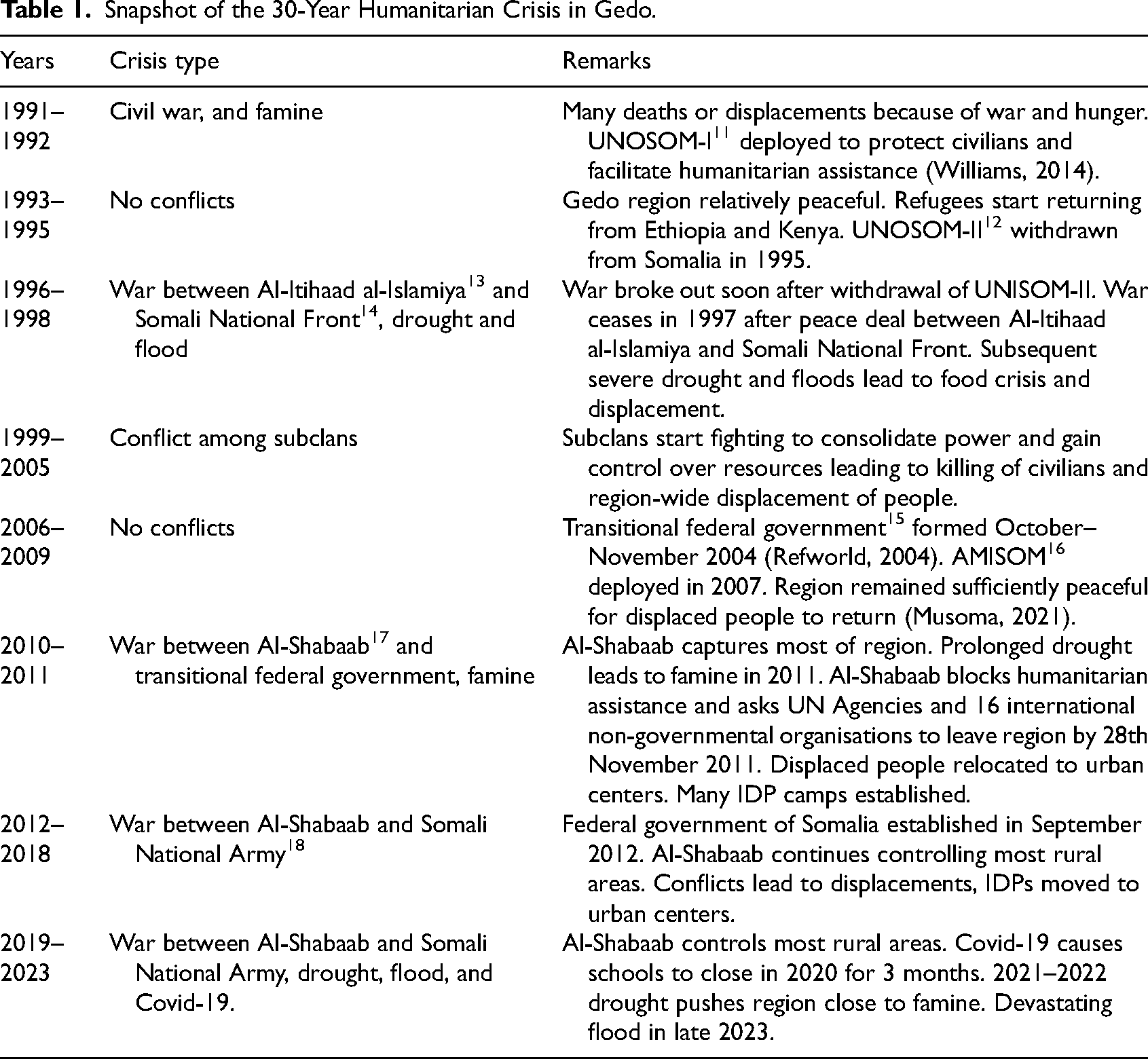
Table 1 depicts the conflicts and humanitarian crises affecting Gedo since 1991. Throughout this period of extreme volatility and instability, humanitarian agencies, including the Norwegian Church Aid (NCA), have provided essential lifesaving assistance. The NCA, however, is unique in having education as a priority in one of its transnational development programs. While education is increasingly being recognised as crucial for preventing conflict, building resilience, and promoting peace, little evidence exists on the most effective means of delivering education and ensuring its access and quality during prolonged humanitarian crises (Pherali, 2019). This paper addresses this research gap by assessing the effectiveness of NCA's education program during the 30-year conflict in Gedo and aims to enhance the discourse between academics, practitioners and policymakers to build synergies capable of surmounting the educational challenges conflicts create.
Snapshot of the 30-Year Humanitarian Crisis in Gedo.
Fourteen semi-structured interviews and eleven focus groups were conducted in 2022 and 2023, with former and current NCA staff, teachers and students, parents, community education committee (CEC) members, local authority representatives, and state government officials. The historical narrative presented is based on the unique oral accounts of interviewees who participated, were eyewitnesses, or had extensive knowledge of the NCA program's operation in Gedo during the conflict. As far as possible, the stories obtained through the interviews were validated by crosschecking with the information available from program reports and public websites.
A Snapshot of NCA's Education Program
Inception: 1993
A priority of the United Nations High Commissioner for Refugees (UNHCR) in 1993 was to encourage refugees to return to the Gedo region from the Dadab refugee camp in Kenya. In May 1993, the NCA collaborated with the UNHCR to establish its office in Gedo and subsequently initiated an education program 1 . At the time, the NCA was the only organisation to initiate education programs in the region, despite the security concerns and badly damaged infrastructure. The program reached around 1500 children, of whom 30% were girls at six schools in Garbaharey district. The initiative set up schools, constructed classrooms, formed Community Education Committees (CECs), recruited teachers, provided learning materials and equipment, offered teachers USD 40 per month as an incentive, and initiated capacity-building measures for teachers and CECs. During this stage, the program faced multiple challenges—the civil war had destroyed the school infrastructure, and the market's inability to function entirely made reconstruction difficult. Recruiting qualified teachers in rural locations was problematic, and learning materials were unavailable locally. At that time, most teachers were only capable of teaching the alphabet and basic counting. Abukar Haji Aden, one of the first educators at Algudud Primary School in Garbaharey in 1993, recalled, “In the early days, I only had a good floor where students sat in circles around me. I used charcoal to write on the floor for my lessons.” The absence of female teachers made parents hesitant to send their daughters to school. Furthermore, localised clan conflicts posed security threats for staff members, disrupting the operations of the schools. While communities were eager to have all schools opened, the NCA's resources were stretched; extreme care was required to prevent new conflicts from arising due to competing demands for schools from communities. While education is a frequent casualty in war, education programs during conflicts create risks as well as benefits, as existing divisions may be exacerbated, with certain groups experiencing unequal access, funding, or facilities (Bush & Saltarelli, 2000).
Growth: 1994–2009
This period saw the NCA continue the actions it initiated at the start of the program, with an emphasis on increasing the number of teachers. It helped expand the education program in the 5 Gedo districts 2 , targeting 65 primary and four secondary schools serving around 15,850 children (40% girls). Particular attention was given to community mobilisation and ownership to facilitate the mobilisation of resources at the community level and improve the quality of education. An initiative was launched in 1999 to mobilise communities towards raising awareness of girl's education and enroll them in schools. In the early 2000s, teachers’ incentives were increased to USD 60 per month and a school feeding program was introduced in 2004. Girls who attended 22 classes a month were given 3 liters of cooking oil to take home. Schools received sports equipment, and communities were brought together through the school competitions initiated by the education program.
The initiative had effects extending beyond its area of operation. Refugees from the Dabab refugee camp were attracted back to the region, and other communities requested the NCA set up schools in their areas. The education program managed to avoid significant disruption from the war between Al-Itihaad al-Islamiya and the Somali National Front and the conflicts between subclans.
Interruption: 2010–2018
The initial enthusiastic expansion of educational provision during the early years of this period reached 75 primary and five secondary schools in all seven of the region's districts 3 , with student enrolment increasing to around 18,000, 45% of which were girls. Program activity continued as before, although the monthly per-teacher incentive was increased to USD 90. Al-Shabab's influence during the period increased in certain areas, creating NCA staff security and access problems. Al-Shabab tried to introduce their own curriculum in 35 schools 4 within their control, but the community's refusal to accept this led the group to force schools to close from 2016 to 2017. In 2018, the NCA was forced to scale down its intervention in 40 primary and five secondary schools, with enrolment down to around 11,000. To enable their children to continue their education, community members who could afford it relocated them to relatives in urban centers where NCA-supported schools existed. However, these schools lacked adequate infrastructure to accommodate the rising student enrollment.
The effects of conflict and famine in 2011 forced many people to relocate to urban centers or refugee camps in Ethiopia and Kenya (Maxwell & Fitzpatrick, 2012). No system was in place at the time to enroll displaced children into the correct grades at their new locations. While NCA-supported schools used their own annual system for children's progression through school grades, the lack of formal documentation created serious enrolment issues at the new locations. In response, the NCA introduced the Report Form in 2014 to document a child's grade completion.
The current period: 2019–2024
By 2019, resource limitations were forcing the NCA to continue scaling down its intervention 5 , and by 2022, all secondary schools had been phased out (see Table 2).
Schools and Students Under NCA Intervention (2019–2024).
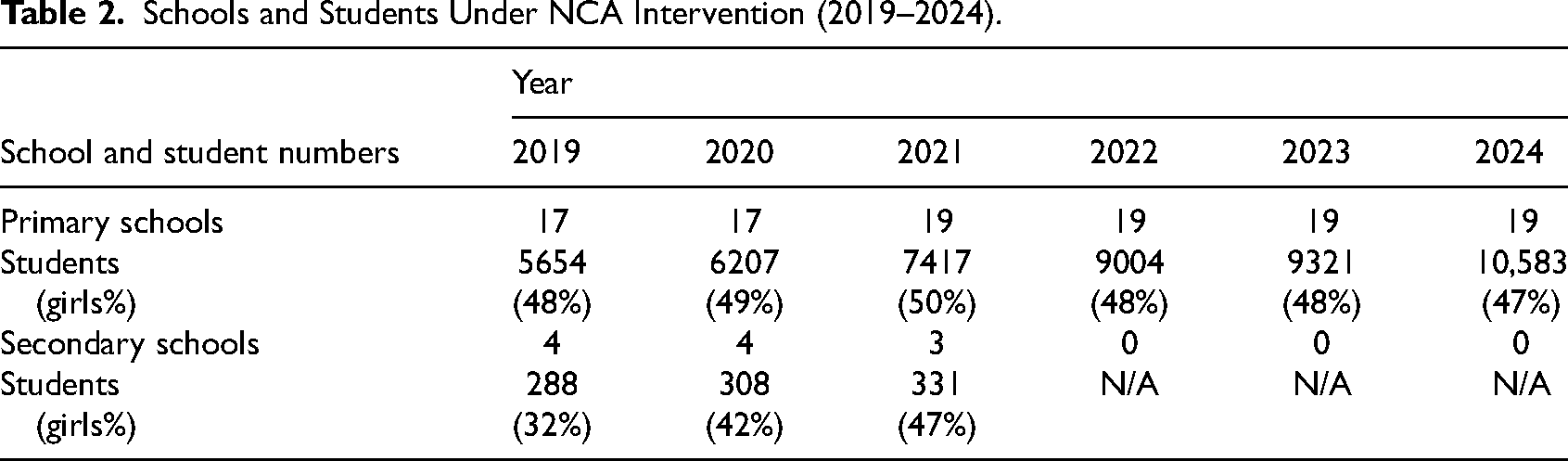
Since 2022, the NCA has operated in only 19 primary schools, of which four have significant access problems due to Al-Shabab's local activity. The group negatively affects NCA's activities, including intervention monitoring and supplying learning materials—especially textbooks.
Program activities continued as before, but the teacher's monthly incentive was increased to USD 100. New initiatives included early childhood classes for 3- to 5-year-olds, the installation of solar power systems, the introduction of practical computer and IT education, and school gardening to complement the school feeding program. In 2021, the NCA also piloted the creation of adolescent girls’ safe spaces (AGSS) in five schools to combat gender-based violence (GBV).
Many people displaced by the prolonged drought of 2021–2022 moved to urban centers as IDPs (ReliefWeb, 2022). IDPs worked diligently to enroll their children in NCA-supported schools, hoping to secure places for them in the school feeding programs. However, resource constraints meant that the NCA could not extend the feeding program to the children of IDPs, even though the schools could enroll them as new students.
Theoretical Framework: Community Mobilisation as Key to Education in Conflict
Clan dynamics in the Gedo region
Of Gedo's many clans, the largest and most politically and militarily influential are the Mareexaan (Darood), whose subclans and sub-subclans 6 makeup about half the region's total population of around 500,000 7 . The Rahanweyn (or Digil-Mirifle), Hawiye and Dir also have a significant presence in the area.
The Mareexaan exercise hegemonic control in Gedo, which fuels endemic clashes between the other clans. Power struggles between the Mareexaan subclans over eldership, leadership and control of both natural and civic resources, such as employment opportunities and local taxation, are similarly endemic (Skjelderup et al., 2020). The conflict has created instability in the region's leadership structure, with a single authoritative leader now replaced by competing contenders from rival subclans—a friction that has also impacted the clan's political leadership at the national level. The dynamics of the conflict shifted in the mid-1990s when Al-Itihaad Al-Islamiya began exerting its power in the region, and again in 2010 when Al-Shabab did the same. As a result, the situation deteriorated further as these groups added an ideological and militant aspect to the already intricate inter-clan conflicts. This has led to heightened violence, a decline in traditional clan authority, massive displacement, limited access for humanitarian organisations due to security threats, and increased international involvement and counterinsurgency efforts. Currently, the Mareexaan is divided by allegiance or opposition to Al-Shabaab, which has a strong presence in Gedo and recruits heavily from the Mareexaan. Thus, the communities in Gedo have been fragmented into divisions based on identity and ideology. Al-Shabaab now controls most of rural Gedo, while major towns are similar to islands under the control of the federal and state governments (European Union Agency for Asylum, 2023).
Formation and capacity building of CECs
The UNHCR (2008) describes a community as a group that recognises itself and is recognised by outsiders as having common cultural, religious, or other social characteristics and history that together form a collective identity with shared goals. In Gedo, parents had the shared goal of facilitating education for their children and so formed a community, one with a collective identity that transcended the separate identities of the deeply fragmented communities. The school was placed as a community institution that belonged to everyone, irrespective of clan, subclan, or sub-subclan. However, it quickly became apparent that the children from diverse clans often brought local conflicts with them to school. The key to addressing this challenge was forming CECs with parents’ representatives. The NCA team mobilised local administration, parents, and elders to form CECs and formulated the roles and responsibilities of the committees. CEC members were selected such that all segments of the clans and subclans, as well as gender, were fairly represented. Every CEC has five members, of which two are female. The district administration and elders are committed to creating an enabling environment for CECs to function independently and protect the interests of children by keeping schools out of any conflicting issues.
The NCA's role in capacity building was to act as a catalyst for the CECs—a strategy in line with Norman Uphoff's (1994, 2001) approach. It aimed to facilitate and empower—not merely instruct; and focused on supporting CECs in identifying and solving the critical needs of the school, students, and teachers. The responsibility for implementation stayed with CECs, thus encouraging ownership, greater self-reliance and sustainability. The NCA did not avoid assigning the CECs substantive tasks and remained faciliatory but treated capacity building as part of the development process rather than its precursor (Datta et al., 2019).
In line with this strategy, members of CECs received training in decision-making roles and processes, school administration and management, overseeing infrastructure development and daily school activities, mobilising community resources, and facilitating the peace-building process whenever students brought conflicting issues from the community to schools. The ability of the schools to function effectively was greatly supported by the CECs’ consistent efforts towards capacity building and their encouragement for members to ensure that schools operated without disruption from external actors (Ilchman & Uphoff, 1998). CECs subsequently took the lead in community mobilisation—first engaging with communities to identify community priorities and resources and then taking collective actions to enhance the protection and well-being of children (World Health Organization, 2010). The concerted efforts towards community mobilisation directly contributed to increased participation, and by sharing information about their actions and making their intentions explicit, to increased accountability (Bivins, 2006; Chambers, 1999 ). Community mobilisation during the conflict was a daunting task for the CECs. Still, the consistent effort helped the community internalise the importance of schools as community institutions and their roles and responsibilities centered around this institution and the children.
CECs encounter several structural obstacles. The literacy rate among CEC members is notably low, making it challenging to document essential decisions and track accounts tied to various activities. Although being a CEC member is voluntary, significant expectations exist from the communities and NCA for them to actively engage in all aspects of the school's operations. As a result, they find it challenging to balance their work commitments with their voluntary responsibilities. Ms. Eblo Abdi Hashi serves as the Chairperson of the CEC at Kabasa School, established by the NCA in 2012, within the Kabasa IDP camp in Dollow. She stated, “While there are many challenges, I feel privileged to be part of the CEC because I am actively contributing to the future of children who dream of becoming presidents, doctors, or teachers.”
Reflection on Key Interventions and Outcomes
Ensuring quality education
To enable CECs to enhance the quality of education in targeted schools, the NCA worked consistently on three fronts. First, it focused on developing infrastructure, including constructing classrooms and separate toilets for boys and girls, installing water supplies, and providing school furniture for students and teachers. Second, it emphasised ensuring regular supplies of learning materials such as exercise books, stationery, geometry sets, and textbooks. Third, it concentrated on the recruitment and capacity building of teachers.
In 2023, the CECs were enabled to install solar power, fans and lighting in 15 of the currently supported schools to mitigate the effects of Gedo's hot and humid climate on teachers and students. Installation at the remaining four schools had to be cancelled due to security concerns regarding the transportation and installation of materials. The availability of electricity means schools can introduce practical computer and IT classes for grades 5 to 8 of the Somali curriculum
8
. IT will enable the education information management system to be implemented under which school and student data is uploaded to the centralised government portal. In Dollow district, an NCA pilot scheme has already enabled CECs to supply six computers and two trained teachers to facilitate practical computer education in Kabasa Primary Schools, allowing children to learn valuable computing skills and perform well in examinations. However, the number of computers and trained teachers available in Gedo is currently insufficient for the number of students. Nonetheless, the pilot initiative has been an encouraging learning experience for the NCA and other development partners on how to introduce computer education in remote areas with uncertain power supplies as well as poor access to computer ware and skilled technicians for maintenance. Children who completed the training program are now engaged in income-generating activities. They assist displaced persons with paperwork to navigate bureaucratic processes. They help create email accounts, which are vital for job seekers, and assist with various online forms needed for service access and enhancing professional opportunities for local youth.
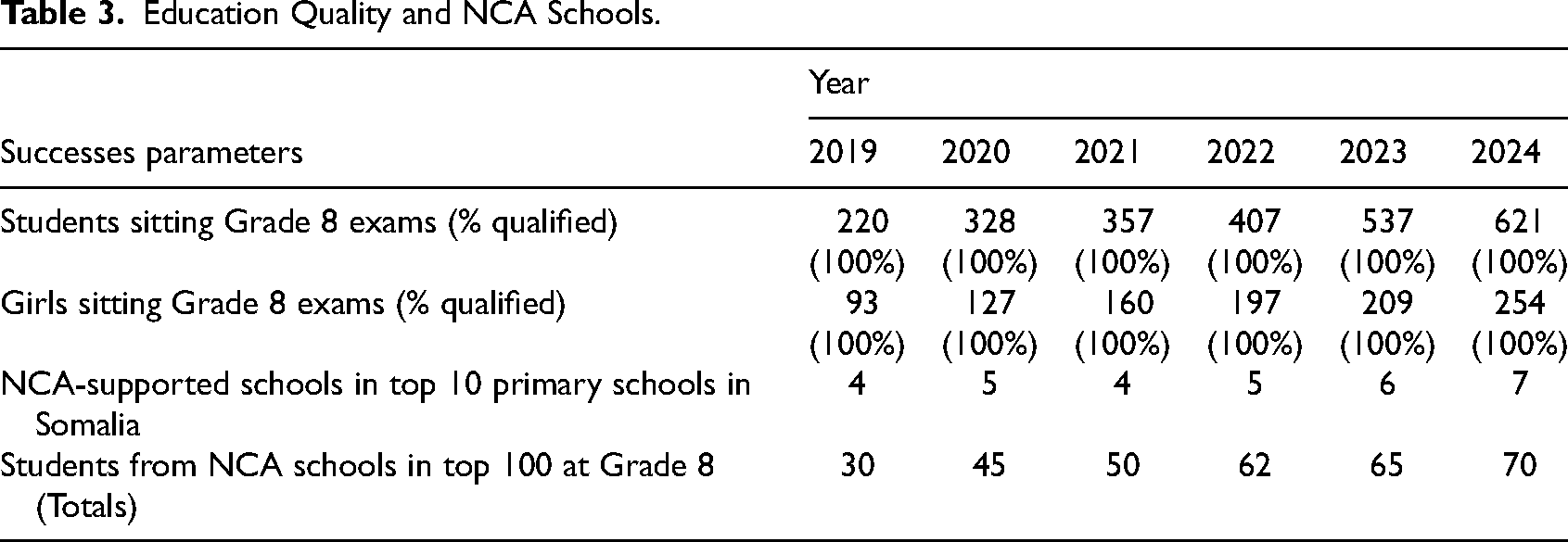
Kabasa Primary School serves as an example of the many primary schools that the NCA currently supports, which were established from scratch. Founded in 2012 at the Kabasa IDP camp for the numerous people displaced after the 2011 famine, the school started with fewer than 100 students and a few semi-permanent classrooms. Today, it boasts 15 permanent classrooms and 996 students, over 50% of whom are girls. Such dramatic change is evident in all NCA-supported schools in Gedo, and the improved quality of education is reflected in the upper primary schools’ 8th grade national certification exams conducted since 2019 (see Table 3). Nearly 50% of the top 100 students across Somalia came from NCA-supported schools and received scholarships from the Somali government to pursue higher education at universities in countries such as China, India, Ethiopia, Sudan, and Bangladesh. The Ministry of Education has consistently recognised 4 to 5 NCA-supported schools as among the top 10 schools in Somalia over the last 4 academic sessions.
Education Quality and NCA Schools.
Many government officials and humanitarian sector employees who graduated from NCA-supported schools are now ambassadors for the NCA in Somalia. For example, Abdinasir Mohamed Shirwac, currently a manager of one of the largest non-governmental organisations (NGOs) in Somalia, was among the first students to enroll in the NCA-supported Elade primary school in 1993 and appreciates how that educational opportunity transformed his life. Hundreds of such children are now qualified professionals working in government institutions and non-governmental organisations throughout Somalia.
Addressing the pain of hunger
Since 2004, NCA's school feeding programs have accomplished much more than merely reducing hunger. They address poor nutrition, significantly enhancing vulnerable children's concentration and learning abilities. Furthermore, these programs have led to a decrease in student absenteeism, increased retention rates, and a rise in enrolment for both boys and girls.
Like conflicts, floods and droughts have consistently had a detrimental effect on the education program in the region, as the availability and quality of food often diminish for school-going children. The continuing 2021–2022 drought in Somalia has pushed Gedo close to famine, and schools have begun to cease activities as increasing numbers of children become displaced. The feeding program in NCA-supported schools has enabled CECs to assist children from drought-affected communities to enjoy their rights to education, good health and protection.
In 2023, the NCA piloted an initiative to strengthen the school feeding program by integrating it with the climate-smart food production system. It enabled CECs to introduce school gardening activities in eight schools. The main benefit of this initiative was connecting school curricula with hands-on education. It allowed children to explore various soil types, understand the seasonal cycles of food production, and learn about planting and caring for crops, including pest management strategies. The activity also helped increase awareness of food diversity and nutrition while creating pathways for technology transfer aimed at climate-smart food production systems. Although not directly associated with the school's food production initiative, students and teachers went on to replicate this model at home, resulting in green vegetables from the school gardens initiative complementing children's diets. The local economy is also strengthened as CECs prioritise the procurement of produce from home gardens. A significant challenge faced by this initiative was the lack of permanent fencing at six of the eight targeted schools. Consequently, animal attacks on the gardens became frequent, discouraging children from participating in gardening activities. Given the high cost of permanent fencing, CECs decided to implement temporary fencing, which notably reduced animal attacks. Another hurdle was the limited availability of water for irrigation, which hindered the schools’ ability to expand the initiative.
Urban centers in Gedo often experience an influx of IDPs due to conflicts or natural disasters. External assistance to the IDP camps that are established often falls short of meeting their needs, and children living in the camp gather in schools in the hope of being registered and, in turn, receiving a meal. Despite the chronic shortage of teachers, water sanitation, and educational materials, CECs and other stakeholders are very sympathetic to these children and facilitate student registration. The school authority often places the children under the care of a teacher beneath a tree, but neither the CECs nor the NCA have the resources to include IDP children in the feeding program. While some IDP children wait patiently for leftover food, others argue with fellow students, teachers, and CEC members over their share. At times, they even grab food forcefully and run away with it. However, thanks to the vigilance of community members and teachers, such situations are kept in check, preventing potential conflicts from escalating at the local level. The NCA and CEC members consistently strive to gather extra resources to include all children in the feeding program, achieving success at times. Additionally, as part of Somali culture, parents promote the sharing of food with IDP children. These efforts contribute significantly to maintaining harmony at the local level. Ms. Deka Ahmed Adan, the cook for students at Kaharey Primary School in Dollow, shares, “It breaks my heart to see any child go hungry. We always strive to ensure every child has something on their plate.”
Addressing gender discrimination
Culturally, boys receive preferential treatment in attending school in Gedo and this trend seems poised to continue despite the boost to girls’ enrolment and retention provided by the introduction of the 3-litre take-home cooking oil ration in 2004. Girls’ access to education is hindered by child early forced marriage (CEFM), which was one of the cultural barriers that CECs were mobilised to address through door-to-door visits, encouraging parents to overcome these obstacles. Notably, the combination of take-home rations and community mobilisation to dismantle cultural barriers improved girls’ access to education and this progress continued after the ration policy was discontinued in 2020. CECs have indeed achieved significant successes in mobilising parents to ensure their daughters return to school even after marriage. Before the NCA's program, there were no female teachers in Gedo's schools. The initial push was through mobilising CECs in 2010 and currently, 21% of teachers are female as depicted in Table 4. Furthermore, CECs efforts to position female teachers as community role models encouraged communities to return girls to school even after marriage.
Distribution of Female Schoolteachers.
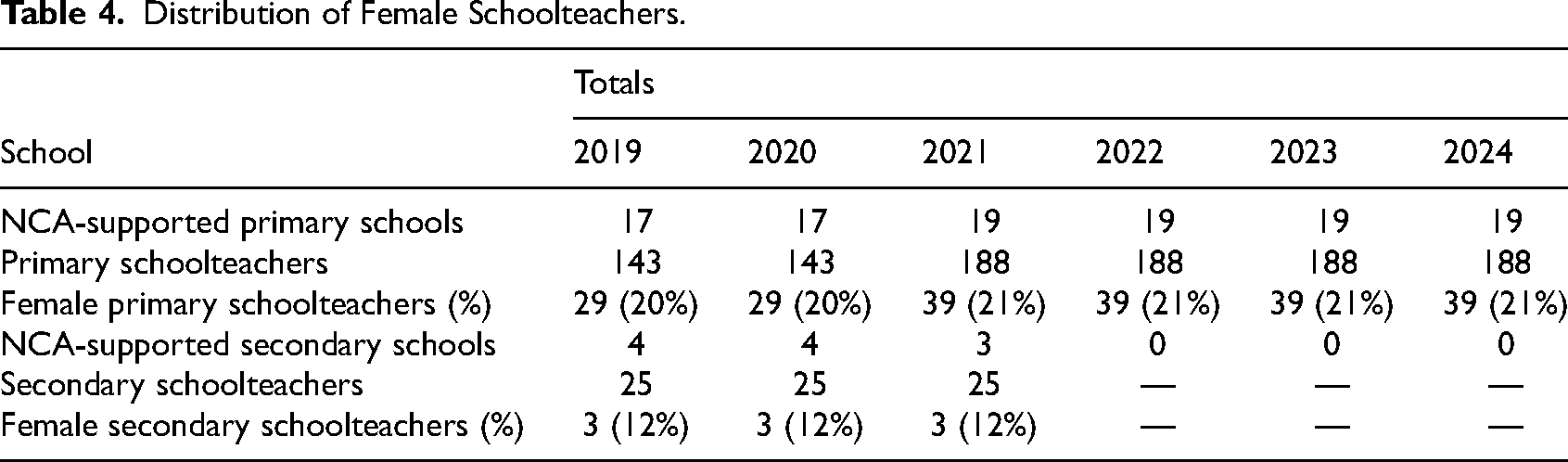
To recruit female teachers, the NCA collaborated with CEC and local government authorities to set a target of having at least 40% of teachers in each school be women. Furthermore, when a female teacher leaves her position, only another female teacher can replace her. It was also agreed that if a headteacher is male, then the deputy must be female to serve as a role model for girls. In instances where a male headteacher departs, the female deputy headteacher will be promoted to fill the vacancy. The NCA will prioritise girls who studied in NCA-supported schools during recruitment. These established criteria have helped the NCA increase the number of female teachers in schools. However, despite considerable efforts, the NCA has managed to recruit only about 20% of teachers as female. The gap in the target is mainly due to the difficulty of finding qualified female teachers locally. Most girls do not pursue further education after completing class 8, which reduces their eligibility to become teachers. Additionally, challenges in retaining female teachers arise from many girls opting to or being forced to marry early and relocating to other areas locally or within the region.
The NCA stressed the importance of separate latrines for boys and girls from the beginning and mobilised CECs accordingly. However, girls were hesitant to use them because of proximity to boys or men's toilets, which highlighted the deeply embedded cultural issues surrounding privacy in toilet use. In response, the NCA mobilised female members of CECs to start using the schools’ toilets, which subsequently encouraged female teachers to do the same. As female teachers were seen as role models, this effectively motivated the girls to use the latrines.
Sports for peace
Traditionally, sports are organised by individual clans, each of which has its own local sports team that receives exclusive support. The main sport in the region is football, and interclan football matches often trigger conflicts when a losing team refuses to accept defeat. CECs soon realised the potential of football to unify the community and promote peace by helping students rise above differences rooted in clan identities. They also organised forums for community dialog focused on violence prevention through school sports activities. This initiative both prevented conflicts during inter- and intraschool sports and created a space where clans could collaborate towards peaceful coexistence and conflict resolution.
The effects of such concerted efforts to enhance social harmony can be observed on many fronts. Winning teams are now acknowledged and congratulated by members from all clans. Local authorities also participate in peacebuilding at sports events, not only to cheer the teams but to amplify youth voices for social cohesion, strengthen social ties between and within districts, and convey key messages about preventing gender-based violence and other harmful practices against girls. This experience has shown how students can be empowered to become ambassadors for peace, with the shared celebration of sport serving as a powerful unifying tool in Gedo.
Reducing the influence of clan leaders and other stakeholders on the sports team has always been challenging, necessitating substantial mobilisation by CEC. Since Al-Shabaab does not support football matches, organising such events faces security issues. Police, local authorities, and community members have been mobilised to enhance safety for the sports team and participants. Additionally, resource constraints significantly hinder NCA's capability to provide necessary sports equipment, such as shoes and uniforms for children, transportation for the team to distant events, coaching for children, and the development of playing fields. Strong community engagement and their financial contributions play a crucial role in helping the sports team overcome several of these challenges.
Preventing gender-based violence
GBV, which is highly prevalent in the Gedo region as in many parts of Somalia, encompasses rape, domestic violence, sexual assault and harassment, trafficking of girls and boys, and harmful traditional practices such as child early forced marriage (CEFM), female genital mutilation (FGM) and bride inheritance (UNFPA, 2021). The gravity of the situation for girls in Gedo is further worsened by seemingly unceasing conflict and natural disasters. Limited access to formal courts, along with social prejudice that denies access, forces survivors to pursue traditional justice systems for mediation. The risk of discrimination and stigmatisation also discourages survivors from reporting GBV incidents, exacerbating their trauma, shame and embarrassment. The impact of the trauma and its psychological, physical and social consequences is devastating, life-long, and life-threatening.
The longstanding sensitivity surrounding GBV within communities had long dissuaded CECs from intervening. However, in late 2018, the NCA decided to take action on the issue in response to a CEFM case involving a teacher and a girl at Qansahley Primary School in the Dollow district. CEC members successfully terminated the teacher's employment despite intense clan opposition, but they recognised that much more needed to be done to protect girls.
The NCA's multipronged approach began by mobilising CECs and teachers to disseminate messages throughout the community about the harmful consequences of CEFM and FGM. They were trained to provide basic psychosocial assistance and refer survivors for specialised support whenever a case was reported. CECs were empowered to take decisive action against perpetrators of GBV and communicate this action to all the region's schools to deter targeted violence against girls in schools and the community.
The NCA helped establish class committees for every level from 3 to 8, each consisting of 5 girls and 5 boys, and each school has its own committee made up of 10 to 15 students. These committees enable children to share their concerns with peers (child-to-child communication), which then reach the teachers for action. They also provide children with a valuable opportunity to develop leadership skills, for instance by contributing to school development initiatives and hygiene promotion, as well as by visiting the homes of dropped-out students to encourage their parents to send them back to school.
The NCA also helped establish school suggestion boxes so children could communicate any concerns to NCA in a safe and confidential manner. In 2021, a hotline was established to diversify reporting channels and enable communities to report GBV and children at risk. These reporting channels are now crucial for ensuring timely reports and survivors’ access to immediate early response and prevention services.
In the same year, the NCA worked with CECs to establish Adolescent Girls Safe Spaces (AGSS) in two schools in Dollow and three in Luuq districts to address GBV issues and strengthen schools’ retention of girl students. AGSS enables adolescent girls to access age-appropriate information, recreation, and life skills services based on the “My Safety and My Wellbeing” curriculum 9 . They receive dignity kits to maintain their menstrual hygiene, which encourages them to remain in school during menstruation days. Girls who successfully complete the curriculum become self-confident, earn leadership positions in school committees, and are observed to excel academically. Survivor-centered case management services in areas such as health, psychosocial support, law, and security are also provided through coordination with other service providers in the GBV referral pathways, which strengthens healing, recovery and empowerment. Although safe spaces have significantly benefited the mental health of survivors, creating these spaces in every school requires substantial resources.
Despite the ongoing clan pressure against taking firm action against GBV offenders, the school has successfully implemented a zero-tolerance policy towards any form of GBV. This policy has significantly reduced risks for girls in school. Another critical challenge is tackling the mixed messages surrounding CEFM and FGM within the community, as these issues are closely linked to various stakeholders, including healthcare professionals and religious leaders, some of whom have profit-driven motives. The threat from Al-Shabab is also significant, as they oppose the cessation of CEFM and FGM practices. The comprehensive awareness campaign has enhanced understanding of the health risks related to CEFM and FGM among both parents and children. Just a few years ago, discussing FGM in classrooms was considered taboo; however, this has changed dramatically. Now, children and teachers can engage in open discussions about it, and it is no longer seen as a private issue that only concerns girls. Although a school curriculum for children's reproductive health exists, discussions in classrooms remain limited, particularly in rural areas. Thanks to the CEC and its mobilisation efforts, schools in peri-urban regions are now incorporating reproductive health education into their curricula for children.
Strengthening the government education system
The current education system in Somalia is characterised by poor quality, limited access, and insufficient resources. Approximately 33% of children are enrolled in primary schools (Federal Government of Somalia, Ministry of Education, Culture and Higher Education, 2022), and more than three million of the country's primary school-aged children remain out of school (UNICEF, 2022). Article 30 of Somalia's constitution enshrines the right to education for every citizen and for free education for children up to secondary level (Provisional Constitution, 2012). Partially realising this right in Gedo has been a challenging transition from destruction to recovery, requiring particular attention to building the capacity of the Ministry of Education, Culture and Higher Education at both state and federal levels to sustain this gain and translate it into national reconstruction and development (Faqih, 2020).
The NCA began building the capacity of the state education system in 1998 through initiatives such as rehabilitating the regional office in Garbaharey and providing computers. This investment helped develop grade assessments and certifications for the region's children, but the system collapsed during clan fighting in 1999. The NCA reinitiated the ministry's capacity building in 2017, aiding in the development of a grade 8 assessment system until 2019. In 2018, the NCA also reconstructed the district education office in Luuq district, assisting in the re-establishment of their district education system through actions such as joint monitoring of schools, conducting tests, and developing certification for children. Undoubtedly, more comprehensive plans and investments are still necessary to strengthen the government education system.
Conclusion
NCA's initiatives to rebuild the education system in the Gedo region have positively impacted children's lives in an area that has faced numerous waves of civil war, conflict, insurgency, and natural disasters over the past thirty years. They have given new hope to the thousands of children living there, and the next generation of leaders, entrepreneurs, and change-makers is now emerging from these schools. The effects of education programs spread across many fronts. For example, Qadiida village in Garbaharey district lacks a school prompting the villagers to approach the NCA in 1997 for assistance in establishing one. Although the NCA could not help in this instance, the community took the initiative to construct a 6 km road to Dableey village's primary school, enabling their children to walk this long distance safely and comfortably, thereby ensuring secure access to education. People here often argue that communities with schools are more supportive than those without, a belief stemming from education bringing individuals together around schools to work towards conflict resolution and peacebuilding (Pherali & Lewis, 2017). Education has also empowered parents and children to challenge harmful traditional norms.
The paper concludes that it is possible to unite people around education and establish schools as community institutions that serve everyone, regardless of their identity or political beliefs. Although community mobilisation in conflict situations is challenging, it is achievable by empowering local institutions to lead the efforts. External organisations can act as catalysts to help these institutions revive the education system by identifying and addressing the essential needs of schools, students, and teachers. This catalytic approach also fosters trust, which is at the core of the NCA and community relationship. The community's near-full acceptance of the NCA enables staff to implement educational programs alongside humanitarian aid and transitional development initiatives in difficult-to-access regions. An example is the conflict between two subclans over political power and resource control in the Garbaharey, Burdhubo, and Luuq districts. During the fighting, which continued until 2005, the community safeguarded the schools, NCA staff, and assets in these districts. Additionally, the community consistently shares security information with the NCA whenever staff are scheduled to travel to a program location. On several occasions, this has resulted in the cancellation of visits due to security concerns, which later proved to be justified. Today, communities often praise the NCA not only as a mother of education, but also as one of their clans in Gedo—the highest honor they could award to any organisation.
In a conflict setting, this method of rebuilding the education system can be replicated by adopting a context-specific approach and incorporating the lessons outlined in this paper. Once the community is mobilised, the first step towards developing the education system involves ensuring adequate infrastructure, providing regular supplies of learning materials, and assigning qualified teachers to schools. The conflict environment creates various vulnerabilities for children, requiring a systematic approach within the education system to address these issues. This may include tackling the food crisis, gender discrimination, and gender-based violence, among other factors. In conflict settings, children often bring various types of conflict into schools, making it essential to address these issues to foster social harmony within communities and educational environments.
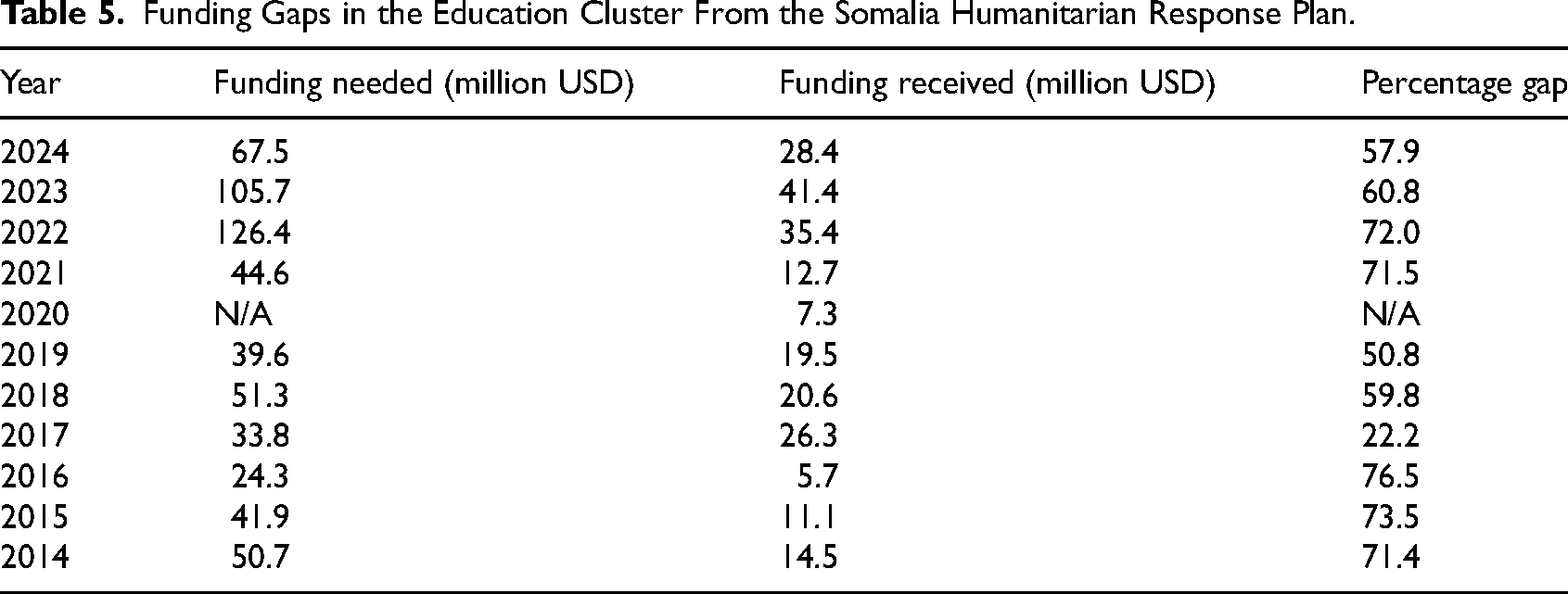
Reconstructing and enhancing the government's education system is essential, but it requires close collaboration with key stakeholders. The National Education Sector Strategic Plan (ESSP) for 2022–2026 outlines the federal government's priorities and strategies for delivering educational services nationwide. These strategies focus on three main areas: policy development and oversight, access to free primary education, and an accelerated basic education program. The government recognises the fundamental role education plays in fostering peace and social unity. Key strategies for integrating peacebuilding into the education system include reviewing and developing the curriculum, training teachers, and engaging the community. While the strategy aims to create an inclusive and equitable education system that offers academic knowledge and nurtures values essential for peacebuilding, the government allocates only about 6% of its national budget to education, largely relying on international donors and NGOs for support in this area (Ministry of Education, Culture and Higher Education, Federal Government of Somalia, 2024). There is a pressing need for the government to increase budgetary provisions for education; however, the insufficient allocation of resources by international partners (see Table 5) has also proven detrimental to the government's efforts to reconstruct the education system. It is crucial to recognise that a stronger, inclusive, and adequately funded education system will assist Somalia in moving beyond conflict and towards a more peaceful and prosperous future.
Funding Gaps in the Education Cluster From the Somalia Humanitarian Response Plan.
Final Remarks
Humanitarian aid and developmental organisations face many challenges, beyond conflict and natural disasters, in implementing education programs in Somalia. Inadequate resource allocation in education is one such challenge, as is evident in Table 5's last 10 years funding figures for the education cluster 10 (from the Somalia Humanitarian Response Plan, Office for the Coordination of Humanitarian Affairs, 2024).
The effects of chronic funding gaps can be seen on many fronts, some of which are given below.
Infrastructure development, including its construction and maintenance, is severely constrained. Teachers’ turnover rates have escalated due to new employment opportunities for qualified individuals. Inflation has resulted in the increase of NCA's teacher incentive from USD 40 per month in 1993 to the current USD 100 in 2024. However, during this time, the price of an adult camel, essential for livelihoods in Somalia, has increased from USD 50 to USD 1300. Such monetary disincentives emphasise why qualified individuals are often discouraged from pursuing a career in teaching here. The number of IDP children in urban centers is ever-increasing, and resource constraints make it a major challenge to bring them under the school feeding program. Excluding IDP children from the feeding program also fuels conflict within the community. For example, in 2008, a man was caught by the community trying to steal food from the storage of Libahlow Primary School in Garbaharey district. When apprehended, he asked for food for his children, which the school management refused to provide. Out of anger, he set fire to the school at night and was subsequently punished by the community leaders. This incident illustrates the tension that builds and can erupt when IDP children are not included in the school feeding program. Every school has 7 to 8 children with disabilities, but resource constraints limit the specialised attention they need. While the NCA has ensured that newly developed classrooms and toilets have basic structures to support children with disabilities, this support needs to be expanded more widely, including providing specialised training for teachers and mobilising communities to send disabled children to schools.
Inadequate infrastructure is another structural challenge facing the region. Schools frequently serve as shelters for people during natural disasters, and sometimes for armed forces during operations against non-state actors. Such incidents affect the children's education, often requiring long negotiations before the displaced people or soldiers can be relocated.
Lastly, drawing on over three decades of experience in managing educational programs in conflict settings, this paper presents the following three key recommendations:
In the end, education acts as a powerful tool for fostering peace in Somalia. It provides young people with alternatives to violence, encourages national unity, and establishes a foundation for good governance and economic growth. Although challenges such as insecurity, lack of funding, and political discord exist, prioritising education is crucial for achieving lasting peace and stability in Somalia.
Footnotes
Acknowledgments
The author is grateful to numerous colleagues, particularly Abukar Haji Aden, Area Coordinator—Jubaland State, and Abdiweli Mohamed Dakane, Education Project Officer, of the NCA, who provided invaluable insights in developing this paper. The opinions expressed in this paper are those of the author and do not necessarily represent the author's current or former employers or any of their country programs and partnerships.
Data Availability
Data sharing is not applicable to this research, as no new data were generated or analysed. The data that are used in this research are either available in public domain or in the project documents of the NCA.
Declaration of Conflicting Interests
The author declared no potential conflicts of interest with respect to the research, authorship, and/or publication of this article.
Informed Consent
Informed consents were obtained from the participants who participated in group discussions and semi-structured interviews. The names of persons are given in the paper as examples upon doing due risk analysis and receiving informed consent.
Funding
The author received no financial support for the research, authorship, and/or publication of this article.
