



Abstract
This article argues that arts-based methods such as drawing are particularly useful as means to explore experiential insights into how violent conflict impacts individuals and communities in specific sociocultural contexts and shapes their views of development and peace. It illustrates this through the discussion of a drawing workshop with members of violence-affected communities in Kachin state, Myanmar. Reflecting on the workshop findings and dynamics and on the positive impacts the methods’ adoption had on practices of an international civilian protection NGO in Myanmar, the article concludes that, when implemented with care, arts-based methods do not only help accessing deep context-specific insights to complement outsider-expert analyses, by creating a safe space to share experiences, but they also enable new engagements among local actors and with outside organisations, which can strengthen the primacy of local actors in peacebuilding and development initiatives.
Scholars and practitioners of peacebuilding and development have increasingly acknowledged the importance of including “local voices” in their analyses and programming. They join approaches centred on people’s lived experiences, such as feminism and experiential education, which for long have highlighted the role of the personal and the embodied as sites and knowledges from which to study and sustainably act upon political issues (Julian et al., 2019, pp. 211–215; Lakey, 2020; McLeod & O’Reilly, 2019). Foregrounding the experiences of violence-affected communities, it has been shown, contributes to “better understanding violence, the logics of its reproduction and to generate proposals for security policies that reduce it” (Pearce, 2019, p. 9). Despite a growing consensus on the importance of experiential knowledge, the lifeworlds of the people at the heart of peacebuilding and development efforts are often still studied from the stance of the outsider-expert. That is, analysts employ methods such as structured interviews, focus groups, and household surveys that are prestructured by preconceived concepts or categories; often involve differential power relations; and are limited in their ability to account for knowledge not (easily) expressed in words. The genuine inclusion of experiential knowledge calls for a change in preferred research methods (Julian et al., 2019; cf. Abello Colak & Pearce, 2019).
This article proposes that methods of arts-based research (ABR), broadly understood as qualitative research that centrally relies on practices and processes of artistic expression to explore human meaning-making, are particularly well-suited to tap into experiential conflict knowledge—that is, knowledge acquired through the lived experience of inhabiting a particular conflict zone. Specifically, we discuss how drawing helped better understand the complexity of violent conflict, peacebuilding, and development as experienced by some adults living amidst conflict in Kachin state, Myanmar, by exposing how these processes manifest locally and intersect with everyday life in specific sociocultural ways.
Based on a literature review of ABR, the article first argues that ABR methods’ threefold potential to enhance participants’ agency in the research process, allow for multiple meanings to surface, and contribute to positive transformations suggests that these methods are particularly useful as means to explore situated, experiential insights into how a violent conflict impacts on individuals and communities in specific sociocultural contexts and affects their understandings of peace and development. The article then discusses the implementation and results of the “Raising Silent Voices” project, which employed a drawing method to access communities’ experiential conflict knowledge in Myanmar (Bliesemann de Guevara et al., 2020; Julian et al., 2019). The project collaborated with the international NGO Nonviolent Peaceforce (NP), which provides unarmed civilian-to-civilian protection in areas of violent conflict. While NP protection teams usually live in the communities they protect and gain an understanding of localised conflict dynamics by “being there” and “being with” beneficiaries, in Myanmar, this learning by experience is severely curbed by the authorities’ travel and work restrictions for foreign practitioners, researchers, and organisations. The project set out to explore creative ways of accessing experiential knowledge in these restrictive circumstances to inform NP’s work, by resorting to an adapted version of DrawingOut, a method devised and piloted by some of the authors, which uses metaphor-centred drawing to explore sensitive health issues (El Refaie et al., 2020; Gameiro et al., 2018).
In the context of peacebuilding and development, drawing has mainly been employed with children (e.g., Akesson et al., 2014; Literat, 2013), although some studies have reflected upon drawing as a research method with adults (e.g., Huss et al., 2015; Mitchell et al., 2011). Discussing findings from one project workshop in depth, we show how drawing helped participants express layers of experience living with political violence in Myanmar’s Kachin state and revealed the complexity of meaning-making around “violence,” “peace,” and “development” and their entanglements with everyday life. Drawing on these workshop experiences and findings, and on insights into how adopting the method impacted positively on NP’s protection practice, the article concludes that arts-based methods such as drawing have at least two major benefits for researchers and practitioners of peacebuilding and development: They help accessing context-specific insights into conflicts, and they enable new engagements with and among participants, both of which can strengthen the primacy of local actors in peacebuilding and development initiatives.
Why Arts-Based Methods to Access Experiential Knowledge?
Experiential education approaches demonstrate the importance of understanding how life experiences, based on intersecting identity markers such as race, ethnicity, gender, and class, shape how people learn and communicate their knowledge to others (Lakey, 2020). While this is important in all contexts of knowledge generation and sharing, the diversity of life experiences in contexts of peacebuilding and development may be particularly pronounced due to the physical and structural violence endured by some people. ABR methods are particularly suited to access experiential knowledge/knowing about conflict in its diversity. ABR denotes a broad range of qualitative approaches, which converge around the idea that practices and processes of artistic expression can help qualitative research to achieve a deeper understanding of the human condition (Barone & Eisner, 2012; Knowles & Cole, 2008; Leary, 2020; Mannay, 2016).
ABR assumes that knowledge is not reducible to language, the basis of most standard qualitative social-scientific methods. As Barone and Eisner (2012, p. 1) note, ABR “extend[s] beyond the limiting constraints of discursive communication in order to express meanings that would otherwise be ineffable.” Arts-based methods offer ways to “include the visual and the sensory,” investigate “layers of experience” (Bagnoli, 2009, pp. 547–548), and explore participant-subjects’ “tacit” knowledge/knowing (Estrella & Furinash, 2007, p. 379). According to Liamputtong and Rumbold (2008), the arts can help researchers to know “differently” and acknowledge different forms of knowing in communities under study. Referring to Heron and Reason’s (1997) “extended epistemology” of four forms of knowing—experiential, presentational, propositional, and practical—they suggest that standard social-scientific knowledge production is concentrated on propositional or “conceptual” knowing. The arts, by contrast, offer ways to explore presentational or “symbolic” knowing, “which represents experiential knowing in expressive forms” (Liamputtong & Rumbold, 2008, p. 2).
Due to their participatory nature, arts-based methods allow for greater agency of participant-subjects in the research process, which opens up ways to move away from outside-expert ideas of what peacebuilding and development in a specific context are or should be. ABR methods give participants opportunities to set the agenda and approach topics from their experience and understandings (Akesson et al., 2014, p. 77; Gameiro et al., 2018, p. 2, 14; Huss, 2007). They also constitute a relatively safe way to voice criticism (Huss et al., 2015, p. 675) and invite research subjects’ participation in data interpretation (Akesson et al., 2014, p. 77; Bagnoli, 2009, p. 547; Guillemin, 2004, p. 287; Huss, 2007, p. 962). By complementing language with artistic forms of expression, ABR is also valued as offering marginalised groups ways to self-define in the research (Theron, Stuart, & Mitchell, 2011). In these ways, ABR can change the stance of power holder and expert in the research relationship (Huss et al., 2015, p. 673), give silent/silenced voices room to be heard, and decolonise research methods (Huss, 2007, p. 985).
Scholars furthermore highlight ABR methods’ ability to unveil (multiple) meanings that participant-subjects give to abstract concepts, thereby helping to situate them within specific personal and sociocultural contexts (Huss et al., 2015, pp. 673–674). This is important in contexts of peacebuilding and development by outside actors, where historically evolved local meanings of concepts such as peace and development may differ substantively from outside actors’ understandings. ABR methods offer ways to work across contexts where cultural translation, linguistic proficiency, and/or the possibility to objectify experiences in words may be limited (Bagnoli, 2009, p. 548; Gameiro et al., 2018, p. 3; Jackson Foster et al., 2018, pp. 306–307).
Finally, ABR methods and their artistic products can have transformative effects on participant-subjects (e.g., catharsis, empowerment, new skills, own initiatives), researchers (e.g., enhanced reflexivity, activism), and audiences (e.g., empathy, attitude change, solidarity; Rydzik et al., 2013). Arts-based outputs facilitate communication and allow for knowledge to be transmitted and shared in embodied, nonlinguistic forms, often enabling emotional learning. For some researchers, a social-transformative vision is an explicit activist aim of ABR (Finley, 2003). ABR methods’ twofold potential to reveal/explore and nourish/transform suggests that they are particularly suited for respectful, ethical research into sensitive experiences and to stimulate explorations of transformation potentials towards peace and development from below.
Drawing Out Experiential Conflict Knowledge in Myanmar
Interviewed about their most pressing knowledge needs, NP Myanmar staff raised questions regarding the potentially different interpretations of key concepts of their work among local partners and beneficiaries. Peace and development were examples of such concepts whose meaning was contested and better insights into local understandings were needed. A national staff member explained: We don’t entirely understand how grassroots people respond to this conflict. For example, I ask a [local volunteer civilian conflict] monitor, “What is peace?” and they say, “I don’t want peace, I just want my children to go to school peacefully.” When I ask, “And [how] do you understand peace?” he says, “Peace is in Yangon, not in our area here in our township. We don’t go out at night, even when the government says there is security.” […] Grassroots people say peace is all a western idea, or peace is a development project. […] Grassroots people don’t want development; they just want a happy community.
1
To explore experiential conflict knowledge in Myanmar’s access-restricted context, the project tested an adapted version of DrawingOut (see https://drawingout.org), a metaphor-centred drawing workshop approach to study individuals’ experiences of invisible diseases, developed and piloted by Gameiro et al. (2018). DrawingOut claims four advantages over text-based social-scientific methods: The method gives participants an alternative “language” to express themselves; it avoids preconceived frames and concepts, allowing participants to set their own agendas; it helps to express traumatic and/or culturally tabooed topics; and it produces visually engaging outputs to disseminate research findings among stakeholders and wider audiences (Gameiro et al., 2018, p. 2). Underpinning the DrawingOut approach is the assumption that most people have basic drawing skills which, together with the relatively low cost of drawing materials, makes the method applicable in many different contexts.
To implement this method in Myanmar, the researchers collaborated closely with three Myanmar research associates: two artists facilitating the workshops and a businesswoman organising logistics (Bliesemann de Guevara et al., 2020; Kušić, 2020). These associates ran two drawing workshops with members of conflict-affected communities in Kachin and Rakhine states, areas at the time partly access-restricted to foreigners. The collaboration was guided by a co-production ethics between the Northern researchers and the Myanmar associates, which resulted in an adaptation of the DrawingOut workshop to suit both the project’s research objectives and the facilitators’ objectives regarding the promotion of ethnic diversity as a basis for peace in their country. The adapted workshop design also accommodated the facilitators’ existing knowledge of other drawing and community mapping methods. For reasons of space, here we concentrate on the Kachin workshop.
The Kachin drawing workshop took place in May 2017. Research ethics was obtained from the lead organisation, Leeds Beckett University (UK), and ethics training for the Myanmar associates was provided by the principal investigator via online sessions. Participants were recruited with the help of a local civil society organisation worker, whom the team had met during earlier research, building on her existing network among conflict-affected communities in Kachin. There were 11 participants, who all self-identified as Kachin, an umbrella term for several different ethnic-minority groups in Kachin (Sadan, 2013). The group included four women and seven men. Of the 11 participants of mainly rural backgrounds, nine were living in camps for internally displaced persons (IDPs) at the time of the workshop. All travel and subsistence costs were covered, and participants were compensated for their time with a per diem.
Since none of the participants were familiar with ABR, it took time to establish a general understanding of the workshop purpose and methods. 3 The 3-day workshop design allowed participants to get to know each other through icebreaker activities, draw, and share stories. Participants’ informed consent was obtained orally at the outset, after an introduction of the workshop procedures and wider project aims. The facilitators took time to conduct a series of drawing exercises to make participants comfortable with drawing (e.g., how to use forms or colours to express feelings). The next step consisted in several thematic drawing sessions designed to prompt participants to share their past and present experiences of life amidst violent conflict and their hopes and ideas for a peaceful future. Prompts included the following: What did your community look like in the past, and what does it look like in the present? What has been the happiest moment of your life? What has been your greatest fear? Which metaphor best describes who you are or strive to be? What makes you peaceful, and what makes your community peaceful?
The facilitators used a mix of drawing methods and techniques. DrawingOut’s original metaphor-centred approach was used for the “metaphor of self.” The metaphor choice was left open to participants, which proved culturally sensitive in that the choice of metaphors among the Kachin participants differed from “typical” Bamar majority metaphors. 4 Other drawing methods included different forms of mapping (“my community in the past and present”), which resulted in two types of maps—of IDP camps and of travel routes—and brought out a wide range of development and security issues without explicit prompt (cf. Wood, 2003). The “happiest moment” question was explored in a partner exercise, in which participants drew each other’s experiences, which added an enjoyable break to the workshop that otherwise revisited rather traumatic experiences, while also visualising important ideas about “a good life” often related to education and family (cf. de Lange et al., 2011). 5 The “greatest fear” question was open in terms of drawing and content, with resulting drawings including violent moments experienced in the conflict but also other fears such as that their hut in a cramped IDP camp might catch fire. Another exercise consisted in visualising the soundscapes of war, making use of synesthetic links between sounds and colours and/or shapes (van Campen, 2010). The workshop ended with the peace-related questions, which participants reflected on while drawing or printing tree leaves, similar to “Dream Tree” exercises in community mapping (Brown, 2009, p. 15) and which nuanced the idea of peace. In addition to drawing, participants chose to share their life stories in an evening session, at which they talked in more depth about their upbringing and life amidst violent conflict.
The data generated consist in the drawings (visual data), some of which include written elements, the textual data generated through participants’ explanations and discussions of the drawings, and textual data from participants’ additional story-sharing. All conversations were audio-recorded, and project-relevant conversations were transcribed and translated from Burmese and Jinghpaw to English. Two authors met with one facilitator in London to discuss the drawings, and one of them followed up on data-related questions with the Myanmar team during two subsequent fieldworks in Yangon. There are different ways in which the qualitative data can be analysed. These include visual analyses of the drawings (El Refaie et al., 2020) and explorations of individual stories and life trajectories of each participant, which help bring out the personal, biographical aspect central to experiential knowledge (Lemere & West, 2011).
For the purpose of this article, we used thematic analysis (Braun & Clarke, 2008) of the visual and textual data to identify common experiences of life amidst violent conflict shared by several workshop participants. The data were first coded for themes by three researchers separately, who then discussed and harmonised the themes found and recoded the data, before building higher level categories. Since thematic analysis develops categories out of the data at hand, rather than looking for preconceived categories, it gives primacy to the wealth of participants’ experiences and interpretations. We acknowledge, however, that a thematic analysis, through its very nature of looking for the generalisable, may exclude some individual experiences. Our motivation in using thematic analysis here was to make the experiences more accessible to the reader by organising them around shared themes. More importantly, this way of organising the data helps maintain the anonymity of our small group of participants, who might otherwise be identified from their particular biographies.
Experiences of War and Hopes for Peace and a Decent Living Among Violence-Affected People in Kachin, Myanmar
The workshop brought to light a wealth of individual stories and experiences of lives amidst decades of violent conflict in Kachin state, which spoke of specific individual life trajectories, but also showed some clear patterns of intersubjective experience when subjected to thematic analysis. In total, we identified 57 themes, which we grouped into eleven higher order themes. Four of these concerned war-related threats and fears, four related to challenges of daily life amidst violent conflict, and three addressed questions of (self-)protection, conditions for peace, and participants’ desired role in their community (Table 1).
Themes Arising From a Drawing Workshop With 11 Participants in Kachin State, Myanmar.
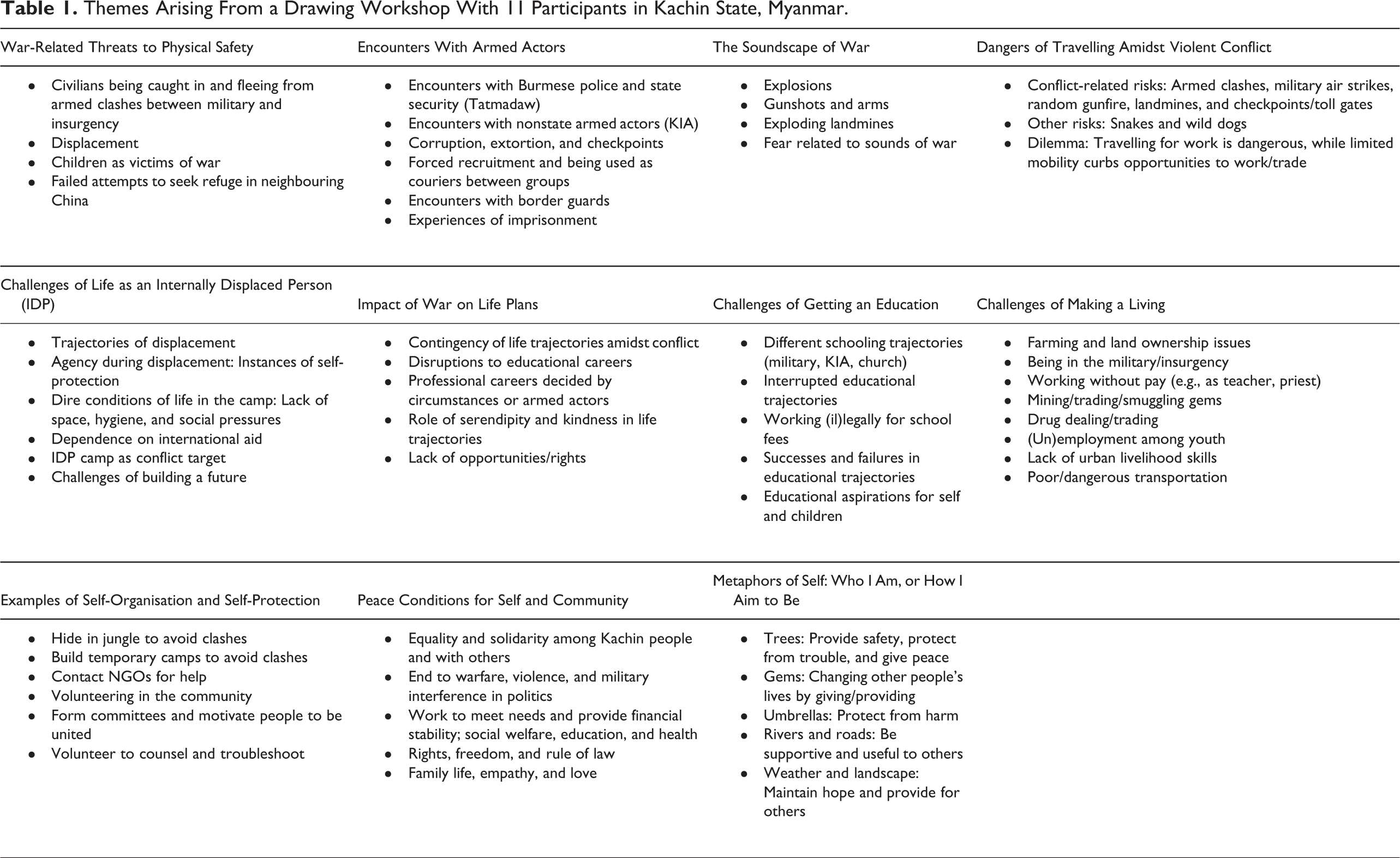
War-Related Threats and Fears
Most participants shared stories and experiences of directly war-related harm, threats, and fears, with some stories going back to childhood years and others relating to more recent violence. They included memories of armed clashes or attacks on villages of origin, violent displacement or hiding from armed actors, hunger, and flight routes cut off by armed actors, border guards, or physical barriers such as rivers. These stories were replete with human tragedies, mainly prompted by drawing exercises around “my greatest fear” and “my life in the past/present” and expanded upon in the story-telling session.
Other directly war-related memories included some participants’ experiences serving time in the state military Tatmadaw or the insurgent Kachin Independence Army (KIA). It is noteworthy that participants were to be found among both, and it was often the contingency of life amidst violent conflict, rather than any ideological or political reasoning, that decided which side they served. Only one participant saw the insurgency as a way to “struggle for our rights,” while others who had been drafted or forcibly recruited had a more critical stance towards armed struggle, with one recalling: “The day I resigned from the military service I was overjoyed” (prompt: “happiest moment”).
Everyday encounters with armed actors were another shared experience, which showed how the battlefield reaches into civilians’ everyday lives, making it difficult to separate the two. Figures 1 and 2 depict encounters with KIA fighters and Tatmadaw soldiers, respectively, distinguishable by their uniforms.
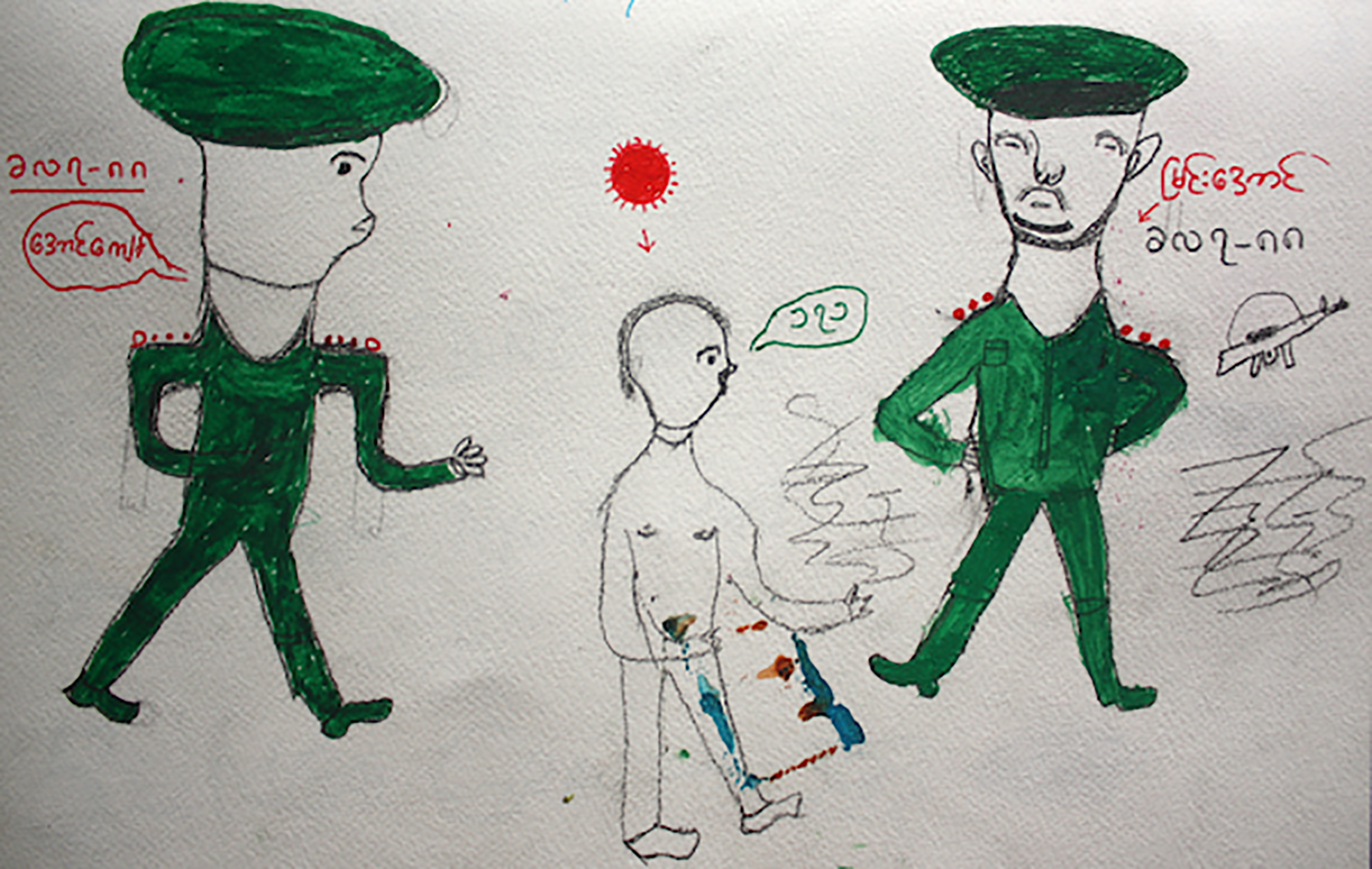
Encounter with armed actors I.
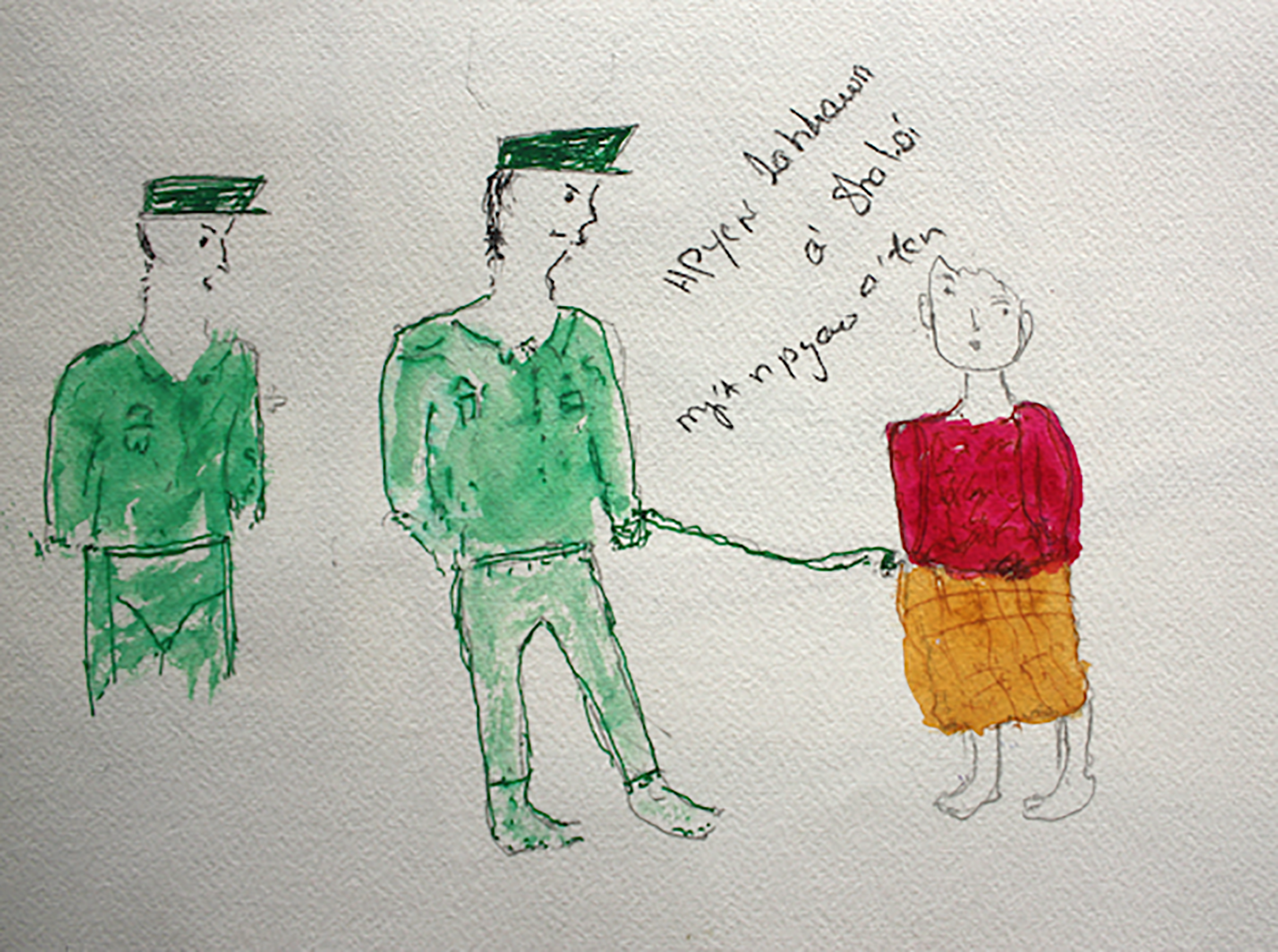
Encounter with armed actors II.
In both drawings, the difference in body size between the armed actors and the civilians is striking, hinting not only at the fact that many forcibly recruited civilians are underage, rendering male youth a particularly vulnerable group, but also at the perceived and real power imbalance between armed actors and unarmed civilians (cf. El Refaie et al., 2020). Some participants’ stories related to instances of forced recruitment, whereby villagers are used as fighters, porters, or messengers for the armed groups. The Tatmadaw asked us, the village administrators, to deliver their message to the Kachin Independence Army: “Tell them that we are approaching so they better leave.” The KIA responded: “Tell them not to approach.” I was delivering messages from one side to the other, shivering with fear. […] I asked both sides to let me get out of that situation; neither side did.
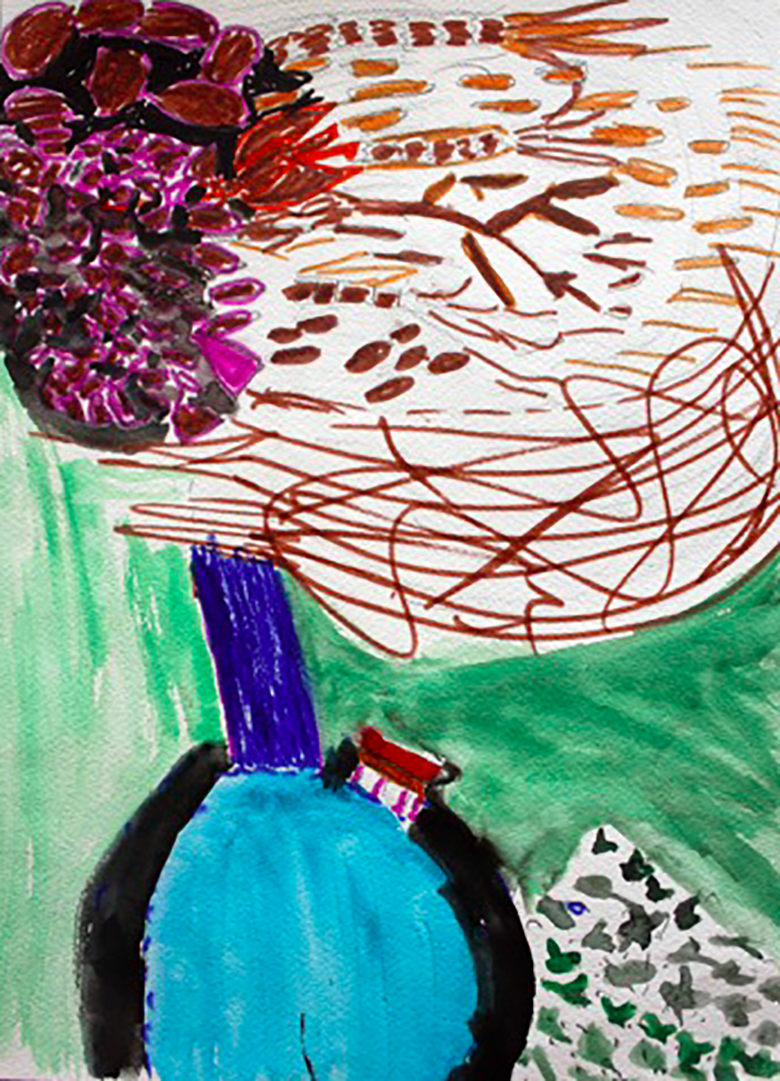
The soundscape of war.
The armed conflict in Kachin state is ongoing, and one area of daily life in which this was most visible is travelling (Figure 4). The dangers along travel routes are manifold and include natural hazards such as poisonous snakes and stray dogs but also war-related physical threats such as military air strikes, random gunfire, landmines, and armed clashes between military and insurgents. Further risks relate to toll gates and checkpoints erected by armed actors, often to extort money, and random encounters with armed actors, including the police and border guards. Some drawings suggest that there is no “classical” hierarchy of these different risks in which directly war-related threats might be expected to be regarded as more serious than natural hazards. The snake in Figure 4, for example, is much bigger and more detailed than the military checkpoint (cf. Pearce, 2019, p. 14).
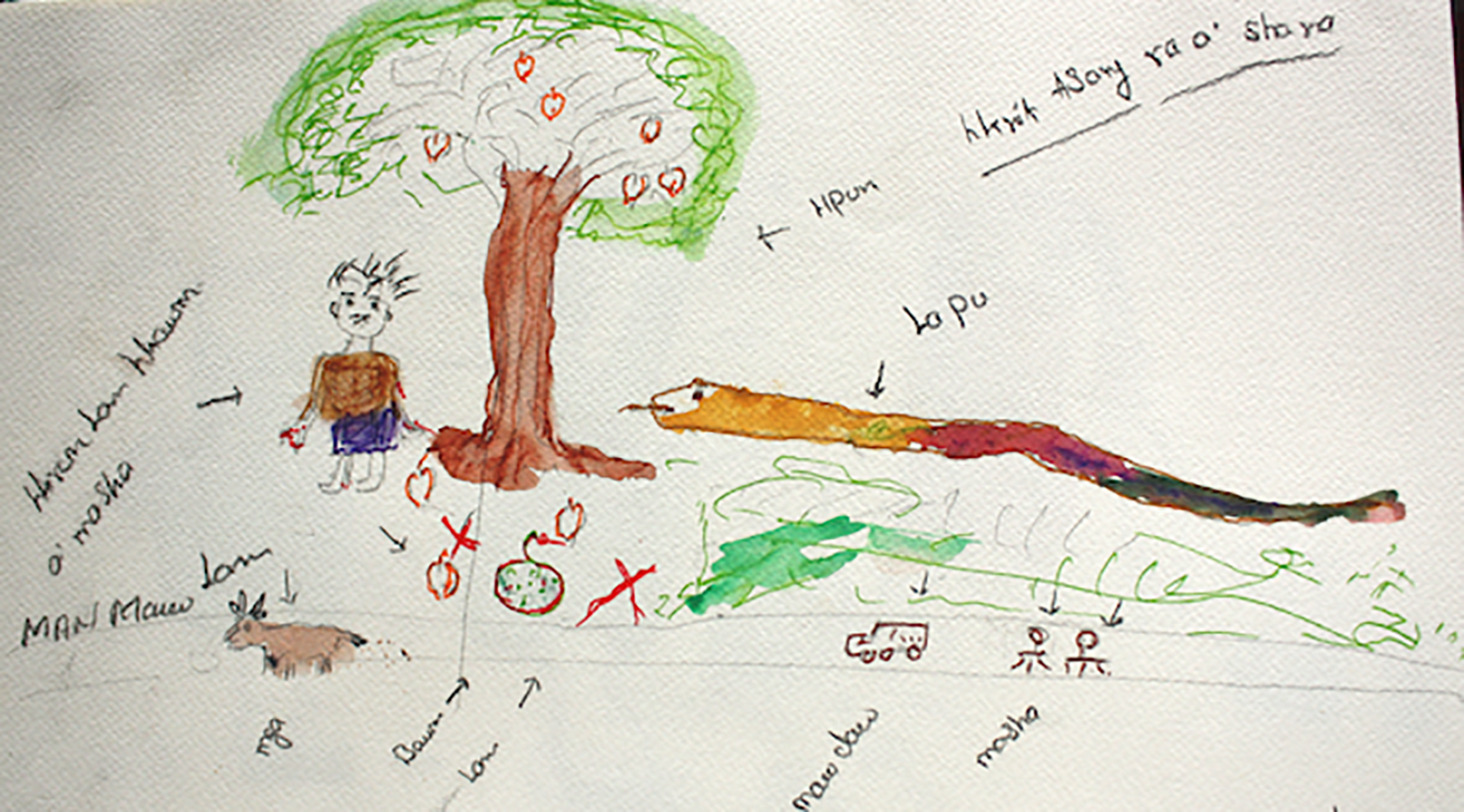
Dangers of travelling.
Participants mentioned a number of reasons for travelling, often over long distances, despite the risks: to find or get to work, earn a living through petty trading, or visit their home village and community members refusing to flee their homes. These risks and threats pose a serious dilemma: Earning a living often involves the need to travel, yet travel puts them at risk. Whether participants took this risk depended on their personal situation and disposition.
Challenges of Daily Life Amidst Violent Conflict
Nine of the 11 workshop participants were living in IDP camps in Kachin at the time of the workshop. Accordingly, the prompt “What does your community look like at present?” generated a wealth of images and stories around life in IDP camps, which gives a stifling sense of the cramped living conditions (Figure 5).
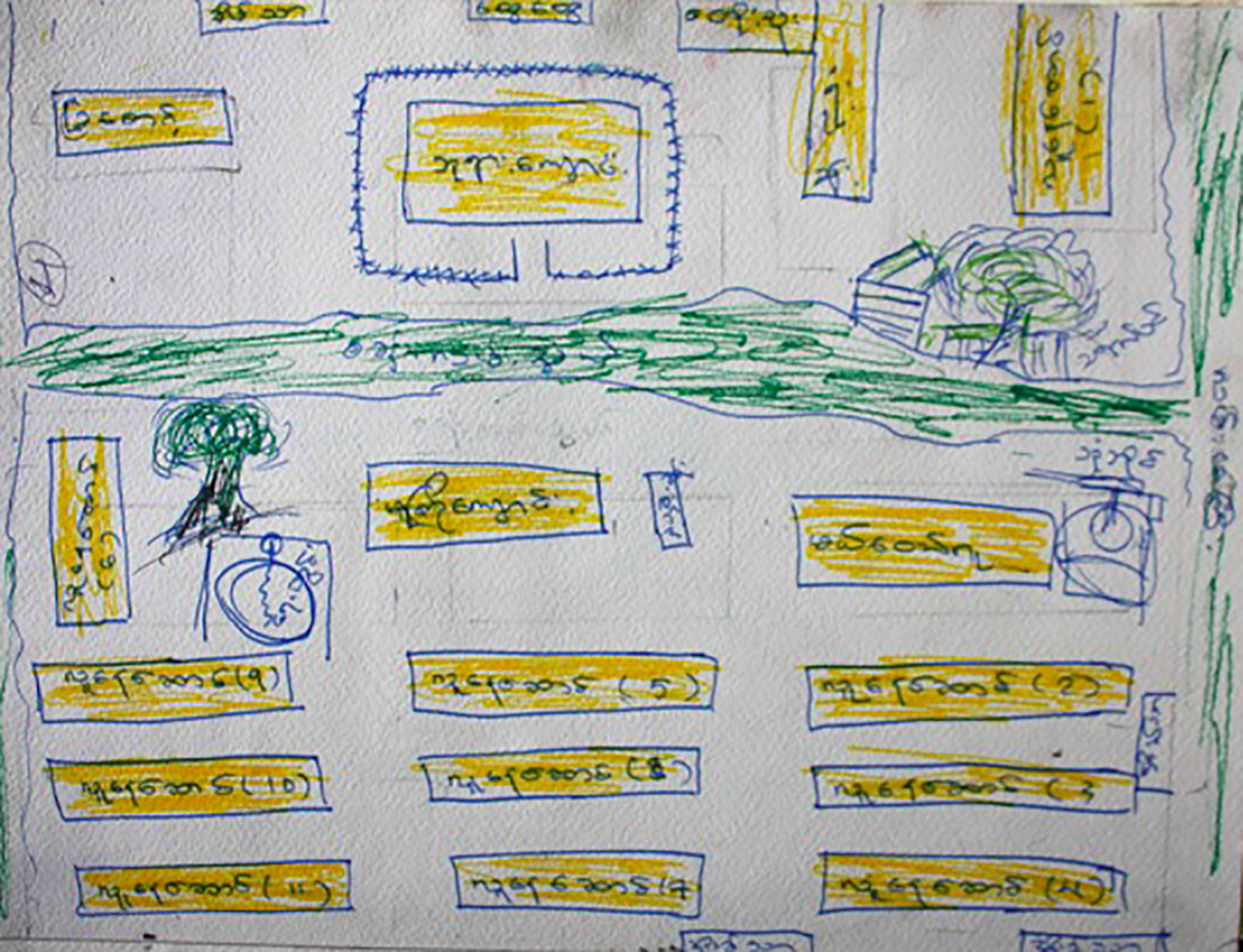
Map of an IDP camp.
IDP participants described the difficult living conditions in the camp, which resulted in “no privacy or freedom” and having to live closely alongside complete strangers. Someone explained building locations, with kitchens in too close proximity to toilets. Participants were also concerned about their dependence on international aid organisations, which are heavily controlled by the Burmese authorities and often cannot reach the IDPs, let alone meet their basic needs, and criticised the Burmese authorities for not helping them. There were also concerns about the physical safety in the camp, which was seen as a legitimate target by armed actors whenever tensions arose.
Another theme concerned the manifold ways in which war had impacted participants’ life plans, and the frustration that this caused, summarised poignantly by one participant: “I cannot achieve what I had planned before.” What a majority of these experiences had in common was life’s radical contingency. Many reported about life plans that had to be changed due to the conditions of living in a conflict zone or that were forcibly changed by the armed actors (e.g., in the case of forced recruitment). Whether a person ended up as a soldier in the military or as a fighter in the insurgency or whether they were able to avoid joining any armed group was often a matter of serendipity and in some cases of the kindness of others. My plan to study to get an official degree from the Myanmar government was damaged because of the war. I was on my way to Myitkyina [the capital of Kachin state], for an appointment with a university administrator, to discuss about enrolment and other things. On the way, there was a bridge, and it was bombed, so the bus could not pass. The police checked my ID card and kept it. They said it was expired and I needed to get a new one. So, I could not travel. I could not afford to go to Baptist theological school. The KIO [Kachin Independence Organization] gave me a scholarship to study medicine. Upon recommendation of a local priest, I finally went to study at the theological school, but without taking any clothes or bedding. Because had I gone back to my family’s village, the KIO officers could have come to get me and sent me to medical school.
The third main theme of challenges of life amidst violent conflict concerned participants’ education. Some participants related how their education had been interrupted or abruptly ended due to war, forced displacement, or other related reasons. Depending on where the participants grew up, the schools they attended were either run by the state, the Baptist church, or the KIO. Some of the reasons for discontinued school careers were beyond the direct influence of the war and included issues arising from poverty and other socio-economic conditions such as drug addiction. Among parents, a further theme was educational aspirations for their children, which are often linked to the wish of providing a more peaceful future for them away from the rural conflict zones.
A last higher order theme in this category related to making a living. These stories were mainly elicited by drawings about the dangers of travelling and life at present (e.g., life in the IDP camps). Some participants talked about the challenges of farming in the middle of ongoing clashes between armed groups and of finding land to farm after they had been forcibly displaced from their home village. They also reflected on the uselessness of their rural skills for a life in towns, where most IDP camps are located: “We used to be farmers, who were skillful in the forests, in the mountains, and on the farms. But now we have had to abandon our homes and skills; we have no skill to make a living in a town.”
Some participants sought a solution to their economic problems in mining, trading, and/or smuggling gems; however, work in the gem industry turned out to be a risky strategy due to the involvement of armed actors in the business from mines to checkpoints along trading routes. The belongings and merchandise of one participant, who had tried to trade gems in China, had been confiscated by armed actors at the border-crossing, causing severe debt. Other risky livelihood strategies included drug dealing, which in one case ended with imprisonment. Earning a living was further complicated by the poor or dangerous travelling conditions, which made it difficult for participants to go to places with potential work or petty trade, and by the condition of being an IDP, which they felt kept some employers from giving them a contract because they feared the IDP might move elsewhere.
While individual participants had very different personal life trajectories and conflict experiences, the armed conflict—and specifically armed actors’ control over some economic activities and mobility—impacted on all lives by turning everyday decisions about education and work into potentially risky strategies. Avoiding (the risk of) physical harm, as most basic form of peace, and working towards a decent living, as most basic form of development, were in most cases experienced as mutually exclusive aims.
Self-Protection, Conditions for Peace, and Own Role
Some of the stories shared by the workshop participants contained instances of self-organisation and self-protection amidst violence, although this topic had not been specifically prompted by the facilitators and did not figure explicitly in the drawings. These experiences illustrated the possibilities for (self-)protective agency in the midst of violent conflict. While some of the strategies were more localised, such as villagers organising to hide in the jungle during armed clashes to escape bullets and/or forced recruitment, other strategies were more centrally organised: Our village parson was contacted by the district-level secretary of the Kachin Baptist Association. They took action to build temporary camps. Civilians around the state capital who were affected by the armed clashes also found some possible temporary places to stay away from those clashes. Kachin Baptist Convention churches allotted spaces for the refugees. They also tried to get in contact with NGOs.
In one of the workshop’s last exercises, the facilitators prompted participants to reflect on conditions for personal and community-related peace, while drawing or printing leaves from surrounding trees (Figure 6).
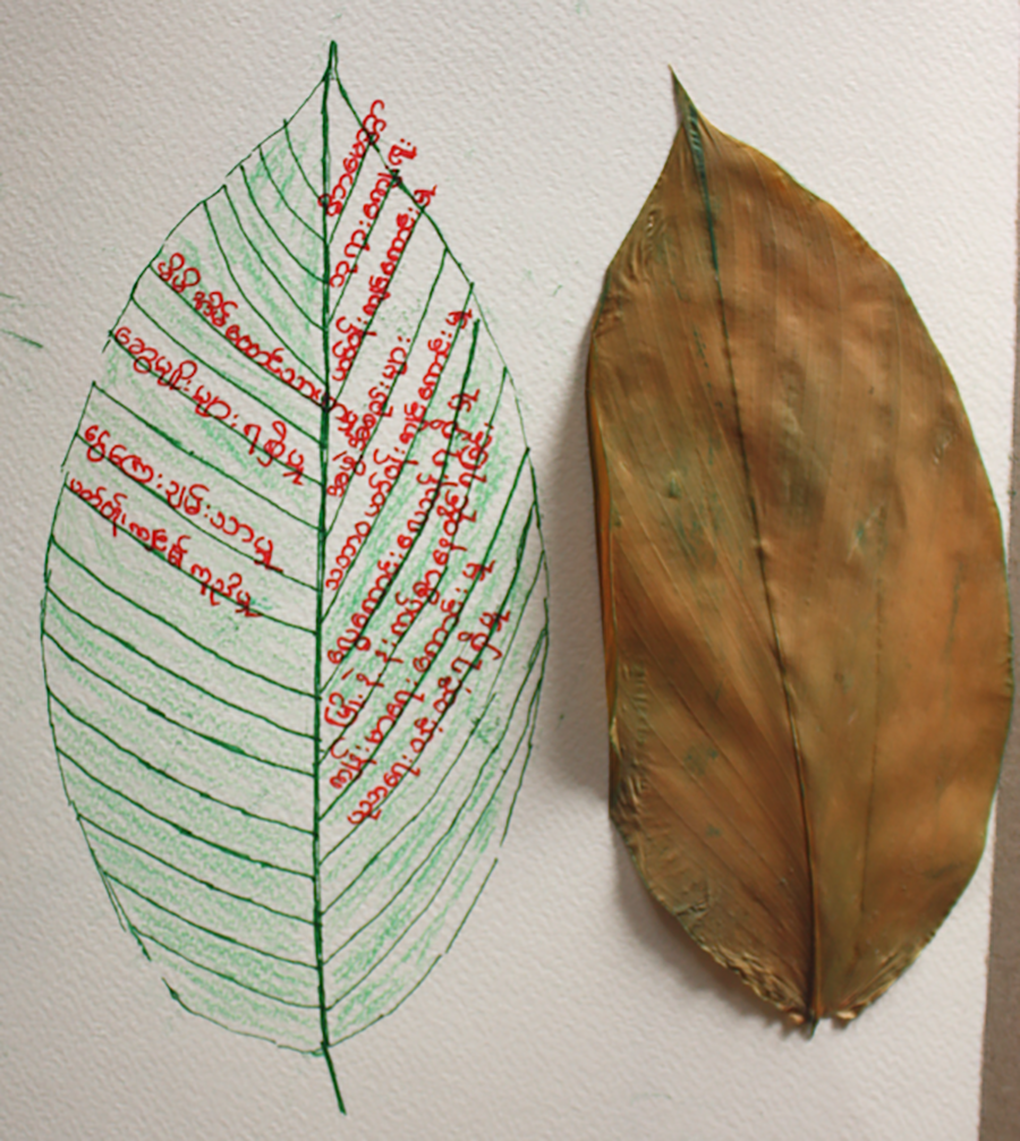
Peace leaf.
Five clusters of peace conditions arose: equality and solidarity among Kachin people and with other groups in society; an end to warfare and violence; economic and social welfare; rights, freedom, and rule of law; and family and empathy. The specific question into the conditions for personal peace may have influenced the results in favour of more micro level answers, yet it is nonetheless interesting that most peace conditions revolve around issues other than national peace processes or ceasefire agreements. While the latter are mentioned under the end to warfare rubric together with “no interference in civilian government by the military,” these political ideas are accompanied by everyday ideas about peace, such as “a safe and secure place to live,” “to be able to return home,” and “stability in our community.”
The equality and solidarity rubric encompassed ideas such as “equal rights and opportunities for all ethnicities,” “mutual respect,” “neighbourly support,” and “support and understanding between generations.” Economic and social peace conditions included “job opportunities,” “financial stability,” or at least “being able to meet basic needs, like eating and clothing,” “rich soil to grow crops,” “social welfare,” “good education” that is also “fair” and “recognises history, culture and rights of ethnic minorities,” and “good health and health care.” The rights, freedom, and rule-of-law rubric included peace conditions such as “universal human rights” and that “police, soldiers, and other public service personnel respect the public.”
The rubric family and empathy, finally, showed participants’ deep rootedness in their families, communities, and religiosity, with peace conditions including “being together with the family,” “being supported by relatives,” “being in a good relationship/marriage,” “compassion,” “kindness,” and “trust between individuals and organisations.” The great importance of family and empathy for peace also manifested in the wealth of different metaphors participants found to describe themselves. The drawing in Figure 7 uses an umbrella as a metaphor of self.
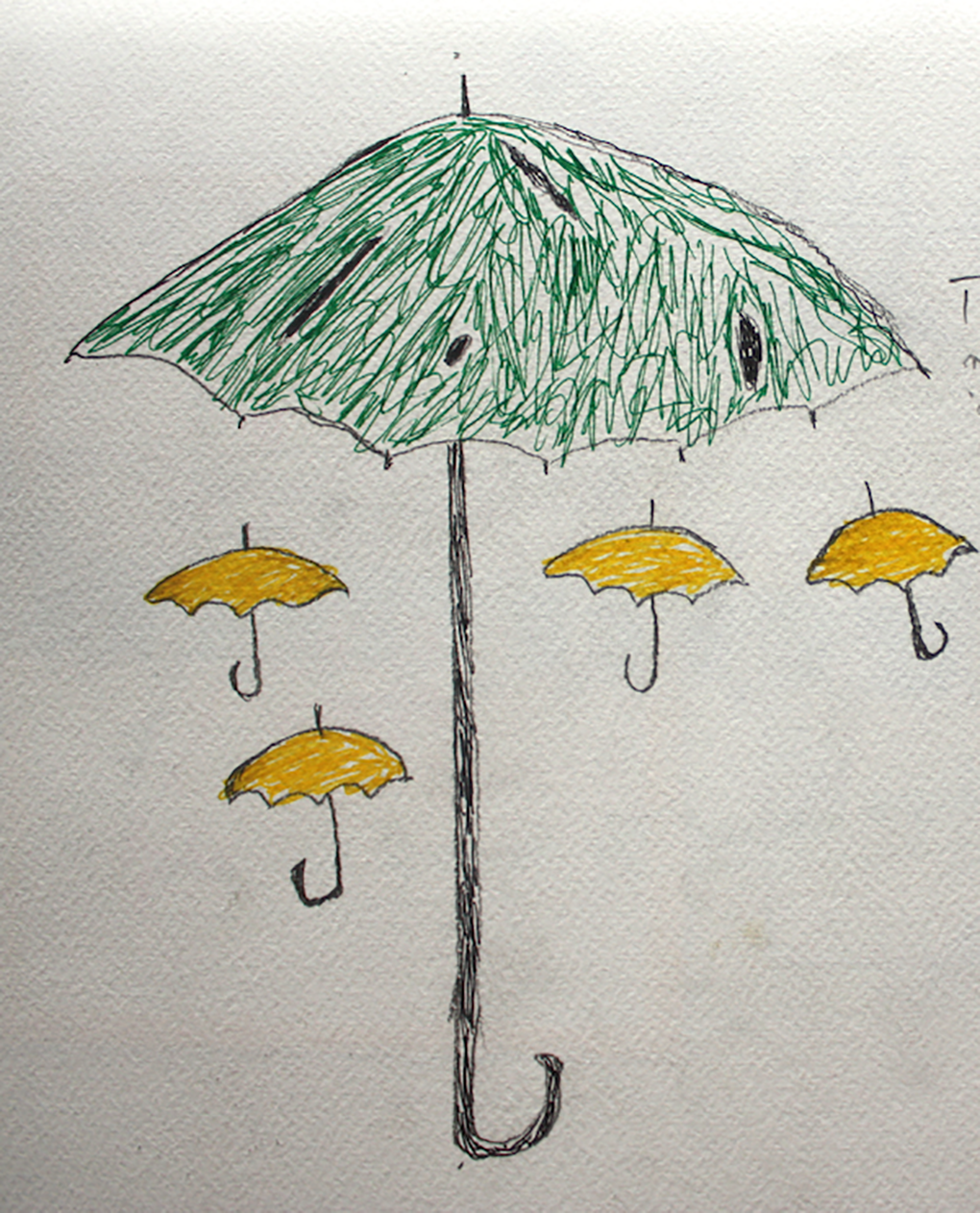
Umbrella metaphor.
An umbrella protects you from the rain or the sun. This green umbrella represents myself. I am just alive. The black spots are holes to represent that I have struggled so much. Yet even though there is nothing in my life except being alive, I feel that I am still useful. I am still used by God. All the yellow umbrellas are my family members and my church members who I have been taking care of. (Figure 7)
Another common metaphor revolved around fruit-bearing or shade-providing trees to signify “somebody who can give peace to other people and someone to depend on when they need.” What is striking from the explanations of these metaphors is their altruistic meanings, two main themes being protection (of self and others) and providing for others. Two other themes were hope, illustrated through changes in weather, and peace, symbolised in several ways including trees and rivers.
Confirming NP staff’s observation that local actors’ ideas of peace and development often resist top-down interventions and taken-for-granted meanings, the participants understood peace as manifesting in the everyday and also named numerous indicators of development but avoided using these historically and contextually tainted labels. Taken together, the themes in the categories self-protection, conditions for peace, and own role testify to participants’ agency and bottom-up ideas about peace, safety, and development, which were at odds with Myanmar’s national peace process and large-scale development projects.
Conclusion
The Kachin drawing workshop demonstrates how arts-based methods can enrich conflict analyses with the experiential knowledge of those living amidst it. The experiences shared by participants showed a complex web of different violences, from militarised and political to socio-economic and domestic violences, and how they are entwined with people’s everyday lives. Violence is neither a singular phenomenon nor confined to specific actors, times, or places but a dynamic underlying condition of life in Kachin since the early 1960s to date. All areas of life deemed important by the participants (livelihoods, education, family, and community) are entangled with violences in the plural, and there are no hierarchies between them that would map easily onto social-scientific models. This is exacerbated by the polysemy of central concepts, which in the workshop became visible not only with regards to what was experienced as a threat or violence by the participants but also from their understandings of peace. While “high-politics”/elite strategies such as ceasefire agreements and the national peace process were named among peace conditions, the overwhelming majority addressed conditions closely related to the everyday life of persons, families, and communities. This has implications for national and international organisations working with communities in Myanmar to protect them from violence and work towards peace and better living conditions, which resonate with Pearce’s (2019, p. 11) observation regarding the crucial value of experiential knowledge in finding solutions to pressing problems together with affected people and communities.
Drawing proved to be a versatile method enabling researchers to account for the experiential knowledge of people living amidst violent conflict, which can help tailor peacebuilding and development programs better to people’s own ideas around “a happy life.” One striking observation is the openness with which the Kachin participants drew and talked about different aspects of their lives, including illegal activities. The relationships of trust established by the facilitators throughout the workshop contributed to this open atmosphere; however, participant feedback also suggested that the drawing exercises contributed greatly to the content of what was shared by giving participants time to think and become aware of their tacit knowledge. There was also a levelling of positions of power and expertise among the participants and between them and the workshop facilitators which enabled listening to others’ experiences (Julian et al., 2019, p. 222). The method was embraced as cathartic and empowering by participants, with many experiencing drawing as a form of “voice” to share their experiences around a sensitive topic usually little discussed among them.
Yet, the project also faced some challenges mentioned in the literature. While ABR methods help generate trusting working relationships between participants and researchers, recruiting participants in the first place remains a challenge in research on sensitive topics. In the Myanmar project, recruitment was only possible through reliance on already existing relationships of trust (Bliesemann de Guevara et al., 2020; cf. Gameiro et al., 2018). Other common challenges refer to the openness and nondirectedness of ABR methods. While the project confirmed that arts-based methods give participants space to set their own agenda, the drawings were nonetheless prompted by questions based on specific assumptions that were not discussed with them. For instance, asking after conditions for peace assumes that participants want peace (cf. Bagnoli, 2009, pp. 566–567; Coemans & Hannes, 2017, pp. 41–43). The extent to which ABR is participatory will thus depend on how specific methods are implemented and give participants the opportunity to shape the design and/or course of the research. In the Myanmar project, a relatively short project duration and limited funding meant that a deeper engagement with participants prior to and after the workshop was not possible.
The project team shared its analytical findings and methodology with project partner NP through a booklet based on the participants’ drawings and words 6 and at meetings in Yangon and Bangkok. NP Myanmar subsequently introduced drawing elements into project evaluations with Burmese partner organisations and projects with 80 women leaders from eight conflict-affected states of Myanmar and 35 community peace workers in conflict-ridden northern Shan state. NP Philippines furthermore used the method in a project evaluating the role of unarmed civilian ceasefire and conflict monitors in Mindanao.
Interviewed about the use of drawing in their work, NP staff reported three types of positive impact. 7 First, the method gave them better conflict understanding, which helped tailor NP programming and practice to community contexts and needs. Drawing was experienced as “a universal language” that helped unearth deeper, more authentic, and more sensitive information more quickly; overcome language and cultural barriers; and convey conceptual meanings. Second, the method strengthened local ownership of the peace process, improved inclusion and equality, and levelled power differentials in NP engagements with partners. “[T]he advantage of something like drawings…is that it is actually an enabler for the [local] partner to be center…, it really makes them central to the work that we are doing,” NP staff reflected. Finally, it was observed that the method also enhanced trust and communication between NP’s partners from geographically and ethnically different, often antagonistic states and regions, which enabled joint visions for change and action across different ethnicities, genders and ages, and new local collaborations for protection and peace.
These experiences suggest that arts-based methods do more than help record experiential knowledge. By creating safe spaces to share experiences, they enable new engagements which may ultimately contribute to a greater primacy of local actors in peacebuilding and development initiatives.
Footnotes
Acknowledgement
We would like to thank the Raising Silent Voices project’s three amazing Research Associates in Myanmar, without whom this project would not have been possible, the staff of Nonviolence Peaceforce Myanmar who shared their insights and concerns, Dr. Christine Andrä and the two anonymous reviewers for helpful comments on this article.
Declaration of Conflicting Interests
The author(s) declared no potential conflicts of interest with respect to the research, authorship, and/or publication of this article.
Funding
The author(s) disclosed receipt of the following financial support for the research, authorship, and/or publication of this article: This work was supported by the UK’s Arts and Humanities Research Council (AHRC) under grant AH/N008464/1 and by the Welsh Crucible.