




Abstract
The ideological underpinnings of the Great Replacement Theory, which frames Muslims as a threat to Europe, originated in Serbia and emboldened a wider narrative of anti-Muslim hate across Western milieus. The othering of Bosnian Muslims (Bosniaks), an autochthonous ethnic group in Southeastern Europe, has contributed to the normalization of the alienation of Muslims throughout Europe, engendering Educational Displacement—an internalized sense of invisibility and devaluation within targeted individuals, diminishing their participation and trust in the societal institutions. In this complex socio-political and historical context, Bosniaks have nonetheless chosen to principally champion interfaith coexistence, offering an instructive and community-based model of resilience to hate and violence. The study investigates the Bosniaks’ affinity for coexistence by examining the underexplored case of interfaith solidarity and entente between Muslims and Jews in Bosnia and Herzegovina from 1540 to the present.
Keywords
The ideological underpinnings of the Great Replacement Theory, which frames Muslims as a demographic threat to Europe, originated in Serbia and emboldened a wider narrative of exclusion, hate, and displacement of Muslims across Western milieus (Amatullah & Dixit, 2022; Dillon et al., 2024; Mujanović, 2021; Vieten & Poynting, 2022). The history of persecution and othering of Bosnian Muslims (Bosniaks), an autochthonous ethnic group in Southeastern Europe, has contributed to the normalization of the broader alienation of Muslims throughout Europe, engendering Educational Displacement—an internalized sense of invisibility and devaluation within targeted individuals, diminishing their participation and trust in the societal institutions.
Conventional wisdom suggests that hate breeds violence. Studies have confirmed that experiencing trauma or violence leads to emotional desensitization which in turn increases the risk for the victims themselves to engage in violent expression (Mrug et al., 2016; Wamser-Nanney et al., 2019). Confronted with a complex socio-political and historical context of being recurrently subjected to persecution, occupation, and violence, Bosniaks have nonetheless opted to principally champion interfaith coexistence, offering an instructive and community-based model of resilience to hate and violence. The study investigates the Bosniaks’ affinity for coexistence by examining the underexplored case of interfaith solidarity and entente between Muslims and Jews in Bosnia and Herzegovina from 1540 to the present. The significance of this study lies in its considerable relevance to preventing the aggressive identity-based politics from undermining peaceful coexistence across societies today.
Literature Review: Anti-Muslim Racism, Otherness, and Mechanisms of Educational Displacement
Anti-Muslim Racism and Otherness
Cultural violence, as conceptualized by Johan Galtung (1990), a sociologist and central exponent of peace and conflict studies, manifests through narratives of othering, racism, supremacy, and dehumanization, resulting in Educational Displacement (Figure 1). Schools, as exemplars of shared social spaces, are sites where Educational Displacement first appears when a student experiences the lack of support by teachers, peer rejection, or curricular erasure due to an aspect of the student’s identity and way or being or viewing the world around them. As theorized here, Educational Displacement does not necessarily result in the targeted individual’s or even group’s physical disengagement from the social institutions. Instead, it produces an effect of othering that can be hidden from the observer yet still generate a profound internal feeling of disconnection and disaffection whereby individuals feel invisible, lesser, and deprived of a sense of belonging within formal institutions, such as schools, universities, or workplaces (Sabic-El-Rayess, 2021; Sabic-El-Rayess & Joshi, 2024). This displacement is maintained through narrative learning processes, in which both adults and youths, within physical and virtual environments, are subjected to discourses—via legacy media, social media, and curricula—that can ultimately normalize and justify the act of physical violence against the educationally displaced (Joshi & Sabic-El-Rayess, 2023; Sabic-El-Rayess, 2020a). As such, the repercussions of Educational Displacement are execrable and intergenerational, affecting individual identities, groups, and societies. Educational displacement: The effects of cultural violence. Source: Sabic-El-Rayess et al. (2023a, p. 308)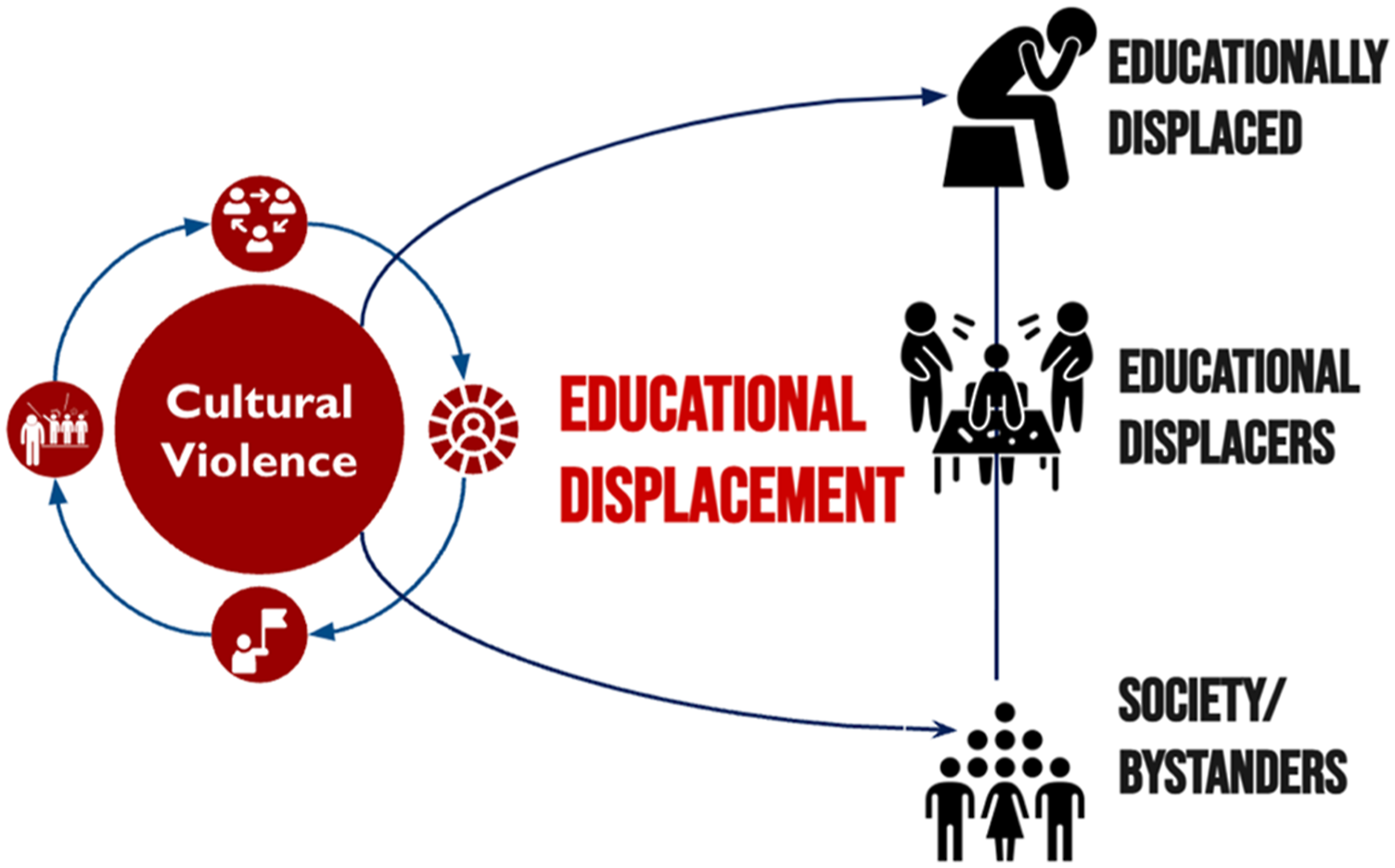
For example, Anders Breivik’s manifesto, which accompanied his 2011 attacks in Oslo that resulted in 77 deaths, extensively detailed a fear of Islamization and a rhetoric of cultural violence targeting Muslims, specifically positioning Bosniaks as the demographic threat to Europe. The manifesto referenced the wars in the former Yugoslavia nearly 1000 times (Karcic, 2022). Such deleterious portrayals of Muslims solidify the racist narrative that casts Muslims as foreign intruders seeking to replace European identities, rather than acknowledging Muslims as holding such identities and contributing to the political, cultural, social, and economic fabric of European nations. The latest European Islamophobia Report for 2023 (p. 5–6) finds that “mainstream and far-right media perpetuat[e] Islamophobic stereotypes, often dehumanizing Muslims and aligning with racist narratives” while educational institutions propagate “Islamophobia through discriminatory policies and revisionist histories.” The anti-pluralists and populists in the Western contexts have similarly redirected political and economic grievances of their followings, placing the blame on the Other: this generates a binary polarity in which Muslims are portrayed as the Other—invading the culture and threatening security in predominantly white, Christian nations (Aziz & Esposito, 2024).
While all Abrahamic religions trace their origins to a common source, the systematic othering of Muslims as non-Europeans and outsiders to the Judeo-Christian cultural ecology has been intrinsic to the long-term narrative displacement of the indigenous Bosniaks from their European identity. Referring to “the divisive, exclusionary and problematic myth of a ‘Judaeo-Christian’ tradition in Europe,” Topolski (2020, p. 72) explains how the “race-religion constellation” enables racism in Europe to be directed at Muslims as the Other. This framing, she argues, conceals the Islamophobia embedded within European societies. In 2023, of 28 nations—including but not limited to Austria, Germany, Denmark, Finland, France, Italy, Norway, Sweden, Switzerland, and the UK—whose policies and institutions were examined for the observable indicators of anti-Muslim racism, the European Islamophobia Report finds that only one European nation—Spain—marked the UN-proclaimed International Day to Combat Islamophobia.
The practice of narrative violence has become a means of ideological transmission of hate within the growing far-right movement, increasingly influenced by the Bosnian Genocide and anti-Muslim racism (Coolsaet, 2022; Karcic & Green, 2024; Walach, 2019). This narrative anchors Bosniak, and more broadly Muslim, identity in a historical context of otherness and what Drakulic (2009) terms an “anti-Turkish obsession” in Europe, where Turkish identity historically served as a proxy for “Muslim” due to the legacy of the Ottoman Empire (Taras, 2019). As Walach (2019, p. 55) notes narrative violence refers to “stories which can be used to inflict harm through the very act of narration.” Within such a context, Muslims are racialized, commonly experiencing displacement, profiling, and stereotyping. This was made evident by Hungarian President Victor Orban, who stated, “The challenge with Bosnia is how to integrate a country with 2 million Muslims...I am doing my best to convince Europe’s great leaders that the Balkans may be further away from them than from Hungary, but how we manage the security of a state in which 2 million Muslims live is a key issue for their security too” (TRTWorld, 2021).
For Bosniaks, an indigenous ethnic group in Europe, the concept of integration into the region to which they are native is nothing but nugatory (Alexander & Sabic-El-Rayess, 2005). But, the anti-Bosniak sentiment has persisted in engendering socio-political environments where anti-Muslim racism has escalated into extreme violence, enabling mass atrocities, war crimes, and genocide against Bosniaks and subsequently inspiring far-right groups globally (Karcic & Green, 2024; Sabic-El-Rayess, 2020b). The toxic dehumanization of Bosnian Muslims peaked during the Bosnian Genocide, 1 and is vividly depicted in “Sarajevo Safari,” a documentary by Slovenian filmmaker Miran Zupanič, which portrays wealthy foreigners paying Serb forces significant sums to snipe civilians in besieged Sarajevo for personal entertainment.
However, anti-Bosniak racism is not confined to Southeastern Europe or even Europe alone. It possesses a pernicious transnational character that fuels hatred towards both Muslims and non-Muslims alike. In an article published in Nature in 2019, Johnson, Leahy, Restrepo, Velasquez, Zheng, Manrique, Devkota, and Wuchty demonstrate empirically that banning a particular ideological point of view is ineffective because hate groups are interconnected across nations, regions, languages, and ideologies creating “hate highways” that adapt and respond to their contextual circumstances. To exemplify, on March 15th, 2019, Brenton Tarrant, an Australian far-right extremist, perpetrated a devastating attack, killing 51 people in two mosques in Christchurch, New Zealand. During the attack, he conspicuously inscribed the names of Serbian nationalist leaders who perpetrated the Bosnian Genocide on his weapon, bringing to the fore their growing influence. Tarrant further broadcasted the massacre live on social media while playing “Serbia Strong”—a sonic tribute glorifying hate-fueled violence toward Bosniaks (Ardern, 2019; Gambrell, 2021; Khan, 2019). Three years later, on May 14, 2022, Payton Gendron, an 18-year-old, entered a Tops Supermarket in Buffalo, New York, and fatally shot ten Black Americans. His motivation for the attack was reportedly linked to Tarrant’s infamous shootings in Christchurch. This is a simulacrum of narratives that traverse across continents, cultures, and societies as they teach, normalize, and thereby legitimize violence and hate directed towards specific social groups.
Bosniaks, however, remain one of the most tolerant communities globally (Pew Research, 2013 as cited in AA, 2013). While over 900 mosques and hundreds of Islamic educational institutions were targeted during the Bosnian Genocide, Bosniaks did not retaliate for this cultural erasure by demolishing religious institutions of non-Muslims (Halilović, 2019). The only mosque in Europe built on a river island in Bosanska Otoka was destroyed four times over the course of several centuries, including in the 1990s. Bosniaks avenged its destruction by rebuilding it—repeatedly. Bosniaks embody a unique model of community-based resilience to hatred by deliberately responding to their own dehumanization and related violence by maintaining their affinity for interfaith coexistence. To illustrate, this article examines the relationship between Bosniaks and Jews in Bosnia and Herzegovina, shedding light on rarely explored historical evidence of kinship between the two groups over centuries of peaceful coexistence.
Mechanisms of Educational Displacement
The concept of Educational Displacement refers to the feeling of invisibility, disconnection, and disaffection from mainstream society experienced by individuals or groups after their exposure to othering and dehumanization in educational and social settings. Sabic-El-Rayess (2023, p. 123) exemplifies key mechanisms and traits of Educational Displacement: … the physical displacement and ethnic segregation the Bosniak community experienced in the 1990s was built on multigenerational displacement from the educational system in the former Yugoslavia. Educational Displacement translates into being invisible and unacknowledged in the educational curricula, leaving a permanent imprint on those affected. In the case of Bosniaks, their lived experiences and representations were transposed from mainstream curriculum in schools in the former Yugoslavia, engendering a feeling of a lesser contribution, meaning, and value to society relative to non-Bosniaks. This marginalization still reverberates through Bosniak collective thinking and culture, at home and abroad.
Educational Displacement not only detrimentally affects those who are displaced, but also those who perpetrate displacement, whether as individuals or groups (Figure 1). By devaluing, dehumanizing, and erasing a targeted group or individual, a sense of exclusion and otherness is fostered, due to which narrative violence can escalate into physical violence against the displaced or, in reaction to their displacement, by the displaced. Let’s consider the case of Thomas Crooks, a 20-year-old person who attempted to assassinate former President Donald Trump and who was described by his classmates and coworkers as intelligent and from an affluent Pennsylvania neighborhood with at least one parent trained in counseling (Shrestha, 2024; Thomas et al., 2024). But, Thomas was also bullied and lacked friends. A coworker from the Bethel Park Skilled Nursing and Rehabilitation Center near his home expressed, “It’s difficult seeing everything online because he [Thomas] was a genuinely good person who did something terrible, and I just wish I knew why” (Tolan et al., 2024, np). While the law enforcement is yet to answer the why question, Thomas, described by peers as a loner of inconsequential presence, may have experienced Educational Displacement, feeling unseen by his peers and thereby mainstream society. The process of radicalization and its culmination into violent expression are triggered not by aspects of one’s identity—whether religious, ethnic, racial, political, socioeconomic, cultural, or social—but by experiences of alienation, targeting, othering, dehumanization, and marginalization (Sabic-El-Rayess et al., 2023b). The risk factor for targeted violence lies not in identity itself, but in the consequential displacement from educational and social spaces that a mistreated individual experiences (Sabic-El-Rayess et al., 2023a).
Educational Displacement adversely impacts the entirety of society across a range of stakeholders (please see Figure 1): The educationally displaced endure othering, dehumanization, and erasure, placing them at heightened risk of responding with violence to attacks on their identity and community. Displacers, by engaging in hateful rhetoric and normalizing cultural violence against the targeted individual or group, elevate their own risk of committing physical violence (Miller-Idriss, 2022; Sabic-El-Rayess, 2021; Sabic-El-Rayess & Marsick, 2021). Persistent Educational Displacement can lead to the acceptance of cultural violence against a specific group, socially transforming the whole of society by exacerbating risks for violent expression across all stakeholders.
Research on protective factors against targeted violence evinces that educational narratives emphasizing social connectedness, belonging, friendship, allyship, and peer-to-peer acceptance can mitigate Educational Displacement, thereby preventing hate-driven violence against specific individuals or groups (Hruschka et al., 2025; Joshi, 2025; Joshi & Sabic-El-Rayess, 2025; Sabic-El-Rayess, 2021). To prevent Educational Displacement is to uplift diverse narratives in classrooms as integral to community-based resilience against hatred, allowing identity to emerge as a story, not a category that profiles and stigmatizes an individual.
Using empirical data, Sabic-El-Rayess et al. (2023b, 2023a) demonstrate that educators who participated in the Reimagine Resilience Program at Teachers College, Columbia University, underwent a transformative process by engaging in a training program that centered on storytelling as a pedagogical tool to bolster educators’ confidence in preventing radicalization and cultural violence by enhancing their understanding of both protective and risk factors (Joshi, 2024). The empathetic storytelling undermines narrative violence not only shielding a community from succumbing to hatred but also fostering resilience against it (Sabic-El-Rayess & Sullivan, 2020).
Community-Based Model of Resilience to Hate
While external threats typically prompt communities to turn inward for self-preservation (Moratti & Sabic-El-Rayess, 2009; Sabic-El-Rayess, 2014) with such interest for some superseding all others (Lott, 1982), the case of Jewish-Muslim entente in Bosnia serves as a compelling example of community-based resilience to hate. This analysis offers an understudied historical account of the longstanding propensity of Bosniaks towards interfaith coexistence, manifested through the enduring Muslim-Jewish kinship and sustained even during periods marked by hatred and violence targeting Muslims. Herein, resilience, complementary to a conventional definition of resilience—in response to a tragedy or adversity—is a preventative and communal capacity empowered through non-violent problem solving and empathetic storytelling that offers equal credibility to all voices embracing the groups’ shared values of mutual respect, equality, and recognition as a bulwark against divisive forces (Sabic-El-Rayess & Sullivan, 2024). Throughout Bosnia and Herzegovina’s history, various empires and neighboring nations—ranging from the Illyrians and Romans to present day Serbia and Croatia—have exerted influence through aggressions or occupations. A turning point in Bosnia’s history, with lasting repercussions to this day, was the arrival of the Ottomans. The Bosnian Kingdom experienced partial occupation in 1384, but by 1527, it had fallen completely under Ottoman administration. By the late 15th century, the Ottomans had principally incorporated Bosnia into their empire.
While the existence of Bosniaks as an indigenous ethnic group preceded the arrival of Ottomans, this period saw the expansion of Islam with a significant segment of the population embracing the faith. The Bosnian Church, distinct from Catholic and Orthodox Christian communities, was institutionally weak, facilitating adoption of Islam, often driven by political and economic motivations among its adherents. The Ottomans further incentivized acceptance of Islamic practices through economic benefits, thereby fostering its gradual growth in Bosnia and its adjacencies. Bosniaks spread to other countries such as Croatia, Serbia, Montenegro, and Kosovo, facing repeated episodes of violence due to their faith and ethnicity.
In 1846, Njegosh, the Prince-Bishop of Montenegro, composed a poem highlighting the perceived threat of the Ottoman Empire, urging Orthodox Christians to defend Europe as heroes and patriots (Njegosh, 2008). This sentiment—while unique in style and expression—is not ideologically different in intent from the Great Replacement Theory’s contemporary framing of Muslims as a threat to the security of Europe (bin Abdulkarim Al-Issa & Sabic-El-Rayess, 2023). Njegosh justified acts such as impalements and beheadings of Muslims, serving as an ideological precursor to the persecution of Bosniaks nearly 150 years later during the Bosnian Genocide. The latest genocide involved organized executions, persecution, and rape of Bosniaks by Serbian and Serb forces in Bosnia and Herzegovina during the 1990s. Over time, narratives advocating for the eradication of indigenous Bosniaks from the region have permeated local literature and history, perpetuating social injustices and sensitizing Muslims to social injustices beyond their own group (Sabic-El-Rayess, 2022).
While Christians in Bosnia under Ottoman rule were exempt from military service, they were required to pay an additional monetary tax. The most contentious aspect of their taxation system at that time was the recruitment of select Christian children—those considered healthy and capable—who were separated from their families to join the Janissary Corps, an elite unit within the Ottoman military. These children received rigorous training and had opportunities to rise to prominent positions within the Ottoman Empire. An illustrative example is Mehmed-Paša Sokolović, who was taken from Bosnia as a child. Sokolović, a polyglot speaking six languages, received a comprehensive education. He eventually rose to the position of Grand Vizier of the Ottoman Empire. In addition to his political acumen, Sokolović is renowned for his architectural achievements, including the construction of a famous bridge in his hometown of Višegrad, Bosnia and Herzegovina, among other notable structures across the Ottoman Empire.
The Ottoman Empire, and Bosnia specifically, provided refuge for Jews fleeing persecution across Western Europe from the 14th to the 20th century. Historically, Jews “prospered during the centuries of the Islamic caliphate of Baghdad” (Shaw, 2016, p. 1). Throughout 800 years of the Muslim reign in Spain, Jews were a protected minority with religious freedoms not afforded to them elsewhere in Europe. But, as Muslims lost power over Spain, so did Jews begin to lose their protected status. The culmination of tensions in January 1492 saw Christians defeating Muslims, leading shortly thereafter to the establishment of the Spanish Inquisition by Queen Isabella and King Ferdinand. This court targeted Muslims, Jews, and converts to Christianity suspected of practicing their faith in secret (Shaw, 2016). In response, Bayezid II, the 8th Sultan of the Ottoman Empire, dispatched his ships to rescue Jewish and Muslim refugees, resettling them across the Ottoman Empire. He also encouraged his subjects to welcome the refugees and offered them citizenship in the Ottoman Empire (Egger, 2008). In the centuries that followed, alongside persecuted Muslims, waves of Jewish refugees fled violence in Europe and found refuge in the Ottoman Empire, where they contributed intellectually, socially, and economically. The Ottoman Empire, including its outpost in Europe, Bosnia and Herzegovina, became a significant sanctuary for Jews seeking safety and protection.
As a caliphate, the Ottoman Empire united political and religious authority, establishing Sharia Law based on the Quran and the sayings of Prophet Muhammad (p.b.u.h.) or Hadiths as the foundation for Muslim rights. Simultaneously, Jews and other religious groups in Bosnia were granted autonomy to govern their community’s customs and practices, distinct and independent from those imposed on Muslims. This level of independence in civil and religious affairs was unprecedented for religious minorities in many parts of Europe during that era. However, as the Ottoman Empire’s influence waned in the 17th and 18th centuries, some of these rights gradually eroded.
In Bosnia, the first recorded influx of Jews occurred in major cities like Sarajevo, where around 30 families settled in circa 1540 (Nezirevic, as cited in Softic-Kaunitz, 2017). With their arrival came the establishment of the oldest synagogue in the country built in Sarajevo in 1581. This synagogue was funded by Sijavuš-paša Kanjižanin, an Ottoman statesman who governed the Sanjak of Bosnia, an Ottoman province at that time (Softic-Kaunitz, 2017; Una-Sana Museum Archives, 2021). Initially intended as a facility to support the impoverished Jewish community, it later transformed into a functioning synagogue and now houses the Museum of Jews of Bosnia and Herzegovina. Over time, the Jewish population expanded across Bosnia, constructing a total of 37 synagogues, with Sarajevo alone hosting 8 (Nezirovic, 1992; Una-Sana Museum Archives, 2021).
Unlike in many European cities where Jews were coerced to live in ghettos, Jews in Bosnia and the rest of the Ottoman Empire were not confined to ghettos but freely mingled with Muslims (Gubbay, 2000), fostering a conducive environment for a lasting Muslim-Jewish kinship that endures today. Historical records from the Una-Sana Museum Archives (2021) and the Jewish Community of Bosnia and Herzegovina (2021) recount an incident in 1819 when the Ottoman vizier, Mehmed Rushdi Pasha, unjustly imprisoned a group of ten Bosnian Jews, including Sarajevo’s rabbi, Moshe Danon. In response, Bosniaks organized an armed rebellion against Rushdi Pasha. In solidarity, Muslims “swore an oath to liberate their Jewish neighbors from the unjust governor or to die in the attempt”; approximately, 3000 armed Muslims marched in protest to Rushdi Pasha’s residence, successfully freeing their Jewish compatriots and forcing the vizier to flee in fear of further Bosniak resistance (Jewish Community of Bosnia and Herzegovina, 2021, np; Levy, 1933).
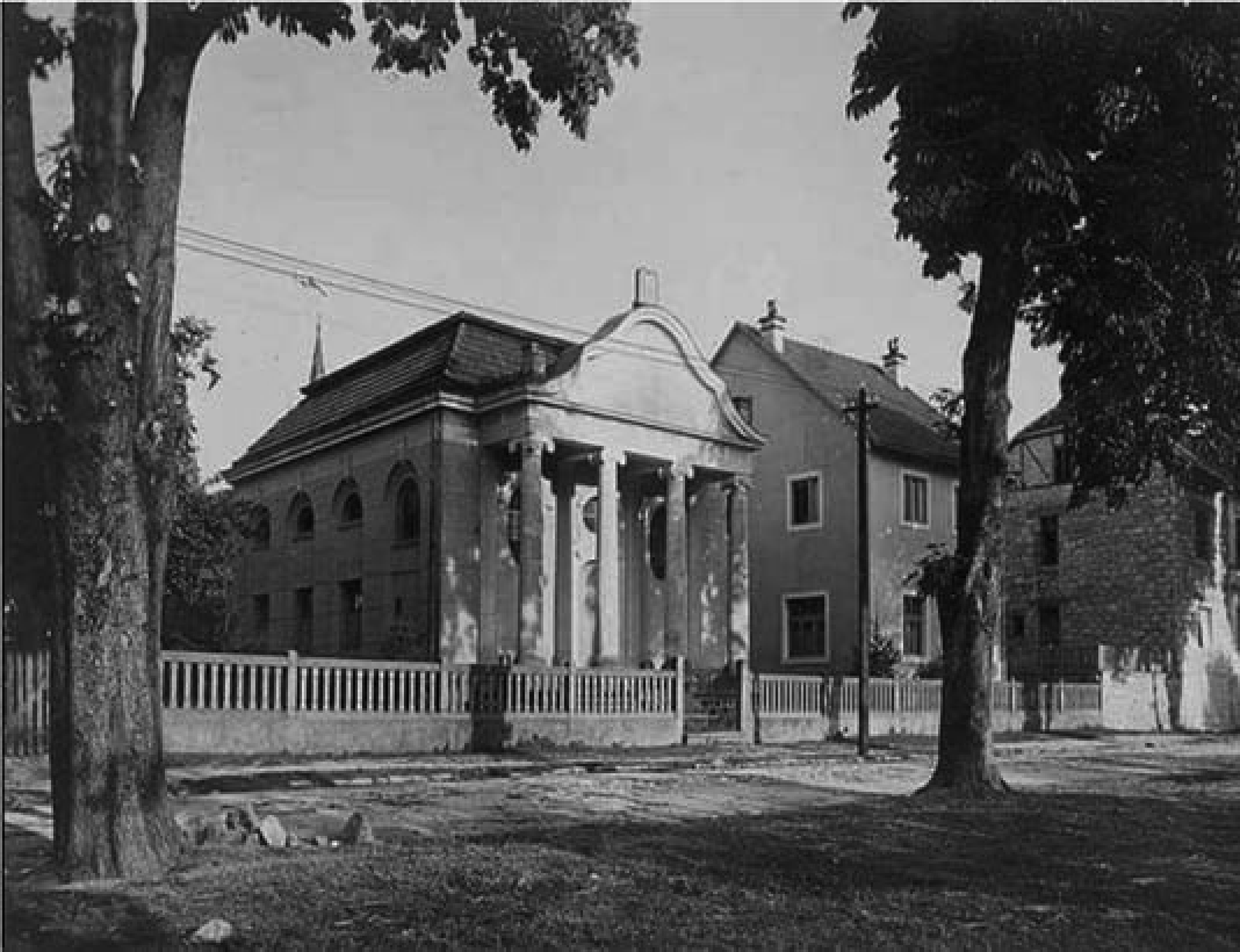
Following the Ottoman Empire’s departure, the Austro-Hungarians occupied Bosnia and Herzegovina. The census of 1879 indicated that Sanski Most had no Jewish residents, Prijedor had 5, and Bihać had 72 (Dedic, 2020). By 1885, Sanski Most saw an increase to 7 Jewish residents (Dedic, 2020). In the final Austro-Hungarian census, Sanski Most had 41 Sephardic Jews from Spain and 15 Ashkenazi Jews (Dedic, 2020). Among them, Otta Golberger became the town’s first pharmacist, while other Jewish families engaged in trade, craftsmanship, and government service (Dedic, 2020). In Bihać, by 1910, the Jewish population had grown to 165, and a synagogue was constructed in a central location in 1906 (Una-Sana Museum Archives, 2021). Known for its extensive book collection, the Bihać synagogue became a notable cultural landmark. Bosnia stood out as a unique setting due to its integration of Bosnian Jews, in sharp contrast with the harsh conditions faced by Jews in other parts of Europe. For example, the Sarajevo magazine Saraj-Bosna, issue number 65 from 1867, discussed the persecution of Jews in Romania and questioned why would anyone target individuals solely for being Jewish (Nezirevic, n.d; Una-Sana Canton Museum, 2021) (Pictures 1 and 2). Synagogue in Bihać (Bosnia and Herzegovina). Source: Archival materials of the Una-Sana Canton Museum in Bihać (Bosnia and Herzegovina). Photo reproduced with the Museum’s written permission. Synagogue in Bihać (Bosnia and Herzegovina). Source: Archival materials of the Una-Sana Canton Museum in Bihać (Bosnia and Herzegovina). Photo reproduced with the Museum’s written permission.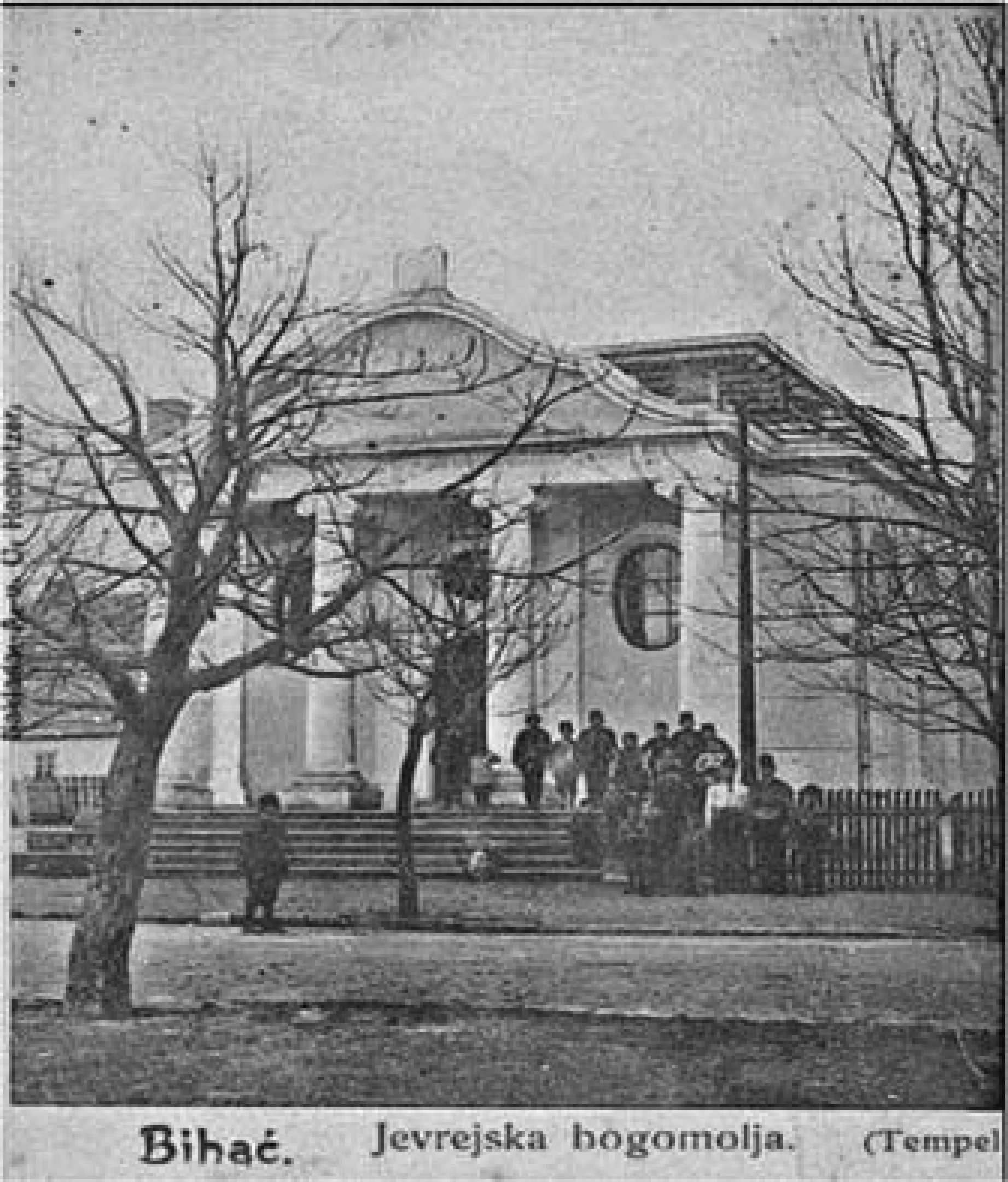
On April 13, 1941, shortly after the establishment of the Independent State of Croatia (in Croatian NDH), several divisions of the German army entered Bosnia through Croatia and occupied Bihać, a strategically important town on the border. Ljubomir Kvaternik, a prominent figure in the NDH government, arrived in Bihać on June 15, 1941, and delivered a speech on the main bridge declaring that Jews and Serbs would not be tolerated in the NDH (Juric, 2019; Kecman, 1987). Kvaternik deliberately wore a fez, a traditional headdress of Bosnian Muslims and Muslims more generally, in an attempt to rally local support (Kecman, 1987). The fez was manipulated by the Ustashe to incite hatred and violence, aiming to persuade Muslims to align with the Ustashe regime. In response to this misuse of the fez, intellectual Islamic elites issued the Banja Luka Resolution of 1941, condemning the tactic and citing numerous incidents where killings of innocent Muslims and Serbs ensued: “[w]e are aware of many examples of Ustasha donning the fez when going out to kill and slaughter….Had we wanted to exterminate, kill, or convert the Serbs or anyone else, surely we could have done so rather more easily a couple of centuries ago, when our power in the land was greater than today (Jahic, 2021, p. 91).” By June 24, 1941, Kvaternik had ordered the expulsion of Jews and Serbs from Bihać (Una-Sana Canton Museum, 2021). While some Muslims aligned with the occupiers, out of fear for their own survival, local support for the Ustashe regime was minimal. In fact, according to Brkic (1951, p. 127): the Muslim masses, because of their low level of political consciousness, fallacies their political leadership had fostered, and injustices they had suffered, tragically failed to understand the nature of occupation fully. As a result, when the fascist rampage began, they were stunned. Their primal aversion to injustice and violence alarmed their conscience. This helped them start to break free from the framework of feudal-bourgeois political calculus. As a result, the Ustashas’ efforts to win them over to their policies, through blandishments, minor concessions, and false vistas, enjoyed little success.
After failing to garner substantial local support, on July 23, Kvaternik amended his order to include “the same measures” (Kecman, 1987, p. 95) against Muslims and Croats who opposed or did not support the NDH. Soon after, religious leaders in Muslim communities across Bosnia began to protest, citing unbearable treatment under the regime. Some Muslims were coerced into converting to Catholicism, while others faced persecution and brutal attacks, including massacres alongside their families and children by Serb nationalists, the Chetniks (Jahic, 2021). Bergholz (2010) sheds light on the tragic history of Bosnia during World War II, where mass killings of Muslim civilians were overlooked and even glorified in the post-war Yugoslavian narrative. 2 He points out that many war criminals responsible for these atrocities inflicted on Muslims were hailed as heroes in communist Yugoslavia, promoting an environment where Muslim survivors remained silent out of fear and a desire to move forward.
Despite the stateless and occupied Bosniaks having no political voice or power during WWII, Bosniaks and its Islamic community were vocal in rejecting fascist practices that sought to exterminate Jews, Slavs, and Roma. While Nazi-occupied territories in Europe were sites of systemic genocidal violence against targeted groups, Bosniak intellectuals condemned the mass killings of Jews, Serbs, and Roma. This condemnation was formalized in the Muslim Resolutions of 1941, a significant and public statement of opposition to the atrocities being perpetrated. According to Karčić et al. (2021, p. 8), these resolutions “represent one of the few instances in the region, and perhaps the only one, where such atrocities were condemned and criticized by the elite of a ‘stateless people.’” The Bosniaks’ response came shortly after Bosnia was occupied by the Independent State of Croatia, established on April 10, 1941. The NDH, led by the fascist Ustashe regime, aimed to exterminate Jews, Serbs, Roma, as well as Muslims and Croats who opposed their ideology. According to the last census conducted in the Kingdom of Yugoslavia in 1931, approximately 11,248 Jews lived in Bosnia (Una-Sana Museum, 2021). Estimates suggest that between 26,000 to 40,000 Jews were killed during WWII in Bosnia and Croatia, with about 2000–3000 surviving the Holocaust (Una-Sana Museum’s Archives, 2021).
The risks faced by Bosnian Muslims and their families who publicly denounced the atrocities committed by the fascist occupiers against Serbs, Roma, and Jews were considerable. Yet, the Muslim Resolutions, published with the names of their signatories in 1941, underscored the Bosniaks’ unequivocal stance against fascism. They demanded that the Ustashe regime, occupying Bosnia under Nazi Germany’s directive and support, cease the massacres and property seizures targeting Jews, Serbs, and Roma. In 1950, Mustafa Sahacic (as cited in Karčić et al., 2021, p. 12), the imam of the Ali-Pasha mosque in Sarajevo, observed: Given their religious beliefs, Muslims have always sided with oppressed and the unprotected. During the occupation, Muslims took a strong, risky, public stand against the massacre of innocent Serbs and Jews. The Sarajevo, Mostar, Banja Luka, and the other Muslim Resolutions made during the occupation are the best evidence of this honorable stance.
It is conceivable that certain resolutions may still remain undiscovered in Bosnia’s archives, assuming they were not destroyed during the 1990s Bosnian war. Following the communist takeover in post-WWII Yugoslavia, of which Bosnia and Herzegovina was a part, sections of these Muslim resolutions were expunged, and Muslim signatories were omitted if they were deemed anti-communist (Karčić et al., 2021). Even the resolution issued by the Muslims of Sarajevo, signed by 108 prominent citizens including religious scholars and academics (Karčić et al., 2021), that refrained from explicitly naming the Ustashe but openly condemned the mass killings, prompted certain authorities within the fascist NDH to call for the death penalty for all involved. The Banja Luka Muslim Resolution of 1941 (Karčić et al., 2021) acknowledges the dire circumstances faced by Muslims living under occupation in Bosnia, but still expresses remarkable decisiveness in publicly denouncing fascism.
Similarly, the leaders from the Muslim communities across the country signed the resolutions providing a guiding model of community-based resilience to hate narratives today. The surviving resolutions include El-Hidaje Resolution, Prijedor Resolution, Sarajevo Resolution, Mostar Resolution, Banja Luka Resolution, Bijeljina Resolution, Tuzla Resolution, Zenica Resolution, Bosanska Dubica Resolution, and Bugojno Resolution. Apart from the El-Hidaje Resolution, each represents the voices of Muslims from nine principal towns in Bosnia. El-Hidaje was the local association of ulamas, or Muslim scholars. The signatories reflected the genuine stance of Bosnian Muslim collective raising concerns for the occupiers (Kurtovic, 1951).
Among the signatories were prominent administrators, leaders, professors of Islamic educational institutions, Sharia justices, and leading figures within local Muslim organizations (Karčić et al., 2021). The ideological foundation of these resolutions rested on Islamic principles that denounce injustice and embrace equality. As Sinanovic (2021, p. 26) asserts, “the Qu’ran teaches Muslims that even in cases in which enmity exists between their community and other groups of people, Muslims should remain faithful to the ideal of just conduct. In short, there is no excuse for injustice.” The Bijeljina Resolution was initiated by five imams, prominent religious leaders galvanized support for the Mostar Resolution, and the Zenica Resolution was endorsed by the elite of Islamic educational institutions. These outspoken religious leaders representing their Muslim communities audaciously advocating to halt massacres by occupying forces against various groups, including Jews, despite risking their own families and communities’ safety, challenge enduring negative stereotypes of Muslims and Islamic education perpetuated in Western media, social media, political narratives, literature, and educational institutions (Aziz & Esposito, 2024; Beydoun, 2024; Joshi & Sabic-El-Rayess, 2023; Sabic-El-Rayess & Joshi, 2024).
As occupying powers rotated through the region, Bosnian Muslims of the 20th century turned their focus to their own survival such that “[t]heir preferred option was the preservation of their ancestral homeland, Bosnia and Herzegovina, as an administrative and political entity, but their bottom line was the preservation of a minimum of religious, social, and cultural autonomy under whatever political order was in the ascendant, so that they could maintain their identity (Maurer, 2021, p. 38).” For instance, Mujo Cehic, 3 the imam of Europe’s only mosque situated on a river island in the small village of Bosanska Otoka, recounts the mosque’s history, first built in 1565 and subsequently destroyed and rebuilt four times by Bosniaks in response to various occupiers. Similarly, Gavrilović (as cited in Bojić, 2001, p. 212) underscores the silence and lack of acknowledgment regarding the persecution of Muslims during WWII, stating, “I don’t know how many of the Muslim people were killed. No one knows. No one ever made a list, no one on his own or with others ever collected such information, no one exaggerates or minimizes, quite simply—people stay silent.” Throughout the 20th century, Bosniaks have endured marginalization, targeting, and genocide. This experience of persecution has fostered empathy within the Bosniak community towards Jews, recognizing their shared struggle for survival as historically targeted groups.
While the entire Bosnia was under Nazi occupation, Bihać emerged as a notable site of resistance against Nazi ideology and the persecution of targeted groups. Nurija Pozderac, a Bosniak from the small town of Cazin near Bihać, rose as a prominent Muslim leader in north-western Bosnia who actively protected and rescued the Jewish population during the NDH’s rule. Initially offered a position in the NDH government in Zagreb, Croatia, which he refused (Kecman, 1987), Pozderac instead collaborated with local doctor Isidor Levy to aid Jews and Serbs while organizing local resistance against fascism (Kecman, 1987). His efforts endangered his own life and the lives of his family members.
Below (Picture 3) is a letter dated December 9th, 1942, written in Bosnian by a Jewish woman, likely married to a Serb, addressed to Nurija’s daughter Sadeta. In the letter, Paola acknowledges Nurija's assistance to her family and appeals for further help. Paola writes: “I still haven’t reciprocated the first big favor your Father did for us, and I am already asking for another one. But I wouldn’t have opted to do so if your Father didn’t on his own offer his help, when my husband told him that we were left naked and barefoot…” Letter by Paola Sih Vidovic to Sadeta Pozderac 1942. Source: Museum of Una-Sana Canton, Archival Collection, K-A6-BR.UL. 1151 and MF 410/1151-(1-3)-(I-III)/3.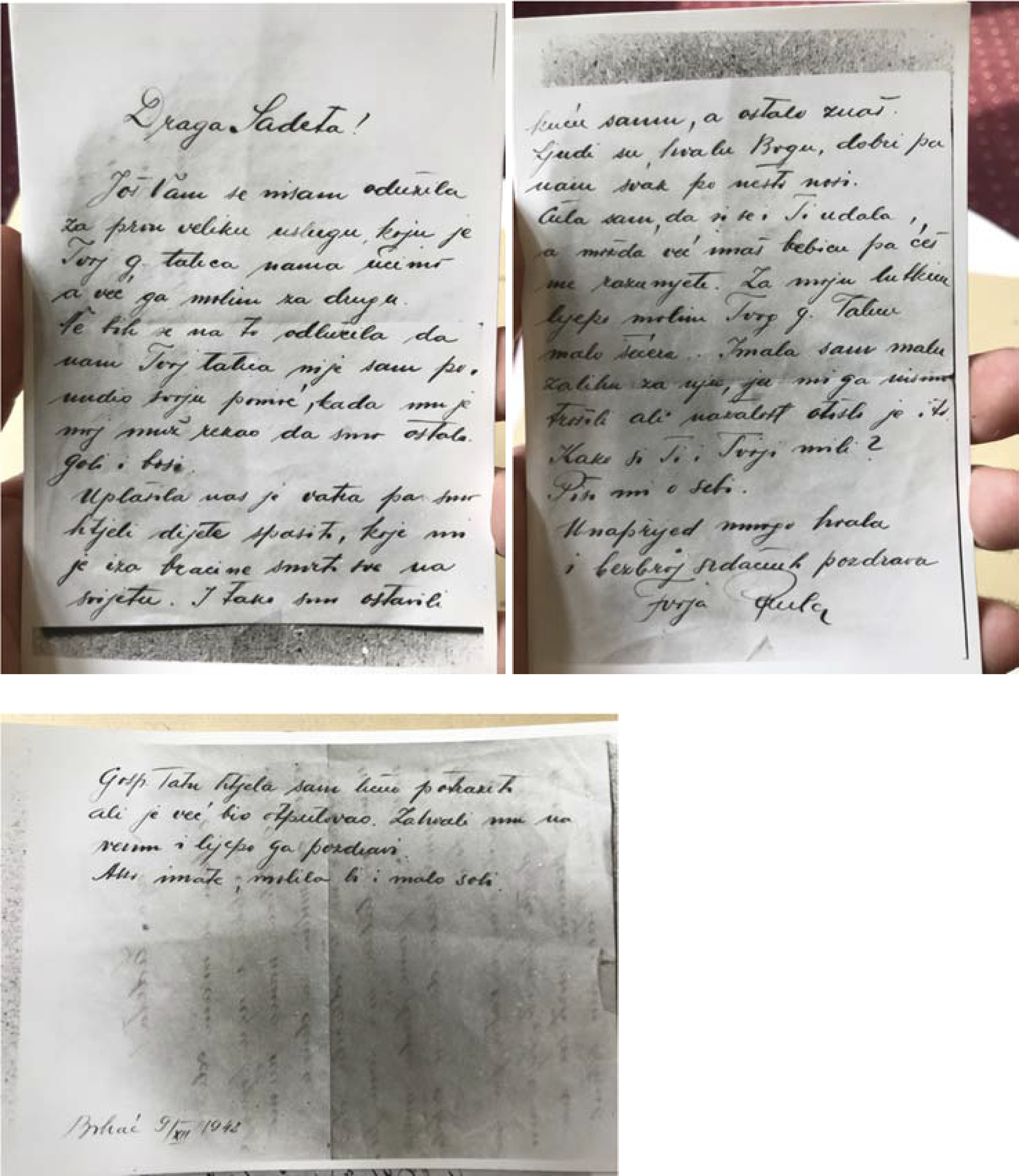
By the autumn of 1942, the Jewish synagogue in Bihać had been converted into an ammunition storage facility for the occupying forces and later destroyed by the Ustashe. One enduring legacy of the Jewish community in Bihać is the Jewish cemetery established in 1860, where families such as Abinun, Alhalel, Altarac, Atijas, Baruh, Izrael, Kavezon, Levi, Maestro, Papo, Pinto, Rehnicer, Friedman, Silberstain, and others were laid to rest (Una‐Sana Museum's Archives, 2021). The final burial in the Bihać Jewish cemetery was Benjamin Alhalel, who returned from a concentration camp in 1945 only to pass away shortly thereafter (Una‐Sana Museum's Archives, 2021).
Many of those who signed the Muslim resolutions of 1941 joined resistance forces against the Ustashe, while others were tragically executed in the concentration camps the Ustashe established across Croatia (Karčić et al., 2021). Because these signatories were prominent Muslim scholars, educators, and religious leaders, their contributions were intentionally concealed from subsequent generations in the former Yugoslavia. The country’s educational system was deliberately structured to erase Bosnian Muslims and their contributions through Educational Displacement (Sabic-El-Rayess, 2009, 2023), resulting in the exclusion of these historic contributions from curricula, classroom discussions, and scholarly discourse until recent efforts to bring visibility to Bosniak history. As a result, this study stands among the few in the emerging field of targeted violence prevention that explores how the Bosniaks have practiced community-based resilience to hatred, even during times marked by their own persecution.
The Bosnian Genocide: 1992 to 1995
In early 1992, the Serb-controlled Yugoslav People’s Army (YNA), de facto Serbia’s military supported by Bosnian Serb paramilitary forces they armed and trained, launched an aggression against Bosnia and Herzegovina, primarily targeting Bosniaks, with the ultimate goal of occupying and annexing Bosnian territory to create Greater Serbia—a racially and ethnically homogeneous nation for Serbs only. Radovan Karadzic, then a Bosnian Serb leader and now a convicted genocider (Poggioli, 2019), publicly articulated that Serbs would “use the Serbian-supported war machinery to make life impossible for civilians” and that “Muslims will disappear…from the face of the Earth” (International Criminal Tribunal for Former Yugoslavia, 2004, np). By then, Educational Displacement had already taken root normalizing such violence via both informal and formal methods within and beyond schools to racialize Bosnian Muslims as the Other in Europe, rendering them invisible, thereby facilitating their eradication (Sabic-El-Rayess, 2023). Educational Displacement through film, media, education, and political narrative escalated in the 1980s under Slobodan Milosevic, a former President of Serbia. Peter Galbraith, former U.S. Ambassador to Croatia and a key figure in peace negotiations in the former Yugoslavia, affirmed that Milosevic “was the architect of a policy of creating Greater Serbia and that little happened without his knowledge and involvement” (International Criminal Tribunal for former Yugoslavia, 2004, p. 59). Milosevic's strategy centered on a fear-inducing narrative to mobilize support for the massacres of Muslims in Bosnia. His media apparatus disseminated racist narratives (Zulic, 2018) portraying Muslims as dangerous and violent to incite violence against them.
By 1992, the international community was aware of the existence of concentration camps, ethnic cleansing campaigns, and grave human rights violations committed by the Serbian forces. The United Nations’ resolution 47/121 in 1992 acknowledged that these actions constituted: [T]he deterioration of the situation in the Republic of Bosnia and Herzegovina owing to intensified aggressive acts by the Serbian and Montenegrin forces to acquire more territories by force, characterized by a consistent pattern of gross and systematic violations of human rights, a burgeoning refugee population resulting from mass expulsions of defenseless civilians from their homes and the existence in Serbian and Montenegrin controlled areas of concentration camps and detention centers, in pursuit of the abhorrent policy of “ethnic cleansing”, which is a form of genocide…
After nearly four years of mass killings and rapes targeting Bosniaks, the Dayton Peace Accord was signed at the end of 1995. The Accord brought about an imperfect peace by ethnically partitioning the country into two entities, thereby legitimizing the outcomes of the genocide. It allowed Serbs to maintain control over territories they had militarily occupied by forcibly displacing and killing Muslims, establishing what is now known as Republika Srpska. Richard Holbrooke, the architect of the Dayton Peace Accord, later expressed regret for acceding to the demand of Serbia’s then President, Slobodan Milosevic, that a part of Bosnia and Herzegovina where Serb forces committed genocide, persecution, and mass rapes be recognized as its own entity within Bosnia and Herzegovina called Republika Srpska (Holbrooke, 2011; Sabic-El-Rayess, 2023). This marked a significant departure from Bosnia and Herzegovina’s status as a multiethnic society. Of the 344,803 Bosniaks who originally lived in the areas that became the Republika Srpska entity, only 7933 Bosniaks live in the same territory today (International Criminal Tribunal for the former Yugoslavia, 2004). Some of the key figures who initiated the Muslim Resolutions of 1941, such as Muhamed Zahirovic, the lone surviving signatory of the Banja Luka Resolution, and Abdulah Budimlija, the sole surviving signatory of the Bijeljina Resolution, faced persecution by Serb forces during the Bosnian Genocide (Karčić et al., 2021).
For many genocide survivors, this decision to split the country into two entities, de facto, rewarded the perpetrators of the Bosnian Genocide. The war resulted in over 2.2 million people being displaced, roughly half of the country’s pre-war population, with over 100,000 killed and 50,000 women raped. The war-torn country continues to struggle with ethnic division (Sabic-El-Rayess, 2012), segregated educational system (2013), and societal corruption (Sabic-El-Rayess, 2016; Sabic-El-Rayess & Heyneman, 2020; Sabic-El-Rayess & Mansur, 2016). In 2005, the U.S. Congress decided that “the Serbian policies of aggression and ethnic cleansing meet the terms defining genocide,” where genocide refers to the intentional and systemic attempt to eradicate an ethnic, religious, or racial group, in part or in whole (U.S. Congress Senate Resolution 134, 2005). In its judgments, the International Criminal Tribunal for the former Yugoslavia similarly established that Serb forces perpetrated genocide, crimes against humanity, and war crimes against Bosniaks in Bosnia and Herzegovina. During the trial of Serbia’s president, Slobodan Milosevic, who faced 66 counts of crimes against humanity, genocide, and war crimes in Bosnia and Herzegovina and other nations, the Tribunal reaffirmed its previous findings that Serb forces committed genocide against Bosniaks: [T]here existed a joint criminal enterprise, which included members of the Bosnian Serb leadership, whose aim and intention was to destroy a part of the of Bosnian Muslim population, and that genocide was in fact committed…The genocidal intent of the Bosnian Serb leadership can be inferred from all the evidence…The scale and pattern of the attacks, their intensity, the substantial number of Muslims killed…the detention of Muslims, their brutal treatment in detention centers and elsewhere, and the targeting of persons essential to the survival of the Muslims as a group are all factors that point to genocide (International Criminal Tribunal for Former Yugoslavia, 2004, np).
As cited in Sabic-El-Rayess and Sullivan (2024, p. 328): On May 31, 2023, The United Nations International Residual Mechanism for Criminal Tribunals in The Hague finds Slobodan Milosevic’s top allies, Serbia’s senior state security officials Jovica Stanisic and Franko Simatovic, guilty of ‘joint criminal enterprise’ between Serbia and Serbia-funded and armed Serb paramilitaries which ‘had a common criminal purpose to forcibly and permanently remove the majority of non-Serbs from large areas of Croatia and Bosnia and Herzegovina, through the commission of murder, deportation, inhumane acts (forcible transfer), and persecution.’
In May 2024, the General Assembly of the United Nations officially established July 11th as the International Day of Reflection and Commemoration of the 1995 Genocide in Srebrenica, Bosnia and Herzegovina, marking the largest mass killing of 8372 Bosniak men and boys on that date in eastern Bosnia.
During the 1990s, amidst persecution and genocide, the Bosniaks remarkably remained committed to safeguarding the Jewish community and its cultural heritage. A paramount emblem of Jewish cultural heritage is the Sarajevo Haggadah, one of the oldest Sephardic Haggadahs globally, originally penned in Barcelona circa 1350 and later brought to Bosnia by Jewish refugees escaping persecution. During World War II, Derviš Korkut, a Muslim librarian and scholar at the National Museum of Sarajevo, hid the Sarajevo Haggadah in a nearby village mosque. Throughout the siege of Sarajevo in the 1990s, the Bosnian government ensured its protection by securing it in an underground bank vault (The International Interfaith Research Lab Video Archives, 2023).
While Jews were not the primary targets during the Bosnian Genocide (Shwayder, 2016), as the war unfolded, the Jewish community in Bosnia played an increasingly vital role in supporting the survival of Sarajevo’s besieged citizens through its organization “La Benevolencija.” Established in 1892 to aid the education of underprivileged Jewish men in Sarajevo, “La Benevolencija” later expanded its educational and humanitarian mission. Throughout the siege of Sarajevo, from 1992 to 1995, the efforts of the Jewish community increased. “La Benevolencija” took on responsibilities ranging from running public kitchens, pharmacies, and a radio station to procuring essential funds for food and medicine from donors in Germany, Holland, Switzerland, England, France, Austria, and Belgium—especially during periods when international organizations like the UN, UNHCR, UNESCO, and UNICEF could not access Sarajevo (Softic-Kaunitz, 2017). Softic-Kaunitz (2017) underscores that Bosnian Jews were integral members of Bosnia and Herzegovina’s multiethnic community.
Conclusion
Today, the pattern of mass radicalization is evident globally (Sabic-El-Rayess & Joshi, 2025). The most extreme forms of violence, aimed at exterminating groups in a systematic manner, are possible only through the widespread normalization of hatred through educational, media, and political efforts that mainstream dehumanization and, ultimately, direct violent behavior at specific ethnic, racial, or religious groups. While no nation or community is immune to hatred, this article embarks on a specific objective: to unearth the Bosniaks’ community-based model of resilience to hate through an example of their peaceful coexistence with Bosnian Jews for half a millennia.
The insights drawn from the history of Bosnian Muslims, who suffered oppression, persecution, and genocide, offer valuable lessons in constructing community-based frameworks for resilience against hate. Paramount for violence prevention, especially for mitigating the current epidemic of anti-Muslim racism that has fueled the rise of the far-right movement across the globe, are the untold stories of resilience against hatred that should be prominently featured in K-12 curricula to help inspire social connectedness and mitigate Educational Displacement of targeted groups, thereby unifying societies against hate-fueled violence.
Today, in Republika Srpska’s schools and universities, genocide denial remains prevalent. According to Johan Galtung’s typologies of violence (O'Connor, 2020), genocide denial qualifies as a form of cultural violence. Genocide denial induces Educational Displacement among the marginalized and targeted groups, and more broadly shapes distorted and harmful historical and social realities. Put differently, any society that tolerates the Educational Displacement of a marginalized group fosters conditions conducive to hatred towards that group. Such societies become more vulnerable to extremism and violence.
Footnotes
Declaration of Conflicting Interests
The author(s) declared no potential conflicts of interest with respect to the research, authorship, and/or publication of this article.
Funding
The author(s) received no financial support for the research, authorship, and/or publication of this article.