




Abstract
The experience of interbeing – or a deep, authentic feeling of the continuum between our inner-selves, each other and the natural world – gives a profound sense of interconnectedness. Teachings of interbeing have roots in ancient knowledges yet offer insight into how we might respond collectively and purposefully to the challenges of today. It is also proposed as a core meta-competency contributing to resilience and wellbeing for young people, creating a sense of unity in response to fragmented and technologically mediated environments. This article explores what learning activities and environments support experiences of interbeing and how these might be integrated into secondary school education, focusing on transformative, place-based learning. We present findings from participatory action research in an Australian secondary school undertaken as a pilot program focused on building resilience and wellbeing for students – and contribute ideas for transformative learning practices that support resilience in the face of uncertain futures.
Keywords
I learnt that if you listen closely, you can discover small connections in everything - in places, in people. I would describe connection as a warm feeling, as I felt like I belonged when I found these places and people. (Student participant, 15 years old)
This article explores why interbeing, or an experience of interconnectedness, is an important meta-competency for young people growing up in the shadow of climate disruption and uncertain futures. The concept of interbeing is one that originates in many ancient wisdom traditions and recognises the intricate set of interdependencies that connect us to our inner-selves, each other and the land which supports our existence. In this article, the term ‘meta-competency’ refers to a way of being in the world which demonstrates, ‘higher order, overarching qualities and abilities of a conceptual, interpersonal and person/professional nature’ (Bogo et al., 2013, p. 260).
While this meta-competency of interbeing has been explored in the context of transformative learning in graduate studies for sustainability leadership, adult learning and in some selective elite secondary school environments (Burns, 2016; Hampson & Rich-Tolsma, 2015; Ross, 2020), we have seen only limited application of this transformative meta-competency integrated into Western secondary school programs for resilience and wellbeing (Potts, 2021).
In this paper, we propose that the process of taking part in a series of learning experiences curated to challenge the dominant cultural paradigm and create conditions for experiencing interbeing has the potential to transform secondary students’ frame of reference to become more inclusive, differentiating, permeable, critically reflective and integrative of experiences (Mezirow, 1991). To begin, we argue for the urgency of this work given the context of poor mental health and experience of isolation of many young people (Hathaway & Boff, 2009; Headspace, 2020; Tiller et al., 2021; Uhlhaas et al., 2021) and imminent climate disruption. Next, we explore the notion of interbeing from a range of worldviews and integrate these perspectives into the design of transformative, place-based learning experiences for students in secondary school. Finally, we present preliminary insights and questions arising from a pilot program co-designed with Sydney secondary school students and teachers during 2021 with an intention to foster a meta-competency of interbeing.
Philosophical and Temporal Context
What is the Context of this Study?
This research takes place in Australia where young people are experiencing increasing levels of mental illness, with more than one in four people aged 15–19 reporting serious psychological distress in 2020 (Headspace, 2020; Tiller et al., 2021; Uhlhaas et al., 2021).
Key concerns identified as contributing to this distress and anxiety include: a sense of disconnection, in particular personal and physical disconnection; a lack of belonging and sense of identity; a loss of ‘grounding’; a disconnection between online and in person communication; and a pervading sense of uncertainty (Brennan et al., 2021; Headspace, 2020; Potts, 2020). Increasing levels of anxiety and depression for young people in Australia have been contributed to by climate related disasters of bushfires and floods, along with extended COVID-19 lockdowns in many cities (Brennan et al., 2021; Headspace, 2020; Li et al., 2021; Ross, 2020; Tiller et al., 2021). Globally, the World Health Organisation estimates one in seven (14%) of 10–19 year olds experience mental health conditions with anxiety and depression being the most common challenges (World Health Organisation, 2021).
This sense of distress and disconnection is exacerbated by complex social dynamics such as the impact of social media, reported by teachers and students as a contributing to a sense of isolation and low self-esteem when comparing oneself to others (Potts, 2023). Other factors reported as contributing to this sense of distress and disconnection include changes in boundaries and roles of parents and teachers, changes in traditional institutions such as family, community and religion and changes to pathways for careers and life (Potts, 2023).
How can Learning and Education Adapt to this Context of Anxiety and Uncertain Futures?
The significance of this increased level of uncertainty and ambiguity in young people’s lives and its impact on their mental health invites a rethink of the role of learning and education. Students’ mental health becomes a critical consideration in how we think about ‘value’ in an educational setting. In our research, we suggest the aim of learning is no longer to contain uncertainty or the resulting anxiety but to develop the self-awareness and reflexivity to better understand how we respond to it (Barnett, 2012; Hathaway & Boff, 2009; Mezirow, 1997).
Amidst contexts of growing complexity and uncertainty, many educators are calling for a focus on ways of being alongside knowledge-based pedagogies. For example, Ronald Barnett (2012) contends that the world is becoming ‘radically unknowable’. As such, learning becomes more of an ontological task focused on ways of being rather than an epistemological task focused on ways of knowing (Barnett, 2012; Le Hunte, 2020; O’Neil, 2018; Ross, 2020). Barnett (2012) describes a pedagogy for the unknown and a way of being for uncertainty which is characterised by carefulness, thoughtfulness, humility, receptiveness, courage, stillness, purpose and resilience. This transformative approach to learning through experience is also a key concept in the work of Le Hunte (2020) in the Curriculum for Being which privileges being over knowing and aligns with non-Western practices and ways of knowing. This ability to engage in a more ‘care-ful’ way of learning is also relevant for educators, teachers, administrators many of whom are struggling with burnout and feel unprepared to deal with increasing demands of supporting mental health needs of students (Pandori-Chuckal, 2020; Willis, 2022).
How does Interbeing in Education Respond to this Context of Uncertainty?
The importance of connection and belonging for supporting resilience and wellbeing for young people is well documented by both transformative educators (Dewey, 1963; Kolb & Kolb, 2005; Mezirow, 1997; Orr, 2013; Taylor, 2001) and psychologists (Masten, 2009; Rutter, 1999; Ungar, 2011) alike. Many transformative education scholars, call for transformative pedagogies that foster a sense of interbeing and interconnectedness to help students recognise the complex ecological systems we are part of and thrive in uncertain futures (Hampson & Rich-Tolsma, 2015; Hathaway, 2011; Orr, 2002).
What is Interbeing as a Meta-competency?
The meta-competency of interbeing is deeper and richer than common Western understandings of connection and belonging. To convey the similarities, yet greater richness of interbeing – or interconnection – we explore the concept through a lens of Buddhist philosophy and the perspective of Australian Aboriginal Elders and scholars.
Buddhist scholar Thich Nhat Hahn (2001) created the phrase interbeing to explain a highly dynamic, relational way of being in and understanding the world. He refers to an individual’s connection with their environment as a continual state of ‘being in touch’ with reality and change. This idea of interbeing is reflected in the Buddhist Mahayana philosophy of dependent arising, which posits that every material and non-material entity arises from a complex series of causes and conditions that are in constant state of motion (Kumar, 2002; Kwee, 2013). In this worldview, relationships are constantly in process: ‘All relationships are patterns of interaction. So, they are, by definition, dynamic; they are patterns of change’ (Robins, 2010, p. 39). This interdependence extends to the natural world where we have a mutually dependent relationship with all other living beings.
Over the past few years, we (the authors) have been fortunate to meet, listen and learn from Aboriginal Elders and scholars including Mary Graham, Tjanara Goreng Goreng and Tyson Yunkaporta1. Aboriginal Elder and academic, Mary Graham, explains the importance of relationship to the land as follows, ‘The two most important relationships in life are, firstly, those between land and people and, secondly, those amongst people themselves, the second being contingent on the first’ (Graham, 1999, p. 107). Graham sees this connection with Country and ‘custodial ethic’ as being essential to building the resilience and a sense of collective spiritual identity for children and young people in an educational context (Graham, 1999).
Many Indigenous and First Nations peoples have a sophisticated understanding of interbeing, and interdependence with the land and living systems, which is often related to a custodial responsibility to care for the land (Graham, 1999; Yunkaporta, 2019). In many cultures, a series of rites of passage designed for transformative learning experiences were developed for young people to explore this relationship with the land and each other as they grew into adulthood (Groff, 1996; Lertzman, 2002). These experiences for young people helped develop resilience, with many lessons being learned through connection with land, animals, spirits and more-than-human world (Abram, 2013; Lertzman, 2002).
In Buddhism, interbeing can be practiced through meditation, chanting and ritual, while in Aboriginal communities according to Yunkaporta (2019) it can be practiced it through song, stories, ritual and ceremony that serve to nourish relationships and interdependencies. This leads to the question of what learning environments and experiences might be created for young people within Western school systems to support the development of such a relational worldview and interbeing as a meta-competency?
What Pedagogies are Explored in this Study for Fostering Interbeing?
The Resilience 2030 pilot program was designed as part of the primary author’s doctorate research to incorporate practices and activities which might increase students’ awareness of a sense of interconnection with their inner-selves, each other, nature and place. The design incorporates processes of transformative learning, such as critical reflection, non-verbal learning through body and emotion, as well as inner and outer processes involving personal, social and ecological change (Hathaway, 2011; Potts, 2023). It recognises and encourages intuition, affective learning, spirituality and somatic experiences as ways of being and knowing (Taylor, 1994). The program is designed to develop a combination of attention, imagination, storytelling and art while immersed in local places of nature (O’Sullivan et al., 2002; Potts, 2023; York, 2014).
Place-based pedagogies can foster connections to inner-self, each other and nature – connections which are essential for the strengthening the meta-competency of interbeing (Orr, 2013; Ross, 2020). These transformative, place-based pedagogies create the conditions for the kinds of deep, structural shifts witnessed by transformative educators, including: • compassion for and values alignment with place (Morrell, 2002) and the ‘more than human’ world (Abram, 2013; Barrett et al., 2017), • a sense of ‘awe, mystery and a sense of connection to nature’ (York, 2014), • ecological values such as connection, generosity partnership and celebration (O’Sullivan et al., 2002), • increased creativity, awareness, environmental sensitivity and the development of ecological consciousness (Kellert, 2002).
Can Secondary School-aged Students Experience Transformative Learning?
While transformative learning practice and theory have been developed primarily with adult learners in mind, we argue that the strengths of transformative learning are needed at this time to transform secondary education from a primarily instrumental pedagogy to one that creates both personal and social agency where ‘learners work together with each other and with the educator to construct visions that are more meaningful and holistic, that lead them into deeper engagement with themselves and the world’ (Dirkx, 1998, p. 9). Adolescence, as time of life when young people are developing their identity, questioning the socio-cultural norms and ‘frames of reference’ of their parents and society, may be an ideal time to develop the meta-competency of interbeing, which fosters a broader experience of connection and belonging with place, each other and their inner-selves.
Within the Western education system, an awareness and cultivation of a sense of interbeing or interconnectedness has largely been relegated to the field of religious education (Armon, 2021). Given the normative constraints of a traditional Western approach to secondary school education within the dominant cultural paradigm, this pilot becomes potentially disruptive and transformative as it challenges many of the dominant ways of perceiving reality and being, relying on a more relational understanding and worldviews (Ross, 2020; York, 2014).
Methodology
This research uses a participatory paradigm with a strong element of transformative research in seeking to influence change within the education system in which it is embedded (Fazey et al., 2018; Reason & Bradbury, 2008). This approach involves the active participation of researchers and participants in the co-creation and co-construction of knowledge (McIntyre, 2008). Researchers actively promote and observe the process of change while engaging with students, teachers, co-facilitators and other actors both human and non-human within the social field. In this research, participants include the authors, workshop co-facilitators, students who attend the workshop and the teachers who supervise the students.
This participatory action research project, as part of the Resilience 2030 pilot program, took place in a selective Sydney girls secondary school from February to November 2021, with 14 Year 10 students (15–16 years of age, the equivalent of high school sophomore year in US). The main data for this paper is from a 1-day place-based learning workshop. The workshop was held off-site at a local community centre, a 15-minute walk from the school. The workshop was co-designed by four facilitators with experience in a diverse range of educational practice and leadership backgrounds and took place just prior to the extensive COVID-19 lockdowns in schools in Sydney Australia.
Qualitative data was collected in the form of artefacts created by the students during the workshop (including drawings and photos of artworks), audio recordings of dialogue, reflections of students during and after the workshop, photographs and a post-event online survey. The facilitation team took part as co-researchers in observing and noting insights with a follow-up debrief, poetic and visual scribing and observations. The methods used to analyse these findings apply a hybrid qualitative approach, drawing on thematic and narrative analysis to integrate the range of artefacts, language and experiences emerging from the field of study (McAllum et al., 2019; Strauss & Corbin, 1998).
In secondary school education, as in higher and adult education, it is challenging to identify exactly what transformative experiences have taken place in the short term or might take place in the longer term (Acheson & Dirkx, 2021). Here we use Clark’s (1991) model of perspective transformation identifying three dimensions of change; psychological (changes in understanding of self), convictional (revision of belief systems) and behavioural (changes in lifestyle) to identify potential changes. We also apply triangulation of data through researcher and co-facilitator observation, student artefacts, dialogue and post-event feedback survey data to identify and illustrate key findings and themes emerging from the learning process.
The predominant method in this paper of exploring the experiences of interbeing are a series of ‘thick descriptions’ which explore the ‘detail, context, emotion, and the webs of social relationships’ (Denzin, 2001, p. 83). Thick descriptions according to Ryle (2009) allow a researcher to both describe and interpret social actions within the complex social context in which they take place as opposed to ‘thin descriptions’ which primarily describe situations on a more superficial level.
Thick Descriptions of the Learning Experience
The key observations and happenings of the place-based learning workshop are presented below as a series of thick descriptions, using the performative mode of a film script (i.e. a series of scenes detailing location, time and activities taking place). The use of ‘we’ refers to the facilitators and/or workshop participants. These thick descriptions are then interpreted and analysed in the following discussion.
Scene 1 – Feeling and Connecting into Place
(Interior: room in community centre with bush and harbour shore outside)
Arriving early at the Community Sustainability Centre on the day of the workshop we try to transform the learning environment (set up with standard educational furniture of chairs, tables and data projector) to a more homely and welcoming space, with rugs, coloured cushions, rosemary and lavender oil in a diffuser, and a plant in the centre of the circular rug as in Figure 1. Informal Learning Environment for Place-based Learning Workshop.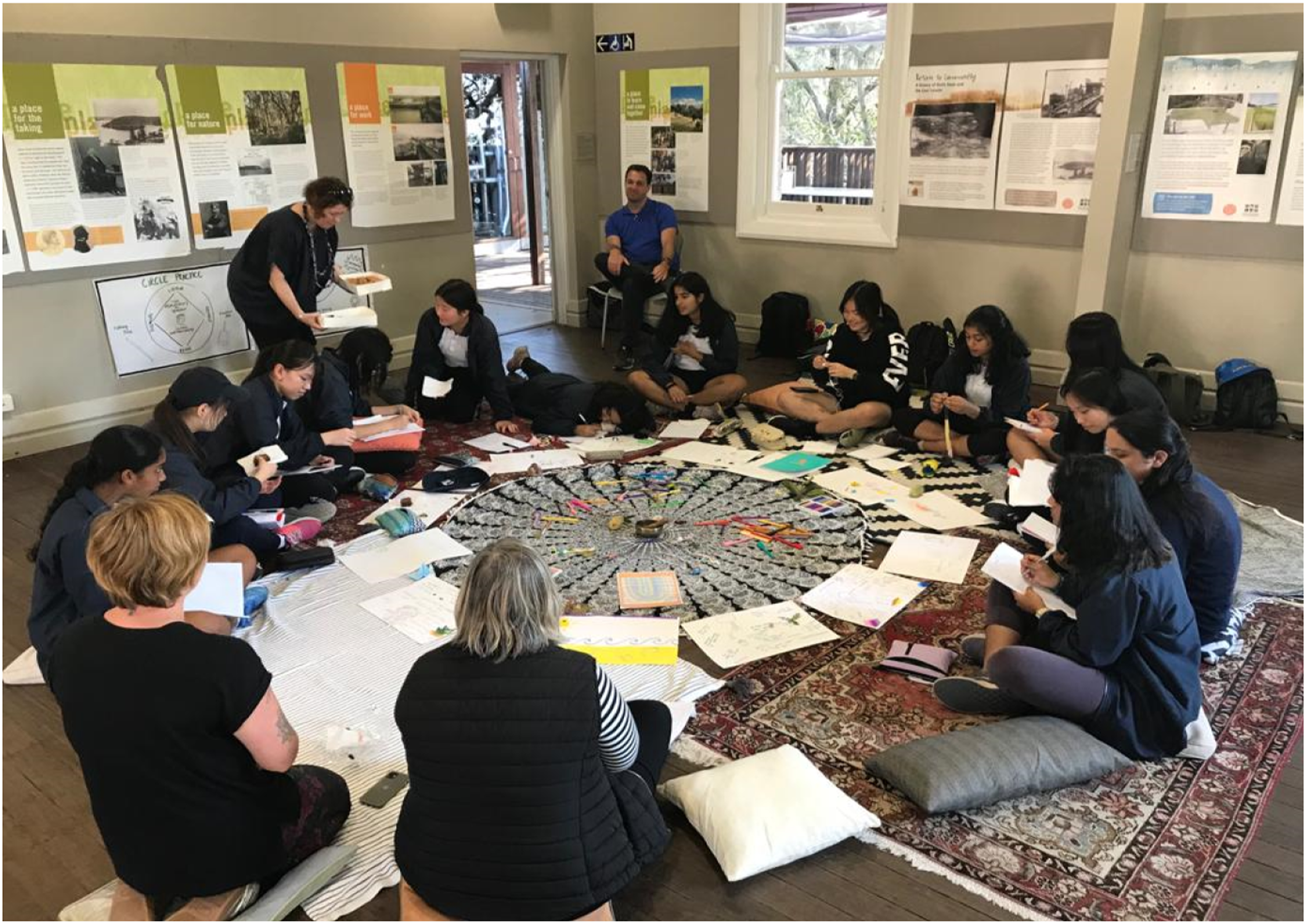
As the students arrive, they appear shy as they find a space in the circle of cushions. After a bit of chatting, we start with the question, ‘How does it feel to be here in this place?’ Going around the circle, it is clear the students are responding very quickly to the environment, with many saying that they felt much more ‘relaxed and calm’ just arriving there and that it feels very different to being at school. We had invited an Aboriginal Elder to join us and open the day, who unfortunately had to cancel.
We are joined by the Centre Coordinator, who has been active in the founding of the centre as part of an ongoing campaign by residents to retain the land for community use. She shares her personal journey in connecting with land and community and talk about her purpose and passion for her work. She explains some of the history of the site including the Aboriginal owners, industrial use for loading coal onto ships and its current use. They have an Augmented Reality (AR) app developed as an introduction to the place, history and culture of the land and invites students to explore the site using the app. Next students decide on one of three pathways to experience (local history, wildlife or sustainability), download the app and explore by pointing their mobile phones at the QR codes around the site to see and hear historical images, sounds and explanations. They seem surprisingly engaged and keen to listen to the audio and visuals as they wander. One group walks through coal tunnels to a soundtrack of the old carts rattling. The tunnels are dark and damp, the ground uneven, the girls laugh and ask if they can scream to hear the echo, playfully engaging with place and developing an embodied relationship with this location.
Scene 2: Listening Deeply to Feel and Connect to Self and Others
(Interior: room in community centre with bush and harbour shore outside)
We come back to the room, sitting in a circle, and talk about times when we have felt connected to nature and each other. We watch a video introducing the concept of Dadirri or deep listening, with lush images of Northern Australia and voiceover by Aboriginal Elder Miriam-Rose Ungunmerr (1988). In the video, Miriam-Rose explains the concept of Dadirri, which is offered by the Ngan’gityemerri people as a gift to all the Australian people, inviting us to connect with the cyclical nature of life, to be patient, wait and listen deeply to nature and what is required of us.
After watching the video students spend time in the garden, encouraged to listen deeply to the land and their inner voices. Returning to the circle there are coloured pencils, textas and crayons. Next we introduce the practice of ‘generative scribing’ (Bird, 2018) how we can listen and scribe or draw at different levels, from a surface level which describes and mirrors the content, to intuitive and generative levels which interpret and seek to represent the essence of what is being described. Students are invited to listen deeply as the text of Dadirri is read by one of the facilitators and draw as they are listening.
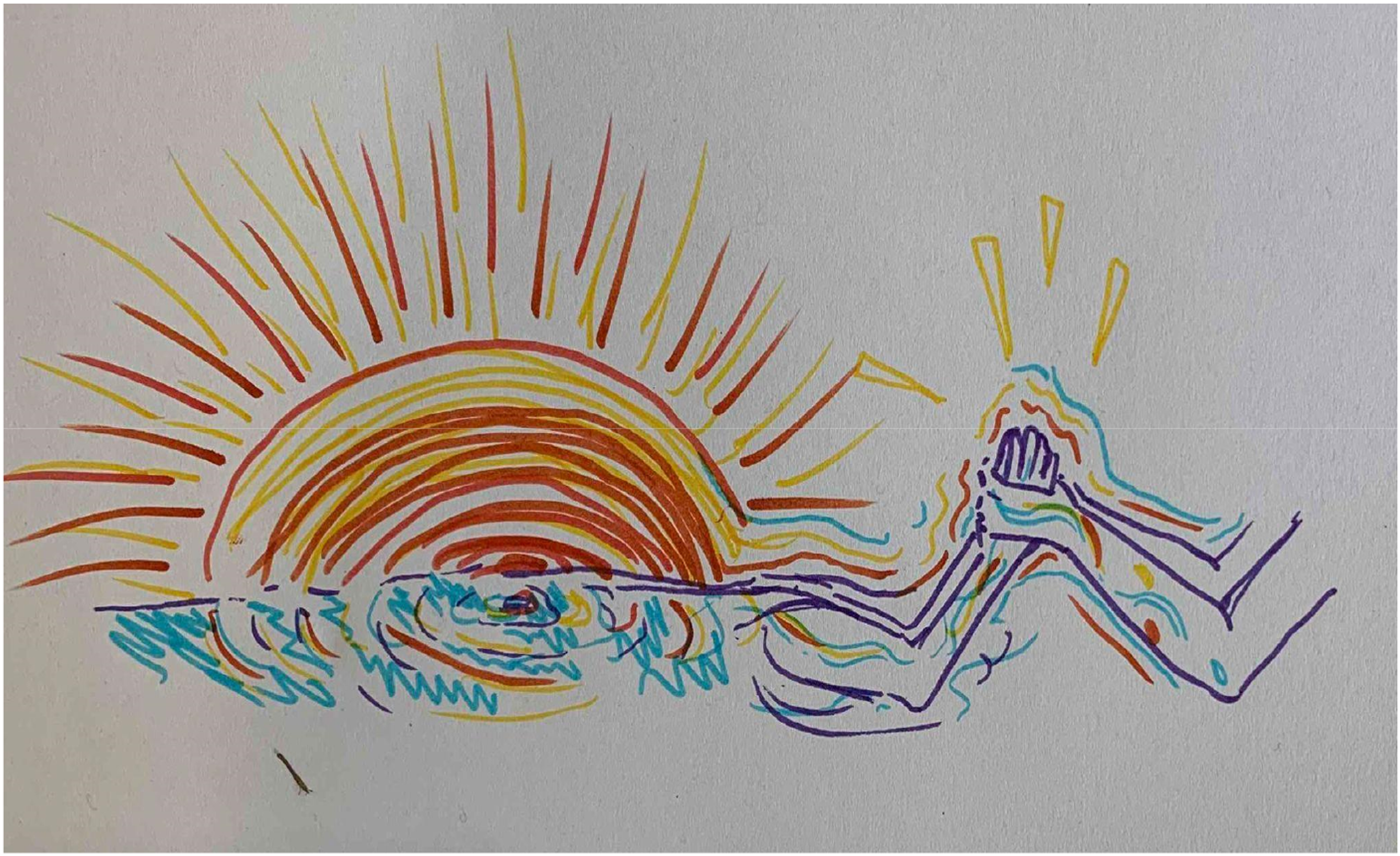
As the students share their drawings and what they have heard, the different levels of listening can be seen in their work. Some students write words or phrases from the text and represent these words with literal images as in Figure 2. Other students demonstrate a deeper level of interpretation and integration as in Figure 3, which represents a dynamic struggle or connection showing two hands next to a sunrise. We implicitly prompted the students to reflect on at what level they may have been listening and left open the space to reflect into how this might influence a sense of connection. Surface level listening and literal interpretation of dadirri text. Deeper listening and intuitive and generative interpretation of dadirri text.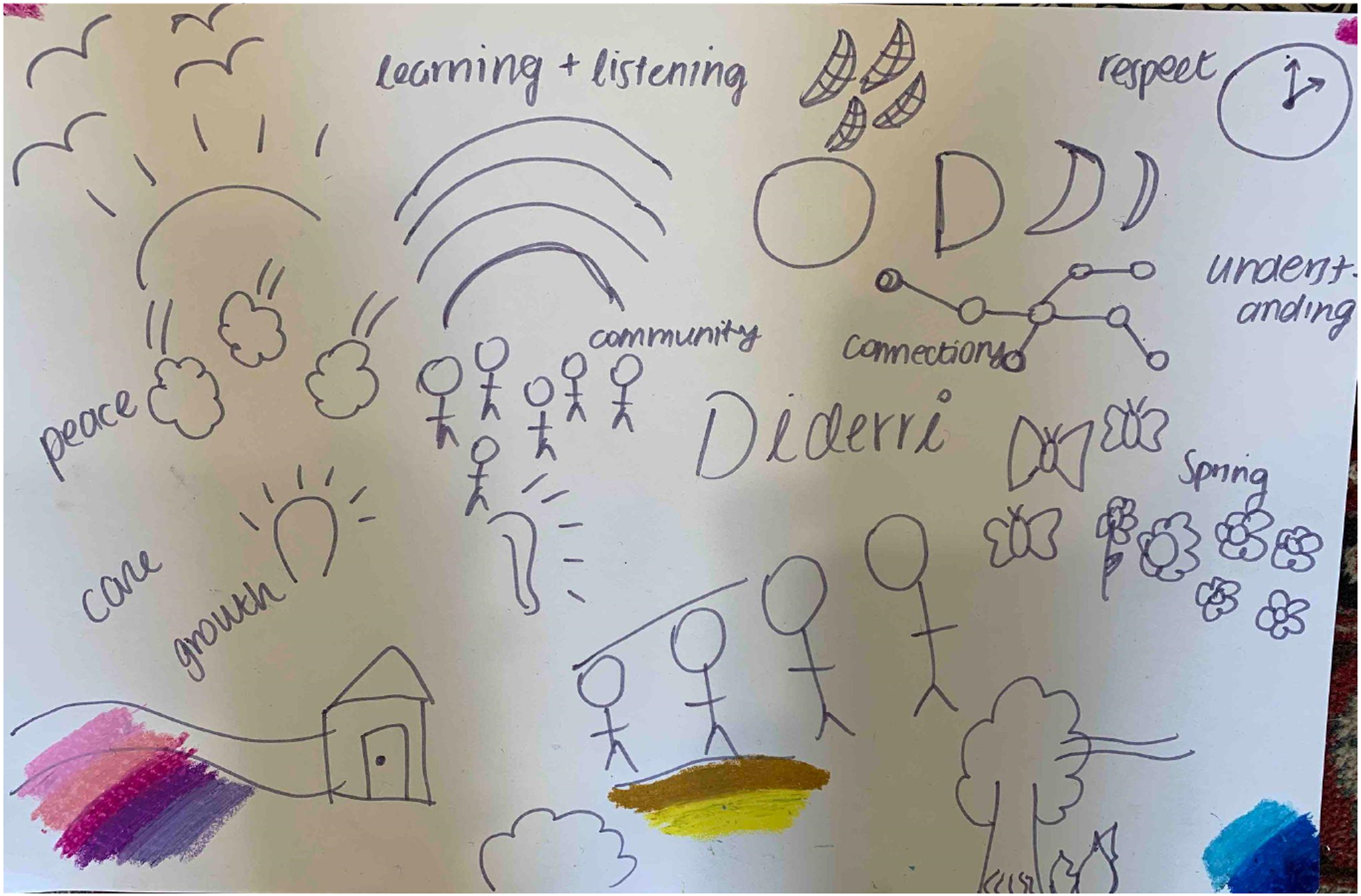
Scene 3: Connecting Through Bodies and Breath
(Interior: Converted mess hall)
After a shared morning tea on the veranda, we move to another space in the Centre the ‘Mess Hall’. All the windows and doors are open to let in the light and breeze coming off the water, there are birds chattering in the trees outside. The students collect a mat and find a space on the floor while our co-facilitator (also a yoga teacher) sets up at the front of the room.
The teacher eases the students into series of simple stretches and yoga movements on their mats. She then invites them to lie on their backs in the yoga posture of Savasana for the practice of Yoga Nidra as in Figure 4. She asks the students to close their eyes and allow their bodies and minds to relax and release. Then to become aware of the breath entering and leaving their bodies and to notice this as way of giving and receiving, in reciprocity with our surrounding environment. Students practice yoga Nidra in mess Hall.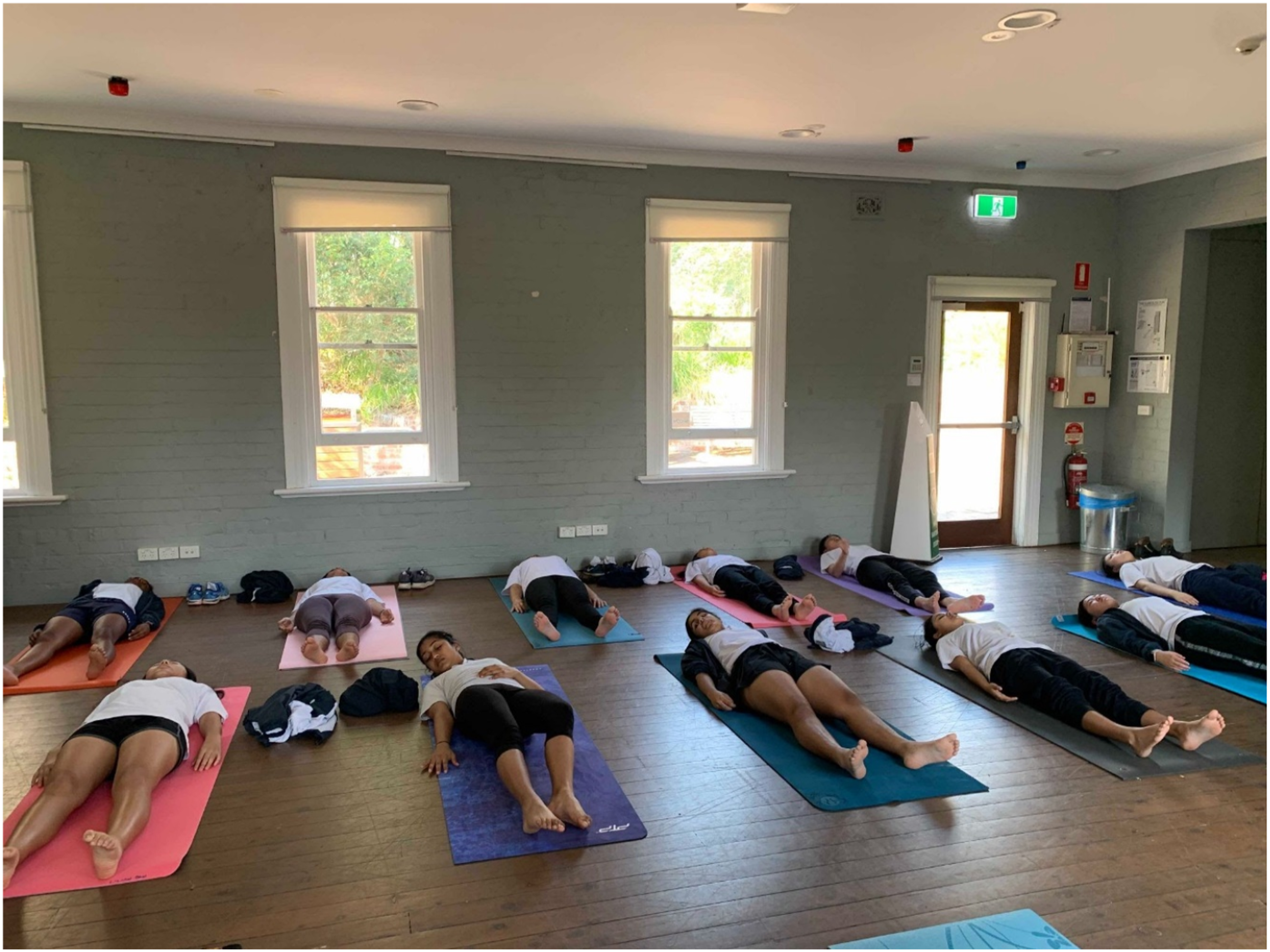
As part of this practice, an exploration of ‘unity and duality’ is introduced through observing internal sensations in the body; for example, feeling the heaviness, then lightness, then experiencing both heaviness and lightness at the same time. The practice introduces the concept of developing an awareness of thoughts and emotions and the ability to hold two opposite ideas or sensations simultaneously. Many students comment on enjoying the meditation experience in the feedback on the day for example ‘I really enjoyed the meditation and felt more peaceful and connected to myself’ and ‘I learnt the most from the mindfulness meditation as it really allowed me to focus on myself and my surroundings’.
Scene 4: Tuning in to Nature
(Exterior: Bush track on headland)
The students walk very slowly in single file through a forest of Eucalyptus trees on the headland near the Centre. They look bored and a little restless, not used to moving so slowly with so little stimulation. It’s a hot day and we are tired after lunch. The line stops moving, we don’t know why or what is going on. We stay silently where we are, watching the trees sway, hearing the birds sing and the small insects and ants go about their daily business. We stay there for 10 minutes, unmoving. The students start to fidget, we turn around and go back the way we came.
We stand in a circle to discuss what we noticed in motion, as we had been instructed to before the walk. One participant comments on the process of slowing down, ‘what I noticed is like when you go slow you notice more things than you would. For example, when we basically stopped I got a bit bored and I was looking at the rock and you notice like one ant, then another ant. Then you notice, like a trail of ants and different types of ants and all that’.
Mostly students talk about what they noticed about the sounds and what they heard or how they have noticed the quiet and absence of city sounds. Some students comment on how their sensory experiences help them feel connected with place with one commenting ‘I learnt that listening and experiencing the place helps you to build a connection between yourself and that place’.
Scene 5: Weaving Memory and Colour
(Interior: room in community centre with bush and harbour shore outside)
As the afternoon heats up, we retreat to the workshop room for some quiet craft time. Before we start the students spend 15 minutes in the garden and grounds to find some natural objects to incorporate into their craft work. They are invited to make a piece that represents their sense of self in the environment. They come back with small flowers, twigs and feathers and gather craft material from the centre of the circle such as beads, wool, twine, paper and scissors.
The students work quietly, twisting and plaiting, cutting and weaving. After this they share their craft work and what it represents for them in pairs and then with the wider group. Students show their craftwork and talk about what it represents for them. Common themes of memory, family and place emerge from their musings. Students use colour to represent different people and different stages in their lives; one student chose different colour beads to represent both her sisters and her own temperament as in Figure 5, saying ‘one is for me, one is for my sister. These colours (for me) are really earthy…like the green…my sister is really temperamental, I can ground her and we kind of balance each other out’. Student artefact representing connection with sister.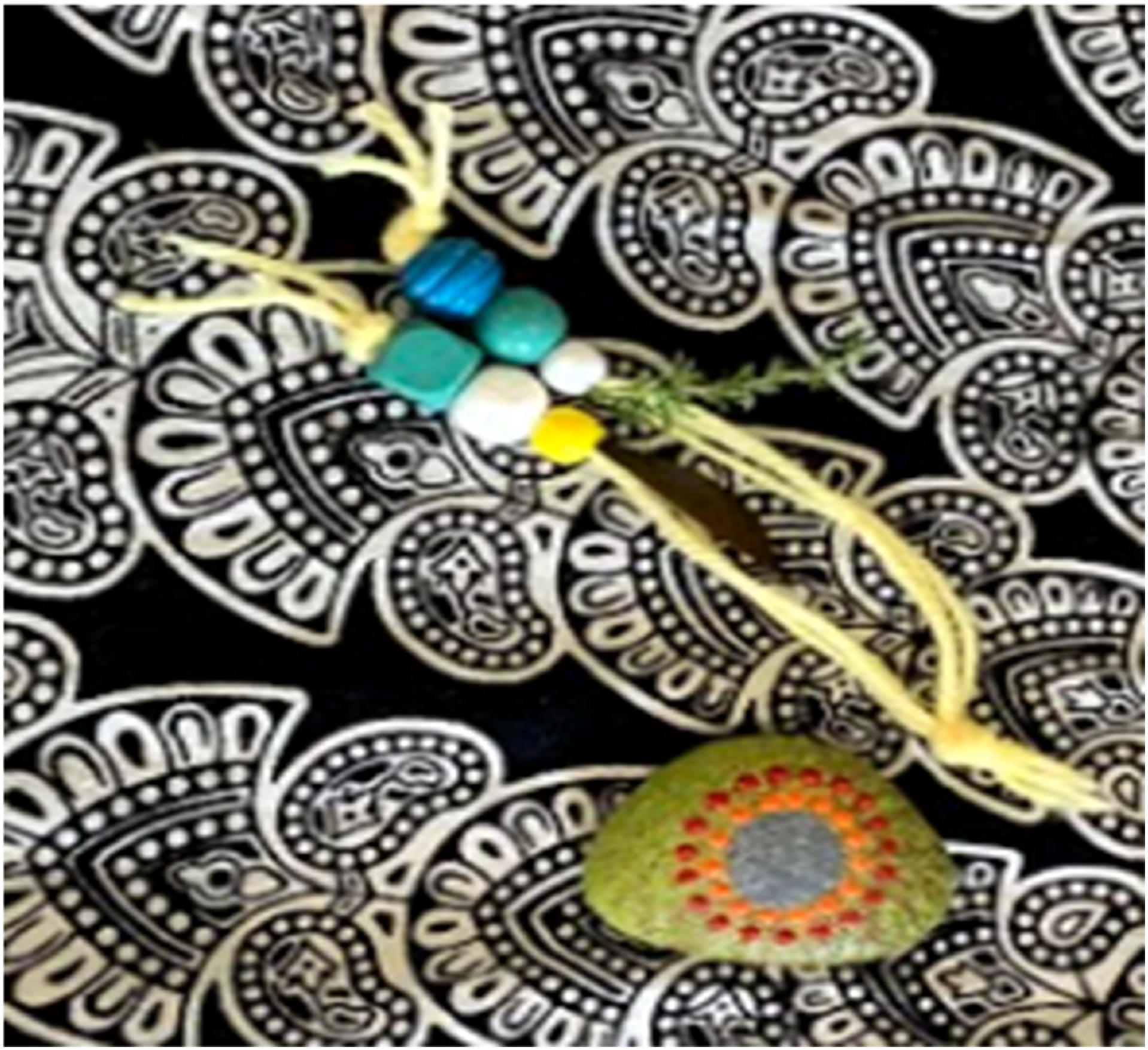
Another student describes how she has used different coloured beads in Figure 6 to represent different stages of her life and places saying ‘each bead represents a part of my life. From kindergarten to year 2 my favourite colour was purple…Now my favourite colour is blue so this is my colour currently and yellow is for home’. Memories of people and places, in particular family members, are described by students in their representations of themselves in their environment. One student explains her plaited bracelet represented her connection with her father and a beach where they went together when she was younger. Another student reflected on how the motion of plaiting for her represented how ‘everything is interconnected’. Student artefact representing connection through life stages.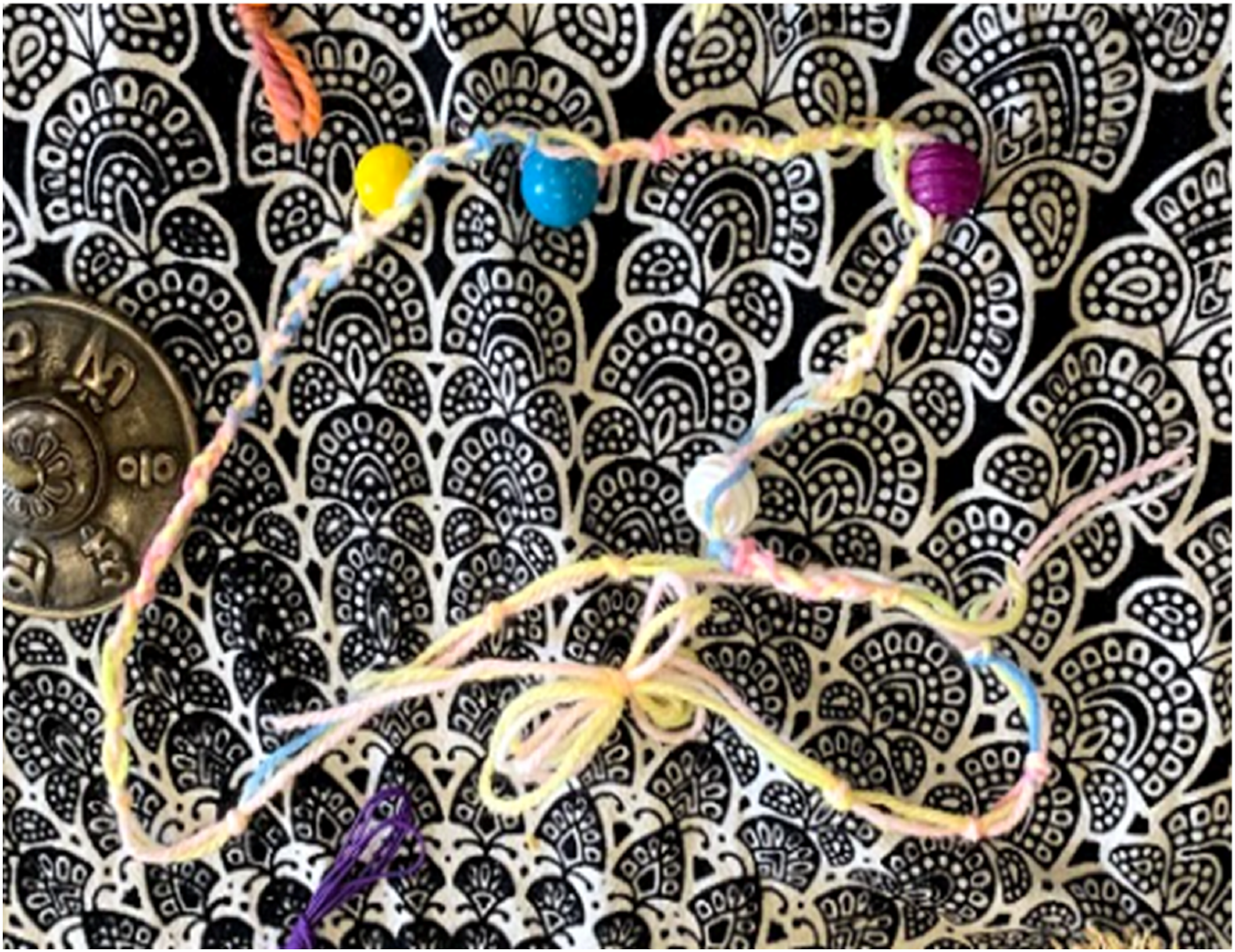
Post-workshop Reflections: Evidence of Experiencing Interbeing and Transformative Learning
The thick descriptions above, alongside researcher observations and evidence from the students feedback on the workshop were that they had experienced a sense of connection, belonging and interbeing throughout the workshop. This was reflected in the post-event survey data and reflections. Students commented that they appreciated the space and opportunity to step out of their busy lives and the pressures of being high performing students to just be and connect. When asked to reflect on what they had learned at the end of the day the following comment demonstrates this felt sense of connection and interbeing, ‘I learnt that although a connection might not be able to be seen or noticed at first, there are hidden connections that make things belong everywhere’. Different students responded to different activities in feeling this sense of connection and belonging, some felt most connected doing the forest walk while others found the craft activity or mindfulness practice most resonant.
Students’ responses indicated elements of psychological, convictional and behavioural change resulting from their experiences in the workshop (Clark, 1991). Psychologically, several students indicated changes in their understanding of self both during and after the workshop. For example, one student realised ‘that there is a lot about me that even I do not know, and as I grow, I realise that so many memories I thought had disappeared are always just waiting there for me to come back to’. Another student reflected ‘I yearn for belonging, wherever I go. However, when I feel like I belong, it influences my mood and happiness in such a positive way’. This level of self-awareness demonstrates the higher order skills involved in learning interbeing.
Aspects of convictional change (or a revision of belief systems) were also observed throughout and after the workshop with students developing their capacity for intra-personal connection and appreciating multiple perspectives and opinions. As one student reflected after the workshop, ‘I think I really like to learn so many people’s perspectives on different issues and the fact that so many people can have so many experiences and opinions on the same thing can be really interesting and intriguing for me’. Students noted their convictions were being influenced by their peers and facilitators perspectives.
The third type of perspective transformation – behavioural change – often requires longer term longitudinal research to determine how behaviour might be impacted. However, students commented that they would like to make changes that meant their lives were less stressful and rushed as one student reflected ‘today’s program made me realise that things shouldn’t be so rushed and that everything will happen in its own time’.
It is important to be aware of the possible ‘halo effect’ or ‘demand characteristics’ present which might influence the students feedback based on what they think the researchers might want to hear (McCambridge et al., 2012). This has been mitigated to some degree by the inclusion of a range of data sources including student surveys, dialogue and artefacts analysis from the workshops, student journaling and researcher observations. Another challenge is understanding whether these learning experience might have any ongoing impact on the students’ perspective transformation. A series of follow-up small group interviews were held 6 months afterwards. When students were asked to reflect on which learning experiences they felt had a more lasting impact many student referred to the place-based learning day. One student reflected ‘it was very calming. And sometimes if I’m stressed out, now, I try to replicate that same feeling…it was so quiet, you could hear the trees rustling and all the birds… just knowing that there is that calmness within you’. While another student in her final feedback on the pilot program mentioned ‘I’ve learned a lot about what it means to be connected to others and how we can enrich our own experiences to become more aware of what’s around us’.
Discussion
Creating Learning Environments to Support Experiences of Interbeing
The process of co-designing, running and evaluating the place-based learning workshop provided several insights on conditions of learning to promote a transformative learning experience of interbeing. The location of the workshop being held away from the school in a natural, community-based setting immediately signalled to the students that this learning experience would be different, and many students expressed an immediate sense of calm and relief on arriving. The setup of the space was also important in creating sensory engagement through the sounds of music playing, the scent of fragrant oils, the furnishing of rugs and cushions, the tasty morning tea and the fresh air and space looking over bushland.
The pace of day and learning activities invited slowing down and relaxing into the space and valuing each other’s company. In particular, students commented on the nature walk, mindfulness and craft activities as giving them a sense of relaxation, as one student commented, ‘I enjoyed meditating the most as it allowed me to calm down and stop, which really helped in making me relaxed and less stressed about the weeks and assessments ahead.' Similarly, another student commented on the craft activity, ‘I enjoyed crafting the most as now I’m really busy and if I have free time I normally use it on digital technology so it was really nice to spend some time to just make something peacefully without any concerns.' There was a sense from both participants and facilitators that there was a ‘shift’ in the experience of time that provided a greater sense of ease and flow. As facilitators, we reflected at the end of the day on the seemingly ‘elastic’ nature of time that we could collectively experience so much in one short school day. Teachers accompanying the students commented on the value of engaging students in immersive learning experiences and their frustration at not having time within a crowded curriculum to focus on this kind of experiential learning. Their geography teacher, who initially seeming somewhat aloof, became highly animated when describing the network of termite nests and tracks the observed during the nature walk.
Offering opportunities for students to shift from a cognitive experience of learning to learning through our senses was a core design principle of the workshop, inspired by the relational learning approaches of Buddhist and Aboriginal learning pedagogies. The embodied practices, such a yoga, mindfulness, deep listening and the nature immersion walk, allowed students to connect with their bodies, breathing and senses. These experiences emphasise the validity of knowing through ‘being’ in our bodies and senses as inseparable from ‘thinking’. The students seemed almost surprised by what they learned from their senses as one student commented on what they noticed most in the nature walk: Lots of noises, birds and the wind and so many things around us. It was somehow different to normal we are not used to being in very much peace. But since we were being quiet you’re kind of like able to connect with your surroundings. And then there was one stage when everyone was silent but when you stepped like the leaves crunched and that sounded like a hundred times louder than anyone speaking. (Student participant, 15 years)
This kind of ‘interoception’ through the body and senses alongside the cognitive mind is described by Annie Murphy Paul as being like a bird building a nest, ‘plucking a bit of string here, a twig there, constructing a whole out of the parts’ with the parts being our thoughts, feelings, movement of our bodies, interaction with each other and our environment (Paul, 2021, p. 8). As Varela et al. (2016) observe, cognition is ‘embodied action’ or ‘enaction’ where sensory and motor processes, perception and action are inseparable in our lived cognition. This style of learning and ‘knowing’ reflects a more relational understanding of an individual as inextricably connected to place and each other. These connected learning pedagogies, where young people are immersed in the natural world for transformative learning experiences, have been practiced by First Nations people for millennia (Groff, 1996; Lertzman, 2002).
Creating opportunities for personal and collective reflection was an important consideration in the setup of the learning experience to elicit transformative learning experiences. Students were invited at regular intervals to reflect as a group, in pairs and individually throughout the day. This seemed particularly effective in surfacing deep feelings of connection and belonging following the craft activity when the students formed pairs to share their craft work and its significance to them before sharing their stories and reflections in the wider group.
What Further Areas of Inquiry are Opening Up?
To better understand the conditions required to experience interbeing we suggest a multi-day, immersive nature-based program may provide greater potential for transformational learning. Given the feedback and engagement of students in a 1-day workshop we propose a longer and more immersive learning experience spending several days in nature may provide significant transformational learning. Further research is needed to understand how students might integrate this new knowledge and experience after returning to a traditional school environment, and whether these experiences continue to have a lasting impact on the students' perspectives. The role and engagement of teachers and school staff in this form experiential learning would be essential for successful implementation on a broader scale.
A surprising theme to emerge in this inquiry into learning interbeing was the strong connection many students made between place, memory, family and colour in shaping their craft pieces. Similarly, the primacy of the sense of sound that many students noticed during the nature walk was curious given they were asked to notice what was in motion.
Conclusion
This research demonstrates the importance and timeliness of integrating place-based experiential learning into educational experiences for young people with the aim of developing the meta-competency of interbeing. The level of engagement and reflections of students in the place-based learning workshop demonstrates the potential for creating learning environments where students can experience greater connection and belonging to their inner-selves, each other, place and the natural world. This style of learning enables educators to integrate new ways of thinking and being in the world that incorporate knowledge and wisdom from non-dominant paradigms of learning and culture. These learning experiences, even in a short time period, have been shown to enable students to shift students ‘frame of reference’ to become more inclusive, differentiating, critically reflective and integrative of experience (Mezirow, 1997). The increasing focus and concern for students’ mental health challenges which impact their ability to learn may provide some leverage for the inclusion of such programs in a secondary school curriculum in the future. With the support of the school leadership, teachers and community these learning experiences can be integrated into existing secondary school learning and provide opportunities for developing a core future-focused meta-competency of interbeing to support wellbeing, resilience and mental health in a rapidly changing world.
Footnotes
Declaration of Conflicting Interests
The author(s) declared no potential conflicts of interest with respect to the research, authorship, and/or publication of this article.
Funding
The author(s) received no financial support for the research, authorship, and/or publication of this article.
