



Abstract
Adolescent parents have been the subject of scrutiny for decades, with a great deal of research focused on how these young parents adjust to their new roles. There is one group of adolescent parents about which we know next to nothing, though: incarcerated adolescent parents. To fill this gap, the current study examines whether parental status affects the emotional well-being (e.g., mental health diagnoses and suicidal tendencies) of incarcerated adolescent parents. We also consider whether these effects are gendered. Results suggest that adolescent parents, especially young mothers, have worsened mental health during incarceration. This effect was most pronounced for suicidal tendencies. These results underscore the importance of providing additional supports for young parents within juvenile facilities. Doing so could not only improve the safety and security of these confinement facilities but improve the long-term outcomes of these young parents and their offspring.
Introduction
Teen pregnancy and birth rates are currently at an all-time low (Livingston & Thomas, 2019). Compared to mid-20th century birth rates of 95 per 1,000, today adolescent birth rates are around 17 births per 1,000—a decline of over 80% (Livingston & Thomas, 2019). Experts attribute this downward trend to higher abstinence rates, greater access to pregnancy prevention information, and better contraceptive use among adolescents (Amba & Martinez, 2017; Livingston & Thomas, 2019). Even still, the consequences associated with adolescent parenthood continue to raise concerns and for good reason. Research finds that adolescent parents face a host of problems: they are more likely to drop out of school, experience greater health problems, have weakened employment prospects, and have increased stress and anxiety (Hoffman, 2008; Patel & Sen, 2012; Perez-Brena et al., 2020; Perper et al., 2010).
Unfortunately, for adolescent parents involved in the justice system, these adversities might be compounded. For these adolescents, the stressors of being a young parent exist while they face another source of strain: confinement. These dual stressors might be emotionally taxing. Research on incarcerated adults finds that parents often experience sadness for missing out on key stages of their children’s lives, worry over their child seeing them while they are incarcerated, and frustration if their child does not visit (Arditti & Few, 2008; Hairston, 2003; Houck & Loper, 2002). As a result, mental health problems, like depression are common among incarcerated parents (Turney et al., 2012; Turney & Wildeman, 2015; Wiemann et al., 2005). Some studies estimate that incarcerated parents are twice as likely to experience depression during confinement than non-parents (Turney & Wildeman, 2015). The concern is that widespread mental health problems could threaten the safety and security of these facilities and the well-being of the family and community after release (Houser et al., 2012; Loper et al., 2009; Steiner et al., 2014; Wallace & Wang, 2020).
The problem, however, is that nearly all research on the experiences of incarcerated parents has been conducted on adults (for exceptions see: Nurse, 2001, 2002; Shannon & Abrams, 2007). We currently have little understanding of how adolescent parents fare during confinement. Yet, this is an important line of inquiry. For one, adolescents are an emotionally vulnerable group. The average teen is still developing skills that could be useful in coping with being incarcerated or being a teenage parent (Arain et al., 2013; Cohen et al., 2016; Hartshorne & Germine, 2015), and they therefore might struggle more with incarceration than their adult counterparts. This group of parents are also solidly within the age-crime curve, and experiences during this time—including their emotional well-being—could determine whether they continue engaging in criminal behavior. If we are to help justice system involved parents be law-abiding citizens and effective parents, we need to better understand the emotional challenges they face.
Accordingly, the goal of the current study is to better understand the emotional well-being of adolescent parents during confinement. More specifically, using a large, diverse sample of incarcerated youth from Florida, this paper determines whether parental status affects youths’ emotional well-being shortly after confinement. Here, emotional well-being is captured as mood disorders (i.e., depression), anxiety, and suicidal tendencies. We also consider whether these effects are gendered. In doing so, we aim to provide a better understanding of the experiences of incarcerated adolescent mothers—a group traditionally neglected in the small body of work in this area (Nurse, 2001, 2002; Shannon & Abrams, 2007). To this end, this paper represents the first quantitative assessment of incarcerated adolescent parents and is an important step towards understanding the unique needs of this population, generally, as well as for males and females individually. This research is conducted with the hope of enhancing the future outcomes of incarcerated adolescent parents and their young offspring.
Background
Adolescent Parenthood
Though adolescent birth rates have experienced a substantial decline in recent decades, scholars continue to note the challenges that young parents face. Adolescent pregnancy and parenthood places teenage parents—particularly mothers—at a disadvantage across numerous indicators including increased risk of dropping out of school and lower earning potential (Gigante et al., 2018; Perper et al., 2010; Serbin et al., 2010). Young parents also experience emotional difficulties as they navigate their new role as parents (Cowan & Cowan, 1992). Studies find that young parents are nearly twice as likely to experience depression (Barnet et al., 1996; Brown et al., 2012; Hodgkinson et al., 2014; Venkatesh et al., 2014), and adolescent mothers are at heightened risk for post-traumatic stress disorder (Hodgkinson et al., 2014).
For adolescent parents who are incarcerated, these challenges might be amplified. This group of young parents are not only facing the traditional challenges of parenting, but the challenges associated with parenting behind bars. Research on adult populations notes that incarcerated parents experience unique and complex stressors (Jackson et al., 2022; Pleggenkuhle et al., 2018; Poehlmann et al., 2010). For some, stress is related to being separated from their children and feeling as though they are missing out on their lives (Loper et al., 2009; Nurse, 2001). Others feel anxious or worried about leaving their child with toxic caregivers or are concerned that their child’s caregiver will not bring them to visit (Kennedy et al., 2020; Nurse, 2001). Central to the current study, some parents also worry that their very young children will not remember them in the time they are locked away (Hutchinson et al., 2008).
Because of the dual stressors of confinement and parenting, incarcerated parents tend to experience more mental health problems during confinement. Some studies have estimated that incarcerated parents are nearly twice as likely to experience depression as non-parents (Arditti & Few, 2006; Turney et al., 2012). Importantly, Turney et al. (2012) noted that incarceration can have both direct and indirect effects on depression. Not only do incarcerated parents experience depression because of that incarceration, but their incarceration can erode family functioning which, in turn, can amplify that depression.
There are also reasons to expect that suicidal ideation might also be higher among incarcerated parents. Suicidal ideation—or any behavior, preoccupation, or contemplations about ending one’s own life (Harmer et al., 2022)—is common among samples of incarcerated persons, generally (Favril et al., 2020; Larney et al., 2012). In a sample of male prisoners in Belgium, suicidal ideation was reported in one-third of all inmates (Favril et al., 2020). There appear to be gender differences in this behavior as more than half of incarcerated women report suicidal ideation (Charles et al., 2003; Jenkins et al., 2005). These differences have also been shown among incarcerated adolescent populations (Suk et al., 2009). And because mental health diagnoses increase the chances of suicide—and incarcerated parents have higher rates of these diagnoses—we might expect to see that suicidal ideation is likewise higher among this group (Poehlmann, 2005; Yeh et al., 2019; Zhao et al., 2021).
To date, nearly all research in this area has focused on incarcerated adult parents. Very few studies have focused on understanding the emotional well-being that adolescent parents face during confinement. The exceptions, though, are noteworthy. Nurse (2001, 2002) examined the dynamics adolescent fathers have with their young children while they are in confinement. The author noted that incarcerated adolescent fathers share many of the same emotional struggles during periods of separation as their adult counterparts. And Shannon & Abrams (2007) in their study of incarcerated adolescent fathers noted that these young men value their roles as fathers. While important, these studies are qualitative in nature and conducted on small samples. As a result, we do not know how prevalent adolescent parenthood is among incarcerated populations and the large-scale effects that parental status can have on emotional well-being.
Yet, this is an important gap. Incarcerated adolescent parents are navigating confinement and parenting while they are still developing self-control, coping skills, and the ability to rationalize (Arain et al., 2013; Cohen et al., 2016; Gestsdottir & Lerner, 2008; Hartshorne & Germine, 2015). Young parents might therefore have more trouble processing and adapting to the stressors surrounding incarceration, parenthood, and separation from children. This could mean that adolescent parents are at greater risk than the average incarcerated youth, or incarcerated adult parent, to experience a mental health issue or display suicidal tendencies. From a facility management standpoint, understanding which groups of adolescents adjust less successfully during confinement can help target interventions designed to improve facility safety.
Gendered Effects
Not only is there a dearth of research on the experiences of incarcerated adolescent parents, but what research does exist has chiefly focused on the experiences of adolescent fathers (Nurse, 2001, 2002; Shannon & Abrams, 2007). Though important, we have little understanding of the experiences of adolescent mothers or whether the effects of adolescent parenthood might be gendered, and there are reasons to think they might be.
Prior research suggests that males and female experiences strains differently (Broidy & Agnew, 1997; Hay, 2003), with females being more likely to experience negative emotions because of stressors (Piquero & Sealock, 2004). Before even considering parental status, research finds that the average incarcerated woman tends to have worsened mental health outcomes and adjusts more poorly to confinement than the average incarcerated man (Crewe et al., 2017; Harner & Riley, 2013). Stressors of parenting and separation from children could exacerbate this making mental health problems worse for incarcerated adolescent mothers.
Additionally, among adolescent parents, research finds that young mothers are typically the primary caretaker of their children (Lamb & Elster, 1985; Lewen et al., 2011; Pinzon et al., 2012). Primary caretakers, particularly if they are the sole custodial parent, may devote more time and energy to their children. This could mean that these parents experience any separation from that child more acutely, which could create new, or exacerbate existing, mental health problems among this group (Crewe et al., 2017; Harner & Riley, 2013). And because mental health problems like depression are correlated with suicide, the risk of suicide might be higher following the initial separation form their child as well (Hawton et al., 2013). Young mothers, particularly if their child is very young, might also still be recovering from the stresses associated with pregnancy and giving birth, on top of new parenting responsibilities. These challenges could amplify mental health concerns in ways that fathers do not experience.
Though adolescent mothers could be at risk for greater internalizing problems (i.e., depression, suicide attempts) in this context, research finds that males experience greater externalizing behaviors (e.g., crime, violence) when faced with stressors (Broidy & Agnew, 1997; Hay, 2003) and have higher rates of suicide completions (Miranda-Mendizabal et al., 2019). Perhaps these trends hold true among adolescent fathers and mothers as well. With very little research directly comparing the outcomes of incarcerated mothers to incarcerated fathers, though, we have many unanswered questions about the relative adjustment between these two groups.
Current Focus
Existing research finds that parenthood and incarceration are each unique stressors that can have implications for one’s emotional health; and that experiencing both simultaneously might be especially challenging. Most research on this topic to-date has been on incarcerated adult parents, with very little attention paid to the experiences of incarcerated adolescent parents. The current study fills this gap. More specifically, this study focuses on examining the differences in emotional well-being (i.e., mood disorders, anxiety, and suicidal tendencies) between incarcerated adolescent parents and incarcerated adolescents who are not parents, and whether these effects are gendered. In carrying out this research, we hope to provide information that can help two generations: incarcerated adolescents and their children.
Data
Data for this study were derived from the Florida Department of Juvenile Justice’s (FDJJ) Juvenile Justice Information System (JJIS)—a database that contains information on youth demographics, offending, and risk assessment history. This study makes use of both the demographic information and the risk assessment histories provided by the JJIS. Here, two risk assessment tools are used: the Residential Positive Achievement Change Tool (RPACT) and the Community Positive Achievement Change Tool (CPACT). Both the RPACT and the CPACT are used to evaluate youths’ static and dynamic risk and protective factors, including social relationships, prosocial attitudes, and prior offending history. Both assessments are administered by FDJJ caseworkers in a semi-structured interview with youth, and this information is supplemented by official records and feedback from staff working with youth and their families.
The CPACT is administered to youth prior to confinement. Once in residential care, youth receive an RPACT assessment (approximately every 90 days). For the purposes of this study, we draw information from the youth’s single CPACT assessment and the first RPACT assessment. The confounders are derived from the youths’ initial CPACT assessment (e.g., income, pre-confinement measures of suicidal tendencies and mental health) or their JJIS record (i.e., demographics). The offense history items come from the youths’ initial RPACT assessment, as does the youths’ parental status and each of the outcomes examined here.
This study focuses on a sample of youth released from placement between July 1, 2010 and June 30, 2015 who received the full CPACT assessment within 1 year of their current confinement and had an RPACT assessment for the current confinement. There were 7,326 youth who met these criteria. Of these youth, 30 were excluded because they had missingness on key confounders. This resulted in a final sample of 7,296 youth.
Measures
Dependent Variables
The goal of this study is to assess how parental status is associated with incarcerated youths’ emotional well-being during confinement. Emotional well-being is measured using three indicators. First, two indicators of mental health diagnoses are assessed. One is mood disorders, a dichotomous indicator of whether the youth was diagnosed with a mood disorder. Here mood disorders include both depression and bipolar disorder (1 = Yes; 0 = No). The other is anxiety, a dichotomous measure of whether the youth was diagnosed with anxiety. In addition, we include a measure of suicidal tendencies. Suicidal tendencies is a dichotomous measure that captures whether the youth had, since the start of confinement, threatened or attempted suicide. For this variable, youth were coded as 1 if they had reported suicidal thoughts, reported feeling as if life is not worth living, had threatened suicide, had engaged in self-mutilating behavior, had planned to commit suicide, or had attempted suicide. All others were coded as 0.
These variables were measured using the youth’s RPACT assessment that was given closest to admission. We chose to use this RPACT assessment to capture emotional well-being because this allowed us to assess the youths’ status shortly after the separation from their child. Capturing emotional well-being at later points during confinement might instead reflect the effects of any interventions they receive during incarceration (e.g., therapy), or prolonged exposure to the pains of confinement. In either of these instances, their well-being could reflect more than their parental status. To ensure that emotional well-being at the start of confinement is not a reflection of pre-existing conditions, we include measures of pre-confinement mental health diagnoses and suicidal tendencies as controls. Those are discussed below.
Independent Variable
The key independent variable is parental status. This is a dichotomous indicator of whether the youth is a parent (1 = Yes, 0 = No). This measure is derived from a RPACT question that provided information about whether the youth was a parent. This question asked the youth to reflect on their “current status of parenting.” Here, three answer choices were available: “does not have a child,” “working to maintain a positive relationship with child,” “not working to maintain a positive relationship with child.” Youth who had any parenting status listed were coded as 1 on this variable and those who were noted to not be parents were coded as 0. All parents in this sample were under the age of 20 at the time of their response and thus meet the criteria for being an adolescent parent (Cosden, 2011). The average age of the parents in this sample, at the time of admission to the facility, was 16.93 years old.
While this measure indicates whether the adolescent is currently a parent it is unable to provide nuance about parental status, including whether the adolescent or their girlfriend/partner is currently pregnant, whether they terminated a pregnancy or experienced a still birth, or whether a child was put up for adoption. This measure also does not detail how many children the adolescent has nor their attitudes towards parenting. These are noted limitations.
Confounders
All analyses were conducted using a robust set of covariates that include demographics, offense history and confinement experiences items, and family dynamics. Demographic controls include a continuous measure of age at admission and dichotomous indicators of sex (Male = 1; Female = 0) and race/ethnicity. Four mutually exclusive dichotomous variables capture race/ethnicity: white (non-Hispanic), Black (non-Hispanic), Hispanic, and other race (for each Yes = 1; No = 0). In all analyses white, non-Hispanic is the omitted reference category.
Offending history and confinement experience variables include three dichotomous variables measuring whether the youth had prior felony referrals (Any = 1; None = 0), prior misdemeanor referrals (Two or more = 1; One or fewer = 0); or prior commitments (Any = 1; None = 0). Age at first offense is a five-category ordinal variable capturing the youth’s age at first referral where 1 indicates they were 12 or younger at the time of their first referral, 2 indicates they were between 13 and 14, 3 indicates they were 15, 4 indicates they were 16, and 5 indicates they were over 16 at the time of their first referral. Finally, length of stay and distance from home are both continuous variables. Length of stay captures the number of months youth were housed in placement. Distance from home reflects the number of miles between the center point of the youth’s home county and the center point of the county in which they were confined. This variable was calculated using information from FDJJ, who provided information on the youth’s home county and facility county, and the Center for Transportation Analysis who offers publicly available information on distance between counties in each state.
Two family dynamic indicators are included: parental incarceration and household income. Parental incarceration is a dichotomous indicator of whether the youth’s parents (mother or father) had ever been incarcerated in jail or prison. And household income is a four-category ordinal measure where 1 represents an annual household income of less than US$15,000, 2 represents an income of between US$15,000 and US$34,999, 3 represents an income of between US$35,000 and US$49,999, and 4 represents a household income of US$50,000 or more.
Finally, we include two controls for youths’ pre-confinement emotional status. Pre-confinement suicidal tendencies is a dichotomous indicator that captures whether youth had ever threatened or attempted suicide. For this variable, coding is the same as for the main outcome of interest. Pre-confinement mental health diagnoses is a dichotomous indicator where youth are coded as 1 if have any history of diagnosed mental health issues and 0 if they were not. For this measure, mental health issues include schizophrenia, bi-polar disorder, mood or thought disorders, personality disorders, and adjustment disorders. Among, VIFs were under 1.7 and correlations were under .45, suggesting no issues with multicollinearity.
Analytic Strategy
The analytic strategy for this paper proceeds in three stages. First, we describe the sample and examine whether there are any statistical differences between the parents and non-parents, and the males and females, in this sample. Second, multivariate analyses are used to assess the effect of parental status on youths’ emotional well-being (mood disorders, anxiety, and suicidal tendencies). Given the dichotomous nature of the three outcomes of interest, logistic regression was used in all models. Finally, logistic regression models were also estimated to assess whether the effect of parental status on emotional well-being differs for males and females.
Results
Descriptive Statistics
Descriptive Statistics for the Full Sample and Subsample Comparisons.
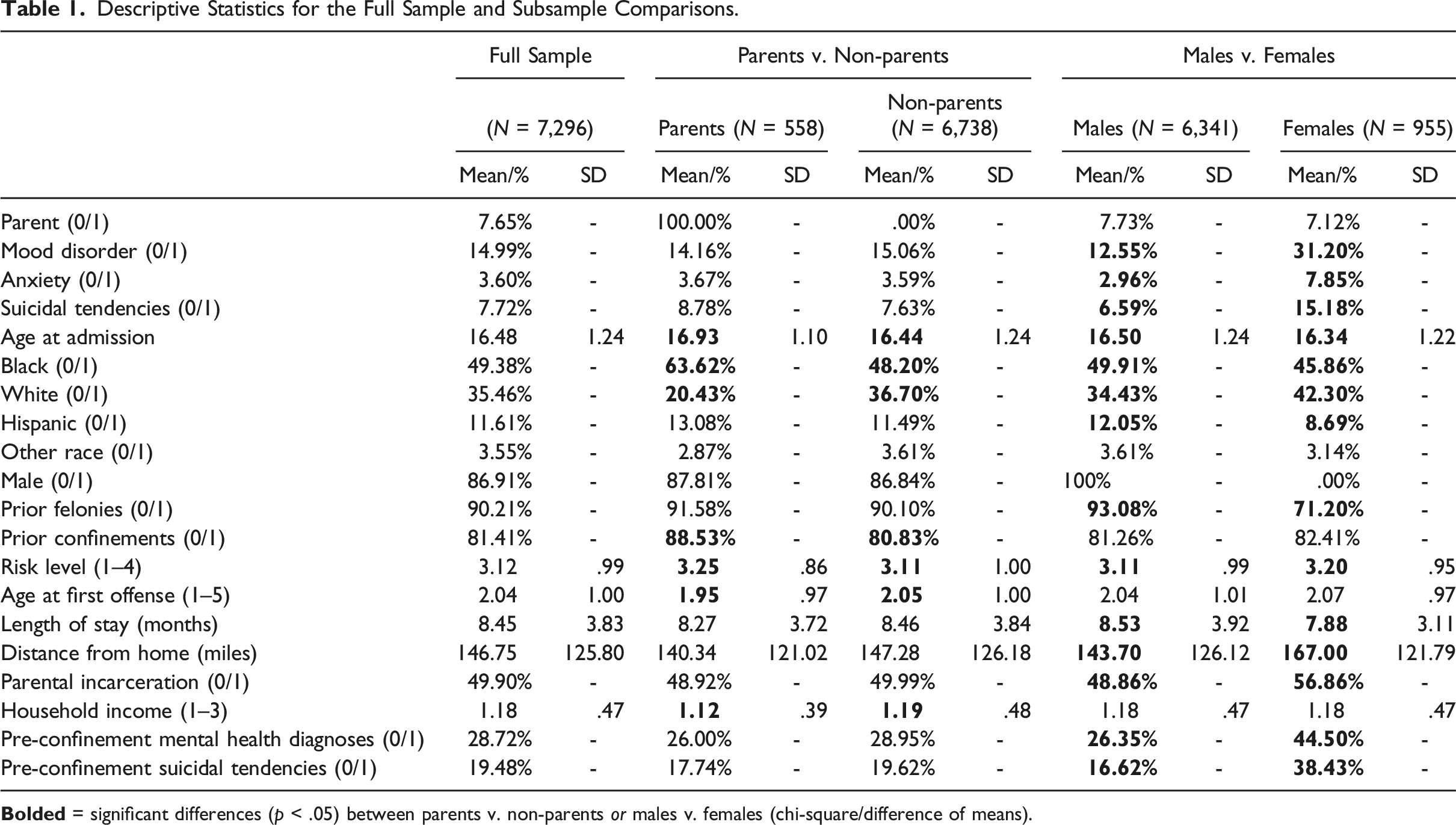
When looking at the youth who are parents, relatively to those who are not parents, we can see that many of those risk factors are concentrated among the parent subsample (Table 1, columns 2 and 3). Chi-square (for categorical variables) and difference of means t-tests (for continuous variables) reveal that incarcerated parents were slightly older at the time of admission and slightly younger at the time of their first offense. Incarcerated parents were also more likely to have histories of prior confinements, have a higher risk level, and have lower household incomes. None of the outcomes of interest (mood disorders, anxiety, or suicidal tendencies), though, differed by parental status at the bivariate level.
Differences also emerged between the male and female subsamples (Table 1, columns 4 and 5), with females being much more likely to experience several risk factors. Relative to males, females had slighter higher risk levels, were housed farther from home during incarceration, and were more likely to have experienced a parent’s incarceration. Females also had higher rates mental health problems and were more likely to display suicidal tendencies both prior to and during confinement. Questions remain, however, whether the gender differences in our outcomes of interest will emerge in a multivariate context.
Multivariate Results
The next stage of the analyses focused on whether parental status affects emotional well-being net of controls. This is done first for the full sample of youth and then for the male and female subsamples separately. Given the dichotomous nature of the three outcomes of interest, logistic regression was used in all models, and all results are presented in terms of odds ratios.
Full Sample
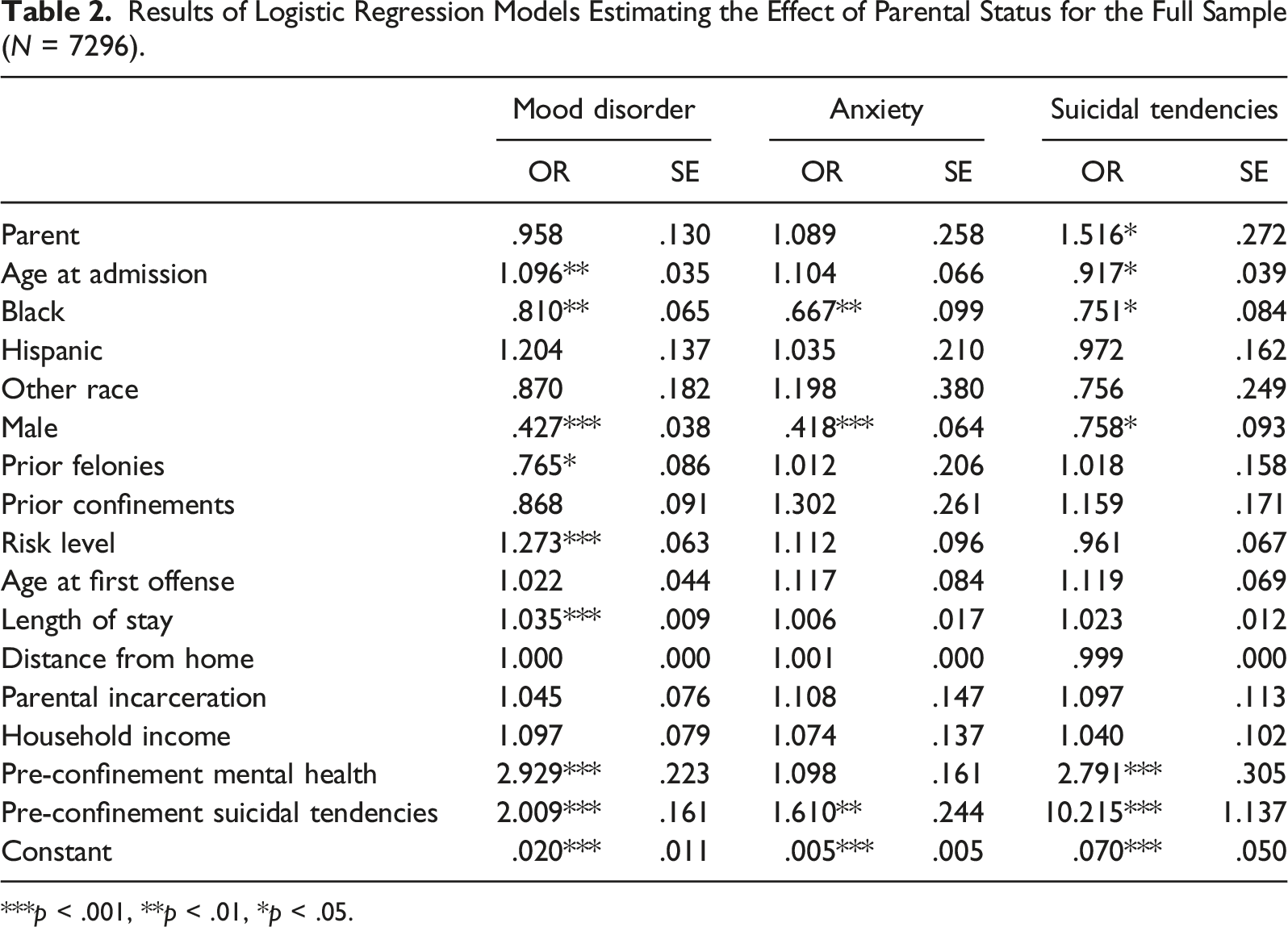
Results of Logistic Regression Models Estimating the Effect of Parental Status for the Full Sample (N = 7296).
***p < .001, **p < .01, *p < .05.
Finally, we assessed the effect of parental status on suicidal tendencies, the results of which are displayed in Model 3 of Table 2. These results reveal that parental status was significant and positively associated with suicidal tendencies (O.R. = 1.516, p < .05). Relative to non-parents, parents were 51.6% more likely to report suicidal tendencies. Several of the confounders were also significantly associated with suicidal tendencies. Males, black youth, and older youth were all at lower risk for suicidal tendencies (ps < .05), while those pre-confinement histories of mental health diagnoses and suicidal tendencies were at an increased risk (ps < .05).
Recall that suicidal tendencies captures both whether the youth attempted suicide and whether they displayed suicide-related behaviors (e.g., self-mutilation, suicidal thoughts/plans, threatening to commit suicide, and believing life is not worth living). To better understand the effect of parental status on this outcome, we ran supplemental analyses (not presented here) that examined the unique effects on these different gradations of suicidal tendencies. We found that parents were significantly more likely to exhibit suicide-related behaviors (O.R. = 1.495, p < .05), but not more likely to attempt suicide (O.R. = 1.553, p > .05).
Gendered Analyses
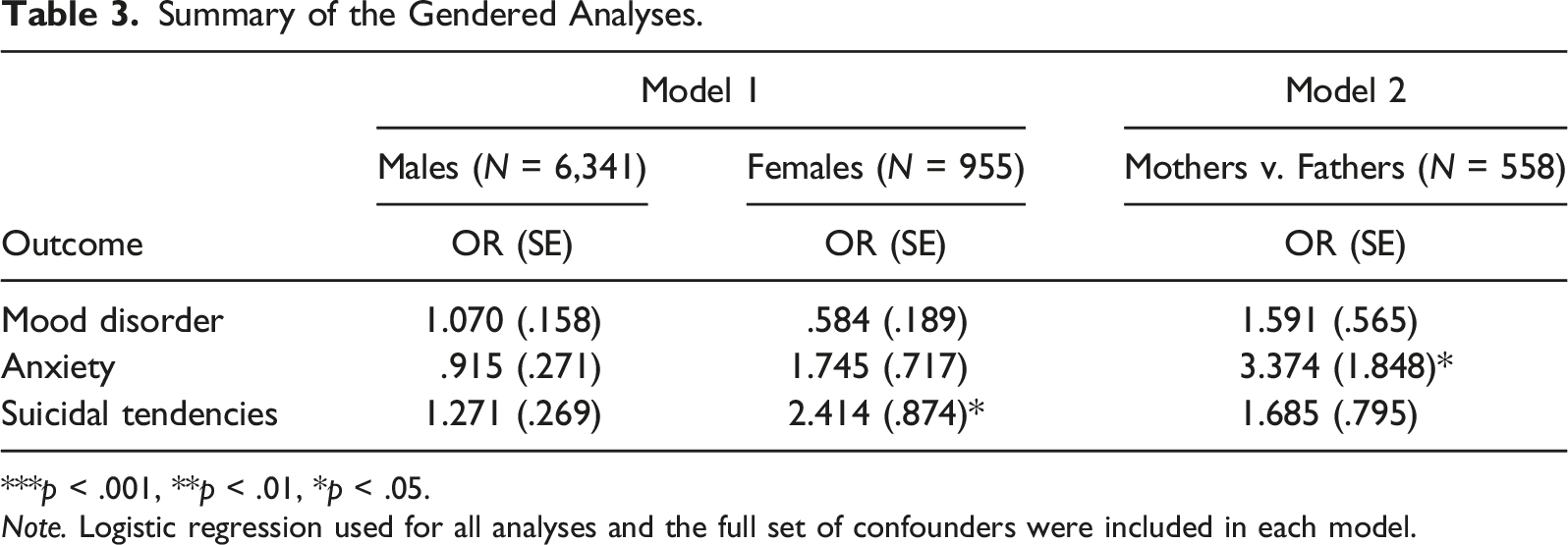
Summary of the Gendered Analyses.
***p < .001, **p < .01, *p < .05. Note. Logistic regression used for all analyses and the full set of confounders were included in each model.
Here again, we ran supplemental analyses on the disaggregated suicidal tendencies. For suicidal tendencies, parental status was not a significant predictor of suicide-related behaviors (e.g., self-mutilation, suicidal thoughts/plans, threatening to commit suicide, and believing life is not worth living) for either males (O.R. = 1.402, p > .05) or females (O.R. = 1.705, p > .05). However, parental status was significantly related to suicide attempts for females (O.R. = 7.191, p < .001). The odds ratio indicates that young mothers were over 7 times as likely to attempt suicide than non-mothers. This effect was not significant for males (O.R. = .644, p > .05).
Finally, we wanted to not only understand the gendered effects of emotional well-being between parents and non-parents, but also whether there are differences between mothers and fathers. To do this, we created a predictor variable (referred to as “mother” in Model 2 of Table 3) where 1 = youth is a mother and 0 = youth is a father. We then assessed the effects of this indicator on emotional well-being (N = 558). A summary of these results is displayed in Model 2 of Table 3. As displayed, this variable did not significantly predict mood disorders or suicidal tendencies (p < .05), but it was related to anxiety (O.R. = 3.374, p < .05). This suggests that incarcerated mothers were more likely than fathers to have anxiety at the start of confinement.
Conclusion
Incarcerated parents face dual sets of stressors: parenthood and confinement. While research has examined how incarcerated adult parents adjust to periods of confinement, questions remain about how these dual stressors affect the emotional well-being of incarcerated adolescent parents. Using a diverse sample of incarcerated youth from Florida, the current study examined just that. Based on the findings presented here, three conclusions are warranted.
First, the results suggest that incarcerated adolescent parents have a greater constellation of risk factors than non-parents. This is most notable for offense history. Bivariate analyses revealed that parents were more likely to have prior confinements and were statistically younger at the time of their first juvenile court referral. The average non-parent was 13–14 years old at the time of their first referral while parents were 12 or younger (see Table 1). Furthermore, 8% more parents had previously been incarcerated than non-parents. Earlier, more extensive involvement in the system could put these young parents on a greater path of cumulative disadvantage than non-parents—one that makes prosocial outcomes less likely and continued involvement in crime more likely across the life course (Moffitt et al., 2002). Early-onset, and continued involvement in, offending is also associated with persistent problems with marriage, employment, and health well into adulthood (Huebner, 2005; Western, 2002; Western et al., 2001). Given that the offspring of these adolescents are enmeshed within this same social context, such outcomes could adversely affect them as well (Arditti, 2016; Jackson et al., 2022).
The adolescent parents in this sample also had statistically lower household incomes than those who were not parents. Differential access to financial resources can make it harder to obtain healthcare, contraceptives, and pregnancy prevention information—which could have contributed to their precocious parenthood to begin with (Kavanaugh et al., 2022; Ranji et al., 2019). Returning home to the same scarcity of resources could continue to pose problems, making it harder for these young parents to afford to raise their children. It could also make it harder for youth to continue their education. Lower educational attainment can, in turn, reduce future earnings and economic mobility for themselves and their offspring (Bureau of Labor Statistics, 2022; Haskins et al., 2009). Taken together, incarcerated adolescent parents could be at even greater risk for life-course adversities than the average incarcerated youth. Additional research is needed, though, that empirically assesses the life course trajectories of this group.
Second, although parental status was not associated with mood disorders or anxiety, adolescent parents were at greater risk for suicidal tendencies than non-parents. Suicidal tendencies were 51% more common among the adolescent parents in this sample. While this group was not shown here to be more likely to attempt suicide, they were at increased odds of suicidal thoughts, threats, and self-mutilating behavior. These are concerning signs that these young parents may be especially struggling through the “pains of imprisonment” (Sykes, 1958) and the separation from their children. These behaviors may be alleviated upon release, but the available literature tells us that they may continue and can impact the entire family dynamic (Turney & Hardie, 2021; Turney & Wildeman, 2018).
It should be noted that the effects of parental status on suicidal tendencies were driven by the females in this sample. The gendered analyses found that incarcerated adolescent mothers were over twice as likely to experience suicidal tendencies than non-mothers, while these effects were not significant for males. That this effect existed only for females could be the result of differences in mental health issues. Incarcerated females tend to have more mental health struggles, and adjust more poorly to confinement, than males generally (Crewe et al., 2017; Harner & Riley, 2013). Drapalski et al. (2009) found that incarcerated women report significantly higher rates of traumatic stress and anxiety than men, while Johnson et al. (2011) reported higher prevalence of depression among incarcerated adolescent females. This is true for this sample as well where rates of mood disorders and anxiety were twice as likely for females (see Table 1). Stressors of parenting and separation from children could exacerbate these, putting mothers at even greater risk for suicide than the average incarcerated female.
Mothers were not just more likely to display suicidal tendencies but to attempt suicide than non-mothers. The mothers in this sample were over 7 times as likely to attempt suicide during the initial period of confinement. This could again be the result of greater mental health struggles among this group—which can make suicide attempts more likely (Hawton et al., 2013). This could also be because adolescents still have underdeveloped brains—brains that do not fully allow them to delay gratification, see the consequences of their actions, and cope with stressors in healthy ways (Arain et al., 2013; Cohen et al., 2016; Hartshorne & Germine, 2015). The latter might make it especially likely that young mothers turn to harmful coping strategies—like suicide—when facing strains like prolonged separation from their children.
The differences in suicide risks were found to only exist between mothers and non-mothers, but not between mothers and fathers (see Table 3). We did find that mothers were more likely than fathers to have issues with anxiety in the initial period of confinement—even after controlling for pre-existing mental health diagnoses. Mothers might have higher rates of anxiety than fathers because they were more likely to be the primary caretaker of their children prior to confinement (Lamb & Elster, 1985; Lewen et al., 2011; Pinzon et al., 2012). If this is case, then perhaps the separation from their child is more anxiety producing than it is for fathers. Nevertheless, further examination is needed to better understand differences in well-being between mothers and non-mothers, as well as mothers and fathers.
Finally, these findings suggest that young parents, especially mothers, need additional interventions and services. At a minimum, facilities should be aware of which youth are parents and monitor their behavior and mental health status regularly, beginning at the start of confinement. This might include screening for mental health problems and providing specialized counseling. While over 90% of incarcerated youth are screened for suicide risk during confinement, only 64% are screened for underlying mental health problems (Puzzanchera et al., 2022); and 1 out of every 4 youth receive no mental health services during confinement (Puzzanchera et al., 2022). As a result, there is room for improvement in this area.
Assuming that suicidal tendencies are higher due to the separation from children, facilities might also consider improving the communication between young parents and their children. This could include subsidizing transportation and lodging for visiting family, creating specialized child visitation, or developing cohabitation facilities for these youth (Hoffmann et al., 2010). Previous research has shown incarcerated parents to be interested in such programs, especially women, younger inmates, and those with younger children (Muentner et al., 2022). This suggestion is made with the recognition that even if these options existed, caretakers might gatekeep the adolescent’s access to their children and refuse to bring them to visit (Norman, 2014; Roy & Dyson, 2005; Tasca, 2016). Nurse (2001, 2002) noted that incarcerated adolescent fathers did not always receive visits from their children because their child’s mother refused to bring them in. Because most states require that young children visit with a parent or guardian, this gatekeeping could mean parents do not receive visits from children (Young et al., 2021).
Visits might also not be possible if the young child is in the foster care system., which is not uncommon for children of incarcerated parents (Glaze & Maruschak, 2010; Johnson, 1991; Mumola, 2000). Furthermore, visits or contact with the parent might not be in the best interest of the young child, particularly if the adolescent parent is abusive or working through their own problems (Dargis & Mitchell-Somoza, 2021). Visits might also be challenging for the young parents. In her study of incarcerated adolescent fathers, Nurse (2001) noted that young fathers struggled with feelings of embarrassment and guilt during visits. In such cases, reliance on screening and other services might be preferable. And of course, continued efforts should also be made to reduce the number of youths, and thus adolescent parents, in confinement. Any of these solutions could not only improve the outcomes of incarcerated youth and their children but improve the safety and security of the facilities as well.
These findings should be viewed in the context of the study’s limitations. First, it is unknown whether the parenting measure captures youth who are pregnant but not yet a parent or who have a girlfriend/partner who is pregnant. It also does not allow us to determine whether the adolescent has a child they do not know about, ultimately terminated a pregnancy, or had a pregnancy that resulted in a still birth or adoption. Given that the percentage of pregnancies attributed to teen mothers in the United States is four percent (Hamilton et al., 2022), the reported seven percent of our sample being parents indicates that this measure is reasonably valid for this higher risk population. Second, these outcomes were collected by RPACT/CPACT administrators. Therefore, these data may underestimate the prevalence of mental health issues and suicidal tendencies if youth were not truthful with the assessment administrators.
Third, we consider the emotional well-being of parents during confinement. We do not have any indicators of the adolescents’ emotional status once they are released from confinement. How these youth adjust once they are released is perhaps more salient, particularly for their children, and should be the focus of future research. Finally, these results are presented using data from only one state (Florida). Florida might be unique in ways that limit the generalizability of these findings. For one, Florida incarcerates youth at a rate (104 per 100,000) that is below the national average (114 per 100,000) and could use different criteria to make placement decisions (Sickmund et al., 2021). As a result, the composition of residential facilities, including the number of parents in confinement, could look different than in other states. Florida also has several programs available for incarcerated adolescent parents like the skills-based program “Parenting Wisely” (Florida Department of Juvenile Justice, 2022). Such programs could affect the mental health of these young parents in ways that might not be seen in other states. This underscores the importance of replicating these findings using data from other states.
In conclusion, adolescents in this study exhibited a concerning rate of suicidal tendencies and mental health issues. Over 7.5% of these incarcerated youth reported having suicidal thoughts or behaviors 30 days after intake and nearly 19% indicated suffering from depression, or anxiety. This burden was differentially experienced by incarcerated parents, namely women. The finding that mothers were significantly more likely to express suicidal tendencies represents an important intervention point that will not only improve their adjustment during incarceration, but the health and wellness for their entire family upon release.
Footnotes
Declaration of Conflicting Interests
The author(s) declared no potential conflicts of interest with respect to the research, authorship, and/or publication of this article.
Funding
The author(s) received no financial support for the research, authorship, and/or publication of this article.
